
The architectural structure will be determined by the foyer area, the style and arrangement of seating and the size of the proscenium arch and stage. Chapter five summarizes the ways in which scenography is influenced by architectural, cultural and theatrical discourses, from the analysis of design and concepts to The Magic Flute.
Introduction
This will be with specific reference to the set designs of the selected designers for the opera The Magic Flute. David Hockney took a postmodernist approach to his design concept of The Magic Flute, performed at the old Glyndebourne Opera House in 1978.
Chapter One – The Historical Development of the Proscenium Arch Stage
By the 17th century, the proscenium arch became a standard feature of most theaters in Europe. With the introduction of Realism in the mid-19th century, the proscenium arch took on the new role of the "fourth wall".
Chapter Two – Architectural Reforms
- The U-shaped Auditorium
- The Bell-shaped Auditorium
- The Egg-shaped Auditorium
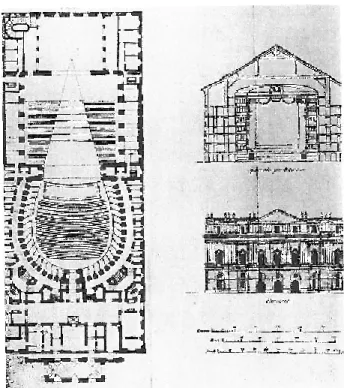
- The Horse-shoe Shaped Auditorium
The walls of the boxes in the Fortuna Theater were set at an oblique angle. The architects of the theater created a deep proscenium arch which merged with the ceiling of the auditorium.

In rethinking these elements, the entire configuration of the stage set-up had to be re-examined. Stage lighting attempted to establish a barrier between the actor and the audience and to keep the actor within the confines of the proscenium.
In addition, he had the ability to remove the participation of the actor on the stage by redirecting the light source to another area of the stage. Architectural elements can be divided into permanent immovable elements of the theater and those that are part of the stage setting and have mobility (Fuerst and Hume, 1967:39).
Chapter Three – Influences
Scenic Styles used in Opera during the 16 th and 17 th Century
- Stage Lighting used in Opera in the 16 th and 17 th Century
Footlights were mounted on poles and lowered below stage level to dim the intensity. Chandeliers were hung just in front of the lower area, which would help illuminate the auditorium and the stage.
Scenic Styles used in Opera during the 18 th Century
- Stage Machinery used in Opera in the 17 th and 18 th Century
The Bibiena's sets had perspective vistas that led to the sides of the stage rather than the center of the stage (Brockett and Hildy, 2003: 244). This technique was used by Schinkel and Kentridge in their sets of The Magic Flute.

Scenic Styles used in Opera during the 19 th Century
- The Introduction of Gas Lighting in the 19 th Century
- The Introduction of Electrical Lighting in the late 19 th Century
Treadmills, hydraulic lifts, revolving stages and elevator stages were some of the innovations that gained popularity between 1840 and 1900. However, playwrights did not write with the scenic designer in mind, and the scenic demands were therefore considerable because the set designer was limited by the physical limitations of the stage ( Brockett and Hildy Therefore, opera houses were a popular choice for staging performances designed during this period due to the massive scale of their performance spaces.
A number of the larger theatres' incomes were limited in the first half of the 19th century. Before the introduction of gas, audiences were exposed to dripping wax candles and men climbed ladders to extinguish candles or trim the wicks of oil lamps during a performance (Mullin, 1970 :133).
Scenic Styles used in Opera During the 20 th Century
Wagner was one of the first designers to influence Modernism; he believed that drama should be a mythical fantasy and not a recorder of real situations. Postmodern set design concentrates on the response, interpretation and experience of individual members of the audience. The base of this was a female prison, the middle section was a neoclassical copy of the Greek gateway to the Acropolis, and the upper section was a.
Lighting and sound can be used as independent audiovisual effects to enhance or disturb the audience's perceptions of the performance. Aronson (1991:13) argues that postmodern scenographers do not encourage the audience to become part of the performance.
The Influences of Mozart and Schikaneder on the Design Concepts of the Selected Designers
- Freemasonry and Masonic Symbols
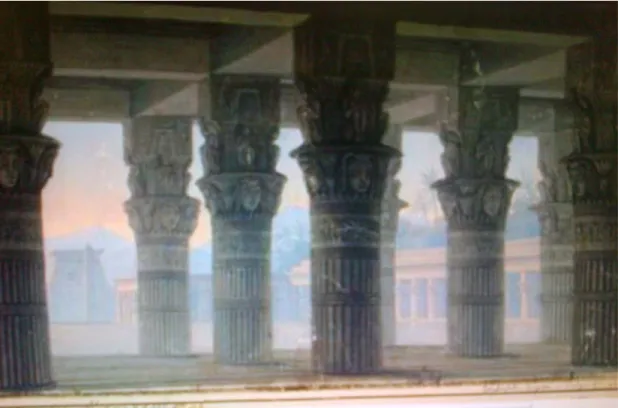
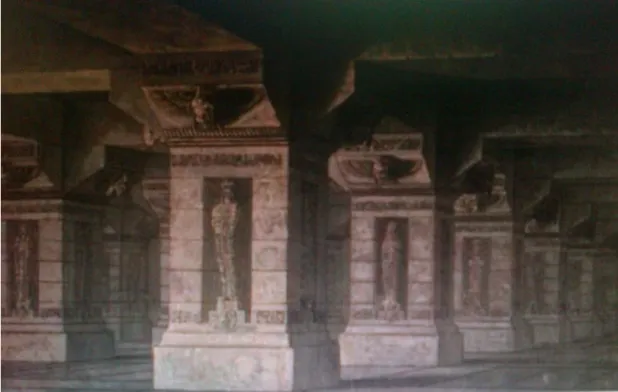
Yet Egyptian pyramids were depicted in his design concept for Act 1 of The Magic Flute. All of the selected designers incorporated a number of Egyptian architectural structures into their stage settings for The Magic Flute, which was associated with. In addition, Schinkel used the image of the Hathor Headed Column and the Sphinx for his stage sets for The Magic Flute.
The pyramids that were included in the scene of all the designers selected for The Magic Flute are associated with the divine worship of Isis. Similarly, all the selected designers used images of stars or representations of the universe in their scene for The Magic Flute.
The Social and Cultural Influences on Schinkel’s Design Concepts for The Magic Flute
The building of temples symbolizes the hierarchical progression of a Mason, from initiate to master mason. The Temple of the Sun, along with fire and water, represents the ancient Egyptian Masonic rites of passage. In 1821, Schinkel was awarded the "Order of the Red Eagle" for his architectural design of the Neues Schauspielhaus (Carter, 1981:1).
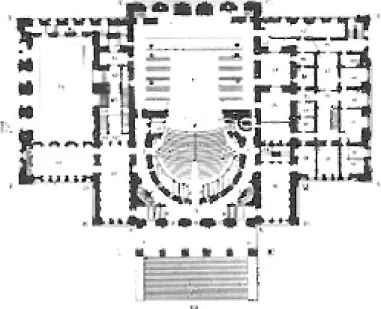
Koch sought his inspiration from Renaissance artists, landscapes of the Italian countryside and mountains of the Swiss Alps. As previously mentioned, Schinkel went on to design the Neues Schauspielhaus in 1819, applying a number of these reformist ideas to the architecture of the proscenium area, auditorium and reception areas.
The Social and Cultural Influences on Hockney’s Design Concepts for The Magic Flute
Schinkel's designs for The Magic Flute influenced a number of set designers in the 20th and 21st centuries, namely David Hockney and William Kentridge. The old Glyndebourne Opera House brought Hockney back for a third time in 1978 to design the sets and costumes for The Magic Flute. Hockney has done extensive reading and research to help him formulate concepts for his set designs for The Magic Flute.
Evidence of Hockney's postmodernist approach to his set design concepts for The Magic Flute is found in the eclectic mix of styles incorporated into his stage set-up. However, Ian Rodger (1978:68) argues that there is a very strong American influence in Hockney's designs for The Magic Flute.
The Social and Cultural Influences on Kentridge’s Design Concepts for The Magic Flute
In addition, Kentridge borrowed from other artists' design concepts for The Magic Flute. There are a number of definitive references to Schinkel's set design concepts for The Magic Flute in Kentridge's set designs. Law-Viljoen (2007:62) also states that Kentridge borrowed from a number of Schinkel's original designs for The Magic Flute.
Some of these early images were used in the final realization of Kentridge's set design for The Magic Flute (Law-Viljoen. Video projections and the metaphorical role of the camera played an important role in Kentridge's stage settings for The Magic Flute.

Chapter Four – Setting the Stage
Schikaneder’s Stage Setting for The Magic Flute performed in The Freihaus Theater auf der Wieden
- The Freihaus Theatre Auf Der Wieden
- The Audience Space
- The Stage Space
- The Presentational Space
The interior of the theater was dark with only candle chandeliers to illuminate the auditorium and stage (Radice, 1998:132). The interior had two galleries consisting of the 'noble gallery' and the 'second gallery'; the 'second gallery' had twenty boxes which were divided into six small and three large ones on the right side of the auditorium, and ten small ones and one large one on the left side of the auditorium (Radice. The first temple was placed in the center of the scene, and called the "Temple of Wisdom," while the other two temples surrounded this temple, but were placed a little above it, and joined by a row of columns to the central temple.
The temple stage on the left was called the "temple of nature", and the temple stage on the right was called the "temple of reason"; all these marks would be inscribed in German (Raeburn, 1978:89). The Temple of the Sun revealed the final scene for Act 2, Scene 11, which could be ascertained from Schikaneder's description that "the whole scene turns into the sun" (Raeburn, 1978:90).
Schinkel’s Stage setting for The Magic Flute performed in The Royal Opera House in Berlin
- The Royal Opera House in Berlin
- The Audience Space
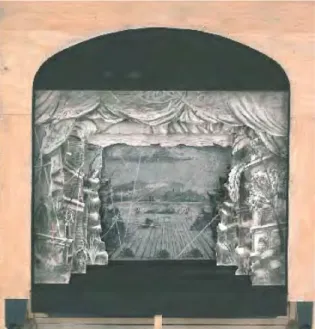
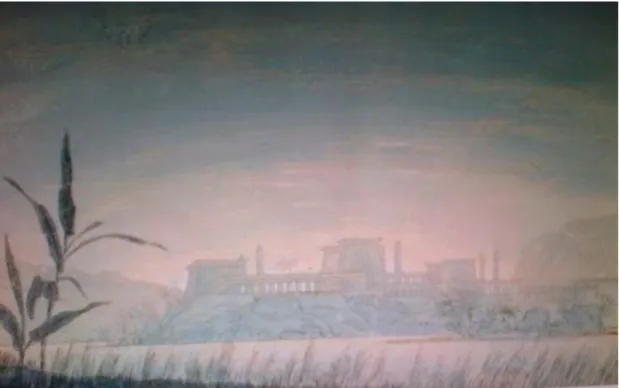
As can be seen, the dotted lines of the ruins in the foreground were angular, giving a sense of tension and conflict. The strong architectural lines used by Schinkel in the foreground contrasted with the curved organic lines of the Kentridge copied this background in detail for one of the scenes in his staging for The Magic Flute.
The Sphinx was disproportionately large and placed in the center of the stage, making it an obvious focal point for the viewer. The scene was asymmetrical and rectilinear and was painted using the architectural style of the Bibienas.

Hockney’s Stage Setting for The Magic Flute performed in the old Glyndebourne Opera House
- The old Glyndebourne Opera House
- The Audience Space
- The Stage Space
- The Presentational Space
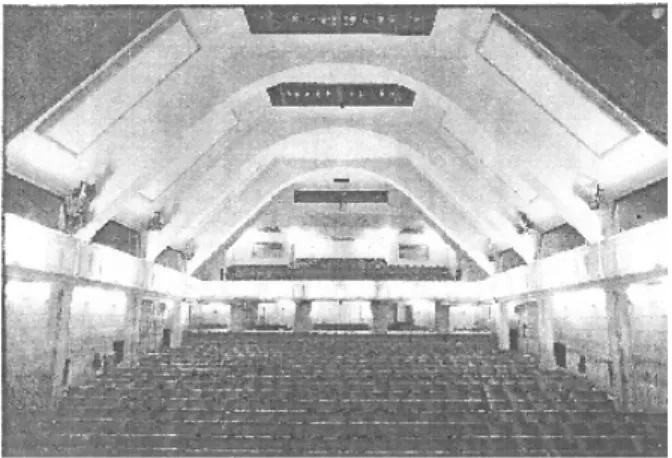
A clear view of the stage was limited because the seats at ground level were not inclined. A cyclorama and prop shop were added and the seating capacity of the old Glyndebourne Opera House increased to 850 by 1977. Strong (1984) stated that the audience at the old Glyndebourne Opera House were angry that the scene was changed for Hockney's stage the setup for The Magic Flute took too long.
Although Hockney's designs were original and unique, the stage's physical limitations hampered the rhythm of the performance. Hockney clearly borrowed the concept of the three temples from Schikaneder's stage set for Act 1, Scene 5.
Kentridge’s Stage Setting for The Magic Flute Performed in The Artscape Opera House
- The Audience Space
- The Stage Space
Kim Gunning worked as a video supervisor on the production of The Magic Flute while on tour. Four projectors were used for the production of The Magic Flute: one front projector (1800 ansi lumens), one rear projector (1800 ansi lumens) and two projectors immersed in the front of the stage (6500 ansi lumens). . In addition, Kentridge used video projections of images of birds in his stage setting of The Magic Flute, shown in Figure 4.37 (Law-Viljoen, 2007:39).
The camera was also used as an 'incidental' stage feature in The Magic Flute to frame certain segments of the performance on stage. The original libretto of The Magic Flute reads like a tale of justice and wisdom gained through experience.
Chapter Five – Conclusion
Hockney drew his initial inspiration from the music and previous productions of The Magic Flute. As previously mentioned, Kentridge drew his inspiration for his design concepts from the original performance of The Magic Flute (Law-Viljoen, 2007:64). Kentridge deviated from the original stage directions of The Magic Flute by designing his stage environment with a South African perspective as a South African set designer.
After that, I realized that not all of the selected set designers for The Magic Flute started their careers as set designers. All the selected scenographers were directly or indirectly connected with the theater, which led them to design the scenography for The Magic Flute.
Reviews, publicity and programme Notes
Random Thoughts Evoked by “Identities, Democracy, Culture and Communication in Southern Africa”, In: Critical Arts: South-North Cultural and Media Studies. Theater and Playhouse: an illustrated study of theater building from ancient Greece to the present day.


![Opera Jawa [Requiem from Java]: A Semiotic Narratology Perspective](data:image/gif;base64,R0lGODlhAQABAIAAAP///wAAACH5BAEAAAAALAAAAAABAAEAAAICRAEAOw==)