The study investigated smallholder farmers' perceptions and adaptation to climate change interventions and support systems in Mopani and Vhembe districts, Limpopo Province, South Africa. Therefore, this means that there is a need to make farmers aware of the implications of climate change.
Introduction to research problem
Moreover, the effects of climate change have been reported to affect men and women differently (Geijn et al., 2011). Moreover, Cherotich et al. (2012) revealed that women prefer radio while the elderly prefer local indigenous knowledge.
Importance of the study
Overall aim
Specific Objectives
Study limits
Assumptions
Definition of terms
Organization of thesis
LITERATURE REVIEW
- Introduction
- Climate change conceptual framework
- Impact of climate change on smallholder farmers’ rural livelihoods
- Gender relations and climate change
- Smallholders perceptions on climate change
- Climate change adaptation strategies used by smallholder farmers
- Climate change interventions and support systems for smallholder farmers in South Africa
- Proposed climate change interventions for smallholder farmers in South Africa
- Summary
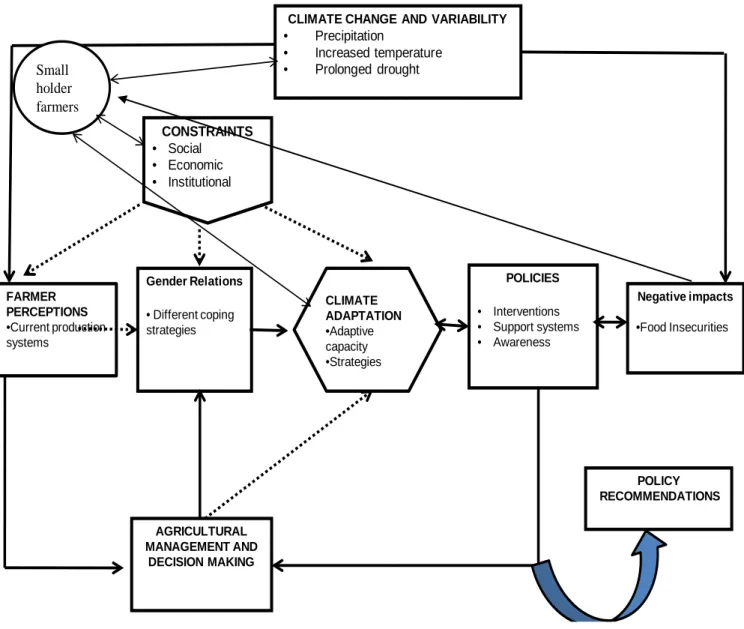
Smallholder adaptation decisions are guided by their perception of climate change and variability, and climate-related risks. This creates the need to understand the perception of the small farmers about the impact of climate change and variability at the local level (Shemdoe, 2011; Kassie et al., 2013).
Methodology and Description of the Study Area
- Introduction
- Study Conceptual Framework
- Description of the study area
- Mopani District Municipality
- Vhembe District
- Methodology
- Sampling Technique
- Study area selection
- Population sampling technique
- Data collection tools
- Transect walk
- Survey
- Focus group discussions
- Data analysis
- Summary
Therefore, in this study, focus group discussions were used to gather in-depth information about smallholder farmers' perceptions of support systems, interventions and experiences with climate change. The focus was mainly on the research topic: Smallholder farmers' perceptions and adaptation to climate change interventions and support systems in Limpopo Province, South Africa.
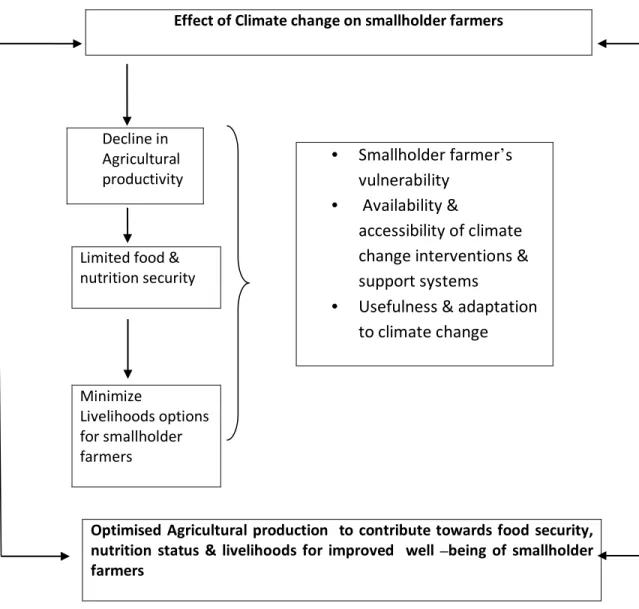
Smallholder farmers’ perceptions towards the availability, accessibility and usefulness of
Abstract
Introduction
There is increasing interest in the likely impact of climate change on agriculture, economic growth and sustainable development. 45 that one of the key challenges to the development of detailed climate change forecasts in Africa is the lack of climate information and its accessibility. Most studies have been conducted on the negative impact of climate change on rural smallholder farmers, and this has been an area of concern for global agencies, as they believe that rural smallholder farmers may not be sufficiently empowered to respond and adapt to the future extent of changes not. in climate (Cherotich et al., 2012).
As suggested by Cherotich et al., (2012), climate change interventions and support services provide an opportunity for farmers to resist climate challenges and thus enhance their agricultural productivity. Although many studies have been conducted to examine the negative impacts of climate change on rural smallholder farmers and their adaptation strategies, there appears to be little information on whether climate change measures and support systems are available and accessible to farmers.
Materials and Methods
- Description of the study area
- Methodology
- Research design and sampling technique
It is argued that the availability and accessibility of these interventions and support would increase the preparedness of farmers and provide them with a sufficient level of information to reduce vulnerability to climate challenges for improved food security and livelihoods. 47 weighty responses and experiences of farmers regarding the availability and accessibility of climate change interventions and support systems. Focus group participants (between 9 and 14 per session) were selected according to the same criteria.
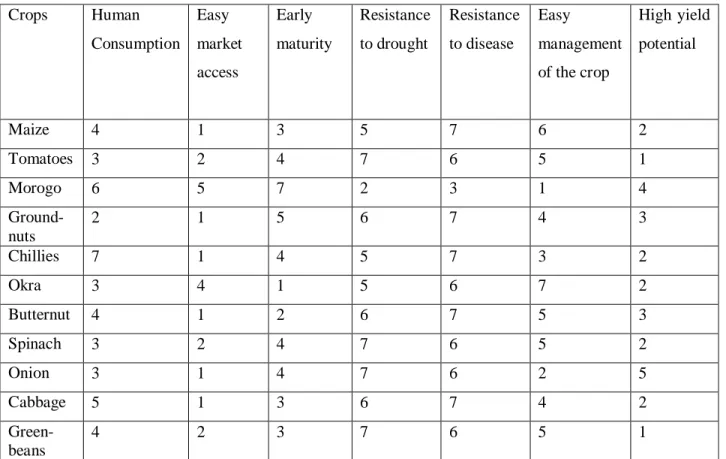
Ranking, Venn diagrams and SWOT (strengths, weaknesses, opportunities and threats) analysis were used to elaborate the dynamic issues and experiences around climate interventions and support systems. Regarding the transect walks, a small group of 5 farmers who met the criteria but did not participate in the focus group discussions were selected in 4 local municipalities.
Validity and trustworthiness
Ethical considerations
Data analysis
48 appointed 'agricultural advisers' and heads of farmers' organizations to verify certain information. Surveys were conducted to explore smallholder farmers' awareness, availability and accessibility of climate change interventions and support systems.
Results and discussion
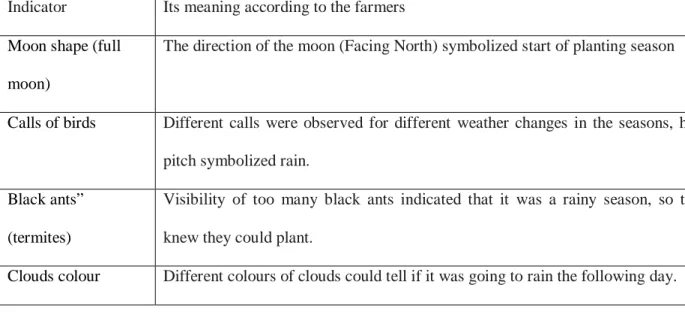
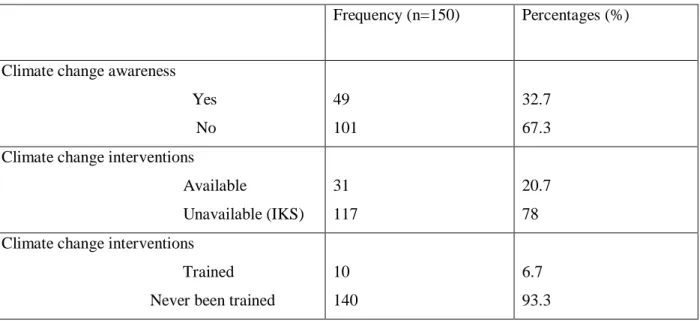
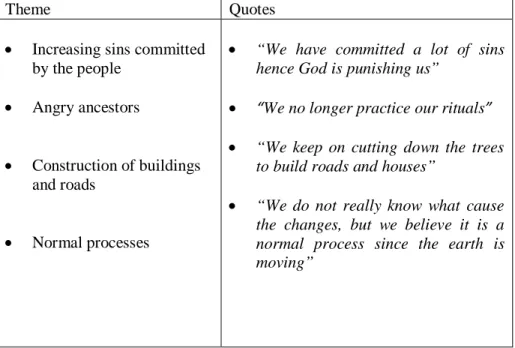
Furthermore, 93.3% of farmers had never been trained in climate change interventions, while only 6.7% had received some form of training (Table 7). Therefore, this calls for interventions from the government (extension officers) and NGOs to come together and train the farmers regarding the concept of climate change. As shown in Table 8, smallholder farmers saw supernatural forces as the main cause of climate change.
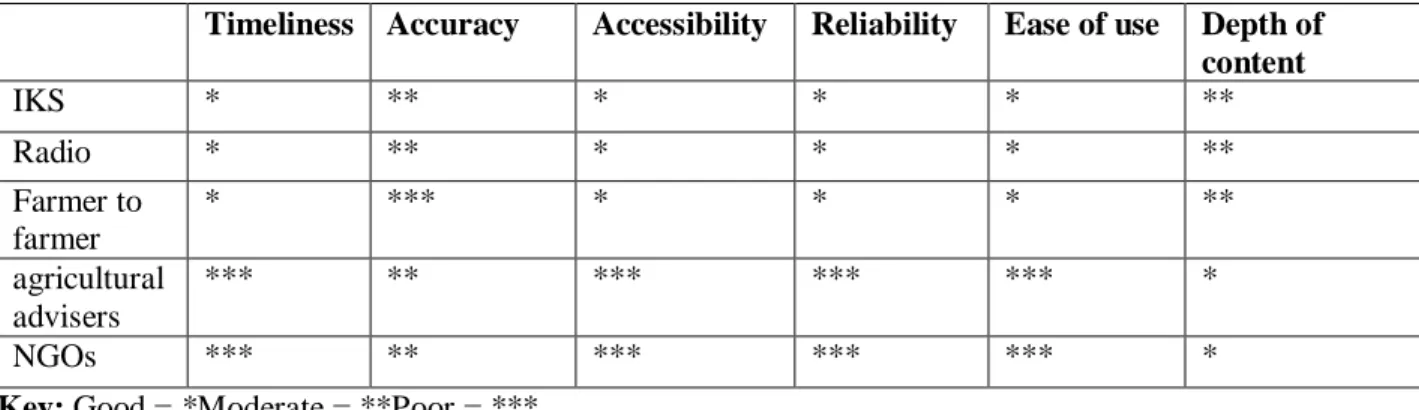
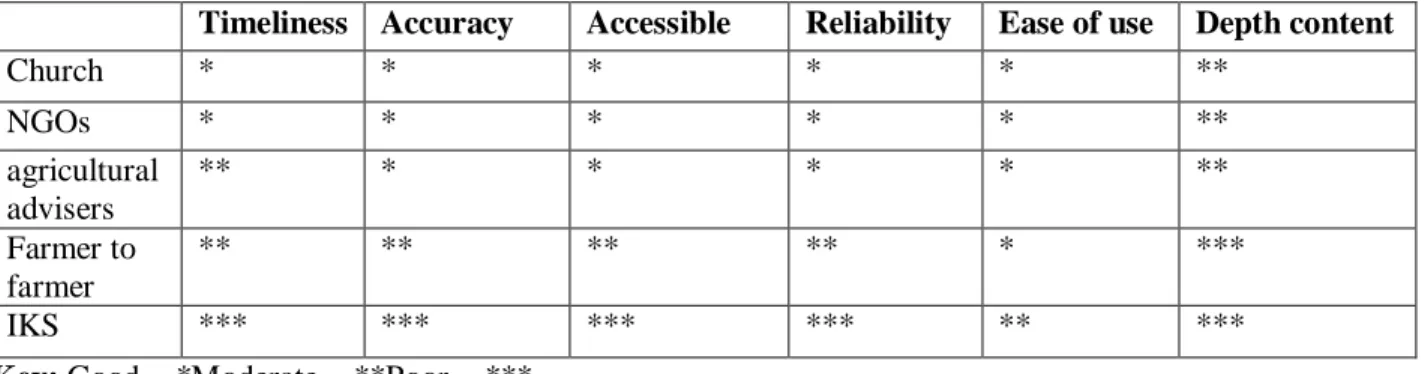
Seventy-eight percent (78%) of farmers mainly relied on IKS because they were unaware of any climate change interventions and support systems available to them. Not only were climate change interventions and support systems unavailable to subsistence farmers, but access to agricultural support systems was also a major challenge for farmers (Table 11).
Conclusion and recommendations
These findings were supported by UNEP (2011). Based on the fact that subsistence women relied on their IKS for information, the study on 'Women on the Front Lines of Climate Change' highlighted that women have valuable indigenous knowledge about managing their environment and technical knowledge. how in relation to agriculture. This is because the farmers argued that they are allowed to ask direct questions and that some things are done practically for them. Therefore, it is necessary to make farmers aware of the consequences of climate change.
Additionally, there is a need to consider climate change support and interventions based on indigenous knowledge systems to empower farmers with the capacity to face climate change challenges. There is a need to put climate change interventions on the agenda of the agriculture department so that extension officers are trained to enable them to assist farmers.
Smallholder farmer’s perceived effects of climate change on crop production and household
Abstract
Smallholder farmers were vulnerable and had limited adaptive capacity to cope with climate change due to degraded social, human, physical, natural and financial assets. The results showed that smallholder farmers tend to adapt better when they have access to extension workers (p<0.01). It is therefore important that the government strengthens the relationship between small farmers and extension workers, so that farmers can better adapt to climate shocks.
Introduction
Climate change is characterized by droughts and floods that destroy plants and deplete the soil. Smallholder farmers are vulnerable to the effects of climate change due to their marginal location, low level of technology, limited access to climate information and lack of other essential agricultural resources, resulting in low assets and vulnerability to household food insecurity (Thamanga-Chitja and Morojele, 2014 ). Climate change in this continent exposes smallholder farmers to more severe famine scenarios (Apata et al., 2009).
The impact of climate change will bring significant losses, especially for small farmers whose main source of livelihood comes from agriculture. 78 this study aimed to investigate the effects of climate change on the well-being of small farmers in the rural Limpopo province, South Africa.
Materials and Methods
- Description of the study area
- Methodology
- Research design and sampling technique
79 used to seek understanding of the farmer's perspective or situation by viewing the participants as experts in their situation. This methodology was found suitable for this study because the study aimed to find meaningful answers and experiences of farmers regarding the impact of climate change on smallholder livelihoods and food security. However, the focus group discussions (Appendix B) participants (between 9 and 14 per session) were also selected using the same criteria; it was farmers who were voluntarily part of the discussions.
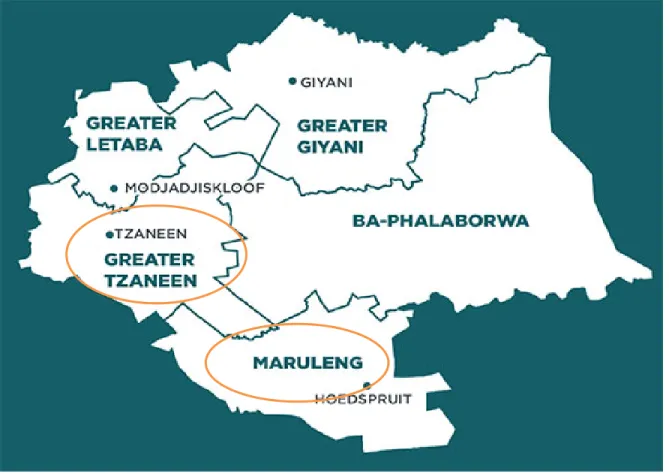
With the participants' permission, a tape recorder and video were used to document the sessions. With regard to the transect walks (Appendix C), a small group of 5 farmers who met the criteria but did not participate in the focus group discussions were selected in 4 local municipalities, namely: Tzaneen, Maruleng, Mutale and Musina.
Validity and Trustworthiness
The local extension officer of each local municipality provided a list that fit the mentioned criteria and the small farmers were randomly selected from each local municipality. Questionnaires were administered to individual small farmers and key informants from each district municipality assisted in providing a list of active small farmers in the local municipalities.
Ethical considerations
Data analysis
81 Frequencies were conducted to investigate smallholder farmers' awareness of climate change and their demographic characteristics. Focus group discussions, transect walks and secondary data were analyzed through content analysis by identifying themes, concepts, patterns and trends.
Empirical Model
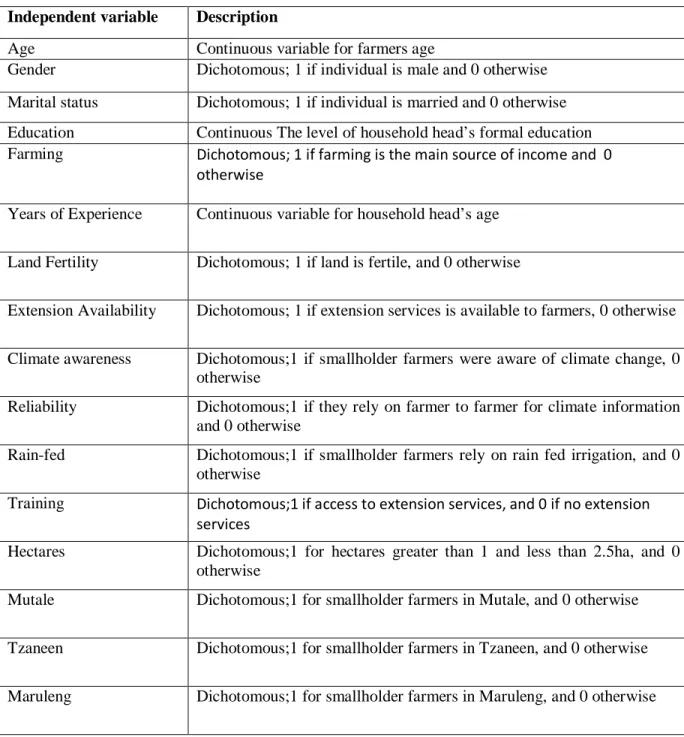
A brief description of the explanatory variables used in the multinomial logit model is given in Table 12. Gender Dichotomous; 1 if the person is male and 0 otherwise Marital status Dichotomous; 1 if the person is married and 0 otherwise Education Continuous The level of formal education of the household head Agriculture Dichotomous; 1 if agriculture is the main source of income and 0. Years of experience Continuous variable for the age of the head of the household Soil Fertility Dichotomous; 1 if the soil is fertile, and 0 otherwise.
Extension Availability Dichotomous; 1 if extension services are available to farmers, 0 otherwise Climate Awareness Dichotomous;1 if smallholders were aware of climate change, 0. Mutale Dichotomous;1 for smallholders in Mutale, and 0 otherwise Tzaneen Dichotomous;1 for smallholders in Tzaneen, and 0 otherwise Maruleng Dichotomous; 1 for smallholder farmers in Maruleng, and 0 otherwise.
Results and discussion
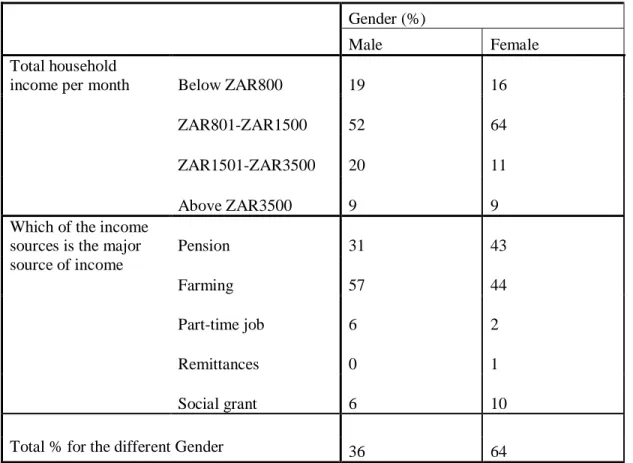
87 Therefore, it could be argued that the studied small farmers are sensitive to non-climatic shocks. Poor adaptation strategies threaten the well-being of smallholder farmers as they struggle to cope. Adaptation options for small farmers are also determined by farmers' awareness of climate change.
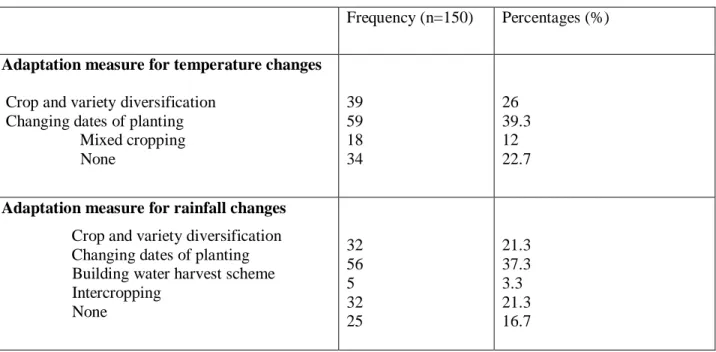
Smallholder farmers who are aware of climate change have a high probability of using combination of adaptation strategies. 94 These frequent droughts adversely affected agricultural production as 68% of the small farmers identified crop failure as the enterprise most affected by climate change.
Conclusions and Recommendations
The focus group discussions revealed the smallholder's willingness to progress and adopt strategies that will mitigate the climate stress and threats. Moreover, limited or insufficient support systems have been provided to cope with the climate risks. Therefore, the government must ensure that the identified adaptation strategies are promoted and supported to help mitigate the climate risks, and the interaction between small farmers and extension officers must be strengthened.
The research team would like to thank the National Research Foundation (NRF) for funding this research. The African Center for Food Security staff at the University of KwaZulu-Natal for sharing information throughout the year for the research is also acknowledged.
Conclusion and recommendations
Conclusions
CSIR (2010). A Climate Change Handbook for North East South Africa. http://www.indigo-dc.org/documents/K2C%20Handbook.pdf. IFAD (2008). Challenges and opportunities for small farmers in the context of climate change and new demands. Climate change impacts and adaptation in the agricultural sector: The case of smallholder farmers in Zimbabwe.
Voice of the Future: How Agriculture Contributes to Climate Change.http://www.worldfuturecouncil.org/2326.html. List examples of climate change interventions provided by extension (List them in order of importance).