A u t h o r : Y a s m e e n V a h e d M a s t e r s D i s s e r t a t i o n
November 2013
08
Fall
Fear of crime, social cohesion and home security
systems in post-apartheid South Africa:
A case study of ward 33, Durban.
UNIVERSITY OF KWAZULU-NATAL
Fear of crime, social cohesion and home security systems in post-apartheid South Africa: A case study of Ward 33, Durban.
By
Yasmeen Vahed 212560681
A dissertation submitted in partial fulfillment of the requirements for the degree of MASTER OF COMMUNITY DEVELOPMENT
In the Graduate School of Built Environment
Supervisor: Professor Monique Marks
November 2013
DECLARATION
I, Yasmeen Vahed declare that
(i) The research reported in this dissertation, except where otherwise indicated, is my original work.
(ii) This dissertation has not been submitted for any degree or examination at any other university.
(iii) This dissertation does not contain other persons’ data, pictures, graphs or other information, unless specifically acknowledged as being sourced from other persons.
(iv) This dissertation does not contain other persons’ writing, unless specifically acknowledged as being sourced from other researchers. Where other written sources have been quoted, then:
a) their words have been re-written but the general information attributed to them has been referenced;
b) where their exact words have been used, their writing has been placed inside quotation marks, and referenced.
(v) Where I have reproduced a publication of which I am an author, co-author or editor, I have indicated in detail which part of the publication was actually written by myself alone and have fully referenced such publications.
(vi) This dissertation does not contain text, graphics or tables copied and pasted from the Internet, unless specifically acknowledged, and the source being detailed in the dissertation and in the References sections.
Signed: ____________________
Date: ______________________
ABSTRACT
This study investigates the causes of fear of crime amongst residents of Ward 33 in KwaZulu-Natal, and the impact of this fear on their behaviour; the relationship between social cohesion and fear of crime; how residents are trying to make themselves safer in their own homes; and whether these measures are indeed producing feelings of greater safety and security. The research methodology employed for this dissertation is mainly qualitative, in particular the use of storytelling and photographs, which were used as a “can- opener” to get respondents to discuss their security choices as well as the choices made by others. The findings indicate that the sources and extent of fear of crime vary amongst residents. Fear of crime emanates from the physical and social environment as well as the kinds of information shared within communities. Embedded within the narratives is a strong association of race with crime, which is deepening divisions in the ward. The findings also question whether greater heterogeneity automatically reduces social cohesion. As far as home security is concerned, the northern part of the ward is generally more affluent and this is reflected in the more diverse security measures adopted by residents. In discussing the principles of Crime Prevention Through Environmental Design (CPTED), which is based on the idea that crimes are less likely to occur when properties are visible, residents’ attitudes tended to vary according to their respective fear of crime, their financial status, and specific location within the ward. A theme running consistently through the literature and in some of the narratives is the effect of geography on how residents and potential criminals view an area. The regeneration of some parts of the ward and neglect of others shows the differential outcomes when local community members choose whether or not to be proactive and participate in such projects.
ACKNOWLEDGEMENTS
It is with deep gratitude that I acknowledge the support of Professor Monique Marks, my research supervisor, for her consistent and professional guidance, insightful and thoughtful comments on my draft chapters, constant encouragement, and appropriate oversight in ensuring that the tight deadlines to complete this dissertation were met.
Thanks are also due to Ms. Priya Konan, the administrator in the School of Built Environment, for her assistance in completing the tedious paperwork over the past two years, from the original application form, to submission of the proposal, ensuring that the “intention to submit form” was submitted timeously, and submission of the final dissertation.
I am indebted to the many respondents who willingly gave of their time to be interviewed for this project. As they not named in this study, they cannot be identified here. However, they know who they are and I would like to place on record my deep appreciation.
Finally, I wish to thank my partner, Ibrahim for his patience while this thesis was being completed, and my mom for her consistent support and confidence that I would complete this study.
TABLE OF CONTENTS
DECLARATION ... 3
Abstract ... 4
Acknowledgements ... 5
List of TABLES & Figures ... 8
list of Abbreviations ... 10
Profile of interviewees ... 11
CHAPTER ONE: Introduction ... 13
Focus of this dissertation ... 17
The study site: ward 33, durban ... 18
Structure of the dissertation ... 20
Chapter TWO: Built environment, Social cohesion & fear of crime ... 21
Fear of crime ... 21
impact of fear of crime ... 21
is fear of crime invented? ... 22
fear of crime paradox ... 23
‘Moral panics’ ... 24
postmodern insecurity ... 25
policing and the privatisation of security AND SPACE ... 27
media and fear of crime ... 27
Social cohesion, crime & fear of crime ... 29
The built environment: Crime prevention through environmental design (CPTED) ... 33
Summary ... 36
Chapter THREE: Research Methodology ... 37
Rsearch design: qualitative research, photographs & storytelling ... 37
Research for this project ... 42
Oral storytelling ... 43
Validity & reliability ... 45
Chapter FOUR: sources of fear of crime ... 49
THE IMPACT OF SECONDARY Information ON fear of crime ... 51
Location ... 54
Actual victimisation and ITS IMPACT ON fear of crime ... 55
Urban decay and fear of crime ... 58
Demographic change and fear of crime ... 61
foreign nationals, xenophobia and fear of crime ... 65
Summary ... 66
Chapter FIVE: social cohesion, diversity, and RESIDENTS’ responses to fear of crime ... 69
Semigration & emigration ... 70
Community & public spaces ... 72
Civic action ... 75
Glenmore Neighbourhood Watch (GNW) ... 75
Umbilo Business Forum (UBF) ... 76
Bulwer Park Revitalisation Strategy ... 77
Umbilo Community Police Forum (CPF) ... 78
Summary ... 85
Chapter Six: walls as a response to crime & the fear of crime ... 87
Reaction to crime/fear of crime: walls, fences & gated communities ... 88
walls as a source of security ... 91
why walls don’t work ... 96
walls as instruments of a social divide ... 101
walls - a police perspective ... 102
alternatives to walls ... 104
concluding remarks ... 107
Chapter Seven: findings and recommendations ... 109
implications of this study ... 112
recommendations ... 114
8.0 Bibliography ... 118
9.0 Appendices ... 126
Appendix A: blue security: community news ... 126
Appendix B: Tabloid ... 127
Appendix C: crime trends – facebook ... 128
Appendix D: profile of umbilo saps ... 129
Appendix E: Comparison of crime between Umbilo, Umlazi and Hillcrest ... 131
Appendix F: Example of entries made by policE ... 135
Appendix G: Summary of results ... 136
Appendix H: Warrd 33 Crime Statistics (2005-2011) ... 138
Appendix I: Annual household income by race ... 140
Appendix J: Ward 33, population by race and language ... 141
LIST OF TABLES & FIGURES
Table 1: Population, Ward 33
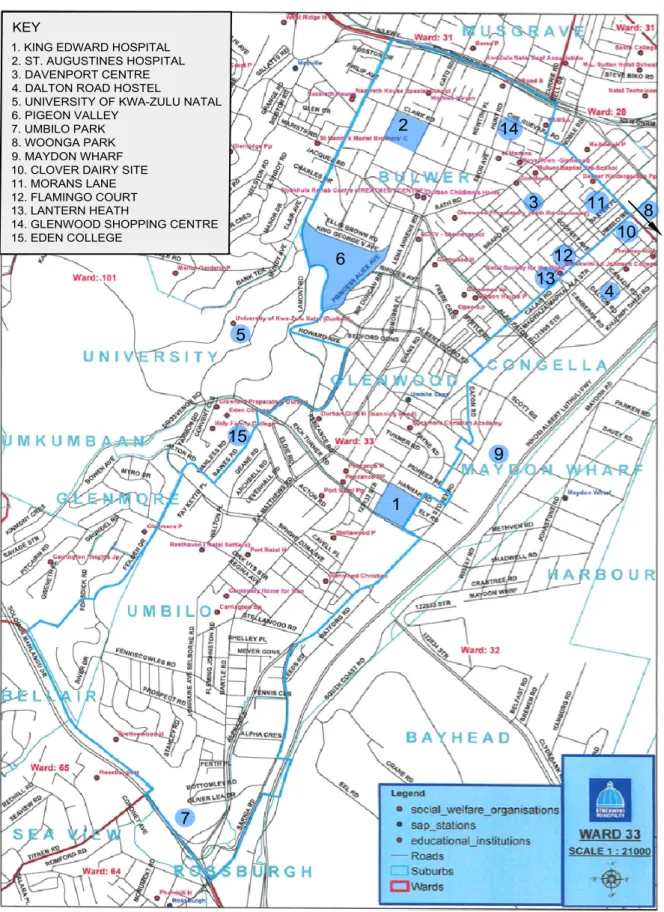
Figure 1: Map showing key locations within ward 33
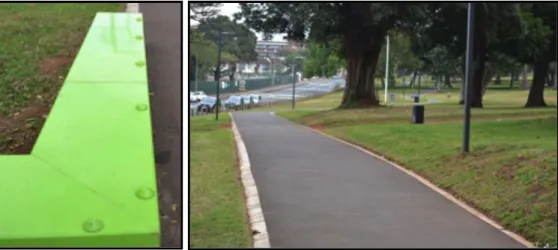
Figure 2: The Bulwer Park revitalisation project incorporates elements of CPTED such as the park bench with studs which aims to discourage skateboaders from acts of vandalism such as riding on park benches.
Figure 3: Wider pathways and additional street lighting were an important part of the Bulwer Park project in order to reduce criminal activity
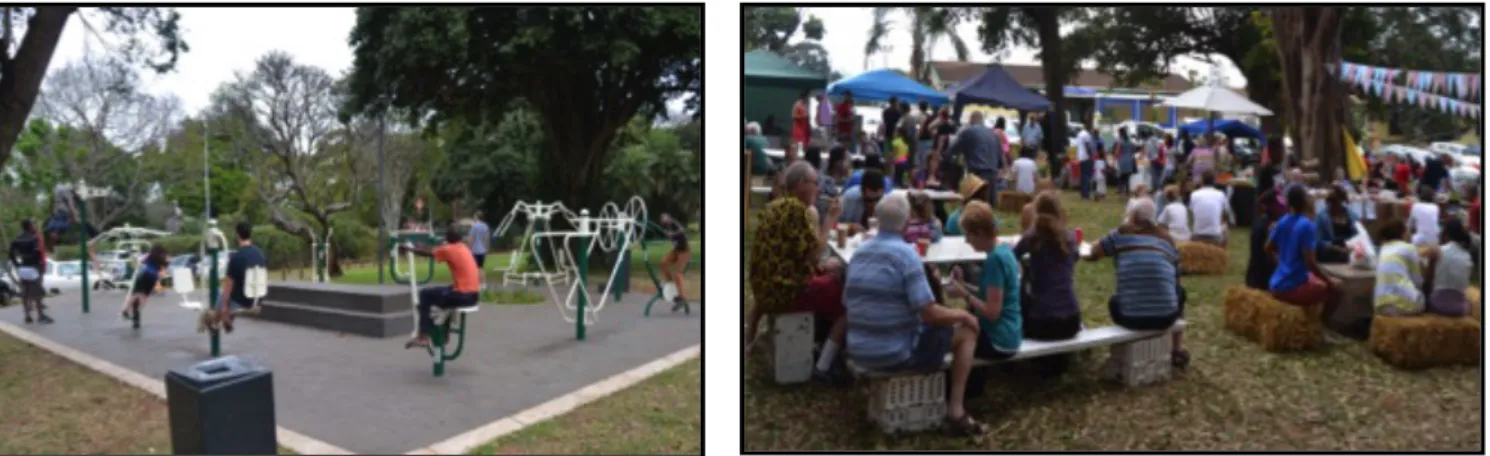
Figure 4: Bulwer Park outdoor gymnasium
Figure 5: Bulwer Park Market, bringing activity to the area through a robust open space (CPTED)
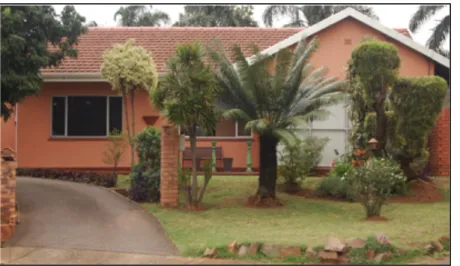
Figure 6: Home in Umbilo. Low / no wall and little vegetation makes it easy to see what is going on and it is also easy for the residents to keep a watch on the street and be aware of what is going on. Low WALLS, landscape and paving patterns make this a CPTED-friendly home.
Figure 7: Umbilo home that does not have walls or other signage. This home is very open, easily accessible to passers-by and provides natural surveillance which allows neighbours and passers-by to keep a check on what is going on.
Figure 8: House in Glenwood fortified with a high wall.
Figure 9: House with a low boundary wall.
Figure 10: Fortified wall in Glenwood. Electric fencing is visible to all, and passers-by are made aware of the internal security system through the ‘Chubb’ sign. Residents and others, however, have reasonable visibility on the upper levels as a result of the see-through palisade fencing.
Figure 11: This photo provides a good contrast. On the left is a house with high walls but one that has a degree of visibility because of the white see-through fencing, in direct contrast to the very high grey wall with no visibility.
Figure 12: A home with a low brick wall and a precast fence above it. It appears that this was done in stages as the owner became more crime conscious, possibly experienced crime or simply made these additions as a result of fear of crime.
Figure 13: Two homes in lower Glenwood. Brick columns are placed at various intervals with a palisade fence connecting them. Both homes are easily visible to their neighbours as the palisade fence provides natural surveillance. The homeowners have, however, installed electric fencing at the top as an additional measure, while the name of the security company is prominent.
Figure 14: House in Upper Glenwood with high walls.
Figure 15: Cropped version of Figure 14
Figure 16: Upper Glenwood home with a fortified wall and vegetation, which provides both privacy and security.
While the wall is solid, it has reasonable visibility because of the height of the home.
Figure 17: A wall over six feet high in Glenwood, fortified with spikes at the top to prevent anyone climbing over, as well as a clear sign that the home is secured. There is a clear message to outsiders that there is a risk in selecting this home as a target for criminal activity. However, on the converse side, those on the outside have no idea of what is happening behind the solid walls while those on the inside will not know what is happening outside their boundaries unless they have cameras.
Figure 18: Street Map of Ward 33, Durban: Showing location of key informants Figure 19: Community Policing Forum Meeting
Figure 20: King Edward VIII Hospital
Figure 21: Davenport Square, Glenwood Figure 22: Refugees, Glenwood
Figure 23: Homeless Person, Glenwood
Figure 24: Neglected areas in Morans Lane, Berea Figure 25: Abandoned Site (Clover Dairies), Umbilo Figure 26: Abandoned Site (Clover Dairies), Umbilo Figure 27: Homeless Person, Ward 33
Figure 28: Drugs and goods recovered by police Figure 29: Map of Southway mall and Umbilo Park Figure 30: Food & Craft Lovers Market, Bulwer Park
Figure 31: Map distinguishing the four CPF sectors within Ward 33 Figure 32: Chantal’s residence
Figure 33: Amy’s home and wall
Figure 34: Naomi’s backyard; Electric fencing was added to the existing security (wall) Figure 35: Naomi’s home, additional security added
Figure 36: Naomi’s Patio, trellidors added Figure 37: Michael’s residence
Figure 38: Susan’s home
Figure 39: Councillor Chapman’s residence
Figure 40: Ashley’s home and a few of her neighbours, Bartle Road (Umbilo) Figure 41: Jessica’s home
LIST OF ABBREVIATIONS
AGM Annual General Meeting ANC African National Congress CPF Community Policing Forum
CPTED Crime Prevention Through Environmental Design CSVR Centre for the Study of Violence and Reconciliation DA Democratic Alliance
DUT Durban University of Technology GAA Group Areas Act
GEAR Growth, Employment and Redistribution GNW Glenmore Neighbourhood Watch ICU International Community Unifiers IDP Integrated Development Plan
IPID Independent Police Investigative Directorate KZNSA KwaZulu-Natal Society of Arts
NPO Non-Profit Organisation POP Public Order Police
SAPS South African Police Services SCI Sustainable Cities International SIN Sustainable International Network STATSSA Statistics South Africa
UAG Umbilo Action Group UBF Umbilo Business Forum
UCPF Umbilo Community Policing Forum UKZN University of KwaZulu-Natal
OSAC Overseas Security Advisory Council
PROFILE OF INTERVIEWEES
This study is based largely on qualitative research, in particular interviews with the following individuals who are involved in Ward 33 as residents, local councillors, police officers, or private security personnel.
Susan is a working woman in her 50s. She has lived in two different locations in Glenwood in the southern part of the area for the past six years. Susan has experienced several break-ins but does not have a high wall.
Michael is in his 60s, semi-retired, and has lived in Glenmore since 1978. He has experienced three robberies and does not have a high wall.
Warrant Officer Percy is in his early 50s. He has worked at Umbilo SAPS for the past three decades and was able to comment on change over an extended period.
Sarah is in her 40s and is working part-time. She has lived in Lower Glenwood close to Bulwer Road for the past 15 years and is a former member of the UCPF.
Mary is in her late 50s. She has worked at the Durban University of Technology and currently works at UKZN. She experienced a traumatic robbery at her home in 2012. Mary has lived in the northern part of the ward since the 1980s. She has extensive security.
Jessica is in her early 40s and lives and works in Umbilo. She has been living there for the past 10 years.
Chantal is in her 50s. She has lived close to the Glenwood Buxtons shopping Centre for more than two decades. Chantel is single and works at UKZN.
Matt is in his early 40s and lives and works in Umbilo. He has been living in Umbilo for just over 10 years.
Captain Patrick is in his 50s. He joined the police force in 1983 and was based at Durban Central (previously C.R. Swart). He has worked at the Umbilo Police Station for six years.
Amy is in her 40s. A housewife, she has lived in north Glenwood for the past eight years. She previously lived in Sherwood. Amy has high walls and has experienced break-ins.
Naomi, in her 50s, lives in Glenwood in the middle part of the ward. A working woman, she moved to Durban from Cape Town in 2005.
Ashley is in her late 60s and is a retired grandmother. She lives in Carrington Heights but spends all day at her daughter’s house in Umbilo house-sitting. This is the southern part of the ward, and is working class.
Ashley has an intimate knowledge of the ward over four decades.
Warwick Chapman, in his 40s, is a member of the Democratic Alliance. He was the Councillor for Ward 33 until June 2013 when he was redeployed to the party’s offices in Cape Town. He has a very good knowledge of ward 33 and was active in promoting CPTED.
Vanessa is in her 40s. She has lived in the southern part of Ward 33 for the past 20 years. She is a past member of the UCPF, founder of the NGO Umbilo Action Group, and currently (2013) the Dennis Brutus Community Scholar at the Centre for Civil Society, UKZN.
John works for a long established security company in Ward 33. He is in his late 30s and has been based in the area for the past four years.
Mathew is in his early 40s and works for a different security company from that of John. He has been based in the area for the past seven years.
CHAPTER ONE: INTRODUCTION
On Freedom Day, I think of a visit I made last week to my nephew’s house to deliver a storybook, Monkey Business, for his children. I hadn’t been to his house for probably more than a year. When I got to the address, I had to look hard before I recognised his place. There was a fence up around the property and a motorised gate. I couldn’t get in. I had thought to slip the envelope under the door because I knew that my nephew and his wife would be at work. But I couldn’t get near the door. Ironically, Seetha Ray’s Monkey Business, set in Calcutta, depicts a rich man who, having locked himself out of his home, tries to climb over the high fence, slips and is caught on the gate by his clothes. He hangs there upside down until a poor man who makes his living on the street with trained monkeys that dance and sing, rescues him. I had no intention of clambering over the gate so I looked up and down for a neighbour to whom I could entrust the envelope, but all I saw were fences and security gates lining the street. They hadn’t been there the last time I had come this way. And I said to myself, “Welcome to the new South Africa.” All the haves, and that includes me, are living in their own home-made prisons and all the have-nots are marching towards the official ones. And today we celebrate Freedom Day.
-‐‑ Muthal Naidoo (27 April 2005)
Now in her seventies, playwright, actress and writer Muthal Naidoo has long been a critical voice in South Africa. During the 1970s and 1980s, she spoke out against apartheid through her acting and writing in the alternative theatre movement. In the post-apartheid period, she remains a voice of conscience through her blogs (http://www.muthalnaidoo.co.za) and regularly speaks out against corruption, poverty, crime and criminalisation, and a host of other subjects. In this evocative piece of writing she succinctly captures how so many South Africans are placing their faith in walls and fences to take care of their security, in a context of extreme inequality which, she has often argued, is exacerbating the crime problem, and resulting in an ever increasing prison population.1 Naidoo also subtly raises the question of whether those living behind walls and fences are not, ironically, “imprisoning” themselves and restricting their own freedom through the adoption of conspicuous security systems.
Crime, violence, and a corrupt police force are some of the issues that preoccupy South Africans in the contemporary period. The works of Anthony Altbeker and Jonny Steinberg, amongst others, address some of the issues related to crime, policing and criminal justice in post-apartheid South Africa. Altbeker’s Fruit of a Poisoned Tree: A true story of murder and the miscarriage of justice (2010), The Dirty Work of Democracy (2005), and A Country at War with Itself (2007), which speak to issues of crime, violence, and policing in South Africa and how to address these problems, resonate with ordinary South Africans and are best-selling books. Jonny Steinberg’s works such as Midlands (2001), The Number (2003), and Thin Blue
1In 2008, South Africa had the world's seventh highest number of prisoners. The World Prison Brief placed South Africa's total of 166 267 prisoners after the United States (2.3 million inmates), China (1.6 million), Russia (888 014),
(2008) are award winning explorations of crime, violence, the police, and the judicial system in South Africa. The popularity of these works underscores many South African’s concerns about such issues.
Although Steinberg and Altbeker are political scientists, their well-researched and theorised works have, unusually, made their mark in both the scholarly and popular markets.
The concern about crime and corruption reflected in these works is borne out by various studies and surveys. According to the World Competitiveness Report for 2010-2011, South Africa ranked 137 out of 139 countries in terms of the business costs of violence and 104th with regard to lack of trust in police competency. South Africa recorded an average of 50 murders, 330 armed robberies, 550 violent assaults, and 100 rapes each day during 2009 (Schwab, 2010-2011: 41).
The ‘Victim of Crime Survey 2011’, produced by Statistics South Africa, found that more than half (53 percent) of all South African households surveyed perceived housebreaking/burglary to be the most common type of crime, followed by home robbery, street robbery, and pick-pocketing; a third of households avoided going unaccompanied into open spaces such as parks because of their fear of crime. Only 20 percent felt ‘safe’ walking alone when it was dark, and around half the households surveyed took physical measures (as many as 64.7 percent in the Western Cape and 64.8 percent in Gauteng) to protect their homes. These ‘physical measures’ are not specified but only 11 percent of homes employed the services of a security company, while others used a range of measures that included burglar guards, alarm systems, security fences, and walls. The survey also suggested a disjuncture between individuals’ perceptions and their actual experiences of crime, with considerably lower incidences of victimisation recorded than suggested by perceptions. Housebreaking/burglary, for example, was experienced at least once by only 4.5 percent of those surveyed and home robbery by 2.6 percent. The survey found that a third of house break- ins/burglaries occurred at night (30.2 percent). As far as home entry is concerned, it found that in 43 percent of cases, burglars gained entry through a smashed door, while 34.5 percent gained entry through a window. In 56.2 percent of instances, the perpetrators used physical force. The survey found that of those killed, an astonishing 68 percent were murdered by persons known to them (such as a spouse/lover, friend/acquaintance, or domestic worker). This is particularly relevant given the extent to which South Africans seek to fortify their homes against “strangers”.
National crime statistics for the period April 2011 to March 2012 were released in September 2012. The most striking statistic was that more than 40 000 residential burglaries occurred during this period, an increase of 4 percent over the previous year. This suggests that people’s fears of home intrusions may be justified. Analysing these statistics, Johan Burger of the Institute for Security Studies attributed the increase in property crimes, in part, to ‘the economic meltdown’. He suggested that less sophisticated criminals were likely to ‘resort to burglaries in order to avoid contact crimes.’ In the same report, David Bruce, an independent crime researcher, observed that most property crimes tended to occur in less affluent areas as middle to higher income homes and businesses were investing in private security (The Mercury, 21 September 2012). Given the class disparities in Ward 33, this hypothesis will be tested in this study.
Following the release of these police crime statistics in September 2012, a weekend newspaper carried a two page spread with a sensational headline: ‘Home owners have no choice but to beef up security in KZN.’ The subtitle read: ‘KZN is the murder capital of the nation.’ Criminologist Hema Hargovan was quoted as saying that the statistics did not reflect the true impact of crime because they did not take into account ‘secondary victimization.’ She stated that even those who witness ‘crime are also victims. They also have to endure post-traumatic stress, but this is never accounted for.’ Furthermore, criminal activity also impacts those who are not directly affected. Simone Stanley of Blue Security told reporter Mervyn Naidoo that his clients were ‘opting for more upmarket security features. It’s a clear indication that they are afraid.’ Whereas in the past residents were reluctant to display security companies’ signage, they were now
‘asking for more. And they want all the bells and whistles; electric fences, perimeter systems and closed circuit TV cameras’ (Sunday Tribune, 23 September 2012).
Without doubt, this newspaper report speaks to the real fears and responses of suburban dwellers.
However, what is lacking is an analysis that allows for an interpretation and interrogation of what people do, say, and feel in response to statistical evidence and lived experiences of crime. Most academic studies have found, however, that South Africans are indeed imprisoned by fear and the possibility of victimisation.
The tragedy, as implied by Muthal Naidoo, is that real freedom is elusive for many South Africans. South Africa’s first non-racial democratic election in 1994 was greeted with great euphoria as it brought to an end more than three centuries of violent confrontation for control of South Africa. Most South Africans looked forward to a period of political peace and economic prosperity. The Black majority, in particular, saw the coming to power of the African National Congress (ANC) as a signal that they would finally experience the fruits of their struggles for houses, education, running water, electricity, and other amenities that most white South Africans had taken for granted. This elation was short lived for several reasons. While political violence aimed at seizing control of the state has receded since 1994, ‘non-political violence’ related to crime, vigilantism, service delivery protests, and xenophobia has escalated. Harris notes that ‘high levels of violence continue to mark the society; and mistrust, suspicion and fear define many inter-personal relationships. Contrary to the popular representation of South Africa as a "miracle" nation, high levels of violence testify that a post-apartheid South Africa is not conflict-free’(Harris, 2001: 1).
A substantial number of South Africans (according to Statistics South Africa (STATSSA), the official unemployment rate was 25.3 percent in the third quarter of 2012) have become disillusioned by the imposition of anti-poor policies following the adoption of the neoliberal Growth, Employment and Redistribution (GEAR) strategy in 1996, which emphasised macroeconomic stabilization and a cut in government consumption, limited wage increases, import and trade liberalisation, foreign investment, and privatisation (Terreblanche, 1999). Basic services such as education, electricity, water, and housing came under the rule of the market, with local government playing a 'facilitating' role between citizens and market forces, rather than serving a redistributive function. According to Sociologist Peter Alexander, the result is that South Africa ‘has experienced a movement of local protests amounting to a rebellion of the poor. This has been widespread and intense, reaching insurrectionary proportions in some cases…. A key feature has
been mass participation by a new generation of fighters, especially unemployed youth but also school students [fuelled by] a sense of injustice arising from the realities of persistent inequality’ (Alexander, 2010- 2011).
This study is not directly concerned with this aspect of the post-apartheid landscape except that it frames our understanding of crime and fear of crime. Many have linked increasing poverty and inequality in post- apartheid South Africa to crime (Fleming, 2011). New forms of segregation in the form of walls reinforce the divide between the haves and the have-nots. As the philosopher Costica Bradatvan (2011) observes, ‘walls are built for various reasons and they serve different purposes, but their function is always fundamentally the same: to create divisions, to prevent people and ideas from moving freely, and to legitimize differences.’
This creates the need to protect oneself from the ‘other’. Valji et al. point out that, walls and fences ‘have become the visible face of exclusion; a barrier between the haves and the have-nots…. This can fuel resentment and a sense of injustice on one side of the wall, and a sustained sense of entitlement and privilege on the other’ (2004:6).
As the ‘Victim of Crime’ survey quoted above suggests, there is a perception among many South Africans that the country is besieged by widespread violence. Those who experience crime and violence or read about it in the popular media believe that the state has failed to create a secure environment for citizens and residents. A 2006 national survey in South Africa found that 33 percent of urban respondents regarded unemployment as the government’s major priority, followed by crime and violence. Forty two percent of the respondents in the higher income group, which was defined as more than R8 000 per month regarded crime and violence as the highest priority (in CSVR, 2007: 30).
Such perceptions and concerns about crime and violence extend beyond ordinary South Africans. The influential Overseas Security Advisory Council (OSAC), which works in partnership with the US Department of State Bureau of Diplomatic Security, noted in its February 2012 report on Crime and Safety that crime levels in South Africa are phenomenally high and that South Africans are going to extraordinary levels to protect themselves:
On a rating scale of low, medium, high, and critical, Pretoria, Johannesburg, Durban, and Cape Town are rated “critical” for crime…. In general, crimes continue to range throughout the full spectrum, from petty muggings and ATM scams to armed residential home invasions…. Violent, confrontational crime is a major concern in South Africa. Such crimes include home invasion robberies, burglaries, car- jackings, street muggings, smash-and-grabs, organized attacks on commercial and retail centers such as shopping malls and outlets, as well as attacks on cash-in-transit vehicles/personnel (i.e., armored car/personnel). Of particular concern for American citizens living in South Africa are home invasion robberies. These crimes are often violent in nature and can occur at any time in the day. In many cases, criminals prefer the occupant is home because the residential alarm is off and the occupant can identify where valuables are located…. Measures to combat home invasions should include several layers of residential security including perimeter walls, alarms, and grills on windows. Vehicle gates
should also be equipped with anti-lift brackets, as criminals have been known to use crowbars and pneumatic jacks to lift gates off their tracks…. Perhaps the most vulnerable point for any resident in South Africa is the residential driveway. Criminals use the driveway as a choke point, attacking victims when they are waiting for the vehicle gate to open. According to SAPS (South African Police Services), the majority of all carjacking incidents in South Africa occur as the victim arrives at home and pulls into the driveway, with the carjackers pulling up behind the victim in order to block an escape path. Victims who resist or fail to comply with demands may be killed or seriously injured. In the worst case scenarios, robbers force the victim into the house, rob the house of its valuables, and drive away with the loot (OSAC, 2012).
FOCUS OF THIS DISSERTATION
The central focus (research question) of this study is whether and how individuals are fortifying their homes as a result of their fear of crime, and whether they are feeling safer as a result of these measures. This question is investigated in this dissertation by focusing on three interrelated concerns. Firstly, it is concerned with how crime affects and even determines the way in which people try to make themselves safer in their own homes. The second focus is to examine the ways in which the suburban environment in South Africa is being constructed as a result of crime and fear of crime. Third, this dissertation interrogates whether the mechanisms used to create safety do in fact lead to greater feelings of safety and freedom.
These issues will be understood in the context of scholarly work on crime prevention through environmental design.
Interest in this topic comes in part from the author’s personal experience of living in both Durban, South Africa, and in Brisbane, Australia between 2002 and 2011. In Brisbane, the houses did not have fences, high walls, or electric gates, while the front doors of homes were often left unlocked whilst residents were at home. Homes in the neighbourhood were occasionally burgled, but this was usually while the homeowners were out. Instances of people being violently assaulted or robbed at gunpoint were rare. Research conducted in Kuraby, a suburb of Brisbane, during 2011, found that 80 percent of the respondents felt ‘safe’
or ‘very safe’ walking in the area at night (Vahed, 2011: 33).
This was in huge contrast to my growing up in one of Durban’s dedicated middle class ‘Indian’ areas, Reservoir Hills, where security systems in our home increased incrementally during the 1990s in response to three break-ins. Initially there was no physical protection. The first break-in was followed by the installation of a security gate in the driveway; the second led to the installation of an alarm system; and the third led to a fence being built around the perimeter of the house. This was disliked by members of the household but seen as inevitable. Worse was to follow. Shortly after part of the family moved to Australia, on 24 May 2002, two maternal grand-aunts were brutally murdered in their home a few doors away. The Daily News headline that Friday, blazed: ‘University lecturer finds aunts murdered,’ in reference to the author’s father (a UKZN history lecturer) discovering the bodies. The house in which my grand-aunts had lived was sold, as was that of my grandparents who relocated to Johannesburg as it was deemed too
“unsafe” for them to live alone.
Such personal experiences are not uncommon in South Africa which has one of the highest murder rates in the world, and whose citizens have a pervasive fear of crime which impacts on their everyday lives in degrees that correlate to their race and class standing (Davids & Gaibie, 2011). This dissertation examines the choices that residents in one part of Durban, Ward 33, are making about the boundaries surrounding their homes (called “target hardening” in the literature), and whether this has impacted in any way on their fear of crime or their direct experiences of crime. A large proportion of residents in Ward 33 have fortified their homes with high walls, and electric fencing. Those with less economic capital in Umbilo and lower Glenwood seem to have opted for open fences, low walls, or no boundaries at all. These are different responses to the same crime context; one of the aims of this dissertation is to examine whether the different technologies used to govern home security are having the desired effect in reducing fear of crime.
Secondly, this study comments on how crime and the fear of crime are leading to new forms of social engineering in South Africa as a result of physical crime reduction strategies. While apartheid produced artificially engineered and segregated urban development, some academics suggest that fear of crime is shaping a segregated and atomised urban space in the post-apartheid period (Spinks, 2001: 3).
THE STUDY SITE: WARD 33, DURBAN
Ward 33, the site of this study, comprises of three suburbs – Umbilo, Glenmore and Glenwood – which are diverse in terms of their residents. While parts of Glenmore and Glenwood would be classified as ‘middle class’, Umbilo is largely a working class or lower middle class area. Glenwood is one of Durban’s oldest suburbs, with colonial-style mansions higher up in the vicinity of the University of KwaZulu-Natal as well as highly priced apartment blocks. The area has bustling business activity with the presence of the Glenwood and Davenport Centres and the St. Augustine’s hospital (shown in the map below). In the Bulwer, Ferguson, and Davenport Roads area, a number of homes have been converted into restaurants, boutiques, coffee shops, medical practices, and guest houses. Glenwood High, Durban Girls High, tree- lined streets, and parks all add to the image of order and affluence. There are many pedestrians and shoppers during the day.
Glenmore is to the south of Glenwood. The area comprises of free standing homes for middle to upper income people as well as cheaper priced apartment blocks. Unlike Glenwood, however, Glenmore does not have the same level of daytime retail business activity. Umbilo is a mainly middle to lower income suburb, further from the university and closer to the harbour area. The area has many free standing homes, which probably date to the 1920s and 1930s. Umbilo also lacks the day time business activity of Glenwood and the homes and grass verges are not as well maintained. The area also had / has many heavy duty businesses, in particular factories, in the Umbilo / Sydney Road areas and this adds to its feeling of being derelict and not as well maintained as Glenwood.
The differentiated class nature of these three adjacent suburbs allows for comparison in close and special proximity. It was visible, from walking and driving through the area, that different mechanisms are used to govern domestic security. In particular, the ways in which houses are “fenced off” vary substantially. Ward 33 (especially Glenwood) is very close to UKZN’s Howard College campus which made this research feasible and manageable.
1 2
5
3
6
7
9
10 11
12 13 4 14
8
1. KING EDWARD HOSPITAL 2. ST. AUGUSTINES HOSPITAL 3. DAVENPORT CENTRE 4. DALTON ROAD HOSTEL
5. UNIVERSITY OF KWA-ZULU NATAL 6. PIGEON VALLEY
7. UMBILO PARK 8. WOONGA PARK 9. MAYDON WHARF 10. CLOVER DAIRY SITE 11. MORANS LANE 12. FLAMINGO COURT 13. LANTERN HEATH
14. GLENWOOD SHOPPING CENTRE 15. EDEN COLLEGE
KEY
15
Figure 1: Map showing the Key locations within ward 33 Source: eThekwini Municipality, 2013 (adapted by author)
STRUCTURE OF THE DISSERTATION
This dissertation is made up of the following chapters:
Chapter two reviews local and international literature on three areas of scholarly engagement: fear of crime, social cohesion, and CPTED principles, as well as the relationship between social cohesion, built environment and fear of crime. This aim of this chapter is to understand the sources of fear of crime and the consequences that this fear has on the behaviour of ordinary citizens and the kinds of actions that they are taking in response
Chapter three describes the research methodology used to carry out research for this dissertation, in particular the use of storytelling and photographs. The discussion includes methods of data analysis, ethical concerns, the reliability and validity of these research methods, as well as issues raised during the fieldwork, including reflections on my own positionality as a (visibly) Muslim woman conducting interviews in historically ‘white’ suburbs.
Chapters four to six focus on three key themes that emerged from the interviews. Chapter four examines objective and subjective sources of the fear of crime and its impact on residents’ behaviour; Chapter Five focuses on social cohesion, diversity and responses to crime and the fear of crime; while Chapter Six focuses on measures that residents adopt to protect their homes, in particular the building of walls as a response to crime and the fear of crime.
Chapter seven summarises the main findings. It offers some concluding comments on the relationship between crime, the fear of crime, social cohesion, and the built environment; the implications of these findings for policymakers; and provides suggestions for future research.
CHAPTER TWO: BUILT ENVIRONMENT, SOCIAL COHESION & FEAR OF CRIME
There is a wide body of literature on crime in post-apartheid South Africa. Reference was made to some of these works in chapter one. This chapter seeks to understand the concept “fear of crime”, and the sources of this fear which affects both those who have been direct victims of crime as well as those who have not been affected by crime. This chapter also sets out the scholarly debates regarding the consequences that fear of crime have on the behaviour of ordinary citizens, and the kinds of actions that they are taking in response to this fear. In addition to fear of crime, this study draws on two other areas of scholarly work, namely, social cohesion and principles of Crime Prevention Through Environmental Design (CPTED). This chapter provides a theoretical perspective of these three areas of scholarly engagement, and relates them to the topic of fear of crime
FEAR OF CRIME
Fear of crime refers to the ‘fear of being a victim of crime as opposed to the actual probability of being a victim of crime’ (Hale, 1996: 83). It is ‘a pressing social and political issue in any number of countries across the world’ (Farrall et al., 2009: 3). High levels of fear of crime have been reported in South Africa.
National surveys in the early 2000s consistently reported that around 60 percent of South Africans felt ‘very unsafe’, with the highest fear reported amongst minority groups (Naude, 2003). Fear, according to Smith and Pain, ‘is an emotional response to a material threat.’ People may be fearful of places, people, or actions that have harmed them or have the potential to harm them and seek to avoid this by all means necessary (Smith & Pain, 2009: 51). People who have been victimised or have knowledge of others who have been victims are usually more afraid (Box, Hale & Andrews, 1988). However, fear may also be a
‘condition that is only loosely related to material risks’ (Smith & Pain, 2009: 51). Grabosky makes the point that while fear may be the result of actual life experiences, in many cases it is not directly related to actual risk or victimisation. While some citizens’ fear of crime is well-founded, others ‘are at less personal risk than they might believe.’ In other words, fear of crime is distinct from crime and is a problem in its own right (Grabosky, 1995: 508). The challenge for government and policy makers and planners is to ‘work out what inspires levels of fear that are disproportionate to real risks, and address them in the interests of arriving at a less anxious world’ (Smith & Pain, 2008: 51) because crime and the fear of crime shape debates about
“law and order” and how people attempt to govern their own security (including by shaping their physical environment).
IMPACT OF FEAR OF CRIME
According to Farrall, Jackson, and Gray (2009: 21), ‘pervasive insecurity about crime erodes well-being, promotes precaution, restricts movement, encourages “flight” from deprived areas, and harms social trust, inter-group relations, and the capacity of communities to exercise social control.’ Fear of crime may lead to higher levels of gun ownership (both legal and illegal), demands for tougher punishment and more punitive action from politicians and the public, some citizens avoiding being away from home at night, or the
creation of fortified living spaces (Roberts, 2008). It may also affect where people choose to live and how they construct the space in which they live in order to reduce both the fear of crime as well as actual victimisation. Radar (2004) has termed this perception of risk, combined with fear of crime and restrained behaviour, the ‘threat of criminal victimization’.
Wilson (1975; cited in Box, Hale & Andrews 1988: 340) concluded that fear of crime ‘fractures the sense of community and neighbourhood’ and divides ‘urban space into “safe” and “unsafe” areas’. Some individuals may seek to protect their property and themselves while others may relocate to a different neighbourhood (Sampson & Wooldredge, 1986; cited in Box, Hale & Andrews 1988: 341). People’s daily habits may even change. According to Box, Hale and Andrews (1988: 341), in order to protect themselves from dangers lurking outside, people ‘may stay at home more often and within safer environments or places which they have made safer through certain security measures, for example, locks, chains, bars and alarms.’
The impact of fear of crime depends on individuals’ experience of it. Farrall et al.’s (2009) empirical study investigated what fear of crime means as an everyday experience and what it expresses as a social attitude in the United Kingdom. They found that for those who live in high crime areas, and who may have had direct or indirect experience of victimisation, fear was a concrete and emotional, but short-lived, event.
On the other hand, for those who lived in areas which experienced little crime, “fear” was a ‘mental state rather than mental event’ and a metaphor for various insecurities such as social cohesion, social change, and neighbourhood “breakdown” (Farrall et al., 2009: 22).
IS FEAR OF CRIME INVENTED?
Scholars have debated whether or not fear of crime is a legitimate area of research. It has been suggested that the concept “fear of crime” was “invented” because some individuals have a vested interested in this concept (Farrall & Lee, 2008: 1). Murray (2007) explains that the fear of crime concept has produced an industry where academics produce criminological knowledge around the concept and advocate crime policy, while individuals, households, governments, and communities, have used the crime concept as a device to rule. Ordinary citizens, as consumers, have been made to believe that they have to self-manage their insecurities, while local neighbourhoods and even whole communities tend to unite around shared anxieties. Insecurity may also provide governments with an opportunity to reassert their legitimacy (Box et al., 1988: 340).
Others contend that fear of crime is ‘a major social problem’ and therefore a legitimate area of research (Box et al., 1988: 340). Fear of crime originated during the politics of law and order in the US in the 1960s when the country was trying to cope with a vibrant civil rights movement, student protests, and anti-Vietnam War protests, as well as rising crime rates. According to Ditton and Farrell (2000: xv; in Gadd & Jefferson, 2007: 131), ‘public alarm about crime emerged, vis-a-vis the manipulation of the Nixonian silent majority, from right-wing concern about the extension of rights to the poor and the black.’ They further argue that
‘gradually over a 30 year period, general – if bigoted – societal concern about crime has been transmuted
into a personal problem of individual vulnerability.’
As the chapters that follow will illustrate, the interviews conducted for this study revealed that fear of crime is a real issue among the residents of Ward 33, many of whom express anxiety about crime, and about being victims of crime. The levels of fear of interviewees and the consequences of this fear were determined by various factors that are discussed in the chapters that follow.
FEAR OF CRIME PARADOX
The global literature on fear of crime has identified two contradictions. One is that there is a consistently high fear of crime even when crime rates are relatively low, and the second is that the group most at risk, young men, are least fearful of crime, while women, who are the most fearful, are least likely to be victims (Gadd & Jefferson, 2007: 126). The paradox is that those who are least likely to be affected by crime have the greatest fear (Lupton & Tulloch, 1999). One reason for this incongruity was provided by feminists who argued in the 1980s that patriarchy and racism were responsible for fear amongst women, ethnic minorities, and the urban working class. They related fear amongst women to abuse in domestic relations, and fear amongst minorities to the abuse that they encountered daily (Farrall & Lee, 2008: 2-3). Qualitative research on fear of crime, with its emphasis on giving voice to the ‘fearful experiences and practices of everyday life,’ points to a relationship between marginality and fear, with recorded levels of fear higher in poorer areas, and what has been referred to as ‘hidden harm’ in private spaces, which includes the fears of those who are victims of child abuse, domestic violence, Islamophobia and other forms of racist violence, violence against the homeless, and so on (Smith & Pain, 2009: 48).
Another explanation for this contradiction is that the questions used to measure fear of crime are sometimes ambiguous or unclear and the results may therefore not be reliable. For example, in Britain, respondents were asked, ‘how safe do you or would you feel about being out alone in your neighbourhood at night?’ They had to choose between ‘very safe,’ ‘fairly safe,’ a bit unsafe’ and ‘very unsafe’. This question has been criticised for failing to mention crime; it was also deemed to be geographically vague.
Furthermore, it was asking about something that people may never do; it mixed the hypothetical with the real; and it assumed a consistency in feelings of fear (Gadd & Jefferson, 2007: 127).
Some academics and policymakers also emphasise that fear of crime cannot be studied in isolation and that we should move beyond people as victims of crime and analyse crime in relation to other insecurities amongst individuals. One study, for example, found that subjects who are already anxious are more likely to become fearful of fear of crime discourse (Gadd & Jefferson, 2007: 131). International concerns such as terrorism and global warming, and even national ones such as health care and the state of the economy, can produce ‘anxiety which might find an outlet in crime talk’ (Enders & Jennett, 2009: 202-203). Since the terrorist attacks on the World Trade Centre on 11 September 2001 and US president George Bush’s subsequent “war on terror”, research has shown that local fears are inspired by global events, such as among Muslims living in the West (Smith & Pain, 2009: 49).
Due to individuals’ uncertainties about the local, national and international social, political, and economic situation as a source of fear of crime, Lupton and Tulloch argue that little should be read into the disjuncture between fear and occurrence of crime. They believe that there is…
… too much emphasis on the question ‘How rational is people’s fear of crime?’, a question that largely reduces the complexity of the phenomenon and positions a “biased” lay response against an “expert”
objective judgment…. Individuals should rather be viewed as reflexive subjects who experience and respond to crime via communal, aesthetic and shared symbolic meanings….Fear of crime operates at a number of different levels of meaning and consciousness, emerging from and constantly reactive to direct personal experiences, knowledge about others’ experiences and mediated sources of information, and also fitting into broader narratives concerning anxieties about ‘the way society is today’ (Lupton &
Tulloch, 1999: 507, 521).
Lupton and Tulloch suggest that it really does not matter if fear of crime does not meet the reality of crime.
The fact is that fear of crime leads to particular responses and behaviours amongst certain people, even if the there is no match between “real” crime and crime that is feared.
Dammert and Malone (2003) illustrate this in the case of Chile, which is considered relatively safe with low crime rates and an efficient and trustworthy police force, but has high rates of fear of crime. They ask, ‘Why are Chileans so fearful when their country is so safe?’ The answer, they argue, is that fear of crime does not reflect fear of actual criminal acts, but ‘is a manifestation of a wide range of … economic, social, and political insecurities featuring prominently in Chilean life today…. Scholars should study fear of crime not only as it relates to victimization and criminalization, but also in a context of insecurities generated by increasing rates of unemployment and poverty’ (Dammert & Malone, 2003: 89). Torrente adds that perceptions of social disorder cause fear while poorer people may be more vulnerable to crime and fear crime more because they have limited resources to deal with crime and the consequences of an attack (Torrente, 2002: 3).
‘MORAL PANICS’
The opening sentence of Stanley Cohen’s Folk Devils and Moral Panics underscores the fact that ‘societies appear to be subject, now and then, to periods of moral panic’ (Cohen, 2002: 1). Moral panics are usually found in societies ‘undergoing profound changes’ which are ‘prone, periodically, to overreact to “old” threats as if they were new and unprecedented, to scapegoat a few to protect threatened ways of life and to call for firm measures’ (Gadd & Jefferson, 2007: 128). Moral panics may appear when there is heightened concern over a real or imagined threat and a perception that governmental organisations such as the police and justice system lack the will or capacity to solve society’s problems. The relevance of this observation for the current study is that even people who may not be affected directly by crime may channel their energies into fighting something tangible such as crime in a context of widespread general insecurity.
Goode and Ben-Yehuda (1994) speak of “disproportionality”, which implies an exaggeration of the problem and the reaction to it. The mass media, politicians, and others may stereotype the problem and help to create “folk devils”, which may become dehumanised and come to be seen as the “other”, making it easier to employ extreme measures during “exceptional times”. It is very difficult, under these circumstances, to take a detached look at the problem, with the result that the solutions may exacerbate the problems.
According to Gadd and Jefferson (2007: 130), the ‘threat [of crime] being responded to is used as a scapegoat for some other issue.’ Crime may become ‘a convenient scapegoat. Citizens can channel all their insecurities into fear of crime, as crime is a more tangible phenomenon than are other economic, political, and social insecurities’ (Dammert & Malone, 2006: 84). Farrall, Jackson and Gray (2009: 24) similarly argue that the ‘root of fear of crime may be public unease about the health of local neighbourhood order, as well as broader anxieties about the pace and direction of social change exemplified by concerns about social decline, community fragmentation, and moral authority.’
The demise of apartheid in 1994 in South Africa ushered in African majority rule and challenged minority groups in particular in various ways. Many feel marginalised and question whether there is a place for them in the new order. The global order has also changed dramatically, with the pervasive phenomenon of globalisation affecting people economically as well as culturally. The lifting of trade barriers, for example, has resulted in cheap imports and widespread job losses; porous borders have led to massive immigration, some of it illegal; the abolition of influx control has resulted in mass migration to the cities and the mushrooming of informal settlements; while job reservation and racial boundaries in school, on the beach, and in parks has ended. Writing specifically about urban South Africa, Steinberg observes that ‘paramilitary policing in the name of crime prevention … acts in ways that respond to age-old fears. The fear that young men have run amuck,… fear of the city being deluged by outsiders…. Post-apartheid policing transmogrifies these difficulties of urban life into matters of crime, matters that are dealt with by theatrical displays of police action’ (Steinberg, 2011: 359).
POSTMODERN INSECURITY
Zygmunt Bauman’s work on the insecurities of postmodernity is also relevant. He points out in a 2005 interview that in contrast to the project of modernity which aimed to create ‘a world without fear’ and which culminated in the social state, ‘which … was about a society taking responsibility for each citizen, offering him or her a life free of fear,’ the postmodern world is full of fear and uncertainty:
In today’s world people have many reasons to fear. We can easily create a catalogue of risks which a young person faces today, yet it is impossible to complete this catalogue because the real causes of fear are dispersed and unclear and very difficult to define, which makes them even more threatening…. We could list thousands and thousands of these liquid elements in today’s reality which threaten to sink you.
They all cause some kind of general angst, all the more so because the map of this fear is faded and unclear. The more dispersed and indefinite is this fear, the more desperate is the search for concrete objects or persons who can be blamed for it. The big advantage of transferring this general level of existential uncertainty to the more concrete level of personal safety is that one finally recognises what to
do. I can put better locks on my doors, or a monitoring system around my house, sensors that recognise every stranger who approaches…. I cannot prevent my company, who gave me my occupation and my family the means of existence, from moving to Bangalore – but when I see a suspicious person overdressed in a thick coat or carrying a suspicious package, I can go to a policeman, or at least point that suspicious person out. When I get on a bus and see someone with olive skin digging in his bag, I can go and alarm the bus driver. I am no longer helpless (Bauman, 2005).
Elsewhere, Bauman has argued that valorising individual choice over collective social and economic security is producing apprehension among many individuals. In modern liberal societies, people sacrificed some of their individual liberties for collective economic security whereas in the postmodern period, individual choice takes precedence over collective security. This is producing anxiety that finds an outlet in a focus on crime and its control. The rise of exclusion and fortification, whether at individual, community, or national levels, reflects our failure to cope with the challenge of existential insecurity resulting from postmodern social and economic arrangements (Bauman, 2000: 211).
Studies show that the lack of social support is exacerbating fear of crime. People who are isolated generally feel more afraid (Box, Hale & Andrews, 1988). According to Hartnagel (1979; in Box, Hale &
Andrews, 1988: 342), 'people without friends in the neighbourhood will probably fear crime more because they feel they would be unable to cope with it’. Ironically, while demanding more security, people are simultaneously dispensing with traditional institutions of security. Women going out to work impacts on family structure, as does the move towards nuclear families, and the increase in the number of people living alone (Torrente, 2002: 4). Another factor adding to people’s uncertainty is the increased number of migrants, which leads to cultural and racial diversity and often manifests in acts of xenophobia (Torrente, 2002: 6).
Judging by call-in programmes to radio stations and letters to newspapers, South Africans display many insecurities; ranging from concerns about high crime rates, to excessive unemployment, the performance of the currency, the eccentricities of the ANC government, and affirmative action policies in the case of minority groups. These insecurities provide the broader context in which fear of crime should be viewed.
Bauman (2000: 213) argues that in this context many people seek sanctuary in their homes, which are seen as a ‘body-safe extension… [It] has become the passkey to all doors which must be locked and sealed.’ The philosopher Costica Bradatvan writes that, in a world of uncertainty, people seek assurance in walls:
In a world of uncertainty and confusion, a wall is something to rely on; something standing right there, in front of you — massive, firm, reassuring. With walls come mental comfort, tranquility and even a vague promise of happiness. Their sheer presence is a guarantee that, after all, there is order and discipline in the world.
In contrast, Farrall & Lee (2008: 5) argue that when people fortify themselves behind walls, it further heightens their fears and reinforces the belief that they are ‘at risk’.
One of the concerns of this study is to interrogate whether higher walls and greater securitisation of individual homes, evident in parts of Ward 33, are related to these insecurities and, if so, whether they are proving to be effective.
POLICING AND THE PRIVATISATION OF SECURITY AND SPACE
Attitudes towards state structures also impact on fear of crime. When citizens have confidence in their police force and believe that the police are efficient and are likely to capture criminals, they are less likely to fear crime (Krahn & Kennedy, 1985 in Box; Hale & Andrews, 1988). Fear of crime may increase where citizens lack confidence in the police. This is compounded by the move to private and citizen-based security provision as the state encourages citizens to participate in security through ‘community policing forums’ and ‘neighbourhood watches’. As Kempa and Singh point out, the moves towards community policing ‘reflect and propagate shifts from welfare liberal to neo-liberal rationalities of governance’ of security ‘at-a-distance’ (Kempa & Singh, 2008: 335). Citizens are turning inward and to the market for solutions, hence the mushrooming of the private security industry. Many homes have signs indicating that a particular security company provides ‘rapid armed response’ or patrols the suburb (Lemanski, 2006: 790).
The emergence of ‘mass private property’ which is used as public spaces (such as gated communities, shopping malls, and industrial complexes), where landlords have the legal right to employ private security providers, has also increased demand for and the utilisation of private security (White, 2011: 88). Private security companies’ marked vehicles, badges, and uniforms resemble those of the state and ‘are indicative of an attempt to secure legitimacy by association’ (White, 2011: 93). According to Kempa and Singh (2008:
35), this ‘has been interpreted as the neo-liberal dish running away with the spoon: once mobilised by the state, those members of the public with sufficient wherewithal have sought greater control over their policing by purchasing largely repressive and coercive policing services directly from the private security industry.’ Businesses connected to the security industry (security alarms, electric fences, walls, burglar- proofed windows, etc) may also exaggerate threats of crime in order to sell their products. This may not be a deliberate sales strategy on their part but citizens’ insecurity may inadvertently increase because private security provision could heighten the feeling of living under siege (White, 2011: 93).
MEDIA AND FEAR OF CRIME
Farrall and Lee ask the important question, ‘Where “is” the fear of crime, what does it “do”?’ In other words, what are the sources of fear of crime and what is the impact of this fear on individuals as well as the wider society? One source of fear of crime may be the crime surveys conducted by Government and private agencies which are fed to the media and the wider population. These findings, which may not be accurate, nevertheless become a discourse around which the wider population makes sense of their day-to-day lives.
They also put pressure on government to act on crime, especially when it becomes an election issue (Farrall & Lee, 2008: 5). The murder, hijacking, or robbery of people one is close to or even strangers may be used by political parties, business, and the media to reinforce the message that citizens are at risk (Farrall & Lee, 2008: 5). As Smith and Pain point out, politicians tend to play to the ‘fears of middle class, white suburbanites, while validating and reinforcing them’ (Smith & Pain, 2009: 51). Various stakeholders