Experience is defined as “the direct observation of or participation in events as a basis of knowledge” (Merriam-Webster Incorporated, 2021a) and “the act or process of directly perceiving events or reality” (Merriam-Webster Incorporated, 2021a). Much of the literature on dancer and career transitions concerns the retirement of dancers. Willard and Lavallee's (2016) references include only one dancer career transition item, Roncaglia (2010); the rest is literature on sport psychology, retirement and identity.
They argue that athletic identity is defined as "the degree to which an individual identifies with the athletic role" (Brewer, Van Raalte & Linder, 1993:237). Using a phenomenological lens, the research "identifies the 'essence' of human experience related to a phenomenon, as described by participants in a study." Much of the current literature on dancers and career transitions collects qualitative data on career transitions to understand dancers. This determined the aim of the study to provide a South African perspective on dancers' career transition experience.
The researcher's opinion was that the search provided a detailed overview of the current literature on dancers' and career transitions. However, these are the parts of the text that the researcher believed applied to the experiences of the former dancers' career transition. Individual statements cannot be seen as representing a whole, i.e. the experiences of the four former classical ballet dancers, is and is not, given the size of the sample, an overall reflection of the experiences of all ballet dancers and their experiences. career transitions in South Africa.
Loss, grief and coping processes
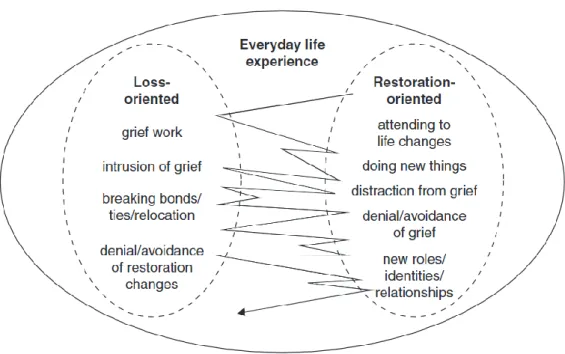
81 Two of the four interviewees described their loss of a career in dance as related to the loss of a relationship. By explaining their experiences as a loss of a human relationship, the researcher observes how a dance career is viewed as both types of loss described in Parkes' Psychosocial Transition Theory (1998), a physical loss and a relational loss. Leigh explained how she struggled with the loss of her dancer identity and felt lost as she tried to decide what to do after her previous career and how to transition into something new.
To add to the above, Leigh went on to explain how she saw herself as the dancer of the family, but now she wasn't and stated that the first 18 months were difficult because of this loss of her identity as a dancer, which she felt forever. all her life. For others, a loss of social network meant losing certain social groups completely or losing social interactions in specific situations. This loss of social networks can also translate into a loss of support from those social networks.
Chad had a negative view of losing his friendships and, at the same time, acknowledged that colleagues and friends will change as the environment changes. The idea of losing the social network can be extended to the loss of "place" or belonging. We can see that they are reacting to the loss or pending loss of safe space and structure, and the interviewees experienced what Parke's Psychosocial Transition suggests, grief, as they described difficult, overwhelming and frightening emotions.
There was a loss of an expressive outlet that Emma experienced: "I miss acting the most, it was a great outlet". Chad mourned this loss of physicality, while Leigh described a recovery process through finding balance and finding ways to stay active. Secondary losses indicate what dance meant to the interviewees and is part of their assumed world.
Preparation for an exit
Sophie explained how the Cecchetti teacher qualification was a natural progression from the courses and exams she took as a student and completed many years before transitioning into a career. Emma explained how, a year and a half after her career transition, she's still figuring out what she wants to do. She began teaching ballet and pilates as a locum instructor while still performing, and three years before making the career switch Sophie took over a pilates studio.
Sophie, Leigh and Emma's career transition was voluntary as they decided to leave their acting careers and career transitions behind. Chad's career transition was different; he ended his regular professional career as a ballet dancer in December. He planned to do this for a few years before making another career move into health and safety in the arts.
At the interview, Chad had been undergoing a career transition for about 18 months and did not expect to return to a professional dance performance career. When a career transition was voluntary, there was an emotional response, including grief over the loss of the old career and the uncertainty of the new career. However, these psychological preparations did not consistently minimize or eliminate post-career transition grief.
Overall, this theme's observations indicate that amount of preparation did not consistently result in experiencing less loss and grief following a career transition. As the career transition is where they diverge, one interviewee (Sophie) overcame her career loss and quickly reshaped her inner world, while two interviewees (Emma and Leigh) took time to grieve and reshaped their inner world. This probably meant that her career transition was not perceived as a challenge, but as a loss as she tries to navigate and find a new place.
Support systems
Sophie added to this by saying that although she does not recall any specific conversations about the career transition, she was private about her personal life, particularly with the management of the ballet companies (including CTCB) she worked for, and did not allow the ballet company the opportunity to to give her any advice or help. It's worth noting that the new career was something Sophie felt she needed to explore without the help of a ballet company. Although Emma described how her group of ballet friends changed after her career transition, she felt that friends and family provided constant support.
Emma explained how when she decided to leave, half of the ballet company's management was upset and the other half didn't care, and this was neither positive nor negative for Emma. Chad described how he felt he had to keep his studies a secret from the ballet company. 97 of contact with his former work colleagues from the ballet company, some of whom ask him.
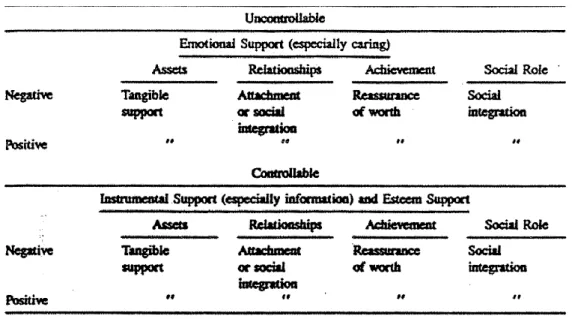
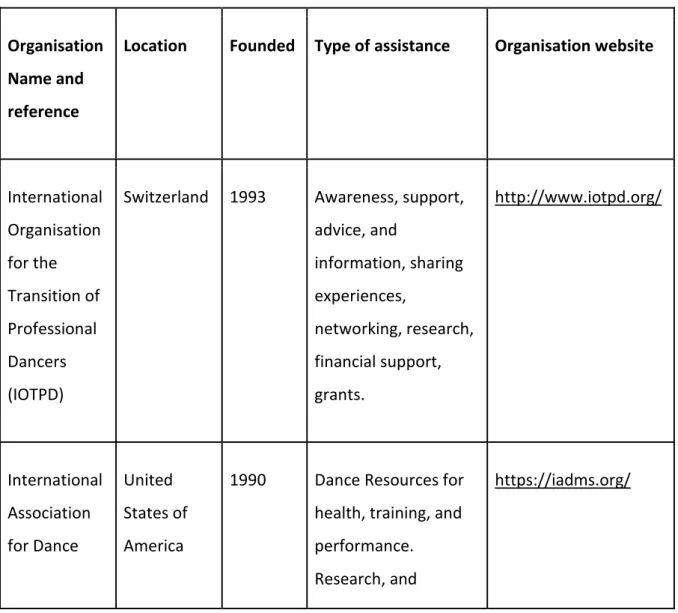
Chad's experiences demonstrated this as he isolated his studies from the rest of the ballet company and after his career transition felt that his entire social network had changed. Tangible help, for example the Ballet Benevolent Fund, has provided this kind of support to Chad through its financial assistance. Sophie and Emma recognized the Ballet Benevolent Fund but did not make use of it.
None of the interviewees described any form of counselling, mentoring or professional guidance in their career transition. None of the interviewees received adequate and timely support advice from any of the ballet companies (including CTCB) they have worked for throughout their dance careers. Sophie acknowledges that she was a private individual and may not have given the ballet company a chance to offer this advice.
South African experience versus outside South Africa experience
The Ballet Benevolent Fund was available to interviewees, but only one benefited from the fund. The experiences of the four interviewees show how they relied on their own personal resources for support. The researcher's interpretation of the interviewees' experiences is classified differently from Roncaglia's career transition model for ballet dancers (2006).
While there are shared experiences of loss, individuals perceived loss and its importance in the career transition process. There were positive experiences of primary loss, such as more freedom and time. This is derived from athletic identity theory and the Athletic Identity Measurement Scale (AIMS) (Brewer, Van Raalte & Linder, 1993).
There was a lack of counseling, mentoring and professional guidance, none of the interviewees received this from the CTCB. Supporting others: None of the interviewees talked about helping others with career transitions. The last theme compared the experiences of the interviewees with the experiences observed in some of the current literature in the field that the researcher reviewed.
There is considerable similarity in the experience of sacrifice, dedication and focus described by the interviewees and described by some of the current research on dancers and career transitions (Bennet 2009; Jeffri, 2005; Jeffri & Throsby 2006; Roncaglia, 2010). The similarities between the experiences of the interviewees and Roncaglia's Career Transition Model for Ballet Dancers (2006) are significant as they suggest that what Jeffri and Throsby (2006) indicate career transition experiences are similar but individual as they are influenced by a person's experience. resources and dance profile they find themselves in. Overall, the career transition experiences of South African ballet dancers are similar to the experiences discussed in some of the current literature focusing on career transitions in America, Europe and Australia.
The next step was to review and critique some of the current literature in the field on dancers and career transitions. A dancer dies twice': The unique, sad challenge of retiring from ballet Award-winning ballerina Wendy Whelan is just one of many professional dancers struggling to transition to new careers as they reach middle age.
EXAMPLE OF INTERVIEW QUESTIONS
EXCERPTS FROM FOUR INTERVIEW TRANSCRIPTS
So I'm definitely a numbers person and I did accounting during school and it was also one of my career options. Oh, I want to be an optometrist, you know, as a kid, you have all these dreams (laughs). And was there any kind of support you had during this planning phase of your career transition.
And I didn't really have peer support, obviously my friends knew about it and were supportive, but from. Amy: And do you think your social network and your lifestyle has changed at all from performing to now? I did a lot more when I was in the company, I think I got a little lazy in my old age, so yes and no.
No, because I don't dance anymore, but yes, because I can't deny that a whole career has happened and I was a dancer for most of my life. So I think it's like the way you still carry yourself, the way I think it, it continues with you even if you're not dancing. People still say oh you the dancer but I go yeah but I don't know it's yes and no.