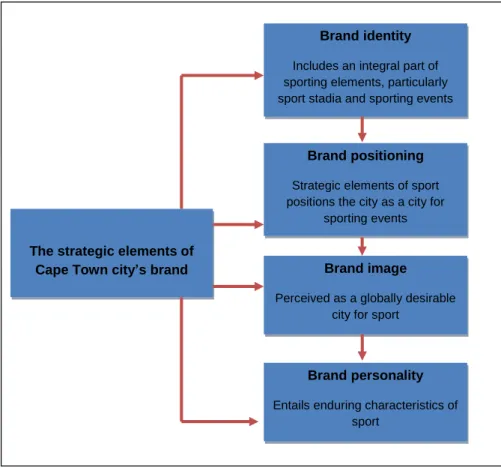
This particular study was based on investigating the strategic value of sport for the City of Cape Town brand. Its aim was to discover the role of inclusive sport (sport mega-events, sports facilities, sports teams and personalities, commercial sport brands and sponsors) in the development of the Cape Town brand.
Research problem statement
With the development of the Cape Town city brand as a result of globalization and the impact of sport on the city's society, this specific research questioned the strategic value of sport for the Cape Town city brand. The aim was to show the impact of sport on the city branding practices of Cape Town authorities in attracting sport, and to compare these factors with other national and global cities in terms of global competitiveness.
Research questions
As a result, this particular study aimed to assess the perceptions, opinions and knowledge of sports brands and city actors. The study aimed to benefit from stakeholder outreach and collaboration during the development and positioning of the City of Cape Town's competitive sports brand.
Objectives of the study
Overview of methodological approaches
The stakeholders were selected based on the characteristics that influence their perceptions and experiences regarding Cape Town's branding. City brand representatives included: the Director of Place and Destination Marketing (City of Cape Town - COCT); Director of Sports and Recreation for COCT; Chief Director of Sports and Recreation for the Western Cape Provincial Government (WCPG); and Marketing Manager, Accelerate Cape Town (ACT).
Delineation of the study
In this study it was decided to keep the names of the respondents confidential, although the job title and organization are only referred to as they are relevant to the discussion. Although this may have had a limitation in terms of a certain degree of bias in stakeholder responses, it was important for this study to obtain rich and in-depth data with stakeholders directly involved in the development of the Cape Town brand .
Significance of the study
While this study looked at the significant impact and important role of sports in city brands, it did not include a heritage assessment of sports for city brands, although the assessment of sports-related legacies appeared among the stakeholder responses.
Key terms used
The first is the marketing of sports products and services directly to sports consumers. Second, it is the marketing of other consumer and industrial products or services through the use of sports promotion (Mullin, Hardy & Sutton, 1993:6).
Thesis layout
For this reason, sport marketing can be defined as "the application of marketing concepts of sport products and services, and the marketing of non-sport products through an association with sport" (Smith 2008:3-4; Hoye, Smith, Nicholson, Stewart and Westerbeek , 2012:9). The term "sport tourism" was coined to better understand the use of sport as a tourist endeavor (Kurtzman & Zauhar, 1997).
Summary
The final chapter, Chapter Six, draws conclusions from the main findings of this study and assesses whether this study has achieved its objectives. Limitations of this study are acknowledged and future research, based on these limitations and shortcomings, is recommended.
Introduction
Globalisation
This in turn results in an inherent relationship between sports management and sports marketing as the global sports market evolves. In light of this study, there is a strong emphasis on branding, which is a subset of sports marketing.
Sport marketing
Marketing through sport
While these associations are related to the traditional sports industry, there are studies that indicate that city branding through sports can contribute to this application from a city marketing perspective. As a result of these studies, it can be assumed that the element of city branding contributes to the application of marketing through the sports association.
Place and destination branding
- Defining a brand
- Strategic branding process
- Brand identity
- Brand positioning
- Brand image
- Brand personality
- Place branding
- Destination branding
For the consumer, the brand communicates the concepts of the brand (i.e. brand image) "which include perceptions of quality and values as well as brand associations and feelings". Therefore, apart from the general elements, it is also important to determine the element of sport as a value proposition to the brand identity of the overall Cape Town brand.
City branding
Re-imaging a city brand
During a review of the literature on city branding, the term “reimagining” or “reimagining” was consistently used. Smith (2005) described the process of re-imaging as the deliberate exploitation of a particular industry to transform the image of a city.
Partnership and stakeholder involvement in city brands
Despite these differences of opinion, Hiller (2000) argued that the Cape Town bid allows for a suitable partnership between public and private industry as well as an additional implementation of government policy. For this particular study, it was therefore essential to learn about sports brand and city stakeholder partnerships and uncover their cohesive working relationships during the development of the Cape Town brand and sports brand.
The Cape Town city brand
This writer said that Cape Town's local government and stakeholders are realizing that the city has more value than simply being a natural attraction or holiday mecca. As well as determining the competitiveness of the Cape Town brand, this study therefore made a national comparison with cities such as Johannesburg and Durban, with a specific focus on sport - which was the focus of this study.
Sport tourism and its association with city branding
Before reviewing the impact of sport on city brands, the following section reviews the literature on sport tourism, as this study has identified a key relationship between the two industries. The definitions of Pigeassou, (2004), Weed and Bull (2004) and Higham (2005) which emphasized the economic, social, cultural and place and city opportunities therefore relate best to the purpose of this study.
The impact of sport on city brands
- Sport mega-events
- Sport facilities
- Sport teams
- Sport personalities
- Commercial sport brands and sponsors
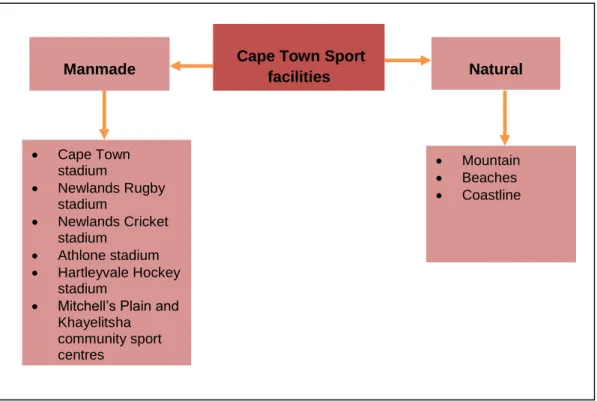
During Cape Town's bid for the Olympic Games, one of the goals was to improve the economy of the city as well as promote South Africa's interest in the global economy (Hiller, 2000). For this particular study, it was important to determine the value of sports facilities for the Cape Town city brand.
The contribution of sport to the Barcelona and Melbourne city brands
The case of Barcelona
By 1981, the then socialist mayor of Barcelona, Narcis Serra, who later became deputy prime minister, promoted Barcelona's bid to host the 1992 Olympic Games (Hargreaves & Ferrando, 1997). The 1992 Summer Olympics in Barcelona marked a period before and after, a turning point in the efforts to transform and project the city internationally" (Belloso.
The case of Melbourne
With goals in place such as; "for Barcelona to become a better forum to meet athletes from all over the world, to offer excellent competition in accordance with the Olympic spirit, and to promote a major urban transformation that would improve the quality of life and the attractiveness of the city" (Brunet the city of Barcelona won the offer to host the Games The Barcelona 1992 Summer Olympics marked a before and after, a turning point in the push for transformation and international projection of the city” (Belloso, 2011:120).
Summary
During 1980 and beyond, Melbourne was able to continue to benefit from its transformation and in 2006, the city of Melbourne hosted a number of international sporting events such as the Australian Open tennis tournament, the Commonwealth Games, Formula One Grand Prix as well. as cultural events such as the International Flower and Garden Show (O‟Hanlon, 2009). According to Misener and Mason (2009), the city of Melbourne is considered the "Sports Capital" of Australia and has succeeded in inspiring other Australian cities to redesign and upgrade their cityscapes.
Introduction
Qualitative research paradigm
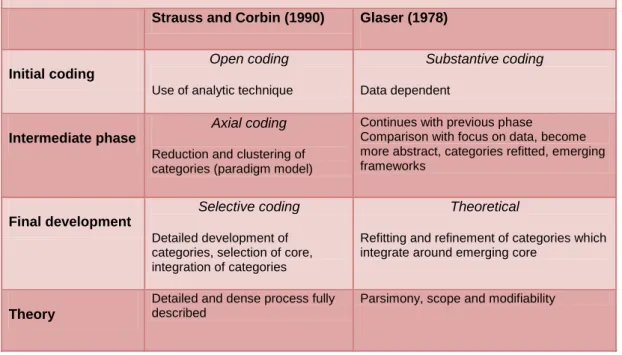
Heath and Cowley outlined a comparison of the data analysis process in Table 3.2 according to Strauss and Corbin's (1990) and Glaser's (1978) grounded theory perspectives. For this particular study, it was important to adopt a grounded theory design based on Strauss and Corbin's (1990) method of data analysis.
Data collection
- Interviews
- Semi-structured interviews
- Sample size
- The interview design
- The interview procedure
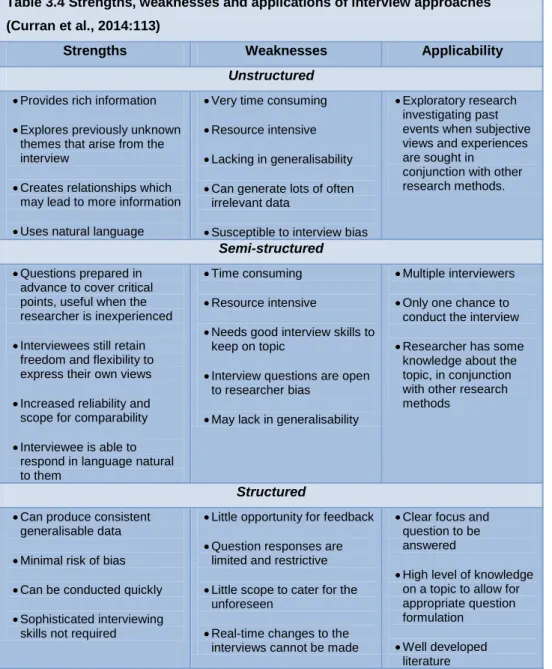
This qualitative research method provides a rich and meaningful overview of stakeholder perceptions of the strategic value of sport for the Cape Town brand. Based on the application process of the semi-structured interviews, the interview approach for this specific study was selected.
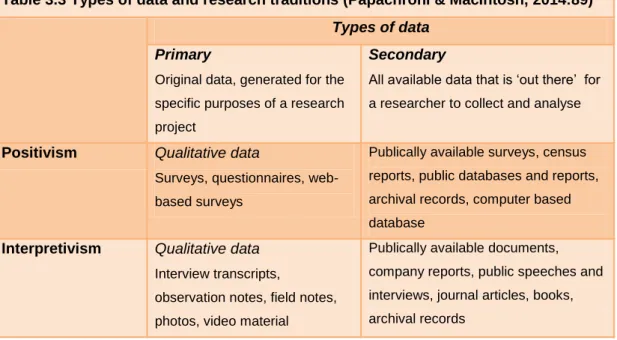
Data analysis
Qualitative data analysis
While reflecting on data collected, the researcher notices specific gaps in the data that mean the researcher needs additional data. An approach this particular study used to make sense of the data collected was through coding.
Data preparation and coding
The data analysis started with the researcher carefully reading the data and assigning a code to the relevant statement related to an interview question considered to be open coding. The researcher compared all field notes with the coded data and was able to verify insights.
Validity and reliability of data
This procedure is when the researcher is able to draw conclusions regarding the study and verify the conclusions with reference to the researcher's existing field notes and discussions during the data collection process.
Ethical considerations
In addition, the anonymity of the respondents was not entirely necessary, as the data does not imply any company, organization or individual, nor does it contain any sensitive data. These letters of consent complied with the Cape Peninsula University of Technology (CPUT) Ethics Policy and this study was approved by the Ethics Committee (see Ethics Approval, Appendix C).
Reflexivity
During the fieldwork for this particular study, the researcher was careful to observe and record any thoughts and feelings about the research process. In addition, the researcher acknowledged her academic background in sports marketing which influenced the selection of the research question.
Summary
Development of codes
During the data analysis, individual codes were assigned to the relevant passages of the transcripts. Individual codes with a similar theme were then clustered under a family code, as shown in Table 4.1.
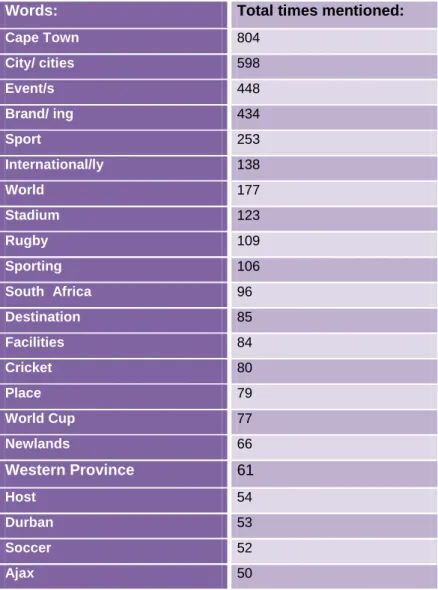
Keywords used by stakeholders when describing the significance of sport to the Cape Town city brand
It wasn't surprising to see the words "Cape Town" pop up as often as it did. This therefore indicated the importance of these two sports codes for the development of Cape Town city's brand compared to other sports, such as football, which was mentioned 52 times.
Cape Town as a global city
Describing the motivation for city branding
The Director of Places and Destinations Marketing at COCT described the practice of city branding as a promotion strategy; publicizing the city's brand as a top destination through a specific industry. Another respondent linked city branding to a promotion strategy by referring to the height of a city's profile:.
Brand associations linked to the Cape Town city brand
- The distinctive city brand identity
- The global city brand image
- Describing the Cape Town city brand personality
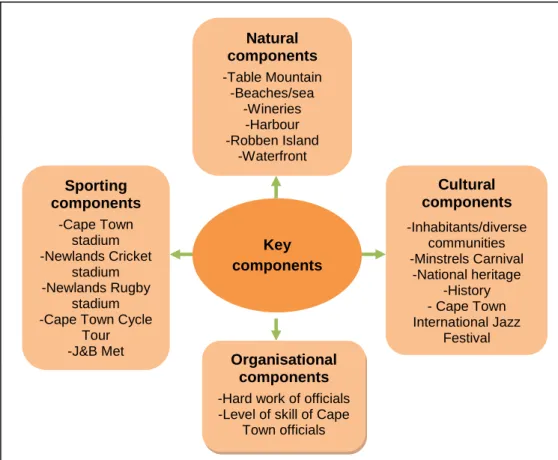
- Key components unique to the Cape Town city brand
The findings of key elements that make up the Cape Town brand are reported later. However, the history of Cape Town city also seems to have played a role in describing the city's brand personality.
The impact and importance of sport for the Cape Town city brand
- Sport mega-events
- Sport facilities
- Sport teams and personalities
- Commercial sport brands and sponsors
Cape Town and South Africa, whatever our past is' (Director of Sport and Recreation, COCT). It was important to find out how stakeholders perceive the role that Cape Town's sports teams and personalities play in the city's branding.
The Cape Town brand compared with other national and international cities
National comparisons
I am not far off the mark when I say that Cape Town is actually the city of choice for most international federations. A key comparison was made in relation to the outdoor sporting activities that Cape Town has to offer as a result of how the city is structured compared to other national cities e.g.
International comparisons
Often seen as "the business center" (Director of Place and Destination Marketing, COCT), the city of Johannesburg was rarely linked to a typical sports destination. However, since these sporting events are not played everywhere, the respondents did not elaborate on the city's competitiveness.
Cape Town city’s competitive advantage
Significantly, this particular stakeholder identified the 'natural environment' and 'geographical location' of the Cape Town brand as one. Another respondent cited the "successful organization of the 2010 (soccer) World Cup in Cape Town and the rest of the country" (Director, CTCTT) as a sports mega-event linked to the city's favorable comparisons.
Limitations of Cape Town city’s sport brand
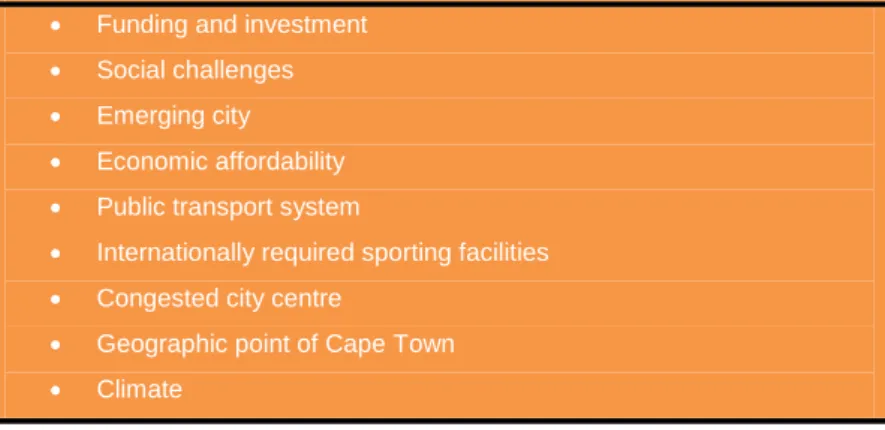
Following the perceptions of the competitive advantages of the City of Cape Town, it was important to determine if there are any limitations to the Cape Town brand. Director of Places and Destinations Marketing Manager at COCT revealed another challenge for the Cape Town brand.
The role of stakeholders in branding Cape Town city
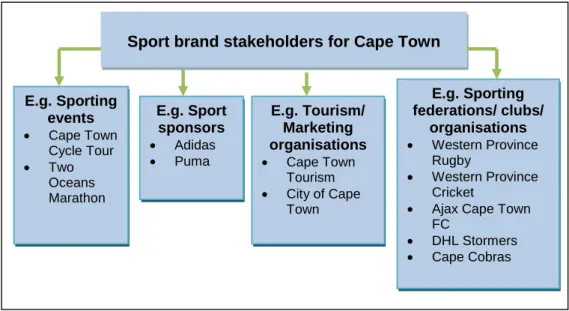
Identifying the main sport brand stakeholders
Most stakeholders struggled to identify who the most important stakeholders in the sports brand are, believing that "it doesn't matter where you sit, everyone thinks they have something to say." For example, "the sports federations are the most important to Cape Town's sports brand" (Chief Director of Sport and Recreation, WCPG).
Stakeholder relationships
There is a perception that some of these clusters of stakeholders may be more important than others in terms of the sports brand. Although sports federations were widely perceived as the city's main sports branding stakeholders, this was justified by the amount of sponsors it attracts.
Future plans and strategic developments
All organizations have their agreements and disagreements, but one of the nice things is that we have quarterly meetings with all organizations, and when we are at the quarterly meetings, everyone is mature and we are able to have discussions”. Interestingly, in relation to an exclusive major sporting event in Cape Town, the CEO of CTCTT reported that their event will undergo a colossal transformation that will enhance the marketing of the Cape Town brand through sports.
Summary
The future plans and strategic development of the City of Cape Town therefore include strategies for holding large events, sporting and otherwise. The findings not only revealed the value-added benefits of sport for the city of Cape Town, but also highlighted the important role of Cape Town's sports brand stakeholders involved in positioning the city's sports brand.
Globalisation and city branding
Furthermore, Gibb confirmed that "while it may not be a top contender, Cape Town exhibits global city characteristics such as the increasing aggressiveness of urban planners and development practitioners in attracting foreign investment, marketing campaigns strategic and reception. of high-profile events that provide valuable lessons for aspiring cities of the secondary world”. This then confirms that Cape Town is a serious contender for inclusion in globalization as a result of its city branding.
The importance of strategic city branding
Although Cape Town's brand identity has since been transformed (incorporating both destination and municipality elements), the complexity of strategically positioning the city's brand identity still remains a challenge. Stakeholders are therefore encouraged to diligently plan their efforts around the execution of the Cape Town City Brand in order to clearly position the adopted City Brand.
Strategic elements of Cape Town city’s brand
Brand positioning
Kavaratzis and Ashworth (2005) expressed that the brand positioning of a city, through its value proposition communicated to its target audience, should also demonstrate the city's competitive advantage. Although the findings indicate some ambiguity in the minds of stakeholders regarding the brand positioning of Cape Town due to the previously mentioned undefined brand identity of the city, the city's accurate brand positioning is revealed.
Brand image
Association of stakeholders with the destination brand of the city was therefore strongly considered to prevail over any association of sport with Cape Town's brand image. Interestingly, some stakeholders still focus on the branding image of Cape Town's political history in “not providing equal opportunities for all” (CEO, WPCA).
Brand personality
The contributing role of sport to Cape Town city’s brand
- Other event types
- Sport facilities
- Sport teams
- Sport personalities
- Commercial sport brands and sponsors
However, not all of Cape Town's sports teams were recognized for contributing to the value of the Cape Town city brand. From a branding perspective, there appears to be minimal marketing done around Cape Town's sports teams (for example, Ajax CT FC) in relation to the city's brand identity.
National and international competitiveness
Therefore, sponsors, through broadcasting, are seen to contribute significantly to the city's brand awareness. As a result of stakeholders in the city of Durban realizing the opportunities for sport and more, the commitment to invest in sports budgets, it is clear that the value of sport is better promoted.
Limitations of Cape Town’s competitive sport brand
The limitation of the city's economic brand is recognized and further addressed via the strategic efforts of Cape Town's city authorities. Therefore, the geographic location of Cape Town is an advantage for the city's local or national (domestic) sporting brand, but has a potential negative factor in attracting international sporting events.
The importance of sport stakeholders for the city branding processes
Cape Town's competitive sports brand is therefore challenged and hinders the city's chances of generating more sporting events as well as increasing future global sports business opportunities. Therefore, partnerships between sport and city actors are critical in developing Cape Town's city branding process.
Future implications for sport in the development of the Cape Town brand
A further implication for sport in Cape Town stems from the earlier discussion of the role of sports facilities for branding Cape Town. Clearly, the decision to move Newlands Rugby to Cape Town Stadium, for example, has yet to be made, but the future of sport in Cape Town (rugby) is in the hands of the sports brand's stakeholders.
Summary
This chapter added that these entities of sport do indeed contribute positively to the Cape Town brand and bring immense value-added benefits to city brand identities, local economies as well as the local population. It is believed that this partnership will strategically use sport as a branding tool to help with the future branding of Cape Town's brand.
Introduction
Revisiting the research question, objectives of the study and methods used
To highlight the strategic elements that make up the brand associations of the Cape Town city brand;. To investigate sports brand and city stakeholders' perceptions of the role and impact of sport on the Cape Town city brand; and.
Summary of key findings
To determine the strategic value of sport for the Cape Town city brand in relation to national and international cities. The value of commercial sports brands and sponsors for the Cape Town city brand is not so easily discernible.
Implications of this study for stakeholders
As stakeholders believe that the sporting events included in this strategy showcase the potential of Cape Town's sporting brand (albeit on a smaller scale), the wider vision of this strategic partnership as well as COCT's overall goal of becoming the 'Events Capital' of Africa is being realised. In order to add value to Cape Town's potential sports brand, this study recommends that the City of Cape Town and other national cities wishing to establish their own sports brands should consider developing strategic partnerships with major sports as this would enhance the city's credibility as a leading entity for sports .
Limitations of this study
As a result of the focus of this study, it made sense to gain insights, opinions and perceptions from Cape Town stakeholders to obtain rich and meaningful data. This would also have provided a more complete perspective on the development of other new city brands and their competitiveness compared to Cape Town's brand.
Recommendations for future research
However, the research could have benefited from getting stakeholders' perceptions of other national cities about their insights and experiences with the strategic contribution of sport to their city brands.
Final remarks
These sporting events therefore position the competitiveness of the Cape Town sports brand nationally and globally. The purpose of the research is to analyze the strategic value of sport for the Cape Town city brand.
PLACE AND CITY BRANDING Question 1
Today's purpose is to elicit your experiences and perceptions about the role of sport in the city in order to identify a strategic link between sport and the City of Cape Town brand.
IMPACT AND IMPORTANCE OF SPORT TO THE CAPE TOWN BRAND
STAKEHOLDER INVOLVEMENT AND STRATEGIC IMPLEMENTATION