I also connect the prostitute's body as an imaginary site of cultural detritus and the discursive construction of the "wild" female body. I then turn my attention to the discursive construction of the female 'African body', contextualizing the work of Tracey Rose and Bernie Searle respectively.
Skin
The female body is thus associated with immanence and corporeality, and the female subject is relegated to the space-off of the marginalized abject. This results in the interplay between the imaginary and the biological in phallocratic discourse that reproduces the female subject as deficient in her general constitution.
The myth of sex: psychoanalytic theory and sexual difference
The problem with emphasizing the rational landscape of the word (logos) is that it denies the contributions of the maternal body to life: the maternal body is replaced by language, which in turn displaces women (who are mistaken for the same thing) from a positive place in the symbolic order. This process of ego formation is resolved, as in the Oedipal structure, by the loss and violent rejection of the mother.
Feminist interventions
I will look at Kristeva's conception of the semiotic chorus in order to question the action of mother/semiotics in the symbolic. For Butler, gender operates within the logic of the drag act (which is not to say that gender is a drag act of self-conscious and even humorous imitation).
Reading flesh art against the phallus
Thus, the privileging of the symbolic (that is, the phallic organization of language and drives) in conventional, logocentric theater reiterates the world-forming, performative power of the word, while at the same time negating the material basis of language (that is, the body). . This structure in fact reproduces the doctrine of individualism privileged in the logos of the discretely speaking subject.
The female body as space: a (concise) genealogy
In the Oedipal scenario, the occurrence of castration is central to the narrative development of the subject's ego. In psychoanalytic discourse, the trope of the mother can be seen to displace the iconographic Madonna.
Women as biomedical space
This “one sex” model, inherited from Aristotle, reiterated that the female body and genitals were an inferior version of the male. So far I have focused on treating the female body as space, that is, analogous to space.
Women's space: home-bodies
Women become the guardians of the private and the interpersonal, while men build conceptual and material universes. Let us look further at Irigaray's thinking in relation to the idea of the domesticated female body.
Bodies in space
Thus, the female body moving along spatial paths inconsistent with femininity potentially disrupts the mechanics of social theater. This theatricalization of the female subject, I argue, displaces women from both culture and self (that is, a subjectivity or self that is not the inferior term of a male/female binary).
A (concise) historical overview of theatre space as gendered space
In feminist performance art, the power of the object is harnessed to double or restore the observing gaze. The theatrical gaze turns to the spectator so that he/she is involved in the performance and interpretation of the performer's body in time and space. However, in the body of the theater actor, the illusion of presence and his/her appeal to the authority of the written text is preserved.
In this chapter I will discuss the structure of the canon before outlining some theories of canonical criticism.

A definition of 'the canon'
The structural boundaries of the canon exclude the immanence and corporeality of the individual, gendered body. According to Alberro (2004), Kant divides aesthetics on the artificial dichotomy of the beautiful and the sublime. In the presence of beauty, the human subject experiences a pleasant sense of alignment between the mind's faculties and the mind's experience of reality.
However, the immanence of the female prevents her from making such judgments about standards of taste.
Critiquing the Canon
Liberal feminism emphasizes "the parity of women with men, based on universal values" (Austin 1990:5) and the sovereignty of the individual. But simply incorporating women's work into any canon does not necessarily challenge or change the structure of the canon. Radical feminists address the idea of a "feminine aesthetic" and of the necessity of constructing an exclusively female culture in order for women to realize themselves.
A poststructuralist analysis of the body offers the possibility of reclaiming the female body from classical and homogenizing forms of representation.
The textual-maternal or reproducing the other as the same
The maternal Elsewhere is always an Elsewhere that is not represented or is unrepresentable in phallocentric cultural forms. The clitoris, within the sexual and symbolic phallic code, is not only ambiguous but a threat to the autocracy of the phallus. The potential activity of the clitoris is threatening to the myth of male sexual dominance.
In canonical dramatic texts, this impeccability of the female subject is established in a formulaic method of centering action ('action') and action around the male protagonist.
Performance art
It is the 'spatio-temporal coordinates of the event' that were problematized in the performance art that tried to give a temporality to the event/theatrical aesthetic object. The "events" of the 1970s especially set a precedent for performance art as distinct from art or theater. Thus, following Schneider's logic, the display of explicitly female bodies in performance art questions the construction of the primitive body.
Performance theory developed out of a reassessment of the construction of the dramatic canon, a critical shift conditioned by the development of performance art.
Orlan gives birth to her loved self: Formative performances
Orlan's transgression of the boundaries between private and public body intervenes in the body politic. I previously referred to abject materiality in terms of the feminist trope of the mother. In Freudian psychoanalysis, the head of the Medusa stands in as a representation of female genkals.
The image of the all-consuming mouth can be found again in the myth of the vagina dentata.
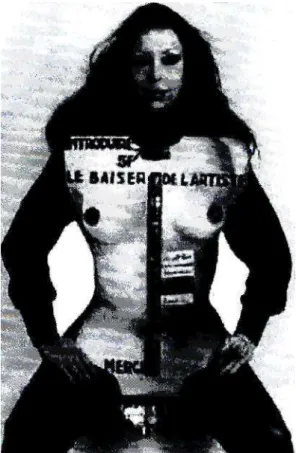
The iconography of St Orlan
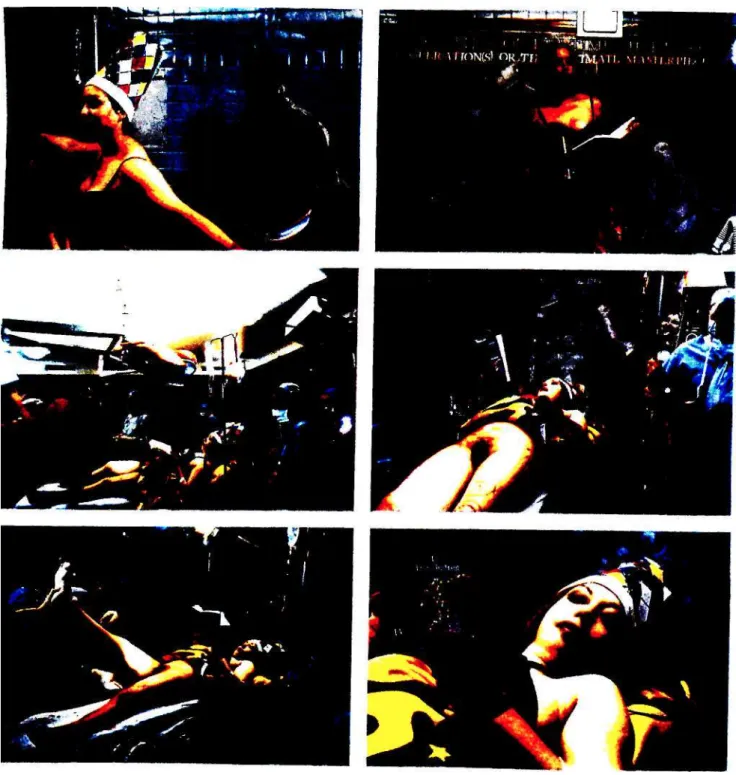
This twofold approach fits in with the construction of the Baroque aesthetic of the double or fold. During the development of the iconography of St. Orlan, the artist performed several episodes in the Drapery-The Baroque series. The dialectical image functions here again in the representation of St. Orlan, while the sacred and the profane meet in the image of the saint.
This historical analysis is concurrent with the production of emergent, feminist body knowledge.
The body opened: The Reincarnation of St Orlan
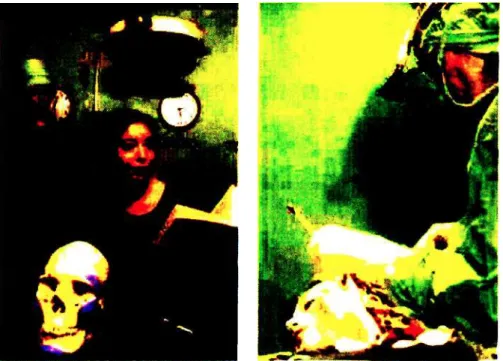
Orlan's development of her previous work with clothing, drapery and their relationship to the body is directly related to the treatment of the skin in her surgical performances. That is, the united surface of the sign is disturbed by the wound in the body, which shows the margin between surface and interior. The interest in Orlan is not so much in the plastic results of the operation, but in.
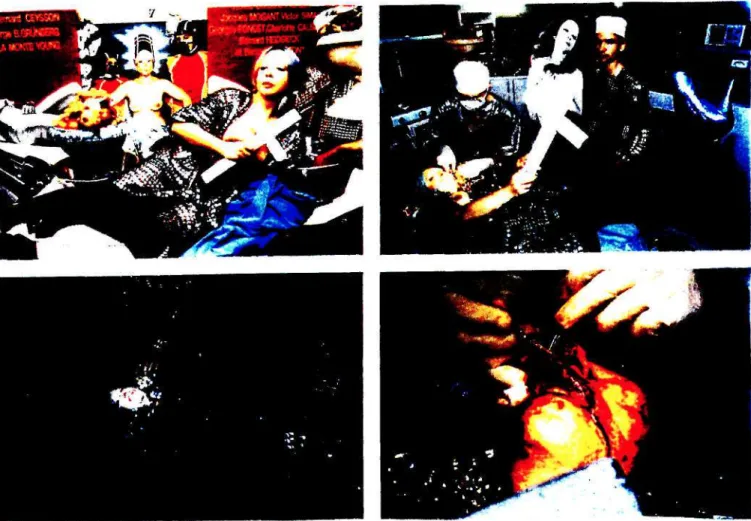
As with all operations, the surgeons wore designer gowns (by Charlotte Chalderberg in Art Charnel).
Omnipresence: the making of a woman-to-woman transsexual
The grotto or cave of the female gender is extended to Orlan's exploration of the interior of her body and especially her face through her surgical achievements. However, the production of an image that bleeds and swells is a contradiction in terms, as the surface of the image (and therefore the image itself) is destroyed by the refusal of closure. Orlan has said that her body is her software, an inversion of the Cartesian dualism that privileges the mind over the body.
The self-reflexive narcissist, that is, Orlan, consciously removes his subjectivity from any privileged origin by destroying and recreating the image of the body.
Representation, resistance and transgression
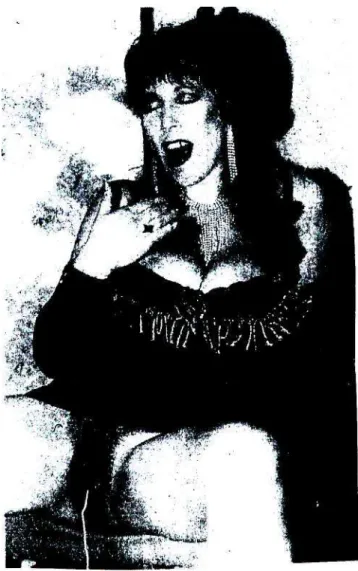
I also critique the ways in which Strip Speak fails to transcend the constraints of the conventional strip show and its structures of male voyeurism. The body object of the stripper/whore can literally be bought by the masculine subject who has purchasing power. In the development of the Strip Speak performances, Sprinkle anticipates his 'market value' and uses the stripper persona to play the voyeuristic structure back against himself.
Kaite (1995:60) says of the pornographic female body that the woman, in her daring exposure of her genitalia, is a vicious but carefully studied reminder (the clitoris can be found) of the loss of the other in relation to the desire of the other.
Transgression: Crossing the porn/art divide
In fact, distaste for the theater has often been expressed in terms of fear of the female body. Furthermore, the performance of the abject body serves to bring the viewer back to the place/sight of the body in. But the use of the dialectical image shows that I am one and the other, porn star and 'ordinary' woman.
These slides demonstrated her ability to earn in the sex industry compared to the average American woman's weekly earnings (then US$243 to Sprinkle's US$4,000).
Post Porn Modernist
What interests me here is the staging of the explicit body in combination with verbal commentary. Sprinkle turned the decorum of classical ballet on its head as she rolled, squeezed and wiggled her breasts. The marble-white silence of the classic white female body is remembered and then invalidated by the moving and changing breasts.
It would be pertinent to recall that the construction of the white female body is based on the denial of color and the "savage" for the "civilized."

Life-art: Seven Years of Love as Art
Here it is also necessary to make a connection between the action that these artists show in their transgression of medical and aesthetic discourses through the opening and closing of the body. The use of multimedia in Sprinkle's performance, like Orlan's documentation of the surgical process, serves to historicize identity and sexuality within a matrix of intersubjective relations and power structures. Desire and language are omnipresent, and by manipulating the body between object and subject of desire, Sprinkle can be seen to actually disturb the skin of “real” female identity and the paternal authority of the symbolic itself.
This analogy between the whore's body and the savage/female body 'of color' testifies to a connection between the oppression of female bodies, desires and language in a Western paradigm and the discursive destruction of the female body/voice/sexuality in imperial paradigm. project.
HEPn
Staging Africans
Proof of racial superiority was sought in the display of the body of the racialized other within a framework that already framed that body as pathologically different. On the other hand, the other's body is observed (Phelan 1993) by an institutionalized metalepsis (that is, taking the effect as the cause). The story of the liberation of South Africa is most often told in the grand narrative of the struggle and liberation of an oppressed people.
The reflexive reframing of the colored female body specifically by these artists is established in the use of a critical mimesis through which the.
Love Me/Fuck Me : Tracey Rose
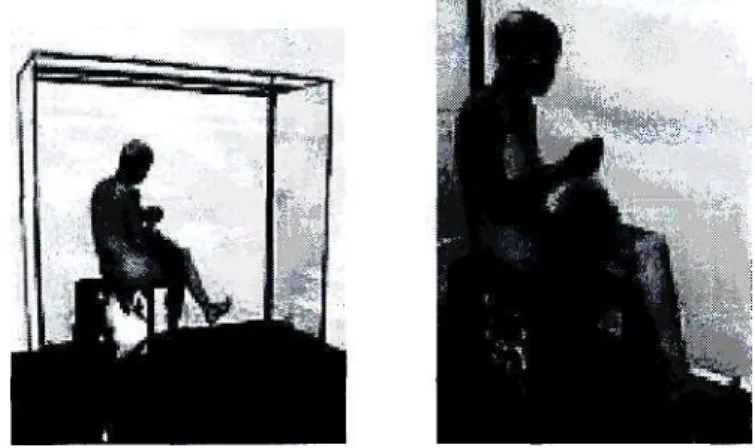
Jamal (2004: no page) describes the composition of the image: "The man is seated on a plinth, back straight, head in meditative profile, living legs dangling in the air. The duality of the work - both mocking and celebratory - is appropriate in the laughing idiom. In Span I, Rose hired an ex-parolee to cut text on a SANG wall.
The body of color sits on the ethnographic border between the imagined pollution and danger of the black body and the purity and civilization of the white body.