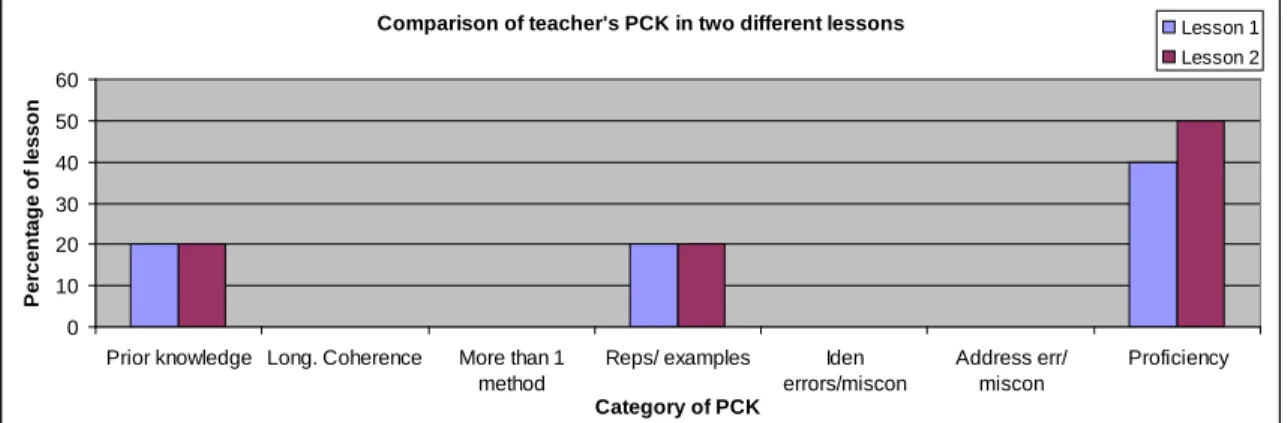
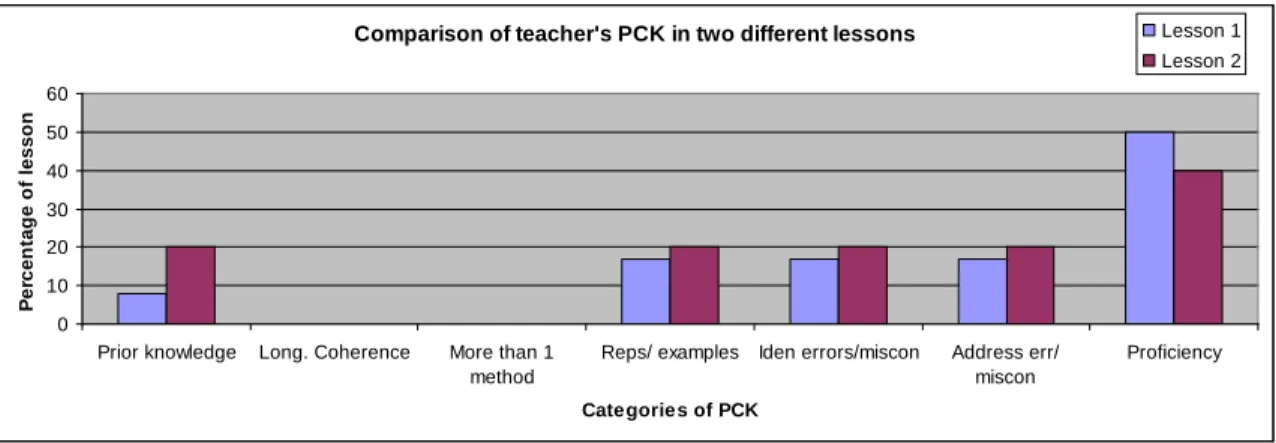
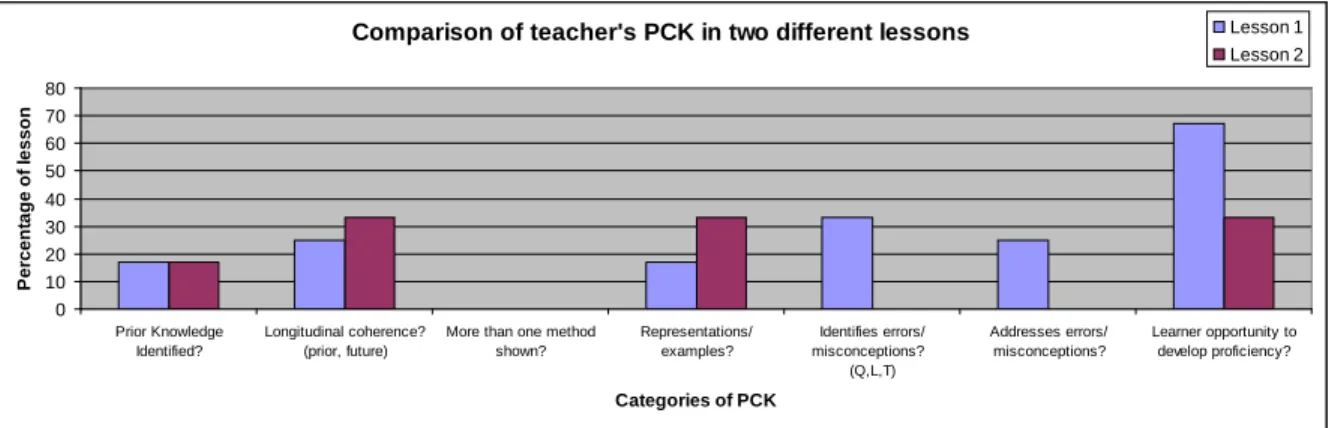
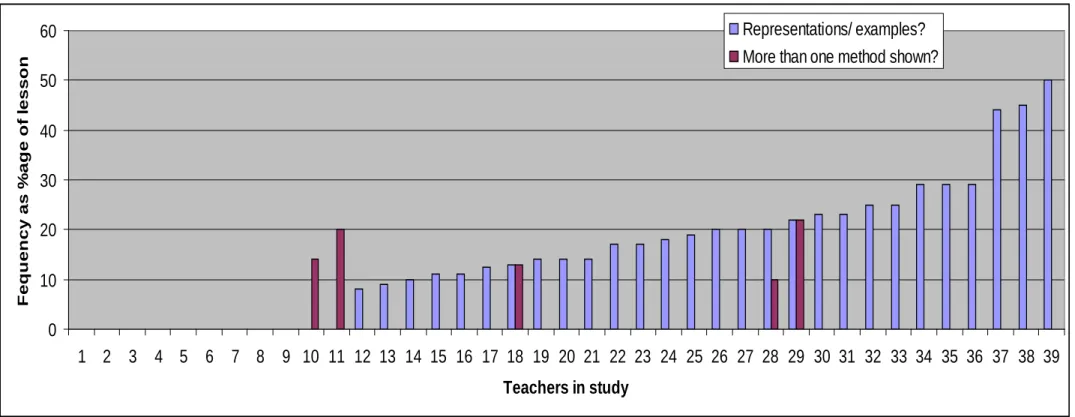
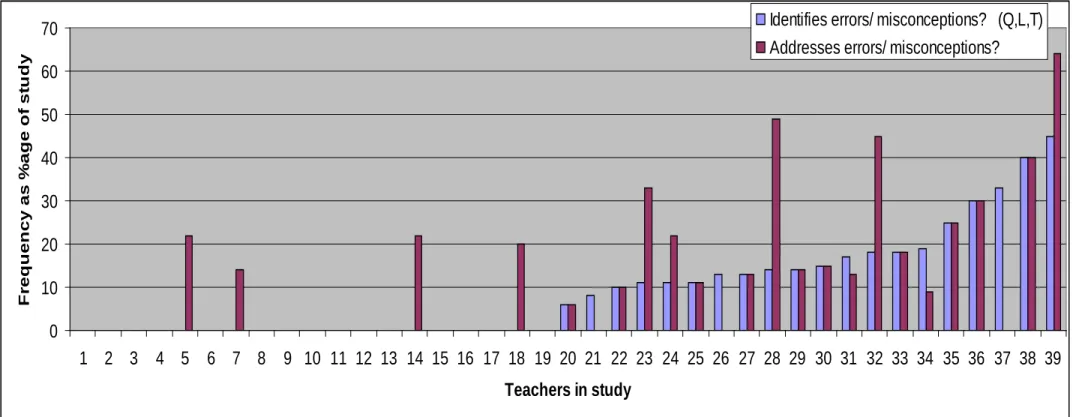
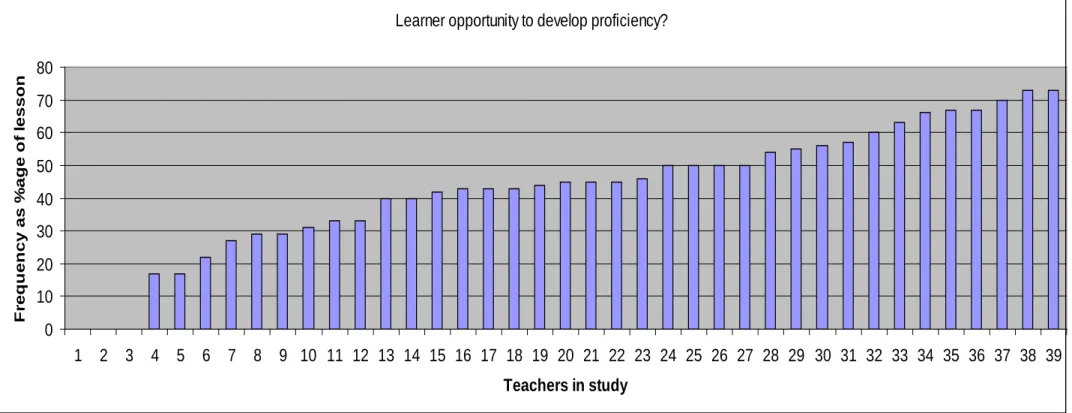
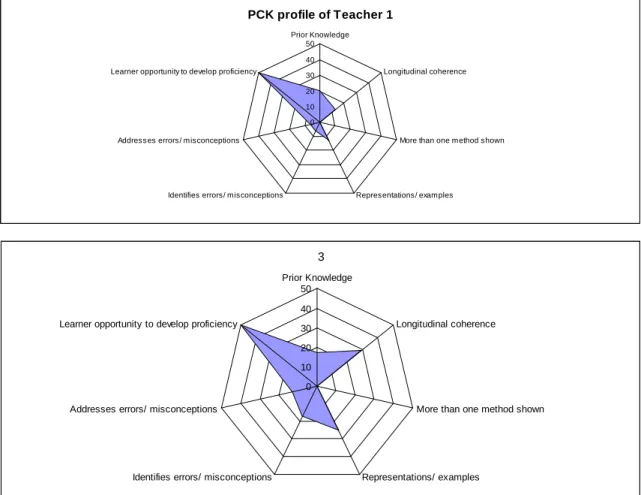
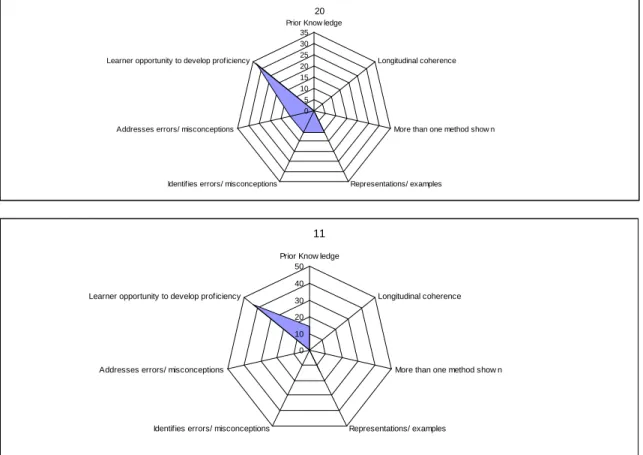
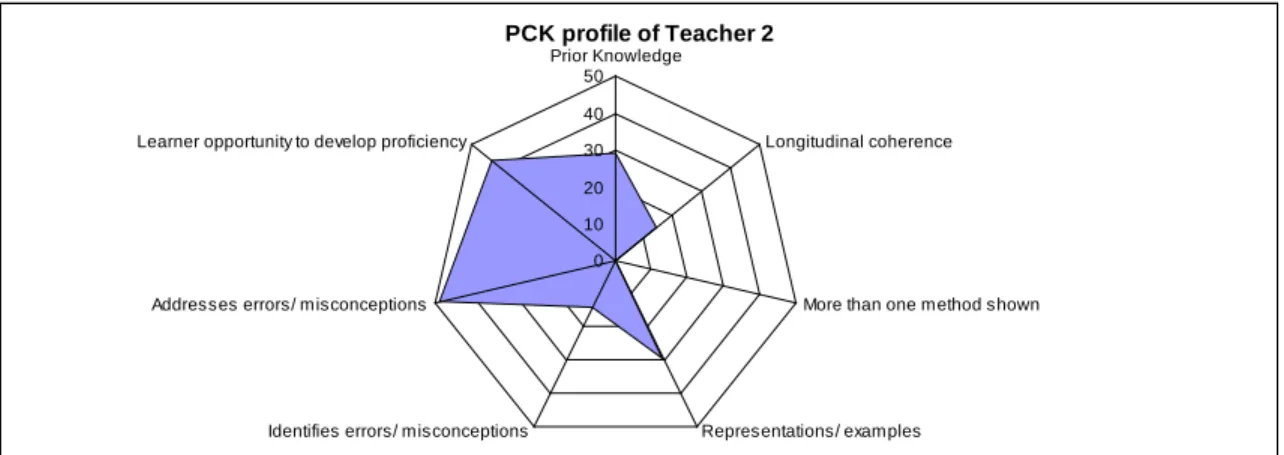
However, little is known about the role of the different types of knowledge that teachers are expected to possess, especially in the context of the developing world. Based on data from my observations, I developed a PCK instrument and tried to measure teachers' PCK. Only a minority of teachers used representations, demonstrated more than one method, demonstrated longitudinal coherence, or engaged more significantly in student thinking (misconceptions and errors).
Crucially, teachers' good knowledge of mathematical content was necessary for high PCK ratings, but there was no significant relationship between teachers' PCK and students' progress in mathematics. It is likely that there are other factors that have a greater impact on student learning than effective teachers, such as the students' socio-economic background. Given the random sample of schools in the study and the various attempts to ensure consistency in my coding and analysis, I hoped that these results would be valid for the wider KwaZulu-Natal area.
However, since I mainly used video analysis of lessons and only part of the teachers' test to determine teachers' PCK, it is possible that I might not have been able to get the full picture of Bi teachers' PCK if I had also interviewed them. Mr. Yougan Aungamuthu for his tireless statistical analysis of the data that allowed me to expand on the conclusions I reached.
INTRODUCTION 1.1 Rationale and Motivation
- Research Questions
- Conceptual Framework
- Regional Achievement Study
- Data Collection
In order to link this to the background variables, I will attempt to provide a measure of the level of PCK; that is, do the teachers demonstrate high or low PCK levels in the observed lessons. Shulman (1986) refers to content knowledge as the 'subject matter' or the amount and organization of knowledge (of facts and concepts) in the teacher's mind, and a good understanding of the structures of the subject material. It refers to a deep understanding of "the variety of ways in which the basic concepts and principles of the discipline are organized to incorporate its facts" (Shulman 1986, p. 7).
If these preconceptions are misunderstandings, as they so often are, teachers need knowledge of the strategies most likely to be fruitful in reorganizing. To do this would mean getting an idea of the measure of PCK that teachers possess. Pedagogical content knowledge or PCK has been around for some time now, but it is still viewed in many parts of the world with more than a little suspicion.
The purpose of the study was to explore and establish the relationship between teachers' mathematics content knowledge, teachers' practice, and student outcomes in 6th grade mathematics classrooms. Several significant relationships were found between aspects of teacher knowledge and teacher characteristics (Sorto et al, 2009, p. 251).
The data collection team consisted of nine members of staff from the School of Education and Development and eleven researchers, including Masters students and unemployed graduates with data collection experience.
My part in the study
Sampling
All schools categorized by the Ministry of Education as quintiles 1, 2 and 3 were recoded for this study into quintile 1, which represents poorer schools, and schools usually categorized as quintiles 4 and 5 were recoded into the new quintile 2, which represents affluent schools. The first 30 schools were selected from the list of quintile 1 schools and the first 10 from the list of quintile 2 schools. The study sample was thus stratified to include 75% of schools with fewer resources and 25% of schools with better resources.
The project did not use rural-urban area as a sampling variable because senior researchers believe there is a strong correlation between rural schools and schools in the lower socioeconomic quintiles and urban schools and schools within the higher socioeconomic quintiles. . Although the aim was to try 40 schools, four schools did not want to participate and had to be changed. I resisted the urge to include a copy of the teacher's original test here, as this thesis is part of a larger project and the test will in all likelihood be used in other studies.
In my study, I mainly focused on the analysis of the videos and used the results of the teacher test PCK questions to support what I. A fairly comprehensive summary of the teacher test results for the PCK subjects can be seen in table 5.1 in the appendix.
Validity issues in data collection
In some cases, there were discrepancies between the first and second student tests, such as student names not matching, or a complete absence of student names on the tests, or a large drop in the number of students taking the second test. compared to the first. In cases like this, you have to wonder what the reason was for the big drop in numbers - and is the first or second student number the true reflection of the class. These questions raise serious validity issues, especially in light of the fact that the study hoped to assess students' progress, if any, between the first and second tests.
My PCK instrument
I will go into more detail below about the content of the codes and details of the coding process.
Coding the videos
Each of these examples mentioned was recorded as the teacher 'identified the students' prior knowledge'. What do we call the shaded area of the diagram on the board?' In another example, the teacher started the lesson by giving students ten minutes to complete a group activity. The teacher then asked the students to do their homework, which consisted of collecting data on the birthday dates of five of their friends.
At the end of the same lesson, the educator asked the students to collect data about the political parties in their areas to be used in the following day's lesson. Some teachers spent more time than others explaining, especially if the section was difficult for students to understand. For example, one teacher linked today's lesson on 2D and 3D shapes to something she did with the students two classes before, and at the end of the lesson asked them to collect objects that would be used in future lessons related to it, they just made. had.
She also gave students a worksheet to complete that combined questions based on today's work and on work done in previous lessons. Once the students demonstrated proficiency in this, the teachers asked them for an "easier" method and eventually introduced the idea of the area and perimeter formulas. In this lesson, students could more easily understand the differences between a prism and a pyramid.
On other occasions, I coded for 'identification' as educators walked around the classroom while students worked through an exercise. Here, educators will stop and interact with students and discuss some of their responses. However, I gave the educator the benefit of the doubt in these cases, assuming that the educator would not discuss any issues with the students other than the task at hand.
In one lesson, after walking around the class a few times, the teacher stopped all the students and addressed a common mistake he noticed (the students could not calculate the price of 3 pairs of shorts at R15-00 each). In the second lesson, the teacher seemed to ignore the source of the students' errors and simply gave correct answers to their incorrect ones. In the videos I studied, any form of classroom activity related to the day's lesson was coded as teachers offering students an opportunity to develop some kind of knowledge.
Validity and Trustworthiness of my analysis
The rest of the time, students were engaged in a worksheet or workbook activity. This usually started halfway through the lesson and continued until the end of the lesson. Before the end of the lesson, the teacher explained the homework to the students.
Although my analysis of the videos did not extend to five different sets. As mentioned in the previous chapter, I did not represent lesson progression as a percentage of the lesson. In the first lesson, the teacher devoted very little time to the different parts of the lesson.
There was no progression from easy to difficult in terms of complexity or regardless of the work assigned to the students. Some teachers might use a process of elimination for the answers they have chosen. However, this was only the first level of analysis of teachers' PCK based solely on what I observed and believed to be reliable indicators of PCK.
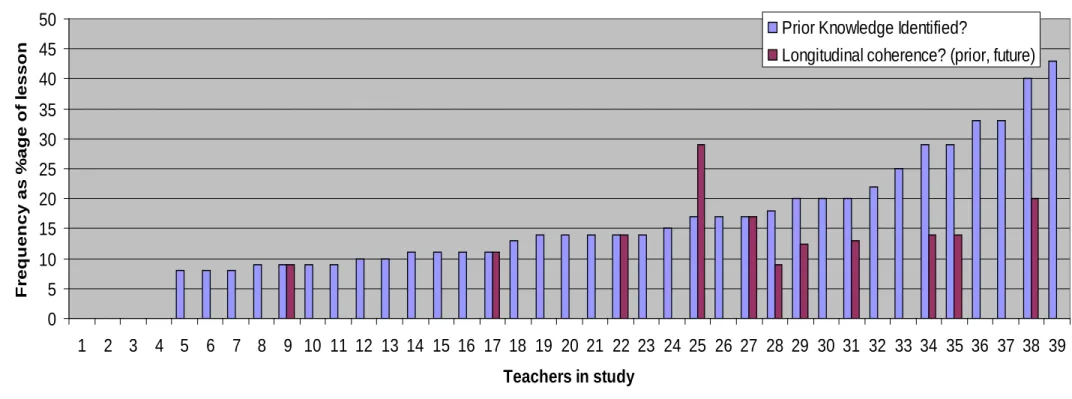
Assessing Students' Prior Knowledge and Longitudinal Coherence The vast majority of teachers in the study spent time assessing students' prior knowledge before engaging in daily work. 90% of educators spent at least 6 minutes on this activity at the beginning of the lesson. At first, I was of the opinion that the teachers deliberately ignored the students because they (the educators) thought it was a shame to spend time and attention on obvious (but not serious) mistakes.
However, I felt that the pace of the activities during the lessons could have been better. This is evident from the areas where most of the teachers demonstrate PCK, as discussed above. The teacher must be able to characterize the nature of the student's error, the underlying.