Voicing the Voiceless: Exploring the Communicative Practices, Attitudes and Perceptions of Black Men who have
Sex with Men (BMSM) in the Msunduzi Local Municipality towards Pre-Exposure Prophylaxis (PrEP)
Melusi Lungisani Mntungwa 205514579
Supervisor: Ms Luthando Ngazile Ngema
Voicing the Voiceless: Exploring the Communicative Practices, Attitudes and Perceptions of Black Men who have Sex with Men (BMSM) in the Msunduzi
Local Municipality towards Pre-Exposure Prophylaxis (PrEP) By
Melusi Lungisani Mntungwa
This dissertation is presented in fulfilment of the requirements for the degree of Master of Art
Media and Cultural Studies In School of Arts
College of Humanities,
University of KwaZulu-Natal, Howard College, Durban, South Africa
Ethical Approval Number: HSS-2055-017M
i
Declaration
I, Melusi L. Mntungwa declare that:
1. The research reported in this dissertation, except where otherwise indicated, is my original research.
2. This dissertation has not been submitted for any degree or examination at any other university.
3. This dissertation does not contain other persons’ data, pictures, graphs or other information unless specifically acknowledged as being sourced from other persons.
4. This dissertation does not contain other persons' writing unless specifically acknowledged as being sourced from other researchers. Where other written sources have been quoted, then:
a. Their words have been re-written, but the general information attributed to them has been referenced
b. Where their exact words have been used, then their writing has been placed inside quotation marks and referenced.
5. This dissertation does not contain text, graphics or tables copied and pasted from the Internet, unless specifically acknowledged, and the source being detailed in the dissertation and bibliography.
Candidate: Melusi L. Mntungwa Signed at: Durban, KwaZulu-Natal
Signature: Date: 15 February 2019
Supervisor: Luthando N Ngema Signed at: Durban, KwaZulu-Natal
Signature: Date: 15 February 2019
ii
Acknowledgements
Okokqala, ngalemfundo nange thuba lokuzithuthukisa ngicela ukuqale ngibonge bonke abeNtungwa, Ndabezitha; oMbulazi, nina baManqamane kaNsele, nina enadla izimfe zambili kwaphum’ikhambi lalinye.
Nina enithi nidla, nibe niyengúmuntu ngendaba. Lomsebenzi wezandla nenqondo yami, akukho ngobuhlakani bami kodwa kukhuselwa inina nokunxuselwa inina kuMvelinqangi, ngalokho ngithi kini beNtungwa!
For the lessons on the value of education and instilling in me an appreciation for learning and a yearning to seek knowledge, I would like to thank my late grandparents Rodgers and Mirriam Mntungwa, and mother Lungile Mntungwa, your dedication towards my education in your lifetime is manifest in the completion of this work.
To my family, my mother Zanele Mntungwa and sister Thandeka Mntungwa, I thank you for your patience and the willingness to support my ambition to complete this qualification, your support and encouragement is immeasurable. This journey would not have been possible if it wasn’t for your belief in the work I wanted
to do and for encouraging me to pursue my postgraduate studies.
My supervisor, Luthando Ngema, I am profoundly grateful for believing in this project when few others were willing to. For your support and for understanding why this work is necessary, I thank you! I am in awe of your awareness and empathy towards the various marginalisations encountered by individuals who experience same-sex desire. This very allyship is latent in the trajectory this project has taken. Your constant availability to me during this process and your tutelage have been a great relief at times when I was uncertain about the future of this project.
iii
To the Pietermaritzburg Gay and Lesbian Network (GLN), particularly their Health Coordinator, uMakhosi Rooi Mabaso, a million gratitude’s, for allowing me to take space in your office, in your day and for your unflinching commitment to the successful completion of this study. Your unrelenting dedication to a project that is in some ways divorced from your daily deliverables is indicative of your passion for the sexual health of MSM. Keep the spirit and continue doing the valuable work you do. Siyabonga.
To my friends, you have been sounding boards, psychologists, readers, critiques, translators and most importantly my very own cheerleaders. Ngiyabonga kakhulu ngokungiqhuqhuzela, nangokungsingatha ngeskathi ngenza lomsebenzi, ngithi kini, izandla zidlula ekhanda!
Finally, and certainly not least, to every single MSM in Msunduzi Local Municipality who took part in this study, gay, bisexual, straight or curious, I would like to say thank you. Thank you for trusting in me and for taking the time to be part of this study. Thank you for allowing yourselves to share your joys and vulnerabilities with me and for sharing about your lived experiences. Especially in the context of a society that discriminates and marginalises individuals who experience non-normative sexual desire. For entrusting me with your voices, I am honoured and humbled. I only wish that I have done justice with what you have entrusted in me.
This work is a small step towards giving you a voice and ensuring that the narratives of MSM of colour in Msunduzi are heard. Ngiyabonga!
“In South Africa, I am oppressed because I am a black man, and I am oppressed because I am gay.
So, when I fight for my freedom I must fight against both oppressions.”
– Simon Nkoli
iv
Abstract
Background: The approval of Truvada as Pre-Exposure Prophylaxis (PrEP) by the Medicines Council of South Africa in 2015, signalled a new beginning in the fight against HIV and AIDS especially for underserved key populations such as Men Who Have Sex with Men (MSM). Though this may be the case, there has been a protracted implementation which has been attributed to a lack of empirical research on the acceptability of PrEP amongst MSM in South Africa. This study, therefore, provides an overview of the general awareness, perceptions and attitudes and communicative practices of a sample of Black Men Who Have Sex with Men (BMSM) residing in the Msunduzi Local Municipality of KwaZulu-Natal, South Africa, hence making contributions to this area of research.
Method: The study used a cross-sectional mixed-methods approach. Firstly, a questionnaire collecting data on socio-demographics, HIV status and sexual behaviours, PrEP awareness and adoption intention, as well peer health communication practices was carried out in English or IsiZulu amongst 120 MSM (109 BMSM) around Msunduzi. Univariate and bivariate statistical analyses were conducted on questionnaire data using IBM Statistical Package for Social Sciences (SPSS). Following this, 10 in-depth, semi-structured interviews were conducted in either English or IsiZulu and analysed, using the various phases of Thematic Analysis proposed by Braun and Clarke (2006).
Results: Univariate analyses revealed that BMSM, in Msunduzi, were young, with a low Socio-economic Status (SES). Bivariate analysis established correlations between some socio-demographic characteristics, sexual behaviours and PrEP adoption intention. Although there was awareness and enthusiasm to adopt PrEP, this evolved into concerns about the implications PrEP could have on the quality of life of respondents, notably adherence self-efficacy. Dyadic communication between friends emerged as the main form of sexual health communication BMSM used to experience and validate their sexuality, discuss health prevention methods and influence behaviour change, including promoting the adoption of PrEP.
Conclusion: There is significant potential for the implementation of PrEP amongst BMSM in Msunduzi Local Municipality. For effective implementation, more information and education are needed. Furthermore, the programme should address concerns such as PrEP’s impact on daily lives. Dyadic communication amongst friends and the use of social networks have the potential to encourage PrEP engagement and to increase adherence self-efficacy.
v
Keywords: Black Men Who Have Sex with Men (BMSM); Pre-Exposure Prophylaxis (PrEP); Msunduzi Local Municipality; Attitudes, Perceptions, Peer Health Communication
vi
List of Acronyms
AIDS: Acquired Immunodeficiency Syndrome AGYW: Adolescent Girls and Young Women ARV: Antiretroviral
BMSM: Black Men Who have Sex with Men
CDC: Centres for Disease Control and Prevention DOH: Department of Health DM: District Municipality DUT: Durban University of Technology
GLN: Gay and Lesbian Network H4M: Health for Men Health Clinic HBM: Health Belief Model
HCW: Health Care Worker
HIV: Human Immunodeficiency Virus IAI: Insertive Anal Intercourse KZN: KwaZulu-Natal
LGBTI: Lesbian, Gay, Bisexual, Transgender and Intersex MSM: Men who Have Sex with Men
NGO: Non-Governmental Organisation NSP: National Strategic Plan
PEP: Post-Exposure Prophylaxis PHC: Primary Health Care PrEP: Pre-Exposure Prophylaxis
vii RAI: Receptive Anal Intercourse
RDS: Respondent Driven Sampling SA: South Africa
SANAC: South African National AIDS Council SEM: Social Ecological Model
SES: Socioeconomic Status
STI: Sexually Transmitted Infection TB: Tuberculosis
TRA: Theory of Reasoned Action UAI: Condomless Anal Intercourse UKZN: University of KwaZulu-Natal
UNAIDS: The Joint United Nations Programme on HIV and AIDS URAI: Condomless Receptive Anal Intercourse
USA: United States of America WHO: World Health Organization
viii
List of Figures
Figures
Figure 1: Msunduzi Local Municipality Map
Figure 2: HIV/AIDS Prevalence Rates in the Msunduzi Local Municipality from 2007 to 2010 Figure 3: Adapted Health Belief Model simulating, Voicing the Voiceless Study
ix
List of Tables
Tables
Table 1: Example of Data Frequency Table
Table 2: Socio-demographic Characteristics of MSM in Msunduzi Local Municipality
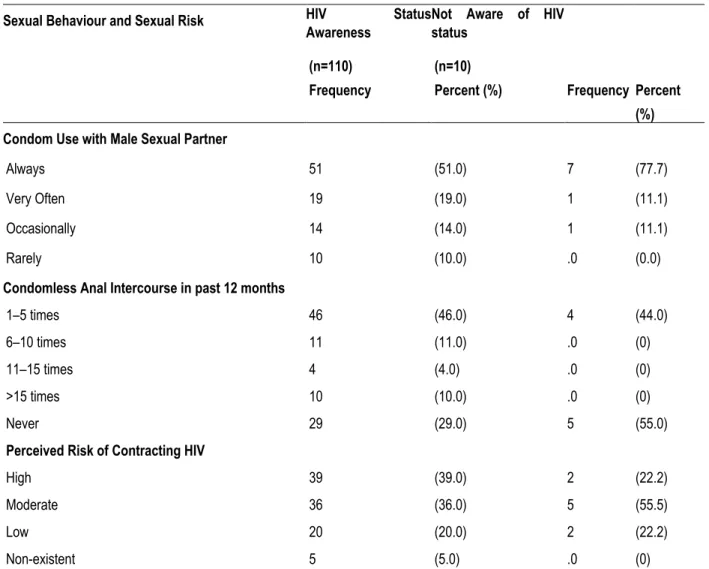
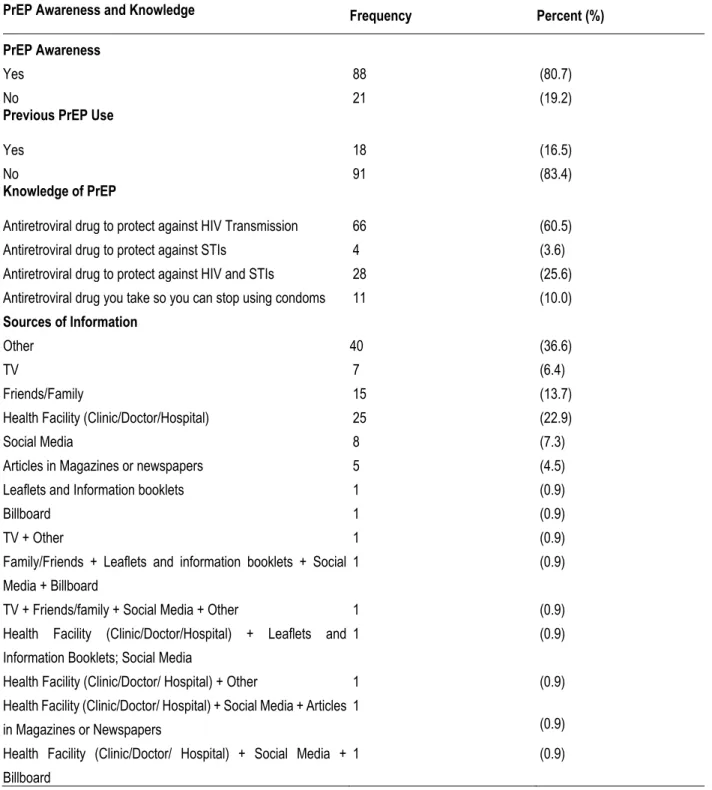
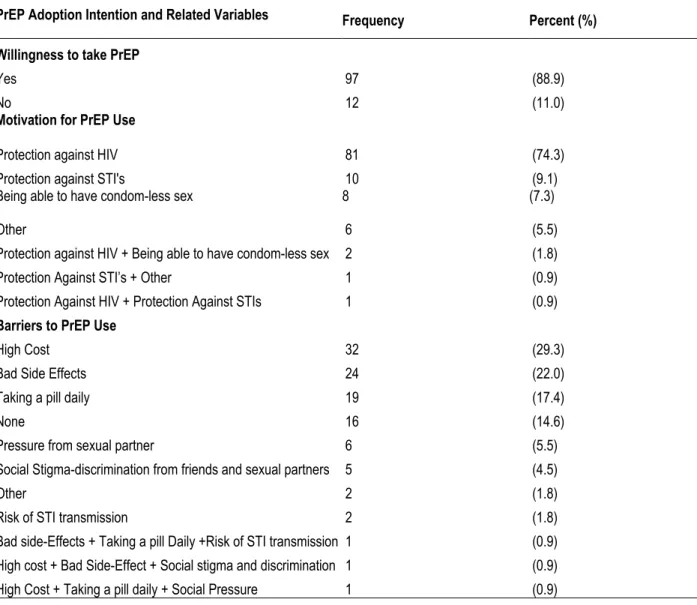
Table 3: Sexual Behaviour and Sexual Risk Taking of BMSM in Msunduzi Local Municipality Table 4: PrEP Awareness and Knowledge amongst BMSM in Msunduzi Local Municipality Table 5: PrEP Adoption Intention of BMSM in Msunduzi Local Municipality
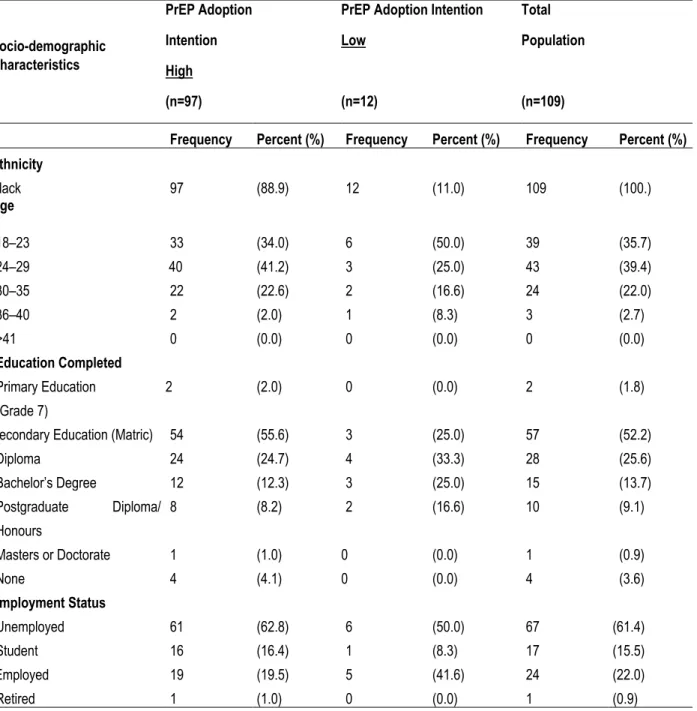
Table 6: Socio-Demographics by PrEP Adoption Intention – Subgroup Comparison
Table 7: Interpersonal Health Communication Dyads of BMSM in Msunduzi Local Municipality Table 8: Crosstabulation of HIV Testing and Sexual Risk Behaviours by Perceived HIV Susceptibility Table 9: Cramer’s V Symmetric Measure Results
Table 10: Crosstabulation of Socio-Demographic Characteristics by PrEP Adoption Intention Table 11: Cramer’s V Symmetric Measure Results
Table 12: Crosstabulation of HIV Risk Perceptions, Sexual and Risk-Taking Behaviours by PrEP Adoption
Table 13: Cramer’s V Symmetric Measure Results Table 14: Cross-tabulation of Personal Income by Barriers to PrEP Adoption
Table 15: Chi-Square Test of Personal income by Barriers to PrEP Adoption Table 16: Cross-tabulation of Age by Barriers to PrEP Adoption
Table 17: Chi-Square Test of Age by Barriers to PrEP Adoption
x
List of Appendices
Appendix 1: Information Sheet and Informed Consent Appendix 2: Informed Consent Questionnaire
Appendix 3: Questionnaire
Appendix 4: Informed Consent Interview Appendix 5: Interview Guide – English Appendix 6: Interview Guide – IsiZulu Appendix 7: Ethical Clearance Letter
Table of Contents
Declaration ... i
Acknowledgements ... ii
Abstract ... iv
List of Acronyms ... vi
List of Figures ... viii
List of Tables ... ix
List of Appendices ... x
Chapter One ... 1
1.1. Introduction ... 1
1.2. Setting of study ... 2
1.3. Background and context of the study ... 7
1.4. Research Aims and Objectives ... 12
1.5. Structure of Dissertation ... 14
Chapter Two ... 17
2.1. Introduction ... 17
2.2. Men Who Have Sex with Men: the complexities of the name ... 19
2.3. The need for an ethnically and culturally aware category – The advent of BMSM ... 24
2.4. Marginalisation and its legal Implications for MSM on the African continent ... 26
2.5. Marginalisation and healthcare for Men Who have Sex with Men in South Africa ... 29
2.6. The vulnerability of MSM to HIV and AIDS ... 31
2.7. HIV and AIDS treatment in South Africa ... 35
2.8. Towards a biomedical approach to prevention - Pre-Exposure Prophylaxis (PrEP) ... 36
2.9. PrEP in South Africa ... 37
2.10. Pre–Exposure Prophylaxis (PrEP) and MSM ... 39
2.11. Acceptability of PrEP among MSM – A global view ... 40
2.12. Acceptability of PrEP amongst MSM in Africa ... 42
2.13. Peer health communication and BMSM health behaviours ... 43
2.14. Friendship dyads as an interpersonal communicative practice for health improvement ... 44
2.15. Conclusion ... 45
Chapter Three ... 47
3.1. Introduction ... 47
3.2. The Health Belief Model ... 49
3.2.1. Understanding the Health Belief Model ... 49
3.3. The Health Belief Model and understanding health behaviours ... 56
3.4. The Health Belief Model in practice – HIV and AIDS in action ... 58
3.5. Critique of the Health Belief Model ... 60
3.6. Intersectionality Theory ... 63
3.6.1. A genealogical review of Intersectionality Theory ... 63
3.7. Intersectionality Theory – A transformative perspective ... 66
3.8. The intersection of gender, sexuality, race and class ... 69
3.9. Exploring South African BMSM through the lens of Intersectionality Theory ... 71
3.10. The relationship between Intersectionality and the Health Belief Model ... 74
3.11. Conclusion ... 74
Chapter Four ... 75
4.1. Introduction ... 76
4.2. Research paradigm and design ... 76
4.3. Location and setting ... 80
4.4. Sampling strategy ... 81
4.5. Methods of data collection ... 85
4.6. Procedures for data collection ... 87
4.7. Data analysis ... 90
4.8. Validity and reliability ... 94
4.9. Ethical considerations ... 95
Chapter Five ... 97
5.1. Introduction ... 97
5.2. Structure of analysis ... 98
5.3. Descriptive Analysis ... 99
5.3.1. Demographics of MSM in the Msunduzi Local Municipality ... 100
5.3.2. Sexual behaviours and sexual risk taking of BMSM in the Msunduzi Local Municipality ... 104
5.3.3. PrEP awareness and knowledge amongst BMSM in the Msunduzi Local Municipality ... 110
5.3.4. PrEP adoption intention and PrEP related attitudes and beliefs ... 113
5.3.5. Communicating sexual health and preventative methods ... 119
5.4. Results of bivariate associations ... 122
5.4.1. Sexual and HIV testing behaviours by perceived HIV susceptibility ... 123
5.4.2. Socio-demographic characteristics by PrEP adoption intention ... 127
5.4.3. HIV risk perceptions, sexual and risk-taking behaviours by PrEP adoption... 134
5.4.4. Associating socio-demographics and barriers to PrEP adoption ... 137
5.5. Summary of quantitative results ... 141
Chapter Six ... 144
6.1. Introduction ... 144
6.2. Being MSM: An act of love or sexual desire ... 145
6.3. HIV awareness and resonance of risk ... 151
6.4. HIV risks – Battling “Promiscuity” and alcohol use ... 158
6.5. PrEP awareness and enthusiasm in a time of disparate information availability ... 162
6.6. PrEP, efficacious in certain situations more than others ... 165
6.7. PrEP and personal interference - concerns of self-efficacy ... 166
6.8. Dyadic communication between friends essential for affirming and experiencing sexuality ... 168
6.9. Dyadic communication for change – Towards positively influencing health behaviour ... 170
6.10. Surmising the overall findings ... 172
Chapter Seven ... 176
7.1. Introduction ... 176
7.2. Awareness of PrEP and positive adoption intention ... 176
7.3. Communication potential for enhanced PrEP engagement ... 177
7.4. Pathways towards a PrEP Implementation Programme for BMSM in Msunduzi ... 178
7.5. Further considerations and directions for future research ... 180
Bibliography ... 183
Appendix 1 – Information Sheet and Informed Consent Form ... 204
Appendix 2 – Informed Consent Questionnaire ... 208
Appendix 3 – Questionnaire ... 210
Appendix 4 – In-depth Interview Consent Form ... 216
Appendix 5 – English Interview Guide ... 218
Appendix 6 – IsiZulu Interview Guide ... 225
Appendix 7 – Ethical Clearance Letter ... 232
Chapter One
Towards voicing Black Men who have Sex with Men (BMSM) in the Msunduzi Local Municipality in their search for preventive methods in the age of HIV/AIDS
1.1. Introduction
Three decades since its discovery, the human immune virus (HIV) and acquired immune deficiency syndrome (AIDS) epidemic continue to adversely affect the global community across spectra of health, economics, and politics. As a result, this period has been described as 30 years of devastation, struggle and loss (UNAIDS, 2014). Although there have been great strides over these past three decades to curb the effects of HIV and AIDS, these efforts have not managed to address the rising number of new infections among vulnerable groups such as Black Men Who Have Sex with Men (BMSM). The phrase ‘Black Men Who Have Sex with Men’ encompasses the various health disparities associated with race and ethnicity while focusing on sexual behaviour rather than on identity or sexual orientation. This includes “gay and non‐gay identified men, bisexual men, men who engage in situational sex with other men (for instance, in prisons, schools, or militaries), and male sex workers, among others” (McIntyre and Struthers, 2013:9).
Black Men Who Have Sex with Men (BMSM) are a group of men who hold public health significance within South Africa due to being disproportionately affected by HIV and AIDS. A 2009 modelling study on the modes of HIV transmission in South Africa estimated that 8% of all new HIV infections occurred among the overarching group of Men Who Have Sex with Men (MSM)(Bekker, Rebe, Brown, Budnik, De Swardt, Duby, Geffen, Kanyemba, McIntyre, Myer, Scheibe, Schowalter, Sonderup, Spearman, Toledo, Tucker, Van Dyk and Van Zyl, 2012). Evidence from the South African MSM data triangulation project conducted by the University of California, San Francisco further revealed that “HIV prevalence is between 1.89 and 4.65 times higher among MSM than among non-MSM males of similar ages” (2015:14). This was supported by results from recent epidemiological studies conducted in South Africa’s major cities, Cape Town, Johannesburg and Durban which revealed that the prevalence of HIV among MSM is much higher than in their heterosexual counterparts (Avert.org, 2018).
These studies paint a despairing picture about the state of affairs of MSM in relation to HIV and AIDS nationally and aptly contextualises why MSM continue to be classified as a vulnerable group.
The vulnerability of MSM to HIV and AIDS cannot be separated from the local context from which these MSM emanate. Inevitably, South Africa has one of the largest heterogeneous HIV epidemics in the world, placing MSM in the country at higher risk of HIV transmission. Prevalence studies conducted in 2017 estimated that 7.9 million people were living with HIV in South Africa. These results equate to 18.9% of the country’s general population (HSRC, 2018). In the same year, 220 000 new infections were recorded, whilst 110 000 South Africans died from AIDS-related illnesses. This makes South Africa one of the sub-Saharan African countries with the highest prevalence of HIV (Avert.org, 2018). Specific estimates revealed that the country’s overall prevalence differs substantially by province, with a concentration in several districts nationally. Provincially, HIV prevalence ranges from 12.6% in the Western Cape to 27.0% in KwaZulu-Natal (KZN) (HSRC, 2018).
Whilst key research suggests that, as in most regions of the globe, the dominant mode of HIV transmission in South Africa is commonly linked to heterosexual sexual activity. Though this may be the case, existing local accounts suggest that the epidemic is more diverse and rather emphasise the role that sexual interactions between men play in the transmission of HIV (Baral, Burrell, Scheibe, Brown, Beyrer and Bekker, 2011; Imrie, Hoddinott, Fuller, Oliver and Newell, 2013). As it is evident from above-mentioned investigations, HIV prevalence amongst MSM tends to exceed HIV prevalence amongst adults in the same age groups of the general (heterosexual) population. Therefore, the issue of a concentrated HIV epidemic among South African MSM has grown in relevance in recent years and remains a topical and prominent area of enquiry.
1.2. Setting of study
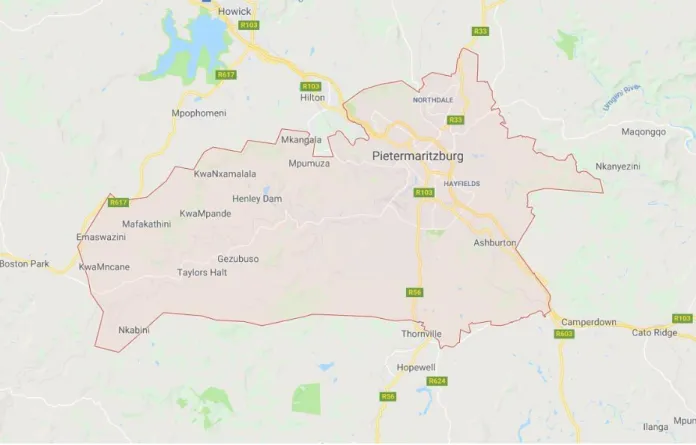
This study focuses on the BMSM who reside within the boundaries of Msunduzi Local Municipality. The Msunduzi Local Municipality (see Figure 1, page 3) is located within the province of KwaZulu-Natal and includes the city of Pietermaritzburg (the administrative capital of the province) and surrounding peri-urban and semi-rural areas. The Msunduzi Local Municipality came into being in December 2000, following the new post-apartheid demarcation of municipal boundaries. The local municipality now forms part of a larger district municipality, the uMgungundlovu District Municipality.
With successive changes in the boundaries of the municipal area over the years, Msunduzi Local Municipality has grown substantially larger both in area and population size. This was as a result of absorbing several impoverished rural areas that formerly fell outside of its area of jurisdiction. Currently, the municipality has an estimated population of over 618 536 inhabitants, the majority of whom live in Pietermaritzburg (+/- 176 590), the township of Edendale (+/-197 320) and the semi-rural area of Vulindlela (+/-145 410). These areas which have the highest population concentrations are the areas where this study took place, including;
Machibisa, Caluza, Imbali, Sobantu and Scottsville. Sex and racial population estimates indicate that fifty- four percent (54.55%) of the residents are female and forty-five percent (45.45%) are male. Black Africans constitute 81% and make up the majority of inhabitants of the municipality. Followed by Indians at 10%, a small portion of White people at 6% and coloured people at 3% (Stats SA, 2018b). The above clearly indicates that there is a substantial number of black male inhabitants in the municipality which could form part of the BMSM category.
Figure 1: Msunduzi Local Municipality Map Source: Msunduzi Local Municipality – Google Maps
Msunduzi is the economic centre of the uMgungundlovu District Municipality, accounting for 80% of the district’s turnover, which is largely influenced by the fact that Pietermaritzburg is home to the legislative and administrative functions of the provincial government. This has boosted investor confidence and resulted in the municipality’s economy growing positively in previous years (Msunduzi Municipality, 2013). Historically, the economy of the municipality was based on manufacturing (35% of turnover), retail trade (23%), as well as business, finance and government services. In recent years, however, the city has experienced an economic decline, particularly in the footwear industry.This has contributed to rapidly rising unemployment rates and growing levels of poverty. Current figures indicate that of the 229 672 economically active (employed or unemployed but looking for work) people in the municipality, 33% are unemployed. The main burden of this is felt in the townships and peri-urban settlements where some settlements experience up to 75% unemployment.
Fifty percent of households in the Msunduzi Local Municipality survive on an income of below R1 500.00 per month. The implication of this for the youth of the municipality who form the biggest part of the economically active population is that 43.1% of them are unemployed (Stats SA, 2018b). This is extremely concerning for a municipality where the majority (68.4%) of the population falls within the economically active age cohort of (15 to 64 years). Furthermore, educational levels indicate that the percentage of adults over 20 years with no schooling is 5.5% and the percentage of adults with a matric qualification is 33.7%. While 13.1% of residents have qualifications higher than Matric. It is these educational qualifications which influence the possibility of this population from gaining access to employment in sectors that require employees beyond the low and semi-skilled bracket. From the above factors and before an exploration of the health disparities facing the municipality is provided, a profile of a BMSM in the municipality could be figuratively drawn. This would be a black male residing in a township or semi-rural area, of the economically active age group, whose highest level of education is Matric and who has a large possibility of being unemployed.
Despite being a prominent site in the KZN province, Msunduzi is not free from the marginalisation that is experienced by peripheral localities when it comes to health research. This is especially the case about when it comes to recent epidemiological data relating to the incidence and prevalence of HIV among the general population, let alone MSM and particularly BMSM. Comprehensive data which referred to HIV prevalence in
the region only dates back to 2003, with topical data presented in recent years. What those initial statistics revealed was that Msunduzi had a high HIV prevalence. More particularly, this is the picture that these statistics revealed about HIV and AIDS in the municipality: approximately 18% of the population were HIV positive, which was the equivalent of 88 000 inhabitants. Fifty-five to sixty-five percent (55% – 65%) of patients in medical wards in Pietermaritzburg public hospitals were HIV positive, which lead to an estimated 250 AIDS-related deaths per month, most of these which happened amongst individuals between the ages of 20 – 39 years. The above painted a bleak picture of the HIV and AIDS epidemic in the municipality. More recent detailed figures have been few and far between. Although Msunduzi lacks recent epidemiological data, the uMgungundlovu District Municipality, which is the "mother" district, has a wealth of data. Estimates can be gleaned from this data considering that 60% of the district's population resides in the Msunduzi sub-district.
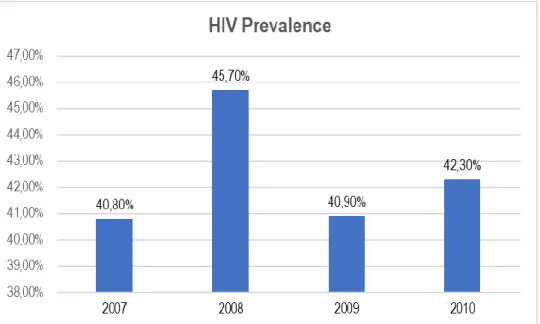
Therefore, this study has relied on overall district data to provide a context of the Msunduzi Local Municipality's HIV and AIDS epidemic. In 2010, the uMgungundlovu District Municipality had the highest prevalence of HIV and AIDS in KwaZulu-Natal province, as well as in South Africa, according to the annual Department of Health ante-natal survey undertaken at state hospitals (Msunduzi Municipality, 2013). From this report, a trajectory of HIV prevalence in Msunduzi over the preceding years could be identified (see Figure 2, page 5), which illustrates a growing number of incidences each year that resulted in increasing prevalence annually.
Figure 2: HIV/AIDS Prevalence Rates in Msunduzi Local Municipality from 2007 to 2010
Source: Adapted from Msunduzi Municipality Integrated Development Plan (IDP) Review for 2013/2014
A scarcity of epidemiological estimates follows these above figures that were reported in 2011. What is alternatively available in following years is data pertaining to the uMgungundlovu District Municipality. The uMgungundlovu District Health Plan for 2015/2016 revealed that during the 2012/2013 financial year the uMgungundlovu District, which houses the Msunduzi Local Municipality experienced an HIV prevalence of 40.7%. This prevalence was reported to be highest amongst the youth, with those within the 15 to 24-year age group most vulnerable. This consequently led to high levels of exposure to HIV which resulted in this age group being the most burdened by HIV (Department of Health, 2015). Recent uMgungundlovu District HIV prevalence figures presented as part of the uMgungundlovu DIP Plus at the SA AIDS Conference (uMgungundlovu District Municipality, 2017) referred to Msunduzi Local Municipality figures. These figures highlighted that 20.24% of first-time antenatal visitors tested positive for HIV, alluding to a high incidence of HIV in the region. The report argues that this is because the Msunduzi Local Municipality has a concentration of high transmission areas, which include informal settlements, taxi ranks, truck stops, institutions of higher learning and sex worker hotspots (uMngungundlovu District Municipality, 2017).
Figures presented above aptly revealed that not only is the general population of MSM in the Msunduzi Local Municipality relegated when it comes to comprehensive HIV and AIDS research but BMSM are also completely ignored with no mention of this key population in any of the sparse HIV and AIDS research available. This erasure of BMSM as a high-risk group within the HIV landscape is apparent even in official municipal health documents such as the uMgungundlovu DIP Plus Report. This erasure was further highlighted by a lack of peer-reviewed research exploring this population's risk behaviours testing patterns.
Statistics presented by the South Africa National AIDS Council (2016) indicated that Pietermaritzburg had very high incidences of HIV infection amongst men aged 15-24, which is quite alarming. Most concerning is fact that efforts to make PrEP available to key populations take place against the backdrop of a dearth of knowledge regarding local key populations like BMSM, which is further suppressed by an ailing health system that is not accessible to BMSM in the area because of erasure. This is supported by conclusions made by Greehy (2016) in a study that explores the accessibility to mainstream Primary Health Centres (PHC) by MSM in the Imbali area of Msunduzi. In her study, Greehy found that health care workers cannot effectively provide non-discriminatory physical and emotional health services to MSM individuals in the area because of prejudiced views on their sexual behaviours (2016). What is more, this lack of inclusive and adequate health care is exacerbated by structural factors.
For example, with the increase of life expectancy for all individuals, there will be an increase in the cost of health service delivery especially in Msunduzi Local Municipality which carries a large proportion of the population as well as the bulk of the health facilities (Department of Health, 2015). Therefore, it is evident that BMSM in this municipality are not acknowledged and included in current healthcare interventions and are at risk of not being included in the future, especially with regards to PrEP because of structural and social factors.
1.3. Background and context of the study
Despite the recognition that South Africa was experiencing a concentrated epidemic amongst MSM, the need for comprehensive epidemiological data on this population constrained the growth of research and the development of accessible health prevention programmes. The lack of epidemiological data pertaining to MSM in South Africa could be ascribed to this group's diversity and the fact that many MSM continue to be counted within the general population, due to non-disclosure. Consequently, this necessitated for populational HIV prevalence studies such as Simbayi, Rehle, Naidoo, Cloete, and Ntsepe (2014) and University of California (2015) to be conducted. Which was essential to develop a systematic resource of data on this group.
The University of California (2015) highlighted in the rationale of their MSM triangulation project, "to date neither a national MSM population size estimation nor a large-scale multisite epidemiological study among MSM has been conducted." Results from these studies revealed that MSM in South Africa were at a high risk of HIV infection and were therefore disproportionately affected by the HIV epidemic. Furthermore, they highlighted that MSM were underserved by the country's national HIV and AIDS response, alas contributing significantly to the high number of new infections annually. They concluded by deducing that the epidemic was not stabilising but instead was intensifying (Simbayi et al ., 2014, University of California, 2015). This validated the decision by the government to categorise MSM as a key population in the National Strategic Plan (NSP) (University of California, 2015). The NSP is the country’s master plan which outlines how South Africa will respond to the prevention and treatment of HIV and AIDS, TB and STIs over a period of five years.
In response to the intensifying epidemic amongst key populations, inclusive of MSM, South Africa became the second country in the world after the United States to fully approve PrEP as a preventive method (DeBarros,2015). This is owing to the mounting evidence about PrEP’s efficacy since it was first approved by the United States Food and Drug Administration (FDA) in 2012. This pill drastically reduces the susceptibility of HIV negative individuals to HIV infection. PrEP’s approval in the USA saw revived hope for the fight against and changing the trajectory of new infections, especially amongst MSM (Kubicek, Arauz- Cuadra and Kipke, 2015). As a result, PrEP became the mainstay of new biomedical innovations in HIV and AIDS prevention in the developed world. Considering the increased enthusiasm and in line with the outcomes posited in the National Strategic Plan 2012 – 2016, the Medicines Control Council of South Africa officially registered the combination of Tenofovir disoproxil fumarate and Emtricitabine (Truvada) as PrEP in 2015 (Hugo, Stall, Rebe, Egan, De Swardt, Struthers and McIntyre, 2016).
This decision by the South African government aimed to reduce the incidences of HIV infections through the provision of expanded prevention methods. Whilst this approval theoretically has great potential to change the face of the HIV epidemic amongst MSM, its implementation has been stalled, especially when considering that PrEP is currently available in certain parts of South Africa. Health24 (2017) reported that at the end of 2016 there were two Health 4 Men (H4M) sites providing PrEP for MSM, one in Cape Town and another one in Johannesburg. Systematically, this stalled provision of PrEP is inadvertently based on a lack of knowledge on the impact that nationwide accessibility will have on key populations such as MSM. This speaks to a research gap that needs to answer to the uncertainty about a nationwide response towards PrEP and its acceptability among a larger population of MSM. Therefore, this study aims to reduce current uncertainties and contribute to this area of research by providing an overview of the general awareness, attitudes and perceptions of BMSM in the Msunduzi Local Municipality towards PrEP.
A catalyst for the scarcity of comprehensive nationwide data into PrEP acceptability amongst MSM is the imbalanced trajectory that MSM focused HIV and AIDS research takes and ow thischaracterises the current landscape. Research into the HIV epidemics among MSM in South Africa has largely focused on the country’s major cities — Cape Town, Johannesburg, Pretoria and Durban — with scant consideration for the behaviours and HIV epidemics among MSM who reside beyond the urban areas (Imrie et al., 2013; Lane,
Osmand, Marr, Shade, Dunkle, Sandfort, Struthers, Kegeles, McIntyre and Graham, 2014). The Marang Project, one of the largest South African HIV and AIDS prevalence studies focusing on MSM, was the first to provide epidemiological data on this population. Even then, the Marang Project only focused on large cities and was conducted in Johannesburg, Cape Town, and Durban among 925 MSM. Data from the Marang Project revealed that Durban had the highest HIV prevalence, accounting for 48.2% of its respondents while Cape Town was at 22.3% and Johannesburg at 26.8% (Simbayi et al ., 2014). A study of Sowetan men conducted in 2008 estimated that there was a 33.9% HIV prevalence rate among MSM who were gay- identified in Soweto (Lane, Raymond, Dladla, Rasethe, Struthers, McFarland and McIntyre, 2011). These are just two studies in a wide range of South African studies (Cloete, Simbayi, Kalichman, Strebel and Henda, 2008; Burrell, Mark, Grant, Wood and Bekker, 2010; Baral et al., 2011; Rispel, Metcalf, Cloete, Reddy and Lombard, 2011a). That focused exclusively on the risk factors and HIV epidemics among MSM in the country’s large cities.
The plethora of research that focuses solely on the major metropolitan areas indicates the skewed nature of currently available MSM epidemiological data. The availability of only such investigations is unsatisfactory because these resources do not offer a representative picture of all regions in the country. The ramifications of this could be the erasure of certain sub-groups of MSM particularly those in either rural or peri-urban areas, especially in relation to health prevention programmes. Another fundamental problem that this trajectory of research highlights is a disconnect with and lack of understanding of how the current path infections and prevalence amongst MSM cannot be divorced from the politics of race, class and gender that have characterised the country’s history (Mantell, Tocco, Osmand, Sandfort and Lane, 2016).
South Africa is imbued in a racially and structurally separatist history that left many individuals in non- metropolitan areas excluded and erased from development and improvement initiatives. This deficiency of research on MSM in non-metropole areas highlights how structural and social exclusion continues to manifest itself by further relegating some MSM in society to the periphery. There are arguments that MSM have been disproportionately affected by the HIV epidemic due to a range of biological, social, structural and economic factors that increase their vulnerability to HIV infection (Rispel,Metcalf, Cloete,Moorman and Reddy, 2011b).
This brings to the fore the characteristic issue that exists within research, which is the social relegation and ultimately the erasure of those MSM who may be more at risk of infection due to being forgotten.
Much like the non-inclusion of individuals who reside outside the metropoles as a focus of prevalence and incidences studies, so is the exclusion of racial majorities and a reflection on how the social and structural elements of ethnicity and race exacerbate their vulnerability. This study focuses on BMSM, a category that forms the majority of MSM based on the population composition of the country and are thus at most risk (Stats SA, 2018a). It can be argued that BMSM are disproportionately affected by the HIV epidemic because of social vulnerability which they experience because of poverty and the lack of resources(Knox, Sandfort, Yi, Reddy and Maimane, 2011). These compounded issues are characteristic of this population because they are the remnants of their racially subjugated past. Although BMSM remain one of the most at-risk populations for HIV infections, the number of studies that attempt to better understand this population have been limited until recently(Masvawure, Sandfort, Reddy, Collier and Lane, 2015; Mantell et al., 2016).
These issues of relegation become proliferated for BMSM who reside in non-metropole areas, with even fewer studies undertaken which categorically interrogated the racial and ethnic disparities that influence the risk behaviours, as well the health preventative preferences of these BMSM. Despite the gradual change in the trajectory of research which has been catapulted by recent studies such as Kaighobadi, Knox, Reddy and Sandfort (2014); Sandfort, Lane, Dolezal and Reddy (2015); Lee, Sandfort, Collier, Lane and Reddy (2017), this lack of research can be understood as the de-voicing of these BMSM in non-metropole areas.
By not including BMSM in non-metropole areas in research studies on HIV risk behaviours, prevalence and health prevention methods, this silences this sub-group of MSM and ultimately erases them from the national discourse on HIV and AIDS.
A ripple effect of this lack of research characterises itself in the ultimate exclusion of MSM from prevention programmes (McIntyre, Jobson, Struthers, De Swardt and Rebe, 2013). Although it must be noted that, in good faith, BMSM under the auspices of all MSM have been included in the previous two NSPs (2007 – 2011) and (2012 – 2016). However, this inclusion revealed a lack of operational guidelines and specific policy measures at both national and provincial level to ensure that targets outlined in the plans are implemented.
This signalled the lack of availability of necessary nationwide information to successfully create and implement appropriate prevention programmes (McIntyre et al., 2013). Which translated into the absence of messages directed at this population in major national HIV prevention campaigns and treatment programmes. Again, this can be recognised as another form of de-voicing of high-risk populations. Which exhibits how the remnants of historically entrenched structural marginalisation manifest themselves through research outputs and ultimately affect the development of necessary health prevention programmes for BMSM in South Africa (Rispel and Metcalf, 2009a). Therefore, there is a need for a “voicing project” to take place in future research with a specific focus on those categories of MSM that have been previously excluded from mainstream research, particularly BMSM in non-metropole areas. This is vital to better understand the context-specific factors that influence their vulnerability to HIV and to understand the saliency of new preventative methods for them.
South Africa lacks a comprehensive resource of nationwide research which explores the views, perceptions and attitudes of MSM towards PrEP, especially black men. The implications of this are visible in the lack of fast-tracked implementation of policy and programmes that will target this group which could impact the trajectory of the HIV and AIDS epidemic in South Africa. Taking this into consideration, Kubicek et al. (2015) maintain that it is important to understand the attitudes and perceptions of this vulnerable group towards new and emerging preventative methods as they would be ideal candidates for these interventions.
Furthermore, Hugo et al. (2016) assert that to best understand how to implement new HIV prevention methods it is vital that we understand how men will use these tools and their ability to adhere to them. Through this outlook, this study will grow knowledge about BMSM, specifically their sexual behaviours, attitudes and perceptions towards HIV prevention methods while exploring the communicative ecology that influences their perceptions towards health promotion. This primarily focuses on the intersectionality of peer communication and attitudes and perceptions; focusing particularly on how peer interpersonal communication affects the development of attitudes and perceptions towards sexual health and PrEP. Furthermore, by highlighting the narratives of these BMSM from Msunduzi Local Municipality, the study gives voice to a group that has previously been disregarded and is missing from the research landscape.
Finally, by exploring the various elements, the study expounds on the feasibility of a PrEP implementation programme for BMSM within the Municipality and offer insights on this preventative strategy.
Utilising a dual theoretical frame that combines the Health Belief Model (HBM) proposed by Hochbaum (1958) and Rosenstock (1966) and the Intersectionality Theory proposed by Kimberlé Crenshaw (1989). This study robustly integrates these two theories of which when combined provide a reciprocal lens through which the lived experiences of BMSM and their resultant marginalisation can be understood. This kind of theory triangulation is used to explain the health behaviours of BMSM as well as their choices regarding HIV prevention. The Health Belief Model is one of the oldest of the individual behavioural theories and is a widely used theory in public health, while the Intersectionality Theory, though still emerging is fast becoming a cornerstone of sociological thought and is increasingly being used by health researchers. This makes this combination a solid lens through which to better understand how perceptions are formed and the communicative practices that foster these attitudes and perceptions towards HIV preventative methods.
1.4. Research Aims and Objectives
The main objective of this study is to develop an understanding of the communicative practices, attitudes and perceptions of BMSM in the Msunduzi Local Municipality towards PrEP. This study functions within the discipline of Media and Cultural Studies, under the auspices of health communication. Its focus on the communicative practices of BMSM is to elucidate the role that communication plays in informing and improving health behaviour and ultimately the choice of preventative methods. Therefore, a holistic approach is employed by this dissertation to better understand BMSM preferences for preventative health methods and to establish if there is a feasibility of a PrEP implementation programme in the municipality, with a special focus on how communication can play a role in disseminating information on this implementation programme to relevant BMSM. By exploring the communicative practices, attitudes, and perceptions of BMSM in non- metropole Msunduzi Local Municipality, the study aims to give a voice to these previously relegated BMSM.
Particularly to advise on their willingness to adopt PrEP as a strategy to mitigate HIV incidence. Therefore, the overarching aim of the study is to establish if it is feasible to develop a PrEP implementation project for BMSM in the Msunduzi Municipality.
To achieve these aims and objectives, the following secondary objectives are addressed;
1. Establish the generalisable awareness of PrEP amongst BMSM in the Msunduzi Local Municipality.
To competently understand the perceptions and attitudes toward PrEP, establishing awareness levels of this preventative method is crucial. Therefore, this involves establishing the knowledge or lack of knowledge about the PrEP that exists among this population as an indicator of their attitudes and perceptions.
2. Explore the acceptability of PrEP amongst BMSM in the Msunduzi Local Municipality in order to determine the feasibility of its implementation. The feasibility of a communication driven implementation programme for PrEP is determined by the acceptability of the preventative method.
Therefore, this will establish if there is a willingness to adopt the method, to better understand if there is a promise for uptake and use, foregrounding the existence of established attitudes and perceptions.
3. Identify the barriers and motivators which influence the willingness of BMSM to utilise and adhere to PrEP. This involves the establishment of possible barriers and motivators that influence the willingness of BMSM to utilise PrEP. Furthermore, to identify if there is any link between demographics, socio-economic and behavioural factors and the willingness to adhere and utilise PrEP and the influence that any of these factors has on willingness. These constructs form the foundation of the reasoning that confirms the attitude and perceptions of these BMSM
4. Explore the role that peer sexual health communication has on the attitudes and perceptions of BMSM toward PrEP. Communication cannot be divorced from the decision-making process, so the type of communication that occurs between BMSM can potentially influence sexual behaviours and preventative health choices. Here, these communicative practices are explored focusing on the type of communication, its barriers and its influence on sexual behaviour and ultimately, one’s willingness to take PrEP. This will also influence how best to communicate uptake to BMSM in the future.
Considering the above objectives, this dissertation, therefore, asks the following questions.
Central Question
What are the perceptions and attitudes of Black Men who have sex with Men (BMSM) in the Msunduzi Local Municipality area towards Pre-Exposure Prophylaxis (PrEP)?
Sub-questions
1. In what ways are Black Men Who Have Sex with Men (BMSM) in the Msunduzi Local Municipality aware of Pre-Exposure Prophylaxis, and its benefits?
1.1. Do BMSM know how to use this preventive method?
2. Are BMSM in the Msunduzi Local Municipality willing to take one pill a day in the form of PrEP as a preventative measure against HIV infection?
2.1. What measures are BMSM currently taking to prevent HIV infection?
3. What factors would influence or prevent Black Men Who Have Sex with Men (BMSM) from taking PrEP as a preventative measure against HIV infection?
4. How does communication amongst BMSM influence their attitudes and perceptions toward sexual health and ultimately their willingness to utilise PrEP?
1.5. Structure of Dissertation
Chapter One is the introductory section and provides an overview of the HIV and AIDS epidemic in South Africa to position MSM within this setting. This chapter then proceeds to explore current HIV related research that focuses on MSM to problematise its skewed nature and lack of representivity of subgroups at high risk, such as BMSM who reside in non-metropole areas. Furthermore, the chapter explicates how this skewed research is unresponsive to the current changes in the HIV prevention landscape in the country which have been characterised by the availability of biomedical technologies. Finally, it concludes by making the argument that there is a need for extensive research into ‘at higher risk’ groups such as BMSM in the age of PrEP if these preventative methods are to be successful. Therefore, there is a need to better understand the knowledge, attitudes and perceptions of BMSM towards PrEP as well as their communicative practices.
Chapter Two’s review of previous literature provides the context for this study. This review firstly explores the complexities of the category MSM and highlights the ethnic disparities that necessitated the formulation of the category BMSM. A discussion on the marginalisation that BMSM experience is linked to an exploration of the social, structural, biological and economic factors that impact the vulnerability of BMSM towards HIV and AIDS. This discussion is contextualised through the current situation and composition of the epidemic in the country. Subsequently, the shift towards biomedical preventative methods is interrogated and an overview of PrEP and its acceptability amongst BMSM at a glocal level is explained in this chapter. Reference is made to highlight the dearth of research about the acceptability of PrEP by South African BMSM. In conclusion, this section underscores its discussion of the abovementioned constructs at the intersection of peer communication and attitudes and perceptions specifically interrogating how peer interpersonal communication affects the development of attitudes and perceptions and influences the change of sexual behaviour and community health norms among MSM.
Chapter Three explores the Health Belief Model and Intersectionality Theory which form the theoretical foundation for this study. The Health Belief Model can be employed to predict health behaviour, in relation to this study, it is anticipated that the model will predict the circumstances under which MSM decide to uptake or not uptake PrEP. Therefore, this section explores the various constructs of the Health Belief Model that influence health choices. After this, Intersectionality Theory which explores the various social constructs that intersect to form an individual subjective identification is discussed, with the intent to better understand how the social categories of race, class, gender and sexuality cultivate lived experiences and can offer a nuanced understanding of how BMSM construct their choices for preventative methods. In conclusion, this section reflects on the relationship between intersectionality and the Health Belief Model as modes for better understanding the health decisions of BMSM in non-metropole areas.
Chapter Four outlines the methodological toolkit that was employed in this study, reflecting on the study objectives and research questions that need to be answered, as well as exploring the study’s paradigmatic foundation and its research design. Furthermore, it includes the sampling frame which details how participants were recruited for this study. Following this is a discussion on the techniques used in the data
collection and data analysis. This section concludes by engaging the considerations on validity and reliability as well as the ethical deliberations underpinning this study.
Chapter Five presents and analyses the quantitative data that was collected through self-administered questionnaires. This quantitative data was analysed through a variety of statistical tests using the Statistical Package for Social Sciences (SPSS) version 24.0. The results from these tests are present through various synopsis tables and through a detailed analytical discussion. The Health Belief Model and Intersectionality Theory as a theoretical base are applied to guide the inferences made from this data. A reflection on the previous literature forms an integral part of the discussion to synthesise what is currently in the field and what has been generated in this study. This discussion elucidates this study’s contribution to the scholarship of South African BMSM. This chapter forms the basis of the following chapter.
Chapter Six presents the results and analyses the qualitative data that was collected through in-depth, semi- structured interviews. It begins with a detailed presentation of the themes that emerged from the analysis of data. Followed by a discussion on the interpretation of these results, this will reflect on a synthesis of what previous literature has proved and how the current study's findings either support or diverge from these. The theoretical dimensions of the Health Belief Model and Intersectionality Theory further provide a vantage point through which this discussion occurs, concluding with a comprehensive summary of findings from both the quantitative and qualitative data.
Chapter Seven concludes this dissertation by synthesizing what has been discussed in the preceding chapters, specifically focusing on the study's outcomes. Furthermore, the findings are synthesised to reflect on how this study contributes new insights or reinforces existing discussions in the scholarship of knowledge, attitudes and perceptions of BMSM towards PrEP. This chapter concludes with a discussion on recommendations for BMSM preventative health where necessary and an outline of possible research developments relating to the study.
Chapter Two
Black Men who have Sex with Men (BMSM) and PrEP in the age of HIV and AIDS, reflections and critiques on the current body of knowledge
2.1. Introduction
At an initial glance, it is evident that this study falls within the broad and diverse scope of HIV and AIDS prevention research. There is a substantial body of literature undertaken by various scholars, epidemiologists, healthcare workers and specialists in the field of HIV and AIDS prevention, focusing specifically on BMSM. This compendium of literature forms the base for the conceptual and contextual framework of this study and is explored in this chapter to provide a foundation for the study and to elaborate on its necessity and relevance. The framework entails a detailed account on HIV and AIDS in South Africa, focusing specifically on BMSM. Furthermore, it provides an overview of PrEP, as well as the relationship between PrEP and BMSM including the role played by sexual health communication amongst peers in promoting health behaviours and changing at-risk groups' sexual behaviours. Initially, an extensive overview of the MSM terminology and concept is undertaken to foreground the development of the sub-category of BMSM. This is followed by a comprehensive discussion on the marginalisation faced by the BMSM population in Africa. Subsequently, the HIV epidemic is reviewed with a special focus on the South African landscape and the epidemic’s effect on BMSM. Having explored the conception of BMSM and their disparity to the HIV epidemic in South Africa, a close review of quantitative and qualitative research relating to PrEP, its history, and relevance to the fight against HIV amongst BMSM is explored to better understand its acceptability amongst BMSM both locally and globally. This chapter uses the categories MSM and BMSM fluidly when emphasising each population and to underscore the latter’s inclusion within the larger category of MSM.
Since the approval of Truvada as PrEP in South Africa in 2015, there is has been a minimal effort by the Department of Health to implement and distribute this preventative medication to key populations such as BMSM. On the contrary, efforts have focused on research and implementation strategies directed at female sex workers and adolescent girls and young women (AGYW) (Khoza, Scorgie, Ramskin, Makgamathe, Baron and Delany-Moretlwe, 2018).
This is the case even though BMSM as a sub-group of MSM have been identified as a key population in the National Strategic Plan (NSP) 2017 – 2022. This is due to BMSM being at high risk of HIV transmission and the new infections that are exponentially growing among this group. This population remains underrepresented in the government’s prevention strategies and communication initiatives (SANAC, 2012;
SANAC, 2017) As a result, there is a paucity of studies which focus on BMSM and PrEP, especially on the perceptions and attitudes of BMSM towards PrEP, including studies which explore how best to distribute PrEP among BMSM.
Intriguingly, there have been more studies (Mutchler and McDavitt, 2011; McDavitt and Mutchler, 2014) conducted, which explore the role that sexual health communication plays in the establishment of sexual health norms among peers. At a theoretical level, these studies explore how regularly communicating about sexual health, that is inclusive of past sexual experiences can potentially change future sexual health decisions. Evidence from these studies offers an opportunity to reflect on how communicative practices can form a basis for the development of attitudes and perceptions towards sexual health and further explore how these may intersect with risk concerns to influence the attitudes and perceptions of BMSM towards PrEP.
Therefore, this chapter explores the role played by previous studies to better understand the perceptions and attitudes of BMSM towards PrEP.
Furthermore, it reflects on how the practice of communicating about sexual health amongst peers influences improved sexual behaviours, focusing especially on the insights that can be gleaned with relation to the formation of attitudes and perceptions towards PrEP. This allows for an improved understanding of the landscape within which this study is situated. Subsequently, this study is positioned within a larger context of HIV prevention studies to better understand the inadequacies of previous studies and highlighting how this study improves on this body of knowledge.
2.2. Men Who Have Sex with Men: the complexities of the name
The phrase, Men Who Have Sex with Men (MSM) has been used consistently in Public Health discussions since it was coined by Glick,Muzyka, Salkin, and Lurie (1994) in the early twentieth century. This technical phrase was conceptualised “to describe an epidemiological category of men with behaviours that potentially put them at higher risk of acquiring HIV and other STIs”. This was during the height of the HIV epidemic in the United States of America (UNAIDS, 2014:119). It consequently became a mainstay of epidemiological research during this period and continues to be broadly used to describe this social grouping of men. There is a relationship between the conception of the phrase MSM and HIV. Ever since the conceptualisation of MSM and through to its continued use within HIV research, it is evident that the degree of separation between these two concepts is narrow. Therefore, there cannot be a discussion about MSM without it linking to HIV (McKenna, 1996; Young and Meyer, 2005). This is especially relevant for this study that explores these two interconnected concepts and interrogates the intersectionality of the two within modern society. The elevation of MSM as a descriptor in epidemiological research was because it was a less stigmatising concept than the terms gay, homosexual and bisexual, all of which had become irrationally attached to HIV and AIDS discourse at the time (MSM Initiative 2008; Young and Meyer, 2005).
Though the popularity of the phrase MSM is widely recorded and it continues to be extensively used globally across diverse research, academic and social settings there is continued uncertainty about who is included in this category. Particularly relating to which exact sexual behaviours result in an individual being classified as an MSM (Young and Meyer, 2005; Prestage, 2011; Kaplan, Sevelius and Ribeiro, 2016). Contrary to its popularity, the concept is problematised for being limiting and for failing to acknowledge the varying diversities and the intersectional (social, economic, political and cultural) determinants that define an individual's self- identification (Boellstorff, 2011).
The University of California, San Francisco offer a simplistic definition for the phrase Men Who Have Sex with Men (MSM) when they state that the concept is used to describe “men who have sex with men, regardless of social identity (gay, bisexual, heterosexual) or whether they also have sex with women”
(2015:4). The elements described above also appear in several other definitions for MSM, which are provided by academics, epidemiologists and multinational organisations (Prestage, 2011; UNAIDS, 2014).
When unpacking this definition, it is apparent that there are two aspects which make up the concept. Firstly, is biological maleness and the elevation of the biological maleness as a defining factor for the conception of MSM.The focus on biological maleness in defining this category is crucial for a deeper understanding of the diverse emotional, psychological and physical health risks that are a result of gender constructions. Secondly is the engagement in same-sex activity, same-sex sexual behaviour in its various manifestations is a key defining factor of MSM, regardless of self-identification. This element restricts the relevance of sexual and social identity as defining factors for MSM.
The above view is supported by UNAIDS (2014), who argue that the MSM category was introduced to echo the idea that individual behaviours, rather than sexual identities, are largely responsible for placing people at risk of HIV infection. Hence, the definition of MSM emphasises the population's sexual behaviours and excludes personal identity, the motivation for partaking in sex, or identification with any sexual orientation.
Aptly put, being gay is a chosen identity whereas MSM is a description of a form of sexual behaviour (UNAIDS 2011). Tom Boellstorff best encapsulates this when he asserts that, “it’s not who you are, it’s what you do”
(2011: 291). This elevation of sexual behaviour over identity is robustly contested by various scholars (Young and Meyer, 2005; Prestage, 2011; Kaplan et al., 2016; Parker, Aggleton and Perez-Brumer, 2016) and will form part of further discussions in this chapter which will elucidate the complexities in conceptualising the category MSM. The elucidation is beneficial for understanding the nature of the category MSM, as its resonance amongst BMSM will be interrogated within this study, to better comprehend if the functionality of this category will be beneficial for the development of a PrEP implementation plan.
Contestations to the reductionist nature of homogenous categories like MSM include that they reduce identity to sexual behaviour and overlook important social dimensions of sexuality (Prestage, 2011). This subsequently perpetuates confusion and solidifying a dichotomy between behaviour and identity. It is worth noting that individuals are different and so are the decisions that underpin their behaviours. These include the ascription of meaning to the act of sexual intercourse, negating risks and how partners perceive each other, all of which are factors that define the negotiations that MSM encounter and therefore cannot be understood in isolation (Meyer, Costenbader, Zule, Otiashvili and Kirtadze, 2010). As a result, the phrase MSM risks oversimplifying the diversity of relationships, identities and behaviours in which men participate,
and thus fails to sufficiently describe variations in sexual behaviour but also undermines the rights of gay, and bisexual men to self-label (Young and Meyer, 2005: Meyer et al., 2010; Prestage, 2011).
This argument is aptly articulated by Garrette Prestage (2011:3) who maintains that;
the term MSM strips gay communities of visibility and relevance, failing to acknowledge gay men’s social relations through identity, culture and history, and reducing them to a mere behavioural category. It conceals the extent to which they have been affected by HIV and their contribution to the response against HIV, and risks distorting prevention efforts. It reduces the importance of gay communities and associated with human rights agendas. The emphasis on the term ‘MSM’ implies that all homosexually active men are equally at risk, diminishing the importance of the risk to gay men.
Applying the phrase MSM solely as a sexual behaviour category, risks reducing an entire population of people with differing and complex realities into a simple behavioural category and limits important narratives of selfhood into a behaviour (Young and Meyer, 2005; Boellstorff, 2011; Prestage, 2011; Kaplan et al., 2016, Aggleton and Parker, 2015).
The above argument is also especially relevant for HIV research and specifically BMSM as the foci of this study because its use potentially erases certain identities, important sexual behaviours, practices and routes of HIV transmission (Kaplan et al., 2016). Acknowledging this presents this study with the opportunity to interrogate the decision to use the category BMSM instead of socially identifiable categories such as gay, or bisexual, which will be elaborated on later in this section. To competently execute this, it is necessary to explore the arguments around the applicability of MSM in HIV discourse as this will illuminate the utility of the category MSM in this study. This is especially crucial considering the inter-connectedness of MSM and their relationship to HIV research, which was alluded to above. Firstly, it is evident that even in HIV research there are contestations to the use of MSM as a category, because not only does it exclude a range of social determinants of sexual behaviour, its reductionist focus on behaviour assumes that all MSM are at equal risk of HIV transmission. By doing this it presumes that MSM are a homogenous group with a single set of sexual behaviours which translates to the same level of risk, an argument that is simplistic epidemiologically,