NOVEMBER 2020
Pandemics and Resilient lslands
21
IN THIS VOLUME
The COVID19 Pandemic and Pacific resilience
Evaluating the feasibility and effectiveness of self-monitoring of health among Samoan women: a randomized trial
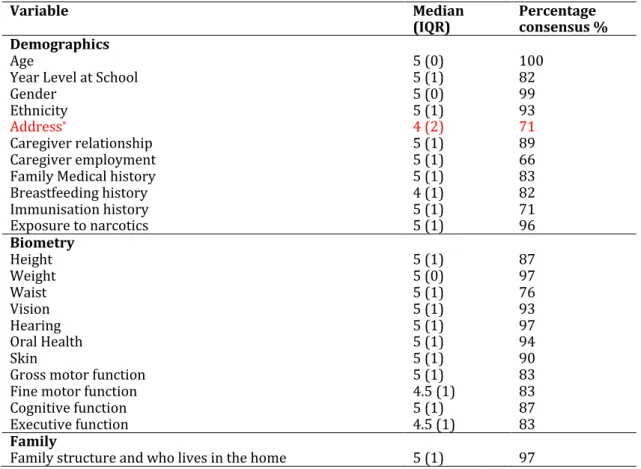
Developing a child health survey for a Pacific Island nation. Integrating the Delphi method with Pacific methodologies
Bula vakavanua and the spiritual disruption of elder abuse: A Fijian perspective
Setting sail and returning home. Research voyaging in Aotearoa.
Access to ICT in the Pacific Islands region: a brief report
Covid-19 underscores long held strengths and challenges in Pacific health
06 0206
ISSN 2422-8656
O le tele o sulu e maua ai figota (Samoan) The more light sources we have, the more shellfish
we find. The more diverse the perspectives, the better the collective outcomes.
306
Contents
VOLUME 21, ISSUE 6, NOVEMBER 2020 Page Number EDITORIALThe COVID19 Pandemic and Pacific resilience 307-308
Alec EKEROMA
ORIGINAL RESEARCH
Evaluating the feasibility and effectiveness of self-monitoring of health 309-318 among Samoan women: a randomized trial
Erica L KOCHER, Mayur M DESAI, Anna C RIVARA, Take NASERI, Nicola L HAWLEY
Developing a child health survey for a Pacific Island nation. Integrating 319-334 the Delphi method with Pacific methodologies
Fiona LANGRIDGE, Malakai OFANOA, Toakase FAKAKOVIKAETAU, Teuila PERCIVAL, Laura WILKINSON-MEYERS, Cameron GRANT
Bula vakavanua and the spiritual disruption of elder abuse: A Fijian perspective 335-340 Sandra THAGGARD, El-Shadan TAUTOLO
TALANOA
Setting sail and returning home. Research voyaging in Aotearoa. 341-346 Rosalina RICHARDS, Justine CAMP, Jesse KOKAUA, Terina RAURETI,
Albany LUCAS, Darcy KARAKA,Hannah RAPATA, Michael LAMETA
SHORT REPORT
Access to ICT in the Pacific Islands region: a brief report 347-350 Judith MCCOOLJanine HILL, Rosie DOBSON,Robyn WHITTAKER
PERSPECTIVE
Covid-19 underscores long held strengths and challenges in Pacific health 351-353 Jacinta FAALI’I-FIDOW
ORBITUARY
Dr Joe Williams 354-355
Debbie SORENSEN
About the Pacific Health Dialog. 356-357 Cover picture: Pasifika Medical Association Medical and Nursing Team
responding to the Measles Epidemic in Samoa. (photo supplied by PMA).
Ekeroma A. Pacific Health Dialog 2020; 21(6):307-308. DOI: 10.26635/phd.2020.635
307
Editorial OPEN ACCESS The COVID-19 pandemic and Pacific resilience
Alec EKEROMA
Editor in Chief, Pacific Health Dialog. [email protected]
On the 21st November 2020, the number of COVID19 cases recorded worldwide is about to reach 59 million with close to 1.4 million deaths.1 Countries such as New Zealand with the promptness in strict border controls, screening, tracking and isolation policies and procedures have the least rate of infection and deaths, compared to countries such as the United States of America (USA) who lacked a prompt coordinated response, leadership and population willingness to prevent infection spread.
Most Pacific Island countries responded promptly and appropriately to prevent the COVID-19 pandemic reaching their shores by curtailing all air travel even to its returning citizens. The exception is French Polynesia which has 12,978 cases in a population of 280,908 (4.6% COVID-19 infection rate (CIR)) and 63 deaths (0.49% CDR). Lower number of cases and CIRs have been recorded in the Northern Marianas (104, 0.18%), Papua New Guinea (604,0.01%), Marshall Islands (4,0.01%), New Caledonia (32,0.01%), Fiji (35,0.00%), Solomon Islands (16,0.00%), Samoa and Vanuatu have now recorded a case each whereas eight of the following countries have had none: Federated States of Micronesia, Nauru, Niue, Palau, Tonga, Tuvalu, Cook Islands and Kiribati.2 The prompt Pacific response demonstrates informed national leadership which would have been assisted by media coverage and expert advice from the World Health Organization (WHO). In Samoa’s case, the immediate response was on the back of lessons learnt from the measles outbreak a few months earlier, in late 2019, which resulted in 83 deaths.
Besides being vulnerable to the high frequency of natural disasters, the Pacific Islands have been deemed equally vulnerable to pandemics over the years. Although the Pacific Islands were spared from the devastation of the Zika virus, H1N1 Swine Flu, Human Immunodeficiency Virus, Severe Acute Respiratory Syndrome, Ebola virus, Polio, Middle East Respiratory Syndrome;
Samoa has remembered the carelessness in quarantine procedures that led to a fifth of its
population decimated by the Spanish Flu in 1918 and the poor vaccination rates that led to 83 deaths from the measles epidemic in 2019.
Although the number of cases is low and may remain so until a vaccine is available in the middle of 2021, the health and economic impact of the COVID-19 pandemic, since international travel and trade was curtailed from March 2020, is yet to be measured or understood. The impact on the economy, however, is keenly felt with a surge in unemployment and postponement of infrastructure projects as most economies of Pacific Island countries are highly reliant on tourism. Tourism has ground to a halt in all countries and yet the sector contributes to more than 30% of the gross domestic product (GDP) of Samoa, Fiji, Vanuatu, Niue, French Polynesia and the Cook Islands.3 The tourism and hospitality sectors employ an estimated 150,0003,4 workers directly and indirectly employ thousands more of the informal workforce affecting livelihoods of those in the farming and agricultural sectors. The severe reduction in the demand for primary produce and services from the affected tourism sector have impacted the informal economy and the many vulnerable family’s dependent on it.
Samoa for example, reduced trading and market hours and banned young street vendors. To make matters worse, Pacific families in New Zealand, Australia and the USA have also experienced high levels unemployment and with reduced incomes, the remittances to the Islands have also fallen.5 A reduction in disposable incomes affect the affordability and desire for healthcare further resulting in vulnerable groups getting sicker.6 Due to the worldwide destruction of the aviation industry’s capacity and associated services linking tourist destinations to the Pacific Island countries and the decline in local tourism capacity as businesses close operations as the pandemic continues in to the second year, the length of recovery is uncertain and may take six to eleven years to return to pre-pandemic conditions but it also “may not happen before the middle of the decade”.7 Stimulus financial packages and government interventions will
Ekeroma A. Pacific Health Dialog 2020; 21(6):307-308. DOI: 10.26635/phd.2020.635
308 soften the impact of financial hardships, but
these measures may not be sustainable, even with assistance from donor partners, if the pandemic continues to the end of 2021; which may be likely. More borrowing and loan repayment defaulting may occur in those countries with high debt levels such as Samoa and Tonga.5
The high frequency of natural disasters in the Pacific Island countries have not only affected lives and livelihoods but they have also resulted in infrastructure damage worth in the billions of dollars. The tsunami that hit Samoa in 2009 cost US$120million or 22% of the GDP over three to four years.8 Furthermore, for every damage to 1% GDP, there is a reduction in growth by 0.7%
in the year of the disaster.9 The COVID-19 pandemic is not classified as a natural disaster and have not reached many Pacific Island shores;
yet, the pandemic has caused significant economic and social impact that is more severe given it is affecting all Pacific Island countries and economies of donor partners. The impact may be difficult to quantify as it is associated with a prolonged shutdown of travel and trade across the region affecting not only economic but heath and educational programmes.
The Pacific Islands economic, social and community resilience is being tested. The delivery of quality population health programmes is and will be affected. Macro- economic resilience will depend on how long the pandemic will last and whether COVID-19 cases start spreading in Island communities placing financial stress on overstretched resources.
Building community resilience by promoting health and hygiene programmes to avoid infection transmission has occurred through community consultations, women’s groups and health messaging in school programmes and multimedia advertising. Pacific governments and international agencies have launched initiatives to increase local food production5 and there is evidence in Samoa that agricultural production has increased, prices have fallen and food imports reduced. The other benefits could be that intellectual exchange and some educational programmes have transferred to online platforms saving limited funds and lessening environmental decline.
The Pacific Islands have survived multiple natural disasters and with the assistance of development partners and families in Pacific-rim countries, the Islands will pull through again, albeit severely bruised, with social cohesion and resilience underpinned by cultural, spiritual and family values. Social cohesion may be challenged
in vulnerable groups should economic hardship continue to the end of 2021 and without any relief or vaccine in sight.
REFERENCES
1. World Health Organization. COVID-19 related analytics, graphs, and charts. Corona Tracker. Accessed 25 Nov. 2020.
https://www.coronatracker.com/analytics 2. World Health Organization. WPRO COVID-
19 Dashboard. Accessed 25 Nov. 2020.
3. NZ Ministry of Foreign Affairs. Pacific Tourism: COVID-19 Impact & Recovery Sector Status Report: Phase 1B 5. (2020).
4. Republic of Fiji. Report Fijian Tourism 2021.
(2020). https://mitt.gov.fj/wp- content/uploads/2019/04/FT2021.pdf Accessed 25 Nov. 2020.
5. Sherzad, S. Impacts of COVID-19 on the Food Systems in the Pacific Small Island Developing States (PSIDS) and A Look into the PSIDS Responses. 1–15 (2020). Accessed 25 Nov. 2020.
6. Organisation for Economic Co-operation and Development (OECD) Statistics and Data Directorate. COVID-19: Protecting people and societies. (2020). Accessed 25 Nov 2020.
7. OECD. Rebuilding tourism for the future:
COVID-19 policy responses and recovery.
OECD 1–100 (2020). Accessed 25 Nov. 2020 8. The World Bank. PCRAFI Phase II:
Furthering Disaster Risk Finance in the Pacific. 40 (2018). Accessed 29 Nov. 2020 9. Cabezon, E., Hunter, L., Tumbarello, P.,
Washimi, K. & Wu, Y. Enhancing macroeconomic resilience to natural disasters and climate change in the small states of the Pacific. Asia. Pac. Econ. Lit.
(2019) doi:10.1111/apel.12255.
Kocher EL, Pacific Health Dialog 2020; 21(6):309-318. DOI: 10.26635/phd.2020.636
309
Original Research OPEN ACCESS Evaluating the feasibility and effectiveness of self-monitoring of health among Samoan women: a randomized trial.
Erica L KOCHER,1 Mayur M DESAI,1 Anna C RIVARA,2 Take NASERI,3 Nicola L HAWLEY1*
ABSTRACT
Introduction: Self-monitoring technologies that help individuals track their health have proven effective in high-income countries but have not been widely tested or marketed in the Pacific. We conducted a pilot randomized controlled trial in Samoa to investigate the feasibility and acceptability of step-counters and digital scales.
Methods: The trial enrolled 44 Samoan women (31-40 years), without previously diagnosed chronic conditions (hypertension, diabetes, etc.), who reported motivation to become more physically active.
After measuring daily step counts for one week in the absence of feedback, participants were randomly assigned to one of three groups for a four-week intervention period: 1) FitBit Zip® step-counter, 2) digital BodyTrace© scale, or 3) both devices. Outcomes of interest were device use, psychosocial indicators of health, daily step counts, and body mass index, measured at baseline and post-intervention.
Findings: Participants who received scales used them a median of 5.5 times during the four-week intervention period. While FitBits were used a majority of days during the baseline period, there was significant decline in use during the intervention. In all groups, Health Locus of Control, Self-Efficacy for Exercise, and Weight Efficacy improved. However, while the Scale Only group reported improved health-related quality of life, the two groups that used FitBits either did not significantly change or significantly decreased in their assessments of this measure. No group demonstrated change in average daily step counts during the intervention; BMI increased among the two groups using the scales.
Conclusions: Results suggest that self-monitoring technologies are acceptable in Samoa and generally improve psychosocial indicators of health. Further research is necessary to assess their effectiveness as an intervention tool and to determine how best to sustain device use over time. The significant increase in BMI over the relatively short intervention period highlights the importance of developing effective intervention approaches in this setting.
Key Words: Samoa, Exercise, Body Mass Index, Psychosocial Factors, Self-monitoring
INTRODUCTION
The global non-communicable disease (NCD) epidemic is especially severe among Pacific Islanders, and in Samoa specifically. A 2010 study estimated that 64.6% of adult women and 41.2% of adult men in Samoa had obesity, based on Polynesian Body Mass Index (BMI) cut offs (≥32 kg/m2).1,2 In recent decades, traditionally active lifestyles and diets have been replaced with increasingly sedentary lifestyles and imported and processed foods, contributing to the high prevalence of obesity observed today.3-8 Despite Samoan culture traditionally valuing sedentary behavior as a sign of status, there has been evidence of recent adoption of varied physical activity programs (Zumba, cross-fit, yoga) as a means of health promotion. 5,6
Corresponding author: Nicola Hawley, [email protected]
1. Department of Chronic Disease Epidemiology, Yale University, New Haven, Connecticut, USA.
2. Department of Epidemiology of Microbial Diseases, Yale University, New Haven
3. Ministry of Health, Apia, Samoa
Received: 18.12.2019 Accept: 30.09.2020 Published: 30.11.2020 Citation: Kocher EL, et al. Evaluating the feasibility and effectiveness of self-monitoring of health among Samoan women: a randomized trial. Pacific Health Dialog 2020;
21(6):309-318. DOI: 10.26635/phd.2020.636
Copyright: © 2020 Kocher EL, et al. This is an open-access article distributed under the terms of the Creative Commons Attribution License, which permits unrestricted use, distribution, and reproduction in any medium, provided the original author and source are credited.
Kocher EL, Pacific Health Dialog 2020; 21(6):309-318. DOI: 10.26635/phd.2020.636
310 Innovative approaches that encourage adoption
and maintenance of physical activity are needed to support this positive momentum.
Many effective behavior change and weight control interventions (tested in high income settings) have incorporated self-monitoring of physical activity and weight.9-13 Self-monitoring strategies for physical activity have ranged from keeping a paper diary to using tracking devices including pedometers, used to record walking behaviors. Basic pedometers are low-tech, affordable, and provide a simple output, usually step count, that can help users be more aware of their physical activity and track process toward goals.14 Self-weighing similarly improves participant’s awareness of their own weight, which is often underestimated and encourages them to place fluctuations in weight in the context of their energy intake and expenditure.11,15,16
Despite the success of self-monitoring approaches and technologies in high-income countries, the acceptability and effectiveness of these strategies in the Pacific is still unknown.
Given the confluence of the need for intervention and increasing accessibility of this technology in Samoa, we conducted a randomized intervention trial to answer the questions: are step-counters and digital scales a feasible and potentially effective means of self-monitoring health, altering daily step counts, and influencing BMI in Samoa?
METHODS Recruitment
Participants in this study were part of the ‘Soifua Manuia’ (‘Good Health’) energy balance study, which was designed to examine the relationship between genetics, energy balance, and obesity in Samoa.17 The initial recruitment phase of that study, completed between June and August 2018, screened 709 adult Samoans aged 31 to 50 years using convenience sampling in 12 villages across the island of Upolu. Exclusion criteria for the parent study included: pregnancy, use of weight loss medication, recent adoption of a diet or exercise program, and/or weight loss of at least 5% of their body weight in the last year. Data collected included demographic and health surveys, anthropometric measurements, blood pressure, glycated hemoglobin (HbA1c), and a saliva sample for genotyping. During the informed consent process participants agreed to be contacted about participation in future research studies.
Eligibility for this pilot study was determined based on data collected in the recruitment phase of the energy balance study. Women between the ages of 31 and 40 years (to minimize variation in this small pilot study), who reported motivation to become more physically active (defined by the Physical Activity Stages of Change questionnaire
18), and were not actively trying to become pregnant/had no medical condition preventing physical activity or making participation inadvisable were invited to participate. Excluded medical conditions were self-report of doctor diagnoses including hypertension, heart attack, heart disease, stroke, Type 2 diabetes, non-skin cancers, and dialysis, all of which may limit normal physical activity patterns. Participants were also excluded if they were not previously diagnosed with diabetes but their HbA1C measurement during screening suggested that they had severely uncontrolled Type 2 diabetes (HbA1c ≥9.0), if they had been hospitalized for depression in the last year, were being treated for psychiatric conditions other than depression, had been previously diagnosed with an eating disorder, or were unable to walk half a kilometer without stopping.
Participants were recruited from four villages in close proximity to the Apia Urban Area to facilitate follow up. Among those screened for the energy balance study, 213 women were between the ages of 31-40 years and were assessed for eligibility; 73 met criteria for participation (Figure 1). These participants were contacted by members of our research team and offered the opportunity to participate in this additional study. It was made clear that participation would be voluntary and unrelated to the ongoing study from which they were originally recruited. Study procedures were approved by the Yale University IRB (HSC Protocol #2000022946) and the Samoan Ministry of Health’s Health Research Committee. The study protocol was also registered with ClinicalTrials.gov (Identifier:
NCT03940599, Registered 07 May 2019 – Retrospectively registered.)
Equipment
Two types of devices were utilized in the study:
FitBit Zip® activity monitors (Fitbit Inc, USA), and BodyTrace© scales.19 FitBit Zips® are electronic, waist-worn pedometers that measure and display daily step counts. Each FitBit linked to an online account, which the research team retained access to and used to upload device data via Bluetooth. The BodyTrace© scales displayed weight measurements to the participant and transmitted the recorded weights to an online database through cellular networks, allowing researchers to track scale use.
Kocher EL, Pacific Health Dialog 2020; 21(6):309-318. DOI: 10.26635/phd.2020.636
311 Figure 1: CONSORT Flow Diagram
Intervention
Participants were enrolled in the study by Samoan research assistants who visited participants in their homes in June and July 2018.
After providing informed consent, all participants began a one-week baseline assessment period. Each received a FitBit Zip with the screen covered (screens were covered with tape and the devices reversed in their belt clips) to prevent their behavior from being influenced by the step count data, and were asked to wear the device daily (any time they were not sleeping overnight) to establish their baseline physical activity.
After the one-week baseline assessment, participants’ weight was measured to calculate pre-randomization body mass index (BMI).
Participants also completed questionnaire measures to assess psychosocial indicators of health. The Multidimensional Health Locus of Control Scale (HLOC) was used to measure: an individual’s perceived control of their own health (Internal), the influence of random luck (Chance), and the influence of others such as friends, family, and medical providers (Powerful Others).20 The Self-efficacy for Exercise Behaviors Scale and the Weight Efficacy Life- Style Questionnaire assessed individuals’ beliefs about their ability to adopt and maintain a
healthy diet and physical activity in the face of obstacles, including stressful life events and familial obligations.21,22 The SF8 Quality of Life scale asked individuals to assess their physical and mental health over the last month, and a self- reported health question asked individuals to assess their overall health for their age (Excellent, Very Good, Good, Poor, and Very Poor). All questionnaires had been used in prior studies among Samoan adults and had been translated and pilot-tested in this setting.
After completing the questionnaires, a random number generator was used to assign participants to one of three intervention groups:
1) FitBit Only (n=15), 2) Scale Only (n=15), or 3) FitBit and Scale (n=15). All participants wore FitBits for the duration of the intervention period to measure their physical activity; the screens were uncovered for the groups assigned to self- monitor using the FitBits, but they remained covered in the Scale Only group. Participants then used the devices for a four-week intervention period. Because the primary purpose of the study was to explore how participants in this setting viewed and made use of these devices, participants were shown how to use the devices, but were not provided with specific targets related to daily step counts or weight.
Kocher EL, Pacific Health Dialog 2020; 21(6):309-318. DOI: 10.26635/phd.2020.636
312 The research team visited participants once at
approximately the midpoint of the four-week intervention period to download data from the FitBits. This visit did not include any additional surveys or any feedback on the outcomes of interest. At the end of the intervention period, participants repeated the same questionnaires and physical measurements. Upon completion, participants received approximately USD$12 in cell phone credit to compensate them for their time and were able to keep the FitBit Zip® that they used during the study.
Analysis
All analyses were conducted in SAS version 9.4 (SAS Institute Inc., Cary, NC.). Given the small sample size, analyses were conducted using nonparametric methods including Fisher’s exact tests for categorical data, Kruskal–Wallis tests for comparisons of the intervention groups, and the Wilcoxon Signed-Rank test for comparisons of measures between the baseline and feedback periods.
FitBit use was defined as the proportion of days in the given period that the individual participant wore the FitBit. A day of use was defined as the FitBit recording more than 100 steps to ensure the measurement was not only reflecting accidental movement or transport while not being worn. A previous feasibility study conducted in Australia utilized a 1,000 step threshold for a day to count.23 Given the lack of previous data about average step counts in this population, we selected a lower threshold. An individual’s daily step count for each week of the study period was averaged over the days that they used the FitBit. Participants were excluded from the step count analysis if they were missing data for an entire week, either due to non- adherence, losing the FitBit, or device malfunction.
Scale use was defined as the number of measurements that an individual made on the BodyTrace© scale during the 4-week intervention period. To identify the measurements that were taken by the participant as opposed to another individual in the household, a consensus approach was taken.
Two reviewers (NH and EK) assessed measurements independently to identify the participant’s measures and met to resolve any conflicts. Measurements were determined to be the participant based on their initial weight, their weight gain trajectory, and the feasibility of weight change over time. Measurements were included as belonging to the participant if they
were within two kilograms of the previous measurement, taking into account time between measurements.
RESULTS
Sample Characteristics
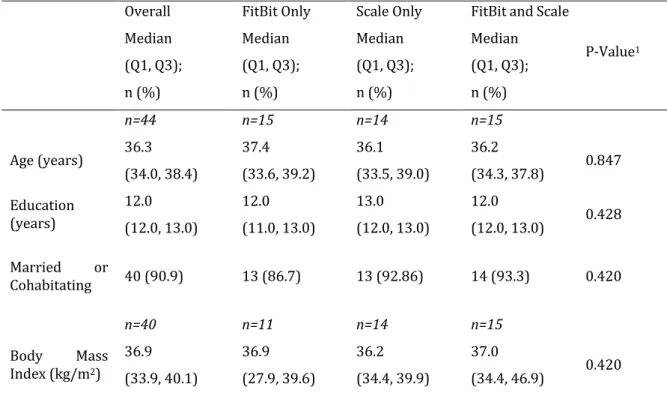
Forty-four participants were assigned to an intervention group (FitBit Only, n=15; Scale Only, n=14; Scale & FitBit, n=15) and completed all study visits. Three participants enrolled but later declined to participate further or were determined to be ineligible and were withdrawn from participation. Demographic characteristics did not differ between groups at baseline (Table 1). Based on Polynesian BMI cut offs, the median BMI for the overall sample (36.9 kg/m2) was in the obese range (≥32.0 kg/m2).2
Device Use
There was no significant difference in FibtBit use between the three groups during the baseline assessment or intervention. Among all participants, there was a significant decline in use of the FitBits between the baseline and intervention periods (66.7% vs. 47.2% of days, p<0.001) (Table 2); seven participants lost the devices. Participants used their scales a median of 5.5 times during the 4-week intervention period (minimum: 1, maximum: of 26). There was no significant difference in scale use between the two groups that received scales (p=0.277).
Psychosocial Indicators of Health
Post-intervention, there was a significant change in psychosocial indicators of health compared to baseline (Figure 2). The median score on each of the HLOC subscales increased by a statistically significant amount in the Scale Only and the combined FitBit and Scale groups. The FitBit Only group had a significant increase in the ‘Chance’
and ‘Powerful Others’ subscales, but no significant change in the Internal subscale. Post- intervention the three groups did not differ in their HLOC subscale scores. All three groups significantly increased their Self-efficacy for Exercise post-intervention, with a median increase in score of 16.0 points across all three groups. The FitBit Only and FitBit and Scale groups had a significant increase in Weight- Control Self Efficacy following the intervention of 18.0 and 14.0 respectively, while the Scale Only group had a moderately significant increase of 12.0 (p=0.053).
Kocher EL, Pacific Health Dialog 2020; 21(6):309-318. DOI: 10.26635/phd.2020.636
313 Table 1: Sample Characteristics
Overall Median (Q1, Q3);
n (%)
FitBit Only Median (Q1, Q3);
n (%)
Scale Only Median (Q1, Q3);
n (%)
FitBit and Scale Median (Q1, Q3);
n (%)
P-Value1
n=44 n=15 n=14 n=15
Age (years) 36.3 (34.0, 38.4)
37.4 (33.6, 39.2)
36.1 (33.5, 39.0)
36.2
(34.3, 37.8) 0.847 Education
(years)
12.0 (12.0, 13.0)
12.0 (11.0, 13.0)
13.0 (12.0, 13.0)
12.0
(12.0, 13.0) 0.428 Married or
Cohabitating 40 (90.9) 13 (86.7) 13 (92.86) 14 (93.3) 0.420
n=40 n=11 n=14 n=15
Body Mass Index (kg/m2)
36.9 (33.9, 40.1)
36.9 (27.9, 39.6)
36.2 (34.4, 39.9)
37.0
(34.4, 46.9) 0.420
1 P-values reflect Kruskal-Wallis test for continuous variables and Fisher’s Exact test for categorical variables.
Sample size varies due to missing data.
Table 2: Device Use FitBit Use1
Median (Q1, Q3) Scale Use2
Median (Q1, Q3)
Baseline
Period Intervention
Period Change P-Value3
Overall n=44
66.7
(50.0, 83.3)
47.2
(31.5, 72.2)
-0.15
(-0.31, -0.01) <0.001 n=28 5.5 (3.0, 7.0) FitBit
Only n=15
66.7
(50.0, 83.3)
40.7
(35.7, 57.1)
-0.11
(-0.30, -0.04) 0.010 -
Scale Only n=14
83.3
(50.0, 83.3)
53.7
(29.6, 70.4)
-0.17
(-0.30, 0.02) 0.042 n=14 5.0 (2.0, 7.0) FitBit and
Scale n=15
83.3
(50.0, 83.3)
50.0
(14.8, 77.8)
-0.17
(-0.39, 0.06) 0.035 n=14 6.0 (4.0, 7.0) Sample size varies due to missing data.
1 FitBit use was defined as the proportion of days in the given period that the individual participant wore the FitBit.
A day was counted as a day of use if the FitBit recorded more than 100 steps.
2 Scale use was defined as the total number of measurements than an individual made on the BodyTrace during the 4-week intervention period.
3 P-values reflect the Kruskal-Wallis test
Kocher EL, Pacific Health Dialog 2020; 21(6):309-318. DOI: 10.26635/phd.2020.636
314 Figure 2: Change in Psychosocial Indicators of Health
There was also a significant difference in how the groups’
self-assessments of health changed during the intervention period. In the FitBit Only group SF-8 scores increased for both physical (2.5 to 6.5, p=0.002) and mental (3.0 to 6.0, p=0.008) health, indicating worsening quality of life. There were no reported changes in the SF-8 scores of the other two groups.
Responding to the self- reported health question, all participants reported that their health was excellent, very good, or good pre-randomization and post-intervention. However, post-intervention the proportion of individuals in the FitBit only group reporting that their health was excellent increased (from 73.3% to 86.7%), while the proportion decreased for the Scale Only (64.3% to 57.1%) and FitBit and Scale groups (80.0% to 33.3%) (p=0.038).
* Indicates that the change in score is statistically significant at alpha = 0.05, using the Wilcoxon Signed- Rank test.
†The highest possible score for each HLOC sub scale is 36, with higher scores indicating a greater perceived influence of the specified locus on health.
‡ The highest possible score for the Self Efficacy for Exercise scale is 60, with higher scores indicating greater self efficacy.
§ The highest possible score for the Weight Efficacy scale is 100, with higher scores indicating greater weight efficacy.
¶ The highest possible score for the physical and mental components is 16 for each subscale, with higher scores indicating a more negative assessment of health-related quality of life.
Kocher EL, Pacific Health Dialog 2020; 21(6):309-318. DOI: 10.26635/phd.2020.636
315 Physical Activity and BMI
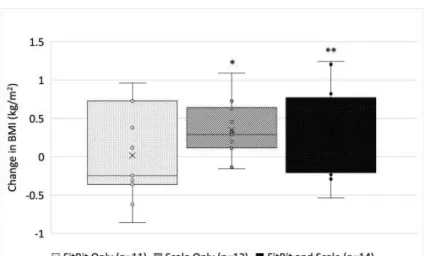
There was no effect of the intervention on physical activity, measured using median daily step counts. Although not significant, the Scale Only and the combined FitBit and Scale groups saw an increase in steps between the baseline and overall intervention periods. A significant increase in BMI between the baseline and post- intervention assessments was observed among the two groups that used scales (Scale Only p=0.005, FitBit and Scale p=0.058), while the FitBit Only group had a slight, nonsignificant decrease in BMI (p=0.898) (Figure 3).
Figure 3: Change in Body Mass Index by Group
* indicates statistically significant median change at p=0.05
** indicates a statistically significant median change at p=0.10; p-values reflect the result of the Signed Rank Test
DISCUSSION
Based on device use, our results suggest that FitBit step counters and digital scales may be an acceptable intervention tool with a generally promising impact on psychosocial indicators of health. Although there was no clear effect on daily step counts, participants in all groups increased their weight and physical activity- related self-efficacy, a measure known to be associated with successful behavior change.
Worryingly, participants in the two groups using the scales increased their BMI during the four- week intervention period, and reported poorer health post-intervention. If the median increase in weight over this four-week study (0.70 kg) were to be extrapolated over a year, the average weight gain observed would be 9.1 kg. This highlights the critical need for weight-related intervention in this setting, but our results indicate that we may need to be cautious about
the psychological impact of the approaches we choose.
Device Use
While FitBit use was high during the baseline period, adherence to daily wear declined in all three groups during the intervention. In our analyses of changes in daily step counts, almost half of the sample had to be excluded due to low adherence, which is of concern. Prior studies assessing the acceptability of pedometers have considered participants’ recording step counts at least 70% of the time to indicate ‘good’
adherence, but these studies often engage participants in other intervention activities, provide step goals, and give structured feedback and encouragement.24,25 Our participants were able to see their step count each day, but we did not provide tools to monitor longitudinal progress.
The decline in adherence we observed indicates that while participants were open to using the devices, further research is necessary to determine how best to encourage continued adherence.
One potential strategy would be to utilize a wrist worn model of FitBit, which might be less easily removed or forgotten than the waist-worn model selected for this study.
In the absence of specific guidance about scale use, the sustained use of the devices (on average >once/week) over the intervention period indicated acceptability. Regular self- weighing is associated with weight loss, with some weight loss interventions recommending daily self-weighing.9 Weighing once a week, which most participants in this study did would have been sufficient for them to observe the overall trend in their weight if they were to continue this behavior over a longer intervention period, which is the aim of the self-weighing approach. That there was no significant difference in use between the two groups that used the scales indicates that additional feedback about physical activity from the FitBit did not significantly affect the frequency of self- weighing.
Psychosocial Indicators of Health
Individuals with a higher internal locus of control have been identified as more likely to engage in health promoting behaviors.26 The fact that participants in this study increased their scores on all three of the HLOC subscales suggests that they felt simultaneously more in control of their
Kocher EL, Pacific Health Dialog 2020; 21(6):309-318. DOI: 10.26635/phd.2020.636
316 own health, but were also more aware of the
influence of outside forces, including chance and other people. This may have been as a result of setting goals for themselves that could not be met because of outside obligations. Self-efficacy has also been identified as essential for helping individuals who intend to make health behavior changes to follow through with action.27 Despite the lack of association with behavior change, the significant increase in Self-Efficacy for Exercise and Weight Efficacy among all of the participants in this study is encouraging.21,22 Whether improved self-efficacy can be directly attributed to the devices and their feedback rather than simply enrolling in a trial with a focus on physical activity/health should be the subject of future research. Several prior intervention studies have observed improved physical activity in those with higher self-efficacy at baseline, but few have attempted to measure the opposite phenomenon.27,28
The psychological impact of weight-focused interventions has been broadly discussed, extensively in the Pacific context, but to date few studies have intentionally measured the effect of any given intervention on self-reported health and quality of life.29 Here, we found mixed, and somewhat contradictory results: in the group who received only the FitBit, quality of life related to health (both physical and mental) worsened, but self-reported health status improved. We did learn, however, in post-hoc analyses that the decline in quality of life may have been driven by those participants who lost or stopped wearing the devices during the intervention period. Participants may have stopped wearing the devices because they were disappointed in their activity levels or felt unable to make improvements, or may have been frustrated at the missed opportunity for feedback if the device was lost. If these individuals were excluded, there was no significant change in quality of life among this group.
Self-monitoring of weight has been identified as a “double-edged sword”; it is an effective tool for interventions, but can also worsen body image concerns in a way that might undermine progress.30 In this study, both groups that received a scale were less likely to report
“excellent” self-reported health post- intervention than at baseline. Given that both groups gained a significant amount of weight during the intervention period, and that public health messaging about the impact of weight on health is widespread, this may simply reflect acknowledgement of their weight status and their level of risk for additional, related conditions. But, we did not explore participants’
conceptions of health holistically enough to be sure that there were not negative consequences for body image. This should be fully explored in later studies.
Limitations
While the introduction of these devices to the Samoan setting was innovative and the findings suggest many avenues for future study, they must be considered in the context of several limitations. The small sample size and large degree of variability in the sample limited the power of analyses to identify a clear pattern in behavior, if one existed. The analyses were also limited by a significant decline in adherence to device use and our inability to differentiate a decline in adherence from a decline in physical activity. Using 100 steps as the cutoff to establish a day of device wear was a reasoned decision, but there was little evidence available on which to base this choice. Future studies could address these limitations by using a wrist worn model of FitBit that included heart rate tracking to better establish participant use and incentives for continued adherence. Additionally, while we believe participants were compliant with the use of tape to mask the step count display, this method was imperfect and could be improved.
This study was designed as a pre/post comparison, with individual behaviors during the intervention period compared to the individual’s baseline values. While there is no evidence to suggest that there was a population wide change during this relatively short study period, the lack of a control group is another potential limitation of this design. As a feasibility study, the included intervention was not framed around specific physical activity or weight loss goals. This approach was taken to explore how participants in this setting used these devices in the absence of other guidance. However, the lack of a change in step counts may be in part the result of this approach. Finally, although the FitBit and BodyTrace© devices we chose here would still be relatively expensive for the Samoan population, costing $60-80 USD compared to the average weekly household income of approximately $260, participants could obtain similar feedback from less expensive devices without the web-based platform.31
CONCLUSIONS
Given the expanding access to mobile technologies in the Pacific, this is an ideal moment to introduce self-monitoring
Kocher EL, Pacific Health Dialog 2020; 21(6):309-318. DOI: 10.26635/phd.2020.636
317 technologies as a potential tool to address the
rising burden of obesity and NCDs. The increase in BMI that occurred over the relatively short study period reinforces the need for weight control interventions in this setting. The results of this study suggest that FitBit step counters (or their less expensive equivalent) and weighing scales may be an acceptable and potentially effective tool for interventions to utilize in the Samoan setting. While no significant difference was observed in participant’s physical activity, improvements to psychosocial indicators of health suggest a positive effect of using these devices, although further research is needed to determine how to sustain device usage over time, and to evaluate the effect of these devices on physical activity and weight in a more structured intervention approach.
Funding: This research was funded by National Institutes of Health grant R01HL140570, the Yale Global Health Field Experience Award and Yale School of Public Health Faculty Funds. A National Institutes of Health Fogarty Global Health Equity Scholars Fellowship (#TW009338) provided support for ACR.
Competing interests: The authors declare that they have no competing interests.
Author contribution list: ELK and NLH conceived the study and prepared the study protocol and approvals. TN provided oversight of the project and facilitated research approvals in Samoa. ELK and ACR completed data collection.
ELK conducted data analysis in collaboration with NLH and MMD. ELK prepared the manuscript for submission. All authors reviewed, revised, and approved the final manuscript.
Acknowledgements: The authors would like to thank the Samoan Ministry of Health for their support of this project, the study participants, and Gloria Siufaga and Melania Selu for their role in facilitating this work.
REFERENCES
1. Hawley NL, Minster RL, Weeks DE, et al.
Prevalence of adiposity and associated cardiometabolic risk factors in the Samoan genome-wide association study. American journal of human biology : the official journal of the Human Biology Council 2014;
26(4): 491-501.
2. Swinburn B, Ley S, Carmichael H, Plank L.
Body size and composition in Polynesians.
International Journal of Obesity 1999; 23:
1178-83.
3. Minster RL, Hawley NL, Su C-T, et al. A thrifty variant in CREBRF strongly influences body mass index in Samoans. Nature Genetics 2016; 48: 1049-54.
4. Wang C, Abbot L, Goodbody A, Hui W. Ideal body image and health status in low-income Pacific Islanders. Journal of Cultural Diversity 2002; 9(1): 12-22.
5. Tuagalu C. Young People’s Perceptions and Experiences of Physical Activity in Apia, Samoa. Pacific Health Dialog 2011; 17(1).
6. Hardin J. Everyday translation: health practitioners’ perspectives on obesity and metabolic disorders in Samoa. Critical Public Health 2014; 25(2): 125-38.
7. Popkin BM. Global nutrition dynamics: the world is shifting rapidly toward a diet linked with noncommunicable diseases. The American Journal of Clinical Nutrition 2006;
84(2): 289-98.
8. Keighley ED, McGarvey ST, Quested C, McCuddin C, Viali S, Maga Uo. Nutrition and health in modernizing Samoans: temporal trends and adaptive perspectives. In:
Ohtsuka R, Ulijaszek SJ, eds. Health Change in the Asia-Pacific Region: Biocultural and Epidemiological Approaches. Cambridge;
2007.
9. Steinberg DM, Tate DF, Bennett GG, Ennett S, Samuel-Hodge C, Ward DS. The Efficacy of a Daily Self-Weighing Weight Loss Intervention Using Smart Scales and E-mail.
Obesity 2013; 21: 1789-97.
10. Shuger SL, Barry VW, Sui X, et al. Electronic feedback in a diet- and physical activity- based lifestyle intervention for weight loss:
a randomized controlled trial. International Journal of Behavioral Nutrition and Physical Activity 2011; 8(41).
11. Ross KM, Wing RR. Impact of Newer Self- Monitoring Technology and Brief Phone- Based Intervention on Weight Loss: A Randomized Pilot Study. Obesity 2016; 24:
1653-9.
12. Chiauzzi E, Rodarte C, DasMahapatra P.
Patient-centered activity monitoring in the self-management of chronic health conditions. BMC Medicine 2015; 13(1): 77.
13. Whelan ME, Goode AD, Eakin EG, et al.
Feasibility, effectiveness and cost- effectiveness of a telephone-based weight loss program delivered via a hospital outpatient setting. Transl Behav Med 2016;
6(3): 386-95.
Kocher EL, Pacific Health Dialog 2020; 21(6):309-318. DOI: 10.26635/phd.2020.636
318 14. Tudor-Locke C, Lutes L. Why Do Pedometers
Work? Sports Medicine 2009; 39(12): 981- 93.
15. Burke LE, Wang J, Sevick MA. Self- Monitoring in Weight Loss: A Systematic Review of the Literature. Journal of the American Dietetic Association 2011; 111:
92-102.
16. Engstrom JL, Paterson SA, Doherty A, Trabulsi M, Speer KL. Accuracy of Self- Reported Height and Weight in Women: An Integrative Review of the Literature. Journal of Midwifery & Women’s Health 2003;
48(5): 338-45.
17. Samoan Obesity, Lifestyle, and Genetic Adaptations Study Group. "Soifua Manuia"
(Good Health) Study (Samoa). September 24 2019.
https://publichealth.yale.edu/olaga/projec ts/good_health/.
18. Marcus BH, Rakowski W, Rossi JS. Assessing Motivational Readiness and Decision Making for Exercise. Health Psychology 1992; 11(4): 257-61.
19. BodyTrace Inc. BodyTrace scale: frequently
asked questions.
https://www.bodytrace.com/medical/faq.h tml.
20. Wallston KA, Wallson BS, DeVellis R.
Development of the Multidimensional Health Locus of Control (MHLC Scales).
Health Education Monographs 1978; 6(2):
160-70.
21. Clark MM, Abrams DB, Niaura RS, Eaton CA, Rossi JS. Self-Efficacy in Weight Management. Journal of Consulting and Clinical Psychology 1991; 59(9): 739-44.
22. Sallis JF, Pinski RB, Grossman RM, Patterson TL, Nader PR. The development of self- efficacy scales for health-related diet and exercise behaviors. Health Education Research 1988; 3(3): 283-92.
23. Darvall JN, Parker A, Story DA. Feasibility and Acceptability of Remotely Monitored Pedometer-Guided Physical Activity.
Anaesthesia and Intensive Care 2016; 44(4):
501-6.
24. Zoellner J, Powers A, Avis-Williams A, Ndirangu M, Strickland E, Yadrick K.
Compliance and Acceptability of Maintaining a 6-Month Pedometer Diary in a Rural, African American Community-Based Walking Intervention. Journal of Physical Activity and Health 2009; 6(4): 475-82.
25. Pekmezi D, Dunsiger S, Gaskins R, et al.
Feasibility and Acceptability of Using Pedometers as an Intervention Tool for Latinas. Journal of Physical Activity and Health 2013; 10(3): 451-7.
26. Wallston BS, Wallston KA. Locus of Control and Health: A Review of the Literature.
Health Education Monographs 1978; 6(2):
107-17.
27. Sniehotta FF, Scholz U, Schwarzer R.
Bridging the intention–behaviour gap:
Planning, self-efficacy, and action control in the adoption and maintenance of physical exercise. Psychology and Health 2005;
20(2): 143-60.
28. Calfas KJ, Sallis JF, Oldenburg B, Ffrench M.
Mediators of Change in Physical Activity Following an Intervention in Primary Care:
PACE. Preventive Medicine 1997; 26: 297- 304.
29. Hardin J, McLennan AK, Brewis A. Body size, body norms and some unintended consequences of obesity intervention in the Pacific islands. Annals of human biology 2018; 45(3): 285-94.
30. Dionne MM, Yeudall F. Monitoring of Weight in Weight Loss Programs: A Double-Edged Sword? Journal of Nutrition Education and Behavior 2005; 37: 319-22.
31. Samoa Bureau of Statistics. Household Income and Expenditure Survey 2013/2014 Tabulation Report. Apia: Samoa Bureau of Statistics, 2016.
Langridge F. Pacific Health Dialog 2020; 21(6):319-334. DOI: 10.26635/phd.2020.638
319
Original Research OPEN ACCESS Developing a child health survey for a Pacific Island nation. Integrating the Delphi method with Pacific methodologies.
Fiona LANGRIDGE,1* Malakai OFANOA,2 Toakase FAKAKOVIKAETAU,3 Teuila PERCIVAL,2 Laura WILKINSON-MEYERS,4 Cameron GRANT5
ABSTRACT:
Introduction: There is minimal information available that describes the health of children of primary school age (5-12 years) living in the Pacific. Current tools that exist for measurement of health have not been developed with Pacific paradigms in mind. Our objective was to describe the development of a culturally and contextually appropriate health survey to enable measurement of the health status of 5- 12 year olds living in a Pacific Island Nation.
Methods: Integrating a Delphi method with Pacific methodologies, two rounds of online questionnaires involving 33 panel members reviewed what to include in a health survey for primary school-aged children living in Tonga. The panel consisted of paediatric clinicians and academics, teachers and parents from Tonga, New Zealand, USA, and the UK.
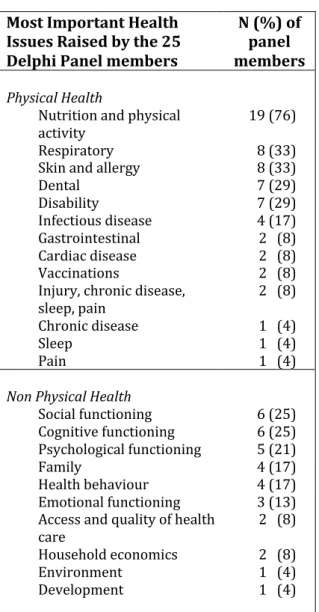
Results: Panel consensus was met on a range of domains to be included in the survey including: general demographics (80%), environment (80%), resilience and risk (88%), household economics (80%), psychological functioning (92%), social functioning (92%), physical functioning (88%), cognitive functioning (92%) and individual health conditions (84%). Particular importance was placed on including questions that described exposure of children to violence and abuse (93%).
Conclusions: Based upon the consensus of a diverse expert panel, the domains that are necessary for the measurement of health in primary school-aged children living in Tonga were identified. The Delphi method proved a valid and useful technique to assist with the development of such a health survey and enabled the incorporation of a Pacific lens – a Tongan understanding of measuring children’s health.
Key Words: Delphi Technique, Child health, Health surveys, Tonga, Pacific Island
INTRODUCTION
Little is known about child health in the Pacific.
The limited data that are available report mortality rather than morbidity statistics in children under-five years old, largely due to the Millennium Development and Sustainable Development Goals.1,2
While there are a large array of tools available to measure child health there is no agreement on their applicability for child populations in countries which differ from those where the tools were created and validated.3 Because of the appropriate focus to date on reduction in early childhood mortality, there has been little development of tools that can be used to describe this wider range of child health issues from a Pacific perspective.4 There is no survey for primary school-aged children comparable to the
Corresponding author: Fiona Langridge, [email protected]
1. Research Fellow, Growing Up in New Zealand, Centre for Longitudinal Research, Faculty of Medical & Health Science, University of Auckland.
2. Senior Lecturer, School of Population Health, Faculty of Medical & Health Science, University of Auckland.
3. Paediatrician, Vaiola Hospital, Tonga.
4. Academic Director, School of Population Health, Faculty of Medical & Health Science, University of Auckland.
5. Professor and Head, Department of Paediatrics, Faculty of Medical & Health Science, University of Auckland.
Rec: 30.01.2020 Accept: 05.07.2020 Publish: 30.11.2020 Citation: Langridge F, et al. Developing a child health survey for a Pacific Island nation. Integrating the Delphi method with Pacific methodologies. Pacific Health Dialog 2020; 21(6):319-334. DOI: 10.26635/phd.2020.638
Copyright: © 2020 Langridge F, et al. This is an open-access article distributed under the terms of the Creative Commons Attribution License, which permits unrestricted use, distribution, and reproduction in any medium, provided the original author and source are credited.
Langridge F. Pacific Health Dialog 2020; 21(6):319-334. DOI: 10.26635/phd.2020.638
320 World Health Organisation’s Global School Based
Health Survey (GSHS), which was developed for adolescent-aged young people.5
If the health status of Pacific primary school-aged children is to be accurately measured, a survey that is appurtenant for that context must be used.
Pacific populations have unique cultural ideology, language and perceptions of health.
Instruments used to measure health must consider these factors and be suitably translated linguistically, culturally and practically.6 Currently, no such survey exists that is appropriate for describing the health of primary school-aged children living in a Pacific Island nation.
Our objective in this manuscript was to describe the process we used to develop a survey appropriate for the description of health in young children growing up in a Pacific Island nation.
METHODS
Focus and constructs:
Our focus was on the primary school age group (5-12 years). Our construct was that for a child health survey to be appropriate for the Pacific setting it would be necessary to: (i) include a broad range of domains, (ii) be culturally appropriate, (iii) be practical in its applicability, and (iv) enable both the children and their parents to respond.
Ethics:
Ethics approval was gained from The University of Auckland Human Participants Ethics Committee and the Tonga National Health Ethics and Research Committee. Permission was given from the Prime Minister’s Office for interaction with the Ministry of Education and primary schools in Tonga.
Study design:
Review of existing measures:
We considered validated measures according to the constructs outlined above. Measures reviewed included PROMIS,7 Warwick Child Health and Morbidity Profile,8 Child Health Illness Profile (CHIP),9 PedsQL,10 KIDSCREEN,11 Child Health Questionnaire12 and Health Related Quality of Life (HRQoL) measures.6,13
What was already known about the topic concerned.
Globally, children under five years old have been the major focus of child health measurement because of the high risk of mortality in this age group. There is limited data on child health status beyond this age group, particularly for the Pacific region.
What new knowledge the manuscript contributes.
We present a justification for the measurement of child health in primary school-aged children in Tonga. We then describe a Delphi method integrating Pacific methodologies and how this was used to develop a health survey applicable to primary school-aged children in Tonga. The resulting survey creates the capacity to gather diverse information on the health status of primary school-aged children in Tonga, with applicability to other Pacific Island nations.
Inherent to Pacific value systems are understandings of relationship, family, community, respect and hospitality. Health and wellbeing are underpinned by a balance of mind, body and soul.14 In order to fully encapsulate a Pacific understanding of child health, the survey used needs to consider these factors. None of the reviewed tools had been validated in or translated for a Pacific context (Table 1).
Therefore, we used a Delphi method integrating Pacific methodologies to develop a survey for primary school-aged children in Tonga. Figure 1 shows the flow of the study timeline.
The Kakala framework:
The Kakala are a Tongan flower, woven for specific occasions and worn around the waist or neck. These garlands are commonplace throughout the Pacific and have been used as a metaphor of the research process.15 The Kakala framework compares the research process to the making of woven flowers over a series of steps:
nofo (to sit, decide and purpose), toli (finding, selecting and picking the flowers), tui (weaving of the flowers) and luva (giving away of the Kakala).16-18
Langridge F. Pacific Health Dialog 2020; 21(6):319-334. DOI: 10.26635/phd.2020.638
321 Table 1: Child health measurement tools used in primary school-aged children’s health.
Measur
e Count
ry of origin
Purpose and
measures Age range
Partici
pants Time to comp lete
Biomet ry compon ent
Langua ge transla tion
Application for Pacific populations PedsQL
* USA HRQoL in
paediatric conditions.
5-18 Parent Child
4 mins No Approx.
63 Tongan
adolescent self- report by an in country team (OPIC). No translation certificate.
PROMI
S† USA Patient-
reported outcomes relevant across common medical conditions.
5-17 Parent Child
Varia ble based on numb er of items used
No Approx.
11 Not translated or validated in any Pacific populations
WCHMP‡ UK Parental perceptions of health, acute and chronic illness, hospital admission and immunisation experience.
Infants and pre- school children
Parent 10
mins No None Not translated or validated in any Pacific populations
CHIP-
CE§ USA Health status
and HRQoL. 6-11 Parent Child
15-60
mins No Approx.
22 Not translated or validated in any Pacific populations Kidscre
en 13
Europ ean Countr ies
HRQoL:
Screening, monitoring and evaluation in national and international European Health Surveys.
8-18 Parent - proxy Child
5-20
mins No Approx.
37 Not translated or validated in any Pacific populations
Child Health Questio nnaire
USA Health status measure of children applicable to populations as well as chronically ill children.
5-18 Child 10-18 yrs Adult proxy 5-10 yrs
5-25
mins. No Approx.
59 Not translated or validated in any Pacific populations
HRQoL Health related quality of life
*Pediatric Quality of Life Inventory TM, †Patient-Reported Outcomes Measurement Information System, ‡Warwick Child Health and Morbidity Profile, §Child Health and Illness Profile-Child Edition
Langridge F. Pacific Health Dialog 2020; 21(6):319-334. DOI: 10.26635/phd.2020.638
322 Figure 1: Flow chart of the development of a survey for primary school-aged children in Tonga.
Langridge F. Pacific Health Dialog 2020; 21(6):319-334. DOI: 10.26635/phd.2020.638
323 Delphi method:
The Delphi method was used due to the assumption that group opinion is more valid and reliable than individual opinion.19 It is an iterative process, involving a panel of experts, using a series of questionnaires or rounds to gather information. Rounds continue until consensus is reached.19-21
We integrated the Delphi method with the four processes of the Kakala framework. First nofo, involved exploration of hospital data and the background literature to decide on content and domains. Second toli, included the panel selection. Third tui, was completing and analysing the Delphi rounds. Finally luva, constituted reporting back of the knowledge gained from the Delphi method to the panel participants, and use of the survey.16-18
Hospital data audit and literature review (Nofo).
An audit of hospital data22 and critical review of the literature on the health of primary school-aged children globally, and specifically in the Pacific and Tonga was completed to inform which domains and questions should be initially included. Domains identified included: general demographics, culture, spirituality, environment, resilience and risk, household economics, psychological functioning, social functioning, cognitive functioning, individual health conditions.
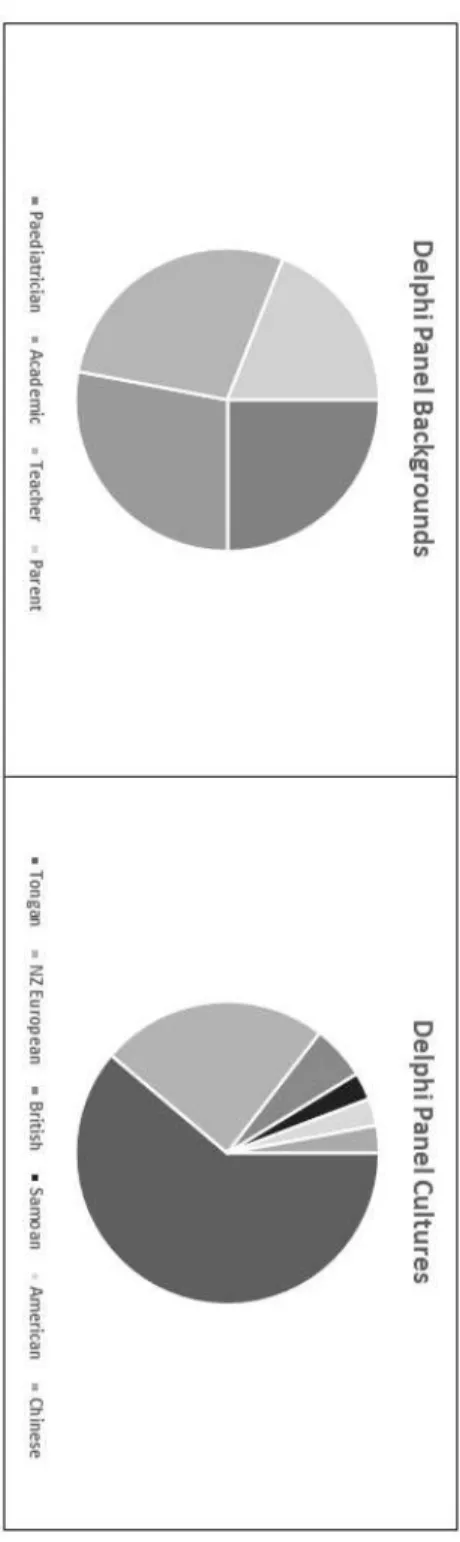
Panel selection (Toli): We used a structured, purposive process to create a panel of 33 members (59% female) including parents, teachers, researchers and paediatric clinicians of the following ethnicities: Tongan, British, New Zealand European, Chinese, Samoan and American (Figure 2). In this study it was deemed important to include parents and teachers on the panel. The majority of the panel was Tongan, and two- thirds were Pasifika. The panel size was considered necessary because of the need to include people across diverse locations and areas of expertise.19-21 Panel members were approached via electronic mail with an explanation of the study including an information sheet and a consent form.
Figure 2: Cultural and experiential make-up of the Delphi panel created to develop a survey for primary school-aged children in Tonga.