Electric vehicles (EVs) are rapidly emerging globally as a viable alternative to traditional fossil fuel burning cars. Finally, once NZ-specific barriers are identified, the effectiveness of new government policy will be assessed against them.
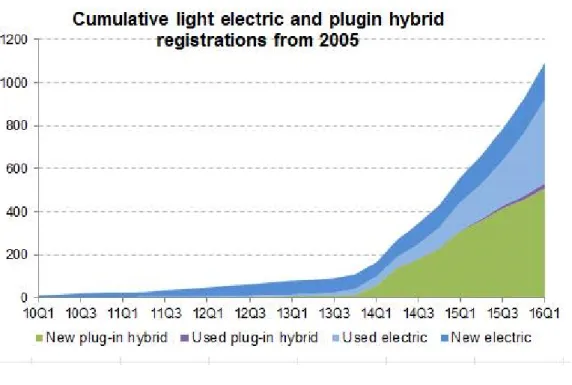
Barriers that apply to NZ context
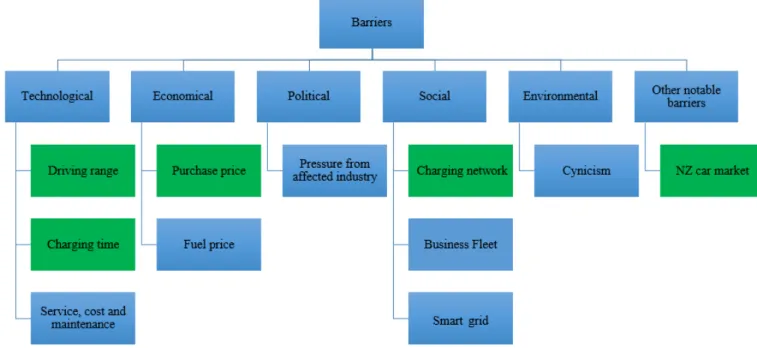
- Technological – Driving range
- Technological – Charging time
- Economical - Purchase price
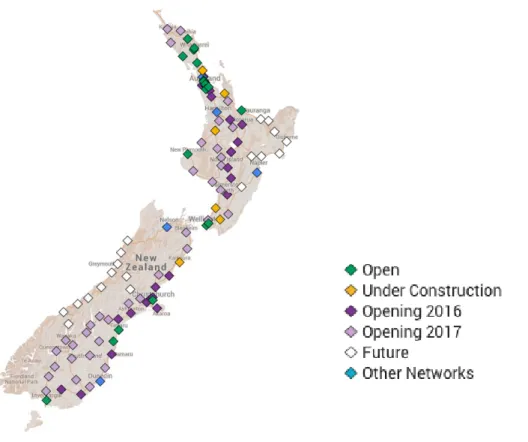
- Infrastructure - Charging network
- NZ car sale market
There is a variation in what is considered the preferred charging period, between 2 – 5 hours (Element Energy, 2013). A study by PricewaterhouseCoopers (2013) shows that customers believe there is a significant premium to be paid for electric vehicles compared to a similarly sized ICE vehicle. 2015) suggest that customers believe that electric vehicles should be sold at a lower price than ICE vehicles due to their limited features.
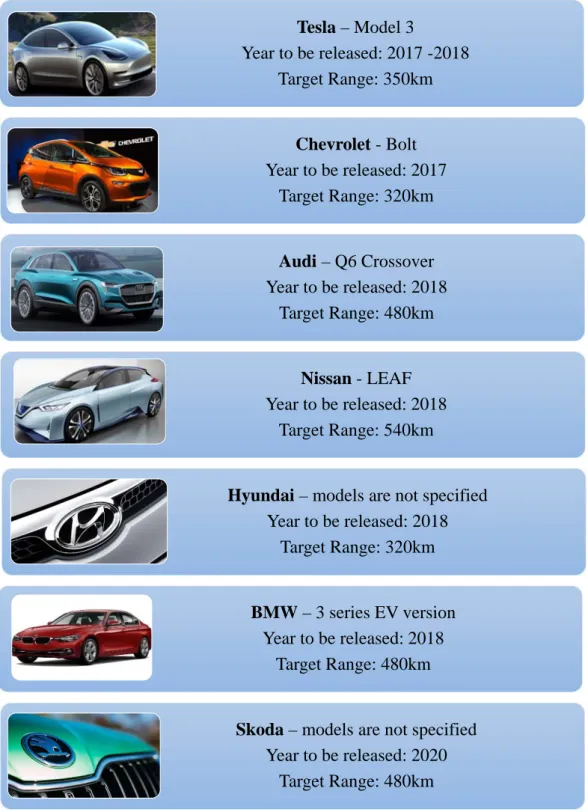
Minor acknowledged NZ-specific barriers
A common theme in New Zealand studies is that the New Zealand car market is dominated by the used car market (Ford et. al, 2015; Lemon and Miller, 2013). This is thought to be due to the New Zealand market being heavily based on the used car trade, a lack of electric vehicle supply and a political environment that does not encourage electric vehicle ownership.
Evaluation of NZ specific entry barriers in literature
Effective policies addressing entry barriers
In the short term, they favor the use of coercive measures such as increasing consumer awareness of fuel economy and tightening fuel standards. In the medium term, they favor the use of organizational measures with the implementation of capital investments, such as the installation of charging stations and the provision of EVs for new homes and parking lots.
Conclusion of literature review
This research paper will suggest that a better approach is to first understand existing NZ-specific barriers, then evaluate current policies against these barriers before drawing a conclusion about whether these policies are effective. This approach was used during this research paper, with quantitative research as the priority, while qualitative methods were also used to complement the initial data (Bryman & Bell, 2015).
Research Method
Therefore, a mixed-method research design was used to enable the incorporation of both inductive and deductive reasoning, leading to a better interpretation of the topic (Creswell, 2014; Sreejesh & Mohapatra, 2014). One of the most used types of mixed methods research is embedded design (Figure 6).
Sampling size and technique
The quantitative data obtained through closed questions enabled statistical analysis of the EV barriers and the qualitative open questions helped to provide further in-depth interpretation of people's behavior and decisions to adopt EV. The nature of the qualitative responses meant that empirical analysis could also be carried out on this data set.
Survey design
This part of the survey is designed using program logic to enable interactive questions with respondents. If the respondent answered “No”, then he/she was asked to elaborate on their answer and skip the other questions about driving distance.
Data analysis
For example, a question asking "is the driving range of an EV a big reason to stop you from buying an EV". If the respondent answered “Yes”, he/she was prompted to respond to questions that delved further into their perception of driving distance and why it is a major concern for them.
Research validity and credibility
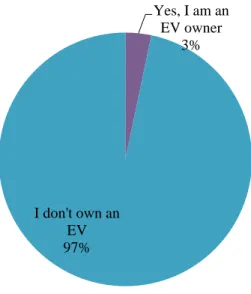
The theoretical framework of the diffusion of innovation and adoption theory (Stewart and Saren, 2014) was applied to measure the rate of adoption of electric vehicles. According to the diffusion of innovation curve, the small number (3%) indicates that electric vehicles are currently in the innovation phase.
Range
Non-barrier group
This accounted for a small percentage of people (7%) with one respondent stating "by the time I buy the EV (a few years from now), the range will have improved". Furthermore, the high proportion of people who consider other barriers to be more important implies that range alone is not sufficient to present as a primary concern for the NZ market.
Barrier group
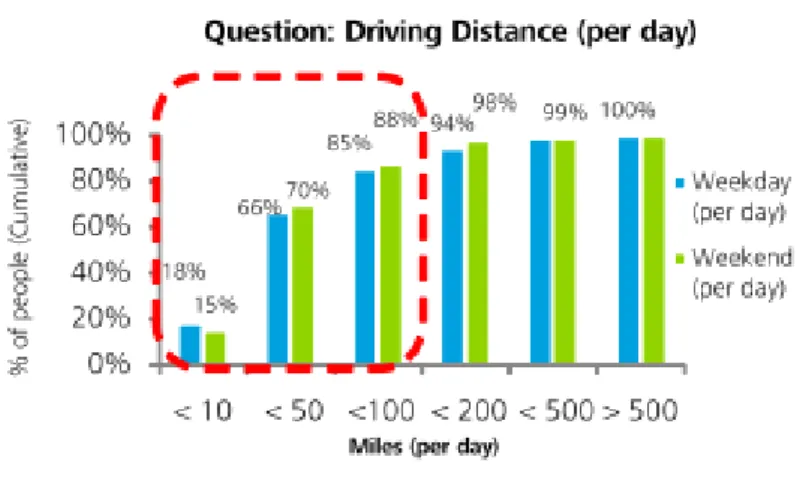
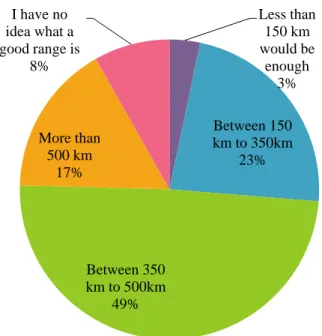
The large number of people whose perceptions changed based on the newly received information indicates that EV information campaigns can be effective in addressing this barrier. This roughly corresponds to the number of people who expected the EV to drive further than 500 km.
Charging time
Non-barrier group
The primary reason for the non-barrier group is that they expect to charge their electric car at home and/or charge overnight (53%). These results show that there is considerable awareness among respondents about their charging and driving needs, especially that they travel short distances and/or infrequently.
Barrier group
For example, one respondent answered: "The speed is right, but do we have enough charging infrastructure?" 32% of this group gave an affirmative "no change" answer with the main reasons being either the availability of infrastructure, the EV still not being charged to 100%, or the charging speed not being fast enough. Again, this is in line with diffusion of innovation theory where this group of people do not see the 'relative advantage' and they will remain majority/laggards in EV adoption.
Purchase price
Non-barrier group
There was also a third theme of user needs or 'compatibility' (Stewart & . Saren, 2014), with respondents noting that although certain models are cheap and price is not a barrier, the existing EV models on the market not conforming to their vehicle. needs.
Barrier group
For respondents who didn't mind the EV's price, most referred to the Nissan LEAF, a small, economical family city car. Conversely, for those who viewed EVs as expensive, most were looking at a larger car such as a wagon (Audi A3) or SUV (Mitsubishi Outlander).
Upfront cost
For example, although respondents believed that Toyota is very reliable; they didn't know how reliable Nissan (LEAF) is. Finally, a theme was that electric cars did not meet the needs of users, and one respondent commented that the challenge is to get the right "type" of car to suit them.
Charging facility
Non-barrier group
Finally, this group felt optimistic about future development trends, noting that there would be sufficient chargers when they intend to purchase an electric car. This indicates that even if they are not innovators, part of the non-barrier group would be willing to be an early majority using EV.
Barrier group
NZ car market
Therefore, the assumption that the EV adoption rate will be low "until cheap second-hand or refurbished electric vehicles can enter New Zealand" is only partially correct (Lemon and Miller, 2013: 2). The fundamental problem is still purchase price, as long as the price was set right, people did not bother to buy in the second-hand or new market.
Service, maintenance and repair (cost of ownership)
Non-barrier group
For the barrier-free group (45%), many respondents were not concerned about ownership costs because they believed that EVs have cheaper maintenance costs and stated that they would be "much lower than the cost of a petrol or diesel vehicle". A further 21% in this group believed that all cars have costs to some extent and were therefore indifferent to the cost of ownership.
Barrier group
Finally, an additional 26% identified other barriers, such as purchase price, as more of a concern than cost of ownership. Another respondent, who stated that he was an electrical engineer, claimed to know that the maintenance costs of electric vehicles are low.
Fuel price
Within the barrier group there was also an individual element that determined the answer on the 'unknown' maintenance factor, namely the knowledge and experience of respondents in the field of car maintenance. Even though the literature suggests that the price of gasoline has an inverse relationship with the adoption rate of electric cars (Hosseinpour et al, 2015), based on the study results, while somewhat influential, fuel price did not appear to be a major barrier factor for motorists. respondents' decision to adopt EV.
Political
The other half of this group believed that the free market should operate without interference or that it is normal for the government to have a vested interest in the gasoline industry while still promoting EVs. The responses in this section were influential in determining respondents' perception of government policies discussed in section 6.
Business fleet
Non-barrier group
These respondents believed that they would have a better chance to test drive and thus gain more knowledge about the characteristics of the EV. These respondents believed that the price of EV will decrease and the availability of used models will increase dramatically as a result.
Barrier group
Smart grid
Non-barrier group
The majority of respondents (66%) were not concerned by the existence of such a system, the main reason being that the NZ electricity market already has a mechanism to determine when it is cheapest to charge electricity. For example, the NZ spot market has nightly rates and a number of respondents said they use smart meters and online apps from electricity company Flick to get instant access to these prices.
Barrier group
For example, the NZ spot market has overnight prices and a number of respondents said they use smart meters and online applications from electricity company Flick to access these prices instantly. only at the cheapest price at night). In addition, there was a general lack of understanding or appreciation of the functionality of the smart grid, as a number of respondents confused having a smart meter with having a smart grid.
Environmental
Non-barrier group
For those who began to question the environmental friendliness of EVs, the main reason is related to concerns about the disposal of batteries. Many respondents were of the opinion that this reduced carbon footprint and reduced emissions over the lifetime of an EV far outweigh the negative impact of battery disposal.
Barrier group
The results validate other literature that for most people, morally speaking, the biggest motivator in choosing an electric car is environmental benefits (Hosseinpour et al., 2015). For those who remained unchanged, the main responses revolved around NZ's high percentage of renewable energy generation.
NZ specific barriers
Until potential users physically see the adoption of EV happening around them through increased infrastructure, etc., the risk of being an early adopter always exists in their minds. This lack of knowledge was also reflected in the identification of other barriers, whereby as soon as people understood one aspect of EVs (e.g. battery warranties), they immediately began to question other unknown factors of concern (e.g. gas stations, maintenance) .
Low influential barriers
Charging devices were the third highest New Zealand-specific barrier, which is consistent with some (but not all) New Zealand studies (Lemon and Miller, 2013; Metcalfe and Kuschel, 2015). Charging time was another major barrier to electric vehicle adoption identified as specific to New Zealand (Ford et al., 2015); however, this study found its impact to be small.
Market sentiment on new EV policy
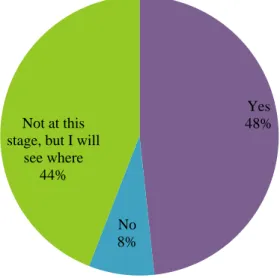
The survey also asked about respondents' intention to purchase an EV in the next three to five years (Figure 21). 48% of respondents gave a firm yes, suggesting that EVs are likely to jump from the innovator stage and enter the early majority stage in the next five years.
Evaluation and discussion of EV policy against NZ barriers
Pricing barrier policy
Cost of ownership policies
In addition, as the survey showed, the majority of users are more concerned about other costs, such as maintenance and repairs of electric vehicles. Instead, it is suggested that the government implement policies that support the private sector in electric vehicle maintenance and/or encourage more training of a skilled workforce to repair electric vehicles.
Charging facility policy
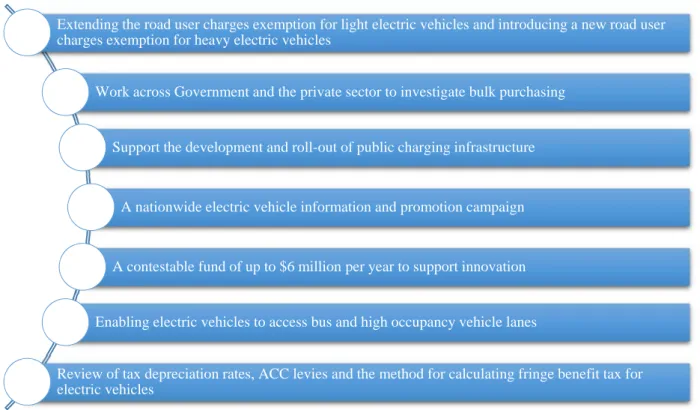
As the literature suggests, the government should take more aggressive economic measures, such as providing annual tax and cost reductions, or penalizing vehicle CO2 emissions (Barton and Schütte, 2015; Kley et al., 2012).
EV education policy
Electric cars, solar panels and batteries – how will they affect New Zealand's greenhouse gas emissions. In this project, I will examine EV adoption barriers and the effectiveness of the New Zealand government's new EV policy.