INFLUENCE OF GA3 AND BORON ON GROWTH AND YIELD OF SUMMER TOMATO
RIAJUL ISLAM
DEPARTMENT OF HORTICULTURE
SHER-E-BANGLA AGRICULTURAL UNIVERSITY DHAKA-1207
DECEMBER, 2018
INFLUENCE OF GA3 AND BORON ON GROWTH AND YIELD OF SUMMER TOMATO
BY
RIAJUL ISLAM REG. NO. 17-08289
A Thesis
submitted to the Department of Horticulture, Sher-e-Bangla Agricultural University, Dhaka in partial fulfilment of the requirements for the degree
of
MASTER OF SCIENCE IN
HORTICULTURE
SEMESTER: JULY- DECEMBER, 2018 Approved by:
Prof. Dr. Md. Ismail Hossain Department of Horticulture Sher-e-Bangla Agricultural University
Dhaka-1207 Supervisor
Prof. Dr. Mohammad Humayun Kabir Chairman
Examination Committee
Associate Professor Dr. Jasim Uddain Department of Horticulture Sher-e-Bangla Agricultural University
Dhaka-1207 Co-Supervisor
DEPARTMENT OF HORTICULTURE
Sher-e-Bangla Agricultural UniversitySher-e-Bangla Nagar, Dhaka-1207
Ref. no.: Date:
CERTIFICATE
This is to certify that thesis entitled, “INFLUENCE OF GA3 AND BORON ON GROWTH AND YIELD OF SUMMER TOMATO” submitted to the Department of Horticulture, Sher-e-Bangla Agricultural University, Dhaka, in partial fulfillment of the requirements for the degree of MASTER OF SCIENCE IN HORTICULTURE, embodies the result of a piece of bona fide research work carried out by RIAJUL ISLAM, Registration: 17-08289 under my supervision and guidance. No part of the thesis has been submitted for any other degree or diploma.
I further certify that any help or source of information received during the course of this investigation has been duly acknowledged.
Date: …………...
Dhaka, Bangladesh
………..
Prof. Dr. Md. Ismail Hossain Department of Horticulture Sher-e-Bangla Agricultural University
Dhaka - 1207 Supervisor
DEDICATED TO MY
BELOVED PARENTS
i
ACKNOWLEDGEMENTS
All praises are due to Almighty Allah Rabbul Al-Amin who kindly enabled me to complete this work.
The author wish to express his sincere appreciation and profound gratitude to his reverend supervisor Prof. Dr. Md. Ismail Hossain, Department of Horticulture, Sher-e-Bangla Agricultural University for his constant guidance, keen interest, immense advice and encouragement during the period of the thesis work.
The author wish to express his extreme gratitude to his co-supervisor Dr. Jasim Uddain, Associate Professor, Department of Horticulture, Sher-e-Bangla Agricultural University for providing him with all possible help during the period of this research work.
The author expresses his sincere respect and sense of gratitude to Chairman Dr. Mohammad Humayun Kabir, Professor, Department of Horticulture, SAU, Dhaka for his valuable suggestions and cooperation during the study period.
The author feel much pleasure to convey the profound thanks to his friends, wellwisher for their active encouragement and inspiration, personal acknowledgement are made to Rinita Islam in preparing this thesis.
Cordial thanks to all of the teachers, well-wishers and all staffs, Department of Horticulture, SAU, Dhaka for their generous help during the entire period of the research.
Finally, the author express his unfathomable tributes, sincere gratitude and heartfelt indebt ness from his core of heart to his mother Merina Parvin and father Md. Ali Akbar Molla whose immensurable sacrifice, blessings, continuous inspiration and moral support opened the gate and paved the way of his higher study.
The Author
ii
INFLUENCE OF GA3 AND BORON ON GROWTH AND YIELD OF SUMMER TOMATO
RIAJUL ISLAM ABSTRACT
A pot experiment was conducted at the Horticultural Farm of Sher-e-Bangla Agricultural University, Dhaka from April 2018 to September 2018 to study the effect of GA3 and boron on the growth and yield of summer tomato, (CV- BARI Hybrid Tomato-4). There were four concentrations of GA3 viz. G0: 0 ppm, G1: 50 ppm, G2: 100 ppm and G3: 150 ppm and three levels of boron viz. B0: 0 ppm, B1: 25 ppm and B2: 50 ppm. The experiment was laid out in a Completely Randomized Design (CRD) with 3 replications and there were altogether 36 pots.
Application of GA3 and boron significantly influenced the growth, yield and size of tomato.
The highest yield (1600.87 g/plant) was found from G2 and the lowest yield (678.85 g/plant) was obtained from G0. Due to application of boron, the highest yield (1515.31 g/plant) was obtained from B1 and the lowest yield (794.14 g/plant) was recorded from B0. In case of combined effect, the highest yield (1689.44 g/plant) was found from G2B1 and the lowest yield (487.41 g/plant) was found from G0B0. So, application of 100 ppm GA3 along with 25 ppm boron was the best for growth and yield of tomato.
iii
CONTENTS
CHAPTER TITLE PAGE NO.
ACKNOWLEDGEMENT i
ABSTRACT ii
CONTENTS iii-iv
LIST OF TABLES v
LIST OF FIGURES vi
LIST OF APPENDICES vi
LIST OF ACRONYMS vii
I. INTRODUCTION 1-3
II. REVIEW OF LITERATURE 4-25
2.1 Literatures on GA3 4-15
2.2 Literatures on boron 15-25
III. MATERIALS AND METHODS 26-34
3.1 Experimental site 26
3.2 Location 26
3.3 Experimental period 26
3.4 Climate and soil 26-27
3.5 Experimental material 27
3.6 Raising of seedlings 27
3.7 Fertilizer application in the pot soil 27-28
3.8 Pot preparation 28
3.9 Transplanting of seedlings in the pot 28-29
3.10 Experimental treatments 29
3.11 Experimental design and layout 29
3.12 Intercultural operation 29-32
3.12.1 Irrigation 29
3.12.2 Supporting 31
iv
CONTENTS (Contd.)
CHAPTER TITLE PAGE NO.
3.12.3 Weeding 31
3.12.4 Mulching 31
3.12.5 Pruning 31
3.12.6 Fertilizer application 31
3.12.7 Plant protection 31
3.12.8 Use of fungicide 32
3.13 Application of the treatments 32
3.14 Measurement of plant height 32
3.15 Number of leaves per plant 32
3.16 Number of flowers per plant 32
3.17 Number of fruits per plant 33
3.18 Weight of individual fruit (g) 33
3.19 Fruit length and diameter 33
3.20 Fruit yield per plant 33
3.21 Statistical analysis of data 33-34
IV. RESULT AND DISCUSSION 35-51
4.1 Plant height 35-38
4.2 Number of leaves 39-42
4.3 Number of flowers 41
4.4 Number of fruits 43
4.5 Fruit length 44
4.6 Fruit diameter 47
4.7 Individual fruit weight 47-48
4.8 Yield Per plant 48-49
V. SUMMERY AND CONCLUSION 52-55
REFERENCES 56-66
APPENDICES 67-68
v
LIST OF TABLES
TABLE TITLE PAGE NO.
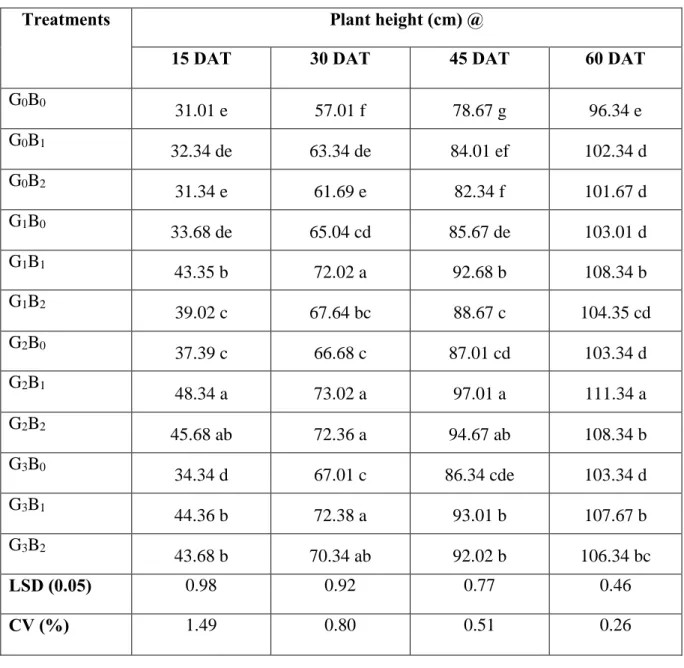
1 Combined effects of GA3 and boron on the plant height of tomato
38
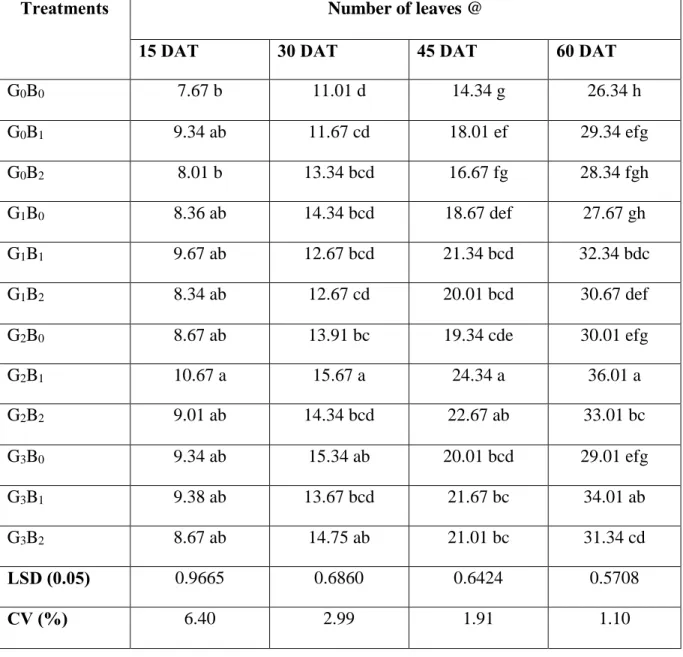
2 Combined effects of GA3 and boron on the number of leaves of tomato
42
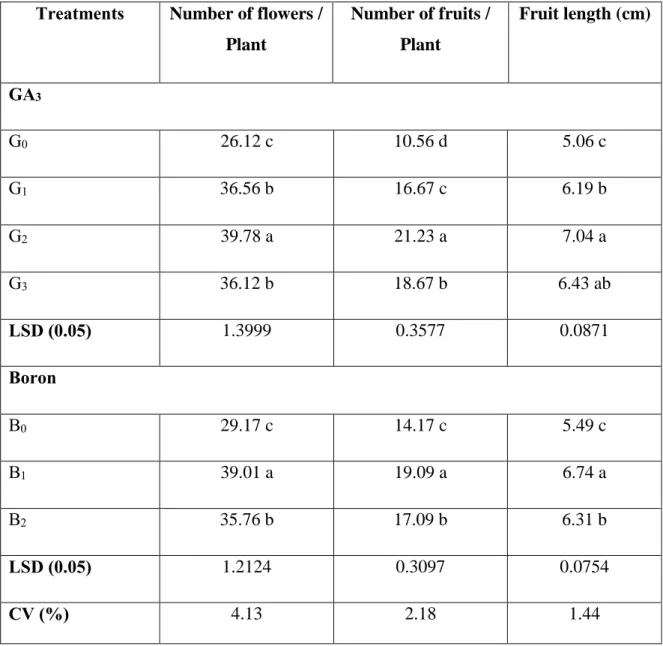
3 Effects of GA3 and boron on yield contributing characters of tomato
45
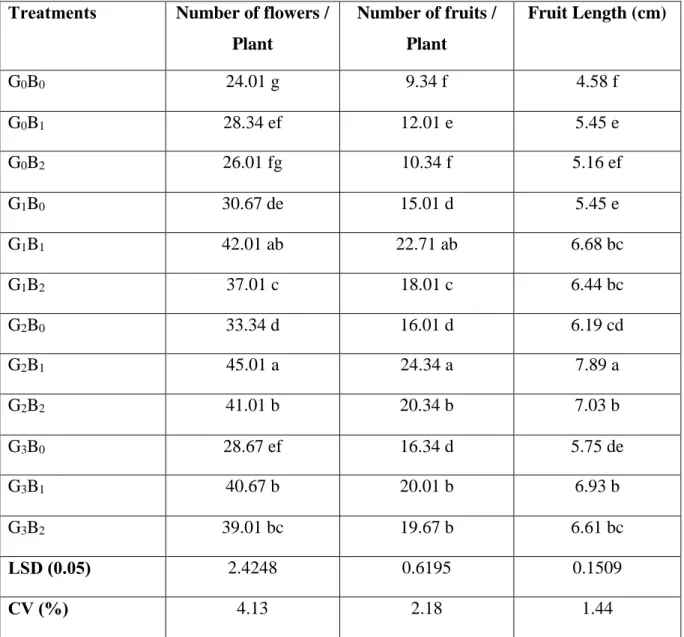
4 Combined effects of GA3 and boron on yield contributing characters of tomato
46
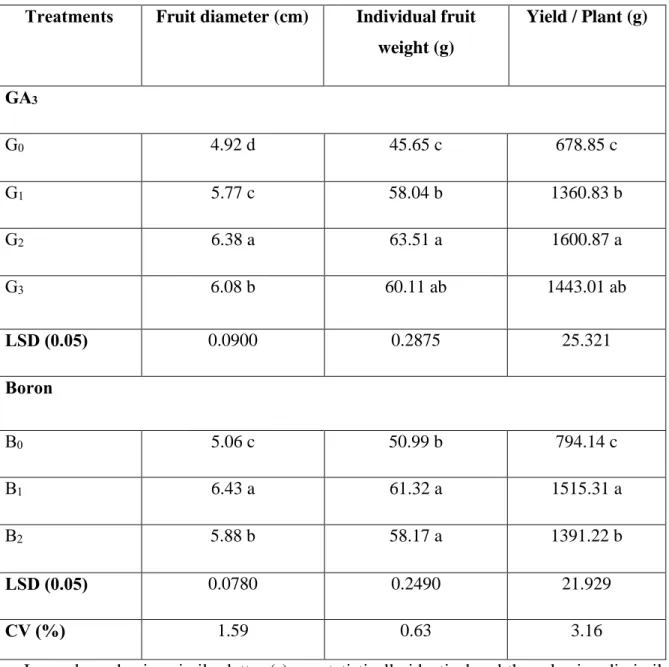
5 Effects of GA3 and boron on yield contributing characters and yield of tomato
50
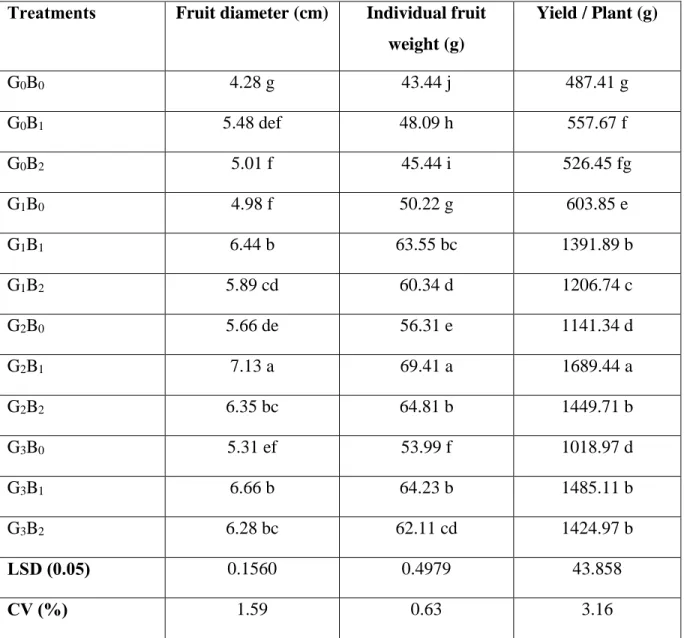
6 Combined effects of GA3 and boron on yield contributing characters of tomato
51
vi
LIST OF FIGURES
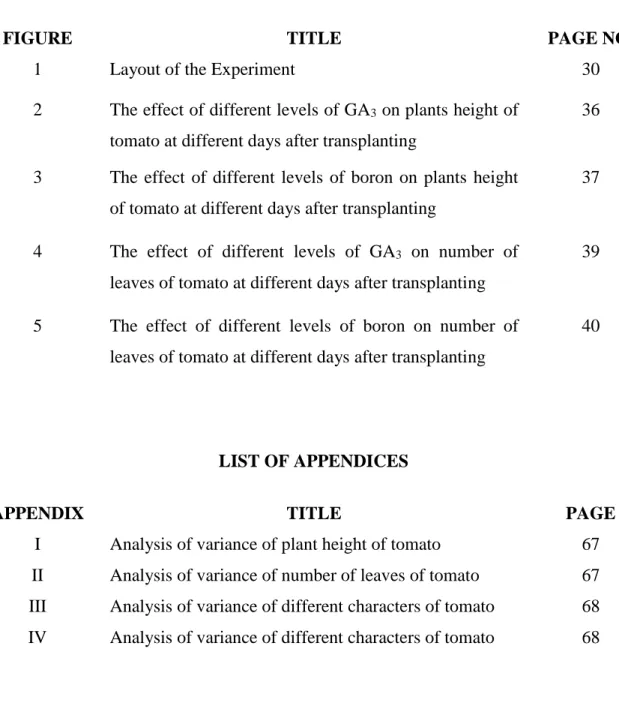
FIGURE TITLE PAGE NO.
1 Layout of the Experiment 30
2 The effect of different levels of GA3 on plants height of tomato at different days after transplanting
36
3 The effect of different levels of boron on plants height of tomato at different days after transplanting
37
4 The effect of different levels of GA3 on number of leaves of tomato at different days after transplanting
39
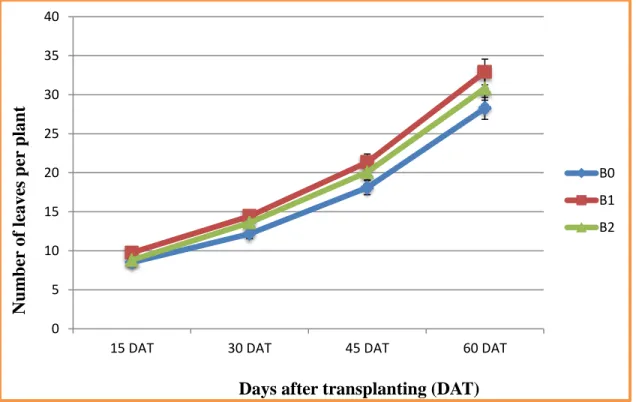
5 The effect of different levels of boron on number of leaves of tomato at different days after transplanting
40
LIST OF APPENDICES
APPENDIX TITLE PAGE
I Analysis of variance of plant height of tomato 67 II Analysis of variance of number of leaves of tomato 67 III Analysis of variance of different characters of tomato 68 IV Analysis of variance of different characters of tomato 68
vii
LIST OF ACRONYMS
ABBREVIATIONS ELABORATIONS
% : Percent
@ : At the rate
AEZ : Agro –Ecological Zone
Agric. : Agriculture
Agril. : Agricultural
ANOVA : Analysis of variance
BARI : Bangladesh Agricultural Research Institute BBS : Bangladesh Bureau of Statistics
cm : Centi-meter
df : Degrees of Freedom
DMRT : Duncan’s Multiple Range Test
et al. : and others
etc. : Etcetera
FAO : Food And Agriculture Organization of United Nations LSD : Least Significant Difference
etc. : Etcetera
MoA : Ministry of Agriculture
MSE : Mean square of the error
ppm : Parts per million
RCBD : Randomized Complete Block Design
SAU : Sher-e- Bangla Agricultural University
SE : Standard Error
TSS : Total Soluble Solid
1
CHAPTER I
INTRODUCTION
Tomato (Lycopersicum esculentum) is a flowering plant belongs to the family Solanaceae. It was originated in tropical America (Salunkhe et al., 1987), particularly in Peru, Ecuador and Bolivia of the Andes (Kalloo, 1986). Tomato is the rich source of vitamin A, Vitamin C and minerals and it keeps eye sight good. Night blindness occurs due to lack of Vitamin A. A single tomato can provide 40% of the daily requirement of Vitamin C which is a natural anti-oxidant. Tomatoes are rich with Vitamin K which plays a major role in blood clotting. It contains lycopene pigment which is a vital anti-oxidant that helps to fight against cancerous cell formation as well as other kind of health complications and diseases.
Tomato ranks next to potato and sweet potato in the world vegetable production. It ranks third in terms of world vegetable production (FAO, 2000) and tops the list of canned vegetables. The leading tomato production countries of the world are China, the United States of America, India, Turkey, Iran, Italy, Mexico, Brazil and Indonesia (FAO, 1999). It is cultivated in almost all home gardens and also in the field due to its adaptability to wide ranges of soil and climate (Ahmed, 1986). It is one of the most highly praised vegetables consumed widely and it is one of the most popular salad vegetables and is taken with great relish. It is widely employed in cannery and made into soups, conserves, pickles, ketchup, sauces, juices etc. Tomato juice has become an exceedingly popular appetizer and beverage.
Tomato can be grown on a wide range of soil types, ranging from light sand to heavy loam or, even clay that are well supplied with organic matter. It is cultivated all over the Bangladesh; however, the yield is very low in the summer-rainy season (from April to October). The maximum temperature in summer reaches 34-38°C and causes
2
very poor fruit set. Due to the excellent nutritional and processing potentials of tomato, the demand of tomato remains higher round the year, but production is far below the demand, especially in the summer season. Tomato fruit set is hampered at high temperature, for example, when day and night temperatures exceed above 32°C and 21°C, respectively, due to abnormal stamen development and pollen dehiscence (Sasaki et al., 2005). As a consequence, efficient tomato production in Bangladesh is mainly confined during winter (November-March) season. At higher temperature, the probability of floral abscission is high after anthesis.
In Bangladesh, the temperature during summer remains high both in the day and at the night which affect fruit-set of tomatoes. Although the influence of plant growth regulators (PGRs), such as auxin and gibberellin, over fruit development already acknowledged back in the early 20th century. In summer, tomato fruit set can be increased by applying plant growth regulators. The use of plant growth regulators (PGR) improved the production of many horticultural crops including tomato which attracts the researchers and growers for its commercial application for summer tomato production. Application of PGR like gibberellic acid (GA3) brings the possibility of tomato production under adverse environmental conditions.
Gibberellic acid has great effects on plant physiological systems including fruit setting, leaf expansion, germination, breaking dormancy, increasing fruit size, improving fruit quality and in many other aspects of plant growth and thereby increased crop production. Along with other PGR, gibberellic acid (GA3) is used extensively in tomato to enhance yield by improving fruit set, size and number of fruits (Batlang, 2008; Serrani et al., 2007). Tomato fruit set was promoted by GA3 at low concentration (Khan et al., 2006).
GA3 is also an important factor for tomato good yield. The application of Gibberellic
3
acid had significantly increased the number of fruits plan than the untreated controls.
Tomar and Ramgiry (1997) and Adlakha and Verma (1995) reported that GA3 (55 ppm) sprayed on flower cluster resulted is an increase in fruit weight. To increase the yield and to avoid flower and fruit dropping, application of GA3 at right concentration and right time is important.
Boron has a pronounced effect on the production and quality of tomato. Boron is needed by the crop plants for cell division, nucleic acid synthesis, uptake of calcium and transport of carbohydrates (Bose and Tripathi, 1996). Boron also plays an important role in flowering and fruit formation (Nonnecke, 1989). Boron deficiency affects the growing points of roots and youngest leaves. The leaves become wrinkled and curled with light green colour. Its deficiency affects translocation of sugar, starches, nitrogen and phosphorus, synthesis of amino acids and proteins (Stanley et al., 1995).
Application of Boron (B) promotes the receptivity of stigma by extending the time of pollination and makes viable the pollen resulting higher fertilization and fruit setting.
Application of B increased fruit firmness which increased shelf life of tomato (Abdur et al., 2010), increase fruit sets per plant, increase individual fruit weight per plant and increase brix % in tomatoes.
Research on the effect of GA3 in association with application of boron on the growth and yield of tomato under Bangladesh conditions is limited. However, considering the above circumstances, the study was conducted with the following objectives:
i. to optimize the suitable level of GA3 on growth and yield of heat tolerant tomato;
ii. to determine the optimum level of boron on growth and yield of heat tolerant tomato;
iii. to find out the suitable combination of GA3 and boron for ensuring the maximum growth and yield of tomato.
4
CHAPTER II
REVIEW OF LITERATURE
Tomato (Lycopersicum esculentum Mill.) is one of the most important vegetable crops in Bangladesh and received much attention to the researcher throughout the world. The production level of summer tomato never meets the demand of Bangladesh. Moreover, the country with high temperature and dry weather round the year lead the loss of production. Plant growth regulators are the substances, which affect the growth of plants quite miraculously. GA3 is one of them. Application of this growth regulator has different modifying influences on growth, yield and yield contributing characters of tomato as well as other vegetables. Micronutrients, like boron also plays an important role in the production of tomato. Some of the available research works in this connection have been reviewed with the hope that these may contribute useful information to the present study. In this chapter, literature available in this aspect in the country and abroad was reviewed.
2.1 Literatures on GA3
Desai et al. (2012) conducted an experiment to find out the effect of different plant growth regulators and micronutrient on fruit characters and yield of tomato cv.
GUJARAT TOMATO-3 (GT-3) at Horticulture Farm, Junagadh Agricultural University, Junagadh, Gujarat, India during December, 2010 to 10 April, 2011.
Eleven different treatments consisted of four plant growth regulators and three micronutrients were used, viz., T1 = gibberellic acid @ 50 ppm, T2 = gibberellic acid
@ 75 ppm, T3 = naphthalene acetic acid @ 50 ppm, T4 = naphthalene acetic acid @ 75 ppm, T5 = boron 50 ppm, T6 = boron 75 ppm, T7 = zinc 0.5per cent, T8 = zinc 1per cent, T9 = iron 100 ppm, T10 = iron 150 ppm and T11 = Control (No application of plant growth regulator and micronutrients) in the study. The fruit characters and
5
yield parameters in plant significantly differed due to different plant growth regulators and micronutrient on tomato. The maximum fruit length (7.57 cm), girth (6.47 cm) and pulp-seed ratio (12.93)was found in T2 = gibberellic acid @ 75 ppm, whereas fruit weight (57 g), yield plant-1 (2.47 kg) and yield hectare-1 (913.258 q/ha) were found in treatment T4 = naphthalene acetic acid @ 75 ppm and the minimum for all the parameters were found in control treatment.
Nibhavanti et al. (2006) carried out an experiment on the effect of gibberellic acid, NAA, 4-CPA and boron at 25 or 50 ppm on the growth and yield of tomato (cv.
Dhanshree) during the summer season of 2003. Plant height was greatest with gibberellic acid at 25 or 50 ppm (74.2 cm and 75.33 cm, respectively) and 4-CPA at 50 ppm (72.22 cm). The number of primary branches per plant did not among the treatments. Gibberellic acid at 50 ppm resulted in the lowest number of primary branches per plant.
An experiment was conducted by Rahman et al. (2015) at the Horticulture Farm of Bangladesh Agricultural University, Mymensingh to test the impact of plant growth regulators on growth and yield of summer tomato. The experiment consisted of two tomato varieties viz. BARI Hybrid Tomato-4 and BARI Hybrid Tomato-8 and four types of plant growth regulator (PGR) viz., (i) control (without PGR), (ii) 4-CPA (4- chlorophenoxy acetic acid), GA3 (gibberellic acid) and 4-CPA +GA3. The two-factor experiment was laid out in randomized complete block design with three replications. The results of the experiment revealed that significant variations were observed for most of the characters studied. At 75 DAT, the tallest plant (79.35 cm), number of flowers and fruits (38.11 and 19.04, respectively) plant-1, individual weight (58.44 g) and fruit yield (22.75 t ha-1) were found in BARI Hybrid Tomato-8.
At 75 DAT the maximum plant height (87.90 cm), number of flowers and fruits (49.04 and 21.9, respectively) plant-1, individual fruit weight (61.16 g), and fruit
6
yield (27.28 tha-1) were found when 4-CPA + GA3 applied together, whereas the minimum for these characters were recorded from control plants. In case of combined effect of variety and plant growth regulator, the maximum plant height (87.90 cm), number of flowers and fruits (49.04 and 21.91, respectively) plant-1, individual fruit weight (61.16 g) and fruit yield (27.28 t ha-1) were observed in BARI Hybrid Tomato-8 when treated with 4-CPA + GA3 together, and the minimum for all these parameters were found in control plants. The results of the present study suggest thatboth 4-CAP and GA3 together can be practiced for increasing summer tomato production for both the varieties.
Naeem et al. (2001) reported that, both time and concentrations of GA3 significantly affect the growth parameters of tomato plants. Maximum days to flowering (42.67), fruit per plant (77.69), plant height (77.78 cm), fruit weight (71.15 gm), number of branches (12.33) per plant and total yield (26840 kg ha-1) were recorded in the plants sprayed with 60 mg/lit of gibberellic acid 10 days before transplantation, while minimum values were noted in controlled treatment. They found that, maximum fruit drop per plant was in control treatment and minimum in the plants treated with gibberellic acid at 60 mg/lit. They suggested that, tomato should be supplied with gibberellic acid at 60 mg/lit 10 days before transplantation under the agroclimatic conditions of Peshawar.
Shittu and Adeleke (1999) investigated the effects of foliar application of GA3 (0, 10, 250 or 500 ppm) on growth and development of tomatoes cv, 158-3 grown on pots. Plant height and number of leaves were significantly enhanced by GA3
treatment. Plants treated with GA3 with 250 ppm were the tallest plant the highest number of leaves.
EI- Habbasha et al. (1999) carried out a field experiment with tomato cv. castel rock
7
over two growing seasons (1993-94). The effects of GA3 and 4-CPA on fruit yield and quality were investigated. Many of the treatments significantly increased fruit set percentage and total fruit yield, but also the percentages of puffy and parthenocarpic fruits compared to the controls.
Tomar and Ramgiry (1997) studied that tomato plant treated with GA3 showed significantly greater number of branches plant-1 than untreated controls.
An experiment was conducted by Akand et al. (2015) to find out the effect of GA3
on the growth and yield of tomato. The experiment consisted of four concentration of GA3 such as control G0= control (no GA3), G1= 75 ppm GA3, G2 = 100 ppm GA3
and G3= 125 ppm .The experiment was laid out in RCBD with three replications. All parameter varied significantly at different concentration of GA3. The highest yield (92.99 t/ha) was obtained from G3 treatment whereas the G0 gave lowest yield (60.46 t/ha).
Gabal et al. (1990) found that 100 ppm of GA3 was more effective treatment in increasing leaf number plant-1 compared to control.
Sanyal et al. (1995) studied the effects of plant growth regulators (IAA or NAA at 15, 25 or 50 ppm or GA3 at 50, 75 or 100 ppm) and methods of plant growth regulator application on the quality of tomato fruits. Plant growth regulators had profound effects on fruit length, weight and sugar : acid ratio. The effects of presoaking seeds and foliar application of plant growth regulators were more profound than presoaking alone.
Hathout et al. (1993) found that application of 10 ppm IAA as foliar sprays or to the growing media of tomato plants had a stimulatory effect on plant growth,
8
development and fruit which was accompanied by increases in endogenous auxin, gibberellins and cytokinin contents. However, IAA at 80 ppm had an inhibitory effect on plant growth and development, which was accompanied by increase in the level and activity of indigenous inhibitors and by low levels of auxins, cytokines and gibberellins.
Uddain et al. (2009) conducted an experiment with four different plant growth regulators (denoted as PGR) as treatments, viz. PGR0 = Control (No application of plant growth regulator), PGR1 = NAA (Naphthalene acetic acid) @ 30 ppm, PGR2 = GA (Gibberellic Acid) @ 30 ppm and PGR3= 2, 4-D (2, 4- Dichloro-phenoxy acetic acid) @ 30 ppm. The growth and yield contributing characters were significantly differed due to different plant growth regulators on tomato. The maximum plant height at 15 DAT (33.41 cm), 30 DAT (59.07 cm) and 45 DAT (76.36 cm), number of leaves plant-1 at 15 DAT (15.08), 30 DAT (47.20) and 45 DAT (72.86), number of branches plant-1 at 15 DAT (8.06), 30 DAT (12.13) and 45 DAT (17.85), number of flowers cluster-1 (5.81), number of flower cluster plant-1 (8.83), number of flowers plant-1 (9.62), number of fruits cluster-1 (4.81), number of fruits plant-1 (42.66), average weight of individual fruit (92.06 g), yield plant-1 (2.49 kg) and yield hectare-1 (93.23 t/ha) were found in PGR2 and the minimum for all the parameters were found in control (PGR0) treatment.
Choudhury and Faruque (1972) reported that the percentage of seedless fruit increased with an increase in GA3 concentration from 50 ppm to 100 ppm and 120 ppm. However, the fruit weight was found to decrease by GA3 effects.
Mehta and Mathi (1975) reported that treatments with NAA at 0.1 or 0.2 ppm improved the yield of tomato irrespective of planting date. Maximum fruit set, early and total yield, fruit number and weight were obtained in response to 4-D at 5 ppm
9
followed by NAA at 0.2 ppm. He also reported that GA3 treatments at 10 or 25 ppm improved the yield of tomato cv. Pusa Ruby irrespective of planting date. GA3 gave earlier setting and maturity.
An experiment was conducted by Akand et al. (2016) at the farm of Sher-e-Bangla Agricultural University, Dhaka to study the effect of potassium and GA3 on the growth and yield of tomato. The experiment was laid out in a Randomized Complete Block Design (RCBD) with three replications and consisted of two factors. Factor A is consisting K0 = Control (No fertilizer), K1 = 120 kg, K2 = 150 kg and K3 = 180 kg K2O/ha, respectively and Factor B is consisting G0 = Control (No GA3), G1 = 40 ppm and G2 = 60 ppm GA3, respectively. In case of potassium, K1 produced the highest yield (59.45t/ha) and K0 produced the lowest yield (51.33 t/ha). In case of GA3, G1 produced the highest yield (58.66 t/ha) and G0 produced the lowest yield (46.55 t/ha). Combined effect of K1G1 produced the highest yield (70.77 t/ha) and K0G0 produced the lowest yield (43.89 t/ha). The highest (4.75) benefit cost ratio was recorded from the combination of K1G1. Therefore, 120 kg K20/ha with 40 ppm GA3 was found suitable for growth and yield of tomato.
Sumiati (1987) reported that tomato cultivars, “Gondol”, “Meneymaker”, “Intan”
and “Ratan” sprayed with 1000 ppm chlorflurenol,100 ppm IAA, 50 ppm NAA or 10 ppm GA3 or left untreated ,compared with controls, fruit setting was hastened by 4-5 days in all cultivars following treatment with 100 ppm IAA or 10 ppm GA3.
Kataoka et al. (2003) conducted an experiment on the effect of uniconazole on fruit growth in tomato cv. Severianin and reported that uniconazole (30 mg/litre) reduced fruit weight when applied to parthenocarpic fruits at approximately 0, 1 and 2 weeks after anthesis, but had no effect on fruit weight when applied at approximately 3 weeks after anthesis. To determine the antagonism between gibberellic acid (GA3)
10
and uniconazole in the regulation of fruit growth, flower clusters were treated with uniconazole (5 mg/L) and GA3 (5 or 50 mg/L). They reported that no notable gibberellin’s activity was detected in treated fruits at 3 days to 4 weeks after treatment was lower than that of the control value. The results suggest that endogenous gibberellins in the early phase are important for fruit set and development.
Gulnaz et al., (1999) reported that seeds of wheat treated with to 10 ppm of GA3
resulted in 36-43% increase in dry weight at 13.11 dSm-1.
Van Tonder and Combrink (2003) evaluated the role of various plant growth regulators including: synthetic cytokinin (CPPU) at 1 ml.L−1, auxins 1- naphthylacetic acid at 1 ml.L−1 and 4- chlorophenoxyacetic acid (4-CPA) at 30 mg.L−1, gibberellins (GA3) ‘ProGibb 4%′ and SupaGibb 4SL’ both at 1 ml.L−1, and a mixture of benzyladenine (6-BA) plus GA4+7 at 1 ml.L−1. Treatments were applied in improving fruiting characteristics of out of season tomatoes up to three times successively when three or more flowers of an inflorescence reached anthesis.
PGR's, CPPU, 1-NAA, 4-CPA, ‘ProGibb’, ‘SupaGibb’ and BA plus GA4+7, at three applications, induced higher tomato yields by increasing the truss mass. Synthetic auxins, 1-NAA and 4-CPA, increased the average fruit mass as well as the number of fruit with a diameter larger than 37 mm but also increased the percentage of malformed fruit. Three applications of the mixture BA plus GA4+7 provided the most promising results by improving the yield of marketable fruit through increases in the number of fruit set, the number of fruit per truss and the overall truss mass. No detrimental affects on fruit shape were associated with this treatment.
Gurdev and Saxena (1991) observed that the growth regulators (GA3 at 10-5 M) increased total dry matter. Application of 10-5 M GA3 on mustard at 40 or 60 days
11
after sowing significantly increased total dry matter (Khan et al., 1998).
Saleh and Abdul (1980) performed an experiment with GA3 (25 or 50 ppm) applied 3 times in June or early July. They reported that GA3 stimulated plant growth. The substance reduced the total number of flowers plant-1 but increased the total yield compared with the control. GA3 also improved fruit quality.
Onofeghara (1981) carried out an experiment with tomato and sprayed GA3 at 25- 1000 ppm. He observed that GA3 promoted flower primordia production and the number of primordia produced or the pattern of primordia production over time.
Leaf area index measures leafiness and photosynthetic surface area of a crop and it depends on the leaf growth number of leaf, plant density and leaf senescence (Khan, 1981).
Kumar et al. (2014) conducted an experiment with the objective to determine the effects of Gibberellic acid (GA3) on growth, fruit yield and quality of tomato. The experiment consisted of one tomato variety- Golden, and six treatments with five levels of gibberellic acid (GA3- 10 ppm, 20 ppm, 30 ppm, 40 ppm and 50 ppm), arranged in randomized block design with three replications. The highest plant height, number of leaves, number of fruits, fresh fruit weight has been observed and ascorbic acid, total soluble solid (TSS) was estimated for GA3 50 ppm.
Lilov and Donchev (1984) observed that by the application of GA3 at 20, 40 or 100 mg/L the yields were increased compared with the non-treated control.
Khan et al. (2006) conducted an experiment to study the effect of 4 level of gibberellic acid spray on the growth, leaf NPK content, yield and quality parameters
12
of 2tomato cultivars (Lycopersicon esculentum Mill.), namely “Hyb-SC-3’’and
“Hyb-Himalata’’. They reported that irrespective of its concentration , spray of gibberellic acid proved beneficial for most parameters especially in the case of
“Hyb-SC-3’’.
Leonard et al. (1983) reported that inflorescence development in tomato plants grown under low light regimes was promoted by GA3 application directly on the inflorescence.
Mehraj et al. (2014) conducted an experiment to assess the response of foliar application of GA3 with different concentrations to cherry tomato plants. The assessment expressed that, the foliar application of 200 ppm gibberellic acid solution provided maximum number of leaves (16.7), tallest plant (70.0 cm), early flower bud initiation (13.0 days), early flowering (16.0 days) and early fruiting (20.3 days);
utmost fruit diameter (25.9 mm) and number of fruits (105.0 fruits) per plant;
maximum single fruit weight (11.1 g) and total fruit weight (1.2 kg) per plant, whereas the control was lowest.
Wu et al. (1983) sprayed GA3 on one-month old transplanted tomato plants at 1, 10 or 100 ppm and reported that GA3 100 ppm increased plant height and leaf area.
Briant (1974) sprayed GA3 on the leaves of young tomato plants and observed that total leaf weight and area were increased by GA3.
Masroor et al. (2006) conducted a pot experiment according to a factorial randomized design at Aligarh to study the effect of 4 levels of gibberellic acid spray (0, 10-8, 10-6 and 10-4 M GA3) on the growth, leaf-NPK content, yield and quality parameters of 2 tomato cultivars (Lycopersicon esculentum Mill.), namely Hyb-SC-
13
3 and Hyb-Himalata. Irrespective of its concentration, spray of gibberellic acid proved beneficial for most parameters, especially in the case of Hyb-SC-3.
Chern et al. (1983) reported that one month old transplanted tomato plants were sprayed with 1, 10 or 100 ppm GA3 and observed that GA3 at 100 ppm increased leaf area, plant height and stem fresh and dry weight but 10 ppm inhibited growth.
Kaushik et al. (1974) carried out an experiment with the application of GA3 at 1, 10 or 100 mg/L on tomato plants at 2 leaf stages and at weekly interval until 5 leaf stages. They reported that GA3 increased the number and weight of fruits per plant at higher concentration.
Bora and Selman (1969) worked with tomato demonstrated that four foliar sprays of GA3 (0, 5, 50 or 500 ppm) applied at 7, 17, 22, 27 or 370 increased the leaf area, weight and height of tomato plants. The best treatment was 5 ppm GA3 at 220C.
Mehta and Malhi (1970) reported that GA3 application at 25 ppm improved the yield of tomato. GA3 produced earlier fruit setting and maturity.
Hossain (1974) investigated the effect of GA3 along with 4-CPA on the production of tomato. He found that GA3 applied with 50, 100 and 200 ppm produced an increased fruit set. However, GA3 treatment induced small size fruit production A gradual increase in the yield plant-1 was obtained with higher concentration of GA3.
Rahman et al. (2015) conducted a pot experiment at Bangladesh Institute of Nuclear Agriculture, Bangladesh to evaluate influence of different concentrations of GA3 on biochemical parameters at different growth stages in order to maximize yield of summer tomato var. Binatomato-2. The concentrations of GA3 were 0, 25, 50, 75
14
and 100 ppm. They were applied at three stages, namely root soaking of seedlings before transplanting, vegetative and flowering stages. The experiment was laid out in a randomized complete block design with four replications. Results indicated that the highest chlorophyll and soluble protein contents were recorded when GA3 was applied through root soaking followed by vegetative stage and the lowest was found at the flowering stage. In contrast, the highest nitrate reductase activity was observed when GA3 was applied at the vegetative stage and the lowest activity was recorded at the flowering stage. The applications of 50-75 ppm GA3 had significantly encouraged the bio-chemical parameters studied at 50 DAT. The amount of GA3
applied at different stages had significant influence on the yield and yield attributes of summer tomato. The highest plant height was recorded when 50 ppm of GA3 was applied at the vegetative stage. While, the longest time to first fruit setting was required when the roots of the seedlings were soaked in 100 ppm GA3 solution. The application of 50 ppm GA3 by root soaking had significantly increased the number of flowers, fruits and fruit yield per plant but similar results were achieved when only 25 ppm GA3 was applied at the flowering stage. The fruit yield of tomato per plant increased linearly with the increased number of flowers and fruits per plant.
Sawhney and Greyson (1972) reported that application of GA3 on non-flowering plants of tomato induced multilocular, multicarpellary ovaries which were larger at anthesis than control upon pollination produced fruits which were significantly larger with higher fresh weight.
Adlakha and Verma (1964) observed that when the first four clusters of tomato plants were sprayed three times at unspecified intervals with GA3 at 50 and 100 ppm, the fruit setting increased by 5% with higher concentration.
Adlakha and Verma (1965) observed that when the first four clusters of tomato
15
plants were sprayed three times at unspecified intervals with GA3 at 50 and 100 ppm, the fruit setting, fruit weight and total yield increased by 5, 35 and 23%, respectively with the higher concentration than the lower.
Rapport (1960) noted that GA3 had no significant effect on fruit weight and size either at cool (110 C) or warm (23° C) night temperatures; but it strikingly reduced fruit size at an optimum temperature (170 C).
Chowdhury and Faruque (1972) reported that the percentage of seedless fruit increased with the increase in GA3 concentration from 50 ppm to 100 ppm.
However the fruit weight was found to decrease by GA3.
Gustafson (1960) worked with different concentration of GA3 and reported that when 35 and 70 ppm GA3 were sprayed to the flowers and flower buds of the first three clusters, percentage of fruits set increased but there was a decrease in the total weight. When only the first cluster was sprayed, the number of fruit set and the total weight per cluster was increased, but this response did not occur in subsequent clusters.
2.2 Literatures on Boron
Boron is an essential micronutrients required for normal plant growth and development. It performs a wide range of functions in tomato plants. It is a very sensitive element and plants differ widely in their requirements but the ranges of deficiency and toxicity are narrow. It maintains a balance between sugar and starch in plant body. It translocates sugar and carbohydrates in different parts of the plant body. It is important in pollination and seed production. It is necessary for normal cell division, nitrogen metabolism and protein formation. It is essential
16
for proper cell wall formation. Boron plays an important role in the proper function of cell membranes and the transport of K to guard cells for proper control internal water balance. The requirement of B in vegetables generally more than other crops.
Naz et al. (2012) conducted an experiment to study the effect of boron on the growth and yield of Rio Grand and Rio Figue cultivar of tomato at Horticultural Research Farm, NWFP Agricultural University, Peshwar during 2008-09. They used different doses of B (0, 0.5, 1.0, 2.0, 3.0 and 5.0 kg ha-1) with constant doses of nitrogen, phosphorus and potash was incorporated at the rate of 150, 100 and 60 kg ha-1. Boron showed a significant effect on the growth and yield of tomato. In the experiment 2 kg ha-1 resulted in maximum numbers of flower clusters per plant, fruit set percentage, total yield and total soluble solid. Rio Grand cultivar of tomato showed significant effect on all parameters. Maximum number of flower clusters per plant, fruit set percentage and total yield were recorded with Rio Grand cultivar of tomato. They have further mentioned that 2 kg B ha-1 significantly affected flowering and fruiting of Rio Grand cultivar.
Yuanxin and Junhua (2011) conducted some experiments in a perlite bag culture under nutrient drip irrigation to study the effects of different concentrations of the trace elements boron and manganese on the yield, fruit quality and antioxidative capacity in tomato. The study showed that under reduced concentrations of boron, tomato yields and the antioxidative content in tomato were significantly reduced.
Under high boron concentrations yields and the antioxidative capacity were increased however the ascorbic acid content was reduced. Similarly, under low manganese both yields and the total antioxidative capacity were reduced, however under high manganese levels, yields were not reduced nor were the concentration of ascorbic acid. Total solids were reduced under a high concentration of the
17 micronutrient manganese.
Salam et al. (2010) conducted an experiment at the vegetable research farm of the Horticulture Research Centre, Bangladesh Agricultural Research Institute, Joydevpur, Gazipur during the period 2006-2007 to investigate the effects of boron and zinc in presence of different level of NPK fertilizers on quality of tomato. There were twelve treatment combination which comprised for level of boron and zinc viz., i) B0Zn0 = 0 kg B + 0 kg Zn/ha ii) B15Zn20 = 1.5 kg B + 2.0 kg Zn/ha iii) B20Zn40 = 2.0 kg B + 4.0 kg Zn/ha iv) B25Zn60 = 2.5kg B + 6.0 kg Zn/ha and three levels of NPK fertilizers viz., i) 50% less than the recommended NPK fertilizer dose (50%< RD), ii) Recommended NPK fertilizer dose (RD), iii) 50% more than the recommended NPK fertilizer dose (50% >RD). The highest pulp weight (88.14%), dry matter content (5.34%), TSS (4.50%), ascorbic acid (10.95mg/100gm), lycopene content (112.00 µg/100gm), chlorophyll-b (56.00 µg/100g), marketable fruits at 30 days after storage (67.48%) and shelf life (16 days) were recorded with the combination of 2.5 kg B + 6 kg Zn/ha and recommended dose of NPK fertilizers (N
= 253. P = 90 Kg and K = 125kg/ha).
Patil et al. (2010) was conducted an experiment to evaluate the effect of foliar application of micronutrients on flowering and fruit-set of tomato. They have showed the flowering parameters like days required for initiation and 50 percent flowering, number of clusters, number of flowers, total number of flowers and fruit setting percentage per plant were influenced significantly due to different treatments. The minimum number of days (30.00) for initiation of flowering and 50% flowering (38.86) were recorded with Boron 50 ppm and 100 ppm while the maximum number of days were recorded in control. The treatment Boron 100 ppm + Iron 200 ppm + Zinc 200 ppm was most effective in increasing number of clusters (13.85) and number of flowers (51.24) per plant. Maximum number of flowers per
18
cluster and percent fruit setting (47.76%) was recorded with Boron 50 ppm + Iron 100 ppm+ Zinc 100 ppm, while minimum was recorded in control
Luis et al. (2012) conducted a study to evaluate the effect of boron on two variety of tomato. The objective of this research was to study the how B toxicity (0.5 and 2 m MB) affects the time course of different indicators of abiotic stress in leaves of two tomato genotypes having different sensitivity to B toxicity (cv. Kosaco and cv.
Josefina). Under the treatments of 0.5 and 2 m MB, the tomato plants showed a loss of biomass and foliar area. At the same time, in the leaves of both cultivars, the B concentration increased rapidly from the first day of the experiment. These results were more pronounced in the cv. Josefina, indicating greater sensitivity than in cv.
Kosaco with respect to excessive B in the environment. The levels of (O2 and anthocyanins presented a higher correlation coefficient (r>0.9) than did the levels of B in the leaf, followed by other indicators of stress, such as GPX, chlorophyll b and proline (r>0.8). Their results indicate that these parameters could be used to evaluate the stress level as well as to develop models that could help to prevent the damage inflicted by B toxicity in tomato plants.
Sivaiah et al. (2013) was conducted field experiment during rabi-2010 to find out the response of foliar application of micronutrients on vegetative and reproductive growth attributes, in two varieties of tomato viz- Utkal Kumari and Utkal Raja. The treatments consisted of boron, zinc, molybdenum, copper, iron, manganese, mixture of all and control and the experiment was laid out in RBD with three replications.
All the Micronutrients except manganese at 50 ppm were applied at 100 ppm in three sprays at an interval of ten days starting from 30 days after transplanting. A `ll the treatments resulted in improvement of plant growth characteristics viz. plant height, number of primary branches, compound leaves, tender and mature fruits per plant in both the varieties out of which application of micronutrients mixture showed
19
the maximum effect. In tomato cv. Utkal Kumari, maximum growth rate (85.7%) was observed with application of zinc, followed by application of micronutrients mixture (78.2%) and boron (77.5%). Tomato cv. Utkal Raja, maximum increase in branches per plant was observed with the application of manganese (148.7%) followed by micronutrient combination (144.1%). In UtkalKumari, the fruit yield per plant ranged from 1.336 kg to1.867 and in Utkal Raja, it ranged from 1.500 kg to 1.967 kg. In both the varieties, combined application of micronutrients produced the maximum fruit yield followed by application of boron and zinc.
Basavarajeshwari et al. (2007) carried out a field experiment to study the effect of foliar application of micronutrients on growth and yield of tomato at the all Indian Coordinated Vegetables Improvement Project (AICVIP) in the University of Agricultural Sciences, Dharwad. The result based on two years mean revealed that out of nine different treatments, the application of boric acid @ of 100 ppm resulted in maximum number of primary branches (18.30), yield per plant (2.07 kg) and fruit yield (30.50 t/ha). Followed by the best treatment was the mixture of micronutrients (Bo, Zn, Mn and Fe 100 ppm and Mo @ 50 ppm recording fruit yield of 27.98 t/ha and differed significantly from the control as well as other treatments.
Smith and Combrink (2004) used four nutrient solutions with only B at different levels (0.2, 0.16, 0.32 and 0.64 mgL-1) in greenhouse tomatoes planted in acidwashed river sand. Leaf analysis indicated that the uptake of Ca, Mg, Na, Zn and B increased with higher B levels. At the low B level, leaves were brittle and appeared pale-green and very high flower abscission percentages were found. Fruit lacked firmness at the low B level and this problem worsened during storage. At the 0.16 mg kg-1 B-level; fruit set, fruit development, colour, total soluble solids, firmness and shelf life seemed to be close to optimum. The highest B-level had no detrimental effect on any of the yield and quality related parameters. However using
20
“Solubor” as a source of B, high levels decreased soluble Mn concentrations in nutrient solutions, probably owing to the precipitation of insoluble MnO2. This was reflected in reduced leaf-Mn concentrations.
Naresh (2002) was carried out an investigation in Nagaland, India during 1998-2000 to determine the effects of foliar application of boron (50, 100, 150, 200, 250 and 300 ppm) on the growth, yield and quality of tomato cv. Pusa Ruby. Boron improved the yield and quality of the crop. The highest yield (327.18 and 334.58 q/ha) was obtained when the plant was drenched with 250 ppm aqueous solution of boron. B also had positive effects on plant height, number of branches, flowers and number of fruit set per plant, resulting in an increase in the number of fruits per plant and total yield. At lower rates, B improved the chemical composition of tomato fruits and at higher rates increased the total soluble solids, reducing sugar and ascorbic acid contents of the fruits. He has concluded that acidity of fruits showed a marked increase with increasing levels of B up to 250 ppm.
Patil et al. (2008) conducted a field experiment to study the effect of foliar application of micronutrients on growth and yield of tomato (Megha) during 2005- 06 and 2006-07 at the All India Coordinated Vegetables Improvement Project (AICVIP) in the University of Agricultural Sciences, Dharward. The results based on two years mean revealed that out of nine different treatments, the application of boric acid @ of 100 ppm resulted in maximum number of primary branches (18.30), yield per plant (2.07 kg) and fruit yield (30.50 t/ha). Followed by best treatment was the mixture of micronutrients (B, Zn, Mn and Fe @100 ppm and Mo @50 ppm) recording fruit yield of 27.98 t/ha and differed significantly from the control as well as other treatments. The maximum benefit ratio of 1.80 was obtained with application of boron recording Rs 97.850/ha of net returns followed by the mixture of micronutrients (1.74) recording (1.74) recording Rs 88.900/ha net returns
21
compared to control (1.40) which recorded minimum net returns of Rs 53.250/ha.
Chude and Oyinlola (2001) showed that B deficiency on crop field led to reduction in yield of crops. They further mentioned that application of compound fertilizer (NPK) mixed with B fertilizer increased the yield of tomatoes. Sobulo (1975) obtained the highest yield of tomato when a mixture of NPK and 0.01% borax was applied compared with mixtures of NPK and other micronutrients. Gulati et al.
(1980) got the highest yield of tomato with 1.5 mgkg-1 in green house trial. Adelana (1986) obtained significant increase in yield of tomato when he applied between 0.5 to 1.5 kg ha-1 for rain fed trial.
Paithankar et al. (1995) was conducted a field trial at the main garden of the Department of Horticulture, Dr. Panjabrao Deshmukh Krishi Vidyapeeth, Akola, Maharashtra, India in a randomized block design with 16 treatments and three replications to evaluate the effect of boron and diammonium phosphate (DAP) on the quality and performance of tomato. Foliar sprays of 0.1, 0.2 and 0.3% borax as well as 1, 2 and 3% DAP were given each alone and in combination at 60 days after transplanting. They have conclude that Borax at 0.3% provided the maximum fruit size and ascorbic acid content and the 0.3% borax + 3% DAP treatment recorded the maximum total soluble solids. The treatment 0.3% borax + 2% DAP reduced the cracking of fruits.
Nada et al. (2010) conducted a study to clarify a critical concentration of excess boron (B) in nutrient solution for hydroponically cultured tomato. The study also investigated the influences of excess B on growth, photosynthesis and fruit maturity.
In tomato topped at the first truss, B concentrations higher than 2 ppm in nutrient solution resulted in a significant increase in leaf B concentration. At the fruit developmental stage, fresh weights of leaf and fruit were suppressed at 8 ppm and 4
22
ppm B in nutrient solution, respectively. Photosynthetic rate, respiration rate and stomatal conductance decreased with excess B at 4 ppm or higher concentration from the first truss flowering stage to fruit developmental stage. When tomato was topped at the second truss and limited to two fruits in each truss, excess B did not affect fruit growth or maturation in the first truss. However, fruit size and Brix were reduced in the second truss. These may be caused by decrease in the photosynthate distribution to fruit in the second truss because of the decrease in photosynthetic activity. Furthermore, excess B could promote fruit maturity in the second truss because of production of ethylene with increase in injured leaves. Based on these results, the authors suggest that the critical concentration of B in nutrient solution is 4 ppm for long-term hydroponic cultivation of tomatoes.
Jyolsna and Mathew (2008) conducted a pot culture experiment to study the effects of 0, 0.5, 1.0, and 1.5 kg B ha–1 with recommended doses of chemical fertilizers (75:40:25 N, P2O5 and K2O kg ha–1; RDF) and RDF + farmyard manure (FYM; 25 tons ha–1) on growth, yield, and quality of tomato as well as the B status of a lateritic soil in southern Kerala. Boron significantly increased plant height and number of primary branches. It also reduced the days to flowering and increased fruit set (12.5 to 20% more at the highest level) both with and without FYM. Benefit–cost ratio was 40% greater for the highest level of B when applied in conjunction with RDF compared with RDF alone (no B). Quality parameters like reducing sugars, total sugars, vitamin C, and lycopene concentrations also improved following B application. Nevertheless, B availability in these soils attained sufficiency levels (2 mg kg–1) at 0.5 kg ha–1 of applied B, implying the need to exercise caution especially when applying higher doses.
Kamruzzaman (2007) conducted a field experiment on tomato at the field laboratory of Crop Botany Department, BAU, Mymensingh during 2006-07. The experiment
23
comprised of four levels of boron viz. @ 0, 0.4, 0.6 and 0.8 kg B ha-1 as foliar application. Application of standard dose of boron Ca. 0.4 kg B ha-1 was found to produce highest fruit yield (2166.6 kg ha-1).
Sathya (2006) conducted an experiment to evaluate the various levels of B on yield of PKM1 tomato. The results revealed that the highest fruit yield of 33 t ha-1 was recorded in treatment that received borax @ 20 kg ha-1 and was found to be significantly superior to rest of the treatments (0, 5, 10, 15 and 25 kg ha-1). The yield increase was about 33.6 per cent over control.
Yadav et al. (2006) evaluated the effects of boron (0.0, 0.10, 0.15, 0.02,0.25, 0.30 or 0.35%), applied to foliage after transplanting, on the yield of tomato cv. DVRT-1 in Allahabad, Uttar Pradesh, India, during 2003-04. The highest number of fruits per plant (44.0), number of fruits per plot (704.0), yield per plant (0.79 kg), yield per plot (12.78 kg) and yield ha-1 (319.5019 quintal) were obtained with 0.20% boron, whereas the greatest fruit weight (27.27 g) was recorded for 0.10% boron.
The effect of micronutrient boron application on dry matter yield, uptake and distribution in the plant parts of two tomato verities (Roma VF and Dandino) were studied by Oyinlola (2004) in a rainfed trial. Results showed variations in boron distribution among plant parts. The concentration of boron (B) ranged from 6.0- 109.0, 5.8-18.3 and 3.1-13.6 mg/kg, in leaves, stem and roots, respectively. The effect of boron rates on the DMY, B20 concentration and uptake was highly significant (P 0.010) on the leaves and stem, but not on the roots. The concentration of boron (B) in both varieties was more in the leaves, than in the stem. The roots had the least B concentration. Among the varieties “Dandino” recorded higher B concentration in the various plant parts than RomaVF. Application of B increased fruit yield of tomato fruit by 233 and 192% relative to the control for “Roma VF”
24 and “Dandino” varieties, respectively.
Chude and Oyinloda (2001) concluded that plant responses to soil and applied boron vary widely among species and among genotypes within a species. This assertion was verified by comparing the differential responses of Roma VF and Dandino tomato cultivars to a range of boron levels in field trials at Kadawa (11 degrees 39' N, 8 degrees 2' E) and Samaru (11 degrees 12', 7 degrees 3 7` E) in Sudan and northern Guinea savanna, respectively, in Nigeria. Boron levels were 0, 0.5, 1.0, 1.50, 2.0 and 2.5 kg/ha replicated three times in a randomized complete block design. Treatment effects were evaluated on fruit yield and nutritional qualities of the two tomato cultivars at harvest. There was a highly significant (P=0.01) interaction between B rates and cultivars, with Dandino producing higher yields than Roma VF in both years and locations. Total soluble solids, titratable acidity and reducing sugar contents of the two cultivars differed significantly (P=0.05). Dandino contained higher amounts of these indexes than Roma VF. This cultivars seems to be more B efficient than Roma VF even at low external B level.
Yadav et al. (2001) designed a study during 1990 and 1991, in Hisar, Haryana, India, to evaluate the effect of different concentrations of zinc and boron on the vegetative growth, flowering and fruiting of tomato. The treatments comprised five levels of zinc (0, 2.5, 5.0, 7.5 and 10.0 ppm) and four levels of boron (0, 0.50, 0.75 and 1.0 ppm) as soil application, as well as 0.5% zinc and 0.3% boron as foliar application. The highest fruit length, fruit breadth and fruit number were obtained with the application of 7.5 ppm zinc and 1.0 ppm boron.
Oyinlola and Chude (2004) studied the effects of 0, I, 2, 3, 4 and 5 kg B/ha on the yield and biochemical properties of tomato cultivars Roma VF and Dandino.
Matured ripe fruits were analyzed for biochemical properties such as ascorbic acid,
25
reducing sugar and total soluble solid content and titratable acidity. Boron rates significantly (P<0.01) increased the yield and yield attributes of the crop such as number of fruits and average weight of fruits, as well improved the biochemical properties of the fruits. In both years, the yield attributes of the crop such as number of fruits and average weight of fruits, as well improved the biochemical properties of the fruits. In both years, the highest fruit yield and best fruit quality were obtained at 2 kg B/ha. Fruit yield increased by 121 and 72% relative to the control in 1992/93 and 1993/94, respectively. Cultivar Dandino recorded higher ascorbic acid, total soluble solids, titratable acidity, reducing sugars and yield compared to cv. Roma VF, whereas cv. Roma VF flowered earlier than Dandino. Fruit yield correlated with all the yield attributes and biochemical properties determined for both years.
26
CHAPTER III
MATERIALS AND METHODS
The pot experiment was conducted at Horticulture Farm of Sher-e-Bangla Agricultural University, Dhaka - 1207, Bangladesh in 2018 to determine the productive potentiality of summer tomato (BARI Hybrid-4) by the influence of foliar application of GA3 and Boron. This chapter includes a brief description of materials used, treatments, location of the experiment, characteristics of soil, weather and climate and process of experimentations etc.
3.1 Experimental site
A pot experiment was conducted at the horticulture farm of Sher-e-Bangla Agriculture University, Dhaka, Bangladesh during the period from April 2018 to September, 2018.
3.2 Location
The location of the study site is situated in 23074/N latitude and 90035/E longitude (Anon., 1989). The altitude of the location was 8 m from the sea level (The Meteorological Department of Bangladesh, Agargaon, Dhaka).
3.3 Experimental period
The experiment was carried out during the Kharif season from April 2018 to August 2018. Seeds were sown on 19 April, 2018, seedling transplanting was done on 13 May, 2018 and harvested upto 23 August, 2018.
3.4 Climate and soil
The climate of the experimental area was sub-tropical in nature. It is characterized by its high temperature and heavy rainfall during Kharif season i.e. April to September
27
and scanty rainfall associated with moderate temperature during robi season i.e.
October to March (Anonymous, 1989).
3.5 Experimental material
The tomato variety BARI Hybrid Tomato-4(Summer) was used in the experiment. It is developed by Bangladesh Agriculture Research Institute (BARI), Gazipur, Bangladesh by hybridization method. It is heat tolerant hybrid tomato variety, medium round attractive. Fruit color is red. Seed was collected from Bangladesh Agricultural Research Institute, Joydebpur, Gazipur.
3.6 Raising of seedlings
Soil of the seed bed was made loosen and friable as much as possible and organic matter mixed with soil. All weeds, stones and dead roots were removed. The seeds were sown on 19 April, 2018 in the raised seed bed of 3m×1m size. The seed bed was supported with partial shed at 1:00-3:00 pm in the high hot day by using coconut leaves and was protected from rain by polythene shed. To raise healthy seedlings proper care was taken.
3.7 Fertilizer application in the pot soil
The collected soil was measured as a cubic meter by applying length (m) × width (m)
×high (m). For field crops, a depth of soil is considered 15 centimeter (0.15m). So, one decimal land is (40.5m2× 0.15 m) = 6.075 m3 (approximate) which has considered as a root zone soil. Total volume of collected soil was calculated which has found 14.65 m3 considering Length 3.5 m × width 3.1 m × height 1.35 m. Recommended fertilizer dose for summer tomato (BARI Hybrid-4) for very low status soil: Organic Matter, Urea (Total nitrogen: minimum 46%), MP (as Muriate of potash: 60% K2O), TSP (as Triple Super Phosphate: 48% P2O5) and Gypsum (as CaSO4.2H2O containing 19% S ) for one decimal land is 50 kg, 1.6 kg, 0.68 kg, 0.5 kg, and 0.43 kg which has
28
considered for 6.075 m3 of root zone soil, respectively (Source: FRG 2012). Our total soil volume was 14.65 m3 and one decimal is equal to 6.075 m3. So, a comparison was made to estimate the exact amounts of organic matter, MP, TSP and Gypsum which has found organic matter (OM) = 120.6 kg, 𝑀P: = 1.64 kg, 𝑇SP =1.20 kg, Gypsum = 1.04 kg, respectively. Finally, the calculated amount of organic matter, half of MP and all required TSP and Gypsum were applied prior 21 days of filling the pot with soil.
One decimal land can be accommodating 162 plants considering spacing row to row and plant to plant 50 cm × 50 cm. Our total plants under experimentation were 120 which have needed 1185 g of urea for three time of application. Each time @ 3.30 g urea per plant was applied at 10, 25 and 40 days after transplanting as a ring method.
Rest half of MP (820 g for 120 plants) was applied in two split dose at 25 and 40 days after transplanting at the time of 2nd and 3rd dose of urea application. Each time @ 3.42 g MP was applied per plant.
3.8 Pot preparation
Plastic pots were used in this experiment. The height and width of each pot was 35 and 30 cm, respectively. Two holes were made in the middle of the bottom of each pot and holes were covered by the broken pieces of earthen pot. All the pots were washed with ash and tap water by rubbing and sun dried. The fertilizer mixed soil was made well pulverized and dried in the sun. Final check was made to remove plant propagates, inert materials, visible insect and pests. In the lower part of all the pots were filled with general sun dried and clean soil; only upper 20 cm of the pot was filled with fertilizer mixed well prepared soil and topmost upper 5 cm of the pot was blank for irrigation purpose.
3.9 Transplanting of seedlings in the pot
25 days aged single seedlings were transplanted on 13 May, 2018 in the middle of each pot in the late afternoon of the same day. Immediate after transplanting the plants