2014
Financial Reporting Practices in
Private Sector Commercial Banks of Bangladesh
Rahman, Md. Tahidur
University of Rajshahi
http://rulrepository.ru.ac.bd/handle/123456789/702
Copyright to the University of Rajshahi. All rights reserved. Downloaded from RUCL Institutional Repository.
FINANCIAL REPORTING PRACTICES IN PRIVATE SECTOR COMMERCIAL
BANKS OF BANGLADESH
A thesis submitted to the Department of Accounting and Information Systems, University of Rajshahi in partial
satisfaction of the requirements for the Degree of
Master of Philosophy By
Md. Tahidur Rahman
University of Rajshahi
Rajshahi, Bangladesh June, 2014
M. Phil.
Thesis
M d. T ah id ur Ra hm an
June
2014
Financial Reporting Practices in Private Sector Commercial Banks of Bangladesh
Md. Tahidur Rahman M. Phil. Research Fellow
Department of Accounting and Information Systems University of Rajshahi, Bangladesh
Supervisor
Professor Dr. Mohammad Main Uddin
Department of Accounting and Information Systems University of Rajshahi
Department of Accounting and Information Systems University of Rajshahi, Rajshahi, Bangladesh
June, 2014
i
DECLARATION
I do hereby declare that the dissertation entitled “Financial Reporting Practices in Private Sector Commercial Banks of Bangladesh” submitted to the Department of Accounting and Information Systems, University of Rajshahi for the Degree of Master of Philosophy, is exclusively my own and original work. No part of it in any form has been submitted to any other university or institute for any degree, diploma or for other similar purposes.
Rajshahi June, 2014
(Md. Tahidur Rahman) M. Phil. Research Fellow Roll No. 07506, Reg. No. 0130
Session: 2007-2008 Department of Accounting and
Information Systems (AIS) University of Rajshahi Rajshahi, Bangladesh
ii
CERTIFICATE
I am pleased to certify that the dissertation entitled “Financial Reporting Practices in Private Sector Commercial Banks of Bangladesh” is the original work of Md. Tahidur Rahman. At the best of my knowledge, this is the researcher’s own achievement and is not a conjoint work. He has completed this dissertation under my direct supervision and guidance.
I also certify that I have gone through the final version of the dissertation and found it satisfactory for submission to the Department of Accounting and Information Systems, University of Rajshahi for the Degree of Master of Philosophy.
(Professor Dr. Mohammad Main Uddin) Supervisor
Department of Accounting and Information Systems University of Rajshahi, Rajshahi, Bangladesh
iii
Dedicated to my
Father Md. Abdul Aziz Mullik and
Mother Mst. Sazeda Begum
iv
ACKNOWLEDGEMENTS
First of all I am grateful to Almighty Allah, as without special blessing of Allah it would not be possible to complete the dissertation in time. The completion of this dissertation would not have been possible without the cooperation, assistance and encouragement of many individuals, which I would like to put on record here with deep gratitude and great pleasure.
To whom my debts are unlimited is my supervisor, Professor Dr.
Mohammad Main Uddin, Department of Accounting and Information Systems, University of Rajshahi, for his active supervision and proper guidance. His affectionate encouragement and continuous support have been instrumental to complete this study in time. I must say that without his inspiration, my work would not have seen the light of the day.
I express my special indebtedness to Professor Dr. Syed Zabid Hossain, Department of Accounting and Information Systems, University of Rajshahi, who helped me in selecting my supervisor. He has also given me many important suggestions and encouragement to complete the research successfully. He played such an important role throughout the research work as an influential mentor can do.
I am also thankful to Professor Dr. Md. Amzad Hossain, Dean, Faculty of Business Studies, University of Rajshahi, for his spontaneous guidelines and support in many aspects in conducting this research.
v
University of Rajshahi who taught me many statistical techniques which became very helpful in analyzing data used in this study.
It is very difficult to forget Professor Dr. Md. Nazrul Islam, Department of Accounting and Information Systems, for his inspiration and guidelines which were much needed in conducting such a difficult research work.
I am also thankful to Professor Dr. Md. Humayun Kabir, Chairman, Department of Accounting and Information Systems, University of Rajshahi for extending his generous and cooperative hand in completing the dissertation.
I also thank Dr. Md. Anwarul Haque, Associate Professor, Department of Accounting and Information Systems, Professor Dr. Md. Tazul Islam, and Professor Dr. Monzur Morshed Abedin of the same Department for their guidelines and cooperation in different steps of my work.
I am also indebted to Professor Dr. Madan Mohan Dey, Professor Mohd.
Abdullah-Al Harun, Prof. Md. Abaydur Rahman Pramanik, Prof. Dr.
Subash Chandr Sil, Prof. Dr. Salma Banu, Prof. Dr. Dil-Ara Hossain, Professor Dr. Abdul Mazed Chowdhury, Prof. Mrs. Fahima Khatun, Dr.
Md. Ahsan Habib, Mst. Hasna Banu and all my respected teachers of
vi
Special thanks should be given to Mr. Anwarul Kamal Chowdhury, Assistant Professor, Department of Business Administration, Northern University Bangladesh for his wholehearted cooperation.
Mr. Md. Robiul Islam, Assistant Professor, Department of Business Administration, Bangladesh Islamic University, Dhaka and Mr. Md. Abu Sufian, Assistant Professor, Pabna University of Science and Technology, deserve many thanks for supporting me by providing many suggestions and reading materials.
I am obliged to my father in law Mr. Md. Rezaul Karim, and Mother in law Mst. Hosneara Begum, for their consistent inspiration, cooperating and sacrifice.
I specially owe to my wife Mst. Rezwana Karim, who is the key inspiration behind this research. Without her inspiration and heartiest cooperation and sacrifice, it would not be possible to provide continuous efforts in conducting the research work successfully. She encouraged me in every moment and sacrificed a lot for the successful completing of the research. Finally, I should not forget my little daughter Takia Tazmeen who has sacrificed my affection also for the success of the work.
vii
Contents Page
Declaration i
Certificate ii
Dedication iii
Acknowledgements iv
Table of Contents vii
List of Tables xi
List of Graphs xiii
List of Appendices xiii
List of Abbreviations xiv
Abstract xvi
CHAPTER 1: INTRODUCTION 01-23
1.1. Background of the Study 02
1.1.1. Banking Sector in Bangladesh 02
1.1.2. Financial Reporting as Means of Communication 03 1.1.3. Full Disclosure in Financial Reporting 04 1.1.4. The Main Objective of Financial Reporting 06
1.2. Statement of the Problem 07
1.3. Objectives of the Study 10
1.4. Research Questions 10
1.5. Research Hypothesis 11
1.6. Significance of the Study 13
1.7. Scope and Limitations of the Study 15
1.8. Profile of the Sample Banks 17
1.9. Structure of the Thesis 21
1.10. Definition of the Terms 22
viii
2.1. Introduction 25
2.2. The Pioneering Research in Developed Countries 25 2.3. Studies in Developing Countries beyond Bangladesh 38
2.4. Previous Studies in Bangladesh 43
2.5. Conclusion 48
CHAPTER 3: THEORETICAL FRAMEWORK 49-73
3.1. Introduction 50
3.2. IASB’s Conceptual Framework for Financial Reporting 50 3.3. FASB’s Conceptual Framework for Financial Reporting 53 3.4. AASB’s Conceptual Framework For Financial Reporting 59
3.5. The Positive Accounting Theory 62
3.6. The Positive Agency Theory 64
3.7. The Enterprise Theory 66
3.8. The Investor Theory 67
3.9. The Business Model 69
3.10. The Conceptual Model 70
3.11. Conclusion 72
CHAPTER 4: RESEARCH METHODOLOGY 74-88
4.1. Introduction 75
4.2. Research Design 75
4.3. Research Method 76
4.3.1. Population of the Study 76
4.3.2. Sample Size and Sampling Technique 77
4.3.3. Selection of the Period 78
4.3.4. Data Gathering Method 78
4.3.4.1. Sources of Data 79
4.3.4.2. Instrument of Data Collection 79
4.3.4.3. The Disclosure Checklist 80
ix
4.3.4.5. The Scoring Procedure for Disclosure Indexes 83 4.3.5. Validity of Content Analysis Instrument 85
4.3.6. Explanation of Variables 85
4.3.7. Model Specification 87
4.4. Method of Data Analysis 87
4.5. Instruments for Data Analysis 88
4.6. Conclusion 88
CHAPTER 5: THE REPORTING REQUIREMENTS 89-120
5.1. Introduction 90
5.2. The Legal Requirements 90
5.2.1. The Companies Act, 1994 91
5.2.2. The Banking Companies Act, 1991 93
5.2.3. The Securities and Exchange Rules, 1987 95 5.2.4. The Securities and Exchange Ordinance, 1969 97
5.2.5. Income Tax Ordinance, 1984 98
5.2.6. Other Legal Requirements 99
5.3. The Regulatory Requirements 99
5.3.1. The SEC Notifications 100
5.3.2. Bangladesh Bank Circulars (BRPD Circulars) 102 5.3.3. Listing Requirements of DSE and CSE 103
5.4. The Professional Requirements 104
5.4.1. International/Bangladesh Accounting Standards (I/BASs) 104 5.4.2. International/Bangladesh Financial Reporting
Standards (I/BFRSs)
105
5.4.3. Major Disclosure Provisions under IAS-1 107 5.4.4. Major Disclosure Provisions under IFRS-7 114
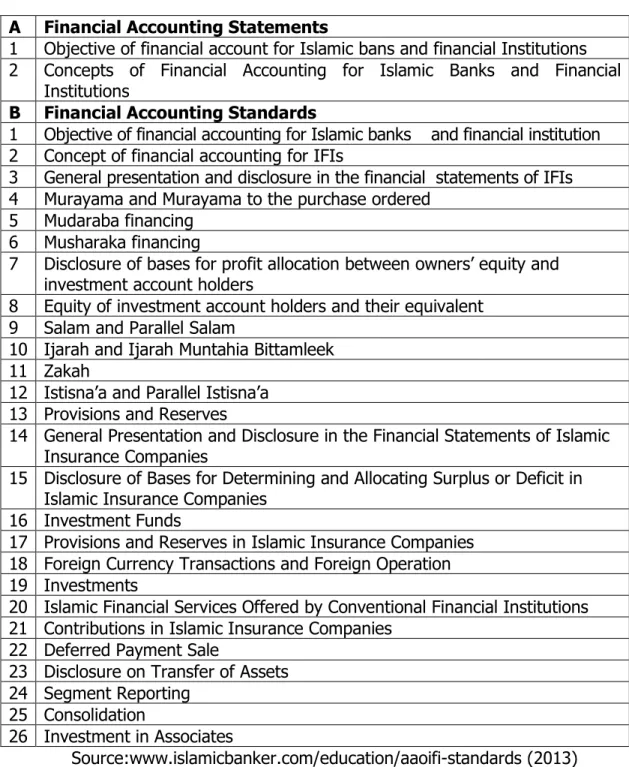
5.4.5. AAOIFI Standards 118
5.4.6. The Islamic Financial Services Board (IFSB) Standards 119
5.5. Conclusion 120
x
6.1. Introduction 122
6.2. Descriptive Statistics of Disclosure Items of Sample Banks 123 6.3. Sample-wise Descriptive Statistics of Disclosure Percentages 124 6.4. Year-wise Descriptive Statistics of Disclosure Percentages 125 6.5. Graphical Presentation of Disclosure Percentages 125 6.6. Graphical Presentation of Disclosure Trend 128 6.7. Graphical Presentation of Sample-wise Average Disclosrue 129 6.8. Average Size of the Annual Report of Sample Banks 130 6.9. Language Used in the Annual Reports of Sample Banks 131 6.10. Variation of Disclosure among the Sample Banks and Test of
Hypothesis-1 (H01)
132 6.11. Variation of Disclosure over the Years and Test of
Hypothesis-2 (H02)
133
6.12. Ranking of Sample Banks 134
6.13. Distribution of Disclosure Items into Different Parts of Annual Report
134 6.14. Part-wise Disclosure Percentage and Descriptive Statistics 135 6.15. Graphical Presentation of Disclosure Percentage of Different Parts 137 6.16. Year-wise Disclosure Percentage of Different Parts and
Descriptive Statistics
138 6.17. Descriptive Statistics of Disclosure Percentage of Different Parts 139 6.18. Items Disclosed by All The Sample Banks, by Only One Bank
and by None of the Sample Banks
141
6.19. Variation of Disclosure Percentage among different Categories and Test of Hypothesis-3 (H03)
141 6.20. Correlations among different Parts of Disclosure Index 143 6.21. Comparison of Disclosure Percentage between Islamic and
Conventional and Test of Hypothesis-4 (H04)
144
6.22. Corporate Attributes to Disclosure and Test of Hypothesis-5 (H05) 147 6.22.1. Description of Dependent and Independent Variables 147 6.22.2. Descriptive Statistics of the Independent Variables 152
xi
6.22.4. Explanation of the Results of Multiple Regression 155 6.22.5. Explanation of the Result of Multiple Regression Excluding
Collinearity
157
6.23. Conclusion 158
CHAPTER 7: FINDINGS, RECOMMENDATIONS AND CONCLUSION
160-174
7.1. Introduction 161
7.2. Summary of Theoretical Findings 161
7.3. Summary of Empirical Findings 163
7.4. Recommendations 169
7.5. Contribution to Knowledge 171
7.6. Suggestions for Further Study 172
7.7. Conclusion 173
List of Tables
Table Page
Table 4.1 List of the Sample Banks 77
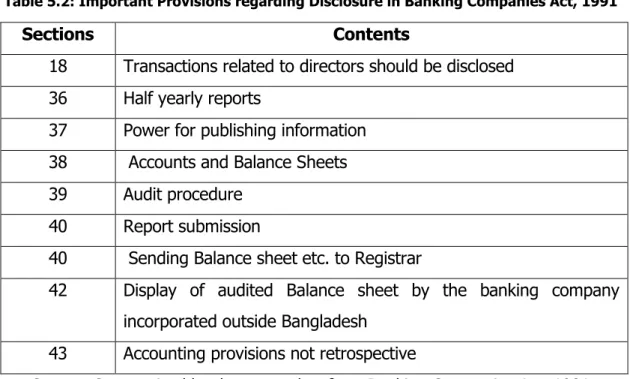
Table 4.2 Disclosure Index Category and their respective Acronyms 80 Table 4.3 Reasons for Inclusion or Exclusion of BASs/BFRSs 82 Table 4.4 Summary of Independent and Dependent Variables 86 Table 5.1 Important Disclosure Provisions in Companies Act, 1994 92 Table 5.2 Important Provisions regarding Disclosure in Banking
Companies Act, 1991
94
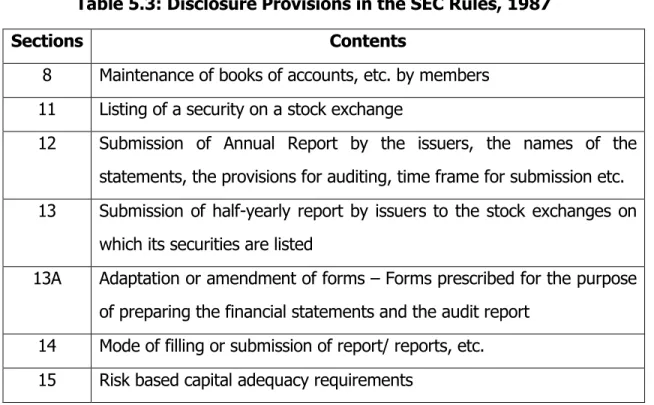
Table 5.3: Disclosure Provisions in the SEC Rules, 1987 96 Table 5.4: Disclosure Provisions in the Income Tax Ordinance, 1984 99
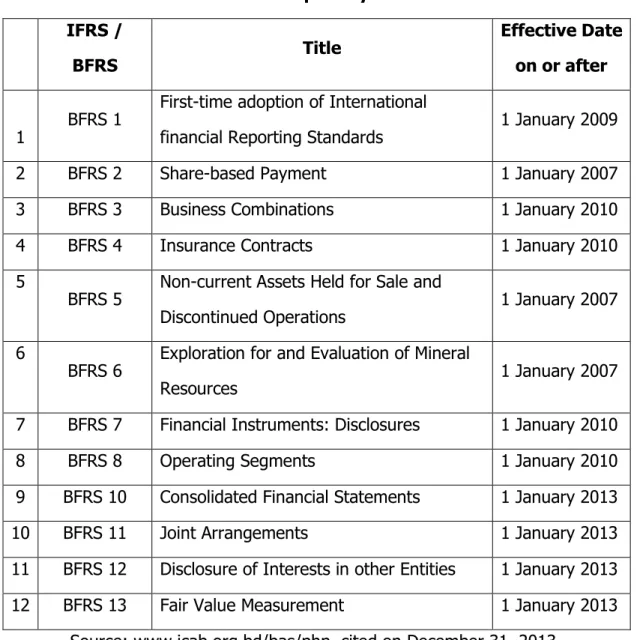
Table 5.5: IFRSs adopted by ICAB as BFRSs 106
Table 5.6: Major disclosure requirements under BFRS-7 117
xii
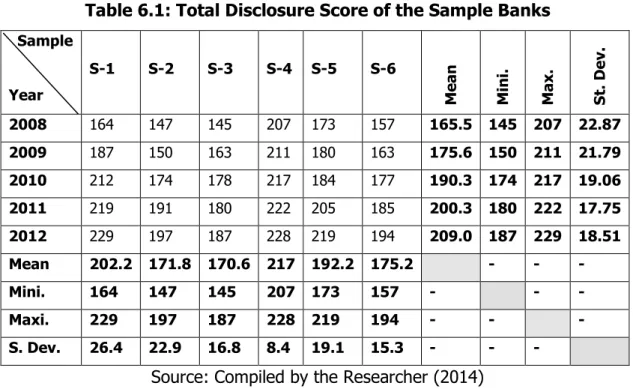
Table 6.1 Total Disclosure Score of the Sample Banks 123 Table 6.2 Sample-wise Descriptive Statistics of Disclosure Percentages 124 Table 6.3 Year-wise Descriptive Statistics of Disclosure Percentages 125 Table 6.4 Variation of Disclosure among the Sample Banks 132 Table 6.5 Variation of Disclosure over the Years 133 Table 6.6 Ranking of Sample Banks on the Basis of Disclosure
Percentage
134
Table 6.7 Distribution of Disclosure Score among Different Parts 135 Table 6.8 Disclosure Percentages of Different Parts and their
Descriptive Statistics
137
Table 6.9 Year-wise Average Disclosure Percentage of Different Parts 139 Table 6.10 Descriptive Statistics of Disclosure Percentage of
Different Parts
140
Table 6.11 Items not Disclosed by any of the Sample Banks and Items Disclosed by Only One Sample Banks
141
Table 6.12 Paired Samples Test among different Disclosure Categories 142 Table 6.13 Correlations among the Different Parts of Disclosure Index 143 Table 6.14 Year-wise Descriptive Statistics of Disclosure Percentage:
Islamic and Conventional
144
Table 6.15 Part-wise Descriptive Statistics of Disclosure Percentage:
Islamic and Conventional
145
Table 6.16 Independent Samples Test of Different Disclosure Categories between Islamic and Conventional Banks and Test of Hypothesis-4 (H04)
146
Table 6.17 Descriptive Statistics of the Variables 153 Table 6.18 Correlation Matrix of Independent Variables 154 Table 6.19 Result of Linear Regression Including Collinearity diagnostics 156 Table 6.20 Multiple Regression excluding Collinearity Problem 157 Table 6.21 Summary Results of Hypothesis-5 158
xiii
Graph Heading Page
Graph 6.1 Sample-wise Disclosure in Different Years 126 Graph 6.2 Year-wise Disclosure Percentages of Sample Banks 127
Graph 6.3 Trend of Disclosure Percentage 128
Graph 6.4 Percentage of Five Years’ Average Disclosure of Each Sample 129 Graph 6.5 Trend of the Size of Annual Reports in terms of Average
Number of Pages
130
Graph 6.6 Trend showing the percentage of Banks Using Bengali Version in Annual Reports
131
Graph 6.7 Distribution of Disclosure Items into Different Categories 136 Graph 6.8 Disclosure Percentage of Different Parts 138
List of Appendices
Appendix Heading Page
Appendix-A List of Banks in Bangladesh ii
Appendix-B Unweighted Disclosure Index x
Appendix-C SEC Guidelines on Corporate Governance xii Appendix-D BB Guidelines on Corporate Governance xiv Appendix-E List of Bangladesh Accounting Standards (BASs)
applicable in Bangladesh
Xviii
Appendix-F 105 Items Disclosed by All the Sample Banks
xiv
AAA Australian Accounting Board
AAOIFI Accounting and Auditing Organization of Islamic Financial Institutions AGM Annual General Meeting
AIBL Al-Arafah Islami Bank Limited APB Accounting Principles Board BAS Bangladesh Accounting Standards BB Bangladesh Bank
BFRS Bangladesh Financial Reporting Standards
BLE Balance Sheet Items Related to Liabilities and Equity BPS Basis of Preparation of the Financial Statements BRA Balance Sheet Items Related to Assets
BRPD Banking Regulation and Policy Department BSA Bangladesh Standards of Auditing
BSEC Bangladesh Securities and Exchange Commission CAR Capital Adequacy Ratio
CDBL Central Depository of Bangladesh Limited CDR Credit Deposit Ratio
CFR Corporate Financial Reporting CSR Corporate Social Responsibility DER Debt Equity Ratio
DSE Dhaka Stock Exchange EPS Earnings Per Share EU European Union
EXIM Export Import Bank of Bank of Bangladesh Limited FASB Financial Accounting Standards Board
FCB Foreign Commercial Banks FS Financial Statements
FSO Financial Statistical and Others
GAAP Generally Accepted Accounting Principle GCI General Corporate Information
xv
IAS International Accounting Standards IASB International Accounting Standards Board IASC International Accounting Standards Committee IBBL Islami Bank Bangladesh Limited
ICAB Institute of Chartered Accountants of Bangladesh
ICMAB Institute of Cost and Management Accountants of Bangladesh IFRS International Financial Reporting Standards
IFSB Islamic Financial Service Board ISA Income Statement Items LSH Log of Shareholders LTA Log Total Assets
NCB Nationalized Commercial Bank SH Number of Shareholders PAT Positive Accounting Theory PBL Prime Bank Limited
PCB Private Commercial Banks
RMO Report of Management and Others ROA Return on Assets
ROE Return on Equity ROI Return on Investment
SAFA South Asian Federation of Accountants SAP Significant Accounting Policies
SB Specialized Banks
SEC Securities and Exchange Commission SER Securities and Exchange Rules
SFAC Statement of Financial Accounting Concepts SPSS Statistical Package for the Social Sciences TA Total Assets
TDI Total Disclosure Index
UCBL United Commercial Bank Limited UDI Unweighted Disclosure Index
xvi
Banks as the most important functionary of the financial system play a dynamic role in the economic development of a nation through mobilization of savings and allocation of credit to productive sectors. Most individuals and organization make use of banks either as depositor or borrow or investor. Hence, there is a considerable and wide-spread interest in the well-being of banks and in particular their risks, solvency, liquidity and profitability. It is expected that these aspects of banks will be disclosed fairly and timely basis through financial and other reports prepared by the management of the banks so that the users of these reports can make wile decisions. The present study on Financial Reporting Practices in Private Sector Commercial Banks of Bangladesh has been conducted to evaluate the accounting and reporting practices of the banking sector in private sector.
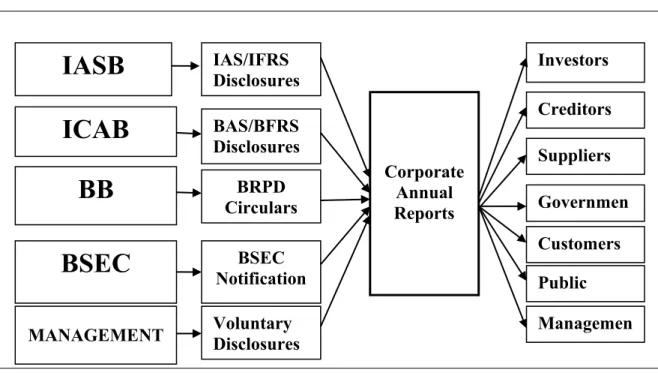
Accounting and reporting practices are guided by a multiplicity of rules, regulations, and professional requirement and also depends on the willingness of management.
The objectives of the study were: to identify the reporting requirements of private sector commercial banks in Bangladesh; examine the extent of disclosure in the financial reporting by private sector commercial banks in Bangladesh; examine the consistency of disclosure among different categories of information; examine the difference between the reporting practices of Islamic and Conventional Private Commercial Banks; determine the factors influencing the extent of disclosure in the annual reports of listed Commercial Banks in Bangladesh; and provide constructive suggestion for better financial reporting of the Banking sector on the basis of the findings of the study.
In examine the legal requirements of financial reporting; it has been found that The Companies Act, 1994 and The Bank Companies Act, 1991 plays the most vital role in
xvii
Bangladesh are bound to follow the circulars issued by Banking Regulation and Policy Departments (BRPD) of Bangladesh Bank (BB) and The Bangladesh Securities and Exchange Commission from time to time. Securities and Exchange Rules, 1987 requires compliance with IASs/IFRSs as adopted in Bangladesh (these are known as Bangladesh Financial Reporting Standards and Bangladesh Accounting Standards).
Among the IASs/BASs and IFRSs/BFRSs IAS-1: Presentation of Financial Statements” and “IFRS-7: Financial Instruments: Disclosure” are the widely followed standard in financial reporting of private sector commercial banks in Bangladesh.
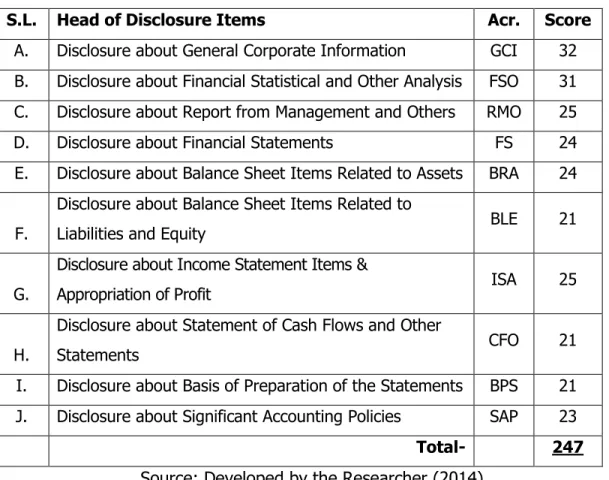
To examine the extent of disclosure in financial reporting by private commercial banks, five years’ annual reports of six sample banks that cover about 27.5% of the eligible population were studied by using a researcher developed Unweighted Disclosure Index (UDI) that contains 247 disclosure items and follows the dichotomous method where one (1) is given for any disclosed item and zero (0) is given for any undisclosed item of information incorporated in the disclosure index.
Empirical findings from the analysis of the annual reports, on the basis of disclosure index, reveal that the mean disclosure of five years is 76.18 percent which was 67 percent in 2008 and 84.6 percent in 2012. The trend shows that the mean disclosure score of the banking sector is increasing. However, the rate of its increase from year to year is very high with a yearly average rate of increase 6.02 percent. The average size of annual report in terms of number of pages was increasing from year to year to a significant extent. The average number of pages in the annual reports of the sample banks was 155.2 pages in 2008 which became 330.6 pages in 2012. On the other hand, it has been observed that in 2008 about 66.67% of the banks used Bengali version beside the English version which was constant in 2009 and it
xviii
basis of overall disclosure level features three banks topping the list, they are: Prime Bank Limited with a score of 87.85 percent followed by Islami Bank Bangladesh Limited with a score of 81.86% and then Bank Asia Limited with a score of 77.81 percent. But still there are some mandatory items undisclosed by the banks in Bangladesh and the mean disclosure percentage is 76.18% which implies that there are still some scopes of improving disclosure percentage in private sector commercial banks in Bangladesh. Paired sample t-test rejects the null hypothesis-1 (HO1) that there is no significant difference in the level of disclosure among the Private Sector Commercial Banks in Bangladesh.
The paired sample t-test among the disclosure of different years, especially the years before and after 2010, rejects the null hypothesis-2 (HO2) at 5% level and accepts alternative hypothesis that says “There is a significant difference between the disclosure percentages between the periods before and after the supersession of BAS-30 by BFRS-7 in 2010”
Among the ten categories of disclosures, a very high degree of consistency was found in the disclosure categories related to basic financial statements of which the highest consistency was seen in “Income Statement Items and Appropriation of Profit (ISA)” category. The minimum percentage of this category is 92% and the maximum is 100% while the average of this part is the highest 96.8% the standard deviation was the lowest 2.44. On the other hand, the highest standard deviation (24.29) was seen in Financial Statements (FS) category; therefore, it was the most inconsistent part of the annual reports of banking sector.
Next to this the inconsistent part is General Corporate Information (GCI) category having the minimum 40.63%, maximum 100%, mean 74.79% and standard deviation of 17.11%. The paired sample test among disclosure percentage of
xix
difference at 95% level of confidence among the pairs. It rejects the null hypothesis-3 (HO3) and concludes that there is a significant difference among the different categories of information disclosed in the annual report of the Private Sector Commercial Banks in Bangladesh.
The descriptive statistics of both the Conventional and Islamic banks indicates that Conventional banks had the higher percentage of disclosure 78.41% which was 73.95 in Islamic banks. In order to test hypothesis four, independent samples test of different disclosure categories between Islamic and Conventional banks were conducted. The test accepts null hypothesis-4: “There is no significant difference between the financial reporting practices of Islamic Commercial Banks and that of Conventional Commercial Banks in Bangladesh” at 95% confidence level.
In the regression model Overall Disclosure Index (ODI) was the only dependent variable and there were eight independent variables. The model summary in Table- 6.19 shows the F-Statistics 12.647 at p < 0.001 which indicates the model as a whole was well specified. The t-statistics were positive for log total asset (LTA), Earnings per Share (EPS), Debt equity ratio (DE), and Capital adequacy ratio (CAR) and negative for Log shareholders (LSH), Return on Equity (ROE), Credit deposit ratio (CD) and Listing age (LA). Log total asset (a size variable) and the listing age were the only two variables that were significantly associated with accounting disclosures at p < 0.01.
The other variables, LSH, ROE, CD, DE, and CAR were not found to have explanatory power. Therefore, the null hypothesis-5 is rejected and the alternative hypothesis is accepted that there is a significant association between the extent of disclosure and some selected corporate attributes of Private Sector Commercial Banks in Bangladesh.
Though, the impacts of all the variables are not equally significant.
xx
ensure full compliance with relevant accounting disclosure requirements applicable in Bangladesh; The Institute of Chartered Accountants of Bangladesh (ICAB), should be given the regulatory power that may results in compliance of reporting and quality disclosure in annual report of the companies; Those who abide by the regulatory and other reporting requirements should be awarded, whereas stern actions should be taken against the culprits in order to ensure that all listed companies comply with the mandatory accounting standards in Bangladesh; the high degree of compliance and disclosure can be related to low disclosure costs which could have resulted by giving tax shield on printing cost of annual reports. All the banks should disclose the compliance status of both the National and International Standards that will in turn enhance the confidence among international users of financial reporting. This will make the financial statements comparable and will, therefore, enhance global competition, inflow of foreign direct and indirect investment, and international listings.
In order to enhance the quality and transparency of financial reporting, which is imperative to build up the confidence of a large variety of users (like investors, depositors, regulators etc.); banks should disclose all the necessary information fairly. Besides mandatory disclosure requirements, additional information should be disclosed voluntarily so that the users can take prudent decisions. The study will at least give an idea of how the banking sector of Bangladesh specially the listed private sector commercial banks are disclosing their financial information. The scope of the study can be expanded by including unlisted banks, nonbank financial institutions, manufacturing companies etc.
Chapter Highlights
1.1. Background of the Study 1.1.1. Banking Sector in Bangladesh
1.1.2. Financial Reporting as Means of Communication 1.1.3. Full Disclosure in Financial Reporting
1.1.4. The Main Objective of Financial Reporting 1.2. Statement of the Problem
1.3. Objectives of the Study 1.4. Research Questions 1.5. Research Hypothesis 1.6. Significance of the Study
1.7. Scope and Limitations of the Study 1.8. Profile of the Sample Banks
1.9. Structure of the Thesis 1.10. Definition of the Terms
CHAPTER 1
INTRODUCTION
CHAPTER 1 INTRODUCTION
1.1. Background of The Study
1.1.1. Banking Sector in Bangladesh
Banks as the most important functionary of the financial system play a dynamic role in the economic development of a nation through mobilization of savings and allocation of credit to productive sectors. Bangladesh, a developing country with enormous potentiality, has sufficient number of banks which are important partners to accelerate the development of this country. We inherited an enriched Public Sector Commercial Banks or Nationalized Commercial Banks (NCBs), namely Sonali Bank, Rupali Bank1, Janata Bank, and Agrani Bank. To ensure smooth competition, to provide better quality services, to make finance available to the individual entrepreneurs as well as to the businessmen, and thus to accelerate the growth of national economy as a whole, government allowed the establishment of banks in the private sector from 1983. Consequently, we see many new banks in the private sector in the late 1980s and 1990s (Bhuiyan & Kamal, 2003).
Most individuals and organizations make use of banks either as depositor or borrower or investor. Hence, there is a considerable and wide-spread interest in the well-being of banks and in particular their risks, solvency, liquidity and profitability.
These aspects of banks are expected from the information disclosed in their financial reports and other reports (Islam, 1997).
1Rupali bank is in the process of privatization and about 10% of the bank’s shares are currently held by general investors.
Both private sector and public sector commercial banks are working alongside in this country under the supervision of Bangladesh Bank (BB). Government is the sole provider of capital and the sole proprietor of public sector commercial banks in Bangladesh and is generally interested in day-to-day activities and in the ultimate result of these activities of public sector commercial banks. But a large variety of stakeholders including shareholders, governments, depositors, regulatory authorities and others are interested to know the financial performances of the private sector commercial banks. Banks convey the financial activities and the results thereof to the interested parties through preparation and presentation of financial statements via different conventional and modern media of communication.
1.1.2. Financial Reporting as Means of Communication
Financial statements are usually referred to as the ultimate output of accounting process and presentation of these financial statements is known as financial reporting. Financial reporting in broader terms not only includes financial statements but also other means of communicating information relating directly or indirectly to the information provided by the accounting system. A comprehensive financial report may typically include corporate annual reports, various statutory annual information filling with regulatory commissions and registration statements for new securities to be sold publicly (FASB, 1978). Information disclosure is a major responsibility of the financial reporting system of the business and could be in terms of financial or non financial disclosures either of which is well captured by legislative and regulatory provisions (Adekunle and Taiwo 2013). Financial reporting is synonymous to Disclosure and the terms are alternatively used.
1.1.3. Full Disclosure in Financial Reporting
Hendriksen (1992) states that “Three concepts of disclosure generally proposed are adequate, fair and full disclosure. Adequate disclosure means a minimum amount of disclosure so that the financial statements are not misleading. Fair disclosure would imply that the accounting and other information is unbiased and impartial. The ethical objective requires that there is equal treatment for all potential readers. Full disclosure means the presentation of all relevant information. It also means that the users of financial statements should be provided with all the significant and relevant information, keeping in view the objectives of financial reporting, while the information, which is immaterial, irrelevant or insignificant, should be omitted to make the presentation meaningful and understandable. In actual practice, it has been noticed that companies are generally reluctant to disclose more information that what they are required to do under the law of the land or under professional pressure.”
According to Chasteen, et al., as referred by Porwal (2002), “Full disclosure means the published financial statements and related notes should include any economic information related to the accounting entity that is significant enough to affect the decisions of an informed and prudent user of financial statements….... Full disclosure is aimed at improving the clarity, quality, and quantity of economic data disclosed by the accounting entity. It increases the relevance and reliability of accounting information.”
According to Kieso, Weygandt and Warfield (2005), Full disclosure means the presentation of all relevant information. According to them, the convention of full disclosure suggests that every financial statement should fully disclose all pertinent information that has a bearing on the figures in the statements and that will make possible a reasonable interpretation of their meaning. The different aspects of Full Disclosure, according to them, are exhibited in the following page:
Full Disclosure in Financial Reporting Full Disclosure
Principles Notes to Financial Statements
Disclosure
Issues Auditor’s and Management’s
Reports
Current Reporting Issues
• Increase in reporting requirements
•Differential disclosure
• Accounting policies
•Common notes
• Special transactions or events
•Post balance sheet events
• Diversified companies
• Interim reports
• Auditor’s reports
• Management’s
reports
• Reporting on forecast and projections
•Internet financial reporting
• Fraudulent financial reporting
• Criteria for accounting and reporting choices Source: Kieso, et al. (2005)
The characteristics of information that make it a desirable commodity can be viewed as a hierarchy of qualities, with usefulness for decision making of most importance. Without usefulness, there would be no benefits from information to set against its costs. The burden of the costs and the incidence of benefits fall quite unevenly throughout the economy, and it has been rightly observed that “--- the matter of establishing disclosure requirements becomes not only a matter of judgment but also a complex balancing of many factors so that all costs and benefits receive the consideration they
merit. For example, a simple rule that any information useful in making investment decisions should be disclosed fails as completely as a rule that says disclosure should not be required if competitive disadvantage results.” It is obligatory for all publicly listed companies in Bangladesh to follow the ‘Full Disclosure Principle’ of accounting.
1.1.4. The Main Objective of Financial Reporting
Financial Accounting Standards Board (1978), in its Concept Statement No.1, states that Corporate Financial Reporting (CFR) should not only include financial statements, but also other media for disseminating information about the company, such as stock exchange documents and news releases. It considers that the main objective of CFR is to provide information useful for making business and economic decisions. It is expected that the user of financial statement would be given the fairest view of the performance and state of affairs of an individual company by allowing accountants to use judgment, in the context of that particular company, to select and present accounting figures. Financial reporting is the process of presenting financial data about a company's financial position, the company's operating performance, and its flow of funds for an accounting period. It is largely an effort to assess financial performance, that is, how well or how poorly the management of an entity has performed with money entrusted to them and also considered a part of management's accountability.
Though different types of reports can be generated for the purpose of evaluating financial performance of a business, a considerable amount of attention is given to the quantitative financial statements, which includes Statement of Comprehensive Income (Income Statement), Statement of Financial Position
(Balance Sheet), Statement of Cash Flows, Statement of Changes in Equity, Statement of Liquidity and Explanatory notes to the financial statements. In this sense all the quantitative as well as qualitative statements and reports fall under the orbit of financial reporting.
1.2. Statement of the Problem
Disclosure of financial information in corporate annual reports and their determinants have attracted considerable research attention in the developed countries than developing ones. Discoveries in the developed countries most especially in the European Union (EU) have aided the government to revamp the compliance mechanisms. They have also assisted the government in issuing out directives that facilitate the harmonization process and invariably bring all community companies up to a reasonable level of disclosure. Compare to the developed countries, only a few studies have been carried out in developing countries relating to issues of disclosure and the corporate attributes influencing it (Akhtaruddin, 2005; Barako, 2007).
The global economic crisis that came to light in 2008 led to the collapse of many enterprises worldwide including some banks. The global financial recession which was ignited by situations in the United States posed serious questions about transparency and accountability of financial reporting. It is widely believed that the lack of proper use of accounting standards hinders “transparency” in the financial statements of corporations and ultimately financial statements fail to provide useful information, on a timely basis. It is often alleged, however, that listed companies do not fully comply with the disclosure requirements stipulated by the regulatory
agencies (Akhtaruddin, 2005). According to Ali, Ahmed, and Henry (2004), the government regulatory bodies and the accountancy profession of emerging nations suffer from structural weaknesses and often take a lenient attitude towards default of accounting regulations. Consequently private and institutional investors (local and foreign) are hesitant in investing in such emerging economies due to lack of transparency and, therefore, emerging nations have been under pressure to improve their quality of corporate financial reporting. Overhauling the age-old company legislations and developing accounting and reporting regulations acceptable and understandable to users have become an important policy issue confronting emerging nations including Bangladesh.
Financial Reporting practices of Bangladeshi companies have been found to be deficient over, in the sense that they lack vital information that will enable stakeholders make informed decisions. A study of Malek (2005) showed that foreign banks working in Bangladesh outperformed the local private banks regarding disclosure. Belal (2000) has asserted that the disclosure practices in Bangladesh are very poor and inadequate in many respects and hence, need to be improved.
Apart from these, financial reporting practices by Bangladeshi companies had been empirically investigated by Hye (1989), Alam (1990), and Dutta & Bose (2007). Their observations are quite similar in that they all have observed inadequacy of disclosure by the public companies in Bangladesh. Some scholars and researchers (Azizuddin, 2001; Khan and Kumar, 2001; Saha and Rahman, 2000; Ahmed, 2000; and Chowdhury, 2004) have identified the deficiencies of our commercial banks’ financial reporting. But most of these studies were conducted more than a decade ago and since then many additional local and international reporting standards have been
adopted and a lot of changes occurred in legislation, securities exchange rules, and business and reporting environment. Incessant changes in the business and reporting environment; new developments and updates in the local and international accounting standards; and changes in corporate structure and legislation call for a continuous update in the research in financial reporting.
Additional empirical evidence on financial reporting enhances the quality of literatures in this field of study which makes a research of this nature of paramount interest. In order to generate proper idea, a large number of related literatures have been reviewed. Some of the researches have been conducted on the overall disclosure practices of Bangladesh and some research have been conducted on the disclosure practices in overall banking sector of Bangladesh. But from the viewpoint management and objectives private and public sector commercial banks are different and the present growing rate of private sector commercial bank has drawn the special attention. But any research has not been found regarding the financial reporting practices covering only the private sector commercial banks in Bangladesh.
Moreover, in private sector, the Islamic Banks (Islamic Shariah based banks) are growing fast in our country and the customers of Islamic banking are growing fast as well. To cater the customers’ need some Conventional Banks (interest based banks) have also open Islamic banking window beside their Conventional banking activities. Even two Conventional Banks (First Security Bank2 and EXIM Bank3) have been converted into fully Islamic bank. It is assumed that there will be differences in
2 On January 01, 2009 the bank changed its name and mode of business to Islamic Shariah Based Banking and renamed as First Security Islami Bank Ltd.
3 The Bank has migrated all of its conventional banking operation into Shariah Based Islami Banking in July 2004.
financial reporting between Conventional banks and Islamic banks. But no research has been undertaken yet to identify whether there is any significance difference between the financial reporting practices between Conventional banks and Islamic banks in Bangladesh. The aforesaid discussion clearly identifies gaps which need to be filled up by further research in this area.
1.3. Objectives of the Study
The main objective of the study is to draw an overall picture of the financial reporting practices in private sector commercial banks of Bangladesh. Other related objectives of the study are:
1. To identify the reporting requirements of private sector commercial banks in Bangladesh.
2. To examine the extent of disclosure in the financial reporting by private sector commercial banks in Bangladesh.
3. To examine the consistency among different categories of information disclosed in the annual reports of Private Sector Commercial Banks in Bangladesh.
4. To examine whether there is any significant difference between the reporting practices of Islamic Private Commercial Banks and Conventional Private Commercial Banks in Bangladesh.
5. To determine the factors influencing the extent of disclosure in the annual reports of listed private Commercial Banks in Bangladesh; and
6. To provide constructive suggestion for better financial reporting of the banking sector on the basis of the findings of the study.
1.4. Research Questions
The research objectives of the study are guided by the following research questions:
1. Is there any significant difference in the extent of disclosure among the Private Sector Commercial Banks in Bangladesh?
2. Is there any significant difference between the periods before and after the supersession of BAS-304 by BFRS-7 in 2010?
3. Is there any significant difference among the different categories of information disclosed in the annual report of the Private Sector Commercial Banks in Bangladesh?
4. Is there any difference between the disclosure of Islamic Commercial Banks and that of Conventional Commercial Banks in Bangladesh?
5. What are the primary factors attributable to the overall levels of disclosure?
1.5. Research Hypothesis
In this study, five following hypotheses have been formulated on the corresponding five questions to achieve the research objectives. The hypotheses are hereby stated in the null and alternative form as follows:
Hypothesis 1
Ho: There is no significant difference in the level of disclosure among the Private Sector Commercial Banks in Bangladesh.
H1: There is a significant difference in the level of disclosure among the Private Sector Commercial Banks in Bangladesh.
4 ‘Bangladesh Accounting Standard-30 (BAS-30): Disclosure in the Financial Statements of Banks and Similar Financial Institutions’ was one of the important standards which was being followed by Bangladeshi banks in preparing their financial statements. The standard was superseded by ‘Bangladesh Financial Reporting Standard-7 (BFRS-7): Financial Instruments: Disclosure’ in 2010. Since then banking companies in Bangladesh have been following BFRS-7 in preparing their financial statements.
Hypothesis 2
Ho: There is no significant difference in disclosure percentages between the periods before and after the supersession of BAS-30 by BFRS-7 in 2010.
H1: There is a significant difference in disclosure percentages between the periods before and after the supersession of BAS-30 by BFRS-7 in 2010.
Hypothesis 3
Ho: There is no significant difference among the different categories of information disclosed in the annual report of Private Sector Commercial Banks in Bangladesh.
H1: There is a significant difference among the different categories of information disclosed in the annual report of Private Sector Commercial Banks in Bangladesh.
Hypothesis 4
Ho: There is no significant difference between the financial reporting practices of Islamic Commercial Banks and that of Conventional Commercial Banks in Bangladesh.
H1: There is a significant difference between the financial reporting practices of Islamic Commercial Banks and that of Conventional Commercial Banks in Bangladesh.
Hypothesis 5
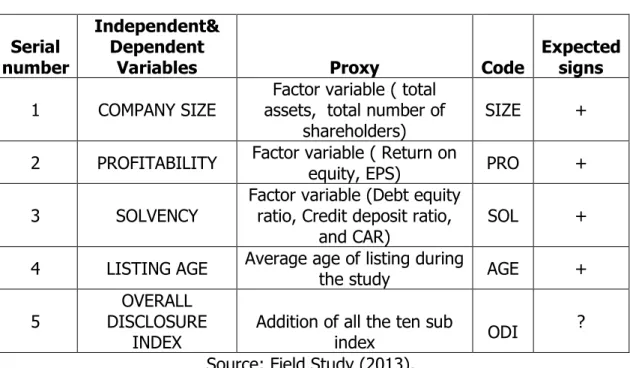
Ho: There is no significant association between the extent of disclosure and some selected corporate attributes [such as Company size (Total assets and Number of shareholders), Profitability (EPS and ROE), Solvency (Debt Equity Ratio, Credit Deposit Ratio, and CAR) and Listing Age of Private Sector Commercial Banks in Bangladesh.
H : There is a significant association between the extent of disclosure and some selected corporate attributes [such as Company size (Total assets and Number of shareholders), Profitability (EPS and ROE), Solvency (Debt Equity Ratio, Credit Deposit Ratio, and CAR) and Listing Age of Private Sector Commercial Banks in Bangladesh.
1.6. Significance of the Study
Fair and timely corporate financial reporting is a necessary tool for the short and long term survival of an economy especially for the banking sector. The FASB (2006) concluded that the objectives of financial reporting are to provide information that:
(1) is useful to those making investment and credit decisions, (2) is helpful in assessing future cash flows, and (3) Identifies the economic resources (assets), the claims to those resources (liabilities) and the changes in those resources and claims.
But, evidence have been found by the researchers that companies are not interested in disclosure, and sometimes they provide misleading information and ultimately the users become loser. Disclosure practices by Bangladeshi banking companies were empirically investigated by Islam (1997), Azizuddin (2001), Khan and Kumar (2001), Saha and Rahman, (2000), Ahmed (2000), Chowdhury (2004), and Ahmed (2009) in the past, and they all discovered that corporate reporting practices in banking sector of Bangladesh is deficient. However, the following have been identified as the existing gap in knowledge:
i. Most of these studies were conducted more than a decade ago and since then there have been many changes in local and international reporting standards, legislation, business and reporting environment and securities reporting rules.
ii. The analysis of previous researchers was based on the reporting requirements during the period of their study. But reporting requirements are being changed perpetually and there is a need to keep pace with these changes.
iii. The rapidly changing global economic and financial environment calls for a constant update in this area of study.
iv. There is no comprehensive research showing the difference in disclosure between Islamic commercial banks and Conventional commercial banks in Bangladesh.
This study intends to fill the currently observed gap by considering:
i.the latest available version of annual reports (up to 2012);
ii. the latest reporting requirements operational at the time of study like ‘BFRS-7’;
iii. the contemporary voluntary disclosures issues;
iv.two categories of banks: Conventional and Islamic; and
v. the ‘corporate attributes to disclosure’ used in previous studies to examine whether they are still relevant and significant or not.
Research on financial reporting practices in a country like Bangladesh will enable the related parties to have a thorough understanding of the nature of corporate financial reporting in other developing countries. Moreover, the outcome of this research is significant to regulators, professional bodies, investors, management, accountants, auditors, researchers, educators and students in this field. With the outcome of this research, the regulatory and professional bodies would be able to ascertain the extent of disclosure by the private sector commercial Banks. This will help them to issue out necessary compliance directives and improve the compliance mechanisms to ensure a reasonable level of compliance by all companies. Quality corporate disclosure influences the quality decisions of investors. Adequate corporate
disclosure will raise confidence of current and potential investors. The managers of listed banks who are entrusted to prepare user-friendly financial reports will be able to assess and develop their present level of compliance using the disclosure index generated for this research. Accountants (preparers of financial statements) and auditors of banking sector will also be able to utilize the disclosure index developed in this study to assess their extent of disclosure. This research will particularly enhance the quality of literature in the field of financial reporting in Bangladesh.
Researchers in this field would be benefited from the study because it would serve as a benchmark for future research on corporate financial reporting. It throws more light and adds to understanding on the corporate disclosure practices which would be of advantage to educators and students.
1.7. Scope and Limitations of the Study
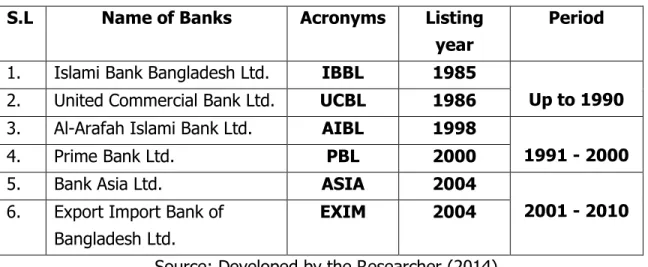
At December 31, 2012 there were a total of 30 listed private commercial banks in the Dhaka Stock Exchange (DSE). The study covers the analysis of five years’ annual reports of six sample private commercial banks listed in the Dhaka Stock Exchange (DSE) all of which were in “A-Category” company for the period of 2008 to 2012. A researcher-developed checklist was constructed containing 247 unweighted disclosure items. The annual report study was restricted to the ‘A Category’ bank listed on the Dhaka Stock Exchange (DSE) because it is of paramount interest to investors. Based on previous studies, availability of data and its relevance to the socio-economic environment of Bangladesh, only eight independent variables categorized into four were selected as proxies for corporate attributes. The variables
are: Company size (Total assets and Number of shareholders), Profitability (EPS, and ROE), Solvency (Debt equity ratio, Credit deposit ratio, and Capital Adequacy ratio), and Listing age. The present study has some limitations which should be taken into consideration in using the findings of this research. The limitations are as follows:
• The annual report study was restricted to the “A- Category” private commercial
banks listed in DSE, therefore, the “Z-Category” banks and government owned listed and unlisted bank were subtracted in selecting the sample. The results would have been different if all the banks were included in the study.
•The study was conducted covering a period of 5 years from 2008-2012 in which a number of regulatory requirements were adopted. And at the middle of the study period BAS/IAS-30 was superseded by BFRS/IFRS-7, but banks were supposed to follow IAS-30 before its supersession in 2010.
• The study was based on secondary data and therefore, no primary data were
incorporated which could give different view.
• The analysis and interpretation of the research was based on sample of six banks
(about 27.5% of the population) which were selected on judgmental sampling approach. The results could have been different if the number of sample would increase or any probability sampling technique was applied.
• The study considered both mandatory and voluntary information in developing the
disclosure index but did not classify them in analyzing and comparing the results.
• The study was conducted on the basis of 247 unweighted disclosure items of
information and the results would be different if weighted disclosure index were used or items were increased or decreased.
Based on previous studies, availability of data and its relevance to the socio- economic environment of Bangladesh, only eight independent variables were selected as proxies for corporate attributes to disclosure. Whereas some other variables could be considered.
1.8. Profile of the Sample Banks
The banking sector of Bangladesh comprises of four categories of scheduled banks such as Nationalized Commercial Banks, Nationalized Specialized Bank, Private Commercial Banks and Foreign Commercial Banks (Ahmed, 2009). According to Bangladesh Bank (BB)5, up to 2013, there were 57 (Appendix-A) scheduled banks in Bangladesh who operate under full control and supervision of Bangladesh Bank. Out of the 57 banks, 4 are Nationalized Commercial Banks (NCBs), 31 Conventional Private Commercial Banks, 8 Islamic Commercial Banks, 9 Foreign Commercial Banks and the rest 5 are Specialized Banks. For the purpose of this study a total of six banks have been taken as sample with three Conventional banks and three Islamic banks. A short profile of the sample banks are presented here for the purpose of gaining the primary knowledge about the banks.
1.8.1. Islami Bank Bangladesh Limited(IBBL)
Islami Bank Bangladesh Limited is a Joint Venture Public Limited Company engaged in commercial banking business based on Islamic Shari'ah with 63.09% foreign shareholding having a network of total 286 Branches. It was established on the 13th
5 Bangladesh Bank is the central bank of Bangladesh that supervises the financial institutions in Bangladesh especially the banking sector.
March 1983 as the first Islamic Bank in the South East Asia. It is listed with both the Dhaka Stock Exchange Limited and Chittagong Stock Exchange Limited. Authorized Capital of the Bank is Tk. 20,000.00 million and Paid-up Capital is Tk. 14,636.28 million with 33,686 shareholders as on 31st December 2013. The address of head office of the bank is: Islami Bank Tower, 40, Dilkusha Commercial Area, Dhaka- 1000, Bangladesh. The Chairman of the Board of Directors is Professor Abu Nasser Muhammad Abduz Zaher and the Managing Director & CEO of the bank is Mohammad Abdul Mannan.
1.8.2. United Commercial Bank Limited (UCB)
United Commercial Bank Limited (UCB) started its journey in mid 1983 and is one of the first generation banks in the country. The bank has a vast network of 139 branches providing banking services like Retail banking, SME banking, Corporate banking, and Off-shore banking with the help of 3,374 employees (31.12.2012). The bank has around 40,000 card holders. The Bank also provides its clients with both incoming and outgoing remittance services. The bank currently has 21 directors. The chairman of the bank is Mr. M. A. Hashem and the name of the managing director is Mr. Muhammed Ali. The address of the registered office is: Bulus Center, Plot - CWS- (A)-1, Road No – 34, Gulshan Avenue, Dhaka-1212. The Authorized Capital and Paid-up Capital of the Bank are Tk. 15,000 million and Tk. 8,366 million respectively.
The bank became listed in Dhaka Stock Exchange Limited on the 30th November 1986 and Chittagong Stock Exchange Limited on the 15th November 1995.
1.8.3. Al-Arafah Isami Bank Limited
Al-Arafah Islami Bank Limited was established and registered as a private limited company on 18 June 1995. The authorized capital of the Bank is Tk.10,000 million and the paid up capital is Tk. 7,130 million as on 31.12.2012. The manpower is 2,110 and the number of shareholders is 52,739. It has 100 branches of which 21 are AD throughout the country. The vision of the bank is to be a pioneer in Islami Banking in Bangladesh and contribute significantly to the growth of the national economy. There are 20 directors in the bank including the chairman Badiur Rahman.
The managing director of the bank is Md. Habibur Rahman. The address of the head office of the bank is: 36, Dilkusha(6-9 Floor) C/A, Dhaka-1000, Bangladesh. In 1998 it became listed in the Dhaka Stock Exchange Limited.
1.8.4. Prime Bank Limited (PBL)
Prime Bank Limited was established on the 17th April 1995 with the vision “To be the best Private Commercial Bank in Bangladesh in terms of efficiency, capital adequacy, asset quality, sound management and profitability having strong liquidity.” Besides the Conventional banks the bank has Islamic Banking window. The bank became listed with Chittagong Stock Exchange Limited on 15.11.1999 and with Dhaka Stock Exchange Limited on 27.03.2000. There are twenty one directors of the bank including its chairman Azam J Chowdhury. Up to December 2012 the bank had 70 branches and 1,551 employees and six subsidiaries. The address of corporate head office of the bank is: Adamjee Court, Annex Building-2, 119-120, Motijheel C/A, Dhaka-1000. The authorized and paid up capital of the bank are Tk. 25,000 million and Tk. 10,293 million respectively.
1.8.5. Bank Asia Limited
Bank Asia Limited was incorporated on 28.09.1999 and the bank got certificate of commencement on the same date. It is one of the third generation banks in Bangladesh that provides Islamic banking service in addition to Conventional banking services. Up to December 31, 2012 the bank had 13 directors, 73 branches and 1485 employees. The address of the registered office of the bank is: Rangs Tower (2nd to 6th Floor), 68, Purana Paltan, Dhaka-1000. The authorized capital and paid up capital of the bank are Tk. 15,000 million and Tk. 7,630 million respectively. The bank became listed in the Dhaka Stock Exchange in 2004.
1.8.6. Export Import Bank of Bangladesh Limited (EXIM)
Export Import Bank of Bangladesh Limited was established as a Conventional bank in the year 1999 under the leadership of Late Mr. Shahjahan Kabir, Founder Chairman. The Bank starts functioning from 3rd August, 1999 with its name as Bengal Export Import Bank Limited. On 16th November 1999, it was renamed as Export Import Bank of Bangladesh Limited. The Bank has migrated all of its conventional banking operation into Shariah Based Islami Banking in July 2004. Dr.
Mohammed Haider Ali Miah is the Managing director and CEO of the Bank. The board of directors consists of 15 directors including the chairman Mr. Md. Nazrul Islam Mazumder. Up to December 31, 2012 the bank had 72 branches, 1,909 employees and 1,39,482 shareholders, paid-up capital 10,414 million, and authorized capital of Tk.20,000 million. It became listed with the Dhaka Stock Exchange and the Chittagong Stock Exchange on September 26, 2004 and September 04, 2004 respectively.
1.9. Structure of the Thesis
This thesis is divided into six chapters. Chapter I is the introduction chapter.
The contents of the chapter include the introduction, background of the study, statement of the problem, objectives of the study, research questions, research hypothesis, justification of the study, scope and limitations of the study and definition of the used terms. Chapter II includes the review of related literature and finding the research gap. Chapter III is related to the Methodology of the study. It points out the important concepts and assumptions used in the study, followed by the methods of collection of data, analysis framework and interpretation thereof. Chapter IV describes the theoretical framework. This chapter is devoted to the development of conceptual framework for the development and the nature of financial reporting practices of private sector commercial banks in Bangladesh. Chapter V explores the legal, regulatory and professional requirements regarding disclosure of banking sector in Bangladesh.
Chapter VI is the main chapter and is related to the presentation and analysis of the collected data through various statistical techniques and also testing the hypotheses. Chapter VII, the final chapter of the research, contains the summary of the findings, conclusion, policy implication and recommendations for further studies.
1.10. Definition of the Terms
Accounting Standards are policy documents or rules that guide the preparation
and presentation of financial information.
Bangladesh Accounting Standards (BASs) are the International Accounting
Standards adopted in Bangladesh by the Institute of Chartered Accountants of Bangladesh (ICAB).
Bangladesh Financial Reporting Standards (BFRSs) are the latest
International Financial Reporting Standards adopted in Bangladesh by the Institute of Chartered Accountants of Bangladesh (ICAB).
Convergence refers to the process of narrowing differences between IFRS and
the accounting standards of countries that retain their own standards.
Corporate Attributes are company characteristics that can influence the extent of corporate disclosure.
Disclosure is the appearance of quantitative or qualitative economic information
relating to a business enterprise in the annual reports.
GAAP is a set of accounting principles developed by the accounting profession
which are generally accepted and universally practiced in accounting.
International Accounting Standard (IAS) is an accounting standard issued
by the International Accounting Standards Committee (IASC) now known as International Accounting Standards Board (IASB).
International Accounting Standards Board (IASB) is the international
standard setting body responsible for issuing International Financial Reporting Standards.
International Financial Reporting Standard (IFRS) is the accounting and financial reporting standard promulgated by the IASB; it includes standards and interpretations adopted by the IASB.
Islamic Commercial Banks are the banks that follow the Islamic Sharia’h in
banking activities.
Mandatory disclosure refers to the information companies are obliged to
disclose by the legal, regulatory and professional bodies.
The Institute of Chartered Accountants of Bangladesh (ICAB) is the
regulatory authority of the accountancy profession in Bangladesh.
Conventional Commercial Banks are the common interest based bank
prevailing all over the world.
Voluntary disclosure refers to the discretionary release of financial and or other information over and above the mandatory disclosure.
Chapter Highlights
2.1. Introduction
2.2. The Pioneering Research in Developed Countries 2.3. Studies in Developing Countries beyond Bangladesh 2.4. Previous Studies in Bangladesh
2.5. Conclusion
CHAPTER 2
LITERATURE REVIEW
CHAPTER 2
LITERATURE REVIEW
2.1. Introduction
This chapter deals with reviewing the relevant research works on financial reporting practices or disclosure practices in national and international level. But a special concentration is given on the financial reporting practices or the disclosure practices of the banking sector in Bangladesh. A brief summary of these is presented in the following four sections to rationalize the current study.
2.2. The Pioneering Research in Developed Countries
Accounting research on financial reporting was started in the decade of 1960 and Fremgen (1964) became the pioneer by his work on “Corporate Reporting and Investment Decisions”. In his research he showed the relationship between extent of corporate disclosure and company attributes. He utilized a random sample of 527 listed and unlisted corporate organizations for evidence of compliance with certain minimal standards of disclosure. He considered twelve explanatory variables for possible correlation with superiority of disclosure. The independent variables are profitability, asset size, method of trading shares, stock ownership, industry, frequency of external financing, stability of growth in earnings and dividends, product, degree of competition, association with CPA firms and management characteristics.
Only the first four of these variables were tested. A disclosure index was made
showing thirty one information items each weighted by importance. A percentage score was given to each company by dividing the number of points achieved by the total points possible for all items applicable to the company. Fremgen found that there was a positive relation between disclosure and asset size, profitability, and shareholder number. He also discovered that there was lack of disclosure of some techniques such as depreciation, inventories, recognition of income on long term contracts and income tax allocation. He found that specific items required by shareholders were not adequately disclosed. Among them were sales breakdown, research and development (current and planned), capital expenditure (current and planned), and information on management and their policies.
Singhvi and Desai (1971) acknowledged Fremgen’s work as very fascinating since it was the first of its kind to show interdependence between companies attributes. Their study was to improve on Fremgen’s work by examining additional variables such as earnings margin and influence of audit firms which was previously neglected by Fremgen and also to test the statistical significance of the relationship between variables. They evaluated the quality of information for fiscal year 1965- 1966. Their sampling involved 100 listed and 55 unlisted corporations in the U.S.
They also used weighted index of disclosure method with 34 items similar to Fremgen’s. Weights were assigned to the information items based on their relative importance as indicated by committee members on corporate disclosure and security analysts. They proposed that there was a conceptual relationship between the index of disclosure (I) and the specified explanatory variables, which were asset size (A),
number of shareholders (N), listing status (L), CPA firms (C), rate of return (R) and earning margin (E), modeled as : I = f(A,N,L,C,R,E). Their result revealed that listing status was the primary explanatory variable. That was in variance to Fremgen s’
which showed asset size rather than listing status as the key explanatory variable.
Singhvi and Desai (1971) concluded that corporations that disclose inadequate information were likely to be small in size, free from listing requirement, audited by small CPA firms and less profitable. The major limitation of the study was that its time period was only one year.
Buzby (1975) examined the relationship between adequate disclosure and the two company characteristics, asset size and listing status. A disclosure index was constructed based on information acquired from financial analysts. It is defined in terms of 39 selected types of information appearing in the annual report. Weights were assigned based on the analyst ranking in order to recognize differences in their relative importance. Eighty eight samples of companies were used, 44 were listed on either the New York (NYSE) or American (AMEX) exchanges, while the other 44 were unlisted. To test the listing status effect, Wilcoxon matched-pairs sign-ranked test was conducted and it was discovered that there was a low level of statistical significance at 0.64. To test the asset size effect that is to know if there