I am deeply appreciative of the contribution and support to the completion of this dissertation from my supervisors: Jakowan; Assistant Professor School of Business and Economics at United International University. Professor Musharraf Hussein; School of Business and Economics at United International University, whose time, effort and supportive guidance were very helpful during my long journey towards completing the dissertation. According to the survey results, participants believed that the reward system had a good effect on employee engagement.
CHAPTER ONE: INTRODUCTION
- Background
- Scope of the Study
- Geographical scope
- Demographic scope
- OBJECTIVES OF THE STUDY .1 General
- Specific
- METHODOLOGY OF THE REPORT
- Data Collection Primary
- Sample Size
- Sample Techniques
- Area and Time of Research
- Limitations of the Project Report
I collected data for the original study's ongoing expansion from those public organizations' web pages, as well as previous study papers, journals, textbooks, and lecture notes. When specialist skills were not available in another form and when a subject was being investigated for the first time, this method was used. To determine the appropriate sample size for the population, the study selects 32 respondents from one institution in Mogadishu, Somalia, based on their occupation.
CHAPTER Two: Literature Review
- Overview
- Succession Planning
- Talent Management
- Career Management
- Rewards Management
- Employee Retention
- The Relationship between Succession Planning and Employee Retention
It was founded by one. Searching for recommended alternatives, according to the experts, is a process that needs a sophisticated design as well as a precise strategy (Mathur & Agarwal, 2013). According to a study, underpaid employees are more likely to leave their jobs as it is critical that they are properly compensated (Bacon & Hoque, 2005). Poor workers are more strongly related to work, according to a study, because it is crucial that benefits are given to them (Bacon & Hoque, 2005).
- Organizational Background
- History of the Hormuud Telecom Somalia
- The Operations Part of Hormud Tellecom Somalia
- Hormuud Telecom of Somalia's Vision and Mission
- In 2019, Hormuud is working on three exciting initiatives:-
- Our mission
- The Products and Services of Hormuud Telecommunication .1. Mobile Services
- Mobile Internet & Broadband
- EVC Plus
- WAAFI
- Hormuud Foundation
- Fire Fighting Services
- Healthcare Programs
- Emergency Responses
- Developmental Programs
Hormuud Telecom established the Hormuud Salaam Foundation in 2009, making it Somalia's first business charity. [citation needed]. Hormuud Telecom received the very first digital payment license from the Banking System of Somalia in February 2021, ensuring that its electronic banking services The Financial System has now controlled and licensed the forum EVC Plus. Engineers make up about 45 percent of the company's workforce. Hormuud Telecom is owned by a total of 17999 Somalis.
The company, its employees and the Hormuud Telecom Foundation will work together to carry out our mission. Hormuud Telecom has previously provided free bulk financial transfers to non-governmental organizations (NGOs) responding to disasters such as floods. As one of its philanthropic operations, Hormuud Telecom Organisation, as Somalia's very first business foundation, provides various humanitarian and financial aid.
Hormuud Salam Foundation (HSF) is a non-profit organization established by Hormuud Telecom and Salaam Somali Bank with the sole purpose of making charitable contributions to help Somalis in their daily lives. Hormuud Scholarship: The Hormuud Telecom Fund awards thousands of grants each year to high school graduates as well as college students. Hormuud Telecom Foundation firefighters fought 63 fires in 2018, saving countless lives and homes.
People were dying due to the lack of dialysis equipment in the country until the Hormuud Telecom Fund provided these important healthcare facilities.
CHAPTER FOUR: HR Function of the Organization
History of HR Department
HR Function of Organization
Recruitment and selection
HR Function
Recruitment and selection
However, one of the most important objectives for HR is to attract, select and integrate competent personnel for the firm. The purpose of staffing is to find, select and design the best people for one or more permanent or temporary positions within a firm. The method of attracting employees to join regular group activities by posting job needs and defining job requirements can be described as the process of enticing individuals to join regular group activities by predetermining job needs and trying to determine the job title.
The goal of the recruitment process is to get to know the customers and select the best candidates for a specific position, which is determined during the recruitment phase. The talent acquisition process can be simple or challenging depending on the organization you work for and the job the candidate is seeking. It is essential to know that specific labor standards must be followed in all selection processes to protect the company and the candidate and to avoid discrimination throughout the recruitment process.
The first is recruitment, which is based on applicant attractiveness, selection and design for the selection step. After that, the new hire begins interviewing and reviewing candidates to select the best prospects for the position. Advertising job openings, issuing notices within the organization, and analyzing company data for the relationship between the skills needed to do the job and the competencies possessed by existing employees are all examples of internal recruiting strategies.
The best method to minimize negative outcomes is to use fair processes and procedures when hiring or promoting employees.
Training and development
Each of the following methods can be used to introduce trainees based on a variety of variables such as demographics, job type, and other aspects that are addressed during the initial phase. User demographics, development and innovation, the particular style of the trainer, and so on, play a role in determining the service process. The final stage of the learning process and the most important in determining the quality of the process is assessment.
Both the purpose and the structure of the training program must be designed in such a way that no conflicts arise and that the students themselves can assess the benefits in order for the review to be successful. The evaluation is based on the participants' reactions to the training, what they have learned and how their behavior changed as a result of the training. HR also runs training courses and reminds employees of the company's goals and ensures that they are on the right track.
The HR department must take into account the time spent on payroll processing as they, as a defender of human resources, will be immediately affected if pay slips are not completed accurately and on time. Questions about the program offered and the associated standards are part of the HR audit checklist. Time reports are part of the payment files in some HR departments that process payroll.
As part of the standard system, employees are granted variable income levels, additional incentives, cash gifts, awards and other benefits, which boost morale and make them happy at work.
CHAPTER FIVE: ANALYSIS AND FINDINGS
Introduction
The use of rewards can be used to guide employee behavior and change their values. On the other hand, both expressions serve the same purpose while being completely different, and they can be used interchangeably. Happiness requires recognition of their efforts so that they feel motivated and satisfied that their job is valued by the organization.
Employees don't always demand monetary compensation for their work, but they do require recognition, and most local businesses use this strategy to inspire their workers. Employees need to be recognized on a regular basis to be motivated to do a job effectively.
Demographic data
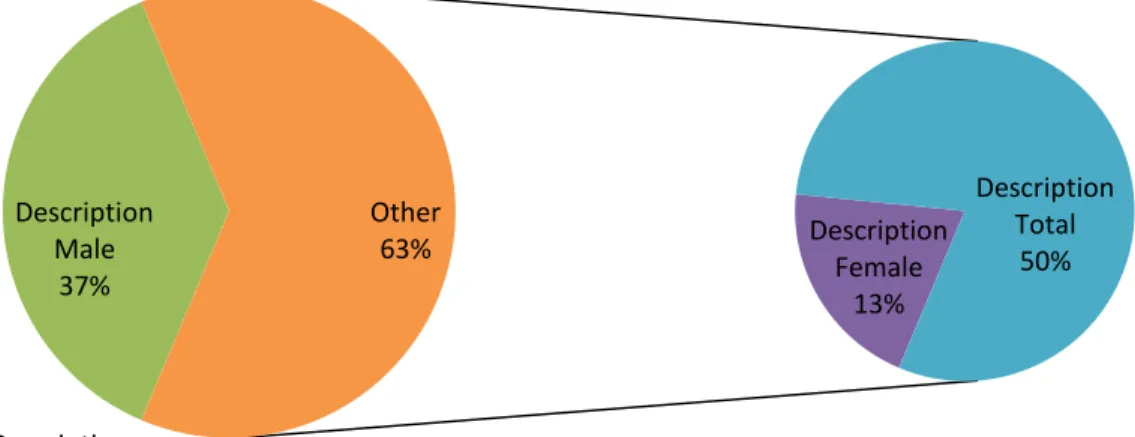
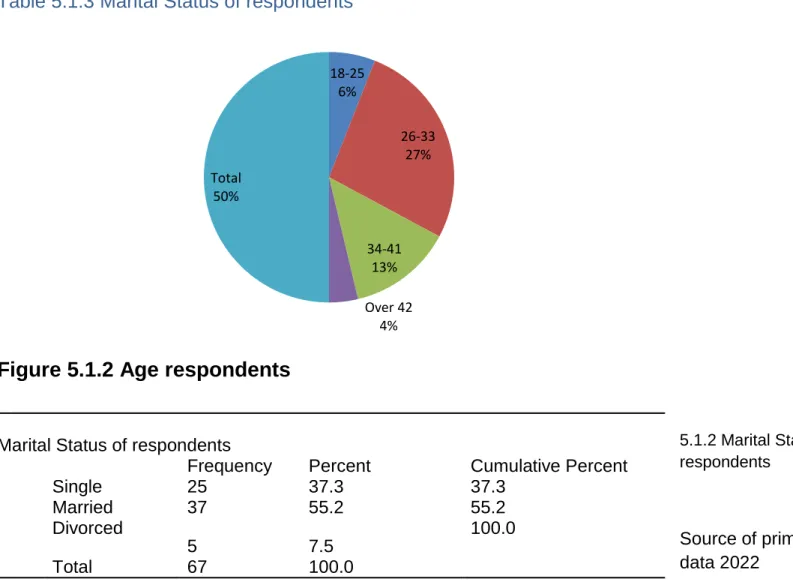
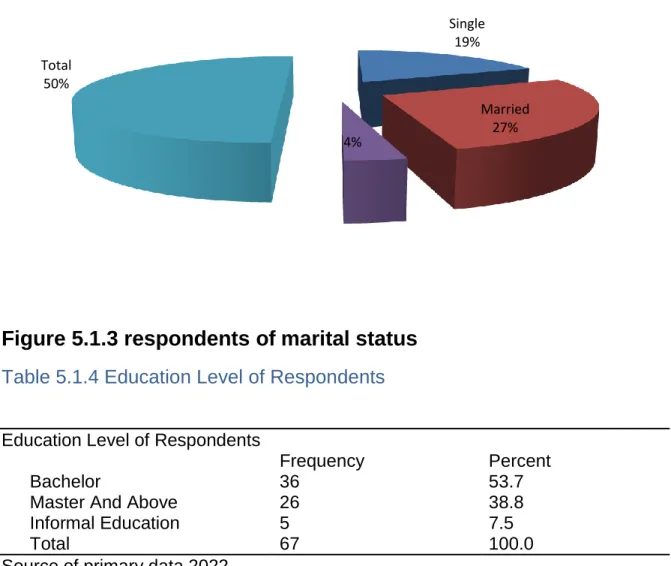
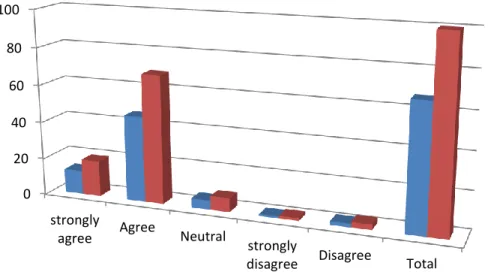
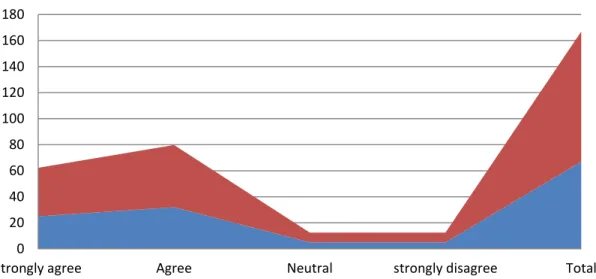
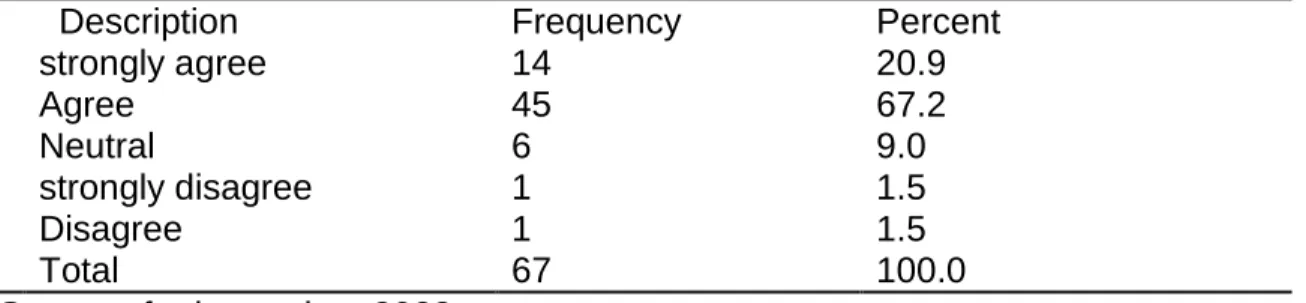
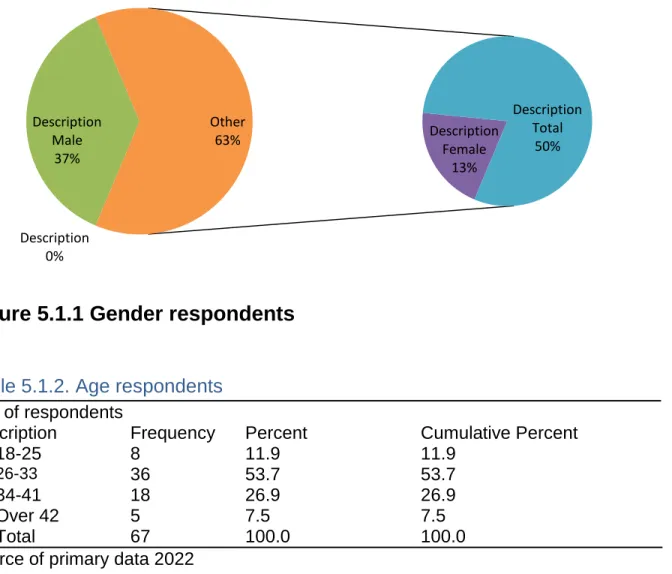
According to the results in table 5.1.1 and the graph below, 74.6 percent of respondents were men and 25.4 percent were women. The results in table 5.2.3 show that 37.3 percent of respondents strongly agreed, 47.8 percent strongly agreed, 7.5 percent were neutral and 7.5 percent strongly disagreed. According to the table and figure, the percentage of respondents strongly agree, 67.2% percent strongly agree, 9% percent strongly agree, 1.5% percent strongly disagree and 1 .5% percent strongly disagree.
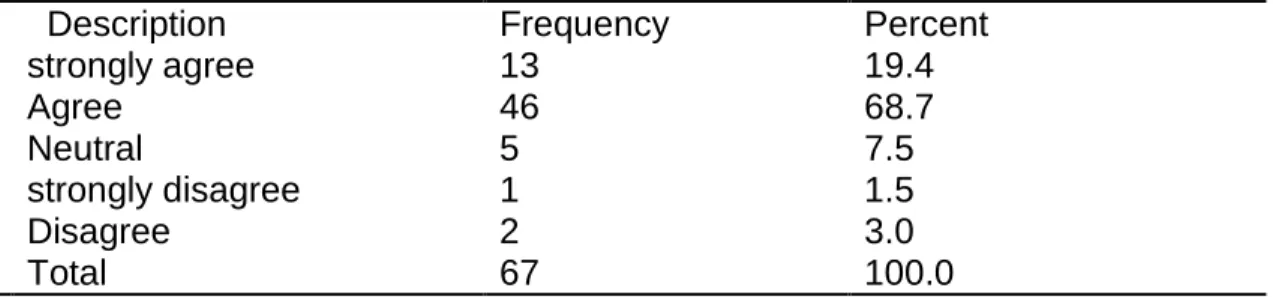
According to the table above and the graph below, 31.3 percent of respondents completely agreed, 53.7 percent agreed, 13.4 percent were indifferent, and 1.5 percent disagreed. According to the table and number of respondents agree, 61.2 percent agree, 4 percent neutral, 1.5 percent strongly disagree and 6 percent disagree. According to the above table and graph, 16.4 percent of respondents agree with this, 67.2 percent agree, 9 percent of respondents are neutral, 1.5 percent do not agree at all, and 6 percent of respondents disagree.
According to the table above, 28.4% of the respondents strongly agreed, 55.2% of the respondents agreed, 7.5% of the respondents were neutral, 6% of the respondents strongly disagreed, and 3% of the respondents disagreed. According to table percentage of respondents strongly agree, 61.2 percent of respondents agreed, 6% of participants were neutral and 4.5 percent of the surveyed disagreed. According to the table and graph above, 6 percent of respondents said monthly, 9 percent said quarterly, 65.7 percent said annually, 7.5 percent said sometimes, and 11.9 percent answered other.
Accordingly, the majority of participants (65.7 percent) stated that they do so on an annual basis. According to table, percent of respondents indicated management staff only, 16.4 percent said senior staff, 19.4 percent said permanent staff, and 9% said others. According to the table and graph above, 67.2 percent of the respondents said that the upper staff the.
MAJOR FINDINGS
CHAPTER SIX: CONCLUSION AND RECOMMENDATIONS
INTRODUCTION
CONCLUSIONS
RECOMMENDATIONS
Barriers to acceptance, satisfaction and career growth: Implications for career development and retention of women in selected male occupations in Nigeria. Human resource strategies and firm performance: What do we know and where do we need to go?. A case for succession planning: How academic libraries are responding to the need to prepare future business leaders.
The impact of monetary and non-monetary rewards on motivation among lower level employees in selected retail stores. An Effectiveness of Human Resource Management Practices on Employee Retention in the Institute of Higher Education: A Regression Analysis. The practical use of Maslow's hierarchy of needs theory to motivate employees: A case of Masvingo Polytechnic.
The perceived significance of the supervisor, assistant, and parents for the career development of novice kindergarten teachers. 2005) Human Resource Management 3rd Edition Prentice Hall India NewDelhi Patton, M. Qualitative Evaluation and Research Methods. 1998). Human Resource Management: Pearson Professional Ltd, London Rothwell, W. 2005) Effective Succession Planning for Retention A Research Project, Ontario, Canada.
Human Resource Management: Published in association with the School of Business Administration, University of Michigan and in alliance with the Society of Human Resources Management.
QUESTIONAIRE
There are career positions that are grouped by a common theme (marketing, management, software, industries, etc.). Part D: The Impact of Reward Management on Employee Retention Are you aware of a reward system in your organization.