GROWTH AND YIELD OF KOHLRABI AS INFLUENCED BY ORGANIC AND CHEMICAL SOURCES OF POTASSIUM AND
SEEDLING AGE AT TRANSPLANT
TAHIRA BEGUM
DEPARTMENT OF HORTICULTURE
SHER-E-BANGLA AGRICULTURAL UNIVERSITY DHAKA-1207
JUNE, 2021
GROWTH AND YIELD OF KOHLRABI AS INFLUENCED BY ORGANIC AND CHEMICAL SOURCES OF POTASSIUM AND
SEEDLING AGE AT TRANSPLANT
By
TAHIRA BEGUM
REGISTRATION NO.: 14-06190
A Thesis
Submitted to the Faculty of Agriculture,
Sher-e-Bangla Agricultural University, Dhaka-1207, In partial fulfillment of the requirements
for the degree of
MASTER OF SCIENCE (MS) IN
HORTICULTURE
SEMESTER: JANUARY-JUNE, 2021
APPROVED BY:
………..…...………. … …..………
Prof. Dr. Tahmina Mostarin Prof. Dr. Khaleda Khatun Department of Horticulture Department of Horticulture SAU, Dhaka SAU, Dhaka
Supervisor Co-supervisor
…….………
Prof. Dr. Khaleda Khatun Chairman
Examination Committee
DEPARTMENT OF HORTICULTURE
Sher-e-Bangla Agricultural University
Sher-e-Bangla Nagar, Dhaka-1207
Ref:-... Date:-……….
CERTIFICATE
This is to certify that the thesis entitled ‘GROWTH AND YIELD OF KOHLRABI AS INFLUENCED BY ORGANIC AND CHEMICAL SOURCES OF POTASSIUM AND SEEDLING AGE AT TRANSPLANT’ submitted to the Faculty of Agriculture, Sher-e-Bangla Agricultural University, Dhaka, in partial fulfillment of the requirements for the degree of MASTER OF SCIENCE (MS) in HORTICULTURE, embodies the result of a piece of bona fide research work carried out by TAHIRA BEGUM, Registration number: 14-06190, under my supervision and guidance. No part of the thesis has been submitted for any other degree or diploma.
I further certify that any help or source of information, received during the course of this investigation has duly been acknowledged.
Dated: Prof. Dr. Tahmina Mostarin Place: Dhaka, Bangladesh Department of Horticulture
Sher-e-Bangla Agricultural University Sher-e-Bangla Nagar, Dhaka- 1207
Supervisor
i
ACKNOWLEDGEMENTS
Alhamdulillah, all praises are due to The Almighty Allah Rabbul Al-Amin for His gracious kindness and infinite mercy in all the endeavors the author to let her successfully completing the research work and the thesis leading to Master of Science degree.
The author would like to express her heartfelt gratitude and most sincere appreciations to her Supervisor Prof. Dr. Tahmina Mostarin, Department of Horticulture, Sher-e-Bangla Agricultural University, Dhaka, for her valuable guidance, advice, immense help, encouragement and support throughout the study. Likewise grateful appreciation is conveyed to Co-supervisor Prof. Dr. Khaleda Khatun, Department of Horticulture, Sher-e- Bangla Agricultural University, Dhaka, for her constant encouragement, cordial suggestions, constructive criticisms and valuable advice to complete the thesis.
It is highly appreciating words for Prof. Dr. Khaleda Khatun, Chairman, Department of Horticulture, Sher-e-Bangla Agricultural University, Dhaka along with faculties of the Department of Horticulture, Sher-e-Bangla Agricultural University for their rendered novel services towards me as their student.
The author would like to express her deepest respect and boundless gratitude to all the respected teachers of the Department of Horticulture, Sher-e-Bangla Agricultural University, Dhaka, for their valuable teaching, sympathetic co-operation, and inspirations throughout the course of this study and research work.
The author wishes to extend her special thanks to her classmates and friends for their keen help as well as heartiest co-operation and encouragement during experimentation.
The author is deeply indebted and grateful to her parents and relatives; without whose love, affection, inspiration and sacrifice this work would have not been completed.
Finally the author appreciates the assistance rendered by the staff members of the Department of Horticulture, Horticulture Farm staff, Dhaka, who have helped her during the period of study.
The Author
ii
GROWTH AND YIELD OF KOHLRABI AS INFLUENCED BY ORGANIC AND CHEMICAL SOURCES OF POTASSIUM AND
SEEDLING AGE AT TRANSPLANT
ABSTRACT
The experiment was carried out at the “Horticulture Farm” of Sher-e-Bangla Agricultural University, Dhaka, Bangladesh during October 2019 to January 2020 to study the effect of different organic and chemical sources of potassium and seedling age at transplant on growth and yield of kohlrabi. The experiment consisted of two factors.
Factor A: Four organic and chemical sources of potassium viz., K1= 100%
vermicompost, K2= 50% MoP + 50% vermicompost, K3= 50% MoP + 50% mushroom spent compost and K4= 50% vermicompost + 50% mushroom spent compost and Factor B: Three seedling ages viz., S1= 20 days age of seedlings, S2= 25 days age of seedlings and S3= 30 days age of seedlings. The experiment was laid out in a Randomized Complete Block Design (RCBD) with three replications. Data were recorded on growth, yield components and yield of kohlrabi and significant variation was observed for most of the studied characters. Under this investigation, it was revealed that the highest yield (38.44 t ha-1) with net return (Tk. 200,800) and BCR (2.09) was obtained from the treatment combination K2S2 (50% MoP + 50% vermicompost + 25 days age of seedlings). On the other hand, the lowest yield (19.78 t ha-1) with net return (Tk.
55,000) and BCR (1.39) was obtained from the treatment combination of K1S1 (100%
vermicompost + 20 days age of seedlings). So, economic analysis revealed that the K2S2
treatment combination appeared to be best for achieving the higher growth, yield and economic benefit of kohlrabi.
iii
LIST OF CONTENTS
Chapter Title Page No.
ACKNOWLEDGEMENTS i
ABSTRACT ii
LIST OF CONTENTS iii
LIST OF TABLES vi
LIST OF FIGURES viii
LIST OF PLATES ix
LIST OF APPENDICES x
LIST OF ACRONYMS xii
I INTRODUCTION 1
II REVIEW OF LITERATURE 4
III MATERIALS AND METHODS 14
3.1 Description of the experimental site 14
3.2 Soil characteristics 14
3.3 Climate and weather 14
3.4 Crop/planting material 15
3.5 Treatments under investigation 15
3.6 Design and layout of the experiment 15
3.7 Seedbed preparation 15
3.8 Seed treatment 16
3.9 Seed sowing 16
3.10 Raising of seedlings 16
3.11 Land preparation 16
3.12 Application of manures and fertilizers 17
3.13 Transplanting of seedlings 17
3.14 Intercultural operations 17
3.14.1 Gap filling 17
3.14.2 Weeding 17
3.14.3 Irrigation 18
3.14.4 Insects and diseases management 18
3.14.5 General observation 18
3.15 Harvesting 18
iv
LIST OF CONTENTS (Cont’d)
Chapter Title Page No.
3.16 Collection of data 18
3.16.1 Plant height 18
3.16.2 Number of leaves per plant 19
3.16.3 Largest leaf length 19
3.16.4 Largest leaf breadth 19
3.16.5 Spread of plant canopy per plant 19
3.16.6 Fresh weight of leaves per plant 19
3.16.7 Fresh weight of knob per plant 19
3.16.8 Total weight of plant 19
3.16.9 Fresh weight of roots per plant 19
3.16.10 Average length of root per plant 20
3.16.11 Number of lateral roots per plant 20
3.16.12 Diameter of knob per plant 20
3.16.13 Dry weight percentage of leaves per plant 20
3.16.14 Dry weight percentage of knob per plant 20
3.16.15 Dry weight percentage of roots per plant 21
3.16.16 Yield per plot 21
3.16.17 Gross yield per hectare 21
3.17 Economic analysis 21
3.18 Data analysis technique 21
IV RESULTS AND DISCUSSION 22
4.1 Plant height 22
4.2 Number of leaves per plant 25
4.3 Largest leaf length 27
4.4 Largest leaf breadth 30
4.5 Spread of canopy per plant 32
4.6 Fresh weight of leaves per plant 35
4.7 Fresh weight of knob per plant 36
4.8 Total weight of plant 38
4.9 Fresh weight of roots per plant 40
4.10 Average length of root per plant 41
v
LIST OF CONTENTS (Cont’d)
Chapter Title Page No.
4.11 Number of lateral roots per plant 42
4.12 Diameter of knob per plant 44
4.13 Dry weight percentage of leaves 47
4.14 Dry weight percentage of knob 47
4.15 Dry weight percentage of roots 48
4.16 Yield per plot 50
4.17 Yield per hectare 51
4.18 Economic analysis 54
4.18.1 Gross return 54
4.18.2 Net return 54
4.18.3 Benefit cost ratio 54
V SUMMARY AND CONCLUSION 56
REFERENCES 60
APPENDICES 65
vi
LIST OF TABLES
Table Title Page No.
1 Combined effect of different organic and chemical sources of potassium and age of seedlings on plant height at different days after transplanting of kohlrabi
24
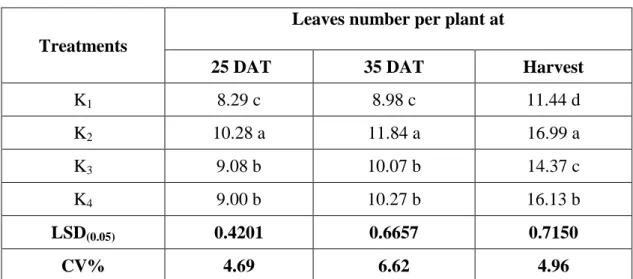
2 Effect of different organic and chemical sources of potassium on number of leaves per plant at different days after transplanting of kohlrabi
25
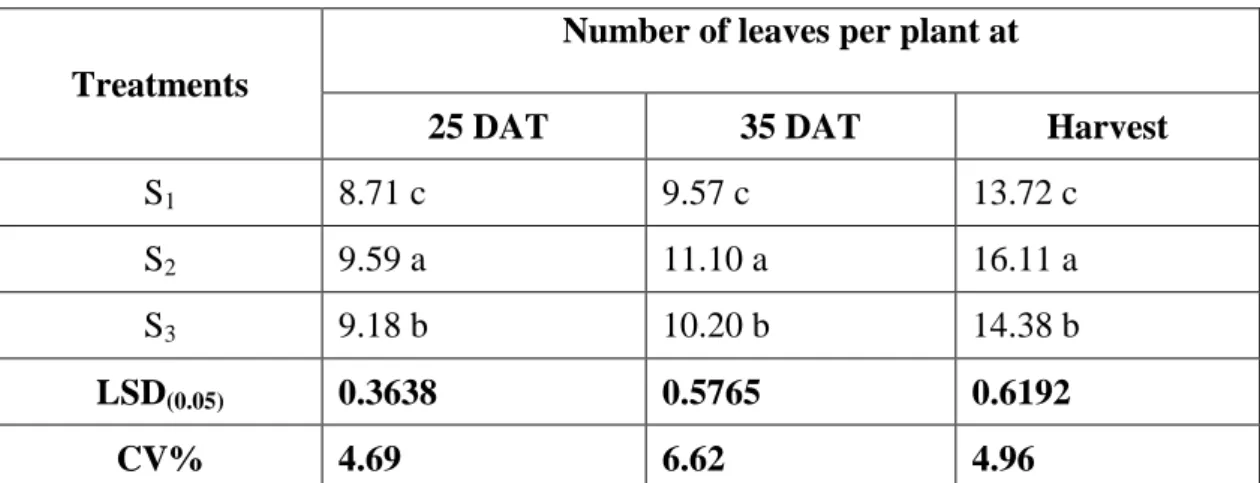
3 Effect of different age of seedlings on number of leaves per plant at different days after transplanting of kohlrabi
26 4 Combined effect of different organic and chemical sources of
potassium and age of seedlings on number of leaves per plant at different days after transplanting of kohlrabi
27
5 Effect of different organic and chemical sources of potassium on largest leaf length per plant at different days after transplanting of kohlrabi
28
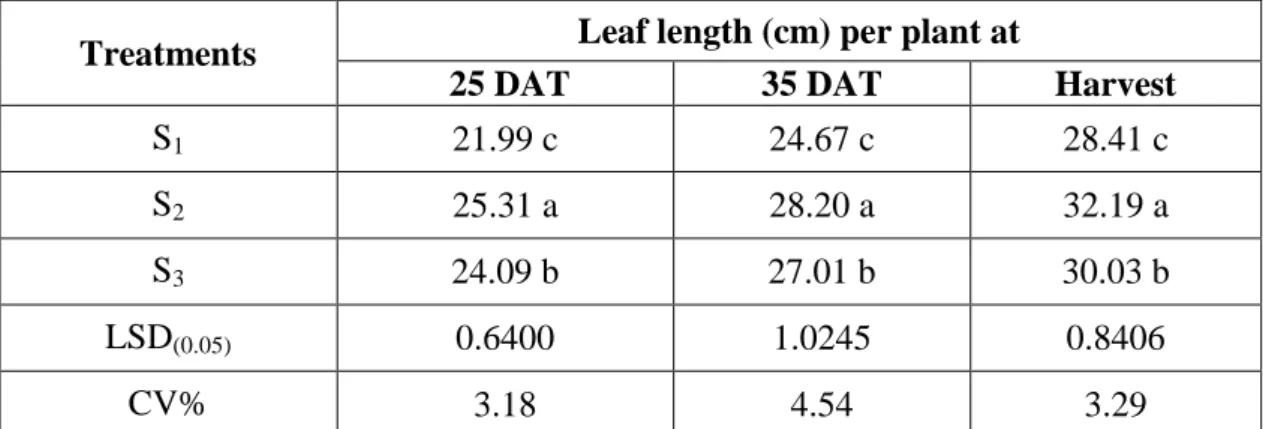
6 Effect of different age of seedlings on largest leaf length per plant at different days after transplanting of kohlrabi
28 7 Combined effect of different organic and chemical sources of
potassium and age of seedlings on largest leaf length of per plant at different days after transplanting of kohlrabi
29
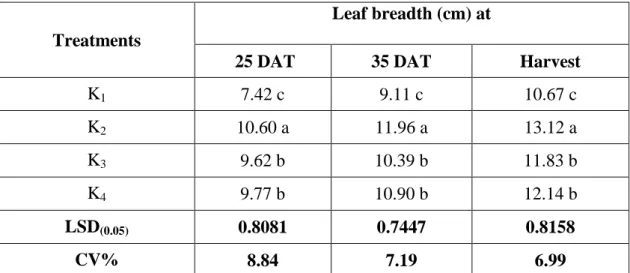
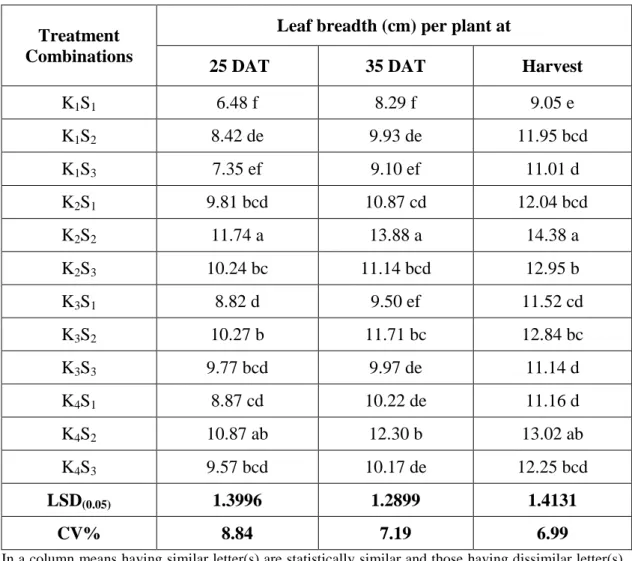
8 Effect of different organic and chemical sources of potassium on leaf breadth per plant at different days after transplanting of kohlrabi
31
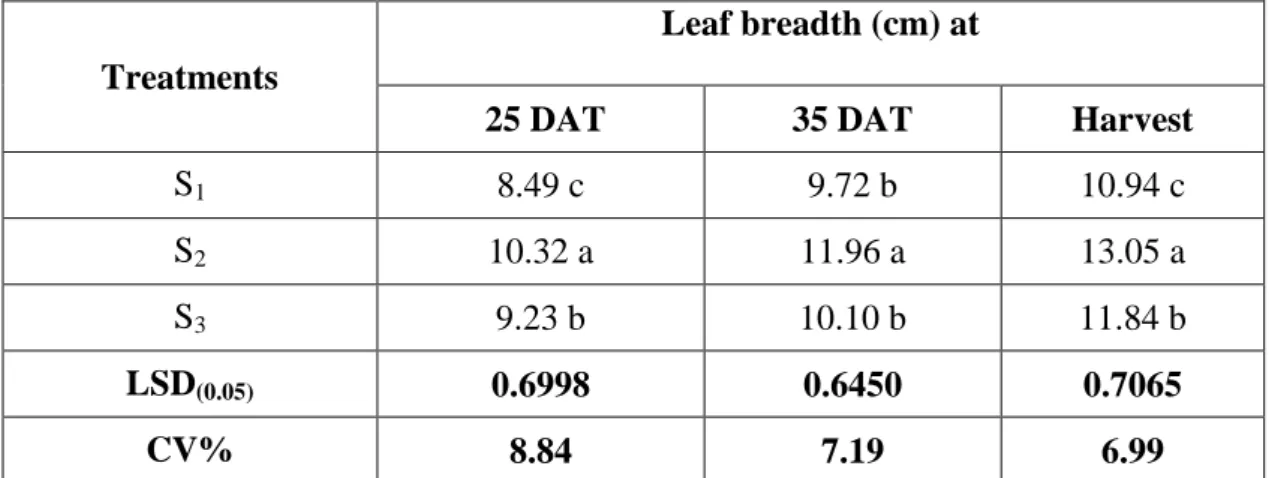
9 Effect of different age of seedlings on leaf breadth per plant at different days after transplanting of kohlrabi
31 10 Combined effect of different organic and chemical sources of
potassium and age of seedlings on leaf breadth per plant at different days after transplanting of kohlrabi
32
11 Effect of different organic and chemical sources of potassium on spread of canopy per plant at different days after transplanting of kohlrabi
33
12 Effect of different age of seedlings on spread of canopy per plant at different days after transplanting of kohlrabi
33 13 Combined effect of different organic and chemical sources of
potassium and age of seedlings on spread of canopy per plant at different days after transplanting of kohlrabi
34
LIST OF TABLES (Cont’d)
vii
Table Title Page No.
14 Combined effect of different organic and chemical sources of potassium and age of seedlings on fresh weight of leaves per plant, fresh weight of knob per plant and total weight of plant of kohlrabi
40
15 Effect of different organic and chemical sources of potassium on fresh weight of root per plant, average length of root per plant and number of lateral roots per plant of kohlrabi
43
16 Effect of different age of seedlings on fresh weight of root per plant, average length of root per plant and number of lateral roots per plant of kohlrabi
43
17 Combined effect of different organic and chemical sources of potassium and age of seedlings on fresh weight of root per plant, average length of root per plant and number of lateral roots per plant of kohlrabi
44
18 Combined effect of different organic and chemical sources of potassium and age of seedlings on diameter of knob per plant of kohlrabi
46
19 Effect of different organic and chemical sources of potassium and age of seedlings on dry weight percentage of leaves, dry weight percentage of knob and dry weight percentage of roots per plant of kohlrabi
49
20 Combined effect of different organic and chemical sources of potassium and age of seedlings on yield per plot and yield per hectare of kohlrabi
53
21 Cost and return of kohlrabi cultivation as influenced by different organic and chemical sources of potassium and age of seedlings
55
LIST OF FIGURES
viii
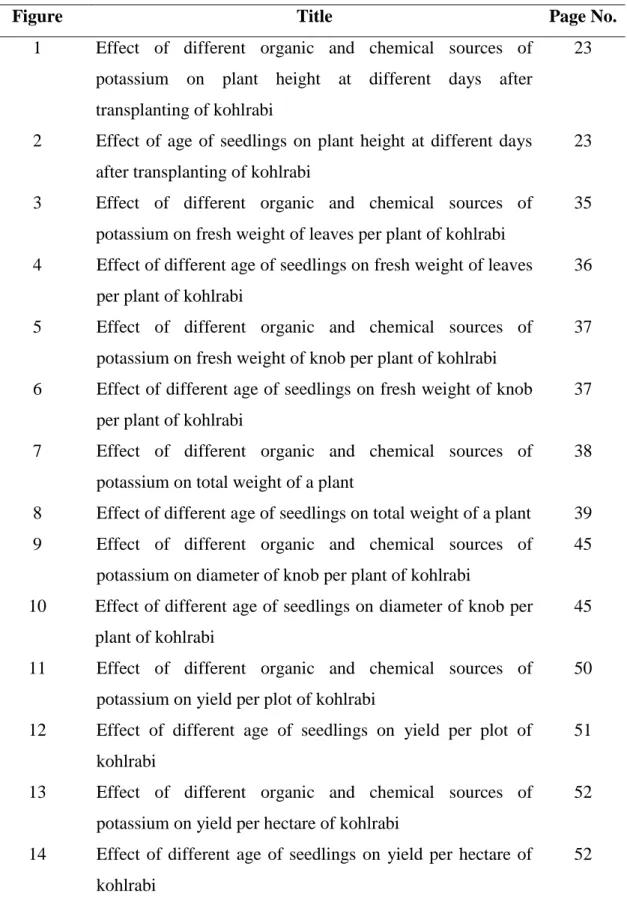
Figure Title Page No.
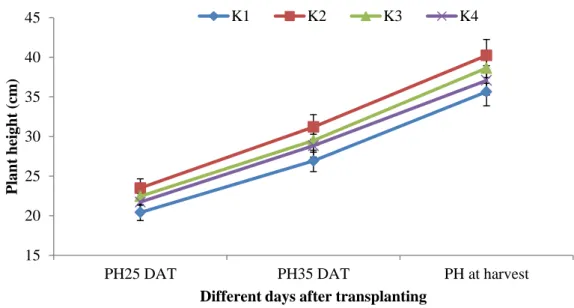
1 Effect of different organic and chemical sources of potassium on plant height at different days after transplanting of kohlrabi
23
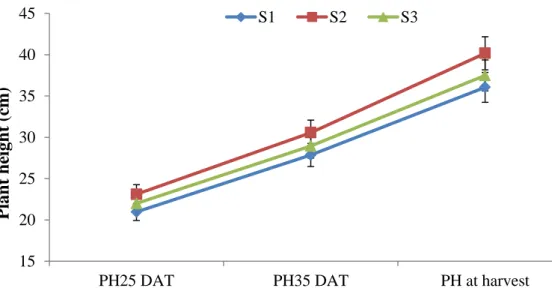
2 Effect of age of seedlings on plant height at different days after transplanting of kohlrabi
23 3 Effect of different organic and chemical sources of
potassium on fresh weight of leaves per plant of kohlrabi
35 4 Effect of different age of seedlings on fresh weight of leaves
per plant of kohlrabi
36 5 Effect of different organic and chemical sources of
potassium on fresh weight of knob per plant of kohlrabi
37 6 Effect of different age of seedlings on fresh weight of knob
per plant of kohlrabi
37 7 Effect of different organic and chemical sources of
potassium on total weight of a plant
38 8 Effect of different age of seedlings on total weight of a plant 39 9 Effect of different organic and chemical sources of
potassium on diameter of knob per plant of kohlrabi
45 10 Effect of different age of seedlings on diameter of knob per
plant of kohlrabi
45 11 Effect of different organic and chemical sources of
potassium on yield per plot of kohlrabi
50 12 Effect of different age of seedlings on yield per plot of
kohlrabi
51 13 Effect of different organic and chemical sources of
potassium on yield per hectare of kohlrabi
52 14 Effect of different age of seedlings on yield per hectare of
kohlrabi
52
ix
LIST OF PLATES
Plate Title Page No.
1 Photograph of experimental plot 75
2 Photograph of harvested kohlrabi during data collection (Treatment wise)
75 3 Photograph of harvested kohlrabi knob with leaves 76
4 Photograph of harvested kohlrabi knobs 76
x
LIST OF APPENDICES
Appendix Title Page No.
I Agro-Ecological Zone of Bangladesh showing the experimental location
65 II Monthly records of air temperature, relative humidity and
rainfall during the period from November 2019 to March 2020
66
III Characteristics of experimental soil analyzed at Soil Resources Development Institute (SRDI), Farmgate, Dhaka
66
IV Layout of the experimental field 67
V Mean square values of plant height at different days after transplanting of kohlrabi growing under the experiment
68 VI Mean square values of number of leaves plant-1 at different
days after transplanting of kohlrabi growing during experimentation
68
VII Mean square values of largest leaf length plant-1 at different days after transplanting of kohlrabi growing during experimentation
68
VIII Mean square values of largest leaf breadth plant-1 at different days after transplanting of kohlrabi growing during experimentation
69
IX Mean square values of spread of canopy per plant at different days after transplanting of kohlrabi growing during experimentation
69
X Mean square values of fresh weight of leaves per plant, fresh weight of knob per plant and total weight of plant of kohlrabi growing during experimentation
69
XI Mean square values of fresh weight of root per plant, average length of root per plant, number of lateral roots per plant and diameter of knob per plant of kohlrabi growing during experimentation
70
XII Mean square values of dry weight percentage of leaves, dry weight percentage of knob and dry weight percentage of roots of kohlrabi growing during experimentation
70
XIII Mean square values of yield per plot and yield per hectare of kohlrabi growing under the experiment
70
xi
LIST OF APPENDICES (Cont’d)
Appendix Title Page No.
XIV Effect of potassium sources on plant height at different days after transplanting of kohlrabi
71 XV Effect of age of seedlings on plant height at different days
after transplanting of kohlrabi
71 XVI Effect of potassium sources on fresh weight of leaves per
plant, fresh weight of knob per plant, total weight of plant and diameter of knob per plant of kohlrabi
72
XVII Effect of age of seedlings on fresh weight of leaves per plant, fresh weight of knob per plant, total weight of plant and diameter of knob per plant of kohlrabi
72
XVIII Effect of potassium sources on yield per plot and yield per hectare of kohlrabi
73 XIX Effect of age of seedlings on yield per plot and yield per
hectare of kohlrabi
73
XX Production cost of kohlrabi per hectare 74
xii
LIST OF ACRONYMS
Acronym Full meanings
AEZ = Agro-Ecological Zone
% = Percent
0C = Degree Celsius
BARI = Bangladesh Agricultural Research Institute
cm = Centimeter
CV% = Percentage of coefficient of variance
cv. = Cultivar
DAS = Days after sowing
et al. = And others
FAO = Food and Agriculture Organization
G = Gram
ha-1 = Per hectare
kg = Kilogram
LSD = Least Significant Difference
MoP = Muriate of Potash
N = Nitrogen
No. = Number
NPK = Nitrogen, Phosphorus and Potassium SAU = Sher-e-Bangla Agricultural University SRDI = Soil Resources and Development Institute
T = Ton
TSP = Triple Super Phosphate
viz. = Videlicet (namely)
Wt. = Weight
1 CHAPTER I INTRODUCTION
Kohlrabi (Brassica oleraceae var. gongylodes) is a cole crop belongs to the Brassicaceae family. Its edible portion is the expanded stem (knob). Kohlrabi is well known for its high nutritional and medicinal value due to its high content of vitamins (A, B1, B2, B5, B6 and E), minerals (Ca, Mg, Zn and Fe) and antioxidant substances that prevent the formation of cancer-causing agents (Beecher, 1994). Kohlrabi is widely grown in Europe and North America (Choil et al., 2010). In Bangladesh, it is still grown in a few scattered areas and the total cultivated area is unknown.
Kohlrabi is an excellent vegetable if used before it becomes tough and fibrous. It contains a lot of minerals and vitamins A and C. One hundred gram of edible portion of kohlrabi contains 92.7 g moisture, 1.1 g protein, 0.2 g fat, 0.7 g minerals, 1.5 g fiber, 3.8 g carbohydrates, 25 cal. Energy, 20 mg calcium, 18 mg magnesium, 10 mg oxalic acid, 35 mg phosphorus, 0.4 mg iron, 0.12 mg sodium, 37 mg potassium, 0.09 mg copper, 143 mg sulphur, 36 I. U. vitamin A, 0.12 mg riboflavin, 0.5 mg nicotinic acid, 0.05 mg Thiamin and 85mg Vitamin C (Nagar, 2016).
Many factors influence kohlrabi production, including seed quality, variety, plant spacing, fertilizer and proper management practices (Sultana et al., 2012). Kohlrabi production has not spread much beyond Bangladesh’s agricultural farms (BBS, 2014).
In terms of growth and yield, kohlrabi responds strongly to major essential nutrients such as N, P, K, and organic fertilizer. Bangladesh produced 35 thousand tons of kohlrabi per year from 7.29 thousand hectares of land in 2012-2013 with an average yield of 4.80 t ha-1, which is very low in comparison to the potential yield (BBS, 2014).
Plants require food in the form of proper NPK doses for growth and development.
Nitrogen promotes the transformation of carbohydrates into proteins and the formation of protoplasm (Kachari and Korla, 2009). Nitrogen supplementation promotes vegetative growth, whereas nitrogen deficiency causes stunted growth with small yellow leaves and low production (Khan et al., 2002). Phosphorus plays a vital role in several key physiological processes, viz. photosynthesis, respiration, energy storage and transfer, cell division and cell enlargement. It stimulates root growth, blooming and fruit setting (Sharma and Kumar, 2015). Potassium is considered
2
essential in photosynthesis, sugar translocation, nitrogen metabolism, enzyme activation, stomatal opening, water relation and growth of meristematic tissue. It acts as chemical traffic policeman, root booster, stalk strengtheners, protein builder and breathing regulator and retards diseases (Hossain et al., 2011).
Potassium is thought to be necessary for photosynthesis, sugar translocation, nitrogen metabolism, enzyme activation, stomatal opening, water relation and meristematic tissue growth (Gianguinlo and Borin, 1996). It acts as a chemical traffic cop, root booster, stalk strengthener, protein builder, breathing regulator, and disease retardant.
However, potassium is ineffective without co-factors such as N and P. (Chandra, 1989). Potassium deficiency can impair many physiological processes, including respiration, photosynthesis, and chlorophyll development, as well as reduce leaf water content, which is directly related to plant growth and yield. Inorganic fertilizers are very expensive, and they are not always available on the market. As a result, farmers fail to apply the proper amount of inorganic fertilizer to the crop field. On the other hand, organic fertilizer i.e. vermicompost, mushroom spent compost are widely available to farmers and is less expensive than inorganic fertilizers. Crop production costs are roughly comparable to organic and inorganic fertilizer costs (Haque, 2000).
Seedling age is an important phenomenon for the production of any crops especially vegetables (Bose and Som, 1986). Young seedlings required very intensive care for adjustment with the newly transplanted environmental condition, while aged seedlings reached more injury during uprooting and required more time for adjustment (Anon, 1992). In case of both the situation yield may be hampered. On the other hand optimum aged seedlings are easily adjusted within short period in new environment.
So, there were no or minimum injury period of optimum aged transplanted seedlings.
When transplanted the seedling in actual aged it ensured highest yield and also quality yield with maximum growth and yield (Thompson and Kelly, 1957).
Therefore, it is clear that the growth and yield of kohlrabi can be increased by judicious application of potassium fertilizer from best organic and chemical sources and optimum aged seedlings. But only a little information on kohlrabi research regarding potassium fertilization and age of seedlings is available in Bangladesh.
3
Keeping the above facts in view the present experiment was undertaken with following objectives:
i. To investigate the effect of organic and chemical sources of potassium on vegetative growth and yield of kohlrabi.
ii. To observe the influence of seedling age on growth and yields of kohlrabi.
iii. To find out the suitable combination of organic and chemical sources of potassium and age of seedlings for better growth and higher yield of kohlrabi.
4 CHAPTER II
REVIEW OF LITERATURE
The yield of kohlrabi may be increased through appropriate combination of different organochemical sources of potassium and age of seedlings. Though kohlrabi is cultivated in many parts of our country, very little research work has so far been conducted on the appropriate organochemical sources of potassium with suitable age of seedlings. Research findings regarding the growth and yield of kohlrabi as influenced by different organochemical sources of potassium and age of seedlings under Bangladesh condition is very limited. With the above background, some of the pertinent works have been reviewed in this chapter.
2.1 Effect of different organic and chemical sources of potassium
Islam et al. (2020) carried out a field experiment to investigate the effect of different manures and fertilizers on the growth and yield of knol-khol (Brassica oleracea var.
gongylodes) at Dr. Purnendu Gain Field Laboratory of Agrotechnology Discipline, Khulna University, Khulna from November 2014 to February 2015. The single factor experiment comprised of different types of fertilizers and manures viz., T0 (Control), T1 (Recommended doses of NPK), T2 (Cow dung), T3 (Vermicompost), T4 (Poultry manure), T5 ( 50 % Cow dung + 50 % NPK), T6 (50 % Vermicompost + 50 % Cowdung), T7 (50% Vermicompost + 50 % Poultry manure) and T8 (25 % Cowdung + 25 % Vermicompost + 25 % Poultry manure + 25 % NPK). The Experiment was laid out in Randomized Complete Block Design (RCBD) with four replications. The maximum plant height was obtained from the treatment T1 at 25, 35 and 45 Days after transplanting (DAT). The maximum spread of canopy was 36.75 cm, 52.50 cm and 66.05 cm from the treatment T3, T7 and T2, respectively. The maximum economic yield (21.92 t ha-1) and biological yield (40.083 t ha-1) were found in the treatment T1 and T7, respectively. Highest benefit cost ratio (3.07) was obtained from the treatment T1 while the minimum (0.57) was obtained from T3 which indicates that high cost of vermicompost affect net return severely. Although, T1 produced maximum benefit cost ratio, the treatment T4 and T2 are very close to T1 and also statistically similar.
So, we can consider poultry manure and cow dung for our soil health, environmental benefits and ecological safety.
5
Sharma and Kumar (2015) assessed the response of three levels of nutrients, i.e. F1 (125 % of recommended dose of NPK), F2 (100 % recommended dose of NPK) and F3 (75 % of recommended dose of NPK). Results revealed that a comparison of data among nutrient levels indicated that leaf N contents increased consistently with nutrient levels. Among nutrient levels, uptake of N, P and K increased under F1 which was at par with F2 and increased significantly over F3 and increased to the tune of 41.5-44.4, 41.8-44.8 and 41.4-44.1 % under F1 and F2 over F3, respectively. A comparison among nutrient levels revealed foliage weight to the tune of 44.3 and 41.9
% higher under F1 and F2, respectively over F3. Curd weight and curd yield increased significantly with increasing nutrient levels. The nutrient level F1 (125 % of recommended dose of nutrients) registered highest curd weight and curd yield (695.7 g plant-1 and 231.9 q ha-1) which were at par with F2 (675.4 g plant-1 and 225.1 q ha-1) and increased over F3 (489.9 g plant-1 and 163.3 q ha-1) to the tune of 37.8-42.0 %.
Singh et al. (2015) studied seven different treatments including control to examine the optimum doses of NPK and boron for broccoli. The results revealed significant response on growth and yield of broccoli for different treatments. Application of 120 kg N + 60 kg P2O5 + 40 kg K2O + 15 kg B ha-1 gave maximum plant height plant-1 (65.33 cm), number of leaves plant-1 (18.26), length of longest leaf (52.99 cm), width of longest leaf (17.98 cm), spread of plant (55.53 cm) and stem diameter (4.47 cm), whereas in control was minimum pronounced plant height plant-1 (58.66 cm), number of leaves plant-1 (12.33), length longest leaf (42.70 cm), width of longest leaf (14.18 cm), spread of plant and stem diameter (3.04 cm). Similar, pattern on the curd diameter (13.69 cm), length of curd (16.33 cm), weight of curd plant-1 (286.89 g), weight of sprout plant-1 (126.89 g), weight of curd and sprout plant-1 (0.390 kg) and total yield Curd + sprout (148.51 q ha-1) was recorded with the application of 120 kg N + 60 kg P2O5 + 40 kg K2O +15 kg B ha-1 and minimum was under control treatment.
Mishra et al. (2014) carried out an experiment during Rabi 2012-13 to evaluate the effect of integrated nutrient management on yield, quality and economics of knolkhol.
The experiment comprised of 11 treatments replicated three times in a Randomized Block Design. Of the eleven treatments seven comprised of 100 % NPK with or without organic nutrient supplements, two treatments with 50 % NPK + organic nutrient supplements, one treatment with no nutrients (T1- control) and one treatment
6
with only biofertilizers. The T7 which comprised of 100 % NPK (150-38-63 kg NPK ha-1) application along with vermicompost (2.5 t ha-1), biofertilizer (2 kg ha-1 each of Azotobacter, Azospirillum and PSB) recorded significantly higher values for total dry weight per plant (77.8 g), yield (420.0 q ha-1), chlorophyll content (56.96 %) TSS (3.1°Brix), ascorbic acid content (55.2 mg/100 g) and protein content (44.2 g/100 g) followed by T6. The treatment T6 had same nutrients as T7 except, FYM instead of vermicompost. But the T6 proved to be most economical treatment with a benefit: cost ratio of 2.7.
Talukder et al. (2013) conducted experiment to determine optimum dose of N, P, K and S for yield maximization of knolkhol during the Rabi season. Treatments comprising four levels of N (0, 50, 100, 150 kg ha-1), P (0, 25, 50, 75 kg ha-1), K (0, 40, 80, 120 kg ha-1) and S (0, 10, 20, 30 kg ha-1) along with a blanket dose of zinc 5 kg, boron 1 kg and cow dung 5 t ha-1 were arranged in a randomized complete block design with three replications. The combined effect of NPKS significantly increased yield and yield attributes of knolkhol. The highest edible stem yield of 25.08 t ha-1 showing 291 % increase over control during 2010-11 and of 34.23 t ha-1 showing 184% increase over control during 2011-12 was obtained from T3 (N100P50K80S20 kg ha-1) treatment. From the regression analysis, it was observed that nitrogen 106.36 kg, phosphorous 57.86 kg, potassium 78.78 kg and sulphur 22.14 kg during 2010-11 and nitrogen 105.20 kg, phosphorous 53.14 kg, potassium 80.25 kg and sulphur 20.92 kg per hectare during 2011-12 was found optimum for knolkhol production in Grey Terrace Soil of Gazipur.
Choudhary et al. (2012) conducted an experiment to evaluate the effect of different organic sources and fertility levels on the growth, yield, quality and economics of sprouting broccoli under semi-arid conditions of Rajasthan. Significant increase in plant height, number of leaves, leaf area, volume and diameter of head, total head yield, crude protein and chlorophyll content in head was recorded under various levels of organic sources and fertility levels. Growth, yield and quality attributes were recorded maximum under treatment combination of vermicompost 5.0 t ha-1 along with 125 % recommended dose of fertilizers (NPK 100, 80 and 60 kg ha-1), which was at par with poultry manure 5.0 t ha-1 and 100% recommended dose of fertilizers, respectively. Furthermore, it also registered maximum net return and B:C ratio (4.09) than rest of the treatments.
7
Sultana et al. (2012) carried out an experiment at the Horticulture Farm of the Bangladesh Agricultural University, Mymensingh during the period from November 2010 to January 2011 to study the effects of cowdung and potassium on growth and yield of Kohlrabi. The experiment consisted of three levels of cowdung (0, 20 and 40 t ha-1) and four levels of potassium (0, 20, 50, 80 kg ha-1). The experiment was laid out in randomized complete block design with three replications. All the parameters were significantly influenced by application of cowdung and potassium. The highest plant height (44.65 cm), number of leaves per plant (12.11), length of largest leaf (37.54 cm), and breadth of largest leaf (18.66 cm) were obtained from the highest dose of cowdung and potassium applied (40 t cowdung + 80 kg K ha-1) while the lowest plant height (33.64 cm), number of leaves (9.01), length of largest leaf (27.94 cm) and breadth of largest leaf (11.00 cm) were obtained from control treatment combination. The highest fresh weight of leaves (49.33 g), fresh weight of knob (328.66 g) and fresh weight of roots (66.55 g) per plant were also recorded under the treatment combination of 40 t cowdung + 80 kg K ha-1 while the lowest fresh weight of leaves (22.11 g), fresh weight of knob (136.00 g) and fresh weight of roots (23.33 g) were obtained from control treatment combination. Similarly, the dry weight of leaves (19.34 %), knob (15.19 %) and roots (32.75%) were highest under the same treatment combination of 40 t cowdung + 80 kg K ha-1 and the lowest dry weight of leaves (11.71%), dry weight of knob (7.38%) and dry weight of roots (15.29%) were obtained from control treatment combination C0K0. The marketable yields of knob per plot (7.86 kg) and per hectare (39.58 tons) were also the highest under the treatment combination 40 t cowdung ha-1 and 80 kg potassium ha-1.
Hossain et al. (2011) conducted an experiment to evaluate the response of cabbage variety Autumn Queen to added N, P, K and S nutrients in respect of growth, dry matter production and yield, nutrient contents in loose and heading leaves of the crop.
Treatment receiving 240 kg N, 45 kg P, 180 kg K and 45 kg S ha-1 performed best in recording plant height, root length, number of loose and heading leaves, leaf length and breadth, thickness and diameter of head and yield. However, the optimum doses of N, P, K and S for maximum number of heading leaves (85.41/plant) and yield (87.09 t ha-1) were 232.50, 35.85, 165.80 and 35.35 kg ha-1 and 202.30, 36.16, 69.17 and 34.18 kg ha-1, respectively. Treatment receiving 320 kg N, 45 kg P, 180 kg K and 30 kg S ha-1 performed best in recording nitrogen content both in loose (7.36 %) and
8
heading (5.80 %). Nitrogen, phosphorus, potassium and sulphur contents in loose leaves were the highest in treatments receiving 240 kg N, 60 kg P, 180 kg K, 30 kg S;
240 kg N, 45 kg P, 240 kg K, 30 kg S and 240 kg N, 45 kg P,180 kg K, 60 kg S ha-1, respectively.
Islam et al. (2010) conducted an experiment at the Horticulture Farm, Bangladesh Agricultural University, Mymensingh during October, 2004 to March, 2005 to study the effect of phosphorus and potassium on curd yield and profitability of broccoli. The experiment consisted of three levels of phosphorus (0, 100 and 200 kg P2O5 ha-1) and four levels of potassium (0, 100, 200 and 300 kg K ha-1). Results revealed that application of phosphorus and potassium at different levels influenced independently and also in combination on the yield and yield contributing characters of broccoli.
Phosphorus had significant effect on the days required to curd initiation, diameter and weight of primary curd, number and weight of secondary curds per plant. Similarly, potassium significantly influenced most of the characters. The yield was also significantly influenced either independently or in combination of phosphorus and potassium. The highest curd yield of broccoli 8.05 t ha-1 and 8.26 t ha-1 was obtained from 200 kg P2O5 ha-1 and 200 kg K ha-1, respectively. The treatment combination of 200 kg P2O5 ha-1 and 200 kg K ha-1 was found to produce the highest yield (9.37 t/ha).
The economic analysis depicted that the treatment combination of 200 kg P2O5 ha-1 and 200 kg K ha-1 gave the highest net return (Tk. 75731.82) and maximum benefit cost ratio (2.16).
A field trial with a local variety of Chinese cabbage was carried out by Li et al. (2010) in Fuzhou, Fujian, China in 2007 to investigate effects of different NPK applied rates on its yield. Eleven treatments were designed, with N, P and K at four different levels, respectively. The average contribution rate of soil fertility to the yield of Chinese cabbage was 47.4%. The yields of Chinese cabbages treated by N, P and K were increased by 41.26, 14.90 and 25.53% on average, respectively. The effects on yield increase was ranked as N>K>P. The output/input ratios of N, P and K were 13.8, 13.2 and 9.7, respectively. The recommended applied rates of NPK fertilizers for the Chinese cabbages in Fuzhou were 232.0 kg N, 70.5 kg P2O5 and 209.6 kg K2O ha-1, respectively.
9
Uddin et al. (2009) conducted an experiment at Horticultural Farm of Sher-e-Bangla Agricultural University, Dhaka, Bangladesh during October-December, 2007 to study the effect of different organic manures on growth and yield of kohlrabi plant. Three types of organic manures viz. were compared with control (no manure) in the experiment. The maximum plant height (36.50 cm), plant canopy (63.50 cm), leaf length (30.42 cm), leaf breadth (14.25 cm), fresh leaves weight per plant (131.10 g), diameter of knob (8.23 cm), Knob weight (366.60 g), yield per hectare (22.90 t ha G) were found in poultry manure application. Only the maximum number of leaves (20.00) was 1 found in control treatment. On the other hand, the minimum plant height (32.25 cm), plant canopy (55.75 cm), leaf length (24.92 cm), leaf breadth (10.75 cm), fresh leaves weight per plant (86.97 g), diameter of knob (7.95 cm), Knob weight (177.50 g) and yield per hectare (15.40 t ha G) were found in control treatment.
Maurya et al. (2008) conducted a field experiment in Pantnagar, Uttaranchal, India to study the effects of the recommended fertilizer and farmyard manure on broccoli (cv.
Fiesta): recommended fertilizers (RF; 120:60:60 kg NPK ha-1), farmyard manure (FYM) at 20 t ha-1, FYM at 10 t ha-1 + 50 % RF, neem cake at 5 quintal ha-1, neem cake at 2.5 quintal ha-1 + 50 % RF, vermicompost at 5 t/ha, vermicompost at 2.5 t ha-1 + 50 % RF, poultry manure at 5 t ha-1 and poultry manure at 2.5 t ha-1 + 50 % RF.
Poultry manure + 50 % RF and FYM + 50 % RF resulted in the greatest plant height in 2005-06. In 2006-07, poultry manure + 50 % RF, vermicompost + 50 % RF, RF and poultry manure gave the tallest plants, the number of fully opened leaves in both years was highest for poultry manure + 50 % RF. Leaf length was greatest for poultry manure + 50 % RF and vermicompost + 50 % RF. The greatest leaf weight per plant was recorded for poultry manure + 50 % RF, FYM + 50% RF and vermicompost + 50
% RF in 2005-06 and for poultry manure + 50 % RF, RF, FYM + 50% RF and vermicompost + 50 % RF in 2006-07. Poultry manure + 50 % RF, FYM + 50 % RF and vermicompost + 50 % RF registered the greatest head weight in 2005-06, whereas poultry manure + 50 % RF was superior for this trait in 2006-07.The highest yields were obtained with poultry manure + 50 % RF.
10 2.2 Effect of seedling age
Dhital et al. (2018) conducted a research to find out the significance of different nutrient sources and seedling age as a pot culture experiment on horticulture field of HASERA Agriculture Research and Training Center, Nepal during winter season of 2017/18. Research consisted of two factorial treatments. Five sources of nitrogen viz.
i) Control, ii) Farm Yard Manure, iii) Poultry manure, iv) Goat manure and v) Chemical and two different seedling age viz. i) 14 days and ii) 28 days were replicated four time. The amount of each sources of nitrogen was adjusted to supply 2 g of nitrogen per plant. No significant effect of sources of nitrogen was found in growth (Height, Leaves, Swelling initiation and Cracking) and yield (Knob weight and Circumference) of Kohlrabi. Considering ecological consequences and nutrient release rates (33% vs 93%) organic sources are found better than chemical sources.
Knob weight and circumference was significantly higher in 28 days seedling (79 g, 17.68 cm) than 14 days seedling (60 g, 15.4 cm). Cracking in knob was significantly higher in 28 days seedling (20%) than in 14 days seedling (0%). 14 days seedling was found better in places where winter cracking is problem. No significant interaction effect was found between sources of nutrient and seedling age at transplant.
Todorova (2009) conducted an experiment and the investigation was carried out in the Institute of Agriculture, Kyustendil during the period 2007-2009 in a field experiment of late production of four hybrids broccoli. The main purpose was to establish the dependence between transplant age and some of productive behaviors. As a result of the study it was established that hybrid Parthenon F1 produced the highest yield 2546.7 kg ha-1 average the period using 30 days transplants. The lowest yields was obtained from Fiesta F1 (1145.0 kg/da) using 45-days transplants. 30 days transplant age obtained better results for all the hybrids.
Krezel and Kolota (2008) carried out two parallel experiments in two factorial design using the method of random sub-blocks in four replications in 2002-2004 at the experimental Station of the Horticulture Department of University of Environmental and Life Sciences in Wroclaw. The effect of seedlings age (3, 4, 5-weekly) and diameter of pots (25, 32, 44, 55 mm) on the yield of Chinese cabbage cultivar Optiko grown in spring and autumn was evaluated. The highest marketable yield in spring and autumn during the harvest from all objects at the same time was obtained from 5-
11
weekly seedlings grown in pots with a diameter of 55 mm. The use of younger seedlings from pots with smaller diameters was decreased the yielding of cabbage and influenced on forming the smaller heads. Spring cultivation period in comparison to autumn was allowed to obtain higher marketable yield of Chinese cabbage with a smaller share of not fully-grown head cabbage in total yield but a greater share of decay head.
Yarali et al. (2007) suggested that using young transplants resulted in higher yield and quality. They suggested that 30 days is a reasonable target age for transplanting broccoli to have better yield and the oldest transplants reduced yield of broccoli.
Cristiaini et al. (2005) conducted the experiment from November/2000 to April/2001, in Sao Manuel, Sao Paulo State, Brazil. The effect of cell size of two polyestyrene trays and age of seedling at transplanting date was observed on the production of cauliflower hybrid Shiromaru II. Trays with 128 and 288 cells, corresponding to 34.6 and 9.7 cm3/cell, respectively, were used with seedlings transplanted at 27, 34, 41 and 48 days after sowing date. The treatments were arranged in a factorial 2 × 4 in a randomized block design with five replications. Leaf number and area, fresh and dry weight of the seedlings at transplanting date was evaluated. The experimental plot was represented by ten plants. The commercial curd production (%), leaf number, curd weight and diameter were evaluated after harvest. Total yield represents the sum of the fresh weight of all commercial curds. Seedlings produced in 128 cells tray resulted in greater commercial curd percentage (64 %) when compared to trays with 288 cells (45 %), greater curd weight (337 g and 247 g when produced in trays with 128 or 288 cells, respectively) and greater total commercial curds (36.9 t ha-1 and 19.9 t ha-1 when produced in 128 or 288 cells trays). Seedlings transplanted 34 days after planting date resulted in plants with the greatest curd weight (319 g). Based on the obtained results, it is recommended to produce cauliflower seedlings in trays with 128 cells.
Staugaitis and Viskelis (2005) carried out an experiment in Lithuania to evaluate the changes of the macro-element amounts and the influence of seedling age in the heads and plant residues of Chinese cabbage. The Chinese cabbage crop was supplied with P90K150 and N rates as follows: N0, N45, N90, N135, N180, and N225. Chinese cabbage hybrid Manoko F1 was planted in the last ten days of July. The soil texture was loamy
12
sand on light loam. On the average, there were 3.87 % N, 0.67 % P, 4.40 % K, 0.82 % Ca and 0.20 % Mg in the dry matter of Chinese cabbage. The amounts of the different nutrients were influenced by the climatic conditions and N application. N amount depended mostly on the rate of N fertilizer; the amounts of P, K, Ca and Mg were most influenced by the climatic conditions. N0 to N225 increased the amounts of N, Ca and Mg but had little influence on the amounts of P and K. The optimum N rate for Chinese cabbage was N135 because the higher rates did not increase the yield of heads.
The crop planted with 30 days old seedling produced 44 t ha-1 yields and total plant mass was 76.60 t ha-1.
Kaymak et al. (2004) conducted an experiment at Atatürk University, College of Agriculture, Erzurum, Turkey in 2003 and 2004 on Effect of transplant age on growth and yield of broccoli (Brassica oleracea var. italica). They transplanted seedling at the age of 30, 40 and 50 days. Transplant age affected growth, harvest time and yield of broccoli significantly. While the highest main head weight (385.1 g), diameter (9.3 cm), length (8.8 cm) and total yield (6054.0 g/lot); lateral shoots number (650.3), weight (39.6 g), diameter (6.4 cm) and length (5.7 cm) were obtained from 30 day-old transplants, the lowest values were obtained from 50 days old transplants in both the years. The effect of transplant age varied with cultivars. Results suggest that 30 days may be a reasonable target age for transplanting broccoli.
Arin et al. (2003) carried out a research to determine the yield and quality of kohlrabi (Brassica oleracea L. var. gongylodes) under unheated glasshouse conditions during the spring and autumn growing periods in 2000. In each period, three kohlrabi varieties, two seedling ages and three planting dates, with respect to yield and quality characteristics, were evaluated. The autumn variety 'Express Forcer' and the spring variety 'Lahn' were more suitable than other cultivars. In autumn, seedling age of four weeks gave best results, while in spring the highest yield was obtained from six weeks-old seedlings. It is concluded that planting should not be delayed in both seasons.
Wlazo and Kunicki (2003) carried out a field experiment in Poland to find out the effects of transplanting age (4, 6, 8 and 10 week old) and transplanting date (11 July and 6 August) on the yield and quality of broccoli cv. Lord F1. The marketable yield of broccoli was highest with July planting, whereas the dry matter and ascorbic acid
13
content in broccoli heads were highest with August planting. Ten week old, and 4 and 8 week old transplants recorded the highest marketable yield in 2000 and 2001, respectively. Dry matter and ascorbic acid content were highest in 6 and 4 week old transplants, respectively.
Babik (2000) conducted an experiment on transplanting age of broccoli. Broccoli cv.
Cruiser F (RS) was sown in 10-day intervals in order to obtain transplants at age of 20, 30, 40 and 50 days. Yield and mean weight of the central head of broccoli was influenced by time of head formation. Earliness of broccoli was affected by transplant age and method of plant raising. The earliest, but lowest yield was obtained from the oldest transplants (50 days old) grown on a seedbed. Shorter growing periods of 30 or 20 days delayed harvest but increased yield and head weight. A 20-day growing period was not sufficient for raising well developed transplants on a seedbed.
Damato et al. (1994) used three cultivars of broccoli in a study with transplants 5, 6, and 7 weeks old for fall production in Italy. These authors find a linier decrease in individual head weight with increasing age, but treatment effect on head weight was not significant when tested via mean separation, time to first harvest increased significantly with increasing age, however the incidence of hollow stem lessened with increasing age in this study.
From the above review of literature it is evident that different organochemical sources of potassium fertilizers and age of seedlings has a significant influence on growth and yield of kohlrabi plant. The literature suggests that lower or higher doses of potassium fertilization than optimum doses could reduce the yield of kohlrabi plant. From the above review of literature it is evident that seedling age itself influenced the growth and yield of kohlrabi plant. The literature revealed that accurate knowledge of the optimum doses of potassium fertilizer for any particular kohlrabi variety at a particular area is critical to achieve a higher yield of kohlrabi plant.
14 CHAPTER III
MATERIALS AND METHODS
This chapter describes the materials and methods which were used in the field to conduct the experiment entitled “Growth and yield of kohlrabi as influenced by organic and chemical sources of potassium and seedlings age at transplant” during the period from October 2019 to January 2020. The materials and methods that were used for conducting the experiment have been presented in this chapter. It comprises a short description of experimental site, soil and climate, variety, growing of the crops, experimental design and treatments and collection of data presented under the following headings:
3.1 Description of the experimental site
The research work was conducted at Horticulture Farm, Sher-e-Bangla Agricultural University, Sher-e-Bangla Nagar, Dhaka, during the period from October 2019 to January 2020. The location of the site was 23°74′ N Latitude and 90°35′ E Longitude with an elevation of 8.2 meters from the sea level (Anon, 1987) and presented in Appendix I.
3.2 Soil characteristics
The texture of the soil in the experimental field was silty loam. The soil in the experimental area is part of the Modhupur Tract (UNDP, 1988) and belongs to AEZ No. 28. Before conducting the experiment, a soil sample from the experimental plot was obtained from a depth of 0-30 cm and examined at the Soil Resources Development Institute (SRDI), Soil Testing Laboratory, Khamarbari, Dhaka which is shown in Appendix II.
3.3 Climate and weather
The climate of the experimental site was under the subtropical climate with three distinct seasons: winter from November to February, pre-monsoon or hot season from March to April, and monsoon season from May to October (Edris et al., 1979). The Bangladesh Meteorological Department, Agargoan, Dhaka, provided details of the meteorological data collected during the experiment, which are presented in Appendix III.
15 3.4 Crop/plating material
The “Korist F1” cultivar of Kohlrabi was used in the experiment. The seed was collected from Masud Seed Company, 174, Siddique Bazar, Dhaka-1000.
3.5 Treatments under the investigation
The experiment consisted of two factors viz. different organic and chemical sources of potassium and age of seedlings.
Factor A: Organic and chemical sources of potassium (4 levels) K1= 100% vermicompost
K2= 50% MoP + 50% vermicompost
K3= 50% MoP + 50% mushroom spent compost and K4= 50% vermicompost + 50% mushroom spent compost Factor B: Age of seedlings (3 types)
S1= 20 days age of seedlings S2= 25 days age of seedlings and S3= 30 days age of seedlings
There are 12 treatment combinations such as K1S1, K1S2, K1S3, K2S1, K2S2, K2S3, K3S1, K3S2, K3S3, K4S1, K4S2 and K4S3.
3.6 Design and layout of the experiment
The two-factorial experiment was laid out in a Randomized Complete Block Design (RCBD) with three replications. The total area of the experimental plot was divided into three equal blocks. Each block was divided into 12 plots where 12 treatments combination were distributed randomly. There were 36 unit plots altogether in the experiment. The size of each plot was 1.00 m × 0.90 m. The distance maintained between two blocks and two plots were 50 cm and 40 cm, respectively. The plots were raised up to 10 cm. In the plot with maintaining distance between row to row and plant to plant were 30 cm and 20 cm, respectively.
3.7 Seedbed preparation
Seedbed was prepared on 1st week of October 2019 for raising seedlings of kohlrabi and the size of the seedbed was 3 m × 1 m. For making seedbed, the soil was well
16
ploughed to loosen friable and dried masses to obtained good tilth. Weeds, stubbles and dead roots were removed from the seedbed. Cowdung was applied to prepared seedbed. The soil was treated by Sevin 50WP @ 5kg ha-1 to protect the young plants from the attack of mole crickets, ants and cutworm.
3.8 Seed treatment
Seeds were treated by Provax 200WP @ 3g kg-1 seeds to protect some seed borne diseases.
3.9 Seed sowing
Seeds were sown on 15 October, 20 October and 25 October 2019 in the seedbed.
Sowing was done thinly in lines spaced at 5 cm distance. Seeds were sown at a depth of 2 cm and covered with a fine layer of soil before being lightly watered with a water can. Following that, the beds were covered with dry straw to keep the required temperature and moisture levels. The dry straw cover was removed as soon as the seed sprout emerged. When the seeds germinated, white polythene was used to provide shade to protect the young seedlings from the scorching sun and rain.
Seedlings were uprooted from 3 different seedbeds counting the seedling ages.
3.10 Raising of seedlings
Light watering and weeding were done several times. No chemical fertilizers were applied for raising of seedlings. Seedlings were not attacked by any kind of insects or diseases. 20, 25 and 30 days old healthy seedlings were transplanted into the experimental field on 15 November 2019.
3.11 Land preparation
The plot selected for the experiment was opened with a power tiller in the 1st week of November 2019 and left exposed to the sun for a week. To achieve good tilth, the land was harrowed, ploughed, and cross-ploughed several times after one week, followed by laddering. Weeds and stubbles were removed and a desirable tilth of soil was obtained for seedling transplanting. Drainage channels were built around the land to prevent water logging caused by rainfall during the study period. When the plot was finally ploughed, the soil was treated with Furadan 5G @ 15 kg ha-1 to protect the young seedlings from cut worm attack.
17 3.12 Application of manures and fertilizers
Manures and fertilizers were applied as per the treatment. Organic manure and inorganic fertilizer was used as the source of nitrogen, phosphorus and potassium.
Total amount of organic manure was applied during final land preparation as per treatment. The following doses of fertilizers and manures were used in this experiment:
Fertilizers Manures Doses (ha-1) Composition
Urea 300 kg
TSP 300 kg
MoP 250 kg K- 50%
Cowdung 10 t
Vermicompost 7.81 t (100%) K- 1.6%
3.91 t (50%)
Mushroom spent compost 5.73 t (50%) K- 1.09%
3.13 Transplanting of seedlings
The seedbed was watered before uprooting the seedlings to minimize the damage of roots. 20, 25 and 30 days old healthy seedlings were transplanted at the spacing of 30 cm × 20 cm in the experimental plots on 15 November 2019 as per treatment.
Planting was done in the afternoon. For better establishment, light irrigation was applied immediately after transplanting around each seedling. Watering was done for up to five days until they could establish their own root system.
3.14 Intercultural operations 3.14.1 Gap filling
Very few seedlings were damaged after transplanting and new seedlings from the same stock were replaced these.
3.14.2 Weeding
The plants were kept under careful observation. Weeding was done at two times. First weeding was done two weeks after transplanting. Another weeding was done after 30 days of first weeding.
18 3.14.3 Irrigation
For better establishment, light irrigation was applied immediately after transplanting around each seedling. Watering was done for up to five days until they could establish their own root system. Irrigation was given based on the moisture content of the soil.
During the crop period, irrigation was performed four times.
3.14.4 Insects and diseases management
The crop was attacked by cutworms, mole cricket and field cricket during the early stage of growth of seedlings in the month of December. This insect was controlled by spraying Dursban 20 EC @ 0.1%.
3.14.5 General observation
The field was frequently observed to notice any changes in plants, pest and disease attack and necessary action was taken for normal plant growth.
3.15 Harvesting
Whole plants with knobs were harvested at proper matured time. Main knobs were harvested when the plants formed compact knobs. The final harvesting was done on 20 January 2020.
3.16 Collection of data
The data pertaining to following characters were recorded from five plants randomly selected from each plot except yield of knobs which was recorded plot wise. The following parameters were studied for the present experiment.
3.16.1 Plant height
Plant height was recorded at 25, 35 days after transplanting (DAT) and harvest by using meter scale. Height was measured from ground level to the tip of the largest leaf of an individual plant. Thus mean value of the five selected plants per plot was considered as the height of the plant and was expressed in centimeter.
19 3.16.2 Number of leaves per plant
Number of leaves per plant was counted at 25, 35 days after transplanting (DAT) and at harvest from five randomly selected plants. Fallen leaves were counted on the basis of scar marks on the stem introduced by the petiole of the leaves.
3.16.3 Largest leaf Length
Length of largest leaf was measured at 25, 35 days after transplanting (DAT) and at harvest from the base of the petiole to the tip of leaf with a meter scale and was recorded in centimeter.
3.16.4 Largest leaf breadth
Breadth of largest leaf was measured at 25, 35 days after transplanting (DAT) and at harvest from the widest part of the lamina by a meter scale and was expressed in centimeter.
3.16.5 Spread of plant canopy per plant
Crown spread was measured in centimeter at 25 days after transplanting and harvest by taking the mean diameter of the canopy of an individual plant in several directions.
3.16.6 Fresh weight of leaves per plant
Fresh weight of leaves per plant was recorded at harvest in gram with a beam balance from the average of five randomly selected plants.
3.16.7 Fresh weight of knob per plant
Fresh weight of the edible part per plant was recorded and expressed in gram.
3.16.8 Total weight of plant
Fresh weight of the plant was recorded and expressed in gram.
3.16.9 Fresh weight of roots per plant
Fresh weight of root was measured at harvest in gram.
20 3.16.10 Average length of root per plant
A distance between the bases to the tip of the root was measured in cm at harvest with the help of' scale for determining the length of root.
3.16.11 Number of lateral roots per plant
After harvesting the main root was pulled out of soil carefully and the soil was washed out by water and then the number of roots per plant was counted.
3.16.12 Diameter of knob per plant
Selected five knobs were sectioned in the middle vertically with a sharp knife. The diameter of the knob was measured in cm with a scale as the horizontal distance from one side to another side of the sectioned knob.
3.16.13 Dry weight percentage of leaves per plant
At first 100 g fresh leaf from selected plants was collected, cut into pieces and dried under sunshine for a few days and then dried in oven at 70℃ for 72 hours. The sample was then transferred into desiccators and allowed to cool down at room temperature. The final weight of the sample was taken. The dry weight percentage of the leaf was computed by the simple calculation from the weight recorded by the following formula:
Dry weight percentage of leaves (%) =
× 100 3.16.14 Dry weight percentage of knob per plant
At first 100 g fresh knob from selected plants was collected, cut into pieces and dried under sunshine for a few days and then dried in oven at 70℃ for 72 hours. The sample was then transferred into desiccators and allowed to cool down at room temperature. The final weight of the sample was taken. The dry weight percentage of the knob was computed by the simple calculation from the weight recorded by the following formula:
Dry weight percentage of knob (%) =
× 100
21 3.16.15 Dry weight percentage of roots per plant
At first 100 g fresh roots from selected plants was collected, cut into pieces and dried under sunshine for a few days and then dried in oven at 70℃ for 72 hours. The sample was then transferred into desiccators and allowed to cool down at room temperature. The final weight of the sample was taken. The dry weight percentage of the roots was computed by the simple calculation from the weight recorded by the following formula:
Dry weight percentage of root (%) =
× 100 3.16.16 Yield per plot
Yield per unit plot was calculated by adding the yields of all plants of each unit plot and expressed in kilogram (kg).
3.16.17 Gross yield per hectare
Gross yield of a kohlrabi was measured as the whole plant weight including the leaves of all the plant of a plot and gross yield per hectare was calculated by converting the weight of the kohlrabi plant of plot into hectare and expressed in t ha-1.
3.17 Economic analysis
Cost of production was analyzed in order to find out the most economic return under different treatment combinations. All input costs, including the cost for lease of land and interest on running capital were considered for computing the cost of production.
The interests were calculated @ 15% per year for 6 month. The cost and return analyses were done in details according to the procedure followed by Alam et al.
(1989). The Benefit Cost Ratio (BCR) was calculated as follows:
Benefit Cost Ratio (BCR) =
3.18 Data analysis technique
The collected data were compiled and tabulated. Statistical analysis was done on various plant characters to find out the significance of variance resulting from the experimental treatments. Data were analyzed using analysis of variance (ANOVA) technique with the help of computer package program MSTAT-C (software) and the mean differences were adjudged by least significant difference test (LSD) as laid out by Gomez and Gomez (1984).