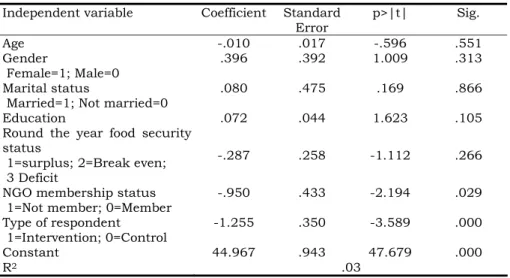
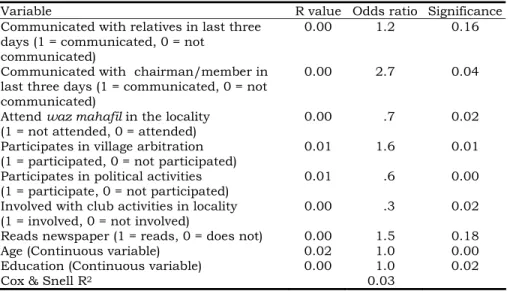
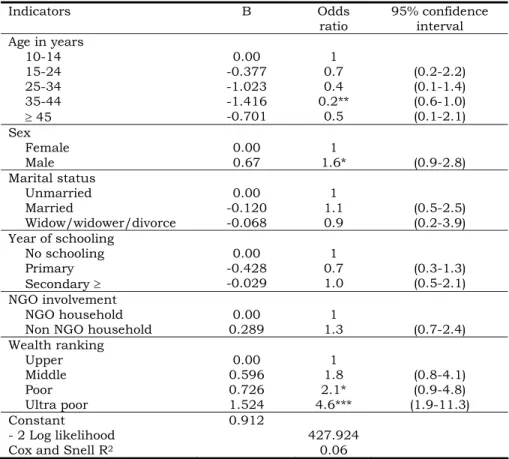
Assess the changes in audience attitudes regarding the theme of the theater. Most of the villagers learned about performing theater from children.
Since time immemorial the rich have grabbed the land of the poor. There is nothing to protest if they grab
The attitude of the poor towards the rich was to some extent shaped by the belief they had in the rich's impression of them. Disagree: Respondents in this group described in detail how the land of the poor is being seized1. This was because of the backlash from the rich that the resistance was likely to result.
As the poor man failed to meet the demand, the lender seized the borrower's land under this pretext. It was mentioned that the poor did not come to the victim's support for fear of being harassed by the land grabber in the future or because they were dependent on them for their livelihood.
There is nothing wrong if a person loses the possession of land if the same fails to show the document proving
These respondents emphasized physical and social ownership of land rather than document possession. So, the possession of the document was believed not to be the final condition to prove ownership of the land. An educated part of the village was expected to offer the victim financial assistance, advice and other assistance in obtaining the document from the land registration office.
It was considered effective in identifying the true owner of the land through discussion with and by local residents who had accurate information about him. In most cases, the robbers had no documents or at best possessed fake documents of the stolen land.
Male has to run the family so it is likely that he will ask for dowry
A man has to lead the family, so it is likely that he will ask for a dowry. Some who looked at the issue from a humanitarian perspective noted that the girls' poor parents were forced to sell land, livestock and other assets and/or borrow from others to meet the demand for dowry - resulting in extreme economic hardship for the bride's family. . Some respondents emphasized the division of labor maintained between male and female members of the family in order to preserve it.
Undermining or denying their contribution in the family was unfair and illogical as their contribution in household work was much more than their male counterparts. Others believed that both men and women had an equal share in leading the family, so the rationale of accepting dowry under the pretext that men should lead the family did not make much sense to them.
Dowry has to be given in daughter’s marriage so there is no shame in demanding it in son’s marriage
SEXUAL RELATIONSHIP AND GENDER DISCRIMINATION Part dealt with society's perception of the guilt of men and women in the case of illicit sexual relations and what should be the role of a man when his partner becomes pregnant as a result of such an act. Such similarities in arguments actually confirmed the respondents' attitude towards the topic. The differences were statistically significant for three statements, except for - If a lover becomes pregnant as a result of sexual intercourse, it will be appropriate for a man to marry her and take responsibility for the child (table 5.4).
In the case of the respondents from intervention villages, a greater number of respondents (13 percent) maintained a more favorable attitude compared to those with a less favorable attitude. In the case of between-group comparisons, intervention villages had a greater number (seven percent) of respondents with a more favorable attitude compared to those from control villages.
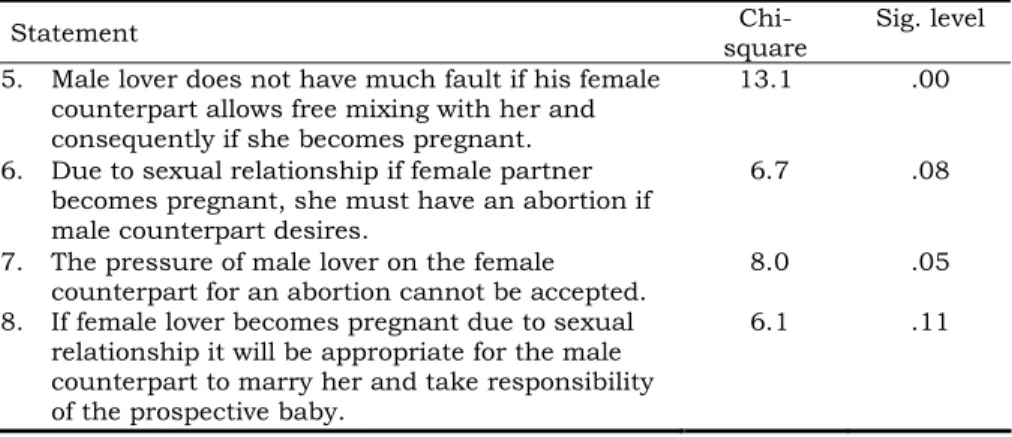
Male lover does not have much fault if his female counterpart allows free mixing with her and cones-
Due to such emotion, girls could not resist sexual movements of their lovers even though they know very well that it is wrong to cooperate with such a desire of theirs and it would end their virginity/chastity mean. As a reaction to this, at some point the girl started to like the guy, developed trust in him and subsequently started loving him. It was believed that the girl gave her lover a chance to have sex due to a lack of understanding of his evil motive.
Those who slightly disagreed with the statement mentioned that it was very likely that the girl, due to sexual urges, provoked a male lover to have sex with her and eventually became pregnant. In such cases, it was questioned why she was made solely responsible for getting pregnant and bearing negative consequences of the incident.
Due to premarital sexual relationship if female partner becomes pregnant, she must have an abortion if male
In order to avoid being a victim of such blackmail, they believed that he could ask her for an abortion. They felt it was not fair for a man to impose his sin on his partner by forcing her to have an abortion. It has also been argued that a love relationship attracts a physical or sexual relationship between the two lovers.
So it was only natural that when his partner became pregnant, he would propose and even force her to have an abortion. If so, it would be questionable whether someone could force her to have an induced abortion against her will.
The pressure of male lover on the female counterpart for an abortion cannot be accepted
It was believed that after becoming pregnant, the best way for the girl would be to marry the boy. In order for this to happen without any obstacles, the girl must hold the child in her womb. The baby in the mother's womb was the proof that the boy was the baby's genitor.
So it was argued that if the guy decides that the baby should not be born, he can rightfully pressure his lover to go for abortion. If she wasn't married to the guy, the scandal would make it difficult for her to marry elsewhere.
If female lover becomes pregnant due to sexual rela- tionship it will be appropriate for the male counterpart
Significance test result of intervention and control groups on social justice and its implementation statements (n=605). The majority of respondents, both from the intervention and control towns, disagreed with the statements under social justice and its implementation. Other than that, distribution of scores between different points of the scales against the statements did not project any trend for both the groups.
Respondent with the most favorable attitude - - Respondent with the least favorable attitude About 56 percent of the respondents in the intervention and 64.3 percent in the control villages had a neutral attitude towards social justice and its implications. Overall, none of the respondents from the intervention and control villages had a favorable attitude towards the scale (Table 5.7).
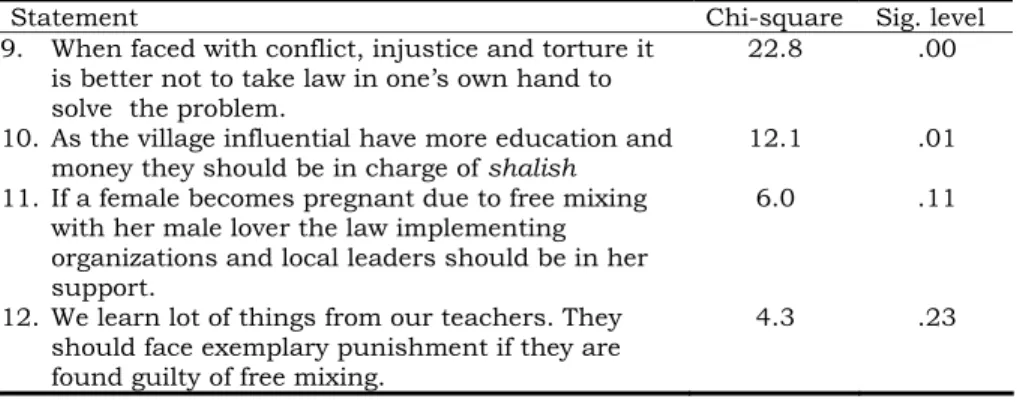
When faced with conflict, injustice and torture it is better not to take law in one’s own hand to solve the
In case of disputes, the respondents recommended that the parties involved should take the help of village arbitration. The group believed that the elected leaders of the Union Parishad, traditional leaders4 (mat bar) and senior members of the village could jointly ensure a peaceful solution to any problem through village arbitration. But a section of the group, which believed that village arbitration was effective in resolving disputes, commented that the interests of the poor were hardly served in such cases.
It was also noted that village arbitration could not impose severe penalties on the offenders. Worst of all, the village arbitration had become a corrupt institution and had ruled in favor of the litigant who had bribed them.
As the village influential have more education and money they should be in charge of shalish
Since the influential village has more education and money, they should be in charge of shalish. The respondents noted that the village arbitration conducted by the rich resulted in a corrupt institution where judgments were given in favor of the litigants who bribed the arbitrators. Moreover, the influential in charge of arbitration favor people of their feathers to give judgment in village arbitration.
Since the rich and educated influential people did not offer justice, it was questioned why they should stand for the arbitration in the village. If a female becomes pregnant due to free mixing with her male lover, the arbitrators should be in her.
If a female becomes pregnant due to free mixing with her male lover the arbitrators should be in her
On the other hand, if an illiterate person could prove to arbitrate more effectively than the influential, they should be in charge of arbitrating. Disagree: Respondents who disagreed with the statement emphasized that fair justice would not be ensured if the arbitrators favor only the girl. They should consider that the defamation associated with her pregnancy was the same for both lovers.
So, instead of just punishing the male lover, they should make an effort to convince their parents to marry them, as it would probably be good for both of them. Arbitrators should not be lenient towards the girl, but they should examine the case with a neutral point of view and come up with an unbiased verdict.
We learn lot of things from our teachers. They should face exemplary punishment if they are found guilty
Respondents from intervention villages scored higher on all statements about optimism and positive change compared to those from control villages, and these differences were statistically significant for all statements (Table 5.8). Respondents with a less favorable attitude Approximately 17 percent of respondents from intervention villages and 59.1 percent from control villages had a neutral attitude toward positive changes in society. In the case of respondents from the intervention villages, approximately 14 percent more respondents maintained a more favorable attitude compared to those from the control villages (Table 5.9).
In the case of between-group comparisons, about 49 percent of respondents from the intervention villages maintained a positive attitude compared to none from the control villages. On the other hand, there were about six percent more respondents from the control villages compared to those in the intervention villages who had a less positive attitude towards the part.
There are some good people besides influential and bad in the society
Good people were portrayed as honest and trustworthy and villagers like, love and respect them for their actions. When a problem arose or injustice occurred in their community, good people voluntarily came forward to solve the problem and stand against the injustice. It was believed that the willpower of the good people made them successful in protesting and resisting wrongdoing in most cases.
Of course, there were a few cases where good people failed to stop wrongdoers from doing evil because they had money, weapons, and support from other bad people like them. Disagree: A few female respondents who did not support the statement felt that there were very few good people in society and as such they could not contribute much to society.
Son may not be a wrongdoer in spite of the father being one
It was believed so because the bad guys were not only much larger in size, but also very powerful in society. It was mentioned that a son could notice the reaction of others to his father's wrongdoing, i.e., people do not like and respect him. The boy not only had to be socialized by his father to grow up to be a bad person, nor was he the first to socialize him.
It was noted that if the offender's wife was a good and honest person, she could have a profound influence on raising her son to be a good person. It was believed that when a son observed his father's misbehavior, he was sure to be encouraged to copy the same.
The good people in the village can resist the wrong- doing of its bad and influential people in the same
The good people of the village can withstand the wrong actions of its bad and influential people in the same. Good people with wealth, influence and power could successfully resist wrongdoing, but no one would listen to good people with bad backgrounds, so they failed to resist the wrongdoing of the bad and influential.
Injustice can be protested by organizing people and creating opinion against it
Despite decent people living there, a tea stall in the middle of the place was selling drugs. The audience's rapid departure after the theater indicated that they were more interested in entertainment than in the ultimate goal of popular theater. Although the significant portion of the audience was poor, they were disproportionately represented in the meeting.
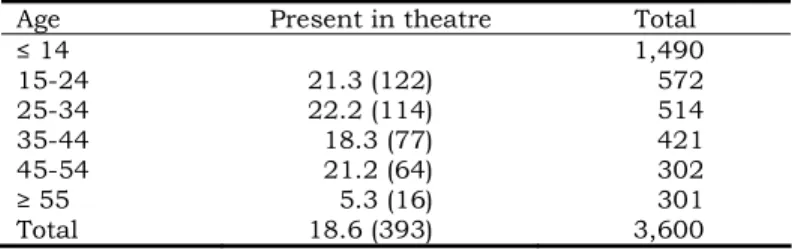
The first half of the meeting at Fakirtari discussed the issues related to theatre, which took place in the dialogue session after the theater at Brahmankandi. It was found that about 77 percent of villagers from intervention villages did not watch the theater.