The thesis is about the analysis of a hybrid power supply system for a building based on biomass and solar photovoltaics. The hybrid system will produce enough electricity to power the entire building by processing municipal waste using the direct combustion technique and harnessing solar energy using solar photovoltaic panels, hybrid power system design using renewable energy sources, load analysis for the entire residential building, analysis software for this microgrid optimization that works with Homer Pro software. In addition, waste management is also within the scope of this thesis along with schematic diagrams of the system.
Also added to this thesis is the design of a hybrid power system using renewable energy sources, load analysis for the entire residential building, software analysis for this microgrid optimization that works with Homer Pro software. The desired hybrid system is designed to provide approximately 70-80% energy from biomass, 20% from solar PV, and the rest will depend on the main grid.
INTRODUCTION
Therefore, the idea of this thesis is to investigate the possibilities of biomass and hybrid energy for individual housing construction.
Chapter 2: This chapter described the history of the biomass and solar energy system
This chapter direct combustion technique has been discussed with Combustion and Cooling process
In This chapter proposed generation model has been discussed with grid model
In This chapter proposed power plant model has been shown with Existing Design
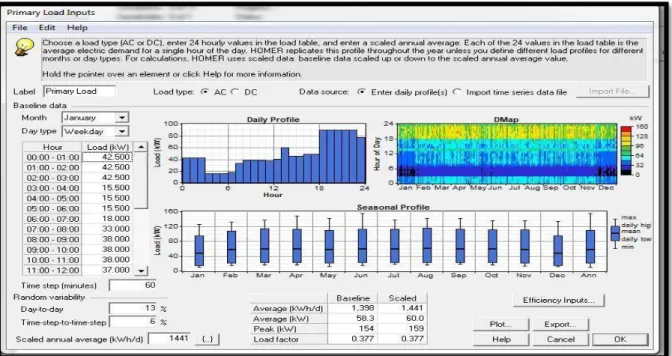
In This chapter methodology of this model has been discussed and also load calculation has been shown
In This chapter comparative analysis has been shown
Conclusion
LITERATURE REVIEW
Renewable energy makes a very small contribution to the total generation under Bangladesh's existing power generation. The government has already announced a "500 MW solar energy mission" to increase the use of renewable energy to meet the increasing demand for electricity. Biomass sources can be classified in many ways, for example by origin, or on the basis of different characteristics and properties.
No manure, sewage sludge, forestry or agricultural residues, or other biodegradable waste such as paper or processed wood and natural textiles enter. Within a reasonable time Non-biodegradable waste is a type of waste that cannot be broken down into its basic compounds by microorganisms, air, moisture or soil. 1990s As public concern about environmental issues such as air pollution and climate change grows, governments in Canada and elsewhere are becoming more interested in using renewable energy, such as biomass, to reduce greenhouse gases and other emissions.
Department of Energy to establish a National Renewable Energy Laboratory (transfer of existing Solar Energy Research Institute) in Sandia, NM. 2008 Your company joins a rapidly growing list of California business leaders using solar energy for their businesses with Sunlight Electric.
PROCESS DESCRIPTION OF BIOMASS, SOLAR PV TECHNIQUE, AND HYBRID GENERATION
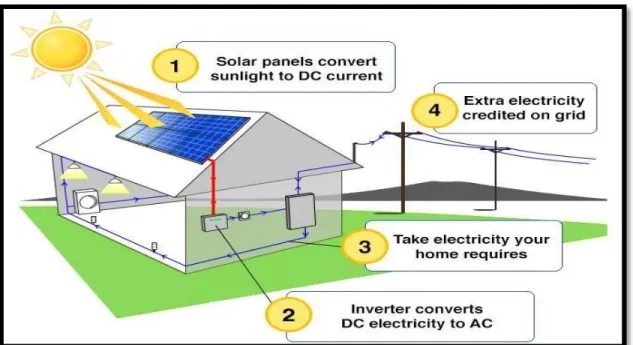
Solar panels are used to power homes and businesses are typically made of solar cells combined into modules containing about 40 cells. Conventional solar cells are made from silicon, which is usually flat-plate, and is generally the most efficient. Second-generation solar cells are called thin-film solar cells because they are made of amorphous silicon or non-silicon materials such as cadmium telluride.
Due to their flexibility, thin film solar cells can serve as roof shingles and tiles, building facades or the glazing for skylights. Third generation solar cells are made from a variety of new materials besides silicon, including solar inks using conventional printing press technologies, solar dyes and conductive plastics. Plastic lenses or mirrors used some new solar cells to concentrate sunlight into a very small piece of high efficiency PV material.
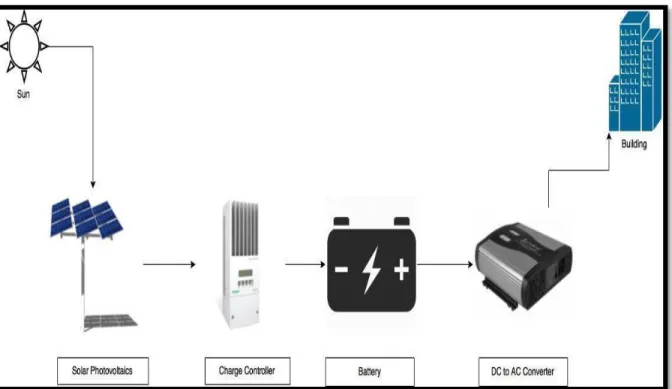
However, because the lenses must point towards the sun, the use of concentrating collectors is limited to the sunniest parts of the country. The converted alternating current is then delivered to the home where it will power your lights, appliances or anything else that uses electricity. If we can produce more power from the solar system, we can actually end up using at home and the excess power is automatically fed back into the grid.
A meter is installed by the power company to monitor how much is imported or exported during the day so they know how much to charge you at the end of the month. Since the brighter the sunlight, the more voltage the solar cells produce, the excessive voltage can damage the batteries. As the input voltage from the solar array rises, the charge controller regulates the charge to the batteries preventing any overcharging [19]. Lead acid battery is used for storage DC voltage coming from the charge controller.
Classification of hybrid systems with renewable energy sources (HSRES) According to the availability of conventional energy sources Hybrid systems with conventional sources - for the most part, systems using conventional energy sources are more powerful and responsible. Hybrid systems without conventional sources - in general, such systems are relatively low-energy and/or more irresponsible. According to the number of sources - The number of energy sources is one of the factors that define the complexity of HSRES and its sustainability and efficiency [20].
DIRECT COMBUSTION TECHNIQUE
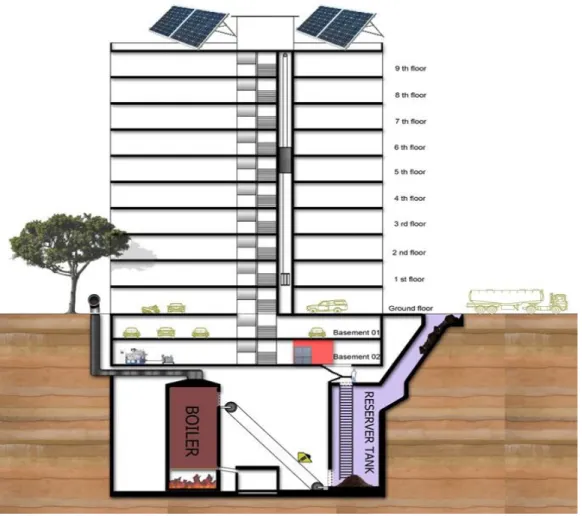
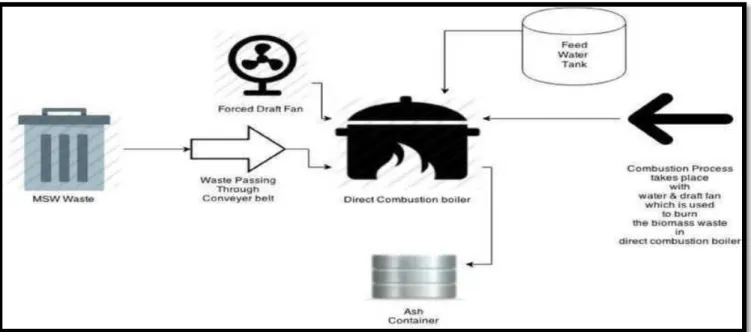
In this process biomass waste will be stored in a storage tank and from this storage tank it will move to direct combustion boiler for combustion. Residual heat from the turbine will move to the condenser where it will be cooled by attaching a cooling tower with condenser. Cold water from condenser will be used as feed water which will be supplied to the combustion boiler.
Flue gas that is released as a by-product is cleaned using a flue gas cleaning system.
PROPOSED GENERATION MODEL
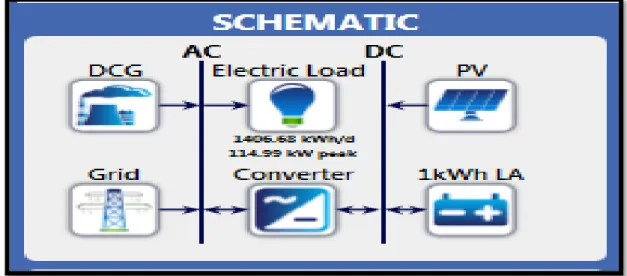
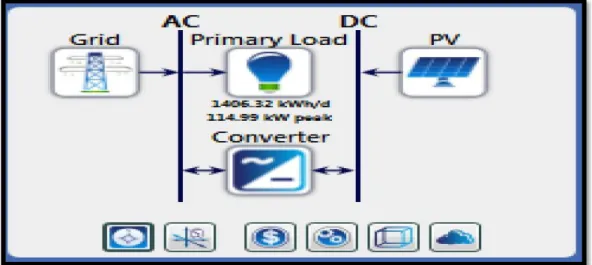
A schematic diagram simulated in Homer software is shown in Figure 7.3. Solar PV is connected to a DC system where a battery is also connected as a storage device.
PROPOSED POWER PLANT MODEL
METHODOLGY
Then some data were collected from research or surveys on MSW collection and solar energy efficiency in Bangladesh.
SIMULATION AND RESULT
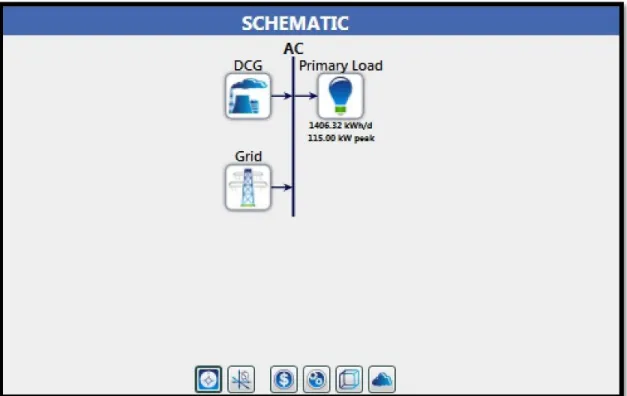
Total power of 513,606 kWh/year is produced for the 100 kw direct combustion generator and 18 kw grid power system. The electricity consumption of the AC primary load is 513,307 kWh/year which shows the consumption of 100% of the energy production. Other quantities such as electricity surplus is 0 kWh/year, unmet electrical load is 0 kWh/year and capacity shortage is 7.2% which is 36,927 kWh/year.
The average monthly electricity production of the generator and the grid is shown in the data graph. Monthly network purchases, energy sold, net energy purchases, peak demand, energy costs and demand costs for the whole year are shown in Figure 8.8. The hourly variation of all quantities related to grid purchases for the month of January, direct combustion generator (DCG) power and primary AC load is shown in Figure 8.10.
The electricity consumption of the AC primary load is 513,306 kWh/year which shows the consumption of 100% of the energy production. The other quantity as electricity surplus is 138,882 kWh/year, unmet electricity load is 0 kWh/year and capacity shortage is 0 KWh/year. Monthly grid electricity purchases, sold energy, net energy purchases, peak demand, energy tariff and demand tariff for a whole year is shown in Figure 8.13.
For 20 kW grid and 100 kW Direct Combustion Generator (DCG) and 70 KW solar PV system.
COMPARATIVE ANALYSIS
CONCLUSION
A typical biomass-based power generation system produces about 90% or more electricity using only biomass resources (eg municipal solid waste). On the other hand, the hybrid generation system discussed in this paper is producing 70% from biomass, 20% from the sun and the rest of the energy is from the conventional grid system (ie it is the case of reserve). By creating this type of hybrid power generation system it can become the most optimized solution to stop the production of conventional fossil fuel based power plants in our urban residential buildings.
Although the system is designed for tall buildings, it will ensure that the annual energy consumption is used in a more economical and safe way for the total electrical load. In addition, in the near future there could be a possibility that the system could be used for the purpose of selling the grid to earn money from additional production. In contrast, the proposed hybrid system has now proven to be a unique way to address the shortcomings of electricity issues not only for high-rise buildings, but can also be cost-effectively deployed in rural electrification.
17] How Solar Works [Online] Available: https://www.harrisonsenergy.co.nz/solar/how-does-solar-power- work [Accessed: 20-Dec-2018]. Available:http://www.nwwindandsolar.com/solar-power-in-seattle-and-the- northwest/how-do-solar-systems-produce-energy/ [Accessed: 15-Jun-2015]. Online].Available:http://www.researchgate.net/publication/236012467_Hybrid_Pow er_Systems_with_Renewable_Energy_Sources.
Available: http://www.inmesol.com/hybrid-system/advantages-of-the-hybrid- system.asp [Accessed: 13-June-2015]. 24] Disadvantages of Solar Energy [Online]. Available:http://www.conserve- energyfuture.com/Disadvantages_SolarEnergy.php [Accessed January -2017].