STATUS AND MANAGEMENT PRACTICES OF ROYAL BENGAL TIGER IN BANGLADESH NATIONAL ZOO
FOWZIA BAHAR
DEPARTMENT OF ANIMAL PRODUCTION AND MANAGEMENT SHER-E-BANGLA AGRICULTURAL UNIVERSITY
DHAKA -1207
JUNE, 2020
STATUS AND MANAGEMENT PRACTICES OF ROYAL BENGAL TIGER IN BANGLADESH NATIONAL ZOO
By
FOWZIA BAHAR Registration No. 18-09201
A Thesis
Submitted to the Department of Animal Production and Management Sher-e-Bangla Agricultural University, Dhaka
in partial fulfillment of the requirements for the degree of
MASTER OF SCIENCE (MS) IN
ANIMAL SCIENCE Semester:July-December, 2018
Approved By:
Professor Dr. Md. Jahangir Alam Professor & Chairman
Department of Animal Production and Management Supervisor
Golam Azam Upazilla Livestock Officer
Carnivorous Section, Bangladesh National Zoo Co-Supervisor
Professor Dr. Md. Jahangir Alam Chairman
Examination committee
Department of Animal Production and Management Sher-e-Bangla Agricultural University
Dhaka-1207
DEPARTMENT OF ANIMAL PRODUCTION AND MANAGEMENT
Sher-e-Bangla Agricultural University Sher-e-Bangla Nagar, Dhaka – 1207
CERTIFICATE
This is to certify that the thesis entitled STATUS AND MANAGEMENT PRACTICES OF ROYAL BENGAL TIGER IN BANGLADESH NATIONAL ZOO submitted to the Department of Animal Production and Management, Sher-e-Bangla Agricultural University, Dhaka in partial fulfillment of the requirements for the degree of MASTER OF SCIENCE (MS) in ANIMAL SCIENCE, embodies the results of a piece of bona fide research work carried out by FOWZIA BAHAR, bearing Registration No.18-09201 under my supervision and guidance. No part of this thesis has been submitted for any other degree or diploma in any other institution.
I further certify that any help or sources of information received during the course of this investigation has duly been acknowledged.
Dated:
Dhaka, Bangladesh Professor Dr. Md. Jahangir Alam Supervisor
Professor & Chairman
Department of Animal Production and Management Sher-e-Bangla Agricultural University
Dhaka-1207
DEDICATED TO My Beloved Parents DEDICATED TO
My Beloved
Parents
I
ACKNOWLEDGEMENTS
At first, I would like to express my deep sense of gratitude to the Almighty Allah, the most gracious and benevolent who has made me able to perform this research work and to submit the thesis successfully for the degree of Master of Science (M.S.) in Animal Science. My deepest respect and love form the core of my heart is for “Prophet Muhammad” (SM) who is forever a torch of knowledge and guidance for humanity.
It is my pleasure to express gratitude and best regards to my respected Supervisor, Professor Dr. Md. Jahangir Alam, Department of Animal Production and Management Sher-e-Bangla Agricultural University, Dhaka, for his continuous direction, scholastic supervision, constructive criticism, encouragement and valuable suggestions in carrying out the research work and preparation of this thesis. I was able to gather a lot of pleasant experience and enjoyed an independent working environment under his supervision.
I am conveying my earnest reverence, appraisal and enormous indebtedness to my respected Co-supervisor, Golam Azam, Upazilla Livestock Officer, Carnivorous Section, Bangladesh National Zoo, for his sincere guidance, constructive suggestion, encouragement and amiable behavior during the whole period of study.
I am also extremely grateful to Dr. Md. Saiful Islam, Associate Professor, as well as to Md. Enayet Kabir and Falguni Dadok, lecturer of the Department of Animal Production and Management, Sher-e-Bangla Agricultural University, Dhaka for their valuable advices, and countless encouragement.
Special thanks went to my fellow mates and friends Taslima Mukta and Md. Abdullah Al Zaber. They supported me a lot during the period of experiment and without their co- operation the whole journey might be very difficult.
I also want to acknowledge the co-operation of our lab attendants, computer operator and all other staffs of the department as well as all staffs of Bangladesh National Zoo and CDIL for their cordial support all time.
Finally, I recall indebtedness to my beloved parents and the family members along with relatives and well wishers for their boundless affection prayers, encouragement, constant inspiration and moral support for his higher study. May Almighty bless and protect them.
The Author
II
LIST OF CONTENTS
CHAPTER TITLE PAGE
NO.
ACKNOWLEDGEMENTS I
LIST OF CONTENTS II
LIST OF TABLES V
LIST OF FIGURES VI
LIST OF PLATES VII
ABBREVIATIONS AND SYMBOLS VIII
ABSTRACT IX
I INTRODUCTION 1-4
II REVIEW OF LITERATURE 5-17
2.1 Overview on Royal Bengal Tiger 5
2.2 Feeds and Feeding 5
2.3 Reproduction status of Royal Bengal Tigers 8 2.4 Basic Status And Characteristics of Zoo Royal
Bengal Tigers 10
2.5 Significance for Conservation of Royal Bengal
Tiger 13
2.6 Distribution and Population Status 14
2.7 Present Threats 16
2.8 Food Contamination 16
III MATERIALS AND METHODS 18-36
3.1 Study Design 18
3.1.1 Study place 18
3.1.2 Study period 18
III
CHAPTER TITLE PAGE
NO.
3.1.3 Study population 19
3.1.4 Environmental condition of the study area 19
3.2 Parameters Studied 20
3.2.1 Feeding Requirements 20
3.2.2 Feeds and feeding 21
3.2.3 Production profile 21
3.2.4 Herd Management 22
3.3 Nutritional Status and Bacterial Contamination 31
3.3.1 Processing of sample 32
3.4 Experimental Design 32
3.4.1 Study materials and reagents 33
3.4.2 Materials 33
3.4.3 Reagents 33
3.4.4 Preparation of culture media 33
3.4.4.1 Nutrient broth 34
3.4.4.2 Eosin Methylene Blue agar 34
3.4.4.3 MacConkey agar 34
3.5 Processing of the Samples 35
3.5.1 Primary culture on nutrient broth 35
3.5.2 Culture on nutrient agar 35
3.5.3 Culture on Eosin Methylene Blue (EMB) agar 35
3.5.4 Culture on MacConkey agar 35
3.6 Statistical Analysis 36
IV RESULTS AND DISCUSSION 37-54
4.1 Status of Royal Bengal Tiger at Bangladesh
National Zoo 37
4.1.1 Population size 37
IV
CHAPTER TITLE PAGE
NO.
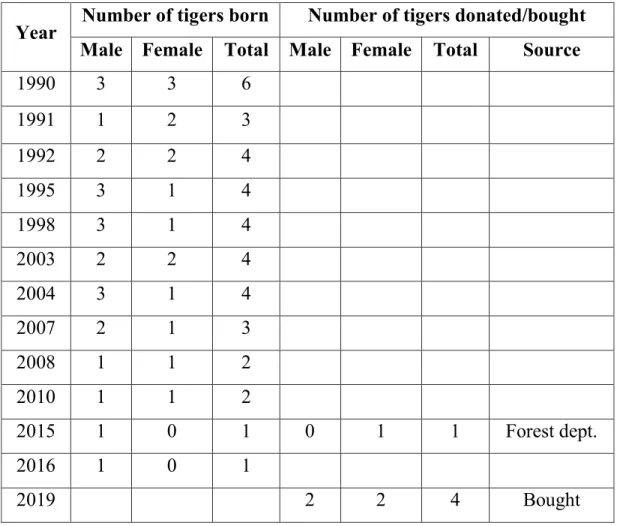
4.1.2 Sourcing of Royal Bengal Tiger at Bangladesh National Zoo
38 4.1.3 Death of Royal Bengal Tiger at Bangladesh
National Zoo
40
4.1.4 Body Weight of Royal Bengal Tiger at Bangladesh National Zoo
42 4.2 Management Practices of Tiger in Bangladesh
National Zoo
42
4.2.1 Feeding and Nutrition 42
4.2.2 Habitat of Royal Bengal Tiger 46
4.2.3 Reproductive feature 47
4.2.4 Herd management 48
4.2.5 Health care 50
4.2.6 Vaccination and deworming 51
4.2.7 Factors affecting the management 51
4.3 Food Contamination 51
4.3.1 Result in nutrient broth 52
4.3.2 Result in nutrient agar 52
4.3.3 Result in Eosin Methylene Blue (EMB) Agar 52
4.3.4 Result in MacConkey (MC) agar 53
4.3.5 Results of Gram’s Staining 53
V SUMMERY AND CONCLUSION 55-56
VI REFERENCES 57-70
V
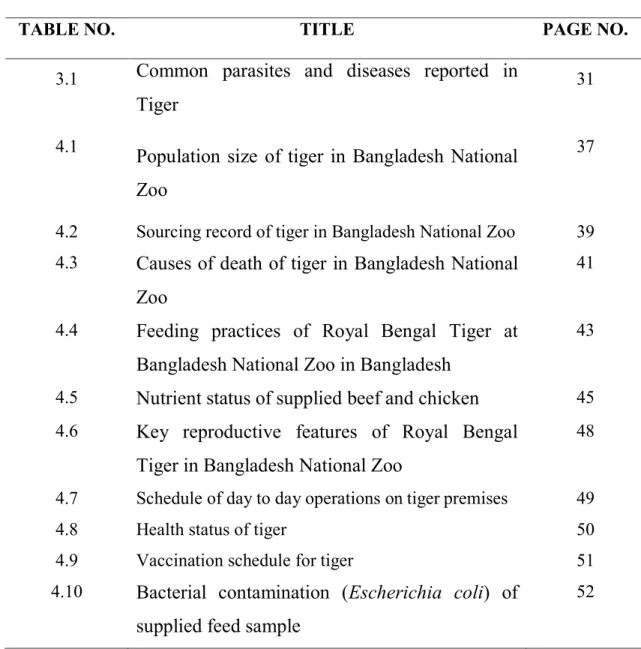
LIST OF TABLES
TABLE NO. TITLE PAGE NO.
3.1 Common parasites and diseases reported in Tiger
31
4.1 Population size of tiger in Bangladesh National Zoo
37
4.2 Sourcing record of tiger in Bangladesh National Zoo 39 4.3 Causes of death of tiger in Bangladesh National
Zoo
41
4.4 Feeding practices of Royal Bengal Tiger at Bangladesh National Zoo in Bangladesh
43
4.5 Nutrient status of supplied beef and chicken 45 4.6 Key reproductive features of Royal Bengal
Tiger in Bangladesh National Zoo
48
4.7 Schedule of day to day operations on tiger premises 49
4.8 Health status of tiger 50
4.9 Vaccination schedule for tiger 51
4.10 Bacterial contamination (Escherichia coli) of supplied feed sample
52
VI
LIST OF FIGURES FIGURE
NO. TITLE PAGE NO.
4.1 Population size of tiger at Bangladesh National Zoo
38
4.2 Birth record of tiger at Bangladesh National Zoo 40 4.3 Causes of death of tiger at Bangladesh National
Zoo
41 4.4 Regular diet of tiger at Bangladesh National Zoo 42 4.5 Nutrient status of supplied beef and chicken 46 4.6 Shed of tiger in Bangladesh National Zoo 46
VII
LIST OF PLATES
PLATE NO. TITLE PAGE NO.
3.1 Map of Bangladesh National Zoo 18
3.2 Royal Bengal Tiger at Bangladesh National Zoo.
19
3.3 Digestive System of Royal Bengal Tiger 21 3.4 Herd Management of Bangladesh National
Zoo
22
3.5 Housing of Bangladesh National Zoo 23
4.1 Processing and supply of beef to tiger 44 4.2 Cultural and microscopic examination of E.
coli (A) Nutrient broth, (B) EMB agar
53
4.3 Gram negative, pink colored, long rod shape E. coli under light microscope. (100x)
54
VIII
LIST OF ABBREVIATIONS AND SYMBOLS
> = Greater than
% = Percentage
< = Less than
± = Plus minus
ANOVA = Analysis of Variance B.C. = Before Christ
BAU = Bangladesh Agricultural University BBS = Bangladesh Bureau of Statistics BW = Birth weight
Ca = Calcium
cm = Centimeter
CV % = Percent Coefficient of Variation DF = Degree of freedom
DLS = Department of Livestock Services e.g. = exempli gratia (L), for example et al., = And others
etc. = Etcetera
FAO = Food and Agricultural Organization g = Gram (s)
i.e. = id est (L), that is Kg = Kilogram (s)
LSD = Least Significant Difference m2 = Meter squares
mg = Milligram ml = Milliliter
MS = Mean Square
No. = Number
NS = Non-significant
oC = Degree Celsius
SAU = Sher-e-Bangla Agricultural University WHO = World Health Organization
μg = Microgram
IX
STATUS AND MANAGEMENT PRACTICES OF ROYAL BENGAL TIGER IN BANGLADESH NATIONAL ZOO
ABSTRACT
The Royal Bengal Tiger (Panthera tigris tigris) is the national animal of Bangladesh as well as of India. This most majestic mammalian cats are found in Sundarban mainly. It is globally endangered and nationally critically endangered species that is conserved by Convention on International Trade in Endangered Species (CITES). The current study was done to know the status and management practices of tiger in Bangladesh National Zoo. Different data was collected and feed samples were tested in Central Disease Investigation Laboratory (CDIL). There were 9 tigers including 5 male and 4 female in the study tenure. Beef was supplied every day except Sunday at 8.47±2.36 kg beef and 0.35±0.14 kg liver per animal per day whereas only 1.56±0.53 kg of broiler was allowed on Sunday. The zoo experienced born of several cubs in the last 10 years and 75% of them are male. However, unfortunately some of the cubs were died due to cold stress, inbreeding, trypanosomiasis and renal failure.
Though zoo is very nice place for breeding, conservation of endangered animals but due to lack of proper breeding policy, many problems are faced.
Housing and other management facilities were recorded good but not internationally standardized. Feed samples were tested negative on the day of feeding whereas all were infected by Escherichia coli on the third day. Finally, it can be concluded that Bangladesh National Zoo is a good place for tiger conservation beyond some limitations.
1
CHAPTER I INTRODUCTION
The Royal Bengal Tiger, binomially named as Panthera tigris tigris (Linnaeus, 1758), is the National Animal of both Bangladesh and India. The tiger is admired, feared and respected by humans for its beauty, grace, strength, ruthlessness and other natural and supernatural attributes (Tamang, 1993). The tiger is the largest of the cats (Sunquist and Sunquist, 2002) and is one of the world‘s most magnificent animals. Of eight sub-species of the tiger, the Bengal tiger mainly occurs in India, Bangladesh, Nepal and Bhutan. From the 100,000- 150,000 tigers that might have existed 150 years ago, we are left with 5,000- 7,000 animals today (Thapar, 1996; WWF, 1999). At present, more tigers exist in captivity than in the wild (Nowell and Jackson, 1996; Karanth, 2001). There are eight species of wild cats found in Bangladesh (Khan, 2004a; Khan, 2004b), of which five are globally threatened (IUCN, 2003) and six nationally (in Bangladesh) threatened (IUCN Bangladesh, 2000). According to IUCN Criteria, the Bengal tiger has been categorized as globally Endangered (IUCN, 2003) and nationally Critically Endangered (IUCN Bangladesh, 2000). Fifty years ago tigers were found in all the forested areas of Bangladesh, but today the only stable population is in the Sundarbans. Large carnivore species occur at naturally low densities, which make them particularly susceptible to extirpation and extinction (Lande, 1988; Caughley, 1994). The tiger is the pride of the fauna of the Sundarbans. Since the tiger is at the top of the ecological pyramid of the mangrove ecosystem, it is also considered as the Flagship or Umbrella Species to conserve the unique biodiversity of the Sundarbans.
Bangladesh National Zoo is a zoo located in the Mirpur section of Dhaka, the capital city of Bangladesh. The zoo contains many native and non-native animals and wild life, and hosts about three million visitors each year. The name of zoo has been changed from 5 February 2015 from Dhaka Zoo to Bangladesh National Zoo. Established in 1974, the 186-acre (75 ha)
2
Bangladesh National Zoo is the largest zoo in Bangladesh, and is operated by the Ministry of Fisheries and Livestock. The zoo attracts around 10,000 visitors every day with the number increasing during the weekends and holidays. The Royal Bengal tiger is an excellent indicator species for the health of the Sundarbans (Ali Reza et al., 2000). It is a solitary animal that inhabits in thorny, dry or moist, deciduous, semi-evergreen, mangrove, swamps, grassland etc. In a group, one tiger ‗owns‘ the territory, 1 or 2 are extremely low ranking and the rest share a central social position (Fraser et al., 1991).
In Bangladesh National Zoo, various animals exist here and all are well fitted.
Among them Royal Bengal tiger is very important for its beauty and also tiger is the pride of the fauna of the Sundarbans. Since the tiger is at the top of the ecological pyramid of the mangrove ecosystem, it is also considered as the Flagship or Umbrella Species to conserve the unique biodiversity of the Sundarbans. Zoo is an important practice to observe animal beauty practically.
In most of the cases, it is impossible to observe animal beauty in the forest.
Due to some practical limitations, the study has covered within a short duration. During this period, population was very healthy. Information at present revealed that the tigers in the Bangladesh National Zoo had good birth rate with are total of 9 (5 female and 4 male) tigers (on June 2019). One female recently had died and the record of causes of death was collected. The report from CDIL (Central Disease Investigation Laboratory), Department of Livestock Services, Dhaka and IPH (Institute of Public Health), Mohakhali, Dhaka confirmed the causes of death.
Feeding of Royal Bengal Tiger is the most important cases to conserve tiger in zoos. Feeding habit is also another consideration. Daily requirement of meat depends on its body weight. Generally tiger intake feed (meat) of 5-7% of its body weight. In Bangladesh National Zoo, a tiger intake 7-12 kg beef per day.
Unique nutritional requirements of felids must be recognized in feeding captive tigers, including the need for high protein and fat diets, inclusion of dietary vitamin A (as retinol), arachadonic acid, taurine, and niacin. Bush et al., (1987)
3
points out that exact nutritional requirements for all nutrients are not known specifically for tigers; therefore, requirements are extrapolated from data on domestic felids (NRC, 1984). Diets are formulated, prepared, and fed; some meet dietary needs while others do not and result in tigers with nutritionally related medical problems (e.g., chronic disease, nutritional disorders or poor reproductive performance).
To conserve tiger population as management purpose, it is very important to protect them from disease. Trypanosoma is a protozoan blood parasite of mammals which is transmitted mechanically by biting of flies of the genera Tabanus, Lyperosia, Stomoxys and Atylotus (Brun et al., 1998). People of every age and race could be infected by Trypanosomiasis same the way.
Trypanosoma is pathogenic in most domesticated animals and some wild animals, including deer, elephants, capybara, jaguars (Choudury et al., 1972) and tigers (Manohar et al., 2003). Carnivores may also get affected after feeding on infected meat (Raina et al., 1985). A large number of Tigers has died in different zoos of the world due to Trypanosomiasis.
Reproductive success is a key to survival and continued existence for any species, and understanding species‘ reproductive parameters (e.g., age at first reproduction, reproductive rate, liter size, interbirth interval, and breeding period) is critical to developing effective conservation strategies (Carter et al., 1999). Reproductive parameters are important to determine population turnover, potential growth rates, and are important indicators to detect the lineage persistence in a population (i.e., lineage loss, individual fitness, population viability [Kelly, 2001; Holt et al., 2003]), population viability (Kelly, 2001; Balme et al., 2012), and to examine meta-population dynamics (e.g., determining the reproductive output of source populations) (Chapron et al., 2008). In the wild Royal Bengal Tiger, sexual maturity is attained at three to four years in females, and four to five year in males (Mazak, 1979). In captivity, maximum age of tiger has been recorded twenty to twenty six years;
this may also be near about their age in the wild (Mazak, 1979). Tiger mating
4
may occur throughout the year; however this is most likely to occur from November to April (Kaplanov, 1948; Geptner and Sludskij, 1972).
Habitat is also an important factor for tigers for proper management in zoo. It includes food, feeding, reproduction, good health, reduction of disease infection etc. for successfully done of these issues. The habitats of Tigers are tropical dry forests and mangroves, tropical moist evergreen forests, sub- tropical and temperate upland forest, Subtropical moist deciduous forest, Alluvial Grassland, temperate broadleaf mixed Conifer forest and Boreal Taiga (WWF, 1999). In the zoos, habitat should be reserved which facilitate feeding and reproduction advantages and this will help them to keep proper management.
Therefore, the present study was conducted at Bangladesh National Zoo with the following objectives.
General Objectives
To study the management practices of Royal Bengal Tiger at Bangladesh National Zoo
Specific Objectives
To find the feeding schedule (feeding schedule and materials, security)
To find the habitat situation
To find the security situations
To examine what practical action could be taken to improve their management
To explore the production profile of the Royal Bengal Tiger at Bangladesh National Zoo
To know the reproduction profile of the Royal Bengal Tiger at Bangladesh National Zoo
To know the bacterial contamination of meat allowed for Royal Bengal Tiger supplied from the authority of Bangladesh National Zoo
5
CHAPTER II
REVIEW OF LITERATURE
The review of literatures on status, management practices and feed contamination for Royal Bengal Tiger is presented in this chapter. The parameters includes are: overview on tiger, feeds and feeding, production and reproduction profile and feed contamination.
2.1 Overview on Royal Bengal Tiger
The Royal Bengal tiger (Panthera tigris tigris) is one of the 9 known subspecies of tiger (Panthera tigris), which is found in four countries of the Indian subcontinent namely India, Bangladesh, Nepal and Bhutan.
Tigers are usually territorial and solitary animals, except for females with cubs (Nowell and Jackson, 1996). Though they are solitary, they are not anti-social.
Males have been spotted with females, when feeding their cubs or at resting (McDougal, 1977). Their social system is connected through visual signals, scent marks and vocalizations. There have been few instances in which tigers hunt or move together like a pride of lions (Wright, 1989)
2.2 Feeds and Feeding
Unique nutritional requirements of felids must be recognized in feeding captive tigers, including the need for high protein and fat diets, inclusion of dietary vitamin A (as retinol), arachadonic acid, taurine, and niacin. General reviews of felid nutrition (Scott, 1968; MacDonald et al., 1984), a more specific review applying these data to captive tiger management (Dierenfeld, 1987), and a summary of digestion studies conducted on captive tigers (Hackenberger et al., 1987) provide evidence that the domestic cat remains the best model for establishing dietary composition parameters (National Research Council, 1984) for the tiger.
6
Bush et al. (1987) point out that exact nutritional requirements for all nutrients are not known specifically for tigers; therefore, requirements are extrapolated from data on domestic felids (NRC, 1984). Rations are formulated, prepared, and fed; some meet dietary needs while others do not and result in tigers with nutritionally related medical problems (e.g., chronic disease, nutritional disorders or poor reproductive performance). Fortunately, most nutritional disorders are of only historical significance due to improved nutritional management (Slusher et al., 1965).
Adult tigers are fed to maintain body condition, with general maintenance energy requirements = 140 kcal (body mass in kg). 75 (Kleiber, 1964). Thus a female averaging 123 kg requires 5170 kcal/day, whereas a 160 kg male requires 6300 kcal. Metabolizable energy (ME) requirements can be met by daily feeding 3.1 and 4.1 kg respectively, of commercial diets containing about 2.00 kcal/kg (as fed basis) daily, with a digestibility coefficient of 0.84. Most management programs have found that tigers' appetites and body conditions improve if they are fasted one to two days a week. Either no food is fed on these days or shank or other large bones are fed. Feeding bones (femur bones, oxtails, rawhide) has an additional function in promoting periodontal health and provides an opportunity to exhibit more natural feeding behaviors, and presumably is enriching to the animals. One fast day per week is recommended, which increases the meal sizes to 3.6 and 4.8 kg for Bengal tiger females and males respectively (Sumatran tigers less; Siberian tigers more). Ration quantities should be increased 10-20% in animals housed outdoors during winter months, and decreased by the same amount during summer months when appetite drops. Increase diet to ad libitum during lactation. Commercially prepared feline diets or properly supplemented carcass meat should be considered the dietary staple for tigers. Composition should closely adhere to nutrient specifications as outlined above.
7
Recent studies with zoo felids have reported excesses of vitamin A and phytoestrogens, and deficiencies of taurine in various commercial preparations.
Responsive manufacturers are correcting these potential health problems by reducing retinol to levels of approximately 15,000 IU/kg (dry basis), minimizing the addition of estrogenic plant materials, and increasing the addition of taurine, particularly in heatprocessed meat products. No vitamin supplements should be necessary with properly formulated and stored commercial diets.
The advantage of the commercial diets is that they are readily available, require little or no labor in preparation, and are assumed to be formulated with a sound nutritional basis. The disadvantage is that it does not resemble a tiger's natural diet and disallows "hunting" as seen in captive tigers fed whole or partial carcasses. Some managers consider commercial feline diets very boring for the cat and unavailable to Southeast Asian zoos. For example, Indonesian zoos feed their tigers kangaroo meat and Chinese zoos feed mostly chicken.
Economics determine the components of these diets as the ingredients vary with the change in cost of produc ing the diet. Thus, the guaranteed analysis remains the same, but the diet may vary in raw ingredients. The guaranteed analysis label does not guarantee that the ingredients of the diet are actually utilized or available for utilization by the tiger (Bush et al., 1987).
Lindburg (1988) presented excellent arguments for the augmentation of prey items to animal exhibits to enhance natural behaviors, as well as health effects previously discussed. While zoos cannot recreate a completely natural existence, there are points at which nature's ways can guide management in improving the quality of life for zoo animals. Equating an adequate diet with good nutrition leads to dietary substitutions which ignore non-nutritive requirements.
8
These requirements include substitute activities, oral health in relation to food texture, and the psychological aspects of feeding. While psychological well- being remains an elusive concept regarding "pleasure" in feeding, the difficulties encountered in its measurement do not render it unimportant. Until more refined techniques for assessing the mental state of animals in feeding are developed, we may be guided by the fact that the behaviors commonly associated with feeding in nature lead to the conclusion that much of their pleasure centers around food.
Markowitz (1982) described an elaborate system of behavioral enrichment installed to promote displays of hunting and jumping ability of the tiger.
Certainly obesity due to lack of activity in captivity is a major problem for zoo carnivores, including tigers. Both of the above suggestions require commitment in terms of labor and/or capital investment, but may prove valuable.
2.3 Reproduction status of Royal Bengal Tigers
Tigers (Panthera tigris) are endangered throughout their range (Mills and Jackson, 1994; Nowell and Jackson, 1996), and understanding their reproductive parameters is critical for developing sound conservation strategies. For example, an understanding of reproduction and recruitment rates is needed to estimate what human-induced mortality rates a population can sustain (Ahearn et al., 2001; Kenney et al., 1995), to examine metapopulation dynamics (e.g., determining the reproductive output of source populations), and for population modeling and estimating minimum viable population size (Smith and McDougal, 1991). Yet, reproductive parameters of wild tiger populations are poorly known. The majority of information comes from captive animals (Seal et al., 1987) and 1 wild population of Bengal tigers (Sunquist, 1981). Because tigers are widely distributed across Asia (Nowell and Jackson, 1996), reproductive parameters may vary between the 5 extant subspecies in response to different climates, habitats, prey densities, and other environmental parameters. Information on how reproductive parameters vary between
9
different areas and subspecies is essential for range-wide conservation planning.
Reproductive success is a key to survival and continued existence for any species, and understanding species‘ reproductive parameters (e.g., age at first reproduction, reproductive rate, liter size, interbirth interval, and breeding period) is critical to developing effective conservation strategies (Carter et al., 1999).
Reproductive parameters are important to determine population turnover, potential growth rates, and are important indicators to detect the lineage persistence in a population (i.e., lineage loss, individual fitness, population viability [Kelly, 2001; Holt et al., 2003]), population viability (Kelly, 2001;
Balme et al., 2012), and to examine meta-population dynamics (e.g., determining the reproductive output of source populations; Smith and McDougal, 1991; Chapron et al., 2008). Reproductive data are available for some long-lived carnivores (i.e., lions Panthera leo; Packer et al., 1988), cheetahs (Acinonyx jubatus; Kelly et al., 2001); leopard (Panthera pardus;
Balme et al., 2012), and pumas (Puma concolor; Logan and Sweanor, 2001).
Yet reproductive parameters of wild tiger (Panthera tigris) populations are sparsely available and may vary over their global range. The limited information on reproductive parameters has been obtained from studies in India (Schaller, 1967; Sankhala, 1978; Chundawat et al., 2002; Singh et al., 2013a), Nepal (Sunquist, 1981; Smith and McDougal, 1991; Smith, 1993), and the Russian Far East (Smirnov and Miquelle, 1999; Kerley et al., 2003).
Reproductive parameters may vary among the subspecies of the populations because of the different climatic conditions, habitats, prey densities, and other environmental parameters (Kerley et al., 2003). Information on how reproductive parameters vary among subpopulations of the same subspecies surviving in different habitats is essential for range-wide conservation planning (Kerley et al., 2003).
10
The population in RTR represents a unique gene pool (Sharma et al. 2008), which is adapted to survive harsh and inclement weather conditions during summer. The open, thorny, deciduous forest with scanty vegetation and a good road network in RTR provided ideal conditions for tiger sightings (particularly in the valley and other low-lying areas).
The Amur tiger (P. altaica), the northernmost subspecies, is faced with harsh environmental conditions including severe winters and low prey densities (Miquelle et al., 1999b). Current information on reproductive parameters of Amur tigers is based on snow tracking (Matyushkin et al., 1999; Salkina, 1994), which has limited applications because individuals cannot be positively identified or monitored over extended or snowfree periods. We analyzed data collected during a 9-year period on and near the SikhoteAlin Biosphere Zapovednik in the Russian Far East, using a combination of radiotelemetry, live capture, and conventional tracking, to describe reproductive parameters of Amur tigers in the wild. We compare our findings with existing information on Amur tigers (much in Russian sources) and Bengal tigers in Nepal, where prey densities are much higher and tiger home-range sizes much smaller than those in the Russian Far East (Goodrich et al., 1999; Miquelle et al., 1999a).
2.4 Basic Status and Characteristics of Zoo Royal Bengal Tigers The Bengal tiger's coat is yellow to light orange, with stripes ranging from dark brown to black; the belly and the interior parts of the limbs are white, and the tail is orange with black rings. The white tiger is a recessive mutant of the Bengal tiger, which is reported in the wild from time to time in Assam, Bengal, Bihar and especially from the former State of Rewa. However, it is not to be mistaken as an occurrence of albinism. In fact, there is only one fully authenticated case of a true albino tiger, and none of black tigers, with the possible exception of one dead specimen examined in Chittagong in 1846 (McDougal, 1977). Male Bengal tigers have an average total length of 270 to 310 cm (110 to 120 in) including the tail, while females measure 240 to 265 cm
11
(94 to 104 in) on average (Mazak, 1981). The tail is typically 85 to 110 cm (33 to 43 in) long, and on average, tigers are 90 to 110 cm (35 to 43 in) in height at the shoulders (Karanth, 2003). The weight of males ranges from 180 to 258 kg (397 to 569 lb), while that of the females ranges from 100 to 160 kg (220 to 350 lb) (Barlow et al., 2010). The smallest recorded weights for Bengal tigers are from the Bangladesh Sundarbans, where adult females are 75 to 80 kg (165 to 176 lb) Bengal tigers have exceptionally stout teeth, and the canines are the longest among all living felids; measuring from 7.5 to 10 cm (3.0 to 3.9 in) in length (Sunquist, 2002). Bangladesh is having 6 zoos and 2 safari parks.
One reason for the shift to ―naturalistic‖ exhibition styles was an increased public concern for animal welfare. Many animals in captivity perform abnormal behaviors known as ―stereotypes‘‖ (Carlstead, 1996). Stereotypic behavior can be described as a pattern of movement such as pacing and head bobbing that is performed repeatedly, is relatively invariant in form, and has no apparent function or goal (Carlstead, 1996). Such behaviors are rarely seen in wild animals; therefore they are considered an indication of stress. Stereotypes‘
occur in many species and are thought to have a variety of causes. For example, they may arise when animals are consistently unable to reach a goal, such as natural feeding behavior (Carlstead, 1996; Rushen and Passille, 1992;
Shepherdson et al., 1993). Shepherdson et al. (1993) found that captive felids often spent the time prior to feeding performing stereotypic pacing behaviors.
Duckler (1998) found that the skulls of captive tigers had distinctively malformed external occipital protuberances that are not found in wild specimens. These were caused by excessive grooming behavior in the captive tigers and a reduction in the jaw muscles due to eating processed food (Duckler, 1998). 13 Stereotypic behavior may also appear when an animal is physically restrained from moving to a desired place.
For example, Meyer-Holzapfel (1968) found that a dingo (Canis familiaris dingo) separated from its pack, paced in a figure-eight pattern along the separating barrier. Stereotypes‘ may also develop from other behavioral and
12
physiological stresses, such as boredom, physical restraint, fear, or frustration (Carlstead, 1996). The limitation of space is thought to be another cause of stereotypic behavior. In most cases, the smaller the enclosure, the more likely the animal will display stereotypes‘ (Carlstead, 1996). However, it would be difficult to determine the exact amount of space that an animal needs to avoid developing stereotypic behaviors. Draper and Bernstein (1963) found that changes in the physical dimensions of the captive environment were often accompanied by a marked change in behavior. Lyons et al. (1997) studied the behavior pattern of 19 captive felid species and found that the cats in relatively larger enclosures had a higher level of exploratory behavior. Low stimulus diversity is yet another factor influencing stereotypic behavior. In sterile environments, captive animals often appear to be ―bored‖ or lethargic due to a lack of stimulation. Carlstead (1996) reports two ways that captive animals adapt to low stimulus environments: (1) they decrease the stimulus-seeking behavior (lethargy), or (2) they attempt to satisfy the stimulus-seeking behavior through other means (stereotypes‘). Common stereotypes‘ in felids include pacing, head-twisting, tail and toe sucking, and fur plucking (Wooster, 1997).
Mellen et al. (1998) found that the relationship between pacing and several variables that characterize the physical and social environment was a useful measure of well being in small captive felids. Preventing Stereotypic Behavior Through Environmental Enrichment According to Shepherdson et al. (1993) environmental enrichment ―is an animal husbandry principle that seeks to enhance the quality of captive animal care by identifying and providing the environmental stimuli necessary for optimal psychological and physiological well-being‖. Environmental enrichment includes a wide variety of techniques.
For instance, food can be 14 hidden throughout exhibits to entice animals to perform hunting behaviors; wood blocks or logs can be given to satisfy felid scratching behavior when trees are not available; stimulating scents can be spread throughout enclosures; and sterile concrete enclosures can be replaced with natural substrate and vegetation. Environmental enrichment programs are important in that they provide for the well being of the animals, allow the
13
animals to display ―natural‖ behaviors to the public, and increase reproductive success (Shepherdson et al., 1993). Adding natural substrate, vegetation, water features, rocks, and other features not only makes the environment more pleasant for the animals, but it also increases the educational value of zoo exhibits for visitors. Poole (1998) explains that the captive environment should be sufficiently complex to allow a full range of locomotors activities, including walking, climbing, swimming, or burrowing as appropriate to the species concerned. In the wild, a mammal chooses a living area that offers suitable facilities for its needs, so the zoo manager should do the same for those in his care. Carlstead (1996) illustrates that making the environment more complex and unpredictable can reduce stereotypic behavior; by providing stimuli, you reduce the tiger‘s desire to perform a negative behavior (Carlstead, 1996).
2.5 Significance for Conservation of Royal Bengal Tiger
The tiger is the biggest (Sunquist and Sunquist, 2002), the most iconic, and one of the most endangered of all cats (WWF-UK, 2014). Tigers occupy an important place in the Indian culture (Thapar, 1992) and revered as cultural icon by the people (Weber and Rabinowitz, 1996). Since ages, it has been a symbol of magnificence, power, beauty and fierceness and has been associated with bravery and valour. It is admired by the people for these natural and supernatural attributes (Tamang, 1993). The tiger also has a significant place in Hindu mythology in association with Goddess Durga (WWF-INDIA, 2014).
When Buddhism evolved from Hinduism and spread through Asia, the tiger came as spiritual and cultural images, which adorn splendid murals in temples in India, Bhutan, China, Thailand and Tibet (Jackson, 1999). Tiger is the national animal of both India and Bangladesh.
In addition to the cultural significance, they are very significant in ecological point of view. Tiger is the top predator, which is on the apex of food chain.
Therefore, tigers can be an important indicator of the health of an ecosystem.
Protection of tigers indirectly protects habitats and health of the forest. It is an
14
umbrella species, whose conservation leads to the conservation of various other species, which are directly or indirectly part of the tiger's food chain (WWF- INDIA, 2014). Tiger is also an endangered species, world tiger population reduced from 100,000 in 1900s to 3,600 adults in 2010 (Wikramanayake et al., 2010). Some studies state that more tigers exist in captive than in the wild (Nowell and Jackson, 1996; Karanth, 2001).
2.6 Distribution and Population Status
The tiger is originated in eastern Asia (Kitchener, 1999). The oldest fossil remains of tigers were found in northern China and Java (Hemmer, 1987).
Many tiger fossils were found in China, Sumatra and Java, which dated from the end of pilocene to late Pleistocene (Hemmer, 1987). The tiger fossils found in Indian subcontinent are dated back to late Pleistocene (Hemmer, 1987).
Nowell and Jackson (1996) claims that tigers moved to India from the eastern part of the continent about two million years ago. The late arrival of tigers to India is supported by the fact that tigers are absent in Sri Lanka, which was cut off from India due to rising sea levels during that period (Kitchener, 1999). So, tigers entered India either through north-west or through north-east (Heptner and Sudskii, 1992).
Now, there are 9 subspecies around the continent and the Royal Bengal tiger is the most numerous of subspecies. The tigers are found in 13 countries of Asia called as tiger range countries namely China, Vietnam, Myanmar, Indonesia, Malaysia, India, Bhutan, Bangladesh, Cambodia, Russia, Nepal, Lao PDR and Thailand (Stoner and Pervushina, 2013). The Bengal tiger is found in four countries of the Indian subcontinent namely India, Bangladesh, Nepal and Bhutan. India is home for more than half the population of wild tigers (Mondol et al., 2009), with about 1410 individuals estimated in 2006 excluding the population in Indian sunderbans (Jhala et al., 2008). The recent surveys conducted on 2010, shows wild tiger population in India to be 1706 with a range of 15711875. Tigers are found in the forests, all throughout India in
15
different types of habitats ranging from tropical Western Ghats in the south to mangrove Sunderbans and Himalayan foothills (Ranganathan et al., 2008).
Humans maintain wild animals in zoological parks for the purposes of education, conservation, research, and recreation. However, abnormal behaviors may develop in animals housed in human-made environments, if those environments do not allow them to carry out their natural behaviors (such as swimming, climbing, stalking, and predation). The Bengal tiger, also called the Royal Bengal tiger (Panthera tigris tigris), is the most numerous tiger subspecies.
Royal Bengal Tiger is the national animal of both India and Bangladesh (Chundawat et al., 2011) by 2011; the total population was estimated at fewer than 2,500 individuals with a decreasing trend. None of the Tiger Conservation Landscapes within the Bengal tiger's range is considered large enough to support an effective population size of 250 adult individuals. Since 2010, it has been classified as endangered by the IUCN (Lytton, E. 1841). Presently, five sub-species of tigers have been recognized as existing in the world. Bengal tiger (Panthera tigris tigris) is one of the most beautiful sub-species for its royal beauty, for which it is called Royal Bengal tiger (distribution specially in Sundarban of Bangladesh & India, also few area in Nepal, Bhutan & North- west of Myanmar).
The Royal Bengal tiger is an excellent indicator species for the health of the Sundarbans (Ali Reza, et al. 2000). It is a solitary animal that inhabits in thorny, dry or moist, deciduous, semi-evergreen, mangrove, swamps, grassland etc. In a group, one tiger ‗owns‘ the territory, 1 or 2 are extremely low ranking
& the rest share a central social position (Fraser, et al. 1991). The population of free ranging Bengal tigers in Bangladesh (Sundarban) by 2016 was about 106.
16
2.7 Present Threats
The most obvious direct threats for the tigers in the wild are conflict with humans, prey depletion, habitat loss and habitat fragmentation (Ramakrishnan et al., 1999). Historically, human- tiger conflict has been one of the big sociological and conservation concern in tiger range countries. The poaching is fueled by demand for tiger body parts in china for traditional Chinese medicine and other practices (Kenney et al., 1995). Tigers are highly sensitive to poaching, which may lead to extinction (Chapron et al., 2008). Tiger population directly depends on prey density (Karanth et al., 2004). Prey reduction is caused mainly by local communities depending on the forest for their livelihoods (Madhusudhan, 2004). Domestic livestock of local villagers are known to ecologically compete with ungulates, affecting ungulate population (Carbone and Gittleman, 2002). Habitat depletion and fragmentation is caused by increasing demand and consumption of natural resources from forest by the increasing human population (Vitousek et al., 1997). Other causes are changing land use patterns around the forest and urbanization, which disconnect and isolate habitat (Barbier, 2001). All the above discussed threats are directly or indirectly related to socio-political issues. The tiger is a dangerous predator found in parts of the world with some of the highest density and poorest populations (Dinerstein et al., 2006). In this context legally protecting tigers by establishing protected areas involve significant political challenges involving historical, legal, livelihood and management issues (Rastogi et al., 2012).
2.8 Food Contamination
The primary goal from an animal health perspective is to provide a good diet formulation based on sound nutritional concepts and quality sources of dietary components. Other contributors have pointed out the value of attempting to meet the environmental and behavioral needs of captive tigers. One of the ways to meet these needs is to devise a weekly diet that would provide commercially
17
prepared diets, bones and whole or partial carcasses. Care must be taken that animals euthanized with barbiturates are not fed, as this is the most common type of poisoning in large captive felids. Felids feeding on such carcasses may show varying signs from mild ataxia to general anesthesia that may last for days. The liver from such carcasses are especially high in barbiturate levels and cause more severe signs (Bush et al. 1987). In addition, communication between the source of the diets, the veterinary and nutrition staff, and the keepers will allow monitoring of health status, early evidence of nutritional deficiencies, or potential toxic problems. Only then can dietary inadequacies be assessed.
Sometimes Bengal tigers are affected through food contamination affected by Escherichia coli which is Gram-negative, facultative anaerobic, rod-shaped and highly motile bacteria. There are E. coli strains that are harmless commensals of the intestinal tract and others that are major pathogens of humans and animals. The pathogenic E. coli are divided into those strains causing disease inside the intestinal tract and others capable of infection at extra-intestinal sites (Kaper et al., 2004). The spread of E. coli in North America coincided with the importation of infected cattle from Argentina, where the rates of human infection were previously about three times higher than those found in North America (McMichael, 2001). The first outbreaks caused by E. coli occurred in Oregon and Michigan, USA, in 1982, when it was isolated from individuals who developed bloody diarrhea and severe abdominal cramps after eating hamburgers (Besser et al., 1999). The first published study on the prevalence in meats of EHEC strains was that of Doyle and Schoeni in 1987, who tested for E. coli and found this strain in 3.7% of 164 cattle, 1.5% of 264 pork, 1.5% of 263 poultry, and 2.0% of 205 lamb samples (Doyle and Schoeniet al., 1987).
Tiger may affected by Escherichia coli through feeding of these meat if it is contaminated.
18
CHAPTER III
MATERIALS AND METHODS
3.1 Study Design 3.1.1 Study place
The data on Royal Bengal Tiger was collected from Bangladesh National Zoo situated at Mirpur, Dhaka and some chemical analysis of meat samples collected from tiger cave were done at Central Disease Investigation Laboratory (CDIL) situated at Gulistan, Dhaka under the supervision of the Department of Animal Production and Management, Sher-e-Bangla Agricultural University, Dhaka-1207.
Plate 3.1: Map of Bangladesh National Zoo.
3.1.2 Study period
The study was carried out from January to December 2019.
19
3.1.3 Study population
The necessary data for this experiment was collected from total Royal Bengla Tigers including adult male, adult female, juvenile, infant at Bangladesh National Zoo.
Plate 3.2: Royal Bengal Tiger at Bangladesh National Zoo.
3.1.4 Environmental condition of the study area
The production of Royal Bengal Tiger in a Zoo, tourist and their interaction are greatly influenced by the local environmental condition. Therefore, environmental condition of the study area is overviewed. Maximum and minimum temperatures as observed in May and January ranged between 34°C and 15-20°C. Summer season continued from April to June 24- 32°C and winter lasted from December to February. Rainfall started in May and continued up to September. About 92% of the annual rainfall occurred during the monsoon. The maximum humidity was observed 86% from July to September and the minimum about 47% from January to April (BBS, 2019).
20
3.2 Parameters Studied
The present study covered the following aspects of Royal Bengal Tiger such as feeds and feeding, production and reproduction profile and herd management as well as qualitative assessment of beefed to them.
3.2.1. Feeding Requirements
Tigers, and all cats, are obligate carnivores, meaning that they must eat meat and only meat. Meat is much easier to digest than plant matter, so the tiger's system is simpler. Herbivore and omnivore digestive system is longer, and has a transverse colon to facilitate plant digestion. The tiger‘s colon is shorter, and has no transverse colon. There are certainly differences in the gut flora and in the enzymes that are produced, between tiger and herbivores.
The process of digestion for a tiger starts at the mouth. Here the tiger uses its canines and molar teeth to break down food. The mouth also has salivary glands which serve just to lubricate food. The saliva does not contain enzymes so it does not help to actually break down the food. Next the food goes through the esophagus and into the stomach. In the stomach the food is liquefied. The stomach contains a concentrated solution of hydrochloric acid which dissolves the food. After the stomach the liquified food enters the small intestine. This is the most important part of the tiger digestive system. In the small intestine the liquefied food or chyme is digested and the nutrients are absorbed and they enter the bloodstream. The different enzymes that help to break down the food are called Amylases, Protease and Lipases. Amylases splits up the carbohydrates into monosaccharides. Protease splits proteins into amino acids.
Lastly Lipases splits lipids or fats into fatty acids and glycerol. All of these enzymes are supplied to the small intestine by the pancreas and liver. This digestion occurs as the food moves through the small intestine. After the small intestine the food goes through the large intestine caecum whit is a small appendage that connects the small and large intestine. In the large intestine the food is already mostly digested to the main job of the large intestine is to allow
21
water to escape and to compact what‘s left into a small compact mass that is then expelled through the anus.
Plate 3.3: Digestive System of Royal Bengal Tiger.
3.2.2 Feeds and feeding
This part covered feed sources, chemical composition of feed, water sources, supplemental feeding and seasonal effect on feed intake.
Tigers are carnivores. They prefer hunting large ungulates such as chital, sambar, gaur, and to a lesser extent also barasingha, water buffalo, nilgai, serow and takin. Among the medium-sized prey species they frequently kill wild boar, and occasionally hog deer, muntjac and grey langur.
Small prey species such as porcupines, hares and peafowl form a very small part in their diet. Because of the encroachment of humans into their habitat, they also prey on domestic livestock (Andheria, 2007). Generally in Bangladesh National Zoo, feeding of tigers relies on beef and chicken.
3.2.3 Production profile
This part covered mainly the following aspects-
Birth weight of male and female
Adult weight to female
22
Weaning weight of male
Weaning weight of female
Weaning age
Length of estrous
Age at first pregnancy
Gestation length and
Sex ratio
3.2.4 Herd Management
This part covered mainly the following aspects such as capturing procedure and provision for shelter.
Plate 3.4: Herd Management of Bangladesh National Zoo.
A. Housing Requirements Exhibit/Enclosure Design
All large cats including tigers are territorial and require their own space.
Enclosures should therefore be as large as possible. Tigers are generally solitary animals preferring to live alone. They are large, powerful land-living
23
species. They do not need trees or high walkways in their enclosures, however elevated resting platforms should be provided in their outdoor enclosure and in the den area.
They may be given free access to an indoor den and outdoor enclosure, but must be shut in during the night for security reasons. They do best when maintained in outdoor, spacious and well planted enclosures.
The tiger are a flighty animal and need a large flight distance. The exhibit should have tall fences with a perimeters fencing along with gutter surrounding the area.
Plate 3.5: Housing of Bangladesh National Zoo Spatial requirements
It is recommended that single animals should have at least 37m² floor space and the enclosures should be at least 3.5m high. The minimum space provided should be increased by 50% for each additional cat in the enclosure.
Weather protection
The enclosure needs to have a sheltered area for the tiger to retreat to in poor weather. There are no size requirements but will need to protect the total number of tigers within the exhibit.
24
Temperature requirements
Tigers are incredibly adaptable animals that can be found in a variety of climates and habitat types across Asia. They can survive in extreme temperatures: from -40°c (Russia) to +40°c (India).
Bengal tigers like the constant shade that the forest floor guarantees with the understory's leaves leaving the tigers cool. The tropical rainforest temperature never falls below 18 degrees celsius and can reach up to 33 degrees celsius and over.
B. General Husbandry Record Keeping
All animals should be individually identifiable, with the use of name and identification number. Each animal should have its own file which contains the following information:
Identification numbers or name of animals
Health problems
Veterinary examinations
Veterinary treatments
Behavioral data
Reproductive stages, condition and behaviors
Gene pool information
Parents
Birth dates
Changes in diet
Movements within and between institutions
25
Body mass and measurements.
History of animal
Enrichment behaviors and reactions.
Transfer details
Individual characteristics
ISIS (International species inventory system) uses the basic biologic information (age, sex, parentage, place of birth, circumstance of death, etc.) to manage genetic and demographic programs for their animal collections. ARKS (Animal record keeping system) are used by zoo‘s in the Australasian region and information is available to all zoo‘s. Information such as age, parents, genetics are available.
Routine data collection
Information that may be acquired for long term studies include
Weights/growth – development charts
Contraception/genes/parenting behaviors
Blood biochemistry
Clinical sign/symptom C. Breeding
The tiger in Bangladesh has no definite mating and birth seasons. Most young are born in December and April. Young have also been found in March, May, October and November. In the 1960s, certain aspects of tiger behavior at Kanha National Park indicated that the peak of sexual activity was from November to about February; with some mating probably occurring throughout the year Males reach maturity at 4–5 years of age, and females at 3–4 years. A Bengal comes into heat at intervals of about 3–9 weeks, and is receptive for 3–
6 days. After a gestation period of 104–106 days, 1–4 cubs are born in a shelter situated in tall grass, thick bush or in caves. Newborn cubs weigh 780 to 1,600 g (1.72 to 3.53 lb) and they have a thick wooly fur that is shed after 3.5–
26
5 months. Their eyes and ears are closed. Their milk teeth start to erupt at about 2–3 weeks after birth, and are slowly replaced by permanent dentition from 8.5–9.5 weeks of age onwards. They suckle for 3–6 months, and begin to eat small amounts of solid food at about 2 months of age. At this time, they follow their mother on her hunting expeditions and begin to take part in hunting at 5–6 months of age. At the age of 2–3 years, they slowly start to separate from the family group and become transient — looking out for an area, where they can establish their own territory. Young males move further away from their mother's territory than young females. Once the family group has split, the mother comes into heat again (Sanderson, 1912).
D. Vaccination
In captive condition only Tryphanosomiasis Vaccine is given to the tiger at early age of 6 month.
E. Deworming
In carnivores commonly Anthelmentics were used because they are highly susceptible to gut acting parasites
F. Habitation
Due to some practical limitations, the study has covered a period of 3 months duration. During this period, population was very healthy and good birth rate with is total of 9 tigers. At present (on October 2020) the population is 9 in Dhaka zoo. One female had died and the record of causes of death was collected.
G. Restraint systems
Restraint is the restriction of movement of any Sanctuary animal and may vary from simply confining the animal in an enclosure, small space, box, or crate, to completely restricting its muscular activity (immobilization). Where possible, handling should be avoided at all by using shifts.
27
Psychological restraint
Understanding certain biological characteristics of the animal(s) involved in a restraint procedure enables the Keeper to utilize behavior in control of the animal. Behavior patterns can be predicted and allowed for. Each species has its own behavior patterns and the keeper can counteract or incorporate these into restraint practices.
Voice is a tool which can be very effective; emotional states are reflected in the voice. Wild animals perceive fear or lack of confidence in the Keepers‘ body language – the way the hands are held, posture and general stance can all influence the success of a restraint procedure. Contact with the animal may be by voice or sight initially to avoid startling it.
Confinement
By reducing the size of the enclosure, an animal‘s confinement may be intensified. The smaller the area an animal has to move around in, the easier it may be for the Keeper to check wounds, sores, injuries etc. Closer confinement often involves special cages or crates for transferring an animal from one area to another, a night or nest box, a shipping crate or a squeeze cage. The latter is an invaluable kind of restraint tool, and may be portable or built into an area frequently used by the animal, such as a chute or passageway (for example, between indoor and outdoor cages).
Physical barriers
Physical barriers can be used to protect the Keeper from the animal, or to get close to the animal without it being alarmed. Shields of plywood or Plexiglas with handles are useful.
Chemical restraint
Chemical restraint has become increasingly important in the last few years with the development and understanding of new drugs and new delivery systems. It
28
is not used without much consideration. Pole syringes, blow guns, blow pipes, dart pistols and rifles are all utilized at Big Cat Rescue, along with drugs put in the food and water. It should be realized that considerable research has been carried out at Big Cat Rescue, and much information read by our staff, on the chemical restraint of sanctuary animals. The drugs, charts and transfer equipment is all kept locked in the office. Upper level staff has keys.
However, the Keeper should not assume that chemical restraint is always the easiest, safest and preferred method; this simply isn‘t so and each method, physical, chemical or mechanical has to be considered in light of individual circumstances.
H. Health management
Whether in the wild or held in captivity, tigers (like all animals) are susceptible to certain illness and disease. Of course, these diseases are more likely to claim the life of the wild cat in their natural habitat (as opposed to in captivity), since they do not have access to medical care. Tigers suffer from many of the same illnesses that are experienced by domestic cats and treatment may be similar (if not exactly the same), depending on resources and experience. However, in order to treat wild tigers, sophisticated tracking technology is required to be able to determine when the animal becomes ill. Still, even the most sophisticated equipment does not guarantee quick diagnosis.
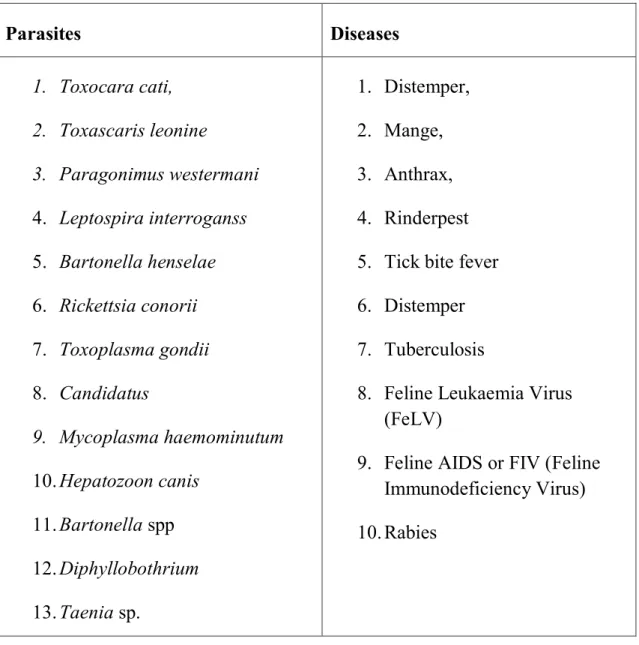
Some of the most common illnesses experienced by tigers (as well as other wild and domestic cats) include:
Rabies
Rabies is a virus that is usually fatal to the animal once contracted. It is transmitted through the bites of other infected animals, which are made all the more vicious as a result of their illness. The incubation period generally lasts for a few weeks, but can extend to several months in some cases. Once the tiger has been bitten by another infected animal, the virus is carried through the
29
bloodstream to the spinal cord. It moves through the nervous system and causes major neurological damage. Initially, the cat will begin to act abnormally. It may have a fever and will lick its wound. During the second phase of the illness, the victim will begin to act unpredictably. It will be vicious and restless, but may at times be rendered paralysed. The final stage is one of major nerve damage, which then prevents the animal from being able to swallow anything (including water and its own saliva). Excessive drooling occurs as a result and has become the tell-tale sign of an animal with advanced rabies. The animal is likely to go into a coma before it dies. Euthanasia is usually the kindest, most dignified option. Rabies can be prevented by vaccinating the animals as soon as possible. Domestic cats should be kept away from others that may be infected, but this is not possible with wild tigers.
Feline AIDS or FIV (Feline Immunodeficiency Virus)
This virus is a disorder that affects the immune system of the cat. However, it is completely curable, unlike HIV or AIDS in human patients. If left untreated, though, this virus makes the tiger extremely susceptible to other illnesses and infections that it may otherwise have been able to overcome. Notably, feline AIDS and feline leukaemia are often found in the same animal. FIV is usually spread through direct bites, since it dies as soon as it leaves the body. In addition, an infected mother can pass it on to the foetuses she carries. The virus is carried in the blood, saliva and cerebrospinal fluid. Humans cannot catch it from cats. After a bite from an infected animal, it takes just four weeks for the victims white blood count to drop dramatically. This leaves the animal susceptible to any number of illnesses and diseases, which it does not have the resources to fight against.
Feline Leukaemia Virus (FeLV)
This virus is responsible for more feline deaths than any other known illness. It is contagious, but can lie dormant in the bone marrow for a long period of time.
It is responsible for cancerous as well as non-cancerous diseases, but is not
30
transmissible from cats to human beings or other animal species. This virus is killed quite easily by exposure to oxygen as well as any and all detergents.
Therefore, the cat would require close, moist contact with another infected tiger in order to contract FeLV. This is usually achieved when cats groom, lick or bite each other. Kittens and cubs may also be infected by their mothers during her pregnancy or while they drink milk from her. FeLV produces a number of associated diseases and symptoms. These include anaemia, liver disease, intestinal disease, reproductive complications, lymphosarcoma, full-blown cancerous leukaemia, chronic respiratory infections, chronic gingivitis, stomatitis, feline infectious peritonitis, poor healing of wounds and abscesses, and chronic generalised infections.
Tigers can be vaccinated against FeLV to prevent them from succumbing to this virus. Once an unvaccinated tiger has contracted it, though, it needs to be removed from the wild and treated by doctors. It needs a nutritious diet, other necessary vaccinations (since its immune system will be severely compromised as a result of the FeLV), reduced stress, and prompt treatment of any other illnesses that may arise. Should the FeLV develop into a full-blown cancer, the survival rate is not good, and many animals are euthanised at this point to prevent further suffering.
Other common illnesses that afflict tigers are Tick bite fever, Distemper and Tuberculosis.