i
BIOMETRIC SYSTEM
AMIRAH IZZATI BINTI HAMIDI
This Report is Submitted in Partial Fulfillment Of Requirement For The Bachelor Degree of Electronic Engineering (Industrial Electronic)
Fakulti Kejuruteraan Elektronik dan Kejuruteraan Komputer Universiti Teknikal Malaysia Melaka
ii
mengaku membenarkan Laporan Projek Sarjana Muda ini disimpan di Perpustakaan dengan syarat-syarat kegunaan seperti berikut:
1. Laporan adalah hakmilik Universiti Teknikal Malaysia Melaka.
2. Perpustakaan dibenarkan membuat salinan untuk tujuan pengajian sahaja.
3. Perpustakaan dibenarkan membuat salinan laporan ini sebagai bahan pertukaran antara institusi pengajian tinggi.
4. Sila tandakan ( √ ) :
SULIT*
*(Mengandungi maklumat yang berdarjah keselamatan atau kepentingan Malaysia seperti yang termaktub di dalam AKTA RAHSIA RASMI 1972)
TERHAD**
**(Mengandungi maklumat terhad yang telah ditentukan oleh organisasi/badan di mana penyelidikan dijalankan)
TIDAK TERHAD
Disahkan oleh:
__________________________ ___________________________________
(TANDATANGAN PENULIS) (COP DAN TANDATANGAN PENYELIA)
Tarikh: ……….. Tarikh: ………..
iii
“I declare that this report entitle “Biometric System” is the result of my own research
except as cited in the references. The report has not been accepted any degree and is not
concurrently submitted in candidature of any other degree”.
Signature : ………
Name : AMIRAH IZZATI BINTI HAMIDI
iv
“I hereby declare that I have read through this report entitle “Biometric System” and
found that it has comply the partial fulfillment for awarding the degree of Bachelor of
Electronic Engineering (Industrial Electronic)”.
Signature : ……….
Supervisor’s Name : DR. MASRULLIZAM BIN MAT IBRAHIM
v
vi
ACKNOWLEDGEMENT
First and foremost, I would like to express my gratitude to my supervisor Dr. Masrullizam Mat Ibrahim, a lecturer from Faculty of Electronic Engineering and Computer Engineering for his supervision, support and encouragement towards completion of this project and report.
I also would like to thank my parents En Hamidi Jamari and Pn Nor Ima Adnan and my beloved family for their moral support throughout completing this project. Not to forget to all my friends for their endless support, assistance and ideas.
vii
ABSTRACT
viii
ABSTRAK
ix
1.5 Sustainable Development 4
1.6 Potential Commercialization 5
x
CHAPTER II 7
LITERATURE REVIEW 7
2.1 Biometrics Technology 7
2.2 Unimodal Biometric System 9
2.3 Iris Recognition System 11
CHAPTER III 13
METHODOLOGY 13
3.1 Project Flow 13
3.2 Biometric System Modules 15
3.3 Iris Recognition System 17
Chapter IV 18
RESULTS AND DISCUSSION 18
4.1 Image Acquisition 18
4.2 Image Pre-Processing 19
4.3 Feature Extraction and Encoding 25
4.4 Classification and Training 26
4.5 Analysis of data 31
4.6 Graphical User Interface (GUI) 36
CHAPTER V 39
CONCLUSION AND RECOMMENDATIONS 39
5.1 Recommendations for future work 39
5.2 Conclusion 42
REFERENCES 41
xi
LIST OF TABLES
Table 3.1 Gantt Chart for This Project 14
xii
LIST OF FIGURES
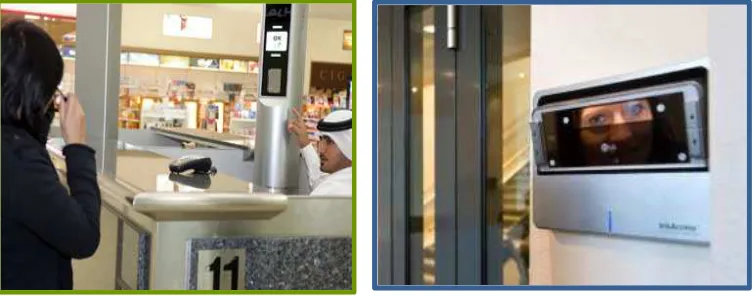
Figure 1.1 Airports and Corporate Building using Iris Recognition System
5
Figure 2.1 The Technology Illustrated From Biometric System 8
Figure 2.2 Multimodal Biometric System 10
Figure 2.3 Iris and pupil localization and the top left picture is the result of 2D Wavelet Demolution after encoding the phase sequence of iris pattern
11
Figure 3.1 The Flow Chart of The Biometric System Project 12 Figure 3.2 The Biometric System with MATLAB Toolbox 16 Figure 3.3 The Flow of Iris Recognition Algorithm 17
Figure 4.1 The examples of segmented eye image 20
Figure 4.2 Daugman’s Rubber Sheet Model 21
Figure 4.3 The Examples of Whole Normalized Iris Image 22 Figure 4.4 Examples of noise images of iris from MMU database 23
xiii
Figure 4.6 The Noise of The Normalized Region 24
Figure 4.7 The Iris Template After Feature Extraction 25
Figure 4.8 LBP Histogram For The Iris Image 27
Figure 4.9 Layer of Neural Network 28
Figure 4.10 Neural Network Training Tool GUI when the program is executed
29
Figure 4.11 Network Pattern Recognition Tool from Neural Network Toolbox
30
Figure 4.12 Examples of Eye Images from MMU Database 31
Figure 4.13 Specificity and Sensitivity Table 32
Figure 4.14 Test Outcome Positive for Output 35
Figure 4.15 The first part of the GUI 36
Figure 4.16 The second part of the GUI 37
Figure 4.17 The whole part of the GUI built in MATLAB 38 Figure 5.1 Various ways of Multimodal Biometric System 41 Figure 5.2 The general flow chart process of Multimodal Biometric
System
xiv
ABBREVIATION
CASIA – Chinese Academy of Sciences – Institute of Automation GUI – Graphical User Interface
xv
APPENDICES
1
CHAPTER I
INTRODUCTION
This chapter will explain generally about the project, which includes the background, problem statements, objectives and scope. Moreover, sustainable development and potential commercialization of this project also will be explained briefly to complete this chapter.
1.1Project Background
2 A biometric system is classified into two types, which are Unimodal and Multimodal biometric system. Unimodal system depends solely on one trait or characteristic. On the other hand, Multimodal biometric system uses more than one trait in the system, which increases the accuracy of the system by providing higher percentage of accuracy.
Iris is one of the examples of reliable biometric traits. This trait, like any other traits are very unique and easily obtained. In addition to that, this trait is stable, which the data is obtained from one source only. The project is conducted by developing algorithm with MATLAB software as the platform. A reliable Biometric System is expected to be developed.
1.2Problem Statements
There are 3 aspects covered in the report to state the problems regarding this project. Firstly, the problem statement is about the biometric technology. Secondly, there is a brief explanation about multimodal biometric system and lastly, the traits of iris.
1.2.1 Biometric
3
1.2.2 Unimodal
The biometric system is basically divided into two modes, which are Unimodal biometric system and Multimodal biometric system. In case of Unimodal biometric system the individual trait is used for recognition or identification. The system performs better under certain assumptions but fails when the biometric data available is noisy which makes the obtained image is harder to be processed. The system also fails in case of unavailability of biometric template. Thus in such a condition, multimodal biometric systems are used where more than one traits are measured and detected.
1.2.3 Traits of Iris
Among the available biometric traits some of the traits outperform others, nevertheless, every traits has their own advantages, which others does not have. The reliability of several biometrics traits is measured with the help of experimental results. Iris trait is very hard to be replicated, in addition to the uniqueness of the traits and its specific details of image; compared with face recognition – which might cause two person to have similar data i.e twins and, thus confusing the system. When combining both traits, the biometric system produced might becoming more reliable than ever.
1.3Objectives
• To develop algorithm of iris detection
4 1.4Scope
The design of this Biometric System will cover iris detection using the toolbox of the MATLAB software in order to develop the algorithm. There are several steps in developing algorithm, which consists of two major processes, initializing process and recognizing process. The processes will be finalized with combination of them after the respective algorithm is tested successfully.
1.5Sustainable Development
The idea of attaining projects or systems within limits of earth’s natural resources based on aspects such as social, environmental, and economic is called sustainable development. In order to ensure the project is successful, from the beginning until the end of it, how it affects on environment and mother earth should not be neglected.
Biometric system of iris would promote sustainable development regarding increasing efficiency, improving service and accountability, also allowing third world countries especially, to build sophisticated identification systems in a relatively short period of time. Biometrics can also facilitate inclusion for certain groups, an exclusive and upgraded identifier that can replace the need for extensive documentation, which the poor often lack, in many cases [15]. For several examples,
• In Nigeria, introducing biometrics into the federal pension system eliminated nearly 40% of the beneficiary roll. This is not only increases efficiency and accountability, but has the potential to improve services (assuming the funds saved are redirected to other services).
• Bolivia was able to expand its voter roll to large section of the population previously absent from the political process.
5
• In Pakistan, an efficient national identification agency (NADRA) ensured transparent management of disaster relief funds by ensuring that only those affected by the 2010 floods received reconstruction payments through Visa cards.
1.6Potential Commercialization
This project is considered successful when it can run smoothly and applied in the real world and provide better service than the previous situation as shown in Figure 1.1. This system proposed can be applied at maximum-security and 24/7 surveillance place such as:
• Airports
• Corporate Building
• ATM (Automated Teller Machine)
1.7Project Outline
Starting with Chapter 1, the project is introduced to describe what the project is all about. Chapter 2 follows after to explain about the literature review from various sources. Sources are wide ranging from research journals, invited paper, books to the
7
CHAPTER II
LITERATURE REVIEW
This chapter includes the review about research or experiment that has been conducted regarding this project. The review take 3 aspects to be covered which are on biometrics technology, multimodal biometric system and also iris and hand vein recognition. All the sources are stated in the references section.
2.1Biometrics Technology
8 improve the system from time to time and all of different techniques are introduced to enhance the existing system.
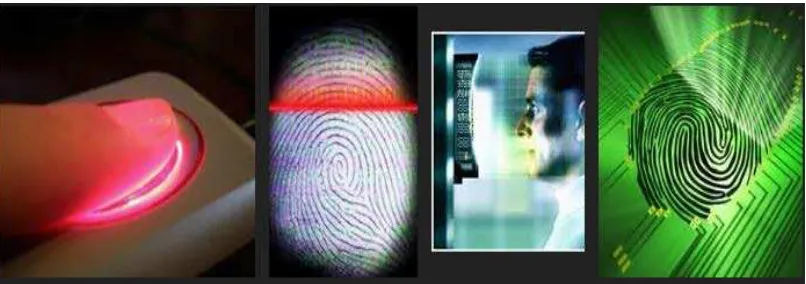
Today’s technology allows this system to be encoded in the software alongside the embedded hardware. Biometric system generally implies the similar process. Starts with biometric enrollment, follows with biometric verification and finally biometric identification. Biometric enrollment is a process of acquiring images of biometric data and stores all of it in a database, for it to be compared later. Biometric verification includes process of comparing the verification template to the enrollment template previously. After both the processes are successfully conducted, biometric identification take place. Identification process determines the identity by matching the image with the one stored in database before [2]. As the time goes by, the technology is getting more and more updated in every aspect such as performance, accuracy and precision that can be seen in Figure 2.1 for an example.
9
2.2Unimodal Biometric System
Unimodal biometric system means only one trait involved. All the existed traits like fingerprints, hand, face, vein and others can be used and applied in the biometric system. All of these traits are unique and it could not be forged or copied anywhere else, and the main reason for the acceptance of the biometrics as a tool for security is its universality, distinctiveness, permanence and collectability [14]. Main issues to be considered when implementing a biometric system is performance and acceptability. Unimodal biometric system can provides a great performance in execution time, since it only requires one trait to be processed.
However, narrow down the scope of the system as a verification tool, the limitation of one biometric is explained. Several issues are raised such as intra-class variations, distinctiveness ability and noise in sensed data. These limitations are said to carry to high false acceptance rate (FAR) and false rejection rate (FRR) [3]. False acceptance rate in simpler term means the probability of an impostor being accepted as a genuine individual while false rejection rate is a probability of a genuine individual being rejected as an impostor. Apparently, multimodal biometric system provides solutions to overcome this problem, apart from providing higher accuracy and higher protection from spoofing, it may however be a little more complicated.