167
Vol 18, No 3, July - September 2009 Interleukin-10, acute coronary syndrome
Interleukin-10 serum level in acute coronary syndrome patients
Idrus Alwi,1 Teguh Santoso,1 Slamet Suyono,2 Bambang Sutrisna,3 Siti B. Kresno,4
1 Cardiology Division, Department of Internal Medicine, Faculty of Medicine University of Indonesia, Dr. Cipto Mangunkusumo Hospital, Jakarta. 2 Metabolism, Endocrinology, and Diabetes Division, Department of Internal Medicine Faculty of Medicine University of
Indonesia, Dr. Cipto Mangunkusumo Hospital, Jakarta.
3 Department of Epidemiology, Faculty of Public Health University of Indonesia., Jakarta.
4 Department of Clinical Pathology, Faculty of Medicine University of Indonesia, Dr. Cipto Mangunkusumo Hospital, Jakarta.
Abstrak
Tujuan Membandingkan kadar IL-10 pada pasien sindrom koroner akut (SKA) dan pasien dengan penyakit jantung koroner (PJK).
Metode Subyek penelitian adalah pasien SKA yang dirawat di ruang rawat jantung intensif RSCM/FKUI, RS Persahabatan, RS MMC, dan RS Medistra Jakarta antara bulan Mei 2005 sampai Mei 2006. Pasien PJK rawat jalan diambil sebagai pembanding. Kadar seru interleukin 10 (IL-10) diukur pada kedua kelompok dengan metode radioimunoassay. Perbandingan kedua kelompok dilakukan dengan uji t-test tidak berpasangan. Untuk mengetahui apakah kadar IL-10 dapat digunakan sebagai prediksi SKA, maka dilakukan juga perhitungan sensitivitas dan spesiisitas IL-10.
Hasil Telah dianalisa data dari 146 penderita (84 SKA dan 62 PJK). Kadar IL-10 pada penderita SKA (7.37 pg/mL + 7.81, CI 95% 5.68-9.07) lebih tinggi dibanding dengan penderita PJK (1.59 pg/mL + 1.55, CI 95% 1.2-1.98). Cut-off point optimum untuk kadar IL-10 adalah >1.95 pg/mL, dengan sensitivitas 79.76 % dan spesiisitas 77.42 %.
Kesimpulan Kadar IL-10 pada kelompok SKA lebih tinggi secara bermakna dibanding kelompok PJK. Kadar IL-10 cukup baik digunakan sebagai prediksi SKA, walaupun tidak sebaik CRP. (Med J Indones 2009;18:167-71)
Abstract
Aim To compare plasma IL-10 concentrations in patients with Acute Coronary Syndrome (ACS) with those in Coronary Artery Disease (CAD).
Methods ACS patients hospitalized in intensive coronary care unit (ICCU) of Cipto Mangunkusumo Hospital/Faculty of Medicine University of Indonesia (CMH/FMUI), Persahabatan Hospital, MMC Hospital, and Medistra Hospital, Jakarta, between May 2005 and May 2006, were included in this study. The ambulatory CAD patients were taken as comparator. The serum IL-10 level was measured by immunoassay method, and compared by using Independent
Student’s t-test. To investigate whether IL-10 serum level could predict ACS, the sensitivity and speciicity of this
parameter towards SKA in various IL-10 serum levels were calculated as well.
Results In this observational study, as many as 146 subjects were analyzed, consisting of 84 ACS patients, and 62 coronary artery disease (CAD). The IL-10 level was higher in the group of ACS patients (7.37 pg/mL + 7.81, CI 95% 5.68-9.07) than that in CAD patients (1.59 pg/mL + 1.55, CI 95% 1.2-1.98). The optimal cut-off point for serum IL-10
level is >1.95 pg/mL, with 79.76 % sensitivity and 77.42 % speciicity.
Conclusion The IL-10 level was higher in the ACS patients compared to that in CAD patients. Serum IL-10 measurement is a quite superior method to distinguish acute and stable condition, eventhough it is not as good as hsCRP for the same purpose. (Med J Indones 2009;18:167-71)
Key words: Interleukin-10, acute coronary syndrome
Previous studies have shown that in the acute coronary syndrome (ACS), proinlammatory cytokines such as tumor necrosis factor-α (TNF-α), interleukin-1 (IL-1), and interleukin-6 (IL-6) are released from macrophages and T lymphocytes. These cytokines then stimulate the acute phase reactant, C- reactive protein (CRP) in the liver.1 Accumulating evidence showed a role of the immu-noregulatory, antiinlammatory cytokine interleukin-10 (IL-10) in the aetiology of ACS.2,3 Interleukin-10 (IL-10), a strong antiinlammatory cytokine, is secreted
by Th2 subtype lymphocyte and most macrophages. It is known to inhibit many cellular processes and might have important roles in plaque progression, rupture, or thrombosis, including activation of NF-κB,4 metaloproteinase production,5 tissue factor,6 cyclo-oxygenase expression,7 and cell death.8
This study aimed to compare plasma IL-10 concen-trations in patients with ACS with those in CAD subjects.
METHODS
This present study investigated, in a cross-sectional format, whether the bodily acute and chronic proin-lammatory response as shown in the alteration of serum IL-10 level in ACS patients is different from those with coronary heart disease (CHD).
Subject
All ACS patients hospitalized in intensive coronary care unit (ICCU) in Cipto Mangunkusumo Hospital / Faculty of Medicine University of Indonesia (CMH/ FMUI), Persahabatan Hospital, MMC Hospital, Medistra Hospital were recruited for the study by consecutive sampling. Age and gender matched CHD patients visited the Cardiology Outpatient Clinic Department of Internal Medicine CMH/FMUI and Integrated Cardiac Service Outpatient Clinic CMH were recruited as control by consecutive sampling method as well. All patients in both groups fulilling the inclusion criteria and without exclusion criteria, who gave informed consent after receiving explanation from the investigators, were enrolled as study subjects. The study was carried out between May 2005 and May 2006. All procedures in this study had been approved by the FMUI Research Ethics Committee.
Inclusion and Exclusion Criteria
ACS patients admitted to study centers mentioned above, fulilling the ACS criteria that occurs not earlier than 72 hours from recruitment time were included in this study. CHD patients visiting study centers mentioned above and willing to participate were taken as comparator group.
The following patients were excluded from the study: currently in acute or chronic infection, patients with inlammatory response disorders such as autoimmune disease, connective tissue disease, neoplasm, trauma or surgery within 1 month prior to recruitment, currently receiving corticosteroid, NSAID, or immu-nosuppressive therapy, statin therapy in CHD group. In ACS group, statin is only given after collection of blood sample for measurements of inlammatory response (for observational study). Patients receiving
thiazolidindione therapy, patients with chronic kidney or liver disease were also excluded.
Observed Parameters / Variables
History taking includes age, gender, education level, ethnic groups, history of previous chest pain and myocardial infarction, smoking habit, medication history, history of hypertension, history of DM, history of dyslipidemia, family history of heart disease. During physical examinations, blood pressure, body height, body weight, and waist circumference were measured and heart physical examination was performed. Laboratory investigation includes: routine blood analysis (hemoglobin, hematocrite, leukocyte, thrombocyte); CK, CKMB, troponin T, fasting and postprandial serum glucose level, glyco Hb, total cholesterol level, direct LDL cholesterol level, HDL and triglyceride cholesterol level, ureum, creatinine, SGOT, SGPT. Inlammatory response: serum IL-10 level.
Deinitions
Acute coronary syndrome (ACS)14,15 is deined as a spectrum of heart emergency consists of: acute myocardial infarction with ST elevation (ST-elevated myocardial infarction/ STEMI), acute myocardial infarction without ST elevation (non ST-elevated myocardial infarction / NSTEMI), unstable angina pectoris (UAP).
Unstable angina pectoris16 is identiied if fulilling one of the following criteria: 1. Angina at rest and lasts for a long time, usually more than 20 minutes. 2. New onset angina classiied as IIIrd class or above in the Canadian Cardiovascular Society (CCS) classiication. 3. Acceleration of new angina with signs of increased severity of angina at least 1 CCS class to at least IIIrd class of CCS.
Acute myocardial infarction (AMI)17 is diagnosed if there are characteristic elevation and gradual decline of troponin or early elevation and decline of biochemical markers of myocardial necrosis with at least one of the following symptoms: a. Ischemic symptoms, b. Occurrence of pathologic Q wave in the ECG. c. Changes in ECG waves indicating ischemia (elevation or depression of ST segment). d. Coronary artery intervention (e.g. coronary angioplasty).
169
Vol 18, No 3, July - September 2009 Interleukin-10, acute coronary syndrome
based on anamnesis and ECG, proven history of CHD based on previous coronary angiography examination or having a history of acute myocardial infarction/ACS at least 6 months prior to the examination.
Body mass index (BMI) was measured in kg/m2, and waist circumference was measured using SECA 200 measuring tape. Inlammatory Response was detected by measuring serum interleukin-10 level ( in pg/mL) using enzyme immunoassay method (QuantikineR kit. R&D System, Inc., Minneapolis, MN, USA). Nor-mal value is from not detectable (ND)–5.16 pg/mL. Intra assay variability was 6.6 –8.5% and inter assay variability was 8.1–15.6%.
Blood sampling
For routine blood analysis and blood chemistry analysis, peripheral venous blood was collected after a 10-12 hours fasting. Two hours later, the second blood sample was taken for postprandial blood glucose. Bloods were collected using standard method and sent to the Laboratory. Peripheral venous blood samples for serum IL-10 level measurement was collected using standard method and sent to the Laboratory.
Data Processing and Analysis Technique
All data obtained as continuous data. The data were then coded, tabulated, calculated and analysed using STATA. Normally distributed variables were analysed using parametric tests, and variables with abnormal distribution will be transformed into normal data range by logarithmic transformation, and then analysed with parametric test. The signiicant value of p < 0.05 is accepted as signiicant.
To compare the inlammatory response between ACS and CHD patient, the student-t test for independent samples was performed.
RESULTS
In the observational study from 1 May 2005 to 5 May 2006, as many as 62 CHD patients and 84 ACS that met the study criteria were enrolled. Demographic analysis showed that there was no difference in ages among the two groups.
The risk factors systolic and diastolic blood pressures, waist circumference and body mass index (BMI) did not differ signiicantly. Laboratory parameters such as fasting blood glucose and Glyco Hb level, total cholesterol, LDL cholesterol, HDL cholesterol and triglyceride level were not signiicantly diffeterent in the two groups of patients.
Serum IL-10 level
170 Alwi et al Med J Indones
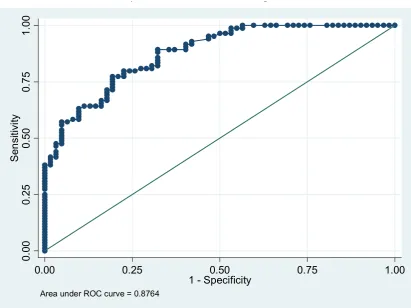
Figure 1. ROC of IL-10 in acute condition (ACS) comparee with non acute condition (CHD)
‐
‐
‐
‐
‐
‐
‐
10
serum
level
at
various
cut
points
was
0.88
as
seen
in
Figure
1.
0
.0
0
0
.2
5
0
.5
0
0
.7
5
1
.0
0
Se
n
si
ti
vi
ty
0.00 0.25 0.50 0.75 1.00
1 - Specificity
Area under ROC curve = 0.8764
‐
‐
‐
‐
‐
‐
‐
‐
‐
‐
‐
DISCUSSION
IL-10 serum level in ACS group
In this study, it was evident that the level of serum IL-10 in ACS patients was higher than that in CHD patients. The anti-inlammatory cytokine, IL-10 was abundantly released in the acute condition such as in ACS as a re-sponse to IL-6, compared with relatively stable CHD. This increase is supposedly aimed to maintain the bal-ance of anti-inlammatory and pro-inlammatory factors in the body. This argument is supported by our inding that there was a strong, positive correlation between the level of serum IL-6 and IL-10 in ACS group (r=0.69; p=0.00, data not shown). As expected, there was only weak correlation between the level of serum IL-6 and IL-10 in CHD group (r=0.31; p=0.02).
In acute condition the body respons to maintain the bal-ance between proinlammatory cytokine (IL-6) and an-tiinlamatory cytokine (IL-10), so any increase of IL-6 level in acute condition will be followed by an increase of IL-10.
In CAPTURE (c7E3 Antiplatelet Therapy in Unstable Refractory Angina) study, patients with increased IL-10 level have lower risk for death and for non-fatal myocardial infarction. Patients with increased both the hsCRP and IL-10 level showed lower risk compared to patients with increased hsCRP level alone without any increase in IL-10 serum level, suggesting that IL-10 might have a protective effect against the proinlamma -tory mediators in ACS.1
171
Vol 18, No 3, July - September 2009 Interleukin-10, acute coronary syndrome
To predict the occurance of ACS, the optimal cut-off point for serum IL-10 level is >1.95 pg/mL, with 79.76 % sensitivity and 77.42 % speciicity. The sensitivity and speciicity of various cut-off points for IL-10 level is also shown in Figure 1. Looking at the ROC curve, we are convinced that serum IL-10 measurement is a quite superior method to distinguish acute and stable condition, eventhough it is not as good as hsCRP for the same purpose.
It is concluded that the serum IL-10 level is higher in ACS patient group compared to CHD group.
REFERENCES
1. Hansson GK. Inlammation, atherosclerosis, and coronary ar
-tery disease. N Engl J Med 2005;352:1685–95.
2. Li JJ, Guo YL, Yang YJ. Enhancing anti-inlammatory cy
-tokine IL-10 may be beneicial for acute coronary syndrome. Med Hypotheses 2005;65:103–6.
3. Tedgui A, Mallat Z. Anti-inlammatory mechanisms in the vascular wall. CircRes 2001;88:877–87.
4. Lentsch AB, Shanley TP, Sarma V, Ward PA. In vivo suppres
-sion of NF-kB and preservation of IkBα by interleukin-10 and
interleukin-13. J Clin Invest 1997;100:2443-8.
5. Tziakas DN, Chalikias GK, Hatzinikolaou HI, Parissis JT, Pa
-padopoulos ED, Trypsianis GA. Anti-inlammatory cytokine proile in acute coronary syndromes: behavior of
interleukin-10 in association with serum metalloproteinases and
proin-lammatory cytokines. Int J Cardiol 2003;92:169–75.
6. Lindmark E, Tenno T, Chen J, Siegbahn A. IL-10 inhibits LPS-induced human monocyte tissue factor expression in whole
blood. Br J Haematol 1998; 102:597-604.
7. Mertz PM, Dewitt DL, Stetlerstevenson WG, Wahl L M. In -terleukin 10 suppression of monocyte prostaglandin H syn-thase-2: mechanism of prostaglandin- dependent matrix
met-alloproteinase production. J Biol Chem 1994;269:21322-9. 8. Cohen SB, Crawley JB, Kahan MC, Feldmann M, Foxwell
BM. Interleukin-10 rescues T cells from apoptotic cell death: association with an upregulation of Bcl-2. Immunology 1997;92:1–5.
9. Smith DA, Irving SD, Sheldon J, Kaski JC. Serum levels of
the antiinlammatory cytokine interleukin-10 are decreased in patients with unstable angina. Circulation 2001;104:746–9. 10. Anguera I, Miranda-Guardiola F, Bosch X, Filella X, Sitges
M, Marin JL, et al. Elevation of serum levels of the
anti-in-lammatory cytokine interleukin-10 and decreased risk of
coronary events in patients with unstable angina. Am Heart J
2002;144:811–7.
11. Heeschen C, Dimmeler S, Hamm CW, Fichtlscherer S, Boers
-ma E, Simoon ML. Serum level of the anti-inlam-matory
cytokine interleukin-10 is an important prognostic determi-nant in patients with acute coronary syndromes. Circulation
2003;107:2109–14.
12. Mälarstig A, Eriksson P, Hamsten A, Lindahl B, Wallentin
L, Siegbahn A. Raised interleukin-10 is an indicator of poor
outcome and enhanced systemic inlammation in patients with
acute coronary syndrome. Heart 2008;94;724-9
13. Antman EM, Anbe DT, Armstrong PW, Bates ER, Green LA,
Hand M et al. ACC/AHA guidelines for the management of patients with ST-elevation myocardial infarction a report of the American College of Cardiology/American Heart Associa-tion Task Force on Practice Guidelines (Committee to revise the 1999 guidelines for the management of patients with acute myocardial infarction). Circulation 2004;110:588-636.
14. Braunwald E, Antman EM, Beasley JW, Califf RM, Cheitlin
MD, Hochman JS. ACC/AHA guideline update for the man-agement of patients with unstable angina and non-ST-segment
elevation myocardial infarction–2002: Summary article. Cir
-culation 2002;106:1893–900.
15. Braunwald E. Unstable angina : a classiication. Circulation
1989;80:410-4.
16. Alpert JS, Thugesen K, Antman E. Myocardial infarction
re-deined-a consensus document of the joint European Society
of Cardiology/American College of Cardiology committee for
the redeinition of myocardial infarction. J Am Coll Cardiol
2000;36:959-69.