213
Toward Community-based Wastewater Management Experience from
Urban River Side Settlement in Yogyakarta City Indonesia
Achmad Nurmandi
Center for Public Management Studies Faculty of Social and Political Science Muhammadiyah University Jogyakarta Ringroad Barat Tamantirto, Jogyakarta Indonesia
E-mail: [email protected]
Abstract: Increasing populations in urban areas including river edge area of the Yogyakarta has environmentally impacted the city river. The most densely populated areas are pushing the use of the land. The land is limited so that each household has only a small piece of land or less, equal to about 60 m2 per house. With these conditions having a home toilet is very uncommon in order to solve this issue, the community has built a communal toilet at the edge of the riverside. This is causing the black water of the public toilet to be directly discharged into the river which therefore is impacting the pollution of the water. The main pollutant of this black water is a bacteria known as Coli (Ecoli) containing above safe health level.
Black water and grey water of community waste water are major problems in Jogyakarta. In solving these problems, it is necessary to develop some simple technologies apply these to the black water and grey water areas. Tripikon-S (Three=3, Pi = pipe; kon=concentric; S=septic) is a modest technology both individually and communally based technology that would increase the quality of black water before discharging it into the river through an aeration system. Communal wastewater system is just one alternative for solving some of the problem associated with grey water pollution. After settlement of Tripikon-S and communal wastewater treatment, the water pollutant
The project has been implemented in the Prawirodirjan sub-district, of the Gondomanan District in Jogyakarta City, Indonesia. It has shown a quite positive impact on decreasing water pollution mainly the bacteria Coli by around 60%. In a social aspect, the community has become more environmentally aware and has increased their participation in the project and is working towards the improvement of their wastewater network by themselves.
Keywords: City River, land use, communal toilet, black water, health, participation
1 INTRODUCTION
Toward Community-based Wastewater Management 214
polluted by coli (>50MPN/100 ml). Factors affecting water pollution are population density, sandy soil, and poor sanitation systems.
Wastewater services only pertain to 40% of population, the rest is managed by the community themselves. Those who settle around the riverside mostly use the river as a wastewater site. They create the problem of having both black water and grey water being discharged directly into river. In order to solve this problem, a simple and cheap technology would be advantageous to incorporate into the water system.
a. To increase community awareness of river pollution;
b. To develop environmentally uncostly individual toilets and communal waste water treatment.
c. To increase community organization capacity in communal sanitation building and maintenance.
d. To decrease river pollution along Code River in Inner City of Jogyakarta.
Neighbourhood 18, Sub-District Prawirodirjan, District Gondomanan, Jogjakarta city was selected as a project area. This selection was based on some of the following criteria: environmental problem, areas close to and around the riverbank in Yogyakarta especially the Code River had become an alternative settlement for lower-level society members. These areas are categorized by the district government as squatter areas, which is characterized as densely populated, un-organized, dirty, and lacking of a city infrastructure. It also refers to the area as sensitive to social and environmental problem areas.
Location of the test are in administrative unit of C It is on the eastern side of the Code River at about 1.5 – 2 meters from river’s limit. It’s population is around 800 persons or 160 households.
The ownership level of individual water closet (WC) facility is 40% or only 64 households. While 60% or 86 households do not have their own facilities. Lack of domestic waste processing facilities and sanitation facilities contribute to the behavior of the inhabitants to throw it directly into the river without processing it. This habit has threatened the quality of the environment (especially water quality) along the river. Socially and culturally, most inhabitants are non native. Lacking of infrastructure facilities arouse bad habits amongst inhabitants as already mention above. These inhabitants are throwing household waste and human feces into the river. Economically, inhabitants are categorized as lower-income community members consisting of almost 60% working in the informal sector involved in occupations such as rig saw, carpenters, and 15% work in formal sector. The rest are unemployed.
Toward Community-based Wastewater Management 215 1.1 Communal-based wastewaster management
The term system and management in this paper mean some part relating each other and begining planning activity, implementation, and evaluation. A system that will be set up as a part of processing black water and part of processing grey water and relating each other in wastewater processing system at the communal-based level. Technology for processing black water is appropriate in populous areas. This is imperative with the limited land that is available for an individual septic tank. Tripikon-S is technology created by Prof. Harjoso of Engineering Faculty, Gadjahmada University. Also, mini sewage treatment is designed for limited land and located at the bottom of the communal road.
1.2 Introducing new technogy
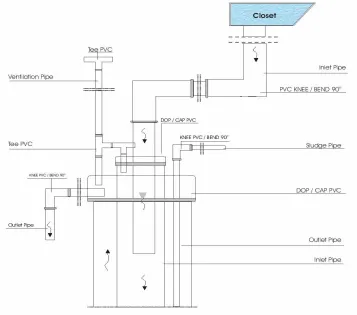
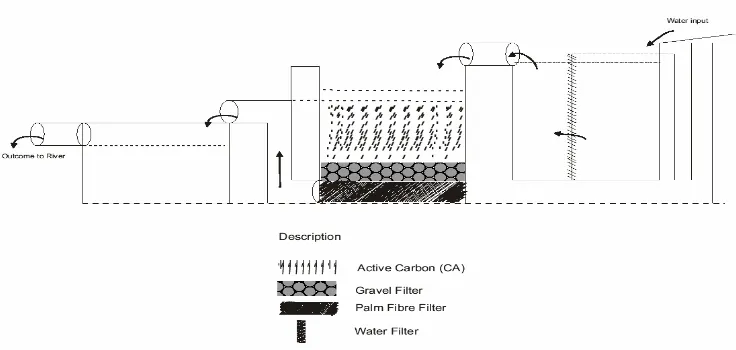
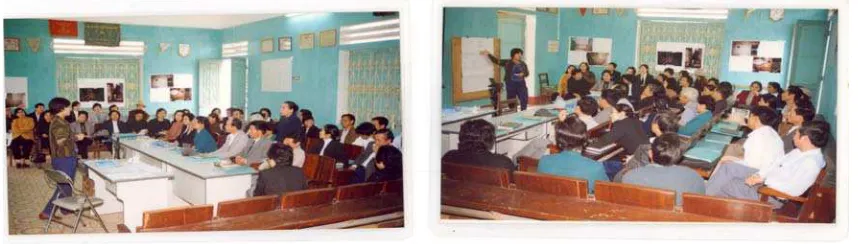
As a system, the main activity of the project is to set up a communal organization to handle the waste water. Capacity building activities are the main activity in order to empower community members in solving wastewaster problem (Figure 1 and 2).
Toward Community-based Wastewater Management 216
Figure 2. Instalation of sewage treatment plant
Working system of tripikon-S:
a. Black water and feces come directly in through the inlet pipe from closet;
b. In 2 x 24 hours (two days), feces will be broken into small parts in the pipe and some of them will become waste water;
c. Exhaust gas in the inner pipe pass through sludge hole with water;
d. Whenever the sludge has been filled in the outer pipe, it directly drains into exhaust pipe; e. Air in outlet pipe will be sent out from ventilation pipe.
Due to the high volume of black water from the public toilet, the plastic pipe for three pipe was been changed with cement pipe diameter around 1 meter and 50 centimeters. Construction of the system
2 CONTRIBUTION OF THE PROJECT IN DECREASING RIVER POLLUTION
Contribution of waste water treatment built both for grey water and black water in decreasing river pollution could be checked through laboratory tests. In order to prove the suitability of used technology for wastewater, laboratory test activity would be conducted three times. First test is conducted for drinking water in communal well in order to know the type of pollutant. The second and last tests are conducted for black water and grey water before treatment and after the treatment process.
Toward Community-based Wastewater Management 217 Tabel 1. Laboratory test for drinking water in individual well
Well (drinking water) No Parameter Unit Maximum
level 1 /RT 61 2 /RT 60 3/ RT 59 4/ RT 58 5/RT59
Source: Health Laboratory Agency, Health Agency Jogyakarta Province
Based on the first test show it is shown that drinking water of individual wells in almost all of sub-Neighbourhood 18 are polluted by coli and also comes from grey water from both individual toilets and a poor drainage system. In order to solve this problem, the project developed sewage treatment plants in two sub-neighbourhoods and seven Tripikon-S in public and individual toilets.
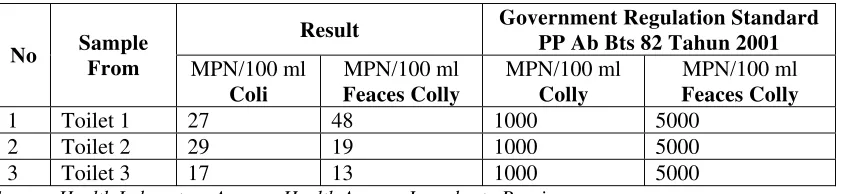
After development of Tripikon–S in public toilets, laboratory test were conducted for wastewater as follows (Table 2).
Table 2. Laboratory test result of Tripikon-S in public toilets
Result Government Regulation Standard PP Ab Bts 82 Tahun 2001
Source: Health Laboratory Agency, Health Agency Jogyakarta Province
Toward Community-based Wastewater Management 218
Table 3. Laboratory test of sewage treatment
ST in Neighbourhood 59
ST in Neighbourhood 60 No Parameter Unit
Inlet Outlet Inlet Outlet Health
level
1 BOD 5 Mg/l 156 100 420 100 100
2 TSS Mg/l 160 100 480 98 100
3 PH 7 6 7 6 6
Source: Health Laboratory Agency, Health Agency Jogyakarta Province Test date: 28September 2006 to 9 October 2006
BOD5 and Total suspended Solid levels in each Treatment 1 and Treatment 2 decreased by 50% and around 300%. PH level decreased from 7 before treatment to 6 after treatment.
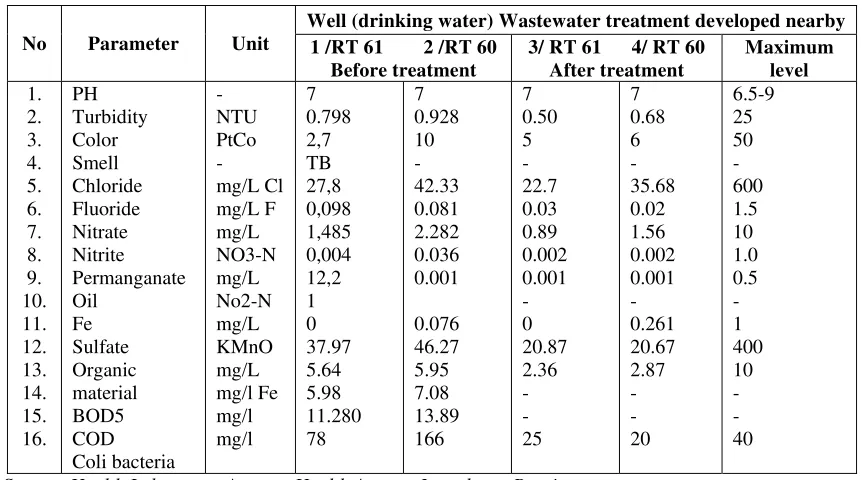
In order to know the impact of waste water treatment on water in nearby drinking wells, the laboratory test was conducted, especially for coli and BOD5 and COD. The test result as follows.
Table 4. Laboratory test in drinking water
Well (drinking water) Wastewater treatment developed nearby No Parameter Unit 1 /RT 61 2 /RT 60
Source: Health Laboratory Agency, Health Agency Jogyakarta Province
Toward Community-based Wastewater Management 219
3 MANAGERIAL ASPECT
The first step in managing wastewater at a grass root level is the creation of a communal organization involved with specific training. This organization developed themselves Tripikon-S and Sewage Treatment at their sub-neighbourhood with assistance from a Project Team. They developed Tripikon-S according to site conditions and worked in collaborative ways with different or same type organization. Environmental problem are basically an inter-organizational and network management problem that need a collaborative arrangement. Collaborative arrangements are a unique institutional forum, consisting of different processes different from the spontaneous coordination or the conscious management of a hierarchy (Agranoff and McGuire, 2003). Other organizations concerning the Code River are Communal Organization for River Conservation (Masyarakat Peduli Kali Blunyah) Code. Some activities launched in recent years were public campaign for river cleaning, a river tourism promotion, and a yearly fishing rod competition in Code River.
4 EFFECTIVENESS OF COMMUNITY-BASED WASTEWATER MANAGEMENT
Community organization at grass root level owing capital that is vital to the organization’s activity and helps solve their problem. Main capital of community organizations is social capital that maintains its sustainability. Social capital consists of norms, trust, and networks. The Institutional dimension of institution is for the purpose of carrying out the function of governance and is perhaps the most important determinant of environmental quality. Some criteria of institutional benchmarks include (Lohani in Stubbs and Clarke, 1996):
• Geographic coverage: do governing institutions have authority over the entire urbanizing area?
• Sectoral coverage and internal integration: are institution fragmented along the sectoral line? Are there multiple institutions working in parallel, and if so, do sufficient interagency coordinating bodies exist to carry out integrated project development effectively?
• Autonomy: Are urban management institutions sufficiently removed from central government to undertake activities that clearly benefit the urbanizing area? Autonomous functions are both administrative and financial.
• Articulation: are institutions sufficiently developed in term of interaction with their constituencies and the problems they are poised to solve in order to provide realistic responses to those problems?
Toward Community-based Wastewater Management 220
Table 5. Community-based wastewater organization (CWO)
No. Indicator Community-based organization
1 Geographic coverage Neighbourhood level
2 Sectoral coverage and internal integration Not fragmented
3 Vertical integration Don’t have vertical line with formal authority 4 Autonomy Full discretion and weak financially
5 Articulation Functional definition Free 6 Functional definition Clear
Based on above criteria, potentiality of CWO is very important to solve river and water pollution. CWO could cover a small area that is settled and provide wastewater management. Some activities relating to environmental management they currently manage are as follows
Table 6. Current environmental management of CWO in project area
Wastewater Solid waste
Managing public toilet Collection
Developing local drainage Transfer solid to transfer point Maintenance drainage Recycling
Collecting user charge Collecting user charge
Institutional mechanisms that need to be addressed are how the institutional relations amongst the District Office, Sub-district, Environmental Protection Agency of the City government and Provincial Government and how do they manage in planning, implementation, and evaluation.
ACKNOWLEGEMENT
The author gratefully acknowledge the contribution of SEA-UEM AIT and CIDA for providing financial support for this project.
REFERENCES
1. Agranoff, R. and M, McGuire, 2003. Collaborative Public Management, New Strategies for Local Governments, Georgetown University Press, Washington DC.
221
Urban Wastewater and Sanitation Situation in Vientiane, Lao PDR
Phengkhamla Phonvisai1 & Nowarat Coowanitwong2
1Pollution Control Division, Environment Department
Science Technology and Environment Agency, Lao PDR E-mail: [email protected]
2Urban Environment Management Field of Study
Asian Institute of Technology, Thailand E-mail: [email protected]
Abstract: Rural to urban migration, tourism and industrial sector growth have significantly contributed to increased waste production, both liquid and solid. Wastewater treatment needs more attention in urban environment. In Vientiane, water and sanitation management in the urban area is experiencing stagnant pollution. Unsanitary conditions and threat of seasonal pollution in selected spots is likely to occur and increase with the growing urban population. The sanitation system entails an on–site disposal of human waste without introduction of full water-borne sewerage with treatment facility and safe disposal arrangement. The majority of households rely on water flush latrines and are connected to a pit or chamber for containment of excreta. However, due to the low permeability of the soil and the high groundwater table around Vientiane, many soak-a-ways fail to operate effectively resulting in discharge of sewage from tanks into drainage channels or low lying areas. This results in polluted effluent overflows, environmental degradation and health hazards.
Keywords: Urban wastewater discharge, sanitation, environmental policy
1 INTRODUCTION
Urban Wastewater and Sanitation Situation 222
At the moment, Vientiane has a population of 692,900 people with a density of 176 people
per km2 (ADB, 2000). The population density is increasing at a rate of 4.7% per year (ADB, 2001).
The urban area is divided into 112 villages with a total area of approximately 30 km2 (ADB, 2001b). The core urban population has been estimated to be 180,410 people. The urban area of Vientiane is located between the Mekong River and a hinterland of swamps and ponds. The wastewater from individual households in Vientiane is discharged into open drains along the roads and into the natural wetlands in and around the city (Cecilia, 2003). Vientiane capital city (as the largest city) contains
almost 1,500 km2 of permanent and seasonal water bodies, floodplains, swamps and marshes. The
wetland areas supply a wide range of economically valuable goods and services, including fishery products, farming and natural resource collection activities, and flood attenuation, maintenance of water quality and supplies, and treatment of domestic, agricultural and industrial wastes (DANIDA, 1998).
Overtime, Urban Vientiane land has been going through tremendous transformations due to sprawls in agricultural cultivation, industrial developments and urbanization. The changes in land use affect the ecosystem in terms of land cover, land quality and capability, weather and climate, and the extent of land that can be sustained. The development projects include:
Rehabilitation of Sihom Area, UNCDF/UNDP, 1991-1997: The Vientiane Master Plan identified priority areas afflicted from environmental problems related to poor drainage, household sanitation, and access to services such as waste management. The priorities of the project were to improve the living conditions of the population of Sihom area through rehabilitation and upgrading, improve the sanitation and storm water drainage, and strengthen the institutional capacity.
Wastewater Management of Thatluang Marsh, EU, 1993: Thatuang wastewater management project was designed to improve wastewater treatment and drainage out of the central Vientiane area. The project built a system of stabilization ponds at Thatuang Marsh designed to serve an estimated
population of 44,590 for 2005 with a per capita BOD5 discharge of 45g/capita/day assuming 50% of
the pollutant load would reach the treatment plant.
Vientiane Integrated Urban Development Project, ADB, 1996-2000: The overall objective of the Vientiane Integrated Urban Development Project was to improve access to basic services and infrastructure, thus providing benefits of urban environmental health to the population of Vientiane. The project supported the formation of Vientiane Urban Development and Management Committee (VUDMC) to institutionalize urban planning and strengthen the development of the control system.
Improvement of Urban Environment in Vientiane, Danida, 2001-2004: The project aimed to continue support to the municipal planning with the development of linkages between green and brown environmental issues and increased village involvement in environmental planning, implementation and monitoring.
5
Urban Wastewater and Sanitation Situation 223 2 STATUS OF WASTEWATER AND SANITATION IN VIENTIANE
Through the years, the government has set up four water analysis laboratories in different regions throughout the country. These laboratories cooperate by exchanging information and dividing responsibilities over the water analysis processes in an efficient manner. For example, the management and control of water in the Mekong River and its tributaries are the responsibility of the water analysis laboratory of the Irrigation Department. The quality of water drinking is analyzed and laboratory of the Ministry of Health is responsible for it; water released from industries is handled by the laboratory of Ministry of Industry and Commerce. Wastewater in urban surroundings in VCC is taken care by the laboratory of Science Technology and Environment Agency.
For Thatluang wetland, its water quality is a part of the water quality-monitoring project of Mekong Secretariat, in the vicinity of VCC. Main problems found are wastewater and sewage (from the city area) which discharge into the marsh. A part of such water is diluted by irrigation water pumped from the Mekong River to the surrounding rice fields through various canal systems.
As known, urban centers are always attractive places for both educational institutions and employment opportunities, and increasing in-migration from rural to urban areas is commonly observed. Currently, Vientiane city lacks effective systems of development control, and therefore the means to control the future development and its concomitant environmental degradation are inefficient. The drainage system is shown to be inadequate. Added to that, the contaminated liquid waste with fecal matter from the latrines is being directly discharged into the drainage channels or
drains with oviform from septic tank effluents. This presents health risk, which would increase with
the rising urban populations with similar sanitation practices. It also leads to the contamination of underground water sources such as wells and eutrophication of water bodies leading to a pressure on urban water resources. Increased risks of water borne and other vector borne epidemics have been perceived. For example, stormwater drainage is found to be a serious issue in Vientiane city in the year 2000. The present system suffers from inadequate design and lack of maintenance. Most drains are clogged with garbage, reflecting the absence of an organized system for solid waste disposal in the city.
2.1 Wastewater discharge
Urban Wastewater and Sanitation Situation 224
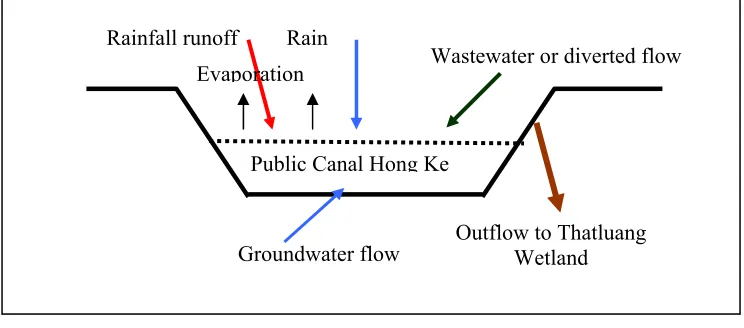
Figure 1. Water balance in the present situation
In Vientiane city, storm water drainage consists of roadside drains leading ultimately to
natural streams or rivers. Drains are generally not adequately interconnected and do not form a
network. Drains are lined in the center area, and covered in front of commercial establishments.
Water in the drainage system is invariablycontaminated with fecal matter from latrines and E. coli
formseptic tank effluent, presenting health risks. The absence of overall urban drainage planswith a functioning integrated network combined with lack of clear arrangements for maintenance causes
flooding and stagnant water pools over large parts of the urban center. Sanitation system in VCC
entails an on-site disposal of human waste without any introduction of full water-based sewerage with treatment facility and safe disposal arrangements (STEA, 2001). Such a system continues to have a detrimental impact on the public health by mixing sewage in the storm drainage system, polluting the natural water courses in the medium and the long term.
2.2 Sanitation and wastewater purification
Although the drainage system in Vientiane has improved somewhat as a result of the projects listed earlier, the situation of sanitation and wastewater purification is still very limited. Since the completion of the EU project, Wastewater Management of Thatluang Marsh, the stabilization ponds which were built as part of the project have been unused for wastewater treatment and are now being managed as aquaculture ponds. Similarly, the sewage waste treatment plant funded by ADB was built in a smaller size than what was originally planned. Moreover, it was not properly maintained. Due to complaints of smell by local residents, it was shut down and despite increased hauling cost, sewage is now disposed of at a secondary waste treatment plant 18 km outside of the city. However, the Danida project Improvement of the Urban Environment in Vientiane, gives hopes for a positive result of considerable improvements for urban residents in the core downtown area. The project is in the process of constructing communal septic tanks, improving the Nong Chanh Marsh in the center of the town, and will re-establish the use of the original EU built sewer line and stabilization ponds. Above all, these improvements are focused on the core downtown area and do not extend to other areas of the city or surrounding city areas.
Evaporation Rain
Wastewater or diverted flow
Outflow to Thatluang Wetland Rainfall runoff
Public Canal Hong Ke
Urban Wastewater and Sanitation Situation 225
The amount of industrial wastewater production around the city is little known as well as about the extent of industrial water pollution. According to the country’s Environmental Law (Provisions on Discharge of Wastewater from Factories, Ministry of Industry and Handicrafts decree No. 180/H), industries are responsible for the treatment of all wastewater and by-products produced as a part of the industrial processes. The Science Technology Environment Agency (STEA) is responsible for the assessment and monitoring of wastewater quality. STEA is currently in the process of developing an environmental monitoring system for the country as a whole but at this point, very little information is available about the industrial wastes.
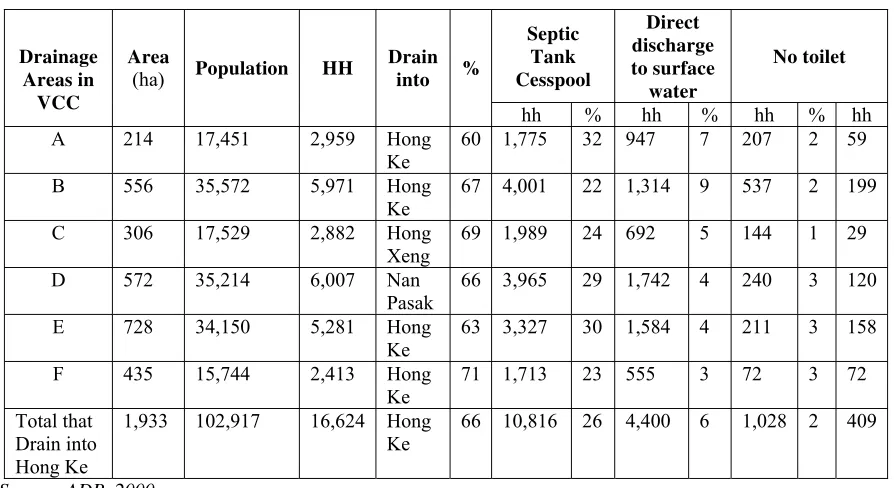
Table 1. Sanitation situation and needs in Vientiane and its surrounding areas
Septic
1,933 102,917 16,624 Hong Ke
66 10,816 26 4,400 6 1,028 2 409
Source: ADB, 2000
In relation to Sanitation and Wastewater Purification, Thatluang Marsh is currently performing wastewater treatment services for domestic wastewater that is being drained into it. As stated above, drainage areas: Urban protection area (A), Commercial area (B), Urban development area (E), and Resident area (F) drain via primary and tertiary canals to Hong Ke canal and then into Thatluang marsh (Table 1). The marsh is thus providing wastewater and sanitation services for household wastewater and sewage drainage. There are two major types of costs that are associated with artificially replacing the wastewater treatment and water purification services of Thatluang marsh:
• Construction or improvement of household sanitation facilities in areas that drain directly in the marsh.
• Extension of the waste treatment plant so that it can deal with increased waste load.
Urban Wastewater and Sanitation Situation 226
there are 1,256 households which directly discharge their sewage into surface water and 501 households with no toilet within areas are draining their wastewater into Hong Ke and Thatluang marsh.
It should be noted that with high water table and impermeable soils throughout the Vientiane Municipality, sanitation using cesspools or elevated soak-a-ways are largely inefficient and provide inadequate services.
3 SETTINGS OF WASTEWATER AND SANITATION MANAGEMENT
The Lao Government strategies on development and maintenance of urban environment infrastructure are based on achieving sustainable and affordable environmental improvement of its main urban center (STEA, 2001). Implementation priorities relate to specific urban center needs, which would be identified along with urban hierarchy adopted by the government. The management of water supply requires the government involvement and institutional capacity as well as financial resources for its development. Drainage master plan for VCC urban area, covering all catchments, needs to be given high priorities. Such urban drainage plans with the need for creating and maintaining functioning drainage networks, including identification of final points of discharge must be emphasized.
3.1 Public-private participation
In response to the deficiencies of centralized approaches to service delivery, in recent years, there has been increasing emphasis on the potential benefits of adopting decentralized approaches to sanitation and wastewater management. These relate to the opportunities for stakeholder involvement in decision-making and planning, financial advantages, and benefits of segregation of wastewater at source and the compatibility with local demands for wastewater reuse. In general, central elements that shape the institutional setting for environmental management include: a) the key actors in the public and private sectors whose motives and mandates significantly affect the urban water and sanitation; b) management functions that can be used to address environmental issues in the city, including the instruments of intervention and mechanism for coordination; and c) existing initiatives that affect efforts to manage wastewater and sanitation problems.
3.3 Wastewater and sanitation management function
Urban Wastewater and Sanitation Situation 227
However, the environmental impact assessment (EIA) process is being positively promoted and selectively implemented in Lao PDR.
3.4 Planning and policy development
The processes of planning and implementation can be addressed in partial aspects of environmental problem, since there are may be an ability to handle wastewater disposal within the municipality borders. However, water and sanitation disposal often calls for city-wide solution, metro-level authority to plan, coordinate, and execute a wastewater disposal program. The planning has generally not been an effective environmental tool, although monitoring varies according to the city’s level of economic and human resource development. It has been observed that coordination across different levels of the government has been improving in a more centralized manner although there still exist problems in recent decentralized policies.
In terms of environmental coordination and decision-making processes, intersected coordination to manage urban environmental affairs has been lacking and has become a problem in Vientiane city, although the coordinating mechanism given below has been established for urban development in Vientiane city.
• At the central government level, there is a planning body that is in charge of
synchronizing interdepartmental coordination for urban activities.
• At the city level, there is a community to coordinate sectoral program and projects from
loans (i.e., ADB loans).
• For implementation of infrastructure activities, there is a program to coordinate
investment and institutional strengthening (i.e., VUDAA).
4 CONCLUSION
Urban Wastewater and Sanitation Situation 228
ACKNOWLEDGMENT
The authors are grateful to the assistance of Science Technology and Environment Agency (STEA), Vientiane Urban Development Administration Authority (VUDAA), Science Technology and Environment Office of Vientiane City (STEO), as well as Saysettha, Sisathanak, and Hasayfong administration districts.
REFERENCES
1. ADB (2000). Country Environment Review: Lao’s People Democratic Republic, Policy
Coordination Unit, Asian Development Bank.
2. ADB (2001). Final Report, Sanitation, Drainage and Waste Water Management. Vientiane
Urban Infrastrucer and Services Project ADB-TA 3333-LAO- Vientiane Urban Development and Administration Authority.
3. ADB (2001). Report and recommendations of the President to the board of directors on a
proposed loan to the Lao People’s Democratic republic for the Vientiane Urban Infrastructure and Services Project. RRP: LAO 33432, Vientiane, Lao PDR.
4. Cecilia, T (2003). The links between urban and rural development, Development Planning
Unit, University College London
5. Cecilia, T (2003). The links between urban and rural development, Development Planning
Unit, University College London
6. DANIDA (1998). Environmental Problems of the Energy Sector, Presentation to DANIDA
Natural Resource and Environment Program, DANIDA, Vientiane.
7. Gerrard, P. (2004). Integrating Wetland Ecosystem Values into Urban Planning: The Case of
Thatluang Marsh, Vientiane, Lao PDR, and IUCN − the World Conservation Union Asia
Regional Environmental Economics Programming WWF Lao Country Office, Vientiane, Lao PDR.
8. Josef, L. (1993). Towards Environmental Strategies for cities, UMP Discussion Paper,
Washington DC.
9. Jonathan, P. and Kevin T. (2001). Decentralized wastewater management in peri-urban areas
in low-income countries, Department of Economic and Social Affairs, New York
10. MTPC and JICA (2002). The survey on existing road and drainage conditions in Vientiane
Municipality Project. Ministry of Communication Transport Post and Construction, Department of Roads and the Japan International Cooperation Agency, Vientiane, Lao PDR.
11. STEA(2001). State of the Environment of Lao PDR
229
Model Ordinance for Environmental Sanitation Solutions in the Philippines
William E. Ablong
Dumaguete City Vice-Mayor and USAID-LINAW Team Leader, Mayors’ League of the Philippines -Negros
Email: [email protected]
Abstract: The level of coliform bacteria in the coastal waters of Dumaguete City is 22 times more than normal. This is caused largely by the city’s untreated wastewater that leads straight to the sea. The resulting water pollution will continue to worsen because of the increasing human population and activities in the city. This paper discusses both the short-term and medium-term solutions to the city’s domestic wastewater. The Philippine Clean Water Act of 2004 (RA 9275) requires a city the size of Dumaguete to employ a septage management system. This means that septic tanks shall be pumped out periodically and treated in a septage management plant. Dumaguete, with the assistance of the LINAW project of USAID, is now working on the setting up of a biological wastewater treatment plant with a constructed wetland in a 3-hectare dry river bed. This project will properly treat and dispose the septage from the city’s 22,000 households and 2,500 commercial establishments, including schools, hospitals, public market, City Hall, and other institutions. The ultimate aim is to free the underground water of pollutants and restore the water quality of the Dumaguete Bay to its previous status many years ago. This paper likewise discusses the newly enacted Septage Management Ordinance of Dumaguete City which supplements the provisions and specifications of existing laws related to septage management as well as complements existing laws on clean water and building and plumbing regulations. The ordinance establishes a septage management system in the city and provides for the specific requirements for permitting, siting, designing, installing, approving and operating on-site wastewater treatment systems. It explains the rules and regulations governing the collection, handling, transport, treatment and disposal of domestic sludge and septage. The ordinance makes septage management system a basic deliverable service of the city. This law may be adopted by other local governments or they could use the model as a framework to add specific requirements that might be applicable to their particular jurisdiction.
Keywords: Water and sanitation, wastewater, septage, ordinances
1 INTRODUCTION:
Model Ordinance for Environmental Sanitation Solutions 230
The best way to approach this is to prepare a Model Ordinance for the regulation of on-site wastewater treatment and disposal systems. The enactment of Ordinance No. 18, Series of 2006, entitled “An Ordinance Establishing a Septage Management System in the City of Dumaguete” was in line with the Local Initiatives for Affordable Wastewater Treatment (LINAW) project carried out with the assistance of the United States Agency for International Development (USAID). Dumaguete was one of the four developing cities in the Philippines selected by the USAID for the three-year-old project, which was aimed at helping local government units implement Republic Act 8749 or the Clean Water Act. The other cities were Muntinlupa City in Metro Manila, Naga City in Camarines Sur, Iloilo City in Western Visayas.
Enacting local legislations in accordance with national policies and laws is a fundamental aspect of the wastewater management process to address deteriorating water quality and to reverse current trends.Local resolutions and ordinances are essential legal instruments to assist in improving the status of water resources and their management.
A septage management program is a good first step, readily implementable, affordable, and simple program that local government units and communities can adopt to fulfill the provision of the Philippine Clean Water Act.
2 LINAW PROJECT BACKGROUND
The Local Initiatives for Affordable Wastewater Treatment (LINAW) Project, a 2-year project started in October 2003 with funding from the U.S. Agency for International Development, was created to facilitate local responses to the urgent need for sanitation services in the Philippines. Together with the 3 other pilot cities (Naga, Muntinlupa and Iloilo), the project is assisting Dumaguete City in developing and implementing low-cost wastewater treatment systems to improve water quality management. It also assists the city in developing public awareness program on sanitation and wastewater problems.
The LINAW Project is now on Phase 2 and Dumaguete City has been included in the project along with Iloilo, Muntinlupa and Naga to bring planned pilot projects to completion. Dumaguete City has adopted some short-term and medium-term plans. Short-term projects include the improvement of septic tanks in the city and the installation of grease traps for restaurants and eateries. Medium-term projects will focus on the construction of a citywide septage management plant for domestic wastes, decentralized wastewater treatment facility for the public market complex and the business district, and community sanitation facilities.
3 BRIEF PROFILE OF DUMAGUETE CITY
Model Ordinance for Environmental Sanitation Solutions 231 Dumaguete has earned the distinction of being known as “the Center of Learning in the South,” or a "University Town". The city is also the service center of regional commerce and trade as well as the administrative center of national and provincial government offices. The city is a fascinating place of friendly, warm and hospitable people and has been known throughout the Philippines as the “City of Gentle People” as it is a quiet and peaceful town. This image is being enhanced by its vision for an ecologically-balanced city. Such vision is being pursued through projects and programs that protect, sustain, and enhance environmental quality.
Most of the people in Dumaguete have a set of issues that are equally immediate and real. Issues that most directly affect what the people hope to achieve for themselves and their families. Issues that relate to building a life free of poverty and deadly disease, with enough food and clean drinking water, in a clean and safe environment. It is simply intolerable to see the persistence of poor sanitation and limited access to clean water.
4 WASTEWATER SITUATION
Dumaguete is endowed with rich natural resources, including water, which are essential for the city’s economic development. Water resources of the city include inland freshwater (river, creeks and underground water) and marine (bay and coastal waters). City residents are largely dependent on underground water supply for its daily water consumption. In a previous study, the average water consumption of every person in Dumaguete is 30 gallons a day.
Most of the residences, businesses and institutions in Dumaguete City use septic tanks for wastewater treatment and disposal. However, most of these septic tanks are not properly designed, constructed or regularly desludged.
Water pollution is an increasingly important issue for Dumaguete City. In recent years, more and more residents of the city have come to realize the tremendous impact that water pollution have on the city’s economic development and well being. The city’s drainage system which has been in place for more than 50 years now, has converted the sea off the Rizal Boulevard into one giant septic tank. Untreated wastewater from various sources within the Poblacion area end up here. This resulted to the Class SD classification of the coastal waters of the city. Class SD waters are the lowest classes of water quality under the DENR standards.
Dumaguete wastewaters consist of washing and sewage effluents from homes, wastewater from hospitals, and industrial washings from oil depots, etc. Thus far, these liquid wastes are not subjected to treatment, primary or secondary, except sewage effluent which goes through septic tanks before being emptied to the general environment. But all of these wastewaters still contain large amount of polluting substances and microorganisms when released. 90% of the sewage generated in the city is not disposed or treated in an environmentally acceptable manner.
Model Ordinance for Environmental Sanitation Solutions 232
5 THE NEED FOR WASTEWATER TREATMENT: LEGAL BASIS
The city has worthwhile plans and ordinances designed to protect the water environment. On September 27, 2001, the City Council passed Resolution No. 438 , series of 2001, adopting the 5-Year Coastal Resource Management Plan of the city (2001-2005). This plan contains plans and strategies for the setting up of wastewater treatment facilities to control coastal water pollution and the degradation of the coastal ecosystem.
On November 8, 2001, the City Council approved the Comprehensive and Unified Coastal Resources Management Ordinance (Ordinance No.88, series of 2001). This ordinance prohibits all activities in the grounds or waters which result or likely to result hazards to human health. The ordinance likewise penalizes any person, entities, organizations or corporations to dispose or dump solid and liquid wastes in coastal areas (Section 58) for violation.
On October 14, 2004, the City Council adopted Resolution No. 367, series of 2004, declaring the dry river bed at Barangays Candauay and Camanjac as the Biological Wastewater Treatment Site. On June 2, 2005, the City Council passed City Ordinance No. 48, series of 2005, adopting the Environment Code of Dumaguete City. Chapter 8, Section 131 (f, g) mandates the construction of a city-owned, operated and managed sanitary sewer system and wastewater treatment plant. It also requires residences, business establishments, market complexes, academic institutions, housing subdivisions, hospitals and sanitary facilities to connect to the City-owned, operated and managed sewer system and wastewater treatment plant when these are already operational. User fees will be charged for the facilities.
It took the City Council 20 months to deliberate, improve and approve the City Environment Code which was drafted for 11 months by the E-Code multi-sectoral Technical Working Group chaired by the Vice-Mayor. Big and small workshops and consultations with concerned stakeholders, organizations and experts were conducted to draft the code. These local legislations are guided by the common vision for Dumaguete City developed during the formulation of the 5-Year Coastal Resource Management Plan participated in by leaders from both the public and private sectors and facilitated by the Coastal Resource Management Project, a technical assistance project of the U.S. Agency for International Development. The vision states for an “ecologically-balanced city, and as a center for quality education and dynamic trade”.
Aside from local legislations, the newly enacted Philippine Clean Water Act of 2004 (RA 9275) also mandates:
• That “each LGU shall appropriate the necessary land, including the required rights of way/road access to the land for the construction of the sewage and/or septage treatment facilities. Each LGU may raise funds to subsidize necessary expenses for the operation and maintenance of sewerage treatment or septage facility servicing their area of jurisdiction through local property taxes and enforcement of a service fee system.” (Sec. 7, par. 3)
Model Ordinance for Environmental Sanitation Solutions 233 • That non-HUCs shall employ septage management system (pumping out septic tanks and
treating the septage)
• That all subdivisions and commercial establishments must have sewage treatment facilities to get ECC and permit to operate
It is good to stress that the recently enacted Environment Code of Dumaguete City provides a guiding framework for improving compliance with the Clean Water Act as well as the Building Code and Sanitation Code of the Philippines {Chapter 8, Sec. 131, (a)}
6 SEPTAGE MANAGEMENT ORDINANCE
The Septage Management Ordinance of Dumaguete City provides for the desludging of septic tanks every 3-5 years from 22,000 households, 4,500 business establishments, 3 hospitals, 7 colleges and universities, and 17 elementary and high schools. Wastewater from septic tanks will be treated in a septage treatment facility in Bgys. Camanjac and Candauay utilizing the natural system of treatment without the use of chemicals and electricity. The capital cost of the facility which is P17M will be loaned from a local bank. A user’s fee will be collected from each household and a revolving fund based on a service cost recovery scheme will be established. Ultimately, through the facility the water environment is conserved and the well-being of the people is enhanced.
The ordinance provides for the specific requirements for permitting, siting, designing, installing, approving and operating on-site wastewater treatment systems. It likewise explains the rules and regulations governing the collection, handling, transport, treatment and disposal of domestic sludge and septage. The ordinance makes septage management system a basic deliverable service of the city.
Under the ordinance, building permits shall only be issued to new construction whose septic tanks have 3 compartments, located outside the building, 25 meters away from any water source, water tight, sealed and accessible for desludging. Regular desludging will make the effluent cleaner, the septage treated and the underground water supply free from any pollutant. The city is currently implementing the ordinance.
Following is the Resolution and Ordinance establishing a septage management system in Dumaguete City passed by the City Council of Dumaguete on April 6, 2006 and duly approved by the Provincial Board of the Province of Negros Oriental.
7 CONCLUSION: TACKLING THE SANITATION CHALLENGE
Model Ordinance for Environmental Sanitation Solutions 234
235
Community-Based Urban Sanitation Improvement for the Urban Poor
in Nam Dinh City, Vietnam
Nguyen T. Dan
Vietnam National Construction Consultants Ministry of Construction
37 Le Dai Hanh, Hanoi, Vietnam E-mail: [email protected], [email protected]
Abstract: Poor urban environment and sanitation in urban poor livelihood in Nam Dinh city has been contributed by the poor condition of drainage, frequent flooding, wastewater discharges, solid waste litter and bucket latrine spills. Limited state funding and inefficient upgrading works because of traditional top down approach in implementation over the time resulted in deterioration of the conditions of the urban poor living condition. A majority of the poor are low-income government civil staffs, pensioners, workers and small merchandisers, having low awareness on hygiene/sanitation and urban environmental related health issues. A Community Participation Program (CPP) of Nam Dinh Urban Development Project (NDUDP) funded by the Swiss Agency for Development Cooperation (SDC) launched in 1997 had implemented various initiatives to improve the situation. The program covered health and urban environment activities, strengthening the capacity of city Women Union (WU), providing hygiene education in schools, WU-managed revolving credit fund for improving household sanitation with the introduction of septic tanks to replace bucket latrines and assistance for community-based micro-drains improvement. Under the goal to enable Nam Dinh communities to “sustainably stand on their own feet” as the city Chairman stated, the NDUDP’s CPP aimed to help communities in Nam Dinh city to be able in self-managing their own community-based activities in general and hygiene/sanitation related health improvement in particular through the dissemination of messages on relationship between hygiene/sanitation and health and need of improvement to promote all people to contribute initiatives in hygiene behaviorial changes and solutions for living environment improvements using their own resources including finances. In the program implementation process, women took the key role in problems identification, solutions, decision-making and mobilization of resources from the community for implementation of solutions.
Keywords: Hygiene, sanitation and health, community participation, training, cost-effective options
1 BACKGROUND
Community-Based Urban Sanitation 236
was the third biggest in North Vietnam (after Hanoi and Hai Phong) and served as an economic, political and cultural centre of Nam Dinh Province in general and as the southern area in the Red River delta in particular.
Nam Dinh, once the textile heartland of Vietnam, is recently in a deep economic crisis. Exacerbated by rapid urbanization and shortage of state budget for infrastructure improvement with community lacking awareness on hygienic urban sanitation environment and health related issues the people rely on the state investment. The residential areas of the urban poor has been facing severe pollution of the living environment with frequent flooding due to inadequate drainage system, open wastewater flow, unhygienic sanitation, etc.
In such a context, the urban development project in Nam Dinh city funded by the Swiss Agency for Development Cooperation was launched, initially for a large-scale drainage and pilot water supply service improvement, restructuring of municipal offices and their roles related to provision of public utility services, as well as setting up community participation program dealing with environmental health issues and micro-infrastructures, such as micro-drains and access footpaths, household sanitation facilities and septic tanks. These activities laid the foundations for a dynamic partnership between the municipality, civil society and the private sector. Currently, the ongoing 3rd phase of the project is seeking to capitalize on the initial results and to consolidate relations between the stakeholders.
Community participation program under Nam Dinh urban development project lasting for 6 years (1997-2003) in 2 phases of the project included a range of sub-programs covering Environmental Health and Micro Activities (EHMA), strengthening the capability of the Women Union of the city, hygiene education in schools, construction of septic tanks using revolving credit fund managed by the Women Union for improvement of the household sanitation facilities and community consultation for urban micro-infrastructure improvement. The program was successful beyond expectation and several sub-programs were gradually transferred to the municipality and have been sustainably replicated by the municipality.
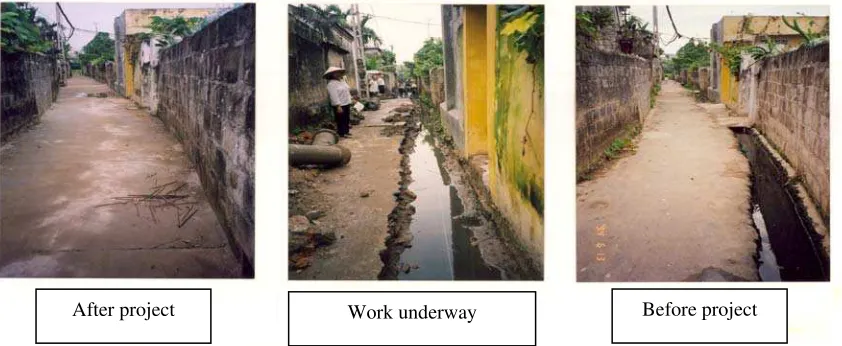
Figure 1: 210m of sewer and 367m2 of access footpaths was upgraded at a cost of $430
Community-Based Urban Sanitation 237 This paper presents the major achievements of the community-based micro-infrastructure (including micro-drains and access footpaths) improvement of sub-program, methodology to promote participation from community in Nam Dinh city and lessons learned from this model.
2 OBJECTIVE AND ACHIEVEMENTS
The overall objective of the community participation program (CPP) is to help Nam Dinh people to be able confident in managing their own community activities and ultimately to institutionalize community programs. The targets of the program is to enable people in the project-participated by communities to continue such activities piloted by the project and replicate to another areas with the support from the local government authority. In addition to that, by doing so, capability, creativeness, awareness and knowledge on environmental sanitation and method to improve living environment of the Nam Dinh people will be improved. The local government staffs involved in the program also get their capability, skills and methodology improved to receive, maintain and expand the program when the project is phased out.
The specific objectives of the CPP include raising awareness for people on the link between their living environment and health to promote people to contribute initiatives to change hygienic sanitation behaviour and empower the community to deal with their environment-related problems using their own resources including finance, manpower and expertise.
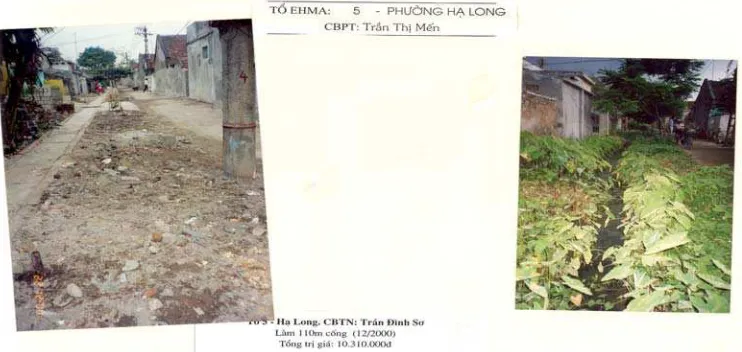
Figure 2: 110m of culvert was constructed at a cost $660
Community-Based Urban Sanitation 238
should do, they were willing and happy to participate and make contribution to solve their own problems. The program was gradually transferred to the municipality and a Community Consultation Center (CCC) was established under the municipaladministration sustainably maintaining the program after the project phased out.
With the catalytic financing mechanism of $100 for each selected community group, $50 for each related group (group having related drain/sewer), and VND500,000 (equal to about $45) for each group under the city CCC management, by the end of 2003 about $70,000 of the catalytic support and more than $550,000 of contribution from community have been implemented.
3 METHODOLOGY TO PROMOTE COMMUNITY PARTICIPATION
3.1 Proper community participation process
Community program is based on the foundation of a strong awareness raising campaign through which people get knowledge on the link between their living environment and health thus promoting community to contribute resources including idea on solution and implementing initiatives to settle their own identified problems.
Steps in community participation process to promote changes in the EHMA program is presented in the diagram below:
Figure 3: Steps in community participation process
Step by step, with assistance from the project consultants and motivators, the community can confidently identify their problems, propose idea and solutions, estimate resources required, select priorities appropriately to suit their resources and available capacity. Community makes decision for their activities and organizes implementation by themselves.
Process circle was defined one year with three rounds of training workshops organized for motivators, volunteers, community group heads and grassroot government leaders. The first training organized at the beginning of the circle introduced health/sanitation/environment messages, training
DEMAND IDENTIFICATION (analyse survey results to identify improvement demands and prioritise actions and make decision) TRAINING (introduce program and knowledge, disseminate health/ environment messages and discussion, skills training)
ACTION
Implement environmental sanitation improvement activities
AWARENESS (on link between health and environment, have survey of sanitation condition, present findings and discussion)
Community-Based Urban Sanitation 239 on method and skill of dissemination of messages to people. Message dissemination was practiced within 6 months following the training. During this period, through messages and community meetings, people gained enough knowledge/awareness on their problem and improvement need. In the next 6 months, following the second training, group survey, problem identification, activities selection and implementation will be completed. At the end of the year for completing a circle, the 3rd training on ending a cycle, doing assessment, drawing lessons learned and planning replication for the next circle for program sustainability was carried out.
Figure 4: Training on self survey, priority selection and work execution
3.2 Effective training method and contents
3.2.1 Proper and adequate training target
Training target includes people directly and indirectly participating in a program, as the community term here is understood by including all regardless of gender, position and status, provided that they have a common target, that is to improve environmental sanitation for the better health of the community.
Proper training contents: Training was conducted for various target groups on all subjects covered in the program such as health and sanitation, self survey, development and implementation of activities and maintaining programs. Program motivators were also trained at different skills such as conducting community meetings, promoting community, working with group activities and supervision forms, speech skill, presentation skill, etc.
Knowledge and skills provided at the training were tested, applied and improved during practice. Each training has a timeframe of 6 months planned for practicing and applying the knowledge and skills provided. During this time both the community and the program staffs – motivators, coordinators and volunteers – got further trained through the practice. The initial knowledge was just catalyst.
Community-Based Urban Sanitation 240
knowledge of the trainees thus making them ready for practice. The trainers are to provide knowledge and to help the trainees to turn this knowledge into practical action.
The Motto
Implementation and Supervision: The most important step of self survey and action is to trust in the community’s capability and initiatives. Decision making on the course of action is not by the consultant or the coordinators, and neither by the motivators or the volunteers but it must be jointly by all the households in the community group as problems, solutions, resources and standards are theirs, and they are the beneficiaries of their working results and contributions. Practically, the standards will be improved through their awareness, experience and activities. Therefore, doing improvement activities will help them achieve higher standards.
Repeating project circle: In the next project circle, complete activities of the previous circle will be repeated, i.e. health/ sanitation/environment message dissemination, self survey and improvement activities. This is repeated to strengthen a concept that one should not stop learning and should do more and more to improve one’s living standard even without external financial support.
Following the community participation model in improvement of sanitation conditions, community groups continue to apply the same process to deal with other their problems such as drain desludging, solid waste collection, communal toilet improvement, etc.
4 ROLE OF THE INVOLVED PARTIES
Giveb below is the interacting relationship and role of the parties involved in the community participation process.
Learning must go together with practicing
The consultant is a person who introduces the process, provides training and guides the process implementation
Coordinator is a person representing the Wards People’s Committee, who understands, permits, monitors and promotes community activities
Households in the project-participating in community groups and volunteers are the decision-makers and activity implementers
Motivators are the bridging persons between the community groups and coordinators, consultants and also as persons who assist, monitor and
Community-Based Urban Sanitation 241 5 IMPORTANT FACTORS ENSURING SUCCESS OF THE PROGRAM
An appropriate and enthusiastic crew working for the program, and a suitable process for community are the two decisive factors for the success of the program.
The city leaders: As a member of the crew, the city leaders must understand community problems, sympathize with community difficulty, have perspective vision to welcome changes, support their initiatives, facilitate them with enabling of policy and legal framework and proper payment for the coordinators and motivators.
Program staffs: The consultants, both local and international, must be the resource personnel with qualified and experienced knowledge in community issues and skills in community participation program. Meanwhile the local staffs – motivators, coordinators, volunteers – must be creative and supportive, willing to learn and to help, have good nature, sympathize with the community and not fear hardships but be willing to work for the community. All members of the crew must be enthusiastic with a motto “living and working for the community”.
Suitable process: As it is a community-based program and activities, the process and activities must be appropriate for the community level conditions, i.e. clarity, understandability, flexibility, low cost and lowtech and addressing the community problems that are essential.
6 IMPACTS OF THE PARCIPATORY APPROACH
6.1 Attract attention and investment from the local-city government
To receive a program transferred by the project, the city has established a Community Consultation Centre with one coordinator and 12 motivators arranged with a support fund from the city state budget. Till date, the community program is institutionalized and continued to run for the rest of community groups in all the 15 wards of the entire city.
Cost-effective program: It was summarized that a ratio of the state budget and community contribution in this program is almost 10:90, much more effective than the common government “the state and people doing together” program where this ratio is 50:50. On the other hand, it is the most cost effective program because the community selected the least cost option and supervised by themselves so that nothing was wasted. It means that this program saved the state budget and kept contribution from the community to minimum.
6.3 Contagious impact
Community-Based Urban Sanitation 242
6.4 Potentials and creativeness from communities are exploited
This program promoted communities not only in raising awareness on environmental sanitation but also promoted them to practice changes for better health. Below are the changes practiced by the community.
Changes implemented with support from the project
Constructing and upgrading drains, sewers and access footpaths, making cleaner areas near public taps, etc. Changes implemented purely by
community contribution
Cleaning drains, channels, removing accumulated solid wastes, making playground for children, planting trees, installing public lighting
Changes implemented with no cost Cleaning public toilets, following regulation on dog keeping, no littering of waste, regular area cleaning campaign.
Changes implemented purely by the household cost
Construction of septic tanks and hygienic toilets, installing water supply connection, using covered waste bins.
Changes implemented by the households with no cost.
Change hygiene behavior such as washing hands with soap, covering food well, etc.
Promoted self-reliance of the community: Ideology of reliance on support or provision or subsidy from the government among the community is eliminated. The community is fully accountable with its own problems. This impact is generated not only among the project-participating communities but largely over the whole city and also among the individual households.
7 LESSONS LEARNTED
As analysed with the illustrated facts above, the best lesson learned from this practice is a synchronized condition enabling the success of the program, with the availability of the three factors which make it stable like a 3-legged tripod:
• Technical factor: Community-based participatory process • Human factor: Enthusiastic program staff crew
• Legal factor: Supportive local (city) government leaders with bright and practical vision for forwarding the changes
Community-Based Urban Sanitation 243 ACKNOWLEDGEMENT
This project, including community participation program, was funded by the Government of Swizerland. The author wishes to thank the project’s program consultant team for compilation of the information used in this paper.
REFERENCES
1. Annual Evaluation Reports of Community Participation Program of Nam Dinh Urban Development Project, Phases 1 & 2.