The 2nd International Conference on Science, Technology, and Humanity ISSN: 2477-3328
The Potency of Kitolod
(Isotoma longiflora (L)Presl.) Herb Extract as a Cure
for Cervical Cancer: an in Vitro Study of Hela Cells
Atikah Hapsari,1* Dhinar Asti,2 Selviana,3Ria Hidayati,4 Novea Kumalla,5 Andi Suhendi6
Faculty of Pharmacy, Muhammadiyah University of Surakarta, Surakarta *[email protected]
Abstract
Cervical cancer is the leading cause of death in women in the world. Cases of cervical cancer are the majority causes of death occurring in developing countries. The existing medicines which have a lot of functions as anticancer, however, still can damage the normal cells in our body. Cancer treatment using chemotherapy also has some side effects. The condition encourages researchers to explore anticancer cure made of natural ingredient. This research was conducted to find the potency of ethanol extract of herb kitolod (Isotoma longiflora (L) Presl.) as a cervical cancer cure to heLa cell. The method being used for the cytotoxic test on HeLa cells was MTT assay. Absorbant performed by ELISA reader at a wavelength of 595nm. Phytochemical screening which had been conducted showed a significant result that kitolod plants contain secondary metabolites compounds such as flavonoids, steroids, saponins, tannins and alkaloids. The results of cytotoxic test of the kitolod herb ethanol extract on HeLa cells by using MTT assay method acquired a value of IC50of ββ7 g/mL. This study showed that the ethanol extract of the herb kitolod had the potency to inhibit cervical cancer cells (HeLa cells) in a moderate ability.
Keywords: Anticancer, Kitolod, MTT assay, HeLa cells.
1.
Introduction
Cancer is a disease characterized by an irregular cell growth and the ability of cells to invade other biological systems either by growing directly into adjacent systems (invasion) or by moving cells to distant spots (metastasis). The irregular growth causes damage to DNA, resulting in mutations to vital genes which control the division of the cells, and other functions (Gale, 2000). Cancer has been the main cause of high mortality rates; it has been estimated that each year there are 190,000 new cancer patients, and a fifth of them will die.
Among various types of cancer, one of the cancers with the highest rank of causing death is cervix cancer. Cervical cancer is the growth of a group of abnormal cells in the cervix (mouth of the womb). HeLa cells are cervical cancer cells which caused by human papillomavirus infection (Tambunan, 1995). The data acquired from WHO in 2003 stated that around 500,000 women each year were diagnosed to have cervical cancer, and nearly 60% of them died. Cervical cancer in developed countries ranks fourth after endometrial cancer, while in developing countries, it ranks first (Rasjidi, 2009). In Indonesia, it is estimated that there are about 40 new cases each day and 50% of them died because of the disease. Epidemiologically, cervical cancer tends to occur in the age of 33-55 years; however, it can also occur in younger age (Emilia, 2010).
The 2nd International Conference on Science, Technology, and Humanity ISSN: 2477-3328
insensitivity to anti-proliferation signals and the ability of cancer cells to avoid apoptosis program (Talib and Mahasneh, 2010). In Indonesia, various herbs have been applied as an alternative therapy to cure cancer. Many herbs are known to be anticancer since they have anti-proliferative effects against cancer cells, which can inhibit the growth of cancer cells (Rungrojtrakool et al., 2012). One of the potential plants which can be developed as anticancer is Kitolod herb.
Kitolod (Isotoma longiflora (L) Presl.) is a kind of plant which comes from the West Indies and can be found in Indonesia; it is commonly used as a traditional medicine. It usually grows around the bush, streams, or in other places which have enough moisture. Based on an empirical experience, it is proven that kitolod plants can be used as a traditional medicine for asthma, bronchitis, laryngitis, anticancer, eye medication, anti-neoplastic, anti-inflammatory, hemostasis, and analgesic (Hariana, 2008). Based on these descriptions, it is necessary to conduct further research on the potency of kitolod herb as a cancer medicine for inhibiting the growth of HeLa cells.
2.
Material and Method
2.1. Material
a. Tools
The conduct of the research used rotary evaporator, water bath, a Buchner funnel, oven, blender, pans, wood mixers, electric scales (Sartorius), glassware, compressors, liquid nitrogen
tanks, microscope, CO2 incubator, ELISA reader, Laminar Air Flow (Labconco), conical tube,
96 well plate, hemocytometer, autoclave, cell counters, micropipette (soccorex), vortex, small test tube, small test tube rack, eppendorf, yellow tip, blue tip, white tip, object glass, deck glass, labels, digital cameras, UV lamps, capillary tube, and the elution chamber.
b. Material
The materials being used in this study are a plate of silica GF254, acetone, aluminum foil,
methanol pro analysis and chloroform pro analysis to test TLC, HeLa cells that were obtained from the collection of Research and Integrated Testing Laboratory of Gajah Mada University, kitolod plants that was collected from Sukoharjo Kartasura, acetone, 96% ethanol, distilled water, culture medium RPMI 1640 (Rosewell Park Memorial Institute in 1640), 10% FBS, sodium bicarbonate, aquabidest sterile, PBS, trypsin-EDTA, solution of MTT, SDS 10% in HCl 0.1 N, and 100% DMSO for cytotoxic test.
2.2. Method
a. Compounds Content Test with TLC
The research conducted stationary phase activation, that was, silica gel GF254 on a oven
with a temperature of 100oC for 30 minutes. Elution system was done by using mobile phase,
in which the ratio between two substances was chloroform: methanol (7: 3). Test solution was
spotted several times on silica gel GF254 plate and left until it dried, then viewed under UV254
nm and UV366 nm.
b. Phytochemical Screening
Phytochemical screening was conducted to determine what compounds contained in the
kitolod herb (Isotoma longiflora (L) Presl.) by using test tube method. Qualitative test were
The 2nd International Conference on Science, Technology, and Humanity ISSN: 2477-3328
c. Alkaloids
250mg powder was added 1mL 2N HCl and 9ml distilled water, heated in a water bath for about 2 minutes, let it cool and strained. Put 3 drops of filtrate on watch glasses, by adding few drops of Bouchardat LP solution. The herb positively contained alkaloids when it showed brown-black precipitates.
d. Flavonoids
250mg powder was added methanol and filtered. Put 3 drops of filtrate on a filter paper, then steam and add a few drops of ammonia. The herb positively contained flavonoids if there were yellow spots on the filter paper.
e. Steroids
250mg powder was reconstituted with 2mL of chloroform, and then added 10 drops of
acetic anhydride and 3 drops of concentrated H2SO4. The herb positively contained steroids
when a red color solution was formed, then turned into a blue-green color.
f. Tannins
250mg powder and 2% NaCl was added and then filtered. Then, added by few drops of 1% gelatin solution. The herb positively contained tannins if precipitation was formed.
g. Saponin
250mg powder was added to 10ml of distilled water in a test tube, then filtered and shaken. Then, added 1 drop of 2N HCl. The herb positively contained saponin if it formed stable foam for approximately 30 seconds.
2.3. Cytotoxic test
A sample of 10 mg was weighed and dissolved in 100 mL of solvent DMSO 100%. The substock was prepared from stock solutions and added culture medium to obtain a concentration of 100, 50, 25, 12.5, 6.25 µg/mL. All processes must be done in sterile conditions and inside the Laminar Air Flow.
HeLa cells which had a density of 10,000 (104) were distributed into 96 well plate and
incubated overnight. After a night, the plate was taken from the incubator and the used media were discarded. The test solution in the form of ethanol extract was distributed into each well
of 100 mL and then was incubated in CO2 incubator. At the end of incubation, the culture
medium containing the discarded samples, then added 110 mL of culture medium that containing MTT solution of 5 mg / mL into each well and was incubated for 4 hours at the
temperature of 37o C. The cells which were still alive, would reduce MTT and formed purple
formazan crystals. After 4 hours, the researchers added 100 mL stopper (10% SDS in 0.01 N HCl) in a medium containing of MTT. Then the plate was coated by aluminum foil and was placed at the room temperature overnight. The results of MTT was read by using an ELISA reader with an absorbance wavelength of 595nm (Dewi, 2012).
3.
Results and Discussion
3.1. Thin Layered Chromatography Test (TLC)
TLC test was done by using the stationary phase silica GF254 and mobile phase of
The 2nd International Conference on Science, Technology, and Humanity ISSN: 2477-3328
3.2 Phytochemical Screening of Herbaceous Kitolod (Isotoma longiflora (L) Presl.)
Phytochemical screening was conducted to determine what compounds contained in kitolod herb. Phytochemical screening was done by conducting tubes test for flavonoid, steroids, saponins, alkaloids, and tannins compounds. The materials used for the tubes test was a powder of the whole part of kitolod plant. The results obtained from the tubes test showed
that kitolod plants (Isotoma longiflora (L) Presl.) positively contained flavonoids, steroids,
saponins, tannins, and alkaloids.
Figure 1. Chromatogram of kitolod extract
3.3 Cytotoxic Test on HeLa Cells
Cytotoxic test was conducted to see whether the ethanol extract of kitolod (Isotoma longiflora (L) Presl.) had the ability to inhibit the growth of HeLa cervical cancer cells. The method used for the cytotoxic test was MTT assay. The advantages of MTT method was easy, fast, had sensitivity and high productivity (Ferrari et al., 1990).
The principle of the method of MTT, the occurrence of the reduction of yellow tetrazolium salt MTT (3- (4,5- dimetiltiazol-2-yl) -2,5-difeniltetrazolium bromide) by reductase system. Succinate tetrazolium which was included in the respiratory chain in the mitochondria of living cells to form purple formazan crystals and not water soluble. The addition of reagent stopper (nature detergenic) would dissolve the colored crystals, then it was measured for its absorbance by using an ELISA reader at a wavelength of 595nm (Dewi, 2012).
The results obtained from the cytotoxic test of ethanol extract of the herb Kitolod
(Isotoma longiflora (L) Presl.) showed that the IC50 value of ββ7 g/mL. The following tables
The 2nd International Conference on Science, Technology, and Humanity ISSN: 2477-3328
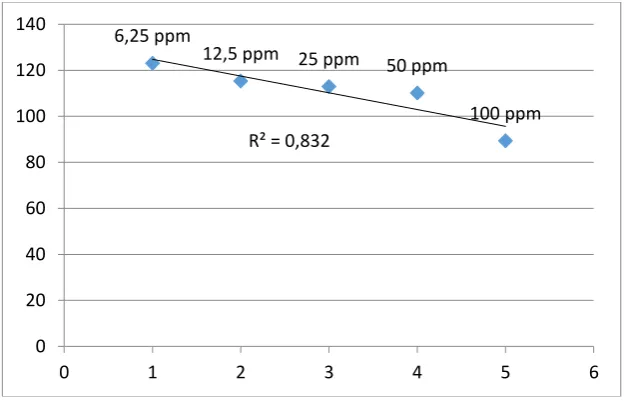
Table 1. Concentration series (ppm) and % Viability cells
Concentration % Viability cells
100 ppm 89,38
50 ppm 110,14
25 ppm 112,97
12,5 ppm 115,33
6,25 ppm 123,11
The results of the linear regression of concentration vs% viability cells was obtained on the
standard curve Y = -0.321 X + 122.641 with a value of R = -0.973.
Figure2. Picture of confluent cells Figure 3. Picture of death cancer cells (density of the cells up to ±80%) at a concentration of 100 µg/mL
Figure 4. Relationship graph on the Concentration Vs %Viability cells
4.
Conclusion
Kitolod plants (Isotoma longiflora (L) Presl.) positively contain flavonoids, steroids,
tannins, saponins and alkaloids. The result of extrapolation ethanol extract of herbaceous
6,25 ppm
12,5 ppm 25 ppm
50 ppm
100 ppm R² = 0,832
0 20 40 60 80 100 120 140
0 1 2 3 4 5 6
The 2nd International Conference on Science, Technology, and Humanity ISSN: 2477-3328
kitolod showed that the substance had moderate potential to inhibit the growth of HeLa cells
with IC50value of ββ7 g/mL.
References
Dewi D., 2012, Prosedur Tetap Uji Sitotoksik Metode MTT, Yogyakarta.
Emilia O., 2010, Bebas ancaman kanker serviks, Media pressindo, Yogyakarta.
Ferrari M., Fornasiero C.M. and Isetta A.M., 1990, MTT Coloricmetric Assay For Testing
Macrophage Cytotoxic Activity in Vitro, Journal of Immunological Methods, 131, 165–
172.
Gale D., 2000, Rencana Asuhan Keperawatan Onkologi, EGC, Jakarta.
Hariana A., 2008, Tumbuhan Obat dan Khasiatnya, Cetakan Ke., Penebar Swadaya, Jakarta.
Rasjidi I., 2009, Epidemiologi Kanker Serviks, Cancer, III (3), 103–108.
Rungrojtrakool P., Siripong P., Yahuafai J., Chuakul W. and Temsiririrkkul R., 2012, Antiproliferative Activity against Various Cancer Cells and Phytochemical Components of Thai Herbal Formula, Mahidol University Journal of Pharmaceutical Sciences, 39 (2), 7–14.
Talib W.H. and Mahasneh A.M., 2010, Antiproliferative activity of plant extracts used against
cancer in traditional medicine, Scientia Pharmaceutica, 78 (1), 33–45.
Tambunan W.G., 1995, Diagnosa dan Tatalaksana Sepuluh Jenis Kanker Terbanyak di