Methodological Advances
in Educational
Effectiveness Research
Bert P.M. Creemers,
2 Park Square, Milton Park, Abingdon, Oxon OX14 4RN Simultaneously published in the USA and Canada by Routledge
270 Madison Avenue, New York, NY 10016
Routledge is an imprint of the Taylor & Francis Group, an informa business
© 2010 Bert P.M. Creemers, Leonidas Kyriakides and Pam Sammons for selection and editorial material. Individual contributions, the contributors.
All rights reserved. No part of this book may be reprinted or reproduced or utilized in any form or by any electronic, mechanical, or other means, now known or hereafter invented, including photocopying and recording, or in any information storage or retrieval system, without permission in writing from the publishers.
British Library Cataloguing in Publication Data
A catalogue record for this book is available from the British Library Library of Congress Cataloging-in-Publication Data
Creemers, Bert P.M.
Methodological advances in educational effectiveness research/Bert P.M. Creemers, Leonidas Kyriakides, and Pam Sammons. 1st ed.
p. cm.
Includes bibliographical references and index.
1. Education Research Methodology. I. Kyriakides, Leonidas. II. Sammons, Pam. III. Title.
LB1028.C736 2010
370.7′2 dc22 2009048160
ISBN10: 0 415 48175 9 (hbk) ISBN10: 0 415 48176 7 (pbk) ISBN10: 0 203 85100 5 (ebk)
ISBN13: 978 0 415 48175 5 (hbk) ISBN13: 978 0 415 48176 2 (pbk) ISBN13: 978 0 203 85100 5 (ebk)
This edition published in the Taylor & Francis e-Library, 2010.
To purchase your own copy of this or any of Taylor & Francis or Routledge’s
collection of thousands of eBooks please go to www.eBookstore.tandf.co.uk.
List of contributors vii
List of figures viii
List of tables x
Preface xii
PART A
The state of the art of Educational Effectiveness
Research: challenges for research methodology
1 Background to Educational Effectiveness Research 3 2 Methodological issues in Educational Effectiveness Research 19 3 Theory and research: the problem of causality 37 4 Theory-driven evaluation studies: establishing links between
research, policy and practice 59
PART B
The contribution of different methodological
orientations: the development of educational
effectiveness research
5 Longitudinal designs 77
JAN-ERIC GUSTAFSSON
6 Experimental studies in education 102
ROBERT E. SLAVIN
7 Applications of mixed methods to the field of Educational
Effectiveness Research 115
8 Using Item Response Theory to measure outcomes and
factors: an overview of Item Response Theory models 153 NORMAN VERHELST
9 IRT models: parameter estimation, statistical testing and
application in EER 183
NORMAN VERHELST
10 Using Generalizability Theory 219
GEORGE A. MARCOULIDES AND LEONIDAS KYRIAKIDES
11 Multilevel modelling 246
HANS LUYTEN AND PAM SAMMONS
12 Structural Equation Modelling techniques 277
GEORGE A. MARCOULIDES AND LEONIDAS KYRIAKIDES
13 Meta-analyses of effectiveness studies 303
LEONIDAS KYRIAKIDES AND BERT P. M. CREEMERS
PART C
Methodological advances and EER: retrospect and
prospect
14 Conclusions for the development of EER 327
Appendices to Chapter 10 348
Appendices to Chapter 12 351
Authors of the book
Bert P.M. Creemers, Centre for Learning and Teaching, University of Groningen. [email protected]
Leonidas Kyriakides, Department of Education, University of Cyprus. [email protected]
Pam Sammons, Department of Education, University of Oxford. [email protected]
Authors of/contributors to Part B of the book
Jan-Eric Gustafsson, University of Gothenburg, Sweden. [email protected]
Hans Luyten, University of Twente, Department of Educational Organisation and Management. [email protected]
George A. Marcoulides, Graduate School of Education, University of California, Riverside. [email protected]
Robert E. Slavin, Johns Hopkins University and University of York. [email protected]
Charles Teddlie, Department of Educational Theory, Policy and Practice, Louisiana State University. [email protected]
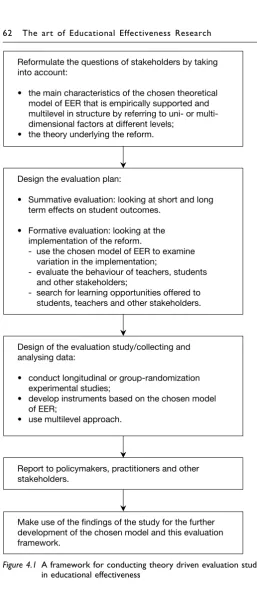
4.1 A framework for conducting theory-driven evaluation studies
in educational effectiveness 62
5.1 An autoregressive model for repeated measures 95 5.2 An autoregressive and cross-lagged model for bivariate
measures 95
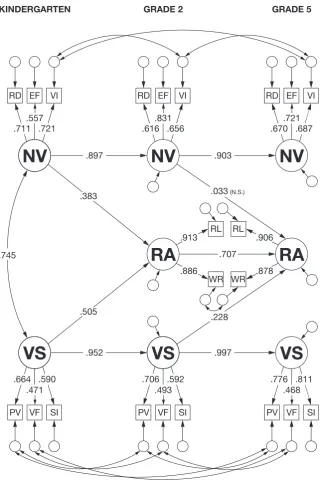
5.3 An autoregressive, cross-lagged model for development of
reading and cognitive abilities 97
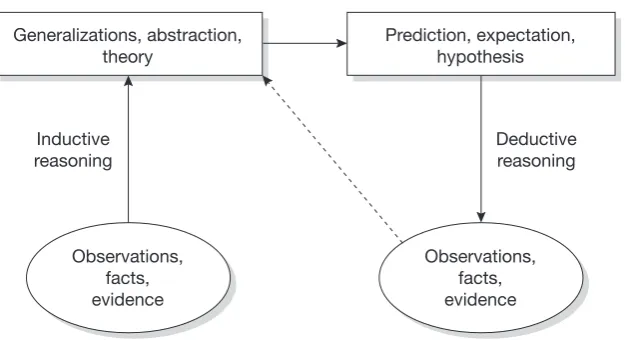
7.1 The inductive–deductive research cycle (cycle of scientific
methodology) 117
7.2 Graphic illustration of sequential mixed designs 120 7.3 Summary of VITAE sampling design 138 7.4 Teachers’ selves as factors influencing effectiveness 141 8.1 Graphical representation of scalogram analysis 158 8.2 Item response functions in the Rasch model 159 8.3 Two items with equal difficulty but different discrimination 165 8.4 Two items in the 3PLM with equal discrimination and
difficulty 167
8.5 The normal ogive model using latent responses 168 8.6 Similarity of the normal ogive and the logistic models 170 8.7 Category response functions in the NRM 173 8.8 Two examples of the partial credit model 175 8.9 Category response functions in the GRM 178
9.1 Simple two-group designs 184
9.2 Anchor test design 185
9.3 Two block-interlaced anchoring designs 185 9.4 Test design for developmental studies 186 9.5 A design suited to longitudinal studies 187 9.6 DIF of a PISA mathematics item (DIF is with respect
to cycle) 202
9.7 Factor pattern of reading and listening items 207 9.8 Conditional bias of the ML and the WML estimators in the
10.1 A Structural Equation Model for estimating the relative
generalizability coefficient in a two-facet crossed design 234 12.1 Commonly used symbols to represent SEM models in path
diagrams 279
7.1 Typology of mixed methods research designs and analytic
techniques 118
7.2 An example of iterative sequential mixed methods designs: the ISTOF
QUAL-QUAN-QUAL-QUAN-QUAL-QUAN-MM design 144
8.1 Collapsing categories 176
9.1 Bivariate frequency table for item i 200 9.2 Results of the simulation study 215 10.1 ANOVA estimates of variance components for a hypothetical
one-facet crossed design 223
10.2 Generalizability study results for teacher performance data 228 10.3 Data for first hypothetical high jumping example 238 10.4 Data for second hypothetical high jumping example 238 10.5 Data for third hypothetical high jumping example 239 11.1 Gender effect on mathematics in multilevel analysis 252 11.2 Gender effect on mathematics in OLS regression analysis 252 11.3 Frequency distribution of home background (parents’ education
and origin) 254
11.4a Predictors of school recommendations – first model 256 11.4b Predictors of school recommendations – second model 256 11.5 Descriptive statistics for language skills 258 11.6 Growth in language skills over time 259 11.7a Language and mathematics – zero model 261 11.7b Language and mathematics – model 1 (home background
characteristics) 263
11.8 Difference of effects for language and mathematics 263 11.9 Variance components cross-classified model for GCSE exam
score as response analyses/models 270 12.1 Selective output from Mplus analysis of example CFA model 292 12.2 Selective output from Mplus analysis of example structural
regression model 294
13.1 Characteristics of studies investigating the effect of school-level factors on student achievement and types of effects identified 318 13.2 Predicting difference in effect sizes of each of the five school
Compared to other areas of research in the social sciences and even in education, Educational Effectiveness Research (EER) has had a relatively short history of about 40 years. This short history is, however, already fairly well documented and in most cases the authors have given recommendations for the development of EER in the future. However, although there have been many reviews and several handbooks focusing on EER, there has been little systematic attention paid to documenting and analysing methodological advances. In this book, therefore, we seek to provide an overview of the methodological development of EER and make a plea for a more theoretical orientation in educational effectiveness, for more experimental and longitudinal research and for further rigorous evaluation of improvement projects in schools and classrooms.
We were already convinced – and after reading the contributions to this publication our conviction has been strengthened – that EER makes progress through the advancements in the research methodology of, and the statistical techniques used in, the analysis of relevant hierarchically structured data sets. However, in our view it is not only the quality of the research design, the instruments and the statistical analysis that promote the knowledge base of educational effectiveness but also the development of better theories about the complex nature of educational effectiveness. In our opinion, the theoretical development of educational effectiveness both asked for and also promoted methodological advances, and the further development of educational effective-ness theory is thus facilitated by various methodological and technical advances that have been made over the last two decades or so. These advances have enabled researchers to test the various components of theories of educational effectiveness and to evaluate improvement practices, which in turn have pushed our thinking and theory development further.
the book with an analysis of the background to EER, an account of the advances in research and theory made in the past and an analysis of the mutual relationship between methodological advances and progress in theory development. Special attention is given to two issues related to our theoretical orientation in educational effectiveness: first, the difficulties in demonstrating causal relations between the various context, input, output and process factors of interest in EER and the most fruitful avenues for identifying causality, and second, an analysis of the implications of this orientation for research design. The second issue is concerned with the purpose of EER, to have an impact on educational practice in classes, schools and on policy and ways to promote this impact and evaluate it.
In the second part of the book – the main core of the publication – we provide readers with a state-of-the-art overview of advances in the EER methodology with respect to design measurement theories and data analysis. Experts in each of the areas (in most cases in collaboration with the editors) provide the background to each of the specific approaches of particular interest, present a comprehensive overview and give examples of the use of the approach and/or technique in specific EER studies to illustrate their application. After this presentation of advances made in research design, measurement and data analysis, we return in the third part of the book to a discussion of the main implications for EER. We draw conclusions about the implications of such methodological advancements for the future of EER, especially with respect to the prospect for improved development and testing of theories about educational effectiveness, which can have an impact on practice and policy. In order to promote excellence in research we provide readers with an instrument (which we regard as analogous to a conceptual road map or guide) that will support them in making decisions in the development of their own research plans and in the implementation of those plans.
In writing this book we received support from many colleagues, policymakers, practitioners and our families. We would like to mention some of them, especially the following. Our colleague Dr James Hall provided us with constructive feedback of the early draft of the book and challenged us to sharpen our arguments. Our friend Ioannis Yiannakis, who is currently an inspector and used to be a teacher for many years, gave us comments that helped us identify the extent to which our work could contribute in the improvement of policy and practice. We also thank him for helping us to draft figures of the proposed conceptual map for conducting methodologically appropriate effectiveness studies. The research assistants on our team and especially our PhD students gave us comments from the perspective of young researchers in the field of EER. Evi Charalambous helped us in the production of the manuscript and supported us in the process of linguistic editing. Finally, our universities were supportive in facilitating our academic efforts to write the book.
The state of the art of
Educational Effectiveness
Research
Background to Educational
Effectiveness Research
Introduction
The essential difference between this book and other books on research methodology is a focus on methodological advances in a specific area within research on education, namely Educational Effectiveness Research (EER). Thus, this introductory chapter offers a background to EER and helps readers recognize the importance of the progress that has been made in research methodology for this field. This chapter also seeks to enable EER researchers to identify ways of making use of advanced research methods that will further promote the development of this field. At the same time, this chapter also provides readers who are more generally interested in research methodology with a brief account of the background to EER in order to help them understand the specific context in which advanced research methods can be applied and so contribute to the ongoing development of this field.
Further, such research frequently takes into account the influence of other important background characteristics, such as student ability, socio-economic status (SES) and prior attainment. Thus, EER attempts to establish and test theories that explain why and how some schools and teachers are more effective than others in promoting better outcomes for students. However, it is also important to note that the three terms – school effectiveness, teacher effectiveness and educational effectiveness – are used inconsistently in the literature and that these are themselves interrelated. In this book, ‘school effectiveness’ is taken to mean the impact that school-wide factors, such as a school policy for teaching, school climate and the ‘mission’ of a school, have on students’ cognitive and affective performance. On the other hand, ‘teacher effectiveness’ is taken to mean the impact that classroom factors have on student performance, and includes teacher behaviour, teacher expectations, classroom organization and use of classroom resources.
Teddlie (1994) argued that most teacher effectiveness studies have been concerned only with the processes that occur within classrooms, to the exclusion of school-wide factors, whereas most school effectiveness studies have involved phenomena that occur throughout the school with little emphasis on particular teaching behaviours within individual classrooms. Only a few EER studies have attempted to examine both school and classroom effectiveness simultaneously (Mortimore et al.1988; Teddlie and Stringfield 1993), although this weakness has begun to be addressed in recent studies (de Jong et al. 2004; Kyriakides 2005; Reynolds et al.2002; Opdenakker and Van Damme 2000). The attempts to deal with both teacher and school influences can be seen as a significant development in EER, since joint studies on school and teacher effectiveness reveal that neither level can be adequately studied without considering the other (Reynolds et al. 2002). In this context, we are using the term educational effectiveness rather than teacher and/or school effectiveness to emphasize the importance of conducting joint school and teacher effectiveness research, which can help us identify interactions between the school, classroom and student levels and their contributions in explaining variation in student outcomes, both cognitive and non-cognitive. Finally, it is important to note that EER also refers to the functioning of the educational system as a whole, and this research can, therefore, also be used to support the development and testing of different models of effectiveness (Creemers 1994; Creemers and Kyriakides 2008; Scheerens 1992; Stringfield and Slavin 1992). In turn, these models of effectiveness ultimately attempt to explain why educational systems and their subcomponents perform differently, with the aim of providing relevant evidence for policymakers.
History of Educational Effectiveness Research
innovative studies from two different disciplinary backgrounds – sociology and psychology, respectively – drew very similar conclusions in relation to the amount of variance in student outcomes that can be explained by educational factors. Although the studies did not suggest schooling was unimportant, the differences in student outcomes that were attributable to attending one school rather than another were modest. However, these studies were also criticized for failing to measure the educational variables that were of the most relevance (Madaus et al. 1979). Nevertheless, it is important to note that these two studies both claimed that, after taking into consideration the influence of student background characteristics such as ability and family background (for example, race and SES), only a small proportion of the variation in student achievement could be attributed to the school or educational factors. This pessimistic sense of not knowing what, if anything, education could contribute to reducing inequality in educational outcomes and in society as a whole was also fed by the apparent failure of large-scale educational compensatory programmes, such as ‘Headstart’ and ‘Follow Through’ conducted in the United States, which were based on the idea that education in pre-school/schools would help compensate for initial differences between students. Similarly disappointing results have since also been reported for the effects of compensatory programmes that have been conducted in other countries (Driessen and Mulder 1999; MacDonald 1991; Schon 1971; Taggart and Sammons 1999; Sammons et al.2003).
The first two school effectiveness studies that were independently undertaken by Edmonds (1979) in the United States and Rutter et al.(1979) in England during the 1970s were concerned with examining evidence and making an argument about the potential power of schooling to make a difference in the life chances of students. This was an optimistic point of view, because many studies published in that period had shown that teachers, schools and maybe even education in general had failed to make much of a difference. The early appearance of these two independent research projects in different countries that asked similar questions and drew, to a certain extent, on similar quantitative methodologies demonstrated the potential for establishing a scientific domain dealing with effectiveness in education (Kyriakides 2006). Thus, the publications by Brookover et al.(1979) and Rutter et al.(1979) were followed by numerous studies in different countries on educational effectiveness and the development of international interest and collaboration through the creation of the Inter-national Congress for School Effectiveness and Improvement (ICSEI) in 1990 (Teddlie and Reynolds 2000). Looking at the history of EER, we see four sequential phases in the field, which address different types of research questions and promote the theoretical development of EER.
• First phase: a focus on the size of school effects. Establishing the field by showing that ‘school matters’.
have on student outcomes. This research showed how important it is for students to have effective teachers and schools, and that school and teacher effects tend to be larger for disadvantaged groups (Scheerens and Bosker 1997).
• Second phase: a focus on the characteristics/correlates of effectiveness. Searching for factors associated with better student outcomes. In the late 1980s and early 1990s, researchers in the area of EER were mainly concerned with identifying factors that were associated with student outcomes. These studies resulted in a list of factors that were treated as characteristics of effective teachers and schools (Levine and Lezotte 1990; Sammons et al.1995; Scheerens and Bosker 1997).
• Third phase: modelling educational effectiveness. The development of theoretical models that show why specific factors are important in explaining variation in student outcomes.
By the late 1990s and early 2000s several integrated models of educational effectiveness (Creemers 1994; Scheerens 1992; Stringfield and Slavin 1992) had been developed. These models sought to explain why factors that operate at different levels are associated with student outcomes, and these models guided not only the theoretical development of EER but also the design of empirical studies within this field (Kyriakides et al.2000; de Jong
et al.2004).
• Fourth phase: focus on complexity. A more detailed analysis of the complex nature of educational effectiveness that developed further links with the study of school improvement.
also point to the value of building links with other research areas such as organizational change in educational administration.
Although these four phases are analysed in more detail below, it is argued that EER has gradually evolved from focusing on a single issue (that is, schools and education ‘matter’) into a more intellectually sophisticated and mature area within the educational sciences. This has come about through EER trying to explain the complex and essentially dynamic nature of educational effectiveness and educational change. In this book, it is stressed that the above theoretical developments in the field were greatly facilitated by developments in research methodology that were increasingly adopted by EER in order to understand the complexity of the links between educational processes and outcomes. As a result, during these four phases one can also observe further parallel development in the methods used within EER. For example, there has been a movement from outlier studies (during phase one) to cohort studies (phases two and three) and most recently to longitudinal and experimental studies (phases three and four). Advanced techniques in analysing the data of effectiveness studies can be especially identified after the mid-1980s when multilevel modelling techniques (Goldstein 1995) were systematically employed. Therefore, it can be assumed that further developments in the field will continue to involve close links between theoretical and methodological advances.
First phase: establishing the field by showing that school matters
these provided a strong argument against critics who had argued that teachers and schools did not matter for student outcomes (Scheerens and Bosker 1997; Teddlie and Reynolds 2000). However, the issue of educational effectiveness did not end by assessing the differences between schools and teachers in terms of their effectiveness. Rather, this was merely a prelude to exploring what matters in schools.
Second phase: searching for factors associated with student outcomes
The main research question of the second phase of EER attempted to identify those factors that help to explain differences in the effectiveness of schools. The results of studies conducted during this phase produced lists of correlates that were associated with better student achievement and which were treated as key effectiveness factors. One of the first of these was concerned with the so-called ‘five-factor model’ (Edmonds 1979). These five correlates of educational achievements were:
• strong educational leadership;
• high expectations of student achievement; • an emphasis on basic skills;
• a safe and orderly climate;
• frequent evaluation of student progress.
Third Phase: development of theoretical models
The third phase of EER saw researchers use several theoretical orientations to help explain why certain characteristics might contribute to educational effectiveness (Scheerens and Bosker 1997). Generally speaking, there are three perspectives within EER in this phase, which attempted to explain why and how certain characteristics contribute to educational effectiveness, and three relevant theoretical models that emerged from these approaches.
First, in order to explain variation in the effectiveness of teachers and schools, economists have focused on variables concerned with resource inputs, such as per-student expenditure. Specifically, this economic approach is focused on producing a mathematical function that reveals the relationship between the ‘supply of selected purchased schooling inputs and educational outcomes controlling for the influence of various background features’ (Monk 1992: 308). This function may be viewed as either linear, consisting of main effects and interaction effects, or nonlinear (Brown and Saks 1986). Thus, the associated emergence of ‘education production’ models (Brown and Saks 1986; Elberts and Stone 1988) were based on the assumption that increased inputs will lead to increments in outcomes. These models are mainly concerned with: (a) the selection of relevant resource inputs as the major type of selection of antecedent condition, (b) the measurement of direct effects, and (c) the use of data at only one level of aggregation (that is, either at micro [for example, student] level or aggregated [for example, school] level).
called ‘active teaching’, with more emphasis put on the involvement of students in the learning and teaching process, was then also developed.
However, more recent research on teaching has featured a gradual trend toward less interest in teacher behaviour and the effects of teacher and instructional behaviour, and more interest in teacher cognition and teacher thinking about their professional practice (Creemers 2008). Within EER at this time, attention was initially directed to the effects of schools; however, after the introduction of multilevel analysis and a more theoretical orientation of EER, more emphasis was put on the learning and instructional level (Teddlie and Reynolds 2000). Theoretically, it was expected that student outcomes were related to learning activities that take place mostly at the learning/instructional level. This resulted in a reorientation, empirically and theoretically, of effective -ness research toward a more explicit focus on the processes taking place at the teaching/learning level. Factors at the classroom level or the teaching and learning level are therefore seen as the primary effectiveness factors (Creemers and Kyriakides 2008). When a better foundation for EER was sought, this was therefore also concerned with an orientation towards developing theories and models about learning in schools. These theories and models were seen as a possible bridge between learning outcomes, which are used as criteria for effectiveness, and processes at the classroom and school level.
Fourth phase: analysing in more detail the complex nature of educational effectiveness
change based on only one or two time points are also unreliable (Bryk and Raudenbush 1987; Goldstein 1997; Willet 1988) and so provide an inadequate basis for studying change (Bryk and Weisberg 1977; Rogosa et al.1982).
Therefore, the approach promoted in the current phase of EER does not place undue emphasis on measuring the short-term outcomes of the immediate effect of schools and teachers on student achievement gains during a single school year. In contrast, this approach instead reveals a need for longitudinal research to study results of schools and classrooms and their functioning over a longer period, modelling the growth in student outcomes over at least three time points. The progress made in the way educational effectiveness is conceptualized by EER also reveals that theoretical developments in the field have been facilitated by several methodological developments, as is shown in the next section.
Methodological developments promoting
theory and research on effectiveness
This section attempts to show that much of the progress in EER is due to advances in methodology made during the last 30 years. During the first phase of EER, major emphasis was given to conducting outlier studies and comparing the characteristics of more effective schools with those of less effective schools (for example, the Louisiana Study). However, the emphasis on identifying outliers was criticized both for conceptual and methodological reasons (Goldstein 1997). During the 1980s, researchers moved to the use of mainly cohort and longitudinal designs involving larger numbers of schools and students, and such studies multiplied in the 1990s. In addition, the development of hierarchical regression approaches involving multilevel modelling techniques enabled researchers in the area to take the multilevel structure of educational systems into consideration and thereby deal with the methodological weaknesses of earlier studies that used only uni-level regression analysis (for example, the Fifteen thousand hoursstudy by Rutter et al.1979). Early examples of studies that made use of hierarchical regression approaches include the School mattersstudy (Mortimore et al.1988) and the Young children at school in the inner city research (Tizard et al.1988) in England. Gradually, the way of measuring the links between inputs, outcomes and processes became more sophisticated, particularly through the development of contextual value-added models that controlled for student level, prior attainment and background as well as contextual measures of school or class composition (Sammons et al.1997). Moreover, progress in the area of developing tests and other assessments helped researchers establish better measures of achievement not only in the area of basic skills such as reading, writing and mathematics but also in higher-level cognitive outcomes, and even in the affective and social domains.
1996; Levine and Lezotte 1990; Sammons et al. 1995). However, although these reviews were usually based on a collection of studies that were seen by the authors as providing good examples of research (Creemers and Reezigt 1996, Sammons et al. 1995), their judgements of the methodological deficiency of studies that were excluded were not necessarily systematic and were often based on implicit rather than explicit criteria. On the other hand, the reviews that were not selective resulted in a huge number of factors for which not much information about their empirical support was provided (Levine and Lezotte 1990). As a consequence, the results of these early reviews can be questioned. In this context, carrying out meta-analyses using advanced quantitative approaches can be seen as a major methodological development that promotes theoretical development in the field and enables researchers to identify generic and more specific factors the impact of which is dependent on the educational setting in which they are operating (Scheerens and Bosker 1997).
During the third and the fourth phases of EER, emphasis was given not only to searching for predictors with direct effects on student outcomes but also those with indirect effects (for example in studies of school leadership and the links with student outcomes (Silins and Mulford 2002). Moreover, the theoretical models that have been developed during this phase refer to relations among factors situated at different levels (Creemers and Kyriakides 2008; Scheerens and Bosker 1997). In this context, the development of multilevel Structural Equation Modelling (SEM) approaches (Heck and Thomas 2000; Hox 2002; Muthén 1997) enables researchers to search for indirect effects and/or test the validity of the current models of EER in relation to this assumption (de Fraine et al.
2007; de Maeyer et al.2007).
During the fourth phase of EER, emphasis has been given to modelling the dynamic nature of effectiveness. This implies, among other things, that longitu-dinal studies that last for at least three years should be conducted in order not only to measure the long-term effect of schools and teachers but also to find out how changes in the functioning of factors are associated with changes in educational effectiveness (Kyriakides and Creemers 2009). For this reason, developments in advanced quantitative research methods such as the use of growth modelling techniques are to be welcomed because they can help us answer such research questions. Moreover, conducting longitudinal studies enables researchers to search for reciprocal relations that, according to current theoretical developments in the field of EER, are expected to exist. Such relations are often included in relevant statistical models and refer to the relation of student factors that are likely to change with achievement (Creemers and Kyriakides 2008). For example, advanced SEM techniques can be used to search for reciprocal relations between motivation or academic self-concept and student achievement by making use of data collected at different points of time (Marsh et al.2006).
of educational effectiveness. At the same time, it is acknowledged that the knowledge base of educational effectiveness and its attempt to establish theoretical models challenge the development of methodologically appropriate studies and ways of analysing data. An example is the development of SEM and multilevel techniques, which help EER to search not only for linear but also for non-linear relations between effectiveness factors and student achievement. Furthermore, a challenge for EER research methodology is to establish and use advanced quantitative techniques that will identify meaningful groupings of factors (Kyriakides et al.2009). Such a development would contribute to the establish-ment of stronger links between EER and those who are involved in school/ teacher development or improvement projects that seek to promote better practice (defined as that which promotes better outcomes for students) and offers the hope that more comprehensive strategies for school improvement will eventually emerge.
Aims and outline of the book
The aims of the book
The main aim of this book is to provide an authoritative account of the history and current developments in the methodology of EER and the way EER has evolved and is being applied in research and evaluation. By doing so, we hope to promote the further development of theory and research in educational effectiveness, which in turn depends on the further development of research methodology. At the same time, this book shows that the knowledge base of educational effectiveness and its attempt to establish theoretical models offer a challenge to the development of methodologically appropriate studies, including better ways of analysing clustered data. Next to this more theoretical perspective of the book, there is also a very practical argument for the promotion of the appropriate use of advanced research techniques by researchers in the area of EER. We try to do so by giving a sufficient background for each method and cite examples of using each within the context of EER.
The nature and structure of the book
This book is organized in three parts, which feature a summary of the main points therein. In the last chapter, the main conclusions emerging from the book are then outlined and their implications for further methodological development are considered.
connected to both designing studies and using advanced techniques to analyse quantitative and qualitative data, including their integration in mixed-methods designs. Moreover, issues concerned with the development of appropriate instruments and the process of investigating their psychometric properties are also discussed. In Chapter 3 by contrast, we argue that searching for causality is an important issue within EER since it promotes the theoretical and method -ological development of the field. We also discuss causality’s meaning and how it can be addressed by looking at different orientations within the research methodology. In the last chapter of this part of the book, we discuss the impact of EER on the design and evaluation of reform policies and the establishment of strategies to improve practice. It is argued that EER can contribute to the development of theory-driven evaluation studies that will serve both policymakers and educational practice, as well as promoting further theoretical development of the field. Thus, in this chapter, we provide guidelines to readers on how to design theory-driven evaluation studies that will contribute to the establishment of an evidence-based approach in policymaking and a theory-driven approach to improving education.
differential factors of effectiveness, we also refer to the importance of conducting secondary analyses of comparative international studies such as the Programme for International Student Assessment (PISA) and the Third International Mathematics and Science Study (TIMSS). Advantages and limitations of these approaches are also discussed.
In the very last part of the book, we relate the further development of theory and research in educational effectiveness to current trends and advances in the methodology used within the social sciences. Topics for further development concerning both EER and research methodology that are adopted in such studies are identified and a conceptual map for further methodological advancements in EER is provided.
References
Brookover, W.B., Beady, C., Flood, P., Schweitzer, J. and Wisenbaker, J. (1979) School systems and student achievement: schools make a difference, New York: Praeger. Brown, B.W. and Saks, D.H. (1986) ‘Measuring the effects of instructional time on student
learning: evidence from the beginning teacher evaluation study’, American Journal of Education,94: 480–500.
Bryk, A.S. and Raudenbush, S.W. (1987) ‘Application of hierarchical linear models to assessing change’, Psychological Bulletin, 101(1): 147–58.
Bryk, A.S. and Weisberg, H.I. (1977) ‘Use of the nonequivalent control group design when subjects are growing’, Psychological Bulletin,84: 950–62.
Clauset, K.H. and Gaynor, A.K. (1982) ‘A systems perspective on effective schools’,
Educational Leadership, 40(3): 54–9.
Coleman, J.S., Campbell, E.Q., Hobson, C.F., McPartland, J., Mood, A.M., Weinfeld, F.D. and York, R.L. (1966) Equality of educational opportunity, Washington, DC: US Government Printing Office.
Creemers, B.P.M. (1994) The effective classroom, London: Cassell.
Creemers, B.P.M. (2008) ‘The AERA handbooks of research on teaching: Implications for educational effectiveness research’, School Effectiveness and School Improvement, 19(4): 473–7.
Creemers, B.P.M. and Kyriakides, L. (2006) ‘A critical analysis of the current approaches to modelling educational effectiveness: the importance of establishing a dynamic model’,
School Effectiveness and School Improvement, 17(3): 347–66.
Creemers, B.P.M. and Kyriakides, L. (2008) The dynamics of educational effectiveness: A contribution to policy, practice and theory in contemporary schools,London: Routledge. Creemers, B.P.M. and Reezigt, G.J. (1996) ‘School level conditions affecting the effectiveness of instruction’, School Effectiveness and School Improvement, 7(3): 197–228. de Fraine, B., Van Damme, J. and Onghena, P. (2007) ‘A longitudinal analysis of gender differences in academic self-concept and language achievement: A multivariate multilevel latent growth approach’, Contemporary Educational Psychology, 32(1): 132–50. De Jong, R., Westerhof, K.J. and Kruiter, J.H. (2004) ‘Empirical evidence of a compre
De Maeyer, S., Rymenans, R., Van Petegem, P., van den Bergh, H. and Rijlaarsdam, G. (2007) ‘Educational leadership and pupil achievement: The choice of a valid conceptual model to test effects in school effectiveness research’, School Effectiveness and School Improvement, 18(2): 125–45.
Driessen, G.W.J.M. and Mulder, L.W.J. (1999) ‘The enhancement of the educational opportunities of disadvantaged children’, in R.J. Bosker, B.P.M. Creemers and S. Stringfield (eds) Enhancing excellence, equity and efficiency: Evidence from evaluations of systems and schools in change, Dordrecht: Kluwer Academic Publishers, pp. 37–64. Duckworth, K. (1983) Specifying determinants of teacher and principal work, Eugene,
OR: Centre for Educational Policy and Management, University of Oregon.
Edmonds, R.R. (1979) ‘Effective schools for the urban poor’, Educational Leadership, 37(1): 15–27.
Elberts, R.W. and Stone, J.A. (1988) ‘Student achievement in public schools: Do principles make a difference?’, Economics Education Review, 7: 291–9.
Ellett, C.D. and Walberg, H.J. (1979) ‘Principal competency, environment and outcomes’, in H.J. Walberg (ed.) Educational environment and effects 140–67, Berkeley, CA: McCutchan.
Glasman, N.S. and Biniaminov, I. (1981) ‘Input–output analyses of schools’, Review of Educational Research, 51: 509–39.
Goldstein, H. (1995) Multilevel statistical models,London: Edward Arnold.
Goldstein, H. (1997) ‘The methodology of school effectiveness research’, School Effectiveness and School Improvement, 8(4): 369–95.
Heck, R.H. and Thomas, S.L. (2000) An introduction to multilevel modelling techniques,
Mahwah, NJ: Lawrence Erlbaum Associates.
Hox, J. (2002) Multilevel analysis. Techniques and applications,Mahwah, NJ/London: Lawrence Earlbaum Associates.
Jencks, C., Smith, M., Acland, H., Bane, M.J., Cohen, D., Gintis, H., Heyns, B. and Michelson, S. (1972) Inequality: A reassessment of the effects of family and schooling in America,New York: Basic Books.
Kyriakides, L. (2005) ‘Extending the comprehensive model of educational effectiveness by an empirical investigation’, School Effectiveness and School Improvement, 16(2): 103–52.
Kyriakides, L. (2006) ‘Using international comparative studies to develop the theoretical framework of educational effectiveness research: A secondary analysis of TIMSS 1999 data’, Educational Research and Evaluation, 12(6): 513–34.
Kyriakides, L., Antoniou, P. and Maltezou E. (2009) ‘Investigating the short- and long-term effects of secondary schools upon academic success and development’, paper presented at the 90th Annual Meeting of the American Educational Research Association, San Diego, USA.
Kyriakides, L., Campbell, R.J. and Gagatsis, A. (2000) ‘The significance of the classroom effect in primary schools: An application of Creemers’ comprehensive model of educa -tional effectiveness’, School Effectiveness and School Improvement, 11(4): 501–29. Kyriakides, L. and Creemers, B.P.M. (2009) ‘Explaining stability and changes in schools:
A follow-up study testing the validity of the dynamic model’, paper presented at the EARLI conference, Amsterdam, The Netherlands.
Kyriakides, L., Creemers, B.P.M. and Antoniou, P. (2009) ‘Teacher behaviour and student outcomes: Suggestions for research on teacher training and professional development’,
Levine, D.U. and Lezotte, L.W. (1990) Unusually effective schools: A review and analysis of research and practice,Madison, WI: National Centre for Effective Schools Research and Development.
MacDonald, B. (1991) ‘Critical introduction from innovation to reform – a framework for analysing change’, in J. Rudduck (ed.) Innovation and change: Developing involve -ment and understanding,Milton Keynes: Open University Press.
Madaus, G.G., Kellagham, T., Rakow, E.A. and King, D. (1979) ‘The sensitivity of measures of school effectiveness’, Harvard Educational Review, 4: 207–30.
Marsh, H.W., Wen, Z. and Hau, K.-T. (2006) ‘Structural equation models of latent interac-tion and quadratic effects’, in G. R. Hancock and R.O. Mueller (eds) Structural equation modelling: A second course,Greenwich, CT: Information Age Publishing, pp. 225–65. Monk, D.H. (1992) ‘Education productivity research: An update and assessment of its role in education finance reform’, Educational Evaluation and Policy Analysis, 14(4): 307–32.
Mortimore, P., Sammons, P., Stoll, L., Lewis, D. and Ecob, R. (1988) School matters: The junior years,Somerset: Open Books.
Murphy, J.F., Weil, M., Hallinger, P. and Mitman, A. (1982) ‘Academic press: Translating high expectations into school policies and classroom practices’, Educational Leadership, 40(3): 22–6.
Muthén, B.O. (1997) ‘Latent growth modelling with longitudinal and multilevel data’, in A. E. Raftery (ed.) Sociological methodology, Boston: Blackwell, pp. 453–80. Opdenakker, M.C. and Van Damme, J. (2000) ‘Effects of schools, teaching staff and
classes on achievement and well-being in secondary education: Similarities and differences between school outcomes’, School Effectiveness and School Improvement, 11(2): 65–196. Opdenakker, M.C. and Van Damme, J. (2006) ‘Differences between secondary schools: A study about school context, group composition, school practice, and school effects with special attention to public and Catholic schools and types of schools’, School Effectiveness and School Improvement, 17(1): 87–117.
Pustjens, H., Van de Gaer, E., Van Damme, J. and Onghena, P. (2004) ‘Effect of secondary schools on academic choices and on success in higher education’, School Effectiveness and School Improvement, 15(3–4): 281–311.
Ralph, J.H. and Fennessey, J. (1983) ‘Science or reform: Some questions about the effective schools model’, Phi Delta Kappan, 64(10): 689–94.
Reynolds, D., Creemers, B., Stringfield, S., Teddlie, C. and Schaffer, G. (eds) (2002) World class schools: International perspectives on school effectiveness, London: RoutledgeFalmer. Rogosa, D.R., Brand, D. and Zimowski, M. (1982) ‘A growth curve approach to the
measurement of change’, Psychological Bulletin,90: 726–48.
Rosenshine, B. (1983) ‘Teaching functions in instructional programs’, The Elementary School Journal, 83(4): 335–51.
Rutter, M., Maughan, B., Mortimore, P., Ouston, J. and Smith, A. (1979) Fifteen thousand hours: secondary schools and their effects on children,Cambridge, MA: Harvard University Press.
Sammons, P., Hillman, J. and Mortimore, P. (1995) Key characteristics of effective schools: A review of school effectiveness research,London: Office for Standards in Education and Institute of Education.
Sammons, P., Power, S., Elliot, K., Campbell, C., Robertson, P. and Whitty, G. (2003)
New community schools in Scotland: Final report – national evaluation of the pilot phase,
Sammons, P., Thomas, S. and Mortimore, P. (1997) Forging links: Effective schools and effective departments,London: Paul Chapman.
Scheerens, J. (1992) Effective schooling: research, theory and practice,London: Cassell. Scheerens, J. and Bosker, R.J. (1997) The foundations of educational effectiveness,Oxford:
Pergamon.
Scheerens, J. and Creemers, B.P.M. (1989) ‘Conceptualizing school effectiveness’,
International Journal of Educational Research, 13: 691–706.
Schmuck, R.A. (1980) ‘The school-organization’, in J.H. McMillan (ed.) The social psychology of school learning, New York: Academic Press.
Schon, D.A. (1971) Beyond the stable state,Harmondsworth: Penguin.
Silins, N. and Mulford, B. (2002) ‘Leadership and school results’, in K. Leithwood and P. Hallinger (eds), Second international handbook of educational leadership and administration, Norwell, MA: Kluwer Aacademic Publishers, pp. 561–612.
Squires, D.A., Hewitt, W.G. and Segars, J.K. (1983) Effective schools and classrooms: A research based perspective, Alexandria, VA: Association for Supervision and Curriculum Development.
Stringfield, S.C. and Slavin, R.E. (1992) ‘A hierarchical longitudinal model for elementary school effects’, in B.P.M. Creemers and G.J. Reezigt (eds) Evaluation of educational effectiveness, Groningen: ICO, pp. 35–69.
Taggart, B. and Sammons, P. (1999) ‘Evaluating the impact of raising school standards initiative’, in R.J. Bosker, B.P.M. Creemers and S. Stringfield (eds) Enhancing educational excellence, equity and efficiency: Evidence from evaluations of systems and schools in change, Dordrecht: Kluwer Academic Publishers, pp. 137–66.
Teddlie, C. (1994) ‘The integration of classroom and school process data in school effectiveness research’, in D. Reynolds, B. Creemers, P.S. Nesselrodt, E.C. Shaffer, S. Stringfield and C. Teddlie (eds) Advances in school effectiveness research and practice, Oxford: Pergamon, pp. 111–33.
Teddlie, C. and Reynolds, D. (2000) The international handbook of school effectiveness research, London: Falmer Press.
Teddlie, C. and Stringfield, S. (1993) Schools make a difference. Lessons learned from a 10 year study of school effects, New York: Teachers College Press.
Tizard, B., Blatchford, P., Burke, J., Farquhar, C. and Plewis, I. (1988) Young children at school in the inner city, Hove: Lawrence Erlbaum.
Methodological issues in
Educational Effectiveness
Research
Introduction
The methodological issues that are presented in the next section of this chapter refer to the contribution of research methodology in modelling effective-ness. Within this, it is taken as essential that researchers should attempt to search for more complex relations (direct, indirect and reciprocal) between different student, classroom/teacher and school factors and change in student achieve-ment or other outcomes. Further, it is also taken as necessary for researchers to explore potential relations among factors operating at the same or at different levels in order to describe the complex nature of educational effectiveness. As such, this section therefore discusses the methodological issues that are associated with the need to search for generic and differential factors. It is acknowledged that during the current phase of EER there is a need to make a distinction between generic and differential factors and identify those that are common across different educational settings and those that are differential or specific, where the size of their effect depends on the setting in which they are operating (Campbell et al.2004; Kyriakides 2007). Thus, a methodological issue stemming from this is not only how differential effectiveness can be investigated but also how the results of such studies can be incorporated into our attempts to establish generic and more context-specific models. Finally, an argument is made that researchers should also attempt to conceptualize the dynamic nature of education, which includes the need to look at ongoing changes in the functioning of teachers and schools and how these are related to changes over time in their effectiveness.
The emphasis that is given to the dynamic perspective of educational effectiveness also implies that the stability of effects related to teachers and schools over time cannot be seen as a necessarily clear measure of the reliability of these concepts (as was assumed during the second and third phases of EER; Kyriakides and Creemers 2008a). Thus, this chapter also discusses methodological issues concerned with the research that should be conducted to search not only for short but also for long-term effects of teachers and schools. These issues are then compared with the processes that should be used in analysing data that is collected for these different types of studies.
The contribution of research methodology in
modelling educational effectiveness
Modelling educational effectiveness was an important research issue during the last (third) and current phases of EER. Moreover, the increasingly important role of this modelling was already evident in the second phase since here it became clear that EER should look at both classroom and school factors and that thus only multilevel models were appropriate to describe educational effectiveness. Following on from this during the third phase of EER, a number of studies were conducted that tried to test the validity of the early theoretical models of EER (Driessen and Sleegers 2000; Kyriakides et al.2000; Reezigt et al.1999). These revealed a number of methodological issues that should be taken into account in developing the theoretical framework of EER. These issues are analysed below and were also partially products of studies that had searched for the effect of school factors and especially factors such as leadership (Leithwood and Jantzi 2006; de Maeyer et al.2007; Robinson et al.2008) and quantitative syntheses of both school (Witziers et al.2003; Scheerens and Bosker 1997) and teacher effectiveness (Monk 1994; Seidel and Shavelson 2007). More specifically, these studies made clear that both the direct and indirect effects on student achievement of such factors should be examined.
Searching for direct and indirect effects of
factors on student achievement
In order to search for the relationships between significant educational factors and student achievement, researchers have considered the use of multilevel SEM models. These allow the specification of cross-level relationships by employing multivariate multilevel modelling techniques, which allow the use of more than one dependent variable. For example, the testing of a relationship between a factor concerned with school policy on the quantity of teaching and the management of time by the teacher can be conducted by treating the school factor (that is, school policy on quantity of teaching) as an explanatory variable and treating both the classroom factor (that is, management of time) and student achievement as simultaneous dependent variables.
Searching for relations between factors
operating at the same level
models referring to particular groups of factors but also because research on instructional effectiveness has developed specific teaching approaches consisting of combinations of particular teaching factors (for example, direct instruction, active teaching, new learning) that are seen as more effective than others.
Searching for nonlinear relations between
factors and student achievement
Meta-analyses of the effect of some effectiveness factors upon student achievement has revealed that although they have been conceived of as having an impact on teacher or school effectiveness, the research evidence for their role remains problematic. For example, teacher subject knowledge is widely perceived as a factor that affects teacher effectiveness (Scriven 1994), but teachers’ subject know ledge, regardless of how it is measured, has only rarely been correlated with student achievement in practice (Borich 1992; Darling-Hammond 2000). The explanation may be, as Monk (1994) reported, that the relationship is curvi -linear. In other words, a minimal level of knowledge is necessary for teachers to be effective, but beyond a certain point, there may be a negative relation. Similar findings have been reported for the association of self-efficacy beliefs with teacher effectiveness (Schunk 1991; Stevenson et al. 1993) and for the impact of classroom emotional climate and teacher management upon effective ness. These findings imply that models of educational effectiveness should acknowledge that nonlinear relations might exist and therefore that a search is needed for the optimal values of factors that are nonlinearly related with achieve ment (Creemers and Kyriakides 2006).
The challenge of this for modelling educational effectiveness has implications for both the design and the analysis of effectiveness studies since the investigation of nonlinear relations implies that more complex statistical techniques should be used in analysing the data and that more emphasis should be given to ensuring the quality of the measures that are used.
effect of the second power of these variables (that is, Xi2values) upon student
achieve ment have to be identified. This approach may allow us to identify the optimal value of this predictor factor (that is, the values of Xfor which Yhas a maximum value). Of course, other forms of nonlinear relations might also exist. In cases where more than one optimal point can be identified, a question can be raised about the efficiency of application of a certain factor after the first optimal point is reached.
The second issue needing further attention is the issue of measurement errors of variables, because these act as significant obstacles in establishing the existence of possible nonlinear relations. In turn, this implies that researchers should give more emphasis to measurement issues in order to increase the quality of the data collected. Because the investigation of nonlinear relations is based on searching to see whether the second (or even higher) power of a factor is able to explain any additional variation in student achievement, it is important to reduce measurement error as this is magnified in power calculations. In this case, instead of dealing with the measurement error of a factor, you have to deal with this error raised to the relevant power. As a consequence, it is much more difficult to identify statistically significant relations. By giving more emphasis to measure -ment issues, both the quality of the data collected and their statistical power (that is, reducing the type II error) would be increased. Thus, when a particular study fails to evidence nonlinear relations, this does not necessarily imply that the relationships are truly linear because the finding may instead simply be an artefact of the relatively high measurement error of the particular effectiveness factor in question.
Searching for differential effects of factors on
different groups of students
An important aspect of the unidimensionality of the teacher and school effect concepts is whether general effectiveness should be separated from the notion of differential effectiveness (Sammons 1996). During the first three phases of EER, studies investigating teacher and school effectiveness were mainly based on the assumption that the effectiveness of schools or teachers was measured by their effectiveness for the average student (that is, the average with respect to aptitude, socio-economic status, and so on) and other predictors (Campbell et al.2003). Despite the fact that a large number of effectiveness studies had been conducted in many countries, very little attention had been paid to the extent to which teachers and schools perform consistently across differing schools, subjects and outcomes (Bryk and Raudenbush 1992; Campbell et al. 2004; Kyriakides 2004; Sammons et al. 1993; Sammons et al. 1997). Moreover, although evidence concerning differential effectiveness that is related to pupil gender and to ethnic differences shows little overall consensus (Nuttall et al.
1989), there is even less consistency concerning differential school effectiveness for groups of pupils and for different levels of prior attainment (Sammons et al.
1993). As a result, the issue of differential school effectiveness is clearly of importance, and this can be seen in three areas.
First, research into differential educational effectiveness may provide a new perspective on educational equality and the critics could be answered who argue that EER has not given consideration to equity and justice (Kyriakides 2007). Fielding (1997: 141) acknowledged the early work of EER as ‘a necessary corrective to an overly pessimistic, even deterministic, view of the influence of social and political factors on the efficacy of schools’. By contrast, current findings concerning differential school effects have emerged from studies conducted in the United States and suggest that schools matter most for the underprivileged and/or initially low-achieving students (Scheerens and Bosker 1997). This implies that school choice is a critical issue for pupils from disadvantaged backgrounds and policymakers should provide relevant information to parents in this group because they are likely not to take this issue into account as much as parents of privileged students. This also points to the importance of improving schools that are at the low end of the effectiveness spectrum, especially if they serve higher numbers of disadvantaged students (Sammons 2008).
in education. For example, research on different teaching approaches has suggested that low SES and low-ability students may benefit from more direct and traditional strategies rather than from more recent constructivist approaches (van der Werf 2006).
Third, findings concerning factors associated with school effectiveness that promote the progress of specific groups of pupils may have significant implications for theory-building in EER, especially since a distinction between generic and differential factors should be made. However, the concept of differential teacher and school effectiveness ought not to be polarized against a generic concept. Rather, teacher effectiveness should be incorporated as a refinement of the effec -tiveness of schools. In this context, the ‘dynamic model’ (Creemers and Kyriakides 2008) is based on the assumption that one of the dimensions used to define factors of effectiveness is that of differentiation. Looking at only a frequency dimension (for example, the quantity at which an activity associated with effectiveness is present in a system/school/classroom) does not help us identify the functioning of a factor that facilitates student achievement. By contrast, it is considered important to see whether different groups of teachers, schools and systems respond to each other’s learning needs. This is because an adaptation to the specific needs of each subject or group is more likely to increase the successful implementation of a factor associated with effectiveness and thereby ultimately maximize its effect on student learning outcomes.
Two methodological issues arise from investigating differential effective-ness. First, EER has focused on identifying differential effects for specific groups of students through a single variable – for example, differential effectiveness in relation to social class or in relation to gender. However, even in the few studies where these two factors are evaluated simultaneously, interactions between these are rarely made explicit (Mortimore et al.1988; Sammons et al. 1993). Thus, one way of raising the importance of the systematic investigation of differential effectiveness is by looking at interaction effects between different groups of students. This implies that using existing static dualisms such as girl/boy or black/white as categories of analysis may mask other interrelating categories such as socio-economic group (Weiner 1995). Instead, this new perspective suggests that it might be fruitful to investigate differential effectiveness in relation to different groups of students who are defined not by a single variable but through interactions between those background variables that are associated with achieve -ment. In turn, this then obliges larger sample sizes, as these would be needed in such complex interactive models.
regression slopes at level two (teacher) were specified for each type of personality and each thinking style that was associated with student progress. For both mathematics and Greek language ability, a significant random slope of ‘openness to experience’ at level two was found (that is, mathematics: X2= 7.6; degrees
of freedom, df= 2; p< 0.001; and Greek language: X2= 5.9; df= 2; p < 0.001)
whereas for the achievement of affective aims, the significant random slope was found for conscientiousness at level two (X2= 6.3; df= 2; p< 0.001). Further
to the point, Snijders and Bosker (1999: 74) argued that ‘if a researcher finds a significant random slope variance she may be led to think of level-two variables that could explain the random slope’ and that therefore it is not contradictory to look for a specific cross-level interaction even if no significant random slope has been found. It was upon this basis that Campbell et al. (2004) examined cross-level interactions between variables associated with the quality of teaching, personality type and thinking style. For mathematics, it was found that the cross-level interaction between the student’s possession of an executive thinking style and the ability of a teacher to provide practice and application opportunities was significantly related. Specifically, the effect of the executive style on mathematics achievement gain was higher when teachers provided more practical and application opportunities to their students. A further statistically significant cross-level interaction was also found in the analysis of teaching Greek language, and this featured a liberal teaching style and the ability of a teacher to provide information. In this case, the effect of the liberal style of teaching on student achievement gains in the Greek language was found to be higher when the teachers spent less time providing information. This study seems to reveal the importance of searching not only for differential effects but also for interaction effects between teacher (or school) level factors and student factors. The results also justify the treatment of differentiation as a dimension for measuring the functioning of factors that have been found to have a statistically significant interaction with background factors in relation to outcomes.
The contribution of research methodology to
measuring the long-term effects of teachers
and schools
During the first three phases of EER, little attention was given to the question of the continuity of school and teacher effects that were measured at different stages of a student’s school career (Bressoux and Bianco 2004; Goldstein and Sammons 1997; Hill and Rowe 1998). Moreover, the results of studies on the long-term effects of teachers and/or schools that have been conducted in different countries (Bressoux and Bianco 2004; Goldstein and Sammons 1997; Mendro
et al.1998; Tymms et al.2000) revealed that there was a considerable amount
thought to affect one’s entire schooling and even subsequent work/careers. By contrast, other authors have found only moderate effects, which tend to dissipate over time, or have even concluded that long-term effects do not exist at all and that the effect of a particular teacher or school is quickly cancelled out by the effects of those subsequent. Yet other researchers have also argued that rather than one teacher, a succession of poor teachers may cause a major longer term impact on a student’s growth trajectory (Tymms 1995).
During the current phase of EER, the issue of the long-term effect of teachers and schools has become more important due to the emphasis given to exploring the dynamic perspective of educational effectiveness (Creemers and Kyriakides 2008). This has suggested that changes in the effectiveness of schools are likely to be observed and thereby more attention should be given to the long- rather than short-term effects of schools. Moreover, in the current phase of EER, carefully designed longitudinal studies that last for more than two years are needed not only for understanding the process of effectiveness but also for measuring the long-term effects associated with schools. Further, it has also been argued that the inconsistent results of previous studies investigating such effects can be attributed to the fact that most were incapable of taking later occurring effects into account (Kyriakides and Creemers 2008a). For example, one of the main criticisms of studies on long-term teacher effects are their failure to take into account the fact that teachers follow the individual whose long-term impact is being evaluated and, as such, effects may be carried over from the teachers the student has had in the meantime.
In studying the potential long-term effects of primary schools in particular, it is insufficient to show that there is a relationship between the primary school that has been attended and the achievement level at the end of high school because primary- and secondary-school effects may be correlated (positively or negatively). Students who attend effective primary schools may be more likely to attend effective secondary schools (that is, there is a positive correlation between the primary- and the secondary-school effects), and a study investigating the short-term effect of secondary schools may thus overestimate the effect of school on student achievement. On the other hand, if there is a negative correlation between primary- and secondary-school effects, then a study investigating the long-term effect of primary schools may underestimate the effect of school on student achievement. A study that demonstrates this point was conducted by Goldstein and Sammons (1997). ‘Secondary school attended’ was included in a multilevel random crossed model where it was found that primary school had an impact on secondary-school GCSE scores at age 16 and that the primary-school effect on GCSE scores was greater than the secondary-school effect. It was therefore argued that there is a deficiency in studies that assess the added value of (secondary) schools after controlling for the students’ initial level but not for their past school attendance.