INTERNSHIP AT PLANT BREEDING, GENETICS, AND BIOTECHNOLOGY DIVISION, DROUGHT GROUP, INTERNATIONAL RICE RESEACH INSTITUTE,LOS
BAÑOS, LAGUNA
A Narrative Report Submitted to the Faculty of the Biological Sciences Department,
Collage of Arts and Sciences, Cavite State University,
Indang, Cavite
In partial fulfillment Of the requirements for BIOL 99 ( On- The-Job Training)
CHRISTINE JIRAH C. DUCA
Biological Science Department
This narrative report entitled
INTERNSHIP AT PLANT BREEDING, GENETICS, AND BIOTECHNOLOGY DIVISION, DROUGHT GROUP, INTERNATIONAL RICE RESEACH INSTITUTE,
LOS BAÑOS LAGUNA
Prepared and submitted by CHRISTINE JIRAH C. DUCA has been approved and accepted as partial fulfillment of the requirements for BIOL 99 (OJT).
MA. VERONICA P. PEÑAFLORIDA MA. CYNTHIA R. DELA CRUZ, DVM
OJT Coordinator Department Chair
APPROVED
LYNN G. PENALES, PhD Dean
The author was born on the 19th day of January year 1995 in Parañaque City. She is the eldest daughter of Mr. Christopher O. Duca and Mrs. Julieta C. Duca. She has a younger sister who’s currently taking up Bachelor of Science in Architechture at the Technological University of the Philippines. She is currently residing at Barangay Punta 1 Tanza, Cavite.
She finished her elementary education at Chanceteam Christian Academy Inc. Barangay Punta 1, Tanza, Cavite in 2007. She attained her secondary education at Chanceteam Christian Academy Inc. Barangay Punta 1 Tanza, Cavite in 2010. Currently she is taking up Bachelor of Science in Biology for her senior year at Cavite State University, Indang, Cavite.
With deepest gratitude and appreciation, the author humbly gives thanks to the people who helped her in making her On-the-Job Training at International Rice Research Institute a possible one.
Professor Ma. Veronica P. Peñaflorida, on-the-job training coordinator, for giving her the opportunity to work and be trained at IRRI, and for her patience and dedication in helping her to accomplish all the needed requirements;
Mr. Brian Carlo A. Hipolito, on-the-job training coordinator of International Rice Reseach Institute, for the warm welcome and great accommodation, for his patience in attending all her questions and concerns;
Dr. Ma. Cynthia Dela Cruz, department chairperson, for her unlimited support and insightful comments and concerns;
Faculty and staff of the Department of Biological Sciences, for their encouragement, support and pieces of advice;
Karl John Dapula and Deolito Bicua, her schoolmates, for helping and encouraging her to pursue her internship at IRRI;
Nelda Lyn R. Perey, her classmate, for being a great buddy and for being there all the time and for all the unforgettable memories she shared;
Hazel, Vic, and Rell, her co-trainee from Mindanao, for the newly-established friendship and for exercising her knowledge in Bisaya dialect;
Ms. Ruth Ramirez, Ms. Margaret Catolos and Mr. John Ontoy, for offering another year of summer internship that led her to work in different exciting projects, for sharing their knowledge and experience, for their unlimited understanding when she made mistakes, and for the newly-established friendship that will never be forgotten;
Tita Flor and Tita Cora, for the assistance and guidance while working in the laboratory;
Tita Nelie, for helping her financially and for the unlimited encouragement;
Tita Elvie, Tita Tess, Tita Bec, Tita Edna and Tito Bong for accompanying her during the
first day, for all the support and their infinite encouragement;
Her family, for serving as an inspiration to achieve all her dreams, for the unending love and support for providing all her needs financially and morally, for their patience and understanding during her tiring days that she can’t help them in the chores, for their never fading advices and for being there no matter what;
Lastly to the Almighty God for all His unconditional love and for all the blessing He showered, for His guidance during her training and making this On-the-Job Training a possible one, for giving knowledge and wisdom in performing task and assignments, and for His unfailing promises.
CHRISTINE JIRAH C. DUCA
TABLE OF CONTENTS
Structure Facilities Equipment
Standard Operating Procedure THE TRAINING EXPERIENCE
Task Performed
EVALUATION OF ACTUAL EXPERIENCE Insights
Problem encountered
Suggestions and recommendations SUMMARY
REFERENCES APPENDICES
LIST OF FIGURES
1 The organizational Structure of International rice Research Institute 2 The organizational set-up of Plant Breeding, Genetics and Biotechnology 3 The organizational set-up of Drought Laboratory Group
LIST OF TABLES
Components of the polyacrylamide gel
Components of PCR (Polymerase Chain Reaction) cocktail Components of 10X TBE buffer
LIST OF APPENDICES
1 Recommendation Letter 2 Appointment Letter 3 Curriculum Vitae 4 Plant Layout of IRRI 5 Daily Time Record 6 Protocol of the Group 7 Certificate of Completion 8 Evaluation Form
9 Photo Documentation
INTERNSHIP AT PLANT BREEDING, GENETICS, AND BIOTECHNOLOGY DIVISION, DROUGHT GROUP, INTERNATIONAL RICE RESEACH INSTITUTE,LOS
BAÑOS, LAGUNA
A narrative report submitted to the faculty of Biological Science Department, College of Arts and Sciences, Cavite State University, Indang, Cavite. In partial fulfillment of the requirements for BIOL 99 (On-the-Job Training). Prepared under the supervision of Prof. Ma. Veronica P. Peñaflorida.
INTRODUCTION
Internship is a part of a college curriculum that intends to train and familiarize students about work and their future career. It is a type of skill development where a worker learns how to do the work through hands-on experience. It is one method by which students are exposed with different work situation designed to give students an opportunity to experience and a chance to apply the theories and computation that they have learned from school. It provides real world experience to those looking to explore or gain the relevant knowledge and skills required to enter into a particular career field.
On-the-Job training is also a way by which students are given an opportunity to apply all their acquired learning from school. It also helps to obtain applicable knowledge and skills by performing in actual work setting. Colleges and universities require their students to undergo such training within a specific number of hours as part of the curriculum.
On the other hand, companies and institutions who accept interns gain profit from it. First, inters gives extra manpower without paying high labor cost than a regular employee. Next, most of them are eager to learn and do their best for their work which results for good product.
Interns can also give new and fresh ideas to the company or institution. They are able to contribute significantly in brainstorming sessions, given that they have the opportunity to converse minds and without hesitations. Their involvement can eventually help improve the company or institutions productivity.
Having trainees or interns truly are beneficial not only to the students but also to the companies and institutions that provide opportunities for this type of program. There is wisdom in the front lines. This program training can be investment that we will be valuable to the company later on. This is the reason why students should take their internship seriously because it can be a powerful tool and possibly even a source of recommendation when they take a big lift from being a student to a career professional.
Significance of On-the-Job Training
On- the –Job training is an opportunity for applying and enhancing the acquired knowledge in school in their particular field of course. It can also changes student’s outlook in work through actual experience relevant to his/her specialization.
On – the – Job training can also be a stepping stone to a future career. It helps a trainee to develop his/her interpersonal relationship with other employer within the company or organization.
On – the – Job training helps students in becoming more acquainted with the real work. Trainees can acquire different skills relevant to their field of specialization. It is a training where real life work situations are happening around with real employees. Student will gain priceless experience that they can treasure as they move forward for their future career.
Generally, On – the – job training aims to acquire different skills and knowledge related to the trainee’s specialization and to experience and become more acquainted about the realities of the task.
Specifically, it aims:
To let the trainee experience the realities of work with the most advance technologies and around with the real employees.
To enhance trainee’s knowledge and skills acquired in school through work experiences.
To explore and make the trainee more acquainted about the different field related to his / her course.
To provide opportunities for his/her future career.
To develop discipline, self confidence and a sense of responsibility in a real work place.
The International Rice Research Institute (IRRI) was established in 1960 by the Ford and Rockefeller Foundations with the help and approval of the government of the Philippines. Today IRRI is one of the 16 nonprofit international research and training centers supported by the Consultative Group on International Agricultural Research (CGIAR). The CGIAR is sponsored by the Food and Agriculture Organization of the United Nations, the International Bank for Reconstruction and Development (World Bank), and the United Nations Developments Programmed (UNDP). The CGIAR consists of 40 donor countries, international and regional organizations, and private foundations.
IRRI receives support, through the CGIAR, from a number of donors including the Asian Development Bank, the European Economic Community, the Ford Foundation, the International Development Research Centre, the International Fund for Agricultural Development, the OPEC Special Fund, the Rockefeller Foundation, UNDP, the World Bank, and the international aid agencies of the following governments: Australia, Belgium, Brazil, Canada, China, Denmark, Finland, France, Germany, India, Iran, Italy, Japan, Republic of Korea, Mexico, The Netherlands, New Zealand, Norway, the Philippines, Saudi Arabia, Spain, Switzerland, United Kingdom, and Unites States (Chandler, 1992)
International Rice Research Institute is a nonprofit independent research and training organization. IRRI is a member of the CGIAR Consortium.
IRRI develops new rice varieties and rice crop management techniques that help rice farmers improve yield and quality of their rice in an environmentally sustainable way. They work with the public and private sector partners in national agricultural research and extension systems in major rice- growing countries to do research, training, and knowledge transfer. The social and economic research also informs governments to help them formulate policy to improve the equitable supply of rice (Chandler, 1992)
IRRI’s Mission Statement
To reduce poverty and hunger, improve the health of rice farmers and consumers, and ensure environmental sustainability through collaborative research, partnerships and the strengthening of national agricultural research and extension systems. (Chandler, 1992)
IRRI’s Goals
Reduce poverty through improved and diversified rice-based systems.
Ensure that rice production is sustainable and stable, has minimal negative environmental impact, and can cope with climate change.
Improve the nutrition and health of poor rice consumers and rice farmers.
Provide equitable access to information and knowledge on rice and help develop the next generation of rice scientists.
IRRI’s goals contribute to the United Nations Millennium Development Goals to eradicate extreme poverty and hunger and ensure environmental sustainability. They are also aligned with the objectives of the Global Rice Science Partnership that help their deliver internationally coordinated research effectively and efficiently with their partners. (Chandler, 1992)
IRRI's Policy on Intellectual Property Rights
Preamble
Whereas IRRI is a non-governmental, not for profit international organization dedicated to reducing hunger and improving livelihood by developing and delivering superior rice technologies, particularly for the poor and developing countries;
Whereas progress towards IRRI's mission relies on partnerships with many stakeholders, including farmers, governments, national and international organizations, civil society and the public and private sectors;
Whereas IRRI recognizes and respects the intellectual property and other rights of its partners;
Whereas IRRI believes that the sustainable development of the rice industry relies on the effective conservation, use, and facilitated international flow of diverse rice genetic resources to develop and deploy a wide range of improved rice varieties;
Whereas IRRI ensures equal opportunities for all partners, but the nature, extent, and particular conditions of each collaboration shall depend upon the circumstances attendant to the relationship.
Whereas in discharging its responsibilities, IRRI accepts its obligation to comply with the International Treaty on Plant Genetic Resource for Food and Agriculture ("the Treaty"), and all other relevant international treaties and agreements; IRRI now adopts the following principles governing its intellectual property and its relationships with its stakeholders and partners.
General Principles
Access
1. IRRI is committed to keeping its intellectual assets, including germplasm, inventions, improvements, data, processes, technologies, software, trademarks, and publications, as freely available as possible to any public or private sector entity.
2. To the extent possible and when appropriate, publication or contractual provisions will be used to ensure that such information, innovation, or material remains available for use by the public and private sectors.
3. Provided it is fully consistent with IRRI's mandate, international agreements on genetic resources, and IP policies of its donors and partners, IRRI may seek protection of its intellectual assets or impose restrictions on its use by others.
Benefits
5. IRRI will use any revenue generated from management of its IP, including royalties and licensing fees, to support its research and capacity-building programs and those of its national partners.
Stewardship
6. IRRI shall ensure proper stewardship of its intellectual property as well as those belonging to other parties for which permission to use has been granted. To this end, IRRI will devise, maintain, and monitor employee policies on intellectual property rights (and, if necessary, signed employee agreements) and policies or agreements to govern its relations with visitors and research collaborators (including visiting scientists and trainees) from other institutions.
7. In cases where IRRI protects or asserts intellectual property rights, it shall do so in the name of the Institute as an assignee (or co-assignee as the cause may be) while recognizing the individual scientist/s as inventor/s or author/s.
Rice Genetic Resources
8. IRRI is committed to the conservation, maintenance, and distribution of the rice germplasm in its gene bank for the benefit of the global community. It will accept for long-term conservation rice germplsm that can be distributed to others, and will agree to distribution restrictions imposed by the donor only when refusal to accept such restrictions would endanger the long-term preservation of the rice germplasm. The gene bank will consider requests for "black box storage" of germplasm of other seed propagated crops on agreed terms.
conserved in the gene bank, to anyone anywhere for the purposes of research, breeding, and training for food and agriculture, within the limits of capacity and availability and provided they are not subject to IP or other contractual restrictions set by IRR’s collaborators.
10. Through appropriate licensing mechanisms, IRRI will ensure that any IP is made available in a manner that permits wide dissemination to the public and private sectors, assures high quality of the technology, and benefits farmers and/or consumers worldwide.
Biotechnological Innovations
11. IRRI recognizes that innovations in biotechnology offer unique or preferred routes to developing important rice products, and that many of these advanced technologies (methods and materials) may be formally protected or proprietary in a number of countries.
12. When it is essential to access such advance technologies, IRRI may accept limitations on the distribution of the derived and associated materials, but must ensure some access for developing countries to these materials.
Non-Rice Biological Materials
14. IRRI will supply samples of its collection of non-rice biological materials, such as microbial strains, soil samples, green manure species and preserved insect specimens, to anyone anywhere for purpose of research, within the limits of capacity and availability and provided they are not subject to IP or other contractual restrictions set by IRRI’s collaborators, in accordance with the Convention on Biological Diversity and all relevant biosafety, phytosanitary, import, and expot regulations
15. Where it is appropriate and consistent with its mandate, IRRI may seek intellectual property protection for certain of its non-biological materials.
18. IRRI will exercise its right in a manner that ensures their availability to any public and private entity for the benefit of farmers. In exceptional cases, Such as to prevent misappropriation or enhance wider dissemination of the technology, IRRI may seek intellectual property protection for specific crop and resource management technologies or tools, agricultural and scientific equipment, and other technologies.
Collaborative Relationships
19. IRRI shall enter into formalized collaborative relationships with the public and private sectors, including civil organizations, when such relationships serve to further IRRI’s mission, enhance the quality and impact of research, contribute to capacity building, and ensure continued availability and delivery of information an inventions. Approved by the Board Executive Committee on 16 August 2010. Confirmed by the Board o Trustees on 14 November 2010 Board meeting (International Rice Research Institute Board of Trustee, 2010).
Responsibilities and accountability for risk management
General
2. All initiative o manage specific risks in such areas as research (including quality management, intellectual property, and research ethics), grant management, occupational health and safety, environmental management and biosafety, security, the International Rice Genebank, finance, human resources, administration, information security, and business continuity shall be deemed part of the risk management activities of the Institute. Every staff member shall be responsible for observing specific policies, identifying how they could be improved, and, if they feel the policies can be improved, making recommendations to senior management or the Risk Management and Quality Assurance Steering committee (RMQA-SC)]
3. Role of Organizational Unit (OU) Heads
OU heads shall be responsible for encouraging and implementing appropriate risk management and quality assurance practice in their units, and shall be accountable to their respective DDG or director for
- implementing this risk management policy, and more detailed policies for specific aspects of operations and administration, within their respective areas of responsibility;
- promoting an environment within their units in which there is open communication on risks and the adequacy of mitigation efforts, and good ideas to improve practice or take connective measures are either taken up within the unit or recommended for Institute-wide implementation;
- designing and implementing an RMQA system in the OU, which is consistent with the institute-wide RMQA system;
- ensuring that risks are adequately analyzed, and this analysis documented, for all new ventures and activities, including projects, processes, systems, and research activities, carried out by their units;
- overseeing the maintenance of their unit's components of the Institute's risk register; - reviewing the risk exposures identified in the assessments, and determining whether
these are acceptable or not based on their experience and judgment; and
- implementing and reporting annually on the status of risk management and quality assurance processes in their unit, as part of the Institute's annual planning and review cycle;
Each OU shall have one or more risk management and quality assurance officer (RMQA-O) from among unit staff to assist the unit with these responsibilities, and to liaise with the Institute.
Level risk management function. RMQA-O responsibilities will normally be undertaken on a part-time basis by staff within the unit. The DG shall establish and periodically review the general terms of reference for the RMQA-Os and ensure that new RMQA-Os are properly oriented and provided with ongoing training in their responsibilities.
4. Role of Deputy Director General and Directors
promoting risk awareness and monitoring the environment within their OUs for open communication on risks;
- appointing RMQA-Os for their respective OUs;
- ensuring that risks are adequate analyzed and this analysis documented, for all new ventures and activities, including projects, processes, systems, and research activities, carried out in their OUs;
- participating with OU heads and staff in the identification and evaluation of strategic risks that affect the institutes’ mission, for inclusion in the Institute-wide risk assessment;
- assigning priorities within their areas of responsibility for RMQA(e.g., implementation of action plans, person-hours allotted for RMQA); and
- reviewing progress against agreed-upon RMQA plans, including progress on initiatives designed to enhance risk mitigation.
5. Role of the Risk Management and Quality Assurance Steering Committee (RMQA-SC)
- Overseeing the implementation of the Institute-wide risk management framework by monitoring the status of risk management programs and initiatives across the Institute, including recommending training programs;
- Promoting risk awareness and monitoring the environment at the Institute level for open communication on risk;
- Determining the Institutes risk prioritization method;
- Periodically reviewing the aggregated result of OU risk assessments, and identifying and assessing strategic risks of an Institute-wide nature to determine the overall risk profile of the Institute;
- Ensuring that there is conservative and prudent recognition and disclosure, in reports on the Institute’s risk profile, of the financial and non-financial implications of risks;
- Recommending major action plans to the director general affecting the Institutes risk profile or exposure;
- Monitoring the status of actions taken or proposed in relation to significant residual - Renewing annually the Institutes approach to risk management and quality
assurance_________, if necessary, proposing to the DG changes to policy and approving changes or improvements to key elements of the supporting risk management processes and procedures; and
- Renewing, prior to submission to the DG and BOT, Institute-level status reports on the implementations of this policy and the results of risk assessments, and proposed annual Board Statements on Risk Management and Internal Control.
to the DG, who shall assist the RMQA-SC by carrying out the necessary staff work, including training and liaising with RMQA-Os, facilitating OU risk assessments, reviewing the results of risk assessments and preparing summary reports, and overseeing the maintenance of the Institute’s risk register and reporting system. The RMQA-SM shall act as secretary to the RMQA-SC. The DG shall establish and periodically review the terms of references of the RMOA-SM. The Internal Auditing Unit shall assist the RMOA-SM in an advisory and facilitating role, and also act as a resource for the committee.
6. Role of the Director General (DG)
As the principal executive of the Institute, the DG shall have overall responsibility for the implementation of effective risk management throughout the Institute. The DG ensures that there is, at an Institute level, an effective control environment and supporting processes so that risks and mitigation steps in place are periodically evaluated and that appropriate and timely action is taken when risks have changed or when mitigation measures need to be enhanced. The DG is assisted in this responsibility by the RMQA-SC, the RMQA-SM, internal audit, and other independent review activities commissioned by the Institute.
The DG shall ensure that risks are adequately analyzed, and this analysis documented, for all new major Institute ventures and activities, including projects, processes, systems, and research activities.
recommendations contained therein. These reports shall be the basis of status reports presented to the Board of Trustees.
7. Role of the Board of Trustees (BOT)
The BOT shall approve this policy and any amendments to reflect further experience in its implementation (including improvement actions to address identified risk exposures) through reports from the DG, senior management, RMQA-SM, internal and external audit, and other independent review mechanisms.
The BOT shall consider the results of Institute-level risk assessment, and provide further guidance on the assessment if necessary with regard to strategic risks that the BOT believes may not be adequately addresses in the assessments. For this purpose, the BOT shall provided with an analysis of the major risks identified through the Institute-level risk assessments at least every six months, ahead of their regular meetings, and this will be supplemented with reports in between these meetings where the DG determines that major changes to the risk profile of the Institute have occurred and should be brought in the attention of the BOT.
The BOT shall adopt, annually, a Board Statement on Risk Management and Internal Control for the purposes of informing and assuring the Institute’s stakeholders about its responsibilities with regard to oversight of risk management.
THE TRAINING AREA
PLANT BREEDING, GENETICS AND BIOTECHNOLOGY DIVISION (PBGB)
Plant Breeding, Genetics, and Biotechnology (PBGB) are a research division at the International Rice Research Institute (IRRI) that encompasses the disciplines of plant breeding, molecular biology, plant pathology, and genetics.
Research comprises:
Developing improved germplasm for major rice ecosystems: irrigated, rainfed lowland, upland-aerobic, adverse soils, and temperate;
Discovering genes underlying the major traits manipulated in rice breeding—biotic and abiotic stresses, yield and agronomic traits, and cooking and nutritional quality – and transferring them into productive breeding lines;
Exploring novel breeding approaches such as wide hybridization, hybrid rice, molecular markers, and genetic transformation; and
Structure
Plant Breeding, Genetics and Biotechnology (PBGB) is a two-storey building that composed of different high quality laboratories that are used in genetics and molecular based researches. The department is fully air-conditioned and well ventilated area. It also has fire exits and fire extinguishers in its specific stations for emergency purposes. The laboratories also have smoke detectors used also for early detection of fire or any chemical spill.
Facilities
Genetic Transformation Laboratory
It establishes efficient plant regeneration and genetic transformation systems for different forage species; cloning of potentially useful agronomical genes and promoters; and generation and characterization of transgenic forage plants with improved agronomic characteristics.
Plant Molecular Biology Laboratory (PMBL)
Wide Hybridization Laboratory
This is the area where the different rice plants are studied in order to develop its ability and capability for hybridization. This is where some hybridization process is done and being improved. They enhance the nutritional quality and yield quality of rice.
Molecular Breeding Laboratory
This is where the changing plat genetics are located to create new varieties with increase in productivity and new value-added traits (or attributes). The breeding program they use is to develop cultivars that have the potential for biotic and abiotic stresses to forage production.
Molecular Marker Application Laboratory
The laboratory serves as a centralized facility to support research and training that involve genomic approaches and high-throughput instrumentation. This laboratory provides the infrastructure and research personnel to conduct gene expression analysis, genotyping, mapping, and marker-assisted breeding.
High quality and very reliable equipments are found in the PBGB laboratories. Those were very useful for genetics and molecular based researches. Microarray, centrifuges, refrigerators and freezers that vary in temperatures, Ultra Violet trans-illuminator, PAGE (Polyacrylamide Gel Electrophoresis) and AGE (Agarose Gel Electrophoresis) apparatus, spectrophotometry, confocal and fluorescence microscopes, and other equipments composes the division laboratory.
Code of Conduct and Work Ethics
Since it is established in 2001, the Molecular Marker Application Laboratory, named then as the Gene Array and Molecular Marker Application Laboratory (GAMMA Lab), has serve as an institute wide facility to support research and collaboration in genomics and marker assisted breeding. The facility provides tools in conducting genetic analysis using simple sequence repeat (SSR) markers, and a service for running single nucleotide polymorphism (SNP) markers. Thus, it serves as a high-throughput genotyping facility for marker assisted breeding, quantity trait locust (QTL) mapping and diversity analysis.
As a user, she is expected to be responsible in using the facility by giving her outmost care in using any instrument and by abiding by the laboratory's rules and regulations contained in this Code of Conduct. She must behave as a professional scientist and be respectful and courteous to other lab users.
It must be remembered that safety is the No. 1 policy that must be observed in the laboratory.
Please read the following material carefully. If you agree to support and abide by these rules, please sign where indicated and return to Ms. Maria Ymber Reveche, Assistant Scientist MMA Lab In-Charge
The following general rules are strictly enforced. Violating these rules will result in the temporary suspension of access to MMAL or your prohibition from working in the Lab until proper administrative action is imposed.
Always log in your name and other required information in the logbooks provided for each equipment right before or after each use.
2. Never bring out any machine, equipment, and computer from the laboratory without informing the Lab In-charge.
3. Always wear the appropriate personal protective equipment (PPE) for the specific laboratory applications you will be performing.
a) A laboratory coat and lab shoes are must when working in the lab.
b) Using safety glasses/goggles and the appropriate mask are must when performing extraction experiments and preparing solutions.
c) Use all the appropriate type of gloves for specific protocols especially when handling any toxic or carcinogenic chemicals (e.g., acrylamide, chloroform, phenol/Trizol, B-mercaptoethanol etc.) this can be decided by going through a specific chemical’s Material Safety Data Sheet (MSDS).
d) Do not touch any equipment/furniture or anything that you are wearing (e.g., glasses, clothing, door knobs, even hair, etc.) with contaminated gloves.
e) For those with long hair, a ponytail or hairnet is required when working in the lab to prevent hair from being contaminated with chemicals or getting in the way of equipment use.
4. Every laboratory user must know the potential hazard and safety precautions related to their work (i.e., chemicals and experiment protocols being used). The MSDS accompanying every chemical contains information for its proper handling.
phenol/Trizol, chloroform, B-mercaptoethanol, TEMED, acrylamide and other solvents and acids). Most hazardous experiments should be done in the fume hood. This includes DNA and RNA extraction and preparing acrylamide solutions.
6. After using any chemical or buffer designated for general use, please return it to its original proper storage.
7. Most enzymes are expensive. Keep the enzyme at -20 °C. Plan the quantity to be used before taking them out of the freezer. Keep them on ice while working on the bench top, and return them to the freezer immediately after using.
8. Storage refrigerators and freezers are either assigned to specific group or communal. Make sure to label your materials properly, and do not use storage space that assigned to the other group.
a) For chemical reagents, please include the following information in your label: 1) name of reagent – spelled out and not by chemical formula, 2) date prepared, 3) appropriate warning/cautions signs, and 4) name of the person who prepared the reagent.
b) For biological materials, label the container (e.g. box, plastic bag, etc.) with the following information: 1) type the biological material – e.g. “ice DNA”, “rice leaf tissue”, “E.coli clones”, etc., 2) name of the materials – e.g. F2 population from IR64XMoroberekan cross, and 3) date materials were generated and name of the person responsible for them.
10. When using hazardous chemicals, do not work alone in the laboratory especially and during weekends. Arrange to work with other users for safety purposes.
11. In case there is necessity to work even when alone, inform the guard on duty at the NCBL desk that you are in the lab so they can check on you from time to time. Know where the phones are and note the number to call in case of an emergency. These are posted on or near the phones.
12. Never allow unauthorized user (e.g., friend, classmate, relative, etc.) to work in the lab or use computers. Special arrangement can be made through a formal letter of request to use any facility in the lab.
13. Lab computers are for legitimate use only. Downloading illegal software is prohibited. Using the computers for non-work related activities is strongly discourage, as it reduces lab efficiency and may disturb others who are trying to work.
14. Behavior that is offensive or disruptive to other lab users/staff will not be tolerated. Administrative action will imposed accordingly.
15. All accidents (incidents) must be reported to the Lab In-charge immediately, no matter how small. This will be then reported to the safety office, so that necessary precautionary measures will be taken.
16. No smoking, eating, and drinking are allowed in the laboratory. Do not store foods in the chemical refrigerators. Food should be limited only within the premises of MMAL kitchen.
17. Never wear o bring lab coats to food is consumed. Leave it in the lab or hang it on the gown rack provided for in the lab.
Specific Safety Guidelines
In the event of an accident involving a chemical being swallowed, inhaled, splashed on the skin, or in eye, you must be aware and follow standard treatments indicated below.
Injuries
Any injury, however slight may appear, must be treated immediately. There are, however, some general procedures that may be followed in an emergency.
Splash on the skin
If spills any toxic or corrosive material on, you should wash it off immediately with copious quantities o water before seeking first aid treatment. Even a few seconds may save a serious burn; make sure she knows where the emergency showers are. Clean the contaminated skin area with soap facilities removal of chemicals insoluble in water. Remove all contaminated clothing.
If any chemicals splash in your eyes, you must wash the eyes thoroughly with the eye baths provided. Familiarize yourself with their location and operation. Ensure that the eyelids are kept open so that the eyeball is thoroughly bathed during washing. A doctor should immediately examine all eye injuries from chemicals.
Inhalation accident
The injured person should be removed from the danger area into fresh air and his/her clothing loosened around the neck. Someone qualified in first aid must be summoned immediately.
Ingestion of poisonous chemical
If the ingestion is confined to the mouth, wash mouth with copious quantities of water, ensuring that the mouthwash is not swallowed. If the chemicals has been swallowed, consume a lot of water to dilute it in stomach (except for the chemicals that may react adversely with water – check the MSDS). Do not induce vomiting. Medical attention must be sought immediately in all cases.
Burns and Cuts
You must be also aware of the following signs / marking in the lab:
You must cooperate in observing regulations provided for your safety. You must familiarize yourself with the locations of the nearest EXITS routes from the laboratory. There are three emergency exits leading out of the building: one located in the adjacent corridor, the second one outside the lab near the elevator and the third is the main entrance / exit door.
You must locate and know how to operate the emergency shower and eye baths. You should also locate and familiarize yourself with the firefighting equipment – fire extinguishers and the fire alarms, which are located along the corridors.
Avoid entering areas or move away from areas which are prohibited.
You must be aware, through the cautionary information provided, of potential dangers involve in handling of chemicals used in your experiments. Be sure to read the accompanying Material Safety Data Sheet (MSDS) for each chemical you use.
The following are rules / guidelines in using specific equipment / facilities in MMAL:
The following equipment is operated on a cost-per-sample basis as part of IRRI’s Sample preparation and SNP Genotyping Services, and can be operated only by trained and authorized personnel. Please see the MMA Lab Manager, Dr. Michael Thomson, or the Lab In-charge if you interested in using the service.
1. Illumina BeadXpress system and SNP Analysis computer work station
2. Fluidigm SNP Genotyping system (EP1 Reader, IFC Controllers- WX, RX and HX, FC1 Thermal Cycler)
3. Aurora Versa Mini NAP Liquid Handling System
4. Thermo Scienific Kingfisher Flex 96 Purification System 5. Thermo Scientific Nano drop ND800
Polyacrylamide gel electrophoresis (PAGE) vertical rig reservation guidelines:
There are 20 units of PAGE vertical rigs available in MMAL. These rigs have been distributed to the groups according to the size of each group. Glass plates and other accessories (i.e. gaskets, spacers, and combs) are considered as consumables and should be provided for by the respective groups. However, for short term (3-4 months) users like OJTs or inters, a special arrangement can be made to borrow PAGE accessories.
Horizontal rig/Mupid gel tanks (standard agarose) reservation guidelines:
1. Please reserve gel tanks by posting a note (with name and date of reservation) on it at least a day before the schedule.
2. Please indicate what buffer was used, e.g. TAE or TBE, and the date of buffer used. 3. Always wash the molders, spacers and combs after use. Dry them on the draining rack.
1. When changing rotors, do not adjust the tie-down screw “too high” or “too loose” into the drive shaft. If it is too high, it will cause misalignment of tracks in the drives shaft. It is even more dangerous if it is adjusted too loose because the rotor might detach from the drive shaft and destroy from the drive shaft and destroy the chamber. Just enough “tightening” of the tie-down screw is OK.
2. When changing rotors, please gently place the rotor in a straight “Y” axis, until it perfectly sits on the drive shaft. Never force the rotor sideways or drop unto the drive shaft.
3. Always wipe clean the chamber of the chamber of the centrifuge especially when water accumulates inside after a low temperature run is performed. Set the temperature back to 21°C after a low temperature setting run.
4. Always be sure that your samples are balanced.
5. In case of spill / leakage, clean the rotor immediately and thoroughly especially if your materials contain toxic substances or solvents (Trizol, chloroform, phenol, etc.)
6. When using the “swing bucket rotor”, always place the 4 buckets even if you place samples in only 2 of the buckets. This will maintain the balance of the rotors.
7. Please clean the adapters (commonly used: 50ml and 15ml falcon tube adapters) and the swinging bucket rotors after each use specially if there are spills/leakage. Leak/spill is very common when doing DNA/RNA extraction, especially during long runs at low temperature.
Operating the Geno/Grinder 2000
1. Turn on the switch located at the back part of the machine. 2. Loading and sealing titer plates
Load the n96-well titer plate with samples
Use the grinder ball dispenser to load 4mm stainless steel grinding ball in each well
Seal the plate with a fitted/silicone mat and place in the geno grinder
3. Clamping the titer plates in place
Place the loaded, sealed 96-well titer plate in each half of the clamp base
Place a clamp lid on the top of each titer plate
Flip the clamp catches up to engage the strike plates on both ends of the lid, then push both catches down
(Note: If the titer plates are loosened, unclamp the lids and add spacers
underneath the titer plates)
4. Setting the clamp stroke rate
The clamp stroke rate is set with two controls, the rate control knob and the 1X/ 0.5X toggle switch on 1X)
Set the running time with the four unmarked buttons underneath the timer display. Each buttons controls one digit of the four digit display, which is in minutes and seconds.
6. Locking down lid
Lower the lid slowly pulling the handle
When the lid is shut, turn the lockdown knob clockwise until it clicks into place.
7. Running the Geno Grinder
Push the start button
8. Unlocking the lid and unclamping the titer plates
When the timer counts down to zero, the Geno Grinder will stop, and the timer will reset automatically.
Turn the lockdown knob counterclockwise until it clicks in place
Grasp the handle and lift the lid to its full upright position
Unlatch the clamps one titer plate at a time
When both clamps on one lid are loosened, slip the clamp off both strike plates and lift the lid
Remove the titer plate
Adapters for samples in 2ml tubes are available. Follow the procedure used for tier plates.
Clean up the spill immediately. It is never good idea to leave the cabinet dirty. Sample contamination and or equipment can damage result.
1. Plug the power and switch on power of the spectrophotometer located at the back right next to the power outlet cord.
2. Allow the equipment to execute power up diagnostics. This may take 1-2 minutes.
3. Click (VIS off) to turn lamp or (UV off) to turn on UV lamp. Wait for a few seconds until the desire lamp is turned on. (you will notice that the letters of the word will change to color red, indicating that it is already activated)
4. Click “Quit” to proceed to the main screen
5. For checking DNA or RNA quantity, click the “Nucleic Acid” application
6. At this point, you may want to change the info that you require (e.g. you can remove the concentration info by checking on it, and the “YES” will change to “NO”). This column will be removed from screen.
7. Before reading your samples, you must read the blank first (background reading) using the required solution for the nucleic acid that you are reading: 1X TE for RNA and sterile filtered Nano pure water for DNA. (Please refer to a separate protocol for DNA/RNA quantification).
8. After reading all samples, print the data for your file. Do not save the data in hard disk since it has limited space capacity.
9. Turn off the lamp by clicking the red font “On”. This will change to “Off”. 10.Click “Quit” at the upper right corner of the window.
11. You may turn off the power switch at the back and unplug the cord. RNA quantitation:
3. Remove the concentration column from the window
4. Use 1X TE (10mM Tris-HCL pH8, 1mM EDTA) as blank and dilution solution in diluting your RNA samples.
5. Use 1:100 dilutions to check consentration. Place 1000ul 1X TE buffer into 1ml cuvette, and add 1u of your RNA sample, mix thoroughly with your pipettor. Read the samples. 6. An A260 abs reading of its eqivalent to 40ug RNA/ml
7. The ratio of A260: an A280 value is a measure of purity. Value should fall in the range of 1.8 to 2.1.
Operation summary for the Virtis Freeze Dryer
Turning machine on and loading samples:
1. Check the condenser chamber if it is clean and free from water Wipe dry chamber completely.
2. Turn on the main power switch of the condenser and the vacuum. Both are located at the back of each machine.
3. Be sure that the materials are frozen, either by storing in -80C or by dipping samples in liquid nitrogen, before turning on the machine.
4. Place the condenser button to begin cooling condenser. Wait until it reaches at least -40°C. This will take 1-20 minutes.
the top of the freezer dryer. It is good to apply vacuum grease into the rubber lids of the drum to ensure sealing and prevent vacuum leaks.
6. Press vacuum button. LCD (Laminating Crystal Diode) will indicate “on”. The vacuum reading will go down from Torr to mtorr reading. Wait until it reaches 25mtorr, which is the default setting.
7. Monitoring reading of condenser (-75 to -80 °C) and vacuum (25-27 mtorr) if it stays within the normal range.
8. You may continuously operate the freeze dyer for a maximum of 3 days, depending on the volume of the samples.
Check the condenser ice-build up. Stop vacuum and check after 24 or 48 hours run. Defrost if necessary. Read the manual for additional information.
Removal of samples and shutting down the machine:
1. Once freezing-drying is completed, turn off vacuum by pressing the button. LCD will indicate "Off". Release vacuum through one of the manifolds or by inserting the drain line tubing.
2. Switch off condenser by pressing the condenser button. LCD will indicate "off". Temperature will slowly go up.
4. Leave the drain line tubing inserted into the system. Allow defrosting to continue until all rice is melted.
5. Wide dry the condenser chamber. Remove the drain line tubing.
PCR (Polymerase Chain Reaction) machine reservation guidelines
1. Please never remove reservations posted during the week. All reservations (except reservations for Saturday of the current week) will be removed on Friday afternoon of the current week.
2. Posting of reservation for the incoming week can be made as early as 4:30 pm, Friday of the current week. Reservations for Saturday's will be changing on the day itself. We will post the effective "week date" reservation.
3. So that everyone will have a chance to use more than 2 machines.
If for some reason you decided not to use the PCR machine that you reserve, please remove your reservation at least a day so that others can use the slot.
APPENDIX A. additional guidelines lifted from the minutes of the 26 Jan 2010 GAMMA lab Users Meeting
The following are major offenses that are suggested by the group which may lead to the suspension of the user from using the lab:
2. Not disposing properly of the waste/leaving the waste(e.g. DNA extraction wastes) in the hood for several days/
3. Leaving the rigs not clean; leaving the work benches and other part of the lab messy; 4. Wearing gloves (wet gloves!) while opening the door (there are still some stains in the door observe; reminder to everyone to take off gloves used in the lab)
5. Not wearing personal protective equipment (lab coat, gloves and other protective gears, lab shoes, goggles, and mask during DNA extraction) when working in the lab; 6. Leaving the centrifuge used in DNA extraction unclean and with chloroform resides/spills;
7. Leaving the UV light on and leaving the gel inside the GelDoc. Please sign ion the logbook every time you see the Gel Doc; and
8. Not attending in the meeting called by the manager.
Molecular Marker Application Laboratory (MMAL) and Drought Group
Structure
Molecular Marker Application Laboratory is one – storey building. It has two major rooms which are divided into various sections for facilities and group working areas. Along the hall way, there are four minor rooms for plant hybrid, storage area, cold room, computer room, laboratory pantry and conference room. There are also fire extinguisher and fire exits in case of emergency.
Facilities
The MMAL is fully ventilated. Laboratories were fully air-conditioned. Every room has enough light sources. MMAL facilities are communal. It means all groups can use all the equipment, reagents, and chemicals. However, they still need to follow the Standard Operating Procedure or the Code of Conduct of MMAL. Every lab personnel should log their time in and out, purpose, date, group name, name of user and signature to every equipment sheets before using it. For chemicals and reagents, lab personnel are obliged to work in fume hoods for safety purpose.
DNA (Deoxyribonucleic Acid) Extraction Area
PCR (Polymerase Chain Reaction) Area
Useful machines for PCR operation is found in this area. Mixing PCR cocktails are done in this area. Compared to other rooms, it has a little bit lower temperature than the other rooms.
PAGE (Polyacrylamide Gel Electrophoresis) Area
PAGE apparatus such as rigs, plates, combs, spacers, gaskets, and voltage regulator are present in this area. Buffers, acrylamide, SyBr Safe stain are the chemicals found in this area. This area is also known as their wet laboratory. All operations concerning PAGE are done in this laboratory.
Cold Room
Samples, chemicals, reagents, primers and other stuff that require a very low temperature are stored here. It has cabinets for specific purposes. Everything placed in this area is properly labeled and organized according to groups. Its temperature ranges from 4-6°C.
Equipment Room
Organizational Setup
THE TRAINING EXPERIENCE
Task Performed
28th day of April year 2014 was the trainee's first day. The trainee together with her co trainee Ms. Nelda Lyn Perey visited the HR office. Mr. Bryan Carlo A. Hipolito and some HR staff accommodated them. After the trainee submitted all her requirements, she was formally endorsed to her supervisor. Orientation and some lecture were given by Ms. Magaret Catolos, one of her supervisor. She orients and taught them everything starting from how they work, what is the importance of their studies and many more. She also orients them the do's and don’ts in the work. She also talked about their protocol that they are following. She also reviewed about basic genetics and molecular biology that led them to some question and answer interaction. The trainee was also introduced to the other lab personnel and to other trainee also. Together with her co-trainees, she was oriented by Ms. Maria Ymber Reveche for the MMAL Code of Conduct and Work Ethics. She was taught by the do's and don’ts in the laboratory. She also had a tour around the laboratory. Ms. Reveche showed her where the fire exits and emergency kits are for safety purposes.
Assisting the Authorities in Plant Genomic DNA Extraction
a) Sample Sorting
This procedure is done for organized working sample and to avoid mistakes and error in results.
b) Cutting the Leaf Samples
Leaf tissues are cut into very fine pieces in order for the breaking of cell wall of the leaf tissue and for easy extraction of the genomic DNA. The trainee avoided contaminations by washing the scissors with 70% ethanol and wiping it with tissue paper. c) Adding CTAB (Cetyltrimethylammonium Bromide), oven storage, adding
chloroform
The trainee added 400µl of 2X CTAB or depending on the amount of the grinned leaf tissue. Incubate the samples at 65°C oven for 30 minutes to 1 hour and mix it every 15 minutes. According to her supervisor, overnight stay of the samples in the oven can obtain good DNA extracts results. The samples should be cooled down before adding the chloroform. The trainee added the same amount of chloroform as to the CTAB. And shake at RT for 20 minutes.
d) Centrifuging
e) Decanting
After the centrifuge process, the samples were decanted immediately in order to preserve the plant DNA extracts. Decanting the samples starts by transferring a 400µl of aqueous phase of the sample in a clean sterilized 96 deep well plates in chronological order.
f) Ice cold isopropanol pipetting
This step is needed to make the samples purified. Isopropanol also eliminates unwanted properties that might contaminate the DNA samples.
g) Rubber matting and storing to refrigerator
Rubber mat serves as the cover of the deep well so that the samples will not spill out. It is placed at the top of the deep well plates. Flip upside down the deep well and shake it well. Incubate it for 1 hour to overnight in the -20 refrigerator.
h) Macro Centrifuging
After an hour of incubation, the trainee will spin the samples in the macro centrifuge in 2000rpm for 20 minutes. This step will let the DNA pellet remain at the bottom part of the plate and separate it to the aqueous phase. Immediately pour the aqueous phase but make sure that the DNA pellet will remain in the plate.
i) 70% Ethanol, spinning down and air drying
j) TE (Tris-EDTA) buffer, incubation in oven, and storing in refrigerator
After the samples were air dried, the trainee added 200-400µl of TE buffer or depending on the size of the pellet. TE buffer completely preserves the DNA. Then, the samples were incubated to the 65°C oven for 10-15 minutes. Shake and store at 4°C refrigerator to avoid the degradation of the DNA.
The plant genomic DNA extraction is based on the optimized Triphosphate Saline Solution protocol. The extraction was spontaneously done until the group hit the samples. The trainee had her first handled population, the ANJALI project which has 30 samples. The project was successful. She had another population, the KALINGA project which has 679 samples. KALINGA project ended in the 4th day of the trainee’s 4th week of training.
Assisting the authorities in PAGE (Polyacrylamide Gel Electrophoresis)
a) Assembling the PAGE apparatus
b) Preparation of the gel
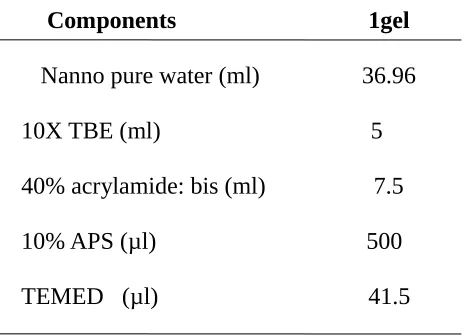
The trainee was given a task to prepare Gel Acrylamide and follow the procedure given by the supervisors. The components were available in the PAGE Area of the laboratory. The trainee wore her PPE or proper protective equipment and worked in the fume hood while mixing all the components.
Table 1. Components of the polyacrylamide gel Components 1gel
c) Gel pouring and gel plates placing in the rig
d) Loading the parent DNA extracts and sample DNA extracts
The trainee performed 2 tasks. First is the ANJALI Project which has 5 parents and the second is the KALINGA Project which has 3 parents. The first well was reserved for the ladder. Next the parents were loaded in the wells. Lastly the samples were loaded depending on the pattern designed by the group. Parents and samples were dispensed 3µl each. 1 µl of ladder were also dispensed on reserved wells.
e) PAGE Operation
The electrodes were attached and set by the trainee into the rig. The electric current passed through these electrodes and was received by the rig that caused to start the operation. The trainee set the voltage regulator in 95 volts to notice the accumulation of bubbles in the buffer. This notified the users that operation had already started. The operation had to stop if the running dye was already at the bottom part of the glass plate or was vanished.
f) Gel staining
g) Gel Documentation
The gel was properly documented by using the computer operated UV transilluminator. The documented file was saved in the computer on Drought folder.
Assisting the authorities in PCR (Polymerase Chain Reaction)
a.) Assembling the PCR cocktails
The trainee taws all the components of the PCR cocktail. This includes samples, primers, dNTPs, sterile nano pure water, 10X PCR buffer except the Taq polymerase. Note that the Taq polymerase should always be in the refrigerator, and use it just when needed. The DNA was dispensed per plate. Then, the cocktail or master mix was prepared.
Table2. Components Polymerase Chain Reaction cocktail
The trainee used 8 markers which are RM 28130, RM 28199, CG 29430, RM 28099, indel 8520, RM520, RM 16030, and RM 416 for her ANJALI Project and another 2 markers which are RM 28076 and RM 28089 for KALINGA Project.
Note that in this procedure, everything should be placed on ice. The DNA samples were transferred to the PCR plates and should contain 2.0µl of the master mix per DNA Extraction samples. At least 1.0ml of mineral oil was also added to avoid the evaporation of samples at high temperature in PCR machine. PCR plates were carefully covered with foil and was labeled with primer name and plate number
b.) Loading to PCR machines
PCR plate was loaded to the thermal cycler. The trainee ensured that the plates were pushed down completely. Then she covered the lid of the machine properly. She
The machine is capable to save different program that contains different settings. In drought group, the trainee was taught how to make a program. It is the same as the program “MAGET55” that they are usually using.
a.) Attending the On-the-Job training Orientation
5th day of May year 2014, the trainee attended this orientation held at Harrar hall, Seminar room. In this event, the speakers discussed about how the IRRI started, what are the goals, mission and vision and how does this institution works. Do’s and Don’ts inside the institute, Safety and Security Awareness and the Code of Conduct were also talked about by other speakers.
b.) IFSA harvest Fun Run
IRRI Filipino Scientist Association has its annual harvest fun run. It aimed to build camaraderie among the IRRI Filipino Scientists and to establish a healthy life style among workers of IRRI. The trainee together with her co-trainee, Nelda and their supervisors participated in 5k run. The event started at 5:00 in the afternoon and ended at 6:45 in the evening. They had so much fun in joining this kind of annual event.
c.) Preparation of solutions i. CTAB Preparation
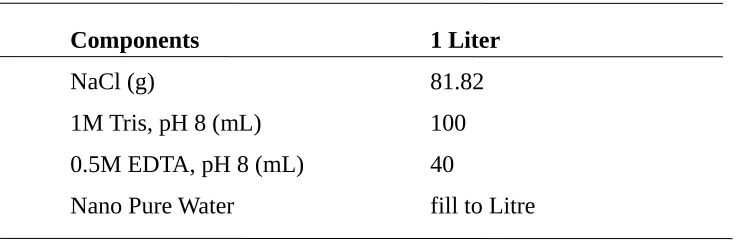
The trainee was given a task to prepare a CTAB needed for DNA Extraction. Components were all available in the working area. Solid component which is the NaCl were weighed in a digital balance. Liquid components like Nano pure water were carefully measured using a graduated cylinder. After adding all the components, the trainee let the solution to be mixed thoroughly by the magnetic stirrer until it forms a cloudy appearance.
Components 1 Liter
NaCl (g) 81.82
1M Tris, pH 8 (mL) 100
0.5M EDTA, pH 8 (mL) 40
Nano Pure Water fill to Litre
ii. 10X TBE Buffer Preparation
The trainee was asked to do 10X TBE Buffer. 10x TBE Buffer is used in the rigs of PAGE. She followed the procedure given by her supervisor.
Table 4. Components of 10X TBE Buffer
Components 1 Liter 2 Liters container. Tips sorting were done in preparation for the next project that used a lot of tips. Approximately 1000 – 3000 pieces of tips were arranged by the trainee.
The trainee subjected the sorted tips, Nano pure water, buffers and other laboratory items in the autoclave machine. After the operation, tips and other solid laboratory items were stored at the 65°C oven. This was done to avoid moisture that could be a reservoir for contaminants.
f.) Renovation of Drought’s working area
The trainee helped in packing up the things in the working area due to renovation of their working area. New tables, drawers and cabinets were installed in their working area. She also helped putting the things back in place after the renovation.
On – the – Job training is a training ground where students are able to acquire and develop their acquired skill.
During the training, the trainee acquire different knowledge form her supervisors. Ms. Margaret Catolos taught her the simplified way of understanding about Molecular Biology. She made her realized that Molecular Biology was not that hard if a person is willing to learn it. She also helped the trainee to understand the different process in extracting the DNA. The trainee easily learned about it through hands on experience. She also developed her pipetting and measuring skills with the help of Ms. Ruth Ramirez. She gained knowledge on different techniques that can shorten the process of DNA extraction but still have accurate and reliable results. Mr. John Ontoy shared his skills in loading the samples in a gel. The trainee discovered other methods in not becoming confused in loading the samples.
In the overall stay of the trainee at IRRI she acquired invaluable experience and learning regarding to her field of course.
During the program the trainee encountered some minor and major problems. One of the minor problems that she encountered is going to work late every Monday due to traffic and other road disturbances. She always asked permission to her supervisors regarding this issue. Her supervisors were very considerate and understanding in her situations.
One major problem that she encountered was loading the samples in the gel. She always got confused in remembering the last sample she loaded and it turned to have wrong pattern. But due to the technique taught by her supervisor, she was able to optimize it and got back to the correct pattern made by her supervisors.
The On – the – Job Training was accomplished at International Rice Research Institute (IRRI), Los Baños, Laguna. The trainee finished the 160 hours of training from April 28, 2014 to May 28, 2014.
The trainee experienced a lot of things that led on the development of her character. She experienced being around with professionals and with the foreigners. These situations boosted the trainee’s self esteem and self confidence.
Scientifically, she experienced vigorous molecular laboratory works and followed strictly the implemented Standard Operating Procedures (SOP). This led her to be more careful and extra responsible in doing her work.
Additionally, the trainee experienced how to work like a real employee does. She did some reports after she had her results. The training experienced led her to be more interested in laboratory works and encourage her to work very well in her chosen field.
Cavite State University. Retrieved on May 2014.from http://www.cvsu.edu.gov
International Rice Research Institute. Retrieved on May 2014.from http://www.irri.org
International Rice Research Institute board of trustee. (2010) IRRI risk management policy. Copyright © International Rice Research Institute, Philippines
Internship objectives. Retrieved on May 2014.from http://www.intech.mnsu.edu
Narrative Report For OJT. Retrieved on May 2014.from http://www.scribd.com
OJT Report. Retrieved on May 2014.from http://www.academia.edu
Appendix 1
Appendix 6
Appendix 7
Appendix 9 (Photo Documentation)
The trainee is sorting the samples and assigning ID Plates to each sample.
The trainee was storing the samples in the -65° C oven and shaking it every 15 minutes.
The trainee used the orbit shaker (left) for numerous samples and the votex (right) for few samples.
The trainee decanted the aqueous part of the sample (left) and added cold isoprophanol (right).
The trainee washed the samples with ethanol. The trainee added TE Buffer to the pellet.
The trainee prepared PCR cocktail.
The trainee loaded the samples together with the parents and cocktails (left) and amplified with the PCR (right).
The PAGE Apparatuses
The trainee put on the other plate (left) and clamp (right).
LOADING THE SAMPLES AND GEL DOCUMENTATION
The
trainee put
on the loading dye.
The trainee used the Ultraviolet Transilluminator for the photo documentation of the samples.
679
KALINGA Leaf Samples 30 ANJALI DNA Samples
679 KALINGA DNA Samples 30 ANJALI DNA Pellet