The Judeo-Persian Document ofDandan Oilik Site in Khotan
Dawei Li
The History Department of Tsinghua University Email: [email protected]
Abstract:
Marc Aurel Stein discovered the Judeo-Persian Document in the process of archaeological excavation in the Dandan Oilik Site of Khotan located in the hinterland of Taklimakan Desert in Xinjiang Province from 1900 to 1901, which was the letter written by a Jewish merchant in Jie Xie town of Khotan to his employer in Tabaristan in soon after A. D. 717 as the earliest record on the Chinese Jews in all the literatures on the Jews in China so far as know. This document illustrated that the Jewish merchants of Tabaristan not only had entered into Khotan and even Dunhuang of China and established the regular commercial intercourse between Tabaristan and Khotan but also founded the Jewish merchant community in Jie Xie town and Pima of Khotan in the early eighth century at the latest, and confirmed the Jews had entered into and founded the Jewish merchant community in China in Tang Dynasty.
Keywords:Judeo-Persian Document, Dandan Oilik, Khotan, Tabaristan, Chinese Jews, Tang Dynasty
I
The Discovery of the Judeo-Persian Document
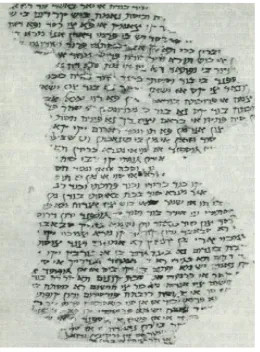
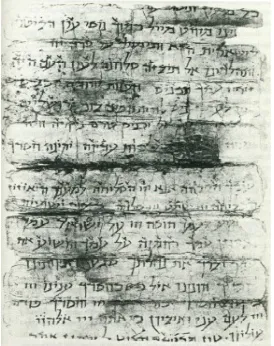
The Hungarian born British Jewish Orientalist and archeologist Marc Aurel Stein discovered a Judeo-Persian Document1 collected now in the British Museum in the process of archaeological excavation in the Dandan Oilik Site of Khotan located in the hinterland of Taklimakan Desert in Xinjiang Province from 1900 to 1901. It consisted of thirty seven lines of Judeo-Persian text written on paper and was about sixteen inches high and varies in width from four to eight inches because of partially be ragged and torn. D. S. Margoliouth translated the Judeo-Persian text into Hebrew and English, the content of which was as follows.
(1) If the Lord God help, quickly on the day
(2) ten and twenty letters I wrote to no purpose without
(3) saying “What has become of my stipend, and into the hand of whom (4) if convenient, command him to give it to me.
(5) and buy with that” till I rose up and fell down
(6) to your own hurt, may the Lord God give you a reward therefor.
(7) it got delayed, from month to month (?) and from deead to deead (?)
(8) that they should buy worthless and lean sheep. The Lord God give them very
(9) God forehend that one of them should be our messenger (?) since they
(10) When I had sold a garment, they cast it in my face
(11) had sold: there was no-one of the men of the city (PD)
(12) that I should buy three :petku:: and no mischief came of it.
(13) since I expect this of you: first the affair
(14) to be acquainted with my profit and loss, and your new post.
(15) to buy the six sheep of me, in order that
(16) you said thus: Rabbi, three
(17) and it is very detrimental
(18) try and it from me
(19) you yourself bought, and you yourself sold, and you yourself
(20) if I am to be successful
(21) to you. Be in no way distressed on your own account
(22) nor (?) was it here. All in reference to the sheep it was right
(23) came. When Yazid sent a leather strap to the Ispahbud
(24) the Ispahbud said: bring me a tray (?)
(25) the tray. See, I will teach the girl. And as many things as
(26) I have seen, I will not transgress. Tako a gurbak
(27) I will give, that she may not learn (?) To each one three
(28) that I received your letter, one better than that you said
(29) Had you ordered anything, I would work hard that it might be done
(30) my feelings, do not trouble at all if my feelings be hurt.
(31) Going behind, I asked: he said thus
(32) Command that your minister (?) be interrogated cerning that
(33) if you had sent your letter it would have been dono
(34) its young before these sheep
(35) It did not come out from the direction of
(36) he showed, such as saddle, stirrups, and a hide:
(37) of everything that2
Fig. 1 the Judeo-Persian Document of Dandan Oilik Site3
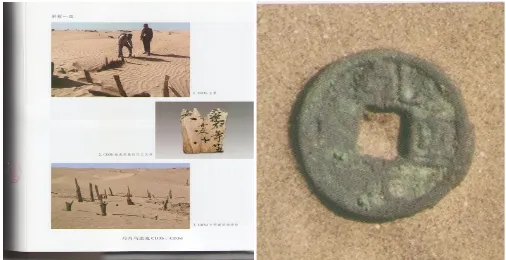
According to the report of the Carbon-14 Dating of Accelerator Mass Spectrometry (AMC) of Peking University about the samples of reeds and tamarisks from the wattled walls of CD1F2, CD17, CD10, CD11 and CD15 in the Dandan Oilik Site conducted by the Chinese-Japanese Joint Archaeological Team in 2006, the date of the Dandan Oilik Site by the Year of Tree-Ring Correction was from A. D. 400 to A. D. 870, most of which was in Tang Dynasty (A. D. 618 - A. D. 907).4 Since all the historical relics excavated in the Dandan Oilik Site including the official documents and the copper coins were also in Tang Dynasty, the Dandan Oilik Site should be the Tang Dynasty ruins.5 The force of Tang Empire began to enter into the western regions6 through conquering the kingdom of Gaochang (: :) and establishing the Western Region Frontier Command that was called the Xi Yu Du Hu Fu (:::::) in Chinese as the highest military and political organization of the western frontier region of China, when the king of Gaochang prevented other kingdoms of western regions from presenting tribute to the Tang court and combined with the Western Turks conquering the three cities of the kingdom of Yanqi (: :) kingdom in A. D. 640.7 When the Western Region Frontier Command was moved to Qiuci (::) and governed the kingdoms of Qiuci, Khotan, Shule (::) and Suiye (::) in the western regions which were known as the Four Garrison Commands of stabilizing the western regions and
3 Ibid.,761.
4 For the report about the Carbon-14 Dating of Accelerator Mass Spectrometry (AMC) in Peking University, see
the Institute of Xinjiang’s Archaeology in China and the Academic Research Institutions of Niya in Japanese Buddhist University, The Dandan Oilik Sites: the Report of Chinese-Japanese Joint Investigation (Beijing,
Cultural Relic Press, 2009), 39, 156.
5The sixteen Chinese official documents which had clearchronologies were excavated in the Dandan Oilik Site, see Xinjiang Rong, “The Generality of Khotan History in Tang Dynasty,” in The Dandan Oilik Sites: the Report of Chinese-Japanese Joint Investigation, ed. the Institute of Xinjiang’s Archaeology in China and the Academic Research Institutions of Niya in Japanese Buddhist University, 17-24.The copper cashes excavated in the Dandan Oilik Site included the Kai Yuan Tong Bao (::::) and Qian Yuan Zhong Bao (::::), see Asaoka Toshio, Kojima Yasuyo, “The Outline of the Dandan Oilik Sites and Historical Remains,” in The Dandan Oilik Sites: the Report of Chinese-Japanese Joint Investigation, ed. the Institute of Xinjiang’s Archaeology in China and the Academic Research Institutions of Niya in Japanese Buddhist University,118; A. Stein, Detailed report of explorations in Central Asia and westernmost China, trans. Da Xiang (Beijing, The Commercial Press, 2013), 65.
6 The western regions was called Xi Yu (::) in the record of Chinese history, that was referred in particular to the western frontier region of China including Gan Su Province, Xin Jiang Province nowadays and so on, and the more distant western regions.
collectively referred to An Xi Si Zhen (: : : :) in Chinese after the kingdom of Qiuci was conquered by Tang Empire in A. D. 646, the kingdom of Khotan as one of the Four Garrison Commands was directly governed by the Tang Empire. In order to enhance the power of governing the western regions, the Tang Empire not only established the Dudu Fu (:::) that was the local administration in Khotan, of which the king of Khotan Pisha (::) was appointed as the governor in the period of Emperor Tang Gao Zong (::::A. D. 628-A. D. 683), but also sent about thirty thousand soldiers to the Four Garrison Commands in A. D. 692, many of which were sent to Kothan.8 Furthermore, the Tang Empire respectively appointed the Jiedushi (:::) in the Four Garrison Commands who was the highest local official and possessed all the local power and the Zhenshoushi (:::) in all towns of the Four Garrison Commands who was the administrator of town in A. D. 781.9 There were some towns including Kancheng (::), Lancheng (::), Hunu (::), Gucheng (::) , Jiliang (::) and Pishan (::) in Khotan according to the record of The New History of the Tang Dynasty (《::::》).10 When the monk Wukong (::, A. D. 731- A. D. 812) went through Khotan on the way to India in Tang Dynasty he had mentioned the king Weichi Yao (:::) and the Zhenshoushi Ju Cheng (::) of Khotan.11 So the Dandan Oilik Site should come into being in Khotan during the reign of Tang Empire.
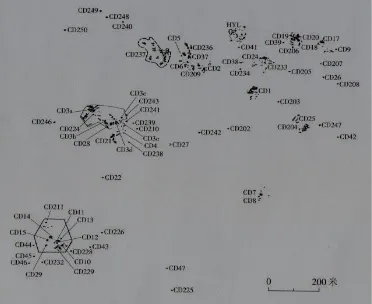
Fig. 2 the Part Map of the Distribution of Historical Relics in the Dandan Oilik Site12
The “::” (Jie Xie) and “:::”:Jie Xie town:of Chinese characters were often recorded in many Chinese official documents in Tang Dynasty excavated in the Dandan Oilik Site such as the Official Document of the Zhenshoushi General Junqing Yang (:::) in Jie Xie Town, the Account of Traffic Expense Paid by the Peasants in Jie Xie from the Fourteenth to the Fifteenth Year of Dali (::) 13( A. D. 779- A. D. 780), the Announcement of Jie Xie Town about Levying two piece of Cowhide in the Fifteenth Year of Dali, the Credentials of the Peasant Si Lue (::) from Jie Xie in February of the Sixteenth Year of Dali ( A. D. 781), the Contract of Brahmanist Ji (:)’ s Selling Wild Camels in Jie Xie in the Sixteenth Year of Dali, the Notes of Sabo (::) Si Lue (::) from Jie
8 Xu Liu, TheOld History of the Tang Dynasty, the Chronicles of Tang Gao Zong, Vol. 5 (Beijing, Zhonghua Press, 1975), 99-100.
9 Ibid., 5303-4.
10 Qi Song and Yangxiu Ou, The New History of the Tang Dynasty, the Record of Geography, Vol. 43 (Beijing, Zhonghua Press, 1975), 1150-1.
11 New Tripitaka, Vol. 51 ( Hebei, Buddhist Association of Hebei Province, 2009), 980.
12The Institute of Xinjiang’s Archaeology in China and the Academic Research Institutions of Niya in Japanese Buddhist University, The Dandan Oilik Site: the Report of Chinese-Japanese Joint Investigation, fig. 1.
Xie on 5 October in the Seventh Year of Jianzhong(::) 14and the Sheepherders of Jie Xie on 17 September in the unknown Year and so on. 15 Since it was mentioned as the town on many occasions and administrated by the Zhenshoushi such as the General Junqing Yang who had signed the Official Document of the Zhenshoushi General Junqing Yang in Jie Xie Town and the Sheepherders of Jie Xie on 17 September in the unknown Year and the General Shun Zhang (::) who had signed the Announcement of Levying two piece of Cowhide in Jie Xie Town in the fifteenth Year of Dali in these documents, the Jie Xie town in Tang Dynasty should be the central area of the Dandan Oilik Site. 16According to the record of the Record of Military of New History of Tang Dynasty (《:::·::》), there were two types of the frontier commands, the large of which was the Garrison Command and the small of which was the city or town in the early Tang Dynasty.17 Considering that the Jie Xie town was not only near to Khotan but also administrated by the Zhenshoushi, it must be as one of town governed by the Garrison Command Khotan as same as the town of Kancheng, Lancheng, Hunu, Gucheng, Jiliang and Pishan. So this Judeo-Persian Document should be left by a Jew in Jie Xie town of Khotan in Tang Dynasty. D. S. Margoliouth even thought it was not later than the eighth century and the oldest document in Judeo-Persian so far as know according to the writing of letters.18
Fig. 3 the Chinese Official Document and the Copper Coin in the Dandan Oilik Site19
II
The Content Analysis of the Judeo-Persian Document
The general content from first to seventh line of the Judeo-Persian Document was that the Jew asked the addressee about stipend, by which he wanted to buy some goods that could not be recognized in the letter, since he did not receive any news about it in the dozens of letters previouslywritten by him. This Jew should be a merchant employed as the commission agent in Jie Xie town of Khotan by his employer from the distant place and wrote letter inquiring about his
14 The Jianzhong(::) was the reign title of Emperor Tang Dezong (:::), the time of which was from A. D. 780 to A. D.783.
15 For the Chinese official documents excavated in the Dandan Oilik Site, see Xinjiang Rong, “The Generality of Khotan History in Tang Dynasty,” 8-15.
16 For the content of Chinese official documents signed by Junqing Yang and Shun Zhang, ibid., 8-15. 17 Qi Song and Yangxiu Ou, The New History of the Tang Dynasty, the Records of Military, Vol. 50, 1328. 18 D. S. Margoliouth, “An Early Judæo-Persian Document from Khotan, in the Stein Collection, with Other Early Persian Documents,” 747.
stipend.20 As he wrote that “What has become of my stipend, and into the hand of whom … if convenient, command him to give it to me,” in the third and the fourth line of letter, which illustrated that his stipend generally was paid by the consigner entrusted by his employer, this Jewish merchant, his employer and the consigner had constituted the fundamental trade cooperation relationship, in which he and the consigner were respectively in charge of operating trade in Jie Xie town and communicating the commerce connection between him and his employer. Because the stipend was not paid over a long period of time exactly as he wrote that “it got delayed, from month to month (?) and from deead to deead (?) ” and felt “rose up and fell down” in the seventh and the fifth line of letter, he appealed pathetically his employer to pay stipend, and even said “to your own hurt, may the Lord God give you a reward” in the sixth line of letter, which illustrated he was afraid that his employer cannot pay stipend for him for the commerce deficit. According to the content of the eighthand the ninth line of letter in which he wrote that “they should buy worthless and lean sheep … and one of them should be our messenger (?)…,” some merchants not only operated the trade but also served as the mercantile messengers in Jie Xie town, who were very likely the Jews from his hometown and had the trade cooperation with him exactly as he wrote that “When I had sold a garment, they cast it in my face” in the tenth line of letter. These merchants were reluctant to send letter for him as he wrote that “God forehend that one of them should be our messenger (?)…since they…” in the ninth line of letter, perhaps because the traffic between Jie Xie town and his hometown was maybe interrupted owing to some cause that he had not known.
In the eleventh and the twelfth line of letter he had mentioned the city (PD) and the (petku) that should be one of unrecognizable trade goods. The Arabic historian Ibn Muhalhil had recorded that the diplomatic corps of Arabs entered into the Pima from the city of Khotan on the way to China in the tenth century, in which there were many Islamite, Jews, Christians, Zoroastrians and Buddhist.21 The Pima respectively called the “::”:Pima:in Chinese and the Phimmāmna inKhotanese was located in the east 300 Li (:) 22of the city of Khotan according to the record in the Record of Travels to Western Regions (《::::::》) written by Zang Xuan (::) who was a Buddhist monk in Tang Dynasty.23 The New History of Tang Dynasty had recorded that the Khanmi (::) in the east of Khotan river was also located in the east 300 Li of Khotan, the capital of which was the city of Dadeli ( : : :).24As the Khanmi should be the Chinese pronunciation of Phimmāmna in Tang Dynasty for the similar pronunciation of both them, the Khanmi was namely the Pima recorded by Ibn Muhalhil and Zang Xuan.25 In the No. 24 bilingual document in Chinese and Khotanese collected by him in the Dandan Oilik Site, Sven Hedin found that the “::” (Kancheng) in Chinese, the meaning of which was the city of “:” (Kan) as the “:”
20 Many Jewish merchants usually employed the commission agent in the distant places in the Medieval times, for example the Cairo Genizah documents in Egypt recorded that many Jewish merchants were employed as the commission agents in India by his Jewish employers from Fustat, Aden and so on in the Arab world in the Medieval times, see S. D. Goitein and Mordechai Akiva Friedman, India Traders of the Middle Ages, Documents from the Cairo Geniza (Brill, Leiden • Boston, 2008).
21 For the record of Ibn Muhalhil, see Henry Yule, Cathay and the Way Thither, Medieval Notices of China, Vol.1, trans. Xushang Zhang (Beijing, Zhonghua Press, 2008), 215-6.
22 The Li was the linear measure in ancient China and 1 Li was equivalent to 500 meters. 23 Xuan Zang, The Record of Travels to Western Lands (Beijing, Zhonghua Press, 2008), 1028.
(Cheng) in Chinese was the city, was specially referred to the capital city of Phimmāmna.26 The Kan as the inflection of Da (:) should be the simplified form of Dadeli (: : :), because the appellation of the same place was generally pronounced slightly differently by different peoples in ancient times. Since the pronunciation of was very similar to Da de when it was pronounced the Pa de, the city should be the simplified form of the Dadeli (:::) city and referred to the capital of Pima as same as the Kancheng (::). The reason why he mentioned the city in the letter was probably that he had the trade relationship with the Jews of Pima. He complained that “there was no-one of the men of the city PD” in the eleventh line of the letter perhaps because the Jewish merchants of Pima did not come to Jie Xie town when he wrote letter to his employer.
From the thirteenth and the twenty-secondline of the letter, he wished that his employer could understand his business situation including profit and loss, buy the six sheep from him that he had the misfortune to own and other issue that was not be unrecognized. With regard to the sheep, the official document of the Sheepherders of Jie Xie on 17 September in the unknown Year excavated in the Dandan Oilik Site had recorded the issue of collecting the sheep’s wool in Jie Xie town, the content of which was as follows.
(1) Jie Xie Town Sheepherders and so on
(2) One hundred Jin (:) 27of sheep’s wool will be collected from the Sheepherders in Jie Xie town
…
(5) The sheepherders must deliver the sheep’s wool to the local authority of Jie Xie town for three days.
(6) 17September …
(8) The General Junqing Yang28
There were many sheepherders and sheep in Jie Xie town according to the issue of collecting the sheep’s wool in Jie Xie town recorded in this document. Their cooperation on the wool trade illustrated that this Jewish merchant was charge of collecting the trade goods for his employer and by which acquired the stipend as the commission agent of Jie Xie town. He strongly recommended his employer to buy the sheep in order to get out of financial problems because he did not receive the stipend over a long period of time, although the reason that was “in order that …” in the fifteenth line of letter cannot be recognized.
In the twenty-third and the twenty-forth line of the letter, he wrote that “when Yazid sent a leather strap to the Ispahbud, the Ispahbud said: bring me a tray (?)…” The Ispahbud as the honorary title of the military commander was specifically referred to the archon of frontier region in the period of Khosrau I (A. D. 531- A. D. 579) in Sassanid Persia (A. D. 224- A. D. 651). There were the four Ispahbuds who respectively governed the eastern, western, southern and northern frontier region of Sassanid Persia, the northern frontier region governed by whom included the Armenia, Azerbaijan and Tabaristan region at that time. It was referred only to the king of Tabaristan during the period of Arabian Empire (A. D. 623-A. D. 1258) yet,29 as the Arab historian
26 For this document and Sven Hedin’s discovery, see Xianlin Ji’s quote, in Xuan Zang, The Record of Travels to Western Lands, 1028.
27 The Jin (:) was a unit of weight of China in ancient times and still used today, 1 Jin is equivalent to 0.5 kg. 28 For the record of the Sheepherders of Jie Xie on 17th September in the unknown Year, seeXinjiang Rong,
“The Generality of Khotan History in Tang Dynasty,” 15.
al-Ya’qubi (died A. D. 897/8) recorded that the Tabaristan still survived for several centuries when facing with the Arabian military conquest. According to the record of the Arab historian Al-Tabari (A. D. 839-A. D. 923) that Yazid had conquered part of Tabaristan during the period of Caliph Suleiman (A. D.715- A. D.717) before be imprisoned during the period of Caliph Omar II (A. D. 717- A. D. 720),30 the Ispahbud in the letter should be refer to the king of Tabaristan and the thing that “when Yazid sent a leather strap to the Ispahbud, the Ispahbud said: bring me a tray (?)…” was the diplomatic affair between the Tabaristan and the Umayyad Caliphate (A. D. 661- A. D. 750).
The Tabaristan in Medieval times was located in the south coast of Caspian Sea, the territory of which included the Province of Mazandaran, Gilan, Golestan, Semnan in Iran nowadays. The New History of Tang Dynasty had recorded the affairs of Tabaristan in detail, the content of which was as follows.
The Tabaristan was called “::::” (Tubasidan), “::::” (Tubasidan) or “::::” (Tubasachan) in Chinese and located the north sea31, the capital of which was the City of Tapuria (:::).As the Great General of Eastern Persia the Tabaristan refused to surrender to the Tajiks (: :) 32 when the Persia was conquered by Tajiks. The king of Tabaristan Huluhan (:::) was conferred the king of GuiXin (::)33 by the Tang court when he sent the envoy to the Tang court in the fifth Year of Tianbao (::)34. Huluhan’s son Zihuiluo(:: :) was conferred the Zhonglang General (:::) of Youwuyuanwai (::::),35 bestowed the purple robe and the goldfish by the Tang court and then joined in the guards of Tang court when he was sent to pay tribute to Tang court by his father after the interval of eight years.36 The Tabaristan was eventually conquered by the Black Tajiks37.38
The reason why the Tabaristan was called the Great General of Eastern Persia in the New History of Tang Dynasty was that the native people Mazandarans in Tabaristan was responsible for guarding the eastern frontier for Sassanid Persia since the Tabaristan was annexed by the Persia King Kavadh I (A. D. 488- A. D. 531) in the sixth century. As an independent kingdom the Tabaristan was successively ruled by the king Gil Gaubara (A. D. 626- A. D. 690), Dabwayh (A. D. 650- A. D. 711:, Farkhan (A. D. 711- A. D. 751), Dat-bruj-Mihr, Saruya (A. D. 739- A. D. 740) and Kurshid (A. D. 740- A. D. 761:of Mazandarans since the Sassanid Persia was conquered by the Arab in A. D. 651.39 Since the pronunciation of Hulu (::) was very close to Kur and the
30 For the record of al-Ya’qubi and Al-Tabari, see D. S. Margoliouth, “An Early Judæo-Persian Document from Khotan, in the Stein Collection, with Other Early Persian Documents,” 747; Habib Borjian, “Mazandaran: Language and People,” Iran & the Caucasus, Vol. 8, No. 2(2004): 291, 748.
31 The North Sea in here was the Caspian Sea.
32 The Tajiks (::) in Chinese historical documents was the Arabian Empire.
33 GuiXin (: :) in Chinese was the homage. The title of the King of GuiXin (: :) conferred by Tang court illustrated that the king of Tabaristan Kurshid pledged loyalty to the Tang court.
34 The Tianbao (::) was the reign title of Emperor Tang Taizong (:::), the time of that is from A. D. 742 to A. D. 756. The fifth Year of Tianbao (::) was A. D.746.
35 The Zhonglang General (:::) was the military officer of China in ancient times, one of whose functions was guarding the capital and court. The Zhonglang General of Youwuyuanwai (::::) was one kind of the Zhonglang General.
36 It was the thirteen Year of Tianbao (::) or A. D.754.
37 The Black Tajiks in Chinese was the Abbassid Caliphate because the flag of the Abbassid Caliphate was black.
38 For the record about the Tabaristan, see Qi Song and Yangxiu Ou, The New History of Tang Dynasty, the Record of Western Regions, Vol. 221, 6259.
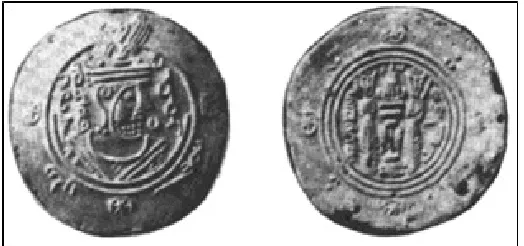
fifth Year of Tianbao that was A. D. 746 was in the range of the Kurshid King’s ruling time from A. D.740 to A. D.761, the Huluhan (:::) should be refer to the king of Kurshid that was the sun in Persian which was worshipped by the Zoroastrian. The reason why the king of Kurshid sent the envoy and his son to pay tribute to Tang court was maybe that he wanted to seek assistance from Tang court when facing with the Arabian military conquest. However it was conquered eventually by the Abbassid Caliphate in A. D. 761 and governed by the Arab governors afterwards. For example as the silver coin of the Arab governor Umar Ibn Ala (A. D. 771- A. D. 780) was excavated in Tabaristan, the inscription of which was “Umar // Annals of Islam 122 (A. D.773)”40 Umar Ibn Ala was maybe the first Arab governor of Tabaristan, and Abdallah b. Khurradadhbih, Musa b. Hafs and Muhammad b. Musa also held the post of governor of Tabaristan afterwards.41
Fig. 4 the Silver Coin of the Arab GovernorUmar Ibn Ala in Tabaristan42
According to the record of Al-Tabari, Yazid should express the intention that forcing the Tabaristan to submit to the Arabian Empire by sending the leather strap to the Ispahbud of Tabaristan before the military conquest between A. D. 715 and A. D. 717 that occurred during the reign of the King Farkhan (A. D. 711- A. D. 751). Since this Jewish merchant knew that Yazid sent the leather strap to the Ispahbud, but not the military conquest between A. D. 715 and A. D. 717 launched by him afterwards, the time that he wrote the letter should be no later than A. D. 717. In respect that he needed time to be informed of this thing because of the long way from Tabaristan to Jie Xie town of Khotan, the latest time that he wrote the letter was maybe in after A. D. 717. However, because the traffic between Tabaristan and China apparently was not disrupted before the Tabaristan was conquered by the Arabs in A. D. 761excatly as he wrote that “I received your letter, one better than that you said” in the line twenty-eighth of letter and the Tabaristan respectively paid tribute to the Tang court in A. D. 746 and A. D. 754, he could be informed of all the thing of Tabaristan by the merchants and even the envoys without delay. So this letter should be no later than soon after A. D. 717,43 which also was the earliest record on the Chinese Jews in all the literatures on the Jews in China so far as know.44
40 Ibid., 328.
41 Al-Tabari, The History of al-Tabari: the Reunification of the Abbasid Caliphate, Vol. XXXII, trans. C. E. Bosworth(State University of New York Press, 1987), 64, 135, 175.
42 Tiesheng Li, The Coins of Ancient Persia, 328.
43 D. S. Margoliouth thought the time of this letter should be in A. D. 718, see D. S. Margoliouth, “An Early Judæo-Persian Document from Khotan, in the Stein Collection, with Other Early Persian Documents,” 748.
Although it was not know the reason why he mentioned that Yazid sent the leather strap to the Ispahbud for the incomplete content of letter, he probably wanted to tell his employer that he worried about the trade security of Tabaristan because the Tabaristan had faced with the threaten from the Arabic Empire at all times after the Sassanid Persia was conquered by the Arabs in A. D. 651. In respect that he was very familiar with the official affairs between the Tabaristan and the Arabic Empire, for example the thing that Yazid sent the leather strap to the Ispahbud which was concerned the life and death of Tabaristan, he should be come from Tabaristan and informed of the official affairs by his employer who probably serviced for the aristocrats or the court of Tabaristan by whom the information of Tabaristan court was acquired. When the King Yazdigar III (A. D. 440- A. D. 457) and his son Piruz (A. D. 458- A. D. 485) violently persecuted the Jews in the Sassanid Persia in the fifth century, many Persian Jews was forced to flee to Arab, India and Central Asia, some of whom maybe fled to Tabaristan. The Persian Jews in Tabaristan should continue to use the Judeo-Persian language in the process of more closely contacting with the Jews and the Persian in Persia since the Tabaristan was annexed by the Sassanid Persia in the sixth century. So this Jewish merchant probably was the descendant of the Persian Jews from Sassanid Persia.
The girl mentioned by this Jewish merchant from the twenty-fifth and the twenty-seventh line of letter probably was his servant in Jie Xie town. Something that he will teach the girl mentioned in the twenty-fifth line of letter was maybe operating trade, as she should offer some help for him in the trading activities. He wrote that “I will not transgress” in the twenty-sixth line of letter, in which he probably wanted to tell his employer that he would not do the immoral thing, more specifically that he would not marry with this girl or divorce with his wife because the polygamy was not advocated in the Jewish religious law, especial the Talmud in Ancient Times. He must cooperate closely with his employer over a long period of time, or else he would not tell him this private matter.
He not only begged his employer to cope with his things including the stipend and buying the sheep again, and showed the loyalty to him as the record in the line twenty-ninth of letter that was “Had you ordered anything, I would work hard that it might be done.” but also told him that he would feel very disappointed if his things were not solved in time from the twenty-ninth to the thirty-seventh line of letter in the end. The man mentioned by him from the thirty-first and the thirty-secondline of letter was maybe the former consigner who once enquired the employer’s minister about the stipend of this Jewish merchant and was also mentioned in the thirty-sixth line of letter, as he wrote that “I asked: he said thus …Command that your minister (?) be interrogated concerning that …”. The reason why he mentioned the former consigner in letter probably wanted to tell his employer that he probably received the stipend a long time ago if his employer sent letter to him as he wrote that “ if you had sent your letter it would have been dono…” in the thirty-third line of letter. In additional to the sheep, he mentioned the saddle, stirrups, hide, and even of everything from the thirty-forth to the thirty-seventh line of letter, which illustrated he was very familiar with the trade goods in Jie Xie town and operated trade between Khotan and Tabaristan
over a long period of time. The silk as the most favorite Chinese goods of foreign people was probably also traded to the Tabaristan by him although it was not mentioned in the letter.
III
The Road the Jews of Tabaristan Entered into China and the Jewish Merchant Community in Khotan
There were some Jewish merchants of Tabaristan who had operated trade in Jie Xie town and even Pima of Khotan in the early eighth century according to the analysis of the Judeo-Persian Document. Ju Pei (::, A. D. 547- A. D. 627) as the courtier of Sui Dynasty (A. D. 581- A. D. 618) recorded that there were the three roads leading to the West from China including the southern, the middle and the northern road in the Geographical Record of Western Regions (《::: ::) when he governed the Western Regions as early as Sui Dynasty. The southern road was from Shanshan (::) to Pamir through Khotan, Zhujubo (:::) and Hepantuo (:::),45 and then to Ghazni(::) 46through Humi (::) 47, Tocharian (:::), Yida (::) and Fanyan (::), eventually to the north of Brahman48 and the Western sea49, in brief which was from the south of Tarim Basin in Xinjaing Province to the north of India and the Arabian Sea through Pamir and Afghanistan. The middle road was from Gaochang (::)to Pamir through Yanqi, Qiuci and Shule,50 and then to the kingdom of Mu (::) through Bahan (::)51,Suduishana(::::)52, the kingdoms of Kang (::): Cao (::):He (::) and An (::), 53 eventually to Persia and the Western Sea54, in brief which was from the north of Tarim Basin to Persia and the Persian Gulf through Pamir and the Transoxiana region. The northern road was from Yiwu (::)55 to the court of Turk56 through the Barkol Lake
45 Shanshan, Zhujubo and Hepantuo were the names of kingdoms in Western Regions in Medieval times, and all located in the south of Tarim Basin in Xinjaing Province.
46 Tocharian, Yida, Fanyan and Ghazni were the names of thekingdoms in Western Regions in Medieval times. Tocharian was located in the northeast of Persia, Yida was located in the south of Oxus, Fanyan was located in Bamyan of Afghanistan and Ghazni was located in Southeast of Afghanistan.
47 The Humi was the name of the kingdoms in Western Regions in Medieval times and located in the northeast of Afghanistan.
48 Since the Brahman was referred to the India in Chinese historical documents, the north of Brahman was the north of India.
49 As the south route eventually led to the south of India that was adjacent to the Arabian Sea through the north of India, the Western Sea in here should refer to the Arabian Sea.
50 The Gaochang was the name of the kingdom in Western Regions in Medieval times and located in the Southeast of Tupan in Xinjiang Province of China. Gaochang, Yanqi, Qiuci, Shule all were located in the north of Tarim Basin.
51 The Bahan was the name of the kingdom in Western Regions in Medieval times, and located in Fergana of Kirghizstan.
52 The Suduishana was the name of the state in Western Regions in Medieval times, and located in the northwest of Tadzhikistan.
53 The kingdoms of Kang (::):Cao (::):He (::), An (::) and Mu (::) were the Sogdiana, most of which were located in the Transoxiana region, for example the kingdom of Kang were located in Samarkand and its surrounding region, the kingdom of Cao was located in the north and northeast of Samarkand, the kingdom of He was located in the northwest of Samarkand, the kingdom of An was located in Bukhara and its surrounding region, the kingdom of Mu was located in the west of Oxus.
54 Considering the location of the western sea in here that was located in the west of Persia in the middle route, it should be refer to the Persian Gulf.
and the tribe of Tiele (::)57 and the rivers that flowed to the north,58 eventually to Fulin (::)59 and the Western Sea,60 in brief which was from the north of Tianshan Mountains to Byzantium and the Mediterranean Sea through the Western Turks. Although the three routes were different from each other, they were interconnected by some local roads.61
The Arabs rapidly expanded in Central Asia from the end of seventh century to the middle of eighth century, as the general Abdul Rahaman of Arab occupied Kabul from A. D. 699 to A. D. 700, and Qutaybah ibn Muslim (A. D. 670- A. D. 715) conquered Tocharian, Bukhara, Khwarezmia, Bahan, Transoxiana, the region of Syr Darya river in succession from A. D. 705 to A. D. 715 after he was be appointed the governor of Khorāsān in A. D. 704 so that the Syr Darya river became the boundary between Arab and Turks instead of the Oxus. The force of Islam eventually established in Central Asia after Tashkent located in the northeast of Samarkand was conquered by Arabs in A. D. 751.62 Because the southern road leading to India and the Arabian Sea from China was unrelated to the road from Tabaristan to China, the Jewish merchants of Tabaristan could only entered into China along the middle road and the northern road. However, as they should not choose the middle road for the tension relationship between Arabs and Tabaristan since the Sassanid Persia was conquered by Arabs in A. D. 651 especially when the Central Asia and the Transoxiana region in particular were occupied by the Arabs, they only entered into China along the northern road at that time.
The northern road was opened about in the middle of sixth century when the Byzantine Empire allied with the Western Turks. The Sogdians in the Western Turks requested the king of Western Turks Sizabulus to send the diplomatic corps to Persia with the mission consulting the silk trade with Persian in the middle of sixth century. Sizabulus adopted the suggestion of the Sogdians and sent the diplomatic corps of Sogdians headed by Maniakh to Persia. When the diplomatic corps of Sogdians arrived at the court of Persia, the Persians were burning up the Sogdians’s silk to their face after purchase it and refusing their requirement in order to monopolize the silk trade. Sizabulus again sent the diplomatic corps of Turks to Persia afterwards, in which some memberships were unfortunately poisoned by Persians. After the two failures of diplomacy, Sizabulus decided to directly sell the silk to the Byzantine Empire by allying with the Byzantine Empire for breaking the silk trade monopoly of Persia at Maniakh’s suggestion. When the diplomatic corps of Western Turks headed by Maniakh arrived at the Byzantine Empire through the Caucasia, the Byzantine Empire immediately agreed to ally with the Western Turks and successively sent the two diplomatic corps to the Western Turks in A. D. 569 and A. D. 576 which were respectively headed by Zemarchus and Valentine,63 in which Valentine went to the Western Turks through the south coast of the black sea, the Caspian Sea, the Kherson of Crimean and the
57 The Teli (::) was the nomad in the north of China, whose custom was similar to the Turks.
58 These rivers should refer to all the rivers that flowed to the north in the way from the court of Turk to the father west.
59 As Fūlin (::) was the pronunciation of Rūm in Chinese that was referred to as Byzantium by the Persian in Medieval times, Fūlin usually was referred to the Byzantine Empire in the Chinese historical documents, see Xushan Zhang,“The Review of Etymology Research about the Apellation of Fūlin (::), ” in the History Research, ed. the Institute of History Research of Chinese Academy of Social Sciences, 2009, Vol. 5, 143-51.
60 The Western Sea in here should be refer to the Mediterranean Sea since it was located the west of Byzantium according to the record of this route.
61 For the three land routes leading to West from China in Sui Dynasty, see Zheng Wei, The History of Sui Dynasty (Beijing, Zhonghua Press, 1973), 1578-80.
62 Philip Hitti, The History of the Arabs, trans. Jian Ma (Beijing, New World Press, 2008), 189-93.
east coast of the Sea of Azov along the northern road and eventually to Khotan.64
The New History of Tang Dynasty had recorded that the Tabaristan was apart from the southwest of Shule twenty-five thousand Li,65the east of which was the state of Boda (::) … and the north of which was the sea.66As the Boda (: :) was located in the Tianshan Mountains,67 and the sea located in the north of Tabaristan should refer to the Caspian Sea, the Jewish merchants of Tabaristan should firstly go to the Caspian Sea by marching north, and then to the Western Turks and the Tianshan Mountains by marching east along the northern road. When they arrived the Bedal in the Tianshan Mountains, they should further go to the south of Tarim Basin along the local road from the Bedal, Liloufeng (:::) to Dashi City (:::) that connected the northern road and the southern road recorded by Jia Dan (: :, A. D. 730- A. D. 805) who was a famous geographers in Tang Dynasty,68 and eventually to Jie Xie town and even Pima in Khotan. The Jewish merchants of Radanites recorded by Ibn Khordādbeh (about A. D. 820/825- A. D. 912) served under the Caliph Mu‛tamid (A. D. 869- A. D. 885) as the Director of Posts and Police in the Province of Djibal also went to China along the northern road in the period of Abbasid Caliphate (A. D. 750- A. D. 1258). 69 He recorded that these merchants took the route behind Rome70 and passing through the country of the Slaves, arrived at Khamlif the capital of the Khazars,71 then embarked on the Caspian Sea, arrived at Balkh, across the Oxus, and continued toward the Yourts of the Toghozghor72 and from there to China in the Kitab al Masalik w’al Mamalik “ the Book of the Roads and the Kingdoms” in the ninth Century,73 in which the section from the Byzantine Empire to the Caspian Sea was in the northern road. Paul Pelliot had extracted the penitential prayers in Hebrew dated about the eighth or the ninth century that was composed of passage from the Psalms and the Prophets in the library cave of Dunhuang (::) in 1908,74 which illustrated that there were some Jews or the Jewish community in Dunhuang in Tang Dynasty. As Peiju recorded that the three routes leading to West from China finally converged in Dunhuang (:
64 For the journey of Valentine, ibid., 167-80.
65 This distance was inexact, which only reflected that the distance between Tabaristan and Shule was very long.
66 Qi Song and Yangxiu Ou, The New History of Tang Dynasty, the Record of Geography, Vol. 43, 115.
67 For the location of Boda, see Huan Du, The Travel Notes ( 《:::: 》 )(Beijing, Zhonghua Press, 2000), 29; Qi Song and Yangxiu Ou, The New History of Tang Dynasty, the Record of Western Regions, Vol. 43, 1149.
68 This road was from the Tianshan Mountains to the the south of Tarim Basin through the Bedal, Liloufeng (: ::) and Dashi City (:::), see Qi Song and Yangxiu Ou, The New History of Tang Dynasty, the Record of Western Regions, Vol.43, 1149-50.
69 For the meaning of the Radanites, see Moshe Gil, “The Rādhānite and the Land of Rādhān,” 299-328. 70 The Rome was referred to the Byzantine.
71 The Khazars was firstly recorded by the Armenian Moses Xorenac‘i in the fifthcentury, and the dependency of Western Turks in the end of sixth century. In A. D. 657 the Khazars threw off the yoke of Western Turks and gradually became the big power in the Caucasus, was conquered by Rus in A. D. 965. For the history of Khazars, see D. M. Dunlop, The History of the Jewish Khazars (Princeton University Press, 1954); Peter B. Golden, Khazar Studies, An Historico-Philological Inquiry to the Origins of the Khazars (Akadémiai Kiadó, Budapest, 1980).
72 As the Yourts was the hometown and domicile in the Turkic, and the Toghuzghuz was composed by Toghuz and ghuz, in which the meaning of Toghuz was the number 9 and the ghuz also called Uighur was the nomad in the north of China, which was the nine tribe of ghuz, the Yourts of Toghuzghuz was the court of the Toghuzghuz. Toghuzghuz migrated to the east of Tian Shan Mountain in eighth century, and the Yourts of Toghuzghuz shoule be located in the region of Issyk-Kul, see Shuhui Li, The Research of Ghuz and Uighur (Beijing, Nation Press, 2010), 93.
73 Moshe Gil, “The Rādhānite and the Land of Rādhān,” 307; L. Rabinowit, “The Route of the Radanites,” the Jewish Quarterly Review, New Series, Vol. 35, No. 3 (Jan., 1945), 251-80; Solomon Katz, The Jews in the Visigothic and Frankish Kingdoms of Spain and Gaul (the Mediaeval Academy of America Cambridge, Massachusetts, 1937), 134; M. J. de Goeje, ed. Iban Khuradadhbih, “al-Masalik wa’ l-Manalik,” in the Jews of Arab Lands, ed.Norman A. Stillman (Oxford University Press, 1979), 165-6; Ibn Khordādbeh, The Books of the Roads and the Kingdoms, trans. Xian Song, 165.
:) that was the location of the throat in the Western Regions,75 the Jewish merchants of Tabaristan probably went to Dunhuang to operate trade from Khotan although it was not mentioned in the letter written by this Jewish merchant.
Fig. 5 the Penitential Prayers in Dunhuang (::)76
The Byzantine Empire and the Western Turks not only jointly brokethe silk trade monopoly of Persia, affected by which the northern road gradually became the main trade routes in Eurasia, but also declared war on the Persia after the formation of the alliance in the middle of sixth century. For example the king of Western Turks Schaba was sending army to attack the Bamiyan and the Hārat and the Turkic Khazars77 was attacking the Derband in the south coast of Caspian Sea when the Byzantine Empire was at war with Persia from A. D. 588 to A. D. 589, and Heraclius (A. D. 575- A. D. 641) allied with the Turkic Khazars to attack Tiflis in the process of conquering the Transcaucasia region from A. D. 626 to A. D. 628.78 Since the Tabaristan as the Great General of Eastern Persia should be hostility to both of the Byzantine Empire and the Western Turks on account of the tension between the Byzantine Empire, the Western Turks and the Sassanid Persia from the sixth century to A. D. 651, the Jewish merchants of Tabaristan should be unable to go to China along the northern route before A. D. 651. As both of the western Turks and the Tabaristan were constantly facing the threat from the Arabs when the Arabs rapidly expanded in the Central Asia and the Caspian Sea after conquering the Sassanid Persia in A. D. 651, the western Turks probably chose to relax the hostile relations with the Tabaristan in order to jointly resist the Arabs. So the Jewish merchants of Tabaristan probably went to the Khotan along the northern road after A. D. 651. Of course, they also probably went to the Khotan after A. D. 657 when the Western Turks was conquered by Tang Empire. In any case, they had been able to establish the regular commercial intercourse between Tabaristan and Khotan for more than a half century from A. D. 651 or A. D. 657to soon after A. D. 717 the latest time this Jewish merchant wrote the letter.
75 Zheng Wei, The History of Sui Dynasty, 580.
76 M. Pollak, Mandarins, Jews and Missionaries, the Jewish Experience in the Chinese Empire, 263.
77 As Khazarswas the dependency of Western Turks in the end of sixth century, it was called Turkic Khazars in the Chinese historical documents, see Huan Du, The Travel Notes (《::::》), 17, 63; Qi Song and Yangxiu Ou, The New History of Tang Dynasty, the Record of Xi Rong (::), Vol. 221, 6274, 6263, the Record of Record of Turks, Vol. 140, 6055.
The northern road was cleared off obstruction under the protection of the Western Turks since the middle of sixth century and even after the Western Turks was conquered by the Tang Empire in A. D. 657. However, this peaceful state was interrupted by the wars provoked by Turks, Arabs and Tibet in the early eighth century. For example, Dudan (: :) who was the chief of ten tribes of Western Turks was captured by the Jiedushi (:::) of the Four Garrison Commands Ashinaxian (: : : :) when he rose in rebellion in A. D. 714, the general of the Four Garrison Commands Xiaosong Zhang (:::) led the troops to rescue the king of Bahan when the Arabs and the Tibet attacked Bahan in A. D. 715, and some kingdoms of Western Regions including An (::), Kang (: :) and Tocharian respectively requested the Tang Court to beat back them in A. D. 719 when the Turgesh (:::)79 tried to conquer the Four Garrison Commands by allying with Arabs and Tibet in A. D. 717. The situation of Western Regions had not restore peace until A. D. 728 when the Tang court rearmed the Four Garrison Commands and beat back the army of Tibet.80 So the reason why the dozens of letters written by this Jewish merchant could not be sent to his employer in Tabaristan and his colleagues were reluctant to send the letter for him was very likely the warfare of Western Regions provoked by Western Turks, Arabs and Tibet in the early of eighth century. The trade contacts between Khotan and Tabaristan should be restored since A. D. 728, and might be not ceased when the Tabaristan was conquered by the Abbassid Caliphate in A. D.761.
Since the Jewish merchants of Tabaristan as the commission agents in charge of operating trade for their employers should stay in Jie Xie town over a long period of time as same as this Jewish merchant, they probably had founded the Jewish merchant community in Jix Xie town. The Sapo (::) Si Lue (::) in Jie Xie and the Gayseta Spāta Sidaka were respectively recorded in the Notes of Sabo Si Lue from Jie Xie on 5 October in the seventh Year of Jianzhong and the No. 2 document in Khotanese collected by Sven Hedin in the Dandan Oilik Site. As the Giat Zia that was the pronunciation of Jie Xie (::) in Tang Dynasty according to the Qieyun (《 》:::) was close to the Gayseta,81 and the pronunciation of the Sabo (::) and the Si Lue (::) that was a person-name were respectively close to the Spāta and the Sidaka, the Sabo (::) Si Lue (::) in Jie Xie (::) was namely the Gayseta Spāta Sidaka.82 Fujita Toyohachi thought that the Spāta originated from the Sārthavāho in Sanskrit which was composed by the Sārtha the meaning of that was the trade caravan and the Vāho the meaning of that was the guide, was referred to the guide of trade caravan and recorded as the “: : ” (Sabo) in the Chinese Buddhist Sutras. Compared with Fujita Toyohachi’ viewpoint, E. F. Schafer thought that the Spāta originated from the Sārthavāk in Sogdian, originally was referred to the guide of trade caravan, and subsequently developed into the guide of settlement.83 Although its origin was disputable, the Spāta must be introduced to China by the exotic merchants, and was referred to the guide of the exotic merchant community in the Medieval Times. In addition to “::” (Sabo) and “::” (Sabo), the Spāta was recorded as the “::” (Safu) , the “::” (Sabao) and the “::” (Sabao) in Chinese historical documents. For example the History of Sui Dynasty (《:::》) recorded that there were two “::” (Safu) of the
79 The Turgesh (:::) was one of the tribe of Western Turks and scattered in the Ili River basin.
80 Édouard Émmannuel Chavannes, Documents Sur les Tou-kiue occidentaux, trans. Chengjun Feng, pp. 184-272.
81 The Qieyun (《 》:::) compiled by Fayan Lu (:::) in Sui Dynasty was the dictionary about the pronunciation of Chinese characters in the Medieval times.
82 Guangda Zhang, Xinjiang Rong, “The Postscript of the Official Documents about Dian Cheng (::) in March of the Third Year of Dali (::) in Tang Dynasty,” the Journal of Social Sciences of Xin Jiang, Vol.1(1988): 62.
capital and one “::” (Safu) of the states in the Court of State Ceremonials that was the central office in charge of the affairs of foreign guests in the Dynasty of Northern Qi (::, A. D. 550- A. D. 577)…the “: : ” (Sabao) of Yong Zhou (: :)84, and the “: : ” (Sabao) of states who administrated more than two hundred residents in Sui Dynasty,85 the New History of Tang Dynasty recorded that the feudal official of “::” (Sabao), … the government office of “::” (Sabao),86 and the Tongdian (《 》:::) recorded that the rank of feudal official of “::” (Sabao) was the Positive Fifth (:::).87 According to these records, the Spāta was developed into a kind of feudal official of China that was in charge of the foreign people from the guide of the exotic merchant community in the period of the Northern Qi, the Sui and the Tang Dynasty.
A lot of exotic merchants such as Hu Shu (::) , Wu Sha Die (:::), Bo Men Luo Ji (::::), Bo Yan Yang (:::), Wu Sa Zhong (:::), Mo Cha (::), Qi Luo Na (:::), Pian Nu (::), Wu Gou Xi (:::), Sang Yi Ben (:::) and so on recorded in the documents excavated in the Dandan Oilik Site, not only operated trade bust also settled in Jie Xie town of Khotan in the Medieval times,88 some of whom such as Vimaladatta, Vaśirasamga, Budadatta, Sidaka, Śem’maki, Vidyadatti, Visa and Sudarrjam even held the post of Spāta and were in charge of the affairs of the exotic merchant community including the commercial disputes and the tax collection according to the record of the documents in Khotanese.89 The Spāta of Jie Xie town should be originally as the guide of the exotic merchant community, and gradually developed into the feudal official when the Khotan was governed by the Tang court in the seventh century. The Jewish merchant community of Tabaristan as one kind of the exotic merchant community should be also supervised by the Spāta in Jix Xie town. Although the documents about the Spāta of Pima had not be excavated in the Pima Sites which was firstly found by A. Stein in the Uzun tati in the north of Qira County (:::) in Xinjiang Province in 1901 so far as know, there should be the feudal official of Spāta in Pima as its administrative ranking was same with the Jie Xie town in where there were also many exotic merchants. So the Jewish merchants in Pima also were supervised by the Spāta accordingly as same as that of Khotan.
The latest Chinese official documents excavated in the Dandan Oilik Sites was the Official Document of Disnshi (: :) Huai (:) 90 in the 4 April Leap Month of the Fourteenth Year of Zhenyuan (::) (A. D. 798) so far as know.91 Although a few of bilingual documents in Chinese and Khotanese were excavated in the Dandan Oilik Site after A. D. 798, they were not used the reign title of Tang Dynasty as the Khotan was occupied by Tibet in A. D. 781.92 The Jie Xie town eventually was abandoned in A. D. 870 according to the Carbon-14 Dating of the Dandan Oilik
84 The Yong Zhou (::) was one of nine prefecture in ancient China, and located in the region of northwest of China.
85 Zheng Wei, The History of Sui Dynasty, the Record of Officials, Vols. 27-28, 756, 789, 790, 756; 86 Qi Song and Yangxiu Ou, The New History of Tang Dynasty, the Record of Officials, Vol. 42, 1803.
87 The Tongdian (《 》:::) was compiled by You Du (::) in Tang Dynasty:which was about the comprehensive history and collection of decrees and codes before the time of Ttianbao (: : :A. D. 742- A. D. 756) of Tang Dynasty; The Positive Fifth was one of feudal official rank in Ancient China. For the record of “::” (Sabao), see You Du, Tongdian, the Record of Officials, Vol. 40 (Beijing, Zhonghua Press, 1984), 229-30.
88 For the exotic merchants in Jie Xie town, see Xinjiang Rong, “The Generality of Khotan History in Tang Dynasty,” 17-24.
89 For the documents in Khotanese excavated in the Dandan Oilik Sites, see Yoshida Fung, “The Notes about the Secular Documents excavated in Khotan,” the Journal of Dunhuang Research in China, Vol. 2(2012): 165-76.
90 The Disnshi (::) was the official position in ancient China and in charge of miscellaneous affairs, and the Huai (:) was a person-name.
91 The Zhenyuan (::) was the reign title of Emperor Tang Dezong (:::), the time of which is from A. D. 785 to A. D. 805.
Site, the reason of which probably was its irrigation system was destroyed by the Tibet’s conquest as same as that of Pima.93 So the Jewish merchants of Tabaristan must end to operate trade in Jie Xie town and even Pima after A. D. 870, and probably continued to trade in the city of Khotan.
Conclusion
According to this letter in Judaeo-Persian as the earliest records on the Chinese Jews so far as know discovered by A. Stein in the Dandan Oilik Sites of Khotan, the Jews of Tabaristan not only had entered into Khotan and even Dunhuang of China and established the regular commercial intercourse between Tabaristan and Khotan, but also founded the Jewish merchant community in Jie Xie town and the Pima of Khotan in the early eighth century at the latest. As the Tabaristan was as the Great General of Eastern Persia, the Jews from where had operated trade in China, the Jews of Persia and other regions along the silk road that contacted with China more closely than Tabaristan probably also entered into Khotan and even Dunhuang to operate trade in that time and even earlier than the Jews of Tabaristan. In conclusion, the Jews had certainly entered into China and even found the Jewish merchant community in Khotan and Dunhuang in Tang Dynasty, and it was not exclude the possibility that they might enter further into the Capital of Tang Empire Changan (::) that was the trade center of the silk road and other regions located in the east of the Khotan and the Dunhuang although there were not any historical evidence about that so far as know.