
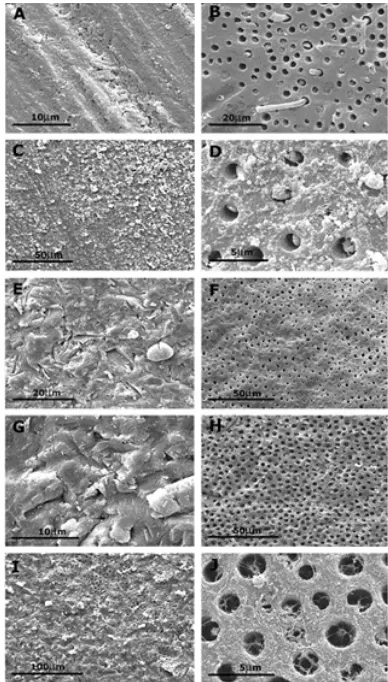
Effect of surface treatment on adhesion to dentin
Teks penuh
Gambar

Dokumen terkait
This study reports the electrical properties of the ZnO nanostructure grown on the plasma surface pre-treated plastic substrates.. as the main solution under various
Results: The result showed that there were statistically significant changes in tooth surface hardness (p<0.05) in coffee, tea, and milk group compared to control group..
“The adhesion between fiber posts and composite resin cores: the evaluation of microtensile bond strength following various surface chemical treatments to posts”.. “Effect of plasma
Thus, this study aimed to assess the effect of contamination with hemostatic agents on shear bond strength of composite to dentin using G-Premio and Single Bond Universal adhesives..
Various methods can be used to roughen the zirconia surface and enhance the mechanical bonding to zirconia such as surface roughening by milling, sandblasting, and tribochemical prep-
Effect of Layering Technique on Push-Out Bond Strength of Composite Resin to Intracanal Dentin of Primary Anterior Teeth Zohreh Estaki 1, Hossein Afshar 2, Sara Ghadimi 3, Samira
The objective of this study is to investigate the effects of the surface structure that is generated by sandblasting pre-treatment, and the parameters of the pre-treatment, which
INTRODUCTION Dental restoration materials are continually being developed with the aims of improving their aesthetics, hardness, and adhesion strength to tooth structures.1,2 Surface
