* Corresponding author. Tel/Fax : +62-85228447288
SYNTHESIS AND ANTIPLASMODIAL ACTIVITY TESTING OF ALKYL- AND
(1)-N-BENZYL-6-NITRO-1,10-PHENANTHROLINIUM SALTS AS NEW POTENTIAL
ANTIMALARIAL AGENTS
Ruslin Hadanu
1,*, Sabirin Mastjeh
2, Jumina
2, Mustofa
3,
Eti Nurwening Sholikhah
3, and Mahardika Agus Wijayanti
41
Department of Chemistry, Faculty of Teachership and Educational Science, Pattimura University, Poka, Ambon, Indonesia
2
Department of Chemistry, Faculty of Mathematics and Natural Sciences, Universitas Gadjah Mada, Sekip Utara, Yogyakarta, Indonesia
3
Department of Pharmacology and Toxicology, Faculty of Medicine, Universitas Gadjah Mada, Sekip Utara, Yogyakarta, Indonesia
4
Department of Parasitology, Faculty of Medicine, Universitas Gadjah Mada, Sekip Utara, Yogyakarta, Indonesia
Received May 26, 2011; Accepted September 2011
ABSTRACT
The synthesis of 5-nitro-1,10-phenanthroline hydrate2 derivatives from 1,10-phenanthroline monohydrate as starting material has been carried out. The 5-nitro-1,10-phenanthroline hydrate 2 was obtained through nitration reaction using H2SO4 and HNO3 as catalyst and reagent, respectively. Synthesis of alkyl-6-nitro- and
(1)-N-benzyl-6-nitro-1,10-phenanthrolinium have been prepared using dimethyl sulphate (DMS), diethyl sulphate (DES), benzyl chloride, benzyl bromine, and benzyl iodide. The reagents of benzyl bromine, and benzyl iodide were synthesized from benzyl chloride using NaBr in ethanol absolute and NaI in acetone, respectively. The five compounds of 5-nitro-1,10-phenanthroline hydrate 2 derivatives were conducted to evaluate the in vitro antiplasmodial activity. The in vitro antiplasmodial was evaluated on strains of Plasmodium falciparum FCR-3 resistant chloroquine and D10 sensitive chloroquine. The 50% inhibition concentration (IC50) of the five compounds
ranged from 2.41 ± 1.41 to 0.07 ± 0.01μM. The results showed that the (1)-N-benzyl-6-nitro-1,10-phenanthrolinium iodide had highest antiplasmodial activity.
Keywords:5-nitro-1,10-phenanthroline hydrate; P. falciparum; antimalarial; antiplasmodial
ABSTRAK
Telah dilakukan sintesis turunan senyawa 5-nitro-1,10-fenantrolin hidrat 2 dari bahan dasar 1,10-fenantrolin monohidrat. Senyawa 5-nitro-1,10-fenantrolin diperoleh melalui reaksi nitrasi menggunakan katalis dan reagen berturut-turut H2SO4 dan HNO3. Sintesis senyawa (1)-N-alkil-6-nitro- dan (1)-N-benzil-6-nitro-1,10-fenantrolinium
dilakukan menggunakan pereaksi-pereaksi dimetil sulfat (DMS), dietil sulfat (DES), benzil klorida, benzil bromida, dan benzil iodida. Reagen benzil bromida dan benzil iodida telah disintesis dari bahan dasar benzil klorida menggunakan reagen berturut-turut NaBr dalam etanol dan NaI dalam aseton. Pada kelima senyawa turunan 5-nitro-1,10-fenantrolin2 tersebut telah dilakukan uji aktivitas antiplasmodium secara in vitro terhadap strain resistan klorokuin Plasmodium falciparum FCR-3 dan strain sensitif klorokuin D10. Nilai konsentrasi penghambatan 50% (IC50) dari kelima senyawa tersebut berkisar dari 2,41 ± 1,41 sampai 0,07 ± 0,01μM. Dari hasil uji aktivitas tersebut
ditunjukan bahwa senyawa (1)-N-benzil-6-nitro-1,10-fenantrolinium iodida mempunyai aktivitas antiplasmodium yang paling tinggi.
Kata Kunci:5-nitro-1,10-fenantrolin hidrat; P. falciparum; antimalaria; antiplasmodium
INTRODUCTION
Malaria is the main health problems in subtropical and tropical countries. There are 105 countries in the world at malaria endemic and more than 500 million
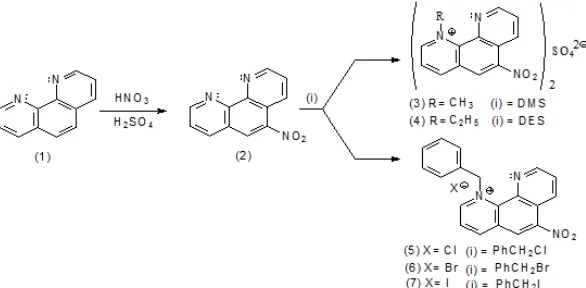
Fig 1.The reaction scheme of synthesis of 5-nitro-1,10-phenanthroline2derivatives
Fig 2.The1H-NMR spectrum of 5-nitro-1,10-phenanthroline2compound
2.48 million and there are 211 people deaths among 227.5 million people of Indonesian [4]. Malaria is one of the most important diseases of the developing world, killing 1–3 million people and causing disease in 300–500 million people annually [5-7].
The traditional remedies are no longer effective and the incidence of malarial byP. falciparum,the most dangerous species of parasite, continues to grow, while some traditional drugs such as chloroquine and its congeners are losing their activity due to the increasing multi drug resistance [8-9]. Therefore, it is essential to find new drugs of antimalarial having a pharmacological activity higher that of currently available drugs of antimalarial. In this connection, Quantitative Structure Activity Relationship (QSAR) analysis plays an important role to minimize trial and error in designing new antimalarial drugs.
In our research a few years ago, we focused to synthesize and to evaluate of antiplasmodial activity of 1,10-phenanthroline derivatives. In continuation of these studies, we have reported the results of the synthesis and determination of biological activity of compounds type (1)-N-alkyl-and (1)-N-benzyl-1,10-phenanthrolinium [10]. Yapi et al. [8] have synthesized diaza-analogs of phenanthrene by substituting the two nitrogen atoms in
the phenanthrene skeleton. Antiplasmodial activity of series of diaza-analogs of phenanthrene derived from 3-amino-, 5-amino-, 6-amino-, 8-aminoquinoline and 5-isoquinoline showed that among the molecules evaluated the 1,10-phenanthroline skeleton was the most active compound in vitro on both chloroquine-resistant (FcB1) and chloroquine-sensitive (Nigerian) strain with an IC50 of about 0.13 μM. Based on the
skeleton, Mustofa, et al. [11] have also synthesized thirteen derivatives of 1,10-phenanthroline and evaluated the in vitro antiplasmodial activity [8] and their Quantitative Structure Activity Relationship (QSAR) [11]. The results of QSAR analysis of six new compounds 1,10-phenanthroline derivatives have the best theoretical activity, so that it is recommended to synthesize and to evaluate through experiments in the laboratory.
± 0.04μM and D10 strains with an IC500.74 ± 0.20–0.34
± 0.07μM [10].
Recently, the analysis of Quantitative Structure Activity Relationship (QSAR) against the series of sixteen compounds of 1,10-phenanthroline monohydrate 1 derivatives were conducted [12]. In this analysis of quantitative structure activity relationship was obtained the best QSAR equation model:
ln 1/IC50 = 3.732 – (5.098) C5 + (7.051) qC7 + (36.696) qC9 + (41.467) qC11 – (135.497) qC12 + (0.332) µ – (0.170)α– (0.757) log P.
The QSAR equation model above was used to modeling the 5-nitro-1,10-phenanthroline hydrate 2 derivatives. The results of the QSAR analysis has found the best theoretical antiplasmodial activity of new 5-nitro-1,10-phenanthroline hydrate 2 compounds i.e: (1)-N -methyl-6-nitro-1,10-phenanthrolinium sulphate 3 (IC50:
0.018 µM), (1)-N-ethyl-6-nitro-1,10-phenanthrolinium sulphate 4 (IC50: 0.017 µM), (1)-N
-benzyl-6-nitro-1,10-phenanthrolinium chloride 5 (IC50: 0.103 µM), (1)-N
-benzyl-6-nitro-1,10-phenanthrolinium bromide 6 (IC50:
0.103 µM), and (1)-N -benzyl-6-nitro-1,10-phenanthrolinium iodide7(IC50: 0.103 µM).
Based on the value of theoretical antiplasmodial activity above, the five new compounds of 5-nitro-1,10-phenanthroline hydrate 2 derivatives have been recommended to synthesize and to evaluate of antiplasmodial activity in this research. The strategy of addition the nitro functional group on the 1,10-phenanthroline skeleton was used of H2SO4 and HNO3
as reagent. The reactions condition and the results of synthesis of 5-nitro-phenanthroline hydrate2derivatives were presented in Fig. 1. Furthermore, compounds of the product (1)-N-alkyl- and (1)-N -benzyl-5-nitro-1,10-fenantrolinium were synthesized from 5-nitro-1,10-phenanthroline hydrate 2 through alkylation and benzylation reaction using dimethyl sulfate (DMS), diethyl sulfate (DES), benzyl chloride, benzyl bromide and benzyl iodide, respectively.
EXPERIMENTAL SECTION
Materials
The 1,10-phenanthroline hydrate p.a. (Merck), dimethyl sulphate (DMS) p.a. (Merck), dimethyl sulphate (DES) p.a. (Merck), benzyl chloride p.a. (Merck), fuming nitric acid p.a. (Merck), H2SO4 99.8% p.a. (Merck), HCl
p.a. (Merck), NaOH p.a. (Merck), NaBr p.a. (Merck), NaI p.a. (Merck), KOH p.a. (Merck), Na2SO4 anhydrous p.a.
(Merck), NaHCO3 p.a. (Merck), acetone p.a. (Merck),
CH2Cl2 p.a. (Merck), diethyl ether p.a. (Merck), CHCl3
p.a. (Merck), CCl4 p.a. (Merck), dimethyl sulphoxide
(DMSO) p.a. (Merck), N2 gas, TLC plat, silica gel,
hexane p.a. (Merck), and benzene p.a. (Merck).
Instrumentation
In general, the melting points of compounds were determined on melting point electrothermal 9100. The spectrum of structures compound measurements were taken using the following instruments: FTIR spectrums were taken on Shimadzu FTIR-8201 PC; 1H-NMR spectrums were obtained on JEOL 60 MHz and JEOL 500 MHz. MS spectrums were recorded on GC-MS Shimadzu QP 5000.
Procedure
Synthesis of 5-nitro-1,10-phenanthroline hydrate (2) The 1,10-phenanthroline monohydrate 1 (1.10 g; 5.5 mmol) was dissolved in 30 mL of concentrated H2SO4. The 15 mL of fuming nitric acid were added
dropwise to this stirred solution, while the temperature was maintained between 160-170 °C. The mixture was kept at 160-170 °C during two hours, and subsequently poured into ice water. The pH of this aqueous solution was adjusted to pH = 3 by adding a sodium hydroxide solution (NaOH 10 N). The precipitate of product was filtered off, washed with water and dried in vacuo.
When desired, 5-nitro-1,10-phenanthroline hydrate can be purified by recrystallization in isopropanol. The 5-nitro-1,10-phenanthroline hydrate was isolated as brown solid compound (1.37 g; 99.49%), m.p.: 195 °C. FT-IR (KBr, ʋ; cm-1): 3409.9 (O-H from hydrogen bonding), 3055.0 and 3008.7 (Csp2-H), 2873.7 (Csp3-H),
1620.1 and 1527.5 (asymmetry stretch of NO2), 1585.4
and 1500.0 (C=C aromatic), 1350.1 (symmetry stretch of NO2), 1176.5 (C-N bonding).
Benzyl chloride (5.04 g; 40 mmol) was added into a solution of NaBr (9.0 g; 60 mmol) in ethanol absolute (120 mL). The mixture was stirred in room temperature for 3 h. The solvent was removed by vacuum evaporation, and then the residue was diluted with water (30 mL), and extracted with CH2Cl2(3 x 25 mL).
The combined organic layers were washed with water (2 x 30 mL), dried over Na2SO4 anhydrous and
evaporated to give benzyl bromide compound (yellow liquid, 84.25%) and further purification by distillation (b.p 198-199 °C; 80.56%). FT-IR (neat, ʋ, cm-1): 3031.9, 2974.0, 740.6; 698.2; 605.6 and 547.7 cm-1. The 1H-NMR (CDCl3; 60 MHz; TMS) δ: 4.3 (2H, s,
CH2), 7.1-7.4 (5H, m, H-phenyl). MS (relative intensity)
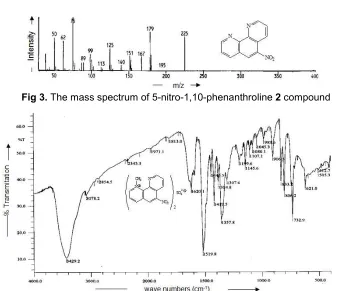
Fig 3.The mass spectrum of 5-nitro-1,10-phenanthroline2compound
Fig 4.The FTIR spectrum of (1)-N-methyl-6-nitro-1,10-phenanthrolinium sulphate3compound
Fig. 5.The1H-NMR spectrum of (1)-N-methyl-6-nitro-1,10-phenanthrolinium sulphate3
Synthesis of benzyl iodide
A solution of benzyl chloride (5.04 g; 40 mmol) was added into a solution of NaI (9.0 g; 60 mmol) in acetone (60 mL). The mixture was stirred in room temperature for 3 h. After evaporation, the residue was diluted with water (30 mL), and extracted with CH2Cl2 (3 x 25 mL). The
combined organic layers were washed with water (2 x 70 mL), dried over Na2SO4 anhydrous and
evaporated to give benzyl iodide compound (yellow solid, 97.93%). FT-IR (neat, ʋ, cm-1): 3028.0, 1600-1500.0, 2900.0, 1454.2, 752.2, 694.3, 567.0 and
540.0 cm-1.1H-NMR(CDCl3; 60 MHz, TMS)δ: 4.4 (2H,
s, CH2), 7.1-7.5 (5H, m, H-phenyl). MS(relative intensity)
(EI) m/z: 218 [M+]; 91; 65; 51; 39.
Synthesis of (1)-N-methyl-6-nitro-1,10-phenanthro linium sulphate (3)
Fig 6.FTIR spectrum of (1)-N-ethyl-6-nitro-1,10-phenanthrolinium sulphate4compound
Fig 7.The1H-NMR spectrum of (1)-N-ethyl-6-nitro-1,10-phenanthrolinium sulphate4
of product was conducted with dichloromethane : diethyl ether (1:1) to give white solid compound of (1)-N -methyl-6-nitro-1,10-phenanthrolinium sulphate 3 (0.93 g; 81.26%, m.p 192-194 °C). The product was characterized by means of IR and1H-NMR. FT-IR (KBr,
ʋ; cm-1): 3429.2 (O-H hydrogen bonding from hydrate), 3078.2 (Csp2-H), 2854.5 (Csp3-H), 1620.1 and 1519.8
(asymmetry stretch of NO2), 1600.0 and 1500.0 (C=C
aromatic), 1384.8 (CH3), 1419.5 and 1357.8 (symmetry
stretch of NO2), 1199.6 (C-N); 1HNMR (500 MHz,
DMSO-d6, TMS) δ (ppm): 9.74-9.72 (1H, s, HA),
9.58-9.56 (1H, s,HG), 9.05-9.03 (1H, s,HC), 8.89 (1H, s, HE), 8.54-8.52 (1H, s, HB), 8.20-8.19 (1H, s, HH), 7.97-7.96
(1H, s, HD), 5.25 (3H, s, CH3), and 3.69 (H2O, s;
hydrogen bonding).
Synthesis of (1)-N-ethyl-6-nitro-1,10-phenanthro linium sulphate (4)
Fig 8.FTIR spectrum of (1)-N-benzyl-6-nitro-1,10-phenanthrolinium chloride5compound
Fig 9.The1H-NMR spectrum of (1)-N-benzyl-6-nitro-1,10-phenanthrolinium chloride5
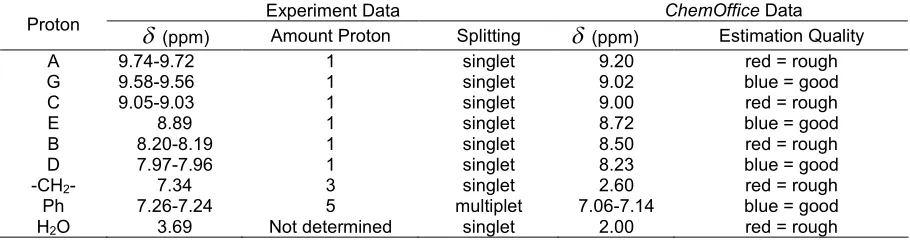
Table 1.List of chemical shift of1H-NMR spectrum from experiment andChemOffice Ultra 6software
Experiment Data ChemOfficeData Proton
(ppm) Amount Proton Splitting
(ppm) Estimation QualityA 9.74-9.72 1 singlet 9.20 red = rough
G 9.58-9.56 1 singlet 9.02 blue = good
C 9.05-9.03 1 singlet 9.00 red = rough
E 8.89 1 singlet 8.72 blue = good
B 8.20-8.19 1 singlet 8.50 red = rough
D 7.97-7.96 1 singlet 8.23 blue = good
-CH2- 7.34 3 singlet 2.60 red = rough
Ph 7.26-7.24 5 multiplet 7.06-7.14 blue = good H2O 3.69 Not determined singlet 2.00 red = rough
was characterized by means of IR and proton NMR. FT-IR (KBr, ʋ; cm-1): 3433.1 (O-H hydrogen bonding from hydrate), 3050.0-3000.0 (Csp2-H), 2738.7 (Csp3-H),
1616.2 and 1535.2 (asymmetry stretch of NO2), 1593.1
and 1500.5 (C=C aromatic), 1454.2 (CH2), 1357.8 (CH3),
1303,8 (symmetry stretch of NO2), 1157.2 (C-N);
1
H-NMR(500 MHz, DMSO-d6, TMS)δ(ppm): 9.31-9.20
(1H, m, HA), 9.12-9.10 (1H, m, HG), 8.79 (1H, m, HC), 8.32-8.30 (1H, m,HE), 7.98-7.94 (1H, m,HB), 7.72-7.71 (1H, m,HD), 7.50-7.49 (1H, s,HF), 5.08 (H2O; hydrogen
bonding from hydrate), 3.51-3.46 (2H, m, CH2), and
Fig 10.FTIR spectrum of (1)-N-benzyl-6-nitro-1,10-phenanthrolinium bromide6
Fig 11.The1H-NMR spectrum of (1)-N-benzyl-6-nitro-1,10-phenanthrolinium bromide6
Synthesis of (1)-N-Benzyl-6-nitro-1,10-pheanthro linium chloride (5)
A solution of 5-nitro-1,10-phenathroline hydrate 2 compound (0.45 g; 2 mmol) and benzyl chloride (1.26 g, 10 mmol) in acetone (25 mL) was refluxed for 18 h. The resulting mixture was cooled, then the precipitate which formed was filtered and washed with acetone. Recrystallization of product was conducted with dichloromethane : diethyl ether (1:1) to give (1)-N -benzyl-6-nitro-1,10-phenanthrolinium chloride 5 compound (purple solid, 0.58 g, 82.50%) and m.p: = 223-225 °C. FT-IR (KBr, ʋ, cm-1): 3448.5 (H2O;
hydrogen bonding from hydrate), 3066.6, 2854.5, 1607.2, 1593.1, 1525.2, 1500.5, 1454.2, 1415.7, 1358.8, 1230.5, 1157.2, 833.2, 810.0, 732.0, 636.5 and 617.2. 1
H-NMR(DMSO-d6; 500 MHz, TMS) δ(ppm): 9.84-9.83 (1H, m, HA), 9.56-9.54 (1H, m, HG), 9.20-9.19 (1H, m,
HC), 8.75-8.74 (1H, m, HE); 8.58-8.52 (1H, m, HB),
8.44-8.43 (1H, m, HB), 8.00-7.99 (1H, m, HF), 7.34 (2H, s,
CH2) and 7.26-7.24 (5H, m, Hph).
Synthesis of (1)-N-Benzyl-6-nitro-1,10-phenathro linium bromide (6)
A solution of 5-nitro-1,10-phenathroline hydrate 2 (0.45 g; 2 mmol) was refluxed with benzyl bromide (1.71 g, 10 mmol) in acetone (25 mL). The mixture was stirred at 58 °C for 16 h. The resulting mixture was cooled, then the precipitate which formed was filtered, and washed with acetone. Recrystallization of product was conducted with dichloromethane : diethyl ether (1:1) to give (1)-N-benzyl-6-nitro-1,10-phenathrolinium bromide6 compound (pink solid, 0.66 g, 83.28%), and m.p: = 224-225 °C. FT-IR(KBr,ʋ, cm-1): 3447.6 (H2O;
Fig 12.FTIR spectrum of (1)-N-benzyl-6-nitro-1,10-phenanthrolinium iodide7
Fig 13.The1H-NMR spectrum of (1)-N-benzyl-6-nitro-1,10-phenanthrolinium iodide7
9.21-9.20 (1H, m, HC), 8.79-8.78 (1H, m, HE), 8.59 (1H,
m, HB), 8.47(1H, m, HD) 7.98-7.96 (1H, m, HF), 7.41 (2H,
s, CH2) and 7.24-7.18 (5H, m, HAr).
Synthesis of (1)-N-Benzyl-6-nitro-1,10-pheanthro linium iodide (7) compound
A solution of 5-nitro-phenanthroline hydrate 2 (0.45 g; 2 mmol) and benzyl iodide (10 mmol) in acetone (25 mL) was refluxed for 14 h. The resulting mixture was cooled, then the precipitate which formed was filtered, and washed with acetone. Recrystallization of product was conducted with dichloromethane : diethyl ether (1:1)
to give (1)-N-benzyl-6-nitro-1,10-pheanthrolinium iodide 7 compound (yellow solid, 0.76 g, 84.55%, m.p: 225-227 °C). FT-IR (KBr, ʋ; cm-1): 3452.3 (H2O;
hydrogen bonding from hydrate), 3050-3000, 2913.2, 1613.7, 1578.5, 1526.7, 1484.4, 1445.4, 1223.1, 1178.9, 917.2, 893.5, 794.9 and 715.2; 1H-NMR (DMSO-d6; 500 MHz, TMS) δ (ppm): 9.41-9.40 (1H, m, HA) 8.98 (1H, m, HG), 8.48-8.47 (1H, m, HC),
8.25-8.24 (1H, m, HE), 8.09 (1H, m, HB), 7.79-7.78
(1H, m, HD), 7.49-7.48 (1H, m, HAr), 7.20 (2H, s, CH2)
Biology Activity
Parasites were cultured according to method described by Trager and Jensen [13] with modification [14-15]. FCR-3 was considered as a chloroquino resistant strain and D10 were considered as a chloroquine sensitive strain. Culture medium was replaced daily and the cultures were synchronized by 5% D-sorbitol lysis (Merck, Darmstadt, Germany). The method used for in vitroantimalarial activity testing was adapted from visual method. The molecules were tested 3 times in triplicate in 96-well plates (TPP, Switzerland) with cultures at ring stage at 0.5-1.0% parasitemia (hematocrit: 1%). For each test, the parasite cultures were incubated with the chemicals at decreasing concentrations for 24 and 72 h. The first dilution of the product (10 mg/mL) was performed with dimethyl sulphoxide (DMSO, Merck), and the following with RPMI 1640. Parasite growth was estimated by coloring with giemsa (10%) for 30 sec and calculated by β-caunter. The parasite control in the presence without chemicals (mean of the corresponding wells was referred to as 100%). Concentrations inhibiting 50% of the parasite (IC50) were determined by SPPS 13.0 software. The IC50
is indicate the antiplasmodial activity of chemicals compound that are determined by probit analysis method with percent concentration inhibition versus chemical doses.
RESULT AND DISCUSSION
Synthesis of (1)-N-alkyl- and (1)-N -benzyl-5-nitro-1,10-phenanthrolinium salts compounds are shown in Fig. 1. Synthesis of 5-nitro-1,10-phenanthroline hydrate 2 derivatives from 1,10-phenanthroline monohydrate 1 through two steps to give phenanthroline 3-7 were presented in Fig. 1. The (1)-N-alkyl- and (1)-N -benzyl-5-nitro-1,10-phenanthrolinium salts compounds were synthesized from 1,10-phenanthroline monohydrate 1 compound through two steps reaction i.e. (a) nitration reaction of 1,10-phenanthroline monohydrate 1 using HNO3reagent and H2SO4 as catalyst, (b) alkylation and
benzylation of 5-nitro-1,10-phenanthroline hydrate 2 using DMS, DES, benzyl chloride, benzyl bromide, and benzyl iodide to give (1)-N -methyl-6-nitro-1,10-phenanthrolinium sulphate 3, (1)-N -ethyl-6-nitro-1,10-phenanthrolinium sulphate 4, (1)-N -benzyl-6-nitro-1,10-phenanthrolinium chloride 5, (1)-N -benzyl-6-nitro-1,10-phenanthrolinium bromide 6, and (1)-N -benzyl-6-nitro-1,10-phenanthrolinium iodide 7 compound, and the scheme of reaction is shown in Fig. 1.
Synthesis of 5-nitro-1,10-phenanthroline hydrate 2 was conducted from 1,10-phenanthroline monohydrate1 through nitration reaction using HNO3 reagent and
H2SO4as catalyst. The product of nitration reaction was
characterized by FTIR, 1H-NMR and mass spectrometry. The FTIR spectrum showed pick in 1519.8 and 1357.8 cm-1 indicated the product of nitration has -NO2 functional group. Absorption bands
of C-N at 1176.5 cm-1corroborate the existence of the 5-nitro-1,10-phenanthroline hydrate 2 compound as product of this reaction. The 1H-NMR spectrum of 5-nitro-1,10-phenanthroline hydrate 2 shows four signals at: 9.3, 9.0-8.6, 8.0-7.6 and 3.0 ppm, respectively, which are assigned to HA(2H), HB (2H), HB(3H), and H2O as hydrogen bonding protons from
hydrate. The 1H-NMR and mass spectrum of 5-nitro-1,10-phenanthroline hydrate 2 as product showed in Fig. 2 and 3, respectively.
Synthesis of (1)-N -methyl-6-nitro-1,10-phenanthrolinium sulphate3compound was conducted from 5-nitro-1,10-phenanthroline hydrate 2 by DMS reagent in acetone to give white solid compound (m.p 192-194 °C) in 81.26% yield. The structure of (1)-N-methyl-6-nitro-1,10-phenanthrolinium sulphate 3 was determined by FTIR and 1H-NMR spectrum. The FTIR spectrum showed typical spectra at 1384.8 cm-1 to indicate presence of the methyl group, while the
1
H-NMR spectrum showed signal of singlet peak at δ 5.2 ppm (3H) assigned to the methyl group too. The FTIR and 1H-NMR spectrums are shown in Fig. 4 and 5, respectively.
The compound of (1)-N -ethyl-6-nitro-1,10-phenanthrolinium sulphate 4 was synthesized through ethylation reaction with DES in acetone by reflux for 12 h to give the salt compound (m.p 206-207 °C; 76.09%). The structure of product was determined by FTIR and 1H-NMR spectrum. Similarly, the FTIR spectrum of (1)-N-ethyl-6-nitro-1,10-phenanthrolinium sulphate 4 compound showed typical spectrum at 1454.2 and 1365.1 cm-1, respectively, assigned to the methyl and methylene groups, while the 1H-NMR spectrum of (1)-N-ethyl-6-nitro-1,10-phenanthrolinium sulphate 4 compound showed triplet peak at δ 1.18-1.15 (3H) and quartet peak at δ 3.51-3.46 (2H), respectively, to indicate presence of methyl and methylene groups. The FTIR and 1H-NMR spectrums are shown in Fig. 6 and 7, respectively.
Synthesis of (1)-N -benzyl-6-nitro-1,10-phenanthrolinium chloride 5 was conducted from 5-nitro-phenanthroline hydrate 2 compound with benzyl chloride reagent in acetone which refluxing for 18 h to give purple solid (m.p: = 223-225 °C) in 82.50% yield. The structure of (1)-N -benzyl-6-nitro-1,10-phenanthrolinium chloride 5 was determined by FT-IR and1H-NMR spectrum. The FT-IR spectrum (Fig. 8) of (1)-N-benzyl-6-nitro-1,10-phenanthrolinium chloride 5 compound showed a spectra at 1454.2 cm-1 corresponding to -CH2- from benzyl group. In
25 39.68 ± 8.70 26.36 ± 10.38 25.71 ± 7.98
Table 3. Parasite growth inhibition and IC50 of 5-nitro-1,10-phenanthroline 2 on D10 strain calculated for 72 h of
incubation time
%Inhibition (mean±SD) Concentration
(ng/mL) Compound3 Compound5 Compound6 Compound7 Conc.
(ng/mL) Compound4
its 1H-NMR spectrum (Fig. 9). The singlet signal at δ 7.34 ppm is compatible with the proton signal of methylene group. The specific spectra of singlet signal at δ 7.34 ppm was indicated proton of methylene (-CH2-)
corresponding to the chemical shift of proton of methylene group calculated with ChemOffice Ultra 6.
The complete result showed in Fig. 9 and Table 1. The benzylation of 5-nitro-phenanthroline hydrate2 compound has been conducted using benzyl bromide reagent in acetone which refluxing for 16 h to give pink solid of (1)-N-benzyl-6-nitro-1,10-phenathrolinium bromide 6 compound (m.p: = 224-225 °C) in 83.28% yield. The structure of (1)-N -benzyl-6-nitro-1,10-phenanthrolinium bromide 6 compound was determined by FT-IR and 1H-NMR spectrometry. The FT-IR spectrum (Fig. 10) showed typical spectra in ʋ 1457.7 cm-1to indicate presence of the methylene group, while the 1H-NMR spectrum (Fig. 11) showed singlet peak at δ7.41 ppm, assigned to the methylene group too.
The benzylation of 5-nitro phenanthroline hydrate2 using benzyl iodide was carried out giving (1)-N -benzyl-6-nitro-1,10-phenanthrolinium iodide 7 compound. Treatment of (1)-N-benzyl-6-nitro-1,10-phenanthrolinium iodide7in acetone solvent was refluxed for 14 h to give yellow solid (m.p: 225-227 °C) in 84.55% yield. The CH2
group from (1)-N-benzyl-6-nitro-1,10-phenanthrolinium iodide 7 revealed a spectra at 1445.4 cm-1in its FT-IR spectrum, while the1H-NMR spectrum showed a singlet
at δ 7.20 ppm corresponding to proton of methylene group. The FT-IR and1H-NMR spectrums are shown in Fig. 13 and 14.
Two strains of P. falciparum were used to evaluate the in vitro antiplasmodial activities of compounds (3)-(7): the chloroquine-resistant FCR3 and sensitive D10 strains. The results are summarized in Tables 2 and 3. The antiplasmodial activity of (1)-N -alkyl- and (1)-N-benzyl-6-nitro-1,10-phenanthrolinium showed that (1)-N -methyl-6-nitro-1,10-phenanthrolinium sulphate 3, (1)-N -ethyl-6-nitro-1,10-phenanthrolinium sulphate4, (1)-N -benzyl-6-nitro-1,10-phenanthrolinium chloride 5, (1)-N -benzyl-6-nitro-1,10-phenanthrolinium bromide 6 and (1)-N -benzyl-1,10-6-nitro-phenanthrolinium iodide 7 were active against P. falciparumFCR3 with an IC500.72 ± 0.16, 0.67 ± 0.05,
2.41 ± 1.41, 0.17 ± 0.05 and 1.79 ± 1.19 μM, respectively, and D10 strains with an IC500.25 ± 0.01,
The percentage of inhibition of the parasitic growth following the study of an each concentration of compounds was evaluated. A compounds proves to be interesting if this inhibition is total, in other words, at the high concentration (1600 ng/L) causes an inhibition of more than 90% of the parasitic growth. Treatment with (1)-N-benzyl-6-nitro-1,10-phenanthrolinium bromide 6 compound significantly inhibited parasitemia of P. falciparumFCR3 and D10 strains. Based on the Table 1 showed having the highest antiplasmodial activity in FCR-3 strain is (1)-N -benzyl-6-nitro-1,10-phenanthrolinium bromide 6 compound to equal 0.17 ± 0.05, while in Table 2 showed the (1)-N -benzyl-6-nitro-1,10-phenanthrolinium iodide 7 compound having the highest antiplasmodial activity at D10 strain to equal 0.07 ± 0.01 µM.
CONCLUSION
The 5-nitro-1,10-phenanthroline hydrate 2 derivatives compounds i.e. (1)-N -methyl-6-nitro-1,10-phenanthrolinium sulphate 3, (1)-N -ethyl-6-nitro-1,10-phenanthrolinium sulphate 4, (1)-N -benzyl-6-nitro-1,10-phenanthrolinium chloride 5, (1)-N -benzyl-6-nitro-1,10-phenanthrolinium bromide 6, and (1)-N -benzyl-6-nitro-1,10-phenanthrolinium iodide 7 compounds were synthesized, characterized, and evaluated of in vitro
antiplasmodial activity. The result of antiplasmodium evaluation of 5-nitro-1,10-phenanthroline hydrate 2 derivatives having the highest antiplasmodial activity in FCR-3 strain is (1)-N -benzyl-6-nitro-1,10-phenanthrolinium bromide 6 compound to equal 0.17 ± 0.05, while in the D10 strain having the highest antiplasmodial activity is (1)-N -benzyl-6-nitro-1,10-phenanthrolinium iodide 7 compound to equal 0.07 ± 0.01 µM.
ACKNOWLEDGEMENT
The study was funded by Postgraduate Research Grant from Minister of Education, Indonesian Government and 2nd Research Grant from Indonesian Toray Science Foundation, ITSF-Indonesia. We are also grateful to PT. Konimex Indonesia for providing the chloroquine diposphate use in these tests.
REFERENCES
1. Daily, J.P., 2006, J. Clin. Pharmacol., 46, 12, 1487–1497.
2. Tatu, U., Jain, S., and Priya, P.P., 2005,J. Biosci.,
30, 5, 567–571.
3. Mahmoudi, N., Ortiz, J.V.J., Ciceron, L., Galvez, J., Mazier, D., Danis, M., Derouin, F., and Domenech R.G., 2006,J.Antimicrob. Chemother.,57, 3, 489– 497.
4. Nuri, Dachlan, Y.P., Santosa, M.H., Zaini, N.C., Widyawaruyanti, A., dan Sjafruddin, 2005, Majalah Farmasi Airlangga,5, 3, 88–90.
5. Fidock, D.A., Rosenthal, P.J., Croft, S.L., Brun, R., and Nwaka, S., 2004,Nat. Rev. Drug Discovery,3, 509–520.
6. Kayembe, J.S., Taba, K.M., Ntumba, K., Tshiongo, M.T.C., and Kazadi, T.K., 2010, J. Med. Plants Res., 4, 11, 991–994.
7. Olumese, P., 2005,Acta Trop.,95, 265–269. 8. Yapi, A.D., Mustofa, M., Valentin, A., Chavignon.
O., Teulade., J., Mallie, M., Chapat, J., and Blace, Y., 2000,Chem. Pharm. Bull.,48, 12, 1886–1889. 9. Yapi, A.D., Valentin, A., Chezal, J.M., Chavignon.
O., Chaillot, B., Gerhardt, R., Teulade, J.C., and Blace, Y., 2006,Arch. Pharm.,339, 4, 201-206. 10. Widjayanti, M.A., Solikhah, E.N., Tahir, I., Hadanu,
R., Jumina, Supargiono, and Mustofa, 2006, J. Health Sci.,52, 6, 794–799.
11. Mustofa, M., Yapi, A.D., Valentin, A., Tahir, I., 2003,Berkala Ilmu Kedokteran,35, 2, 67–64. 12. Hadanu, R., Mastjeh, S., Jumina, Mustofa,
Sholikhah, E.N., Wijayanti, M.A., and Tahir, I., 2007,Indo. J. Chem,7, 1, 72–77.
13. Trager, W., and Jensen, J. B., 1976,Science, 193, 4254, 673–675.
14. Benoit, F., Valentin, A., Pelissier, Y., Marion, C., Dakuyo, Z., Mallie, M., and Bastide, J.M., 1995,
Trans. R. Soc. Trop. Med. Hyg., 89, 2, 217–218. 15. Desjardins, R.E., Canfield, C.J., Haynes, J.D., and