PROBLEM-BASED LEARNING (PBL) APPLICATION ON ENGLISH LANGUAGE TEACHING (ELT): ITS EFFECT TO THE STUDENTS’ ABILITY IN WRITING
ESSAY
David Berthony Manalu, S.Pd., M.Pd.
FKIP, Universitas HKBP Nommensen, Pematangsiantar Alamat Korespondensi: [email protected]
Abstract
This research was designed to find out the effect of PBL (Problem-based Learning)
application to the students’ achievement in essay writing. In analyzing the data, the
researcher occupied quantitative approach. The subjects were the fifth semester (Academic Year 2014/2015) students of English Department Universitas HKBP Nommensen Pematangsiantar. The researcher randomly took 40 students for each group (i.e. control and experimental group) as the sample of research. The instrument of this research was an essay test. The research finding showed that PBL significantly affected the students’ ability in writing essay. The t-test (9.38) was higher than t-table (2.68) at the level of significance 0.05. By applying PBL, the students were easy to organize their ideas.
Key Words: Problems, group work, essay, product assessment, process assessment.
INTRODUCTION
Problem-based learning (PBL) was firstly introduced in the medical school program at McMaster University in Hamilton, Ontario, Canada in the late 1960s by Howard Barrows and his colleagues. The PBL curriculum was developed in order to stimulate the learners, assist the learners in seeing the relevance of learning to future roles, maintain a higher level of motivation towards learning, and to show the learners the importance of responsible, professional attitudes. There were, at least, three major factors that initiated the implementation of PBL in the medical education at McMaster University: (1) the dissatisfaction of the learners with the education, (2) the irrelevance of the learned information to the professional practice, and (3) the learners' lack of reasoning ability to apply what they have learned to solve problems at the work place (Barrows, 1996).
Problem-based learning has subsequently been adopted by other medical school programs, adapted for
undergraduate instruction, as well as K-12 (kindergarten to 12 years of basic education). The use of PBL has expanded from its initial introduction into medical school programs to include education in the areas of other health sciences, math, law, education, economics, business, social studies, and engineering. The use of PBL, like other student-centered pedagogies, has been motivated by recognition of the failures of traditional instruction, and the emergence of deeper understandings of how people learn. Unlike traditional instruction, PBL actively engages the student in constructing knowledge. PBL includes problems that can be solved in many different ways and have more than one solution.
the class. The idea to use PBL in language learning was developed by a Leonardo da Vinci pilot project for the year 1999/2000 entitled Teaching English for Technical Purposes—TENTEC.
The results of the project showed that was especially appropriate for teaching languages across the curriculum for some reason. Firstly, there is the question of motivation. ESP (English for Specific Purposes) teachers sometimes find it difficult to motivate their technically or professionally oriented students for language learning. Even carefully designed curricula, which follow needs analysis, do not always meet the real interests of young student population. Updated textbooks soon become boring and obsolete since new information is easily accessible on the internet. So, a real-life problem raises motivation. Secondly, and closely connected with the question of motivation, is the significance of teaching languages across the curriculum. Languages at tertiary level are often treated as second-rate subjects. This situation is reflected in
students’ attitude towards language as a
faculty subject which they consider a necessary evil but not linked to what they believe to be their genuine study program. This situation can be changed. Working closely with subject teachers, language specialist becomes involved with the faculty programs, while the students feel they can combine their professional knowledge and their knowledge of language (Gvardjancic, 2001: viii–ix).
As one of the lecturers of writing course in Teacher Training Faculty of Nommensen University (FKIP-UHN), the researcher has observed the design of curriculum for writing course and the teaching and learning process, and assumed that most of the students were failed in writing for they did not know what topic to be written and how to start the writing. This happened merely because they had no motivation in writing. The teaching-learning process was monotonous
in which the lecturers provided them information about writing, gave many examples, and assigned homework. But the students were still incapable in writing an essay by themselves. They were not introduced firstly with some problems as ideas for writing. Those problems can be a trigger for them to write.
The researcher formulated the research problem in form of question, as follows: Does applying PBL significantly enhance the fifth semester students’ ability in writing essay at FKIP Nommensen University Pematangsiantar?
Problem-based Learning
Boud & Feletti (1991) defined PBL as an approach to structuring the curriculum which involves confronting students with problems from practice which provides a stimulus for learning. PBL is different with traditional education system. In traditional education system, teachers tend to start by providing information, and then expect students to use the information to solve problems. In PBL to learning the problem comes first. Students both define the problem and gather information to explore it. Working in self-directed groups, students thus take an active role to defining and exploring a research problem. They are not expected to
reach the ‘right’ answer. There may not be
right answers. The technique is characterized by the juxtaposition of individual and collective analytical work, combining team-based exploration and synthesis with individual research and analysis. What makes problem-based learning unique is its core focus on learning through solving real, open-ended problems to which there are no fixed solutions. Students work alone or in groups first to understand a particular problem and then to find possible solutions to it.
PBL follows a constructivist perspective in learning as the role of the instructor is to guide and challenge the learning process rather than strictly
providing knowledge. PBL assists in processes of creating meaning and building personal interpretations of the world based on experiences and interactions. PBL assists to guide the student from theory to practice during their journey through solving the problem.
Roschelle (1999) stated that problem-based learning is rooted in John
Dewey’s project-based pedagogy of the early 20th century (e.g., Dewey, 1929, 1933, 1938). Within the area of second language learning and teaching, problem-based learning aligns with approaches in which students learn the target language by using it, rather than being presented with and then practicing predetermined language structures.
Today, teachers need to develop a new way of thinking about assessment. It should no longer be regarded solely as a means of measuring the results (products) but should also act as an aid to the learning process. Assessment is undergoing a shift from standardized testing and written examination to a broader model of educational assessment from which the teacher and student should receive formative feedback information. Therefore, today assessment should not be stuck only on the result, but should also take place during the process of learning.
Kosel (2005) divided Assessment in PBL into 2 strands:
a. the product strand b. the process strand
In the product strand, the products assessed would be the written report and the oral presentation, while in the process strand assessment would be focused on the
quality of students’ involvement in the
learning process in terms of their contribution to the learning process and personal improvement.
In PBL situation, teachers are not really able to observe all that is going on within student-centered groups during the learning process. Teachers may be in the best position to judge the products, but when the quality of the process is to be judged, the students may be in a better position to do the job. Consequently, the products (presentation and report) should be assessed by teachers and the learning process (discussion and teamwork) should be assessed by students only.
Writing
The written productive language skill is called writing. It is a mental work of inventing ideas, thinking about how to express them, and organizing them into statements and paragraphs that will be clear to a reader. Writing requires process.
There are at least 5 processes of writing according to McWhorter (2012: 103).
Essay
An essay is simply a paper composed of several paragraphs, rather than one paragraph. In an essay, according to Langan (2010: 127), subjects can and should be treated more fully than they would be in a single-paragraph paper. The main idea or point developed in an essay is called the thesis statement or thesis
sentence (rather than, as in a paragraph, the topic sentence). The thesis statement appears in the introductory paragraph, and it is then developed in the supporting paragraphs that follow. A short concluding paragraph closes the essay. Langan (2010) designs the form of an essay as follows:
- Choosing and narrowing topic - Determining purpose and audience - Choosing point of view
- Discovering ideas
- Developing thesis statement - Supporting thesis statement with
some evidences
- Organizing supporting details - Writing effective paragraphs - Writing a strong introduction,
conclusion and title
- Analyzing the purpose and audience.
- Analyzing thesis, topic sentences, and evidence.
- Analyzing organization and paragraph development. - Working with classmates.
- Analyzing sentence structure - Analyzing vocabulary
- Proofreading the essay
134
Prewriting
Developing and Supporting a Thesis
Drafting
Revising
RESEARCH METHOD
This research was an experimental study. According to Ary, et.al (1979: 265), an experiment is a scientific investigation in which the researcher manipulates one or more independent variables, control any other relevant variables, and observe the effect of manipulation on the dependent variable(s). The goal of experimental research is to determine whether a causal relationship exist between two or more variables. The experimental group receives specific treatment while control group receives no treatment. Using a control group enables researcher to see many explanations for the effect of treatment.
This research was conducted from November to December 2014. Its location was Faculty of Teacher Training and Education (FKIP)
Nommensen University
Pematangsiantar. The population of this study was the fifth semester students of teacher training faculty of
Nommensen University
Pematangsiantar. There were about 336 students of the fifth semester. They are divided into 9 groups. The researcher chose 2 groups (group A and B) as the sample of this research. Each group (experimental and control group) consisted of 40 students. So, there were 80 students as the sample of this research. The instrument used was writing essay test. There were two tests: pre-test and post-test. Both in pre-test and post-test, the students were asked to write an essay (free writing). Below is the table of topics the students should choose for their writing test. The problems for each topic were provided for experimental group. -The introduction attracts the reader’s interest. -The thesis statement states the main idea
advanced in the paper.
-The plan of development is a list of points that support the thesis. The points are presented in the order in which they will be developed in the paper.
The topic sentences advance the supporting points for the thesis, and the specific evidences in the rest of the paragraphs develop those points.
-A summary is a brief restatement of the thesis and its main points.
-A conclusion is a final thought or two stemming from the subject of the paper.
TOPICS PROBLEMS
Free Education
1. Where can free education be found?
2. How do the government and schools determine and manage the policy, procedures, and financial issues?
3. What is (are) the advantage(s) and disadvantage(s) of applying free education?
4. Do you agree or not if free education is applied in your area? What is (are) your specific reason(s)? Do you have any suggestions related to this issue?
e-Learning
1. What is e-learning?
2. What are the types of e-learning?
3. What types of e-learning had you encountered?
4. How do you compare e-learning model to conventional model from your experiences?
5. What suggestions can you propose to the instructors, teachers, or lecturers who applied e-learning?
Direct Elections for Local Heads
1. What it is meant by direct election?
2. When was direct election conducted firstly in Indonesia? 3. Why do the House of Representatives suddenly propose an
amendment to the Legislative Institution Law (MD3)?
4. Which one do you choose: election by the people of Indonesia or the House of Representatives? What reasons do you have?
Corruption Eradication Commission
(KPK)
1. What background underlies the establishment of Corruption Eradication Commission (KPK) in Indonesia?
2. What duties and functions does KPK have?
3. List all of the chairmen of KPK since its establishment. Provide their achievements during their leadership.
4. Do all of people of Indonesia agree to this establishment? Provide its evidences.
5. According to your point of view, do you think our country needs KPK? State your reasons.
Forest Fires
1. Where do forest fires frequently occur in Indonesia? 2. Why did the doers do such illegal activity?
3. How does it threaten the people’s health and disrupt people’s activities?
4. What action(s) had our government taken to control and prevent this action?
5. What is (are) your argument(s) related to this newly illegal habit? Why do you say so? Do you have any suggestions to our government?
This research occupied three procedures for both experimental and control group. In the experimental group, the researcher firstly gave a pre-test (writing an essay). Then a treatment was conducted where the students were introduced with some problems. After that, the researcher
gave post-test to the students in form of writing an essay.
In control group, the pre-test and post-test were similarly conducted as in experimental group. The difference was that in control
group the treatment
was not conducted by applying PBL, but a conventional model (3P: Presentation, Practice, and Product).
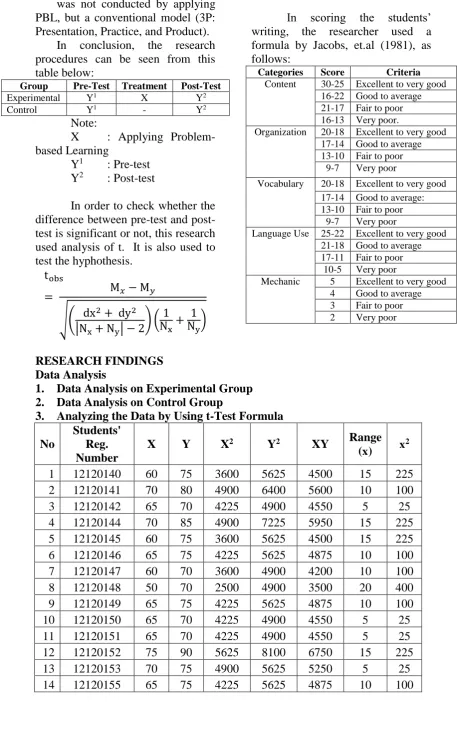
[image:11.595.78.536.60.792.2]In conclusion, the research procedures can be seen from this table below:
Group Pre-Test Treatment Post-Test Experimental Y1 X Y2
Control Y1 - Y2
Note:
X : Applying Problem-based Learning
Y1 : Pre-test Y2 : Post-test
In order to check whether the difference between pre-test and post-test is significant or not, this research used analysis of t. It is also used to test the hyphothesis.
tobs
= M − M
√ dx + dy
|N + N | − (N + N )
In scoring the students’
writing, the researcher used a formula by Jacobs, et.al (1981), as follows:
Categories Score Criteria Content 30-25 Excellent to very good
16-22 Good to average 21-17 Fair to poor 16-13 Very poor.
Organization 20-18 Excellent to very good 17-14 Good to average 13-10 Fair to poor
9-7 Very poor
Vocabulary 20-18 Excellent to very good 17-14 Good to average: 13-10 Fair to poor
9-7 Very poor
Language Use 25-22 Excellent to very good 21-18 Good to average 17-11 Fair to poor
10-5 Very poor
Mechanic 5 Excellent to very good 4 Good to average 3 Fair to poor 2 Very poor
RESEARCH FINDINGS Data Analysis
1. Data Analysis on Experimental Group 2. Data Analysis on Control Group
3. Analyzing the Data by Using t-Test Formula No
Students' Reg. Number
X Y X2 Y2 XY Range
(x) x 2
1 12120140 60 75 3600 5625 4500 15 225
2 12120141 70 80 4900 6400 5600 10 100
3 12120142 65 70 4225 4900 4550 5 25
4 12120144 70 85 4900 7225 5950 15 225
5 12120145 60 75 3600 5625 4500 15 225
6 12120146 65 75 4225 5625 4875 10 100
7 12120147 60 70 3600 4900 4200 10 100
8 12120148 50 70 2500 4900 3500 20 400
9 12120149 65 75 4225 5625 4875 10 100
10 12120150 65 70 4225 4900 4550 5 25
11 12120151 65 70 4225 4900 4550 5 25
12 12120152 75 90 5625 8100 6750 15 225
13 12120153 70 75 4900 5625 5250 5 25
15 12120156 70 85 4900 7225 5950 15 225
16 12120157 70 80 4900 6400 5600 10 100
17 12120158 70 75 4900 5625 5250 5 25
18 12120160 65 70 4225 4900 4550 5 25
19 12120161 75 80 5625 6400 6000 5 25
20 12120162 70 85 4900 7225 5950 15 225
21 12120164 65 75 4225 5625 4875 10 100
22 12120166 60 70 3600 4900 4200 10 100
23 12120167 65 75 4225 5625 4875 10 100
24 12120169 60 65 3600 4225 3900 5 25
25 12120170 70 75 4900 5625 5250 5 25
26 12120171 60 75 3600 5625 4500 15 225
27 12120172 75 85 5625 7225 6375 10 100
28 12120173 70 85 4900 7225 5950 15 225
29 12120174 60 70 3600 4900 4200 10 100
30 12120175 55 60 3025 3600 3300 5 25
31 12120176 55 65 3025 4225 3575 10 100
32 12120177 60 70 3600 4900 4200 10 100
33 12120178 70 75 4900 5625 5250 5 25
34 12120179 75 85 5625 7225 6375 10 100
35 12120181 60 70 3600 4900 4200 10 100
36 12120182 60 75 3600 5625 4500 15 225
37 12120183 55 65 3025 4225 3575 10 100
38 12120184 55 60 3025 3600 3300 5 25
39 12120185 65 75 4225 5625 4875 10 100
40 12120186 65 75 4225 5625 4875 10 100
SUM (∑) 2585 2980 168575 223900 193975 395 4525
M
=
∑N
=
= 64.63M
=
∑N
=
= 74.50
SD
=
N
√� ∑ X − ∑ X
SD
=
√ −SD
=
√ −SD
=
√
SD =
( 246.52
)
SD = 6.16No Students'
Reg. Number X Y X
2 Y2 XY Range
(y) y2
1 12120046 60 70 3600 4900 4200 10 100
2 12120048 60 65 3600 4225 3900 5 25
3 12120050 60 70 3600 4900 4200 10 100
4 12120051 70 80 4900 6400 5600 10 100
5 12120052 60 65 3600 4225 3900 5 25
6 12120053 65 70 4225 4900 4550 5 25
7 12120054 65 70 4225 4900 4550 5 25
8 12120057 70 80 4900 6400 5600 10 100
9 12120058 65 70 4225 4900 4550 5 25
10 12120059 65 70 4225 4900 4550 5 25
11 12120060 60 65 3600 4225 3900 5 25
12 12120061 65 70 4225 4900 4550 5 25
13 12120062 65 75 4225 5625 4875 10 100
14 12120063 65 70 4225 4900 4550 5 25
15 12120065 60 75 3600 5625 4500 15 225
16 12120066 60 65 3600 4225 3900 5 25
17 12120067 70 75 4900 5625 5250 5 25
18 12120068 60 75 3600 5625 4500 15 225
19 12120069 60 75 3600 5625 4500 15 225
20 12120070 55 70 3025 4900 3850 15 225
21 12120071 60 75 3600 5625 4500 15 225
22 12120072 60 65 3600 4225 3900 5 25
23 12120073 60 65 3600 4225 3900 5 25
24 12120074 60 65 3600 4225 3900 5 25
25 12120075 60 75 3600 5625 4500 15 225
26 12120076 60 70 3600 4900 4200 10 100
27 12120077 50 65 2500 4225 3250 15 225
28 12120078 60 65 3600 4225 3900 5 25
29 12120080 55 70 3025 4900 3850 15 225
30 12120082 65 70 4225 4900 4550 5 25
31 12120083 60 65 3600 4225 3900 5 25
32 12120085 60 65 3600 4225 3900 5 25
33 12120086 60 80 3600 6400 4800 20 400
34 12120087 70 75 4900 5625 5250 5 25
35 12120088 60 70 3600 4900 4200 10 100
36 12120090 60 65 3600 4225 3900 5 25
37 12120091 50 60 2500 3600 3000 10 100
38 12120092 50 65 2500 4225 3250 15 225
39 12120093 50 65 2500 4225 3250 15 225
40 12120094 60 75 3600 5625 4500 15 225
M
=
∑N
=
=
60.75M
=
∑N
=
= 69.88
SD
=
N
√� ∑ X − ∑ X
SD
=
√ −SD
=
√ −SD
=
√
SD =
( 202.73)
SD = 5.07� =
� −� √(∑� +� −+ ∑ ) � +�� =
. − . √ . + .+ − +� =
. √ .� =
√ . . .� =
√ ,.� =
..� = .
Findings
After analyzing the data and verifying the hypothesis, then the writer came to the research findings. Based on the writer’s work in data analysis of this research, there are several discoveries which are actually found by the writer. They are as the following:
1. By using Problem-based Learning, the students are interested in
writing English essay. The problem provided by the researcher had successfully enhanced their motivation in
writing. The students’ ideas are
organized well because of the problems given.
2. The students of experimental group got higher score than the control group. It can be seen from the mean score in post-test where experimental group is 74.50 while the control group is 69.88.
3. It is concluded that the null hypothesis (Ho) was rejected and alternative hypothesis was accepted (Ha). It was shown by the t-test value was 9,38 and the value of t-table was 2.68 at alpha 0,05 and d.b 78 ( n + n – 2 = 40+40–2) which means that the use of PBL
can enhance the students’ ability in
writing essay. CONCLUSION
The researcher concluded that there were some difficulties faced by the students in writing an English essay both in Experimental Class and Control Class. Firstly, most of the students had not known the organization of well-structured essay. Secondly, most of the students found the difficulty in applying appropriate language use and having limited vocabularies.
By applying problem-based
learning (PBL), the students’ essay
writings were more organized and the content of their writing were focused on the topic discussed. The students felt more comfortable in writing since the problems given helped them to find more ideas for a better composition.
REFERENCES
Ary, Donald., Jacobs, Lucy Cheser., Sorensen, Chris. 2010. Introduction to Research in Education, 8th edition. Wadsworth, Cengage Learning Barrows, Howard S. 1996. Problem-based learning in medicine and beyond: A
brief overview. Bringing problem-based learning to higher education: Theory and Practice (pp. 3-12). San Francisco: Jossey-Bass Boud, D. 1991. Problem-based learning in perspective. In D. Boud (ed.), Problem-based learning in education for the professions (pp. 13–18). Sydney, Australia: Higher Education Research Society of Australasia. Gvardjancic, A. 2001. Introduction. In: Gvardjancic, A., Boothe, D.,
Vukadinovic, N., (eds). Issuses and Ideas: Problem-Based Learning 2001. Ljubljana: Slovene Association of LSP Teachers, 2001: vii-xi Jacobs, H., Zinkgraf, S., Wormuth, D., Hartfiel, V. and Hughey, J. 1981. Testing
ESL Composition: A Practical Approach. Rowley, MA: Newbury House
Kosel, Bernarda. 2005. PBL Assessment. In Violeta Jurkovic (ed.), Guide to Problem-Based Learning: PBL within the Context of ESP. Ljubljana: Slovene Association of LSP Teachers, 2005: 52-63.
Langan, John. 2010. Exploring Writing: Sentences and Paragraphs. New York: McGraw-Hill
McWhorter, Kathleen T. 2012. Successful College Writing. Fifth Edition.
Boston: Bedford/St. Martin’s