1
Sensitivity Test Cefoxitin (Second Generation of Cephalosporin) and Cefepime (Fourth Generation of Cephalosporin) Towards Methicillin Resistant
Staphylococcus aureus (MRSA)
Mieke Hemiawati Satari,Wartadewi, Fuad Gandhi Riza
Departement Of Oral Biology, Faculty of Dentistry. Universitas Padjadjaran
ABSTRACT
MRSA is known as multidrug resistant bacteria that are resistant towards many
antibiotics. These bacteria are also considered as the bacteria that cause sepsis which
may lead to death. To manage sepsis condition, an antibiotic agent that is still sensitive
towards MRSA is needed. There are some antibiotics that are still presumably sensitive
towards MRSA including, among others, Cefoxitin and Cefepime.
The objective of this study is to analyze the sensitivity of MRSA towards
Cefoxitin and Cefepime in order to get scientific information on the effectiveness of the
two antibiotics to be used in the management of sepsis patients.
This study is a laboratory experimental study with 40 isolates of methicillin
resistant Staphylococcus aureus collected from several hospitals in Bandung to define
MRSA bacteria. The method used for sensitivity testing is the agar diffusion method.
The result of the sensitivity test is the clear area around the antibiotic disc which is then
measured. The Cefoxitin sensitive MRSA bacteria have an inhibition area of >18 mm
while the resistant bacteria have an inhibition area of < 14 mm. The same is also true for
Cefepime sensitive bacteria.
In this study, 1 isolate is resistance, 33 isolates present Cefoxitin sensitive
2
It is concluded that the growth of MRSA can be considered as being inhibited by
Cefoxitin, which is the second generation of Cephalosporin.
Keywords: Cefepime, Cefoxitin, MRSA
Introduction
Staphylococcus aureus is a bacterium that may cause an infection due to the
enzymes and toxins produced, which is also a factor for pathogenicity. Currently, there
are a lot Staphylococcus aureus bacteria that are resistant towards several antibiotics,
making these bacteria known as the bacteria that causes nosocomial infections. In
general, these beta-lactam resistant bacteria are known as the MRSA (Methicilin
Resistant Staphylococcus aureus). Originally, methicillin antibiotics is use for inhibition
the growth of Staphylococcus aureus bacteria that are resistant towards
penicillin/beta-lactam.1 However, due to the inappropriate use of methicillin, the bacteria become
resistant towards this agent.
Molecularly, the MRSA is caused by a gene mutation at the penicillin-binding
protein (PBP) 2 which is mutated to 2a, making the binding site of the PBP 2a, which is
the antibiotic target, is not recognized anymore by the methicillin. This PBP2 is known
as the transpeptidase enzyme, a beta-lactam antibiotic target. The beta-lactam antibiotic
has a similar structure to PBP2 in the form of transpeptidase. When the induction by
beta-lactam antibiotics happens, a bound between proteins that catalyze the final stage
of peptidoglycan synthesis with antibiotics will be created leading to the disturbance in
D-alanyl D-alanine breakage that causes disorder in the peptide bridge development
3
bacterial lysis. The mutation of PBP2 to PBP2a makes this binding site unrecognizable
for beta-lactam antibiotics, in this case methicillin/oxacillin, which then leads to
bacterial resistance.2,3
This PBP 1-3 is an enzyme that catalyzes disaccharide unit polymerization in the
glycan chain known as transglycolase which also catalyzes cross-binding at the
pentapeptide side known as transpeptidase. Transpeptidase works at the final stage of
peptidoglycan formation. In contrast with the transpeptidase activation, the protein that
has this transglycocylation activity is not sensitive to beta-lactam antibiotics. The
double activities expressed by this PBP are probably due to the presence of 2 different
polypeptides and are active at the same polypeptides. The amino end domain catalyzes
transglycolation reaction and carboxyl end domain has transpeptidase activity that is
sensitive towards beta-lactam antibiotics. The inhibition activity of betalactam antibiotic
PBP leads to bacterial cell death. PBP 1 will cause rapid cell death, PBP 2 causes cell to
change its shape into an ovoid one while PBP3 makes the cell change its shape into a
filamentous cell. Eventually, the bacteria that bind with PBP 1-3 will experience lysis.
Cephalosporin antibiotics have an affinity towards PBP 1 and PBP3 .2,4,5
Cephalosporin is a beta-lactam antibiotic agent that inhibits peptidoglycan
synthesis. Initially, this Cephalosporin was isolated from Cephalosporium acremomium
fungus that is frequently found in the coastal areas of Italy. According to Giuseppe
Brotzu, the inventor of this antibiotic, the main structure of Cephalosporin at 7-
aminocephalosporinic acid (7-ACA) is similar to the main structure of penicillin, i.e. 6-
aminopenicillanic (6-APA). The R group in 7-ACA is then modified to have a better
antimicrobial potential resulting in the first generation of Cephalosporin which is then
4
The work mechanism of Cephalosporin is triggered by the presence of a
configuration that is similar to the terminal structure of acyl D-ala-D-ala, a part of
pentapeptide chain in peptidoglycan. This Cephalosporin will acylate the Serine active
side of transpeptidase so that this enzyme is unable to interrupt D-ala-D-ala in the
peptapeptide chain that becomes tetrapeptide. As a result, a failure in inter-bridge
development that is the final stage of peptidoglycan synthesis is found. It is in this phase
that bacterial lysis occurs 5-7
Currently, various types of Cephalosporin antibiotics are still used as the
alternative in treating diseases caused by MRSA. The agents used include, among
others, Cefoxitine which is the second generation Cephalosporin and Cefepime which is
the fourth generation of Cephalosporin. Recently, it is suspected that some S. aureus are
resistant towards Cefoxitine. According to several researchers, when S. aureus is
resistant towards Cefoxitine, the bacterium is considered as MRSA .8
Based on those reasons, to deal with Cefoxitine-resistant S. aureus, a change in
R group of 7-ACA is made to get the fourth generation of Cephalosporin, including
Cefepime.
Method
Forty 40 MRSA isolates were collected from several hospitals and laboratories
in Bandung. The isolates were then cultured and identified as methicillin resistant S.
aureus at the Faculty of Medicine Laboratory, Unpad-Dr. Hasan Sadikin hospital,
Bandung.
The isolation of S. aureus was conducted using blood agar media that was
5
Gram staining and coagulase testing. The sensitivity testing for the antibiotics was
performed using Mueller Hinton’s agar diffusion method. The inoculum turbidity is
based on 0.5 Mc Farland. After that the sensitivity testing of S. aureus towards several
antimicrobials was conducted using discs of Oxacillin that also shows the isolates are
resistant towards Methicillin, Cefoxitine, and Cefepime.
The inhibition zone diameter formed was interpreted according to the NCCLS
protocol. The inhibition zone diameter is the discriminatory antimicrobial
concentrations used to determine whether the isolates tested is sensitive (S),
intermediate (I) or resistant (R).
The inhibition zone diameter formed for several antimicrobials based on the
NCCLS includes:
Breakpoint (diameter in mm)
Sensitive Intermediate Resistant
Oxacillin > 13 11-10 < 10
Cefoxitine > 18 17-14 <14
Cefepime > 18 17-14 < 14
Results
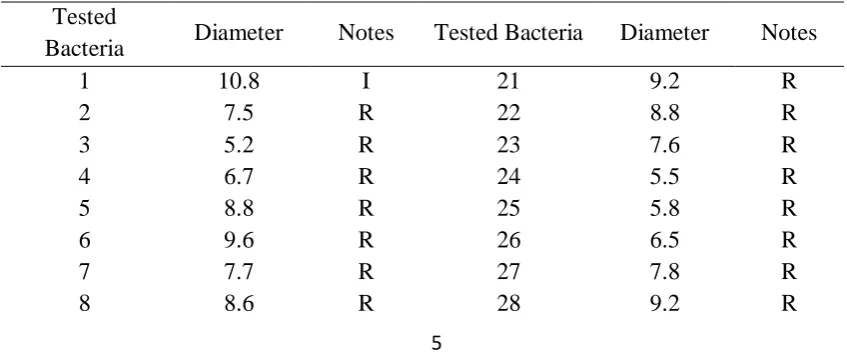
Table 1. Results of S. aureus inhibition zone towards Oxacillin
Tested
Bacteria Diameter Notes Tested Bacteria Diameter Notes
1 10.8 I 21 9.2 R
2 7.5 R 22 8.8 R
3 5.2 R 23 7.6 R
4 6.7 R 24 5.5 R
5 8.8 R 25 5.8 R
6 9.6 R 26 6.5 R
7 7.7 R 27 7.8 R
6
9 9.2 R 29 8.9 R
10 6.5 R 30 7.7 R
11 5.5 R 31 6.5 R
12 4.9 R 32 6.7 R
13 8.9 R 33 8.1 R
14 9.7 R 34 5.8 R
15 9.9 R 35 6.1 R
16 6.2 R 36 7.8 R
17 5.1 R 37 6.7 R
18 7.5 R 38 5.3 R
19 9.7 R 39 6.2 R
20 9.8 R 40 4.7 R
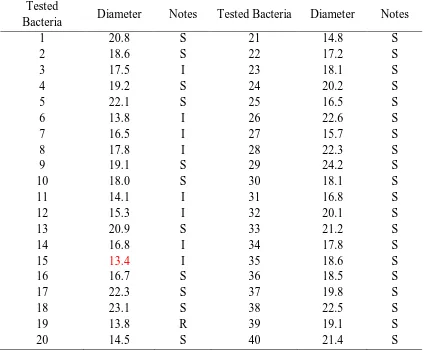
Table 2. Results of S. aureus inhibition zone towards Ceptoxilin
Tested
Bacteria Diameter Notes Tested Bacteria Diameter Notes
1 20.8 S 21 14.8 S
2 18.6 S 22 17.2 S
3 17.5 I 23 18.1 S
4 19.2 S 24 20.2 S
5 22.1 S 25 16.5 S
6 13.8 I 26 22.6 S
7 16.5 I 27 15.7 S
8 17.8 I 28 22.3 S
9 19.1 S 29 24.2 S
10 18.0 S 30 18.1 S
11 14.1 I 31 16.8 S
12 15.3 I 32 20.1 S
13 20.9 S 33 21.2 S
14 16.8 I 34 17.8 S
15 13.4 I 35 18.6 S
16 16.7 S 36 18.5 S
17 22.3 S 37 19.8 S
18 23.1 S 38 22.5 S
19 13.8 R 39 19.1 S
20 14.5 S 40 21.4 S
7
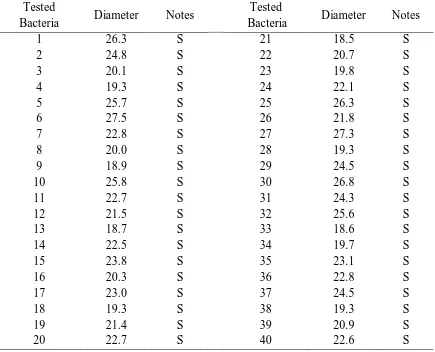
Table 3 Results of MRSA inhibition zone towards Cefepime
Tested
Bacteria Diameter Notes
Tested
Bacteria Diameter Notes
1 26.3 S 21 18.5 S
2 24.8 S 22 20.7 S
3 20.1 S 23 19.8 S
4 19.3 S 24 22.1 S
5 25.7 S 25 26.3 S
6 27.5 S 26 21.8 S
7 22.8 S 27 27.3 S
8 20.0 S 28 19.3 S
9 18.9 S 29 24.5 S
10 25.8 S 30 26.8 S
11 22.7 S 31 24.3 S
12 21.5 S 32 25.6 S
13 18.7 S 33 18.6 S
14 22.5 S 34 19.7 S
15 23.8 S 35 23.1 S
16 20.3 S 36 22.8 S
17 23.0 S 37 24.5 S
18 19.3 S 38 19.3 S
19 21.4 S 39 20.9 S
20 22.7 S 40 22.6 S
Discussions
In this study, 40 MRSA isolates that have already been tested using Oxacillin
disc were tested for their sensitivity towards Cephalosporin antibiotics, i.e. Cefoxitine
and Cefepime, which are the beta-lactamase enzyme resistant antibiotics.
The MRSA resistance towards various antimicrobials is carried out by 2 groups,
i.e. toward beta-lactam antibiotics and non beta-lactam antibiotics. The MRSA
resistance towards beta-lactam antibiotics is caused by the mutation of PBP2 into
PBP2a. The function of PBP2 that is inhibited by beta-lactam will be compensated by
8
caused by an insertion of some of the nucleotide base from beta-lactamase operon gene
that is substituted in PBP2 forming gene called gen mec.10 ,11 The MRSA resistance
which is not caused by beta-lactam antibiotics is mostly caused by the changes in
antimicrobial receptor pumped actively from the cells or better known as the efflux
mechanism. 10
PBP2a is coded by mec A gene which is a conserved part of the genetic
elements called mecDNA or Staphylococcal cassette chromosome (SCC mec). These
genetic elements can be transferred to other bacteria through plasmid. The gene cannot
be found in Staphylococcus that is sensitive towards Methicillin. 10,12
In the MRSA sensitivity testing towards Cefoxitine, there are 7 isolates that are
intermediate. It is assumed that several MRSA, which is then referred as pre-MRSA,
still have mecA gene. However, these bacteria are still sensitive towards methicillin.
The bacteria will receive weak induction stimulation from methicillin that triggers a
weak stimulation for PBP2a production. Molecularly, a weak induction towards mecR1,
which is a signal transmitting gene, will lead to a repression by MecI on mecR1
promoter gene so that the PBP2a produced will be less. The beta-lactam antibiotic
induction on beta-lactamase enzyme formation regulation gene, blaI, is ten times
stronger than beta-lactam induction on mec RI.9.13
In MRSA sensitivity testing towards Cefepime, it is demonstrated that all
isolates are sensitive. Based on the results of several studies, it stated that the Cefepime
has a good affinity with PBP2a. This is due to the availability of structures in the R
group of Cefepime that has the ability to stabilize the main structure of 7 -ACA so that
it cannot be hydrolyzed by beta-lactamase (Guntur). This configuration accelerates the
9
In this process, the Cefepime Serine active side becomes the proton donor that plays a
role in the acylation process towards the PBP2a Serine active side leading to hydrogen
binding with the amino acid at the residual end of Cefepime. 14
Cefepime has a good affinity for binding PBP2a despite the mutation in gen mec
operon that regulates PBP2a formation. However, Cefepime still has a good affinity to
bind PBP2a because the Cefepime Serine active side has a structure that is similar to the
PBP2a Serine active side.14
References
1. Gomes AR, Westh H,Lencaster H. Origin and evolution of methicillin-resistant S.
aureus clonal lineages. Antimicrob Agents Chemother. 2006;50:3237-44
2. Russel AD and Chopra I. Understanding antibacterial action and resistance.
London. Ellies Horwood, 1990;146-81
3. Fuda CCS, Fisher JF, Mobasherry A. Betalactam resistance S. aureus the adaptive
resistance genome. Celluler and moleculer life sciences.2005;215-19
4. Kayzer F, Bienz K, Eckert J, Zinkernagel R. Medical Microbiology. New
York.Thieme Stuttgart.2005;145-63
5. Davies AT, Shang W, Bush K. Binding of Ceftobiprole and the Comparatos to the
Penicillin Binding protein of E.coli, S aureus. 2007. Antimcrob Agent and
Chemoth.73; 2621-24
6. Anathan N and Subha A. Cefoxitin Resistance Mediated by Loss of Porin in
Clinical Klebsiella pneumonia and Eschericia coli . Indian.2005. J Med.Micr.
10
7. Benerjee R, Greetes M, Strynadka N, Bisuino L, Chambers HF, In Vitro Selection
and Characterization of Ceftobiprole Resitant Methicillin S aureus. 2008
Antimicrob Agent and Chemoth. 52; 2089-96
8. Coombs GW, Nimmo GR, Bell JM, Huygens F, Malkowski Mj. Diversity among
community MRSA causing outpatient infevtion.J. Clin Micobial. 2004; 42:4735-43
9. Castellanos RG, Fernandez GM, Marerotho CH andA. Potempa J, Ruth SG. On
transcriptional regulation of methicillin resistance . J Biol Chem.
2004;279:17888-96
10. Katayama Y, Kobayashi I, Takeuchi F, Ito T,Ma X dkk. Identification in
metchicillin susceptible Staphylococcus hominis of an active primordial mobile
genetic element for SCC. J Bacteriol. 2003 185:2711-22
11. Yuwono,Sunaryati SA, Masria S, Supardi I.IdentifikasiStaphylococcal Cassette
Chromosome Mec MRSA dengan Polymerase Chain
Reaction.MKB.2011;(43),2:60-5
12. Aleksuhn N,Levy B. Moleculer Mechanism of Antibacterial Multidrug Resistance.
Canada: Cell. Elsevier. 2007: 1037-50
13. Lewiis RA, Dyke KGH. Mec I Repersor synthesis from betalactamase operon S.
aureus. J Antimicrob Agents and Chemoth. 2006;45(2):139-44
14. Lin D, Stuynadka JN, Structural Base for MRSA. Nat StructurBase for Betalactam