The Use of Plant Essential Oils as Feed Additives for Ruminants
(Pemanfaatan Minyak Atsiri dari Tanaman sebagai Imbuhan Pakan untuk
Ternak Ruminansia)
Muhamad N Rofiq
Pusat Teknologi Produksi Pertanian, Deputi Bidang TAB, BPPT LAPTIAB Gedung 612 Kawasan Puspiptek Serpong, Tangerang Selatan
(Diterima 30 November 2015 – Direvisi 1 Maret 2016 – Disetujui 8 Maret 2016)
ABSTRACT
Public awareness of health risk and environmental problem caused by unappropriate use of antibiotics and hormones resulted in prohibition of antibiotics in feed since 2003 in European Union. The regulation stated that ruminant feed additives should not have an adverse effect on animal health, human health and environment. Plant essential oils are recommended for animal feed additive because of their antimicrobial effects. The major bioactive compounds of essential oils as rumen manipulator have not been yet evaluated on in vitro and in vivo studies. Some plants essential oils showed their function to increase dry matter digestibility, VFA, N-NH3 and reduce methane production in the in vitro study. The studies still have not enough yet to prove the use of essential oils as ruminant feed additive to increase nutrient digestibility and mitigate rumen methane production. Combination of some plant essential oils or some of their main active components may be more advantageous because of their sinergistic effects.
Key words: Feed additive, plant essential oils, methane, ruminant, performance
ABSTRAK
Kesadaran masyarakat terhadap potensi risiko kesehatan dan masalah lingkungan yang disebabkan oleh penggunaan antiobiotik dan hormon berlebihan dalam pakan imbuhan menyebabkan larangan penggunaan beberapa antibiotik sejak tahun 2003 di negara-negara Eropa. Peraturan tersebut menyatakan bahwa penggunaan pakan imbuhan untuk ternak ruminansia tidak boleh memiliki efek buruk terhadap kesehatan hewan, kesehatan manusia dan lingkungannya. Minyak atsiri dari tanaman merupakan salah satu bahan pakan imbuhan yang dapat dianjurkan karena pengaruhnya sebagai agen antimikroba. Minyak atsiri dari tanaman dan komponen senyawa utama bioaktifnya masih belum banyak dievaluasi efeknya secara in vitro dan in vivo sebagai manipulator rumen. Minyak atsiri dari tanaman mempunyai kemampuan untuk meningkatkan kecernaan nutrisi, VFA, N-NH3 dan menurunkan produksi metana dalam penelitian secara in vitro. Penelitian yang telah dilakukan belum cukup untuk membuktikan hal ini. Kombinasi dari beberapa minyak atsiri dari tanaman atau dari komponen aktifnya akan lebih bermanfaat karena adanya efek sinergistik.
Kata kunci: Imbuhan pakan, minyak atsiri dari tanaman, metana, ruminan, performans
INTRODUCTION
Feed additives for animal was prohibited to be included in the feed since 1998 in European Union because of their potential health risk and environmental problem. The European parliament and the council has raised a regulation No. 1831/2003 on additives for use in animal nutrition, about definition, monitoring, categories and application of using animal feed additives (European Comission 2003). The regulation mentioned about the condition for authorisation feed additive, which it shall not have an adverse effect on animal health, human health or the environment. It shall not be presented in a manner which may mislead the user and not harm the consumer by impairing the
distinctive features of animal products or mislead the consumer which regard to the distinctive features of animal products.
to 2005 (Smith et al. 2007). Enteric CH4 fermentation accounted for about 32% of total non-CO2 emission from agriculture in 2005 (Smith et al. 2005). Methane emission mitigation from livestock sector, especially from rumen enteric methane was assessed by some experiments using ration manipulation, feed additives or biotechnological intervention.
Researchers tried to find the substances for EC recommended animal feed additive including plant essensial oils. Plant essential oils are volatile, aromatic compounds with an oily appearance, are obtained from plants, famous as antimicrobial agent were assessed for categorized to zoo-technical additives group (European Comission 2003). The following functional zoo-technical additives group are included digestion enhancer, gut flora stabilisers, substance which favourable affect the environment, and others (European Comission 2003). Essential oils or their major bioactive compounds such as clove (Eugenol), cinnamon (Cinnamaldehyde), orange peel (Limonede), garlic (Diallyldisulfide), mint (Carvacrol), and thyme (Carvacrol, Thymol) have been evaluated for in vitro
rumen methane reducer, associated rumen fermentation effect, and in vitro anti-methanogenesis bacterial agents. They have been also evaluated on ruminant as performance enhancer and enteric methane emission reducer. In vivo experiments using plant essential oils were mostly conducted on cattle and a few of them were conducted on goats. Economically, using essential oils as ruminants methane reducer still had no equivalent cost exist for CO2 equivalent trading compared with using yeast and fumaric acid as ruminants methane reducer which had equivalent cost 50% and less than 1% for CO2 equivalent trading.
For all the reasons, the experiments still have not yet enough for establish the use of essential oils as feed additive, especially as ruminants feed additive. They need more information on the major components of plant essential oils which have specially effects on rumen fermentation and rumen ecology (Franz et al. 2010). Some researchers started with rumen methanogenesis database and tested some plant essential oils for anti-methanogenesis effect. The potential effect of essential oils on reducing rumen CH4 production should also consider their potential effect on animal performance.
PLANT ESSENTIAL OILS
Plant essential oils (EO) are one of plant secondary metabolites obtained from volatile fraction of plants distillation process (Gershenzon & Croteau 1991) which are versatile and consist of several chemical constituents with the basic building elements being primarily carbon, hydrogen, and oxygen (Mathe 2009). The main group of constituents found in EO
include: (1) Alcohol; (2) Aldehyde; (3) Esters; (4) Ethers; (5) Ketones; (6) Phenols; and (7) Terpenes which can be broken down into numerous smaller components (Mathe 2009).
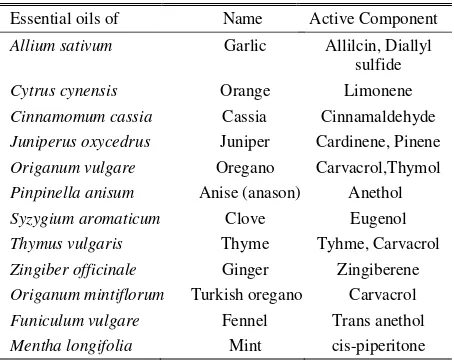
There are two chemical groups of essential oils, terpenoids and phenylpropanes. Terpenoids are the more numerous and diversified group of plant secondary metabolites. These compounds are characterized by its basic structure of 5 carbons (C5H8). Within terpenoids, the most important components of essential oils of the majority of plants belong to the monoterpenoid and sesquiterpenoid families (Carvacrol, Thymol, Terpinen 4-ol). Phenylpropanoids are not the most common compounds of essential oils. The term phenylpropanoid refers to compounds with a chain of 3 carbons bound to an aromatic ring of 6 carbons (Calsamiglia et al. 2007). The biosynthesis of main plants extract including EO was obtained from glucose and pentose metabolism. Some important plants with their essential oils were presented in Table 1 (Calsamiglia et al. 2007).
Diallyl disulfide (DADS) with moleculer formula C6H10S2 is an organosulfur compound derived from garlic and a few other genus Allium plants (Block 2010). It is a yellowish liquid which is soluble in water and has a strong garlic odor. It is produced during the decomposition of allicin, which is released upon crushing garlic and other plants of the Alliaceae family. DADS had molar mass 146.28 g/mol, density 1.01 g/cm3 with boiling point 108°C and soluble in water, ethanol and oils (PubChem 2016). Diallyl disulfide also was known as detoxification agent of the cells because of its effect on increasing enzyme glutathione S-transferase (GST) and had antimicrobial effects by increasing bacterial membrane permeability (Tsao & Yin 2001).
Table 1. The main chemical composition of EO from some plants
Essential oils of Name Active Component
Allium sativum Garlic Allilcin, Diallyl sulfide Cytrus cynensis Orange Limonene
Cinnamomum cassia Cassia Cinnamaldehyde
Juniperus oxycedrus Juniper Cardinene, Pinene
Origanum vulgare Oregano Carvacrol,Thymol
Pinpinella anisum Anise (anason) Anethol
Syzygium aromaticum Clove Eugenol
Thymus vulgaris Thyme Tyhme, Carvacrol
Zingiber officinale Ginger Zingiberene
Origanum mintiflorum Turkish oregano Carvacrol
Funiculum vulgare Fennel Trans anethol
Mentha longifolia Mint cis-piperitone
Figure 1. Moleculer structure of DADS
Cinnamaldehyde (C9H8O) is the organic compound that gives cinnamon its flavor and odor. It appears as yellow oil. It has 132.16 g/mol of molar mass, 1.05 g/ml of density and 248°C of boiling point (PubChem 2016). The essential oil of cinnamon bark is about 90% cinnamaldehyde.
Figure 2. Molecular structure of Cinnamaldehyde
Source: PubChem (2016)
Limonene or Dipentene has molecular formula C10H16, is a colourless liquid hydrocarbon classified as a cyclic terpene. Limonene takes its name from the lemon, like other citrus fruits, contain considerable amount of this compound, which contributes to their odor. It has 136.24 g/mol of molar mass, 0.8411 g/cm3 of density and 176 °C of boiling points.
Figure 3. Moleculer structure of Limonene (Dipentene)
Limonene is common in cosmetic products, food manufacturing, medicines, botanical insecticides, hand cleaners and also was considered for biofuel. Limonene could be used as antibacterial agent especially Gram+ bacteria because it has a mechanism to inhibit microbial growth by changing the bacterial permeability (Dabbah et al. 1970). Pasqua et al. (2006) found a change in long chain fatty acid profile in the membranes of E. coli grown in the presence of limonene or cinnamaldehyde. The changes in fatty acid composition can affect surviving ability of microorganisms.
Eugenol is a member of the phenylpropanoids class of chemical compounds. It is a clear to pale yellow oily liquid extracted from certain essential oils especially from leaves or flower buds. It is slightly soluble in water and soluble in organic solvents. It has spicy, clove-like aroma (Dorman & Deans 2000). Its chemical properties are C10H12O2 molecular formula, 164.20 g/mol molar mass, 1.06 g/cm3 density and
254°C boiling point. Eugenol was found as anti-bacterial agent against 24 different genera of bacteria, included animal and plant pathogens, food poisoning and spoilage bacteria (Dorman & Deans 2000).
Figure 4. Molecular structure of Eugenol
Pulegone (C10H16O) is a naturally occurring organic compound obtained from the essential oils of a variety of plants including Mint plants (Mentha longifolia or Mentha piperita). It is classified as a monoterpene which is a clear colorless oily liquid and has a pleasant odor similar to peppermint. It was also used in flavoring agents in perfumery, and in aromatherapy (Asekun et al. 2006). It has 152.23 g/mol of molar mass, 0.9346 g/cm3 of density, 224°C of boling point and it is insoluble in water.
Figure 5. Molecular structure of Pulegone
Thymol (also known as 2-isopropyl-5-methylphenol, IPMP) is a natural monoterpene phenol derivative of cymene, C10H14O, isomeric with carvacrol, found in oil of thyme, and extracted from
Thymus vulgaris (common thyme). It has aromatic odor and strong antiseptic properties (Dorman & Deans 2000). Derivatives of thymol and carvacrol with increased antimicrobial activities have been developed. Their strong antimicrobial characteristic is due to their phenolic structure and their ability on cell wall membrane disruption (Dorman & Deans 2000; Trombetta et al. 2005). Thymus vulgaris, containing 57.7% of thymol, had strong antimicrobial activity on some pathogenic bacterial such as S. enteritidis, S. typhimurium, E. coli O157:H7, E. coli, L. monocytogenes, S. flexneri, S. sonnei, S. aureus and Y. enterocolitica (Rota et al. 2008).
ROLE OF PLANT ESSENSIAL OILS ON RUMINANT
Plant essential oils were analyzed for rumen manipulator used meta-analysis (Calsamiglia et al. 2007; Patra 2010) as its chemical bioactive component was studied for chemical feed additive substitution. Some plant essential oils were tested as ruminant feed additives both of in vitro and in vivo experiments.
Garlic oils affected dry matter digestibility in vitro
(Yang et al. 2007; García-González et al. 2008) and increasing NDF digestibility (Patra et al. 2010). Garlic oils decreased methane production in vitro (Busquet et al. 2005; 2006) and inhibited deamination (Cardozo et al. 2004) and decreased total VFA production (Cardozo et al. 2005). Methane production was decreased by means of reducing protozoa number when garlic oil was added in the in vitro studies (Patra et al. 2010). Recent studies have not yet reported about the capability of garlic oils on increasing of milk production from ruminants (Yang et al. 2007; Gorgulu et al. 2010).
The major components of clove oil are eugenol and b-caryophylene which increased milk production (Kung et al. 2008). Eugenol reduced rumen pH and methane production (Patra 2010), N-NH3 (Bach et al. 2007), increased propionic acid (Kung et al. 2008) and reduced butyric and acetic acid. Patra (2010) reported that methane was reduced 85.6% on volume basis by feeding with clove oils 0.5 ml/30 ml rumen. Its capability for decreasing methane is still need further research with some doses. Benchaar et al. (2011) reported that 50 mg/kg DMI dose of eugenol for primiparous lactating cows may have low potential as feed additive. The effect of eugenol (i.e antimicrobial effect) is neither pH nor diet dependent (Pandima et al. 2010).
Major components of Thymus vulgare are carvacrol 57% and gamma-terpinene 21.2% (Gorgulu et al. 2010). However, Rota et al. (2008) reported that the compounds were thymol (57.7%), p-cymene (18.7%) and carvacrol (2.8%). Thyme oils increased dry matter, organic matter digestibility of feed containing wheat straw and soybean meal (Gorgulu et al. 2010), contrast to the report from Benchaar et al. (2007) that it reduced dry matter and NDF digestibility
in vitro. Thyme oils have no effect to pH (Benchaar et al. 2007; Gorgulu et al. 2010), although it increased pH
in vitro (Macheboeuf et al. 2008). Thyme oils have been reported to act as deaminase inhibitor in vitro (van Nevel & Demeyer 1996). Benchaar et al. (2007) and Macheboeuf et al. (2008) reported that it reduced VFA and N-NH3 production in the in vitro. Evans & Martin (2000) reported that thyme oils 0.4 g/l added to in vitro
system reduced methane production as much as 94%. However, 108 ppm of thyme oil added as feed additive
in total mixed ration has no effect on milk production (Gorgulu et al. 2010).
Cinnamon oil from Cinnamomum variety has eugenol and cinnamaldehyde as the major compounds. In the leaf part of the plant, eugenol (69.57%) is the major component of essential oils (Gorgulu et al. 2010), but in the inner bark part of plant, cinnamaldehyde (60%) is the major one. Some in vitro
digestibility and gas test experiments reported that Cinnamon oils at different doses influenced VFA production, protozoa population, NH3-N, and methane production. 250 mg/l leaf oil of cinnamon reduced methane and propionic acid (Chaves et al. 2008). Similarly, Fraser et al. (2007) reported that it also reduced total VFA production, propionic acid concentration, protozoa number and pH rumen both in rusitec and dual flow system. Cinnamon oils at 3-10 mM also reduced methane (Macheboeuf et al. 2008). Cinnamon oils at 50, 100 and 150 ppm increased dry matter, NDF and the level of in vitro organic matter digestibility (Gorgulu et al. 2010). Cinnamaldehyde given at the level of 1 g/day/head to the lactating Hosltein cow has no effect on milk production and milk fatty acid composition (Benchaar & Chouinard 2009). Cinnamaldehyde at high dose (800 and 1,600 mg/day/head) given to beef heifer reduced feed digestibility and increased protozoa number in vivo
(Yang et al. 2007).
Major component of orange peel oil is limonene 95.77% (Gorgulu et al. 2010) or 91.5% (Chaoa et al. 2000). Less experiment on the use orange peel oils as rumen modifier was reported. Benchaar et al. (2007) reported that it has no beneficial effect on VFA, NH3-N and rumen pH in vitro with batch culture system but it can increase dry matter, organic matter and NDF digestibility at doses of 50, 100 and 150 ppm using wheat straw as substrate (Gorgulu et al. 2010). Other experiment reported that orange peels oil or limonene could inhibit the growth of pathogenic bacteria (Callaway et al. 2008; Malecky et al. 2009).
Minth oils from Mentha longifolia contain Pulegone as the major component 72.09% and D-isomenthone 15.6% (Gorgulu et al. 2010). It could be used as rumen modifier and could increase dry matter, organic matter and NDF in vitro digestibility at doses of 100 and 150 ppm using wheat straw as substrate (Gorgulu et al. 2010). Mint-alpha oils with cylodextrin (CD) 20 mg/60 ml can reduce propionic acid and protozoa number in the in vitro method (Tatsuoka et al. 2008).
linalool 45,2 mol, p-cymene 36,7 mol, 16 mol α-pinene and 2,2 mol β-pinene in 100 mol terpene (95% terpene in mix blend) in goats had no effect on ruminal digestion of dietary constituents or on milk yield how the supplementation level (0.043 g/kg DMI and 0.43 g kg/DMI) because of extensive ruminal degradation of each terpene (Malecky et al. 2009).
Combination of cinnamon leaf oil (250 mg/l) and eugenol (800 mg/l) had no effect on deaminative activity of rumen bacteria and ammonia N concentration in vitro (Benchaar et al. 2008). But Cardozo et al. (2006) reported that combination between cinnamaldehyde and eugenol (180 mg/day cinnamaldehyde + 90 mg/day eugenol; 660 mg/day cinnamaldehyde + 300 mg/day of eugenol) affected N metabolism in the rumen by increasing the concentration of small peptide plus amino acid N and decreasing ammonia N concentration. Some commercial mixed or blend oils (AGOLIN® and CRINA SA®) were tested in vitro and in vivo experiments and were reported to have an effect on volatile acid production, increased total volatile fatty acid production with stimulation in propionate, decreased methane production (Hart et al. 2008).
The blend of EO (AGOLIN®) contained eugenol, geranyl acetate and coriander as major components which was provided to lactating dairy cows (1 g/cow/day) increased fat milk production but did not affect milk production due to an energetic shift away from body condition gain to milk fat output (Santos et al. 2010). The blend of EO (CRINA®) contained thymol, eugenol, vanillin, guaiacol, and limonene which was provided to lactating cows 0.6 g/day increased dry matter intake (DMI) and 3.5% FCM production due to increasing of molar proportion of propionate (Kung et al. 2008).
Combination of some essential oils (garlic, clove, orange peel, and cinnamon) at 300 ppm doses still have advantage on in vitro gas production and in vitro
digestibility, and in vivo CH4 production. Using clove, cinnamon and orange peel in combination at 300 ppm or 1.8 g/day in dairy goat under feeding condition of 60/40 concentrate/roughage ratio in the relatively low yielding dairy goats or using one time of oral infusion of essential oils (Rofiq 2013) did not give any beneficial effect.
MAIN ACTION MECHANISM OF PLANT EO’S
AS RUMEN MANIPULATOR
Generally, the main action mechanism of plant essential oils as rumen manipulator is the antimicrobial activity of essential oils. It was reported that cell membrane disruption would occur due to plant EO’s active compounds by inhibiting of electron transport, ion gradients, protein translocation, phosphorylation
and other enzyme-dependent reactions (Dorman & Deans 2000; Ultee et al. 2002).
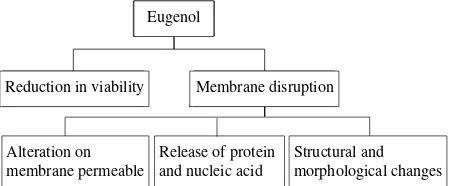
Devi et al. (2010) reported that the primary action mechanism of Eugenol is disruption of the cytoplasmic membrane, which increase its non-specific permeability. Thus, the hyper-permeability is followed by leakage of ions and extensive loss of other cellular contents, including the intracellular proteins and ultimately results in cell death (Figure 7).
Eugenol
Membrane Disruption Reduction in viability
Alteration in Membrane permeability
Release of protein and nucleid acid
Structural and morphological
Changes
Figure 7. Antibacterial activity and mechanism of action of eugenol
Source: Devi et al. (2010)
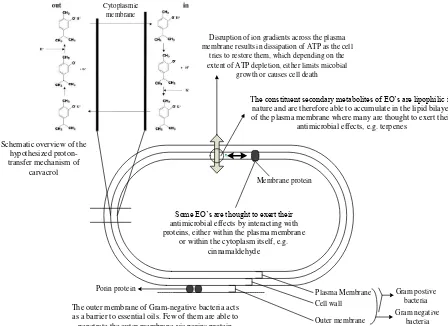
Other mode of action of EO is their inhibition on hyper ammonia producing bacteria that involved in amino acid deamination (McIntosh et al. 2003; Newbold et al. 2005). Ruminal peptide N accumulation decreased that was consistent with a decrease in proteolysis in the presence of EO (Castillejos et al. 2006). Hellander et al. (1998) showed that thymol and carvacrol both disrupted the cell membrane thereby decreased the intracellular ATP pool and increased the extra cellular ATP pool in E. coli. The schematic of the mechanism is explained in Figure 8.
OPPORTUNITY OF PLANT ESSENTIAL OILS ON RUMINANT IN INDONESIA
Indonesia has a lot of variety of plants that produce some essential oils. They are used as herb medicine, food addition and cosmetics. Lemon grass/serai, turmeric, ginger, clove, garlic, and others produce a lot of essential oils for export to other countries. Indonesia exported 2,633 tons of serai wangi
(Cymbopogon nardus L) essential oils in 2007. Serai wangi plant (Cymbopogon nardus L) has some major active compounds as essential oils, geraniol, citronellol, geranil acetate and citronellal acetate (Sukamto et al. 2011). They are also potential as organic feed additive that increases animal performances but the study on the use of these essential oils is very limited. It is a good opportunity to study the use of these compounds for increasing animal performance. Anti-bacterial effect of leaf extract of sirih (Piper betle L) to Staphylococcus aureus was shown at concentration of 10% that not significantly different with concentration of 2.5% and
Eugenol
Reduction in viability Membrane disruption
Alteration on membrane permeable
Release of protein and nucleic acid
Some EO’s are thought to exert their antimicrobial effects by interacting with protiens, either within the plasma membrane
or within the cytoplasm itself, e.g. cinnamaldehyde
Plasma Membrane Cell wall
Outer membrane
Gram negative bacteria Gram postive
bacteria The outer membrane of Gram-negative bacteria
acts as a barrier to essential oils. Small of it are to be able to penetrate the outer membrane via porins
protein Porin protein
Membrane protein
Disruption of ion gradients across the plasma membrane results in dissipation of ATP as the cell
tries to restore them, which depending on the extent of ATP depletion, either limits micobial
growth or causes cell death
The constituent secondary metabolites of EO’s are
liphopilic in nature and are therfore able to accumulate in the lipid bilayer of the plasma membrane where many are thought to exert their
antimicrobial effects, e.g. terpenes
F8.large.jpg
Schematic overview of the hyphotesized proton-transfer
mechanism of carvacrol (Ultee et al., 2002)
Figure 8. Scheme of antimicrobial mechanism of essential oils
Source: Ultee et al. (2002) modified
5% (Hermawan et al. 2007). Some essential oils (groundnut oil, corn oil, and fish oil) in oil-mineral complex has non significant (P>0.05) effect on ration fermentation and digestibility in vitro, but oil-mineral in ration has highest effect in daily gain of sheep (Tanuwiriya et al. 2006).
CONCLUSION
Plant essential oils are potential substance for feed additives because of no negative risk for animal health, human and it is safe for the environment. Their main role as rumen manipulator and ruminant performance enhancer is required to be more evaluated with in vivo
studies. Some plants essential oils showed their function to increase dry matter digestibility, rumen VFA products, N-NH3 and reduce rumen methane production in the in vitro study. Main action of plant EO’s as rumen manipulator is their antimicrobial effect in the rumen. Combination of some plant essential oils or some of their main active components may be more advantageous because of their sinergistic effects.
REFFERENCES
Asekun OT, Grierson DS, Afolayan AJ. 2006. Effects of drying methods on the quality and quantity of the essential oil of Mentha longifolia L subsp. Capensis. Food Chem. 101:995-998.
Bach A, Calsamiglia S, Stern MD. 2007. Nitrogen metabolism in the rumen. J Dairy Sci. 88:413-419.
Benchaar C, Chaves AV, Fraser GR, Beauchemin KA, McAllister TA. 2007. Effects of essential oils and their components on in vitro rumen microbial fermentation. Can J Anim Sci. 87:413-419.
Benchaar C, Chouinard PY. 2009. Assessment of the potential of cinnamaldehyde, condensed tannins and saponins to modify milk fatty acid composition of dairy cows. J Dairy Sci. 92:3392-3396.
Benchaar C, McAllister TA, Chouinard PY. 2008. Digestion, ruminal fermentation, ciliate protozoal populations, and milk production from dairy cows fed cinnamaldehyde, quebracho condensed tannin, or Yucca schidigera saponin extracts. J Dairy Sci. 91:4765-4777.
Schematic overview of the hypothesized proton-transfer mechanism of
carvacrol
Cytoplasmic membrane
The constituent secondary metabolites of EO’s are lipophilic in nature and are therefore able to accumulate in the lipid bilayer of the plasma membrane where many are thought to exert their
antimicrobial effects, e.g. terpenes
Some EO’s are thought to exert their antimicrobial effects by interacting with proteins, either within the plasma membrane
or within the cytoplasm itself, e.g. cinnamaldehyde
Benchaar C, Greathead H. 2011. Essential oils and opportunities to mitigate enteric methane emissions from ruminants. Anim Feed Sci Technol. 166-167:338-355.
Block E. 2010. Garlic and other alliums: The role and the science. Cambridge (UK): The Royal Society of Chemistry.
Busquet M, Calsamiglia S, Ferret A, Cardozo PW, Kamel C. 2005. Effects of cinnamaldehyde and garlic oil on rumen microbial fermentation in a dual flow continuous culture. J Dairy Sci. 88:2508-2516.
Busquet M, Calsamiglia S, Ferret A, Kamel C. 2006. Plant extracts affect in vitro rumen microbial fermentation. J Dairy Sci. 89:761-771.
Callaway TR, Carroll JA, Arthington JD, Pratt C, Edrington TS, Anderson RC, Galyean ML, Ricke SC, Crandall P, Nisbet DJ. 2008. Citrus products decrease growth of E. coli O157:H7 and Salmonella typhimurium in pure culture and in fermentation with mixed ruminal microorganisms in vitro. Foodborne Pathog Dis. 5:621-627.
Calsamiglia S, Busquet M, Cardozo PW, Castillejos L, Ferret A. 2007. Invited review: Essential oils as modifiers of rumen microbial fermentation. J Dairy Sci. 90:2580-95.
Cardozo PW, Calsamiglia S, Ferret A, Kamel C. 2004. Effect of natural plant extract on ruminal protein degradation and fermentation profiles in continuous culture. J Anim Sci. 82:3230-3236.
Cardozo PW, Calsamiglia S, Ferret A, Kamel C. 2005. Screening for the effects of natural plant extracts at different pH on in vitro rumen microbial fermentation of a high-concentrate diet for beef cattle. J Anim Sci. 83:2572-2579.
Cardozo PW, Calsamiglia S, Ferret A, Kamel C. 2006. Effects of alfalfa extract, anise, capsicum, and a mixture of cinnamaldehyde and eugenol on ruminal fermentation and protein degradation in beef heifers fed high concentrate diet. J Anim Sci. 83:2572-2579.
Castillejos L, Calsamiglia S, Ferret A. 2006. Effect of essential oil active compounds on rumen microbial fermentation and nutrient flow in in vitro systems. J Dairy Sci. 89:2649-2658.
Chaoa SC, Younga DG, Obergb CJ. 2000. Screening for Inhibitory activity of essential oils on selected bacteria, fungi and viruses. J Essent Oil Res. 12:639-649.
Chaves A V., Stanford K, Dugan MER, Gibson LL, McAllister TA, Van Herk F, Benchaar C. 2008. Effects of cinnamaldehyde, garlic and juniper berry essential oils on rumen fermentation, blood metabolites, growth performance, and carcass characteristics of growing lambs. Livest Sci. 117:215-224.
Dabbah R, Edwards VM, Moats WA. 1970. Antimicrobial action of some citrus fruit oils on selected food-borne bacteria. Appl Microbiol. 19:27-31.
Devi KP, Nisha SA, Sakthivel R, Pandian SK. 2010. Eugenol (an essential oil of clove) acts as an antibacterial agent against Salmonella typhi by disrupting the cellular membrane. J Ethnopharmacol. 130:107-115.
Dorman HJ, Deans SG. 2000. Antimicrobial agents from plants: Antibacterial activity of plant volatile oils. J Appl Microbiol. 88:308-316.
European Comission. 2003. Regulation (EC) No. 1831/2003 of the European parliament and of the council of 22 September 2003 on additives for use in animal nutrition (Text with EEA relevance). Off J L. 268:29-43.
Evans JD, Martin SA. 2000. Effects of thymol on ruminal microorganisms. Curr Microbiol. 41:336-340.
Franz C, Baser K, Windisch W. 2010. Essential oils and aromatic plants in animal feeding-A European perspective. A review. Flavour Fragr J. 25:327-340.
Fraser GR, Chaves A V, Wang Y, McAllister TA, Beauchemin KA, Benchaar C. 2007. Assessment of the effects of cinnamon leaf oil on rumen microbial fermentation using two continuous culture systems. J Dairy Sci. 90:2315-2328.
García-González R, López S, Fernández M, Bodas R, González JS. 2008. Screening the activity of plants and spices for decreasing ruminal methane production in vitro. Anim Feed Sci Technol. 147:36-52.
Gershenzon J, Croteau R. 1991. Terpenoids. In: Rosenthal GA, Berenbaum MR, editors. Herbivores: Their interaction with secondary plant metabolites. California (US): Academic Press. p. 165-219. Gorgulu M, Özogul F, Yildiz E. 2010. Bazı bitki uçucu
yağlarının enerji, protein ve lif kaynağı yemlerde in vitro gerçek kuru madde, ham protein ve NDF sindirilebilirliğine ve yüksek verimli süt sığırlarında süt verimi ve süt kompozisyonlarına etkileri. Final Report Project No. 1070822. Ankara (Turkey): Tubitak.
Hart KJ, Yanez-Ruiz DR, Duval SM, McEwan NR, Newbold CJ. 2008. Plant extracts to manipulate rumen fermentation. Anim Feed Sci Technol. 147:8-35.
Hellander IM, Alakomi HL, Latva-Kala K, Mattila-Sandholm T, Pol L, Smid EJ, Gorris LGM, Von Wright A. 1998. Characterization of the action of selected essential oils components on Gram negative bacteria. J Agric Food Chem. 46:3590-3595.
Hermawan A, Eliyani H, Tyasningsih W. 2007. Pengaruh ekstrak daun sirih (Piper betle L) terhadap pertumbuhan Staphylococcus aureus dan Escherichia coli dengan motode difusi disk. Surabaya (Indonesia): Fakultas Kedokteran Hewan Universitas Airlangga.
IPPC. 2007. Climate change 2007: Synthesis report. A report of the intergovernmental panel on climate change. Pachauri RK, Reisinger A, editors. Geneva (Switzerland): UNEP and WMO.
fermentation or used as a feed additive for lactating dairy cows. J Dairy Sci. 91:4793-4800.
Macheboeuf D, Morgavi DP, Papon Y, Mousset JL, Arturo-Schaan M. 2008. Dose-response effects of essential oils on in vitro fermentation activity of the rumen microbial population. Anim Feed Sci Technol. 145:335-350.
Malecky M, Fedele V, Broudiscou LP. 2009. In vitro degradation by mixed rumen bacteria of 17 mono- and sesquiterpenes typical of winter and spring diets of goats on Basilitica rangelands (southern Italy). J Sci Food Agric. 89:531-536.
Mathe A. 2009. Essential oils–biochemistry, production and utilisation. In: Steiner T, editor. Phytogenic in animal nutrition: Natural concepts to optimize gut health and performance. Nottingham (UK): Nottingham University Press.
McIntosh FM, Williams P, Losa R, Wallace RJ, Beever DA, Newbold CJ. 2003. Effects of essential oils on ruminal microorganisms and their protein metabolism. Appl Environ Microbiol. 69:5011-5014.
Newbold CJ, Lopez S, Nelson N, Ouda JO, Wallace RJ, Moss AR. 2005. Propionate precursors and other metabolic intermediates as possible alternative electron acceptors to methanogenesis in ruminal fermentation in vitro. Br J Nutr. 94:27-35.
Pandima DK, Nisha SA, Sakthivel R, Pandian SK. 2010. Eugenol (an essential oil of clove) acts as an antibacterial agent against Salmonella typhi by disrupting the cellular membrane. J Ethnopharmacol. 130:107-115.
Pasqua RD, Hoskins N, Betts G, Mauriello G. 2006. Changes in membrane fatty acids composition of microbial cells induced by addiction of thymol, carvacrol, limonene, cinnamaldehyde, and eugenol in the growing media. J Agric Food Chem. 54:2745-2749.
Patra AK, Kamra DN, Agarwal N. 2010. Effects of extracts of spices on rumen methanogenesis, enzyme activities and fermentation of feeds in vitro. J Sci Food Agric. 90:511-520.
Patra AK. 2010. Meta-analyses of effects of phytochemicals on digestibility and rumen fermentation characteristics associated with methanogenesis. J Sci Food Agric. 90:2700-2708.
PubChem. 2016. Open chemistry database. National Center for Biotechnology Information [Internet]. Available from: https://pubchem.ncbi.nlm.nih.gov/compound/
Rofiq MN. 2013. The effects of some essential oils on milk yield, milk composition and methane production in goat [Dissertation]. [Adana (Turkey)]: University of Cukurova.
Rota MC, Herrera A, Martinez RM, Sotomayor JA, Jordan MJ. 2008. Antimicrobial activity and chemical composition of Thymus vulgaris, Thymus zygis and Thymus hyemalis essential oils. Food Control. 19:681-687.
Santos MB, Robinson PH, Williams P, Losa R. 2010. Effects of addition of an essential oil complex to the diet of lactating dairy cows on whole tract digestion of nutrients and productive performance. J Anim Feed Sci Technol. 157:64-71.
Smith P, Andrén O, Karlsson T, Peràlà P, Regina K, Rounsevell M, Van Wesemael B. 2005. Carbon sequestration potential in European croplands has been overestimated. Glob Chang Biol. 11:2153-2163.
Smith P, Martino D, Cai Z, Gwary D, Janzen H, Kumar P, McCarl B, Ogle S, O’Mara F, Rice C, et al. 2007. Policy and technological constraints to implementation of greenhouse gas mitigation options in agriculture. Agric Ecosyst Environ. 118:6-28.
Sukamto, Djazuli M, Suheryadi D. 2011. Seraiwangi (Cymbopogon nardus L) sebagai penghasil minyak atsiri, tanaman konservasi dan pakan ternak. Dalam: Kamawati E, Prastowo B, Soetopo D, Hartati RS, penyunting. Inovasi Teknologi Mendukung Peningkatan Nilai Tambah, Daya Saing dan Ekspor Perkebunan. Prosiding Seminar Nasional Inovasi Teknologi Perkebunan. Bogor (Indonesia): Puslitbangbun. hlm. 175-180.
Tanuwiria UH, Budinuryanto DC, Darodjah S, Putranto WS. 2006. Studi suplemen kompleks mineral minyak dan mineral-organik dan pengaruhnya terhadap fermentabilitas dan kecernaan ransum in vitro serta pertumbuhan pada domba jantan. J Protein. 14:167-176.
Tatsuoka N, Hara K, Mikuni K, Hara K, Hashimoto H, Itabashi H. 2008. Effects of the essential oil cyclodextrin complexes on ruminal methane production in vitro. Anim Sci J. 79:68-75.
Trombetta D, Castelli F, Sarpietro MG, Venuti V, Cristani M, Daniele C, Saija A, Mazzanti G, Bisignano G. 2005. Mechanisms of antibacterial action of three monoterpenes. Antimicrob Agents Chemother. 49:2474-2478.
Tsao S, Yin M. 2001. In vitro activity of garlic oil and four diallyl sulphides against antibiotic-resistant Pseudomonas aeruginosa and Klebsiella pneumoniae. J Antimicrob Chemother. 47:665-670.
Ultee A, Bennik M, Moezelaar R. 2002. The phenolic hydroxyl group of carvacrol is essential for action against the food-borne pathogen Bacillus cereus. Appl Environ Microbiol. 68:1561-1568.
van Nevel CJ, Demeyer DI. 1996. Effect of pH on biohydrogenation of polyunsaturated fatty acids and their Ca-salts by rumen microorganisms in vitro. Arch Anim Nutr. 49:151-157.