Copyright © 2004 South-Western
28
Copyright © 2004 South-Western
IDENTIFYING UNEMPLOYMENT
• Categories of Unemployment
• The problem of unemployment is usually divided
into two categories.
• The long-run problem and the short-run problem:
Copyright © 2004 South-Western
IDENTIFYING UNEMPLOYMENT
• Natural Rate of Unemployment
• The natural rate of unemployment is unemployment
that does not go away on its own even in the long run.
• It is the amount of unemployment that the economy
Copyright © 2004 South-Western
IDENTIFYING UNEMPLOYMENT
• Cyclical Unemployment
• Cyclical unemployment refers to the year-to-year
fluctuations in unemployment around its natural rate.
• It is associated with with short-term ups and downs
Copyright © 2004 South-Western
IDENTIFYING UNEMPLOYMENT
• Describing Unemployment
• Three Basic Questions:
• How does government measure the economy’s rate of
unemployment?
• What problems arise in interpreting the unemployment
data?
Copyright © 2004 South-Western How Is Unemployment Measured?
• Unemployment is measured by the Bureau of
Labor Statistics (BLS).
• It surveys 60,000 randomly selected households
every month.
Copyright © 2004 South-Western How Is Unemployment Measured?
• Based on the answers to the survey questions,
the BLS places each adult into one of three categories:
• Employed
• Unemployed
Copyright © 2004 South-Western How Is Unemployment Measured?
• The BLS considers a person an adult if he or
Copyright © 2004 South-Western How Is Unemployment Measured?
• A person is considered employed if he or she
Copyright © 2004 South-Western How Is Unemployment Measured?
• A person is unemployed if he or she is on
Copyright © 2004 South-Western How Is Unemployment Measured?
• A person who fits neither of these categories,
Copyright © 2004 South-Western How Is Unemployment Measured?
• Labor Force
• The labor force is the total number of workers,
including both the employed and the unemployed.
• The BLS defines the labor force as the sum of the
Copyright © 2004 South-Western
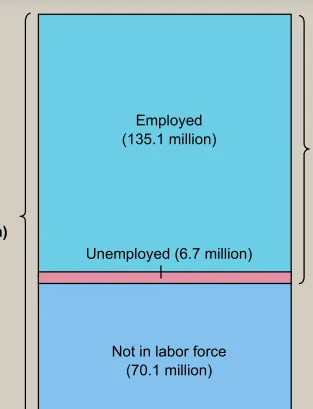
Figure 1 The Breakdown of the Population in 2001
Copyright©2003 Southwestern/Thomson Learning
Adult
Not in labor force (70.1 million)
Copyright © 2004 South-Western How Is Unemployment Measured?
• The unemployment rate is calculated as the
percentage of the labor force that is unemployed.
U n e m p l o y m e n t r a t e = N u m b e r u n e m p l o y e d
Copyright © 2004 South-Western
• The labor-force participation rate is the
percentage of the adult population that is in the labor force.
How Is Unemployment Measured?
L a b o r f o r c e p a r t i c i p a t i o n r a t e
L a b o r f o r c e
A d u l t p o p u l a t i o n
Copyright © 2004 South-Western
Table 1 The Labor-Market Experiences of Various Demographic Groups
Copyright © 2004 South-Western
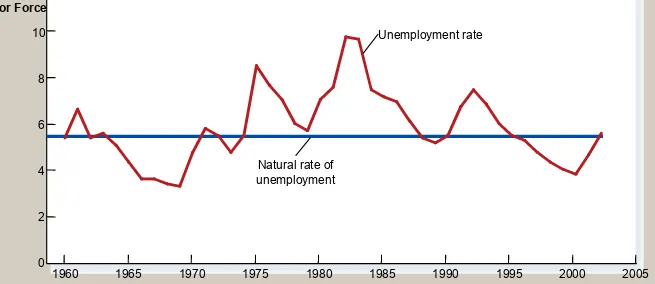
Figure 2 Unemployment Rate Since 1960
Copyright©2003 Southwestern/Thomson Learning
10
1960 1965 1980 1985 1990 2005
Percent of Labor Force
1995 2000 Natural rate of
unemployment
Copyright © 2004 South-Western
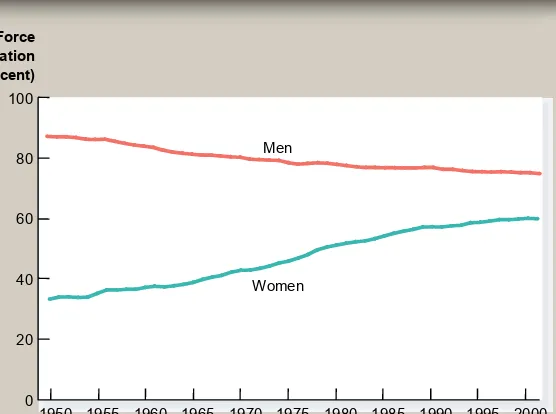
Figure 3 Labor Force Participation Rates for Men and Women Since 1950
Copyright©2003 Southwestern/Thomson Learning
100
1950 1955 1960 1965 1970 1975 1980 1985 1990 2000
Labor-Force Participation Rate (in percent)
Women Men
Copyright © 2004 South-Western Does the Unemployment Rate Measure What We Want It To?
• It is difficult to distinguish between a person
who is unemployed and a person who is not in the labor force.
• Discouraged workers, people who would like
to work but have given up looking for jobs after an unsuccessful search, don’t show up in
unemployment statistics.
• Other people may claim to be unemployed in
Copyright © 2004 South-Western How Long Are the Unemployed without
Work?
• Most spells of unemployment are short.
• Most unemployment observed at any given
time is long-term.
• Most of the economy’s unemployment problem
Copyright © 2004 South-Western Why Are There Always Some People
Unemployed?
• In an ideal labor market, wages would adjust to
Copyright © 2004 South-Western Why Are There Always Some People
Unemployed?
• Frictional unemployment refers to the
unemployment that results from the time that it takes to match workers with jobs. In other
Copyright © 2004 South-Western Why Are There Always Some People
Unemployed?
• Structural unemployment is the unemployment
that results because the number of jobs
Copyright © 2004 South-Western
JOB SEARCH
• Job search
• the process by which workers find appropriate jobs
given their tastes and skills.
• results from the fact that it takes time for qualified
Copyright © 2004 South-Western
JOB SEARCH
• This unemployment is different from the other
types of unemployment.
• It is not caused by a wage rate higher than
equilibrium.
• It is caused by the time spent searching for the
Copyright © 2004 South-Western Why Some Frictional Unemployment is
Inevitable
• Search unemployment is inevitable because the
economy is always changing.
• Changes in the composition of demand among
industries or regions are called sectoral shifts. • It takes time for workers to search for and find
Copyright © 2004 South-Western Public Policy and Job Search
• Government programs can affect the time it
takes unemployed workers to find new jobs.
• These programs include the following:
• Government-run employment agencies
• Public training programs
Copyright © 2004 South-Western Public Policy and Job Search
• Government-run employment agencies give out
Copyright © 2004 South-Western Public Policy and Job Search
• Public training programs aim to ease the
transition of workers from declining to growing industries and to help disadvantaged groups
Copyright © 2004 South-Western Public Policy and Job Search
• Unemployment insurance is a government
program that partially protects workers’ incomes when they become unemployed.
• Offers workers partial protection against job losses. • Offers partial payment of former wages for a
Copyright © 2004 South-Western Public Policy and Job Search
• Unemployment insurance increases the amount
of search unemployment.
• It reduces the search efforts of the unemployed. • It may improve the chances of workers being
Copyright © 2004 South-Western Public Policy and Job Search
• Structural unemployment occurs when the
quantity of labor supplied exceeds the quantity demanded.
• Structural unemployment is often thought to
Copyright © 2004 South-Western Public Policy and Job Search
• Why is there Structural Unemployment?
• Minimum-wage laws
• Unions
Copyright © 2004 South-Western
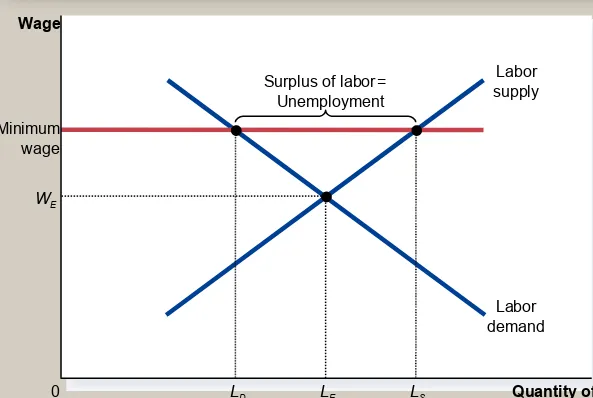
MINIMUM-WAGE LAWS
• When the minimum wage is set above the level
Copyright © 2004 South-Western
Figure 4 Unemployment from a Wage Above the Equilibrium Level
Copyright©2003 Southwestern/Thomson Learning
Quantity of Labor
0
Copyright © 2004 South-Western
UNIONS AND COLLECTIVE
BARGAINING
• A union is a worker association that bargains
with employers over wages and working conditions.
• In the 1940s and 1950s, when unions were at
their peak, about a third of the U.S. labor force was unionized.
• A union is a type of cartel attempting to exert
Copyright © 2004 South-Western
UNIONS AND COLLECTIVE
BARGAINING
• The process by which unions and firms agree
Copyright © 2004 South-Western
UNIONS AND COLLECTIVE
BARGAINING
• A strike will be organized if the union and the
firm cannot reach an agreement.
• A strike refers to when the union organizes a
Copyright © 2004 South-Western
UNIONS AND COLLECTIVE
BARGAINING
• A strike makes some workers better off and
other workers worse off.
• Workers in unions (insiders) reap the benefits
Copyright © 2004 South-Western
UNIONS AND COLLECTIVE
BARGAINING
• By acting as a cartel with ability to strike or
otherwise impose high costs on employers, unions usually achieve above-equilibrium wages for their members.
• Union workers earn 10 to 20 percent more than
Copyright © 2004 South-Western Are Unions Good or Bad for the Economy?
• Critics argue that unions cause the allocation of
labor to be inefficient and inequitable.
• Wages above the competitive level reduce the
quantity of labor demanded and cause unemployment.
• Some workers benefit at the expense of other
Copyright © 2004 South-Western Are Unions Good or Bad for the Economy?
• Advocates of unions contend that unions are a
necessary antidote to the market power of firms that hire workers.
• They claim that unions are important for
Copyright © 2004 South-Western
THE THEORY OF EFFICIENCY
WAGES
• Efficiency wages are above-equilibrium wages
paid by firms in order to increase worker productivity.
• The theory of efficiency wages states that firms
Copyright © 2004 South-Western
THE THEORY OF EFFICIENCY
WAGES
• A firm may prefer higher than equilibrium
wages for the following reasons:
• Worker Health: Better paid workers eat a better diet
and thus are more productive.
• Worker Turnover: A higher paid worker is less
Copyright © 2004 South-Western
THE THEORY OF EFFICIENCY
WAGES
• A firm may prefer higher than equilibrium
wages for the following reasons:
• Worker Effort: Higher wages motivate workers to
put forward their best effort.
• Worker Quality: Higher wages attract a better pool
Copyright © 2004 South-Western
Summary
• The unemployment rate is the percentage of
those who would like to work but don’t have jobs.
• The Bureau of Labor Statistics calculates this
statistic monthly.
• The unemployment rate is an imperfect
Copyright © 2004 South-Western
Summary
• In the U.S. economy, most people who become
unemployed find work within a short period of time.
• Most unemployment observed at any given
Copyright © 2004 South-Western
Summary
• One reason for unemployment is the time it
takes for workers to search for jobs that best suit their tastes and skills.
• A second reason why our economy always has
some unemployment is minimum-wage laws.
• Minimum-wage laws raise the quantity of labor
Copyright © 2004 South-Western
Summary
• A third reason for unemployment is the market
power of unions.
• A fourth reason for unemployment is suggested
by the theory of efficiency wages.
• High wages can improve worker health, lower