Informasi Dokumen
- Sekolah: Politeknik Telkom
- Mata Pelajaran: Database Management System
- Topik: System Manajemen Basis Data
- Tipe: thesis
Ringkasan Dokumen
I. DASAR PENYIMPANAN DATA
This section introduces the fundamental concepts of data storage within Database Management Systems (DBMS). It emphasizes the importance of effective data management for organizational decision-making. Students will learn about the necessity of accurate data availability and the role of DBMS in simplifying data handling complexities. The section outlines the definition of databases, their structure, and the relationships between entities, providing a foundational understanding essential for further exploration of database systems.
1.1 Pendahuluan
This subsection discusses the critical need for data accessibility in both individual and organizational contexts. It highlights the growing demand for effective data management systems that can handle increasing data volumes and complexity. By understanding the definition and structure of databases, students will grasp how entities and relationships function within an organization, setting the stage for deeper study into DBMS functionalities.
1.2 File Sistem dan Sistem Basis Data
This part contrasts traditional file systems with modern database systems. It explains the limitations of file systems, such as data redundancy and inconsistency, and introduces the concept of DBMS as a solution. Students will learn about the advantages of using databases over file systems, particularly in terms of data management efficiency and integrity, which are crucial for academic and practical applications in data handling.
1.3 Keunggulan DBMS
Here, the benefits of using a DBMS are outlined, including data independence, efficient data access, and enhanced data integrity and security. This section is essential for students to understand how DBMS can streamline data management processes, reduce redundancy, and support concurrent access, which are vital skills in database administration and application development.
1.4 Sistem Bilangan
This subsection explains the number systems used in computing, particularly binary, octal, and hexadecimal systems. Understanding these systems is fundamental for students as it lays the groundwork for comprehending how data is represented and processed in computers, which is essential for database management and programming.
1.5 Penyimpanan Data
In this part, the focus is on the physical storage of data and the various types of storage media. Students will learn about the hierarchy of storage types, from cache memory to magnetic disks, and the implications of each type on data access speed and reliability. This knowledge is crucial for understanding the performance aspects of database systems.
1.5.1 Media Penyimpanan Fisik
This subsection categorizes physical storage media based on speed, cost, and reliability. Students will explore different storage types, such as cache, main memory, and magnetic disks, and their respective roles in database systems. Understanding these concepts is vital for making informed decisions about data storage solutions.
1.5.2 Magnetic-Disk
This section delves into the structure and functioning of magnetic disks, explaining components such as platters, tracks, and sectors. Students will gain insights into how data is organized and accessed on magnetic disks, which is critical for optimizing database performance and understanding data retrieval mechanisms.
1.6 SQL Review
This subsection provides an overview of SQL, covering Data Definition Language (DDL) and Data Manipulation Language (DML). Students will learn the fundamental SQL commands necessary for creating and managing database schemas, which are essential skills for anyone working with databases.
II. ARSITEKTUR BASISDATA
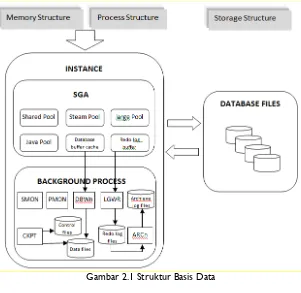
This section focuses on the architecture of databases, particularly the Oracle Database system. It covers the components that facilitate data processing and memory allocation for efficient data handling. Understanding database architecture is essential for students to design and implement effective database systems in real-world applications.
2.1 Database structure
This subsection introduces the structure of Oracle Database, explaining the roles of memory and process structures in managing large datasets. Students will learn how these components interact to support multiple users and maintain data integrity, which is critical for database administration.
2.1.1 Oracle Instance
This part explains the concept of an Oracle Instance, detailing how memory is allocated and managed. Students will gain insights into the relationship between Oracle instances and databases, which is crucial for understanding database operations and performance.
2.1.2 Memory Structures
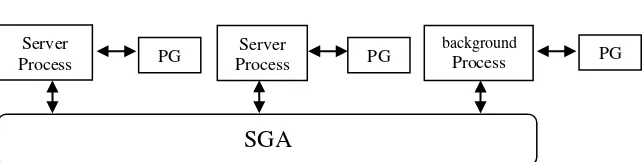
This subsection discusses the various memory structures used in Oracle, including System Global Area (SGA) and Program Global Area (PGA). Understanding these structures helps students appreciate how memory management impacts database performance and efficiency.
2.1.3 Process Structure
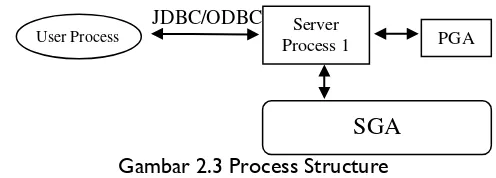
Here, the focus is on the process structure within Oracle, explaining how processes are created and managed. Students will learn about server processes and background processes, which are essential for maintaining database operations and ensuring high availability.
2.1.4 Storage Structure
This part outlines the different types of files within a database, such as control files and data files. Students will understand how these files are organized and their significance in database recovery and data management, which are critical for effective database administration.
III. Database Administration
This section covers the essential functions of database administration, focusing on the management and security of databases. Students will learn about the roles and responsibilities of database administrators, which are crucial for maintaining database integrity and performance in any organization.
3.1 Oracle Enterprise Manager
This subsection introduces Oracle Enterprise Manager as a tool for database administration. Students will learn how to use this application for monitoring, tuning, and managing databases effectively, which is an invaluable skill in the field of database management.
3.1.1 Overview dan Konsep Oracle Enterprise Manager
Here, the focus is on the features and functionalities of Oracle Enterprise Manager. Students will understand how this tool simplifies database management tasks and enhances performance monitoring, which is essential for effective database administration.
3.2 Dasar Security Database Oracle
This subsection discusses the fundamental concepts of database security within Oracle. Students will learn about authentication, authorization, and the measures necessary to protect database assets, which are critical for safeguarding sensitive data.
3.3 Tugas Database Administrator dalam Database Security
This part outlines the responsibilities of database administrators in ensuring database security. Students will understand the importance of implementing security measures and maintaining user access controls, which are vital for protecting organizational data.
3.4 User Account pada Oracle Database
In this subsection, students will learn about user accounts in Oracle, including their attributes and management. Understanding user account management is crucial for maintaining database security and ensuring that users have appropriate access levels.
IV. Konsep Prosedural
This section introduces procedural concepts in PL/SQL, emphasizing the importance of creating structured programs for database operations. Students will learn about the different types of program units, which are essential for optimizing database performance and enhancing functionality.
4.1 Pentingnya Konsep Prosedural
This subsection discusses the significance of procedural programming in PL/SQL. Students will learn how procedural programming enhances efficiency in database operations by reducing the number of calls made to the database, which is critical for performance optimization.
4.2 Program Unit : Prosedur, Fungsi, Trigger
Here, the focus is on the various program units available in PL/SQL, including procedures, functions, and triggers. Understanding these concepts is essential for students to develop effective database applications and automate processes, which are key skills in database programming.
4.2.1 Prosedur
This subsection provides an overview of procedures in PL/SQL, explaining their structure and purpose. Students will learn how to create and use procedures, which are fundamental for encapsulating logic and enhancing code reusability in database applications.
4.2.2 Fungsi
This part focuses on functions in PL/SQL, detailing their role in returning values and performing calculations. Students will understand how to implement functions effectively, which is vital for enhancing the functionality of database applications.
4.2.3 Trigger
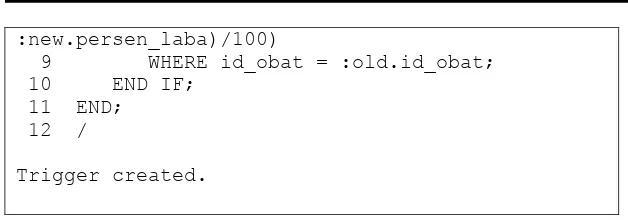
In this subsection, students will learn about triggers, including their purpose and how they are used to automate actions in response to specific events within the database. Understanding triggers is essential for implementing business rules and ensuring data integrity.
4.3 Naming Convention yang Baik
This part emphasizes the importance of good naming conventions in programming. Students will learn how to create meaningful and consistent names for procedures, functions, and variables, which are crucial for maintaining code clarity and facilitating collaboration in database projects.
![Gambar 1.2 Struktur Disk [RAM] 13](https://thumb-ap.123doks.com/thumbv2/123dok/3287395.1747150/12.420.66.313.85.275/gambar-struktur-disk-ram.webp)