DEVELOPING A MICRO-
TAKĀFUL
FRAMEWORK IN
BRUNEI DARUSSALAM
MOHAMED BAKAR ALIDINI
FACULTY OF BUSINESS AND MANAGEMENT SCIENCES
SULTAN SHARIF ALI ISLAMIC UNIVERSITY
BRUNEI DARUSSALAM
DEVELOPING A MICRO-
TAK
ĀFUL
FRAMEWORK IN BRUNEI
DARUSSALAM
MOHAMED BAKAR ALIDINI 12MR503
Thesis submitted in fulfilment
of the requirements for the degree of MASTER OF ISLAMIC BANKING AND FINANCE
Faculty of Business and Management Sciences
Sultan Sharif Ali Islamic University
Brunei Darussalam
iii
SUPERVISION
DEVELOPING A MICRO-
TAKĀFUL
FRAMEWORK IN BRUNEI
DARUSSALAM
MOHAMED BAKAR ALIDINI 12MR503
Supervisor:
PROF. DR. MUSLICHAH MUHAMMAD MACHALISignature: ___________________Date:_______________________
Faculty Dean:
DR. FADLIWATIMOHIDDINiv
DECLARATION
I hereby declare that the work in this thesis is my own except for quotations and summaries which have been duly acknowledged.
I also solemnly declare that this work has not been submitted or published earlier and it shall not, in future, be submitted by me for obtaining any other degree from this or any other university or institution.
Signature : ___________________
Name : Mohamed Bakar Alidini
Registration Number : 12MR503
v
DECLARATION OF COPYRIGHT AND AFFIRMATION OF
FAIR USE OF UNPUBLISHED RESEARCH
Copyright © 2014 by Mohamed Bakar Alidini. All rights reserved.
DEVELOPING A MICRO-TAKĀFUL FRAMEWORK IN BRUNEI DARUSSALAM
No part of this unpublished research may be reproduced, stored in a retrieval system, or transmitted, in any form or by any means, electronic, mechanical, photocopying, recording or otherwise without prior written permission of the copyright holder except as provided below:
1. Any material contained in or derived from this unpublished research may only be used by other in their writing with due acknowledgement.
2. UNISSA or its library will have the right to make and transmit copies (print and electronic) for institutional and academic purposes.
3. The UNISSA library will have the right to make, store in retrieval system and supply copies of this unpublished research if requested by other universities and research libraries.
Affirmed by Mohamed Bakar Alidini
……….. ……….
Signature: Date:
vi
ACKNOWLEDGEMENT
In the name of Allah, The Most Gracious, The Most Merciful
First and foremost, I would like to extend my greatest gratitude to Allah (SWT). Only His Will helped me to complete this thesis. It was a long and tiring journey.
A number of people have contributed to the completion of my thesis and I wish to acknowledge my appreciation for their support. Most importantly, I would like to acknowledge and express my deepest thanks to Dr. Muslichah Machali for her continuous guidance, inspiring ideas, thoughtful suggestions, priceless critical comments, and kind understanding throughout the academic journey.
I would also like to thank the Government of His Majesty the Sultan of Brunei Darussalam, who granted me a scholarship to pursue my master study at Sultan Sharif Ali Islamic University.
My gratitude also extended to the respondents in Brunei Darussalam for their cooperation in answering the questionnaires and interviews for this study. Special thanks go to two Takāful marketing managers, two government officers and five
Sharī‟ah scholars for sharing their information regarding my study. Without their information, this study would not have been possible.
It is a privilege to express my sincere and deep gratitude to every single person who supported me in one or other way to make this thesis successful. Special gratitude goes to Muhammad Azhar, Izzudin Abdulrahman Abdulazim, Ilyas, Firdaus, Muhammad Al-Swawy and Cecep who helped me to distribute questionnaires in Brunei as well as accompanied me in conducting interviews.
Last, but never least, my heartfelt thanks to my beloved wife Salma, my parents Bakar and Sadiya and other family members for your prayers, support, encouragement, patience, and understanding. Without your love, affection, and sacrifices this study could not be accomplished. I am so sorry for making your life miserable during my master journey.
I owe you a great debt of appreciation.
vii
ABSTRACT
DEVELOPING A MICRO-
TAKĀFUL
FRAMEWORK IN BRUNEI
DARUSSALAM
viii
ABSTRAK
MEMBANGUNKAN RANGKA KERJA MIKRO-TAKAFUL DI
NEGARA BRUNEI DARUSSALAM
Micro-Takaful adalah penyediaan perkhidmatan insurans kepada golongan yang berpendapatan rendah. Ianya sangat penting untuk melindungi kehidupan daripada kemalangan, ancaman dan lain-lain jenis risiko. Seperti jenis insurans yang lain, Micro-Takaful juga boleh melindungi risiko yang berbeza-beza sama ada untuk keluarga/kehidupan, kesihatan, kehilangan harta, kebakaran dan sebagainya. Kajian ini bertujuan untuk membangunkan satu rangka kerja Mikro-Takaful di Negara Brunei Darussalam dengan meneroka enam bidang utama skim Mikro-Takaful: (i) produk Micro-takaful (ii) pembekal Mikro-Takaful (iii) mobilisasi dana Mikro-Takaful; (iv) Kontrak Mikro-Takaful (v) mekanisma pematuhan Syariah dan (vi) peranan Kerajaan dan Pengendali Takaful. Untuk meneroka dan menerangkan topik dengan lebih berkesan, pendekatan kaedah gabungan (mixed-method) telah diguna pakai. Sebagai sebahagian daripada strategi penyelidikan kuantitatif, (1) soal kaji selidik telah digunakan dengan menumpukan kepada golongan yang berpendapatan rendah. Dan dalam pada masa yang sama, (2) temubual secara mendalam telah dijalankan dengan pengendali takaful, pegawai-pegawai Kerajaan dan ulama Syariah. Hasil kajian mendedahkan bahawa terdapat potensi bagi skim Mikro-Takaful di Negara Brunei Darussalam. Hasil kajian secara keseluruhan menunjukkan bahawa golongan berpendapatan rendah bersedia membeli produk insurans dan membayar bagi produk insurans tersebut, produk ini boleh disediakan oleh pengendali takaful, MFI dan NGO, zakat boleh menjadi sumber utama
dana, Tabarru‟ boleh menjadi kontrak terbaik bagi skim ini, mekanisme pematuhan
x
1.1 An overview of the research background 1
1.2 The Research Problem 6
1.3 The Research Questions 9
1.4 The Research Objectives 9
1.5 The Significance of the Study 10
1.6 The Scope of the Study 10
1.7 The Overview of the Thesis Structure 10
1.8 Conclusion 12
CHAPTER II:LITERATURE REVIEW 13
2.0 Introduction 13
2.1 Microinsurance: Insurance for the Low-income People 13
2.1.1 Risks and Vulnerabilities 13
2.1.1.1 Risks and Risk-Coping Strategies 14
2.1.1.2 Characteristics of Insurable Risk 18
2.1.2 Profile of Microinsurance 20
2.1.3 Exploitive Tools of Conventional Microinsurance 24
2.2 Micro-Takāful: A Sharī’ah Compliant Alternative to Conventional Insurance 27
2.2.1 Definition of Micro-Takāful 27
2.2.2 Emergence of Micro-Takāful from Historical Perspective 29
2.2.3 Characteristics of a Micro-Takāful Scheme 31
2.2.4 Importance of Micro-Takāful Scheme 34
2.2.5 Micro-Takāful Products 35
2.2.5.1 Health Micro-Takāful 35
xi
2.2.5.3 Property Micro-Takāful 37
2.2.6 Micro-Takāful Providers and Delivery Models 38
2.2.6.1 Full Service Model 39
2.2.6.2 Partner-Agent Model 40
2.2.6.3 Provider Model 42
2.2.6.4 Community-base Model 42
2.2.6.5 Social Protection Model 43
2.2.7 Funds Mobilization for Micro-Takāful Scheme 43
2.2.8 Micro-Takāful Contracts and Sharī‟ah Compliance Mechanisms 48
2.2.8.1 Micro-Takāful Contracts 48
2.2.8.2 Sharī‟ah Compliance Mechanisms 53
2.2.9 Role of Governments and Takāful Operators in the Micro-Takāful Scheme 55
2.2.9.1 Role of Governments in the Micro-Takāful Scheme 55
2.2.9.2 Role of Takāful Operators in the Micro-Takāful Scheme 57
2.2.10 Challenges for providing Micro-Takāful Scheme 58
2.2.11 Success of Micro-Takāful Scheme 58
2.2.12 Overview of selected Micro-Takāful Schemes in Asia 59
2.2.12.1 Etiqa Takāful –Malaysia 59
2.2.12.2 Prime Islami Life Insurance Ltd – Bangladesh 60
2.2.12.3 PT Asuransi Takāful Keluarga – Indonesia 60
3.1 Research Setting: An Overview of Brunei Darussalam 75
3.2 Research Methodology 76
3.3 Sampling Technique 77
3.4 Quantitative Data Collection Method 79
3.4.1 Questionnaire Design 79
3.4.2 Administration of the Questionnaires 81
3.4.3 Response Rate 81
3.5 Qualitative Data Collection Method 83
3.5.1 In-depth Interview Design 83
3.5.2 Target Respondents of the Interviews 84
3.5.3 Administration of the Interviews 85
3.6 Data Analyzing Methods 88
3.6.1 Quantitative Data Analysis 88
3.6.2 Qualitative Data Analysis 88
xii
3.8 Difficulties and Limitations of the Study 90
3.9 Conclusion 91
CHAPTER IV:PRESENTATION AND DISCUSSION OF FINDINGS 92
4.0 Introduction 92
4.1 Presentation of Findings and Interpretations 92
4.1.1 Survey Results of Low-income Households 92
4.1.1.1 Demographic Information 93
4.1.1.2 Micro-Takāful Product Preferences 100
4.1.2 Findings from the Interviews 108
4.1.2.1 Findings on Micro-Takāful Products 109
4.1.2.2 Findings on Micro-Takāful Providers 112
4.1.2.3 Findings on Fund Mobilization for Micro-Takāful Scheme 113 4.1.2.4 Types of Micro-Takāful Contracts and Sharī‟ah Compliance Mechanisms 114 4.1.2.5 Role of the Government and Takāful Operators in Micro-Takāful
Schemes 117
4.1.2.6 Obstacles for Introducing Micro-Takāful Scheme in Brunei Darussalam 119 4.1.2.7 Suggestions to Make Micro-Takāful Scheme successful in Brunei
Darussalam 120
4.2 Discussion of Research Findings 122
4.2.1 Low-income Households Survey 122
4.2.2 Micro-Takāful Products 123
4.2.3 Micro-Takāful Provider(s) 127
4.2.4 Micro-Takāful Funds Mobilization 130
4.2.5 Types of Micro-Takāful Contracts and Sharī‟ah Compliance Mechanisms 132 4.2.6 Role of the Government and Takāful Operators on Micro-Takāful Scheme 136
4.3 Conclusion 140
CHAPTER V:CONCLUSION AND RECOMMENDATIONS 141
5.0 Introduction 141
5.1 Conclusions 141
5.2 Recommendations (Way Forward) 144
5.3 Recommendations for further Research 149
BIBLIOGRAPHY 151
APPENDIX A: INTERVIEW GUIDES FOR MARKETING MANAGERS 159
APPENDIX B: INTERVIEW GUIDES FOR GOVERNMENT OFFICERS 161
APPENDIX C:INTERVIEW GUIDES FOR MUSLIM SCHOLARS 163
xiii
LIST OF TABLES
NUMBER TITLE PAGE
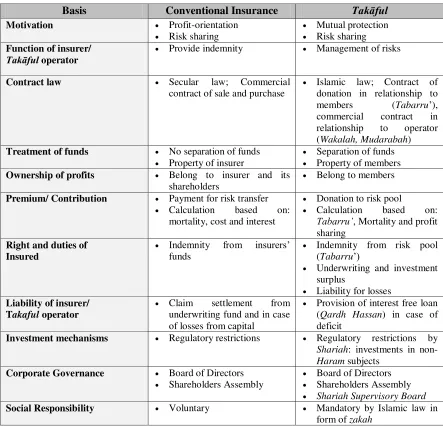
Table 2.1 Differences between Takāful and Micro-Takāful 28
Table 2.2 Takāful operators that offer Micro-Takāful Schemes 31
Table 2.3 Major Differences between Conventional Insurance and
Takāful 32
Table 3.1 The Response Rate 82
Table 3.2 Target Respondents of the Interviews 85
Table 4.1 Frequency Distribution of Age 93
Table 4.2 Frequency Distribution of Gender 94
Table 4.3 Frequency Distribution of Highest Level of Education 95
Table 4.4 Frequency Distribution of Occupation 96
Table 4.5 Frequency Distribution of Income Level 97
Table 4.6 Frequency Distribution of Marital Status 98
Table 4.7 Frequency Distribution of District of Residence 99
Table 4.8 Frequency Distribution of Residential Status 100
Table 4.9 Frequency Distribution of Product Awareness 101
Table 4.10 Frequency Distribution of Source of Information 102
Table 4.11 Frequency Distribution of Willingness to Take Insurance 103
Table 4.12 Frequency Distribution of Micro-Takāful Products 104
Table 4.13 Frequency Distribution of Contribution 105
Table 4.14 Frequency Distribution of Time for Contribution Payment 106 Table 4.15 Frequency Distribution of Reason for Unwillingness to Take
Insurance
107
Table 4.16 Takāful Operators interviewed and their respective Institutions 109 Table 4.17 Government Officers interviewed and their respective
Departments
109
Table 4.18 Sharī‟ah scholars interviewed and their respective Faculties 109 Table 4.19 The Respondents‟ Answers Regarding Micro-Takāful Products 110 Table 4.20 The Respondents‟ Answers Regarding Micro-Takāful Provider 113 Table 4.21 The Respondents‟ Answers Regarding Findings on Funds
Mobilization
114
Table 4.22 The Respondents‟ Answers Regarding Types of Micro-Takāful Contracts and Sharī‟ah Compliance Mechanisms
115
Table 4.23 The Respondents‟ Answers Regarding Role played by the
Government and Takāful Operators on Micro-Takāful Scheme
118
Table 4.24 The Respondents‟ Answers Regarding Obstacles for introducing Micro-Takāful Scheme in Brunei Darussalam
119
Table 4.25 The Respondents‟ Answers Regarding Suggestions to make Micro-Takāful Scheme successful in Brunei Darussalam
xiv
LIST OF FIGURES
NUMBER TITLE PAGE
Figure 2.1 Risks in Insurance Operation 15
Figure 2.2 Interactive Relationship among Risks 16
Figure 2.3 Reaction of low-income households on a risk event 17
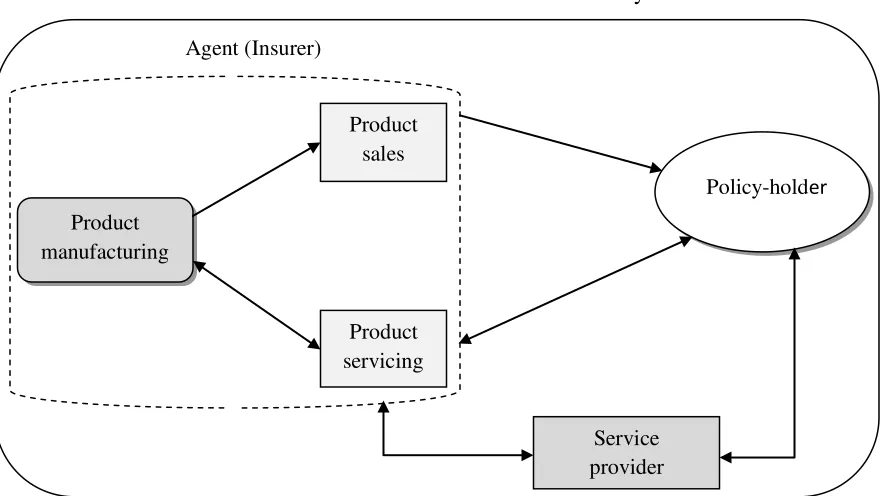
Figure 2.4 The Full Service Model of insurance delivery 39
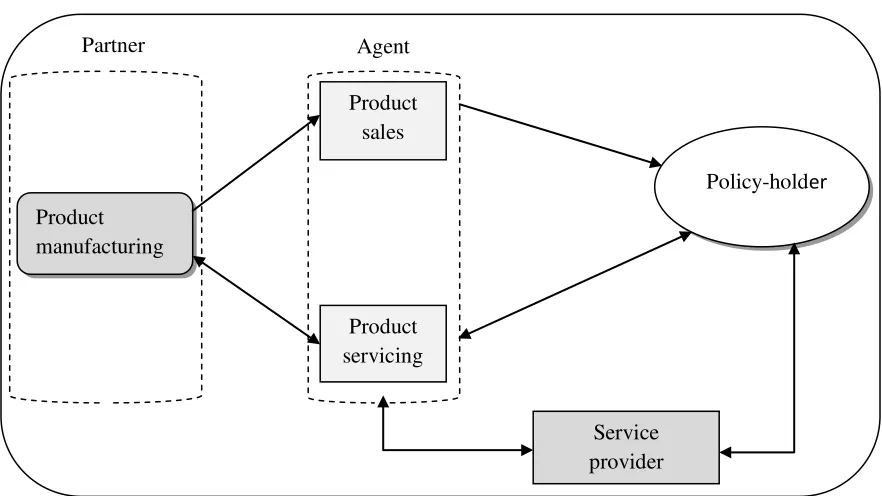
Figure 2.5 The Partner-Agent model of insurance delivery 41
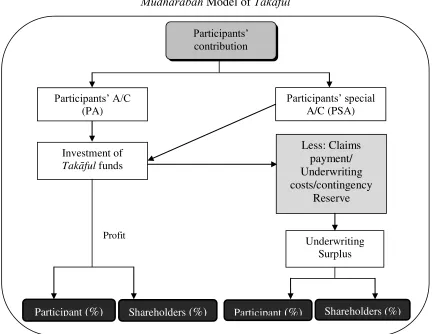
Figure 2.6 Mudhārabah Model of Takāful 51
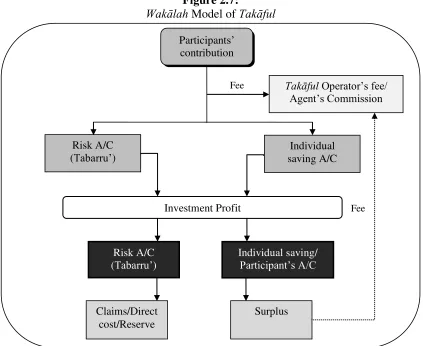
Figure 2.7 Wakālah Model of Takāful 53
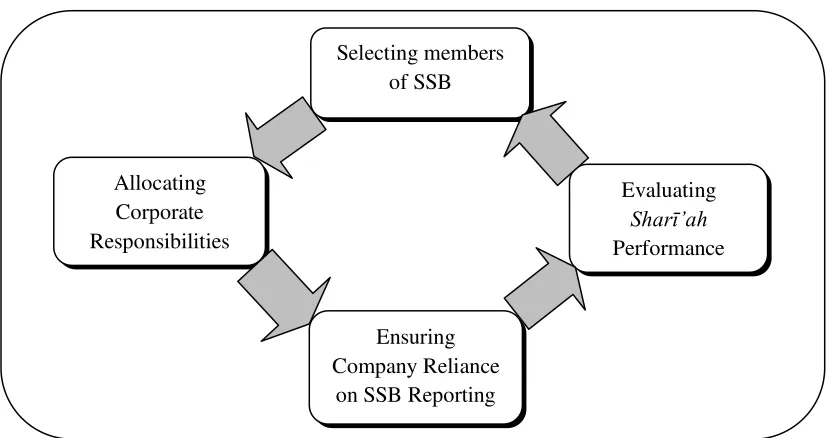
Figure 2.8 Sharī‟ah Compliance Mechanism 54
Figure 4.1 Distribution of Age 93
Figure 4.2 Distribution of Gender 94
Figure 4.3 Distribution of Highest Level of Education 95
Figure 4.4 Distribution of Occupation 96
Figure 4.5 Distribution of Income Level 97
Figure 4.6 Distribution of Marital Status 98
Figure 4.7 Distribution of District of Residence 99
Figure 4.8 Distribution of Residential Status 100
Figure 4.9 Distribution of Product Awareness 101
Figure 4.10 Distribution of Source of Information 102
Figure 4.11 Distribution of Willingness to Take Insurance 103
Figure 4.12 Distribution of Micro-Takāful Product 104
Figure 4.13 Distribution of Contribution 105
Figure 4.14 Frequency Distribution of Time of Contribution Payment 106 Figure 4.15 Frequency Distribution of Reason for Unwillingness to Take
Insurance
107
xv
TRANSLITERATION
Name of the Letters Form Transcription
Aliff ا a
Bā ب b
Tā ت t
Thā ث th
Jīm ج j
Hā‟ ح Ḥ/ḥ
Khā‟ خ kh
Dāl د d
Dhāl ذ dh
Rā‟ ر r
Zay ز z
Sīn س s
Shīn ش sh
Sād ص Ṣ/ṣ
Dād ض Ḍ/ḍ
Tā‟ ط Ṭ/ṭ
Zā‟ ظ Ẓ/ẓ
Ayn ع „
Ghayn غ gh
Fā ؼ f
Qāf ؽ q
Kāf ؾ k
Lām ؿ l
Mīm ـ m
Nūn ف n
Hā ة/ػى h
Wāw ك w
Yā م y
Hamzah ء `
xvi
ABBREVIATION
AAOIFI Accounting and Auditing Organization for Islamic Financial Institutions
AGM Annual General Meeting
AHC Association of the Handicapped Children
AIA American Insurance Association
AIG American International Group
AMBD Autoriti Monetari Brunei Darussalam
ATK Asuransi Takāful Keluarga
BDNAB Brunei Darussalam National Association for the Blind
BIBD Bank Islam Brunei Darussalam
BOD Board of Directors
DCD Department of Community Development
DFID Department for International Development
GCE General Certificate of Education
GLICO Gemini Life Insurance Company
GTZ German Development Cooperation
IFIs Islamic Financial Institutions
ILO International Labor Organization
KB Kalyan-Bima-Two payments deposit pension scheme
MDGs Millennium Development Goals
MFIs Microfinance Institutions
MSAP Monthly Small-Savings Assurance Plan
MTB Mayban Takāful Berhad
MUIB Majlis Ugama Islam Brunei
NGOs Non-Governmental Organizations
OKP Persatuan Orang Kurang Pendengaran
PA Participant‟s Account
PAPDA Paraplegic and Physically Disabled Association
PIDPS Prime Islami Deposit Pension Scheme
PILIL Prime Islami Life Insurance Ltd.
PSA Participant‟s Special Account
SIDA Swedish International Development Cooperation Agency
SMARTER Society for the Management of Autism Related issues – in Training, Education and Resources
SMEs Small Micro-Enterprises
SNB Samajik Nirapatya Bima
SOBD Special Olympics Brunei Darussalam
SPSS Statistical Package for the Social Sciences
SSB Sharī‟ah Supervisory Board
TAIB Tabung Amanah Islam Brunei
TTT Takāful Trinidad and Tobago
UAE United Arab Emirates
1
CHAPTER I:
INTRODUCTION
1.0 Introduction
This chapter provides an introduction to and overview of the thesis. The first section explains the research background, which emphasizes the importance of insurance as the main instruments against risks. The sections that follow state the research problem that encouraged doing this research. More importantly the research questions section focuses on the issues that are the main pillars for developing a Micro-Takāful model. This is followed by the objectives of the study that answer the research questions, and an explanation of the significance of the study. In order to draw the boundary of the study, the scope of the study was also stated. Finally, the chapter concludes by providing a brief description of all chapters in the thesis.
1.1 An overview of the research background
In recent years, Micro-Takāful1 has received considerable attention in Islamic insurance sector, as an important tool of economic growth of a country. It has been identified as effective risk management mechanism in dealing with insurable risk for low income household and micro entrepreneurs when unforeseen incidents befall them. It is due to fact that it can cover numerous perils, including illnesses, accidental injuries, and death and property loss – as long as the product is affordable and accessible for low-income households.2 This, however, has increased interest in the subject from a wide range of stakeholders such as insurance professionals, distribution channels, policymakers and supervisors, technical assistance and service providers, donors, community organizations and academics to possibly provide sustainable insurance solutions to huge numbers of low-income households who are still inadequately protected.
Apart from using Micro-Takāful as risk mitigation technique, it is also recognized as an innovative approach in alleviating poverty. Without protection against losses and natural
1
The scheme meant to serve the low-income households at affordable cost.
2
2
perils, many individuals – especially the poor will fall back into poverty. Unnecessary increase in their expenses or unexpected loss of income can be a great disaster to the
family‟s economy. It is only through schemes like Micro-Takāful that the poor people are being compensated for their losses instead of exhausting their limited wealth to cover the risk. By paying a little premium and getting a small sum insured, they are ensured of some protection and peace of mind.3
There are a number of factors to consider when introducing a Micro-Takāful scheme. One among them is to know the low income households insurance products preferences. Understanding differences in the needs and preferences of the low income households is a key not only to take up of insurance, but also to use and appreciation of the policy as well as satisfaction with the insurance. Brown4 argues that verifying affordability can be complex, as people will often say that they cannot afford the full cost of insurance plan when it is described to them in general, but are willing to pay when they are presented with a product that meets their needs and demonstrates clear value to them. According to Churchill5 people may declare that they would purchase the insurance, however, they are not really keen to buy it. Nevertheless, Loster and Reinhard6 argued that people on low incomes are perfectly willing to pay for a good product if the insurance product can satisfy three conditions: (1) ability to pay the premium, (2) willing to purchase insurance cover and (3) conclude a contract of insurance. They further stressed that the poor may only afford small premium installments and may not necessarily make a regular contribution.
For most efficient provision of Micro-Takāful products, establishment of the most effective delivery channels for different risk categories is needed.7 Further knowledge is
3
Maznita Mokhtar, Ruslinda Sulaiman & Azman Ismail. (2012). Towards Developing A Sustainable Microtakaful Program In Malaysia. p.2.
4
Brown, W. (2001) Micro-insurance-the risks, perils and opportunities. Small Enterprise Development, Volume 12. pp.11-24(14).
5
Churchill, C. (2002). Trying to understand the demand for Microinsurance. Journal of International Development. Volume 14. pp.381–387.
6
Loster, T. and Reinhard, D. (2010) Micro-insurance and Climate Change, in Morelli E., Onnis G.A., Ammann W.J., Sutter C. (Eds.) (2010), Micro-insurance - an Innovative Tool for Risk and Disaster Management. Global Risk Forum GRF Davos, Switzerland. pp.39-42.
7
3
also required regarding effective marketing and selling, and underlying incentive contracts of agents. Like in conventional insurance, Micro-Takāful is delivered with the help of agents and financial institutions. Three major suppliers can be identified though: firstly, cooperatives, secondly non-governmental organizations (NGOs) or government-subsidized programs, and thirdly Islamic financial institutions (IFIs).8 Shabir Patel9 suggests that Takāful can provide the safety net for communities to achieve sustainable development of their standard of living, providing a basis for families to look to the future with a sense of security and optimism. According to Marie Lemaire10 Takāful Pakistan has already taken certain initiatives in this regard. Anja Erlbeck et al.11 in their study recommend that an international insurance corporation can also offer Micro-Takāful that complies with sociocultural Islamic principles. They also assured it is possible for international companies to enter the promising Micro-Takāful insurance market. Study of Dercon et al.12 further suggest that to keep distribution cost low, Microinsurance as well as Micro-Takāful is usually distributed by partner organizations which already have an established relationship with potential customers like microcredit institutions. According to Akhtar, W.13 Micro-Takāful schemes should be introduced by Takāful operators to low income people especially of remote areas of the country who have no direct access to
Takāful. He also recommends that these schemes could be arranged with the cooperation of microfinance institutions, SMEs, or other development institutions that provide financing to low income groups.
With regard to the financial capacity, poor households generally faced difficulty in generating regular and substantial income and are extremely vulnerable to economic, political and physical downturns Brown and McCord14. Matul15 found that a quarter of
8
Dercon, Stefan; Kirchberger, Martina; Gunning, Jan Willem; Platteau, Jean Philippe, (2008).
Microinsurance. Paper No.1: ILO. pp.4-7.
9
Patel, Shabir. (2010). Takaful and Poverty Alleviation. ICMIF. p.17.
10
Marie Lemaire, (n.d). Social Security And Microinsurance In Pakistan. ILO/STEP.
11
Anja Erlbeck et al. (2011). Microtakaful: Field Study Evidence and Conceptual Issues. p.2.
12
Dercon, S., Bold, T., and Calvo, C. (2004). Insurance for the Poor? (University of Oxford QEH Working Paper No. 125), in Anja Erlbeck et al. (2011). Microtakaful: Field Study Evidence and Conceptual Issues. Op cit. p.7.
13
Akhtar, W. (2009). Potential of Takaful in Pakistan: Operational and Transformational Paradigm. p.259.
14
4
households in Georgia do not have any permanent source of income and nearly half of rural households lived on self-subsistence agriculture. Therefore they do not have the means to contribute to any form of micro insurance scheme. In addition, the contributions made by the policyholders might be insufficient for any compensation arose. Hence other financial resources for the scheme have to be identified. Noor Ashikin et al.16 recommend that intervention and support from government is vital in providing the financial capacity for the poor to have the needed protection that principally cover death, medical and
For effectively provision of Micro-Takāful products, contracts and Sharī‟ah compliant mechanisms for Micro-Takāful scheme have to be identified. The purpose behind the Micro-Takāful contract is to achieve the welfare of all members who are in need of help. And instead of treating Micro-Takāful a buying or selling contract, an appropriate contract between the policyholders and insurer has to be designed. Maznita Mokhtar et al.18 suggest that Tabarru‟ is an appropriate contract for the scheme. Siti Khadijah, A. et al.19 reveal that Wakālah contract is widely used in a Micro-Takāful scheme. According to Anja Erlbeck et al.20 Wakālah bil Ujrah is a Sharī‟ah compliant contract and most acceptable for the scheme.
On the other hand, Sharī‟ah compliant mechanisms are also important pillar in a
Micro-Takāful scheme. It determines the compliance of any particular Islamic business or
15
Matul, M. (2005) Demand for Micro-insurance in Georgia. Quantitative Study Results. Microfinance Centre for Central and Eastern Europe and the New Independent State. Available at
Anja Erlbeck et al. (2011). Microtakaful: Field Study Evidence and Conceptual Issues. Op. cit. p.17.
18
Maznita Mokhtar, Ruslinda Sulaiman & Azman Ismail. (2012). Towards Developing A Sustainable Microtakaful Program In Malaysia. Op cit. p.25.
19
Siti Khadijah, A. et al. (2013). Sustainability of Islamic Micro Finance Institutions. Universal Journal of Accounting and Finance 1(2). pp.75-76.
20
5
financial institution. In this regard, best mechanisms have to be identified and applied on the scheme. Akhtar, W.21 suggests an establishment of a central Sharī‟ah board, developing a Sharī‟ah compliant corporate governance framework and adherence to AAOIFI guidelines. According to Hassan, Zulkifli22 those Sharī‟ah board members should meet the qualifications for appointment. Maznita Mokhtar et al. recommend that the number of the Sharī‟ah board members should be three.23
However, most of these academic studies focus on the operational significance of insurance for low-income households. Several empirical studies that investigate the effect of the insurance sector as a provider of risk transfer on economic growth, insurance providers, sources of Micro-Takāful funds, role of government, and donors on the scheme found positive. An aspect of particular importance to this study is to identify gaps and solutions to provide a promising risk management tool.
Micro-Takāful is recognized as an important tool in supporting sustainable poverty alleviation in the poor and poorer areas of the world.24 In addition to that, the number of different Micro-Takāful schemes has increased significantly around the world, as well as the number of stakeholders involved in the sector. The first Micro-Takāful scheme was established in 1997 in Lebanon. By January 2010, Micro-Takāful providers exist in Lebanon, Indonesia, Malaysia, Bangladesh, Kuwait, Sudan, UAE, Sri Lanka, Bahrain and Pakistan.25 Various approaches are being tested in the search for an easily scalable, highly affordable, yet financially sustainable Micro-Takāful approaches.26
In view of the impressive growth and increasing potential to promote economic development, Micro-Takāful is still considered new in the field of Islamic finance. It was indicated that this new trend is still lacking of enough empirical research in
21
Akhtar, W. (2009). Potential of Takaful in Pakistan: Operational and Transformational Paradigm. Op. cit. pp.256-258.
22
Hasan, Z. (2011) Sharī‟ah Governance In Islamic Financial Institutions In Malaysia, GCC countries and the UK, Durham theses. p.326.
23
Maznita Mokhtar, et al. (2012). Towards Developing A Sustainable Microtakaful Program In Malaysia.
Op. cit. p.25.
24
Lemaire, M. (2009). Social Security and Microinsurance in Pakistan, ILO/STEP. Op. cit.
25
Mohieldin, M. et al. (2011). The Role of Islamic Finance in Enhancing Financial Inclusion in OIC Countries. Policy Research Working Paper 5920.
26
6
Takāful, more so when it meant about its designing/developing and offering in the market.27 Therefore, further research in this area is necessary and very much recommended.
However, despite its growing importance in the world, we are not aware of any study examining operation of Micro-Takāful scheme in Brunei Darussalam. Indeed,
Micro-Takāful scheme is aimed at a broad range of clients including individuals, households and whole communities in both rural and urban areas. In order to achieve this goal a Sharī‟ah compliant Micro-Takāful framework that contain all these vital pillars (low-income products preferences, insurance providers, sources of Micro-Takāful funds, contracts, and role of government and Takāful operators on the scheme) has to be designed and introduced. In this regard, the study aims to suggest a Sharī‟ah compliant operational model/framework of Micro-Takāful for the low-income group with the insurance products they prefer and what support will be initiated by the government, donors and the Takāful operators. However, this study intends to extend the literature review on Micro-Takāful.
1.2 The Research Problem
All over the world, the low-income households are more vulnerable to numerous risks and economic shocks28 than the middle and higher-income groups due to their inferior housing and living conditions, their lower income and education levels and suffer from the ongoing uncertainty about whether and when a loss might occur.29 These risks occur frequently and create financial pressures that aggravate the ever-present stress of meeting regular needs such as food, rent, school fees, etc. Although poor households often have informal coping strategies to manage risks such as borrowing, saving, selling productive and non-productive assets and informal group-based risk sharing systems, generally the effectiveness of these strategies is limited. So the poor have to patch together support from a variety of sources. And before the households have a chance to fully recover from one crisis, they are struck by another.
27
Siti Khadijah, A. et al. (2013). Sustainability of Islamic Micro Finance Institutions. Op. cit. p.76.
28
Including illness, accidental death of breadwinner or disability, loss of property due to theft or fire, agricultural losses, and disasters of both the natural and manmade varieties.
29
7
In Brunei Darussalam, there are more than 4500 families fall in the category of the poor and needy.30 Most of these families are residing in remote and rural areas of the villages in Tutong District and Ulu Belait which are some of the hardest hit when it comes to securing basic amenities such as food, accessible roads and education. In addition, a lot of their houses are very old and in serious disrepair so they need a lot of repair and renovation. Although there are families in need even in urban areas, but those in remote areas are most in need to find solutions for their problems.31 The need for risk management strategies arose out of the concerns about the low income households, especially those in rural areas, have been desperate for new alternatives, strategies and/or more accessible social and financial programs. Unfortunately, there is limited presence of risk management strategies in Brunei Darussalam.
There are a number of social protection schemes in Brunei Darussalam offered by His
Majesty‟s Government through the ministries and institutions concern. These schemes including free health service and Zakāt are based on specified rules, often underpinned by law, and provide benefits when a member of the household experiences a sudden shock due to a specific risk that is predefined by law. Although, the state is still the major provider of free health services through public health centers, but those poor people in remote areas are not benefiting due to lack of extension of public health centers to the remote areas. Moreover, this free health service is provided to the local people while the foreign and permanent residents are exempted. On the other hand, Zakāt is collected and meant to benefit the identified categories. Nevertheless, this scheme is managed haphazardly where some are benefited while others are not.32
Despite the large support given by His Majesty‟s Government on the matters, problems still persist. Death of a family member or long-illness due to road accident or other causes and loss of property due to theft, fire or flood are common shocks affecting the low-income people in Brunei Darussalam. People drive vehicles at a high speed resulting in
30
Ministry of Culture, Youth & Sports Report. (2013). Study on Poverty in Brunei Darussalam. Data provided by the ministry during the interview, one page.
31
Brunei Times, http://www.bt.com.bn/news-national/2012/08/06/poor-families-remote-areas-need-basic-amenities. Accessed on Monday, August 6, 2012.
32
8
road accidents. Moreover, Brunei is a country of heavy rain through the year. And in many occasions, rain has caused floods that affected many properties in rural areas. Although there is an emergency aid offered by the Government and public to the affected individuals, but the aid usually covers the basic needs such food, clothes, building materials, etc. while the affected poor people will still need other resources to start new
life from the scratch, and mostly they don‟t succeed, hence this informal mechanism for mitigating and coping with risks become ineffective.
Furthermore, Takāful industry in Brunei Darussalam has been blessed with tremendous growth and strong performance. Takāful companies‟ share in total gross premium has increased at 31.1%, 39.0%, and 41.9% in 2008, 2009, and 2010, respectively. These increases were indicative of the public‟s awareness and interests towardTakāful products based on the profit-sharing approach that is not offered by conventional companies.33 But the main focus of this industry is on the middle and high-income people. As more products are designed to cater the needs of the middle and high income individual. Few efforts have been made on the low income households. With tremendous growth and strong performance of Takāful companies in Brunei Darussalam can extend their service to the low income households in urban and rural areas. Low cost and affordable
Micro-Takāful products can be designed to cater the need of the poor people in the country. This will join other hands to secure and uplift the life standard of the poor people, and to achieve the government goal of eliminating poverty in His Majesty‟s Government to zero level.34
In view of these facts, this study attempt to investigate the potential Micro-Takāful scheme in order to suggest a framework for entrenching Micro-Takāful as a tool for socio-economic empowerment and risk management for low income households in Negara Brunei Darussalam. With Micro-Takāful scheme however, the urban and rural poor households can mitigate those risks that would otherwise cause them to slide back into the poverty they seek to escape. It is expected that the empirical findings of such an extensive
33
Bashir, M.S. & Nor Hafiizah, M. (2011). Consumer Perceptions of Islamic Insurance Companies in Brunei Darussalam. Int. J. Emerg. Sci., 1(3). pp. 286-287.
34
9
study on this subject will be able to identify issues, gaps and problems, and at the same time propose policy recommendations pertinent to Micro-Takāful scheme for further development of the industry.
1.3 The Research Questions
The following questions are proposed to guide the collection, analysis and interpretation of data in line with the research aims and objectives. It is expected that the research will, in the end, provide answers to these questions to ensure the research is designed accordingly. Following the research problem, this research seeks answers to the following questions:
1) What are the Micro-Takāful products that can be offered and which appropriate provider (institution) that will provide these products in Brunei Darussalam? 2) What are the instruments used for mobilization of Micro-Takāful funds?
3) What are the types of contracts and mechanisms of Sharī‟ah compliant used in Micro-Takāful scheme?
4) What role can the Government of Brunei Darussalam and the Takāful operators play to support the Micro-Takāful scheme?
1.4 The Research Objectives
The main objective of this master research is to study and develop an operational
Micro-Takāful framework as a tool for socio-economic empowerment and risk management for low income households in Brunei Darussalam.
The specific objectives of this study are:
1. To investigate the Micro-Takāful products that can be offered and appropriate provider (institution) that will provide these products in Brunei Darussalam;
2. To find out the instruments used for mobilization of Micro-Takāful funds;
3. To find out the types of contracts and mechanisms of Sharī‟ah compliant used in Micro-Takāful arrangements;
10 can play to support the Micro-Takāful scheme.
1.5 The Significance of the Study
This research will be greatly beneficial to the following:
1. The Micro-Takāful model will enable Takāful operators to adopt and implement the model within their companies in order to come up with decent and comprehensive Micro-Takāful products.
2. The proposed framework will be used by planners for future reference when reviewing the existing policy on Insurance.
3. The research will yield information that may act as literature review for the future academicians who may write further research papers on related topics.
4. Finally the research will generate information that will contribute towards achieving some of the key pillars in the Vision 2035 and Millennium Development Goals (MDGs) of eradication of extreme poverty.35
1.6 The Scope of the Study
The focus of this study is on suggesting an operational Micro-Takāful model that can be applied in Brunei Darussalam. This will include:
a. Investigation of the Micro-Takāful products that are suitable to the Bruneian market and an appropriate provider (institution) that will provide Micro-Takāful products;
b. The instruments used for mobilization of Micro-Takāful funds;
c. Types of contracts and the mechanism of Sharī‟ah compliant used for
Micro-Takāful scheme;
d. To find out the possibility of the Government of Brunei Darussalam to support and Takāful operators to support and apply this model;
1.7 The Overview of the Thesis Structure
The thesis has five chapters. Chapter one is for introduction. Chapter two covers literature review and previous study related to this study. Chapter three explains the research design
35
11
and methodology used. Chapter four presents and discusses the findings. Finally, chapter five covers conclusion and recommendation. The overview of the chapters is described below.
Chapter 1 provides an introduction to and overview of the thesis. The first section explains the research background, which emphasizes the importance of insurance as the main instruments against risks. The sections that follow state the research problem that encouraged doing this research. More importantly the research questions section focuses on the issues that are the main pillars for developing a Micro-Takāful model. This is followed by the objectives of the study that answer the research questions, and an explanation of the significance of the study. In order to draw the boundary of the study, the scope of the study was also stated. Finally, the chapter concludes by providing a brief description of all chapters in the thesis.
Chapter 2 discusses the literature related to Micro-Takāful and Microinsurance and starts with risks and vulnerabilities, definition and limitations of Microinsurance as well as reasons for refusal of Conventional Insurance. Various conceptual and theoretical frameworks of Micro-Takāful scheme are presented. It furthermore explains benefits of Micro-Takāful and challenges for providing Micro-Takāful. An overview of selected Micro-Takāful schemes in Asia is also discussed. Finally, this chapter explains the previous researches related to this thesis.
Chapter 3 explains the research design that guides each stage of the study. It provided an overview of Brunei Darussalam, the rationale behind the choice of research design, the methodology and method for this thesis are clarified. The interview, transcription and data coding processes used are described. The questionnaire: structure, language and survey process, data analysis methods are also described. This chapter concludes with a presentation of importance of ethical conduct, and how this was employed throughout the study.
12
findings, Micro-Takāful products, fund mobilization and Micro-Takāful Provider are described. In addition, types of Micro-Takāful contracts and Sharī‟ah compliance mechanisms are also explained. Finally, the chapter highlights the role played by the Government and Takāful operators on Micro-Takāful scheme.
Chapter 5 provides the conclusions and recommendations of the study. Next, directions for further study on Micro-Takāful Scheme within the Brunei Darussalam context are also presented to conclude the thesis.
1.8 Conclusion
This chapter has introduced and presented the rationale for the research. It provided an introduction to and overview of the thesis, research problem, research questions, research objectives, significance of the study, scope of the study and an overview of the thesis structure. The next chapter explores the literature in relation to the Microinsurance and Micro-Takāful.
13
CHAPTER II:
LITERATURE REVIEW
2.0 Introduction
This chapter discusses the literature related to Microinsurance and Micro-Takāful and starts with risks and vulnerabilities, definition and limitations of Microinsurance as well as reasons for refusal of Conventional Insurance. It also presents various conceptual and theoretical frameworks of Micro-Takāful concerning Micro-Takāful product, funds mobilization, insurance providers, business contracts and Sharī‟ah compliance mechanism. Furthermore, it explains the sources of Micro-Takāful scheme, benefits of Micro-Takāful as well as challenges for providing Micro-Takāful. In addition, it discusses an overview of selected Micro-Takāful schemes in Asia. Finally, this chapter explains the previous researches related to this thesis.
2.1 Microinsurance: Insurance for the Low-income People
Every human being is exposed to risks such as the death, work disability and dismissal of a main provider, illness, old age, business failure, drought, inflation, deforestation, war and so on. Without support, many households fall into poverty when these risks occur, because risks lead to a sudden decline in income and or rise in spending, thus destroying a
household‟s capacity to meet its most basic needs. This section however, provides basic understanding of Microinsurance related issues. The section covers risks and vulnerabilities, Microinsurance profile, its limitations as well as reasons for the refusal of conventional insurance.
2.1.1 Risks and Vulnerabilities
Low income people live in risky environments, vulnerable to numerous risks, including illness, accidental death and disability, loss of property due to theft or fire, agricultural losses, and disasters of both the natural and manmade varieties.36
36
14
The poor prove to be more vulnerable to many of these risks than the rest of the population. They do not dispose of enough material or social resources to cope with the hazardous event when it occurs. Being already in an unstable position for which they have to struggle every day, the impact of hazard would be really catastrophic for their livelihoods because it destroys every resource they managed to build up, including hope. Further resources, when available, are extremely valuable for their survival and escape from poverty, thus makes the risk still higher.37
Recognizing all these aspects, this section explores the risks faced by the poor and coping strategies to these risks, and characteristics of insurable risk in the two sub-sections that follow. The aim of these subsections is to build up a basic understanding of risks and risk-management strategies applied by low-income people so as to enable the study suggest alternative solution for these risks.
2.1.1.1 Risks and Risk-Coping Strategies
The term „Risk‟, as defined in the Oxford English Dictionary, is a possibility of harm or damage against which something is insured.38 Risk in insurance system arises when there is a possibility of more than one outcome and the ultimate outcome is unknown.39 For instance, loss of a property due to fire or theft may require other resources to rebuild it.
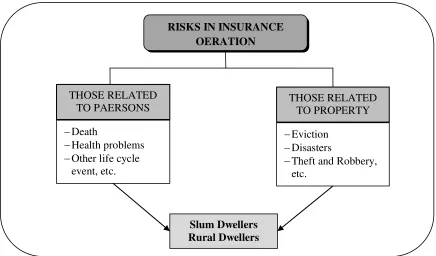
In the insurance operation system, there are at least two broad categories of the risks encountered by poor households, as can be seen in figure 2.1: (1) those related to persons such as, death, health problems, other life cycle events (i.e. marriage, birth, education costs etc.) and (2) those related to property such as, eviction, disasters (i.e. floods, droughts, earthquakes, fire, volcano etc.), theft and so on. Moreover, among the poor differences exist in vulnerability to hazard, depending on the environment. For instance, slum dwellers are generally more vulnerable to fire or theft than rural people. In rural
37
Davignon, G. (2004). The Microinsurance Promise. Solvay Business School. p.44.
38
http://www.oxforddictionaries.com/definition/english/risk?q=Risk accessed 20 April 2013.
39
15
region, people are more vulnerable to climate changes, seasonality, droughts, or transportation of sick family members.40
Figure 2.1:
Risks in Insurance Operation
Source: Designed by the Researcher.
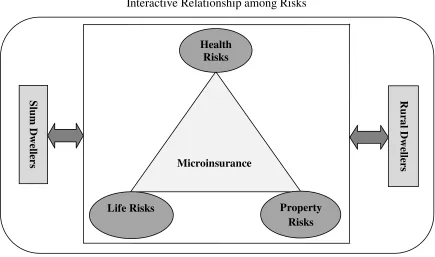
However, the treatment of these risks should be arranged under a causal and interactive system because the causes and impacts of one type of risk cannot be isolated from the other types of risks. All risks have necessary correlations and influence each other (see figure 2.2 below). For example, a risk affected to a property has an impact on persons‟ health and vice versa. Likewise, agricultural risk is related to property but has an impact on persons. As such, micro insurance scheme providers are advised to design products that can meet the objectives of the low-income people to provide peace of mind and protect against losses.
40
Davignon, G. (2004). The Microinsurance Promise. Op. cit. p.44.
RISKS IN INSURANCE OERATION
THOSE RELATED TO PAERSONS
Death
Health problems
Other life cycle event, etc.
THOSE RELATED TO PROPERTY
Eviction
Disasters
Theft and Robbery, etc.
16
Figure 2.2:
Interactive Relationship among Risks
Source: Designed by the Researcher.
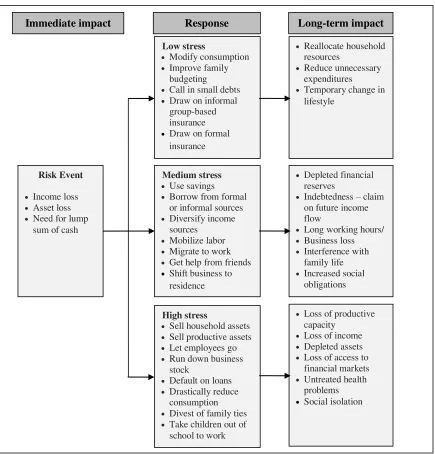
Managing these risks among the poor people, however, is more challenging in their lives. There are two factors affecting the household‟s capacity to manage risk: (1) the resource endowment of the household and (2) the range of coping mechanisms it can access.41 These two factors make the poor people more difficult to respond to such shocks because they have fewer resources not only to meet the immediate costs of the shock, but also the secondary expenses incurred in getting back on their feet. Once their reserves are depleted, low-income households are forced into increasingly reactive modes of behavior.42 They respond to each crisis with increasingly stressful coping mechanisms (see figure 2.3 below).
41
Cohen and Sebstad. (2003). Reducing Vulnerability: The Demand for Microinsurance. MicroSave-Africa
– Promoting high-quality financial services for poor people. p.2.
17
Figure 2.3:
Reaction of low-income households on a risk event
Source: Adapted and modified from Cohen and Sebstad (2003).
As illustrated in figure 2.3, the low-income people have developed informal insurance mechanisms to provide protection against risks. Once a shock occurs, they either respond to low stress, medium stress or high stress. Nevertheless, many of these mechanisms represent simply deferments of expenses, with costs increasing at each level. Some are expenses that will never be incurred at a later date (longer term impact). In contrast, the
Low stress
18
use of savings or the drawing of insurance in response to shocks represent ex ante -strategies that pay off ex post.
In this context, alternatives have to be implemented to these outcomes, to avoid further impoverishment and reduce the existing poverty. It is essential that the purpose of new risk management mechanisms is not the replacing of informal mechanisms. This would lead to disappearance of self-constructed and participatory mechanisms essential to maintain the livelihood of the poor at a worthy social and financial level. Moreover, it would enhance dependency of the poor households to the new mechanisms and thus enhance their vulnerability. Their survival would be entirely dependent on the existence of a formal institution since the informal mechanisms disappeared. A new risk would appear, whereas the aim is to reduce the vulnerability of the poor. Instead, the new formal mechanism, which answers to a real need of covariant risk management, must encourage independency. 43
Consequently, insurance has been recognized as the most appropriate means for protection against highly unpredictable events, whilst informal mechanisms can still be used to encourage togetherness and participations among the low-income households. But before offering insurance against any risk, it is more advisable to understand its characteristics. This will assist an insurance provider to achieve the goals effectively.
2.1.1.2 Characteristics of Insurable Risk
In insurance mechanism, there are two narrow categories of risks namely, (i) non-insurable risks and (ii) non-insurable risks.44 The former are the risks occur as a result of conditions of economic downturn and instability which may not lend themselves to Microinsurance; rather they define the context for the other risks and deepen their negative impact. For instance, growing unemployment among many salaried workers reduces their demand for goods and services provided by informal sector businesses. The latter, on the other hand, are the risks occur as a result of natural disasters or manmade significantly affect the lives of households in both urban and rural areas that can be
43
Davignon, G. (2004). The Microinsurance Promise. Op. cit. pp.54-55.
44
19
insured and compensated. These types of risks include floods, drought, fire, theft, etc. Insurance providers always focus on the insurable risks.
However, for an insurance operator to act effectively on the insurable risks, the risk should have the following characteristics:4546
i. The risk covered should be tangible i.e. must result in a financial loss for the individual.
ii. It has to occur unpredictably.
iii. There should be a low probability that a risk will occur to most of the members in the risk pool within the period, otherwise the cost of the insurance will be very high.
iv. The chance of it happening to one person should not be affected by the fact that it has happened to another person.
v. The risk should not be under the direct control of the insured person; otherwise he or she would be able to manipulate it so as to get the benefit.
vi. It should be easy to determine whether the insured event has occurred or not. vii. The premium must be affordable for the insured and sufficient to cover the losses
transferred to the insurer.
Therefore, it is strongly recommended that any insurance provider, specifically those institutions provide insurance services to the low-income households, needs to observe and identify these characteristics carefully to make sure that the services offered are more sustainable and viable.
In the following sections, the researcher will give a profile of Microinsurance and investigate how it complements the inefficiencies of other services and whether it really carries the promised benefits for clients (low-income households).
45
Davignon, G. (2004). The Microinsurance Promise. Op. cit. pp.57-58.
46
20
2.1.2 Profile of Microinsurance
In the previous section, the study has shown the limitations of the informal risk management tools that should lead to new risk management tools. Microinsurance has been recognized as the new opportunity that is proposed to reduce the impact of covariant risk on the low-income households.474849
Microinsurance is defined as a system to protect poor people against specific shocks (such as fire, accident, ill health etc.) using risk pooling in return for regular affordable premium payments proportionate to the likelihood and cost of the risk involved.50 This definition has two main components: (1) insurance and (2) a specified target group.51
Firstly, insurance mechanism: is the provision of financial protection against unexpected losses by pooling the resources of the many to compensate for the losses of the few. In this context, insurance replaces the uncertain prospect of large losses with the certainty of making small, regular, affordable premium payments. Secondly, the poor: Microinsurance targets the poor people that may not typically be covered by other insurance and/or social security schemes.
In practice, protection is accomplished through a pooling mechanism: each person who is vulnerable to the risk pays a small amount of money (the premium) into the pool, which is then used to compensate those who suffer a loss.52 For instance, a group of 1 000 farmers may get together and put aside $12 per month for insurance to cover the death of their animals up to a value of $1 000 per animal. Each month the pooled premiums come to $12 000; which is used to pay claims. Without the pooling mechanism provided by
47
Davignon, G. (2004). The Microinsurance Promise. Op. cit. p.61.
48
Brown, W. and Churchill, C. (1999). Micro-Insurance: Providing Insurance to Low-Income Households Part 1-a primer on insurance principles and products. Microenterprise Best Practices Project, Development Alternatives Inc. Bethesda, MD. At http://www.mip.org/pubs/mbp-def.htm accessed 22 April 2013.
49
Brown, W. and Churchill, C. (2000). Insurance Provision in Low Income Communities Part II: Initial Lessons from Micro-Insurance Experiments for the Poor. Microenterprise Best Practices Project, Development Alternatives Inc. Bethesda, MD. At http://www.mip.org/pubs/mbp-def.htm accessed 22 April 2013.
50
Roth, J & McCord, M. (2008). Agricultural Microinsurance. Op. cit. p.12.
51
Ralf, R. & Johannes, B. (2011). Insurance for the poor? First thoughts about Microinsurance business ethics. Op. cit. p.3.
52
21
insurance, it is very hard for a low income farmer to find the $1 000 he would need to replace the lost animal.
As illustrated above, this risk-pooling mechanism makes it possible for the benefit
amount to be much greater than an individual‟s premium payments. Thus, insurance offers certainty by replacing the potential hazard of large losses with the payment of small, regular premiums.
Like any insurance, Microinsurance can cover all kinds of risk, like death of family members, costs of ill-health, loss or damage of property, agricultural risks and so on.53 The risk insured under a Microinsurance policy is managed based on insurance principles and funded by premiums. The Microinsurance activity itself should therefore fall within the purview of the relevant domestic insurance regulator/supervisor or any other competent body under the national laws of any jurisdiction.54
Furthermore, Microinsurance is provided by micro insurers, although they assume many different forms. Microinsurance risk carriers include small community-based schemes, mutuals, cooperatives, or joint stock companies. They may be for-profit or not-for-profit. Not all micro insurers are regulated by the insurance law. Depending on the legal set-up of a particular jurisdiction, some fall under other laws and authorities such as the cooperatives or health providers, others may be unregulated.55
In consequence, many literature reviewed related to Microinsurance have shown that Microinsurance is an alternative tool to replace informal mechanisms in securing low-income people against unexpected shocks. 56 Its benefits are summarized below:
53
Ralf, R. and Johannes, B. (2011). Insurance for the poor? Op. cit. p.3.
54
IAIS (2007). Issues in regulation and supervision of Microinsurance. p.10.
55
See: Ralf, R. and Johannes, B. (2011). Insurance for the poor? Op. cit. p.11.
56
22
i. Microinsurance programs can increase Human Development Index (HDI) by providing creditors with greater security and incentive to lend to micro-enterprises.
ii. For the individual, reducing risk through insurance enables credit and savings to be used more productively on income-generating opportunities.
iii. Insurance enables the policyholder to save a portion of his/her income, without the need to use it on medication, fire, theft and death; it can instead be invested in a
child‟s education.
iv. Health insurance enables access to better medical services and a better quality and longer life.
v. Access to adequate insurance protection can assist the poor to achieve sustainable growth and provide them with the capability to attain a better standard of living. vi. It can mitigate the impact of personal and national calamities on the build-up of
assets, providing escape from the viscous circle of poverty that engulfs each new generation.
vii. Insurance can also protect those that have risen above the poverty level against unforeseen events that may cause them to fall into poverty again.
viii. Insurance provides security where none is available from the state; it facilitates self-sufficiency and empowers people to build for their own future.
Despite the realization that Microinsurance has the potential to offer improved risk management to the poor, there are, however, some limitations to the potential of Microinsurance schemes to contribute to the extension of social protection:
Firstly, many households lack the opportunity to join a Microinsurance scheme because no such scheme operates in their vicinity57 and the formal sectors lack interest to serve the poor due to low collateral, higher transaction costs, interest rate restrictions, corruption, uncertain profitability, high risks, lack of pro-poor values and inability to serve the specific needs of the poor.58 However, today Microinsurance schemes cover only a
57
Loewe and Deblon. (2009). The potential of Microinsurance for social protection, in Churchill, C. and Matul, M. (2012). Protecting the Poor. A Microinsurance Compendium. Vol.2. ILO. p.50.
58
23
limited portion of the population in their respective countries.59 Indeed, many experts believe that Microinsurance will never reach a majority of the population, even under the most optimistic of assumptions.60
Secondly, many Microinsurance schemes have poor viability and sustainability. These two factors are linked to the developing countries with poor management skills and information systems. Insurance organizations have not reached a suitable level of maturity in developing countries due to inadequate financial resources, unqualified staffs, and insufficient knowledge and information.61 Inability to assess the performance of the provider, who lacks the expertise to efficiently run and manage an insurance business, means that the possibility and opportunity for negligence or unscrupulous behavior is quite high, thus, no confidence in the quality and soundness of financial institutions.62
Finally, Microinsurance schemes have a poor images amongst the poor, insurance officers are seen as quick to sell and slow to pay, claims processes are hindered by bureaucracy, and policy limitations and exclusions are unclear due to complex policy wordings. Clarifying insurance policies is an additional costs and burden on the provider, especially as the policyholder may not be able to read let alone understand the terms and conditions. Consequently, the poor lack interest in insurance leading to high drop-out rates particular from clients that have not made a claim. 63
These limitations, however, reveal that there are many gaps that need to be addressed as this study moves towards suggesting appropriate a risk management tool to fill these gaps. Therefore, it would be of the highest interest to find a solution to provide a risk management tool that will overcome these limitations. This will likely require the efforts of insurance commissions, insurance companies and other external forces.
59
Loewe and Deblon (2009). Op. cit. in Churchill, C. and Matul, M. (2012). Protecting the Poor. A Microinsurance Compendium. Vol.2. ILO. p.50.
60
Roth, McCord, M.J.; Liber, D. (2007). The landscape of microinsurance in the world‟s 100 poorest
countries (Microinsurance Centre), in Churchill, C. and Matul, M. (2012). Protecting the Poor. A Microinsurance Compendium. V.2. ILO. p.50.
61
Matin, I. et al (1999). Financial Services for the poor and the poorest: A state of the art report in Patel, S. (2002). Op cit. p.17.
62
World Bank. (2000). World Bank Development Report 2000. World Bank publications in Patel, S. (2002). Op. cit. p.17.
63