AN INTERNATIONAL JOURNAL PROMOTING AGRICULTURAL
THAI JOURNAL OF
AGRICULTURAL SCIENCE
ISSN : 0040 - 3589
PREFACE
The International Conference on Agriculture and Agro-Industry 2010 (ICAAI2010) under the theme of “Food, Health and Trade” is the irst international conference organized by School of Agro-Industry. It was held at Mae Fah Luang University, Chiang Rai, Thailand on November 19-20, 2010. ICAAI2010 is aimed to create connections amongst scientists in the areas of agriculture and agro-industry, hence the sustainable agriculture and agro-industry for the world.
Approximately 350 delegates from overseas and Thailand have attended the conference with totally 184 abstracts submitted to be presented as oral and poster presentations. With those fruitful discussions during the presentation, 84 full papers were selected by the conference scientiic reviewers who come from various academic institutes from overseas and Thailand to be published in the supplement issue of Thai Journal of Agricultural Science. Those papers cover three categories (1) Food Science and Technology (2) Agricultural Science and Technology and (3) Agribusiness Management regarding to the sessions in the ICAAI2010.
All in all, ICAAI2010 was very successful in engaging scientists from different ields to share their ideas, to develop bridge between institute-to-institute from various parts and regions in the world, and consequently fulill the original purposes of the conference.
Lastly, we would like to thank those people who have supported to make this ICAAI2010 achieved. We also would like to extend my thanks to Professor Dr. Irb Kheoruenromne who provided generous support allowing this proceeding to be published in the supplement issue of Thai Journal of Agricultural Science. This will be beneit to the ones who may interest those indings presented in the ICAAI2010 for further applied in their research or practical works.
Content Volme 44 Number 5 Special Issue 2011
Thai Journal of Agricultural Science
Agricultural Science and Technology
10
The Inluence of the Interaction between Jasmonates, Ethylene, and Polyamines on Fruit Quality
S. Kondo and M. Kittikorn
Physiological and Phytochemical Changes in Cayenne Pepper S. Srilaong and N. Kaewkhum
Application of Chitosan for Reducing Chemical Fertilizer Uses in Waxy Corn Growing S. Boonlertnirun R. Suvannasara P. Promsomboon and K. Boonlertnirun Photostability of Mango Seed Kernel Extract and Its Encapsulated Product
P. Maisuthisakul
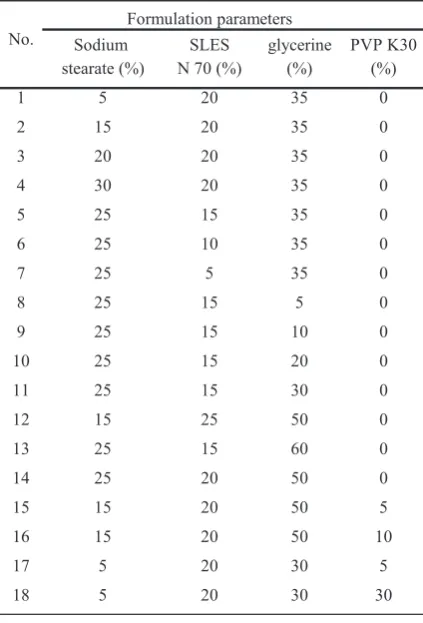
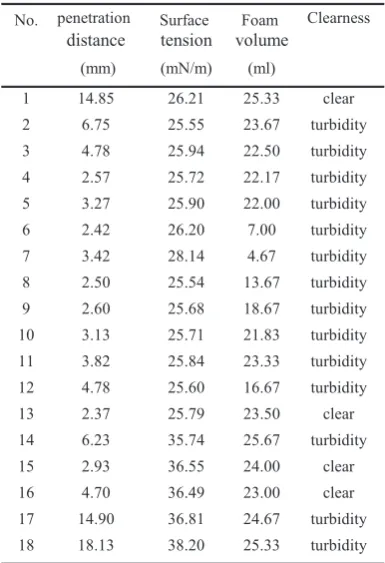
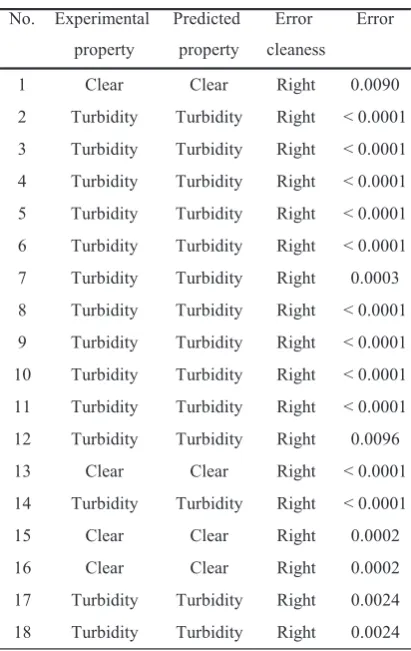
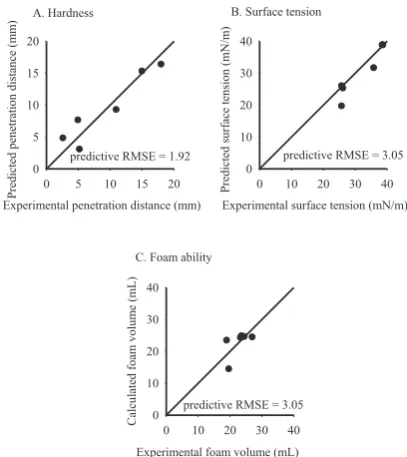
Development of Artiicial Neural Network on Transparent Soap Base Containing Sonneratia caseolaris Extract
S. Piriyaprasarth, G. Chansiri, T. Phaechamud, and S. Puttipipatkhachorn Indented Longan Detection with Computer Vision-based Software in Consideration of Roundness Value
P. Poonnoy
Antimicrobial Resistance Proile of Escherichia coli Isolates From Fattening Pigs in Khon Kaen Province, Thailand
P. Sornplang, N. Na-ngam, and S. Angkititrakul
Improvement of Rheological and Functional Properties of Defatted Rice Bran Protein Bioplastic by Kraft Lignin Addition
P. Rattanatham, T. Kunanopparat, and S. Siriwattanayotin
Mangiferin and Antioxidant Capacity from Mango (Mangifera indica L.) Leaves Extracts P. Kitbumrungsart, O. Suntornwat, and K. Rayanil
Preliminary Investigation of Biodiesel Wastes Utilization in Bacterial Fermentation C. Sinprasertchok, A. Thanapimmetha, M. Saisriyoot and P. Srinophakun
Identiication of Sugarcane Somaclones Derived from Callus Culture by SSR and RAPD Markers Analysis
S. Thumjamras, S. Iamtham, R. Lersrutaiyotin and S. Prammanee
Potential of Six Plant Species for Food Processing Wastewater Treatment in Wetland P. Sohsalam
Phosphorus Accumulation in Wetland for Food Processing Wastewater Treatment P. Sohsalam and S. Klangkongsup
Identifying Parameters Inluencing Growth and Astaxanthin Production by Xanthophyllomyces dendrorhous Cultivated in Pineapple Juice Concentrate Base Low Cost Medium
S. Abdullah, K. Poomputsa, P. Mekvichitsaeng, V. Ruanglek and S. Akeprathumchai 1.
2.
3.
4.
5.
6.
7.
8.
9.
10.
11.
12.
13.
14.
11
16
22
29
35
42
51
56
62
67
71
77
83
5 Thai Journal of Agricultural Science : Vol. 44 Iss.5 Spcl. Iss. 2011
Carotenoids Production from Red Yeasts Using Waste Glycerol as a Sole Carbon Source A. Manowattana, C. Techapun, P. Seesuriyachan and T. Chaiyaso
Studying the Genomic Function of Rice β-glucosidase via RNA Interference D.T.T. Tam and M. Ketudat-Cairns
Bioactivities of Carica papaya Latex Extract
C. Bandasak, S. Rawdkuen, P. Pintathong and P. Chaiwut
Extraction of Phenolic Antioxidants From Peels and Seeds of the Royal Project’s Fruits T. Sroimori, S. Srisunton, S. Rawdkuen, P. Pintathong and P. Chaiwut
Antioxidant Capacity and Total Phenolic Content of Moringa oleifera Grown in Chiang Mai, Thailand
W. Wangcharoen, and S. Gomolmanee
Expression Analysis of Na+/ H+ Exchanger and Monosaccharide Transporter Genes in Rice Suspension Cells Under Salt Stress
K. Mahasal, A. Chaopaknam and B. Ngampanya
Determination of Relationships and Genetic Variation Among Amorphophallus sp. From Northern Part of Thailand
O. Mekkerdchoo, P. Holford, G. Srzednicki, C. Prakitchaiwattana, C. Borompichaichartkul and S. Wattananon
Process Optimization of Anhydrous Ethanol Production Using Vapor Permeation (VP) and Pressure Swing Adsorption (PSA) Techniques
S. Pimkaew, S. Kanchanatawee, and A. Boontawan
Tangerine Quality Monitoring by Ethanol Concentration Measurement
S. Wongsila, W. Kumpoun, A. Gardchareon, D. Wongratanaphisan and S. Choopun Screening for Physical Stability of Nanoemulsions Containing Plai Oil
by Box-Behnken Desig
S. Manchun, S. Piriyaprasarth, and P. Sriamornsak
Effect of Ozone on Oxidative Stress Defense Enzymes and Quality Changes in Tangerine (Citrus reticulata Blanco cv. Sai Nam Pung) Fruit
P. Boonkorn, H. Gemma, S. Sugaya, S. Setha, J. Uthaibutra, and K. Whangchai Effects of Prebiotics on Growth Performance and Pathogenic Inhibition in
Sex-Reversed Red Tilapia (Oreochromis niloticus × Oreochromis mossambicus) V. Plongbunjong, W. Phromkuntong, N. Suanyuk, B. Viriyapongsutee and S. Wichienchot
Validation of Modiied QuEChERS Method for Simultaneous Determination of Organophosphates and Carbamates in Mangosteens by LC-MS/MS
W. Meecharoen, N. Tayaputch, V. Pitiyont and N. Leepipatpiboon
Effect of Seed Development on Seed Quality of Physic Nut (Jatropha curcas Linn.) S. Ngamprasitthi, S. Juntakool, I. Sooksatan, S. Sukprakarn and S. Techapinyawat Reduction of Residual Chlorpyrifos on Harvested Bird Chillies
(Capsicum frutescens Linn.) Using Ultrasonication and Ozonation
S. Pengphol, J. Uthaibutra, O. A. Arquero, N. Nomura and K. Whangchai 15.
16.
17.
18.
19.
20.
21.
22.
23.
24.
25.
26.
27.
28.
29.
95
101
106
113
118
125
129
137
144
148
155
162
168
175
6 Thai Journal of Agricultural Science : Vol. 44 Iss.5 Spcl. Iss. 2011
Antioxidant Activities of Curcumin-metal Complexes A. Thakam and N. Saewan
Lactic Acid Bacteria from Thai Fermented Meat Products as Biological Control Agents against Anthracnose Disease
Bussaman P., Sa-uth C. , Tonsao A., Sawangkeaw A., Rattanasena P. Antimicrobial Activity of Agricultural By-products Extracts Against Vibrio spp.
S. Charoenrak, S. Boonprasop, P. Sutthirak, and N. Wongmongkol
Quality Attribute and Antioxidant Activity Changes of Jerusalem Artichoke Tubers (Helianthus tuberosus L.) During Storage at Different Temperatures
T. Plangklang and R. Tangwongchai
Seed Soaking with Three Essential Oils from Herbal Plants for Controlling Sclerotium rolfsii Sacc. Causing Damping – off Disease in Tomato
R. Duamkhanmanee
Effect of Ozone and Vapor Phase Hydrogen Peroxide Fumigation on the Control of Postharvest Diseases of Longan Fruit (Dimocarpus longan Lour.)
K. Whangchai, N. Nuanaon and J. Uthaibutra
Development of Shellac From Source Available in Thailand as an Alternative Polymer for Postharvest Treatment
D. Panchapornpon, C. Limmatvapirat, J. Nunthanid, M. Luangtana-Anan P. Sriamornsak, S. Puttipipatkhachorn and S. Limmatvapirat
Nanoemulsions Containing Volatile Oils as Novel Antimicrobial for Oral Health Care Products
S. Pengon, C. Limmatvapirat, S. Limsirichaikul and S. Limmatvapirat
Effect of Bio-extract as Microbial Inoculum on Composting of Cassava Leaves and Stems P. Feunganksorn, S. Akeprathumchai and S. Tripetchkul
Anti-aging Cosmetics from Schizophyllum commune Fries
P. A. Pirshahid, C. Phromtong, S. Laovitthayanggoon, Y. Khamphan, T. Hemthanon, P. Chueboonmee, J. Eiamwat and V. Arunpairojana
Preparation and Characterization of Shellac/PVP Iodine Blend as Antimicrobial Film Patch T. Thammachat, C. Limmatvapirat, S. Limsirichaikul and S. Limmatvapirat Medium Optimization for Antimicrobial Compound Production by an Endophytic Fungus of Stemona burkillii for Plant Pathogenic Control
T. Pairoj, N. Ratnarathorn, J. Anu-aun and T. Vichitsoonthonkul Varietal Cross Heterosis of Thein Waxy Corn
K. Boonlertnirun, R. Suvannasara, and S. Boonlertnirun
Factors Affecting on the Enhancement of Mechanical Properties of Composite Edible Film based on Shellac and Gelatin
S. Soradech, J. Nunthanid, P. Sriamornsak, S. Limmatvapirat and M. Luangtana-anan
30.
31.
32.
33.
34.
35.
36.
37.
38.
39.
40.
41.
42.
43.
188
194
200
204
213
219
224
230
236
242
247
252
256
7 Thai Journal of Agricultural Science : Vol. 44 Iss.5 Spcl. Iss. 2011
Off-lavor in Tilapia (Oreochromis niloticus) Reared in Cages and Earthen Ponds in Northern Thailand
N. Whangchai, S. Wigraiboon, K. Shimizu, N. Iwami and T. Itayama Effect of Germination on Antioxidative Property of Pigmented and
Non-Pigmented Rice
S. Jiapong, R. Singanusong, and S. Jiamyangyuen
Antioxidant and Anti-inlammatory Activities of Freshwater Macroalga, Cladophora glomerata Kützing
D. Amornlerdpison, K. Mengumphan, S. Thumvijit and Y. Peerapornpisal Packaging Development to Support Export Supply Chain of Mangosteen Fruit
S. Sugiyono and I.M Edris
Effect of Drying Conditions on Isolavones and α-Glucosidase Inhibitory Activity of Soybean [Glycine max (L.) Merrill]
C. Niamnuy, M. Nachaisin and S. Devahastin
Stability and Rheological Properties of Fat-Reduced Mayonnaises Containing Modiied Starches as Fat Replacer
K. Khantarat and S. Thaiudom
Mathematical Models for Electrical Conductivities of Fresh Juices, Concentrated Juices and Purees undergoing Ohmic Heating
T. Tumpanuvatr and W. Jittanit
Contamination of Acrylamide in Thai-conventional Foods From Nong Mon Market, Chonburi
P. Komthong, O. Suriyaphan, and J. Charoenpanich Antimicrobial Activities of the Edible Bird’s Nest Extracts Against Food-borne Pathogens
W. Saengkrajang, N. Matan, and N. Matan
Evaluation of Oxidative Stability and Some Quality Characteristics of Chinese-Style Sausage as Affected by the Addition of Roselle Extract and Different Sweeteners
T. Parinyapatthanaboot and P. Pinsirodom
Rapid and Highly Sensitive Analysis of Ethoxyquin Residues in Shrimp Using Ultra High Performance Liquid Chromatography-Tandem Mass Spectrometry
S. Chikakul and N. Leepipatpiboon
Changes in Cooking Behavior of Organic and Inorganic Phatthalung Sungyod Rice During Ageing
I. Keawpeng and M. Meenune
Extraction of Collagen from Hen Eggshell Membrane by Using Organic Acids W. Ponkham, K. Limroongreungrat and A. Sangnark
Farinograph and Extensograph Properties of Frozen Dough Added With Psyllium Husk Powder or Locust Bean Gums
S.Y Sim, A.A.N Aziah, T.T Teng, L.H Cheng 44.
45.
46.
47.
48.
49.
50.
51.
52.
53.
54.
55.
56.
57.
Food Science and Technology
299
270
277
283
292
300
304
312
319
326
331
341
348
354
8 Thai Journal of Agricultural Science : Vol. 44 Iss.5 Spcl. Iss. 2011
Extraction and Characterization of Acid-soluble Collagen from Skin of Striped Catish (Pangasianodon hypophthalmus)
W. Wongwien, N. Srichan, S. Rawdkuen and N. Thitipramote
Antioxidant Activity of Plant by-Products (Pink Guava Leaves and Seeds) and Their Application in Cookies
W. Z.Wan Nur Zahidah, A. Noriham and M.N. Zainon.
Infrared and Hot Air Drying of Mullet Fish: Drying Kinetics, Qualities and Energy Consumption
Y. Tirawanichakul, S. Kaseng and S. Tirawanichakul One and Two-Stage Drying of Shrimp using Hot Air and Infrared: Quality Aspect and Energy Consumption
S. Tirawanichakul and Y. Tirawanichakul
Development of a Composite Tubular Membrane for Separation of
Acetone-Butanol-Ethanol (ABE) from Fermentation Broth by using Pervaporation Technique W. Inthavee, S. Kanchanatawee and A. Boontawan
Effect of High-Pressure Microluidization on the Structure and Properties of Waxy Rice Starch
K. Kasemwong, K. Meejaiyen, S. Srisiri and T. Itthisoponkul
Determination of Multiclass Pesticides in Onion Using Gas Chromatography with Tandem Mass Spectrometry (GC-MS/MS)
T. Semathong and N. Leepipatpiboon
Effect of Nutrients in Trypticase Soy Agar on Growth Kineticsof Salmonella spp. under Micro-Cultivation
W. Sangadkit, W. Saeaung, A. Boonyaprapasorn and A. Thipayarat Assessing Awareness on Food Quality and Safety among Food Small and Medium-Size Enterprises in Thailand
V. Suwanpidokkul and C. Waisarayutt
Use of Viscozyme L for Pre-treatment of Coconut Prior to Extraction by Screw Press N. Krasaechol, S. Chinnasarn, T. Itthisoponkul and W. Yuenyongputtakal Spoilage Bacteria Changes During Storage of Oyster (Crassostrea belcheri) in Ice-bath
S. Manatawee, N. Boonprasop, S. Boonprasop and P. Sutthirak
Water Sorption Isotherm and Thermo-Physical Properties for the Analysis of Natural Rubber Drying
J. Tasara, S. Tirawanichakul and Y. Tirawanichakul
Fast and Less Thermal Degradation Protocol for Chromocult® Coliform Agar (CCA) Preparation to Detect E. coli
P. Supanivatin, J. Khueankhancharoen, W. Saeung and A. Thipayarat Microbiological Quality of Fresh Cockle (Anadara granosa) During Storage at Room Temperature
P. Sutthirak and S. Boonprasop 58.
59.
60.
61.
62.
63.
64.
65.
66.
67.
68.
69.
70.
71.
369
374
384
391
400
408
415
422
430
440
443
447
459
9 Thai Journal of Agricultural Science : Vol. 44 Iss.5 Spcl. Iss. 2011
Cloning of Beta-Galactosidase Gene from Lactobacillus delbrueckii subsp. bulgaricus TISTR 892 and Expression in Escherichia coli
W. Srila, B. Ngampanya and P. Jaturapiree
Chemical Compositions of Eggs from Chicken, Quail and Snail-Eating Turtle T. Tunsaringkarn, W. Siriwong and W. Tungjaroenchai
Crude Malva Nut Gum Affects Pasting and Textural Properties of Wheat Flour in the Presence or Absence of Sodium Chloride
Y. Phimolsiripol, U. Siripatrawan and C. J. K. Henry
Puriication and Characterization of Microbial Transglutaminase from Enterobacter sp. C2361
C. Bourneow, S. Benjakul and A. H-Kittikun
Effect of Adding Ling-zhi (Ganoderma lucidum) on Oxidative Stability, Textural and Sensory Properties of Smoked Fish Sausage
W. Wannasupchue, S. Siriamornpun, K. Huaisan, J. Huaisan, and N. Meeso Study on Preparation and Quality of Tomato Crispy Crackers
N. Panyoyai, S. Sanjai and P. Mungkan
Effect of the Physical Properties on Consumer Preference of Nuggets
P. Nantapatavee, A. Jangchud, K. Jangchud, J. Lin and T. Harnsilawat Simple Fed–Batch Technique for the Production of Recombinant Enterokinase Light Chain By Pichia pastoris
N. T. T. Dung, M. Ketudat-Cairns, and A. Boontawan
Structure Characterization and Molecular Docking Studies of α-Amylase Family-13 Glycosyl Hydrolases from Lactobacillus plantarum Complexed with Maltoheptaose: a Novel Feature of α-Amylase Catalytic Mechanism
W. Bomrungnok, N. Khunajakr, A. Wongwichan, T. Dussadee, R. Saiprajong and S. Pinitglang
Origin of Proteolytic Enzymes Involved in Production of Malaysian Fish Sauce, Budu N. Y. Fen, A. T. Sali, R. Ahmad, L. M. Tze and W. N. W. Abdullah
Simple Determination of Ochratoxin A in Rice by Ultra Performance Liquid Chromatography Coupled with Mass-Spectrometry
K. Sanguankaew and N. Leepipatpiboon
A Comparative Study of Rice Production and Trade Dynamics between Thailand and Vietnam
N. L. Bach and N. Hempattarasuwan
Thai Consumer Willingness to Pay for Genetically Modiied Rice W. Udomroekchai and Y. Chiaravutthi
Agribusiness and Management
555
List of ICAAI2010 Committee
570
72.
73.
74.
75.
76.
77.
78.
79.
80.
81.
82.
83.
84.
471
478
487
496
505
513
519
526
534
542
548
556
www.thaiagj.org
The Influence of the Interaction between Jasmonates, Ethylene, and
Polyamines on Fruit Quality
S. Kondo* and M. Kittikorn
Graduate School of Horticulture, Chiba University, Japan *Corresponding author. E-mail: [email protected]
Abstract
Jasmonates (jasmonic acid and methyl jasmonate) could regulate ethylene biosynthesis. The expression of the ACC synthase (ACS) 1 and ACC oxidase (ACO) 1 genes increased in pears (Pyrus communis L.) treated by n-propyl dihydrojasmonate (PDJ) at the preclimacteric stage. However, the accumulations of ACS1 mRNA decreased in the fruit treated by PDJ at the climacteric stage. Jasmonate treatment also influenced aroma volatiles (alcohols and esters) and anthocyanin formation as well as ethylene in apples (Malus domestica Borkh.). Jasmonates stimulated anthocyanin accumulation in the skin related to ethylene action. The PDJ or polyamine treatment decreased low-temperature damages such as splitting in apple fruit. The EC50 values of DPPH radial-scavenging activity in PDJ-treated or polyamine-treated fruit after a low-temperature treatment were lower than in the untreated control.
Keywords: aroma volatile, ethylene, environmental stress, jasmonic acid, polyamine
Introduction
Phytohormones have a correlation each other. For example, 2, 4-DP application before harvest increased ethylene production in fruit and promoted fruit ripening (Kondo and Hayata, 1995; Kondo et al., 2006). Auxin influences 1-Aminocyclopropane-1-carboxylate (ACC) synthase in the ethylene pathway (Ishiki et al., 2000). In tomatoes, ACC synthase cDNAs for ACS1, 2, 3, 4, 5, 6, 7, and 8 have been isolated (Sato and Mizuno, 2003). The levels of the expression of their mRNAs differed with factors such as wounding and flooding. In pears, PcACS1 and ACC oxidase PcACO1 mRNA accumulations were observed in rewarmed fruit after low temperature treatment (Lelievre et al., 1997). These facts imply
that MdACS1 and MdACO1 may be related to the fruit ripening. But the ACS genes of messenger RNA (mRNA) increased by the auxin application differed among fruits (Ishiki et al., 2000). In this report, the interaction between jasmonates, ethylene, and polyamine on fruit quality is discussed.
The Effects of Jasmonates and Ethylene on Aroma Volatile Compounds and Antioxidant Activity in Fruit
12 Thai Journal of Agricultural Science
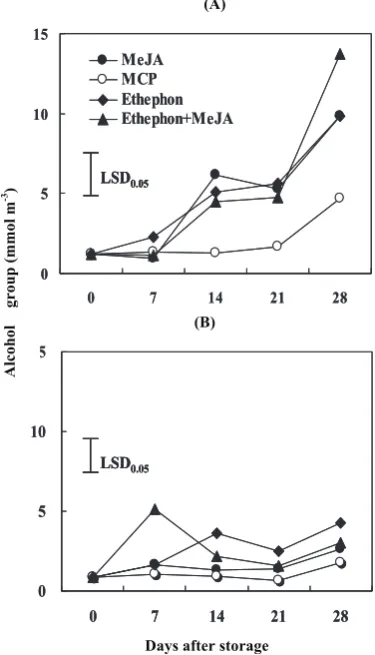
alcohols, esters, and ketones increase gradually toward ripening; however, their concentrations were the lowest in 1-MCP-treated fruit (Kondo et al.,2005). Furthermore, volatile compounds in 1-MCP-treated fruit did not increase greatly. This was true even at ripening. These results suggest that 1-MCP inhibits the production of volatile compounds. Volatile compounds in apples, produced by lipid and amino acid catabolism, are heptacosan were greater in immature fruit skin (Noro et al., 1985). Thus, the late-forming lipids may be associated with aroma volatile synthesis during fruit ripening. Ranjan and Lewak (1995) ethylene inhibition properties, through suppression of enzyme activity. Aroma volatiles in mangoes increased with the application of jasmonates (Lalel et al., 2003). However, Kondo et al. (2005) demonstrated that the effect of jasmonates on aroma volatile production was dependent on the developmental stage of the fruit. Jasmonates may decrease volatile compound production when applied at the climacteric stage. In contrast, jasmonate application at the pre-climacteric stage may stimulate aroma volatile production, as well as the relationship between ethylene and aroma volatiles in alcohols and esters (Fig. 1).
Figure 1 Effects of jasmonate application on total alcohol production in apples.
A: Pre-climacteric, B: Climacteric
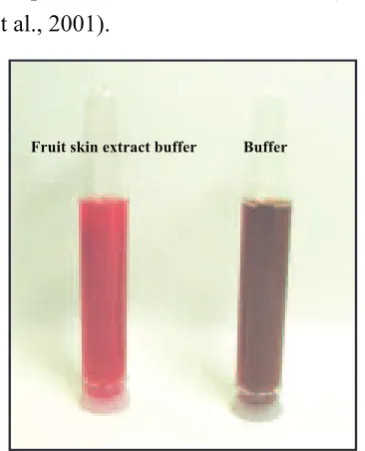
Furthermore, jasmonate application at the pre-climacteric stage could increase anthocyanin formation in apple skin (Kondo et al., 2001). It is known that the anthocyanin, which is a kind of polyphenolics, is an effective antioxidant. For instance, the hemolysis of red blood cells was delayed in the buffer including solution extracted from the skin of apples compared to the only buffer (Fig. 2). Ethylene is associated with anthocyanin formation in apple skin (Kondo and Hayata, 1995). In addition, jasmonates could stimulate anthocyanin accumulation in the skin related to ethylene action because a combination of jasmontes and AVG (an inhibitor of ACC synthase) increased anthocyanin concentrations,
(A)
13 Vol. 44, No.5, Spcl. Iss. 2011 Jasmonates, ethylene, and polyamines
compared to the untreated control (Kondo et al., 2001).
Figure 2 Effect of fruit skin extract on the hemolysis of red blood cells induced by a peroxyl radical generator (AAPH).
The Effect of Jasmonates on Ethylene Production in Fruit
The changes of jasmonates differed between climacteric and non-climacteric fruit (Kondo et al., 2000; Kondo and Fukuda, 2001). Jasmonate concentrations increased at the ripening stage in climacteric fruit, but did not in non-climacteric fruit. In addition, the interactions between ethylene and jasmonates have been also reported in fruit. MeJA application at the pre-climacteric stage increased ethylene production in apples (Saniewski et al., 1988), but production decreased when MeJA was applied at the climacteric stage (Miszczak et al., 1995).
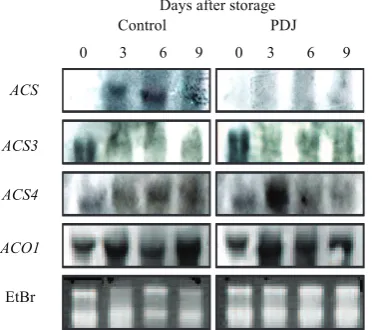
PDJ application also influenced the ACS activity, ACC concentration, and the ACO activity at the pre-climacteric stage (Kondo et al., 2007). In PDJ-treated fruit at the pre-climacteric stage, an expression of the ACS1 and ACO1 mRNA was
increased (Fig. 3). However, at the climacteric stage in pears, the expression of ACS1 and ethylene production was decreased in PDJ-treated fruit (Fig. 4; Kondo et al., 2007). These results suggest that jasmonate application may regulate ethylene synthesis of system 2 through the action of ACS1.
Figure 3 Northern blots from ‘La France’ pear skin at the pre-climacteric stage.
Chilling injury is generally caused by membrane damages based on cellular dehydration (Thomashow, 1999). Furthermore, membrane damage is caused by the freeze-induced production of reactive oxygen (McKersie and Bowley 1998). The production of reactive oxygen is induced by environmental factor such as low temperature (Matsui and Li, 2003). The treatments of PDJ or spermine decreased low-temperature injuries such as splitting and spotting in apple fruit (Yoshikawa et al., 2007). The EC50 of DPPH-radical scavenging activities in PDJ-treated fruit at 5 days after the low-temperature treatment was lower than in the untreated control at 20 ºC and -2 ºC (Fig. 5). It has been shown that phytohormone influenced low-temperature tolerance in rice cultivars.
Fruit skin extract buffer Buffer
Control PDJ 0 3 6 9 0 3 6 9
0 1ACS 1
ACS 3
ACS 4
ACO 1 EtBr
14 S. Kondo and M. Kittikorn Thai Journal of Agricultural Science
Figure 4 Northern blots from ‘La France’ pear skin at the climacteric stage. Effect of jasmonates and polyamines on low temperature stress in the fruit.
That is, an increase of ABA or putrescine concentrations was observed in low temperature-tolerant cultivars but not in low-temperature sensitive cultivars when they were put at -5 ºC (Lee at al., 1995). Low temperatures below -2 ºC can induce frost damage such as splitting of the fruit. By applying PDJ or spermine, the rate of fruit damage caused by low temperatures was reduced from 14% to 10% (Yoshikawa et al., 2007). This coincided with an increase of endogenous ABA concentrations. The result that ABA increased in PDJ- or spermine-treated fruit suggests that these treatments may be effective for increasing low- temperature tolerance. When stored at -2 ºC, the fruit’s endogenous JA concentrations declined more slowly. However, in Spm-treated fruit, the concentration either showed significant difference or decreased when compared to untreated fruit at -2 ºC (Yoshikawa et al., 2007). This result shows that polyamine may reduce the increase of JA by increasing the tolerance of the fruit to low temperature. Therefore, the low-temperature tolerance induced by the jasmonate application may occur through polyamine.
Figure 5 EC50 values of DPPH-radical scavenging
activity in apple fruit at -2ºC and 20ºC.
Conclusions
The interactions between jasmonates and ethylene could influence fruit quality, although the effect differed with the stage of fruit ripening. The changes in physiological active substances including jasmonates, ethylene, and polyamine correlate with and environmental stress and changes in genes. These genes were also affected by both environmental factors and phytohormones. Although environmental conditions significantly influence plant response, in many cases reactions are caused by changes in phytohormones. Plant reactions can be regulated by exogenous treatments of phytohormones, as well as regulation of environmental conditions. During the cultivation process of agricultural crops, environmental stresses such as drought and low temperatures induce plant dormancy. This is a kind of self-defense reaction of the plant to environmental stress and simultaneously jasmonate or ethylene levels increase dramatically.
References
Blankenship, S.M. and Dole, J.M. 2003. 1-methylcyclopropene: a review. Postharvest Biol.
15 Vol. 44, No.5, Spcl. Iss. 2011 Jasmonates, ethylene, and polyamines
Technol. 28: 1-25.
Ishiki, Y., Oda, A., Yaegashi, Y., Orihara, Y., Arai, T., Hirabayashi, T., Nakagawa, H. and Sato, T. 2000. Cloning of an auxin-responsive 1-amonocyclopropane-1-carboxylate synthase gene (CMe-ACS 2) from melon and the expression of ACS genes in etiolated melon seedlings and melon fruits. Plant Sci. 159: 173-181.
Knee, M. and Hatfield, S.G.S. 1981. The mechanism of alcohols by apple fruit tissue. J. Sci. Food Agr. 32: 593-600.
Kondo, S. and Fukuda, K. 2001. Changes of jasmonates in grape berries and their possible roles in fruit development. Scientia Hort. 91: 275-288.
Kondo, S. and Hayata, Y., 1995. Effects of AVG and 2, 4-DP on preharvest drop and fruit quality of ‘Tsugaru’ apples. J. Jpn. Soc. Hort. Sci. 64: 275-281.
Kondo, S., Isuzugawa, K., Kobayashi, S. and Mattheis, J. P. 2006. Aroma volatile emission and expression of 1-aminocyclopropane-1-carboxylate (ACC) synthase and ACC oxidase genes in pears treated with 2, 4-DP. Postharvest Biol. Technol. 41: 22-31.
Kondo, S., Setha, S., Rudell, D.R., Buchanan, D.A. and Mattheis, J.P. 2005. Aroma volatile biosynthesis in apples affected by 1-MCP and methyl jasmonate. Postharvest Biol. Technol. 36: 61-68.
Kondo, S., Tomiyama, A. and Seto, H. 2000. Changes of endogenous jasmonic acid and methyl jasmonate in apples and sweet cherries during fruit development. J. Amer. Soc. Hort. Sci. 125: 282-287.
Kondo, S., Tsukada, N., Niimi, Y. and Seto, H. 2001. Interactions between jasmonates and abscisic acid in apple fruit, and stimulative effect of jasmonates on anthocyanin accumulation. J. Jpn. Soc. Hort. Sci. 70: 546-552.
Kondo, S., Yamada, H. and Setha, S. 2007. Effect of jasmonates differed at fruit ripening stages on 1-aminocyclopropane-1-carboxylate (ACC) synthase and ACC oxidase gene expression in pears. J. Amer. Soc. Hort. Sci. 132: 120-125.
Lalel, H.J.D., Singh, Z. and Tan, S.C. 2003. The role of methyl jasmonate in mango ripening and biosynthesis of aroma volatile compounds. J. Hort. Sci. Biotech. 78: 470-484.
Lee, T.M., Lur, H.S. and Chu, C. 1995. Abscisic acid and putrescine accumulation in chilling-tolerant rice cultivars. Crop Sci. 35: 502-508.
Lelievre, J. M., Tichit, L., Dao, P., Fillion, L., Nam, Y. W., Pech, J. C. and Latche, A. 1997. Effects of chilling on the expression of ethylene biosynthetic genes in Passe-Crassane pear (Pyrus communis L.) fruits. Plant Mol. Biol. 33: 847-855.
McKersie, B.D. and Bowley, S. R. 1998. Active oxygen and freezing tolerance in transgenic plants. pp. 203-214. In Li P.H. and Chen, T.H.H. eds., Plant Cold Hardness. Molecular Biology, Biochemistry and Physiology. Plenum Press, New York.
Matsui, S. and Li, J. 2003. Environmental stress for crops and their antioxidative mechanisms. Regul. Plant Growth Dev. 38: 118-124. Miszczak, A., E. Lange, M. Saniewski, and J.
Czapski. 1995. The effect of methyl jasmonate on ethylene production and CO2
evolution in Jonagold apples. Acta Agrob. (Agrobotany) 48:121-128.
Noro, S., Kudo, N. and Kitsuwa, T. 1985. Changes of lipids of ‘Jonagold’ apple peel in the harvest time. J. Jpn. Soc. Hort. Sci. 54. 116-120.
Ranjan, R. and Lewak, S. 1995. Interaction of jasmonic acid and abscisic acid in the control of lipases and proteases in germinating apple embryos. Physiol. Plant. 93: 421-426. Rudell, D.R., Mattinson, D.S., Mattheis, J.P.,
Wyllie, S.G. and Fellman, J.K. 2002. Investigations of aroma volatile biosynthesis under anoxic conditions and in different tissues of ‘Redchief Delicious’ apple fruit (Malus domestica Borkh.). J. Agr. Food Chem. 50: 2627-2632.
Saniewski, M., J. Nowacki, E. Lange, and J. Czapski. 1988. The effect of methyl jasmonate on anthocyanin accumulation, ethylene production and ethylene-forming enzyme activity in apples. Fruit Sci. Rpt. 15:97-102.
Sato, T. and Mizuno, S. 2003. Regulation mechanisms of ethylene biosynthesis in higher plants. Regul. Plant Growth Develop. 38, 187-202.
Thomashow, M. F. 1999. Plant cold acclimation; freezing tolerance genes and regulatory mechanisms. Ann. Rev. of Plant Physiol. Plant Mol. Boil. 50: 571-599.
Yoshikawa, H., Honda, C. and Kondo, S. 2007. Effect of low-temperature stress on abscisic acid, jasmonates, and polyamines in apples. Plant Growth Regul. 52: 199-206
www.thaiagj.org
Physiological and Phytochemical Changes in Cayenne Pepper
V. Srilaong1,2* and N. Kaewkhum1
1Postharvest Technology Program, School of Bioresources and Technology King Mongkut’s University of Technology Thonburi, Bangkok 10140 Thailand
2Postharvest Technology Innovation Center
*Corresponding author. E-mail: [email protected]
Abstract
Cayenne pepper (Capsicum annuum Linn. Var acuminatum Fingerh) is widely consume in Thailand, however information about its phytochemical components is still limited. Thus, this research aimed to study the changes in physiological and phytochemical components in two cultivars of cayenne pepper during the postharvest period. Green and red cayenne peppers were harvested from a commercial orchard in the central part of Thailand. The peppers were kept at 4oC for 30 days and samples were withdrawn for analysis every 5 days. It was found that red cayenne pepper had a higher antioxidant activity (DPPH radical scavenging activity) than green cayenne pepper. This was concomittant with a higher abundance of total phenolic compounds, ascorbic acid and β-carotene contents in green cayenne pepper compared with the red one. Respiration and ethylene production rates of green cayenne pepper were higher than that of the red cultivar. The content of total phenolic compounds and β-carotene in both green and red cayenne peppers decreased after day 20 of storage, while ascorbic acid content slightly increased. Based on the antioxident contents, a consumption of red cayenne pepper would appear to provide a greater health benefit than consumption of the green cultivar.
Keywords: antioxidant activity, ascorbic acid, β-carotene, Cayenne pepper
Introduction
Nowadays, consumers tend to eat more fresh fruit and vegetables than previously, and this is linked with a belief that fresh fruit and vegetables are enriched with antioxidative compounds which can eliminate or scavenge the free radical in our bodies. Many fruit and vegetables produced in tropical regions are rich in plant pigments which have free radical scavenging properties and act as electron donors to unpaired electrons of reactive oxygen species. Chili is widely
17 Vol. 44, No.5, Spcl. Iss. 2011
peppers. Previous reports found that chili contains high amounts of vitamin C and carotene (provitamin A). In addition, it is a good source of vitamin B6 and is very high in potassium, magnesium, and iron. Moreover, chilis are rich in phenolic compounds which accumulate in the form of pigments such as anthocyanin and flavonoids. The bioactive compounds in chili are believed to promote a healthy human body by dilating the blood vessels, cleansing the mucus lining and lowering blood cholesterol. Research in humans found that, with the intake of capsaicin (a hot compound in chili), the LDL or bad cholesterol actually resisted oxidation for a longer period. This reduced the risks of heart attacks and strokes.
In Thailand, Cayenne pepper is a widely used species of hot chili. Most of the research in the past has focused on the advantages of red hot chili. However, a few studies have deal with the nutritional and postharvest research of Cayenne pepper. Thus the objective of this research was to study changes in the physiology and phytochemicals of Cayenne pepper during the postharvest period.
Materials and Methods
Plant Material Preparation
Red and green Cayenne peppers (Capsicum annuum Linn. var acuminatum Fingerh) were harvested at commercial maturity from an orchard in Nontaburi Province, Thailand. The fruit were transported to the Postharvest Technology
laboratory at King Mongkut’s University of Technology Thonburi within 3 hours after harvesting and then were selected for uniformity of maturity, color and size, and also freedom from any defects and diseases. The selected red and green Cayenne peppers were cleaned with running tap water and left to dry under ambient condition for 30 minutes after which the fruit were stored separately (red and green) in plastic basket covered with a polyethylene bag at 4oC (90-95% RH). Samples of red and green Cayenne peppers were taken every 5 days for physiological and phytochemical analysis during the storage period of 30 days. Respiration and ethylene production rates were monitored and total phenol content, total ascorbic acid content, β-carotene content and DPPH radical scavenging activities were measured
Respiration and Ethylene Production The rate of ethylene production was measured by gas chromatography, using a flame ionization detector (FID) equipped with an 80/100-mesh Pora pack-Q column with nitrogen as the carrier gas. The Cayenne peppers were kept in plastic chambers and incubated at 4oC for 3 h after which a gas sample (1 mL) was taken with a syringe. Respiration rates were also determined by gas chromatography using a 80/100-mesh Pora pack-Q column and a thermal conductivity detector (CHROMA- TOPAC C-R 8A, SHIMADSU Co., Kyoto, Japan).
18 Thai Journal of Agricultural Science
Total Phenol Content
Total soluble phenolic compounds were measured using the method of Singleton and Rossi (1965). Extracts were separately prepared from the top (around the calyx), the middle, and the bottom part of the fruit with 3 replications. Two grams of fruit sample were homogenized with 20mL of 80% ethanol for 1 min. The extract was then filtered and centrifuged at 10,000×g for 15min. One millilitre of the supernatant was mixed with 1mL of Folin Ciocalteu reagent (Sigma– Aldrich, Buchs, Switzerland) and 10mL of 7% sodium carbonate. The volume was increased to 25 mL with distilled water and left to settle for 1 h. The total phenolic content was then read at 750nm using a spectro-photometer (UV-1601; Shimadsu Co., Kyoto, Japan). A standard curve of gallic acid was used to quantify the total phenolic content.
Total Ascorbic Acid Content
The total ascorbic acid content was measured according to the method of Hashimoto and Yamafuji (2001). Five millilitres of fruit juice were mixed with 20mL of cold 5% metaphosphoric acid, and filtered through Whatman No. 1 paper. A 0.4mL aliquot of the filtrate was mixed with 0.2 mL of 2% di-indophenol. The mixture was then added to 0.4mL of 2% thiourea and 0.2mL of 1% dinitrophenol hydrazine, and incubated at 37oC for 3 h. After incubation, 1 mL of 85% sulphuric acid was added, and the resultant solution was incubated again at room temperature for 30 min. Total ascorbic acid was determined by measuring absorbance at 540 nm using a spectrophotometer (UV-1601; Shimadsu Co., Kyoto, Japan). The concentration of total ascorbic acid was
expressed in mg/100g on a fresh weight basis.
β-Carotene Content
Each 2g sample of tissue was placed in 50 ml of solution containing hexane:acetone:ethanol (2:1:1) and then homogenized and mixed ona magnetic stirrer for 10 min. To this homogenate was added 7.5 ml of distilled water and the solution again mixed on a magnetic stirrer for 5 min. The sample was allowed to form two phases with the upper phase being the hexane phase (25 ml) and the lower being a mixture of acetone and ethanol. The upper phase was collected and its absorbance was determined at 450 nm according to the method of Scott (2005).
DPPH Radical Scavenging Activity The DPPH assay was carried out according to the method of Brand-Williams et al. (1995) with some modifications. The stock solution was prepared by dissolving 24 mg DPPH with 100 mL methanol and this stock solution was stored at 20oC until needed. A working solution was obtained by mixing 10 mL of the stock solution with 45 mL methanol to obtain an absorbance of 1.1±0.02 units at 515 nm using the spectrophotometer. Fruit extracts (150 µL) were allowed to react with 2850 µL of the DPPH solution for 24 h in the dark. The absorbance was then taken at 515 nm. The standard curve was linear between 25 and 800 µM Trolox. Results are expressed in µM TE/g fresh mass. Additional dilution was needed if the DPPH value measured was over the linear range of the standard curve.
19 Vol. 44, No.5, Spcl. Iss. 2011
Results and Discussion
The respiration rates of both the red and green cayenne peppers showed the same pattern throughout the storage time of 30 days (Figure 1A). A peak of respiration was observed on day 15 in both pepper cultivars. Green cayenne pepper had a significantly higher rate of respiration than the red cultivar. The ethylene production rates of red and green cayenne peppers showed the same trend of change during storage. The maximum peak of ethylene evolution in green pepper was on day 10. In the red pepper, the ethylene production rate was lower and the peak was shifted to day 15 (Figure 1B). These results indicate that ethylene production rose after the initial day of storage whereas the respiration rate was changed little during the first ten days of storage. The later increase in respiration may have been induced by the ethylene production. Green cayenne pepper had higher respiration and ethylene production rates than the red cultivar. This may imply that green cultivar was an immature fruit while the red cultivar was a more mature fruit. Normally, the immature fruit have higher respiration and ethylene production rates than the mature fruit (Tadesse et al., 1998).
Total phenolic content in both red and green cayenne peppers was slightly decreased during 20 days of storage and then sharply declined through to the end of storage (Figure 2). The total phenolic content in the red pepper was higher than in the green cultivar. This may be due to the red pepper containing anthocyanin as its major pigment and anthocyanin is one class of flavonoid compounds, which are widely distributed plant polyphenols thus the total phenolic content in red pepper was greater compared to the
green one. This result was in contrast with the finding of Zhang and Hamauzu (2003) who determined that the phenolic content in green bell pepper was higher than in the red and yellow cultivars. The differences between the levels of phenolic compounds in the peppers in our study compared with the levels found by Zhang and Hamauzu (2003) may be due to the different cultivars of pepper examined and may also be influenced by differences in the environments in which peppers were grown, with the bell peppers being grown in a cooler climate than that of cayenne pepper. The β-carotene content in the green pepper was in the range of 7-11 mg gFW-1 while in the red pepper, the content was some two-fold higher, in the range of 15-30 mg gFW-1 (Figure 3). The content in the red pepper increased after day 10 to a peak at about day 20 then decreased to the end of storage. In contrast the content in green cayenne pepper did not change significantly across the period of storage. A similar observation was reported by Zhang and Hamauzu (2003) who reported that the carotenoid content in red and yellow bell peppers were greater than in green cultivar due to the carotenoid pigments.
Total ascorbic acid contents in both the red and green cayenne peppers changed little over the first 20 days of storage (Figure 4) but increased sharply to a peak at day 25 in the red pepper and remained higher than in the green pepper until the end of storage. In contrast, the content in the green pepper declined slowly from day 20 until the end of the storage period. As mentioned above, the green and red cayenne pepper were at different maturity stages, thus the red mature fruit had higher ascorbic acid contents than the less mature green Physiological and phytochemical
20 Thai Journal of Agricultural Science
pepper. Zhang and Hamauzu (2003) also found that red bell pepper contained higher ascorbic acid than the green cultivar.
Figure 1 Respiration (A) and ethylene production rate (B) of red and green cayenne peppers during storage at 4oC. The vertical bars indicate standard errors (n=3).
Figure 2 Changes in total phenolic contents in red and green cayenne peppers during storage at 4oC. The vertical bars indicate standard errors (n=3).
Figure 3 Changes in β-carotene contents in red and green cayenne peppers during storage at 4oC. The vertical bars indicate standard errors (n=3).
Antioxidant activity in this research was determined as the DPPH radical scavenging activity (Figure 5). There was little difference in DPPH radical scavenging activity between the two cultivars during the first 20 days of storage. However, after day 20 the DPPH radical scavenging activity in the red pepper increased to a higher level than in the green cultivar and was about 2-fold higher than in the green pepper by the end of study. The higher antioxidative activity in red pepper was related with a higher content of ascorbic acid, total phenolic compound and β-carotene.
Figure 4 Total ascorbic acid content in red and green cayenne peppers during storage at 4oC. The vertical bars indicate standard errors (n=3).
Figure 5 DPPH radical scavenging activity in red and green cayenne peppers during storage at 4oC. The vertical bars indicate standard errors (n=3).
Conclusions
Red cayenne pepper has higher antioxidant activity (DPPH radical scavenging activity) than green cayenne pepper due to its higher levels of total phenolic compounds, ascorbic acid and β-carotene. This higher antioxidant A
B
21 Vol. 44, No.5, Spcl. Iss. 2011
activity would suggest that consumption of the red cayenne pepper might gain more beneficial to human health than consumption of the green pepper.
References
Brand-Williams, W. M.E. Cuvelier and C. Berset. 1995. Use of free radical method to evaluate antioxidant activity. Lebensmittel Wissenschaft und Technologie. 28 : 25-30. Hashimoto, S. and K. Yamafuji. 2001. The
determination of diketo-L- gulonic acid, dehydro-L- ascorbic acid, and l- ascorbic acid in the same tissue extract by 2, 4- dinitrophenol hydrazine method. J. Biol. Chem. 174: 201-208.
Singleton, V.L. and J.L. Rossi. 1965. Colorimetry of total phenolics with phosphomolybdic-phosphotungstic acid reagents. Am. J. Enol. Vitic. 16: 144–158. Tadesse, T., Nichols, M.A. and Hewett, E.W.
1998. Ripening of attached and detached sweet pepper fruit cv. “Domino’. Acta Hort. 464:503-503
Wills, R., B. McGlasson, D. Graham, and D. Joyce. 1998. Postharvest: An Introduction to physiology & handling of fruit, vegetables & ornamentals. NUSW press, Australia. Zhang, D. and Y. Hamauzu. 2003. Phenolic compounds, ascorbic acid, carotenoids and antioxidant properties of green, red and yellow bell peppers. Food, Agriculture & Environment. 2: 22-27
Scott, J. 2005. Detection and measurement of caroteniods by UV/VIS spectrophotometry. In Hand Book of Food Analytical Chemistry. pp. 81-90.
Physiological and phytochemical changes in Cayenne pepper
www.thaiagj.org
Application of Chitosan for Reducing Chemical Fertilizer Uses
in Waxy Corn Growing
S. Boonlertnirun1 R. Suvannasara 1 P. Promsomboon2 and K. Boonlertnirun1
1Faculty of Agricultural Technology and Agro-industry, Rajamangala University of Technology Suvarnabhumi, Pranakhon Sri Ayuttaya province 13000, THAILAND 2Faculty of Agriculture and Natural resource, Rajamangala University of Technology
Tawan-ok, Sri Racha, Chon Buri province, 20110.
Corresponding author: E-mail: [email protected]
Abstract
Chitosan is abundant biopolymer found in nature. It has been used to stimulate plant growth and enhance crop yields. The objectives were to reduce chemical fertilizer uses in waxy corn growing and also conserve soil physical properties and environment. This experiment was conducted using a split plot in Randomized Complete Block Design with two main plots and four subplots and replicated four times. Main plot was chitosan application and control (no chitosan) and subplot was four rates (50+50, 50+25, 25+50 and 25+25 kg/rai) of chemical fertilizer mixed between formula 16-20-0 and 46-0-0. Field experiment was carried out at field crop plot of Plant Science section, Rajamangala University of Technology Suvarnabhumi, Pranakhon Sri Ayuttaya province during February to April 2010. The results showed that chitosan application significantly increased (p<0.05) leaf area, ear size, waxy corn yield and fiber percentage. It also significantly retained (p<0.05) leaf greenness at harvesting time but no significant effects at V8 (8 true leaves) and R1 (silking) growth stage. However, chitosan did not affect leaf nitrogen content. In regard to chemical fertilizer rate effects, it was found that no significant difference was found in terms of waxy corn yield and agronomic characteristics, except nitrogen content and fiber percentage. This finding suggested that chitosan application can be used to enhance waxy corn yield and also to reduce chemical fertilizer uses in waxy corn growing.
Keywords: chemical fertilizer, chitosan application, waxy corn
Introduction
Waxy corn is a type of fresh corns popularly consumed in Thailand due to being gentle and lightly sweet ,furthermore ear size is also fitting and harvesting time is rather short (55-70 days). It can be grown through the year as cash crops in irrigated areas. Corn takes up nitrogen higher than the other crops (35 kg ha-1 throughout
cropping season). Nitrogen absorption from soil is increased depending on growth stages with the actual rates depending upon soil type and previous cropping history (Weir et al.,1996). Nitrogen application in excess of crop
requirements contributes to the increased levels of NO3-in the soil profile (Roth and
Fox, 1990). Reducing N application rate by 5% less than that of the required rate to achieve maximum corn yield reduces NO3
-leaching by 40 to 45% (Sexton et al., 1996). Chitosan, a natural biopolymer, can enhance germination index and shoot and root dry weight ( Guan et al., 2009). It also promotes seedling growth, accelerates the first flowering date of several onamental plants (Ohta et al., 2004) ,stimulates plant growth and enhances yield of crop species such as
Oryza sativa L. and Glycine max L. (Boonlertnirun et al., 2008; Zheng et al.,
23 Vol. 44, No.5, Spcl. Iss. 2011
2005). Furthermore, it has been shown to trigger immune system to resist plant disease in many plant species (Nandeeshkumar et al., 2008). Chitosan can be absorbed to the root after being decomposed by bacteria in the soil. Application of chitosan in agriculture, even without chemical fertilizer, can increase the microbial population by large numbers, and transforms organic nutrient into inorganic nutrient, which is easily absorbed by the plant roots (Somashekar and Richard, 1996; Brian et al.,
2004). Chitosan is useful as the nutrient for the soybean cultivation when the nitrogen is insufficient (Zheng et al., 2005). Oligosaccharides (oligochitosan) act on plants as phytohormone-like compounds in regulation processes of morphogenesis, growth and development (Thama et al.,
2001) The objectives were to reduce chemical fertilizer uses in waxy corn growing and also conserve soil physical properties and environment.
Materials and Methods
Experimental Design
The experimental design was a split-plot in Randomized Complete Block with 2 main plots and 4 subplots and replicated 4 times. The treatment details are as follows:
Main plot (M) was 2 types of application 1. Chitosan application
2. No chitosan application (control) Subplot (S) was 4 chemical fertilizer rates 1. Basal application with 16-20 0 (50 kg/rai) and top dressing with 46-0-0 (50 kg/rai) 2. Basal application with 16-20 0 (50 kg/rai) and top dressing with 46-0-0 (25 kg/rai) 3. Basal application with 16-20 0 (25 kg/rai) and top dressing with 46-0-0 (50 kg/rai) 4. Basal application with 16-20 0 (25 kg/rai) and top dressing with 46-0-0 (25 kg/rai)
Planting Method and Cultural Practice
Plot size was 3x4 m2, each comprising of 4 rows, the spacing between rows and plants were 75 and 20 cm (75x20cm) respectively. Two central rows (about 40 plants) were utilized to record growth and yield data. Three corn seeds cv. Big white 852 were sown per hole, 2 weeks after sowing, corn seedlings were thinned to be one healthy plant per hole. All recommended cultural practices such as irrigation, weed control, except pesticide application were uniformly done according to standard crop requirement. Oligomer chitosan from shrimp with 90% degree of deacetylation at the concentration of 80 ppm was sprayed 4 times at 14, 21, 28 and 35 days after planting. This experiment was conducted at field crop plot of Rajamangala University of Technology Suvarnabhumi, Phranakhon Sri Ayuttaya province, during January to February 2010.
Data Collection
1. Leaf greenness, 10 leaf samples per plot were measured on both sides of the midrib, midway between leaf base and tip of subtending leaf (ear leaf) by using chlorophyll meter (SPAD 502) at harvesting time
2. Leaf area, all leaves of each corn plant were recorded at harvesting time by measuring leaf width (W) and length (L) of 10 plants per plot and averaged to be leaf area per plant by the following equation:
Leaf area = 3.3+0.642 (L*W) +0.001(L*W)2,
R2 = 0.995
3. Fiber percentage (% fiber) was performed at silking stage (R1) by Approximate analysis method.
4. Nitrogen content was detected at silking stage (R1) by Kjeldahl method
24 Thai Journal of Agricultural Science
5. Yield and yield components (ear width and length and ear number) were recorded after harvesting.
Results and Discussion
Waxy Corn Yield
Yield of waxy corn was significantly affected by chitosan application. The average yields of chitosan treatment and control (no chitosan) were 1.37 and 1.19 ton/rai respectively. In regard to chemical fertilizer effects, it showed no significant difference, however basal application with 16-20-0 at 50 kg/rai and topdressing with 46-0-0 at 50 kg/rai (recommended rate) after 21 days after planting tended to produce the maximum yield. Reduction of chemical fertilizer application without or the least yield reduction can be performed by decreasing basal application to be 25 kg/rai whereas top dressing was still the same rate (50 kg/rai) as recommendation. This result was closely to the work of Zheng et al. (2005) who found that chitosan was useful as the nutrient for the soybean cultivation when the nitrogen was insufficient There was not an interaction effect between chitosan application and chemical fertilizer rates on waxy corn yield (Figure 1).
LSD.05 (M) = 0.12 LSD.05 (S) = ns
LSD.05 (MxS) = ns CV(%) = 9.29
Figure 1 Effects of chitosan with various chemical fertilizer rates on waxy corn yield.
Marketable Ear Numbers
Chitosan application significantly influenced marketable ear numbers. A large number of marketable ears were achieved with chitosan treatment of 4,391ears/rai whereas those of the control (no chitosan) were only 3484 ears/rai. Abdel-Mawgoud et al (2010) found that chitosan application at 2cc/l improved yield components (number and weight) of strawberry plants. Application of various rates of chemical fertilizer did not affect number of marketable ears. However, application following the recommended rate (50 kg/rai of basal+50 kg/rai of topdressing) tended to gain more marketable ear numbers than the others. Interaction between chitosan application and chemical fertilizer rates was not significantly found (Figure 2). Lu et al. (2002) found that panicle numbers of rice were increased with spraying chitosan at the rate of 0.4 g/50 cc of water.
LSD.05 (M) = 459 LSD.05 (S) = ns LSD.05 (MxS) = ns CV(%) = 17.46
Figure 2 Effects of chitosan with various chemical fertilizer rates on marketable ear numbers.
Ear Size
Chitosan showed positive effects on ear size of waxy corns. In term of husk ear, both ear width and length were increased by chitosan application. No significant difference was detected in terms of various chemical fertilizer rates and interaction
25 Vol. 44, No.5, Spcl. Iss. 2011 Application of chitosan in waxy corn growing
effect. With regard to unhusk yield, chitosan affected ear width but no effect on ear length (Figure 3,4). Uthairatanakij et al. (2007) reported that application of chitosan to
Dendrobium orchidplantstended to increase the size of open florets and inflorescence length.
Husk ear Unhusk ear LSD.05 (M) = 0.1 LSD.05 (M) = 0.04 LSD.05 (S) = ns LSD.05 (S) = ns LSD.05 (MxS) = ns LSD.05 (MxS) = ns CV(%) = 1.72 CV(%) = 1.64
Figure 3 Effects of chitosan with various chemical fertilizer rates on ear width of husk and unhusk ear.
Husk ear Unhusk ear LSD.05 (M) = 0.215 LSD.05 (M) = ns LSD.05 (S) = ns LSD.05 (S) = ns LSD.05 (MxS) = ns LSD.05 (MxS) = ns CV(%) = 3.58 CV(%) = 5.44
Figure 4 Effects of chitosan with various chemical fertilizer rates on ear length of husk and unhusk ear.
Leaf Area
There was significant difference between chitosan application and the control (no chitosan). Leaf areas of waxy corn were well developed of 2472.54 cm2/plant after chitosan
application while those of the control were
2335.24 cm2/plant. This finding was
supported by the result of Abdel-Mawgoud et al (2010) Who reported that number of strawberry leaves were positively improved after application of chitosan at 2 cc /l. Dzung
et al. (2010) indicated that leaf area of coffee seedlings was increased up to 60.53% after spraying chitosan oligomer with the concentration of 60 ppm. Leaf areas of waxy corn were not significantly differed with various chemical fertilizer rates. Interaction effect between chitosan application and chemical fertilizer rates on leaf areas was not detected (Figure 5).
LSD.05 (M) = 34.96 LSD.05 (S) = ns LSD.05 (MxS) = ns CV(%) = 4.99
Figure 5 Effects of chitosan with various chemical fertilizer rates on leaf areas.
Leaf Greenness
26 Thai Journal of Agricultural Science
increased with increasing of nitrogen fertilizer rates. No interaction effect (chitosan x chemical fertilizer rates) was found (Figure 6).
LSD.05 (M) = 4.67 LSD.05 (S) = 2.88 LSD.05 (MxS) = ns CV(%) = 4.40
Figure 6 Effects of chitosan with various chemical fertilizer rates on leaf greenness.
Nitrogen Content
Chitosan did not contribute to nitrogen content increases in waxy corn leaves. On the contrary, Abdel-Mawgoud et al (2010) reported that leaf nitrogen content of strawberry was increased with increasing chitosan concentration. Application of various chemical fertlilizer rates significantly affected nitrogen content. Boonlertnirun et al. (2010); Kulsum et al.,
(2007) revealed that nitrogen content (concentration) in plant leaves was increased with increasing nitrogen level. Top dressing (46-0-0) at high rate (50 kg/rai) tended to accumulate nitrogen greater than did with low rate (25 kg/rai), particularly when applied with chitosan, however interaction effect (chitosan x chemical fertilizer) rates) was not found (Figure 7).
LSD.05 (M) = ns LSD.05 (S) = 0.0017
LSD.05 (MxS) = ns CV(%) = 10.42
Figure 7 Effects of chitosan with various chemical fertilizer rates on nitrogen content.
Fiber Percentage
Both chitosan and chemical fertilizer application significantly affected fiber percentage in waxy corn leaves. Chitosan
contributed to fiber (cellulose,
hemicelluloses and lignin) increases because chitosan molecule comprised many nitrogen atoms which was components of fiber. This was the good point to increase plant cell vigour. Fiber percentage of chitosan treatment and the control was 27.36 and 21.77 % respectively. Considering chemical fertilizer effect, top dressing (46-0-0) at high rate (50 kg/rai) tended to increase fiber percentage. Application of chitosan with chemical fertilizer at 25 kg/rai for basal application and 50 kg/rai for top dressing obviously increased fiber percentage. Srisiripan et al. (2008) reported that lignin (one of fiber components) of two bell pepper cv. Torcal and Gold Frame was increased after coating with chitosan at the concentration of 1.0 and 1.5% and stored at 25 °C , 82% RH for 15 days. Application of chitosan by seed soaking before planting and four times of soil application throughout cropping season tended to increase fiber percentage in rice plants (Boonlertnirun et al., 2008).
27 Vol. 44, No.5, Spcl. Iss. 2011
LSD.05 (M) = 1.112 LSD.05 (S) = 0.699 LSD.05 (MxS) = 0.988 CV (%) = 2.26
Figure 8 Effects of chitosan with various chemical fertilizer rates on fiber percentage.
Conclusions
The present study revealed that chitosan had strongly positive effects on growth and yield as well as some characteristics relating to yield potential of waxy corn. According to this result, application of chitosan at the concentration of 80 ppm with mixed chemical fertilizer between 16-0-0 and 46-0-0 at the rate of 25 and 546-0-0 kg/rai respectively can be suggested to apply for reducing chemical fertilizer uses in waxy corn growing without yield losses.
Acknowledgement
The authors would like to thank the Commission of Higher Education (CHE) for the financial support. Special thanks are extended to Assoc. Prof Dr. Rath Pichyangkura, Center for Chitin-Chitosan Biomaterials, for providing chitosan in this study.
References
Abdel-Mawgoud, A. M. R., A.S. Tantawy, M. A. El- Nemr, Y.N. Sassine. 2010. Growth and yield responses of strawberry plants to chitosan application. Europ. J. Sci. Res. 39:161-168.
Boonlertnirun, S., C. Boonraung and R. Suvanasara. 2008. Application of chitosan in rice production. Journal of Metals, Materials and Minerals 18 : 47-52.
Boonlertnirun, S., R. Suwanasara and K. Boonlertnirun. 2010. Yield Response of Three Waxy Corn Varieties to Various Nitrogen Rates . Kasetsart J. (Nat. Sci): 44: 529-535.
Boonlertnirun, K., R. Suwanasara and S. Boonlertnirun .2010. Relationship among Leaf Greenness Nitrogen Content and Yield of Waxy Corn Applied with Various Nitrogen Rates. In abstract of 3rd Annual International Symposium on Agricultural Research. Athens, GREECE. Brian, B., D. David and E. Robert. 2004. Ion
exchange for the removal of natural organic matter. React. Funct. Polym. 60:171-182. Dzung, N.A.,V.T.P. Khanh and T.T. Dzung. 2010.
Research on impact of chitosan oligomers on biophysical characteristics, growth, development and drought resistance of coffee. Carbohydr.
Polym, (in press)
doi10.1060/j.carbpol.2010.07.066.
Gornik, K.,M. Graesik and B. Romanowska-Duda. 2008. The effect of chitosan on rooting of Grapevine cuttings and on subsequent plant growth under drought and temperature stress. J. Fruit Ornam. Plant Res. 16:333-343.
Guan, Y. J., J. Hu, X.J. Wang and C. X. Shao. 2009. Seed priming with chitosan improves maize germination and seedling growth in relation to physiological changes under low temperature stress. J. Zhejiang Univ. Sci. B 10:427-433. Kjeldahl, J. A new method for the determination of
nitrogen in organic matter. 1883. Zeitschreft fur Analytische Chemie. 22: 366.
Kulsum, M.U., M.A. Baque and M. A. Karim 2007. Effects of different nitrogen levels on the leaf chlorophyll content nutrient concentration and nutrient uptake pattern of blackgram. Pakistan J. Biol. Sci. 10: 250-254.
Lu, J., C. Zhang, G. Hou, J. Zhang, C. Wan, G. Shen, J. Zhang, H. Zhou, Y. Zhu and T. Hou. 2002. The biological effects of chitosan on rice growth. Acta Agriculture Shnghai. 18: 31-34.
Nandeeshkumar. P., J. Sudisha, K. K. Ramachandra, H. S. Prakash, S. R. Niranjana and S.H. Hekar 2008. Chitosan induced resistance to downy mildew in sunflower caused by Plasmopara halstedii. Physiol. Mol. Plant Pathol. 72: 188-194.
Ohta, K.,S. Morishita, K. Suda, N. Kobayashi and T. Hosoki. 2004. Effects of chitosan soil mixture treatment in the seedling stage on the growth and flowering of several ornamental plants. J. Japan. Soc. Hort. Sci. 73: 66-68.
28 Thai Journal of Agricultural Science
Ouyang, S. and X. Langlai.2003. Effect of chitosan on nutrient quality and some agronomic characteristics of non-heading chinese cabbage. Plant Physiol. Comm. 39:21-24.
Roth, G.W. and R.H. Fox. 1990. Soil nitrate accumulations following nitrogen-fertilized corn in Pennsylvania. J. Environ. Qual.19:243-248. Sexton, B.T., J.F. Moncrief, C.J. Rosen, S. C. Gupta
and H.H. Cheng. 1996. Optimizing nitrogen and irrigation inputs for corn based on nitrate leaching and yield on a course-textured soil. J. Environ. Qual. 25:983-992.
Somashekar, D. and J. Richard.1996. Chitosanase-properties and applications: A Review Bioresource Technology. 55:35-45.
Srisiripan, T., J. Uthaibutra1 and K. Saengnil. 2008. Effect of chitosan coating on total phenolic compounds, lignin and tannin contents of bell pepper fruits during storage. Agri. Sci. J. 39 (Suppl.):388-391
Thama, L. X. N. Naotsugu, M. Shinpei, S. I. Noriko, I Takehito and K. Tamikazu. 2001. Effect of radiation-degraded chitosan on plants stressed with vanadium.Radiat. Phys. Chem. 61 :171–175 Uthairatanakij, A., J.A. Teixeira da Silva and K.
Obsuwan. 2007. Chitosan for improving orchid production and quality. Orchid Sci. Biotech. 1:1-5. Weir, B.L., T.A. Kerby, K.D. Hake, B.A. Roberts
and L.J. Zelinski. 1996. Cotton fertility. pp.210-227. In S.J. Hake, T.A. Kerby, and K.D.Hake (eds.). Cotton production manual. Publ.3352. Univ. of California Div. of Agric. and Nat. Resour., Oakland.
Zheng, S. H., K. Nanjo and S. Arima. 2005. Effects of chitosan application to the soil on the growth and seed yield of nodulating and non-nodulating soybean. Coastal Bioenvironment. 5:15-20 . S. Boonlertnirun et al.