“Working globally with governments, organizations, and individuals, the International Consortium on Governmental Financial Management is dedicated to improving financial management so that governments may better serve their citizens”
The material published herein may be reproduced without the consent of the Consortium, which in fact encourages their reproduction, translations, and distribution. The views expressed in this publication do not necessarily reflect those of the editor or the positions taken by the Consortium.
The editor invites submission of articles, research papers, letters and reviews of books, and other relevant documents. Please submit material to the editor: Andy Wynne –
[email protected]. Requests for information on the Consortium should be addressed to:
International Consortium on Governmental Financial Management
2208 Mount Vernon Avenue Alexandria, VA 22301-1314 Telephone: (703) 562-0035 Fax: (703) 548-9367
Email: [email protected] www.icgfm.org
Printed copies of the International Journal on Governmental Financial Management may be obtained by writing to the address above. The cost is US $15 for ICGFM members; US $20 for non-members.
!"
#
$
" %&
" '
& ' (
%)
%
"
%)
!"
# *
+
! "
Critical research is a tradition of scholarship that depends on openness to fresh
perspectives and experiences for continuous re-invigoration. This special issue invites contributions inspired by African historicity, culture, and erudition. Contributors are invited to interpret this call for papers broadly, to draw on the diversity of their own historical and contemporary experiences in order to present their own unique formulation of “critical”.
Submissions are invited addressing all African accounting fields: Corporate Governance, Accounting history, tumultuous events in the eras of Inflation and Markets,
Law/Regulations/Ethics, Globalization, Climate Change, Gender/Behavioral Research, Public Interest, Taxation, Auditing, Fraud, Corruption, Sub-prime Crisis, Impact of World Bank/IMF structural adjustment programmes, International Financial Reporting Standards, Role of Big Corporation in Africa, etc.
The deadline for receipt of manuscripts is May 31 2009. Electronic copies of submissions should be in Microsoft Word format, including name, address, email, telephone and fax numbers of all authors (designating the corresponding author), and should be sent to all of the following:
Dr. Charles Elad: [email protected]
Professor Aida Sy: [email protected]
Professor Tony Tinker: [email protected]
Dr. Charles Elad
Reader in Accounting & Finance Westminster Business School University of Westminster 35 Marylebone Road London, NW1 5LS
'+
“Working globally with governments, organizations, and individuals, the International Consortium on Governmental Financial Management is dedicated to improving financial management so that governments may better serve their citizens.”
Our mission includes three key elements. First, it highlights that, within the international community, the Consortium is unique - it serves as an “umbrella” bringing together diverse governmental entities, organizations (including universities, firms, and other professional associations), and individuals. At the same time, it welcomes a broad array of financial management practitioners (accountant, auditors, comptrollers, information technology specialists, treasurers, and others) working in all levels of government (local/municipal, and national). Additionally the mission statement emphasizes the organization’s commitment to improving government infrastructure so that needs of the people are better met.
Our programs provide activities and products to advance governmental financial
management principles and standards and promote their implementation and application. Internationally, the Consortium (1) sponsors meetings, conferences, and training that bring together financial managers from around the world to share information about and experiences in governmental financial management, and (2) promotes best practices and professional standards in governmental financial management and disseminates
information about them to our members and the public.
The International Consortium on Governmental Financial Management provides three options for membership.
1. Sustaining Members: organizations promoting professional development, training, research or technical assistance in financial management; willing to assume responsibility for and to actively participate in the affairs of the Consortium. Each Sustaining Member has a seat on the ICGFM Board of Directors and receives 10 copies of all ICGFM publications to be distributed within their organization. (Dues: $1,000)
2. Organization Members: government entities with financial management
responsibilities, educational institutions, firms, regional and governmental organizations, and other professional associations. Six organization members serve on the ICGFM Board of Directors and organization members receive 5 copies of publications to be distributed to their members. (Dues: $250/$125*)
4. Student Members: persons enrolled at a college or university who is interested in financial management are eligible and will enjoy the benefits of Individual Members. Student Members enjoy the benefits of Individual Members. (Dues: $25/$15*)
.
"
The current global economic crisis has brought about a major re-think in macro-economic theory. This re-appraisal could usefully be extended to the practice of private sector accounting and audit. For far too long the private sector has been promoted as the best practice which accountants and auditors in the public sector institutions should follow, or at least aspire to. However, the world recession has highlighted some strange anomalies. For example, in the US, both Lehman Brothers and Bear Stearns received unqualified audit reports on 28 January 2008. Lehman Brothers filed for bankruptcy on 15 September 2008, and, even faster, by 14 March 2008 Bear Stearns found itself in trouble and was sold to JP Morgan Chase before the end of May 2008 with state support to avoid liquidation... In the UK, Northern Rock received an unqualified audit report on 27 February 2007, but by September of that year it had queues of customers outside its branches and was eventually nationalised on 22 February 2008 (thanks to Stewart Smyth for this information).
That is not to say that public sector accounting and audit is perfect and this issue
continues the debate over a variety of issues. The first two contributions cover audit. In the first, Patrizio Monfardini and Patrick von Maravic consider developments in the field of external audit of local government in Europe. Thomas Asare then considers the role of internal audit in promoting good governance and performance improvement mainly based on the experience of African governments.
James Chan provides an outline of the differences between government accounting and business accounting. In doing so he considers three important questions. What is so appealing about business accounting that it is urged upon government? How is
government viewed differently by public budgeting specialists? When these two groups hold conflicting views on government financial presentation, how should those conflicts be resolved?
In the next contribution, Norvald Monsen continues his series of articles on cameral accounting. This was specifically developed for public sector entities in German speaking European countries. Enterprise Cameralistics is the version of cameral
accounting which was developed for government owned enterprises and produces similar information to that provide by private sector financial statements.
The final two papers in this issue consider wider issues of public sector financial management. K.M. Mahiuddin reviews the recent history and workings of public
accounts committees in Bangladesh and their role in promoting financial accountability. Finally, Joseph K. Achua considers the imperatives of prudent management of oil
resources in Nigeria. Despite the apparent lack of political will-power to effect a change, Joseph believes that recent events suggest that civil society, and specifically the organised working class, can ensure that the necessary reforms are achieved.
We have now established an editorial board for the Journal. This should help to raise the status of the journal, especially amongst academics, and should ensure we have access to a wider pool of expertise to review potential contributions. We would however still like to hear from other readers who would like to play a more active role with the Journal
As always, we invite your comments on these papers and the topics covered in any prior issues of the Journal – these are available from the ICGFM website at www.icgfm.org Please contact the editor - [email protected] - if you would like to contribute an article, or discuss any issue which you believe we should consider. Alternatively, feel free to contact us by telephone, facsimile, or email - [email protected]
Andy Wynne Doug Hadden Jim Ebbitt
' /
Municipal Auditing in the Managerial State 1
By: Patrizio Monfardini & Patrick von Maravic
Internal Auditing in the Public Sector 15
Promoting Good Governance and Performance Improvement
By: Thomas Asare
A Comparison of Government Accounting and Business Accounting 30
By: James L. Chan
Enterprise Cameralistics 40
By: Norvald Monsen
Financial Accountability: Working of the Public Accounts Committee in Bangladesh 54
By: K.M. Mahiuddin
The Imperatives of Prudent Management of Nigeria's Rich Resources 68
By: Joseph K. Achua
Invitation to Potential Authors 88
Editorial Board 91
)
"
+
%
Patrizio Monfardini - [email protected]
University of Siena - Italy
Patrick von Maravic - [email protected]
Zeppelin University - Germany
"
In the last decade, has the ‘audit game’ changed? Or its operating context? Or both? These questions lie at the core of the discussion on the relationship between public management reform and public sector auditing (Pollitt, 2002). Devolution of powers and tasks (Gruening, 2001) and new managerialism introduced by the reforms have changed the environmental and legal framework in which municipalities operate. A popular argument is that these developments have also affected how audits, internal and external, are conducted (Hoggett, 1996).
This research analyses the link between public management reforms and public auditing in German and Italian municipalities in recent decades. By tracing changes and
constancies of the audit institutions in countries so fundamentally different with respect to administrative culture, political systems, and legal traditions, the developments in the two countries that are similar will be significant. Furthermore, the study of local audit systems in Germany and Italy highlights the institutional conditions of reform paths by describing (1) the historical process of institutional survival of auditors through
adaptation of new tasks in Italy and (2) the relative ‘decline’ of auditors in Germany due to institutional resistance. It therefore describes the different functions local auditors play during restructuring processes. Interestingly, audit reform doctrines in both countries have been similar. Both envisioned a kind of consultant role for the auditor. In the Italian case the role of local auditors changed towards being a ‘Trojan reform horse’ within local government. German auditors actively opposed such a notion.
One widely accepted argument is that New Public Management (NPM) triggers change in public auditing. This argument builds on an institutional theoretical perspective that changing institutional environments lead to reaction of those operating within them. Central (and presumably municipal) auditing bodies respond to NPM as the paradigm of public sector management in Anglo-Saxon countries by institutional, procedural, and cultural acclimation (OECD, 1996). The introduction of performance audits is for example seen to be one consequence of administrative reform though it has been mainly discussed with regard to supreme audit institutions, meaning that local auditors have thus far not been in the limelight (Pollitt & Summa, 2002, Power, 1997, Barzelay, 1996, OECD, 1996).
relative decline of auditors in many German local governments. The reasons for both developments will be explained in detail. It will be argued against the notion that actors operating within a changing institutional context automatically adapt to it. Recalcitrance, or an opposition to reform, then becomes an important feature of these institutions. That New Public Management (NPM) reforms are responsible for all shifts in the auditing environment is therefore debatable.
The article briefly describes the international reform context by highlighting the implications for public sector auditing. The next section provides an overview of the main reform elements in Italy and Germany. It then analyse the link between public management reforms and auditing with regard to four widely discussed factors: audit
subject, audit object, audit type, and audit informationrecipient.
"
" ) /
"
Though balancing public sector organizations’ autonomy and control is a classic topic, it has experienced a renaissance in the course of the modernizing, streamlining, and
sometimes dismantling processes of public management reform (see Pollitt & Summa, 2002, p.1). At its centre stands the question of how public organizations can be task efficient and accountable while relatively free of bureaucratic red tape. Auditing is the traditional instrument to maintain a grip on government activities and provide
information to administrations, elected officials, and (sometimes) constituents. It is generally seen as an indispensable element of the regulatory system. The management of public funds demands trustworthiness and the audit aims to reveal deviations from accepted standards, be they legal, ethical, or economic (INTOSAI, 1998). The relevance of this question to a wider audience stems from the fact that audit system changes directly effect public organizations’ management.
The reform processes took place over time, moving from New Zealand to other Anglo-Saxon countries, spreading to the Scandinavian countries, and finally reaching the Mediterranean and other nations (Kettl, 2000, Wollmann, 2004, Hood, 1995, Pollitt & Bouckaert, 2004, van Wart & Cayer, 1990, among others). Though this topic has received much attention with regard to supreme audit institutions in the Anglo-Saxon and
Scandinavian countries, continental European countries and local government levels have not been the highlight of academic attention. The driver of these changes has been
$ /
"
"
&
"
&
The benchmarks for comparisons in audit studies are mostly the Anglo-Saxon reform countries. Both Germany and Italy have seen ambitious reforms on the local level. Rather than minimizing or marketizing local government as for example in the United Kingdom these countries have developed their own tailored models of reform. The so-called New Steering Model (NSM) in Germany aims to modify the existing bureaucratic system by adapting accounting systems to private sector standards, decentralizing service delivery, and introducing purchaser-provider relationships, output standards for policy formulation, and flexible personnel management and appraisal systems (see Bogumil and others, 2007). One important element has been to decentralize administrative departments into intermediate forms, for example, public enterprises.
The Italian reform process has been implemented through a vast and continuous flow of new legislation (Panozzo, 2000). The main reform processes to Italian public sector organisations began in the 1990s, some decades later than active Anglo-Saxon countries (Mussari, 1997a, Capano, 2003, OECD, 2001, 1995). As a consequence of the local level reform processes, municipalities became more autonomous with respect to their
performance and expenditures (Mussari, 2002). Direct election, increasing fiscal autonomy, and a reduced number of transfers from the central state brought
municipalities closer to citizens and, as was the aim of the reform, more accountable to them. The law allowed public managers to spend public resources, creating a distinction between politicians and management (Borgonovi, 2002). In 1999 management control, strategic control, and top management evaluation became compulsory for all
municipalities and other organisations in the public sector (Leg. Decree n. 286/1999). In 2001 a reform of the constitutional framework equalized all levels of government. The state was no longer hierarchically superior to local governments, namely, regions,
provinces and municipalities (Cost. Law n. 3/2001). The old pyramid with municipalities at the lowest level was replaced with a flat structure; no one is subordinate. As a
consequence, formal controls on municipalities’ activities and actions carried out by regions and the state were removed to protect the autonomy of those organisations. Accrual accounting was introduced at the municipal level, and public service provision was strongly outsourced to companies with separate legal status, leaving the
municipalities to provide only services without economic relevance (Borgonovi, 2002).
devolving public service delivery (see von Maravic, 2007). Nevertheless, the special legal status of German municipal auditors as the ‘extended arm’ of the council protected them, and their high culture of independence made them resistant to attacks against their status. What seemed to be an asset, namely the institutional protection of the independent status of auditors, became the biggest burden. This presumed strength turned out to be clearly disadvantageous to their ‘institutional survival’. The more they resisted change, the less they were considered viable partners for other projects like decentralization or
privatization by politicians and reform advocates. And German municipalities
experienced massive decentralization during the last decade, devolving a large number of human and financial resources to public enterprises (Edeling & Reichard, 2003). The loss of legitimacy and reputation of the once respected ‘extended arm’ of the council
illustrates a strong path-dependency. Despite the glorious resistance and victory in this reform battle as ‘proud independent auditors’, many lost a good deal of power, prestige, and influence. In the end, the auditors were the losers of the restructuring processes (see below for further discussion).
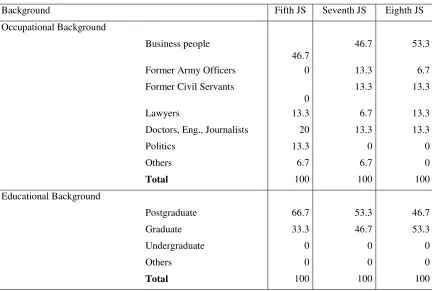
Italian auditors did not lose the battle because they did not fight it. One staff member in charge of auditing activities at the municipal level achieved professionalism and formal independence as a consequence of the reform, which disappeared in reality because the same regulation made him work as a sort of internal consultant for management-needy municipalities. Of the two remaining people in charge of auditing, one was fundamentally untouched by the reform and the other gained new and wider responsibilities while
maintaining traditional prerogatives.
0
"
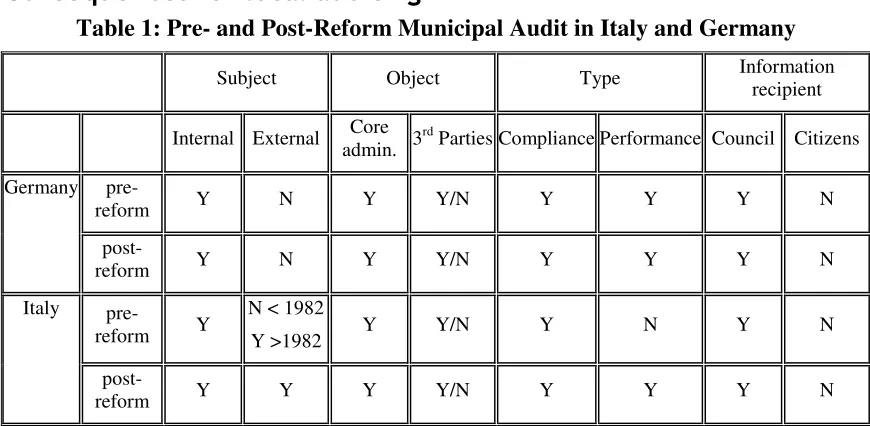
Table 1: Pre- and Post-Reform Municipal Audit in Italy and Germany
Subject Object Type Information
recipient
Internal External Core
admin. 3
rd
Parties Compliance Performance Council Citizens
refer to precise dates but rather to the continuous process of change the system underwent or is still undergoing. Due to its extent, the topic has been operationalised into four conceptual areas. Accordingly, our research question can be split into four more detailed ones. Audit subject, audit object, audit type, and audit information recipient were selected as variables to analyse the causal link between reform and audit. These ‘indicators for change’ guide our comparative endeavour.
The first question is, who are the auditors? It refers to the established distinction between
internal and external audit. Internal auditors are established within a government department or municipality; external auditors are not part of the audited organisational structure (see for general reference INTOSAI 1998). Has the reform process modified the
subjects in charge of carrying out the audit procedures in the two countries’
municipalities? Who is or can be appointed municipal auditor is important because prerequisites for the position strongly influence the auditing process due to the cultural background and present occupation of the auditor. In other words, did the change in the auditor subject have consequences on the procedures and outcome of the auditing? We try to answer this question by describing the changes provided by the administrative reforms on the subjects in charge of auditing in terms of their individual cultural backgrounds and other characteristics.
Auditing at the municipal level in Italy has been traditionally carried out by several separate bodies with intertwined responsibilities. The first is a compulsory auditing body for every municipality called Organo di Revisione (OdR); the second is the Corte dei Conti, the Supreme Audit Institution (SAI) that works as a special Court, the third is the internal body known as Segretario Comunale (SC), established in 1865 by law n. 2248 and also compulsory for every municipality.
Before the reform era, the OdR was comprised of three elected City Council members without executive responsibilities (art. 309 R.D. 383/1934). Since the City Council members were ordinary citizens, there were no special prerequisites to become an appointed member of the OdR. In 1990, however, members of the OdR were required to be professionals educated in business and economics (law n. 142/1990 art. 57). The OdR now comprises a private- sector certified auditor, a certified accountant, and a
professional accountant. Each of these professions has special requirements and examinations (law n. 142/1990). In other words, the OdR external auditors are now formally independent of the municipality.
The SAI was and still is composed of magistrates with the same constitutional privileges as ordinary judges. They are independent of the executive and legislative powers and subject only to the law (Italian Constitution art. 100 and 103). The SAI, due to its peculiar characteristics and role in the Italian judicial framework, remained unchanged with respect to composition but over time undertook wider competences (Corso, 2006, Cerulli Irelli, 2006). In recent years, SAI magistrate selection has been open to candidates holding business and economics degrees together with traditional law degrees.
Qualifications remained almost the same. In every municipality, the mayor now appoints the SC from the list, setting up a trust-based relationship. SCs must have law degrees. In the federal German political system, municipalities enjoy the status of ‘local self-administration’, which is guaranteed by Article 28.2 of the German constitution and by the 16 state constitutions. This status is therefore an integral element of ‘vertical
federalism’. It protects municipalities from state interference, which does not mean that each municipality chooses its own institutional setting. Quite the opposite: the
organization and structure of responsibilities and the administrative, mayoral, and local auditors’ duties and rights are as given in the local government code according to Article 70 of the federal constitution and subject to state law. Thus in a number of states, e.g., Lower Saxony or North Rhine-Westfalia, the so-called ‘county audit’ offices oversee municipalities with respect to local governments’ legal compliance with state law. Furthermore, the local government code is the basis for the municipal financial management and supervision of local governments by the states. The code is also the legal foundation for the creation of local audit offices. The existence of 16 different local government codes hinders drawing general conclusions about local auditors.
Formally, the right to audit the financial management of the municipal administration is the logical consequence and extension of the city council’s budget. In its democratic function as the representative organ of the municipality’s citizens, the city council controls financial management with the support of the local auditor, who is the city council’s ‘extended arm’ and therefore directly accountable to the city council audit committee (e.g. §104 (1) GO NW). State-specific differences notwithstanding, the common denominator among all local governments in Germany is the right of the city council to oversee the financial management of its administration. Furthermore these auditors enjoy a high degree of independence, which is supposed to guarantee objective support of the council. Certain institutional elements strengthen this position. For example, the head of the audit office and its members are directly appointed by the council; their dismissal is not an easy process; they are independent in what they audit and subject only to law; and they report directly to the council. All this grants municipal auditors a special and unique status. This ‘high culture of independence’ is an important characteristic of local auditors and their culture is of a habitus that is traditionally elitist, non-cooperative, hierarchical, and inaccessible. Furthermore most auditors have
traditionally received law training, which explains their focus on compliance and recalcitrance with regard to the New Steering Model reforms. The new generation of auditors, however, supposedly receives more balanced training, e.g., courses in modern accounting techniques.
reform advocates promote a so-called public governance model in which service
provision is separated from its regulation and control (Schedler & Proeller, 2004, Röber & Reichard, 2001). This section hence takes a closer look at the legal frameworks and the competences assigned to the municipal audit (Peters & Pierre, 1998).
Italy’s pre-reform audit realm included only the municipality; autonomous organisations providing public services were excluded. Since 1958, the SAI has been in control of organizations receiving state financial resources through the compliance audit of their financial statements; municipalities are therefore part of their realm. OdR was at that time responsible for auditing only municipal accounts. Since its establishment, SC has been responsible only for compliance auditing of all municipal administrative acts. Although joint stock companies and other private legal status organisations are now available and often even compulsory for public service delivery, all such companies have their own auditors according to commercial law. Therefore, neither SAI nor OdR nor SC is allowed to carry out performance or compliance audits on them. On the contrary, only those bodies whose financial performance is included in the municipal financial statement have to be audited by the SAI, and of course by the OdR. If Italian reforms narrowed the audit area by excluding outsourced provision of services, performance audit was introduced and applied at the municipal level. The more externalized the service provision, the narrower the audit area for both OdR and SAI, and considering the number of municipalities in Italy (8101), this should mean more time available for performance audit at the core municipal level. The reform effect could be summarized as ‘smaller audit area, more audit depth’. Reality is, however, proving this wrong: Many independent service-providing companies are owned by municipalities and therefore included in the municipal accounts performance audits. In cases where one municipality has several companies, audit work is thus multiplied. Performance audit carried out by two bodies requires creating a hierarchy between the two.
With regard to Germany, local auditors have clearly lost influence during the last decade. Together with the increasing quantitative importance of decentralized service delivery (Reichard, 2002), German local auditors’ responsibility for audit of decentralized service delivery has decreased (von Maravic, 2007). Audit competencies are laid down as an object of the contract in the partnership agreement between the municipality, a newly founded public enterprise, and its private partners. In the end it is a question of political will and audit arrangement. Public enterprise managers defend the abolition of audit rights and the four-eye principle with the argument that too much supervision constrains their management flexibility. The four-eye principle requires that a single operation be performed by two different people. In addition to protecting from honest mistakes, this is to ensure that one person cannot commit an irregularity alone. While the reform doctrine of NPM granted managers higher decision-making discretion, many auditors criticize council members’ lack of awareness of control and the audit deficits that have been created. In a number of municipalities, auditors are either not involved in conducting a full and independent audit or have been limited to compliance audits of public
enterprises. In German municipalities auditors have either limited or no legal competences to audit civil-law-based public enterprises such as public-private
! enterprises. One may pose the question whether an increasing complexity of legal and technical questions in contracting-out public services does not contrast the real audit demand with the actual municipal audit capacity. Private sector accountants audit only civil-law-based public enterprises and their function is not to investigate corruption but to assess a company’s economic performance. Thus in both Italy and many German
municipalities, audit competencies have decreased, especially in decentralized service delivery units.
About auditors as ‘Trojan horses’ and other things…
The third research question concerns the impact of administrative reforms in the two countries on how auditing is being carried out. While Michael Power suggests that we are living in an audit society where auditing is very important for every kind of activity, a vast amount of literature describes the introduction of performance auditing in several countries as a consequence of the distribution of autonomy and discretionary powers to managers and politicians. Stressing the ‘three Es’ (economy, efficiency, effectiveness) by the reform church of NPM has certainly pushed the notion of performance auditing but it has not led to a situation, which Pollitt seems to fear (2002, p.54), in which auditors are no longer interested in procedure and correctness. The traditional ‘compliance audit’ sees that expenditure is authorized, spent on the designated purpose, and procedurally correct. According to INTOSAI, performance audit is “oriented towards examining the
performance, economy, efficiency and effectiveness of public administration. Performance audit covers not only specific financial operations, but the full range of government activity including both organisational and administrative systems” (INTOSAI, 1998, §4.2, see also Summa, 2002, p.12).
As mentioned, the pre-reform OdR was responsible only for compliance audit of municipal financial statements. The 1990 law widened its competences, which can be grouped in four main duties:
(i) It supervises accounting and financial regularity informing the City Council about irregularities and misuse of public resources.
(ii) It still carries out the traditional compliance audit on financial statements and records and drafting a report on it. According to law, such activities cover companies and other institutions whose financial performance is included in the municipal financial statements.
(iii) It offers suggestions concerning efficiency, effectiveness, and economy after assessing the accounting system’s reliability and resource spending (De Robertis, 1992).
(iv) It assists the city council in its main duties of directing and controlling municipality management.
" The SAI has two main functions. As auditor it checks the accounts of public sector organisations at all government levels to safeguard public finance (Santiso, 2006). As a Court it operates as a special tribunal for judging the misuse of public resources and discharging responsibilities for managers of public funds (OECD, 1996). Regional offices carry out municipal auditing but a national central office exists for autonomous local government issues. Auditing municipal financial reports by the SAI started in 1982 with law. n. 51, which mandated that all local governments with more than 8,000 inhabitants send their financial statements to the SAI for auditing. It was merely a compliance audit. In 1994, during the reform season, law n. 20 clarified the competences of the SAI as auditor for municipalities including a performance auditing of sorts (Manin Carabba, 1998, Zavagnin, 2004). Since 1994 efficiency- and economy-focused performance auditing became an SAI responsibility on top of its traditional role as special Court for criminal accounting. Together with wider responsibility related to the Stability Pact, SAI now audits performance, task fulfilment, and internal control systems adequacy. (Art 7.7 law n.131/2003).
SC’s main function is to certify compliance with the law for every administrative act and procedure proposed by the city council and the executive committee. The reform wave, which hit the Italian coastline, had no influence on SC’s duties and it remains an internal compliance auditor. In sum, since the reform two of the three audit bodies carry out performance audits.
As the ‘extended arm’ of the council German local auditors conduct so-called compliance audits to ascertain whether the administration complies with the budget and spends resources according to the rules. So far it has not been the local auditor’s task to consult other departments regarding questions of financial or procurement management. In this respect local auditors differ significantly from the audit courts at the federal
(Bundesrechnungshof) and state (Landesrechnungshöfe) levels (Fiebig, 1998, p.21). The council charges the auditor with special audit requests and can control their access to the municipal civil law companies. In North Rhine-Westfalia (as in other states), for
# type of public enterprise. In the end it is a question of political will and audit
arrangement. The sessions of the supervisory board as well as those of the shareholders are non-public. Members of the supervisory board, mostly politicians and public servants, are bound to secrecy and are not allowed to inform the city council properly and the audit is restricted to limited compliance audits.
Generally speaking, the special status described above has not been under attack by the New Steering Model itself but the function of the auditors has been subject to debate among reform advocates, such as the Local Government Institute (KGSt) as the
‘inventor’ and firmest supporter of the NSM (KGSt, 1997), and auditors themselves. As the local auditor is not a formal part of the administration, it stands ‘officially’ outside bureaus chosen by the KGSt to play an integral role in the NSM (KGSt, 1997, p.12). Nevertheless, auditors have since its beginning been amongst the firmest critics of the NSM. So far no substantial research has been undertaking on their specific role in the reform process. The KGSt never foresaw changes with regard to the legal status, e.g., independence, of auditors but formulated reforms with regard to the functions of auditors within the NSM. The KGSt envisioned reforms around three aspects. The auditors are part of the internal control system, give advice to the other bureaus (taking on a
consulting role), and draft expert reports for the council and administration head (KGSt, 1997, p.13). With regard to these specific reform visions, we see no substantial changes to local auditors’ everyday function.
!
The fourth and last research question looks at the receivers of the auditing process. One reform thread throughout many countries, especially in Scandinavia, is to increase transparency for citizens. Critics of NPM say that the role of a person in a democracy involves more than shopping for services; the concept of a citizen thus involves more than just being a customer. Opponents argue that such a reduced version of a citizen neglects the fundamental role of a citoyen as holder of specific rights and duties. Besides this very dichotomist view on old and new roles of people in the NPM world, a nuanced view should not neglect new forms of participation for stakeholders, which have actually strengthened peoples’ influence over public organizations (Peters, 2006, p.298). Not only have several countries introduced so-called Freedom of Information Acts, allowing people access to government programs and files, but they are also having public hearings and advisory institutions where stakeholders can express views on policy issues,
especially in Scandinavian countries. This shift towards direct participation and direct accountability of public organizations will influence the definition of the role of the citizen. The quest for new forms of accountability (Bovens, 2005) goes in tandem with initiatives to make production of public goods more visible to the public and provide managers with better information about employees’ behaviour. Provision of new and better audit information is not restricted to purposes of democracy, transparency, or management but might be transferred to other levels of auditing, such as the SAI. Therefore, citizens can be the new recipients of audits as well as other oversight bodies, councillors, and specific management units. To understand whether the NPM approach has had an impact we ask, who gets what type of audit information? (Sloan, 1996).
2006 a new regulation gave OdR the duty to report auditing results to the SAI as well as the City Council at the end of every fiscal year. Being an internal auditor, SC provides the City Council with information concerning the activity of the Board. Although a Freedom of Information Act has been issued, no audit results are currently disclosed directly to citizens.
Auditors in German municipalities address their audit reports to the council and the mayor, not the citizenry. Though citizens have access to the audit report – it is not labelled ‘confidential’ – it is not intended for them (e.g. Go NRW § 101(3)). This is very much in accordance with general principles of a representative democracy and normally does not lead to any conflicts with the constituents. Nevertheless, recent years have revealed conflicts between organized interest groups and councils with regard to accessing audit information. This has been the case in some municipalities where the administration intended to introduce ‘new’ financial instruments such as Cross-Border-Leasing (e.g., city of Cologne) or tried to privatise the local public utility company (e.g., Bergisch Gladbach). Despite these ongoing and sporadic uprisings we do not see a tendency to change how audit information is handled.
Germany and Italy both faced intense reform seasons that changed the audit systems at the municipal level. Italy stands for a clear, coherent, visible link between central state reforms and changes to the audit system; Germany, despite 15 years of public
management reform at the local level, shows quite the opposite picture of a highly fragmented, dissolved reform landscape with – prima facie - no direct links between institutional change and the adaptation of new auditing instruments. But on closer inspection the German reforms somewhat mimic the Italian reform doctrine, which advocates a new role for the auditors as ‘consultants’ or internal advisors to make processes and structures more efficient in other departments. From this viewpoint auditors have to be trained in law as well as accounting. This stands in sharp contrast to the traditional repressive and non-cooperative character of auditors in German local governments, or, in more general terms, the idea of auditor independence in every audit framework. In Italy reformers succeeded. German reform advocates often found auditors too unbending.
Are such explanations enough to justify all the differences? Similarly, can the NPM reform paradigm sufficiently explain the similarities, i.e., the move to performance audits and the loss of audit responsibilities in public enterprises? “No” is the likely answer to both questions. This research suggests that at least one other factor has to be considered to offer a clear comparison: the strength of audit bodies themselves and their
“institutional protection” regulations. Both countries have such regulations, common and widespread everywhere auditing activities are carried out. In Germany, pre-reform “institutional protection” regulation offered municipal auditors an independent status and prerogatives to defend. But the reform wave was not strong enough to modify the
previous situation to make auditors work as internal consultants with the aim of fostering managerialism in municipalities; auditors stoically resisted the new duties though in the end losing their former power. In Italy “institutional protection” regulations for OdR were themselves a product of the reform. It formally established a professional and
independent OdR, but immediately used this body to facilitate managerialism at the municipal level, practically curtailing its independence. Then, in order to keep control on municipal activities, regulation widened the auditing responsibility assigned to the SAI whose “institutional protection” regulation is stated in the Constitution and therefore difficult to change. OdR was not strong enough to resist such a warped implementation and it is progressively more consultant than auditor. A stronger sense of role identity and how “institutional protection” regulations have been put in place in Germany can explain some of the dissimilarities between the two countries.
1
Barzelay, M. (1996), ‘Performance Auditing and the New Public Management: Changing Roles and Strategies of Central Audit Institutions in OECD’, Performance Auditing and the Modernisation of Government, Paris, pp.15-57
Behn, R.D. (1998), ‘The New Public Management Paradigm and the Search for Democratic Accountability’, International Public Management Journal, Vol.1, No.2, pp.231-264
Behn, R.D. (2001), Rethinking Democratic Accountability, New York, Brookings
Bogumil, J. Grohs, S. Kuhlmann, S. & Ohm, A. K. (1997), Zehn Jahre Neues Steuerungsmodell – Eine Bilanz kommunaler Verwaltungsmodernisierung, Berlin, Sigma
Bovens, M. (2005), ‘Public Accountability’ in E. Ferlie, L.E. Lynn, Jr., & C. Pollitt (eds.) The Oxford Handbook of Public Management, Oxford, Oxford University Press
Borgonovi, E. (2002), Principi e sistemi aziendali per le amministrazioni pubbliche, Milano, Egea
Capano, G. (2003), ‘Administrative Traditions and Policy Change: When Policy Paradigms Matter. The Case of Italian Administrative Reform during the 90s’, Public Administration, Vol.81, No.4, pp.781-801
Cerulli Irelli, V. (2006), ‘La posizione costituzionale della Corte dei Conti tra funzioni di controllo e giurisdizione’ in Atti del LI Convegno di Studi di Scienza dell’Amministrazione, Milano, Giuffré
Corso, G. (2006), “La Corte dei Conti fra controllo e giurisdizione” in Atti del LI Convegno di Studi di Scienza dell’Amministrazione, Milano, Giuffré
Edeling, T. & Reichard, C. (2003), ‘Kommunale Betriebe in Deutschland, Ergebnisse einer empirischen Analyse der Beteiligungen deutscher Städte der GK 1-4’, Potsdam, Universitätsverlag
Erkkilä, T. (2007), ‘Governance and Accountability – A shift in conceptualisation’, Public Administration Quarterly, Vol.31, No.1
Galeotti, M. (1997), ‘La revisione dell’azienda ente locale: situazione e prospettive’ in L. Marchi (ed.) La revisione nelle aziende pubbliche, Rimini, Maggioli
Gruening, G. (2001), "Origin and Theoretical Basis of New Public Management", International Public Management Journal, Vol.4, No.1, pp.1-25
Hoggett, P. (1996), ‘New Modes of Control in the Public Service’, Public Administration, Vol.74, pp.9–32
Hood, C. (1995), ‘The New Public Management in the 1980s: Variations on a Theme’, Accounting, Organizations and Society, Vol.20, No.2/3, pp.93-109
Hood, C. (1998), ‘A Public Management for all Seasons?’, Public Administration, Vol.69, pp.3-19
Kettl, D.F. (2000), The Global Public Management Revolution, Washington, Brookings Institution Press
Machura, S. (2001), ‘Von der Problemlösung zur Problemverschiebung: Privatisierung kommunaler Einrichtungen’, Verwaltungsrundschau, pp.79-86
Manin, C. (1998), ‘Contributo’ in G. Caia and S. Nottola (eds.) Corte dei Conti riformata e prospettive instituzionali, Rimini, Maggioli
Marchi. L. (ed.) (1997), La revisione nelle aziende pubbliche, Rimini, Rimini
Mussari, R. (1997a), ‘Autonomy, responsibility and new public management in Italy’, Advances in International Comparative Management, Supplement 3, pp.185-201
Mussari, R. (1997b), ‘La revisione gestionale negli enti locali’ in L. Marchi L. (ed.) La revisione nelle aziende pubbliche, Rimini, Maggioli
Mussari, R. (2002), Economia dell’Azienda Pubblica Locale, Padova, Cedam
OECD (1995), Governance in transition: Public Management reforms in OECD countries, Paris
OECD (1996), Performance Auditing and the Modernisation of Government, Paris
OECD (2001), OECD reviews of regulatory reform: Regulatory reform in Italy
Osborne, S.P (2006), ‘The New Public Governance?’, Public Management Review, Vol.8, No.3, pp.377-87
Panozzo, F. (2000), ‘Management by decree. Paradoxes in the Reform of the Italian public sector’,
Scandinavian Journal of Management, Vol.16, No.4, pp.357-73
Parker, L. & Gould, G. (1999), ‘Changing Public Sector Accountability: Critiquing New Directions’,
Accounting Forum, Vol.23, No.2, pp.109-3
Persiani, N. (1996), Revisione contabile e gestionale negli enti locali, Padova, Cedam
Peters, B.G. & Pierre, J. (1998), ‘Governance without Government? Rethinking Public Administration’,
Journal of Public Administration Research and Theory, Vol.8, No.2, pp.223-43
Peters, B.G. (2006), ‘Public Accountability of Autonomous Public Organizations’ in D. Savoie (ed.)
Restoring Accountability Research Studies, V. 3. Linkages: Responsibilities and Accountabilities, Public Works and Government Services Canada, Ottawa, Ontario, pp.297-334
Pollitt, C. (2002), ‘The Changing Context’ in C. Pollitt, X. Girre, J. Lonsdale, R. Mul, H. Summa & M.
Waerness Performance or Compliance? Performance Audit and Public Management in Five
Pollitt, C. & Bouckaert, G. (2004), Public Management Reform. A Comparative Analysis, 2nd Ed., Oxford, Oxford University Press
Pollitt, C. & Summa, H. (1997), ‘Trajectories of Reform: Public Management Change in Four Countries’,
Public Money and Management, Vol.17, No.1, pp.7-18
Pollitt, C. & Summa, H. (2002), ‘Performance Audit and Public Management Reform’ in C. Pollitt, X. Girre, J. Lonsdale, R. Mul, H. Summa, & M. Waerness Performance or Compliance?
Performance Audit and Public Management in Five Countries, Oxford, Oxford University Press, pp.1-11
Power, M. (1997),The Audit Society. Rituals of Verification, Oxford, Oxford University Press
Reichard, C. (2003), ‘Local Public Management Reforms in Germany’ in Public Administration, Vol.81, pp.345-63
Reichard, C. (2005), ‘From Public Management to Public Governance: a Changing Perspective in the German Public Sector‘ in R. Mussari (ed.) ‘Dal management pubblico alla governance pubblica’,
Quaderno di Dottorato, No.11, Università di Siena
Richter, M. (1997), ‘Die Kommunale Rechnungsprüfung als Interne Revision?’ Studies in Auditing, Vol.1, Potsdam University
Röber, M. & Reichard, C. (2001), ‘Konzept und Kritik des New Public Management’ in E. Schröter
Empirische Policy- und Verwaltungsforschung. Lokale, Nationale und Internationale Perspektiven, Opladen, Leske + Budrich, pp.371-392
Santiso, C. (2006), ‘Improving fiscal governance and curbing corruption: how relevant are autonomous audit agencies?’, International Public Management Review, Vol.7, No.2, pp.97-108
Schedler, K. & Proeller, I. (2004), New Public Management, Bern
Schröter, E. & von Maravic, P. (2007), ‘New Public Management’ in M. Bevir (ed.) Encyclopedia of Governance, Sage, pp.712-17
Schwartz, R. (2005), ‘Measuring Accountability: Distinguishing Reality from Rhetoric’, presented at Accountable Governance: an International Research Dialogue, Belfast, October 2005
Shand D. & Anand P. (1996), ‘Performance Auditing in the Public Sector: Approaches and Issues in OECD Member Countries’ in Performance Auditing and the Modernisation of Government, Paris, OECD, pp.57-102
Simonazzi, R. (1999), ‘L’attuale revisione negli enti locali’, La Finanza Locale, Vol.12, pp.1699-1701
Sloan, N. (1996), ‘The Objectives and Performance Measurement of Performance Audit’ in Performance Auditing and the Modernisation of Government, Paris, OECD, pp.139-48
Van Wart M. & Cayer, N.J. (1990), ‘Comparative Public Administration: Defunct, Dispersed or Redefined?’, Public Administration Review, Vol.50, No.2, pp.238-48
von Maravic, P. (2006), ‘Decentralized Corruption in Germany’, Public Administration Quarterly, Vol.30, No.4, pp.436-74
Wollmann, H. (2004), ‘European local governments systems under the triple impact of “traditional” reforms, NPM-led and revolutionary rupture: Convergence or divergence?’, presented for the academic symposium held in honor of H. Balderschein & L. Rose, Nov. 26, 2004, Political Department, University of Oslo
Zavagnin, F. (2004), La revisione negli enti locali, Rimini, Maggioli
"
+ $ /
%
# $
"
" $
)
Thomas Asare - [email protected]
/
In the past, managers in the public sector had a narrower range of expectations for the role of internal audit than managers in the private sector. This explains why the internal audit function in the public sector was dominated by pre-payment audits. Thus internal auditors devoted most of their time to the checkingon individual transactions before the payments were made. However, in recent years internal auditing has assumed a strategic dimension and that underscores why it has become an essential component of public sector governance and financial management reforms in many developing countries. The intent of this paper is to present a position that internal auditing in the public sector, when well structured and given the required mandate to perform, improves performance and serves as a valuable resource in promoting good governance. It generates thoughts on the importance and challenges of public sector internal auditing.
Keywords: Internal auditing, public sector, value addition, performance improvement
"
Internal auditing is a profession and activity involved in advising organizations regarding how to better achieve their objectives through managing risks and improving internal control. Internal auditing involves the utilisation of a systematic methodology for analyzing business processes or organisational problems and recommending solutions. The scope of internal auditing within an organization is broad and may include various internal control related activities such as the review of the effectiveness and efficiency of operations, the reliability of financial reporting, investigation fraud, risk assessment, safeguarding of assets, and compliance with laws and regulations. Internal audit activities therefore provide assurance on the effectiveness of public sector entities’ internal control environment and may identify opportunities for performance improvement.
" #
Historically, internal auditing was perceived as being confined to merely ensuring that the accounting and underlying records of an organization’s transactions were properly
maintained, that the assets management system was in place in order to safeguard the assets and also to see whether policies and procedures were in place and were duly complied with. With changing times, the concept of internal auditing has undergone significant changes with regard to its definition, scope of coverage and approach. In some organisations, the scope of modern internal auditing has been broadened from financial issues to include value for money, evaluation of risk, managerial effectiveness and governance processes.
In 1978, the Institute of Internal Auditors (IIA) defined internal auditing as:
evaluating the adequacy and effectiveness of other controls. The objective of internal auditing is to assist members of the organization in the effective discharge of their responsibilities. To this end, internal auditing furnishes them with analyses, appraisals, recommendations, counsel and information concerning the activities reviewed” (Ali and others,. 2007, pp 25-26).
The modern scope and focus of internal auditing are reflected in the current definition that was formally adopted by the IIA in 1999:
“An independent, objective assurance and consulting activity designed to add value and improve an organization’s operations. It helps an organization accomplish its objectives by bringing a systematic, disciplined approach to evaluate and improve the effectiveness of risk management, control, and governance processes”.
The notable difference between the definitions of 1978 and 1999 (as repeated in IIA 2008) is the prominence of objectivity in internal audit activities and also the emphasis on the evaluation and improvement of the effectiveness in risk management and governance processes. The current definition also contemplates two main internal audit services: assurance and consulting services.
Assurance services, according to IIA (2008, p.2):
Involve the internal auditor’s objective assessment of evidence to provide an independent opinion or conclusions regarding an entity, an operation, a function, a process, system, or other subject matter. The nature and scope of the assurance engagement are determined by the internal auditor. There are generally three parties involved in assurance services: (1) the person or group directly involved with the entity, operation, function, process, system, or other subject matter - the process owner, (2) the person or group making the assessment - the internal auditor, and (3) the person or group using the assessment - the user.
And consulting services, according to the same source:
Are advisory in nature, and are generally performed at the specific request of an engagement client. The nature and scope of the consulting engagement are subject to agreement with the engagement client. Consulting services
generally involve two parties: (1) the person or group offering the advice - the internal auditor, and (2) the person or group seeking and receiving the advice - the engagement client. When performing consulting services the internal auditor should maintain objectivity and not assume management responsibility (IIA 2008, p. 2).
$% " #
Until the mid-20th century, internal auditors were primarily concerned with checking accounting records and detection of financial errors and irregularities. Internal auditing emerged as a profession in 1941, when the Institute of Internal Auditors (IIA) was founded in New York by a group of practicing internal auditors. The need for a common body of knowledge and standardization of practices was then recognised despite the fact that internal auditors worked in different businesses and industries. This was the
beginning of the process of achieving an identity for internal auditing as a distinct profession concerned with providing independent appraisals for all activities within an organization and making recommendations to management.
Before the issuance of the first version of the Statement of Responsibilities by the IIA in 1947 most internal auditors focused on routine tasks. Meigs (1951, p.518), describing internal audit practice in the era of 1941, stated:
“To most businessmen in that era, internal auditors were either clerks assigned to the routine task of a perpetual search for clerical errors in
accounting documents, or they were traveling representatives of corporations having branches in widely scattered locations”.
According to the IIA historical timeline, the first textbook for the practice, Brinks Internal Auditing was published in 1941. The IIA technical journal, Internal Auditor, was first distributed in 1943. The Code of Ethics was issued in 1968 and in 1978 the IIA published the Standards for Professional Practice to serve as the primary source of reference for directing an internal audit function. The first Certified Internal Auditor (CIA)
examinations were written in 1974 to test the knowledge of individuals against a recognized body of knowledge before they become internal audit professionals. Today, the IIA has transformed into the internal audit profession's global voice, chief advocate, recognized authority, acknowledged leader, and principal educator. It is
internationally recognized as a trustworthy standard-setting body for internal auditing and currently has membership across 165 countries.
2
3
"
+ $ /
%
The nature of internal audit organizational arrangement determines its independence and effectiveness. The size and complexity of the public sector have influenced the diverse forms of internal audit organisational arrangements and service delivery approaches. Internal audit structure in the public sector can broadly be classified as following either a centralized or a decentralized model.
Describing these two models, Diamond (2002, p.10) states that “in the centralized model the Ministry of Finance (MOF) not only plays a key role in budgeting and allocating funds to line ministries, but also directly intervenes in ex-ante controls, placing its own staff in the line ministries. In the more decentralized approach, each line ministry takes full responsibility for spending its own budget and for ensuring appropriate checks and safeguards on the way this is spent”. The author here specifies that as pertains in the United Kingdom as well as some “mixed” model in other practice: “The United
! the internal audit function. However, there are other models based on unique approaches to internal audit, some of which appear to be a mix of internal and external audit
functions” (Diamond 2002, p.11).
Based on a critical assessment of current international practice, there appear to be five main means by which internal audit function in the public sector can be configured and these are outlined below with reference to current practices in selected countries.
" ) + 4 5 2
This is the case where internal audit function is placed under the supervision of Accountant-General’s Office. A risk usually associated with this arrangement is the possibility that an officer performing accounting duties may subsequently be required to perform internal audit duties soon after performing accounting duties in the same or related department. Swaziland and Tanzania are examples in Africa where the central internal audit function of government rests with the Accountant-General's Department. This was also the practice in Ghana before the passage of the Internal Audit Agency Act in 2003.
" " + &
In some countries the internal audit function is supervised by a Director or a person of an equivalent rank at the Ministry responsible for Finance. In these situations, the internal auditors are either stationed at the Ministry of Finance from where they are sent to Departments to carry out their functions; or they are assigned to specific Departments where they remain at post until they are re-assigned. This arrangement has the
characteristics of separating the internal audit function from the accounting and external audit functions. However, the internal audit function runs the risk of being seen as an extension of external audit because the internal auditors are not employees of the
Departments as expected of internal audit staff according to the ethics of the professional practice. However, this model can provide a good level of independence for internal audit.
The above arrangement is similar to that of Kenya where there is an Internal Audit Service as a department within the Treasury, the Service being responsible for providing internal audit services for all government departments and is headed by the Internal Auditor-General. The Internal Auditor-General is responsible for effective review of all aspects of risk management and control throughout the Civil Service of the Republic of Kenya. In Botswana, Uganda and Zambia internal audit staff in the Ministries are seconded from the internal audit department in the Ministry of Finance. The head of this internal audit department is a senior official in the Ministry of Finance with status equivalent to the Accountant-General.
* 3 " " " + &
" countries’ systems, has basically a decentralised internal audit function. In Africa, South Africa and Ghana are examples where the internal audit units are managed without guidance or control from the central Finance Ministry. The units form part of the
departments’ own structures. However, in the case of Ghana there exists an Internal Audit Agency that is established as an oversight agency and charged with responsibility of facilitating, coordinating and providing quality assurance for internal audit practices and technical performance. The oversight agency reports to the President.
" ) + " 4 5 2
In some countries internal audit is a function of the Supreme Audit Institution (SAI). This configuration has not been popular in recent times as most countries are shifting away from the practice of combining internal and external audit functions under the same institution. Where such a practice exists, internal auditors report only to the Auditor-General and are subject to professional, technical guidance and supervision from only the SAI. Staffs in such cases perform mainly pre-audits rather than a professional internal auditing function. Germany is a case in point where internal auditors operate within agencies, but are subject to technical and professional guidance, as well as supervision by the SAI, the Federal Court of Audit. This was also the practice in Ghana before the transfer of internal audit responsibility to the Controller and Accountant-General’s Department.
3 " " " /
Under this arrangement, internal audit function acts as a centralised independent agency operating under the responsibility of the Cabinet Office and provides assurances of proper internal controls and procedures in departments and agencies. An example is the case of Malta, where Internal Audit and Financial Investigations Directorate carries out internal audit and financial investigative functions across government departments and agencies. The Directorate functions under the Office of The Prime Minister and has a Board that is chaired by Secretary to Cabinet. After the Directorate has completed an internal audit assignment, it transmits its report to the Permanent Secretary of the Ministry under whose supervision the auditee falls. The Directorate may also transmit a copy of such report to the auditee.
& " #
The role of internal auditing can be identified as involving three main elements, namely the evaluation and improvement of risk management, control and governance processes. These elements are sometimes referred to as the “three pillars” of internal auditing
(Figure 1 below). The three elements are further discussed below as reinforcements of the fundamentals of an internal audit function in the public sector. Risk management, control and governance encompass the policies and procedures established to ensure the
achievement of objectives and include the appropriate assessment of risk, the reliability of internal and external reporting and accountability processes, compliance with
# Figure 1 - The Three Pillars of Internal Auditing
Source: Asare 2008, p.22
' & " # ( ) * + %
Public sector governance relates to the means by which goals are established and
accomplished. It also includes activities that ensure a government’s credibility, establish equitable provision of services, and assure appropriate behaviour of government officials whilst reducing the risk of public corruption (IIA 2006a, p.3).
According to ANAO (2003, p.6) “Public sector governance has a very broad coverage, including how an organisation is managed, its corporate and other structures, its culture, its policies and strategies and the way it deals with its various stakeholders. The concept encompasses the manner in which public sector organisations acquit their responsibilities of stewardship by being open, accountable and prudent in decision-making, in providing policy advice, and in managing and delivering programs”.
The broader nature of public sector governance necessitates an effective internal auditing function in order to meet the demanding responsibilities imposed by stakeholders.
Internal audit can help to improve governance processes by focusing on how values are established to ensure effective and efficient control and management of public sector entities. Such a value system requires an open government that is transparent in its dealings with a high sense of ethical behaviour and fairness. The complexity of the public sector operating environment requires that the internal audit structural design, approach, practice and scope are reformed to ensure open, accountable and prudent decision-making within all public sector organizations.
%) "
Internal auditors’ roles in governance are broadly identified to be twofold. Firstly,
internal auditors provide independent, objective assessments on the appropriateness of the organization's governance structure and the operating effectiveness of specific
According to standard 2130, internal audit activity should assess and make appropriate recommendations for improving the governance process to accomplish the following objectives:
• promoting appropriate ethics and values within the organization.
• ensuring effective organizational performance management and accountability.
• effectively coordinating the activities of and communicating information among
the Board, external and internal auditors and management.
' & " # ( ) *
Management control in the public sector includes all the policies and procedures put in place by a government and the management of public sector entities aimed at promoting accountability of resources. Another term for management control is internal control. In the public sector, controls are mainly in-built in the public financial management system. Public financial management includes the legal and organisational framework for
supervising all phases of the budget cycle, including the preparation of the budget, internal control and audit, procurement, monitoring and reporting arrangements, and external audit. The broad objectives of public financial management are to achieve overall fiscal discipline, allocation of resources to priority needs, and efficient and effective allocation of public services. Internal audit, in turn, has the key function of reporting to the senior management of public sector entities on the functioning of the management control systems, and recommending improvement where applicable.
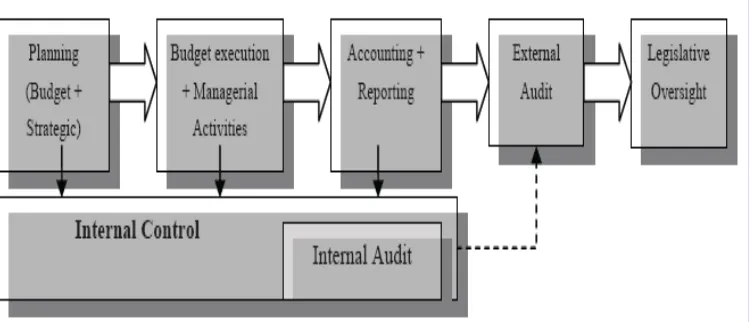
Control structures and the accountability framework covers a broader spectrum of Public Financial Management issues as shown in figure 2 below, which include strategic
planning (including budgeting), managerial activities (procurement, public debt and asset management), accounting and reporting, internal and external audit; and legislative oversight.
Figure 2: Public Financial Management Cycle
According to Baltaci & Yilmaz (2006, p.15), the effort to reform a fiscal system should include internal control and audit due to the crucial role they play in enhancing
accountability and effectiveness. Internal audit provides both governments and related parties with a powerful tool for understanding the extent to which the public institution in question has delivered on budget and effective services. Internal audit activity has
become an essential internal assurance mechanism in public financial controls and tool for monitoring and evaluating managerial activities prior to external evaluation by
external auditors. Internal auditors in the public sector work with management to improve service delivery, secure their commitment to improve internal controls and to ensure compliance with applicable laws.
Public procurement constitutes a huge portion of government expenditure and is an area that is often vulnerable to conflicts of interest and corruption of public officials. Internal audit activities will further enhance transparency, fairness, reduce corruption and ensure value for money in public procurement. According to Szymanski (2007, p.8), “control systems play an important role in enhancing the accountability and transparency of a public procurement system and hence in detecting and preventing corruption. Such systems should include adequate independent internal control and audit with a clear coordination of all control mechanisms”.
However, internal auditing as a control measure does not only minimize the
opportunities for corruption through the verification of procurement processes but also ensures effective physical monitoring of capital items procured and actual utilisation to avoid fraud and abuse.
' & " # ( ) * & ,
The demand for proper risk management strategies in the public sector emanates from the complexity and dynamism of the operating environment, ever-increasing needs of society coupled with general unpredictability pattern and dwindling of resources for national development. Risk management should constitute an essential part of the strategic management process of any entity involved in the implementation national development strategies.
According to the Australian Department of Finance and Deregulation, risk management is an important responsibility for any public sector entity for effective and efficient use of resources. It defines risk management as follows:
Risk is the possibility of an event or activity impacting adversely on an organisation, preventing it from achieving organisational outcomes. Risk management comprises the activities and actions taken to ensure that an organisation is conscious of the risks it faces, makes informed decisions in managing these risks, and identifies and harnesses potential opportunities. Managing risk well requires careful consideration of the key concepts of minimising loss, maximizing opportunity and preparing for uncertainty
(Commonwealth of Australia 2008, p.5)