CHAPTER I
INTRODUCTION
This chapter sets out the background of the study, the research questions, and the purpose of the study as well as the significance and the scope of it. The clarification of the terms used and the outline for the organization of this thesis are also highlighted.
1.1 Background of the Study
Limited classroom meeting ideally must trigger every teacher to create teaching strategy to promote their students’ autonomy. Autonomous learners will continue to study outside the classroom even though they are not ordered to do so. Autonomous learners should be able to determine the general focus of their learning, take an active role in the management of the learning process, and have freedom of choice with regards to learning resources and activities (Nunan, 2000).
will be assigned to learn and work in skin-care centers or hairstyling centers and soon.
The time allotment for prakerin is precisely written in the curriculum of SMK, which four hours of practicum working in industry equals to one hour of classroom meeting (See: http://smkmulia.webnode.com/news/praktek-kerja-industri-dalam-rangka-pendidikan-sistem-ganda-psg/ Undang-undang No. 2
Tahun 1989 tentang Sistem Pendidikan Nasional, Peraturan Pemerintah No. 29
Tahun 1990 tentang Pendidikan Nasional, Peraturan Pemerintah No. 39 Tahun
1992 tentang Peran serta masyarakat dalam Pendidikan Nasional, Keputusan
Mendiknas No. 080/U/1993 tentang Kurikulum SMK).
The second reason is that, if we compare the Standard of Competences (SK) and Basic Competences (KD) required to the available time sometimes is not balanced. Let us take the second semester program (Prosem) of 2010 for the first grade as the example. There is only one SK for the first grade, which is
Berkomunikasi dengan Bahasa Inggris setara level novice. But there are four
KDs: Menjelaskan secara sederhana kegiatan yang sedang terjadi (22 meetings),
Memahami memo dan menu sederhana, jadwal perjalanan kendaraan umum, dan
rambu-rambu lalu lintas (22 meetings), Memahami kata-kata dan istilah asing
serta kalimat sederhana berdasarkan rumus (22 meetings), and Menuliskan
From the educational calendar 2010 given by the Dinas Pendidikan Kota
Bandung, we see that there are 26 weeks in one semester, which is deducted by
six non-effective weeks (see the educational calendar 2010), so the total effective weeks is only 20 weeks (20 x 4 meetings = 80 meetings). So, we can see that the time allotment available is not balanced. In vocational school levels, the classroom meeting for English subject is only four hours per week, in which one hour lasts only 45 minutes. It is usually divided into two meetings per week which last 2x45 minutes each. It is a limitation for English teachers because the material needed to be delivered to students is more than the time available.
As stated by Harmer (2007),"to compensate for the limit of classroom time and to boost the chances for successful language learning and acquisition, students need to be encouraged to develop their own learning strategies so that as far as possible, they become autonomous learners." One of the strategies to promote students become autonomous learners is by establishing Self-Access Language Learning Center or it is more familiar with the term Self-Access Center (SAC). SAC is an educational facility designed for student learning with self-directed method. This way of learning is also famous with certain similar expressions: Learner-Centered Approach, Learner Autonomy or Self-Directed Learning.
suggests that students have distinct learning strategies and learn best when individual differences are taken into consideration (Gremmo & Riley, 1995).
SAC in this vocational school provides some Self-Access Language Learning (SALL) facilities which can be accessed freely and chosen based on the students’ needs and wants. It is expected that the facilities used in the SAC can compensate the limitation of certain classroom meeting.
This vocational school in which the subjects are concentrated in tourism fields (hotel and restaurant, fashion and design, pastry and beauty department) has already provided SAC as one of the students' facilities. The location is on the second floor besides the library building. Even though it is still considered as a very simple SAC, but at least it has been equipped by several learning media used in common SACs, such as internet access, television, magazines, newspaper and so on.
1.2 The Purpose of the Study
This present study aims to:
1. Investigate the typology of Self Access Center (SAC) which is used in one vocational school in Bandung
2. Investigate the students’ perception on the use and facilities of SAC, whether it has optimally offered opportunities for learning and how it is valued by them
3. Investigate whether the Self-Access Language Learning (SALL) activities in this SAC can promote students’ autonomy
1.3 The Research Question
In order to accomplish the purposes above, this study is therefore designed to examine the following research questions:
1. What is the typology of the Self-Access Center (SAC) in this vocational school?
2. How do students perceive the use and facilities of the SAC?
1.4 Scope of the Study
In conducting this research, the scope is set up in order to specify the study. The first is related to the typology of Self Access Center (SAC) in this vocational school which is compared to that by the experts. The next is the students’ perception on the use of SAC in relation to the practical ways in enhancing the students to learn autonomously. They independently choose and use SAC facilities based on their interest and needs, such as finding related resources from the internet to do homework or assignments from their teachers.
1.5 Significance of the Study
influence in enhancing students’ autonomy in learning English through SAC facilities.
1.6 Thesis Organization
This thesis will be organized in five chapters. The current chapter is a general introduction. Chapter 2 describes the theory of Self-Access Center (SAC), perception and students’ autonomy. Chapter 3 discusses research methodology, data collecting procedure, and data collecting technique. Chapter 4 elaborates findings and discussion. Chapter 5 concludes the thesis and offers suggestions.
1.7 Clarification of the Terms
To avoid the readers’ misunderstanding, it is likely better to first of all define the keywords used frequently in this study.
a. Autonomy
b. Self-Access Center (SAC)
Self-Access Center is an educational facility which promotes the approach where students study independently choosing among different resources that are available. SAC is the place where Self Access Language Learning (SALL) conducted. Dickinson (1987) states that SALL is learning a language through the use of a self-contained learning environment which provides an independent study program with readily accessible materials, makes available a form of help, either through answer keys or through counseling, and possibly offers the latest technology.
c. Students’ Perception
CHAPTER III
RESEARCH METHODOLOGY
This chapter describes methodological aspects of the present study. Three main aspects of the research will be discussed: (1) research design; (2) data collection method and (3) data analysis method.
This study made use of a qualitative design by employing a case study. Three instrument of data collection methods (observation, questionnaire, and interview) were used to collect data and information to answer the research questions while a triangulation of research context was used in analyzing the data collected from the three instruments.
3.1. Research Questions
It is previously mentioned that the study seeks the answers to the following research questions:
1. What is the typology of Self-Access Center (SAC) in this vocational school?
2. How do students perceive the use and facilities in the SAC?
These questions become the reference to conduct observation and to design the questionnaire and the structure of interview.
3.2 Research Design
A qualitative was used in this study since the researcher wanted to explore deeply to generate data rich and embedded in context. There are several reasons of using qualitative research methodology. Like this study, a qualitative study, as described by McMillan and Schumacher (1989), first, is carried out in natural settings, meaning that behavior is studied as it naturally occurred without manipulating data given by participants. Second, it provides rich narrative description. Every detail contributes to a better understanding behavior or to obtain a complete understanding of the setting. Third, it focuses on process. Fourth, participants’ items of view are essential; therefore the objective of qualitative research is to understand participants from their items of view (McMillan and Schumacher, 1989).
study researcher focuses on a single entity as it exists in its natural environment (Johnson, 1992). Frequently, as Thomas (2003: 33) claims, “case studies also provide the reasons why the entity acts as it does.”
Case study has several advantages. First, as case studies are qualitative in nature, thus they have the advantage of qualitative research which, as Johnson (1992: 76) claims, “they are primarily naturalistic, relying on the collection of naturally occurring data." In other words, the data of a case study is high in reliability for the naturalness in terms of behavior, environment and all related aspects of the events investigated. Case study is also flexible in terms of design (Yin, 1994) and in terms of the interaction of multiple factors aligned to the subject of the research (Thomas, 2003).
However, as stated by Yin (1994: 9-10), there are three main disadvantages of case study. “The first one is the lack of rigor of case study research, the second one is that they provide little basis for scientific generalization, and the third disadvantage is that they take too long and they result in massive, unreadable documents.”
3.3 Setting of the Study
determination of particular place of investigation deals with the feasibility and effectiveness of the time to conduct the study in a certain period of time. The sampling technique that the researcher used was purposive sampling. Sekaran (2003: 277) states that “the sampling here is confined to specific types of people who can provide the desired information, either because they are the only ones who have it, or confirm to some criteria set by researcher.”
3.4 Participants of the Study
This study involves one SAC which was established in 2007. It is considered new facilities in that school and has never been evaluated before. In this study, six participant students were involved. They are chosen from as the representatives from three categories of SAC visitors: most frequent visitors (who visit SAC more than 3 times a week or almost every day), frequent visitors (who visit SAC twice a week) and less frequent visitors (who visit SAC only once a week).
Beauty Program and she visits SAC once a week. And the sixth participant (S6) is a student from Hair Beauty Program and she visits SAC once a week.
Furthermore, the researcher categorized them in three different visitor categories: first, most frequent visitors (S1 and S2), second, frequent visitors (S3 and S4), and less frequent visitors (S5 and S6). There were some reasons of choosing them as the respondents: (1) some of the respondents are my students whom I could obtain data and information more easily (2) some of them represent the five majors of that vocational school (hotel accommodation, restaurant service, skin beauty, hair beauty, fashion design and tourism service) (3) They are from three different categories of the SAC visitors which I think that they might have different perceptions on the SAC.
3.5 Data Collection Method
3.5.1 Observation
The observation was conducted to observe the typology of SAC which includes the actual use and the physical setting of the SAC, such as: materials, activities, setting, resourcing, setting, and counseling. Next, the researcher will give comment after comparing it to the aspects constitute an ideal portrait of one SAC by the experts.
3.5.2 Questionnaires
Questionnaire was distributed to the participant students. A number of statements elaborated on the questionnaire will be intended to gain the information about their perceptions toward SAC use and facilities as well as whether the SALL in the SAC has already promoted student autonomy.
3.5.3 Interviews
Interview was conducted after distributing questionnaire. All participant students were interviewed concerning their perception on SAC use and facilities. This is intended to support the answers gained from distributing questionnaires.
conversational, in an attempt to get the interviewees to further discuss what they had mentioned in their answers. Therefore, there was no limitation of the number of questions asked to each participant. The interview was also recorded. Hence, all the interviewees’ contribution can be recorded and reanalyzed after the interview.
3.6 Method of Data Analysis
The data of this research were analyzed through qualitative data analysis. The data analysis was immediately conducted after the data from the observation checklist, questionnaire, and interview transcriptions were available. All data were analyzed on the basis of the research questions stated in chapter one and were categorized into three main central themes: the typology of SAC, the students’ perception on it and relation between Self-Access Language Learning (SALL) in SAC with student autonomy. The coding of the data was made to protect the confidentiality of the participants. It was also meant to make the data analysis easier. The coding was as follows:
CODING MEANING
S1, S2, S3, S4, S5, S6 Students as the participants of the research OB The data were taken from the observation QT The data were taken from questionnaire
INT The data were taken from the interview with participants
learner profiles, counseling, alternative counseling, SAC materials, SAC activities, SAC physical settings and resourcing.
To analyze the data gained from observation, the researcher categorized the data based on the Gardner and Miller’s theory (2008) concerning the typology of SAC. The data from observation were analyzed to figure out whether SAC in this vocational school has been used properly as the experts say. The analysis was done by describing the data gained from observation sheet and observation checklist.
The data from questionnaire and interview were analyzed to answer the research question no.2 concerning the students’ perceptions on the SAC. The data were categorized into 5 main categories, namely: Learner Profiles, Materials for
Self-Access Language Learning, Self-Access Activities, SAC Physical Settings and
Resourcing, Counseling and Alternative Counseling.
The functions of the three research instruments in seeking the answer to the research questions were summarized below:
1. Observation functioned to get data about the typology of SAC in this vocational school. The data from observation were used as the primary data in this research to answer research question number 1.
3. Interview with the participant students was conducted to figure out their perception on the use of SAC and its relation to students’ autonomy. The data from interview were used as the secondary data in this research to answer research question number 2 and number 3.
The data validation was achieved by triangulation of methods by comparing the result of three sources of data which were observation, questionnaire, and interview.
3.7Conclusion
CHAPTER V
CONCLUSION AND SUGGESTION
This chapter discusses the conclusions of the present study. There are two parts of this chapter. The first part presents the major findings of the study. The second part deals with the recommendation for further study.
5.1 Major Findings
This present study serves as an attempt to investigate the typology of Self-Access Center (SAC) in one vocational school in Bandung and to investigate the students’ perception on the use and the facilities of SAC itself and to investigate whether the Self-Access Language Learning (SALL) in SAC has already promoted students’ autonomy.
categories are not marked yet. That is why this SAC is considered as semi-supermarket SAC.
The detail findings about the typology of this SAC are summarized below:
1. NUMBER OF STAFF:
The 2 (two) SAC staff which include one full-time librarian and one part-time SAC counselor. The part-part-time SAC counselor is because she is the German teacher who is posted for the position of SAC counselor.
2. NUMBER OF STUDENTS:
1200 students in 36 classes (It consists of 12 classes of the 10th grade, 12 classes of the 11th grade and 12 classes of the 12th grade)
3. ABOUT THE STUDENTS:
The students are from six programs: Hotel Accommodation, Restaurant, Hair and Skin Beauty, Fashion Design and Pastry. However, there is a new program which has been open only two years ago, it is tourism service and business.
4. THE SIZE OF SAC:
A building with 180 meter2 wide which is divided into 2 main rooms: Self-Access Center (SAC) room and library room.
The Self-Access Center (SAC) in this vocational school was established in 1997. It was promoted by one of the librarian staffs who joined the workshop of librarian and Self-Access Center (SAC) in The University of Gadjah Mada, Yogyakarta, Central Java. In this school, the term used is Self-Access Study (SAS) room. The SAC room is located on the second floor beside the library building and the multimedia room. The library itself was established earlier in 1980.
The reasons for establishing the SAC in this school is to facilitate students to learn independently by using certain facilities in the SAC. In other words, it was established to promote students’ autonomy in learning, especially in learning English
6. TYPE OF SAC:
This SAC can be considered as semi-supermarket type. This is because the SAC system offers learners the opportunity to look around and choose what to study. However the system categories are not marked yet, such as there are not clear categories of learning (listening, reading, phonology, games and so on) which in turn are usually color-coded according to the level. In this way, learners can independently gain access to the system and easily find area they wish to study.
7. STAFFING AND MANAGEMENT:
The school principal, who is helped by the vice principal for facilities (wakil
timetabling. While the teacher-in-charge is a German teacher who is also a part-time for SAC counselor
8. THE USE OF SAC:
Basically, the SAC is used by all students in this school. And to make it well-organized, there is a time-table for students to visit SAC. The time-table is put on the door of the SAC. Here is the time-table:
TIME / DAY MON TUE WED THU FRI
10100-10115 X FD X HSB XI Ps XI HSB XII FD
11145-12115 X Ps X R XI FD XI R XII R
16100-1630 X HA XI HA XII HA XII Ps XII HSB
NOTE: FD EFashion Design Program), Ps EPastry Program), HSB EHair and Skin Beauty Program), HA EHotel Accommodation Program), and R ERestaurant Program)
However, since only few students who are willing to visit SAC and due to the needs of students, the time-table becomes very flexible. Students can come to SAC anytime as they wish from Monday to Friday, from 7 am to 4 pm.
9. LEARNER PROFILES:
There are no learner profiles available in this SAC. A learner profile is a collection of information relating to an individual learner, which the purpose is to provide a picture of the learner’s current development and future potentials in terms which relate to self access learning.
appendix 11). Since the major goals of the Learner Profile are to establish the needs and wants of the learners and to monitor every student’s progress, so each student’s needs and wants as well as their’ progress are not effectively recorded.
10. COUNSELING AND ALTERNATIVE COUNSELING:
Basically, there is no formal SAC counselor who got SAC tutorial training/ counselor training. In fact, there are only a teacher and one school staff who are in charge to manage SAC. There is no fixed schedule for counseling, so every student can do counseling anytime they want, from Monday to Saturday, from 7 am to 4 pm. The counseling program available is in the form of face-to-face student and SAC counselor, and so far, there are no alternative counseling available.
11. SAC MATERIALS:
There are four sources of the materials in Self-Access Center (SAC), namely: published language-learning materials, authentic materials, specially produced materials and student contribution to materials.
subjects (English, Bahasa Indonesia, Math, Religion, Kewirausahaan,
Pendidikan Kewarganegaraan, Pendidikan Jasmani dan Kesehatan,
Sundanese Language, Art, and History) and 7 additional subjects (Physics, Chemistry, Psychology, Biology, Sociology, Economics, Geography).
For authentic materials, this Self-Access Center (SAC) always subscribes for 2 newspapers everyday (they are Pikiran Rakyat and Kompas). It also subscribes for Paras and Femina magazine once a month. Later it also subscribes for Gadis teen magazine and Sora Sundanese magazine twice a month. There are also booklets and brochures from related industries, such hotel brochures, academy brochures, etc.
For specially produced materials, this SAC has provided several modules related to the programs available in this school, except for Pastry program. For example, Front Office module, Make Up Room module, Room Service module for hotel accommodation program, Food service module for Restaurant program, Manicure and Pedicure module for Hair and Skin Beauty program.
For student contributions to materials (students-created-materials), in this Self-Access Center (SAC), there are some clippings, students’ papers, and also
Skripsi from Indonesia University of Education (UPI) and Nusantara Islamic
12.SAC ACTIVITIES:
There are several activities in this SAC, namely: English club, native speakers and TV viewing. The English club is named by English Conversation Club (ECC) which is conducted every Saturday from 9-10 am. The members are students of various grades in that vocational school. Once there were native speakers coming to this English club: (1) Kevin Dalton from IALF. Dalton trained English for teachers from this school and from other vocational schools in Bandung, (2) Jessica from AMINEF, (3) Keith and Maria from THE CENTER. They visit English Conversation Club and interact with the students by doing several interactive activities. They come to this school as proposed by school staff.
13.SAC PHYSICAL SETTINGS AND RESOURCING:
This SAC building occupies 180 meter2 land which is divided into 2 main rooms: Self-Access Center (SAC) room and library room. It is located on the second floor of the school building. The SAC is open on the weekdays therefore students can come to SAC anytime as they wish from Monday to Friday, from 7 am to 4 pm.
table or to work individually by sitting behind small table. On every corner of the room, there are some shelves and cupboards to put the materials for Self-Access Language Learning.
However the system categories are not marked yet. There are not clear categories of learning (listening, reading, phonology, games and so on) which in turn are usually color-coded according to the level, in order that learners can independently gain access to the system and easily find area they wish to study. That is why it is called semi-supermarket SAC.
(2) The second finding shows that despite the limitation of SAC facilities, students perceived the use of SAC positively. However, they recommended for the development of SAC, which includes the materials, the physical settings and resourcing, the activities and the counseling program in the SAC. (3) The third finding from this study shows that the Self-Access Language Learning (SALL) in this SAC has not promoted student autonomy yet, since most of the participant students attend and use SAC facilities based on the assignment from teachers. Therefore, some strategies to promote student autonomy in conducting learning in SAC are needed to be developed.
5.2 Recommendations for Further Study
LIST OF CONTENT
APPROVAL PAGE i
DECLARATION OF OWNERSHIP ii
ACKNOWLEDGEMENT iii
ABSTRACT iv
LIST OF CONTENT v
LIST OF TABLES viii
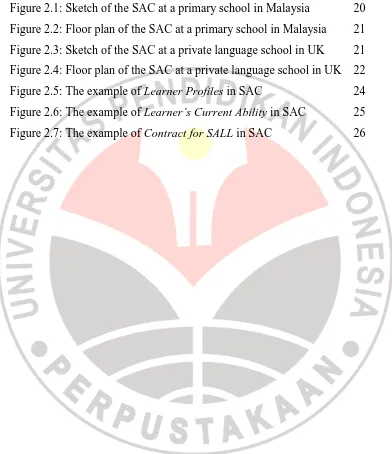
LIST OF FIGURES ix
CHAPTER I: INTRODUCTION
1.1 Background of the Study 1
1.2 The Purpose of the Study 5
1.3 The Research Question 5
1.4 Scope of the Study 6
1.5 Significance of the Study 6
1.6 Thesis Organization 7
1.7 Clarification of Key Terms 7
CHAPTER II: REVIEW OF THE LITERATURE
2.1. The Self-Access Center (SAC) 9
2.1.1 Criteria of Good Self-Access Center 10 2.1.2 Self-Access Language Learning (SALL) in SAC 11 2.1.3 Advantages and Disadvantages of SALL 13 2.1.4 Typology of Self-Access Center 15 2.1.5 Elements of Self-Access Center 23
a. Learner Profiles 23
b. Materials for SALL 27
c. Self-Access Activities 28
e. Counseling and Alternative Counseling 31
2.2. Student Perception 35
2.3. Using SAC to Promote Student Autonomy 37
2.4. Conclusion 30
CHAPTER III: RESEARCH METHODOLOGY
3.1 Research Questions 41
3.2 Research Design 42
3.3 Setting of the Study 43
3.4 Participants of the Study 44
3.5 Data Collection Method 45
3.5.1 Observation 46
3.5.2 Questionnaire 46
3.5.3 Interview 46
3.6 Data Analysis Method 47
3.7 Conclusion 49
CHAPTER IV DATA PRESENTATION AND DISCUSSION
4.1 The Typology of SAC 50
4.2 Students’ Perceptions on SAC 60
4.3 Using SAC to Promote Student Autonomy 72 CHAPTER V CONCLUSION AND SUGGESTION
5.1 Major Findings 78
5.2 Recommendation for Further Study 87
REFERENCES 88
APPENDIX 1: Observation Checklist 92
APPENDIX 2: SAC Counselors 96
APPENDIX 3: Student Questionnaire 97
APPENDIX 4: Interview Guide 102
APPENDIX 5: Interview Transcription 106
APPENDIX 7: SAC Rules 117 APPENDIX 8: Visitor Book (Restaurant Program) 118 APPENDIX 9: Visitor Book (Hair and Skin Beauty Program) 119 APPENDIX 10: Visitor Book (Hotel Accommodation Program) 120 APPENDIX 11: Visitor Book (Fashion Design Program) 121 APPENDIX12: Visitor Book (Pastry Program) 122 APPENDIX13: Published Language Learning Materials 123 APPENDIX 14: Authentic Materials (Magazines) 124 APPENDIX 15: Authentic Materials (Newspaper) 125
APPENDIX 16: Computer Room 126
LIST OF TABLES
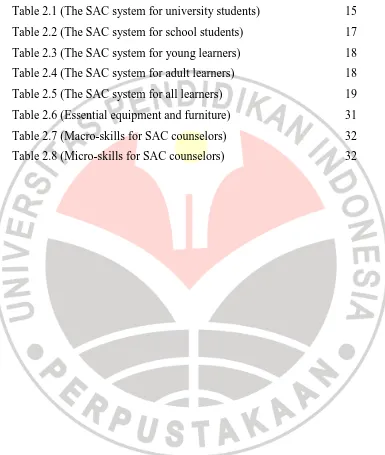
[image:31.595.121.506.142.597.2]LIST OF FIGURES
REFERENCES
Benson, P. and P. Voller. (1997). Autonomy & Independence in Language
Learning. London: Addison Wesley Longman Ltd.
Bragarnote, Mariangela. (2005). SAC and Cooperative Learning. Linguagem & Ensino, Vol. 8, No. 2, 2005 (145-169). Available at:http://www.scottishcorpus.ac.uk/corpus/search/document.php ?documentid=502. [ Retrieved on Januay 29, 2009].
Carterete, JP & Friedman, Anderson. (1972). General Psychology. New Jersey: Little Field Adam
Cooker, Lucy. (2008). Some Self-Access Principles. Available at IATEFL Learner Autonomy SIG Spring 2008. Retrived on June 10, 2009.
Cotterall, S & Reinders, H. (2001) Fortress or Bridge? Learners’
Perceptions and Practice in Self-Access Language Learning.
TESOLANZ. Available at:
http://www.sisaljournal.org/archives/sep10. {March 20, 2010} Dam, L. (1995). Learner Autonomy 3: From Theory to Classroom Practice.
Dublin: Authentic Language Learning Resources
Desiderato, ODB Howieson & Jackson, JH. 1976. Investigating Behavior:
Principles of Psychology. New York: Harver and Row Publisher
Dickinson, L. (1987). Self-Instruction in Language Learning. Cambridge: Cambridge University Press
Ding, A. (2005). Laying the Foundations for a Self-Access Center. Available at IATEFL Learner Autonomy SIG Spring 2008. Retrived on June 10, 2009.
Forgus, Ronald H. 1966. Perception: The Basic Process in Cognitive
Development. New York: Mc Grall Hill Book Company
Gardner, D. and L. Miller. (2008). Establishing Self-Access: From Theory to
Gardner, D. and L. Miller. (1997). A Study of Tertiary Level Self-Access
Facilities in Hong Kong. Hong Kong: Evaluation of the Student
Experience Project
Gremmo, M.-J. & Riley, P. (1995). Autonomy, self-direction and self access in language teaching and learning: The history of an idea.
System, 23, 151-164. Available at:
http://sisaljournal.org/archives/sep10/mcmurry_tanner_anderson {June 20, 2010}.
Harmer, Jeremy. (2007) 4th Edition. The Practice of English Language
Teaching. Cambridge, UK: Longman.
Holec, H. (1981). Autonomy and Foreign Language Learning. London: Pergamon
Hsu, Jeng-Yih. (2007). Integrating a Writing-Across-Curriculum Program
into a Self-Access Learning Center; Proceesings of the 24th Conference on English Teaching and Learning. Taiwan: ERIC
496122 {March 20, 2010}.
Johnson, Donna M. (1992). Approaches to Research in Second Language
Learning. New York: Longman.
Johnson, F; Delarche, M; Marshall, N; Wurr, A; Edwards, J. (2002)
Changing Teachers Roles in the Foreign Language Classroom.
Texas Papers in Foreign Language Education 3 (2): 71-89. ED423676 (ERIC) {March 20, 2010}. Kelly, R. (1996). Taking Control: Autonomy in Language Learning. Hong
Kong: Hong Kong University Press.
Klassen, Johanna. (1998) Does Self-Access Language Learning at the
Tertiary Level Really Work? Asian Journal of English Language Teaching Vol. 8, 1998, pp. 55-80. Available at: http://www.cuhk.edu.hk/ajlt/vol8/art4.htm. {March 20, 2010} Kohayan, Aylin. (2009). The Evaluation of a Self-Access Center: A Useful
Addition to Class-Based Teaching? System, Volume 37, Issue 4,
December 2009, Pages 731-740. Available at www.csirus.com.
Retrieved on March 20, 2010.
Macmillan, JH & Schumacher, S. (1989). Research in Education: A
Qualitative Approach. San Fransisco: Jassey Bass
Morrison, Bruce. (2008). The Role of The Self-Access Center in The
Tertiary Language Learning Process. System, Volume 36, Issue
2, June 2008, Pages 123-140. Available at www.csirus.com.
{March 20, 2010}.
Nunan, David. (2000). Autonomy in Language Learning. Plenary presentation given at the ASOCOPI 2000 conference, Cartengena, Columbia. Available at http://tesl-ej.org/ej48/a2.html. Retrieved on June 10, 2010
Riley, Philip and Gremmo, Marie-Jose. (1995). Autonomy, Self-Direction
And Self Access in Language Teaching and Learning: The History of an Idea. System, Volume 23, Issue 2, May 1995,
Pages 151-164. Available at www.csirus.com. Retrieved on
March 20, 2010.
Rodden, Michael. (2007). Self-Access: A Framework for Diversity.
Sekaran, Uma. (2003). 4th edition. Research Method In Business. United States: John Willey & Sons, in Company, inc..
Sheerin, S. (1989). Self-Access. Oxford: Oxford University Press
Singleton, Malinda. (2006). Continuous Learning: New Language Learning
Center Enhances Air Force Linguist Skill. Spokesman
Magazine. {March 20, 2010}.
Stepp-Greany, Jonita. (2002). Students’ Perceptions on Language Learning
in a Technological Environment: Implications for the New Millenium”. Language Learning and Technology. {March 20, 2010}.
Subono. (1981). Menuju Keluarga Bijaksana. Bandung: YSIB
Thanasoulas, D. (2004). What is Leaner Autonomy and How can it be
fostered? Available at
http//:iteslj.org/Articles/Thanasoulas-Autonomy.html. Retrieved on March 20, 2010
Undang-undang No. 2 Tahun 1989 tentang Sistem Pendidikan Nasional, Peraturan Pemerintah No. 29 Tahun 1990 tentang Pendidikan Nasional, Peraturan Pemerintah No. 39 Tahun 1992 tentang Peran serta masyarakat dalam Pendidikan Nasional, Keputusan Mendiknas No. 080/U/1993 tentang Kurikulum SMK. Available
at: http://smkmulia.webnode.com/news/praktek-kerja-industri-dalam-rangka-pendidikan-sistem-ganda-psg. Rettieved on June 10, 2010
Vance, Stevens. (1991). A Study of Student Attitudes Toward Call In a
Self-Access Student Resource Centre. System, Volume 19, Issue 3,
1991, Pages 289-299. Available at www.csirus.com. Retrieved
on March 20, 2010.
Yin, Robert K. (1994) 2nd edition. Case Study Research Design and