The drawing of the children in the refugee camps Wilis Srisayekti
Padjajaran University, Bandung, Indonesia
Presented at the 28th International Congress of Psychology, August 8-13, 2004 Beijing, China
Introduction
The background of the study was the social conflict between religion communities, Moslems and Christians, in Moluccas the north, Indonesia in the end of 1999; where ± 2.048 people died, ± 197.000 became refugees, ± 20.000 houses destroyed and burned, ± 173 social facilities (schools, hospitals) and ± 144 churches and mosques destroyed.
The government of Indonesia initiated intervention programmes, especially for the children who were primary school students, as it was predicted that children in that areas had some traumatic experiences because of the conflict, and that the experiences would have some consequences on their psychological development and their academic achievement.
The intervention programmes involved the professional psychologist, and took place in 2002-2003. Results from the counseling sessions revealed that most of the children i.e. the primary school students had those traumatic experiences. It was shown for example by the way the children told the stories about the beginning of the conflict, as the experiences just happened the day before; e.g. how they and their families handled the horrible situation, how they ran away and looked for some shelters, how they were evaquated by the army, and how at last they became refugees in Ternate. It was also shown by the fact that most of the children were crying during the counseling session. They still remembered clearly how their family members (father, mother, sisters or brohers, uncles or aunts) were killed in that chaos. They saw for example, how their heads were cut and then were carried along in a procession through the town. They, who called themselves moslems, hate Christians very much.
There had been the moslems areas and the christians areas since that conflict. The moslems areas were the areas occupated by Moslems, while the Christians in these areas were gone as refugees to some places nearby. The christians areas were areas occupated by Christians, while the Moslems in these areas were gone as refugees to some places nearby.
Ternate was a moslem area, where the refugees came from some cities in Halmahera (Tobelo, Malifut, etc.). The refugees in Ternate lived in the houses used to be owned by Christians, in churches that were not used any more, in some schools, and in some public buildings. These places were regarded in this study as refugee camps. People organized schools for the children refugees in Ternate, that was called The Alternative School. These students were the subjects of the intervention programmes.
This study will present the drawing of the children with traumatic experiences because of the conflict, in Ternate. This study will try to answer the question whether there is any characteristic of the children drawing in the refugee camps in Ternate
Comparative study
The study was conducted with comparative study between the drawing of the refugee children in Ternate and the children in Bandung, where such a conflict has never been happened.
Participants
Ternate : Primary school, SD Alternatif, students; grade 4 - 6, age 9-12 years;
68 male students (M = 10.3; SD = 0.15), 69 female students (M = 10.67; SD = 0.14) Bandung : Primary school, SD Cipaheut, students; grade 4 - 6, age 9-12 years;
97 male students (M = 10.81; SD = 0.41), 92 female students (M = 10.59; SD = 0.13) Material
Paper A4 (210 x 297 mm), pencil of a medium soft (HB) for Draw-a-Person Test. Procedure and data collecting
Participants were instructed to draw a person on a piece of paper that was presented in usual vertical way. They were then asked to draw a person from another sex on the second piece of paper. They were asked to describe briefly the persons on the drawings, such as their activities. Debriefing was done after they made the drawings. The data collecting were administered in a group of six students. In Ternate, the data were collected after the first session of the counseling. Data analysis
The data were quantitatively coded following such categories: placement of the figure on the page, figure size, coverage of the page, content, graphic expression such as shading, and the figure’s description. The results will describe the commonalities and the differences of the drawings of the children in Ternate and in Bandung.
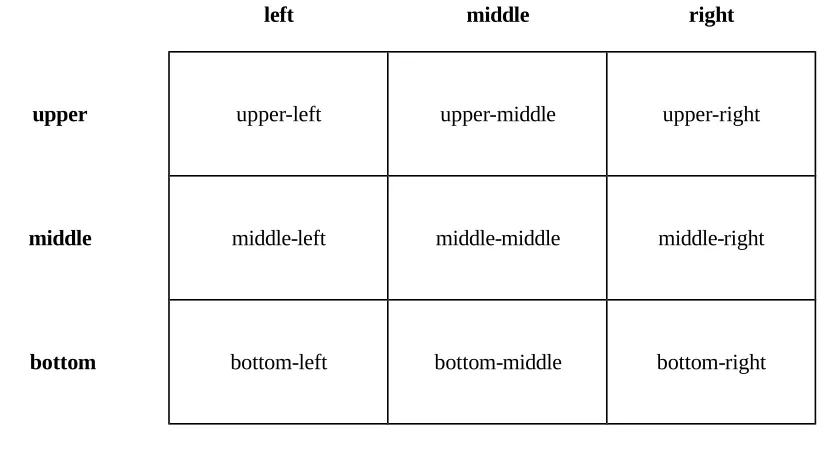
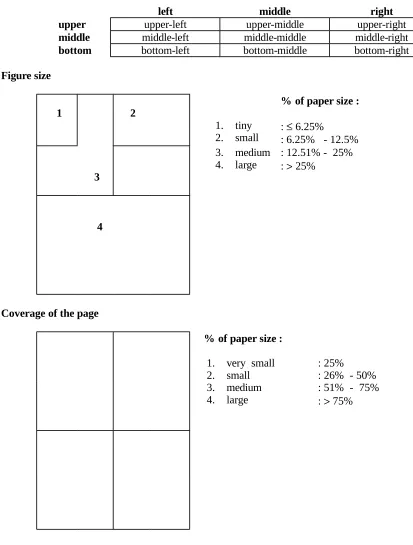
Coding for the directional placement of the figure on the page
left middle right
upper upper-left upper-middle upper-right
middle middle-left middle-middle middle-right
bottom bottom-left bottom-middle bottom-right
Coding for the figure size
1 2
1. tiny
2. small : 6.25% - 12.5%
3
3. medium
4. large : 12.51% - 25%: 25%
4
Coding for the coverage of the page
1. very small 2. small
% of paper size : : 25%
: 26% - 50% 3. medium
4. large : 51% - 75%: 75%
Results
All of the participants, both male and female students in Ternate and Bandung made the first drawing (drawing -1) as the figure of the self-sex, and the second drawing (drawing -2) as the figure of the other sex.
1. Examples of the drawing of the participants, male and female students, in Ternate and Bandung.
2. Graphs of the placement of the figure on the page, of the figure size, of the coverage of the page, both for male and female students in Ternate and Bandung.
3. Graphs of the content of the drawing, the graphic expresssion such as shading, and the figure’s description (such as age and activities of the figure), will be found in the attachment.
Examples of the drawing of the participants, male and female students, in Ternate and Bandung
Summary
The sumarry of the results will show the differences and the commonalitis (the simmilarities) of the drawing of the human figure of the children in Ternate and in Bandung.
The differences of the human figure will include:
The characteristics of the human figure of the children in Ternate, as compared to those of the children in Bandung
Conclusions
In general, the data of the figure on the draw-a-person test, from the refugee - chldren in Ternate reveals:
that the fiture on the draw-a- person-test show some characteristics.
that those characteristics lead to the understanding that the traumatic experiences of the refugee - children in Ternate because of the social conflict between religion-communities, Moslems and Christians, disturb the psychological development of the children, and effect their social life.
Gillespie, J., (1994), The Projective Use of Mother-and-Child Drawings: A Manual for Clinicians. New York: Brunner/Mazel.
Harian Kompas, Jakarta, Indonesia; Senin, 28 Juni 2004, halaman 52, Kekhawatiran Masyarakat Maluku Utara Belum Terpulihkan.
Laporan Pelaksanaan Penanganan Masalah Psikososial pada Siswa Pengungsi di Ternate November 2002. Fakultas Psikologi Universitas Padjadjaran, Bandung. (unpublished report). Machover, K., (1949), Personality Projection in the Drawing of the Human Figure, first edition,
sixth printing. Springfield: Charles C Thomas.
Marnat, G.G., (1990), Handbook of Psychological Assessment, second edition. New York: John Wiley & Sons.
Title
The drawing of the children in the refugee camps Background
The social conflict between religion communities, Moslems and Christians, in Moluccas the north, Indonesia in the end of 1999; where ± 2.048 people died, ± 197.000 became refugees, ± 20.000 houses destroyed and burned, ± 173 social facilities (schools, hospitals) and ± 144 churches and mosques destroyed.
The intervention programmes involved the professional psychologist, and took place in 2002-2003. Results from the counseling sessions revealed that most of the children i.e. the primary school students had those traumatic experiences. It was shown by the fact that, for example, the children told the stories about the beginning of the conflict, how they and their families handled the horrible situation, how they ran away and looked for some shelters, how they were evaquated by the army, and how at last they became refugees, as they just happened the day before. They were crying during the counseling session. They still remembered clearly how their family members (father, mother, sisters or brohers, uncles or aunts) were killed in that chaos. They saw for example, how their heads were cut and then were carried along in a procession through the town. They, who called them self moslems, hate Christians very much.
There have been the moslems areas and the christians areas since that conflict. The moslems areas were the areas occupated by Moslems, the Christians in these areas were gone as refugees to some places nearby. The christians areas were areas occupated by Christians, the Moslems in these areas were gone as refugees to some places nearby.
Ternate was a moslem area, where the refugees came from some cities in Halmahera (Tobelo, Malifut, etc.). The refugees in Ternate lived in the houses used to be owned by Christians, in churches that were not used any more, in some schools, and in some public buildings. People organized schools for the children refugees in Ternate, that was called The Alternative School. These students were the subjects of the intervention programmes.
This study will present the drawing of the children with traumatic experiences because of the conflict, in Ternate.
Research question
whether there is any characteristic of the children drawing in the refugee camps in Ternate
Methods
Comparative study
between the drawing of the refugee children in Ternate and the children in Bandung, where such a conflict has never been happened.
Participants
Ternate : Primary school students grade 4 - 6 (The Alternative School for refugee children); 68 male students, 69 female students; mean age years (min. 9 years, max 13 years, SD. years) Bandung : Primary school students grade 4 - 6 in Bandung (SD Cigadung); 97 male students, 92 female students; mean age years (min. 9 years, max. 13 years, SD. years)
considered as or classified into the group of preteens- or preadolescence, ages 9-13
Material
Paper A4 (210 x 297 mm), pencil of a medium soft (HB) for Draw-a-Person Test. Procedure and data collecting
Data analysis
The data were quantitatively coded following such categories: placement of the figure on the page, figure size, coverage of the page, content, graphic expression such as shading, and the figure’s description. The results will describe the commonalities and the differences of the drawings of the children from Ternate and Bandung.
Directional placement of the figure on the page
left middle right
upper upper-left upper-middle upper-right middle middle-left middle-middle middle-right bottom bottom-left bottom-middle bottom-right Figure size
1 2
1. tiny 2. small
% of paper size : : 6.25%
: 6.25% - 12.5%
3
3. medium
4. large : 12.51% - 25%: 25%
4
Coverage of the page
% of paper size :
1. very small
2. small : 25%: 26% - 50% 3. medium
4. large
Results
All of the participants, both male and female students in Ternate and Bandung made the drawing -1 as the figure of the self-sex and the drawing -2 as the figure of the other sex.
Placement of the figure on the page Male students
left - (%) middle - (%) right - (%) ternate bandung ternate bandung ternate bandung upper : drawing -1
drawing -2
30 (44.11)
42 (61.76) 25 (25.77)21 (21.64) 25 (25.00)12 (17.64) 09 (09.27)15 (15.46) 00 (00.00)00 (00.00) 01 (01.03)01 (01.03) middle: drawing -1
drawing -2
08 (11.76)
05 (07.35) 29 (29.89)28 (28.86) 06 (08.82)08 (11.76) 15 (15.46)13 (13.40) 00 (00.00)00 (00.00) 03 (03.09)03 (03.09) bottom: drawing -1
drawing -2
05 (07.35)
00 (00.00) 08 (08.24)09 (09.27) 01 (01.47)01 (01.47) 04 (04.12)03 (03.09) 01 (01.47)00 (00.00 03 (03.09)04 (04.12)
Female students
left - (%) middle - (%) right - (%) ternate bandung ternate bandung ternate bandung upper : drawing -1
drawing -2
46 (66.66)
43 (62.31) 36 (39.13)24 (26.08) 10 (14.49)12 (17.39) 10 (10.86)14 (15.21) 01 (01.44)05 (07.24) 03 (03.26)03 (03.26) middle: drawing -1
drawing -2
07 (10.14)
04 (05.79) 25 (27.17)22 (23.91) 02 (02.89)04 (05.79) 05 (05.43)15 (16.30) 00 (00.00)00 (00.00) 04 (04.34)03 (03.26) bottom: drawing -1
drawing -2
00 (00.00)
00 (00.00) 06 (06.52)07 (07.60) 01 (01.44)01 (01.44) 01 (01.08)00 (00.00) 02 (02.89)00 (00.00) 02 (02.17)04 (04.34) Figure size
size (% of paper size) male students - (%) female students - (%)
ternate bandung ternate bandung
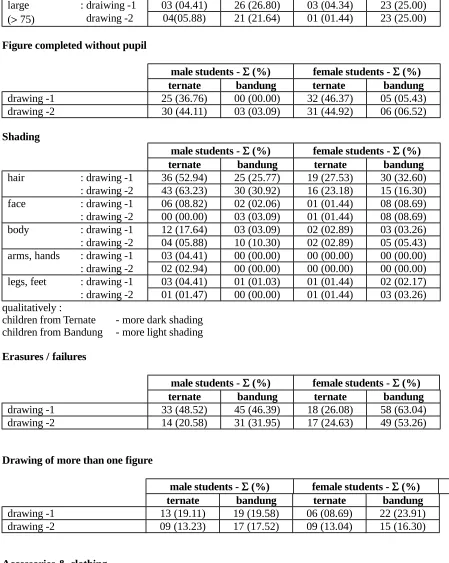
tiny : drawing -1 52 (76.47) 24 (24.74) 53 (76.81) 22 (23.91) ( 6.25) drawing -2 57 (83.82) 35 (36.08) 61 (88.40) 32 (34.78) small : drawing -1 10 (14.70) 32 (32.98) 09 (13.04) 39 (42.39) (6.26-12,5) drawing -2 04 (05.88) 35 (36.08) 07 (10.14) 35 (38.04) medium : drawing -1 04 (05.88) 29 (29.89) 04 (05.79) 22 (23.91) (12.51-25) drawing -2 07 (10.29) 20 (20.61) 01 (01.44) 17 (18.47) large : draiwing -1 02 (02.94) 12 (12.37) 03 (04.34) 09 (09.78) ( 25) drawing -2 00 (00.00) 07 (07.21) 00 (00.00) 08 (08.69)
Coverage of the page
area (% of paper size) male students - (%) female students - (%)
ternate bandung ternate bandung
medium : drawing -1 11 (16.17) 17 (17.52) 06 (08.69) 17 (18.47) (51-75) drawing -2 11 (16.67) 11 (11.34) 06 (08.69) 15 (16.30) large : draiwing -1 03 (04.41) 26 (26.80) 03 (04.34) 23 (25.00) ( 75) drawing -2 04(05.88) 21 (21.64) 01 (01.44) 23 (25.00) Figure completed without pupil
male students - (%) female students - (%)
ternate bandung ternate bandung
drawing -1 25 (36.76) 00 (00.00) 32 (46.37) 05 (05.43)
drawing -2 30 (44.11) 03 (03.09) 31 (44.92) 06 (06.52)
Shading
male students - (%) female students - (%)
ternate bandung ternate bandung
hair : drawing -1 36 (52.94) 25 (25.77) 19 (27.53) 30 (32.60) : drawing -2 43 (63.23) 30 (30.92) 16 (23.18) 15 (16.30) face : drawing -1 06 (08.82) 02 (02.06) 01 (01.44) 08 (08.69) : drawing -2 00 (00.00) 03 (03.09) 01 (01.44) 08 (08.69) body : drawing -1 12 (17.64) 03 (03.09) 02 (02.89) 03 (03.26) : drawing -2 04 (05.88) 10 (10.30) 02 (02.89) 05 (05.43) arms, hands : drawing -1 03 (04.41) 00 (00.00) 00 (00.00) 00 (00.00) : drawing -2 02 (02.94) 00 (00.00) 00 (00.00) 00 (00.00) legs, feet : drawing -1 03 (04.41) 01 (01.03) 01 (01.44) 02 (02.17) : drawing -2 01 (01.47) 00 (00.00) 01 (01.44) 03 (03.26) qualitatively :
children from Ternate - more dark shading children from Bandung - more light shading Erasures / failures
male students - (%) female students - (%)
ternate bandung ternate bandung
drawing -1 33 (48.52) 45 (46.39) 18 (26.08) 58 (63.04)
drawing -2 14 (20.58) 31 (31.95) 17 (24.63) 49 (53.26)
Drawing of more than one figure
male students - (%) female students - (%)
ternate bandung ternate bandung
drawing -1 13 (19.11) 19 (19.58) 06 (08.69) 22 (23.91)
drawing -2 09 (13.23) 17 (17.52) 09 (13.04) 15 (16.30)
Accessories & clothing
male students - (%) female students - (%)
head, face : drawing -1 05 (07.35) 29 (29.89) 18 (26.08) 40 (43.47) : drawing -2 02 (02.94) 30 (30.92) 08 (11.59) 25 (27.17) pocket, belt, : drawing -1 29 (42.64) 55 (56.70) 27 (39.13) 44 (47.82) buttons : drawing -2 19 (27.94) 34 (35.05) 22 (31.88) 38 (41.30) shirt, trousers : drawing -1 15 (22.05) 88 (90.72) 29 (42.02) 68 (73.91) skirt, shoes : drawing -2 10 (14.70) 35 (36.08) 12 (17.39) 53 (57.60) bag : drawing -1 01 (01.47) 01 (01.03) 02 (02.89) 08 (08.69) : drawing -2 02 (02.94) 07 (07.21) 01 (01.44) 01 (01.08) Drawing of other objects
male students - (%) female students - (%)
ternate bandung ternate bandung
landscape : drawing -1 02 (02.94) 23 (23.71) 10 (14.49) 34 (36.95) : drawing -2 03 (04.41) 14 (14.43) 07 (10.14) 26 (28.26) ball : drawing -1 05 (07.35) 28 (28.86) 00 (00.00) 02 (02.17) : drawing -2 01 (01.47) 01 (01.03) 05 (07.24) 20 (21.73) sport : drawing -1 00 (00.00) 05 (05.15) 00 (00.00) 02 (02.17) : drawing -2 00 (00.00) 01 (01.03) 00 (00.00) 01 (01.08) home : drawing -1 01 (01.47) 06 (06.18) 02 (02.89) 05 (05.43) : drawing -2 00 (00.00) 09 (09.27) 01 (01.44) 07 (07.60) Description about the figure
Age
as compared to subject male students - (%) female students - (%)
ternate bandung ternate bandung
older : drawing -1 10 (14.70) 33 (34.02) 16 (23.18) 18 (19.56) : drawing -2 18 (26.47) 35 (36.08) 15 (21.73) 33 (35.86) same : drawing -1 41 (60.29) 52 (53.60) 41 (59.42) 54 (58.69) : drawing -2 45 (66.17) 51 (52.57) 41 (59.42) 33 (35.86) younger : drawing -1 07 (10.29) 12 (12.37) 12 (17.39) 20 (21.73) : drawing -2 05 (07.35) 11 (11.34) 13 (18.84 ) 23 (25.00)
Activities
male students - (%) female students - (%)
ternate bandung ternate bandung
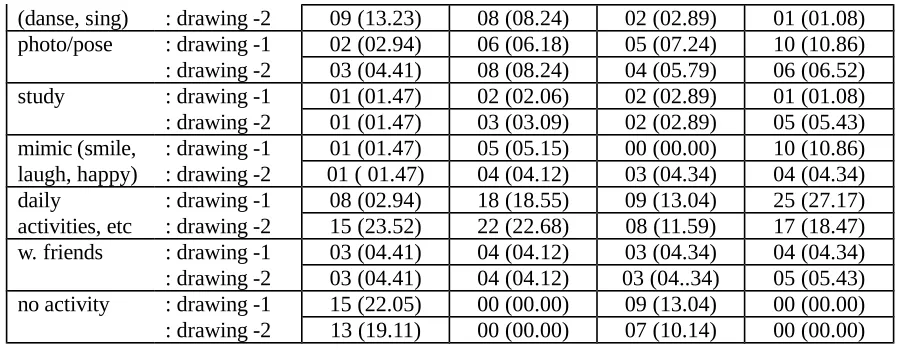
(danse, sing) : drawing -2 09 (13.23) 08 (08.24) 02 (02.89) 01 (01.08) photo/pose : drawing -1 02 (02.94) 06 (06.18) 05 (07.24) 10 (10.86) : drawing -2 03 (04.41) 08 (08.24) 04 (05.79) 06 (06.52) study : drawing -1 01 (01.47) 02 (02.06) 02 (02.89) 01 (01.08) : drawing -2 01 (01.47) 03 (03.09) 02 (02.89) 05 (05.43) mimic (smile, : drawing -1 01 (01.47) 05 (05.15) 00 (00.00) 10 (10.86) laugh, happy) : drawing -2 01 ( 01.47) 04 (04.12) 03 (04.34) 04 (04.34) daily : drawing -1 08 (02.94) 18 (18.55) 09 (13.04) 25 (27.17) activities, etc : drawing -2 15 (23.52) 22 (22.68) 08 (11.59) 17 (18.47) w. friends : drawing -1 03 (04.41) 04 (04.12) 03 (04.34) 04 (04.34) : drawing -2 03 (04.41) 04 (04.12) 03 (04..34) 05 (05.43) no activity : drawing -1 15 (22.05) 00 (00.00) 09 (13.04) 00 (00.00) : drawing -2 13 (19.11) 00 (00.00) 07 (10.14) 00 (00.00)
Else : found only in Ternate
male students - (%) female students - (%) drawing -1 drawing -2 drawing -1 drawing -2
naked 01 (01.47) 01 (01.47) 02 (02.89) 02 (02.89)
transparent 03 (04.41) 05 (07.35) 05 (07.24) 04 (05.79)
with sexual organs 02 (02.94) 02 (02.94) 03 (04.34) 03 (04.34)
without arms 03 (04.41) 02 (02.94) 04 (05.79) 03 (04.34)
without hands 02 (02.94) 02 (02.94) 02 (02.89) 00 (02.89)
without legs 00 (00.00) 00 (00.00) 00 (00.00) 01 (01.44)
without waistline 07 (10.29) 07 (10.29) 15 (21.73) 20 (28.98)
stick-man 05 (07.35) 05 (07.35) 12 (17.39) 08 (11.59)
tube-man 02 (02.94) 01 (01.47) 04 (05.79) 01 (01.44)
Summary
Differences ternate bandung
placement of the
figure on the page dominated by upper-left-zone,both for male and female dominated by upper- and middle-left-zone, both for male and female figure size dominated by tiny-size,
both for male and female scattered, but dominated mostly bytiny-, small-, and medium-size, both for male and female
coverage of the page dominated by very-small- and small-part of the paper,
both for male and female
scattered, but dominated mostly by very-small-, small-, and large-part of the paper, both for male and female
completed without pupil
male (36.76%, 40.11%), female ( 46.37%, 44.92%)
male (0, 3.09%) female (5.43%, 6.52%)
hair, face, body, arms, legs; both for male and female
hair, face, body, arms, legs; both for male and female accessories, clothing,
fashion head-part; pocket, buttons, belt;clothing less varied than those from Bandung, both for male and female
head-part; pocket, buttons, belt; clothing (shirts, troussers, skirt, shoes), more varied, both for male and female
other objects less varied than Bandung more varied; with landscape, balls, home; both for male and female age of the figure scattered (the same age, older and
younger), but dominated by the same age, both for male and female
dominated by the same age; some older, very few younger, both for male and female
content naked, transparent, sexual organs, without arms, hands, legs; no waistline: stick-man, tube-man
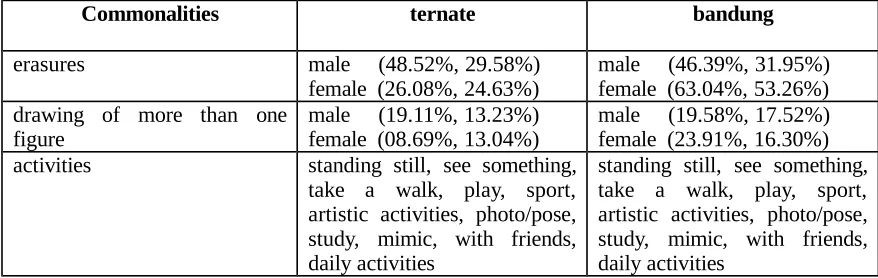
-Commonalities ternate bandung
erasures male (48.52%, 29.58%)
female (26.08%, 24.63%)
male (46.39%, 31.95%) female (63.04%, 53.26%) drawing of more than one
figure male (19.11%, 13.23%)female (08.69%, 13.04%) male (19.58%, 17.52%)female (23.91%, 16.30%) activities standing still, see something,
take a walk, play, sport, artistic activities, photo/pose, study, mimic, with friends, daily activities
standing still, see something, take a walk, play, sport, artistic activities, photo/pose, study, mimic, with friends, daily activities
Conclusions Differences
Characteristics of the human figure of the children refugees in Ternate, as compared to those from Bandung:
1. - placement of figure &
coverage of the page dominated by upper-left-zone, and cover a very-small area ofthe page - figure size dominated by tiny-size
- content more percentage of the drawings without arms and hands - conflict indicators dominated by dark shading
difficulties in presenting him / herself in the social life, tendency of withdrawing from social life or, extremely, an indication of social fear
2. content more percentage of figures completed without pupils, without waistline, were drawn in the form of stick-man, tube-man, were drawn naked, transparent (indicators of early forms), figures that were younger than the subjects
3. content existence of figures with primary or secondary sex organ social norms are not developed properly
The data of the figures as shown on the draw-a person-test, reveals that the traumatic experiences of the children-refugee in Ternate because of the social conflict between religion communities, Moslems and Christians, disturb the psychological development of the children, and effect their social life.
Characteristics of the human figure of the participants from Bandung, as compared to those from Ternate
accessories, clothing more percentage, more varied and more fashionable
cross-culturally differences
Commonalities
The characteristics of preteen- or preadolescence-group of the participants from Ternate and Bandung, ages 9-13 years, expressed on the human figure:
1. content drawing of more that one figures interest in peer; typical for this group 2. content &
graphic expression belt, erasures or failures in drawing
an attempt to control impulse, and conflicts, rationally; typical for this group
3. content buttons and pockets
dependency on the elder people, typical for this group
4. activities sport (play foot-ball) for male students, and play for female students