A Thesis
Presented as Partial Fulfillment of the Requirements for the Attainment of the
Sarjana Sastra Degree in English Language and Literature
By:
Mutia Rizki
(08211141001)
STUDY PROGRAM OF ENGLISH LANGUAGE AND LITERATURE
DEPARTMENT OF ENGLISH LANGUAGE EDUCATION
FACULTY OF LANGUAGES AND ARTS
YOGYAKARTA STATE UNIVERSITY
v
-Giorgio Armani. Life is hard; it’s harder if you’re stupid.
-John Wayne.
“...but, dear me, let us be elegant or die.”
vi
• Universe and the entire creative mind inside it,
• those who love me,
vii
1. Dr. Widyastuti Purbani, M.A., as my first consultant also my academic
supervisor and Rachmat Nurcahyo, M.A., as my second consultant, who have
given me valuable knowledge, time, and guidance so that I could finish this
thesis;
2. all my lecturers who have given me priceless knowledge during my study;
3. Mom, Bapak Kozen, Mas Irul, Dik Uzan, and Dik Farhan for the love, support,
laugh, endless fight and yells we had in most of our days which motivate me to
get my own life and make them proud;
4. Mbah Kakung, Lek Budi, Lek Mus, and all of my nephews for the unstoppable
prays and support;
5. my friends in Kos L, Desi, Mia, Olive, Didi for the love, laugh and some
outfits that we shared;
6. Friends L.O.V.E: Njai, for our productive time in campus and all those
“nyinyir” time, Adit, Amoy, Nila, Icak, Baim, Arin, Habibi, and Kumi for the
movie talk we had;
7. My amazing friends of English Literature 2008, Jinguks (Okky, Septi, Acha),
Wafiq, Doni, Sheva, Uzi, Risti, Ocha, Indra, Andi, Seruni, Islah, Andria, Wani
for the support and discussions we had;
8. RELUNG family, ADDICTIVE family, Long Story family, S.A.S Family for
viii
and Mbak Linda for the food and meals;
11. all of my social media friends for the Retweet, Reply, Mention, DM,
emoticons, comments, likes, visits for the unstoppable support;
12. all of those exes through these years, thanks for the lesson I’ve learned;
13. directors of all films that I’ve watched, thanks for making me more curious
about film analysis;
14. all people who love me and care about me whom I cannot mention by name,
who helped me finishing this thesis;
15. Last but not least, he-whom-I-called-as-boyfriend, thanks for the
invisible-incridible-support and motivation he sent me telepathically, Rio.
Writing this thesis would have been impossible without them, I do realize that my
thesis has not been perfect yet. Thus, any suggestions and criticism are indeed needed
to improve my thesis.
Yogyakarta, 8January 2015
ix
RATIFICATION SHEET ... iii
SURAT PERNYATAAN ... iv
MOTTOS ... v
DEDICATIONS ... vi
ACKNOWLEDGMENTS ... vii
TABLE OF CONTENTS ... ix
LIST OF FIGURES ... xiii
LIST OF TABLES ... xvi
LIST OF APPENDICES ... xvii
ABSTRACT ... xviii
CHAPTER I INTRODUCTION ... 1
A. Background of the Study ... 1
B. Research Focus ... 7
C. Research Objectives ... 9
D. Research Significance ... 9
CHAPTER II LITERATURE REVIEW ... 10
A. Theoritical Review ... 10
1. Postmodernism ... 10
a. Breakdown of the Distinction between Culture and Society ... 14
x
2. Postmodern Film ... 18
a. An effacement of the Boundaries between Past and Present ... 20
b. Terrorizing the Nostalgia of the Past ... 21
c. Present the Unpresentable ... 22
d. Wild Sexuality or Violence ... 22
e. The Portrayal of Femme Fatale ... 23
f. Locate Violent Margins into Everyday Society ... 23
3. Movie Analysis ... 24
a. Mise-en-scene ... 24
1) Setting ... 25
2) Lighting ... 25
3) Costume and Make Up ... 26
b. Cinematography ... 27
1) Motion ... 27
2) Lens/Filter/Stock ... 27
3) Editing ... 28
4) Sound ... 29
4. Gondry’s Eternal Sunshine of the Spotless Mind ... 30
5. Previous Research Finding ... 32
xi
C. Research Instrument ... 37
D. Data Collecting Technique ... 37
E. Data Analysis Technique ... 38
F. Data Trustworthiness ... 39
CHAPTER IV FINDING AND DISCUSSIONS ... 41
A. Characteristics of Postmodern Film in Eternal Sunshine of the Spotless Mind ... 41
1. An Effacement of the Boundaries between Past and Present ... 41
2. Terrorizing the Nostalgia of the Past ... 52
3. Wild Sexuality and Violence ... 57
4. Clementine as the Reflection of Femme Fatale ... 60
5. Present the Unpresentable ... 64
B. How the Postmodern Characteristics are Presented in Eternal Sunshine of the Spotless Mind ... 69
1. Mise-en-Scene ... 69
a. Setting of Time ... 69
1) The Future ... 71
2) The Present ... 72
3) The Past ... 73
xii
1) Slow Motion ... 82
2) Fast Motion ... 84
b. Lens/Filter/Stock ... 86
c. Editing ... 90
d. Sound ... 92
CHAPTER V CONCLUSION ... 96
REFERENCES ... 99
APPENDICES ... 102
xiv
Figure 3.The scene moves to Carrie’s home. (past) ... 44
Figure 4.Clementine on work. (Past-past) ... 44
Figure 5.Stan in Joel’s room doing the operation (present) ... 47
Figure 6. Joel confused where Clementine goes (past). ... 47
Figure 7. Back again to the present scene in Joel’s room (present). ... 47
Figure 8. Joel confused about the unknown voice that he heard. (past) ... 47
Figure 9. Joel in the past screams “I wanna call it off!” as loud as he can ... 49
Figure 10. Joel and Clementine are running from the erasure machine. ... 50
Figure 11. The pasts blurred into one. (the mixed pasts) ... 50
Figure 12. Little Joel tilts his hand under the rain. (Past 2) ... 51
Figure 13.The merging memory.(Past 1) ... 51
Figure 14. In Joel’s childhood memory (Past 1 and Past 2 mixed into one) ... 52
Figure 15. A signifier of the past that destroys Joel. ... 53
Figure 16. Blurred picture of the card. ... 54
Figure 17. Joel in the bookstore. ... 56
Figure 18. A woman cries when she recalls her memory. ... 57
Figure 19. Mary and Stan dance in bed. ... 58
Figure 20. Joel kills a bird. ... 59
Figure 21. Joel’s hand squeeze Clementine’s breast indicates wild sexuality. ... 59
xv
Figure 26.The machine 1. ... 67
Figure 27. This is the readouts of Joel’s brain. ... 67
Figure 28. Joel while the erasure procedure is happening. ... 68
Figure 29.The faceless character of Dr. Mierzwiak. ... 69
Figure 30. The scene reappears in the end of the film. ... 70
Figure 31. Joel drives home as the beginning of the present time. ... 72
Figure 32. The past: when Joel and Clementine were together. ... 73
Figure 33. The past: when they had their fight before the break up night. ... 73
Figure 34. This is the bookstore where Clementine works, Barns and Nobles. ... 74
Figure 35. Joel comes out from bookstore and ended up in Rob’s apartment. ... 74
Figure 36. Joel and Clementine lie down in the Frozen Charles. ... 75
Figure 37.The setting moves into the middle of the pedestrian area. ... 75
Figure 38. The unconscious Joel in his room. ... 76
Figure 39. All of the sudden Joel moves into another room. ... 76
Figure 40. Joel realizes that he is in his head (past). ... 77
Figure 41. There are two Joel in the room with different wardrobe. ... 77
Figure 42.Transformation of the place (1). ... 77
Figure 43.Transformation of the place (2) ... 77
Figure 44.Transformation of the place (3) ... 77
xvi
Figure 49. The past showed by low key lighting. ... 79
Figure 50. Faceless Dr. Mierzwiak. ... 80
Figure 51. The lamplight on the bookstore slowly fades out. ... 80
Figure 52. The blackout lights indicate terror. ... 80
Figure 53. Red light comes up on the screen. ... 81
Figure 54.The causes of the red lights. ... 81
Figure 55. Slow motion starts when Joel recalls his memory about Clementine. ... 83
Figure 56. Fast motion indicates a chaos. ... 84
Figure 57. Stan and Dr. Mierzwak sort the stuffs from Joel. (fast motion) ... 85
Figure 58. The camera infocus on Joel’s expression and outfocus on Frank. ... 86
Figure 59. The camera infocus on lying Joel and outfocus. ... 86
Figure 60. Deep focus in the scene. ... 87
Figure 61. The card from Lacuna, at first seems infocus. ... 88
Figure 62.The card slowly outfocus as an indicator of the erasure... 88
Figure 63. The camera outfocus on the background (bookstore), ... 89
Figure 64.Joel’s childhood memory. ... 90
Figure 65. The camera cuts on adult Joel with the same gesture as little Joel. ... 90
Figure 66. The fade editing technique shows the movement of the setting. ... 91
xvii
Table 1. Table List of the Figure for the Characteristics of Postmodern Film
in Gondry’s Eternal Sunshine of the Spotless Mind ... 104
Table 2. Table List of the Data for How the Characteristics of Postmodern Film
xviii
Mutia Rizki
08211141001
ABSTRACT
This study is under a postmodernism theory. The purpose of this study is to analyze Gondry’s Eternal Sunshine of the Spotless Mind film using postmodern film theory. This study has two objectives; 1) to analyze the characteristics of postmodernism and postmodern film in Gondry’s Eternal Sunshine of the Spotless Mind; and 2) to explain how the characteristics of postmodern film are presented in Gondry’s Eternal Sunshine of the Spotless Mind.
This study employed a descriptive qualitative method since it emphasized on describing the characteristics of postmodern film that are presented in Gondry’s Eternal Sunshine of the Spotless Mind. Moreover, the findings were presented in narrative or textual description. However, figures were also used to support the analysis of the data. Some steps in analyzing the data were: scrutinizing the cinematography of the film, the dialogue, and the scenes of the film; comparing the cinematography, the dialogue, the scene, and the plot of the film to the concept of postmodern theory and Denzin’s postmodern film theory, making a data sheet based to categorize the data based on the classification, analyzing and interpreting the data.
This study reveals two findings. First, of Denzin’s six characteristics of postmodern film, only five characteristics found in Gondry’s Eternal Sunshine of the Spotless Mind. They are an effacement of the boundaries between past and present, terrorizing the nostalgia for the past; present the unpresentable, femme fatale as female character, and the using of violence and wild sexuality. The absent characteristic is to locate violent margins into everyday society. Second, how the characteristics of postmodern film are presented in Gondry’s Eternal Sunshine of the Spotless Mind. Through the using of mise-en-scene including setting of place, time, and lighting, and the using of cinematography including the editing technique, lens, motion, and sound, this study found that Gondry’s Eternal Sunshine of the Spotless Mind can be included in postmodern film based on the characteristics.
1
A. Background of the Study
The literary value of a film is still underestimated until today. This thought
comes up since people discover that it is easier to understand the content of a film
than to understand the content of a book. When people read a book, they need to
read, imagine, give some thoughts about it, and then re-think to be sure about the
content of the book. Meanwhile, people do not need to imagine and rethink too
much when they watch films. That is because films present not only a story, but
also the visual form of the content. It makes people think that in watching a film,
they do not need to understand about literature and literary theory.
The literary and the film language are two different methods of
communication. The first one uses words and the later uses images. Because they
tell a story, the goal that can affect the emotions and feelings is the same.
Although it may simultaneously communicate facts, literature’s primary aim is to
tell a story.
The common use of actors and sets actually makes film seem nearest to
theater or play which has already considered as literature. Critics also agree that
film and fiction have strong affinity especially with the narrative deals that come
up in the film script. Film is a depiction of a text through its script. Film depicts
As an artwork, film is a mixture of space and time, image and word, reality
and fiction, knowledge and feeling. Film is also a reflection of human senses.
People can see and hear it, and the film’s capacity of re-memorizing makes people
can also smell it, taste it, and finally feel it using their imagination after they get
the visualization from film. Film has the same literary value as theatres, and even
books or other literary works. People learn about books, enjoy the comedies and
the tragedies of poems or plays, and through films, people find the visualization of
new world and experience that probably only happens in their imagination.
The development of film and its visual power evolves along with the
spread of postmodernism. According to Purbani in Membaca Komik Crayon
Sinchan: Dengan Wacana Posmodernisme (2012:5), influenced by the media and
the development of technology, in postmodern era people tend to ‘watch’ than
‘read’. The role of television, films, and internet in daily life is bigger than in the
previous era. Visual activity becomes an obsession, and people slowly move away
from reading activity.
Due to the emergence of fatigue in old-fashioned texts, especially modern
film, people swarm to create various films with various improvisations without
losing the moral value and meaning. Modern film explores and exposes the formal
concerns of the medium by placing them at the forefront of consciousness. It
questions and makes visible the meaning-production practices of film. The
modern film has more faith in the author, the individual, and the accessibility of
reality itself than the postmodern film. Postmodern film upsets the mainstream
structure into new structure that has less recognizable forms. The new form aims
at playing with the audience’s doubt and it makes them question about the
narrative structure of the film or the plot.
In modern era, people consider Shakespeare’s texts as high art because
they are educative. On the other hand, people consider popular texts such as
comics, indie films, and other popular literary works as low art. For them, popular
texts are not educative and are slowly destroying the young generation’s belief.
Meanwhile, in postmodern era the boundaries of high art and low art are fading.
The arousing of some films like Pulp Fiction, Blade Runner, and Trainspotting
becomes the evidence of the faded boundaries between high art and low art.
Although the films have already had place in society, there are some people who
still cannot understand the film which causes some cynical responses in those
films. For example, this audience’s review in Tarantino’s Pulp Fiction, taken from
Cynical-C, You Can’t Please Everyone- Pulp Fiction site:
I know there are a lot of technical terms associated with a movie production like screenplay, direction, plot, acting, etc. Unfortunately I don’t know the definitions of most of them. One thing that is pretty basic to me, though, is a “point”. Usually there is some kind of point to a movie, good guy verses bad guy, she loves him, he loves her, may the force be with you, etc., but the point of this movie totally escapes me. It’s THE most pointless movie I have ever seen. When it was done I felt like the trapeze artist who swung out to meet the person on the other trapeze and he wasn’t there. (2009)
The cynical response is an effect of the audience’s ignoranceon how to
watch postmodern film. The audience considers the film as ‘pointless’ text
because their point of view is still in modern era when people glorify high art.
However, people cannot deny that those films are usually well-known by its
film does not only apply the different concept and plot, but also gives moral
lesson to the audience. For example, Taxi Driver, a film that tells the audience
about a life of loneliness and alienation in the big city, drives the taxi driver
(Robert deNiro) to insanity and violence. The film tells the audience about the
important things in life and the danger of big city for the broken soul.
While the postmodern film receives some cynical responses by some film
critics, postmodernism poses serious challenges to anyone trying to explain its
major precepts in a straightforward fashion. The blur between reality and fiction is
the most obvious characteristic that makes a film postmodern, but then some
people called it as ‘complicated’, or even worse, ‘pointless’. Postmodern fiction
represents a world where reality or history is temporary: no longer a world of
eternal truth, but a series of constructions, imitation, impermanent structures.
Because in postmodern, there are no boundaries between reality and fiction. The
audience is forced to play with their imagination and is given a privilege to decide
the ending of the story.
The absurdness of postmodern film tends to lead the audience into the
confusion between reality and fiction, and it may cause frustration to the audience
who misinterpret the postmodern film. The lack of knowledge about postmodern
theory on the audience makes them harder to understand postmodern film. As a
result, it causes reluctance on the audience to watch the postmodern film. The
frustration and the unwillingness of the audience directly affect the rating of the
film. And if the popularity or the rating of the postmodern film is low, the film
project. Such a big loss can be a lesson to production house. However, the fact
that people will not stop improving and exploring new things makes the creation
of postmodern film continues so that the audience inevitably has to face it. By
making small but significant changes to the film production, the imitation of the
experience and the world is being presented. The aims are to remove audience’s
mind from the conventional emotional bonds and give them a new view of it.
Hence, some directors start to create some postmodern films with the theme that
will be easily accepted by audiences, such as love theme.
By using the theme that is familiar and easily accepted by the audience,
hopefully it will make the postmodern film becomes acceptable to the audience.
The audience needs to know ‘how to’ watch postmodern film so there will be no
more frustration and the wasting-money project which cause the lack of new
original idea in film industry. The new and fresh ideas need to be continued
although it cannot be denied that one of postmodern characteristics is pastiche
which arranges borrowed elements from the past and combinesthe materials,
forms, motifs with elements of the present.
The aim of this research is to straighten out the misinterpretation of the
audience to the postmodern film by showing them how to watch postmodern film
based on characteristics of postmodernism applied in a film using Denzin’s
postmodern film theory. Knowing the characteristics and way to understand
postmodernism, the audience will have a clearer understanding about how to
The understanding here means that the audience will not underestimate the point
or the meaning of postmodern film, and they will watch a postmodern film
without any confusion.
Michel Gondry is a director known for his surreal settings and visual
effects. Taken from ‘Internet Movie Database’ (imdb.com), the video clip he
made for IAM (Je danse le Mia) was the first video clip using the morphing
techniques. Above all, he invents the technique of several cameras taking pictures
at the same time around somebody. This technique was used for the first time in a
commercial for insurance, then in Björk's Army of Me video clip and in The
Matrix (1999).
Known for his iconic films, including Eternal Sunshine of the Spotless
Mind, with his partner Charlie Kauffman as the scriptwriter, Gondry creates
blurred lines between reality and fiction in this film. This film is analyzed using
Denzin’s postmodern film theory to prove that this film has the characteristics of
postmodern film, so that it can help the audiences to watch and understand
postmodern film.
This film is a romantic film focusing on a losing of a lover. After some
breakups experience, Joel (Jim Carrey) and Clementine (Kate Winslet) decides to
erase their own memory about one and another. The concept of the film is to erase
the bad memories happen in life. In a unique and absurd way, like some faceless
characters, and the unclear plot, this film gives new atmosphere to the audience.
The complicated plot of this film raises the curiosity of the audience and it
realize that the beginning of the film is actually the ending. Overall, this film is
both entertaining yet educating the audience, for it pushes the audience into the
limit of their imagination especially about the memories of the loved ones.
Gondry tries to visualize the wildest, most impossible imagination of the
audience. That is the aim and the point of interest of most postmodern film that
makes this film worth to discuss.
B. Research Focus
This research focuses on characteristics of postmodernism in Gondry’s
Eternal Sunshine of the Spotless Mind. The researcher focuses on the aspects and
elements of postmodernism in film based on Denzin’s postmodern film theory and
film analysis theory. This analysis aims at in-depth understanding in
postmodernism and postmodern film. The cynical response comes up because the
audience does not understand the whole point of the film, or sometimes are just
too lazy to understand the narrative structure of postmodern film. Unfortunately,
the production of postmodern film becomes massive nowadays.
Postmodern writers in film industry tend to rearrange narrative structure
and turn it into random plot rather than arrange the mainstream and predictable
plot. The point is to against the old-fashioned film, where most of the audience
expects happy ending on every story. The postmodern writer wants to make a
breakthrough and lets the reader predict about the ending of a story. It is the
reader that becomes the “God” of the story who accepts another perception about
is what Gondry does in his film; he leads the viewer into a different point of view
in facing relationship problems.
Joel (Jim Carrey), as the main male character of this film, depicts the
image of a man in postmodern era who is described as the one that runs away
from his primitive past towards the future, until he stops to realize that the future
he is running to is unclear and dark. Joel tries to erase the memories of his past
with Clementine (Kate Winslet), but then he finds the dilemma between his past
and his future. He actually does not want to let his memories of Clementine lost,
because he still wants them to be together. The process of his rejection described
with some absurd objects on the film as he wanders through his own past just to
learn that he actually needs it, no matter how painful it is to remember it.
Watching postmodern film is a process of learning for the audiences. It
takes time, experiences, and it will be easier if the audiences learn how to
understand the postmodern idea and the specific characteristics of postmodern
film first. There will be an imbalance between audience’s knowledge and their
acceptance of the film if they miss some understandings about postmodern film.
Concerning the background of the study, the researcher formulates the problems
of the study as follows.
1. What are the characteristics of postmodernism and postmodern film
found in Gondry’s Eternal Sunshine of the Spotless Mind?
2. How are the characteristics of postmodern film presented in Gondry’s
C. Research Objectives
Therefore, the objectives of this research are
1. to analyze the characteristics of postmodernism and postmodern film
in Gondry’s Eternal Sunshine of the Spotless Mind, and
2. to explain how the characteristics of postmodern film are presented in
Gondry’s Eternal Sunshine of the Spotless Mind.
D. Research Significance
Hopefully, this research will be beneficial
1. to enlarge the perception of the readers about the
characteristics of postmodernism,
2. to make the readers understand about postmodern film, and
3. as the references of other research about postmodern film, film,
10
This chapter, which deals with literature review, is divided into four parts.
The first part consists of theoretical review that consists of postmodernism,
Denzin’s theory of postmodern film’s characteristics, and Villarejo and Pratista’s
theory of movie analysis. The second part covers the film that is being analyzed in
this research, Gondry’s Eternal Sunshine of the Spotless Mind. The third part is
the review of previous research findings. The last part is theoretical framework
which shows the mind map of how this research is conducted.
A. Theoretical Review
1. Postmodernism
The term postmodern was first applied, around 1971, to a new
architectural style which combined old, classical forms with modern pragmatism
and scientific engineering. (Mizrach, 2006:1) Since then, the postmodernist
advocates have used the term to describe their movement as a reaction to the
failure of modernity - the betrayals of the modernist movement in the arts,
primarily, but also modernity understood as a social process.
This movement is not called 'anti-modernism' because it is not a rejection
of modernity but it is an effort to combine the best elements of the modern world
with the best elements of the traditions of the past that eliminates the worst parts
Postmodernism cannot be separated from the previous era, modernism.
Lyotard (in Storey 2004: 12), states that the project of modernity was indeed
finished and a new one had already begun. To determine whether a work is
postmodern or not, one does not simply look at the era when the work published
or created. Postmodernism is not about the era, but it contains the factors and
specific characteristics that are completing the ideas from the previous era, which
is the modern era. Traditional values are not going away in the postmodern world
and remain alive and well. Modern values are in an even stronger position – they
are dominant in the emerging markets and remain a strong influence in the
affluent nations.
Postmodernism tries to bring people’s mind back into its nature, let the
mind free and think about everything that they want to think. Postmodernism
employs the freedom and the equality of human thoughts. Therefore,
postmodernist will try not to speak in absolute terms. The general changing from
modern to postmodern era begins with innovation in technologies, especially the
technologies of art and writing, and a general transformation of social, cultural,
and aesthetic values.
Grand narratives (meta-narratives) are those which are read by
communities and being used to understand reality. They can be religious; The
Bible or the Koran, or they can be political; Das Capital. According to Sarup
(2008:43), the condition in the ancient world allows people to bend themselves
together using the mythology. Meanwhile in modern era, these meta-narratives
postmodern society, people no longer believe that there are absolute ways to
explain reality. There is no grand narrative causes many societies celebrate their
own differences.
Postmodern works reject the notion of universal truths and plays with the
possibilities of interpretations, multiple perspectives, uncertainties, and
contradictions. Lyotard in Storey (2004:150) states that postmodernism signified
by the collapse of universal truth and grand narratives. Instead the marginal voice
will take over the society with all the distinction and cultural diversity.
Postmodernism clearly holds what it considers important arguments about visual
phenomena, and the most obvious films in which to look for signs of
postmodernism are those which emphasize style, spectacle, special effects and
images, at the expense of content, character, substance, narrative and social
comment.
Lyotard in Sarup (2008: 226) argues that grand narratives are the means by
which a culture tells itself about practices and beliefs. Every belief system has a
grand narrative, a kind of meta-theory or meta-ideology. All aspects of modern
society, including science, depend on these grand narratives. Hence, in
postmodern critique, grand narratives are rejected in favours of mini-narratives or
stories that explain small practices, local events, rather than large scale universal
or global concepts.
There are no absolutes of any kind and there are no universal truths or
Postmodern texts using mini narratives by creating some fragmented narratives.
The reader is forced to understand the whole part of content of a story by
combining every piece of the narratives. The result of the understanding will be
different based on the reader’s experience and understanding, so that every
reader’s opinions will be different one to another.
Besides rejecting grand narrative, postmodernism also rejects the reason
and the individualism. According to Bell (Sarup, 2008: 226), modern culture
cause people become lack of social identification, narcissism, and overreact of
self-actualization. In postmodern, people exist as members of a group, not as
individuals. This is a major distinction between postmodernism and modernism.
In postmodernism, the individuals have no place. It rejects the modernist concepts
in which the priority of humans over all else are rejected as wrong values. The
problem is that creativity, autonomy, and human priority are values excluding and
oppressing other humans. Postmodernists argue that groups, not individuals, must
empower themselves and assert their own values.
As the representation of the change from modern into the postmodern era,
especially in art and writing, some literary works included into the postmodernist
fiction have their own characteristic; employing the individualist side of the
author. Even sometimes, the author puts their wildest imagination when the unreal
can be visualized in their work. Baudrillard (1998:121) states that in
postmodernism, it is no longer possible to fabricate the unreal from the real, the
imaginary from the givens of the real. Hallucination of the real will brought to
film, some artificial things that can only happen in unreal world brought to the
real and mixed into one with the real world so that there are no more boundaries
between the real and the unreal, whether it is the universe or the objects that
matters.
Postmodern texts are affected by the idea of postmodernism and it creates
new style of literary works in postmodern era. Books, plays, films and even
television massively create works that loaded with the postmodern idea. Strinati
(2004:224) states that the importance and power of the mass media and popular
culture mean that they govern and shape all other forms of social relationship. The
perceptions of the social environment in which society live are largely informed
by mediated cultural representations such as news images.
The idea is that in popular culture, signs and media images increasingly
dominate our sense of reality and the way we define ourselves and the world
around us. It tries to come to terms with and understand the media in society. The
mass media, for example, were once thought of as holding up a mirror to, and
thereby reflecting society - a wider social reality.Now, reality can be defined by
the surface reflections of that mirror. Society has become subsumed within the
mass media.
Meanwhile, in the form of art, postmodern creates the breakdown between
high culture and popular culture. This isa modernist distinction that is now
threatened by postmodern mediaculture that embraces both 'art' and 'the popular'
as a force for moral and political good, and in various forms this view remains
widespread, though far from uncontested. The term is contrasted with popular
culture or mass culture and also with folk culture, but by no means implies
hostility to these.
There once was a time when high art was removed from popular culture.
Dance music samples classical music once heralded as a genius, advertising uses
touch of old mix with the new. This mixing is often referred to as bricolage, a
French word meaning jumbled. Bricolage, according to Hill (2014:9), refers to the
process of adapting and juxtaposing old and new texts, images, ideas or narratives
to produce whole new meanings. There are three types of bricolage in postmodern
film, they are genre cross-over, recycling old forms, and mixing of high art and
low art. Genre cross-over is when a film can be categorized as not only one genre
but also two or even three or more genre(s). Romance, science fiction, comedy,
adventure, and there are still more genre films in industry film.
Elements of popular culture have been incorporated into high culture, and
that there is therefore no longer any real distinction between high and popular
culture and it is ever more difficult for anyone set of ideas of what is worthwhile
culture to dominate in society. Forexample, artist Andy Warhol painted thirty
pictures of Leonardo da Vinci’s Mona Lisa in different colours, arguing that
‘thirty was better than one’, John (in Storey, 2004:35), turning high culture art
into popular culture. Although Warhol’s work has been marketed to millions
through postcards and posters, at the same timeit is widely admired by the
According to Strinati (2004: 212), a crucial implication is that in a
postmodern world, surfaces and style become ever more important, producing and
feeding off what is called a ‘designer ideology’. The argument is that people
increasingly consume imagesand signs for their own sake rather than for their
‘usefulness’or for the deeper values they may represent. Images and signs are
consumed precisely because they are images and signs, regardless of questions of
utility and value.
This is thought tobe evident in popular culture itself where surface and
style, playfulness and jokes, and what things look like, are said to predominate at
the expense of content, substance and meaning. As a result, qualities such as
artistic merit, integrity, seriousness, authenticity, realism, intellectual depth
andstrong narratives tend to be undermined. Moreover, virtual reality computer
graphics can allow people to experience various forms of reality at second hand,
potentially at least assurface simulations rather than real events. For example is
the importance of packaging, designer labels and advertising, rather than quality
of content.
In today's society, people have accelerated the speed information can
travel over distances. Television, internet, gadgets, makes people easily
connected. Strinati believed that because of the speed and scope of modern mass
communications, time and space become less stable and comprehensible, more
confused, more incoherent, more disunified. This phenomenon also portrays in
media, such as film. Postmodern film has created the hyperbole of this
This point argues that present and future expansions, constrictions and concentrations of time and space have led to increasing confusion and incoherence in social senses of space and time, in our maps of the places where we live, and our ideas about the times by which we organise our lives. (2004:214)
In a postmodern text, confusions over time and space involve the timing of
the particular text to be un-chronological, perhaps sometimes confusing to the
audience. Sometimes the text uses different spaces such as different worlds and
universes.There are no boundaries between the real and unreal, the past and
present causes the confusion over time and space to the audience. In
postmodernism, it is no longer possible to fabricate the unreal from the real, the
imaginary from the givens of the real, Baudrillard states (in Smith, 2010:121).
One of the postmodernism characteristics is the decline of the universal
thoughts that came up in modern era. Meta-narratives are ideas such as religion,
science, art, modernism and Marxism which make absolute, universal
andall-embracing claims to knowledge and truth. Postmoderntheory is highly sceptical
about these metanarratives, andargues that they are disintegrating, losing their
validity andlegitimacy and increasingly prone to criticism.
Strinati (2004: 215) argues that it is becoming increasingly difficult for
people to organiseand interpret their lives in the light of meta-narratives
ofwhatever kind. This argument would therefore be relevant, for example, to the
declining significance of religion as ametanarrative in postmodern societies.
Postmodernism hasbeen particularly critical of the metanarrative of Marxism
andits claim to absolute truth, as it has been of any theory whichtries to read a
pattern of progress into history. In short, itsargument is that metanarratives are in
2. Postmodern Film
Postmodern film does not doctrines the mindset of the audience, but
instead of influenced them with the new unconventional it pushes the audience’s
mind into wider space of their imagination. According to Denzin (1991), the
post-modern eye looks fearfully into the future and it sees technology, uncontrolled
sexual violence and corrupt political systems.
Hansen (in Connor, 2004: 65) states that Hollywood industry is now the
replication of the opposition of modernist/classical style, which has been
developedin philosophy, literature, and fine art. Thus, classical Hollywood cinema
is said to utilize a traditional model of linear narrative made up ofcausal links,
which are largely character-centered.
The artificiality of the representedworld is said to be covered by the use of
continuity editing in cinematography, andthe textual elements of style and
performance are typically subordinated tothe overarching narration. Hollywood
cinema was the incarnation of themodern, with drastic changes in social,sexual,
and gender relations, in the material fabric of everyday life, in theorganization of
sensory perception and experience.
The concept of postmodern artists is to introduce readers into new
non-linear elements in film and let the audiences create their own stories in any
version. Whisnant (2012: 5) states that once the work of art is created, it becomes
a product for all to interpret in reader’s own way. The artist’s interpretation of
interpretations. All interpretations are by nature equally valid, at some level, since
there is no “ultimate truth” to compare interpretation by.
Some postmodernist artists have taken this insight into how the audience
constructs its own meaning of the work of art to expose the meaning-making
process and to generally self-consciously allow for a multitude of interpretations,
instead of trying to cut of alternative readings, as many realist novels of the
nineteenth-century as well as other forms of art have done.
Film makers seem convinced that the future is doomed and that the way
that the race and technology is progressing things can only get worse.
Postmodernist fiction openly displays its conventions; it lays bare the illusion of
reality and its artifice. It represents the contemporary experience of the world as a
construction, an artifice, a web of interdependent semiotic systems.The
postmodernist worker creates the illusion of reality only to take apart of it.
Consequently, postmodernist fiction offers both innovation and familiarity
through the individual reworking and undermining of familiar conventions.
Postmodern films have special characteristics that differs them from other
genres of film. Rejecting the universal truth and emphasize parody, irony, and
playfulness, postmodern film also celebrates the true freedom of everybody’s
mind reflected in the work itself. To clarify the characteristics of postmodern film,
the researcher using the theory of Denzin (1991), in his book Image of
Postmodern Society: Social Theory and Contemporary Cinema, he states six
a. An Effacement of Boundaries between Past and Present
Referring to Strinati’s theory about the ‘jumbling’ in postmodern works;
postmodern film tends to create blur boundaries between past and present. It
means that the viewer cannot distinguish the time in which the film is set with any
certainty.It makes the audience become unsure about the plot of time in the
film.Most postmodern film employs the unusual plot of time which the beginning
of the movie is actually the ending of the movie itself, for example. It will lead the
confusion to the audience especially the usual audience who is unusual with
postmodern film.
Denzin said that postmodern film push the boundaries of the present
farther into the future where the unreal is real and not just a possibility. It creates
people’s wildest imagination into a visual work that the audience will realize the
function of the creation itself. Related to the confusion of a space and time, the
plot in postmodern film usually jumbled. It is not clear which is the present and
the past. The audience have to pay more attention in order to understand the
boundaries between past and present.
b. Terrorizing the Nostalgia of the Past
Postmodern film tends to show signifiers of the past and portray them as
signs of destruction. In Denzin’s own words they “locate terror in the nostalgia for
the past.” Jameson (1984: 22) states that postmodern is highly critical of the
current historical situation; indeed, it paints a rather dystopic picture of the
What’s left with is a fascination with the present. In Denzin’s own words he states
that:
These films do not just return to the past in a nostalgic sense, and bring the past into the present, as Jameson suggests. They make the past the present, but the locate terror in nostalgia for the past. The signifiers of the past (e.g. 1950s and 1960s popular music, including rock-n-roll and rhythm and blues) are signs of destruction.(1984: 69)
Postmodernism has transformed the historical past into a series of
emptied-out stylizations (pastiche) that can then be commodified and consumed.
The result is the threatened victory of capitalist thinking over all other forms of
thought.On the other hand, usage of such a blunt statement is also quite typical of
post-modern film.
c. Present the Unpresentable
Lyotard in The Differend(1988)developed a conception of the postmodern
sublime that designates an excess of representation in the form of a gap between
reality and its presentation. In postmodern film, what was formerly thought of as
unsuitable for film now suddenly is an essential part, to present the unpresentable.
Imagination, dreams, and things which cannot happens in real world, will be
represent in visual imagery through film.
Postmodern film creates the imagination into reality through the using of
supporting settings, properties, and plots. Many postmodern authors reflect this in
their characters in situations in which they cannot escape technology. But then
technology, in postmodern film, can lead to detached, emotionless lives.
d. Wild Sexuality or Violence
Some characters in postmodern film, compared to another characters of
different genre of film, have more complex characteristics. And employs wild
sexuality or violence as a tool to signify freedom and self-expression in
postmodern film will strengthen the complexity of that character.Postmodern film
tends to vulgarly show the deepest lust of the characters. Not only through
implicit scene but also straight to the point itself.
According toTomasulo (1999:176), unexplained violence has become not
only a dominant motif in recent American screen entertainment but a powerful
mythology that constitutes its own meaning as part of a reactionary social and
political agenda.Denzin (1991: 60) argues that we have entered an era where
nothing is any longer hidden. The cultural identities are filtered through the
personal troubles and the emotional experiences that flow from the individual’s
interactions with everyday life. The demands of interactions with society and
everyday life produce anxiety, a radical isolation from others, madness, violence
e. The Portrayal of Femme Fatale
According to Denzin, there are only ever two categories of women
portrayed in post-modern films, the good, usually portrays as a middle-class
respectable housewife. The character of ‘good’ woman usually appears as the
comparison of the other character. The other portrayal of women in postmodern
film is the bad, which overtly sexual and disrespectful femme fatale.
A femme fatale is a mysterious and seductive woman whose charms
ensnare her lovers in bonds of irresistible desire, often leading them into
compromising, dangerous, and deadly situations. Without any consideration, a
femme fatale does anything they want to do.
f. Locating Violent Margins into Everyday Society
The last point that Denzin makes relates to the location of violent margins
in the film. Post-modern films tend to place our worst fears into everyday society;
murderers arrive with smiles and become friend before they execute the entire
family. As Denzin states (1991:69) that these violent margins (dope fiends, sexual
perverts) are now placed in small towns, next door to middle and lower class
Americans who are attempting to live safe, respectable lives. These late
postmodern films locate violence and the simulacrum, not just in Disneyland
(Baudrillard, 1983), MTV, or in television commercials. They locate these
phenomena within the everyday and give to the simulacrum a violent turn that it
3. Movie Analysis
To analyze a film, whether it is postmodern or not, one does not simply
puts the theory itself because in film, there are some elements that need to be
understood. It is the cinematography of the film that can greatly influence the
structure and meaning of a film. It includes the size of shot, camera angle, camera
movement, lens, lighting, film stock, editing, and sound effect. Those are not the
only important parts of a film, there are still some aspects or elements that build
up a film like costumes, music, make up, and dialogue. Seen from the element of
cinematography, the soundtrack of postmodern film also does not follow the
traditional tense climatic music that is usually used in films to create drama.Below
some important elements of film according to Pratista (2008) and Villarejo
(2013):
a. Mise-en-scene
It is everything that appears in a frame. Mise-en-scene can be realistic or
abstract, purely background or an interpretive active element. Mise-en-scene is
contributed to by a variety of talents on the film crew – production designers,
make up artists, set builders, cinematographers, actors – everything on screen in a
film has been deliberately included at an artist’s direction and for a purpose. The
Mise-en-scene usually becomes the signature of the author of a film (Villarejo,
2013:28). Mise-en-scene includes:
Setting includes the location (studio or outside the studio) as well as
location. Properties are also included as the setting. The setting, both the setting of
time and setting of place are function as the indicator of time and space. The use
of suitable setting for the scene can also be a mood maker so that the message of
the film can be delivered correctly to the audience. A filmmaker can employs
both realistic setting and surrealist setting depends on the genre of the film and the
purpose of the scene.
Setting of time uses to show the element of time in the film. It informs the
audience about the time, era, or weather based on the narrative context. The
element of daily time, which are morning, day, afternoon, and night should be
completed to explain the narrative context. Era of the film also can be seen from
the setting of place and setting of time. Setting can also build the mood and the
condition with the help of the lighting.
2) Lighting
Lighting in the film creates an object and dimension of a room. It helps the
audience able to see things through the manipulation of lights. Lighting technique
in film generally grouped into four elements which are quality, direction, source,
and tone. Quality of the lighting technique consists of hard light and soft light.
Hard light tends to shape clear objects and produce clear shadow while soft light
tends to spread the light so it creates thin shadow of an object. It affects the using
The direction of the light consists of frontal lighting, side lighting, back
lighting, and under lighting. Frontal lighting tends to erase shadow of an object
and shaped an object or character’s facial expression. Side lighting comes from
the side of an object and it focuses on the shadow of the face. Back lighting
creates a silhouette of an object, while under lighting placed in under of the
character’s face.
Light’s source can be unnatural source and natural source. Natural source
comes from the real light that existed when the shooting happens; it can come
from the sun or any lighting source around the setting. The unnatural light is
added when the film is in the middle of the editing process and usually uses to
strengthen the meaning of the scene.
3) Costume and Make Up
Costume and hair can help the viewer to determine the genre and to reveal
the meaning. While makeup function is to create imaginative dimensions of the
film world. The last element of mise-en-scene is figure of behavior. It includes
movements, expressions, actions, and gestures in a shot. It functions to illustrate
what the actor/actress is doing or feeling. (Villarejo, 2013:33-36)
b. Cinematography
It is defined as “writing in movement” and depends largely on
enhances the narrative through control of the camera. The way in which a shot is
framed, lit, toned, and colored is a story of its own just as it is in photography.
1) Motion
Moreover, in cinema there is a pictorial consideration that does not exist in
still photography: movement. Unlike in photography or painting, in
cinematography the framing of an image can move. Where as in photography
there is only one frame of a single second frozen in time, in cinematography there
are twenty-four frames for every second on screen.
The motion depends on the frame that comes onto the screen. It includes
normal motion if it uses twenty four frames per second. If the filmmaker wants to
decelerate the movement of the frame, the setting of the camera should be more
than twenty four fps. The function of the slow motion is to give more dramatic
effects on a moment or a scene. On the other hand, the fast motion created by
changing the camera setting less than twenty four fps. Fast motion usually can
give comical effect on the scene. To show the audience about the daily activity,
filmmaker usually uses fast motion technique too. (Pratista, 2008:93)
2) Lens/Filter/Stock
There are a lot of ways to use the camera lenses to give effects that the
filmmaker wants. It can influence the audience’s feeling about a scene. Generally,
lens or filter grouped into three; short focal length, normal focal length, and long
focal length. Meanwhile the focus of the lens grouped into two; deep focus and
importance of a scene. On the other hand, rack focus only infocus on one side of
the frame while the other side outfocus from the screen. (Pratista, 2008:95)
3) Editing
It is the only formal element that is unique to the medium. An editor uses
time and continuity as tools in presenting the narrative. It is the editor’s job to
piece the whole movie together from all of the scenes and different cameras. The
editor connects one scene to the next, and sometimes several shots in the same
scene, with a few different editing techniques. The most common of these is the
cut, in which one shot simply transitions abruptly into the next. Other editing
techniques such as the fade, dissolve, and wipe are so stylistic that they are rarely
used. The art of the cut, that is the contrast of one shot to the next in photographic
terms, is the practice of continuity in editing. (Pratista, 2008:121)
The duration of shots in juxtaposition to each other also shapes how we
perceive the on screen material. When the camera is still or slow for a long period
of time it is often to create a contemplative and somber effect. In contrast, rapid
cuts simulate energy and action. A dramatic scene will often be one long take,
with cuts used sparingly if at all. In an action scene there will be dozens of cuts,
sometimes of inconsequential jumbled images, as it evokes a frenzied, hectic
feeling.
4) Sound
Sound is the most powerfully visceral and subtly influential aspect of film.
diegetic sound and non-diegetic sound.Diegetic sound is the sound that comes
from inside the scene, usually the dialogue and the sound that causes by the
movement of the object on the scene. Dialogue authenticates the speaker as an
individual or a real person rather than the imaginary creation of a story teller. As
is the case with stage drama, dialogue serves to tell the story and expresses
feelings and motivations of characters as well. Often with film characterization
the audience perceives little or no difference between the character and the actor.
Often, incidental dialogue works in movies to create a realistic flavor, to
represent the everyday exchanges people have while ordering food or buying a
newspaper. But dialogue also serves important functions within a film's story.
Those who seek to minimize the value of dialogue have underestimated how
much it contributes to every aspect of narrative film. Prescriptive rules might be
better replaced by careful description and analysis of dialogue's typical functions.
Non-diegetic sound includes music, effects, and narrator's
commentarywhose source is neither visible on the screen nor has been implied to
be present in the action. It comes from outside the screen and only the audience
can hears the sound. Sometimes a film’s soundtrack can become just as renown
and remembered as the movie itself. Jaws, Star Wars, and James Bond all feature
musical themes that are arguably more ingrained into popular culture than the
actual films.
More than any other element music has the power to shape the audience’s
effect than music are essential in bringing the audience into the world of the film
and suspending their belief.
4. Gondry’sEternal Sunshine of the Spotless Mind
One of postmodern film, made by Michael Gondry, in 2004, Eternal
Sunshine of the Spotless Mind. This filmoffers a postmodern view of memory,
resists earlier postmodern tendencies. The actors that supporting the theme of the
movie, the changing of the plot and setting quickly, confusion between space and
time, and so many surrealist things came up in the scenes, will be analyzed using
movie analysis theory.
This film starts with Joel (Jim Carrey) in a station, waiting for a train.
From the very beginning, the audience will argue that this is the starting point of
the story. The story goes as it tells about Joel meets Clementine (Kate Winslet) at
the train. This is the turning point of Joel’s live, when this attractive yet weird girl
tries to approach Joel. They soon become a lover, have a great moment together.
But distraction comes in the middle of the plot; a younger boy came to
Clementine’s apartment as her lover. He treats Clementine exactly like Joel did to
her. This jumble plot confused the audience and at first, the audience also can see
the confusion in Joel’s. Mixed between his happiness and his sadness, the plot
seems moving rapidly.
The scene goes into Lacuna Inc., a place where a machine operated by the
employee can delete the memories of a person, especially about the one they used
‘erasing’, the memories itself came up out of Joel’s control. Here also explained
that actually Clementine already deleted her memories about Joel before.
The plot of this film can be confusing for the audience. There will be
deeper analysis in some details of the story. It is possible for the audience to
misunderstand which one is the memory and what is actually happening outside of
Joel’s head: The whole notion of reality is lost and the audience can see a decline
in a meta-narrative.By the end of the movie, the audience discover that what they
originally thought was the beginning of the story actually turns out to be near the
end. Clementine and Joel are meeting, as though for the first time, because they
have both had their memories of each other erased.
This small touch of science fiction is a device that illuminates a number of
things: (1) just how bad their relationship had gotten; (2) how much they both
have lost by losing their memories of each other; (3) how much they are
spontaneously drawn to each other, empathize, and get along together naturally;
(4) what they are going to have to deal with if the new relationship is not going to
go the way of the old one; and, last but not least, (5) how a medical procedure like
this could be misused by the people engaged in it.
Nominated as Best Screenplay – Motion Picture in Golden Globe 2005,
this film also achieved two Oscar Award as Best Writing, Original Screenplay and
Best Performance by an Actress in Leading Role. Moreover, this film also accepts
so many good reviews from audiences, as taken from ‘Internet Movie Database’
masterpiece? Probably.Ingenious? Absolutely!.Unforgettable? I’ll see you at the
10th-year anniversary.’
5. Previous Research Finding
There are two previous research findings found related to postmodern
film. The first one is a research by Adisti Ika Wardhani Halawa entitled
Postmodern Aesthetics Concepts in Shrek. The research aim is to investigate the
ideas that are (re) presented in animation film Shrek. Theories that are used in
analyzing the data are theory of intertextuality and theory of deconstruction. This
research findsout thatpostmodern aesthetic is not merely about beauty. It concerns
more on the figural expression than the discursive expression. Postmodern
aesthetics also attack the formal categorization. Last, it exposes crucial issues by
showing the problem from different side of view.
The second previous research finding is Redefining Superhero:the
Construction of Postmodern Hero in Watchmen by Muhammad Rizqi Arifuddin.
This research is conducted to explain how the movie constructs its hero characters
and how these hero characters respond to the American ideals. This research is a
descriptive qualitative research that also takes film,Watchmen as its source of
data.This research found that the two hero characters analyzed in the movie are
constructed as postmodern hero. They challenge the traditional hero narrative
because this concept does not respond to the changing values in contemporary
findings and hopefully, the novelty of this research, which is to bridge the gaps
6. Theoritical Framework
RQ1: What are the characteristics of postmodern film in Gondry’s Eternal Sunshine of the Spotless Mind?
Gondry’s Eternal Sunshine of the Spotless Mind
The absurdness on Gondry’s Eternal
Sunshine of the Spotless Mind
Characteristcs of postmodern film and a film analysis in Gondry’s
Eternal Sunshine of the Spotless
RQ2: How are the characteristics of postmodern film presented in Gondry’s Eternal Sunshine of the Spotless Mind?
DENZIN’S THEORY OF POSTMODERN FILM
VILLAREJO AND PRATISTA’S MOVIE
35
This chapter is the research method chapter. Divided into six parts, the
researcher explains the method used in analyzing the data.
A. RESEARCH DESIGN
The design of this research is Qualitative Research. Suitable to the subject
of the research, the data in the research filled with quotation that appears.
According to Denzin and Lincoln (2005:3):
“Qualitative research is a situated activity that locates the observer in the world. It consists of a set of interpretive, material practices that makes the world visible. These practices transform the world. They turn the world into a series of representations, including field notes, interviews, conversations, photographs, recordings, and memos to the self. At this level, qualitative research involves an interpretive, naturalistic approach to the world.”
From the explanation above, this means that qualitative researchers study
things in their natural settings, attempting to make sense of, or to interpret,
phenomena in terms of the meanings people bring to them. Qualitative research
involves any research that uses data that do not indicate ordinal values. In short,
qualitative research involves collecting and/or working with text, images, or
sounds. And it is more likely exploring processes than outcomes.
Qualitative research is descriptive. The data will be collected as a form of
data through the narrative form. Based on the explanation above, qualitative
research is a way to analyze the data that are in the form of words. It has the
natural setting as the direct source of data. It also tries to understand human
action, social behavior, and evidences. It makes qualitative research focuses on
the social and cultural construction of meaning, that comes into conclusion that
qualitative is more descriptive than predictive. The goal is to understand the point
of view of the reader.
Vanderstoep and Johnson (2009: 170) state that qualitative research does
not use statistics or replication as standards of proof. It does not translate variables
into numbers so there can be no statistical analyses. It assumes that the analysis of
a text is idiosyncratic to the researcher doing the analysis and situation in which
the analysis is conducted. That makes the true replication is impossible in
qualitative.
A simple example of qualitative research is to re-tell a story based on
someone’s point of view. To tell a story, people need to understand the purpose of
description, the focus of the experience, the method, and the validity of the story
itself. Qualitative research tends to formulate a hypothesis based on theory.
According to qualitative research, every case is valid and potentially worth of
study. It only represents truth, reality and the people studied, so the data can
B. Data and Source of Data
The data were collected from the dialogue, visualization, characteristics,
and cinematography of Gondry’s Eternal Sunshine of the Spotless Mind, by
watching the films generally and analyzing the details of some important scene.
Then, the researcher used postmodern theory as the main source of the theory.
Also, the researcher used the internet, some extra videos about the making of the
film, and some particular books such as Eternal Sunshine of the Spotless Mind:
The Shooting Script (Newmarket Shooting Script) by Charlie Kauffman and
Eternal Sunshine of the Spotless Mind by Christoper Grau as the secondary
sources of data.
C. Research Instrument
Qualitative research involves the researcher as an instrument. The
researcher uses herself as a primary instrument for collecting data. Lincoln and
Guba (in Vanderstoep and Johnston, 2009: 188) argue that the best instrument for
qualitative naturalistic inquiry is the human, for human instruments are shaped by
experience. Moreover, human instruments can respond and adapt to research
encounter. As the main instrument, the researcher has several roles of working
design, working hypothesis, collecting data, analyzing data, and interpreting data.
Finally, the researcher’s role is reporting the findings of the research.
D. Data Collecting Technique
There are several techniques of data collecting in qualitative research.
autoethnography, ethnographic observation (observing people enacting culture),
analysis of documents and material culture, and visual analysis (e.g. interpretation
of mediated text such as films or television program), as technique of data
collecting. Then, the object of this research is dialogue(s), cinematography, plot,
and characterization of Gondry’s Eternal Sunshine of the Spotless Mind film, the
research uses analysis of documents and material culture as its data collecting
technique. Therefore, there are some steps to collect the data as follows.
1. Watching Gondry’s Eternal Sunshine of the Spotless Mind,
2. scrutinizing the cinematography of the film, the dialogue, and the scenes
of the film,
3. comparing the cinematography, the dialogue, the scene, and the plot of the
film to the concept of postmodern theory and Denzin’s postmodern film
theory,
4. making a data sheet based to categorise the data based on the
classification, and
5. analyzing and interpreting the data.
E. Data Analysis Technique
Vanderstoep and Johnston (2009: 191) state that in the qualitative research
data analysis should occur after the first data are collected because the researcher
checks on working hypothesis, unanticipated result, and so on. In addition,
according to Vanderstoep and Johnston (2009: 199), there are five research
textual analysis, and applied research. Among the five methods, the research uses
textual analysis as the data analysis technique since it involves the identification
and interpretation of a set of verbal or non-verbal sign. Therefore, to ease in
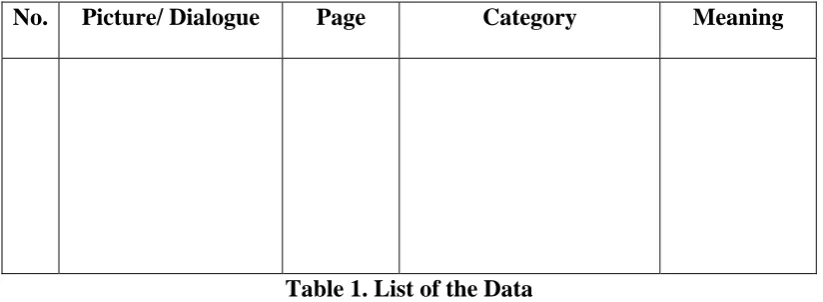
analysing the data, the data are then listed into the table below.
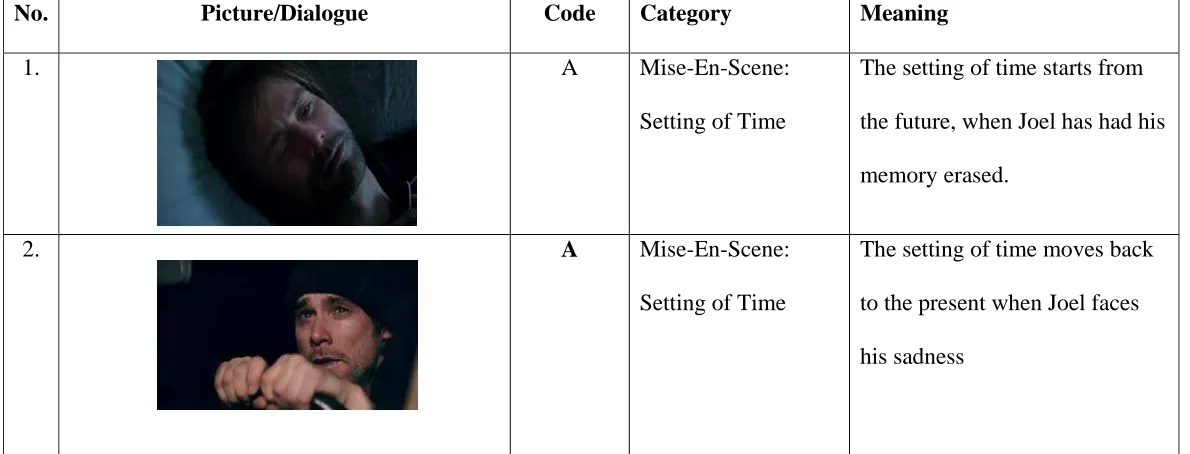
[image:57.595.107.519.223.374.2]No. Picture/ Dialogue Page Category Meaning
Table 1. List of the Data
F. Data Trustworthiness