Patron: Professor Datuk Dr Noor Azlan Ghazali
Advisors: Professor Dr Nor Ghani Md Nor
Associate Professor Dr Maisarah Ahmad
Chairperson: Dr Mohd Rizal Palil
Co-chairperson: Lt Cdr (Retd) Dr Lokhman Hakim Osman
Secretary: Miss Normaziah Zaini
Finance: Dr Mara Ridhuan Che Abdul Rahman
Marketing and Publicity: Dr Norlin Khalid
Protocol and Reception: Dr Mohd Mohid Rahmat
Working Papers and Publication: Associate Professor Dr Hawati Janor
Certificates and Souvenirs: Associate Professor Dr Mariani Abdul Majid
Logistics: Mr Mohd Dzul Azzwan Mohd Nor
Technical and Special Tasks: Dr Hazrul Izuan Shahiri
Website and Technology: Dr Khairul Azman Aziz
Keynote Speaker and VIP Invitation: Associate Professor Dr Noorasiah Sulaiman
Sub-Committee Members
Associate Professor Dr. Mohd. Azlan Shah Zaidi
Associate Professor Dr. Nor Liza Abdullah
Dr. Abu Hanifah Ayob
Dr. Amizawati Mohd. Amir
Dr. Mohd. Hasimi Yaacob
Dr. Rozita Amiruddin
Mr Hairunnizam Wahid
Miss Siti Ngaesah Ab. Hamid
Miss Veelaiporn Promwitchit
Mr Muhammad Shah Rizal b. Mohd. Ghazali
Mrs Haslina Hamdan
Miss Hasni Arshad
Mr Muhamad Azrin Supar
Mr Mohammad Zukry Ahmad
Mrs Noorsyam Noordin
Miss Nor Nadia Nordin
Professor Dr. Norman Salleh
Professor Dr. Rahmah Ismail
Associate Professor Dr. Aini Aman
Associate Professor Dr. Aisyah Abdul Rahman
Associate Professor Dr. Azhar Ahmad
Associate Professor Dr. Azman Ismail
Associate Professor Dr. Basri Abdul Talib
Associate Professor Dr. Che Aniza Che Wel
Associate Professor Dr. Doris Padmini Selvaratnam
Associate Professor Dr. Hawati Binti Janor
Associate Professor Dr. Madeline Berma
Associate Professor Dr. Maisarah Ahmad
Associate Professor Dr. Mariani Abdul Majid
Associate Professor Dr. Mohamat Sabri Hassan
Associate Professor Dr. Mohd Azlan Shah Zaidi
Associate Professor Dr. Mohd Hizam Hanafiah
Associate Professor Dr. Nor Asiah Omar
Associate Professor Dr. Nor Liza Abdullah
Associate Professor Dr. Norazlan Alias
Associate Professor Dr. Norlida Hanim Mohd Salleh
Associate Professor Dr. Romlah Jaafar
Associate Professor Dr. Rosmah Mat Isa
Associate Professor Dr. Ruhanita Maelah
Associate Professor Dr. Ruzita Abdul Rahim
Associate Professor Dr. Shahida Shahimi
Associate Professor Dr. Sofiah Md Auzair
Associate Professor Dr. Syed Shah Alam
Associate Professor Dr. Zafir Mohd Makhbul
Associate Professor Dr. Zakiah Mohammaddun Mohamed
Associate Professor Dr. Zizah Che Senik
Associate Professor Dr. Zulkefly Abdul Karim
Dr. Abu Hanifah Ayub
Dr. Harlina On
Dr. Hazrul Izuan Shahiri
Dr. Hendon Redzuan
Dr. Lohhman Hakim Osman
Dr. Mara Ridhuan
Dr. Mohd Adib Ismail
Dr. Mohd Daud Ismail
Dr. Mohd Hasimi Yaacob
Dr. Norsiah Aminudin
Dr. Roshayati Abdul Hamid
Dr. Rosiati Ramli
Dr. Rozita Amiruddin
Dr. Rubaayah Yaakob
Dr. Shifa Mohd Nor
Dr. Zaleha Yazid
Mr. Ahmad Raflis Che Omar
1
TABLE OF CONTENT
Quality of Human Resources and Application of Income Tax Accounting at Construction Company in
Palembang City ... 3
Pension Fund Investment in Nigeria: Islamic Perspective ... 21
Kajian Penggunaan Tajuk dalam Penyata Kewangan di Malaysia ... 31
Internet Financial Reporting of Malaysian Companies - A Study of Preparers’ Perception ... 49
Detecting Earnings Manipulation by Malaysian Public Listed Companies: The Reliability of Beneish M-Score Model ... 67
The Implementation and Disclosure of Corporate Social Responsibility (CSR) in Indonesian Banking Industries ... 82
The Effect of Internal Audit Quality on Good University Governance and its Implications on The Quality of Education Operation that Contributes to Graduates Quality: A Case Study at Private Higher Educations in Region III Of West Java Indonesia ... 98
The Effect of General Allocation Fund (DAU) and Regional Real Income (PAD) on the Regional Expenditures (Empirical Studies of the Government District/city of the Province of Bengkulu) ... 117
Determinants Company Conditions in Disclosure Corporate Social Responsibility: Case Study in High Profile Indonesian manufacturing companies ... 138
Preliminary Analysis on Related Party Transactions in Corporate Circulars ... 146
The investigation of the credit risk and its role in cash flows, macroeconomic factors and competition in Iranian banking industry ... 158
The Influencing of Local Parliaments (DPRD) Control Function on Good Government Governance (GGG) with their knowledge about budget as a moderating variable (study on local parliaments of Bengkulu Province 2009-2014). ... 165
Discharging Accountability through Governance: Cases from Waqf Institutions in Indonesia ... 181
Ownership Structure and Risk Taking of Malaysian Banking Institutions ... 193
The Effect of Disclosure Corporate Social Responsibility (CSR) Against Corporate Value with Price Earnings Ratio as Moderating Variables on The Main Sectors ... 212
The Determinant Factors of Indonesian Public Listed Companies’ Debt Policy ... 227
The Influence of Internet Financial Reporting and Degree of Information Disclosure on Company’s Website to the Frequency of Stock Trading on Trading, Services, and Investment Company Listed on Indonesian Stock Exchange ... 253
Combined Effect of Executive Stock Option Granting and Blockholder Ownership on Firm Performance in Malaysia ... 265
The Role and Influence of Corporate Leader Values on Corporate Governance Mechanisms and Financial Reporting Quality... 276
2
3
Quality of Human Resources and Application of Income Tax
Accounting at Construction Company in Palembang City
Bambang Bemby S, Endika Hady Pratama, Mukhtaruddin, Aryanto and Abukosim,
Economics Faculty, Sriwijaya University, Palembang, Indonesia
ABSTRACT
In preparing and presenting financial statements, the company has been using the power of accounting staff. The accounting staffs is required to have a deep understanding of the standards and provisions concerning the preparation of financial statements, one of which is on SFAS No.46. The application of income tax accounting depends on the quality of human resources in a company.
This study aims to determine the effect of human resources consisting of education, training, and work experience possessed HR itself particularly to the application of the accounting staff of accounting for income tax. The object of the research is the construction company listed on the Primary Tax Office Palembang Ilir Barat.
Sources of data in this study were obtained from the results of questionnaires to human resources to accounting Construction Company listed on the Primary Tax Office Palembang Ilir Barat encountered directly in the companies concerned. The results of this study have indicated that all the independent variables: education, training, and work experience either simultaneously or partial significantly affect the application of income tax accounting. To improve the application of income tax accounting in companies, especially in the construction company in the city of Palembang, the authors suggest that the company to be more selective in their recruitment including accounting staff.
Keywords: Quality of Human Resources, Application of income tax accounting, Construction Company
INTRODUCTION
Background
In Indonesia, the tax receipt is one of the greatest countries in each year. Tax is a very important source of revenue in terms of implementing and enhancing national development aimed at improving the welfare of the community. Below is a table of tax contribution to state revenues:
Table 1: Contributions against State Income Tax
Year Tax Receiver Non Tax Receiver National Receiver Million(Rp) Contribution(%) Million(Rp) Contribution(%) Million(Rp)
2007 490.988 69,5 215.120 30,5 706.108
2008 658.701 67,3 320.604 32,7 979.305
2009 619.922 73,2 227.174 26,8 847.096
2010 723.307 72,9 268.942 27,1 992.249
2011 873.874 72,5 331.472 27,5 1.205.346
2012 1.016.237 74,9 341.143 25,1 1.357.380
Sources: Center Statistical Bureau 2013
4
tax is a type of tax imposed in Indonesia. In general, the income tax is an additional tax imposed on the economic capability acquired or received by an individual or business entity both from Indonesia and outside Indonesia.To see the condition and performance of a company, then the company must prepare financial reports with the aim of presenting accurate information about the state of the economy the company for a certain period. The financial statements must be prepared and presented by Financial Accounting Standards. For many reasons, this standard may differ from the tax provisions also utilize accounting information.As an example of what often happens is the commercial profit and taxable income differ often caused by the difference between the recognition of income and expenses in accordance with GAAP and tax laws. Indication of the difference is that there is a difference of time (temporary differences) which resulted in differences in the recognition of current tax expense to the recognition of tax payable.In response, the Indonesian Institute of Accountants imposes SFAS 46, Accounting for Income Taxes that have experienced the last revision in 2013. SFAS 46 requires companies to account for the tax consequences in the current period and future periods to calculate and recognize the deferred tax over the future effects of tax using the balance sheet liability method or asset/ liability method. To be able to calculate and recognize the deferred tax is based on balance sheet liability method set forth in SFAS 46, the main thing to understand is the concept of temporary timing differences-temporary differences.Timing differences are differences in accounting and taxation that are temporary, which means the overall revenue or expense accounting or tax is actually the same, but just different allocations each year. Although it has become effective since a few years ago, but there are still many obstacles in its application for the company. The problem is due to lack of socializing and training to the taxpayer about the knowledge of the application of SFAS 46, particularly in the calculation of how much deferred tax should be recognized by the company.
The taxpayer is preparing and presenting financial statements have been using of human resource accounting (Accounting Staff). Human resource accounting is an office that is responsible for the financial activities of a written report. In addition, this position is required to understand the tax issues that apply in Indonesia.Chaer (2002) stated that the collapse of the economy in Indonesia as a result of social and political upheavals, economic and culture, and is significant HR issues. In the history of human beings as subjects noted that the role of human resources to address the crisis that swept across the nation of Indonesia.HR is the backbone of operations that must continue to improve the quality, both internally and externally. This is in line expressed by Karnoto (2004), human resources professional, good morals, honesty, and integrity are the backbone of the company. The role ofaccounting staffs is very important in preparing the financial statements.
HR itself can be assessed based on education, training, and work experience of HR itself. Education is one of the factors on the quality of human resource assessment. Education itself can reflect a person's level of thinking in the work. Of education, someone will get the sciences that would be very useful in the future. In addition, to increase the knowledge gained from education, one must follow the training in accordance with the field work. However, two things are not enough to assess whether the quality of HR can be said or not. HR needs a lot of work experience would work the same. The more experience a person's work, the less likely that someone made a mistake in his work. In other words, human resource accounting must have a deep understanding of the standards and provisions of the financial statements. SFAS 46 is one of the standards that must be understood by the human resource accounting. SFAS 46 is about the income tax accounting. Companies need to provide training SFAS 46, Accounting for Income Taxes to the accounting staff, given the complex application and required a deep understanding. Proper application of SFAS 46 will give you the information generated financial statements more relevant and informative for the tax consequences in future due to temporary differences that occurred in the past are now becoming apparent in the financial statements.
5
human resources in the company's accounting thus causing errors in the presentation of financial statements, particularly in applying the tax accounting. Based on the results of previous interviews were conducted by researchers of the 30 companies of the object in this study that as many as 28 companies (Construction Company listed on the Primary Tax Office Palembang Ilir Barat use of external assistance (tax consultant) to resolve the problems, especially financial statement presentation in the application of tax accounting. When viewed from the HR function itself, should HR in accounting must have the ability, knowledge, as well as a good understanding of accounting as a whole, especially regarding the accounting for income tax contained in IAS 46.The interview results also concluded that most of the construction companies that are the object of research is not applying the income tax accounting in accordance with the provisions of SFAS 46, there were 137 companies that have not implemented properly accounting for income tax. Doing so may result in the company's financial statements is irrelevant, uninformative, and not in accordance with the provisions of applicable accounting standards. In addition, it can cause the amount of tax debt owed by the company to be larger (smaller) than that should be paid by the company keeping in mind that there is a burden (income) that according to SFAS 46 are not shown in the financial statements so that such companies get warning even fined by the tax authorities for the amount of tax payable is not paid in accordance with proper.
Based on the observations that have been made, the main factors that cause why the income tax accounting is not (yet) implemented is HR accounting department of the company. Based onresults of questionnaires that have been done, some of the companies have accounting staff of high school graduates and diploma 3, so it is likely that the knowledge they get is not enough to do the job. In addition, few of the accounting staff at the research object ever does training on SFAS 46. This indicates that human resource accounting has an important role in the application of income tax accounting. Selection of construction companies listed on Primary Tax Office Palembang Ilir Barat as the research object because construction companies make a major contribution to tax revenues than other sectors. It can be seen from the following table:
Tabel 2. Tax Receiver in Primary Tax Office Palembang Ilir Barat
Year NET RECEIVERT PAX PAYER CONTRIBUTION CONTRIBUTION
2012 Rp 588.080.992.044,00 Rp 375.213.412.302,00 64% 2011 Rp 429.760.202.245,00 Rp 259.052.673.372,00 60% 2010 Rp 405.060.590.646,00 Rp 223.237.758.170,00 55% 2009 Rp 271.742.917.792,00 Rp 147.904.321.450,00 54% 2008 Rp 230.804.501.600,00 Rp 103.790.564.137,00 45%
Sources: Tax Offices KPP Pratama Palembang Ilir Barat 2013
6
LITERATURE REVIEW AND HYPOTHESIS DEVELOPMENT
Learning Curve Theory
Learning Curve Theory expressed by Shu Liao S stating that an employee has the education and experience levels are high for a job, then the time will be needed to complete the job getting short so that is also expected to increase its performance (Siswanto, 2012).Psychological theory Stimulus-response relationship (SR) always assume that the long experience to solve new problems. That is, if one ever made a mistake, and the mistake has been corrected au, the same mistakes will not be done again (Chaer, 2003).The theory of learning by Faculty-psychology (Life Science Resources), according to the theory of the human soul consists of various powers like the power of thinking, knowing, remembering, and others watched. These forces can develop and function when trained with the materials and specific ways (Ahmadi, 2002).Thus, education, experience and training are factors that can increase a person to live a quality of life to a more positive direction or can help a person to do the job.
Accounting for Income Taxes
The accounting treatment of the income tax is set by SFAS 46 of presentation income tax on the financial statements and the disclosure of information that is relevant. Changes in the approach used by the Financial Accounting Standards especially for income tax accounting of deferred income statement approach or method being a balance sheet approach or Asset-Liability Method undeniable has added to the complexity of the calculation of income tax due to the recognition of deferred tax on the balance sheet.SFAS 46 is to prescribe the accounting treatment for income taxes. The main problem in accounting for income taxes is how to account for the tax consequences in the current period and future periods for the following matters (SFAS 46, paragraph 2): (a) Recovery of the carrying amount of the asset or settlement of the carrying amount of liabilities, giving rise to acknowledge the consequences of deferred tax assets or liabilities, with a few exceptions. (b) Transactions or other events in the current period that are recognized in the income statement with the consequences should be charged or credited directly to equity, and (c) Adjusting confession deferred tax assets from the rest of the loss is compensated for the following year, presentation income tax on the financial statements and the disclosure of information relating to income tax.The scope of SFAS 46 is as follows: (a) Includes final income tax treatment, which means that the tax liability that has been completed and the income subject to income tax cannot be combined with other income taxable income that is not final. In accordance with tax legislation, income subject to final income tax no longer is reported as taxable income, the entire burden in respect of income subject to final income tax may not be deducted. Therefore, no temporary difference not recognized the existence of assets or deferred tax liabilities, (b) Include cancellation of paragraph 77, SFAS 16 which states if the company chooses to calculate the tax according to the accounting profit, the difference in the calculation of the tax payable is calculated (as calculated according to taxable income) due to differences in timing of the recognition of income and expenses for accounting purposes by tax purposes accommodated in the deferred income tax estimates, grouped some of the other assets and allocated to load taxable income for years to come.
7
assets or liabilities and their tax bases (the DPP). Temporary differences may be either: (a) Deductible temporary differences are temporary differences that give rise to an amount that may be deducted in computing taxable income in future periods when the carrying amount of the asset is realized or the liability is settled carrying value, and (b) Taxable temporary differences are temporary differences that give rise to a taxable amount in the computation of taxable profit in future periods when the carrying amount of the asset is realized or the liability is settled carrying value.Deductible temporary differences will result in deferred tax assets, due to the economic benefits that will be earned taxpayer in the form of a deduction from the taxable income in the future. While the taxable temporary differences give rise to deferred tax liabilities will be in the current period timing differences or temporary differences, because there are income tax liability in future periods.
Recognition of Current Tax Assets and Liabilities Current Tax
Total current tax for the current period and prior periods is recognized as a liability has not been paid. If the amount already paid for the current period and prior periods exceeds the amount of tax payable for such periods, the difference is recognized as an asset.Benefits relating to tax losses that can be pulled back to recover current tax of a previous period shall be recognized as an asset. If the tax loss is used to recover current tax of prior periods, the entity recognizes the benefit as an asset in the period in which the tax loss occurs because there may be benefits received entity and these benefits can be measured reliably.
Recognition of Deferred Tax Assets and Deferred Tax Liabilities
Deferred tax assets are the amount of income taxes recoverable in future periods as a result of deductible temporary differences and residual compensation for losses. Deferred tax assets are recognized for all deductible temporary differences to the extent that could potentially be used to reduce taxable income in the future, except those arising from: (1) Negative goodwill recognized as deferred income from the business combination, (2) the initial confession of assets and liabilities in a transaction that is not a business combination transaction and has no effect on the commercial income and taxable income.The deferred tax liability is the amount of income tax payable for future periods as a result of taxable temporary differences, except that arising from: (1) Goodwill amortization is not deductible for tax purposes, and (2) Initial recognition of an asset or liability in a transaction that is not a business combination transaction and has no effect on the commercial income and taxable income.
Recognition of tax losses that can be compensated
The balance of unused tax losses are recognized as deferred tax assets when it is probable that future taxable profit will be available against which it comes. But keep in mind, if the taxable income may not be available in sufficient quantity to be compensated with tax losses can be utilized, the deferred tax assets are not recognized.
Recognition of Current Tax and Deferred Tax
Current tax and deferred tax is recognized as income or expense in profit or loss for the period, except for income tax derived from: (a) Transactions or events that are directly credited or charged to equity in the same period or different periods, or (b) Business combination that is in substance the acquisition. Current tax and deferred tax shall be charged or credited directly to equity if the tax relates to transactions that are credited or charged directly to equity.
8
ordinary activities should be presented separately in the income statement; (d) Final Income Tax. If the carrying amount of an asset or liability related to final income tax differs from the Taxable Income Basis, the difference is not recognized as deferred tax assets or liabilities. On income subject to final tax, income tax expense is recognized in proportion to the revenue recognized in the current period. The difference between the final tax payable and the amount charged as expenses in the calculation of current tax income is recognized as Final Income Tax Income Tax Prepaid and Accrued Final. Estimated prepaid final tax was shown separately from final tax accrued.
Disclosures in SFAS 46
The following matters shall be disclosed: (a) The main elements of expense (income) tax, (b) The amount of current tax and deferred tax transactions which are charged or credited to equity, (c) Expense (income) tax from extraordinary items recognized in the current period, (d) A description of the relationship between tax expense (income) tax and accounting profit in either or both of the following forms: (i) a reconciliation between tax expense (income) and the theoretical tax accounting profit and tax rates applicable, by revealing the basis for calculating the applicable tax rate ; or (ii) a reconciliation between the effective tax rate on average (average effective tax rate) and the applicable tax rates, by revealing the basis for calculating the applicable tax rate, (e) A description of the changes in applicable tax rates and comparison with the tax rates applicable in the previous accounting period, (f) The number (and limit the use of time, if any) deductible temporary differences and the remaining loss carry forward to next year, which is not recognized as deferred tax assets on the balance sheet, (g) For each group of temporary differences and losses for each group can be compensated to the following: (i) the amount of deferred tax assets and liabilities are recognized on the balance sheet presentation for each period; (Ii) the amount of tax expense (income) tax deferred, (h) recognized in the income statement if the number is not visible from the change in the amount of deferred tax assets or liabilities are recognized on the balance sheet, and (i) To continue operating, the tax burden is attributable to: (i) the gain or loss on discontinued operations; and (ii) the profit or loss from ordinary activities was discontinued operations for the reporting period, together with a number of previous accounting periods presented in the financial statements.
Deferred Income Tax Calculation
Deferred income tax can be calculated by multiplying the time difference is going on with the tax rate in effect at the time the asset is realized or the liability is settled. Typically, the rate used is the highest income tax rate is 30%, although the actual rate is progressive. If the current year tax loss occurs, the deferred income tax can be calculated in the same way, i.e. the average effective rate, if the assumption is 30%, then 30% multiplied by the losses that occurred.
9
the development of logic. While informal education can be done by providing knowledge about religion, ethics, manners, and socialization to the environment. The higher education is taken, the higher the owned intellectual. Employees who are more educated/more educated will participate in making decisions (Warisno, 2009). Accounting staff that has relevant education to the job will have the ability, as reflected in his work (Saputra, 2002), (b) Training. In addition to education, an important factor in determining the quality of one's work is to follow a lot of training. According Huliah et al (2012), training is an activity that aims to improve and develop the attitudes, behavior skills, and knowledge of its employees in accordance with the wishes of the company.Training will provide benefits to productivity, morale, cost reduction, stability and flexibility to organizations facing environmental uncertainty. The main purpose of training can be divided into five areas, namely: (1) To improve the skills of employees in accordance with the changes in technology, (2) To reduce the time to learn a new employee to become competent, (3) To assist operational issues, (4) To prepare the employees in the promotion, (5) To give an employee orientation to learn more about the organization. Training is important for employees, both new employees and employees of the old. This is in line with the statement Saputra (2002) which states that the quality of human resources can be achieved through education and training regularly programmed and integrated by relevant institutions authorized. The main purpose of training is to improve and eliminate problems associated with employee performance. The training is intended to get workers who have the knowledge, skills, abilities, as well as a good attitude to perform a specific job (Lopez, 2008).Training is an important factor in improving of human qualities to determine the success of achieving corporate goals. Moekijat (1991) says that the training required helping employees increase the skills and knowledge that are closely related to the employee's job. Lubis (2008) adds that there are three conditions that must be met in order for an activity can be called the training, namely: a) Training should help employees more functionality; b) Training should lead to a change in habits, information, and knowledge that the employee apply in their work; and 3) Training must relate to a specific job or jobs that are being implemented which will be given in the future. Based on the these statements, it can be concluded that training is an activity to improve the ability of the person in relation to the accounting activity that can assist the employee in performing his job in order to improve the knowledge, skills, and attitudes of the employees. Therefore, training should be conducted in accordance with the real needs of the company, (c) Work Experience. The ability of a person is not only measured by education and training only, but work experience contributed greatly to a person's ability to handle his job, especially for a complicated job and requires special expertise. Is the length of a person's work experience in performing the same tasks and work according to his ability? In other words, work experience is a onetime used to acquire the knowledge, skills, and attitudes appropriate to the task and job. Experience can be gained through experience or practice directly or indirectly could also, as of reading.Warisno (2009) states that a firm will tend to choose an experienced workforce of the inexperienced. This is because a more experienced workforce qualified to carry out the work and responsibility given company can be done in accordance with the provisions of the company. Employee performance is influenced by the work experience of the employee, the longer the employee experience will be easier to resolve product and the less experienced employees will affect the ability to produce employee in completing a product (Saleh et al, 2013). Besides past performance on similar work can be the best indicator of performance in the future. In the experience of human resource accounting department, will be very helpful in the process of presenting quality accounting information. The more extensive a person's work experience, the more skilled do the job and more perfect patterns of thinking and attitudes in the act in order to achieve the stated goals (Arfan and Edi, 2009).
Hypothesis Development
Effect of Human Resources Education on Application Income Taxes Accounting
10
gained to apply their job. The first hypothesis is Education HR has a significant influence on the application of income tax accounting
Effect of Human Resources Training on Application Income Taxes Accounting
Training is a learning process that involves the acquisition of skills, concepts, rules, or attitudes to improve workforce performance (Huliah et al, 2009). According to the first paragraph of Article 9 of Law 13 of 2003, is the overall job training activities to provide, acquire, improve, and develop job competence, productivity, discipline, attitude, and work ethic at a certain level of skill and expertise and qualifications in accordance with the level of office and work.The aim of the training program is to increase the performance of individuals in certain positions or functions. According Saputra (2002) training was greatly affects a person's performance level, a growing number of workers doing the training will increase the performance of the workers. Based on the above, the second hypothesisis training has a significant influence on the application of income tax accounting
Effect of Human Resources Work Experience on Application Income Taxes Accounting
Work experience someone shows the types of work ever done one and presents a great opportunity for someone to do a better job. The more extensive a person's work experience, the more skilled do the job and more perfect patterns of thinking and attitudes in acting to achieve its intended purpose (Huliah et al, 2012). Based on the above, the third hypothesis is HR Work experience has a significant impact on the application of income tax accounting.
Theoritical Framework
Based on the analysis of the theoretical basis, previous research, and the research hypothesis, it can be described a theoretical framework as follows:
Figure 1. Theoritical Framework
III. RESEARCH METHODOLOGY
Population and Sample
The population used in this study is all listed construction companies in the Primary Tax Office Palembang Ilir Barat with the number reached 288 companies. Selected sample of the population is considered representative of the population. The sample in this study is using purposive sampling method, with the goal of providing equal opportunity for each company to be selected as sample (Sumarni and Wahyu, 2005:76). The criteria used in determining the sample is as follows (1) The company does not disclose taxes receivable and taxes payable on the financial statements (balance sheet), and (2) The Company does not use the services of a tax consultant. Based on the sampling technique to be done, it will get some samples to be used for processing in this study.
Table 3 Sample Research
Sample Criteria
Number of Company
Contruction Company listed in Primary Tax Office Palembang Ilir Barat 288 Company has not presented of tax payable in financial statement (137)
Company has used of Tax Consultant Services (72)
Total Number of Company Sample. 79
Education (X1)
Trainning (X2)
Work Experince (X3)
11
Types and Sources of Data
Conducted a survey method is collecting data using questionnaires. Questionnaire is a written list of questions that have been previously formulated which will be answered by the respondents. In producing research data, questionnaires conducted by researchers by distributing questionnaires directly to human resources accounting in construction companies registered in Primary Tax Offices Palembang Ilir Barat.In this study, researchers took the study a variable instrument that have been developed and tested its validity by previous researchers. In making the questionnaire, the researcher deliberately enter negative statements in some instrument variables. It aims to avoid bias and provide control of the research results due to respondents who sometimes less earnest in filling out the questionnaire.
Operational Definition and Measurement of Variables
The dependent variable in this research is the application of Accounting for Income Taxes. Measurement of these variables using a questionnaire adapted from a questionnaire study Huliah et al (2012) with any changes as needed. Indicators in this study were (1) Knowledge and understanding of SFAS 46, (2) application of income tax accounting in accordance with the provisions of SFAS 46, (3) Presentation of Financial Statements are reasonable, (4) Disclosure of transactions balances related to tax accounting income, (5) Disclosure of accounting changes. This study used a questionnaire instrument response measurement scale of 5 (five) points Likert scale. The following answer choices along with the code and the answer to the fifth score of the questionnaire code:
Table 4 Codes And Score Questionnaire Answers
Education is an important factor which greatly affects a person's development. The higher education pursued the higher the owned intellectual experience. Adequate formal education with a background in accounting for human resource accounting human resource will facilitate in carrying out routine work. Human resource accounting education relevant to the job will have the ability, as reflected in his work. Measurement of these variables using a questionnaire adapted from the questionnaire research Saleh (2013). Educational factors measured by indicators such as: (1) The level of formal education, (2) Competence/capability in the field of education. This study used a questionnaire instrument response measurement scale of 5 (five) points Likert scale. Choice answers along with the code and the answer to the fifth score of the questionnaire code is the same as the previous variable.
Training (X2)
12
Experience can be gained through experience or practice directly or indirectly could also, as of reading. Besides past performance on similar work can be the best indicator of performance in the future. In the experience of human resource accounting department, will be very helpful in the process of preparing accounting information quality. Measurement of these variables using a questionnaire adapted from a questionnaire study Huliah et al (2012). Indicators in measuring work experience among other factors: 1) The period of work in the field of accounting, 2) Work experience in the field of accounting. This study used a questionnaire instrument response measurement scale of 5 (five) points Likert scale. Choice answers along with the code and the answer to the fifth score of the questionnaire code is the same as the previous variable.
One of the measuring instruments can be said to be valid if the answer carefully about the validity of the measure. A questionnaire as valid, if the questions on the questionnaire was able to reveal something that will be measured by the questionnaire. Testing the validity of using the Pearson correlation, i.e. by calculating the correlation between the scores of each of the questions with a total score has a significant level below 0.05, then the item is declared valid question, and vice versa (Ghozali, 2006).
Test Reliability
Instruments said to be reliable if there are similarities data in different times. A questionnaire said reliable / reliable, if the answer to question one is consistent / stable over time. Reliability test is used to measure the variables used that are completely free of errors, thus producing consistent results, although tested many times. If the Cronbach alpha above 0.6, data has a high reliability (Ghozali, 2006).
Multiple Regression Analysis
The analysis technique used in this research is the technique of multiple linear regression analysis to obtain a comprehensive picture of the relationship between one variable with another variable. This study were using a factor of education, training and work experience of human resource accounting as independent variables and the application of income tax accounting in preparing the financial statements as the dependent variable. To find out if there is a significant effect of independent variables on the dependent variable we used linear regression models multiple (multiple linear regression method) that replicates the research of Winidyaningrum and Rahmawati (2010) is formulated as follows:
AITA = α + β1 EDU + β2TRAIN + β3 WE + + e variables is very weak or no relationship at all. When R2 = +1, or close to 1 then the correlation between the two variables is said positive and very strong.
Research Object Description
13
company of this research is to address as many as 79 companies spread over the area listed in Primary Tax Office Palembang Ilir Barat.
Demographic Data Object Description Research
HR accounting in each company has different ages. For the age group between 20-30 are 55%, equivalent to 43 companies that have HR accounting between the ages of 20-30 years. For the age group between 31-40 are 25%, equivalent to 20 companies that have HR accounting between the ages of 31-40 years. For the age group between 41-50 are 11% or the equivalent of nine companies that have HR accounting between the ages of 41-50 years. As for the age category > 50 only contained 9%, equivalent to 7 HR accounting firm that has more than 50 years old. Of the 79 companies that are the object of research, there are only 11% or the equivalent of 9 companies that fill the positionas manager of the accounting department in a questionnaire study. As for the positionas accounting staff are 89%, equivalent to 70 companies. Accounting staff at the construction company has a research sampled a variety of educational levels. For the high school level has a number of 11 people, equivalent to 14% of the total study sample. On the other hand, to the level of Diploma has the number 15 or 19% of the total study sample. As for the level of Bachelor degree has a number of 53 people, equivalent to 67% of the total study sample. From these data it can be concluded that there were 11 companies have accounting staff who graduated from high school, 15 companies have accounting staff from D3, and 53 companies have accounting staff graduated from Bachelor degree.
There are 19 companies where the accounting staff at the company has never done either training or training on SFAS 46 accounting training in other fields. In addition there are 27 companies in which the company's accounting staff had done training in accounting but have not done the training on SFAS 46 (Accounting for income tax). Thus, there are only 33 companies out of 79 companies that are the object of research in which the accounting staff of the company who had conducted training on SFAS 46. Each accounting staff has diverse work experience. There are 17 companies where accounting staff have work experience in accounting more than 10 years. A total of six companies in which the company's accounting staff has work experience in accounting between 8-10 years. A total of 12 companies in which the company's accounting staff has work experience in accounting between 8 to 7.9 years. A total of 21 companies in which the company's accounting staff has work experience in accounting between 2 - in 4.9 years. As for the accounting staff that have experience working in the field of accounting for less than 2 years as many as 23 companies.
Description of Research Variables
Application of Accounting for Income Taxes
The application of income tax accounting is measured using indicators that have been described in the previous chapter, namely 1) Knowledge and understanding of SFAS 46, 2) application of income tax accounting in accordance with the provisions of SFAS 46, 3) Presentation of Financial Statements fairly, 4) Disclosure of transactions balances related to income tax accounting, 5) Disclosure of accounting changes.
III. ANALYSIS AND DISCUSSION
Results Analysis of Response Rate
The research object in this case is a construction company which is listed on the Primary Tax Office Palembang Ilir Barat. The numbers of construction companies listed on Primary Tax Palembang Ilir Barat are totaling 288 companies for 2013. From all listed construction companies will do the selection of the research sample are using purposive sampling method. Of the election can be generated that amount ofc onstruction company research sample amounted to 79 companies. In this study the distribution of questionnaires to the return of the questionnaire requires a period o approximately one month. Questionnaires were distributed to Construction Company accounting staff made the object of research.
14
Items Number Percentage
The number of questionnaires distributed 79 100% The number of questionnaires were not returned 0 0 The number of questionnaires can be used 79 100% Descriptive Statistics Analysis
Based on the descriptive statistical analysis of the data, the data obtained as much as 79data for each variable with the number of objects of researchas much as 79 construction companies. Descriptive statistical analysis of the results will givean overview of the data by looking at the average value (mean), standard deviation, variance, maximum value and minimum value.
The education variables indicate that for all the questions have answers level with the minimum and maximum values are equal, respectively 3 and 5. For the average value (mean) of all questions is 4.22, respectively; 4.23; 4.44; 4.47; and 4.18. It shows that the average number of responses to questionnaires to allquestions on the education variable is the value of 4(Agree).
variabel pelatihan menghasilkan bahwa semua pertanyaan memiliki tingkat jawaban dengan nilai minimum dan nilai maksimum yang sama masing-masing 3 dan 5. Untuk nilai rata-rata (mean) semua pertanyaan adalah masing-masing 4,28; 4,15; 4,25; 4,39; 4,22; dan 4,41. Ini menunjukkan bahwa yang menunjukkan bahwa rata-rata jumlah jawaban kuesioner untuk semua pertanyaan pada variabel pelatihan adalah nilai 4 (Setuju).
The variable work experience suggests that all the questions have answers level with the minimum and maximum values are equal, respectively 3 and 5. For the average value (mean) of all questions is 4.28, respectively; 4.24; and 4.29. It shows that that shows that the average number of responses to questionnaires to all questions on work experience variable is the value of 4 (Agree).
The dependent variable is the application income tax accounting (SFAS No.46) indicates that all questions have answers level with the minimum and maximum values are equal, respectively 3 and 5. For the average value (mean) of all questions is the 4.18 respectively; 4.14; 4.22; 4.10; 4.16; and 4.14. It shows that the average number of responses to questionnaires to all questions on the application income tax accounting variableI the value of 4 (Agree).
Multiple Regression Analysis
Testing the hypothes is using of multiple regressions. Multiple regression analysis techniqueis used to obtain a comprehensive picture of the relationship between one variable to another variable. It can be composed of multiple linear regression equationas follows:
AITA = 6,186 + 0,379Edu + 0,294Train + 0,324Exper
Based on the above equation can be explained that ther elationship between the three independent variables: education, training, and work experience is positive on the dependent variable is the application of income tax accounting, meaning that the application of income tax accounting has been linked linearly with education, training, and work experience. This shows that the application o fincome tax accounting depends on the education, training, and work experience of human resources. While the above is a linear relationship can be described by algebraic sign of each regression coefficientis: If the level of education increased by one unit then this will affect to the application of income tax accounting increased by 0,379 units and other variables held constant. Similarly for the second variableif the level of training that is increased by one unit then this will affect the application of income tax accounting increased by 0.294 units and other variables held constant. Final fo rthe third variable, If work experience increases one unit will be followed by increased application of income taxac counting for 0,324 units and other variables held constant. Can be described by an equation that estimates the change or variance application of income tax accounting is highly dependent on the change or variance of three independent variables in the modele quations. So it can be said the three-way relationship of independent variables on the dependent variable is positive.
15
The test is to determine whether the independentv ariables simultaneously affect the dependent variable. If the probability level of less than 0.05, it can be said that all the independent variables jointly affect the dependent variable. The following table is used to investigate the effect of the quality of human resources consist of education, training, and work experience simultaneously to the application of income tax accounting. education, training, and work experience together significant effect on the application of income tax accounting. This suggests that the application of income tax accounting depends on the level of education, training, and work experience were possessed by human resources, especially the accounting staff. Individual Parameter Significance test
In this test will be known whether the independent variables: education, training, and work experience may partially affect the application of accounting for income tax as the dependent variable. Below is a table of thet test has been done.
Based on the above table can concluded that (1) Influence of education on the application of income tax accounting has a t value of 2.740 is greater than t table value is 1.991 (t count> t table) and has a significance value of 0.008 is smaller than 0.05. Thus H1 is accepted that education has significantly influence the application of income tax accounting, (2) . Effects of training on the application of income tax accounting has a t value of 2.940 is greater than t table value is 1.991 (t count> t table) and has a significance value of 0.004 is smaller than 0.05. Thus H2 is accepted that training has significantly influence the application of income tax accounting, and (3) Effects of work experience on the application of income tax accounting has a t value of 2.019 is greater than the value of t table is 1.991 (t count> t table) and has a significance value of 0.047 is smaller than 0.05. Thus H3 is accepted that a significant effect of work experience on the application of income tax accounting.
Test coefficient of determination
Coefficient of Determination Test is used to determine the level of certainty of the nicest in the regression analysis revealed a compound with the coefficient of determination. This coefficient indicates how much percentage of variation of independent variables used in the regression model is able to explain the variation in the dependent variable. R2 = 1 means perfect effect of independent variables on the dependent variable, otherwise if R2 = 0 means that the independent variable has no effect on the dependent variable.Coefficients determination test results can be seen in the following table.
16 training, and work experience of the application of income tax accounting can be explained by the model equations for the remaining 46.0% and 54.0% influenced by factors outside the study.
Discussion of Results
Relationship education on Implementation of Accounting for Income Taxes
The first hypothesis (H1) says that there is a significant positive relationship between education factor to the application of income tax accounting. The results showed that the influence of education on the application of income tax accounting has a t value of 2.740 is greater than t table value is 1.991 (t count> t table) and has a significance value of 0.008 is smaller than 0.05. Thus H1 is accepted that education significantly influence the application of income tax accounting. In addition, the results also showed that the value of 0.γ79, which means there is positive between educational factors of the application of income tax accounting which can be demonstrated by the increase in the level of the variable application of variable accounting for income tax will rise 0,379 assuming a fixed value of other variables. This supports the statement of Warisno (2009), the higher education one achieves the higher the level of understanding and knowledge gained to apply their job. The results of this study also have the same result with Winidyaningrum and Rahmawati (2010) which states that the education of human resources significant positive effect on the reliability of financial reporting area. The results are consistent with the Learning Curve Theory, which states that an employee has a level of education and experience that high for a job, then the time will be needed to complete the work more concise so that is expected to improve its performance.
Based on the explanation in the previous chapter that the study sample of 79, there are 11 companies that have accounting staff from the high school education. This indicates that the company's accounting staff on low quality and will have a negative impact on long-term company performance, especially in the field of accounting if it is not taken into account. These problems can be solved by means of the company should provide regular training on the science of accounting for income tax accounting, especially for the quality of the accounting staff (HR) can be increased. This is in line with the statement Saputra (2002) which states that the accounting staff who have relevant education will have the ability to work as reflected in his work. The statement is also supported by the opinion of dri Ghozali (2000) which states that education has a significant influence on a person's learning capacity and productivity.
From some of the above it can be concluded that the higher level of education of human resources, the higher the income tax accounting will be applied in the company. The company is expected to be selective in their recruitment, especially in the field of accounting for all the work to be done can be completed accurately, quickly, and in accordance with applicable standards. Employee performance is highly dependent on the level of education, the higher a person's education level, the higher the performance of the individual in question and will be useful in improving the quality of the person.
17
application of income tax accounting. In addition, the results also showed that the value of 0.β94, which means there is a positive effect of training on the application of the factors accounting for income tax which can be demonstrated by the increase in the training of the variable application of variable accounting for income tax will rise 0.294 assuming fixed values of other variables. This is supported by the statement Saputra (2002) training greatly affect a person's performance level, a growing number of workers doing the training will increase the performance of the workers. In the previous chapter it was mentioned that there are 19 companies or 24.05% of the total object of study in which the accounting staff of the company has never conducted training and 27 companies or 34.18% of the total object of study in which the company's accounting staff in training but never did 've never done training in SFAS 46. This indicates that the lack of awareness and willingness to undertake training of accounting staff regarding accounting, especially regarding SFAS 46. Such conditions will make the performance of the accounting staff disrupted resulting in low quality of the accounting staff. The training itself is very necessary to help employees improve their knowledge and ability to do his job. The statement in line with the opinion of Lopez (2008) which states that the implementation of the training is intended to get workers who have the knowledge, skills, abilities, and attitudes are good to run a particular job.
In addition, demographic data based on the position there are 11%, equivalent to 9 companies that fill the position as manager of the accounting department. This indicates that HR has done a lot of training, knowledge and understanding possessed meninggkat and make the human resources manager of the accounting department at a company where the HR work. The more training undertaken by a person, the higher the level of understanding and knowledge that lead to office/position of the person can be increased.From some of the above it can be concluded that the factors that made the training of human resources, especially the training of SFAS 46 would affect the application of income tax accounting described in SFAS 46. In this case, the company should consider implementing training related to the field and work to their employees that the company will increase employee performance. The performance will affect the quality of the employee, because the higher the employee's performance will result in the quality of employees will increase.
Relationship work experience on Implementation of Accounting for Income Taxes
18
statement of Saleh et al (2013) which states that the employee's performance is influenced by the work experience of the employee, the longer the employee experience will be easier to resolve suau product and the less experienced employees will affect the employee's ability to complete the production of a product. In addition, demographic data based on the position there is only 11%, equivalent to 9 companies that fill the position as manager of the accounting department. This indicates that the level of the manager, the human resources have a high work experience, knowledge and understanding to a greater job well. On the other hand, based on demographic data of age, by 55%, equivalent to 43 companies that have the human resources between the ages of 20-30 years. This indicates that the level of the HR work experience is low. Companies should regularly provide training to employees so that the human experience of growing so that level of ability and understanding of the work is increasing. Based on the above statement can be concluded that the longer the work experience in the field of human resource accounting, the greater the likelihood of human resources to understand and apply the accounting standards including SFAS 46 in the company's financial statement presentation. The company expected more considering doing work experience in the recruitment of new staff particularly accounting because the longer an employee has a work experience, the more knowledge and skill of the employees and the higher the quality of the employee-owned.
V. CONCLUSIONS AND RECOMMENDATIONS Conclusion
This study was conducted to determine whether the quality of human resources through education variables, training, and work experience have a significant effect on the application of income tax accounting in construction company listed on the Primary Tax Office Palembang Ilir Barat. Based on the research conducted, it can be concluded that:
1. Results showed that the quality of human resources through education variables, training, and work experience simultaneously affect the application of accounting for income tax on listed construction company in Primary Tax Office Palembang Ilir Barat.
2. Variables of education, training, and work experience partial positive effect on the application of income tax accounting in listed construction company in Primary Tax Office Palembang Ilir Barat. 3. There are 11 companies that have accounting staff from the high school education. This indicates that the company's accounting staff on low quality and will have a negative impact on firm performance, especially in the field of accounting. The company is expected to be selective in their recruitment, especially in the field of accounting for all the work to be done can be completed accurately, quickly, and in accordance with applicable standards.
19
Suggestion
Based on the above conclusions, there are some suggestions as follows:
1. Those companies are expected to be more selective in performing recruitment by considering the level of education, training I have ever attended, as well as work experience in accounting.
2. Those future studies should add some variables relating to the quality of human resources such as competence and motivation owned human resources can affect the application of income tax accounting. Limitation
This study has limitations that may cause disruption to the results of this research study is confined to data from questionnaires distributed to construction companies registered at Primary Tax Office Palembang Ilir Barat so not describe the construction company in the city of Palembang as a whole.
References
Ahmadi, Abu. 2002. Psikologi Sosial Edisi Revisi. Jakarta: Penerbit Rineka CIPTA.
Arfan, Muhammad dan Edi Faisal. 2009. Pengaruh Masa Kerja, Jabatan, dan Jenjang Pendidikan Terhadap Tingkat Pemahaman Aparatur Pemerintah Tentang Prinsip-Prinsip Good Governance Di Pemerintah Kota Banda Aceh. Jurnal Telaah & Riset Akuntansi, Vol.2 No.1 Halaman 1-14.
Badan Pusat Statistik. “Realisasi Penerimaan Negara (Milyar Rupiah), 2007-2013”. Diambil pada tanggal 8 Oktober 2013 dari http://www.bps.go.id/tab_sub/vie.php? tabel=18& daftar=1& id_ subyek=13
Chaer, Abdul. 2003. Psikolinguistik Kajian Teoritik. Jakarta: Penerbit Rineka CIPTA.
Darwanis dan Desi Dwi Mahyani. 2009. Pengaruh Kapasitas Sumber Daya Manusia, Pemanfaatan Tehnologi Informasi dan Pengendalian Intern Akuntansi Terhadap Keterandalan Pelaporan Keuangan Pemerintah Daerah. Jurnal Telaah & Riset Akuntansi, Vol. 2 No. 2 Halaman 133-151.
Ghozali, Abbas. 2000. Pendidikan: Antara Investasi Manusia dan Alat Diskriminasi. Jurnal Pendidikan dan Kebudayaan No.23 Tahun ke-6. Mei.
Ghozali, Imam. 2006. Aplikasi Analisis Multivariat Dengan Program SPSS. Jakarta : Badan Penerbit Universitas Diponegoro, Cetakan IV.
Huliah, Abdurahman Rigel., Sifrid Pangemanan, Steven Tangkuman dan Novi Budiarso. 2012. Pengaruh Sumber Daya Manusia dan Pemanfaatan Teknologi Informasi terhadap Keterandalan Pelaporan Keuangan pada Pemerintah Provinsi Sulawesi Utara. Jurnal Riset Akuntansi dan Auditing, Volume 3 – Nomor 2, Halaman 9-21.
IkatanAkuntan Indonesia. 2012. PSAK No.46. Jakarta: SalembaEmpat.
Karnoto, Mohamad. 2004. SDM, Kunci Menuju Prestasi. Majalah Info Bank No.303. Juni. Diambil pada tanggal 28 Nopember 2013 dari http://www.bi.go.id/web/en/Tentang+BI/Perpustakaan/ Periodikal/default.aspx?disp=Majalah%20Eksekutif%20(1996-Feb%202009)&idjs=1
Lubis, Khairul Akhir. 2008. Pengaruh Pelaihan dan Motivasi Kerja Terhadap Kinerja Karyawan PT Perkebunan Nusantara IV (Persero) Medan. Tesis. Sekolah Pascasarjana Universitas Sumatera Utara, Medan.
Moekijat. 1991. Latihan dan Pengembangan Sumbaer Daya Manusia. Bandung: PT Mandar Maju. Republik Indonesia, Undang-UndangNomor 36 Tahun 2008 TentangPerubahanKeempatAtasUndang-UndangNomor 7 Tahun 1983 Tentang Pajak Penghasilan (PPh).
Republik Indonesia. Undang-Undang Nomor 13 Tahun 2003 Tentang Ketenagakerjaan.
Saleh, Muhammad., David PE Saerang, dan Ventje Ilat. 2013. Pengaruh Kualitas Sumber Daya Manusia, Pemanfaatan Teknologi Informasi dan Sistem Pengendalian Intern terhadap Keandalan dan Ketepatan Waktu Pelaporan Keuangan Perusahaan Dealer Mobil di Sulawesi Utara. Jurnal Riset Akuntansi dan Auditing, Volume 4 – Nomor 1, Halaman 54-67, ISSN : 2088-8899.
20
Siswanto. 2012. Learning Curve. WordPress. Diambil pada tanggal 3 Februari 2014 dari http://fe.uajy.net/fs/as/?page_id=6
Sumarni, Murti dan Wahyuni Salamah. 2005. Metodologi Penelitian Bisnis. Yogyakarta : Penerbit ANDI. Tuasikal, Askam. 2007. Pengaruh Pemahaman Sistem Akuntansi dan Pengelolaan Keuangan Daerah terhadap Kinerja Satuan Kerja Perangkat Daerah. Jurnal Akuntansi dan Keuangan Sektor Publik, Vol.08, No. 01, Februari 2007.
21
PENSION FUND INVESTMENT IN NIGERIA: ISLAMIC
PERSPECTIVE
By
ADAM MUHAMMAD ABUBAKAR
Ph.D Student, Department of Islamic Jurisprudence,
Faculty of Islamic Sciences, Al-Madinah International University,
Shah-alam, Salengor, Malaysia.
[email protected]
,
Abstract
Pension and other social benefit matters have received significant attention for decades. The ways pension assets and benefits were managed and distributed to the target groups, are the major challenges associated with the pension schemes in many countries. Nigeria has experienced several reforms in Pension sector since 1951, through the public sector pension scheme, the establishment of National Provident Fund (NPF) of 1961, the Pension Decrees nos.102 and 103 of 1979 and the National Social Insurance Trust Fund (NSITF) Decree no.73 of 1993. During the past ten years, the Nigerian government has placed increasing emphasis on the new defined contributory (DC) pension scheme, in which employees and employers are expected to pay a certain percentage of the employees’ monthly earnings to a retirement savings account (RSA), from which they will be drawing their pension benefits after disengagement from service, with the view of investing such fund by regestered Pension Fund Administrators (PFAs) and Pension Fund Coustodians (PFCs), under close supervision of Nigerian Pension Commision (PENCOM). This paper aims at giving an overview of Pension Fund investment under this contributory pension scheme, by assessing its provisions, in the light of the general principles of Islamic economics. It also highlights some areas that contradict Islamic teachings and provides alternatives from Islamic perspectives.
Keywords: Nigeria, Shari’a, Investment, and Pension Fund.
Introduction
Background of the Study
According to (Adams, 2005) pension is the amount paid by government or company to an employee after working for some specific period of time, considered too old or ill to work or have reached the statutory age of retirement. It is equally seen as the monthly sum paid to a retired officer until death because the officer has worked with the organization paying the sum.
22
In Nigeria prior to 2004 Pension Reform, the pension system was characterized with many problems, which include: unstainable pension liabilities, lack of adequate and timely budgetary provision coupled with rising life expectancy, increasing number of employers, poor implementation of pension scheme in the private sector due to inadequate supervision and regulation, among others (Adejoh, 2013).
These problems necessitated a transformation in the Nigerian pension sector, which eventually gave birth to the pension reform Act of 2004, which established a uniform contributory; private sector managed and fully funded pension system for both the public and private sector of the country. It also established a large capital pool that invests funds for future pension entitlements of beneficiaries to ensure that value is added to pension fund through financial intermediation, which affect financial markets in particular and economic activity in general (Ahmed, 2006).
Statement of the Problem
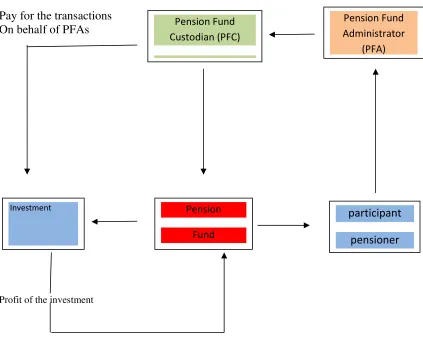
The new Pension Reform Act 2004 provides that pension fund should be invested by a licienced pension fund administrator, in a conventional manner of investment, which includes: bonds, bills and other securities issued or guaranteed by the Federal Government and the Central Bank of Nigeria; debentures, redeemable preference shares and other debt instruments issued by registred corporate entities (PRA 2004).
It is apparent that most of the above mentioned means of investment are not Sharia compliant means, and there is overwhelming majority of Muslims in Nigeria who want to have their source of livelihood after retirement invested in a sharia compliant business. This paper will analyse the investment provisions of Pension Reform act from Islamic perspective, highlight the areas that contradict Islamic teachings and provide Sharia compliant investment alternatives.
Pension Schemes In Nigeria: A Historical Overwiew
Old Pension schemes In Nigeria
The history of pension system in Nigeria dates back to the year 1951. According to Balogun (2006),
Pension Ordinance
of 1951was the first legislative act on pension in Nigeria,
which had a retroactive effect from 1st January 1946, while The National Provident Fund (NPF) of 1961 was the first legislation enacted to address pension matters of private organizations.Subsequently, in 1979, the Pension Act No.102 and the Armed Forces Pension Act No. 103 were instituted. In 1987, the police and other government agencies pension scheme was established under Pension Act No.75 of 1987. Similarly, the Local Government Staff Pension Board was established in the same year, to take care of pension matters among local government employees. While in 1993, the National Social Insurance Trust Fund (NSITF) scheme was established to replace the defunct NPF scheme, with effect from 1st July, 1994, to address pension and retirement issues in the private sector (Ahmed, 2006).
According to (Barrow, 2008), these Decrees remained the operative laws on public service and military pension in Nigeria until July, 2004, though there were several government circulars and regulations issued to alter their provisions and implementations. It should also be noted that pension schemes in Nigeria over these years have always relied upon budgetary allocations, thereby creating bottlenecks, due to delay or lack of payment after retirement.
The Nigerian Pension Reform Act 2004