Journal of Society for Transportation and Traffic Studies (JSTS) Vol.5 No.2
PREFACE
Dear Readers,
Greetings from Bangkok !
Welcome to the second issue of 2014, the June issue of Volume 5 of our online peer- reviewed International Journal of the Society of Transportation and Traffic Studies.
In this issue, 6 papers are presented covering a wide range of transportation challenges, from bus transport in Thailand to India, and three papers addressing development in asphalt mixes and concrete block paving. As safety remains a matter of life and death, particularly the safety of motorcycle users, so we have included a paper addressing motorcycle safety in Bali, Indonesia.
Bus is a major mode of urban transport in India, as such, the impact of large number bus stops on urban traffic becomes a challenge and is addressed in one of the paper.
We sincerely apologize for the delay in the publication of this issue, this is due to some unexpected misunderstanding and technical problems.
Once again, we thank all of you who have kindly contributed to this issue of our journal and we express our gratitude to members of International Scientific Advisory Committee and reviewers for your continued advice and supports.
We trust our readers will enjoy and benefit from this issue.
Professor Pichai Taneerananon
Journal of Society for Transportation and Traffic Studies (JSTS)
Editorial Board
1. Prof. Dr. Pichai Taneerananon Prince of Songkla University, Thailand (Chair) 2. Prof. Dr. Tien Fang Fwa National University of Singapore, Singapore 3. Prof. Dr. Praipol Koomsap Thammasat University, Thailand
4. Prof. Dr. Ulrich Brannolte Bauhaus University, Weimar, Germany 5. Prof. Dr. Kazunori Hokao Saga University, Japan
6. Prof. Dr. Csaba Koren Szechenyi Istvan University, Hungary 7. Prof. Dr. Takashi Nakatsuji Hokkaido University, Japan
8. Prof. Dr. Akimasa Fujiwara Hiroshima University, Japan 9. Prof. Dr. Junyi Zhang Hiroshima University, Japan 10. Prof.Dr. Lu Huapu Tsinghua University, China
11. Prof. Dr. Sanjeev Sinha National Institute of Technology Patna, India 12. Assoc. Prof. Dr. Sorawit Narupiti Chulalongkorn University, Thailand
13. Assoc. Prof. Dr. Kazushi Sano Nagaoka University of Technology, Japan 14. Assoc. Prof. Dr. Viroat Srisurapanon .LQJ0RQJNXW¶V8QLYHUVLW\RI7HFKQRORJ\
Thonburi, Thailand
Editorial Staff
1. Assoc. Prof.Dr. Vatanavongs Ratanavaraha Suranaree University and Technology, Thailand (Chief)
2. Dr. Watchara Sattayaprasert Mahanakorn University of Technology, Thailand 3. Mr. Andreas Vesper Bauhaus University, Germany
4. Dr. Supaporn Kaewko Laopairojana Kasetsart University, Thailand 5. Dr. Suebpong Paisalwattana Department of Highways, Thailand 6. Dr. Chumchoke Nanthawichit Tran Consultant Co.,Ltd.
7. Dr. Karin Limapornwanitch Systra MVA (Thailand) Ltd 8. Dr. Kerati Kijmanawat PSK Consultant Co., Ltd
9. Dr. Ponlathep Lertworawanich Department of Highways, Thailand 10. Dr. Danai Ruengsorn Department of Highways, Thailand
11. Dr. Khuat Viet Hung University of Transport and Communications, Viet Nam
12. Dr. Sudarmanto Budi Nugroho Hiroshima University, Japan 13. Asst. Prof. Dr. Wichuda Satiennam Mahasarakham University, Thailand 14. Dr. Chatchawal Simaskul Office of Transport and Traffic Policy and
Planning, Thailand
Journal of Society for Transportation and Traffic Studies (JSTS) Vol.5 No.2
TABLE OF CONTENTS
General Issue
Travel Choice Model for Bus and Other Modes in Ubon Ratchathani Municipality 1 and Amphoe Warin Chamrap by Using Stated Preferences Data Samaporn SUDADET, Vatanavongs RATANAVARAHA, Siradol SIRIDHARA
)DFWRUV,QIOXHQFLQJ&DU'ULYHUVDQG0RWRUF\FOLVWV¶5LVN\%HKDYLRXUVLQ%DOL 12 Nyoman BUDIARTHA R.M
Environmental Benefits of warm mix asphalt technologies: Experience of the city of calgary 23 Lakshan WASAGE Ph.D., Mauricio REYES Ph.D.,K.S.B.N JINADASA Ph.D.,J.STATSNA Ph.D.
Field Implementation of warm mix asphalt using different binders 36 Yoong Chin CHONG, Than Than NYUNT, Low Boon HWEE, Guwe VINCENT
Development of A Finite Element Model for Concrete Block Paving 46 M.M.D.V. GUNATILAKE, W.K. MAMPEARACHCHI
)$&7256,1)/8(1&,1*&$5'5,9(56$1'02725&<&/,676
RISKY BEHAVIOURS IN BALI
ABSTRACT:
This study investigates factors influencing car drivers and motorF\FOLVWV¶risky behaviours in the capital city of Denpasar, Bali Province, Indonesia. Questionnaires were distributed to collect various data consisting personal characteristics involving age and gender and self-reported of risky driving/riding behaviour, perceived risk and positive affect. The study results indicate that age differences significantly influencing risky driving/riding behaviours while no gender differences of all ages are found in risky driving/riding behaviours. The model results show that motorists may exclude perceived risk, i.e. risk and benefit of risky behaviour while driving/riding. Positive affect however, is significantly related to teens¶ risky behaviours. In addition, teen male and female have no differences in relation to positive affect toward risky driving/riding. A regression model result shows that both age and positive affect are independent predictors of risky driving/riding behaviours. More investigations on the role of positive affect are therefore encouraged for future research.
KEYWORDS: Age, Positive Affect, Risky Behaviour, Driver, Motorcyclist
1. INTRODUCTION
There are many factors contributing in a road accident consisting vehicles, road environments (e.g. traffic conditions, road type and conditions) and human (i.e. the road users) elements. Some studies have suggested that road users are the main factor influencing road accidents (Matthews and Moran, 1986; Sabey and Taylor, 1980). Sabey and Taylor (1980) for example, found that human factors, particularly driving behaviour, contributing about 95% on road accidents.
In addition, several studies conducted in Bali showing that human behaviours significantly contributed to road accidents. Using two arterial roads in Bali (i.e. Bypass IB Mantra and Bypass I Gusti Ngurah Rai) as the case study area, Wedagama and Dissanayake (2010a) found that motorists failed to yield and motorcyclists at fault influencing motorcycle injuries more than 33% respectively. In Tabanan regency, motorists failed to yield contributing approximately 30% on motorcycle fatal accidents (Wedagama, 2009a).
Meanwhile, age differences have long been considered having contributions to injury types related to road accidents (Dissanayake, 2004). Using the two arterial roads in Bali as the case study area, Wedagama (2009b) found that motorcycle fatal and seriously injured were 38% caused by young motorists (17-26 years old). In addition, Wedagama and Dissanayake (2010b) concluded that the probability of age was 50% to influence all vehicles fatalities in Bali.
In relation to driving behaviour, Rhodes and Pivik (2011) argued that dual process models of decision making have always been considered present in a car driver or a motorcyclist. These involve a rational and analytic process in one hand and experimental and intuitive process on the other hand. These models however, have not been used widely in road safety modelling (Rhodes and Pivik, 2011). In their study, they used elements of dual process models as the mediator factors in analysing risky driving behaviour.
Nyoman BUDIARTHA R.M Department of Civil Engineering, Udayana University, Bali, 80361, Indonesia
)DFWRUV,QIOXHQFLQJ&DU'ULYHUVDQG0RWRUF\FOLVWV¶5LVN\%HKDYLRXUVLQ%DOL
Based on the fact that human errors contributed significantly to road accidents in Bali (Wedagama, 2009a & 2009b; Wedagama and Dissanayake, 2010a & 2010b), a study on factors affecting driving behaviours mostly consist of risk behaviour, risk perception and positive affect while on the road is required. According to Jonah (1986) and Rhodes and Pivik, (2011):
x risky driving/riding behaviour such as speeding, impaired driving or violation involvement is an intolerable social activity and is having negative impacts to other road users,
x risk perception is an overall perceived risk of an accident involvement while driving and the perceived risk of specific driver behaviours or driving situations. Risk perception refers to the perceived likelihood of an event occurring (e.g. an accident while driving) or the likelihood that the event will result in negative consequences (i.e. injury or death) and,
x positive affect is a person reported liking for risky driving/riding behaviour.
Infrastructure improvement has been considered to reduce road accident only for short term period so that road user behaviour improvement is required to continuously minimise road accidents. This study aimed at examining the influence of age and gender differences and the role of positive affect and perceived risk on FDUGULYHUVDQGPRWRUF\FOLVWV¶ risky behaviours in Bali. This study involves a survey to collect various data such as personal characteristics, self-reported risky driving/riding behaviours and decision making mediator data consisting positive affect and risk perception. A more full comprehension on driving/riding
behaviour should provide a better development in investigating road user behaviour changes.
2. HUMAN FACTORS INFLUENCING RISKY BEHAVIOUR
2.1 Previous Studies
Risky behaviour may happen through rational process such as evaluation of the risks and benefits of a given action. Rhodes and Pivik RXWOLQHGWKDWGULYHUV¶HGXFDWLRQZRXOGQRW be sufficient to encourage safer driving. They suggested that more than rational models are required to comprehend risky driving behaviour.
Taubman - Ben-Ari, O., et.al (2004) identified several variables that are reported to pertain on young drivers reckless driving. These variables are threat and self-efficacy appraisals, perceived control over driving, positive feedback received and environmental driving-climate. They found that challenge and self-efficacy appraisals along with negative environmental influences were related to higher frequency of risky driving. In contrast, threat appraisals and positive feedback were related to a lower frequency of reckless driving.
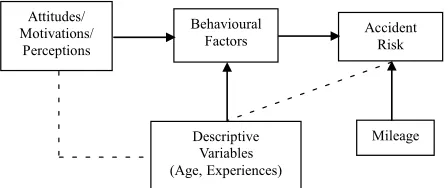
Figure 1. Factors affecting the accident risk of motorcyclists (Sexton, et.al, 2004)
Meanwhile, Rhodes and Pivik (2011) found that age and gender differences have different patterns on risky driving behaviour. One significant factor influencing accident risk in connection with age and gender is positive affect which characterised by positive emotions in driving pleasures. In addition, Rhodes and Pivik (2011) shows that positive affect strongly predicted risky behaviour for teen and male drivers than for adult and female drivers. They suggested a focus on the role of positive affect may assist to reduce risky driving behaviour.
McKenna, et.al, (1998) studied age and gender differences in relation to road accidents. They found that men and younger drivers have a higher proportion than women and older drivers respectively to involve in bend, overtaking and dark hours accidents. Younger drivers tend to accept closer following distances, more gap when merging with other traffic and more dangerous overtaking manoeuvres.
Harre, et.al, (2005) investigated on young driver in relation to road accidents. They found that men showing more self enhancement on driving ability but less on driving caution than women. In addition, Mast, et.al, (2008) studied young men masculinity and road accidents. They found that masculinity is significantly connected
to speeding. They suggested that disengaging masculinity might prevent speeding.
2.2 Direct Effect and Mediation Analyses
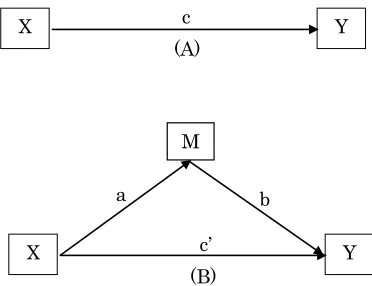
A previous study by Rhodes and Pivik (2011) used the direct effect and mediation methods of Preacher and Hayes (2008) for two mediators (e.g. risk perception and positive affect) and a normal theory test and bootstrapping to estimate indirect mediated effect. The method describes on how, or by what means, an independent variable (X) affecting a dependent variable (Y) through one or more potential intervening variables, or mediators (M).
Mediation procedures consist of simply one mediating variable. Figure 2B shows a simple mediation model and a causal effect of which X has both indirect and direct effects on Y through M (path a and b) and path cƍ respectively.
The indirect effect of X on Y through M is expressed as the product of both a and b (i.e., ab). Figure 2A shows total effect of X on Y is quantified with the unstandardised regression weight c. The total effect of X on Y can be expressed as the sum of the direct and indirect effects: c=cƍab. Equivalently, Figure 2B shows that cƍis the difference between the total effect of X on Y and the indirect effect of X on Y through
Factors Accident Risk
Mileage Descriptive
)DFWRUV,QIOXHQFLQJ&DU'ULYHUVDQG0RWRUF\FOLVWV¶5LVN\%HKDYLRXUVLQ%DOL
Figure 2. (A) direct effect and (B) mediation design (Preacher and Hayes, 2008)
3. DATA DESCRIPTIONS
3.1 Data Collection
The case study area is the capital city Denpasar which located in the Southern Bali as shown in Figure 3. It has an area of 12.398 km2 and the population is about 788,445 in 2010 (Statistics of Bali, 2011). Motorcycles are the most favourite mode amongst other transportation modes in Denpasar and Bali respectively. Motorcycle is accounted for by more than 85% of total modes of transport running on the road in Denpasar (Statistics of Bali, 2011).
Data are collected by means of questionnaires, which were distributed and randomly selected among 400 respondents. Only 314 responses however, are effective and used for this study. The questions consist of driver/motorcyclists characteristics that are age and gender and self-reported of risk driving/riding behaviour, positive affect and perceived risk. One advantage of self-report method is that such various risky behaviours
from the same individual collected conveniently.
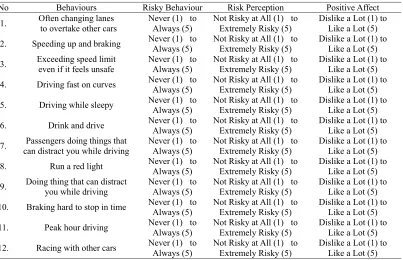
Following questionnaires developed in a previous study by Rhodes and Pivik (2011), twelve behaviours are employed to measure UHVSRQGHQW¶V LQYROYHPHQW LQ ULVN\ behaviour, positive affect and perceived risk. A 5-point scale was used to measure the frequency of each respondent engaged on each variable. This is shown in Table 1. For example, when respondents have switched lanes frequently to overtake other cars, he or she will choose 5.
Of total samples, 53.5% (168) and 46.5% (146) respondents were teenagers (less than 21 years old) and adult drivers/riders respectively while 51.6% (162) and 48.4% (152) respondents were male and female respectively. Interestingly, about 91% of the randomly selected respondents were motorcyclists and the rest were car drivers. This is in line with the existing proportion of motorcycle among total modes of transports in Denpasar city. The samples therefore, are considered relevant to represent existing situation and appropriate to use in the analysis. c
X Y
(A)
(B)
X Y
M
a b
Figure 3. Case study area
Table 1. Twelve behaviour measures
No Behaviours Risky Behaviour Risk Perception Positive Affect
1. Often changing lanes
to overtake other cars
even if it feels unsafe
Never (1) to
7. Passengers doing things that
can distract you while driving
Never (1) to
9. Doing thing that can distract
)DFWRUV,QIOXHQFLQJ&DU'ULYHUVDQG0RWRUF\FOLVWV¶5LVN\%HKDYLRXUVLQ%DOL
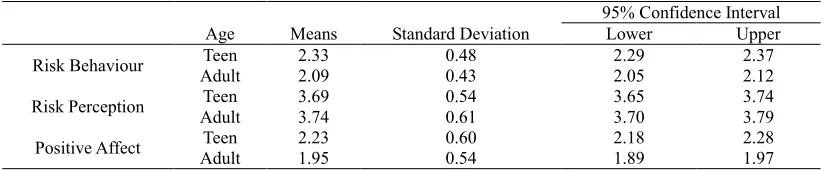
Table 2. Statistical description of age differences in ratings of behaviour frequency, perceived risk and positive affect
Age Means Standard Deviation
3.2. Preliminary Data Analysis
Multiple Analysis of Variance of age group by gender were carried out with positive affect, perceived risk and risky driving behaviour as the dependent variables. In these analyses, the significant value (p-value) of age, gender and interaction between age and gender were 0.000, 0.235 and 0.627 respectively. As the result, only age (p<0.05) is used as an independent variable in the model development. In other words, gender differences of all ages may not significantly contribute to risky driving/riding behaviours to these respondents. Thus, this indicates that both male and female of all ages may equally be involved in risky driving/riding behaviours.
Behaviour frequency, risk perception and positive affect, a reliability analysis were conducted for each type of rating to examine whether ratings across the different behaviours are reasonably be combined. The reliabilities were acceptable, with an alpha of 0.767, 863 and 0.864 obtained for behaviour frequency, risk perception and positive affect respectively. Statistical description of age differences for behavioural frequency, risk perception and positive affect were computed for each participant. The description is based on the twelve behaviours for each type of rating representing indices of these variables frequencies. Age group is divided into 146 teen and 168 adult motorists as shown in Table 2.
In general, Table 2 shows that teens than adults were more engaged in but less perceived risky driving/riding behaviours as unsafe activity. Further analysis is required therefore to reveal significant factors, which influence risky driving/riding behaviours on car drivers and motorcyclists.
4.MODEL
DEVELOPMENT
AND
ANALYSIS
Figure 4 shows the statistically significant relationship between age group and positive affect and insignificant relationship between age group and risk perception. Based on these samples, risk perception, which representing rational process in decision making is insignificant to as a mediating factor on risky behaviour. In other words, the respondents may significantly less consider risk and benefit of risky behaviour while driving or riding a motor vehicle. The model therefore was redeveloped considering only positive affect as the mediator factor as shown in Figure 5.
Figure 4. Mediating role of positive affect and risk perception on age and risky driving/riding
Figure 5. Mediating role of positive affect on age and risky driving/riding
Figure 6. Mediating role of positive affect on teens gender and risky driving/riding
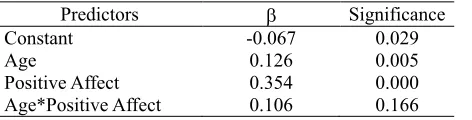
Table 3. Regression of risky driving/riding behaviour on age and positive affect
Predictors E Significance
Constant -0.067 0.029
Age 0.126 0.005
Positive Affect 0.354 0.000
Age*Positive Affect 0.106 0.166
0.408 (0.000) 0.241
(0.000) 0.127 (0.005)
0.280 (0.000) Age
Positive Affect
Risky Driving/Riding 0.408
(0.000) 0.241
(0.000) 0.131 (0.004)
0.280 (0.000) Age
Positive Affect
Risky Driving/Riding Risk
Perception -0.050
(0.444) (0.254) -0.048
0.457 (0.000) 0.104
(0.197) 0.077 (0.243)
0.059 (0.562)
Gender
Positive Affect
)DFWRUV,QIOXHQFLQJ&DU'ULYHUVDQG0RWRUF\FOLVWV¶5LVN\%HKDYLRXUVLQ%DOL
The effect of mediated relationship (b=0.127, p<0.01) between age and driving behaviour was less significant compared to the unmediated relationships (b=0.241, p<0.001). The total effect of age group on behaviour represents the unmediated relationship between age and risky driving was significant indicating that teen drivers reported more risky driving/riding behaviour than adult drivers. Therefore, age differences in self-reported risky driving/riding were found to be attributable to differences in positive affect, which in turn significantly predict risky driving/riding behaviour.
As shown in Figure 6, no significant relationship was found between positive affect and teens male and female (b=0.059,p>0.001). In contrast, there was a significant relationship between positive affect and risky driving/riding behaviour (b=0.457, p<0.001). Both the effect of mediated (b=0.077, p>0.01) and the unmediated (b=0.104, p>0.001) relationships between teens gender and driving behaviour were insignificant. This demonstrates that gender among teen drivers/riders have no significant influence on positive affect within the respondents. In other words, no significant differences were found between teens male and female in relation to positive affect on risky driving/riding.
Regression analysis was conducted to examine the independent effect of positive affect on risky driving behaviour. All continuous variables were centred prior to analysis while age is coded such that 0 = adult and 1= teen. To investigate the age effects, a regression equation was constructed to predict risky driving behaviour with the following predictors: age, positive affect and the interaction between age and positive affect. The result is presented in Table 3.
Based on Table 3, both positive affect and age are significant at 5% level. No significant interaction however, was found between age and positive affect. These indicate that both age and positive affect are independent predictor
5. DISCUSSIONS
This study showed that no gender differences were found in risky driving/riding behaviours in Bali. This is somewhat different to other studies, which found that male than female drivers are more likely to involve in risky driving behaviours (McKenna, et.al, 1998; Rhodes and Pivik, 2011).
This study however, found that positive affect significantly influencing age differences for risky driving/riding behaviour. In addition, age differences in risky driving/riding behaviour can be attributed to differences in enjoyment of risky behaviour. More specifically, this study found that teen drivers are more positive affect compared to adult drivers. This is consistent with some previous studies findings by McKenna, et.al, (1998), Taubman - Ben-Ari, O., et.al (2004) and Rhodes and Pivik (2011) which found that younger drivers including teen drivers are more involved in risky behaviours which in turn resulting in road accidents.
Teen driver and motorcyclist¶V involvement in risky behaviours are influenced by their psychological, physical and social developments. More specifically, they are on a stage of expressing independence from parents and authorities and impressing their friends (Jonah, 1986). Teen in contrast to adult drivers may have less self-awareness on risky driving and riding as they are not really well informed of the negative impact of such activities.
Road safety education is gradually required starts from kindergarten or elementary schools to increase ERWKFKLOGUHQDQGWHHQV¶knowledge on the impact of risky driving/riding behaviour. Discussion meeting can be arranged among Bali local government, Bali State Police and Parents Teachers Associations to put a set of road safety course in the curriculum that can be delivered in the classroom. The course may consist of several examples including the negative impact of risky behaviour which may cause fatal and serious injuries and their effect on both the victim and family. Teen drivers or motorcyclists who consistently abide by rule and avoid risky behaviours can be awarded as the good examples in their local community or their neighbourhood.
Having put this road safety education into practice, evaluation should be done on a regular basis to analyse its impact in reducing mostly teen road accidents. Above all, the relationship between parents and teenagers at home in communicating safer driving and riding are apparently more important to increase road safety knowledge of these new young drivers and motorcyclists.
Adopting an experience from other countries such as a graduated licensing system (Jonah, 1990) may also be appropriate to implement to reduce teen risky behaviours on the road in Bali. Attending driver training course before obtaining a driving license is compulsory for all new drivers including teenagers. In addition to that, a driver or motorcyclist must be evaluated and passing several stages of licensure before obtaining a full driving license. This may
be able to develop a positive attitude for teens while driving/riding motor vehicles.
As with Rhodes and Pivik (2011), this study uses cross section data of car drivers and motorcyclists. The use of time series data for the teen respondents is more relevant for further studies to get more comprehensive knowledge in teen risky driving/riding behaviours. As the teen respondents will grow up, the development of positive attitude while driving/riding will also be able to analyse.
6. CONCLUSIONS
This study showed that age than gender differences were found to be more related to risky driving/riding behaviour. More specifically, teen than adult drivers and motorcyclists are more related to positive affect, which in turn significantly predicting risky driving/riding behaviour. No significant differences however, were found between teens male and female of all ages in relation to positive affect toward risky driving/riding. Further research on factors influencing positive affect on teen risky driving and riding therefore, should be conducted to reduce teen road accidents.The use of time series data for the teen respondents is also suggested for further studies to get more comprehensive knowledge in teen risky driving/riding behaviours
This study suggests a road safety development program in mostly educating children and teens both at home and at school. This initially may involve Bali local government, Bali State Police and Parents Teacher Association to set an appropriate road safety course. If realised, this program should be evaluated on a regular basis to analyse its impact in reducing primarily teen road accidents. In addition, an improvement using a graduated licensing system to obtain full driving/riding licenses is recommended especially for teen drivers/motorcyclists.
)DFWRUV,QIOXHQFLQJ&DU'ULYHUVDQG0RWRUF\FOLVWV¶5LVN\%HKDYLRXUVLQ%DOL
REFERENCES
Dissanayake, S. (2004) Comparison of severity affecting factors between young and older drivers involved in single vehicle crashes. Journal of International Association of Traffic and Safety Sciences (IATSS), 28 (2), 48-54.
Harre, N., Foster, S., 2¶1HLOO0005) Self-enhancement, crash-risk optimism and the impact of safety advertisement on young driver. British Journal of Psychology, 96, 255-230.
Jonah, B.A. (1986) Accident risk and risk-taking behaviour among young drivers. Accident Analysis and Prevention, 18(4), 255-271.
Jonah, B.A. (1990) Age differences in risky driving. Health Education Research Theory & Practice, 5(2), 139-149.
Mast, M.S., Sieverding, M., Esslen, M. (2008) Masculinity causes speeding in young men. Accident Analysis and Prevention, 40, 840±842.
Matthews, M.L., Moran, A.R. (1986) Age differences in male dULYHUV¶ perception of accident risk: the role of perceived driving ability. Accident Analysis and Prevention, 18(4), 299-313.
McKenna, F.P., Waylen, A.E., Burkes, M.E. (1998) Male and Female Drivers: How Different Are They? AA Foundation for Road Safety Research, The United Kingdom.
Preacher, K.J., Hayes, A.F. (2008) Asymptotic and resampling strategies for assessing and comparing indirect effects in Multiple Mediator models. Behaviour Research Methods, 40(3), 879-891.
Rhodes, N., Pivik, K. (2011) Age and gender differences in risky driving: the roles of positive affect and risk perception. Accident Analysis and Prevention, 43(3), 923-931.
Sabey, B.E., Taylor, H. (1980) The Known Risks We Run: The Highway. Transport and Road Research Laboratory Supplementary Report 567, The United Kingdom
Sexton, B., Baughan, C., Elliott, M., Maycock, G. (2004) The Accident Risk of Motorcyclists. Transport Research Laboratory (TRL) Report 607, The United Kingdom.
Statistics of Bali Province. (2011) Bali in Figures.
Taubman - Ben-Ari, O., Mikulincer, M., Iram, A. (2004) A multi-factorial framework for understanding reckless driving-appraisal indicators and perceived environmental determinants. Transportation Research Part F, 7, 333±349
Wedagama, D.M.P. (2009b) The influence of young and male motorists accident factors on motorcycle injuries in Bali. Journal of International Association of Traffic and Safety Sciences (IATSS), 33(2), 64-75.
Wedagama, D.M.P., Dissanayake, D. (2010a) Analysing motorcycle injuries on arterial roads in Bali using a Multinomial Logit model. Journal of the Eastern Asia Society for Transportation Studies, 8, 1892 -1904.