© UNICEF Indonesia 2015
Any part of this document may be freely reproduced with
appropriate acknowledgement.
Design and layout: Lantip Budiarto
Suggested Citation: United Nations Children’s Fund. (2015).
Child Protection System Governance Indicators Framework:
Assessment for Indonesia, UNICEF Indonesia, Jakarta: Indonesia.
this report was prepared by a team of consultants from FISCo id LLC, comprising of kateryna maynzyuk and Yuriy Dzhygyr. the team exhibited an impressive level of commitment to the development and finalization of this high-quality report, which is a significant contribution to UNICEF’s work in Indonesia to strengthen child protection systems.
A high level of appreciation is also due to Ibu Yosi Dianitresna and Ibu Destri Handayani at the ministry of Planning (Bappenas) in Indonesia. their guidance and support have made this report possible.
the UNICEF Indonesia Child Protection team
ACronyms And AbbrevIAtIons ... iv
summAry of fIndInGs ... 1
Key strenGths And weAKnesses ... 3
1. Policy Process ... 5
2. Public Financial management ... 7
3. Human Resource management ... 10
4. Information management ... 12
5. Quality Assurance ... 15
6. Public Communications and Influencing ... 18
domAIn 1. PolICy ProCess ... 21
INDICAtoR 1.1. CLARItY AND CoNSIStENCY oF CHILD PRotECtIoN PoLICY PRIoRItIES ... 21
INDICAtoR 1.2. CoHERENt LEGAL SPECIFICAtIoN oF kEY CoNCEPtS ... 48
INDICAtoR 1.3. StRAtEGIC PREPAREDNESS to PotENtIALLY voLAtILE ENvIRoNmENt ... 58
INDICAtoR 1.4. PoLICY CooRDINAtIoN FoR CHILD PRotECtIoN ... 64
INDICAtoR 1.5. PoLICY moNItoRING ... 75
INDICAtoR 1.6. SYNERGIES ACRoSS SECtoRS ... 81
domAIn 2. PublIC fInAnCIAl mAnAGement ... 90
INDICAtoR 2.1. StRAtEGIC BUDGEtING BASED oN REALIStIC CoStING ... 90
INDICAtoR 2.2. tRANSPARENCY AND CREDIBILItY oF BUDGEt ALLoCAtIoNS ... 95
INDICAtoR 2.3. SPENDING FLExIBILItY ...100
INDICAtoR 2.4. LACk oF FINANCIAL INCENtIvES to PARtICULAR SERvICE tYPES ....103
INDICAtoR 2.5. vALUE FoR moNEY AwARENESS ...106
INDICAtoR 2.6. EFFECtIvE StRUCtURES FoR DECENtRALISED FUNDING ...112
domAIn 3. humAn resourCe mAnAGement ...124
INDICAtoR 3.1. StANDARDS FoR CHILD PRotECtIoN PRoFESSIoNALS ...124
INDICAtoR 3.2. PERSoNNEL ACCoUNtING AND PAYRoLL CoNtRoL ...128
INDICAtoR 3.3. CoNtINUItY oF PoLICY CommItmENt, kNowLEDGE AND SkILLS ACRoSS ELECtoRAL CYCLES ...130
INDICAtoR 3.4. PRoFESSIoNAL tRAINING FoR PERSoNNEL woRkING oN CP SERvICE DELIvERY ...131
INDICAtoR 3.5. PERFoRmANCE EvALUAtIoN ...134
INDICAtoR 4.2. QUALItY oF CP DAtABASES ...148
INDICAtoR 4.3. RESPoNSIvENESS to CHANGING PoLICY DEmANDS ...155
INDICAtoR 4.4. DAtA CoNSoLIDAtIoN AND ExCHANGE ...158
INDICAtoR 4.5. LINkAGES BEtwEEN DAtA PRoDUCERS AND DAtA USERS ...163
INDICAtoR 4.6. LINkS to NAtIoNAL RESEARCH AGENDA FoR CHILD PRotECtIoN ....166
domAIn 5. QuAlIty AssurAnCe ...170
INDICAtoR 5.1. QUALItY GUIDANCE AND StANDARDS ...170
INDICAtoR 5.2. CREDIBILItY AND REGULARItY oF INSPECtIoNS ...182
INDICAtoR 5.3. ENCoURAGEmENt oF INNovAtIoN ...185
INDICAtoR 5.4. EFFECtIvE GAtE-kEEPING AND REFERRALS...188
INDICAtoR 5.5. ENFoRCEmENt AND FoLLow-UP ...191
INDICAtoR 5.6. INtEGRAtIoN wItH CommUNItIES ...194
domAIn 6. PublIC CommunICAtIons And InfluenCInG ...197
INDICAtoR 6.1. CLARItY oF CHILD PRotECtIoN CommUNICAtIoN StRAtEGY ...197
INDICAtoR 6.2. AvAILABILItY oF EvIDENCE oN vALUES, AttItUDES, CUStomS AND tRADItIoNS ...205
INDICAtoR 6.3. ALERtNESS to CHANGING RISkS AND vULNERABILItIES ...208
INDICAtoR 6.4. INtERACtIvE AND oN-GoING ENGAGEmENt wItH kEY AUDIENCES ....210
INDICAtoR 6.5. BUILDING oN ExIStING PoSItIvE vALUES ...213
INDICAtoR 6.6. INvoLvEmENt oF kEY oPINIoN LEADERS ...215
Annex 1. summAry of sCores ...218
Annex 2. summAry of reCommendAtIons ...236
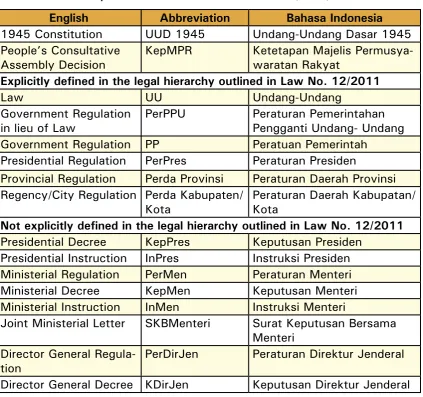
table 2. Portfolios of the Indonesian Co-ordinating ministires ... 52
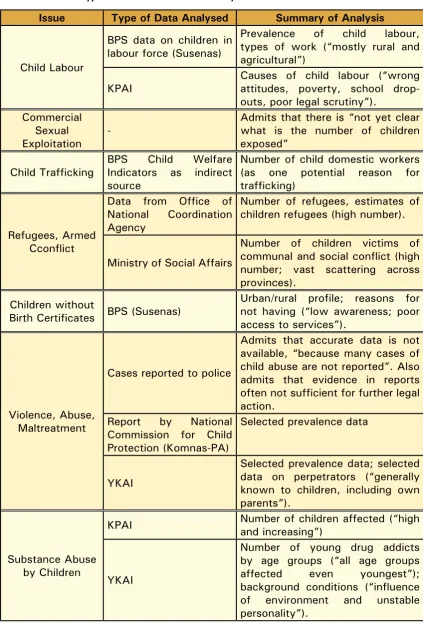
table 3. types and Sources of Data Analysed in the PNBAI 2015 ...144
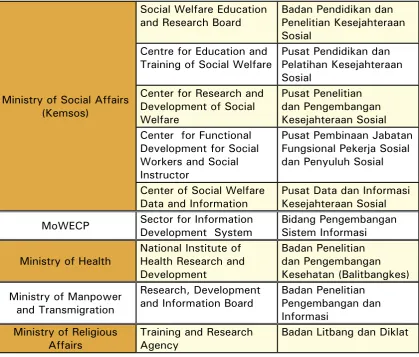
table 4. Examples of Data and Research Units in Selected Line ministries ...147
table 5. key data relevant to Child Protection Collected by key Actors in Indonesia ...151
table 6. Progress in Development of minimum Service Standards (SPm) ...173
table 7. minimum Service Standards (SPm) in women Empowerment and Child Protection ...173
table 8. Public Communication Aspects in Child Protection Strategies ...200
lIst of fIGures Figure 1. Indonesia’s Participation in International Conventions Related to CP in 1926-2013... 23
Figure 2. International treaties: Current Status of Signing and Ratification by Indonesia ... 24
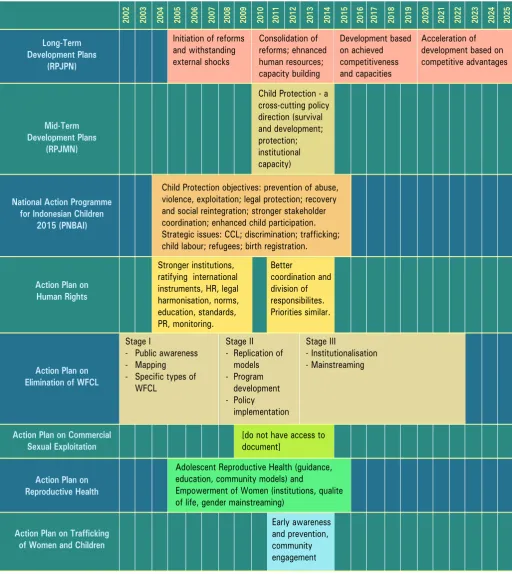
Figure 3. Strategic and Issue-Based Planning Related to Child Protection: timelines and Priorities ... 36
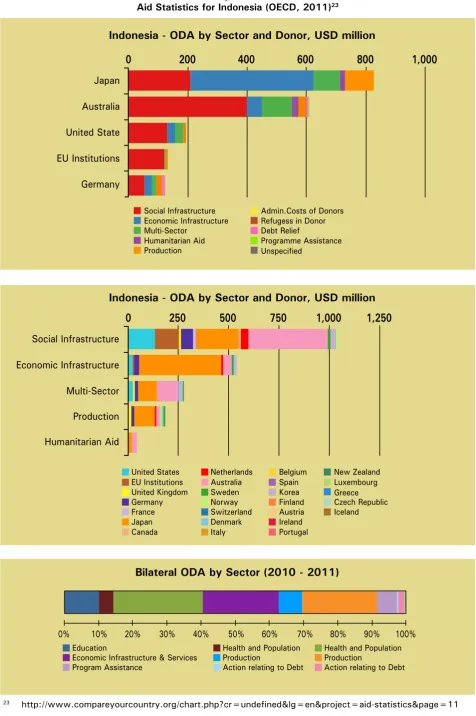
Figure 4. Aid Statistics for Indonesia ... 71
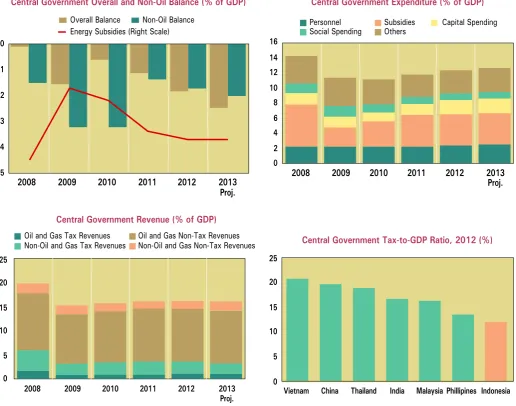
Figure 5. Central Government Fiscal Performance, 2008-2013 ...108
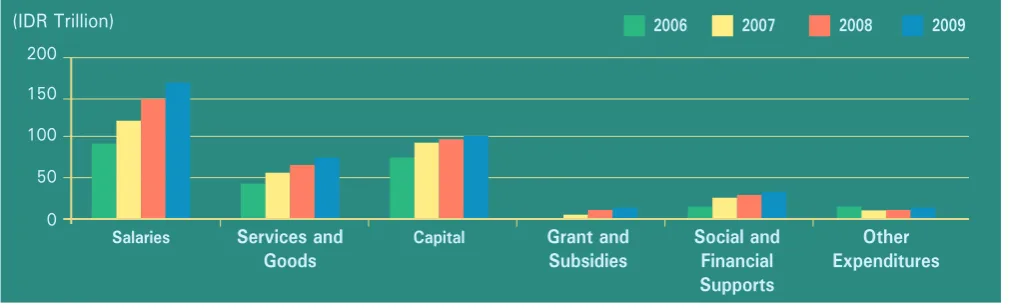
Figure 6. Local Revenues in Indonesia (2006-2009) ...117
A4DES Aid for Development Effectiveness Secretariat
ABH Anak Berhadapan dengan Hukum Children in Conflict with the Law
ABt Anggaran Belanja Tambahan Expenditure budget supplements
AFS Aplikasi Forecasting Satker
Application Forecasting working Group
AIDS Acquired Immunodeficiency Syndrome
BAPAS Balai Pemasyarakatan Juvenile Correction Facility
Bappenas Badan Perencanaan Pembangunan Nasional National Development Planning Agency
BBm Bahan Bakar Minyak
“Fuel Subsidy” / the Government Subsidy Program for Additional Food Costs for Social Care Institutions
Biro PP Sub-national offices of the ministry of women and Child Protection
BkN Badan Kepegawaian Negara
Government Employee Administration Agency
BLUs Badan Layanan Umum
Public service bodies
BNPB Badan Nasional Penanggulangan Bencana National Disaster management Agency
BNP2TKI Badan Nasional Penempatan dan Perlindungan Tenaga Kerja Indonesia National Board for the Placement and Protection of Indonesian
overseas workers
BNPP Badan Nasional Pengelolaan Perbatasan National Border management Agency
BP3AkB Badan/Biro Pemberdayaan Perempuan dan Perlindungan Anak dan Keluarga Berencana
women Empowerment, Child Protection and Family Planning Bureau
BPk Badan Pemeriksa Keuangan State Audit Agency
BPS Badan Pusat Statistik
CDC Centers for Disease Control and Prevention
CDE Consortium for Disaster Education
CEDAw Committee on the Elimination of Discrimination against women
CGI Consultative Group of Indonesia
CIDA Canadian International Development Agency
CoFoG Classification of the Functions of Government
CP Child Protection
CRC Convention on the Rights of the Child
CSI Civil Society Index
DAk Dana Alokasi Khusus Special Allocation Fund
DAU Dana Alokasi Umum General Allocation Fund
DBH Dana Bagi Hasil
Revenue Sharing Fund
kEmENSoS/ Kementerian Sosial (dahulu - Departemen Sosial)
kEmSoS ministry of Social Affairs of the Republic of Indonesia (formerly – Social Department)
DHS Demographic Household Survey
DIPA Daftar Isian Pelaksanaan Anggaran
Spending warrant / Budget Allotment Document
DNIkS Dewan National Indonesia Untuk Kesejahteraan Sosial Social the Indonesian National Council on Social welfare
DPD Dewan Perwakilan Daerah Regional Representative Council
DPE Development Performance Evaluation
DPoD Dewan Pertimbangan Otonomi Daerah Regional Autonomy Advisory Council
EAP East Asia and Pacific
EAPRo Regional office for East Asia and the Pacific
EU European Unions
FGD Focus Group Discussion
FGm/C Female genital mutilation/cutting
FItRA Forum Indonesia untuk Transparansi Anggaran Indonesian Forum for Budget transparency
GDP Gross Domestic Product
GFS Government Finance Statistics
GHwA Global Health workforce Alliance
GIF Governance Indicator Framework
GNI Gross National Income
GoI Government of Indonesia
GRDP Gross Regional Domestic Product
GtZ Gesellschaft für Technische Zusammenarbeit German organisation for technial Cooperation
HIPSI Himpunan Pekerja Sosial Indonesia
Indonesian Association of Social workers
HIv Human Immunodeficiency virus
HLF4 Fourth High Level Forum on Aid Effectiveness
HR Human Resources
IASSw International Association of Schools of Social work
IDmC Internal Displacement monitoring Centre
IDP Internally Displaced Person
IDR Indonesian Rupiah
IEC Information, Education, Communication
IGGI Inter-Governmental Group of Indonesia
ILo International Labour organization
InPres Instruksi Presiden Presidential Instruction
IPEC International Programme on the Elimination of Child Labour
IPPSI Ikatan Pendidikan Pekerjaan Sosial Indonesia Indonesian Association for Social work Education
IPSPI Ikatan Pekerja Sosial Professional Indonesia Indonesian Association of Social workers
It Information technology
JARAk Jaringan Lembaga Swadaya Masyarakat Penanggulangan Pekerja Anak Child Labour NGo Network
kAt Komunitas Adat Terpencil Remote Indigenous Communities
kepmen Keputusan Menteri ministerial Decree
kepmPR Ketetapan Majelis Permusyawaratan Rakyat People’s Consultative Assembly Circular
kepPres Keputusan Presiden Presidential Decree
kHPPIA Kelangsungan Hidup, Perkembangan, Perlindungan Ibu dan Anak Survival, Pevelopment and Protection of mother and children
komnas HAm Komisi Nasional Hak Asasi Manusia
Indonesian National Human Rights Commission
kPAI Komisi Perlindungan Anak Indonesia
Indonesian Commission for the Protection of Children
kPPA Kementerian Pemberdayaan Perempuan dan Perlindungan Anak (dahulu - Kemmeneg PP)
ministry of women Empowerment and child Protection (formely – ministry of women Empowerment)
kPPN Kantor Pelayanan Perbendaharaan Negara State treasury office
LAN Lembaga Administrasi Negara
LGU Local Government Unit
m&E monitoring & Evaluation
mA Mahkamah Agung
Supreme Court
mDAs ministries, departments and agencies
mDGs millennium Development Goals
menkokesra Kementarian Koordinator Bidang Kesejahteraan Rakyat Coordinating ministry for People’s welfare
mICs multiple Indicator Cluster Survey
mIS management Information System
moF ministry of Finance
moH ministry of Health
moHA ministry of Home Affairs
momt ministry of manpower and transmigration
moSA ministry of Social Affairs
mowECP ministry of women Empowerment and Child Protection
mP member of Parliament
mPR People’s Consultative Assembly
mRm monitoring and Reporting mechanism
mtBF medium-term Budget Framework
mtFF medium-term Fiscal Policy Framework
mtmF medium-term macro-Economic Framework
NAC National Action Committee
NAP National Action Plan
NGo Non-Governmental organization
Ntt Nusa tenggara timur
East Nusa tenggara
oDA official Development Assistance
PEFA Public Expenditure and Financial Accountability
Perda Peraturan Daerah Kabupatan / Kota kabupaten District / City Regulations
/ kota
Perda Provinsi Peraturan Daerah Provinsi Provincial Regulations
PerDirJen Peraturan Direktur Jenderal Regulations of Director General
Permen Peraturan Menteri ministerial Regulations
PERmENSoS Peraturan Menteri Sosial
the ministry of Social Affairs Decree
PerPPU Peraturan Pemerintahan Pengganti Undang-Undang
Government Regulation in Lieu of Law
PerPres Peraturan Presiden Presidential Regulation
PFm Public Financial management
PkH Program Keluarga Harapan Family Hope Program
PkS Penanganan Konflik Sosial Law on managing Social Conflict
PkSA Program Kesejahteraan Sosial Anak Social welfare programme for children
Pkt Pusat Krisis Terpadu Integrated Crisis Centres
Planas PRB National Platform for Disaster Risk Reduction
PNBAI Program Nasional Bagi Anak Indonesia National Programme for Indonesian Children
PoLRI Kepolisian Negara Republik Indonesia Police of the Republic of Indonesia
PPts Pusat Pelayanan Terpadu Integrated service centres
PR Public Relations
PtAs Parent-teacher Associations
Ptt Pegawai Tidak Tetap Contracted staff
PUSkA PA UI Pusat Kajian Perlindungan Anak - Universitas Indonesia Center on Child Protection - University of Indonesia
Renas PB Rencana Nasional Penanggulangan Bencana National Disaster management Plan
RPJP Rencana Pembangunan Jangka Panjang Long-term Development Plan
RkA-SkPDs Rencana Kerja dan Anggaran Satuan Kerja Perangkat Daerah work plans and budgets of local service agencies
RkPD Rencana Kerja Perangkat Daerah Regional work Plan
RPJmN Rencana Pembangunan Jangka Menengah Nasional National medium-term Development Plan
RPJPN Rencana Pembangunan Jangka Panjang Nasional National Long-term Development Plan
SAI Sistem Akuntansi Instansi National Accounting System
SIkD Sistem Informasi Keuangan Daerah Sub-national Financial Information System
SJSN Sistem Jaminan Sosial National National Social Security System
SkB menteri Surat Keputusan Bersama Menteri Joint ministerial Letter
SmARt Specific, measurable, Attainable, Relevant and time-Bound
SmE Small and medium Enterprise
SPAN Sistem Perbendaharaan dan Anggaran Negara Financial management Information System
StkS Sekolah Tinggi Kesejahteraan Sosial School of Social welfare
tot training of trainers
tSA treasury Single Account
UN United Nations
UNDP United Nations Development Programme
UNFPA United Nations Population Fund
UNGA United Nations General Assembly
UNHCR United Nations High Commissioner for Refugees
UNHRC United Nations Human Rights Council
UNICEF the United Nations Children’s Fund
UNISDR United Nations International Strategy for Disaster Reduction
UPPA Unit Pelayanan Perempuan dan Anak women and Children Service Units
USAID United States Agency for International Development
USD United States Dollar
UU Undang-Undang
Laws
UUD Undang-Undang Dasar Constitution
wEo world Economic outlook
wFC world Fit for the Child
wFCL worst Forms of Child Labour
WH Wilayatul Hisbah Sharia Police
wHo world Health organization
1.1.
• “Yes, restricted” = 0.75
1.1.
• “Yes, restricted” = 0.75
rights, natural and social emergencies, and the need to deliver policies in a newly decentralised setting. Even though none of the current system functions is yet operating at the highest gear (and no “A” score seemed yet well deserved by any of the governance indicators), some dimensions have already developed significant strength and promising models for the future.
strong dimensions:
• Predictive learning. Child protection system governance in Indonesia is relatively strong in its capacity for “predictive learning” – setting and updating goals based on evidence. In almost all governance domains – policy process, PFm, HRm, Information management, Quality Assurance – the Government made good progress in formulating its visions, priorities and standards
Weaker dimensions:
• open collaboration. First, as of now, child protection in Indonesia is generally constrained by the significant complexity of public administration systems, which often makes it challenging for the partners to build open and constructive collaboration. Secondly, a particular difficulty for Indonesia is the need to build partnerships in a highly decentralised and complex multi-layer child protection system. the two biggest difficulties related to decentralisation are, first of all, the low policy-making and administrative capacity at sub-national levels and, secondly, the need for comprehensive coordination of resulting initiatives and activities to ensure that policies of national scale are implemented consistently throughout the country. In relation to child protection, this resulted in several risks and bottlenecks for effective nation-wide policy process, such as inconsistencies across sub-national regulations and between sub-national and national regulations, lack of clarity on legal standing of central level policy imperatives versus local regulations, leading to situations where absence of local by-laws is perceived as an alleged barrier in implementing national policies, gaps and delays in the issuance of implementing regulations, jeopardising consistent delivery of policy imperatives across tiers of government. Indonesia also suffers from considerable horizontal inequalities resulting from weak rules for transfer allocation as well as weak financial controls.
• Agility. Agile institutional structures are needed to ensure that child protection programmes could swiftly respond to the contextual needs. this has been difficult for Indonesia so far. A significant barrier in this area is the need to function through problematic decentralised arrangements. However, the current budgeting arrangements sometimes encumber service provision with harmful rigidities. A particularly worrying example is Indonesia’s earmarked subsidy which is allocated to large residential child care institutions on per client basis. the Government Subsidy Program for Additional Food Costs for Social Care Institutions (BBM) is calculated on per client basis, allocated in highly opaque way and mostly to institutions which managed to recruit a certain minimum of children. this financial incentive is one of the key factors behind proliferation of residential institutions in Indonesia in the last years and, at the same time, a strong barrier to any efforts for deinstitutionalisation.
for permits once in five years, it is not clear whether the inspections are comprehensive and regular.
1. Policy Process
Current Progress
• Indonesia is one of the regional champions in ratifying international treaties related to child safety. Political commitment to protection of human rights in general has been at the heart of the post-1998 democratic reformation agenda. As of 2014, Indonesia joined 62% of the treaties which protect children against torture, cruel treatment, trafficking and exploitation. they also cover obligations to reduce protection risks related to key vulnerabilities such as racial discrimination, disability, or migration.
• During the last decade, Indonesia has made remarkable progress in developing strategic legislation for Child Protection. In addition to Constitutional amendments which significantly strengthened legal basis for protection of human rights, the Government reflected its new vision of a protective environment for Indonesian children in a Child Protection framework law, a range of specific laws for relevant sectors, and, importantly, the country’s long- and medium-term development planning documents – the National Long-term Development Plan (RPJPN 2005-2025) and the National medium-Long-term Development Plan (RPJmN 2010-2014).
• Planning cycle for the child protection is supported by an elaborate and constantly improving mechanism for monitoring and evaluation of the results, led by the Bappenas. It involves progress evaluation against quantitative indicator frameworks contained within the RPJmN and respective annual plans and provides line ministries with traffic-light scoring as feedback.
open Challenges:
• Now that the coordination structures for Child Protection are largely established, the remaining challenge is to bring in a stronger and more proactive lead to ensure whole-of-government policy process. the remit of the high-level Commission for Child Protection (kPAI) is currentlyratherwide and generic; and its formal functions are not always matched with practical implementation tools (in terms of, for example, access to data, authority to conduct investigations and follow up etc). working-level coordination across ministries and agencies (including through the ministry of women Empowerment and Child Protection, mowECP) often remainsissue-based and mostly focused on the individual sector programmes and priorities. moreover, effective horizontal coordination for child protection so far struggled to match policy decisions with sufficient legislative and executive mandate to enforce it in practice. Generally, official coordination structures proved to be less effective for Indonesia than informal contacts and agreements in neutral settings which help to avoid institutional turf battles.
Recommendation: the National task Force on Child Protection led by the Bappenas could be a viable platform for the participating actors to develop a practical model for influencing policy processes under the remits of the respective agencies to ensure that cross-sector decisions are followed-through. As shown by previous experience, working-level mechanisms may have a stronger impact compared to additional official structures, but it would have to rely on a joint agreement on roles and responsibilities, and a well-defined action plan. the task Force might also require specific capacity building to develop such a working-level terms of reference and plan, as well as for implementing it at the level of individual agencies (for example, in terms of communicating inter-agency decisions to senior management and advocating them with due evidence and argument).
• weakness of dialogue beyond sector priorities makes it difficult for the government to establish ex-ante policy agreement on challenging aspects of child protection reforms. Existing tools to orchestrate consensus (special policy harmonisation units in the ministries; coordinating ministries; legislative reviews and revisions) do not ensure that conflicting agendas are coordinated before laws are approved. As a result, gaps and inconsistencies remain within the key child protection definitions; data collection templates; research and public communication agendas.
Recommendation: Coordination activities should specifically include consultations on cross-cutting and conflicting policy areas. Specific preparatory work is needed for mapping stakeholder positions on such agendas and on involving in-house and non-state experts in supplying data and analysis to support technical discussion.
(including, for example, data collection and exchange).
Recommendation: the task Force and the mowECP require a clear, technically sound position regarding the changes that need to take place in intergovernmental regulations in order for the decentralised system to become suitable for effective child protection. this position should cover issues which transcend child protection as such but which have profound impact on sub-national capacities to protect children (such as horizontal fiscal equalisation mechanism and the division of responsibilities across government tiers). Preparing such position would require specific technical support. It could then be used in a targeted way to influence the national dialogue on decentralisation reforms.
• Child protection is not yet visibly mainstreamed into programs and policies in social protection, health and education. Current social protection measures have weak impact on child protection objectives, direct or indirect. All current social protection programmes are household-based, do not cover core risks, such as sudden or temporary loss of job, disability, and do not include automatic triggers for rapid responses for shocks and emergencies. one promising pilot initiative (PkSA initiative (Program Kesejahteraan Sosial Anak or “Social welfare programme for children”) is a CCt which directly targets vulnerable children and is allocated through an innovative mechanism involving professional social workers; however, the coverage and reach out of this program is still rather narrow. Health and Education sectors acknowledge child protection as a principle, but no tools were developed to incorporate respective duties into frontline service provision.
Recommendation: Positive experience of the PkSA deserves to be well documented and promoted both within Indonesia for the benefit of future roll-out and internationally for the purposes of regional experience sharing.
2. Public financial Management
Current Progress
• Since 2009, the Government has complemented its multi-horizon planning system with a financial dimension, incorporating the first comprehensive medium-term Expenditure Framework (mtEF) into the RPJmN 2010-2014 and launching its practical implementation through the 2011 annual budget (although it still covers only central government spending). this provides stakeholders in child protection with growing confidence over their financial allocations in the mid-term and an opportunity to link these allocations with policy priorities.
• one of the major streangths of the Indonesian PFm system is the Government’s is high accuracy and good quality of financial accounting. Indonesia received highest scores in the two successive PEFA assessments for ensuring timeliness and regularity of accounts reconciliation, quality and timeliness of annual financial statements by the spending agencies, and ensuring public access to financial data.the annual budget, the half-year financial reports and external audit reports are available on-line, and major public procurement decisions are published on the web-sites of respective agencies.
• Indonesia is highly advanced in having successfully adopted a modern expenditure classification which corresponds to international standards. In particular, it includes a functional classification of budget expenditure which follows the Classification of the Functions of Government (CoFoG) system developed by the oECD but has an additional function for Religion. this helps to track spending related to child protection by its functional purpose (rather than just economic categories) and in ways which would be comparable internationally. For example, the CoFoG classification contains a clear sub-function which summarises expenditures on Family and Children. Detailed technical description of the functions and sub-functions is clearly described in the Chart of Accounts, which is consistently applied for preparation, implementation and monitoring of the budget.
open Challenges
by sector-level evidence on inefficiencies resulting from spending rigidities and how these lead to slippages in implementing national policies.
• Inflexible input-based spending regulationsare a significant barrier to the Government’s plans for introducing performance-based budgeting and multi-year expenditure planning. while both tools have been in place since 2001, the vertical input-based norms make the idea of results-oriented budgets “a largely paper exercise with limited impact on allocative decisions”. Respectively, spending agencies find it difficult to formulate meaningful benefit targets for incorporation to the mtEF, and instead of becoming a robust multi-year instrument, the mtEF does not realistically link to actual annual budgets and strategic spending choices.
• Intrinsic lack of flexibility in the budget preparation and execution in Indonesia proved to be most problematic for quickly reacting to unforeseen events such as major natural disasters. Until the 2004 tsunami, Indonesian central budget had only a very small reserve fund which could be used for contingency needs (world Bank, 2007). As of 2009, reserve fund remained very low: according to Bappenas, flexible contingency funds in the 2008 Budget were only 0.4% of total spending – or much lower than the regional average of 2% (Bappenas, 2009).
• while many aspects of financial reporting in Indonesia are exemplary, a remaining major gap is the difficulty of consolidating financial data produced by the service delivery units and across budget tiers.Budget operations at the central and sub-national levels are captured by two different accounting and reporting units, which are weakly coordinated and not consolidated at any level. the central government funds are recorded within the treasury Payment office (kantor Pelayanan Perbendaharaan Negara, or kPPN), while local budget operations are recorded by respective local treasure offices. within the 2011 assessment, PEFA found no evidence of any unified version of these reports.moreover, many sub-national frontline providers of services have direct access to additional off-budget sources of funding, which are not recorded by authorities at any level and frequently remain outside of fiscal reports. For example, the current accounting system does not provide any accurate estimate on the total amount of funds spent in the primary schools or primary health centres.
behind proliferation of residential institutions in Indonesia in the last years and, at the same time, a strong barrier to any efforts for deinstitutionalisation.
Recommendation: most previous reports on child protection in Indonesia unanimously call for removal or reformation of the BBm subsidy. the task Force may commission a focused study on why it has been challenging to implement this recommendation so far, and use it to develop a practical roadmap to achieve the change. Systemic reformation of the BBm subsidy could be used as one of the programmatic result indicators to motivate policy interest to this highly disturbing problem.
3. Human Resource Management
Current progress
• Human resource management is the strongest dimension of Indonesia’s child protection systems governance: even though social work profession has not yet gained enough social prestige and working with children is sometimes discouraged, the Government already began to implement professional standards, personnel accounting systems and performance evaluation to build up its child protection expertise.
• Indonesia has installed a strong system of academic training for social work and child protection professionals. many universities offer degree-level education and research opportunities in the area; and work is constantly underway to further improve and modernise curricula. In particular, Save the Children helped to develop core curriculum for social work education which has been adopted in 35 education facilities across the country (Save the Children, 2011). An Indonesian NGo BPSw (Building Professional Social work) is active in helping to develop curriculums in some of the universities. much work was done through the Association for Social work Education which co-operated with the International Association of Schools of Social work (IASSw) to ensure international standards in social work curriculums, although it does not seem to have already influenced the actual curricula used in the country (Fahrudin, 2013).
operation.
open Challenges
• there is a range of barriers which obstruct access of civil servants, contracted social workers and paraprofessionals to professional upskilling. First, civil servants in Indonesia are supposed to attend periodic trainings, and attendance of such trainings is an important factor in their career development, especially as they rotate to other locations. the level of financial compensation for civil servants strongly depend on their rank, which, in turn, is defined by education and seniority. this stimulates civil servants to actively seek education which would make them eligible for a higher rank (Simanungkalit, 2012). However, the several available programmes for continued development in social work and child protection are not duly certified, which makes them less attractive as career development instruments. Secondly, participants perceive trainings as costly. Finally, remote areas were especially likely to have no access to training opportunities for the simple reason of their geographical detachment from major training centres.Recommendation: Existing child protection trainings offered to civil servants should be duly accredited. where possible, partnering with distance-education providers could be a very useful tool to extend coverage.
• Authorities at all levels find it hard to attract and retain qualified social worker professionals to work with children. Contrary to popular belief, the reasons for this are not entirely – and often not at all – purely financial. overall compensation package to civil service employees is often comparable to non-state sectors, and non-retirement turnover among civil servants in Indonesia is very low. However, first of all, social and professional prestige of social work in Indonesia is very low – again, not so much because of financial reasons but mostly because the profession is not seen as “serious” and does not offer flexible career choices (compared to, e.g., healthcare). Secondly, even within civil service, child protection duties are discriminated compared to other “regular” careers (especially in the justice sector). Finally, the Government seems to run a highly inefficient staff transfer policy. transfers of child protection staff in all sectors and at all levels (national and sub-national) suffer from extreme scale, inconsistency and non-transparency. moreover, there seems to be an organisational disconnect between the function of transfer management and service delivery. As a result, professionals cannot effectively build their careers and are discouraged to specialise in child protection.
and which are internationally competitive so that social work is not perceived as a career which limits opportunities to work abroad; (2) Advocating for specific ministerial policies against de-facto discrimination of child-related posts (affecting remuneration, promotions, and transfers). Even though there is no explicit legal provision which would dictate such difference in institutional status, it nevertheless exists as a strong perception across civil service. (3). Reformation of the staff transfer procedures, primarily through ensuring a better link between HR departments and sector unit heads; requesting higher transparency for the process (including better communication to the staff).
• Salaries of Indonesian social servants are a combination of amounts based on rank and on level of effort. However, exact procedures for establishing salary levels are rather complex and often defined by separate regulations. theoretically, regional authorities can raise local salaries by establishing local supplements. However, the recent decision to fully compensate local governments the costs of civil service wages through the general transfer from the central budget significantly weakened any motivation for such policies. overall, Recent literature is highly sceptical about the capability of the current salary structures to incorporate and motivate better performance. In view of some observers, the actual calculations rarely take job performance into account (Tjiptoherijanto, 2012). others note that rules for defining salaries are so complex that this burdensome approach by itself makes it nearly impossible to reflect and communicate the link between compensation and performance (Simanungkalit, 2012).the world Bank believes that the amount of discretionary elements in the salary package (comprising the various allowance and honoraria) is so complex and non-transparent, that it becomes very prone to abuse. At the same time, there are very few non-salary incentives to motivate better performance among professionals inside the civil service.(World Bank, 2007).
Recommendation: Strategically, the child protection stakeholders should aim at being included into the wider process of civil service reform, advocating for stronger reflection of performance in the salary structure. As a shorter-term goal, a system of non-financial rewards could be develop specifically for the child protection sector, covering both national and sub-national tiers.
4. information Management
Current Progress
• within individual agencies involved in data management, speed of reaction is on average rather high and regularity of reporting is strong. timeliness of data management was specifically analysed by the 2010 mapping of child protection information management by UNICEF et al.(UNICEF; Universitas Indonesia; Columbia University Mailman School of Public Health, 2010). the analysis looked in particular at the amount of time it takes policy makers to register key trends and outcomes in child protection, as well as the speed of reaction by different stakeholders to the various events which occur in their respective child protection areas. It concluded that across most stakeholders, data collection is regular and effective, especially within Depsos and BPS, but also kPAI and, to smaller extent, police and mowECP.
• one recent initiative coordinated through the BPS is a “metadata” portal on the BPS website, which is meant to consolidate and disseminate information on the availability of various data across the Government. within this initiative, all agencies are supposed to inform the BPS on the types of data these agencies collect, so that the BPS would then update respective fields in the meta-database. Parts of the meta-database are open to general public while other parts are by registration.
open Challenges
• one of the biggest weaknesses in Indonesia’s child protection information management systems is the weak quality of data bases. this is linked to lack of consistency in definitions and templates, poor division of responsibilities in data consolidation, and lack of proactive lead for streamlining and overseeing these processes. the 2010 mapping of child protection information management by UNICEF et al. found that various actors involved in data collection and exchange used a range of unstandardised definitions and templates (UNICEF; Universitas Indonesia; Columbia University Mailman School of Public Health, 2010). Core concepts, starting with the very notion of the “child” and including “neglected children”, “street children”, “children in conflict with the law” etc. were understood differently, resulting in major distortion of respective databases. In addition to lack of standardised definitions, CP partners also lack consistency in the kind of indicators which they track. this adds to confusion and risks of gaps and overlaps in data collection and consolidation. moreover, the quality of case management data is also questionable as there is no standardised process for record taking and documentation, frequent utilisation of untrained volunteers for data entering, and lack of systemic data audits.
various agencies involved in provision and oversight of such services regularly collect case data; moreover, case management information is being constantly improved with new databases developed and new types of templates piloted in some provinces.At the same time, there is very limited amount of data which describe prevalence of cases and thereby the magnitude of child protection problems in the society. Some prevalence data is present in the DepSos databases on “social disfunctionalities” however, the coverage and quality of this data is questionable. the 2010 study notes several initiatives to develop new prevalence surveys, which rightly focus on a stronger role for the BPS.
• the second significant problem is lack of pro-active demand for child protection data from the policy-makers. on the one hand, the Government does rely extensively on BPS data to develop its strategies for child protection (for example, the National Programme for Indonesian Children 2015 (Program Nasional Bagi Anak Indonesia or PNBAI) contains extensive analysis of most available types of data). At the same time, the scope of the current evidence-based analysis is very narrow and there is almost no usage of data for the issues related to violence, abuse and maltreatment of children, their commercial sexual exploitation, trafficking; protection of children in emergencies; children in minority groups, including remote communities. Line ministries also generally seem to lack evidence-based arguments and skills to use itin defending their budget proposals, which also makes it difficult for Bappenas to support their child protection initiatives.
Recommendation: A child protection module could be integrated into BPS cyclical surveys such as the 3-yearly socio-economic survey; particularly with regard to prevalence and attitudinal components.
• one potential reason for weak data utilisation is that statistical function is not strongly integrated into the policy process. on the one hand, line ministries in Indonesia usually have one or more structural units which are specifically dedicated to research and data analysis; some ministries (including the ministry of Social Affairs) also use statistical help of arms-length academic institutions. But on the other hand, staff in regular units involved in policy development do not seem to ever receive any basic training in data analysis and evidence-based policy-making. this makes them oblivious of any statistical considerations or have little idea how data could help their work.this was also confirmed by representatives of the BPS who regretted that much of the existing statistics is wasted without application.Recommendation: Professional development plans of ministerial staff with primary responsibility for policy development would benefit from including training enabling and motivating them to incorporate data analysis into their routine work.
for building a practical model of child maltreatment surveillance including an underlying information management approach. the model should include a clear division of tasks and responsibilities across players in child protection, including data consolidation, interpretation and follow-up. (2). Current players in child protection would benefit from active cooperation with the BPS meta-data portal, which could become a short-term solution for the currently fragmented child protection mIS.
• Lack of lead Government actor in child protection makes it difficult to define joint research and data collection priorities. organisations working on child protection research often remain in good working relations and know each other informally. Both, at the national and local level, think tanks know at least those who work on similar protection issues, engage in informal discussions, and share information when needed (including on particular cases or research opportunities). However, this communication is not systemic, not based on formal partnerships, and not orchestrated by the Government or any other actor.
Recommendation: Strategic planning in child protection might include a coordinated research agenda (including any data gathering needs, e.g. related to abuse prevalence) which would be promoted across the academia and donors. A possible platform for this work is the Children in Crisis Network currently developed by the Bappenas, Depsos (ministry of Social welfare) and the UNICEF, which is already functioning as a platform for coordination across academics, practitioners and policy makers in child protection since 2008. However, the ownership of this strategic research request should remain with the governments and should be linked to coordinated policy priorities in the area.
5. Quality Assurance
Current progress
also explicitly highlighted in the core Action Programme for Child Protection - the National Programme for Indonesian Children 2015 (PNBAI).
• the Government is running an innovative programme aimed to develop more flexible and child focused services – the already mentioned PkSA initiative (Program Kesejahteraan Sosial Anak or “Social welfare programme for children”). the PkSA entails an open-ended funding facility with sufficient flexibility at the level of service purchasing to enable innovative decisions in the child’s best interests. the element of PkSA design which is conducive to finding new solutions is the fact that cash transfers under this facility are allocated on youth savings accounts and combined with assistance received by these children and families to raise their resilience and to access basic services. this is done with the help facilitators: social workers who act as gatekeepers of the cash transfers as well as service providers (although their role is expected to gradually shift closer towards gatekeeping) (Center on Child Protection, 2011).while this programme still has a relatively low coverage, it is a very important initiative to seed the pattern of flexible purchasing of child protection services guided by the best interest of the child rather than the interest of the providers, eventually opening way to innovation and alternative solutions.
• there are several frameworks in Indonesia which attempt to establish service quality standards, some directly relating to child protection. First, there are two sets of standards which cover any public services provided in the country – including in child protection. one such broad system – minimum Service Standards (SPms) – is in place to guarantee a basic minimum of social services across Indonesia’s diverse localities. A separate set of such SPms were developed for Child Protection. the other broad system – Public Service Delivery Standards (SPPs) – defines rules for engaging the public in quality management. However, on top of these broad standards, Indonesia also introduced specific National Standards of Alternative Care for Children, which is defined as a broad area and includes important child protection considerations.
open Challenges
• Control of service quality is a new area for child protection in Indonesia, with many serious gaps. while some initial work was undertaken to develop quality service for major service providers – especially residential providers of alternative child care – there is almost no capacity at central or local level to inspect and oversee actual implementation of these standards. there is no evidence of regular inspections at provider level, no transparent methodology on how such checks should be done. there are essentially no clear instructions for whistle-blowing or mechanisms for protection and confidentiality of the reporting staff.
and what is the exact process of inspections currently taking place. Informed by these findings, the Government needs to develop a practical tool to address identified barriers. this may include: establishing an independent professional oversight inspectorate to oversee application of care standards in child care institutions; development of sampled policies and standard procedures to handle complaints (the 2011 Standards require institutions to develop such policies but the skill seems to be new and challenging); revision of the whistle-blowing provisions of the Standards to protect safety and confidentiality of the reporting staff.
• Licensing system is formally in place but has numerous gaps and limitations. Indonesian legislation requires mandatory registration of all NGos with a separate database kept for organisations working in social welfare sector. However, registration is essentially unconditional and it is not clear whether a special register is kept of organisations working specifically with children. In addition to registration, there is a licensing requirement for all NGos engaging in alternative care of children, with an opportunity of further accreditation to prove high standard of service. However, it is limited to services in alternative care and there is no evidence of its effectiveness (given that it delegates the entire responsibility for the process to sub-national governments and does not spell out mechanisms of any central monitoring or oversight). Just a few years ago, Indonesia was reported to have around 8,000 institutions for children, hosting half a million of residents. According to Save the Children, nearly 99% of these institutions were privately run faith-based organisations which remained unregulated (Save the Children, 2009).
• Another significant barrier to service quality is lack of institutional arrangements for robust gate-keeping and referrals. Not only these lack clear procedures, but there is usually also no capable frontline unit which would take up this role. Child protection cases at the district level are handled through a loosely coordinated network of social authorities, police units, and integrated service centres. their responses are usually tertiary and highly inadequate in terms of prevention, not least because the range of alternative options is non-existent.
6. Public Communications and influencing
Current progress
• Existing capacities for public communications in child protection are a mix of strengths and weaknesses. one of the biggest assets is a strong academic interest in anthropology, religious studies, phenomenology, and public choice studies.Sampled analysis of current research showed that investigation of cultural factors behind social trends is a very popular academic theme; there is a range of grants and fellowships allocated regularly to studies of behaviour change and attitudinal factors in child protection. Non-state research also covers some aspects of the mixed legal systems and their links to child protection (e.g. the links between new policies in juvenile restorative justice and the traditional values of penal mediation intrinsic in the philosophy of Pancasila, which prompts community members to resolve problems through harmonious joint effort (Supusepa, Akub, Sofyan, & Karim, 2014).
Recommendation: the Government’s practical work on behaviour change, awareness raising and information sharing should be linked more actively to the massive academic research already ongoing in this area.
• Initial thinking about possible influencing strategies in Indonesia described in current strategic documents (such as PNBAI and the provincial child protection system mapping) builds very explicitly on the currently shared positive values. For example, much of the analysis of possible communications in the provincial mapping describes currently shared attitudes of social solidarity, community cohesion and thinking of children as a blessing and as the future for the society.
environment for children. At the same time, this joint understanding has not yet materialised into a coherent strategy of public communication and behaviour change.
Recommendation: this assessment has discovered a lot of interest and support among the stakeholders towards developing a comprehensive communications strategy for child protection, based on modern public communication technologies and influencing.
• while there is no comprehensive communication strategy, some communication objectives are included in a range of programmatic documents; for example, some discussion of attitudinal issues is included into the National Programme for Indonesian Children 2015 (PNBAI). outside the strategic documents, working-level consultations among stakeholders rely on data from tertiary intervention. However, objectives related to communication which are included in the strategies are very wide and often subjective, and they are not explicitlyreferring to prior diagnostic analysis of attitudinal (rather than case management) data, objective evidence on values and beliefs, and measurable baselines related to communication and influencing. Current references to communication objectives are also formulated in generic terms, without specification of any particular messages, target audiences or influencing tools. Notably, pilot initiatives already exist to improve this approach: in particular, through research done by Puska PA UI supported by UNICEF not only the intervention on prevention based on research and development of key strategies, it also served to “educate” stakeholders to analyze situation based on studies/ evidence based before taking actions publicly.
Recommendation: the key component of a good communication plan(s) should rest with a sound evidence-based diagnostic analysis. key messages in the current strategies which refer to attitudes in child protection require additional research, including through better engagement of the academia, as discussed previously. A model for this could be the methodology and materials developed by the Puska PA UI.
discuss the need to positively bridge the current gaps and conflicts across the legal systems. All existing programmatic documents seem to address the issue by using flexible or vague definitions which broadly fit conflicting perspectives, but simultaneously create confusion and room for wishful interpretation.
Recommendation: Any of the current issues related to the implementation of child protection policies within the mixed legal system would benefit from a more open and more technically rigorous academic debate. the Government should lead in this process and make sure that the outcomes of the analysis are taken on board in its legislative and policy drafting.
the current pool of data collected and used in Indonesia’s child protection system does not seem to contain any information on values and attitudes. Demographic and socio-economic data collected by the Bappenas and the information on “social dysfunctions” raised by the Depsos do not have any attitudinal aspects. No current surveys, national or local, has components which would cover cultural dimensions for any child protection issues, even those which were identified with relative clarity in the strategic documents (e.g. attitudes to children participating in labour, views on the phenomenon of domestic violence, thoughts on street children, children in conflict with the law etc). Case management data collected at the local level could theoretically contain attitudinal component, but given that it is not structured and standardised, verifying this or using this data is not feasible.
indiCAtoR 1.1.
CLARItY AND CoNSIStENCY oF CHILD PRotECtIoN PoLICY
PRIoRItIES
Regulatory framework is capable of instilling collective
sense of direction in child protection reforms: C(1.75)
• the country has ratified UN conventions relevant
to children’s rights to protection1; Yes, restricted (0.75)
• the Government has a national child protection policy statement or national framework document, supported with respective plans of action with clear mid-term priorities;
Yes, restricted (0.75)
• National programmatic documents for child protection are supported with coherent sub-national legislation or consistent guidelines for implementation at relevant sub-national levels;
No (0)
• Child protection priorities are known and understood by the majority of stakeholders throughout the system.
No, extended (0.25)
Ratification of international Conventions
International commitments related to child protection have taken root in Indonesia decades ago. Indonesia signed and ratified CRC in 1990, and has been a party to some of the other key international conventions relating to protection of vulnerable children since much earlier (signing and ratifying the Forced Labour Convention in 1950, the CEDAw - in 1980/1984, and the Convention against torture and other Cruel, Inhuman or Degrading treatment or Punishment - in 1985).1
1 76-100% relevant conventions ratified = “Yes”; 51-75% relevant conventions ratified = “Yes,
with the beginning of the post-1998 political liberalisation era, Indonesia’s participation in the international efforts relating to child protection swiftly expanded. overall, political commitment to protection of human rights has been at the heart of the democratic reformation agenda. the office of the UN High Commissioner for Human Rights has called this period a “momentous transition”, reflected in the Government’s explicit recognition of human rights, democracy, justice and law as central priorities. During this period, Indonesia signed most of the international conventions which are instrumental for child protection. these included treaties developed through the decades prior to 1998 but also new global initiatives adopted since that time (see Figure 1).
As of early 2014, Indonesia is one of the regional champions, having signed 62% of all relevant international treaties (see list in Figure 2). these treaties include specific commitments to protect children against torture, cruel treatment, trafficking and exploitation. they also cover obligations to reduce protection risks related to key vulnerabilities such as racial discrimination, disability, or migration. Importantly, only in the last two years, Indonesia ratified two earlier signed optional protocols to the CRC and the Convention on the Rights of Persons with Disabilities.
during the fGds for this assessment, stakeholders agreed that ratification of international conventions is an easier political task compared to their actual implementation. Representatives of the ministries and civil society listed many recently ratified conventions which have not yet been taken further to become elements of national law, including many provisions of the CRC itself.
“We ratify an awful lot of various conventions. It is easier for us to ratify conventions than to mainstream them into actual policies. For example, we have accepted the Convention on Torture, but it still needs a lot of work to be implemented. So sometimes it appears that we have ratified, but do we really have commitment to implement it? Take the example of National Education Law No 20/2003. It does not mention the CRC. According to CRC, disciplining the child should not diminish its dignity. So, if we really want to implement it, we should criminilise teachers to are violent with children, but in reality there is no commitment to such implementation. Equally, we have ratified ILO conventions. But only some of these obligations are taken further into labour law. So, the conclusion is, Indonesia has good international commitments, but its weaknesess lie further when it has to be taken into the realm of national law.”
figure 1.
figure 2.
Child and Servile marriage
• CrC and, which were ratified by Indonesia, do not explicitly address the issue of child marriage. Indonesia is party to the CRC and CEDAw, and had expressed commitment to ratify the optional Protocol to the CEDAw, including through the list of planned ratification within the 2011-2014 National Plan of Action on Human Rights (UN CEDAW, 2012). Both of these core treaties secure consensual nature of marriage and refer to unsuitability of marriage for children, but they both leave the states a considerable leeway in the actual definition of marriageable age and, thereby, the concept of child marriage itself2(UNGA, 1979) (UNGA, 1989). As a result, child marriage remains one
of the most legally challenging areas in child protection and one of the most frequently discussed issues in the discussion of national reform progress by CEDAw and CRC committees (Alwis, 2007).
• defining and regulating child marriage has been politically difficult for Indonesia, showing that societal commitment on this issue is weak. Child marriage remains prevalent, especially in rural areas, despite economic and social changes. In 2008, 36.6% of all marriages in Indonesia involved children under 16, including both girls and boys (Plan Australia, 2013). most researchers agree that this phenomenon is strongly linked to dominating cultural and religious beliefs. In particular, it relates to the ambiguity of the definitions of the child’s best interests and views on who should define it (child, parents, community or the state). moreover, J.H. Reed, a legal anthropologist, notes that child marriage could also emerge in some communities as a “rational response to irrational or dangerous context”, for example in a refugee camp settings or conflict environment, even if these communities have not practiced this tradition previously (Reed, 2013). this lack of robust societal commitment to elimination of child marriage in Indonesia is matched by a legal framework which makes it possible for individuals under 16 to marry with permission from the Religious Court or a government officer (Plan Australia, 2013).Child marriage is also indirectly promoted by other laws and policies. For example, Indonesia’s marriage Law, which authorises polygamy, states that one of the legitimate reasons for men to seek more than one wife if the current wife is incapable to have a child. this provision endorses a stereotypical view that the only function of women is to bear children and stigmatises girls who chose to delay pregnancy and marriage (Amnesty International, 2012).
• Controversial nature of this issue is reflected in the fact that the country has so far refrained from signing the 1962 un Convention on Consent to marriage, minimum Age for marriage and registration of marriages. this convention explicitly calls for complete elimination of child marriages and the betrothal of young girls before the age of puberty, and commits the government to legally specify a minimum marriage age without any option to legally enter marriage under that age (with very few exceptions) (UNGA, 1962).
2 CEDAw Article 16 states that “marriage of a child shall have no legal effect” but does not have an
• Indonesia also remains outside of the global slavery conventions and their specific commitments to eliminate child servitude in child marriages. one of the risks related to child marriage is that the child could be forced to heavy domestic work, sexual exploitation, or other forms of servile arrangements (including cases when children are sold or transferred into marriage) (UNICEF, 2005). the two UN treaties which explicitly protect children from the risks of servile marriage, including via specification of the marriageable age, are the 1926 Slavery Convention and the 1956 Supplementary Convention on the Abolition of Slavery (UNGA, 1926)(UNGA, 1956). Notably, while Indonesia resolutely committed to protect children from forced labour (entering all of the respective ILo conventions and signing the UN anti-trafficking convention), it has not yet signed or ratified the two Slavery conventions. Some studies also indicate at an exceptionally high level of the actual prevalence of the problem. In particular, the 2013 Global Slavery Index (which ranks countries by a weighted measure of modern slavery prevalence, the level of human trafficking and the level of child marriage) placed Indonesia at the level which was much higher than expected average for a country of its Human Development Index level .
Statelessness, Refugees and Displaced persons
• Protection of the rights of refugees, asylum seekers, internally displaced and stateless persons has been a challenging area for east-Asia and Pacific countries during the last decade. on-going struggles of the states for their national security and state sovereignty, armed conflicts within countries and evolving relations among the states, as well as, increasingly, natural disasters and changing weather conditions, have prompted massive movements of people across and within borders in the region.
• Indonesia hosts significant numbers of stateless and refugee families and has one of the largest IdP populations in the world. Indonesia experienced significant displacements of its population after the post-1998 economic and political turbulence, which began to subside after 2002. It also lived through dramatic displacements following the 2004 Indian ocean tsunami. However, the problem remains acute and controversial to this day. Currently, Indonesia is said to still have one of the largest IDP globally, represented by people still unable to return home after former conflict and violence (e.g. in the provinces of maluku, Aceh, Central Sulawesi, and west timor) but also with new displacements related to inter-communal conflict in East Java and Lampung provinces and military operations in Papua province (Hedman, 2009) (IDMC, 2012). Indonesia also faces an increasing and controversial problem of marginalised minorities of foreign migrant workers and asylum seekers (such as those arriving from malaysia or those on the transit route to Australia, including Rohingya refugees).
will be discussed further in this assessment, Indonesia is one of the countries which rely on detention facilities for asylum-seekers and stateless people where thousands of children they are kept in highly abusive conditions, often beaten, and are subjected to extreme neglect, sometimes having no access to basic food, shelter and legal support (Human Rights Watch, 2013).
• like many countries in the eAP, Indonesia has not taken explicit international commitments to protect refugees and stateless people and children. At the same time, subscription to international commitments in this area and national frameworks for protection of such vulnerable population groups remain fragile across EAP, and in Indonesia in particular. only one country in the region (Philippines) has so far ratified the two relevant UN treaties: the 1951 Convention relating to the Status of Refugees (UN, 1951) and the 1954 Convention relating to the Status of Stateless Persons (UN, 1954). At this point, Indonesia remains outside of these global commitments, although the Government outlined a plan to endorse the UN Convention on the Status of Refugees within the third National Action Plan of Action on Human Rights for 2011-2014. the country does participate actively in some of the regional initiatives to address these issues, notably through co-chairing (with Australia) the Bali process initiated in 2002 to address increasing flows of asylum seekers and human trafficking. However, this work still has to be explicitly mainstreamed into the country’s domestic frameworks and international commitments, especially in what relates to large-scale IDP concerns and statelessness. the Government reported on three major obstacles to further committing to international refugee law: lack of domestic instruments to address their problems, lack of information on the numbers of refugee and domestically displaced persons and children to design support systems, and lack of knowledge and capacities on how to address refugee issues, and child protection issues in the context of displacement, in particular (Risser, 2007).
Risks of Abuse in International Adoption and Guardianship
• Indonesian law is very strict towards adoptions, reflecting the highly sensitive nature of this mechanism for the country’s culture and majority religion. Arranging care for children bereft of parental care is a highly complex ethical matter for most cultures and religions around the globe. Indonesia, which is home to many religious and ethnic groups, including majority muslims, faces a range of challenging legal questions on how to ensure that children whose parents are not able to rear them grow up in a loving and safe environment. In particular, Indonesia is one of the five muslim-majority countries in the world which legally accepts adoption and one of the two such countries (together with tunisia) which allow conversion between kafalah and adoption (Muslim Women’s Shura Council, 2011). At the same tie, Indonesian law is very strict, imposing particular requirements on adopting families, in particular requesting them to be the same religion as the child 3 .
• Complex emergencies of recent decades left thousands of children without parents, often resulting in risky residential placements. while Indonesian law and culture strongly prefer children to remain within their distant families or communities, the country has lived through great pressures to find proper alternative care for large amounts of parentless children. many children have been losing their immediate families to war and conflict, and an unprecedented wave of orphans was created by the 2004 Indian ocean tsunami (only in Aceh province, at least 2500 children were estimated to have lost both parents) (UNICEF, 2006). Indonesia’s Government made resolute steps to help these children unify with their families and to ensure that adoption was the option of last resort. However, this often resulted in placing children into residential care. At the very least, orphanages were used as a temporary solution until more permanent options could be found. Later research showed that such residential solutions had adverse consequences and created significant protection risks for the children, including because of its transitory nature during the most fragile early years of children’s life and development (McGinnis, 2005). As discussed in other sections of this report, proliferation of residential care generally is a significant issue for Indonesian child protection system and residential placement of children left without parental care as a result of complex emergencies represents only one example of excessive reliance on such services, since only 6% children placed in the orphanages nationwide are parentless.
• International treaties to prevent abusive adoptions and international abduction of children have not been ratified by the Government. Complex emergencies of the last decade demonstrated that while adoptions create legitimate child protection concerns, the Government needs to act pre-emptively and establish robust mechanisms and safeguards for addressing these risks before disasters strike, making sure that when truly needed, adoption can happen quickly and safely for the children. key principles for such pre-emptive safeguards are described in the two international treaties which currently regulate inter-country adoptions. these two conventions introduce minimum standards to make sure that adoption is used as the last resort in the hierarchy of alternative care options, but that when it happens children and parents are equally protected, risks of abuse and international abduction of children are minimised. However, neither of these treaties have been so far accepted by Indonesian Government.