Effect of Literacy in Influencing PLIK Success in Bambanglipuro
Pengaruh
Literasi
dalam
Mendukung
Kesuksesan
PLIK
di
Bambanglipuro
Mita Indriani
Balai Pengkajian dan Pengembangan Komunikasi dan Informatika Yogyakarta Jl. Imogiri Barat KM 5 Yogyakarta, Indonesia
e-mail : [email protected]
Adopsi penggunaan telecenter dalam program Kewajiban Pelayanan Universal/Universal Service Obligation (KPU/USO) yang dilakukan oleh Kementerian Komunikasi dan Informatika cq Balai Penyedia dan Pengelola Pembiayaan Telekomunikasi dan Informatika (BP3TI) adalah Pusat Layanan Internet Kecamatan (PLIK). Kesuksesan PLIK dalam masyarakat tidak hanya bergantung dari penyediaan infrastruktur saja, namun dipengaruhi juga oleh tingkat literasi masyarakat disekitarnya. Sehingga penelitian kali ini bertujuan untuk mengetahui pengaruh literasi dalam mempengaruhi kesuksesan PLIK, khususnya pada PLIK Bambanglipuro. Penelitian ini dilakukan dengan menyebarkan kuesioner kepada para pengguna PLIK Bambanglipuro dengan metode accidental sampling. Hasil penelitian ini membuktikan bahwa tingkat literasi pengguna PLIK terbukti secara signifikan mampu mempengaruhi kesuksesan PLIK.
Adoption of telecenter as implementation of the Universal Service Obligation (USO) programs by Ministry of Communication dan Information Technology was District Internet Service Center known as PLIK. PLIK succes was not relied only on infastructure availability but also influenced by community literacy level. Therefore, this research aimed to determind the effect of literacy in influencing the PLIK success, particularly at PLIK Bambanglipuro. The research was conducted by distributing questionnaires to PLIK Bambanglipuro users using accidental sampling method. This research indicated that the community literacy level was significanty affecting PLIK success.
1. Introcduction
Differences in the distribution of access to the Internet has led to a digital divide between people who have access to computers and the Internet compared to those without (Harris, 2001). To overcome the digital divide, the government is committed to implement the program of Kewajiban Pelayanan Universal/Universal Service Obligation (KPU/USO) which is implemented by the Ministry of Communication and Informatics cq Center of Telecommunication and Informatics Provision and Funding Management (BP3TI). During the implementation of the KPU/USO conducted by BP3TI only focus on the provision of infrastructure. It is not appropriate because, according to Harris (2001) the provision of access to infrastructure alone is not enough to eliminate the existing digital divide.
Infrastructure development program undertaken by BP3TI in the implementation of the KPU/USO should consider other factors that the infrastructure provided can be beneficial and reduce the existing digital divide. Programs that have proven successful in reducing the digital divide is telecenter development (Harris 2001; Heeks, 2008). The use of telecenter program in KPU/USO can be seen in the construction of the District Internet Service Center (PLIK) or (Mobile-District Internet Service Center) M-PLIK.
USO awad win of PLIK Bambanglipuro shows that PLIK Bambanglipuro is one PLIK deemed successful by the Ministry of Communications and Informatics. PLIK Bambanglipuro success has made PLIK Bambanglipuro a choice in determining the object of research.
PLIK success, especially PLIK Bambanglipuro, of course not only influenced by the availability of infrastructure, but also depends on the level of literacy of the community. Without adequate knowledge and literacy, the available infrastructure will not be used by the surrounding community. This lead to the question of how far literacy can influence the success of PLIK.
To answer the questions that arise, this research was conducted to determine the effect of literacy on the success of PLIK. By knowing the effect of level of literacy in the success of PLIK, it is expected to be an input, especially for the Ministry of Communication and Informatics cq BP3TI in formulating KPU/USO policies so KPU/USO can be utilized not merely for the provision of infrastructure.
2. Desktop Study
Telecenter is generally defined as a place that provides shared public access in the form of communications and information technology to meet educational, social, economic, personal and entertainment needs in the society (Fuchs, 1998; Harris 1999; Proenza, 2001; Kumar and Best, 2007). Telecenter has an important role in all aspects where the telecenter is able to have a positive impact in terms of economic, political, and social life of communities in rural areas (Bashir et al., 2011). Although telecenter has become the most popular efforts to provide computers and internet access for the society, especially on a non-profit basis, telecenter success is not a guarantee (Braund and Schwittay, 2006). This makes the success of telecentres be an interesting topic to be researched.
Telecenter success has no standard definition. Telecenter success according to O'Neil (2002) identified from the effects and benefits of telecenters, namely rekindled the sense of community, increases social capital, empowers members of the community, promotes democracy, and provides economic opportunities. Whereas, according to Bashir et al. (2011), the success of telecentres assessed on the ability to meet the needs of the society, empower individuals, and provide better economic opportunities. Telecenter success can also be measured from the effect caused by the telecenter in improving the lives of rural communities (Zamani-Miandashti et al., 2014).
From the various definitions of success of the telecenter, the definition of telecenter success in this research is adapted to the KPU/USO program that has been done by BP3TI, namely the PLIK program especially in the Bambanglipuro region. So that success of PLIK Bambanglipuro is defined as the change of village life caused by the PLIK Bambanglipuro.
Telecenter success could not have been achieved without supporting factors. Supporting factors such as the level of literacy has a very important role in the use of ICT, especially for rural areas. Ngwenyama et al. (2006) argues that people are not able to access and take advantage of other sources of information online without adequate education. Although the computer and internet service is provided free of charge, the service will not be useful for those who do not have the ICT literacy (Lee, 2001). So the low level of literacy is considered as an obstacle to the achievement of telecenters in developing countries (Bailey and Ngwenyama, 2009).
knowledge (Kharki, 2011). If the use of telecenters theoretically directly affect the success of telecentres (Bailey and Ngwenyama, 2009), the absence of literacy can be considered as a barrier of telecenter success.
Literacy used by Miandashti-Zamani et al., (2014) was adopted from Oliver research and Towers (2000). The definition of ICT literacy by Oliver and Towers (2000) is a set of skills and understanding required by a person to be able to use ICT according to their needs. So that literacy in this study is defined as the ability (skills) of PLIK Bambanglipuro users to operate the ICT devices, especially computers.
3. Methods
The research on influence of literacy in supporting the success of PLIK is using a quantitative approach. The primary data used is the result of a questionnaire distributed to the users of PLIK Bambanglipuro.
Questionnaires distributed using accidental sampling method. Accidental sampling method has been chosen because the obscurity of the sampling frame of all users of PLIK Bambanglipuro, so the method that can be used is limited only to the non-probability sampling method. The accidental sampling method has the advantages of a practical and easy nature to select respondents. Disadvantages of this accidental sampling method is it not be generalized (Boxill, 1997).
Data were collected starting on 23 June 2014 to 4 July 2014 at the location of PLIK Bambanglipuro. Data collected by distributing questionnaires in total amounted to 50 questionnaire. Although the questionnaire distributed was retreived, not all questionnaires were used. Of the 50 questionnaires distributed, only 42 questionnaires that can be used as 8 questionnaire was not filled completely so that it had been not included in the analysis.
Questionnaires distributed consists of two parts, the characteristics of respondents and the measurement of success of PLIK and the level of literacy of users. The questionnaire used to measure the success of PLIK using the Likert scale with intervals of 1 to 5, namely Strongly Disagree (STS), Disagree (TS), Undecided (R), Agree (S), and Strongly Agree (SS). To measure the level of literacy of ICT users, the Likert scale of 1 to 5 was used. Measured ranging from Extremely Incapable (STM), Incapable (TM), Less Capable (KM), Capable (M), and Highly Capable (SM).
The method of analysis used is using SPSS software with regression method. Thus obtained regression equation as follows:
PLIK success = k + a.ICT Literacy ... (1)
Validity and reliability testing needs to be done before the analysis is done. Tests conducted to determine the validity of the instrument's ability to measure what should be measured. Whereas the reliability testing is used to measure the consistency of the measuring instrument in measuring a concept or it can also be used to measure the consistency of the respondents in answering the questions in the questionnaire items (Jogiyanto, 2009).
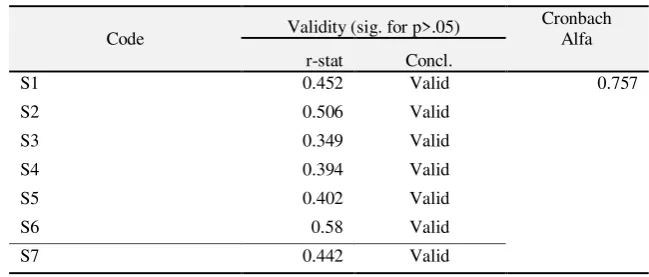
Table 1. Validity and Reliability Code Validity (sig. for p>.05)
Cronbach Alfa r-stat Concl.
S1 0.452 Valid 0.757
S2 0.506 Valid
S3 0.349 Valid
S4 0.394 Valid
S5 0.402 Valid
S6 0.58 Valid
Code Validity (sig. for p>.05) performed using Product Moment Pearson correlation method. Indicators rated valid when r-calculated is greater than or equal to r-table (Wijaya, 2009). From the results in Table 1 it can be seen that all the instruments have met validity criteria so declared valid because the value r-calculated on the corrected item-total correlation is smaller than the r-table. Results of reliability testing in Table 1 also shows that all the instruments are reliable because the alpha cronbach values are above the admission limit of 0.6 (DeVellis, 2003).
4. Results and Discussion
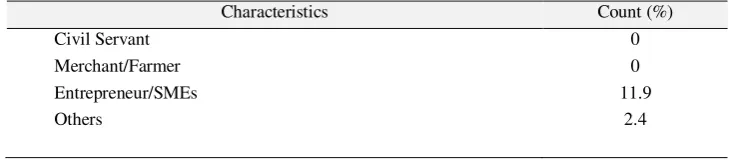
Characteristics Count (%) Civil Servant
Merchant/Farmer Entrepreneur/SMEs Others
0 0 11.9
2.4
Table 3. Coeficient testing of each variabels Coefficientsa
Model
Unstandardized Coefficients
Standardized Coefficients
t Sig.
Collinearity Statistics B Std. Error Beta Tolerance VIF 1 (Constant) 3.835 .452 8.485 .000
LK .148 .099 .230 1.694 .098 1.000 1.000 a. Dependent Variable: S
Table 4. Analysis of varian model ANOVAb
Model Sum of Squares Df Mean Square F Sig. 1 Regression .236 1 .236 2.839 .098a
Residual 4.212 40 .105
Total 4.448 41
a. Predictors: (Constant), LK b. Dependent Variable: S
Table 5. Model testing summary Model Summary
Model R R Square Adjusted R Square Std. Error of the Estimate
1 .230a .053 .029 .32451
a. Predictors: (Constant), LK
The regression results obtained from the processing of primary data shows absence of multicollinearity. It is known from the measurement value of VIF (Varian Inflation Factor) which is valued less than 10 (Stagliano, 2004).
Model-fit is observed by looking at the F value, the t value and the R2value. F value test is required to determine the effect of independent variables together against dependent variable (Wijaya, 2009). Testing of the F value obtained in Table 4, it is known that F value is significant for p <0.1.
In addition to the F value, testing of the t value is also required. t value test is used to determine whether the regression model, partially independent variables affect the dependent variable (Wijaya, 2009). Testing the t value in Table 3 shows that the ICT Literacy variable (LK) significantly affect the PLIK success variable (S) with p <0.1.
After testing the F and t values, coefficient of determination (R2) needs to be observed to see the magnitude of the role or contribution of independent variables in explaining its dependent variable (Wijaya, 2009). Of the R2 value indicated in Table 5, it is learned that the independent variable only explained the dependent variable by 5.3%. The role of external variables that are not mentioned in the model affected by 94.7%. Results of double regression testing that has been done resulted in the regression equation as shown below:
Regression test results indicate that the ICT Literacy, especially computers, can significantly affect the success of PLIK Bambanglipuro. This is consistent with previous research that has been done before (Bailey and Ngwenyama, 2009). Although ICT literacy is only able to give the effect of 14.8% in PLIK Bambanglipuro success, but literacy remains a factor to be taken into account in the subsequent KPU/USO program planning so that the infrastructure that has been established can be fully utilized by rural communities.
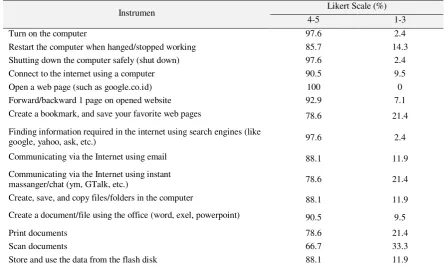
Table 6. Distribution of level of ICT literacy of PLIK Bambanglipuro users
Instrumen Likert Scale (%)
4-5 1-3
Turn on the computer 97.6 2.4
Restart the computer when hanged/stopped working 85.7 14.3 Shutting down the computer safely (shut down) 97.6 2.4 Connect to the internet using a computer 90.5 9.5 Open a web page (such as google.co.id) 100 0 Forward/backward 1 page on opened website 92.9 7.1 Create a bookmark, and save your favorite web pages 78.6 21.4 Finding information required in the internet using search engines (like
google, yahoo, ask, etc.) 97.6 2.4
Communicating via the Internet using email 88.1 11.9 Communicating via the Internet using instant
massanger/chat (ym, GTalk, etc.) 78.6 21.4 Create, save, and copy files/folders in the computer 88.1 11.9 Create a document/file using the office (word, exel, powerpoint) 90.5 9.5
Print documents 78.6 21.4
Scan documents 66.7 33.3
Store and use the data from the flash disk 88.1 11.9
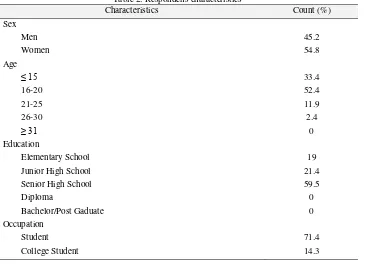
ICT literacy skills of the PLIK Bambanglipuro users are good enough. The majority of respondents were able to use the computer comfortably, either to turn on and turn off the computer, connect to the internet, surf to find the information needed, create bookmarks, communicate via the Internet (via email, social media, and instant messaging), to manage documents (excel, word and power point) as shown in Table 6. The high level of ICT literacy of PLIK Bambanglipuro users are probably since the majority of respondents, 52.4%, are teenagers aged 16 to 20 who are the digital generation that do not find it difficult to learn ICT. In additoin, considering the majority of users are students (71.4%) which has been introduced to ICT since the start of school, so it is not surprising if they master ICT literacy and visit PLIK Bambanglipuro more to utilize ICT infrastructure that they did not owned in their homes. So it can be said that the higher literacy of the users is, the higher the effects and benefits arising from PLIK in their lives (Zamani-Miandashti et al., 2014).
5. Summary
5.1. Conclusion
ICT literacy level proved to be significantly able to give a positive influence on the success of PLIK Bambanglipuro, ie by 14.8%. Nonetheless, the low value of the determination coefficient (5.3%) explained that many factors and other variables that can affect the success of PLIK Bambanglipuro in addition to the level of literacy.
ICT literacy level of PLIK Bambanglipuro users is quite high. The majority of PLIK Bambanglipuro users is dominated by student/college students who are the digital generation that did not experience difficulties in learning ICT.
5.2. Suggestion
If observed from the user's age, it can be seen that the PLIK Bambanglipuro users in the productive age are considerably low. The productive age users are the one that should be the market target of PLIK Bambanglipuro that the availability of access to ICT through PLIK especially in Bambanglipuro can provide an economical improvement in the welfare of rural communities.
An increase in PLIK users in the productive age can be done by training to increase ICT literacy for productive age so that they do not feel awkward in utilizing the infrastructure that has been provided in the KPU/USO program. In addition to training, coaching is also necessary to ensure the continued use and utilization of ICT facilities in PLIK Bambanglipuro.
6. Acknowledgements
The authors would like to say thank you to the BPPKI Yogyakarta agency, which has funded this research so that the research can be accomplished.
Bibliography
Bailey, A., & Ngwenyama, O. (2009, January). Social ties, literacy, location and the perception of economic opportunity: Factors influencing
telecentre success in a development context. In System Sciences, 2009. HICSS'09. 42nd Hawaii International Conference on (pp. 1-11).
IEEE.
Bailur, S. (2007). Using Stakeholder Theory to Analyze Telecenter Projects. Information Technologies & International Development, 3(3).
Bashir, M. S., Samah, B. A., Embry, Z., Badsar, M., Shaffril, H. A. M., & Aliyu, A. (2011). Information and Communication T echnology Development in Malaysia: Influence of Competency of Leaders, Location, Infrastructures and Quality of Services on Telecentre Success in
Rural Communities of Malaysia. Australian Journal of Basic & Applied Sciences, 5(9), 1718-1728.
Boxill, I., Chambers, C. M., & Wint, E. (1997). Introduction to sosial research: With application to the Caribbean. Jamaica: University Press of the
West Indies.
Braund, P., & Schwittay, A. (2006, May). The missing piece: Human-driven design and research in ICT and development. In Information and
Communication Technologies and Development, 2006. ICTD'06. International Conference on (pp. 2-10). IEEE.
DeVellis, R. F. (2003) Scale Development: Theory and Apllications 2nd Edition. California: Sage Publication. Inc.
Fuchs, R. P. (1998). Introduction. In Fuchs, R. P. (Ed), Little engines that did, case histories from the global telecenter movement. Ottawa: IDRC.
Harris, R. (1999, September). Evaluating telecentres within national policies for ICTs in developing countries. In Telecentre Evaluation: A Global Perspective (Report of an International Meeting on Telecentre Evaluation) (pp. 28-30). IDRC. Far Hills Inn, Quebec, Canada.
Harris, R. (2001). Telecentres in rural Asia: Towards a success model. Europe, 40(23.4), 7-13.
Heeks, R. (2008). ICT4D 2.0: The next phase of applying ICT for international development. IEEE Computer Society, 41(6), 2 6–33.
Karki, B. (2011). Impact of Information and Communication Technologies (ICTs) on Livelihood of Rural People: A Case Study of Nangi Village o f
Ramche VDC in Nepal. Retrieved from http://www.diva-portal.org/smash/get/diva2:514225/FULLTEXT01.pdf.
Kumar, R., & Best, M. L. (2007). Social impact and diffusion of telecenter use: A study from the sustainable access in rural India project. The
journal of community informatics, 2(3).
Lee, J. W. (2001). Education for technology readiness: Prospects for developing countries. Journal of Human Development, 2(1), 115-151.
Ngwenyama, O., Andoh-Baidoo, F. K., Bollou, F., & Morawczynski O. (2006). Is There A Relationship Between ICT, Health, Education And
Development? An Empirical Analysis of five West African Countries from 1997-2003. The Electronic Journal of Information Systems in
Oliver, R., & Towers, S. (2000, December). Benchmarking ICT literacy in tertiary learning settings. In Learning to choose: Choosing to learn. Proceedings of the 17th Annual ASCILITE Conference (pp. 381-390).
O’Neil, D. (2002). Assessing community informatics: A review of methodological approaches for evaluating community networks and community
technology centers. Internet Research, 12(1), 76-102.
Proenza, F. J. (2001). Telecenter sustainability: Myths and Opportunities. Journal of Development Communication, 12(2), 94-109.
Stagliano, A. A., (2004). Rath & Strong Six Sigma Advance Tool Pocket Guide. Canada: McGraw-Hill Companies.
Wijaya, T. (2009). Analisis Data Penelitian Menggunakan SPSS. Yogyakarta: Universitas Atma Jaya.
Zamani-Miandashti, N., Pezeshki-Rad, G., & Pariab, J. (2014). The influence of telecenters on rural life and their success correlates: Lessons from a