The Premenstrual Syndromes:
PMS and PMDD
Edited by
PM SHAUGHN O’BRIEN
MD FRCOGProfessor, Women and Children’s Division University Hospital of North Staffordshire
Keele University Stoke-on-Trent
UK
ANDREA J RAPKIN
MDProfessor, Department of Obstetrics and Gynecology David Geffen School of Medicine at ULCA
Los Angeles, CA USA
PETER J SCHMIDT
MD FRCP(C) National Institute of Mental HealthFirst published in the United Kingdom in 2007 by Informa Healthcare, Telephone House, 69-77 Paul Street, London EC2A 4LQ. Informa Healthcare is a trading division of Informa UK Ltd. Registered Office: 37/41 Mortimer Street, London W1T 3JH. Registered in England and Wales number 1072954.
Tel: +44(0)20 7017 5000 Fax: +44 (0)20 7017 6699
Website: www.informahealthcare.com
All rights reserved. No part of this publication may be reproduced, stored in a retrieval system, or transmitted, in any form or by any means, electronic, mechanical, photocopying, recording, or otherwise, without the prior per-mission of the publisher or in accordance with the provisions of the Copyright, Designs and Patents Act 1988 or under the terms of any licence permitting limited copying issued by the Copyright Licensing Agency, 90 Tottenham Court Road, London W1P 0LP.
Although every effort has been made to ensure that all owners of copyright material have been acknowledged in this publication, we would be glad to acknowledge in subsequent reprints or editions any omissions brought to our attention.
Although every effort has been made to ensure that drug doses and other information are presented accurately in this publication, the ultimate responsibility rests with the prescribing physician. Neither the publishers nor the authors can be held responsible for errors or for any consequences arising from the use of information contained herein. For detailed prescribing information or instructions on the use of any product or procedure discussed herein, please consult the prescribing information or instructional material issued by the manufacturer.
A CIP record for this book is available from the British Library. Library of Congress Cataloging-in-Publication Data
Data available on application ISBN-10: 0 415 39974 2 ISBN-13: 978 0 415 39974 6
Distributed in North and South America by Taylor & Francis
6000 Broken Sound Parkway, NW, (Suite 300) Boca Raton, FL 33487, USA
Within Continental USA
Tel: 1 (800) 272 7737; Fax: 1 (800) 374 3401 Outside Continental USA
Tel: (561) 994 0555; Fax: (561) 361 6018 Email: [email protected]
Distributed in the rest of the world by Thomson Publishing Services
Cheriton House North Way
Andover, Hampshire SP10 5BE, UK Tel: +44 (0)1264 332424
Email: [email protected]
Contents
List of contributors vii
Preface xi
1. History of the premenstrual disorders 1
PM Shaughn O’Brien and Khaled MK Ismail
2. The diagnosis of PMS/PMDD – the current debate 9
Uriel Halbreich
3. Premenstrual syndrome: a case of serotonergic dysfunction? 21
Elias Eriksson
4. Quantification of premenstrual syndrome and premenstrual dysphoric disorder 27 Vandana Dhingra and PM Shaughn O’Brien
5. Prevalence, impact on morbidity, and disease burden 37
Teri Pearlstein
6. Comorbidity of premenstrual syndrome and premenstrual dysphoric disorder with other
psychiatric conditions 49
Kimberly A Yonkers and Kara Lynn McCunn
7. The clinical presentation and course of premenstrual symptoms 55
Ellen W Freeman
8. Physiology of the menstrual cycle 63
Robert L Reid and Dean A Van Vugt
10. Pathophysiology I: role of ovarian steroids 83 David R Rubinow and Peter J Schmidt
11. Pathophysiology II: neuroimaging, GABA, and the menstrual cycle 99
C Neill Epperson, Zenab Amin, and Graeme F Mason
12. Hormonal therapies overview 109
Candace Brown and Frank Ling
13. The role of progesterone and GABA in PMS/PMDD 117
Torbjörn Bäckström, Lotta Andréen, Inger Björn, Inga-Maj Johansson, and Magnus Löfgren
14. The management of PMS/PMDD through ovarian cycle suppression 121
Nick Panay and John WW Studd
15. Psychotropic therapies 131
Meir Steiner and Claudio N Soares
16. Complementary and alternative therapies 141
Edzard Ernst
17. Clinical evaluation and management 149
Andrea J Rapkin and Judy Mikacich
18. Genetics of premenstrual dysphoric disorder 161
Julia L Magnay and Khaled MK Ismail
19. Future directions in the pathophysiology of premenstrual dysphoric disorder:
steps to future treatments 171
Peter J Schmidt and David R Rubinow
Zenab Amin PhD
Department of Psychiatry
Yale University School of Medicine New Haven, CT
USA
Lotta Andréen MDPhD
Umeå Neurosteroid Research Center Department of Clinical Sciences Norrland University Hospital Umeå
Sweden
Torbjörn Bäckström MDPhD
Umeå Neurosteroid Research Center Department of Clinical Sciences Norrland University Hospital Umeå
Sweden
Inger Björn MDPhD
Umeå Neurosteroid Research Center Department of Clinical Sciences Norrland University Hospital Umeå
Sweden
Candace Brown MSN PharmD
Professor, Departments of Pharmacy Obstetrics and Gynecology, and Psychiatry University of Tennessee Health Science Center Memphis TN
USA
Vandana Dhingra MBBS
University Hospital of North Staffordshire Keele University
Stoke-on-Trent UK
C Neill Epperson MD
Departments of Psychiatry, Obstetrics Gynecology, and Reproductive Sciences Yale University School of Medicine New Haven, CT
USA
Elias Eriksson MD
Professor of Pharmacology
Institute of Neuroscience and Physiology Sahlgrenska Academy
Göteborg University Göteborg
Sweden
Edzard Ernst MD PhD FRCP FRCPEd
Complementary Medicine Peninsula Medical School
Universities of Exeter and Plymouth Exeter
UK
Ellen W Freeman PhD
Departments of Obstetrics/Gynecology and Psychiatry
University of Pennsylvania Philadelphia, PA
Uriel Halbreich MD
Biobehavioral Program
State University of New York at Buffalo and WPA Section on Interdisciplinary Collaboration New York, NY
USA
Khaled MK IsmailMSc MD MRCOG
Academic Unit of Obstetrics and Gynecology University Hospital of North Staffordshire UK
Inga-Maj Johansson PhD
Umeå Neurosteroid Research Center Department of Clinical Sciences Norrland University Hospital Umeå
Sweden
John Kuo MD
Department of Obstetrics and Gynecology David Geffen School of Medicine at UCLA Los Angeles, CA
USA
Frank W Ling MD
Department of Obstetrics and Gynecology Vanderbilt University
Women’s Health Specialists, PLLC Germantown, TN
USA
Magnus Löfgren PhD-Student
Umeå Neurosteroid Research Center Department of Clinical Sciences Norrland University Hospital Umeå
Sweden
Julia L Magnay MSc CSci FIBMS
Institute for Science and Technology in Medicine Keele University
Stoke-on-Trent UK
Graeme F Mason PhD
Departments of Psychiatry and Diagnostic Radiology Yale University School of Medicine
New Haven, CT USA
Kara Lynn McCunn MD
Assistant Professor of Psychiatry Yale School of Medicine New Haven, CT USA
Judy Mikacich MD
Department of Obstetrics and Gynecology David Geffen School of Medicine at UCLA Los Angeles, CA
USA
PM Shaughn O’Brien MD FRCOG
Professor, Women & Children’s Division University Hospital of North Staffordshire Keele University
Stoke-on-Trent UK
Nick Panay BSc MD FRCOG
Consultant Gynaecologist
Queen Charlotte’s and Chelsea and Chelsea and Westminster Hospital
London UK and
Honorary Senior Lecturer Imperial College
London UK
Teri Pearlstein MD
Associate Professor of Psychiatry and Human Behavior
Warren Alpert Medical School of Brown University
Director, Women’s Behavioral Health and Infants’ Hospital
Providence, RI USA
Andrea J Rapkin MD
Professor of Obstetrics and Gynecology David Geffen School of Medicine at ULCA Los Angeles, CA
USA
Robert L Reid MD
Professor, Obstetrics and Gynecology, Physiology Queen’s University
David R Rubinow MD
Professor and Chairman Department of Psychiatry
University of North Carolina at Chapel Hill Chapel Hill, NC
USA
Peter J Schmidt MD
Section on Behavioral Endocrinology National Institute of Mental Health Bethesda, MD
USA
Claudio N Soares MD PhD
Associate Professor, Department of Psychiatry and Behavioural Neurosciences, McMasters University Director, Women’s Health Concerns Clinic St Joseph’s Healthcare
Hamilton, ON Canada
Meir Steiner MD PhD FRCPC
Professor of Psychiatry and Behavioural Neurosciences and Obstetrics and Gynecology
McMaster University
Professor, Department of Psychiatry and Institute of Medical Sciences
University of Toronto
Adjunct Sceintist, the Hospital for Sick Children, Toronto
Founding Director, Women’s Health Concerns Clinic St Joseph’s Healthcare
Hamilton, ON Canada
John WW Studd DSc MRCOG MFFP
Professor of Gynaecology
Chelsea and Westminster Hospital London
UK and
The Lister Hospital London
UK
Dean A Van Vugt PhD
Professor and Chair
Division of Reproductive Endocrinology and Infertility Queen’s University
Kingston, Ontario Canada
Kimberly A Yonkers MD
Associate Professor of Psychiatry, Obstetrics and Gynecology and Reproductive Sciences
Yale School of Medicine New Haven, CT USA
Somatic, affective, and behavioral symptoms can occur during the premenstrual phase of the menstrual cycle of nearly all ovulatory women. The nature and severity of these symptoms constitute a spectrum from minimal to disabling; however, the distinction between normal and pathological symptoms is one of the principal dilem-mas in this area of research. The severity of interference with daily activities depends on various as yet poorly defined factors, but etiology probably includes genetic, neurochemical, and environmental factors. Are we really, in this era of high technology, limited to the use of simple paper-based rating scales to record the impact of symptoms on normal functioning, on school and work performance, and on ability to socialize? Yes, at present, this remains the most reliable way to distin-guish between what is physiological and what consti-tutes a premenstrual disorder, premenstrual syndrome (PMS) or premenstrual dysphoric disorder (PMDD).
Awareness of such premenstrual problems amongst women, their partners, general practitioners, gynecolo-gists, psychiatrists, other health professionals and, par-ticularly, the media has increased dramatically over the past 30 years.
Even so, there are sceptics who say that premenstrual symptoms or disorders have been exaggerated and medicalized by the profession and the pharmaceutical industry, in order to ‘peddle’ their hormones (progesta-gens and estrogen) or antidepressants (notably selective serotonin reuptake inhibitors, SSRIs). Complementary and alternative practitioners have also offered a range of treatments: some ineffective; others, poorly studied, but possibly effective. Premenstrual symptoms, similar to many affective and behavioral symptoms, exhibit a very high response to placebo, and significant symp-toms can occur in at least 20% of women. The lack of consensus on the nature of this condition creates a void
of knowledge, in which some women may unfortu-nately become targets for exploitation. However, it is of paramount importance that scientific research contin-ues and that the medical community recognizes and cares for these disorders. It would be a great disservice to women and society if those in the medical commu-nity (who have insufficient knowledge and understand-ing) approach these problems with disdain.
Premenstrual syndrome is amongst a unique, small number of disorders where the patient frequently arrives at the specialist with their own diagnosis and it is the practitioner’s role to exclude or confirm the diag-nosis. The lack of an objective means of confirming the diagnosis and monitoring treatment is a great problem. This may be one of the reasons why the credibility of the diagnosis of PMS has been questioned. Although this is probably true for other psychological disorders, it is probably more so for PMS.
matters relating to PMS. In the UK and rest of Europe, the only licensed preparations for managing PMS are progesterone and various progestins, yet we will see in the following chapters that there is incontrovertible evi-dence that these are ineffective. Many other effective but unlicensed approaches are used in the UK and Europe: we have a situation where everything that is licensed is ineffective and everything that works is unli-censed! By contrast, in the USA, Canada, and Australasia, both the SSRI class of drugs as well as a novel oral contraceptive pill (for women who also want hormonal contraception), are licensed and prescribed extensively with guidelines for psychiatrists and gyne-cologists (ACOG) recommending either SSRIs or the newer drospirenone-containing oral contraceptive pill as first-line therapies for severe PMS or PMDD.
Clinical and basic science researchers in wide-ranging fields of study, including gynecology, psychology, psy-chiatry, endocrinology, genetics, brain imaging, and neurophysiology, have been interested in the explo-ration of this disorder for over 70 years, with an esca-lation of interest around the mid 1970s until today. This is the first multi-author textbook of its kind to focus solely on the premenstrual disorders of PMS and PMDD. Contributions have been received from indi-viduals from most the units in Europe and the USA who have extensively researched and treated premen-strual tension, PMS, and PMDD.
The three editors have been involved in research into PMS for decades. They comprise a UK professor of obstetrics and gynecology from Keele University (PMSOB) who is currently also vice president of the Royal College of Obstetricians and Gynaecologists; a research and clinical psychiatrist from the NIMH in Washington, DC (PJS), and a well-established professor of obstetrics and gynecology from UCLA (AJR).
When setting about this book, we decided to choose authors who could represent virtually every major unit actively investigating aspects of PMS and PMDD in the UK, continental Europe, and the USA. It is hoped that no subject area has been left uncovered and no research group from these geographical areas overlooked.
Within the book there will be areas that are repeated or are contradictory, as views differ and it was felt inap-propriate to edit out these views simply to be uniform. The reader will be able to appreciate ideological contrast and differing perceptions and experiences between psychiatrists and gynecologists, Europeans and Americans, clinicians and basic scientists, geneticists
and endocrinologists. There is also, not surprisingly, agreement and disagreement within members of the same specialist areas. This adds to the richness of the debate and gives a fuller understanding of the current landscape. They are very much chapters written as the individuals see the issues, and often the emphasis will differ markedly. For instance, few authors from the USA contemplate giving estrogen, even though the evi-dence would support it. Few US authors would con-template surgery. In the UK, there are strong advocates of ovulation suppression with transcutaneous estrogen therapy and, though only rarely and in severely affected patients, UK clinicians would be more willing to offer a surgical option – meaning, of course, the curative but very invasive decision to allow patients who request surgery to undergo hysterectomy and bilateral salpingo-oophorectomy. The research on this dramatic appro-ach, however, has come from Canada and the USA as well as from the UK.
US psychiatrists, particularly, favor the use of the term PMDD and the use of SSRIs in management. The oral contraceptive pill is more readily advocated by US gynecologists, whereas the use of the levonorgestrel intrauterine system (LNG IUS, Mirena) is used exten-sively by UK gynecologists, not as a primary treatment method but to protect the endometrium from estrogen-induced hyperplasia during ovulation suppression using transcutaneous estrogen therapy. The use of psy-chotropic therapy and, more specifically, the SSRIs has been led by US and Canadian psychiatrists and Swedish researchers.
I think it is true to say that the study and publication of work on SSRI therapy predated any serious under-standing of the neurobiology of PMS/PMDD, but this is now such a fascinating area that involves animal research, biochemical study, brain imaging with func-tional magnetic resonance imaging (fMRI) and positron emission tomography (PET) scanning, and finally genetics. This combination of research, which is all being currently undertaken, will give us the best chance of succeeding in reaching a valid explanation for the etiology and then the cure of the premenstrual disor-ders within the early part of the 21st century.
The science of the premenstrual disorders and, hope-fully, this textbook should stimulate and whet the appetite of anyone who has not already embarked on the investigation of this area.
INTRODUCTION
The study of premenstrual syndrome (PMS) appears to have been full of contradictions over many decades. However, progress in understanding the etiology and providing therapy for this condition has accelerated in recent years.
The easiest and most appropriate way to describe the history of the premenstrual disorders is to divide it into four eras based on the historical changes in terminology used in the literature. These four landmark stages par-allel our understanding of the premenstrual disorders. The eras are:
● From the ‘agitations’ of Hippocrates (370 BC) to premenstrual tension (PMT);1 in this period, the
recognition and description of symptoms were first realized and the beginnings of an understanding of the problem began.
● From PMT to PMS;2in this period, the link between the ovarian hormone cycles and symptoms was recognized.
● From PMS to the American Psychiatric Associa-tion’s definition of premenstrual dysphoric disorder (PMDD) (via late luteal phase dysphoric disorder [LLPDD]); in this period, a great deal of scientific energy was expended in an attempt to define and quantify premenstrual disorders and the theory of progesterone deficiency was explored and refuted. ● From PMDD to the present day; in this period there
has been the realization that women are sensitive to normal levels of ovulatory progesterone, that this possibly has a neuroendocrine explanation, and that therapy can be achieved by altering neuroendocrine status with psychotropic drugs (notably selective serotonin reuptake inhibitors [SSRIs]) or by elimina-tion of ovulaelimina-tion.
FROM HIPPOCRATES’ ‘AGITATIONS’
TO FRANK’S PMT
Much is written in historical and religious texts regard-ing menstruation. There seems to be a strong need to claim that premenstrual symptoms were first described in the Torah, the Talmud, or the works of Hippocrates. Although there is extensive discussion and teaching related to menstruation in the two religious works, it is difficult to find anything that can be directly considered to describe premenstrual symptoms before the works attributed to Hippocrates. Much was written in myth related to menstruation and behavior, but one cannot clearly distinguish what does and what does not refer to the menstrual, pre-, or perimenstrual time phase associ-ations with mood and behavior. What was written orig-inally (often in Greek mythology) tended to be positive about menstruation, but as time progressed this became more negative. There are, however, several instances in Hippocrates’ works where there are statements or apho-risms which clearly describe premenstrual symptoms:
The blood of females is subject to intermittent ‘agitations’ and as a result the ‘agitated blood’ makes its way from the head to the uterus whence it is expelled.3
Women experience a feeling of heaviness prior to menstruation.4
Beyond Hippocrates, many years passed before the literature identifies further reference to premenstrual symptoms. Halbreich5 cites three important
descrip-tions of severe premenstrual symptoms.
The first of these was by an 11th century female Italian scholar, Trotulo of Salerno, who wrote:
There are young women who suffer in the same manner, who are relieved when their menses are called forth.
1
The second was also Italian; Giovani da Padua in the 16th century described fairly clearly a link between menstruation and depression.
Finally, Halbreich quotes the English physician James Cowles Prichard, who wrote:
Some females at the period of the catamenia undergo a considerable degree of nervous excite-ment, morbid dispositions of mind are displayed by them at these times, a wayward and capricious temper, excitability in the feelings, moroseness in disposition, a proneness to quarrel with their dearest relatives and sometimes a dejection of mind approaching to melancholia.
What could be closer to this as a description of PMS, published in 1837?6
Ian Brockington’s work on menstrual psychosis7 is
another valuable source of historical information. In it, he quotes the works of JE Hitzig, Briere de Boismont, and Richard von Krafft-Ebing.
In 1828, Hitzig described menstrual mood disorder in relation to an acquittal for filicide. Having been con-demned to death for drowning her child, a mother confided in a fellow prisoner that she experienced inex-plicable symptoms before and during her period. Fol-lowing medical observation of this and various physical phenomena, she was acquitted.
Briere de Boismont described four cases of premen-strual psychosis and described the relationship between menstruation and surexcitation or overstimulation and agitation:
Surexcitation: 8 synonymes: agitation, bouillon-nement, délire, ébullition, échauffement, efferves-cence, exaltation, fièvre.
Brockington quotes frequently the seminal work of Richard von Krafft-Ebing,8in which he described 60
cases of menstrual psychosis.
FROM PMT TO DALTON’S PMS:
PREMENSTRUAL TENSION
Robert Tilden Frank (1875–1949)1 was a New York
gynecologist who graduated from Harvard and subse-quently worked in Columbia University and as chief of the gynecological service at Mount Sinai Hospital in New York. In 1931 he described for the first time the condition premenstrual tension in a paper read at the Academy of Medicine, New York:
My attention has been increasingly directed to a large group of women who are handicapped by premenstrual disturbances of a manifold nature.
It is well known that normal women suffer varying degrees of discomfort preceding the onset of men-struation. Employers of labour take cognisance of this fact and make provision for the temporary increased fatigability, irritability, lack of concen-tration and attacks of pain. In another group of patients the symptoms complained of are of suf-ficient gravity to require rest in bed for one or two days. In this group particularly, pain plays a prominent role. There is still another class of patients in whom grave systemic disorders mani-fest themselves predominantly during the pre-menstrual period.
Frank suggested initially that an excess of ovarian estrogen (due to diminished excretion) was the under-lying cause, and he went on to illustrate this with cases – some of which were treated by irradiation of the ovaries, presumably resulting in a radiation menopause. Jeliffe (1906) had hinted at this previously in a report in the New York State Journal of Medicine (cited in Halbreich),5but it was Frank who brought the subject
and its probable link with the ovarian cycle to the attention of the medical world. Frank clearly was the first to describe premenstrual tension but, at the same time, Karen Horney, a German psychoanalyst who moved to the USA in the early 1930s, described (inde-pendently from Frank) ‘Die pramenstruellen Verstim-mungen’ in 1931.9She highlighted the disappearance
of symptoms with the onset of menstruation and its recurrent nature. She attributed the symptoms to estro-genic hormone from the ovary but recognized that this was related to the corpus luteum.
Between Frank’s publication and the writings of Katherina Dalton in 1953, many theories were developed and proposed for the etiology, including antidiuretic hormone, hormone allergy, deficiency of various vita-mins and minerals (including potassium, calcium, and magnesium), hypoglycemia/insulin excess, estrogen/ progesterone imbalance, pelvic congestion, ‘menotoxin’, progesterone deficiency, and salt and water retention, and of course there were many purely psychological theories. It is not appropriate to discuss every one of these: those that are important are discussed in other chapters of this book, whereas those which are less important can be found in the editor’s (P.M.S.O.) earlier textbook, Premenstrual Syndrome.10
FROM PMS TO THE AMERICAN
PSYCHIATRIC ASSOCIATION’S PMDD
HISTORY OF THE PREMENSTRUAL DISORDERS 3
and estrogen/progesterone imbalance. Dalton2 took
this theory, and the claim that ‘pure’ progesterone would provide treatment, to a high level of consciousness inter-nationally in the medical, lay, and political world. She coined the new term premenstrual syndrome (PMS) and this is the term still largely used throughout the world by the majority of women and most physicians, general practitioners, gynecologists, and (with the exception of North America), most psychiatrists.
Dalton must be credited for bringing this syndrome to the attention of the medical world, as without her crusading intervention the problem of PMS may well have been ignored. Her blind support for progesterone therapy in the face of the evidence of its inefficacy was unscientific but of course she was practicing and her views did stem from the early 1950s.
Katherina Dalton was a charismatic general practi-tioner in London. As a medical student, she suffered severe menstrual migraine that disappeared during her four pregnancies. She put two and two together, and, with the endocrinologist Dr Raymond Greene,* embarked on a personal exploration of progesterone therapy. Katherina Dalton became free from premen-strual migraines by administration of daily injections of progesterone from ovulation to menstruation. Accord-ingly, and not surprisAccord-ingly, her enthusiasm and dedica-tion grew from here on and she went on in the 1950s and 1960s to report subsequently on a series of anec-dotal cases of successful treatment of premenstrual asthma, eczema and migraines in her patients.
Between the time of Dalton’s early descriptions of PMS and the era which led to more precise diagnosis and measurement, many theories were proposed and much research was undertaken. Many of these efforts led to today’s research, but it must be admitted that much of what we know from that era was based on diagnostic criteria that were imprecise and thus limited lasting conclusions can be drawn from much of that work.
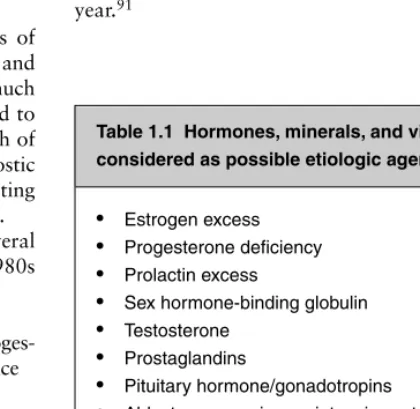
The dominant theories and work focused on several areas over the time span of 1953 to the late 1980s (Table 1.1). These areas were:
● etiology – ovarian endocrine: estrogen excess, proges-terone deficiency, estrogen/progesproges-terone imbalance ● etiology – other non-ovarian hormones
● therapy – anecdotal, uncontrolled trials and ran-domized controlled trials (RCTs)
● quantification techniques and definitions.
Ovarian endocrine research dominated this era. Research focused on estrogen and, particularly, progesterone, arising from Dalton’s progesterone deficiency crusade. By the end of this historical phase it became clear that research had produced studies demonstrating high, low, or no differences in progesterone or estrogen levels in PMS patients compared with controls. Researchers, and, more so, the pharmaceutical industry, selected those data that supported their case. The case for pro-gesterone deficiency was more or less dispelled but this did not stop the continued prescription of, and indeed licensing of, progesterone by several routes and progesto-gens orally. It is of interest to note that in the UK these preparations continue to be the only preparations licensed for PMS and so they are widely prescribed in the face of overwhelming evidence that they are ineffective.
Although some studies did demonstrate differences to support these theories, it must be realized that few were replicated and probably what is more important is that the specific criteria and quantification techniques used now were not available. Reliance cannot be made on supportive or negative findings for most of these studies.
Where these findings are relevant to today’s practice and research they will be addressed in the individual chapters which follow. More detailed reference can again be found in O’Brien’s Premenstrual Syndrome (1987), which covers the available research up to that year.91
*Brother of Graham Greene, the English novelist and playwright, and Sir Hugh Greene, former director of the BBC.
Table 1.1 Hormones, minerals, and vitamins considered as possible etiologic agents in this era
● Estrogen excess
● Progesterone deficiency
● Prolactin excess
● Sex hormone-binding globulin
● Testosterone
● Prostaglandins
● Pituitary hormone/gonadotropins
● Aldosterone–renin–angiotensin system
● Cortisol
● Thyroid hormones
● Antidiuretic hormone
● Atrial natriuretic peptide
Therapy
In the era from 1950 to the late 1980s and early 1990s, treatment research moved from anecdotal reporting of cases through non-blind trials to well-controlled ran-domized double-blind trials. However, meta-analysis had not yet made any impact in this sphere of research. The area of these studies matched that of the studies of etiology to a large extent. The number of therapeutic studies conducted during that time period was huge, as the existence of PMS had reached public consciousness – everything available was being used to treat PMS. With such a large initial placebo response and the existence of many patients labeled as PMS who had much milder problems, the pharmaceutical industry and comple-mentary and alternative therapy companies were having a field day.
Again, it is not appropriate to list every study: details will again be found in the individual chapters of this book or in O’Brien’s book.1
Table 1.2 aims to summarize the different treatments which had been proposed or researched. The list is not intended to be exhaustive but gives a flavor of the range and number of therapies proposed during the era.
Quantification and definitions
Most early studies relied on the patient’s perception of her symptoms or the clinician’s diagnosis from history and observation alone. Through this time period, a great deal of work was conducted aiming to define PMS more precisely and to devise methods to measure symptoms.
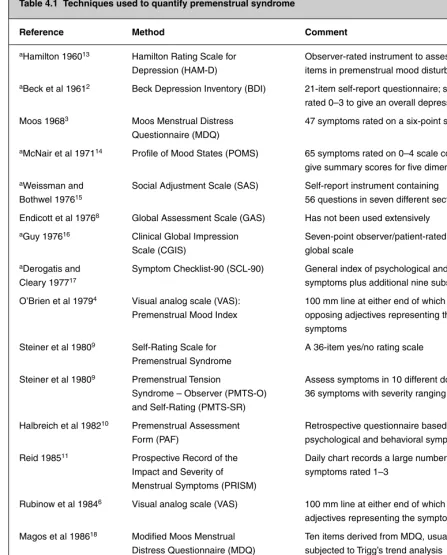
The first method dedicated specifically to menstrual or premenstrual symptoms was the Moos, Menstrual Distress Questionnaire.11This was a rating scale which
used a 47-symptom six-point rating scale. Subsequent new scales followed this template, which used different combinations of symptom types; scores which ranged from 0 to 3, 4, 5, 6, and 7. In the same era, the first use of a visual analog scale (VAS) was published (1979) and, much later, improvements led to VAS charts that adhered to the criteria required for PMDD.
Definitions and diagnostic criteria also evolved over this time period. Having begun with Frank’s PMT and
Table 1.2 Proposed or researched PMS treatments
Non-pharmacological treatments:
● Counseling
● Relaxation therapy
● Psychotherapy
● Cognitive behavioral therapy (CBT)
● Stress management
● Homeopathy
● Intravaginal electrical stimulation
● Rest
● Isolation
● Yoga
● Aromatherapy
● Exercise
● Music therapy
● Hypnosis
● Dietary manipulation
● Salt restriction
● Self-help groups
● Agnus castus
● Irradiation of ovaries
Non-hormonal pharmacological treatments:
● Tranquilizers
● Antidepressants
● Lithium
● SSRIs initial studies
● Vitamin B 6 ● Beta-blockers
● Evening primrose oil
● Diuretics, spironolactone
● Magnesium, zinc, and calcium
Hormonal treatments:
● Progesterone (pessaries, injections, vaginal gel)
● Progestogens (norethisterone, dydrogesterone, medroxyprogesterone acetate, Depo-Provera)
● COC pill: cyclical/continuous
● Testosterone
● Bromocriptine
● Mifepristone, RU-486
● Cyproterone acetate
● Tibolone
● Danazol, gestrinone
● Estradiol (oral, patch, implant)
● GnRH agonist analogs
● Non-steroidal anti-inflammatory drugs
Table 1.2 (Continued)
Surgical treatments:
● Hysterectomy
● Hysterectomy and bilateral oophorectomy
● Endometrial ablation techniques
HISTORY OF THE PREMENSTRUAL DISORDERS 5
Dalton’s PMS, new, more precise terms were developed. In 1987, the terminology and criteria for late luteal phase dysphoric disorder (LLPDD) for the Diagnostic and Statistical Manual of Mental Disorders, third edition (DSM-III) of the American Psychiatric Association were published. This is only now of historical interest, as the later definition and criteria of premenstrual dysphoric disorder, which was defined in DSM-IV,12has replaced
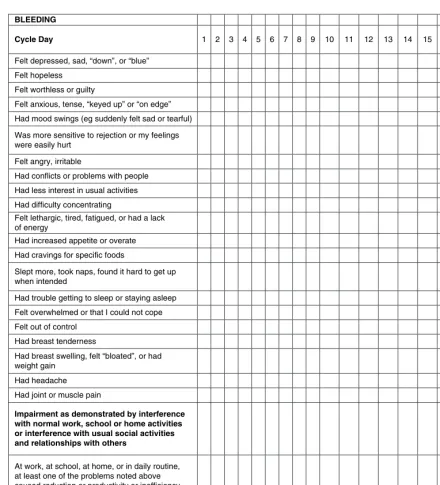
it. In 1990 the Daily Record of Severity of Problems (DRSP) provided a categorical rating (0–6) scale of all of the symptom components required for PMDD.13,14
This was an important milestone in the evolution of the science of premenstrual disorders. It provided clear-cut guidance and criteria, but unfortunately with some important limitations: e.g. the need for five symptom groups excludes many patients with a severe premen-strual disorder but with fewer symptoms. Additionally, it also confines the range of physical symptoms to a single category, virtually excluding the diagnosis of PMDD in a patient with predominantly physical symp-toms. Cynics have been heard to say that this was inten-tional in order to exclude gynecology and to strengthen the case for psychotropic therapy – particularly the (then) newly emerging SSRIs.
FROM PMDD TO THE PRESENT
DAY AND BEYOND
The key events following the introduction of the concept of PMDD represent the journey to our current standing of all premenstrual disorders. This under-standing will provide a real chance of determining a full explanation of the mechanisms of premenstrual disor-ders (and subsequently their treatment) in the early part of this century.
Developments in treatment approach
over the past 20 years
Given that current treatment offers the ability either to suppress ovulation or to rectify an unknown neural bio-chemical derangement, we will again consider develop-ments under these headings and with a causal theory/ treatment modality pairing.
Therapeutic research
In this era, hormonal therapy, cognitive behavioral therapy, and psychotropic therapy became all-important: in particular, transdermal estrogen, new combined con-traceptive pills with novel progestogens (such as drospirenone), and gonadotropin-releasing hormone
(GnRH) analogues (with and without add-back) became serious contenders. The levonorgestrel IUS (intrauterine system) was also introduced, first as a contraceptive technique, then as a treatment for menorrhagia, and next as the progestogenic component of hormone replacement therapy (HRT). In the clinical arena, many were using it to protect the endometrium from hyper-plasia during ovarian suppression with estrogen in the management of PMS – the rationale being, parallel with its use in HRT, that the endometrium would be protected while systemic levels remained low, thus avoiding restimulation of PMS symptoms. Meta-analy-sis was introduced as a new powerful method to analyze several trials that were relatively underpowered to draw conclusions from the single studies. Finally, a whole new research direction assessing psychotropic therapy, particularly the SSRIs, began.
Hormone therapy
Katherina Dalton’s theory of progesterone deficiency and therapy using progesterone replacement was largely dismissed during this time. It is an irony that her views were the main stimulus to our interest in PMS in the third quarter of the 20th century. For the same reasons, the administration of oral progestogens was also con-sidered valueless. This said, these two approaches remain the only drugs prescribable under license in the UK for PMS and, consequently, the most commonly prescribed therapy in UK general practice.15
In the mid 1980s there was a transient enthusiasm for theories related to prolactin excess and, thus, the use of dopamine agonists. This enthusiasm waned after finding that prolactin differences did not exist and that PMS did not respond to bromocriptine therapy. It should be mentioned that cyclical mastalgia does respond to bromocriptine. Side effects can be problematic. It is considered that late evening administration and luteal-phase only treatment may minimize this, but there is no confirmatory research. Bromocriptine therapy is thus limited to PMS patients suffering with premenstrual mastalgia.
Around the same time, similar views were being held for the use of the androgenic preparation, danazol. There was more evidence in favor of its positive benefit for PMS symptoms (compared with bromocriptine) but the doses required to suppress ovulation reliably were asso-ciated with the risk, or at least perceived risk, of side effects, particularly masculinizing side effects. Luteal phase administration of low-dose danazol was studied and published with slightly conflicting findings. Certainly, such a regimen was shown to be effective for cyclical mastalgia (with minimal side effects)16and one study
During the same era, there began an enthusiasm for the use of evening primrose oil containing ␥-linolenic acid. This was largely driven by the manufacturer and based on quite spurious data. Again, though, breast symp-toms appeared to be effectively relieved with minimal side effects. Until quite recently there was a UK phar-maceutical license for mastalgia and, despite the lack of supportive evidence of efficacy, relatively high doses were available in ‘Premenstrual Packs’ as over-the-counter preparations in the high street pharmacy.
In the UK, a small group of clinical researchers had always maintained a high degree of enthusiasm for estrogen therapy, believing that such therapy should be considered first line. John Studd, an eminent UK gyne-cologist, with his research group, had been as great an advocate and enthusiast for estrogen therapy as Katherina Dalton had been for progesterone. The dif-ference, however, with Studd’s work was that:
● the therapeutic approach was based on a realistic theory; i.e. suppression of ovulation was achievable using transdermal estrogen
● he published well-controlled research to support the efficacy of transdermal estrogen therapy.
Serotonin and SSRIs
Part of this historical research phase could reasonably be known as the ‘serotonin phase’ of the science of PMS. Research trials of SRIs/SSRIs (serotonin reuptake inhibitors/selective serotonin reuptake inhibitors) had begun as early as 1986 and had been reported soon after. Beneficial effects had been shown, particularly for fluoxetine, paroxetine, citalopram, sertraline, and ven-lafaxine. The Steiner et al19 fluoxetine paper was pivotal
in the approval of SSRIs by the US Food and Drug Administration (FDA) and the UK Committee in Safety of Medicines (CSM) licensing authorities, with long-acting fluoxetine being recognized subsequently. The UK and European license was lost when it was with-drawn by the European Medicines Agency (EMEA), the European licensing agency, thus depriving a whole con-tinent of the benefits of such treatment regimens. Flu-oxetine is used off-license extensively for PMS, but this advice is usually only given by the small number of medical practitioners with specialized knowledge in the area and, maybe, some well-informed general practition-ers who choose to label the patients with this problem as a variant of depression in order to justify its pre-scription. It is probably true to say that SSRIs are now accepted as the first-line, non-hormonal therapy for PMS. Some doctors would now consider them thefirst choice in patients with severe PMS/PMDD. As a comment on European intransigence to the licensing, it should also
be added that the acceptance of PMDD as an entity is far from widespread.
Soon after the acceptance of SSRIs as treatment, there began the realization that the actions of these drugs were probably different from the mechanism found in its antidepressant effect, to such an extent that luteal phase dosing began and was shown to be effective in appro-priately conducted trials. As the following chapters will show, many researchers have been involved in the devel-opment and subsequent phases of this area of research, which includes most SSRI work (see Chapter 15).
Systematic reviewsare useful in establishing consis-tencies and significant variations in healthcare effects. They are essential for the efficient integration of valid information, and hence provide a basis for rational decision-making.19 The use of explicit, systematic
methods in systematic reviews limits bias (systematic errors) and reduces chance effects, thus providing more robust results upon which to draw conclusions and make decisions.20,21 Moreover, quality assessment of
individual studies included in a systematic review helps to gain insight into potential comparisons and guides interpretation of findings. Factors that warrant assess-ment are those related to applicability of findings, validity of individual studies, and specific design char-acteristics that affect interpretation of results. ‘Meta-analysis’ is the term given to the process of using statistical methods to summarize data of included inde-pendent studies. This collective analysis can provide more precise estimates of the effects of health care than those derived from the individual studies included in a single review,22–24 thus facilitating decisions that are
based on the totality of the available evidence. With the widespread acceptance of this methodology as the gold standard for determining evidence-based management in medicine, a series of systematic reviews were con-ducted to evaluate the effectiveness of therapeutic inter-ventions used in PMS/PMDD.25–29 Meta-analysis is
now well-established internationally and benefits from the visual presentation of collective data using Forest Plots. The Cochrane database and library were the fore-runners of this approach. The strength of meta-analysis over uncontrolled trials, individual trials, unstructured reviews, and even structured reviews should be noted. The power of meta-analysis was realized, and analysis of many therapeutic modalities was carried out in this way for many medical areas, particularly for obstetrics and menstrual disorders. The Cochrane Collaboration led this approach to research.
HISTORY OF THE PREMENSTRUAL DISORDERS 7
Many other therapeutic areas have been covered in sys-tematic views but not meta-analysis, which, as we have said, represents the gold standard for clarity, power, and precision.
Research into etiology
Much new work on estrogen, progesterone levels, sup-pression of the ovarian and cycle, and the investigation of endocrine cycle paradigms became prominent (see Chapter 10) during this era, led by the NIMH (National Institute of Mental Health) group in Washington, DC, and two groups in Sweden, at the Universities of Gothenburg and Umea (see Chapters 3 and 13, respec-tively). This research was very much cause-driven, not leading to an immediate therapeutic modality. Landmark research was undertaken on hypotheses related to neu-roanatomy, ovarian suppression with GnRH and re-stimulation paradigms, and neuronal biochemistry; this work was particularly directed at serotonin and ␥-aminobutyric acid (GABA) and conducted from the mid 1990s onwards.
Although no excess or deficiency in estrogen or prog-esterone levels has ever been demonstrated, the possi-bility of differences in progesterone receptors or progesterone metabolites was considered by the UCLA (University of California at Los Angeles) group (see Chapter 9). Because of the affinity of allopregnanolone for the GABA receptor and the lower measured levels of allopregnanolone in PMS patients, it became a promi-nent recent theory of causation. It has not yet led to specific treatment recommendations.
As it became clear that ovulation is the trigger for pre-menstrual events rather than differences in hormone levels, attention became focused on the probability that neural factors permitted an increased sensitivity to ovarian steroids, particularly progesterone. Therapeutic research on the SSRIs very convincingly demonstrated a high level of efficacy, although it was realized that effec-tive therapy does not automatically imply causality in PMS (i.e. headache is not due to aspirin deficiency!). Effec-tive SSRI treatment does not prove serotonin deficiency. It is not surprising that research thereafter led to the investigation of most neurotransmitters, including the genetics of serotonin (5-hydroxytryptamine, 5-HT), GABA, and PMS/PMDD. The editors of this book (and several other groups) are currently investigating the genetic basis of PMS and PMDD. Despite many differ-ences being found in such disorders as depression, seasonal affective disorder (SAD), and anxiety, the exploration of polymorphisms in PMDD appeared ini-tially unfruitful, although it now seems possible that differences in polymorphisms for the 5-HT1A receptor may be present compared with controls, and ultimately
these may show a linkage to cause and/or therapeutic response (Vandana Dhingra, pers comm).
The inaccessibility of the brain makes the under-standing of any psychological process or illness a major challenge. If we analyze what has been available to inves-tigators, our research tools are found to be sadly lacking. Certainly, there is no objective test available to make a diagnosis: peripheral blood tests need not necessarily reflect central nervous system (CNS) levels or activity (e.g. platelet and blood serotonin, -endorphin); no physical test has been identified; for measurements, we are limited to patient-completed questionnaires; and detailed psychiatric interviews have been available to only a small number of studies.
The challenge of the complex inter-relationships seen in neurological biochemistry and associated genetics is made even more exciting by developments in brain imaging. A greater understanding of this whole field is poised to be unfolded by the arrival of techniques (see Chapter 11) such as positron emission tomography (PET), single-photon emission computed tomography (SPET), and functional magnetic resonance imaging (fMRI). These techniques offer a real chance of investi-gating and understanding brain function and blood flow, which may link us to an understanding of premenstrual disorders.
CONCLUSION
It has taken more than 20 centuries to move from Hippocrates’ observation that women appeared to have cerebral ‘agitations’ (which were released from the uterus at menstruation) to developing the ability to visualize these ‘agitations’ by modern brain imaging technology. There seems to be little doubt that the normal ovarian endocrine cycle provides the trigger in women with CNS sensitivity to these endocrine changes. We are in the process of explaining the reason for this sensitivity incrementally – the more we learn, the more an expla-nation points towards specific neurotransmitters in the CNS. A combination of molecular genetics, endocrinol-ogy, and brain imaging will certainly lead us to this goal. In the meantime, we have a plethora of therapeutic approaches to help us manage our patients until scientific study leads to a cure.
REFERENCES
1. Frank RT. The hormonal causes of premenstrual tension. Arch Neurol Psychiatry 1931; 26:1053.
2. Dalton Greene. The premenstrual syndrome. BMJ 1953; 1: 1016–17.
4. Simon B. Mind and Madness in Ancient Greece: the Classical Roots of Modern Psychiatry. Ithaca: Cornell University Press; 1978. 5. Halbreich U. History and trajectory of PMS: towards a balanced
adaptation and a biosocial homeostasis. J Reprod Infant Psychol 2006; 24(4):336–46.
6. Prichard J. Treatise on Insanity and Other Disorders Affecting the Mind. London: Sherwood, Gilbert and Piper; 1837.
7. Brockington I. Menstrual psychosis. World Psychiatry 2005; 4(1): 9–17.
8. Krafft-Ebing R. Psychosis Menstrualis. Stuttgart: Verlag von Ferdinand Enke; 1902.
9. Horney K. Die Pramenstruellen Verstimmungen. Zeitscher f psy-choanalytische Padagogik 1931; 5:1–7.
10. O’Brien P. Premenstrual Syndrome. London: Blackwell Science; 1987.
11. Moos RH. The development of a menstrual distress question-naire. Psychosom Med 1968; 30(6):853–67.
12. American Psychiatric Association. Diagnostic and Statistical Manual of Mental Health, 4th edn. Washington, DC: American Psychiatric Press; 1994.
13. Endicott J, Harrison W. Daily rating of severity of problems form. New York: Department of Research Assessment and Training, New York State Psychiatric Institute; 1990.
14. Endicott J, Nee J, Harrison W. Daily Record of Severity of Problems (DRSP): reliability and validity. Arch Womens Ment Health 2006; 9(1):41–9.
15. Wyatt KM, Dimmock PW, Frischer M, Jones PW, O’Brien SPM. Prescribing patterns in premenstrual syndrome. BMC Womens Health 2002; 2(1):4.
16. O’Brien PM, Abukhalil IE. Randomized controlled trial of the man-agement of premenstrual syndrome and premenstrual mastalgia using luteal phase-only danazol. Am J Obstet Gynecol 1999; 180(1 Pt 1):18–23.
17. Sarno AP Jr, Miller EJ Jr, Lundblad EG. Premenstrual syndrome: beneficial effects of periodic, low-dose danazol. Obstet Gynecol 1987; 70(1):33–6.
18. Steiner M, Steinberg S, Stewart D et al. Fluoxetine in the treatment of premenstrual dysphoria. Canadian Fluoxetine/Premenstrual Dysphoria Collaborative Study Group. N Engl J Med 1995; 332(23):1529–34.
19. Mulrow CD. Rationale for systematic reviews. BMJ 1994; 309 (6954):597–9.
20. Antman EM, Lau J, Kupelnick B, Mosteller F, Chalmers TC. A comparison of results of meta-analyses of randomized control trials and recommendations of clinical experts. Treatments for myocardial infarction. JAMA 1992; 268(2):240–8.
21. Oxman AD, Guyatt GH. The science of reviewing research. Ann NY Acad Sci 1993; 703:125–33.
22. Cohen J. Statistical Power Analysis for the Behavioral Sciences. New Jersey: Lawrence Erlbaum Associates; 1988.
23. Sacks HS, Berrier J, Reitman D, Ancona-Berk VA, Chalmers TC. Meta-analyses of randomized controlled trials. N Engl J Med 1987; 316(8):450–5.
24. Thacker SB. Meta-analysis. A quantitative approach to research integration. JAMA 1988; 259(11):1685–9.
25. Wyatt K, Dimmock P, Jones P, Obhrai M, O’Brien S. Efficacy of progesterone and progestogens in management of premenstrual syndrome: systematic review. BMJ 2001; 323(7316):776–80. 26. Wyatt KM, Dimmock PW, Jones PW, Shaughn O’Brien PM.
Efficacy of vitamin B-6 in the treatment of premenstrual syndrome: systematic review. BMJ 1999; 318(7195):1375–81.
27. Wyatt KM, Dimmock PW, O’Brien PM. Selective serotonin reup-take inhibitors for premenstrual syndrome. Cochrane Database Syst Rev 2002; (4):CD001396.
28. Wyatt KM, Dimmock PW, Ismail KM, Jones PW, O’Brien PM. The effectiveness of GnRHa with and without ‘add-back’ therapy in treating premenstrual syndrome: a meta analysis. BJOG 2004; 111(6):585–93.
INTRODUCTION
Despite several decades of research and progress in knowledge on premenstrual syndrome (PMS), accept-ance by most laypeople in Western countries and the availability of reasonably effective treatment modali-ties, the definitions and diagnostic criteria for PMS remain controversial. We are still far from a biomedical and/or biopsychosocial model of a diagnostic entity based on etiology, pathophysiology, phenomena, time course, and treatment response. Even descriptive diag-noses are fragmented with at least two main pathways: gynecological and psychiatric. Furthermore, there is still a group that doubts the existence of PMS – mostly on political–psychosocial grounds.
Diagnostic criteria are important for the clinical rele-vance and treatment of PMS as well as for delineation of the public health impact. According to the criteria of the American Psychiatric Association (APA) Diagnostic and Statistical Manual, fourth edition (DSM-IV)1and
DSM-IV – text revision (DSM-IV-TR)2for premenstrual
dysphoric disorder (PMDD), the prevalence of that dys-phoric premenstrual syndrome is widely cited as being 3–8% of women of reproductive age.3–10However, if
the clinically relevant impairment, suffering, and distress are considered as important, as opposed to the arbitrary cut-off number of five symptoms, the 12 months pre-valence of dysphoric PMS is closer to 20% of women of reproductive age. The impact of definitions on the reported prevalence is demonstrated in Table 2.1.
When viewed in relation to other mental disorders,16
it is demonstrated17that PMS/PMDD should be viewed
as a major problem for the individual and the public. According to the strict minimalist criteria, the impact of PMDD on quality of life and social adjustment is similar to that of dysthymic disorder and is comparable to the impact of major depressive disorder (MDD) on
marital and parental social adjustment as well as house-work and leisure functioning.17,18 Clinically relevant
amendments to the criteria would probably increase the documented prevalence of dysphoric PMS and its impact.
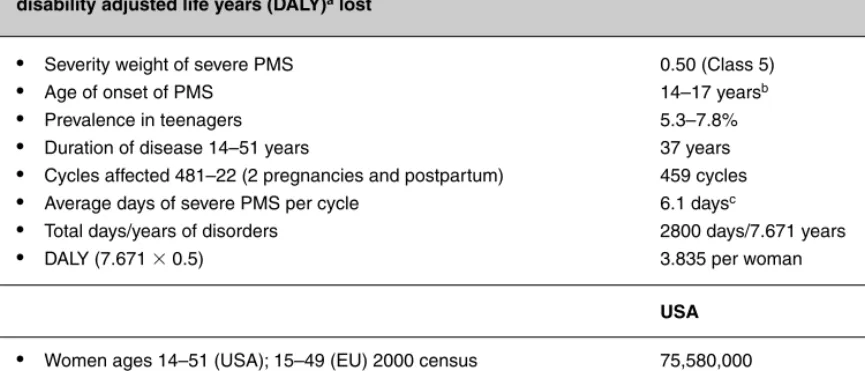
The public health impact of PMDD may be demon-strated by using the global burden of disease (GBD) model and calculating the number of years of healthy life lost to disability, or – in other words – the disability adjusted life years (DALYs).19 Detailed conservative
considerations and calculations have been previously published.17The calculated burden of PMDD for the
USA as well as the European Union, using very strict criteria for PMDD, is summarized in Table 2.2.
The actual total DALYs are probably much higher, because the calculations in the table are limited to the estimate of 5% of women who would meet strict crite-ria for PMDD and do not take into account women with significant premenstrual impairment with only 3–4 symptoms, or who have only physical symptoms. If global DALYs for PMS were to be calculated, the number would be staggering.
Considering the clinical and public health impact of premenstrual syndromes, an interdisciplinary interna-tionally accepted diagnosis is needed.
EARLY DIAGNOSTIC CONCEPTS OF PMS
21As early as 190622catamenial migraine was identified
as a menstrually related endocrinological disorder. Various descriptions of premenstrual catamenial disorders followed. In 1931, the American gynecologist Frank23
coined the term PMT – premenstrual tension, which described mostly behavioral and mood symptoms and their timeframe, 7–10 days before menstruation. It is of interest that in the same year (1931) the prominent
2
The diagnosis of PMS/PMDD – the current
debate
Table 2.1 The reported prevalence of premenstrual dysphoric disorder and severe premenstrual symptoms depends on the definitions applied
Author (year) Symptoms/criteria N Percent
Robinson and Comparison of three 1022 (age: 18–49 years) Global self-report: severe
Swindle (2000)11 assessment measures: symptoms, 4.9%; PMDD,
global self-report, 11.3%; severe summative
DSM-IV PMDD, and symptoms, 16.2%;
‘summative symptom’ ‘stronger severe’
severity impairment, 17.1%
Angst et al (2001)3 Perimenstrual symptoms, 299 (age: 21–35 years) Severe distress, 8.1%. subjective distress and Moderate distress, 13.6% impairment measure.
15 years prospective cohort study
Steiner et al (2002)12 Retrospective list of 508 (age: 18–55 years) PMDD, 5.1%. Impairment
(abstract) DSM-IV PMDD items with ⱕ4 PMDD items
(near threshold), 20.7%
Cohen et al (2002)13 Prospective DRSP 513 (age: 36–44 years) PMDD, 6.4%
Chawla et al (2002)14 Modified prospective DRSP 1194 (age: 21–45 years) OMDD, 4.7%.
Subthreshold severe PMS, 12.6%
Wittchen et al (2002)15 Prevalence and 4-year 1091 (age: 14–24 years) Strict 12-month
incidence for symptoms prevalence, 5.3%.
and diagnosis of PMDD Cumulative lifetime
based on DSM-IV criteria incidence, 7.4%.
Near threshold cases, 18.6%
Adapted from Halbreich et al.17
psychoanalyst Karen Horney24 expressed a more
interdisciplinary approach, describing Prämenstruallen Verstimmungen (premenstrual negative predispositions) as a variety of syndromes – physical and mental – affecting vulnerable women and triggered by changes in gonadal hormones.
Although several hormonal and psychological treat-ment modalities of PMT were suggested, the definition of PMT as a clinical entity was debated from time to time with no operational solution. Notably the problems were delineated by a distinguished interdisciplinary panel gathered in New York in 1953,25the same year
that the term premenstrual tension syndrome, PMTS started to replace PMT. Later it was abbreviated to PMS. Still, the diagnosis of PMS (or PMTS or PMT)
was a practical individual art depending on the physi-cian’s specialty, awareness, philosophy, and skills. No specific criteria were suggested, established, or accepted. This has not been changed even with the more official but vague inclusion of premenstrual tension syndrome (PMTS) in the ICD nomenclature.
CURRENT DIAGNOSTIC ENTITIES OF PMS
ICD-10
The World Health Organization (WHO)’s International Classification of Diseases, 10th edition (ICD-10),26
DIAGNOSIS OF PMS/PMDD 11
section of gynecological disorders, as a disorder of the female genital organs. The significance of the ICD-10 diagnosis is that it focuses on the two main aspects of PMS:
● the association with the menstrual cycle ● cyclicity and timing.
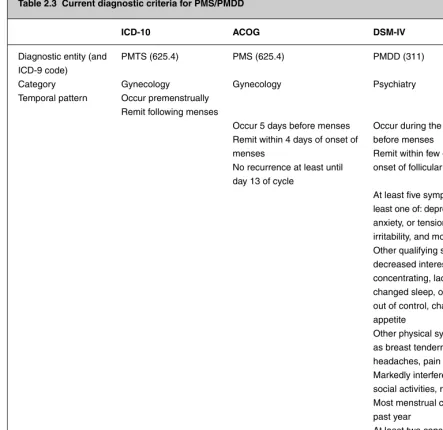
It requires that symptoms occur exclusively during the premenstrual period and remit following menses. It de-emphasizes the nature of specific symptoms or phenomena. It only gives examples such as tension or migraine or any other molimen – any menstrually related symptoms. It does not specify any level of required severity or impairment, no degree of change from the non-symptomatic phase of the menstrual cycle, and no differential diagnosis or exclusion criteria (Table 2.3). The ICD-9 code for PMS is 625.4.
ACOG diagnostic criteria
Conceptually similar, but a step forward from the ICD-10 criteria are the American College of Obstetricians and Gynecologists (ACOG) diagnostic criteria for pre-menstrual syndrome (PMS)27 (Table 2.3).
The ACOG diagnostic criteria require the reporting of at least any one of six affective or one of four somatic symptoms that should exist during the 5 days before the menses at each of three prior menstrual cycles and be
relieved within 4 days of onset of menses. They should not exist until the periovulatory phase of the menstrual cycle, be present in the absence of any pharmacological therapy, be associated with impairment or dysfunction in social or economic performance, and be prospectively confirmed during two menstrual cycles.
The significance of the ACOG criteria is that they acknowledge the importance of dysfunction and impair-ment, specify the symptomatic and the asymptomatic periods, and require prospective confirmation of retro-spective reports. In my opinion, the emphasis on timing, with vagueness of nature of symptoms and requirement for at least one symptom without a threshold of minimal number of symptoms, is a conceptual and practical strength of the ACOG criteria.
APA DSM-IV criteria
The most elaborate diagnostic criteria of a subtype of PMS are the APA DSM-IV criteria for premenstrual dys-phoric disorder – PMDD.1,2This set of criteria requires
an initial retrospective report that symptoms, their luteal–follicular cyclicity, luteal occurrences, and fol-licular absence have been presented for the majority of cycles during the previous year. At least five out of 11 listed symptoms must be present; at least one of them should be a major mood symptom – depression, anxiety, irritability, or affective lability. Symptoms should cause impairment and interfere with work, social activities,
Table 2.2 The burden of PMDD/PMS in the USA and the EU according to most conservative-strict definition: disability adjusted life years (DALY)alost
● Severity weight of severe PMS 0.50 (Class 5)
● Age of onset of PMS 14–17 yearsb
● Prevalence in teenagers 5.3–7.8%
● Duration of disease 14–51 years 37 years
● Cycles affected 481–22 (2 pregnancies and postpartum) 459 cycles
● Average days of severe PMS per cycle 6.1 daysc
● Total days/years of disorders 2800 days/7.671 years
● DALY (7.671
⫻0.5) 3.835 per woman
USA EU
● Women ages 14–51 (USA); 15–49 (EU) 2000 census 75,580,000 91,445,000
● Women who would meet criteria for PMDD ( ⬎
⬎5%) ⬎⬎3,779,000 ⬎⬎4,572,250
Total DALYs, lost years of healthy life ⬎⬎14,492,465 ⬎⬎17,534,579
The number would be even higher if all women suffering from PMS with impairment are counted
UNSOLVED ISSUES WITH CURRENT
DIAGNOSTIC CRITERIA
The main shortcomings of the current diagnostic crite-ria are lack of universal agreement on the nature of the PMS as well as lack of universal acceptance of the criteria per se. The closest to universal acceptance is the ICD-10 entity. However, the PMTS description is vague and does not provide specific diagnostic process and criteria: actually, it just acknowledges the existence of the entity. and/or relationships, not be an exacerbation of another
chronic disorder and be prospectively confirmed by daily ratings during at least two consecutive cycles. Because of differing opinions during the APA’s DSM-IV process, PMDD is listed in the DSM-IV and DSM-IV-TR as one of the criteria sets and axes provided for further study, and is designated as ‘Depressive Disorder not otherwise specified’ – ICD-9 code 311.
The three main diagnostic criteria are summarized in Table 2.3.
Table 2.3 Current diagnostic criteria for PMS/PMDD
ICD-10 ACOG DSM-IV
Diagnostic entity (and PMTS (625.4) PMS (625.4) PMDD (311) ICD-9 code)
Category Gynecology Gynecology Psychiatry
Temporal pattern Occur premenstrually Remit following menses
Occur 5 days before menses Occur during the last week Remit within 4 days of onset of before menses
menses Remit within few days after No recurrence at least until onset of follicular phase day 13 of cycle
At least five symptoms, with at least one of: depression, anxiety, or tension, anger or irritability, and monthly swings Other qualifying symptoms are: decreased interest, difficulty concentrating, lack of energy, changed sleep, overwhelmed, out of control, change in appetite
Other physical symptoms such as breast tenderness, bloating headaches, pain
Markedly interferes with work, social activities, relationships Most menstrual cycles during past year
At least two consecutive cycles Not merely an exacerbation of another disorder
DIAGNOSIS OF PMS/PMDD 13
Universal acceptance of a diagnostic entity is needed for unified coding and for regulatory purposes. It has financial ramifications for service delivery and reimbursement as well as for prescriptions and their reimbursements.
The lack of clear, acceptable definitions inhibits the development of drugs and other treatments. Regulatory agencies, like the US Food and Drug Administration (FDA) and the European Union’s European Medicines Agency (EMEA) require clear clinical indication for pivotal clinical trials and clear projected outcome meas-ures. In the USA, the indication of PMDD is acceptable mainly because it is included in the influential DSM-IV and follows its descriptive principles; PMS, though, is still not acceptable despite the weight of the ACOG.
The implied dichotomy between the physical symp-toms of PMS and the mental sympsymp-toms of PMDD is arbitrary. The association between physical and mental symptoms is still unclear, especially when any of them is severe enough to cause dysfunction and/or distress. The repeated and widely presumed reference to PMDD as a severe form of PMS is not supported by data, either. It also assumes a continuum of basically the same manifes-tation of an entity along a severity gradation and attrib-utes lesser severity to perception of physical and other non-dysphoric symptoms.
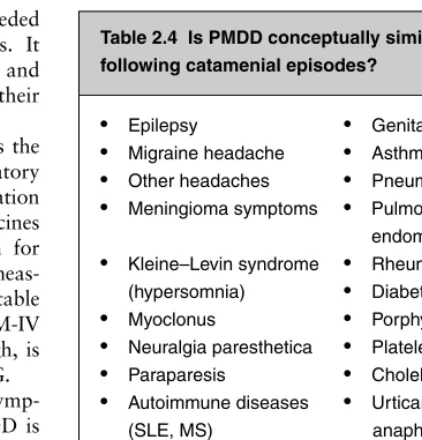
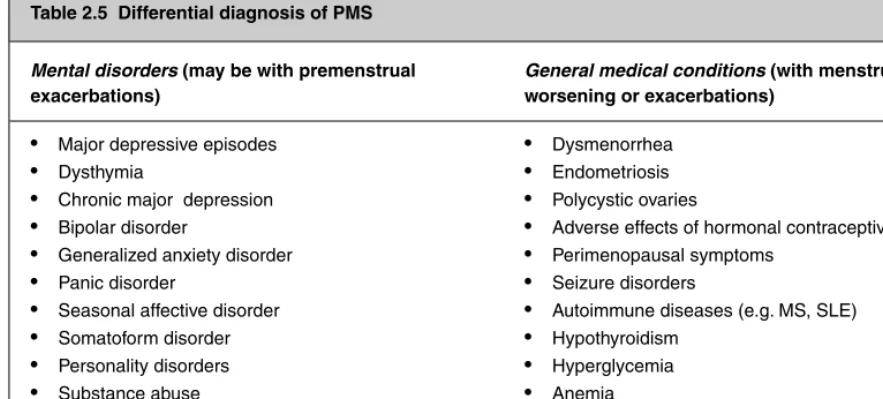
A major unsolved issue is the definition of PMDD as a diagnostic entity, independent of PMS. This may well be correct but so far data to the contrary are no less con-vincing. Most catamenial disorders (Table 2.4) are char-acterized as an episode whose phenomena and etiology are similar to generally occurring disorders, but the timing of the episode is entrained to the menstrual cycle – mostly due to hormonal fluctuations. Therefore, the menstru-ally related changes trigger the occurrence of the specific episode but do not influence the basic etiology and patho-physiology or the vulnerability to the parent disorder. Only a few physical symptoms of PMS or catamenial dis-orders (e.g. breast tenderness) may be attributed to the influence of estrogen or progesterone per se.
Review of the literature (for example, Refs 28–33) demonstrates that PMDD may be a catamenial disor-der like any other catamenial disordisor-der. The phenomena are similar to other depressions and anxiety disorders and there is a statistical association with them. In some cases treatment interventions and responses are similar. A vulnerability–trigger conceptualization33–35 of
etiology and pathophysiology of PMS/PMDD suggests that some women are vulnerable to develop specific phenotypes of dysphoric disorders. Vulnerability implies a symptomatic threshold in response to hormonal or situational triggers. In many people symptoms appear even without a currently known trigger and the course of illness depends on currently unknown mechanisms.
Therefore, the main difference between DSM-IV affec-tive and anxiety disorders and subtypes of PMS/PMDD would be the added vulnerability to menstrually related triggers and probably also an intact or strong normal-ization process that prevents the episode from extending for a long time beyond the expiration of the menstru-ally related transitory stimulus.
According to this conceptualization, the distinction between PMDD (or PMS) and premenstrual exacer-bation (PME) of other mental or physical disorders may not be substantial, especially when the exacerbations are limited to or occur mostly during the premenstrual period. Biologically, PMS and PME may represent stages on a continuum of vulnerability–(threshold)–stimulus interactions.
Even if PMDD is viewed as a separate entity, it presents a plethora of unsolved issues.
Despite the acceptance of the PMDD entity by the US FDA and despite several FDA-approved medications for that indication, the definitions of PMDD are far from being perfect. The main weakness of that diagnostic entity is the requirement of endorsing five of the 11 listed symptoms. The reason for the choice of a specific numerical threshold is unclear and it is not necessarily clinically relevant. A significant proportion of women report severe impairment but of only three or four symptoms.15They seek and certainly warrant treatment
no less than the 5% of women who report the highly specific and restrictive five symptoms. Even though a multitude of premenstrual dysphoric symptoms29have
Table 2.4 Is PMDD conceptually similar to the following catamenial episodes?
● Epilepsy ● Genital herpes
● Migraine headache ● Asthma
● Other headaches ● Pneumothorax
● Meningioma symptoms ● Pulmonary endometriosis
● Kleine–Levin syndrome ● Rheumatoid arthritis (hypersomnia) ● Diabetes mellitus
● Myoclonus ● Porphyria
● Neuralgia paresthetica ● Platelets disorders
● Paraparesis ● Cholelithiasis
● Autoimmune diseases ● Urticaria and
(SLE, MS) anaphylaxis
● Suicidal behavior ● Glaucoma