8 | A Case Study of Central Java and Yogyakarta
Chapter II. Research Objectives and Methodology
2.1 Research Objectives
The objectives of this study are to better understand the
activities, actors, and interactions among actors in intervention
for SME upgrading. The value chain model identifies constraints
and opportunities for intervention. The objectives are as follows:
1) To provide a detailed model of production & export value
chains in the furniture sector.
2) To analyze the interaction options provided in the market
by different stakeholders and organizations.
3) To provide detailed information about the typical business
services required by the producers and exporters within the
value chain.
4) To provide proposals for Point of Interventions (POI) within
the pilot project.
2.2 Methodology
The research strategy utilized to reach those objectives is
through a value chain approach. In this analysis, we identify
the function, actors, and interactions between actors. We also
elaborate upon the constraints and opportunities to overcome the
problems.
(1) Data collection
Information was collected from multiple sources,
GAP ANALYSIS OF THE WOOD FURNITURE VALUE CHAIN | 9
retailers, associations, and service providers. The research areas
were Semarang, Jepara, Solo (Sukoharjo and Klaten), and
Yogya. This research also collected secondary data via the
Internet.
(2) Intervention priority
Based on our findings, we provide a map of previously
identified constraints and opportunities, and also elaborate
interventions. Therefore, we started by identifying all possible
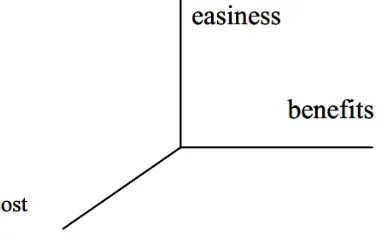
interventions for each issue. To prioritize, we selected by
scoring (5 points) every possible intervention based on “rule of
thumb” from three dimensions (see Figure 6): (a) the degree of
easiness of the intervention implemented; (b) the impacts or
benefits from the interventions when implemented; (c) the cost
for the implementation