LANGUAGE MAINTENANCE AND SHIFT
(LAMAS) 6
August 9—10, 2016
PROCEEDINGS
Master Program in Linguistics, Diponegoro University
in Collaboration with
Balai Bahasa Jawa Tengah
“Empowering Families, Schools, and Media
for Maintaining Indigenous Languages”
Compiled by
Agus Subiyanto, Suharno, M. Suryadi,
LANGUAGE MAINTENANCE AND SHIFT
(LAMAS) 6
August 9—10, 2016
PROCEEDINGS
Master Program in Linguistics, Diponegoro University
in Collaboration with
Balai Bahasa Jawa Tengah
“Empowering Families, Schools, and Media
for Maintaining Indigenous Languages”
Compiled by
Agus Subiyanto, Suharno, M. Suryadi,
Published by:
Master Program in Linguistics, Diponegoro University
in Collaboration with
:
Balai Bahasa Jawa Tengah
Empowering Families, Schools, and Media
for Maintaining Indigenous Languages”
Compiled by:
Agus Subiyanto
Suharno
M. Suryadi
Wuri Sayekti
Tohom Marthin Donius Pasaribu
August 9—10, 2016
Semarang, Indonesia
e-ISSN (Electronic ISSN): 977-2540-8750-66
p-ISSN (Print ISSN): 977-2088-6790-63
Address
Jalan Imam
%DUGMR
, S.H. No.5, Semarang, Indonesia, 50241
Telp/Fax +62-24-8448717
Email: [email protected]
Website: www.mli.undip.ac.id/lamas
iii
NOTE
This international seminar on Language Maintenance and Shift 6
(LAMAS 6 for short) is a continuation of the previous LAMAS
seminars conducted annually by the Master Program in Linguistics,
Diponegoro University in cooperation with
Balai Bahasa Jawa
Tengah.
We would like to extend our deepest gratitude to the seminar
committee for putting together the seminar that gave rise to this
compilation of papers. Thanks also go to the Head and the Secretary
of the Master Program in Linguistics, Diponegoro University, without
whom the seminar would not have been possible.
The table of contents lists 107 papers and abstracts presented at the
seminar. Some of the papers have been selected to be published in
Parole: Journal of Linguistics and Education, and for these papers
only the abstracts are published in the proceeding.
Of the papers, 4 papers were presented by invited keynote speakers.
They are Peter Suwarno, Ph.D. (Arizona University, USA), Mukhlis
Abu Bakar, M.A., Ph.D., (National Institute of Education, Singapore),
Dr. Agus Subiyanto, M.A. (Diponegoro University, Indonesia),
Hywel Coleman, M.A., OBE (University of Leeds, UK).
v
SCHEDULE OF THE INTERNATIONAL SEMINAR ON LANGUAGE MAINTENANCE AND SHIFT (LAMAS) 6
August 9—10, 2016 in Pascasarjana, Diponegoro University (Imam Bardjo, S.H. No.3-5 Street, Semarang, Indonesia) TUESDAY, AUGUST 9, 2016 (FIRST DAY)
SPEECH FROM THE COMMITTEE KETUA
COMMITTEE Hywel Coleman, M.A., OBE FLUCTUATIONS IN LANGUAGE-IN-EDUCATION POLICY AND PRACTICE IN INDONESIA, 1901-2015
Mukhlis Abu Bakar, Ph.D. BILINGUALISM AND THE MAINTENANCE OF THE MOTHER TONGUE IN MULTILINGUAL SINGAPORE
PARALLEL SESSION 1 CLASS ROOM, TTB B,
3rd FLOOR COMMITTEE
11.15 – 12.45
Nurhayati DISCOURSE AGAINST LGBT
CLASS B301 COMMITTEE Yasir Mubarok ANALISIS WACANA KRITIS REPRESENTASI PEREMPUAN KORBAN PEMERKOSAAN DI SITUS BERITA
ONLINE
Ajeng Dianing Kartika CITRA PENGUNGSI DAN PENCARI SUAKA DI JERMAN; KAJIAN WACANA KRITIS PADA KOMENTAR PEMBACA SURAT KABAR ONLINE ZEIT
Norfaizah Abdul Jobar &
Anida Sarudin ‘EP‘E“ENTA“I P‘O“E“ DALAM WACANA UNIT PENDAHULUAN PENULI“AN KA‘ANGAN
11.15 – 12.45
“a adiah Ma alip & ‘ahilah
Omar PEMILIHANBAHASA MASYARAKAT CHETTI DI MELAKA NAME/NAMA
CLASS B302 COMMITTEE Pardi Suratno
BAHASA SEBAGAI REPRESENTASI KEKUASAN KOLONIAL TERHADAP MASYARAKAT PRIBUMI (STUDI PADA NOVEL JAWA PRAKEMERDEKAAN TERBITAN BALAI PUSTAKA)
Riza Sukma SITUASI PSIKOLOGIS DALAM PEMILIHAN BAHASA OLEH PENUTUR BAHASA BETAWI DI JAKARTA: KAJIAN SOSIOLINGUISTIK
Yulia Mutmainnah WA‘TEG FOOD SELLE‘S LANGUAGE ATTITUDES TOWARD TEGAL DIALECT OF JAVANESE
vi
PERSON
11.15 – 12.45
Sri Rejeki Urip & Ayudhia Ratna Wijaya
EVALUA“I BUKU PANDUAN DEBAT DEBATING DAN PANDUAN DEBAT KOMPETITIF DALAM
RANGKA PENGEMBANGAN BUKU PANDUAN DEBAT DALAM BAHASA PRANCIS
CLASS B303 COMMITTEE Tubagus Chaeru Nugraha PERISTILAHAN POLITIK ARAB DALAM BAHASA SUNDA: KAJIAN SEMIOTIK BAHASA BIDANG POLITIK
Wening Sahayu SEKARANG ANDY GOES TO SCHOOL BESOK ANDY GEHT IN DIE SCHULE: FENOMENA PERKEMBANGAN BAHASA DAN BUDAYA NAMA DIRI DI INDONESIA
Trisnowati Tanto THE POWE‘ OF LANGUAGE OF AN INTE‘NET WEB“ITE IN INFLUENCING PEOPLE “ PE‘CEPTION: A
11.15 – 12.45
Suwandi & Sri Wahyuni & Th. Cicik Sophia B
THE NON-ENGLISH LECTU‘E‘S ‘EADING COMPETENCE IN ‘EADING ENGLISH TEXT AT HIGHE‘ EDUCATION IN CENTRAL JAVA
CLASS B304 COMMITTEE Uswatunnisa THE INFLUENCE OF BAHASA MANDA‘ TOWA‘DS STUDENTS ENGLISH P‘ONUNCIATION (CASE
STUDY ON STUDENTS OF JUNIOR HIGH SCHOOL 1 TINAMBUNG, POLEWALI MANDAR)
Yohana Ika Harnita Sari LETTER NAME (ALPHABET) AND LETTER SOUND (A FIELD STUDY AT KINDERSTATION PRESCHOOL (TK
CAHAYA BANGSA UTAMA) YOGYAKARTA)
Nia Kurniawati THE PRE-SCHOOL TEACHE‘S UNDE‘STANDING ON EA‘LY LITE‘ACY: IMPLEMENTATION AND
OBSTACLES IN TEACHING-LEARNING ACTIVITIES
11.15 – 12.45
Hubbi Saufan Hilmi & Fabio Testy Ariance Loren
BENTUK DAN PENGGUNAAN PRONOMINA PERSONA PADA BAHASA SASAK DIALEK NGENO-NGENE DI DUSUN MONTONG MEONG DESA LABUHAN HAJI KABUPATEN LOMBOK TIMUR
CLASS B308 COMMITTEE Husni Syukri Khotami &
Ageng Sutrisno BANJARHARJO IS TRULY SUNDANESE
Prihantoro THE DYNAMICS OF LOANWO‘D P‘OSODY: A CASE STUDY OF JAMAAH IN INDONESIAN
Agni Kusti Kinasih LINGUISTIC FEATURES OF SINGAPORE COLLOQUIAL ENGLISH FOUND IN A LOCAL
ENGLISH-LANGUAGE MOVIE ENTITLED SINGAPORE DREAMING
12.45 – 13.45 LUNCH BREAK (ISHOMA) TTB B, 3rd FLOOR COMMITTEE
PARALLEL SESSION 2 CLASS ROOM, TTB B,
3rd FLOOR COMMITTEE
13.45 – 15.15
Sulis Triyono MEANINGS OF OBJEKTIVE UND SUBJEKTIVE MODALVERBEN CONSTRUCTIONS IN GERMAN
SENTENCES AND THEIR EQUIVALENCES IN INDONESIAN
CLASS B301 COMMITTEE Trisnowati Tanto THE POWE‘ OF LANGUAGE OF AN INTE‘NET WEB“ITE IN INFLUENCING PEOPLE “ PE‘CEPTION: A
Anisa Larassati & Nina Setyaningsih
THE KEYBOA‘D WA‘‘IO‘“: EXP‘E““ING HAT‘ED AND JUDGEMENT ON ANOTHE‘ WOMAN
TH‘OUGH HATE‘“ IN“TAG‘AM ACCOUNT
Anisa Zuhria Sugeha & Ika
vii
TIME NAME TITLE ROOM CHAIR
PERSON
13.45 – 15.15
Agnesia Arum S. & Intan Mustika & Sarah Sumponogati & Uswatunnisa
COMMISSIVE ILLOCUTIONARY ACT ACROSS LANGUAGES: JAVANESE AND MANDARESE
CLASS B302 COMMITTEE Almira Fidela Artha & Fina
Syahadatina & Okta Enggiana Pradevi
“ENYUM CEME‘LANG, “ENYUM PEP“ODENT ANALI“I“ DIAK‘ONIK BENTUK BAHA“A IKLAN
PEPSODENT DALAM 4 DEKADE: KAJIAN SOSIOPRAGMATIK
Azzahra Egeng & Ferina Kumala Dewi & Riza Sukma
MAKNA KATEGORI PARTIKEL DALAM IMPLIKATUR KONVENSIONAL DI TIGA BAHASA DAERAH: SEBUAH KAJIAN TEORI RELEVANSI
Bayu Aryanto STRATEGI PENOLAKAN AJAKAN BAHASA JEPANG (STUDI KASUS MAHASISWA SASTRA JEPANG UNIVERSITAS DIAN NUSWANTORO DAN PENUTUR ASLI JEPANG)
13.45 – 15.15
Agus Ridwan G‘AMATIKALI“A“I “ATUAN BAHA“A BI“ “AMPAI DALAM BAHA“A JE‘MAN
CLASS B303 COMMITTEE Farikah ANALYSIS OF NOMINAL G‘OUP CONST‘UCTION OF THE STUDENTS W‘ITTEN TEXTS
Indah Melisa & Ratna Juwitasari Emha
PERUBAHAN FONOLOGIS PADA DIALEK BAHASA INDRAMAYU SEBAGAI PRINSIP LEAST EFFORT DALAM BERTUTUR
Heny Sulistyowati & M.
Syaifuddin S. SYNTAX STRUCTURE OF ADJECTIVE PHRASE COMPARISON IN JAVANESE LANGUAGE
13.45 – 15.15
Mahdi Ahmad PEMBENTUKAN VERBA MELALUI AFIKSASI DALAM BAHASA TERNATE
CLASS B304 COMMITTEE Rohendi Ali Muhamad THE GENERAL STATEMENTS OF ANTECEDENT IN ENGLISH SENTENCE STRUCTURE
M. Suryadi
BENTUK KESANTUNAN DENGAN MEMANFAATKAN KEKUATAN LEKSIKON EMOTIF-KULTURAL YANG DIMILIKI MASYARAKAT JAWA PESISIR: PEKALONGAN, SEMARANG, DEMAK
13.45 – 15.15
Jeanyfer Tanusy THE ANALYSIS OF LEXIS IN SUNDANESE PUPUH KINANTI
CLASS B308 COMMITTEE Ariya Jati POETIC LANGUAGE IN NAZA‘ETH “ LOVE HU‘T“
Fauzia ANALYZING LANGUAGE “TYLE OF VOCATIONAL HIGH “CHOOL ACC‘EDITATION “UGGE“TION AND
‘ECOMMENDATION TEXT
Dewi Puspitasari MOMMY, LET “ “ING THE “ONG WITH ME, PLEA“E… A NA‘‘ATIVE “TUDY OF A YOUNG LEA‘NE‘ IN THE JAVANESSE LANGUAGE INQUIRY
PARALLEL SESSION 3 CLASS ROOM, TTB B,
3rd FLOOR COMMITTEE
15.15 – 16.45
Leonita Maharani TRANSITIVITAS DALAM CERITA RAKYAT PAPUA (SEBUAH KAJIAN LINGUISTIK SISTEMIK FUNGSIONAL PADA TEKS CERITA RAKYAT SUKU MEE PAPUA)
CLASS B301 COMMITTEE Novian Denny Nugraha &
Asih Prihandini
viii
PERSON
15.15 – 16.45
Anida Binti Sarudin PENGUASAAN BIDANG BAHASA DI KALANGAN KANAK-KANAK PRASEKOLAH
CLASS B302 COMMITTEE Ika Inayati
KEBERPIHAKAN MEDIA PADA KASUS RAZIA WARTEG DI SERANG (STUDI KASUS PADA ARTIKEL LIPUTAN6.COM: MENTERI AGAMA TEGUR CARA SATPOL PP RAZIA WARTEG DI SERANG)
Halimah PERKEMBANGAN BAHASA ANAK PERIODE PRELINGUAL (STUDY KASUS PADA BAYI USIA 8 BULAN)
Hazairin Eko Prasetyo DEVELOPING AN INDONESIAN HIGH SCHOOL CURRICULUM OF ELT THROUGH LITERATURE
15.15 – 16.45
Chendy AP. Sulistyo & Dede & Wiwid Nofa Suciaty
STRATEGI KESANTUNAN LINTAS BAHASA DI INDONESIA (SUNDA, BREBES, MELAYU) SEBUAH KAJIAN PRAGMATIK
CLASS B303 COMMITTEE Della Nathania &
Muhammad Amin Ritonga & Romiyati
VARIASI TINDAK TUTUR EKSPRESIF LINTAS BAHASA (JAWA DAN MADAILING)
Freda Dyah Ayu
Kusumaning Yandi & Yuni Triastuti
ANALISIS DEIKSIS DALAM BAHASA JAWA DIALEK SEMARANG DAN DIALEK PEKALONGAN KAJIAN PRAGMATIK
Hendita Damayanti &
Imam Santoso GAYA TINDAK TUTUR TIDAK LANGSUNG DALAM BAHASA JAWA
15.15 – 16.45
Bernadette Santosa THE LANGUAGE OF YOUNG PEOPLE IN SOME INDONESIAN ADVERTISEMENTS
CLASS B304 COMMITTEE Chusni Hadiati THE FUNCTIONS OF PHATIC EXPRESSIONS IN TRADITIONAL SELLING AND BUYING
Eli Asikin-Garmager DIALECT VARIATION AS A WINDOW INTO LANGUAGE CHANGE – A SYNTACTIC EXAMPLE FROM SASAK (LOMBOK)
15.15 – 16.45
Dhion Meitreya Vidhiasi THE ANALY“I“ OF “UMBE‘ WA‘A“ CA“E IN “INDONEW“ EDITO‘IAL : “u ber Waras buka
Pertaru ga Opi i DATED AP‘IL TH, 2
CLASS B308 COMMITTEE Mohammad Andi Hakim Mendobrak Konstruksi Islam Modern dalam Buku PAI dan Budi Pekerti SMA; Sebuah Praksis
Kekerasan Verbal
16.45 – 17.00 BREAK TTB B, 3rd FLOOR
ix
WEDNESDAY, AUGUST 10, 2016 (SECOND DAY)
TIME NAME TITLE ROOM CHAIR
M.Hum Kebijakan Bahasa di Indonesia
Dr. Suharno, M.Ed./Drs. Pardi Suratno,
M.Hum Peter Suwarno, Ph.D Teaching Indonesian as a Diglossic Language: The Importance of Colloquial Indonesian for
Pragmatic Competence and Local Languages Preservation
Dr. Agus Subiyanto, MA Determining Language Typology based on Directed-Motion Lexicalization Patterns as a Language Documentation: a Case Study on Javanese
10.30 – 11.00 BREAK TTB B, 3rd FLOOR COMMITTEE
PARALLEL 4 CLASS ROOM, TTB B,
3rd FLOOR
11.00 – 12.30
Mualimin DIRECTIVES IN JAVANESE OF TEGAL: A CASE STUDY OF DRAMA ON PERTIWI RADIO
CLASS B301 COMMITTEE Liya Umaroh STRATEGI TINDAK TUTUR DALAM TRANSKSI JUAL BELI DI PASAR TRADISIONAL JOHAR SEMARANG
Lukman Isgianto A “PEECH ACT“ ANALY“I“ OF DI‘ECT AND INDI‘ECT ON BIG CITY “MALL WO‘LD CONVE‘“ATION SCRIPT OF BRITISH COUNCIL LEARNING ENGLISH: A STUDY OF DISCOURSE ANALYSIS
Mutiara Karna Asih & Ika Inayati & Nor Cholifah
KEUNIKAN LEKSIKON PENANDA PRAANGGAPAN DALAM TIGA SUBDIALEK BAHASA JAWA (PURWOKERTO, BANTEN UTARA, DAN REMBANG)
Raheni Suhita & Djoko Sulaksono & Kenfitria Diah Wijayanti
CAMPUR KODE DALAM MANTRA KANURAGAN IMPLEMENTASI SEBUAH PANGAJAB
Sri Puji Astuti & M. Suryadi
REKONSTRUKSI POLA URUTAN FONEM PADA STRUKTUR LEKSIKON DIALEKTAL BAHASA JAWA PESISIRAN DI KOTA SEMARANG
Siyaswati POLITENESS AND ITS USE THROUGH FOLKTALES: A SOCIO-PRAGMATICS STUDY
11.00 – 12.30
Kahar Dwi P. DARI EMPULOH MENUJU PYCNONOTIDAE: PERMUFAKATAN ANTAR PENUTUR BAHASA DAERAH DALAM PENYERAGAMAN KOSA KATA AVIARY
CLASS B303 COMMITTEE Noor Malihah THE APPLICATIVE VOICE IN JAVANESE DIALECT OF KUDUS
Yesika M. Ocktarani & Heri
x
PERSON
11.00 – 12.30
Kharisma Puspita Sari METAPHORS AND DIRECTIVE SPEECH ACTS IN THE JAVANESE PROVERBS
CLASS B304 COMMITTEE Ema Rahardian POLA PIKI‘ PENUTU‘ BAHA“A JAWA DIALEK “EMA‘ANG DALAM ‘UB‘IK ‘AME KONDHE DI
HARIAN SUARA MERDEKA
Romilda Arivina da Costa PENGAMALAN AGAMA DAN PENGARUHNYA TERHADAP PERGESERAN BAHASA HATUHAHA DI MALUKU TENGAH
11.00 – 12.30
Noermanzah CHILD LANGUAGE ACQUISITION 1.4 YEARS OF AGE (RESEARCH CASE STUDY ON FAMILY BILINGUAL)
CLASS B308 COMMITTEE Retno Purwani Sari IDENTITY-FO‘MING POWE‘ OF CHILD‘EN “TO‘IE“ T‘AN“LATION: T‘AN“LATION “TUDIE“
Suharno JUXTAPOSING FIRST AND SECOND CULTURES IN ELT MATERIALS
12.30 – 13.30 LUNCH BREAK (ISHOMA) TTB B, 3rd FLOOR COMMITTEE
PARALLEL 5 CLASS ROOM, TTB B,
3rd FLOOR
13.30 – 15.00
Pininta Veronika Silalahi THE SEMIOTICS OF BATAK TOBA SOCIETY MARRIAGE TRADITION
CLASS B301 COMMITTEE Agus Sudono PENAMAAN HALAMAN DAN RUBRIK DALAM SURAT KABAR SOLOPOS
Ratna Muthia
HUBUNGAN MAKNA VE‘BA PE‘BUATAN BE‘MAKNA MENINGGALKAN “UATU TEMPAT DALAM BAHASA JAWA NGOKO (STUDI KASUS LUNGA, MANGKAT, BUDHAL, DAN MINGGAT): SEBUAH KAJIAN SEMANTIK
13.30 – 15.00
Esther Hesline Palandi KAJIAN METAFORA DALAM PUISI (HAIKU) BAHASA JEPANG
CLASS B302 COMMITTEE Festri Yudanika AWARENESS AND PHONOLOGICAL WORKING MEMORY IN THE ADULT ACQUISITION OF SECOND
LANGUAGE PRONUNCIATION: A CASE STUDY
Hindun PEME‘KAYAAN BAHA“A MELALUI FILM ADA APA DENGAN CINTA 2 DAN AI“YAH: BIA‘KAN KAMI
BE‘“AUDA‘A SEBAGAI PRODUK BUDAYA BANGSA INDONESIA
Hanny Fauziah
SYNTACTIC MISTAKES IN WRITING NEWS ON WEBSITE RESEARCH AND DEVELOPMENT CENTRE FOR MINERAL AND COAL TECHNOLOGY (A CASE STUDY ON WEBSITE:
xi
TIME NAME TITLE ROOM CHAIR
PERSON
Deli Nirmala MIXED JAVANE“E IN ENGLI“H DEPA‘TMENT “TUDENT“ UTTE‘ANCE“ A“ A “YMPTOM OF LANGUAGE SHIFT (POLITENESS AND EMBODIMENT PERSPECTIVES)
Nathaniel Davin P. & Calvin Candra & Aswita A. Ersa M. & Prihantoro
“TUDENT “ ATTITUDE TOWARDS DICTIONARY AND ITS USAGE: A CASE OF STUDY FOR ENGLISH DEPARTMENT STUDENTS DIPONEGORO UNIVERSITY
13.30 – 15.00
I Gede Arga Anggara A “TUDY OF DEIXI“ U“ED IN TOP FIVE WALDJINAH “ POPULA‘ KE‘ONCONG “ONG“ LY‘IC“
CLASS B304 COMMITTEE Irma Winingsih PENGGUNAAN HEDGES ~ TO OMOIMASU SEBAGAI SALAH SATU USAHA PEMERTAHANAN
KESANTUNAN BERTUTUR DALAM BAHASA JEPANG
Nunung Nurjati POLITENESS ASPECTS OF ENGLISH COMMUNITY PRACTICE IN PARE: A THEORETICAL OVERVIEW
13.30 – 15.00
Riza Sukma & Wiwid Nofa Suciaty & Yuni Triastuti
BAHASA DALAM SYAIR TARI SAMAN GAYO SEBAGAI PEMBENTUK POLA PIKIR DAN POLA TINDAK MASYARAKAT LOKAL: SEBUAH KAJIAN ANTROPOLINGUISTIK
CLASS B308 COMMITTEE Rosaria Mita Amalia &
Yusuf Hamzah
THE ART OF RHETORIC USING STYLISTIC DEVICES IN WORLD UNIVERSITIES DEBATING CHAMPIONSHIP: A Study of Pragmatics
Wati Kurniawati INDEKS VITALITAS BAHASA LOM BERDASARKAN JENIS KELAMIN DAN USIA (LOM LANGUAGE VITALITY INDEX BY GENDER AND AGE)
15.00 – 15.30 CLOSING SPEECH CONVENTION HALL,
TTB A, 6th FLOOR
Drs. Pardi Suratno,
M.Hum
15.30 – 16.00 BREAK (Certificate Handling) LOBBY HALL, TTB A,
xiii
TABLE OF CONTENTS
EDITOR’S NOTE
iiiSCHEDULE OF THE INTERNATIONAL SEMINAR LANGUAGE MAINTENANCE AND SHIFT
6
vTABLE OF CONTENTS
xiiiKEYNOTE SPEAKERS
BILINGUALISM AND THE MAINTENANCE OF THE MOTHER TONGUE IN MULTILINGUAL SINGAPORE
Mukhlis Abu Bakar, M.A., Ph.D. 1 DETERMINING LANGUAGE TYPOLOGY BASED ON DIRECTED-MOTION LEXICALIZATION
PATTERNS AS A LANGUAGE DOCUMENTATION: A CASE STUDY ON JAVANESE
Dr. Agus Subiyanto, M.A. 10 TEACHING INDONESIAN AS A DIGLOSSIC LANGUAGE: THE IMPORTANCE OF COLLOQUIAL
INDONESIAN FOR PRAGMATIC COMPETENCE
Peter Suwarno, Ph.D. 16 FLUCTUATIONS IN LANGUAGE-IN-EDUCATION POLICY AND PRACTICE IN INDONESIA,
1901-2015
Hywel Coleman, M.A., OBE. 24
DISCOURSE ANALYSIS
THE REPRESENTATION OF IRAN-SAUDI CONFLICT IN THE NEWSPAPERS REGARDING MINA HAJJ STAMPEDE: A CRITICAL DISCOURSE ANALYSIS ON THE ARAB NEWS AND THE TEHRAN TIMES NEWSPAPERS
Abdulkhaleq Ali Ahmed Al-Rawafi 30 LINGUISTIC FEATURES OF SINGAPORE COLLOQUIAL ENGLISH FOUND IN A LOCAL
ENGLISH-LANGUAGE MOVIE ENTITLED SINGAPORE DREAMING
Agni Kusti Kinasih 37 CITRA PENGUNGSI DAN PENCARI SUAKA DI JERMAN; KAJIAN WACANA KRITIS PADA
KOMENTAR PEMBACA SURAT KABAR ONLINE ZEIT
Ajeng Dianing Kartika 38 THE LANGUAGE OF YOUNG PEOPLE IN SOME INDONESIAN ADVERTISEMENTS
Bernadette Santosa 45
ANALI“I“ KA“U“ “UMBE‘ WA‘A“ DALAM EDITO‘IAL “INDONEW“ “UMBE‘ WA‘A“ BUKAN PE‘TA‘UNGAN OPINI
Dhion Meitreya Vidhiasi 51
ANALYZING LANGUAGE “TYLE OF VOCATIONAL HIGH “CHOOL ACC‘EDITATION “UGGE“TION AND ‘ECOMMENDATION TEXT
xiv
ANALISIS WACANA KRITIS BERITA SEPAK BOLA DI MEDIA OKEZONE.COM (PENDEKATAN VAN DIJK)
Masithah Mahsa 63 MENAKAR KONSTRUKSI ISLAM MODERN DALAM BUKU PAI DAN BUDI PEKERTI SMA; SEBUAH PRAKSIS KEKERASAN VERBAL
Mohammad Andi Hakim 71
‘EP‘E“ENTA“I P‘O“E“ DALAM WACANA UNIT PENDAHULUAN PENULISAN KARANGAN
Norfaizah Abdul Jobar & Anida Sarudin 79
DISCOURSES AGAINST LGBT ISSUES
Nurhayati 86
ANALISIS WACANA KRITIS PIDATO BASUKI TJAHAJA PURNAMA (AHOK) TERHADAP PRAJURIT TNI POLRI (20 JANUARI 2016) (MODEL NORMAN FAIRCLOUGH)
Roy Raja Sukmanta 92
EVALUA“I BUKU PANDUAN DEBAT DEBATING DAN PANDUAN DEBAT KOMPETITIF DALAM
RANGKA PENGEMBANGAN BUKU PANDUAN DEBAT DALAM BAHASA PRANCIS
Sri Rejeki Urip & Ayudhia Ratna Wijaya 96 THE POWER OF LANGUAGE OF AN INTERNET WEBSITE IN INFLUENCING PEOPLE “
PERCEPTION: A TEXT ANALYSIS OF REPRESENTATION
Trisnowati Tanto 103 ANALISIS WACANA KRITIS REPRESENTASI PEREMPUAN KORBAN PEMERKOSAAN DI SITUS
BERITA ONLINE
Yasir Mubarok 109
LANGUAGE ACQUISITION
AWARENESS AND PHONOLOGICAL WORKING MEMORY IN THE ADULT ACQUISITION OF SECOND LANGUAGE PRONUNCIATION: A CASE STUDY
Festri Yudanika 117
LANGUAGE & CULTURE
ADA APA DENGAN CINTA 2 DAN AI“YAH: BIA‘KAN KAMI BE‘“AUDA‘A PEME‘KAYAAN
BAHASA MELALUI FILM SEBAGAI PRODUK BUDAYA BANGSA INDONESIA
Hindun 118
TRANSITIVITAS DALAM CERITA RAKYAT PAPUA (SEBUAH KAJIAN LINGUISTIK SISTEMIK FUNGSIONAL PADA TEKS CERITA RAKYAT SUKU MEE PAPUA)
Leonita Maharani 119 TRADISI REBO WEKASAN (TRADISI TOLAK BALAK) (STUDI KASUS PEMERTAHANAN BUDAYA
DAN BAHASA JAWA DI PONDOK PESANTREN TREMAS PACITAN JAWA TIMUR)
xv Juxtaposing First and Second Cultures in ELT Materials
Suharno 130
SEKARANG ANDY GOES TO SCHOOL BESOK ANDY GEHT IN DIE SCHULE: FENOMENA PERKEMBANGAN BAHASA DAN BUDAYA NAMA DIRI DI INDONESIA
Wening Sahayu 135
LINGUISTICS IN EDUCATION
PROBLEMATIKA PENERAPAN MULOK BAHASA JAWA DI KABUPATEN PEMALANG
Anggy Denok Sukmawati 140 PENGUASAAN BIDANG BAHASA DI KALANGAN KANAK-KANAK PRASEKOLAH
Anida Binti Sarudin 150 PENGARUH BUDAYA BAHASA PERTAMA DALAM PERKEMBANGAN BELAJAR BAHASA
INDONESIA SEBAGAI BAHASA ASING: STUDI KASUS PADA PENUTUR BAHASA JEPANG
Apriliya Dwi Prihatiningtyas 157 DEVELOPING AN INDONESIAN HIGH SCHOOL CURRICULUM OF ELT THROUGH LITERATURE
Hazairin Eko Prasetyo 163
“TUDENT “ ATTITUDE TOWA‘D“ DICTIONA‘Y AND IT“ U“AGE A CA“E OF “TUDY FO‘ ENGLI“H DEPA‘TMENT “TUDENT“ DIPONEGO‘O UNIVE‘“ITY
Nathaniel, Calvin, Aswita & Prihantoro 168 THE PRE-“CHOOL TEACHE‘“ UNDE‘“TANDING ON EA‘LY LITE‘ACY: IMPLEMENTATION AND OBSTACLES IN TEACHING-LEARNING ACTIVITIES
Nia Kurniawati 172 IDENTITY-FO‘MING POWE‘ OF CHILD‘EN “TO‘IE“ T‘AN“LATION: T‘AN“LATION “TUDIE“
Retno Purwani Sari 173 THE NON-ENGLI“H LECTU‘E‘“ ‘EADING COMPETENCE IN ‘EADING ENGLI“H TEXT AT
HIGHER EDUCATION IN CENTRAL JAVA
Suwandi, Sri Wahyuni & Th. Cicik Sophia B 174
THE INFLUENCE OF BAHA“A MANDA‘ TOWA‘D“ “TUDENT“ ENGLI“H P‘ONUNCIATION
(CASE STUDY ON STUDENTS OF JUNIOR HIGH SCHOOL 1 TINAMBUNG, POLEWALI MANDAR)
Uswatunnisa 175
LETTER NAME (ALPHABET) AND LETTER SOUND (A FIELD STUDY AT KINDERSTATION (TK CAHAYA BANGSA UTAMA) YOGYAKARTA)
Yohana Ika Harnita Sari 183
LANGUAGE IN POLITICS
BAHASA SEBAGAI REPRESENTASI KEKUASAN KOLONIAL TERHADAP MASYARAKAT PRIBUMI (STUDI PADA NOVEL JAWA PRAKEMERDEKAAN TERBITAN BALAI PUSTAKA)
xvi
MORPHOLOGY
PEMBENTUKAN VERBA MELALUI AFIKSASI DALAM BAHASA TERNATE
Mahdi Ahmad 192
PHONOLOGY
PERUBAHAN FONOLOGIS PADA DIALEK BAHASA INDRAMAYU SEBAGAI PRINSIP LEAST EFFORT DALAM BERTUTUR
Indah Melisa & Ratna Juwitasari Emha 200 REKONSTRUKSI POLA URUTAN FONEM PADA STRUKTUR LEKSIKON DIALEKTAL BAHASA JAWA PESISIRAN DI KOTA SEMARANG
Sri Puji Astuti & M. Suryadi 205
PRAGMATICS
COMMISSIVE ILLOCUTIONARY ACT ACROSS LANGUAGES: JAVANESE AND MANDARESE
Agnesia Arum S., Intan Mustika, Sarah Sumponogati & Uswatunnisa 210
“ENYUM CEME‘LANG, “ENYUM PEP“ODENT ANALI“I“ DIAK‘ONIK BENTUK BAHA“A IKLAN
PEPSODENT DALAM 4 DEKADE: KAJIAN SOSIOPRAGMATIK
Almira Fidela Artha, Fina Syahadatina & Okta Enggiana Pradevi 217
THE KEYBOA‘D WA‘‘IO‘“: EXP‘E““ING HAT‘ED AND JUDGEMENT ON ANOTHE‘ WOMAN TH‘OUGH HATE‘“ IN“TAG‘AM ACCOUNT
Anisa Larassati & Nina Setyaningsih 218 MAKNA KATEGORI PARTIKEL DALAM IMPLIKATUR KONVENSIONAL DI TIGA BAHASA DAERAH: SEBUAH KAJIAN TEORI RELEVANSI
Azzahra Egeng, Ferina Kumala Dewi & Riza Sukma 224 STRATEGI PENOLAKAN AJAKAN BAHASA JEPANG (STUDI KASUS MAHASISWA SASTRA JEPANG UNIVERSITAS DIAN NUSWANTORO DAN PENUTUR ASLI JEPANG)
Bayu Aryanto 232
SPEECH AND ATTITUDE OF FISHERMAN IN TAWANG, KENDAL, CENTRAL JAVA
Catur Kepirianto 238 STRATEGI KESANTUNAN LINTAS BAHASA DI INDONESIA (SUNDA, BREBES, MELAYU) SEBUAH
KAJIAN PRAGMATIK
Chendy AP. Sulistyo, Dede & Wiwid Nofa Suciaty 241 THE FUNCTIONS OF PHATIC EXPRESSIONS IN TRADITIONAL SELLING AND BUYING
Chusni Hadiati 246 VARIASI TINDAK TUTUR EKSPRESIF LINTAS BAHASA (JAWA DAN MADAILING)
xvii
POLA PIKIR PENUTU‘ BAHA“A JAWA DIALEK “EMA‘ANG DALAM ‘UB‘IK ‘AME KONDHE DI HARIAN SUARA MERDEKA
Ema Rahardian 254 ANALISIS DEIKSIS DALAM BAHASA JAWA DIALEK SEMARANG DAN DIALEK PEKALONGAN
KAJIAN PRAGMATIK
Freda Dyah Ayu Kusumaning Yandi & Yuni Triastuti 259 GAYA TINDAK TUTUR TIDAK LANGSUNG DALAM BAHASA JAWA
Hendita 267
BANJARHARJO IS TRULY SUNDANESE
Husni Syukri Khotami & Ageng Sutrisno 276 KEBERPIHAKAN MEDIA PADA KASUS RAZIA WARTEG DI SERANG (STUDI KASUS PADA ARTIKEL LIPUTAN6.COM: MENTERI AGAMA TEGUR CARA SATPOL PP RAZIA WARTEG DI SERANG)
Ika Inayati 283
PENGGUNAAN HEDGES ~ TO OMOIMASU SEBAGAI SALAH SATU USAHA PEMERTAHANAN KESANTUNAN BERTUTUR DALAM BAHASA JEPANG
Irma Winingsih 288 METAPHORS AND DIRECTIVE SPEECH ACTS IN THE JAVANESE PROVERBS
Kharisma Puspita Sari 294 STRATEGI TINDAK TUTUR DALAM TRANSKSI JUAL BELI DI PASAR TRADISIONAL JOHAR
SEMARANG
Liya Umaroh 300
A “PEECH ACT“ ANALY“I“ OF DI‘ECT AND INDI‘ECT ON BIG CITY “MALL WO‘LD
CONVERSATION SCRIPT OF BRITISH COUNCIL LEARNING ENGLISH: A STUDY OF DISCOURSE ANALYSIS
Lukman Isgianto 305 DIRECTIVES IN JAVANESE OF TEGAL: A CASE STUDY OF DRAMA ON PERTIWI RADIO
Mualimin 306
RHETORICAL STYLISTIC DEVICES IN WORLD UNIVERSITIES DEBATING CHAMPIONSHIP: A STUDY OF PRAGMATICS
Rosaria Mita Amalia & Yusuf Hamzah 311 SUNDA ON INSTAGRAM: WHAT SUNDANESE USERS DO TO MAINTAIN THE LANGUAGE
Titin Lestari 312
PSYCHOLINGUISTICS
MOMMY, LET “ “ING THE “ONG WITH ME, PLEA“E… A NA‘‘ATIVE “TUDY OF A YOUNG
LEARNER IN THE JAVANESSE LANGUAGE INQUIRY
xviii
PERKEMBANGAN BAHASA ANAK PERIODE PRELINGUAL (STUDY KASUS PADA BAYI USIA 8 BULAN)
Halimah 314
EKSPRESI VERBAL LAKI-LAKI BERPERILAKU LATAH DI KABUPATEN JOMBANG JAWA TIMUR (ANCANGAN PSIKOLONGUISTIK TERHADAP PERILAKU BERBAHASA YANG MENYIMPANG)
Sri Pamungkas & Djatmika 321
SEMANTICS
PENAMAAN HALAMAN DAN RUBRIK DALAM SURAT KABAR SOLOPOS
Agus Sudono 328
PERBANDINGAN KOLOKASI KATA IBU DAN BUNDA DALAM KORPUS BAHASA INDONESIA
Anisa Zuhria Sugeha & Ika Nurfarida 336
POETIC LANGUAGE IN NAZA‘ETH “ LOVE HU‘T“
Ariya Jati 344
KAJIAN METAFORA DALAM PUISI (HAIKU) BAHASA JEPANG
Esther Hesline Palandi 347
THE ANALY“I“ OF LEXI“ IN “UNDANE“E PUPUH KINANTI
Jeanyfer Tanusy 353 KEUNIKAN LEKSIKON PENANDA PRAANGGAPAN DALAM TIGA SUBDIALEK BAHASA JAWA
(PURWOKERTO, BANTEN UTARA, DAN REMBANG)
Mutiara Karna Asih, Ika Inayati & Nor Cholifah 358 METONIMI DALAM MOTIF RAGAM HIAS BATIK KASUMEDANGAN JAWA BARAT
Nani Sunarni 365
PEMIKI‘AN FUNDAMENTAL MELAYU DALAM “IMPULAN BAHA“A BE“A‘ KEPALA
Nor Asiah Ismail & Anida Sarudin 371 THE SEMIOTICS OF BATAK TOBA SOCIETY MARRIAGE TRADITION
Pininta Veronika Silalahi 377
HUBUNGAN MAKNA VE‘BA PE‘BUATAN BE‘MAKNA MENINGGALKAN “UATU TEMPAT
DALAM BAHASA JAWA NGOKO (STUDI KASUS LUNGA, MANGKAT, BUDHAL, DAN MINGGAT): SEBUAH KAJIAN SEMANTIK
Ratna Muthia 378
PERISTILAHAN POLITIK ARAB DALAM BAHASA SUNDA: KAJIAN SEMIOTIK BAHASA BIDANG POLITIK
Tubagus Chaeru Nugraha 386 INDEKS VITALITAS BAHASA LOM BERDASARKAN JENIS KELAMIN DAN USIA (LOM LANGUAGE
VITALITY INDEX BY GENDER AND AGE)
xix
SOCIOLINGUISTICS
MIXED JAVANE“E IN ENGLI“H DEPA‘TMENT “TUDENT“ UTTE‘ANCE“ A“ A “YMPTOM OF
LANGUAGE SHIFT (POLITENESS AND EMBODIMENT PERSPECTIVES)
Deli Nirmala 395
DARI EMPULOH MENUJU PYCNONOTIDAE: PERMUFAKATAN ANTAR PENUTUR BAHASA DAERAH DALAM PENYERAGAMAN KOSA KATA AVIARY
Kahar Dwi P. 402
BENTUK KESANTUNAN DENGAN MEMANFAATKAN KEKUATAN LEKSIKON EMOTIF-KULTURAL YANG DIMILIKI MASYARAKAT JAWA PESISIR: PEKALONGAN, SEMARANG, DEMAK
M. Suryadi 405
PEMEROLEHAN BAHASA ANAK USIA 1,4 TAHUN (PENELITIAN STUDI KASUS PADA KELUARGA BILINGUAL)
Noermanzah 413
THE APPLICATIVE VOICE IN JAVANESE DIALECT OF KUDUS
Noor Malihah 414
ALIH WAHANA MEDIUM BERCERITA STORY TELLING, SEBAGAI UPAYA PELESTARIAN BERBAHASA PADA KELUARGA URBAN (STUDI KASUS GAMES CLASH OF CLAN /COC)
Novian Denny Nugraha & Asih Prihandini 415 POLITENESS ASPECTS OF ENGLISH COMMUNITY PRACTICE IN PARE: A THEORETICAL
OVERVIEW
Nunung Nurjati 415
THE DYNAMIC“ OF LOANWO‘D P‘O“ODY: A CA“E “TUDY OF JAMAAH IN INDONE“IAN
Prihantoro 417
CAMPUR KODE DALAM MANTRA KANURAGAN IMPLEMENTASI SEBUAH PANGAJAB
Raheni Suhita, Djoko Sulaksono & Kenfitria Diah Wijayanti 423 SITUASI PSIKOLOGIS DALAM PEMILIHAN BAHASA OLEH PENUTUR BAHASA BETAWI DI
JAKARTA: KAJIAN SOSIOLINGUISTIK
Riza Sukma 428
BAHASA DALAM SYAIR TARI SAMAN GAYO SEBAGAI PEMBENTUK POLA PIKIR DAN POLA TINDAK MASYARAKAT LOKAL: SEBUAH KAJIAN ANTROPOLINGUISTIK
Riza Sukma, Wiwid Nofa Suciaty & Yuni Triastuti 435 PENGAMALAN AGAMA DAN PENGARUHNYA TERHADAP PERGESERAN BAHASA HATUHAHA DI MALUKU TENGAH
Romilda Arivina da Costa 442 PEMILIHANBAHASA MASYARAKAT CHETTI DI MELAKA
xx
POLITENESS AND ITS USE THROUGH FOLKTALES: A SOCIO-PRAGMATICS STUDY
Siyaswati 450
WA‘TEG FOOD “ELLE‘“ LANGUAGE ATTITUDE“ TOWA‘D TEGAL DIALECT OF JAVANESE LANGUAGE IN SEMARANG
Yulia Mutmainnah 458
SYNTAX
G‘AMATIKALI“A“I “ATUAN BAHA“A BI“ “AMPAI DALAM BAHA“A JE‘MAN
Agus Ridwan 465
DIALECT VARIATION AS A WINDOW INTO LANGUAGE CHANGE – A SYNTACTIC EXAMPLE FROM SASAK (LOMBOK)
Eli Asikin-Garmager 470
ANALY“I“ OF NOMINAL G‘OUP CON“T‘UCTION OF THE “TUDENT“ W‘ITTEN TEXT“
Farikah 478
SYNTACTIC MISTAKES IN WRITING NEWS ON WEBSITE RESEARCH AND DEVELOPMENT CENTRE FOR MINERAL AND COAL TECHNOLOGY (A CASE STUDY ON WEBSITE:
http://www.tekmira.esdm.go.id/newtek2/)
Hanny Fauziah 482 SYNTAX STRUCTURE OF ADJECTIVE PHRASE COMPARISON IN JAVANESE LANGUAGE
Heny Sulistyowati & M. Syaifuddin S. 486 BENTUK DAN PENGGUNAAN PRONOMINA PERSONA PADA BAHASA SASAK DIALEK
NGENO-NGENE DI DUSUN MONTONG MEONG DESA LABUHAN HAJI KABUPATEN LOMBOK TIMUR
Hubbi Saufan Hilmi & Fabio Testy Ariance Loren 487
A “TUDY OF DEIXI“ U“ED IN TOP FIVE WALDJINAH “ POPULA‘ KE‘ONCONG “ONG“ LY‘IC“
I Gede Arga Anggara 493 DESKRIPSI STRUKTUR FRASA BAHASA MAKASSAR DIALEK LAKIUNG
Mantasiah R 494
THE GENERAL STATEMENTS OF ANTECEDENT IN ENGLISH SENTENCE STRUCTURE
Rohendi Ali Muhamad 500 MEANINGS OF OBJEKTIVE UND SUBJEKTIVE MODALVERBEN CONSTRUCTIONS IN GERMAN
SENTENCES AND THEIR EQUIVALENCES IN INDONESIAN
Sulis Triyono 501
PE‘“ONAL DEIXI“ IN ‘ADIO B‘OADCA“TING: EXTINCTION “IGNAL OF KAMI IN INDONE“IAN
Page 51 of 514
THE ANALYSIS OF SUMBER WARAS CASE IN
SINDONEWS’
EDITORIAL
“Sumber Waras bukan Pertarungan Opini”
DATED APRIL 15
TH, 2016
Dhion Meitreya Vidhiasi
Maritime Nusantara Academy
[email protected]
Abstract
Media has an important role in telling an information. There is a case which dragged the governor of Jakarta; Mr. Basuki Tjahaja Purnama or oftenly called as Ahok. The case is about the allegations of irregularities in the procurement of land in West Jakarta. The governor of Jakarta, Basuki Tjahaja Purnama or Ahok was reported by the City Council to the KPK in August 2015 in connection with a land procurement process that, according to the Supreme Court Agency (BPK), caused potential state losses. In the audit of the city administration's 2014 financial report, the BPK found a suspicious case of land procurement worth Rp 755.69 billion (US$ 55.9 million). Using Critical Discourse Analysis theory proposed by Fairclough (1989, 1995, 1997), the researcher wants to find the linguistic expressions used in the editorial. The data is the editorial from Sindonews media dated April 15th, 2016 entitled Sumber Waras
bukan Pertarungan Opini. The researcher found that there are 7 (seven) strategies used in the editorial to tell about the case.
Keywords: Sumber Waras, Ahok, linguistic expressions, editorial
1. INTRODUCTION
Tuchman (1978:1) said that “news is a window of the world”. The view through a window depends
upon whether the window is large or small, has many panes or few, whether the glass is opaque or clear, whether the window faces a street or a backyard. Every media has its own freedom to support or
against certain case. One of media’s product is a newspaper. Freyenberger (2013:2) said that
newspaper coverage can have a positive or negative impact on the image of an individual. It is how newspaper organize the idea or story line to their audiences.
There is a big case happened in Indonesia about Sumber Waras hospital. The case is about the allegations of irregularities in the procurement of land in West Jakarta. The governor of Jakarta, Basuki Tjahaja Purnama or Ahok was reported by the City Council to the KPK in August 2015 in connection with a land procurement process that, according to the Supreme Court Agency (BPK), caused potential state losses. In the audit of the city administration's 2014 financial report, the BPK found a suspicious case of land procurement worth Rp 755.69 billion (US$ 55.9 million). The agency suspected a corrupt markup in the procurement process had occurred because the market price was only about Rp 564 billion.
In the other way, ɑhok said that ɒPK’s report cheated him. He is also said that the ɒPK
report is deceitful. Their findings of state losses do not make any sense. Ahok insisted that the administration purchased the land at the actual price as determined by the tax office directorate general of the Finance Ministry. He also slammed the BPK for irrationality as it had suggested the administration wait until the right-to-build (HGB) permit of Sumber Waras expired in 2015 so that the city administration could occupy the land freely.
Page 52 of 514
Critical Discourse ɑnalysis or known as CDɑ according to van Dijk (2001: 352) is “a type of
discourse analytical research that primarily studies the way social power abuse, dominance, and inequality are enacted, reproduced, and resisted by the text and talk in the social and political
context”. It means that the focus of CDɑ is on social problems. Fairclough and Wodak (1997: 271 -80) summarize the main principles of CDA as follows: (1) The focus of CDA is on social and cultural processes; (2) CDA explains the power and ideology of discourse; (3) CDA is used to uncover the
“hidden” thing of certain news.
Discourse as Social Practice
Fairclough (1989:22) viewed language as a form of social practice. It can be said that language is a part of society, a social process, and a socially conditioned process. Later he said that language and society influenced each other.
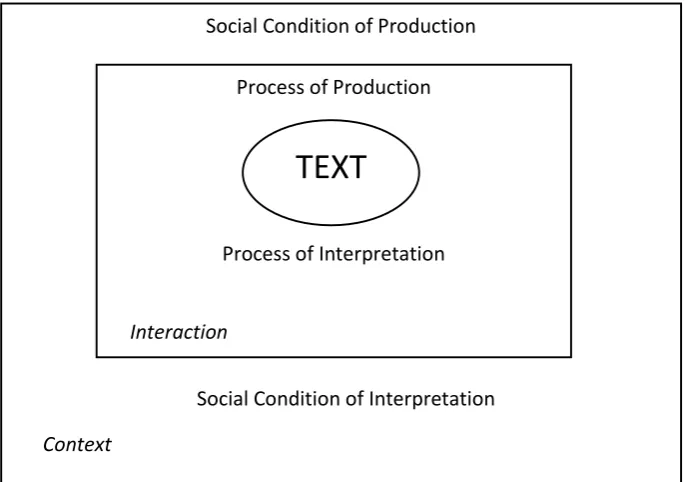
A term of discourse according to Fairclough (1989: 24) refers to the whole process of social interaction of which a text is just a part. Those process are the process of production, of which the text is a product, and the process of interpretation, for which the text is a resource. The production and interpretation of texts are absolutely influenced by other things called non-linguistic things. People have to remember that they are part of society. They live in socially conditioned area. Fairclough (1989: 24) explained that people internalize what is socially produced and made available to them,
and use this internalized MR to engage in their social practice, including discourse. MR or Members’
Resources is anything people have in their mind.
The last form of discourse involves social conditions. Fairclough (1989: 25) defined that social conditions can be divided into social conditions of production and social conditions of interpretation. Those three processes are stored in people’s head cognitively as “Members’ Resources
(MR)”. Fairclough (1989: 25) summarized those processes in the figure below.
Figure 1 Discourse as text, interaction, and context
Media Discourse
Media shows its power in shaping the mind of the audience on certain case. Fairclough (1995: 2) described that the power of media is to influence knowledge, beliefs, values, social relations, and social identities. Media has the power to represent things in particular ways.
Social Condition of Production
Process of Production
TEXT
Process of Interpretation
Social Condition of Interpretation
Context
Page 53 of 514
Media such as mass media or TV shows construct a relationship between reporter and audience or reader. The reporter here is described as someone who knows the fact and someone who has the right to tell it. The audience or reader is someone who knows nothing and need to be told. Therefore, by the power of media, it may decide what news needs to be included and excluded.
Fairclough (1995: 56) defined that there are two essential things in analyzing media discourse; those are analysis of communicative events and the analysis of the order of discourse. The analysis of communicative events has three perspectives which are text, discourse practice, and sociocultural practice. Fairclough (1995: 63) positioned media as a mediator between external relations and internal relations in the analysis of the order of discourse.
Communicative Events
Fairclough (1995: 57) defined the analysis of communicative events is an analysis of relationships between three perspectives; those are text, discourse practice, and sociocultural practice. Text can be written or oral such as from newspaper, radio, and television show. Fairclough defined discourse practice as the processes of text production and text consumption. Sociocultural practice is defined as the social and cultural goings-on which the communication event is a part of.
The analysis of texts is about the analysis of linguistic devices such as vocabulary, semantics, grammar, phonology, and writing system. Despite the analysis on linguistic devices, the analysis of textual organization above the sentence such as cohesion and turn taking is needed when we have to analyze texts. Discourse practice analysis deals with the process of text production and text consumption. Fairclough (1995: 62) divided the analysis of sociocultural practice into three different events; those are: immediate situational context, the wider context of institutional practices the event is embedded within, and wider frame of the society and the culture.
Order of the Discourse
The second perspectives of critical discourse analysis of media proposed by Fairclough is the analysis of the order of the discourse. It positioned media as the connector or mediator between public order of discourse as source and private order of discourse as consumer.
Fairclough (1995: 63) divided the analysis of the order of the discourse into two relations: external and internal. External relation analyzes the relation between the order of the discourse of the media and socially adjacent public and private order of discourse. Internal relation analyzes the relation between its constituent and genres. Depends on those two relations, it can be concluded that media can shape the way of people think and media can also be shaped by the society.
2. RESEARCH METHOD
The researcher used descriptive qualitative method to explain and describe the phenomena which exist in the data by employing related theories which are Critical Discourse Analysis. Lambert (2012: 255) said that a comprehensive summarization of certain events is the goal of descriptive qualitative studies. The purpose of this research is to uncover how Sindonews media represented Sumber Waras case. The case is about the allegations of irregularities in the procurement of land in West Jakarta. The data were taken from Sindonews editorial dated April 15th, 2016 entitled Sumber Waras bukan
Pertarungan Opini.
Page 54 of 514
informal method is a method used by researcher to represent the findings by only giving description using words. The use of symbol is not necessary.
3. DISCUSSION
The researcher finds at least 7 (seven) strategies used by editor in represented Sumber Waras case. Those are (1) Domination of participant and actor; (2) Hidden actor; (3) Active – passive clause; (4) Positive – negative clause; (5) Nominalization; (6) Metaphors; and (7) Contradictory conjunction.
Domination of Participant and Process
There are 3 (three) dominant participants found in the editorial; those are kasus, ancaman hukum, and Ahok. The editor is also used the strategy of hyperbole in representing the participants such as kasus penyimpangan and kontroversi kasus. The word kontroversi itself shows that Sumber Waras case is not just a simple case but the case which is big and must be solved as soon as possible. The case is something which breaks a rule.
The process used in the editorial are all material processes. The editor wants to show the reader that there is something done by someone and has a huge effect on other things or people. The researcher found that the editor used negative-meaning process when a clause has kasus as participant with a goal such as menyedot, menyeret, and menyangkut. The editor tends to use a hyperbole strategy for the process when a clause has no goal with kasus as participant such as membesar, semakin bergulir, and meledak.
The hyperbole process can be seen in a clause kasus tersebut “meledak”. That clause has two meanings. The first meaning shows that there is a case that is happening and the readers are considered as those who already know the case. The case is like a time bomb which can explodes anytime. The second one shows that the readers are considered as those who do not know the case. This time, the case is like a land mine that is suddenly explodes when someone steps on it. Whether the readers know the case or not, the main point of “meledak” here is that the case can gives a huge impact on other things and mostly negative. It is not just an explosion. It is the explosion which can make a total damage. The editor shows that Sumber Waras case is a big case just by using one word that is meledak or explode in English.
There is a different strategy of writing process when the clause has a goal; for example,
“dugaan kasus RS Sumber Waras menyangkut uang negara ratusan miliar”. The editor tends to use a negative-meaning process rather than a hyperbole one just like a clause with no goal. It seems that the editor wants to show the reader that the case has an effect on something. The clause shows that the case causes potential state losses. That is the effect which must be paid cause of this case.
Same thing is applied when ancaman hukum becomes a participant. The editor always uses a negative-meaning process to accompany that participant. Readers can find merugikan, menghancurkan, and membubarkan as the process when ancaman hukum is the participant. A word menghancurkan or destroy in English means that Sumber Waras case is not a usual case. It can destroy everyone involved in that case.
The editor used Ahok as the other dominant participant to show another thing. It can be seen
Page 55 of 514
Hidden Actor
Editorial can be used to show the view of media on a certain case. One thing that must be considered in making an editorial is the editor must avoid blackmailing someone. The reason is media cannot
“accuse” someone just based on their hunch without knowing the real fact. Editor often use pronouns like they, we, and them if the editor is not really sure with the fact.
The researcher found that the editor used pronoun their and they in the editorial. It can be seen in clause “bahkan membahayakan kepentingan mereka (their), termasuk masa depan investasi yang sudah mereka (they) benamkan dalam reklamasi teluk Jakarta”. Reader may think that pronoun their here may point on those who agree with Ahok and those who do not agree with him. The second pronoun which is they may point only to those who agree with every single step made by Ahok. Even so, the editor does not want to say the actor clearly because the editor is not really sure with the fact. The editor does not want to blackmail someone because he or she speaks for the name of the media. One little mistake can make a huge impact for the name of the media.
Active – Passive Clause
The editor used another strategy to avoid blackmailing someone. He or she can use a passive voice. The researcher found three examples of the use of passive voice in Sindonews’ editorial. It can be found in “yang namanya turut disebut dalam Panama Papers”, “tapi perbuatan apa yang telah dilakukannya”, and “Itulah yang harus dipertanggungjawabkan”.
Those clauses did not name the actor clear enough. At a glance, reader may think that someone who say, do, and responsible is Ahok. It can be accepted since the reader can find the name of Ahok in the editorial easily. The reason why the editor does not say the actor is the editor does not sure the real fact. He or she wants the readers make their hunch on it. The editor, once again, does not want to blackmail someone for his or her uncertainty.
Positive – Negative Clause
Researcher found that there are eleven negative declarative clauses in Sindonews’ editorial. He shows three examples of negative declarative clauses, those are “materi perdebatan tidaklagi berkutat pada salah atau tidaknya Ahok secara hukum”, “Ancaman hukum bukan hanya akan merugikan Ahok pribadi”, dan “kedua pihak sama-sama tidak akan mengundurkan niat sejengkal pun”. First negative clause can be interpreted that the debate material is not only the right or wrong of Ahok but also other thing wider than that in Sumber Waras case.
Second clause defines that the threat of law from Sumber Waras case can give an impact to Ahok and those who involved in the case. The interpretation of third clause is that two supporters who are support and against Ahok sure for what they do and will stick to it.
Nominalization
ɑ writer of an editorial should know how to tell a story based on media’s background. The use of
nominalization can be chosen to do that. Nominalization is the use of a word which is not a noun as a noun, with or without a morphological transformation. The word here can be a verb, adjective, and adverb.
There are at least 4 (four) examples of nominalization found in the text. those are kuatnya tarikan, kerasnya pertarungan opini, pembelian RS Sumber Waras, dan penetapan lokasi tanah. Kuatnya tarikan means that there is something contested by two groups. It can be imagined as two sides playing tug of war. Both sides are equally strong. We have to remember that when we play that game, we have to be ready to feel hurt. That explains the effect of the case which only gives a bad effect on both sides. That is the thing which the editor wants to tell to the readers.
Metaphors
Page 56 of 514
pembelian lahan Rumah Sakit Sumber Waras semakin bergulir dan membesar. We all know that when someone rolls a snowball, it will be bigger everytime we roll it. The editor said that the case is same like that ball. It will always roll and getting bigger and must be stopped immediately.
Contradictory Conjunction
The use of conjunction can show the situation written in the editorial such as contradiction. A contradictory situation between hope and reality can be seen from the use of conjunction “but”. Clause “tapi [materi perdebatan] sudah melebar ke persoalan politik” can be interpreted that the editor hopes the debate is just only stick to the right or wrong of Ahok in Sumber Waras case. The fact is the debate material has become wider than that.
Another clause which shows the contradiction is “Namun, pertarungan opini tersebut hanyalah tetap sebatas pertarungan opini”. It can be interpreted that the editor wants a real legal action in Sumber Waras case. The hope is different from the fact that all opinion comes from the case is just an opinion with no legal action.
4. CONCLUSION
The application of critical discourse analysis can help us “read” the information about Sumber Waras case. The dominant participants are about the case itself and someone who must be responsible for that case named Ahok. The editor wants to show the readers that the case gives a huge impact on everything. The impact mostly negative. It can be seen with the use of negative-meaning process when the participant is kasus and Ahok. It is understandable since Sindonews media is owned by Mr. Hari Tanoesodibjo who does not support every ɑhok’s movement.
REFERENCES
Fairclough, Norman L. (1989). Languange and Power. New York: Longman Inc Fairclough, Norman L. (1995). Media Discourse. New York: Edward Arnold
Fairclough, Norman L. and Ruth Wodak. (1997). Critical Discourse Analysis. In Teun A van Dijk (ed.), Discourse Studies: A Multidisciplinary Introduction, Vol. 2. Discourse as Social Interaction (pp. 258-84). London: Sage
Freyenberger, Deidre. (2013). Amanda Knox: A Content Analysis of Media Framing in Newspaper Around the World. Master Thesis. Tennessee: East Tennessee State University
Nurhayati. (2016). The Power Struggle in the Testimony of Sudirman Said to the House Ethics Council (MKD). on KOLITA 14 (pp. 259 – 263). Jakarta: Unika Atma Jaya
Sudaryanto. 2015. Metode dan Aneka Teknik Analisis Bahasa. Yogyakarta: Sanata Dharma University Press
Tuchman, Gaye. (1978). Making News: A Study in the Construction of Reality. New York: The Free Press