AUDITOR SPECIALIZATION AND PERCEIVED AUDIT QUALITY, AUDITEE SATISFACTION AND AUDIT FEES
IN THE LOCAL GOVERNMENT AUDIT MARKET
Suzanne Lowensohn* Assistant Professor of Accounting
Colorado State University
Laurence E. Johnson Associate Professor of Accounting
Colorado State University
Randal J. Elder
Associate Professor and Director Joseph I. Lubin School of Accounting
Syracuse University
December 2005
* corresponding author: Suzanne Lowensohn Department of Accounting Colorado State University 257 Rockwell Hall
Fort Collins, Colorado 80523-1271 (970) 491-7481
AUDITOR SPECIALIZATION AND PERCEIVED AUDIT QUALITY, AUDITEE SATISFACTION AND AUDIT FEES
IN THE LOCAL GOVERNMENT AUDIT MARKET
AUDITOR SPECIALIZATION AND PERCEIVED AUDIT QUALITY, AUDITEE SATISFACTION AND AUDIT FEES
IN THE LOCAL GOVERNMENT AUDIT MARKET
INTRODUCTION
Governmental audit quality has been an important issue since the 1980’s, when a
Government Accountability Office (GAO) study (GAO 1986) revealed that a third of
audits examined were substandard.1 Since that time, there has been considerable debate
about the relation between audit procurement and audit quality in the governmental
sector. While the Treadway Commission (1987) and AICPA (1986) raised concerns
about the effects of competition on audit quality, the GAO (1987) recommended
competitive bidding to improve audit quality. Despite evidence of improved government
audit quality over time (Lowensohn and Reck 2004), the quality of governmental audits
is again under scrutiny (Emerson 2002; Broadus 2004) and worthy of further
examination.2
Substantial change to audit procurement practices in the State of Florida provides
the opportunity to examine governmental audit issues. In 1993 the Florida Supreme
Court overruled a state statute restricting the use of competitive bidding by prospective
audit providers. Hackenbrack et al. (2000) find that the bidding restriction lead to higher
audit fees and greater demand for Big 6 auditors.3 Jensen and Payne (2005b) report that,
subsequent to the elimination of the bidding restriction, audit fees declined and Big 6
auditors were displaced by audit firms having expertise in government auditing. During
the same time period, Lowensohn and Reck (2004) observe improvement in
specializing in governmental audits. The contemporary Florida government audit market
thus provides the opportunity to investigate the comparative levels of audit quality and
auditee satisfaction associated with Big 5 firms and non-Big 5 specialist firms.
We focus on audit firm industry specialization within the Florida government
audit market using three different measures of specialization based on audit market share.
We surveyed 286 finance directors of Florida local governments regarding their
perceptions of the quality of the audit their government received and their degree of
satisfaction with the audit firm. We also obtained data on audit fees and other fee-related
control variable data. We find that non-Big 5 government specialist auditors are a
significant predictor of perceived audit quality and auditee satisfaction, but do not receive
premium audit fees. In contrast, Big 5 auditors are associated with lower perceived audit
quality and auditee satisfaction, yet charge premium audit fees. Our results are consistent
with Copley’s suggestion (1991) that the largest firms are not the only auditors providing
high-quality service in the public sector and substantiate Jensen and Payne’s observation
(2005b) that specialists can provide high-quality audits at reduced fee levels. Our
findings also provide support for the argument by Copley and Doucet (1993) that
competition in the auditor procurement process improves, rather than detracts from, audit
quality. The policy implications of our study are that competition in audit procurement is
beneficial to auditees and that governments may be best served by retaining a non-Big 5
specialist audit firm.
The remainder of this paper is organized as follows. The next two sections
section addresses the research method. The paper concludes with results and a discussion
of findings.
LITERATURE REVIEW AND HYPOTHESIS DEVELOPMENT
From 1969 until 1993, officials of governmental entities within the State of
Florida were required to select external auditors on the basis of nonprice factors. Florida
Statutes (Section 473.317, Rule 21A-24.03) specified that prospective auditors were to be
evaluated and contract negotiations undertaken with the highest-ranked firm. If a
contract agreement was not possible, negotiations with the second-highest ranked firm
began, and so on. Competition on the basis of audit fees was prohibited. Hackenbrack et
al. (2000) find that the competitive bidding restriction resulted in higher audit fees and
greater demand for high reputation Big 6 auditors. After the restriction was lifted in 1993
(State of Florida v. Rampell 1993), Jensen and Payne (2005b) note reduced audit fees and
a decrease in the presence of Big 6 firms within the Florida market, while Lowensohn
and Reck (2004) note improvements in municipal audit quality in Florida and increased
market concentration for audit firms specializing in municipal audits. Hence it appears
that the introduction of price competition into the Florida governmental audit
procurement process resulted in the presence of more specialized audit firms in the
governmental audit market and higher governmental audit quality, in conjunction with
lower audit fees.
In a competitive bidding situation, Casterella et al. (2004) note that firms often
seek a differentiation strategy to create a sustainable competitive advantage. Big 5 firms
specialization to differentiate themselves and to become more cost efficient within the
industry. Since audit firm size and level of industry specialization presumably affect
audit quality, we examine these relationships in the Florida governmental audit market
following the introduction of price competition using three longitudinal measures of
specialization. We also incorporate audit-firm and audit-team factors previously related
to audit quality and auditee satisfaction to construct our theoretical models.
Audit Firm Size and Audit Quality
DeAngelo (1981) defines audit quality as the probability that an auditor will both
discover and report an error in a client’s accounting system. In the public sector, the
GAO (1986) defines audit quality as “compliance with professional standards and
contractual terms” for the audit under consideration. Researchers frequently use proxies
for audit quality and consider quality to be associated with audit firm attributes, such as
size (Shockley and Holt 1983), investment in firm reputation (Beatty 1989), premium
fees (Copley 1991), or extent of litigation (Palmrose 1988). In a behavioral study,
Carcello et al. (1992) identified 12 composite factors of audit-related attributes which
were related to audit quality.
Evidence generally supports a positive relation between audit quality and firm
size in the governmental sector (O’Keefe and Westort 1992; GAO 1986). However,
unlike the audit market for public companies, which is dominated by the current Big 4,
the governmental market is more fragmented and includes a substantial number of small
audit firms (Deis and Giroux 1992). Brown and Raghunandan (1995) find a positive
greater use of large audit firms. However, Elder (1997) argues that most governmental
auditors provide quality audits, and cost must also be considered in the choice of auditor.
Furthermore, while O’Keefe and Westort (1992) suggested that governmental audit
quality was higher for larger audit firms, O’Keefe et al. (1994) confirmed this association
only for the at that time Big 8 firms.
Hackenbrack et al. (2000) study auditor choice in Florida when a bidding
restriction required that the auditor be initially selected without consideration of fee
information. Using fiscal year 1992 data, they find greater use of Big 6 auditors and
higher fees compared to neighboring control states. They also find higher audit quality as
measured by the percentage of audits receiving the Certificate of Achievement for
Excellence in Financial Reporting from the Government Finance Officers Association
(GFOA), and imply that higher quality supports the tradeoff in higher fees. In contrast,
Lowensohn and Reck (2004) studied governmental audit report error rates from 1992
through 2000 and noted improved audit quality as the Big 5 presence in the Florida
governmental audit market waned.
Deis and Giroux (1996; 1992), O’Keefe et al. (1994) and Giroux et al. (1995)
examined audit quality in school districts; however, each of the studies excluded Big 6
firms. Given the limited study and mixed results henceforth, the examination of firm size
and audit quality is relevant, especially in the governmental market. We investigate
whether perceived audit quality is associated with use of a Big 5 audit firm.
Quality attributes also have been investigated in relation to auditee satisfaction.4
Behn et al. (1997) use the twelve Carcello et al. (1992) quality factors to examine the
effect of audit quality attributes on auditee satisfaction in the private sector. They find
significant, predominantly positive, relationships between auditee satisfaction and many
of the audit quality attributes identified by Carcello et al. (1992). Accordingly, we also
hypothesize that audit firm size will be related to auditee satisfaction.
H1b: Big 5 auditors will be associated with higher levels of auditee satisfaction.
Auditor Specialization and Audit Quality
In general, a positive relationship is expected between audit quality and industry
specialization (Gramling and Stone 2001). Industry specialization, a proxy for auditor
expertise, is based on training and practical experience gained from auditing in a
particular industry (Gramling and Stone 2001; Solomon et al. 1999; Hogan and Jeter
1999; Craswell et al. 1995). Expert knowledge gained through years of on-the-job
experience increases the likelihood that auditors will detect errors in financial statements
(Ashton 1991; Libby and Frederick 1990). Also, research indicates that auditors with
training or experience in specialized areas outperform those without the training or
experience (Kwon 1996; Libby 1995).
Evidence on the relation between auditor industry specialization and audit quality
in the governmental sector is limited. O’Keefe et al. (1994) find that auditor industry
specialization is associated with decreased levels of GAAS reporting violations for audits
of California school districts. Deis and Giroux (1996; 1992) and Giroux et al. (1995) find
with higher audit quality, measured as a composite metric of audit quality deficiencies
noted in quality control reviews. Using enforcement files of the Texas State Board of
Accounting, Thomas et al. (1998) find that auditors performing substandard
governmental audits devote a lower percentage of their practice to governmental
accounting and auditing than those auditors that performed governmental audits which
were not deemed substandard. Finally, Hackenbrack et al. (2000) and Jensen and Payne
(2005a, 2005b) suggest a positive relationship between audit firm experience and audit
quality.
Most extant studies of specialization focus on private sector industries and
therefore include only Big 6 specialists; however, the role of non-Big 6 specialists is
being recognized (Jensen and Payne 2005b; Matthews et al. 1998). In fact, Cullinan
(1998) examines employee benefit plan audits in the U.S., which are similar to
governmental audits in that they include many auditing requirements beyond those
required by generally accepted auditing standards (GAAS), and finds that smaller CPA
firms may establish a significant market presence in certain niche assurance service
markets. Further, these "boutique" firms may have the ability to command higher fees
than other firms in the market based on their industry expertise.
Substandard governmental audits have been blamed on audit firms’ lack of
industry-specific knowledge (O’Keefe et al. 1994) and limited research has examined
whether specialized non-Big 5 auditors perform at a level comparable to Big 5 firms.
Accordingly, we expect that industry specialists will be associated with higher levels of
H2a: Specialist auditors will be associated with higher levels of perceived audit quality.
In the Behn et al. (1997), auditor industry knowledge was an important
determinant of auditee satisfaction. Accordingly, we also hypothesize that specialist
auditors will also be associated with higher levels of auditee satisfaction.
H2b: Specialist auditors will be associated with higher levels of auditee satisfaction.
The models used to test for relationships between audit firm size and industry
specialization and perceived audit quality and auditee satisfaction are developed in the
following section.
MODEL DEVELOPMENT AND RESEARCH METHOD
To develop models of the relationships between auditor attributes and perceived
audit quality and auditee satisfaction, we begin with audit variables identified in Carcello
et al. (1992) and Behn et al. (1997) as being related to audit quality and auditee
satisfaction. These variables are updated and modified to reflect unique characteristics of
governmental audits. We then add a Big 5 variable to capture the effect of firm size. We
also replace the Likert-scale measure of expertise used in those studies with direct
measures of specialization. The models are as follows:
QUAL= b0 + b1ATEN + b2INDEP + b3PLAN + b4MGTLTR + b5 MGRTIME + b6FIELDW + b7 SKEPT + b8INPUT + b9B5 + b10SPEC + (1)
Model variables are defined in Table 1 and discussed further below.
Insert table 1 about here Discussion of Independent Variables
Carcello et al. (1992) identified “auditor experience with the client” as the most
significant factor contributing to perceived audit quality, while Behn et al. (1997) find a
positive association between this variable and auditee satisfaction. The corresponding
variable in our study is auditor tenure (in years), ATEN, for which we expect a positive
coefficient in both models.
The second most significant factor in the Carcello et al. study was the auditor
level of industry expertise. Since Gramling and Stone (2001) note that industry
specialization may be evidenced by having either a few large clients or a large number of
clients in an industry, we measured the SPEC variable in each of the models in three
different ways: 1) SPEC$ represents the total dollar amount of 2003 Florida
governmental revenues audited by a firm or B5 office; 2) SPEC# represents the total
number of Florida governmental entities audited by an audit firm or B5 office in 2003;
and 3) SPECTOT is a longitudinal measure of the total number of Florida governmental
entities audited by a firm between 1993 and 2003 (measured in 1993, 1998, 2003 and
summed).5
The three specialization measures incorporate three perspectives on the benefits of
specialization. The SPEC$ measure weights clients by size, reflecting the argument that
the audit firm’s investment in industry knowledge is likely to be increasing with the total
knowledge is likely to be increasing as the total number of industry clients served
increases. Finally, SPECTOT recognizes that specialist knowledge is generated across
clients and across time. Given the specialized nature of government accounting and
auditing, we anticipate a positive relationship between this variable on both perceived
audit quality and auditee satisfaction.
“Responsiveness to client needs” was significant in Carcello et al. and Behn et al.
We operationalize this factor as the auditor providing suggestions to the client in a
management letter (MGTLTR). We expect a positive coefficient for this variable in both
models.
Carcello et al. identified CPA firm compliance with general audit standards as a
key factor in perceived audit quality. Behn et al. expanded the attribute to include CPA
firm technical compliance, independence and due professional care. The current study
includes PLAN (adequate planning by the auditor) and INDEP (auditees’ perceptions of
whether audit team members avoided compromising their independence) to
operationalize the audit quality attribute “CPA firm compliance with general audit
standards”. Planning is a specific key general audit standard that clients understand and
appreciate, whereas we felt that finance directors might not be familiar with or be able to
evaluate the auditing concept of due professional care.Positive signs for both coefficients
in the quality model are anticipated.
MGRTIME is our measure of executive involvement and refers to the extent to
which the engagement manager was involved in planning and conducting the audit. The
involvement.” Consistent with these studies, we predict a positive coefficient for this
variable in both models.
Carcello et al. identified a “conduct of fieldwork” quality factor based upon use of
microcomputers, use of statistical sampling techniques, and quality of the study of
internal control. Behn et al. also employed this variable. To some extent, the variables
that loaded on this factor in their study are obsolete (i.e., use of microcomputers). Given
this, and in light of the specialized nature of government accounting, we decided to
capture separately two important aspects of fieldwork. ACCTSYS thus refers to the
adequacy of the audit team’s understanding of the auditee’s accounting system, while
ICS measures the auditee’s perceptions of the thoroughness of the auditors’ study of the
government internal control systems. We employ a composite fieldwork variable,
FIELDW (the mean of the values for ACCTSYS and ICS), in our models; and positive
coefficients are expected.
Carcello et al. report that professional skepticism is viewed as an attribute of audit
quality, while Behn et al. find that this construct is significantly negatively associated
with auditee satisfaction. Accordingly, in our study, SKEPT captures the degree of
professional skepticism maintained by audit team members during the course of audit
conduct. We predict a positive association between SKEPT and perceived audit quality.
We conjecture that professional skepticism may influence government officials’
satisfaction with their auditors differently from the manner in which professional
skepticism influences their corporate counterparts; however, we do not predict the sign of
We included INPUT, the finance director degree of involvement in the auditor
selection process, as a control variable to ensure that respondents did not indicate high
degrees of perceived audit quality and satisfaction soley based upon the fact that they
were integral in the decision process. Finally, Behn et al. suggest that researchers extend
the auditee satisfaction line of research to clients of non-Big 5 firms; and the government
audit market provides such an opportunity. We do not predict the sign of the Big 5
variable in either model.
RESEARCH METHOD
We use a survey instrument to capture (1) perceptions of audit quality (QUAL)
and overall auditee satisfaction (OSAT), (2) relevant independent audit variables
previously employed by Carcello et al. (1992) and Behn et al. (1997), and (3) other
municipality-specific audit data. We supplemented survey content with three
specialization measures collected from historical information regarding the identity of
independent audit firms performing municipal audits in Florida since 1992 and municipal
revenue data available online from the Florida Department of Financial Services.6
The survey included thirteen Likert scale questions related to perceived audit
quality, auditee satisfaction, and audit-related factors. Items found to be significantly
related to audit quality and auditee satisfaction in Carcello et al. and Behn et al. and
relevant to the current study were included, in addition to items addressing the
reasonableness of the audit fee and the continuity of audit team members. All items were
measured on 7-point Likert scales (strongly agree - strongly disagree).7 The factor
Schroeder et al. (1986) and Carcello et al. (1992) each report that audit quality factors are
more often associated with the specific audit team than the audit firm.
While the survey was anonymous to ensure confidentiality, respondents were
asked to identify their external auditor and provide information related to auditor tenure,
auditor rotation policies, and audit fee. Additional questions referred to GASB 34
implementation, nonaudit services, and entity revenues. Respondents were also asked to
indicate the extent to which they were involved in the auditor selection process and the
degree to which the external auditor drafted the financial statements.
Data Collection
We obtained contact information from the Florida State Auditor General’s Office
for 846 finance officials from counties, local municipalities and special districts subject
to audit within the State of Florida. Surveys and cover letters describing the study were
mailed to the finance officials. Respondents were asked to refer to audits for the fiscal
year ending September 30, 2002. We received 286 usable responses for a 33.81%
response rate. Table 2 Panel A provides a breakdown of responses by entity type.
Data Analysis
As noted above, we estimate separate regression models of perceived audit
quality and auditee satisfaction.8 Our Likert-scale data are ordinal but cannot be assumed
continuous or equal-interval (Borooah 2002). Thus, we use ordinal regression for primary
analysis.9 Ordinal regression is a linear-regression-like model which is appropriate for
attitudinal responses measured on an apparently continuous ordinal scale (McCullagh and
if the variable is not truly continuous (McCullagh 1980) or if there is limited justification
for category assignment (SPSS 2004). Ordinality is assumed, and “the imposition of an
arbitrary scoring system for the categories is thereby avoided” (McCullagh 1980, p. 110).
We employ the ordinal regression function housed in SPSS Release13.0 for
Windows (SPSS 2004). Ordinal regression requires selection of a "link function" (a
predicted function of the actual cumulative probabilities underlying the regression model)
according to the research issue and the characteristics of the data. Based on the
distribution of the dependent variables, we selected the complementary log-log link
function.10 Note that the ordinal regression procedure yields “threshold estimates,” which
correspond to intercept terms in OLS. The number of threshold estimates always equals
[(the number of dependent variable categories) - 1]. Since we employ seven dependent
variable data categories, the ordinal regression models include six threshold estimates.
RESULTS AND DISCUSSION
Table 2 presents descriptive statistics for the overall sample. Panel B reports those
variables measured on a 7-point scale. The table shows that respondents generally have
favorable views of the performance of their auditors, in that the means for the dependent
variables and the independent variables are well above the scale midpoint of 3.5,
although responses for most variables span the full range of values (1 to 7). Panel C
reports that 10.8% of the respondents employed a Big 5 audit firm, while Panel D
illustrates that the finance official who answered the survey had considerable influence in
the auditor selection process. Auditor tenure averaged 7.89 years, while ranging from
range in the number of governmental audit engagements that the various audit firms (or
Big 5 offices) maintained either in 2003 or over the ten-year period (1992-2003), as well
as the revenues audited by the firm offices.
Insert table 2 about here
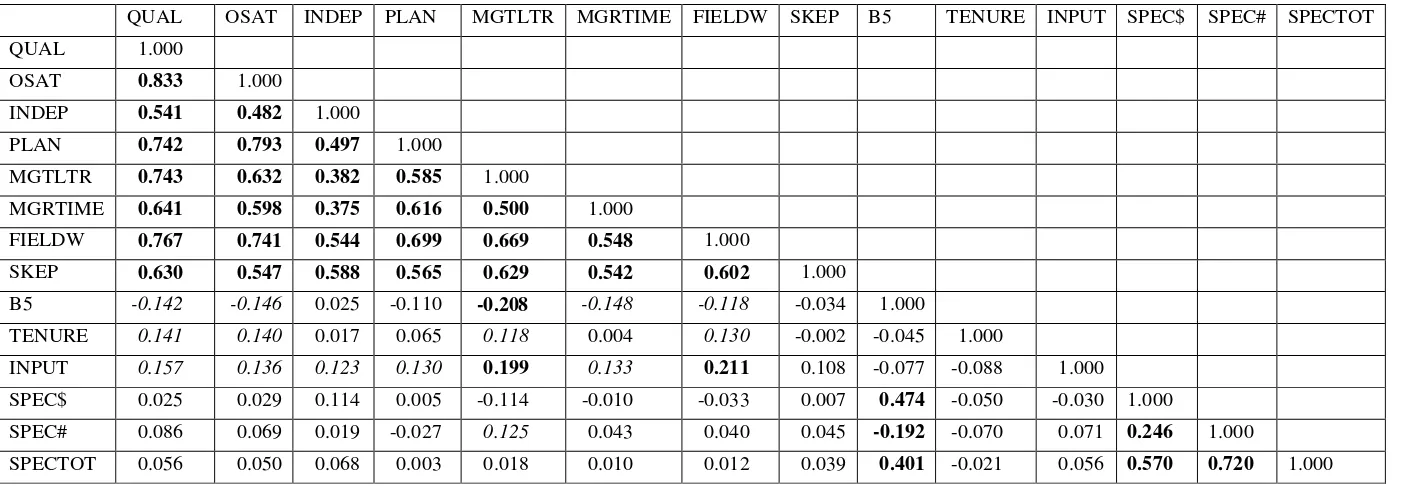
Table 3 presents bivariate correlations among the independent variables. Many of
the independent variables are highly correlated, which is not surprising given the narrow
range of many of the data items. Common diagnostic measures are not available in
ordinal regression; however, examination of the Wilk-Shapiro statistic and variance
inflation factors for each model estimated using OLS identified no problems with
non-normality of residuals or collinearity.
Insert table 3 about here
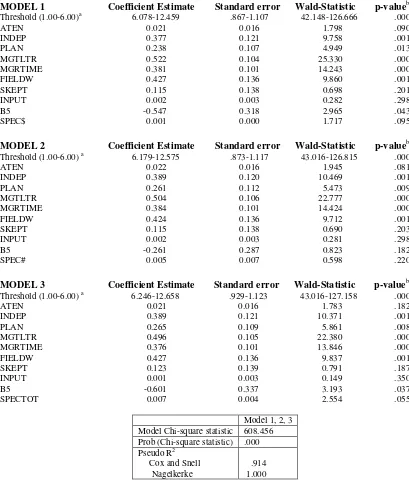
Table 4 displays the results of the perceived audit quality models estimated using
ordinal regression. The chi-square statistic indicates that the model provides a significant
improvement over the baseline intercept-only model. The Cox and Snell statistic, as well
as the Nagelkerke Pseudo R-square, indicates that the model is capturing a great deal of
the variance in audit quality.11 As expected, INDEP, PLAN, MGTLTR, MGRTIME, and
FIELDW are significant and positive in each model, although SKEP and INPUT are not
significant. The ATEN variable is also positive and significant. Although there has been
debate about the benefits of auditor rotation, auditor tenure is associated with perceived
higher quality.
The SPEC$ and SPECTOT variables are positive and significant, while the
SPEC# variable is positive but not significant. These results suggest that auditor
SPEC$ and SPECTOT models B5 is negative and significant, and is negative but
insignificant in the SPEC# model. Hence, H1a is rejected, and H2a is substantially
confirmed.
Insert table 4 about here
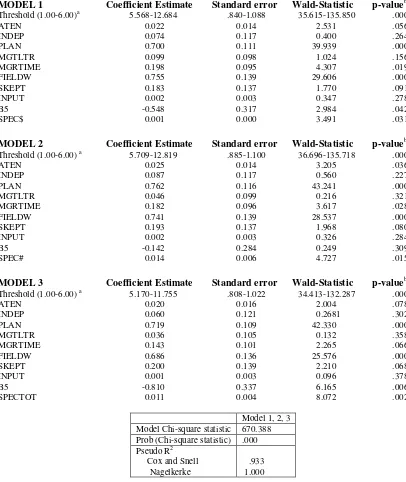
Table 5 presents results of the auditee satisfaction models estimated using ordinal
regression. Again, the chi-square statistic indicates that the model is a significant
improvement over the baseline intercept-only model, while the Pseudo R-square statistics
indicate that the model is capturing a great deal of the variance in the dependent variable.
Insert table 5 about here
ATEN, PLAN, MGRTIME, FIELDW, and SKEP are significant and positive in
each model, while INDEP, MGTLTR and INPUT are not significant. The SPEC variable
is positive and significant in each of the models. The B5 variable is negative in each
model but only significant in the SPEC$ and SPECTOT models. Thus, H1b is rejected
and H2b is accepted.
When comparing the results of the perceived quality and overall satisfaction
models, it is interesting that the specialization measures were positive and significant in
all models except the SPEC# quality model. In contrast, the Big 5 variable was
consistently negative and significantly so in most models. These results suggest that the
movement away from the Big 5 following the removal of the bid restriction in Florida
resulted in higher perceived audit quality and auditee satisfaction.
For the remaining variables, ATEN, PLAN, MGRTIME, and FIELDWORK are
auditee satisfaction increase with auditor tenure, adequate audit planning, audit manager
involvement, and the audit team’s study of entity accounting and internal control systems.
Auditor independence (INDEP) and management letter contributions (MGTLTR)
increase perceived quality but not satisfaction. Professional skepticism influenced
satisfaction but not quality. INPUT did not appear to affect responses.
Discussion of Findings
The finding that B5 is negatively associated with perceived audit quality is
interesting. It is important to note that our study measures perceived, rather than actual
audit quality. Also, this result does not indicate that Big 5 are perceived as lacking in
audit quality, only that Big 5 audits are perceived, on average, to be of lesser quality than
those performed by non-Big 5 auditors. This may relate to the prevailing view that large
firms are generally not enthusiastic about government auditing. An AICPA task force
(1987, p. 45) noted, “There is a perception that the CPAs consider government clients
secondary to the private sector.”
As would be expected, audit firms who are considered specialists are more often
associated with audit quality. This holds true when the specialization measure is total
dollars in Florida governmental revenue audited by a firm in 2003 (SPEC$) or a
longitudinal measure of governmental audit experience in Florida (SPECTOT), although
the absolute number of Florida governmental audits performed in 2003 (SPEC#) is not
significant.
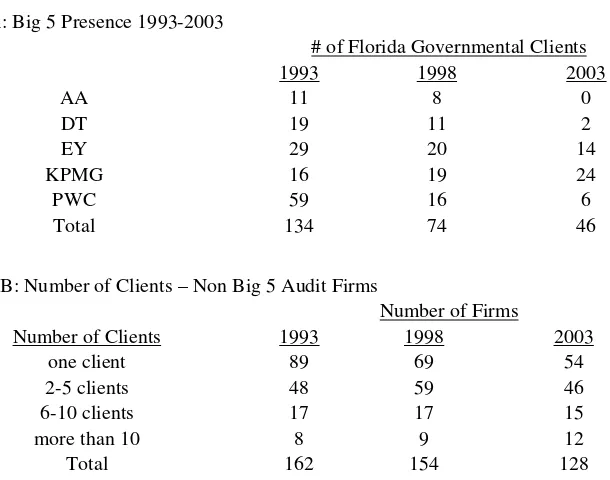
Table 6 reports auditor trend data for the Florida governmental audit market
presence in the Florida governmental audit market waned substantially, consistent with
Jensen and Payne (2005b). They suggest that the higher cost Big 5 firms were unable or
unwilling to compete on price. It is interesting that the changes in market share by the
Big 5 were not uniform. In 1993 PwC had by far the largest market share with 59 clients,
but by 2003 served only six clients in the market. On the other hand, KPMG increased its
market share from 16 to 24 clients. These results suggest that the impact of price
competition or firm strategic response to the change was not uniform across the Big 5.
Insert table 6 Here
The negative association between Big 5 firms and perceived audit quality and
overall satisfaction also suggests that the movement away from the Big 5 was not strictly
motivated by price. Jensen and Payne (2005b) note a shift toward experienced non-Big 5
firms, while Lowensohn and Reck (2004) note an increase in overall audit quality during
the period.
To further explore the specialization results, we examine the nature of the Florida
governmental audit market. As reported in Panel B of Table 6, during the period the
number of non-Big 5 audit firms participating in the market decreased in total, and the
number of firms serving few governmental audit clients decreased, especially the number
performing only one governmental audit. A slight trend toward specialization of firms is
also evident from data in Panel C. A total of 235 different firms audited the 601
governmental units under review for the ten-year period. During that period, 240 of the
601 governmental entities under study did not change auditors (36 counties, 144 cities, 60
however, some firms absorbed the Big 5 fall-out and some appear to have specialized,
picking up as many as 22 new clients.
Analysis of Audit Fees
As part of our survey, we also collected data on audit fees to address whether the
quality and satisfaction differences we examine for specialists and Big 5 auditors is
associated with differences in audit fees. Jensen and Payne (2005b) document a decline in
fees following the removal of the bid restriction in Florida, and the fee change was
greater if the change was to a more experienced auditor.13 Much previous government
audit fee research finds higher fees associated with Big 5 auditors (e.g. Rubin 1988). In
contrast, evidence for industry specialization in the governmental sector has been mixed.
For example, Ward et al. (1994) find higher fees for one specialized non-Big 8 firm in
Michigan, while Chase (1999) finds lower fees for a specialized firm in Virginia. In his
study of pension plan audits, Cullinan (1998) explains that specialists’ industry expertise
costs per client could be either higher or lower than those of nonspecialists depending on
the magnitude of the total expertise costs, and the number of industry clients the firm has.
Hence, with expertise differentiation and a cost-based audit pricing strategy, it is difficult
to anticipate the relationship between industry expertise and audit fees.
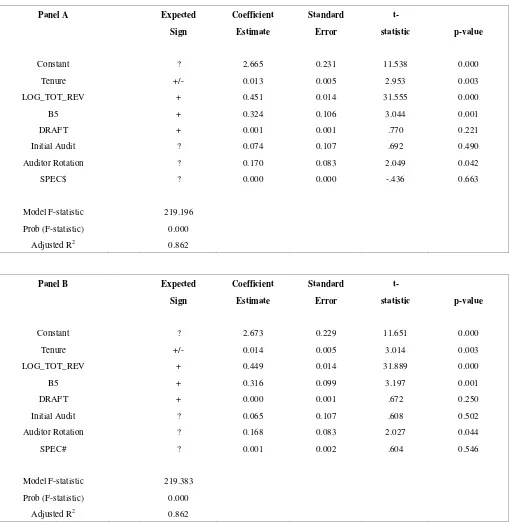
In addition to Big 5 and specialist auditor, fee model variables include auditor
tenure (ATEN), the logarithmic transformation of total revenues (LOG_TOT_REV), the
extent to which the audit firm drafted the financial statements (DRAFT), mandatory
auditor rotation (dichotomous), and initial audit (dichotomous).14
Panels A-C of Table 7 present the regression models using each of the three
specialization variables, while Panel D presents descriptive statistics for the fee model
variables. Although Big 5 auditors were associated with lower perceived quality and
satisfaction, they were able to charge higher audit fees. In contrast, while specialists were
associated with higher perceived audit quality and satisfaction, they did not charge higher
fees. These results are consistent with the suggestion in Jensen and Payne (2005a, 2005b)
that government entities were able to maintain quality at lower fees by choosing
specialist auditors. In fact, the government units were able to obtain higher perceived
quality and satisfaction and reduced fees. These results suggest that the removal of the
bidding restriction in Florida was beneficial for many Florida governmental units.
Conclusion
The quality of governmental audits is again under scrutiny. Recent research finds
lower audit fees (Jensen and Payne 2005a, 2005b) and increased levels of audit quality
(Lowensohn and Reck 2004; Jensen and Payne 2005b) in the Florida governmental audit
market after the introduction of price competition. Thus it is useful to examine factors
and conditions within Florida, as they may have policy implications for other states. It
appears as though audit firms which make the strategic decision to specialize in
governmental auditing may be able to perform high quality audits without charging
higher fees. Furthermore, Big 5 audit firms are not necessarily the highest quality
performers in the market. Following from our findings, along with Jensen and Payne
specialized non Big 5 firms providing high quality audits which satisfy client
expectations.
It is widely presumed that Big 5 audit firms charge higher fees to reflect superior
quality (Zeithaml 1988; Lichtenstein 1993). However, for our sample, higher fees for the
Big 5 were not associated with higher perceptions of audit quality. Further study of actual
and perceived audit quality for Big 4 audits in the municipal sector is warranted to assess
whether these results are unique to the Florida market.
Following the landmark Sarbanes–Oxley Act, the remaining Big 4 auditing firms
have been more selective in the clients and markets they serve, creating opportunities for
other experienced auditors. It has been implied that industry experience equates to higher
audit quality (Jensen and Payne 2005a; 2005b; Gramling and Stone 2001). In this study,
we examine a governmental audit market where experienced, non-Big 5 audit specialists
have increased their market share. The result was high levels of perceived audit quality
and client satisfaction. Further study is warranted in other governmental markets to
assess whether overall changes in the audit market result in the growth of non-Big 4
specialists, as suggested by Jensen and Payne (2005b) and Matthews et al. (1998).
There are several considerations which may limit the results and their
generalizability to other samples. All respondents surveyed were from Florida because of
the regulatory changes that occurred in that state. As a result, these results may not be
generalizable to other states. Second, use of questionnaire methodology poses potential
problems such as “errors of severity/leniency,” “halo effect,” problems associated with
understandability, and respondent truthfulness. However, the survey was adapted from
truthful response. While our results may not be generalizable to all governmental entities,
they suggest that governmental officials may wish to consider non-Big 4 specialists
REFERENCES
American Institute of Certified Public Accountants (AICPA). 1986. Restructuring professional standards to achieve professional excellence in a changing environment (Anderson Report). AICPA, New York.
Ashton, A.H., 1991. Experience and error frequency knowledge as potential determinants of audit experience. The Accounting Review66, 218–239.
Beatty, R.P., 1989. Auditor reputation and the pricing of initial public offerings. The Accounting Review64 (4), 693-709.
Behn, B.K., Carcello, J.V., Hermanson, D.R., Hermanson, R.H., 1997. The determinants of audit client satisfaction among clients of big 6 firms. Accounting Horizons 11 (1), 7-24.
Bhattacharya, A., 2001. Multiculturalism and the accounting profession: Enhancing Employee productivity and client satisfaction. National Public Accountant, 46 (3), 13-14, 21.
Borooah, V.K., 2002. Logit and Probit: Ordered and Multinomial Models. Sage Publications.
Broadus Jr., W.A., 2004. Governmental Accounting and Auditing Update. AICPA Publications, Lewisville, TX.
Carcello, J.V., Hermanson, R.H., McGrath, N.T., 1992. Audit quality attributes: The perceptions of audit partners, preparers, and financial statement users.Auditing: A Journal of Practice and Theory 11 (Spring), 1-15.
Casterella, J.R., Francis, J.R., Lewis, B.L., Walker, P.L., 2004 , Auditor Industry
Specialization, Client Bargaining Power, and Audit Pricing. Auditing: A Journal of Practice and Theory 23 (1), 123-140.
Chase. 1999. The influence of auditor change and type on audit fees for municipalities. Research in Governmental and Nonprofit Accounting 10, 49-63.
Copley, P.A., 1991. The association between municipal disclosure practices and audit quality. Journal of Accounting and Public Policy 10, 245-266.
Copley, P.A., 1989. The Determinants of Local Government Audit Fees: Additional Evidence. Research in Governmental and Nonprofit Accounting 5, 3-23 .
Copley, P.A., Doucet, M.S., 1993. The Impact of Competition on the Quality of
Governmental Audits. Auditing: A Journal of Practice and Theory 12 (2), 88-98.
Cox, D. R., Snell, E.J., 1989. The Analysis of Binary Data. Chapman and Hall, London.
Cullinan, C.P. 1998. Evidence of Non-Big 6 Market Specialization and Pricing Power in a Niche Assurance Service Market. Auditing: A Journal of Practice and Theory 17 (Supplement), 47-57.
DeAngelo, L. E. 1981. Auditor Size and Audit Quality. Journal of Accounting and Economics 3 (3), 183-200.
Deis, D.R., Giroux, G.A., 1996. The Effect of Auditor Changes on Audit Fees, Audit Hours, and Audit Quality. Journal of Accounting and Public Policy 15, 55-76.
______. 1992. Determinants of Audit Quality in the Public Sector. The Accounting Review 67 (3), 462-479.
Elder, R. J. 1997. A Comment on Audit Quality in Audits of Federal Programs by Non-Federal Auditors. Accounting Horizons 11 (1), 67-71.
Giroux, G., Deis, D., Bryan, B., 1995. The Effect of Peer Review on Audit Economies. Research In Accounting Regulation9, 63-82.
GAO. See U. S. GAO.
Grambling, A.A., Stone, D.N., 2001. Audit Firm Industry Expertise: A Review and Synthesis of the Archival Literature. Journal of Accounting Literature20, 1-29.
Hackenbrack, K., Jensen, K.L., Payne, J.L., 2000. The Effect of a Bidding Restriction on the Audit Services Market. Journal of Accounting Research 38 (2), 355-374.
Hogan, C.E., Jeter, D.C., 1999. Industry Specialization by Auditors. Auditing: A Journal of Practice and Theory 18 (1), 1-18.
Johnson, L.E., Davies, S.P., Freeman, R.J., 2002. The Effect of Seasonal Variations in Auditor Workload on Local Government Audit Fees and Audit Delay. Journal of Accounting & Public Policy 21 (4/5), 395-422.
Jensen, K.L., Payne, J.L., 2005a. Audit Procurement: Managing Audit Quality and Audit Fees in Response to Agency Costs. Auditing: A Journal of Practice and Theory 24 (2), 27-48.
______. 2005b. The Introduction of Price Competition in a Municipal Audit Market. Auditing: A Journal of Practice and Theory 24 (2), 137-152.
Libby, R., 1995. The Role of Knowledge and Memory in Audit Judgment. In: Judgment and Decision Making Research in Accounting and Auditing, A.H. Ashton, R.H. Ashton (Eds.), Cambridge University Press, New York, pp. 176-206.
Libby, R., Frederick, D.M., 1990. Experience and the ability to explain audit findings. Journal of Accounting Research22, 348–367.
Lichtenstein, D. R., Ridgeway, N.M., Netemeyer, R.G., 1993. Price perceptions and consumer shopping behavior: A field study. Journal of Marketing Research 30 (May), 234-45.
Lowensohn, S., Reck, J., 2004. Longitudinal analysis of local government audit quality. Research in Governmental and NonProfit Accounting 11, 213-228.
Matthews, R., Jubb, C.A., Houghton, K.A., 1998. The Premium for Specialization: Does It Exist for Non-Big 6 Audit Firms? Working paper, University of Melbourne.
McCullagh, P. 1980. Regression Models for Ordinal Data. Journal of the Royal Statistical Society42 (2), 109-142.
______ , Nelder, J.A., 1989. Generalized Linear Models, 2nd edn. Chapman and Hall, New York.
Nagelkerke, N.J.D. 1991. A note on a general definition of the coefficient of determination. Biometrika 78 (3), 691-692.
O'Keefe, T.B., King, R.D., Gaver, K.M., 1994. Audit Fees, Industry Specialization, and Compliance with GAAS Reporting Standards. Auditing: A Journal of Practice and Theory 13 (2), 41-55.
O'Keefe, T.B., Westort, P.J., 1992. Conformance to GAAS Reporting Standards in
Municipal Audits and the Economics of Auditing: The Effects of Audit Firm Size, CPA Examination Performance, and Competition. Research in Accounting
Regulation 6, 39-77.
Palmrose, Z. 1988. An analysis of auditor litigation and service quality. The Accounting Review63 (1), 55-73.
______ . 1989. The relation of audit contract type to audit fees and hours. The Accounting Review 64, 488-499.
Rubin, M.A. 1988. Contracting for Municipal Audits. Association of Government Accountants Journal (Spring), 25-29.
Schroeder, M., Solomon, I., Vickrey, D., 1986. Audit quality: The perceptions of audit committee chairpersons and audit partners. Auditing: A Journal of Practice and Theory(Spring), 86-94.
Solomon, I., Shields, M.D., Whittington, R.O., 1999. What do industry specialist auditors know? Journal of Accounting Research37, 191–208.
SPSS for Windows (SPSS), 2003. Release 12.0.0. SPSS, Chicago.
Stevens, M., 1981. The Big Eight. Macmillan, New York.
Thomas, C.W., Davis, C.E, Seaman, S.L., 1998. Quality Review, Continuing
Professional Education, Experience and Substandard Performance: An Empirical Study. Accounting Horizons 12 (4), 340-362.
Treadway Commission., 1987. Report of the National Commission on Fraudulent Financial Reporting. Available at www.coso.org.
U.S. General Accountability Office (U.S. GAO), 1986. CPA Quality: Many
Governmental Audits Do Not Comply with Professional Standards (AFMD 86-33). Government Printing Office, Washington, D.C.
1987. CPA Audit Quality: A Framework for Procuring Audit Services (AFMD 87-34). Government Printing Office, Washington, D.C.
Ward, D.D., Elder, R.J., Kattelus, S.C., 1994. Determinants of municipal audit fees. The Accounting Review69 (April), 399-411.
Table 1
Summary of Variables
Dependent variables measured on a 7 point Likert scale
Name Construct or concept measured QUAL Perceived quality of audit OSAT Overall satisfaction with audit
Independent variables measured on a 7 point Likert scale
Name Construct or concept measured
INDEP The audit team maintained independence in appearance and in fact PLAN The audit was adequately planned
MGTLTR The audit team provided valuable suggestions to management (e.g. management letter)
MGRTIME The engagement manager's active involvement in planning and conducting the audit
ACCTSYS Adequacy of the audit team's understanding of the governments accounting system
ICS Thoroughness of the audit team's study of the government's internal controls
FIELDW A composite “fieldwork” variable comprising ACCTSYS and ICS
SKEPT The audit team maintained an attitude of professional skepticism throughout the audit engagement
Other Independent variables
Name Construct or concept measured B5 The audit firm is one of the Big Five
ATEN The audit firm's tenure as the government's auditor
INPUT The extent to which the respondent was involved in the auditor selection
SPEC$ Total 2003 Florida governmental revenues audited by firm or B5 office SPEC# Total number of Florida governmental entities audited by audit firm or
B5 office in 2003
Table 2
Descriptive Statistics - Overall Sample (N=286)
Panel A Sample Statistics
Type of Government Surveyed Respondents Response Rate Percentage of Sample
County 68 25 36.76% 8.74%
City/Local Government 402 150 37.31% 52.45%
Special District 376 111 29.52% 38.81%
Variable Number Percentage Number Percentage
BIG5 31 10.8 255 89.2
Panel D
Variable Mean SD Range
TENURE 7.89 years 6.805 0-40
INPUT 46.89% 36.221 0-100
SPEC$ $863,805,856 1,202,626,574 $72,996-12,683,580,081
Table 3
Variable Correlations (N=286)
Note: Correlations in bold type significant at p .01; correlations in italic type significant at p .05.
QUAL OSAT INDEP PLAN MGTLTR MGRTIME FIELDW SKEP B5 TENURE INPUT SPEC$ SPEC# SPECTOT
QUAL 1.000
OSAT 0.833 1.000
INDEP 0.541 0.482 1.000
PLAN 0.742 0.793 0.497 1.000
MGTLTR 0.743 0.632 0.382 0.585 1.000
MGRTIME 0.641 0.598 0.375 0.616 0.500 1.000
FIELDW 0.767 0.741 0.544 0.699 0.669 0.548 1.000
SKEP 0.630 0.547 0.588 0.565 0.629 0.542 0.602 1.000
B5 -0.142 -0.146 0.025 -0.110 -0.208 -0.148 -0.118 -0.034 1.000
TENURE 0.141 0.140 0.017 0.065 0.118 0.004 0.130 -0.002 -0.045 1.000
INPUT 0.157 0.136 0.123 0.130 0.199 0.133 0.211 0.108 -0.077 -0.088 1.000
SPEC$ 0.025 0.029 0.114 0.005 -0.114 -0.010 -0.033 0.007 0.474 -0.050 -0.030 1.000
SPEC# 0.086 0.069 0.019 -0.027 0.125 0.043 0.040 0.045 -0.192 -0.070 0.071 0.246 1.000
Table 4
Ordinal Regression Model of Factors Associated with Perceived Audit Quality (Dependent Variable is QUAL) N = 286
MODEL 1 Coefficient Estimate Standard error Wald-Statistic p-valueb
Threshold (1.00-6.00)a 6.078-12.459 .867-1.107 42.148-126.666 .000
MODEL 2 Coefficient Estimate Standard error Wald-Statistic p-valueb
Threshold (1.00-6.00) a 6.179-12.575 .873-1.117 43.016-126.815 .000
MODEL 3 Coefficient Estimate Standard error Wald-Statistic p-valueb
Threshold (1.00-6.00) a 6.246-12.658 .929-1.123 43.016-127.158 .000
The ordinal regression procedure yields “threshold estimates,” which correspond to intercept terms in OLS. The number of threshold estimates always equals [(the number of dependent variable categories) - 1], thus our ordinal regression models include six threshold estimates. For ease of exposition, these estimates are summarized in one line.
b
Table 5
Ordinal Regression Model of Factors Associated with Auditee Satisfaction (Dependent Variable is OSAT) N = 286
MODEL 1 Coefficient Estimate Standard error Wald-Statistic p-valueb
Threshold (1.00-6.00)a 5.568-12.684 .840-1.088 35.615-135.850 .000
MODEL 2 Coefficient Estimate Standard error Wald-Statistic p-valueb
Threshold (1.00-6.00) a 5.709-12.819 .885-1.100 36.696-135.718 .000
MODEL 3 Coefficient Estimate Standard error Wald-Statistic p-valueb
Threshold (1.00-6.00) a 5.170-11.755 .808-1.022 34.413-132.287 .000
The ordinal regression procedure yields “threshold estimates,” which correspond to intercept terms in OLS. The number of threshold estimates always equals [(the number of dependent variable categories) - 1], thus our ordinal regression models include six threshold estimates. For the sake of space, these estimates are summarized in one line.
b
Table 6
Florida Governmental Audit Market Trends 1993-2003
Panel A: Big 5 Presence 1993-2003
# of Florida Governmental Clients
Panel B: Number of Clients – Non Big 5 Audit Firms
Number of Firms
A total of 235 different firms participated in the market during this period, auditing 601 governmental entities throughout the ten-year period.
Table 7
Regression Model of Audit Fees
Panel C Expected Coefficient Standard
t-Panel D Descriptive Statistics for Audit Fee Model Variables
Variable Mean SD Range
Fee $ 45,701 74,548 $ 300 – 804,192
Tenure 7.89 years 6.805 0-40
Revenues $ 76,265,314 299,005,769 $1,417 – 6,692,788,893
Draft 55.18% 43.38% 0 - 100%
SPEC$ $863,805,856 1,202,626,574 $72,996-12,683,580,081
SPEC# 14.77 clients 16.002 1-98
SPECTOT 35.36 clients 29.487 1-106
1
Prior to 2004 the GAO was known as the General Accounting Office. 2
Over 20% of federal quality control reviews conducted in recent years noted audit quality problems (Broadus 2004). These results prompted a group of federal agencies, in conjunction with the Office of Management and Budget, the AICPA, the GAO, and the National State Auditors Association, to institute the National Project to Statistically Measure the Quality of Single Audits.
3
During the period examined in this study, the five largest public accounting firms (Big 5) became the Big 4 public accounting firms, following the demise of Arthur Andersen. These firms are generally comparable to the Big 6 in research prior to the merger of Price Waterhouse and Coopers and Lybrand. We continue to refer to the firms as the Big 5 throughout the study except where researchers studied Big 6 firms.
4
Audit quality and auditee satisfaction represent two important, yet distinct, concepts within the overall audit market (Behn et al. 1997). While audit quality is important to both internal and external stakeholders, auditee satisfaction is “central to the accounting profession” (Bhattacharya 2001, p.14). To remain viable, audit firms must strive for both high quality audit performance and high levels of auditee satisfaction.
5
These measures differ by nature and content. SPECTOT includes audit firm data for 601 entities (66 counties, 358 cities, 177 special districts) over a ten-year period, including only entities where data is available for the entire period. SPEC$ and SPEC# include 2003 data for 882 entities representing 97.36% of the total Florida governmental revenue that year. The major difference is the inclusion of 281additional special districts for which we have 2003 revenues and auditors; however the additional special districts either were not in existence in 1993, did not require an audit in 1993 and/or 1998, or did not submit their audit report to the auditor general’s office in a timely manner during those years.
6
Municipality and auditor data were requested annually from the Florida State Auditor General’s Office and compiled manually by one of the authors. Florida municipal revenue figures were located at
http://www.fldfs.com/localgov/DownLoads.html.
7
Carcello et al. used a 5-point agree/disagree scale, while Behn et al. used a 5-point satisfied/dissatisfied scale.
8
We do not employ simultaneous regression in this study because, while perceived audit quality and auditee satisfaction are thought to be related, they are not endogenously modeled in this study. That is, neither appears as an independent variable in the regression model of the other. Indeed, Palmrose (1989) provides an example of modeling closely related constructs (audit fees and audit hours) in which the independent variables are identical. However, since neither dependent variable appears as an explanatory variable in the counterpart regression model, Palmrose employs separate, non-simultaneous, regressions. 9
10
Inspection revealed that the dependent variable responses are skewed to higher scale values (consistent with the notion that auditees are at least somewhat satisfied with the auditors they have engaged). On this basis, it is appropriate to define the link function within the ordinal regression model as "complementary log-log" (SPSS 2005).
11 SPSS reports pseudo R-square values for ordinal regression. While these values are
considered to be similar to an OLS R-square in terms of model assessment, they do not directly measure the variance explained by the independent variables. The Cox and Snell's R-Square has a maximum value less than 1.0 (Cox and Snell 1989) and Nagelkerke's R-Square allows for a value of 1 (Nagelkerke 1991).
12
Jensen and Payne (2005b) present market data for 126 Florida cities in their sample. We extend the analysis by examining 601 Florida entities, representing over 97% of 2003 revenues, over a ten-year period.
13
Although Jensen and Payne test for a relation between specialization and audit fees, we use more extensive specialization data and alternative measures of specialization.
14