2 3 4 5 6 722 8 9 10 1 2 3 4 5 6 7 822 9 20 1222 2 3 4 5 6 7 8 9 30 1 2 3 4 5 6 7 822
INTERNATIONAL RELATIONS
THE BASICS
International Relations: the Basics is a concise and accessible introduction for students new to international relations and for the general reader. It offers the most up-to-date guide to the major issues and areas of debate and
• explains key issues including humanitarian intervention and economic justice
• features illustrative and familiar case studies from around the world
• examines topical debates on globalization and terrorism
• provides an overview of the discipline to situate the new reader at the heart of the study of global politics.
Covering all the basics and more, this is the ideal book for anyone who wants to understand contemporary international relations.
Peter Sutchis currently head of the Politics Department and Senior Lecturer in Political Thought and International Relations at Cardiff University. His current research is on international law and international justice.
ALSO AVAILABLE FROM ROUTLEDGE
POLITICS: THE BASICS (THIRD EDITION)
STEPHEN TANSEY
978–0–415–30329–3
THE ROUTLEDGE DICTIONARY OF POLITICS DAVID ROBERTSON
978–0–415–32377–2
FIFTY MAJOR POLITICAL THINKERS (SECOND EDITION)
IAN ADAMS AND R.W. DYSON
978–0–415–40099–2
FIFTY KEY FIGURES IN TWENTIETH CENTURY BRITISH POLITICS KEITH LAYBOURN
978–0–415–22677–6
FIFTY KEY THINKERS IN INTERNATIONAL RELATIONS MARTIN GRIFFITHS
978–0–415–16228–9
INTERNATIONAL RELATIONS: THE KEY CONCEPTS MARTIN GRIFFITHS AND TERRY O’CALLAGHAN
978–0–415–22883–1
THE ROUTLEDGE COMPANION TO FASCISM AND THE FAR RIGHT PETER DAVIES AND DEREK LYNCH
2 3 4 5 6 722 8 9 10 1 2 3 4 5 6 7 822 9 20 1222 2 3 4 5 6 7 8 9 30 1 2 3 4 5 6 7 822
INTERNATIONAL
RELATIONS
THE BASICS
2 Park Square, Milton Park, Abingdon, Oxon OX14 4RN Simultaneously published in the USA and Canada by Routledge
270 Madison Ave, New York, NY 10016
Routledge is an imprint of the Taylor & Francis Group, an informa business
© 2007 Peter Sutch and Juanita Elias
All rights reserved. No part of this book may be reprinted or reproduced or utilized in any form or by any electronic, mechanical, or other means, now known or hereafter invented, including photocopying and recording, or in any information storage or retrieval system, without permission in writing from the publishers.
British Library Cataloguing in Publication Data
A catalogue record for this book is available from the British Library
Library of Congress Cataloging in Publication Data
Sutch, Peter, 1971–
International relations: the basics/Peter Sutch and Juanita Elias p. cm.
Includes bibliographical references and index.
1. International relations. I. Elias, Juanita. II. Title. JZ1318.S875 2007
327–dc22 2006038113
ISBN10: 0–415–31184–5 (hbk) ISBN10: 0–415–31185–3 (pbk) ISBN10: 0–203–96093–9 (ebk)
ISBN13: 978–0–415–31184–7 (hbk) ISBN13: 978–0–415–31185–4 (pbk) ISBN13: 978–0–203–96093–6 (ebk)
This edition published in the Taylor & Francis e-Library, 2007.
“To purchase your own copy of this or any of Taylor & Francis or Routledge’s collection of thousands of eBooks please go to www.eBookstore.tandf.co.uk.”
2 3 4 5 6 722 8 9 10 1 2 3 4 5 6 7 822 9 20 1222 2 3 4 5 6 7 8 9 30 1 2 3 4 5 6 7 822
CONTENTS
List of illustrations vii
Acknowledgements ix
1 The nature of international relations 1
2 Anarchy and the origin of the modern international
system: world politics 1648–1939 21
3 Realism: the basics 41
4 Liberalism: the basics 64
5 Challenging anarchy: building world politics 82
6 Criticizing world politics 108
7 Reconfiguring world politics: globalization 132
8 From stability to justice? Contemporary challenges
Glossary of key terms 179
References 192
2 3 4 5 6 722 8 9 10 1 2 3 4 5 6 7 822 9 20 1222 2 3 4 5 6 7 8 9 30 1 2 3 4 5 6 7 822
ILLUSTRATIONS
Figures
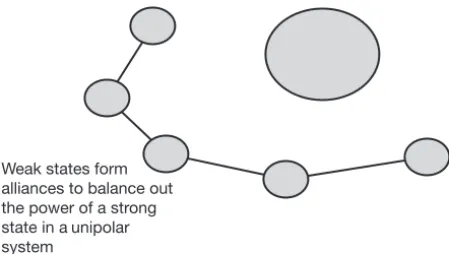
3.1 Power balancing 55
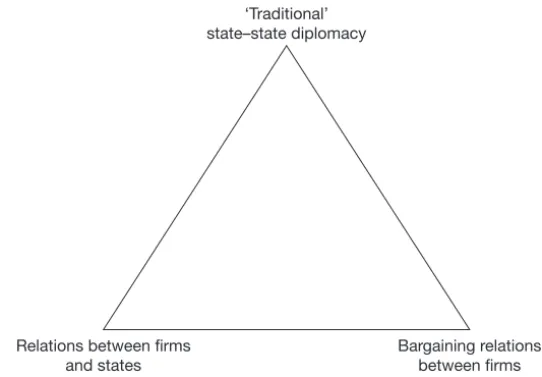
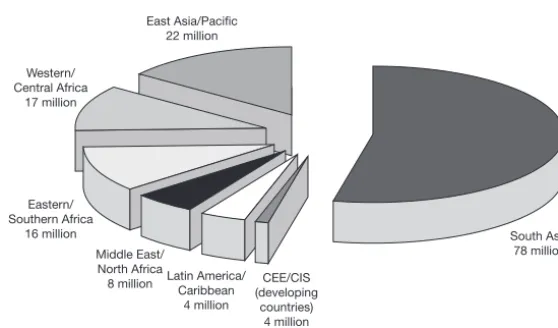
5.1 Stopford and Strange on triangular diplomacy 96 5.2 Two ‘pictures’ of actors in world politics 100 8.1 Child malnutrition in the developing world 172
Boxes
1.1 The great debates in IR 8
1.2 Morgenthau and Waltz on IR 10
2.1 Jackson on the spread of the modern European
states system 29
2.2 Peace treaties that shaped IR 31
2.3 Preamble to the Covenant of the League of Nations 35 3.1 Realism in the history of ideas 46 4.1 Liberalism in the history of ideas 70 5.1 Multilateralism and international organizations 85 5.2 ASEAN: building regional cooperation and community 90 5.3 Robert Keohane on the importance of international
2 3 4 5 6 722 8 9 10 1 2 3 4 5 6 7 822 9 20 1222 2 3 4 5 6 7 8 9 30 1 2 3 4 5 6 7 822
ACKNOWLEDGEMENTS
THE NATURE OF
INTERNATIONAL RELATIONS
THE BASIC VOCABULARY OF IR
The purpose of this book is to offer you a critical introduction to the basics of international relations (IR). The key word here is ‘critical’ rather than ‘basics’. If, at the end of this introduction, you understand why the word critical is key, you will be in a strong position to move on to the next chapters. To help you reach this initial goal this introductory chapter will focus on the nature of the study of IR as an academic discipline. Here we aim to give you a sense of the ‘shape’ of the subject and an insight in to the challenges that lie ahead.
IR is usually characterized as a separate and discrete academic discipline. You will find separate departments of ‘International Relations’ or ‘International Politics’ in many universities. You will find separate curricula and degree schemes, and professors and lecturers of IR. However, in an important sense this separateness is artificial. On the one hand it seems intuitively simple to say that IR is a distinct entity. It is at the most basic level, the study of something that exists out there. Inter – National – Relations, the study of relations between nations. When we say ‘nations’ here we usually intend to refer to the interactions of nation-states – sovereign,
1
territorially bounded political units like the United States of America or France. However, it is also clear that this does not tell us very much about our subject. Taking a brief glance at the world around us we find that some of the principal actors in world politics, the agents of international relations that make up the political landscape of our subject area, are not nations at all. When we look at the world of global politics we inevitably see international or trans-national governmental organizations (IGOs) such as the United Nations (UN) or the International Monetary Fund (IMF). We see regional organizations, such as the European Union (EU) or the Association of South East Asian Nations (ASEAN), important non-governmental organizations (NGOs) such as the Red Cross (and Red Crescent) or Amnesty International, and powerful multinational corporations (MNCs) with bigger annual turnovers than the gross national product (GNP) of many countries. We also find that many issues that we associate with IR transcend this basic description. Are our concerns about an HIV/AIDS epidemic in Africa, or human rights reducible to IR in this narrow sense? There is clearly much more to IR than inter-national relations.
of poverty, starvation and disease. It confronts the refugee crises that follow natural and human-made disaster, manages the conduct of war, and attempts to coordinate the prosecution of international law. If you switch on the television or pick up a newspaper, you will see international politics everywhere.
The way to begin to get a grip on this wide-ranging and challenging subject is not to become an expert in every aspect of world politics. This might be an ideal solution but it is simply not a realistic goal. Rather, you need to find a way to ‘cope’ with complexity and multidisciplinarity. This is what IR, as an academic discipline, and you, as a student of IR, must try to achieve. IR, at its most basic level, is a matter of orientation. It attempts to manage the deeply complex nature of world politics by breaking it down in to understandable chunks and helpful general theories. The key is to find ways of describing and analysing world politics that can both acknowledge the vast array of causal and determining factors yet give us the critical leverage we need. We need to be able to see the ‘shape’ of the subject to enable us to understand the general principles that inform the technicalities of international economics, law and politics. This is not to suggest that IR is in any way a second order discipline. Indeed, if you want to understand the world economy or public international law then a study of the general nature of IR is essential. IR is the background upon which the many dramas of world politics are played out. Neither is it to suggest that IR is not complex in itself. You will need to master a whole range of historical and conceptual skills. Learning to understand the historical development of ‘the state’, ‘the international system’, ‘a globalized economy’ etc. offers huge insights in to the nature of IR. Similarly, learning to understand the political, cultural and moral arguments that defend or criticize these features of our world is crucial to a basic understanding of IR.
are many. You will need to become familiar with the formal sources of international law and its instruments. You may also be asked to consider how we go about making and justifying moral claims (such as ‘it is wrong to target civilians in time of war’, or ‘we have a duty to eradicate poverty in the developing world’) in the face of claims to the contrary. You may be required to study the macroeconomic theory of globalized markets. These steps in your bid to understand IR will be difficult but very rewarding. However, almost all students of IR begin with an introduction to the basic vocabulary of the discipline in general. This is often called IR theory. IR theory is basic to the study of world politics in that it represents a series of attempts to explain or understand the world in ways that frame the debates in foreign policy, law, ethics, security studies etc. In other words IR theory attempts to elaborate general principles that can help orientate us in our encounter with the complexities of world politics.
return to this idea a little later. Other arguments highlight different (and sometimes contradictory) points about what they take to be the core features of world politics. Some focus on the core values that underpin human rights to make claims about the world. Others examine the nature of global interdependence, while others focus on the uneven impact the development of an international system has had on the ability of some to act effectively on the world stage and to manage their domestic affairs.
It is important to realize that different people highlight different aspects of IR for different reasons. Some are seeking a value-free description of the key features of world politics. Others are trying to make a moral or political point. There is just as much disagreement about what (if anything) counts as a value-free description as there is about what should be viewed as the most important features of IR. There is even more disagreement about what we, in ethical and political terms, should think of as our priorities in world politics (should we concentrate on alleviating poverty in the developing world or on developing our own resource base and security?). You need to be in a position to evaluate these claims and this book is designed to help you. Studying world politics is not so much about learning the basics of IR. It is more a question of putting yourself in a posi-tion to make informed and critical judgementsabout IR. In politics people, quite reasonably, have different opinions and priorities. This is reflected in the literature that you will engage with as you continue your studies. Ultimately your goal is to make your own decisions about the best way to understand IR or the most important issues to address. In order to achieve this you need a balanced and critical view of the options. International Relations: The Basicsis designed to help you in your first engagement with these issues and others that form the core of IR as it is taught in universities.
THE TRADITIONAL SUBJECT MATTER OF IR
Modernity (for IR) is the period associated with the development of the territorial, sovereign state. This vital feature of our political landscape is traditionally dated from 1648 and the ‘Peace of Westphalia’, the collective term for the peace treaties that drew an end to the Thirty Years War in Europe and heralded the formal beginning of the modern European states system. In the 350 years since the Peace of Westphalia much has happened. The progressive secularization of world politics, the development of the principles and instruments of international law, and the generation of international governmental organizations, from the ad hoc Congress of Vienna (1815), to the League of Nations (1919) and the UN (1945), are all important aspects of the modern period. But the way in which the territorial state (later the nation-state) took hold and spread across the whole planet is often thought of as the defining feature of IR. In Chapter 2 we will present you with a basic introduction to the history of IR. History is not a simple retelling of the past. In seeking to explain for us the most important features of 350 years of world politics, many historians and political scientists have made choices about which aspects of history are the most notable. Usually their choices are informed by their judgement about which aspects of the history of IR offer the most to us in terms of their general explanatory force. In the case of the history of IR presented in Chapter 2, we find that the role of the sovereign state in modern world politics is presented as being the feature of IR that helps us make sense of many other key features (the anarchical condition of world politics and therefore war, the nature of international law, the balance of power system). Chapter 2 will, therefore, offer a basic introduction to the rise of the modern state system ending with the demise of the League of Nations in the run-up to the Second World War.
What happens to the way we understand IR if we place all of our emphasis on the central role of the sovereign state in world politics? How should we go about studying the role of the state? Do we need to look elsewhere in order to understand world politics and if so at what? What policy suggestions or general trends emerge when we emphasize one aspect of IR over another? What, when you get right down to it, is the best way to study IR?
To put it in very simple terms, those who wrote the history of IR made a judgement about its most important features. They may have done so because their interpretation of the evidence drew them that way. On the other hand they may have done so because they had a particular moral or political viewpoint. On a more technical level they may have been using academic tools (a specific understanding of the most appropriate scientific or historical method, or a view on what counts as knowledge) that may be contestable. The judgements that we will examine have informed history and policy and so they need to be treated with respect. But understanding the history of IR is a more complex exercise than you might have first imagined. Indeed our discipline is characterized by a series of debates about what the most important features of world politics are and how to study them.
ESTABLISHED DEBATES IN IR
First, let us get back to basics. Debates of this kind are a formal part of the basic vocabulary of IR. Indeed the discipline is often characterized in terms of a series of ‘great debates’ (see Box 1.1). Almost everything you will ever read in IR literature characterizes its position in relation to these debates. Sometimes it is in explicit allegiance to a well-defined position within these debates. More often it is in an attempt to refine one or more of the positions within a debate. Occasionally writers define their position by rejecting wholesale either one tradition in a debate or the whole idea that there are (or were) great debates at all. A broad, yet critical, under-standing of this vocabulary is therefore basic to the study of IR. In what follows we will introduce you to some of the key terms of debate and introduce a few of their key features.
REALISM VERSUS IDEALISM
These ‘great debates’ are really about what the study of IR is or should be. The first ‘great debate’, and the one that reverberates throughout the discipline, is presented as realism versus idealism. Few deny that the realism versus idealism debate gave IR its character. For many realism is IR. Realism, as the term is used in IR, arose in the late 1930s and early 1940s largely in response to what was perceived as the naive thinking of liberal politicians and scholars. Realism was, argued one of its founding architects, the beginning of a political science of international relations and a necessary response to the utopianism, or wishful thinking, which characterized the study and practice of international politics between the wars. What was being attacked was the idealism or utopianism of those who believed that it was possible to build an international political system that removed conflict and competition between states, banished war as a tool of foreign policy and established ‘perpetual peace’. On what scientific basis, asked the realists, did the architects of the League of Nations base their liberal idealism? The key message was very clear. You cannot wish war away. The desire to end war is all well and good but the science of international politics must proceed by placing objective analysis ahead of utopianism. The failure to do so led to the collapse of the League of Nations and ultimately to the Second World War. It is true that realism can lead to hard-headed cynicism that emphasizes the ‘irresistible strength of the existing forces and the inevitable character of existing tendencies’ (Carr 1939: 11). But the price of not taking a realist attitude was and is too great.
B O X 1 . 1 T H E G R E AT D E B AT E S I N I R
The . . . science of international politics . . . took its rise from a great and disastrous war. The passionate desire to prevent war determined the whole initial course and direction of the study. Like other infant sciences, the science of international politics has been markedly and frankly utopian.
(Carr 1939: 8)
Carr thought that a mature political science of world politics would combine what he called purposive thinking (the desire to end war for example) with realism. Realism however would drive the agenda – practice must create theory rather than theory creating practice as the failed League of Nations with its spurious belief in the harmony of interests had allowed it to (Carr 1939: 64, 80). Carr could have had no idea of the impact his work was to have on the nature of IR. From the end of the Second World War until 1970 90 per cent of data-based studies of international politics were based on realist theoretical assumptions (Vasquez 1983). As we write this chapter this great debate rages on. Fittingly enough, John J. Mearsheimer, the great American realist, took the opportunity when giving the 2005 E.H. Carr memorial lecture to roundly criticize the British IR establishment for being overrun with ‘idealists who pay little attention to power’, an argument that produced a spirited response (Mearsheimer 2005; Mearsheimer et al.2005). One of the first things you need as you embark on the study of world politics, therefore, is a grasp of the realist approach to IR. What are the objective laws about world politics that Realists believe we can discover? How do they govern international politics? How should we act once we have grounded our policy options in a proper science of international politics? As we come to consider these questions we will explore some of the dominant ideas in IR. Among them are discipline shaping claims by key figures in the history of IR, such as Hans J. Morgenthau and Kenneth Waltz, who unequivocally associated the study of IR with the study of state power (see Box 1.2).
These thoughts are explored in some detail in Chapter 3, which will guide you through an initial engagement with this important tradition in its principal guises.
TRADITIONALISM VERSUS BEHAVIOURALISM
Realism has influenced IR to such an extent that it really drives the other established debates. The traditionalist versus behaviouralist debate is really a debate over how best to engage in a realist science of international politics. This debate pitted traditional realists (such as Morgenthau) who found the motor of power politics in IR in human nature against positivist social scientists who attempted to apply the methodology of the natural sciences to IR. The traditional realists had argued for greater objectivity in IR. The behaviouralists claimed to offer just that. A positivist approach to science insists that we rely only on observable data because, it is argued, only observable data can be verified. Realist social scientists were to have an extraordinary influence over American IR. These neo-realists focus, in a variety of ways, on the structural causes of conflict in IR (Waltz 1979; Mearsheimer 2001) or offer empirical research in to the nature of power politics that offers predictions about how states will act given the inherently anarchical condition of world affairs. ‘The structure of the international system forces states which seek only to be secure nonetheless to act aggressively toward each other’ (Mearsheimer 2001: 3).
B O X 1 . 2 M O R G E N T H A U A N D W A LT Z O N I R
Politics, like society in general, is governed by objective laws that have their roots in human nature.
The main signpost that helps political realism . . . is the concept of interest defined in terms of power.
Hans Morgenthau, Politics among Nations (1985: 4, 5)
The factors that distinguish international politics . . . are: (1) that the stakes of the game are considered to be of unusual importance and (2) that in international politics the use of force is not excluded as a means of influencing the outcome. The cardinal rule of the game is often taken to be: Do what you must in order to win it.
Neo-realism came to dominate the discipline, almost unchallenged, particularly in the USA, until the end of the Cold War. The core arguments that support the claim that it is possible to have a realist science of IR are explored in Chapter 3.
NEO-REALISM VERSUS NEO-LIBERALISM
The success of behaviouralism, in turn, sets the scene for the next debate, the neo-realism versus neo-liberalism debate that has dominated mainstream US IR scholarship since the 1980s. We will be referring to this neo-liberal tradition as neo-liberal institutionalism in this book. The reason for this is to avoid confusion with another ‘neo-liberalism’, that of neo-liberal economic theory – a tradition that is also discussed in this book. You may also find that other terms are used to describe the neo-liberal institutionalist position such as ‘regime theory’ and ‘complex interdependency’. Neo-liberal institu-tionalists such as Robert Keohane accepted the scientific project (the epistemology or the theory of what counts as knowledge and the methodology or how we should ‘do’ IR) of the neo-realists. Never-theless they argued that the neo-realists had underestimated the importance of transnational relations (Nye and Keohane 1971). How, asked the neo-liberals, does the reality of (for example) the global economy, thought of as a context in which states interact, effect the way that states will act?
Although denounced as utopianism by Carr, liberalism has a long history and broad range of different methods. While neo-liberalism is beyond doubt the dominant form of liberalism in mainstream IR there has been a resurgence of interest in normative or cosmopolitan liberalism with its emphasis on human rights, economic justice and democratisation. Setting out the basics of liberal IR theory allows you to do something that is essential to a balanced approach to your subject. It allows you to examine the basic assumptions and arguments of liberalism, in all its guises, without merely accepting Carr’s assessment of the political traditions.
RATIONALISM VERSUS REFLECTIVISM
book is to place you at the centre of the debates that focus on key issues in contemporary world politics including those that rage over questions of economic and political globalization and humanitarian intervention.
A MULTIPLICITY OF ACTORS
Chapter 5 explores the nature of interdependence in contemporary IR. In one sense it is beyond doubt that the stage of world politics supports a huge variety of non-state actors. The question that drives much of contemporary IR is whether or not this alters the basic nature of world politics. How far (if at all) should the realist image of an anarchical system where states are the only important actors be challenged? Should we turn instead to focus on the successes of international organizations such as the UN or regional organizations like the EU? Should security analysts focus primarily on international terrorist organizations such as al-Qaeda and collective security responses to humanitarian crises or on national military might? To what extent should IR continue to focus on state action or should we concentrate more on understandings of multilevel governance? The first step answering these questions is to become familiar with the key actors in world politics and to this end Chapter 5 explores the basics of international organizations and regional organizations, multilateralism and global governance.
BEYOND POSITIVISM IN IR
In Chapter 6 we begin to explore the reflectivist or post-positivist approaches to contemporary IR. These approaches to IR are united in a refusal to accept the traditional view about what the proper subject matter of IR is and therefore a rejection of the mainstream view about how best to study world politics. They are, however, hugely divided on the question of what we should be examining. Essentially then the rationalist versus reflectivist debate is a debate between mainstream IR and its critics. Ultimately it will be up to you to decide how best to study IR, even what to study as IR. But reaching the point where you can make an informed and critical decision is, in essence, the purpose of this book.
In very general terms these critical theories argue that the study of IR has been conducted in unduly restrictive terms. The claim is that the academic tools used to order the study of IR illegitimately ruled out, or ignored, evidence and arguments that shouldhave had a huge impact on the development of world politics. The claims often go further, arguing that the way the academy limited the scope of IR has impacted, and continues to impact, drastically on the practice of world politics. Grouped together, these approaches are often called ‘post-positivist’ approaches, or ‘reflectivist’ approaches. The question that the post-positivist asks is ‘why is the scientific approach applic-able to IR?’ In a contribution to one of the best books on the subject of post-positivism Smith explains what is at stake.
Theories do not simply explain or predict, they tell us what possibilities exist for human action and intervention; they define not merely our explanatory possibilities but also our ethical and practical horizons.
(Smith 1996: 13)
have? A common claim is that the positivist view of what counted as legitimate knowledge in IR actually hid many of these key issues from the view of analysts and politicians thus contributing to the very problems that IR should address. One influential approach to this issue is highly critical of the stucturalist claims of the neo-realists arguing that their narrow view of what counted as knowledge in IR obscured the fact that agents (people and states) also play a role in world politics – they are not merely forced to act in certain ways by the structure of international politics – the agents and structures of world affairs are mutually constituted (Wendt 1987: 350). ‘Self-help and power politics are institutions, not essential features of anarchy. Anarchy is what states make of it’ (Wendt 1992: 395, original emphasis).
While Wendt’s social constructivism offers one of the least radical theoretical alternatives to mainstream IR it is critical in that it argues that we must be able to study ideas and what we call ‘norms’ as important factors in global politics. Norms, in essence, are established ways of doing things in international politics – but beyond that simple definition it is very difficult to pin down what a norm is. Can we do justice to the study of norms by using an approach modelled on the natural sciences? If not how do we set a research agenda in IR and what implications does it have for our grasp of how the world works? If we start to think about what norms and ideas in IR matter, then how do we decide which norms and ideas are the most important ones to focus on? Here again you will need to make some complex decisions about what IR should study and how it should go about doing so. You will need to engage with questions of epistemology (what can we knowand how do we come to know it), of ethics (what is right and wrong, or just and unjust), of culture and politics.
GLOBALIZATION
many, globalization offers the prospect of American dominance and cultural homogenization, dependence not interdependence. Globalization impacts on the individual too. We are now connected, morally and causally, through our participation in global economic and political frameworks, to distant strangers who we may never meet and as yet unborn generations who will feel the impact of our custodianship of the environment. In charting the principal features of globalization you will be asked to consider how, if at all, globalization changes the priorities of IR.
THE CHALLENGES OF GLOBALIZATION
issues we intend to place you, fully equipped with an understanding of the principal debates that IR has at the heart of contemporary political issues that constitute our shared world.
CONCLUSION
or, conversely, that we have a moral and political duty to those dying of poverty related causes the world over. These arguments do not fall naturally from a ‘factual’ study of the development of IR and so we need to learn the language of moral and political argument. What we are talking about here is the need to grasp the foundations of IR. Foundationalism is a technical term that it is worth learning early. It is a term that describes the underlying arguments that inform opinions and judgements about the world. It also describes for us the place we need to look if we are to gain critical purchase on the huge range of different claims that people make about IR.
This book is designed to help ease you in to the study of IR. The subject is intrinsically fascinating, often horrifying, intellectually challenging, and political urgent. It offers you the opportunity to enter the debates that inform our lives and the lives of everyone across the globe. On that note we must turn immediately to our task.
TOPICS FOR DISCUSSION
1 What does a critical engagement with IR entail?
2 In what sense is IR theory basic to the study of world politics? 3 What are the great debates in IR?
4 What do you think might be the benefits or difficulties of having a science of IR?
5 What is significant about post-positivist or reflectivist approaches to contemporary IR.
FURTHER READING
GENERAL INTRODUCTIONS
Brown, C. (2001) Understanding International Relations, second edition, Basingstoke: Palgrave.
Jackson, R. and Sørensen, G. (2003), Introduction to International Relations: Theories and Approaches, second edition, Oxford: Oxford University Press.
TRADITIONAL IR THEORY
Burchill, S. and Linklater, A. et al.(2005) Theories of International Relations, third edition, Basingstoke: Palgrave Macmillan.
Wight, M. (1991) International Theory: The Three Traditions, ed. G. Wight and B. Porter, Leicester, Leicester University Press.
GLOBALIZATION
Baylis, J. and Smith, S. (eds) (2001) The Globalisation of World Politics: An introduction to International Relations, second edition, Oxford: Oxford University Press.
Held, D. and McGrew, A. (eds) (2003) The Global Transformations Reader: An Introduction to the Globalization Debate, second edition, Cambridge: Polity Press.
INTERNATIONAL LAW
Evans, M. (ed.) (2003) International Law, Oxford: Oxford University Press.
CRITICAL APPROACHES
Smith, S., Booth, K. and Zalewski, M. (eds) (1996) International Theory: Positivism and Beyond, Cambridge: Cambridge University Press.
Weber, C. (2001) International Relations Theory: A Critical Introduction, London: Routledge.
NORMATIVE APPROACHES
Brown, C. (2002) Sovereignty, Rights and Justice: International Political Theory Today, Cambridge: Polity Press.
ANARCHY AND THE ORIGIN
OF THE MODERN
INTERNATIONAL SYSTEM
Wo r l d p o l i t i c s 1 6 4 8 – 1 9 3 9
In our introductory chapter we suggested that modern interna-tional relations took their principal characteristics from the peace settlements that drew the Thirty Years War to a close in 1648. In this chapter we explore this claim in order to generate a basic introduction to some of the core features of international politics. We cannot offer a comprehensive history of modern international relations here but we can sketch a history of the rise and rise of a system of interaction between sovereign states that came to be the defining feature of global politics. The aim of IR scholars has been to derive from the history of world politics models of political interaction that can allow us to gain some critical purchase on the subject, or that can allow us to generalize about the nature of international relations. Because this is the principal aim of the student of IR detailed historical accounts of the period in question are often sacrificed in favour of an historical narrative that places heavy emphasis on key features of that history that are said to provide us with insights into the general character of international society in the modern period. It is the case that there is some disagreement about what the key features of modern IR are, or how best to understand them. Nevertheless there is a basic history of IR that you need to be familiar with even if you must treat it critically. 2
3 4 5 6 722 8 9 10 1 2 3 4 5 6 7 822 9 20 1222 2 3 4 5 6 7 8 9 30 1 2 3 4 5 6 7 822
THE MAKING OF MODERNITY
Politics, with and between groups, has taken a variety of forms. We could learn much from an extended examination of the interplay between the Poleis(city-states) of the ancient Greek world, or the empire building of the Romans. However, if we are to examine the historical development of the modern system of international politics we need to examine europe in the centuries before and after the Peace of Westphalia.
THE SOVEREIGN STATE IN MODERN INTERNATIONAL POLITICS
The reason for this can be reduced to the historical development of one characteristically modern phenomenon – the sovereign state. The sovereign state is the principal actor in modern international relations (just as the Polis or city state was the main actor in the ancient Greek world). The sovereign state is a geo-political reality and a legal concept. Just as importantly sovereignty is a political doctrine, perhaps the defining political doctrine of modernity. Indeed many commentators believe it to be key to understanding IR.
The fundamental cause of war is not historic rivalries, nor unjust peace settlements, nor nationalist grievances, nor competitions in armaments, nor imperialism, nor poverty, not the economic struggle for markets and raw materials, nor the contradictions of capitalism, nor the aggressiveness of Fascism or Communism; though some of these may have occasioned particular wars. The fundamental cause is the absence of international government; in other words, the anarchy of sovereign states.
(Wight 1995: 101)
ethnic and religious groups who are subsumed in the territory of existing states. Because the key actors in international politics are taken to be sovereign the pattern of relations between them is necessarily anarchical or without hierarchical political structures. Our subject then is the modern states system that began to emerge after the treaty of Westphalia and understanding its nature is our primary goal.
IR AS THE STUDY OF ‘POWER POLITICS’
It is often claimed that the development of the sovereign state dictates the very structure of international politics and determines the pattern of relations that we set out to study. First, because the actors in world politics are sovereign then international relations must be anarchical. Second, the essential anarchy of a system of sovereign states led to the sincere belief that the study of IR was, at its very core, distinct from the study of domestic politics. Where domestic politics was taken to be the study of the institutions of government IR was not to become the study of the institutions of international governance but, instead, the study of power politics. In his influential work of that title Martin Wight (1995) wrote:
It has the merit of pointing to a central truth about international relations, even if it gets certain other things out of focus. For, whatever else it may suggest, ‘power politics’ suggests the relationship between independent powers, and we take such a state of affairs for granted. It implies two conditions. First there are independent political units acknowledging no political superior, and claiming to be ‘sovereign’; and secondly, there are continuous and organised relations between them. This is the modern states-system. We have the independent units, which we call states, nations, countries or powers, and we have a highly organised system of continuous relations between them, political and economic, diplomacy and commerce, now peace, now war.
(Wight 1995: 23, original emphasis)
than three centuries of conflict, cooperation and economic competi-tion, can be said to be constant is something we need to explore. It is undoubtedly the case that the nature of the ‘independent units’ in question has changed much. Similarly the mechanisms through which sovereign independence is maintained have been refined and developed over time. Nevertheless international politics can be described as relations between independent units determined, at a fundamental level, to preserve that independence.
THE WESTPHALIAN SYSTEM OF INTERNATIONAL POLITICS
You will often find the modern international system described as the Westphalian system. This is often, although controversially, contrasted with the contemporary globalized world political system and the pre-modern period where, it is argued, the world had a very different shape. The claims, found everywhere in books and articles on the birth of the modern system of international relations at Westphalia in 1648 are not really intended as accurate historical claims. Indeed if they were they would be rejected as false. Rather, such claims are traditional shorthand for the beginning of the modern period in which key features of international politics – often ascribed to the Westphalian treaties but at best only implicit in the text of those settlements – were developed. As Osiander (2001) shows in his historical exploration of the nature of the Peace of Westphalia, the traditional account of the origins of the Westphalian system is much less but also much more than a straightforward history of the period.
are divided on the applicability of this conventional model to current phenomena, very rarely do they question its applicability to the past.
(Osiander 2001: 266)
There is something hugely resonant and important about this historical tale. But we need to be aware that it is a tale told to highlight particular issues rather than ‘The Truth’. The background to the history of the rise of the Westphalian system is one of a competition for a world that was developing in many new directions. The great Christian Empire that had dominated Europe had split by 1054 between the Eastern Orthodox Church and the Western Respublica Christiana. The Western Empire was, in theory at least, under the supreme rule of the Pope. In reality princes, kings, and nobles asserted their authority across a patchwork of royal territories and feudal privilege. In his seminal history, The Evolution of International Society, Adam Watson (1992) highlights three vital factors that forced medieval Europe to take the turn towards modernity. The first two factors, the Renaissance and the Reformation, were pulling away from the idea of a universal Christian Empire and a single, western European order. The third factor was the attempt by the Habsburgs to sustain their empire across the whole region. This bid for massive political power was so severely resisted by the other emerging European powers that the anti-hegemonic character of the modern European states system was determined (Watson 1992: 169).
upon the ability to see politics ‘realistically’, the key force of politics is necessity.
It is necessary for a Prince wishing to hold his own to know how to do wrong, and to make use of it or not according to necessity.
(Machiavelli, The Prince, Chapter XV, 1515)
The rise of the statopitched the ambitions of city-states against the universal authority of the Pope. It also pitched the practical, secular demands of politics against the religious ambitions of Rome. It bred a new kind of political leader and a new kind of politics. The idea, captured by Machiavelli, was that a political leader owed his first allegiance to the success of the state. The idea that certain forms of political action are necessary in a world of states has tremendous currency in IR often to the point where political leaders claim that foreign policy is framed in response to the dictates of the system rather than as a series of politically and morally informed choices (Raymond 1998–1999). Reason of state or practical politics called for secular and instrumental rule, a call that was to be answered in modern IR.
The second great development in this period of history was the Reformation. This was a series of religious movements as Lutheran and, a little more than half a century later, Calvinist Protestant movements revolted against the power of the Roman Catholic Church. The political impact of the Reformation was to reinforce and hasten the spread of independent states across Europe. The Habsburgs, who controlled huge tracts of European territory, were a staunchly Catholic dynasty who, despite agreeing to the Augsburg settlement of 1555 which gave every ruler the right to decide the character of religion in their own domain, successfully maintained a Catholic empire and a sustained counter-reformation in the face of constant war on one front or another. By the middle of the seventeenth century a war-weary Europe was ready for a remarkable change.
Holy Roman Empire, firmly established the idea of religious autonomy that had been agreed at Augsberg nearly a century before and paved the way for the institution of a system of independent states. The treaty of Münster also recognized the 300 or so small states of the Holy Roman Empire as having the right to declare and wage war or enter into alliances with foreign powers (Cassese 2001: 21). The geo-political settlements were still a far cry from the nation-state system of contemporary Europe but the principles it established provide the basis for much modern IR. These ideas are crucial to understanding not just the peace settlement at the end of the Thirty Years War but the inter-national system that they were to define for generations to come. The idea of sovereignty meant that territorial states of unequal size and power were to be considered legally equal and independent. As Vattel (1758), an eminent international lawyer, put it,
power or weakness does not in this respect produce any difference. A dwarf is as much a man as a giant; a small republic is no less a sovereign state than the most powerful kingdom.
(Vattel 1916 [1758]: 45)
The ruler was sovereign in his or her own realm in that no other ruler, religious or secular, had any authority in that domain. The treaties gave them the right to enter into alliances with foreign powers and to declare war. In essence it gave the states legal personality in international affairs. As Cassese notes,
Only a limited number of legal persons, that is holders of international rights, powers, and obligations, make up the international community. The fundamental or primary subjects are states. They are paramount because they are the international entities which, besides controlling territory in a stable and permanent way, exercise the principal lawmaking and executive ‘functions’ proper of any legal order. . . . They possess the full legal capacity, that is the ability to be vested with rights, powers and obligations. Were they to disappear, the present international community would either fall apart or change radically.
THE UNIVERSALIZATION OF THE
WESTPHALIAN SYSTEM
Westphalia established the sovereignty of only the small states in the heart of Europe that were named in the treaties. However, the way in which this system of international politics became a global phe-nomenon was extraordinary. Two key historical developments that laid the groundwork for the success of the modern state system were the decline of the Ottoman Empire and European imperialism and colonialism. After Westphalia the Ottoman Empire still controlled vast territories in south-east Europe, Asia and Africa and it was a massive European power in its own right. It was, however, very different from the other European powers and insisted on dealing with them in its own Islamic terms rather than accept the public law of Europe or the discourses of the Westphalian system. In 1683 the Ottomans besieged Vienna in a bid to conquer their old Habsburg enemy but suffered a surprising and catastrophic defeat (Quataert 2003: 2). The Ottoman Empire persisted until 1922 but it was in decline and under immense pressure to accept the European discourses of diplomacy and international law. In 1856 the Ottoman Empire’s accession to the treaty that brought the Crimean War to a close and brought a temporary truce to the war in Eastern Europe gave the Ottomans a formal place in international society. Continuing Russian–Turkish conflict and the peace settlements that satisfied the great powers, the 1878 treaties of San Stefano and Berlin, meant that the Ottomans lost most of their European territories. In short the biggest non-western power that could have influenced the modern international system was forced to accept Westphalian terms.
colonists seeking self-rule wanted one thing more than anything – sovereign independence. Thus the history of anti-colonialism is also a history of the universalization of the European state system (Box 2.1).
BALANCE OF POWER AND WORLD POLITICS
With the universalization of the Westphalian system and the sovereign state came the anarchical and anti-hegemonic character of the international system. To say the international system is anti-hegemonic is to say that it resists any attempt by one actor (a state, or an alliance of states) to gain power over the others. As we look over the history of international politics we see that attempts to gain an all-powerful position are not unusual. Actors have sought military or strategic advantage through alliances that intimidate others, through direct use of force and through the development of superior 1
One of the most significant developments in the history of international politics was adoption of originally European discourses of diplomacy and international law by political authorities around the world – whether that was done reluctantly (e.g. by Japan and the Ottoman Empire in the nineteenth century who thereby renounced their self-defined status as beyond the states-system and superior to it) or enthusiastically (e.g. by Asian and African anti-colonial nationalists in the twentieth century who thereby escaped from European Imperialism and gained independence). Before the twentieth century there was no express political dialogue on a global scale, no political conversation of humankind that embraced all cultures and civilizations. The institution of such a conversation was a specific achievement of modern statecraft connected with the expansion of the society of states.
military organization or weapons technology. They often try to forge economic alliances that give them a distinct trading advantage. It is also interesting to see how the attempt by some actors to assert religious authority, or to claim moral superiority, has had such an enormous effect on the history of world politics.
Despite the fact that international politics appears to be a history of successive bids for dominance the system continually restores the status quo anteor, at the very least, returns to a configuration of roughly equal and independent actors. The modern international system is characterized by attempts to maintain a balance of power. Michael Sheehan’s (1996) study of this phenomenon offers the following definition.
The phrase ‘balance of power’ implies a certain permanence – a ‘balance’ is a finished product. The reality of international relations, however, is that movement and change, not stasis are its characteristic features. . . . Power is never permanently balanced, rather the states must be permanently engaged in the act of balancing power, of adjusting and refining it in response to the perpetual ebb and flow of power within the system.
(Sheehan 1996: 13)
self-interest always lies in the construction of a balance of power (Waltz 1979: 118). A balance of power is thus a necessary charac-teriztic of an anarchical system. For others the degree of cooperation required to construct and maintain an effective balance of power suggests a high level of international management and interdepen-dence (Jervis 1992). For some the many political configurations of Europe are simply different instances of the classical balance of power (see Gulick (1955) on the Concert of Europe; Carr (1939) on the League of Nations; Gross (1948) on the UN). For others key attempts at international governance go well beyond a mere balance of power politics (see Krasner (1995) on ‘Compromising Westphalia’; Jervis (1992) on the Concert of Europe). The question an historian of international relations must answer is how should we characterize the international system of the Concert of Europe that stood from the end of the Napoleonic Wars to the Crimean War 1815–1854, or the League of Nations between the two world wars, or the role of the United Nations in global politics today? The question is import-ant because not only does a grasp of the nature of the balance of power help us understand the world of international politics but also it informs policy decisions because the tools we have available to us in an anarchical political system are rather different from the tools available to us in an international society characterized by effective transnational governmental institutions.
ANARCHICAL POLITICS: WAR, DIPLOMACY AND LAW IN INTERNATIONAL RELATIONS
If the anti-hegemonic structure of modern world politics can be seen in the operation of a balance of power system of politics then we 1
Treaty of Westphalia1648 – At the end of the Thirty Years War
Treaty of Utrecht1713 –Wars of the Spanish Succession
Congress of Vienna1815 – At the defeat of Napoleon I
Treaty of Versailles1919 – The end of the First World War
relationships (Cassese 2001: 12) and as such the sources of law are international treaties and customary state practice as well as judicial decisions, the writings of jurists, military manuals and, more recently, the resolutions of international bodies. A history of the practice of war, diplomacy and international law offers intriguing insights into the nature of modern international society and the politics of what Hedley Bull famously called the anarchical society (Bull (1995) [1977]). The key is to recognize that a grasp of the nature of the balance of power is essential to a grasp of IR. This is not just because it helps us understand how the great powers of modern Europe acted and offers insights in to the conduct of European statecraft. The modern European states system has been hugely successful and influential. What started as a political settlement to a European problem was to be exported across the globe. The Westphalian system became the universal system of international politics and, many argue, still underpins contemporary international relations.
GETTING BEYOND THE STATE?
THE LEAGUE OF NATIONS
Earlier in this chapter we argued that the student of IR had to make some decisions about how best to characterize what appear to be significant developments in political history such as the establishment and conduct of a Concert of Europe, the League of Nations, or the United Nations. There is no doubt that the level of international cooperation that we can see in the operation of the League and the UN is of real historical significance. The question is whether or not these attempts to build international organizations changed the essential nature of world politics.
Woodrow Wilson was the US President who led his nation into the First World War in 1917. In January 1918, in a speech to Congress, President Wilson famously set out ‘Fourteen Points’ designed to ensure that after the war,
and fair dealing by the other peoples of the world as against force and selfish aggression.
(Full text of the speech can be found at http://www.yale.edu/lawweb/avalon/wilson14.htm on the website of the Avalon Project, Yale University)
Wilson’s plan was designed to change the very constitution of world politics. His liberal internationalism wanted to move beyond the balance of power politics of anarchical international relations. He was convinced that establishing firmer institutional structures that supported an idea of collective security would highlight the fact that all peace loving nations could be seen to have a common interest in peace rather than war. His idea of a general association of nations was to find concrete (if imperfect) expression in the League of Nations established at the Paris Peace Conference of 1919.
EXPERIMENTS IN GLOBAL GOVERNANCE? THE COVENANT OF THE LEAGUE OF NATIONS
It was not just the edifice of the League of Nations that suggested a real change in world politics. Rather it was the role that the authors of the covenant had in mind that was groundbreaking. The preamble to the 26 articles of the covenant offered a huge amount of hope particularly in terms of the collective rejection of war and acceptance of international law. After the carnage of the First World War the desire to establish a genuine system of collective security where war between members was unthinkable (article 10) and an attack on one was to be considered an attack on all (article 16) was very understandable. But the League was more than a security actor. Its economic, legal and social agenda was equally impressive. It dealt with global problems including environmental issues, health issues and even humanitarian issues such as refugee crises and national reconstruction. It established the Permanent Court of International Justice, the Health Organization and the International Labour Organization. Yet different commentators view the League in different ways. Armstrong et al.argues:
1
THE HIGH CONTRACTING PARTIES
In order to promote international cooperation and to achieve international peace and security
by the acceptance of obligations not to resort to war,
by the prescription of open, just and honourable relations between nations,
by the firm establishment of the understandings of international law as the actual rule of conduct among Governments, and by the maintenance of justice and a scrupulous respect for all treaty obligations in the dealings of organized peoples with one another,
Although lacking any mechanisms to enforce observance of these standards, this did imply a limited right for the League to concern itself with human rights – a subject that was to become increasingly important to the League’s successors. Second, the Covenant was a clear acknowledgment of the increasing range of common interests shared by states outside the field of security, and the need for more effective centralized supervision of these.
(Armstrong et al.2004: 21)
Yet Cassese believes that the ‘system set up in 1919 greatly resembles that devised in 1648’ primarily because there was no real attempt to restrict the right of sovereign nation-states to go to war in pursuit of their interests (Cassese 2001: 32). There is no doubt that the League paved the way for the UN. Equally, however, there is no doubt that the League was a spectacular failure as two decades after these bold declarations were made the world was once again in the grip of total war.
THE COLLAPSE OF THE LEAGUE OF NATIONS
World War. The idea that moral condemnation from the League would prevent such aggression was exposed as wishful thinking. Indeed Japan, a genuinely powerful actor in its own right and a permanent member of the council, objected to criticism from the relatively powerless members of the assembly. This, coupled with the failure of the League’s commitment to collective security to produce decisive action, spelled the beginning of the end for the League and the ‘Utopian’ experiment of liberal internationalism. When in 1935 the League failed again to respond to aggression (this time in the face of the Italian invasion of Ethiopia) the fate of the experiment was sealed.
THE REALIST CRITIQUE OF THE LEAGUE OF NATIONS
For E.H. Carr (1939), who was at the Paris negotiations in 1919, it was not Japanese or Italian aggression that sank the League and liberal hopes for peace. It was not even the failure of will that the principal members of the League clearly demonstrated. Carr’s diagnosis was based on a more fundamental set of problems. For Carr the League of Nations and the liberalism that underpinned its ideals was, in his words that were to ring down the ages in IR scholarship, ‘utopian’. The charge that Carr levelled against this political experiment was that it allowed abstract rationalism, in the form of a commitment to Lockean liberalism, to inform the political response to the peace settlement. Liberalism may well be suited to the internal workings of the European nations that were themselves the product of the Enlightenment. But, as Carr notes, to transplant liberalism beyond Europe, let alone on to an international system of sovereign, yet (in terms of development and power) unequal, states was absurd. Not only did the liberal internationalists not pay attention to the realities of world politics but also they failed to understand that the dominance of their (liberal) way of thinking was itself the outcome of power politics, a product of the allied victory in the First World War. For Carr,
The exposure of the real basis of the professedly abstract principles commonly invoked in international politics is the most damning and most convincing part of the realist indictment of utopianism.
The simple fact is that the utopianism of the League of Nations liberals is shown up by the failure of the League itself. For Carr, and many others, the failure of the League was simply a failure to recognize and act upon the background conditions of international society. If world politics is anarchical then, argued Carr, the idea that we should design international institutions to respond to a real harmony of interests that underlay the obvious disharmony of national interest is absurd. A realistic way forward would be to recognise that conflicting national interests need to be recognised for what they are – a natural part of international politics. If power politics is the basis of international politics then we can expose the liberal programme of action for what it is – power politics incarnate. For Carr,
the bankruptcy of utopianism resides not in its failure to live up to its principles, but in the exposure of its inability to provide any absolute and disinterested standard for the conduct of international affairs.
(Carr 1939: 88)
Carr’s analysis of the failure of the League of Nations is much more than a scholarly critique of inter-war world politics. In fact it set the tempo for IR as a discipline. Carr started what came to be known as the first ‘great debate’ in IR (see Chapter 1). Carr’s The Twenty Years’ Crisis was unequivocal in its declaration:
The exposure by realist criticism of the hollowness of the utopian edifice is the first task of the political thinker. It is only when the sham has been demolished that there can be any hope of raising a more solid structure in its place.
(Carr 1939: 89)
TOPICS FOR DISCUSSION
1 Why is the states system taken to be the object of study of modern world politics?
2 Why is the modern states system taken to be anarchical? 3 What are the principal characteristics of a sovereignstate? 4 How did the Westphalian system become the international
system?
5 Does the anarchical character of the international system limit our options in terms of international political action?
6 In what sense is the balance of power the key to understanding modern IR?
7 Did the League of Nations represent a fundamental break with the Westphalian system of IR?
FURTHER READING
Most textbooks will have sections on the development of the modern states system. It is also useful to get used to reading the shorter essays that are published in academic journals. They are often more complex but represent the cutting edge of research and debate. The following list includes books that focus on specific themes relevant to this section and some of those articles that offer critical perspectives on these themes.
GENERAL
Watson, A. (1992) The Evolution of International Society: A Comparative Historical Analysis, London: Routledge.
ON WESTPHALIA
Osiander, A. (2001) ‘Sovereignty, International Relations and the Westphalian Myth’, International Organization, 55 (2): 251–287.
Gross. L. (1948) ‘The Peace of Westphalia, 1648–1948’, American Journal of International Law42 (1): 20–41.
ON INTERNATIONAL LAW
Cassese, A. (2001) International Law, Oxford: Oxford University Press.
ON THE BALANCE OF POWER
Sheehan, M. (1996) The Balance of Power: History and Theory, London: Routledge.
ON DIPLOMACY
REALISM
T h e b a s i c s
The realist criticisms of the utopianism of the post-war liberal agenda were to have an enormous influence on the study of IR (see Chapter 1). In order to appreciate this we need to begin to think in a little more detail about what realism is and why it had such an impact on our subject. In order to achieve this goal this chapter will concentrate primarily on realist schools of thought examining their appeal and principal contributions to our understanding of modern and contemporary world politics. An engagement with realism necessarily entails an exploration of some of the principal opponents of the realist position. In Chapter 4 we will look at the one school of thought, developed in opposition to realism, which can be said to be mainstream or traditional in the same way as realism. Looking at the positions of realists and liberals will give us the opportunity to explore the applicability of realism to contemporary international politics. It will also preface our introduction to the rise of non-state actors in world politics, to globalization and to contemporary approaches to IR in later chapters. Your view of the world is coloured by the assumptions that you bring to it. It is thus essential that we lay out some of the most common assumptions so that you can critically engage with them.
2 3 4 5 6 722 8 9 10 1 2 3 4 5 6 7 822 9 20 1222 2 3 4 5 6 7 8 9 30 1 2 3 4 5 6 7 822
REALISM: THE SCIENCE OF POWER POLITICS
One of the principal reasons that realism has been such an enduring approach in IR is because it sets itself up as a ‘no-nonsense’ practical science of international politics. Another reason is that its central tenets are clear and easy to grasp and seem to have immense explana-tory power. By this we mean that the way that realists explain the forces that drive foreign policy seems to fit neatly with those aspects of world politics that we explored in Chapter 2. One of the most striking ways in which this is the case is the way that the realists argue that any objective analysis of international affairs must focus on power relations between states. This seems to allow them to ‘cut through’ utopian political rhetoric and to focus on the ‘realities’ of the situation. This appears to give realists a powerful starting point. For example, Carr’s critique of inter-war liberalism shows that the concerns for peace and justice articulated by Wilson, Eden and Briand were articulations of the national interest of the victorious allies and that the enlightenment ideals of cosmopolitanism and humani-tarianism, upon which their liberalism was based, were, when they were developed in the seventeenth and eighteenth centuries, them-selves plans to perpetuate an international status quo favourable to the French monarchy (Carr 1939: 85–87; see also Chapter 2). In making these claims Carr shows that a realistic grasp of the situation requires, above all else, an analysis of power. Later Morgenthau (1948) was to argue that the concept of power ‘provides the link between reason trying to understand international politics and the facts to be understood’.
The concept of interest defined as power imposes intellectual discipline upon the observer, infuses rational order into the subject matter of politics and thus makes the theoretical understanding of politics possible. On the side of the actor, it provides for rational discipline in action and creates that astounding continuity in foreign policy which makes American, British or Russian appear as in intelligible, rational continuum, by and large consistent within itself, regardless of the different motives, preferences, and intellectual and moral qualities of successive statesmen.
The first key feature of realist international theory is, then, the focus on power.
This can be refined further by recognising that realists limit their enquiries to the study of state power. Realists emphasise the fact that states are the primary actors or the centres of power in world affairs. This means that the language of ‘power politics’ helps us explain state action. All else (the study of regional and international organizations, or of economics or law) is ultimately of secondary importance. This does not mean that it is not interesting or worthy of study. It simply means that any search for the essence of world affairs will eventually be reduced to power relations between nation-states. If, for example, you want to understand the character of international law, or of IGOs such as the UN, you will eventually have to understand them in terms of the power of states. This claim to be ‘realistic’, to ‘cut to the chase’, is why the realists gave them-selves this title. Admittedly calling yourself a realist and branding your intellectual and political opponents ‘utopians’ tends to skew the rhetoric of any debate but as a stroke of academic realpolitikit worked magnificently. Sharing a concern to focus on the realities of power politics leads realists to share other core ideas such as attempts to understand statecraft (strategies for gaining power), the nature of the security dilemma facing actors in world politics (threats to power), the ways in which configurations of power change over time (the balance of power). What emerges is something like a manual for understanding and conducting international politics and this is another of the great appeals of the tradition.
theories based on those laws are an important feature of the dominance of the approach.
The common themes of realism, then, are the necessary anarchy of the state of nature, the self-interest of power hungry actors, the priority of power over morality or justice, the importance of the state as prime actor, and the claim that examining these themes leads to a realistic or scientific account of the world of IR. Despite this unity it is important to recognize that there are clear differences between various forms of realism and a myriad of complex subtleties that mark one important work from another.
THE INTELLECTUAL HISTORY OF REALISM
Realism claims a rich and venerable history. The core themes of realism, it is argued, are to be found repeatedly in some of the classical works in the history of political thought. In Machiavelli, as we saw in Chapter 2, we find clear expression of the ideas of power politics, necessity, reason of state and the primacy of politics over ethics. Machiavelli was writing at the birth of the modern state but the history of these key features of relations between organized political units is much older. The realists often draw attention to the work of Thucydides’ whose The Peloponnesian Wartells the history of the war between the Athenian Empire and Sparta and her allies that was fought between 431 and 404 BC. Key passages in this ancient work include the Melian Dialogue where the powerful Athenians threaten the Melians who despite their military inferiority trust in the Gods to support them in their struggle for ‘what is right against what is wrong’. The Melians held out for some time but ultimately they were crushed, the grown men were killed, women and children sold as slaves and Melos inhabited by Athenian colonists. The moral of the story, made clear by the Athenian justification for their actions is ‘that right, as the world goes, is only in question between equals in power, while the strong do what they can and the weak suffer what they must’ (Thucydides, The Peloponnesian War, Book 5, 1972, Chapter 17). Power, then, trumps justice and morality.