THE EFFECTS OFLactobacillus bulgaricusandStreptococcus thermophilusAS RATION SUPPLEMENT ON BROILER CARCASS WEIGHT, CARCASS FAT CONTENT AND
THE SERUM CHOLESTEROL CARCASS CONTENT.
Hendronoto Arnoldus W. LENGKEY and Lovita ADRIANI Fakultas Peternakan, Universitas Padjadjaran
email :[email protected]
ABSTRACT
Hundred final stock Arbor Acres were used in this experiments, using Completely
Randomized Design (CRD) with four treatments : R-0 - as control (0.0% Lactobacillus
bulgaricus and Streptococcus thermophilus), R-1 (1.0% Lactobacillus bulgaricus and
Streptococcus thermophilus), R-2 (1.5% Lactobacillus bulgaricus and Streptococcus
thermophilus), and R-3 (2.0% Lactobacillus bulgaricus and Streptococcus thermophilus); which
was five times repeated. Results indicated that R-3 (ration that has supplemented with 2.0%
Lactobacillus bulgaricusandStreptococcus thermophilus), has the highest carcass weight but the
carcass fat content and the serum cholesterol carcass content was the lowest.
Keywords:Lactobacillus bulgaricusandStreptococcus thermophilus, broiler carcass, carcass fat content and serum cholesterol carcass content.
INTRODUCTION
Using probiotic, will significantly improved the body weight of the broilers. Carcass
quality and blood contituents were determined and the administration of probiotic affected
positively the body weight, feed intake and feed conversion rate by 7.7 and 8.1%, respectively
(P> 0.05) compared to the control group. Lower concentration of serum cholesterol and
triglycerides were observed in the treatment group. The probiotic addition reduced the fat content
of the chicken meat (Ignatova, et al, 2009). The effect of probiotic started at two weeks of age.
The differences in the body weight became greater towards the end of the trial periods. The birds
fed on probiotic level 1 g/kg exhibited higher body weights among groups at all times of the trial.
Lengkey, et al (2009) was isolated heterofermentative Lactobacillus species from raw poultry
Arun et al (2006), the probiotic supplementation of Lactobacillus sporogenes at 100 mg/kg diet
will reduced the serum total cholesterol and the triglycerides were reduced significantly. The
significant reduction in serum cholesterol of broiler chickens fed probiotic supplemented diet
could be attributed to reduced absorption and/or synthesis of cholesterol in the gastro-intestinal
tract by probiotic supplementation (Mohan, et al, 1996) Chickens fed with various level of
probiotic showed a significant decrease in cholesterol concentrations when compared to the
control group. Ignatova et al (2009) reported that the probiotic supplementation reduced the
serum cholesterol and triglyceride significantly. Mohan et al (1996) mentioned that chickens that
received 75, 100, and 125 mg probiotic/kg diets had lower serum cholesterol content (93.3
mg/100 ml) compared to the control birds (132.2 mg/100 ml). According to Abdulrahim et al,
1996; Lactobacillus acidophilus reduces the cholesterol in the blood by deconjugating bile salts
in the intestine, thereby preventing them from acting as precursors in cholesterol synthesis.
MATERIAL AND METHODE
The Chickens are Broiler Arbo Acres 707 doc, but for these experiments, after 4 weeks
old. The broiler carcass weight, fat content in the carcass, serum cholesterol carcass content was
detect at 4 weeks old, using Completely Randomized Design (CRD).
RESULTS AND DISCUSSIONS
Probiotic effects on Broiler Carcass Weight
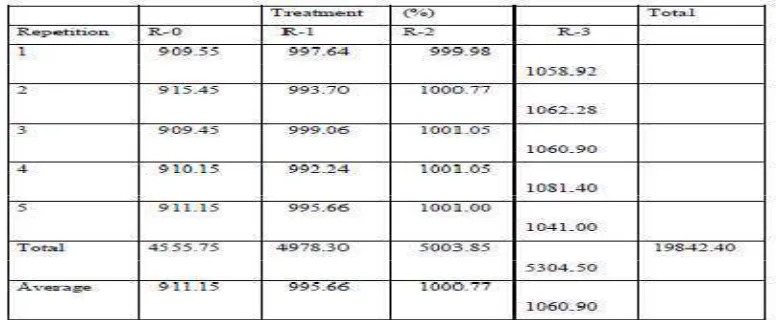
In Table 1, there is the results of probiotic supplementation on broiler carcass weight.
Table 1. The effect ofLactobacillus bulgaricusandStreptococcus thermophiluson Broiler
From Table 1, it can be noticed that the probiotic treatments (R-1; R-2 and R-3), showed
more broiler carcass weight than control group (R-0). These results showed that the probiotic
supplemented groups improved the body weight and get more carcass weight than the control
groups, that feed no probiotic in the diet. It means that the beneficial effect of probiotic on
chicken ration. The improvement in the body weight in this study may be due to the increased
efficiency of digestion and nutrient absorbtion processed due to precence of the probiotic
bacteria. As a consequence, there is an improvement in the intestinal environment, increasing the
efficiency of digestion and nutrient absorption processes.
According to Ignatova et. al (2009), the administration of probiotic affected positively
body weight (p<0.001), feed intake and feed conversion rate by 7.7 and 8.1%, respectively
(p>0.05) compared to the control group.
Effects of Probiotics on Fat Content in the Carcass.
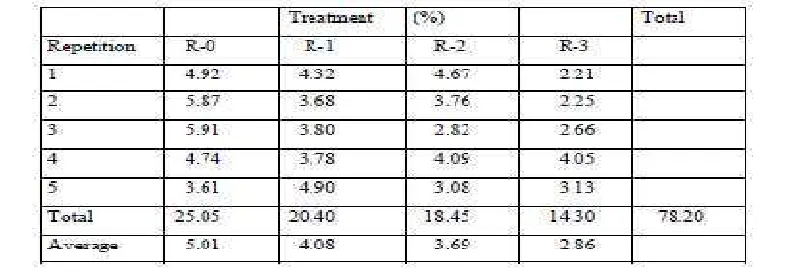
Table 2, shows that the fat content in the carcass of the chickens that have fed with
probiotic diet, get less fat content than the carcass from the control diet. The probiotic
supplementation showed less fat content in the carcass, in proportion to the content of probiotic in
the diet. The carcass from the chickens that fed with no probiotic in the ration have the highest fat
content in the carcass. And the group with more probiotic in the diet, have the less fat content in
the carcass, because the lactic acid in the probiotic will lower the pH in digestive tracts and
inhibit the growing of other bacteria, especially the harmful bacteria. And also the energy from
the carbohidrat was convert into lactic acid, so the fat formation in the carcass will decreased.
The triglycerides were reduced by dietary supplementation of probiotic in the ration. Similar
results were reported by Arum et al (2006) who found that triglyceride were reduced significantly
by dietary supplementation of probiotic containing Lactobacillus sporogenus at 100 mg per kg
diet. Table 2. Fat content in the carcass that fed on rations containing different concentration of
Effect of probiotic in the serum cholesterol carcass content.
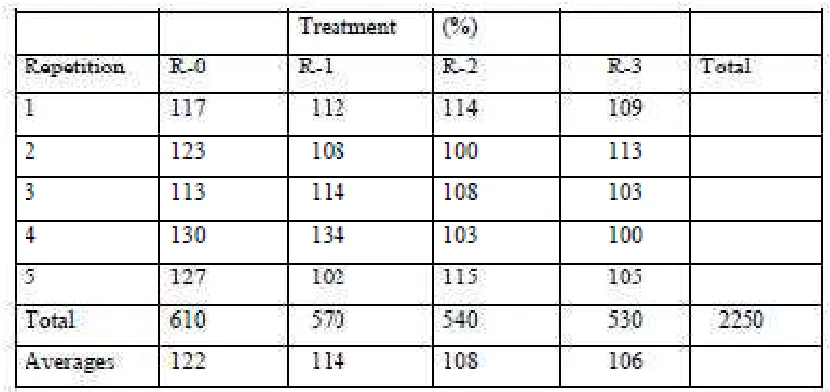
Table 3, shows the serum cholesterol carcass content of the chickens that have fed with
probiotic diet. Table 3. Serum cholesterol carcass content of the chickens that fed on rations
containing different concentration of probiotic (mg/g carcass)
Table 3 clearly demonstrated that the probiotic in the diet will reduced the serum
cholesterol carcass content. Chickens that received probiotic had lower serum cholesterol, (106,
108 and 114 mg/100 g carcass) compared to 122 mg/100 g carcass, from the control birds.
Chickens that received probiotic Lactobacillus has found to have a high bile salt hydrolytic
activity, which is responsible for deconjugation of bile salt. Similar results were reported by Arun
et al (2006), who found that serum total cholesterol and triglycerides were reduced significantly
by dietary supplementation of probiotic containing Lactobacillus sporogenes at 100 mg per kg
diet. Mohan et al (1996) mentioned that chickens that received 75, 100, and 125 mg probiotic/kg
diets had lower serum cholesterol content (93.3 mg/100 ml) compared to the control birds(132.2
CONCLUSIONS
The probiotic supplementation in the diet, incearsed the body weight, because it was
increased feed intake and improved feed utilization. The probiotic supplementation also reduced
the serum cholesterol and triglyceride significantly.
REFERENCES
Abdulrahim, S. M., M. S. Y. Haddadin, E. A. R. Hashlamoun and R. K. Robinson. 1996. The influence of Lactobacillus acidophilus and bacitracin on layer performance of chickens and cholesterol content of plasma and egg yolk, British Poultry Science 341 (1996), p. 346.
Arun, K. P., Rama Rao, V. Savarm, V. L. N. Raju Mantena and R. Sharma Sita. 2006. Dietary supplementation of Lactobacillus sporogenes on performance and serum biochemico-lipid profile of broiler chickens. Journal of Poultry Science 43 (2006). pp. 235 – 240. Eden, F. W., 2003. An alternative for antibiotic use in poultry probiotics. Brazilian Journal of
Poultry Science 5 (2003), pp. 75 – 97.
Ignatova, M., V. Sredkova, V. Marasheva. 2009. Effect of Dietary Inclusion of Probiotic on Chickens Performance and Some Blood Indices. Journal for the Improvement of Animal Husbandry. Biotechnology in Animal Husbandry. Zemun – Belgrade. pp. 1079 - 1085 Khaksefidi, A and T. Ghoorchi, 2006. Effect of probiotic on performance and
immunocompetence in broiler chicks. Journal of Poultry Science 43 (2006), pp. 296 – 300.International Seminar Biotechnolgy OIII
Lengkey, H. A. W., R. L. Balia, I. Togoe, B. A. Tasbac, and M. Ludong. 2009. Isolation and Identification of Lactic Acid Bacteria From Raw Poultry Meat. Journal for the Improvement of Animal Husbandry. Biotechnology in Animal Husbandry. Zemun – Belgrade. pp. 1071 – 1077.
Mohan, B., R. Kadirvel, M. Bhaskaran and M. Natarajan. 1995. Effect of probiotic supplementation on serum/yolk cholesterol and on egg shell thikness in layers. British Poultry Science 36 (1995). pp 799 – 803.