arXiv:1101.5626v1 [astro-ph.CO] 28 Jan 2011
A terrestrial search for dark contents of the vacuum, such as dark
energy, using atom interferometry
Ronald J. Adler∗ Gravity Probe B Mission,
Hansen Experimental Physics Laboratory,
Stanford University,
Stanford CA 94309, USA
and
San Francisco State University,
San Francisco, California 94132,USA
Holger Mueller†
University of California, Berkeley, California 94720, USA
Martin L. Perl‡
Kavli Institute for Particle Astrophysics and Cosmology
and
SLAC National Accelerator Laboratory,
Stanford University, Menlo Park,
California 94025, USA
(Dated: February 1, 2011)
Abstract
We describe the theory and first experimental work on our concept for searching on earth for the
presence of dark content of the vacuum (DCV) using atom interferometry. Specifically, we have in
mind any DCV that has not yet been detected on a laboratory scale, but might manifest itself as
dark energy on the cosmological scale. The experimental method uses two atom interferometers
to cancel the effect of earth’s gravity and diverse noise sources. It depends upon two assumptions:
first, that the DCV possesses some space inhomogeneity in density, and second that it exerts a
sufficiently strong non-gravitational force on matter. The motion of the apparatus through the
DCV should then lead to an irregular variation in the detected matter-wave phase shift. We
discuss the nature of this signal and note the problem of distinguishing it from instrumental noise.
We also discuss the relation of our experiment to what might be learned by studying the noise in
gravitational wave detectors such as LIGO.The paper concludes with a projection that a future
search of this nature might be carried out using an atom interferometer in an orbiting satellite.
The apparatus is now being constructed.
PACS numbers: 95.36.+x, 95.55.Br,98.80.-k
I. INTRODUCTION
A. General remarks
The nature of dark energy has been a dominant question in both cosmology and fun-damental physics for the past decade [1]. Our knowledge of the existence and properties of dark energy is entirely based on cosmological scale observations. This paper is directed towards experiments that might be able to measure effects of dark energy or any dark con-tents of the vacuum (DCV) on the laboratory scale. More precisely, the idea is to detect on the laboratory scale any hitherto unknown DCV that could give rise to behavior like that of the dark energy or cosmological constant on the cosmological scale. As our preferred technique, we describe atom interferometry experiments to detect DCV; we also describe the assumptions we make about the DCV. We believe this is the first suggestion for such experiments [2, 3].
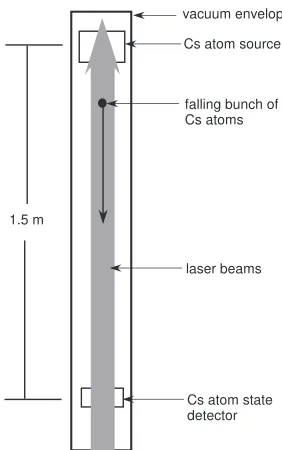
1.5 m
vacuum envelope Cs atom source
falling bunch of Cs atoms
laser beams
Cs atom state detector
FIG. 1. A simplified schematic of a single atom interferometer in which a bunch of atoms is dropped
vertically downward from the source at the top of the apparatus.
B. Organization of the paper
There are four parts to this paper. Part 1, Sec. I and II, summarize the atom interfer-ometry theory and describes our terrestrial experiment. Part 2, Sec. III and IV, discuss the severe experimental and observational limitations on our present knowledge of the nature of dark energy and the experimental philosophy behind this experiment. Part 3, Sec. V, VI, and VII, evaluate the reach of the experiment, and compare our experiments to other possibly relevant experiments. In these sections we are reluctant to speculate using com-plicated dark energy models, therefore we use pedestrian and limited models of how our experiment might detect dark energy density. Part 4, Sec. VIII, and IX discuss variations on our experimental design, and the advantage of moving from a terrestrial experiment to a space experiment.
For those who wish to scan the paper we recommend reading Sec. I, II, III and VIII.
C. Summary of atom interferometry theory
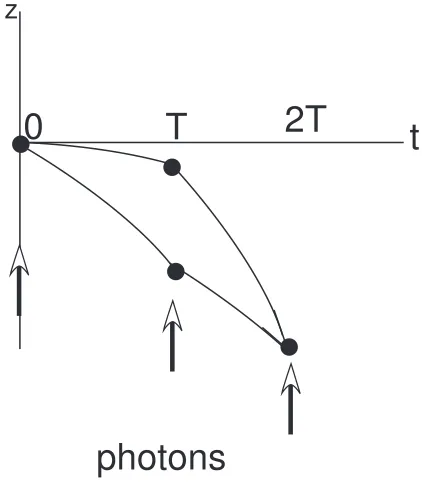
t
z
0
T
2T
z
photons
FIG. 2. Classical trajectories of atoms in the drop experiment.
probability P of detecting the atom at one output of the interferometer is given by the difference ∆φ = ∆φ1−∆φ2 of the phases accumulated by the matter wave on the two paths by
P = [(1 + cos(∆φ))]/2. (1)
To further illustrate the interference mechanism, Fig. 1 shows a simplified schematic of a single atom interferometer in which a sample of atoms is dropped vertically downward from the source at the top of the apparatus [15]. An atom leaving the source is placed into a superposition of two momentum eigenstates by interaction with the photons of counter-propagating laser beams; the first component of the matter wave receives zero momentum transfer while the second is given a downward momentum kick of ∆p. The two matter wave packets then fall freely until a time T, whereupon they are given opposite ∆p momentum kicks. The two wave packets continue to fall until time 2T whereupon the first is given an upward kick of ∆pand the beams are recombined into a modulated single wave packet. The final beam population is measured by laser-driven fluorescence. Fig. 2 shows the classical paths of the beams to clarify the operation.
suggest themselves. Briefly, the atom is represented by a matter wave proportional to exp[(i/¯h)R
L(x,x˙)dt], where ¯h is the reduced Planck constant and L = 12mx˙2
−V(x) is the Lagrangian; m is the particle mass, x and ˙x represent the coordinates and their time derivatives, and V the potential energy. Integrating over all possible trajectories gives the propagator for a particle between two points. In the semiclassical limit, the path integral is dominated by the classical path. In this case, the phase is given by an ordinary integral over the classical path and
∆φ1,2 =φa,1,2+φp,1,2, (2) where
φa,1,2 =
SCl,1,2 ¯
h , (3)
Here φa denotes the phase shift due to the action and SCl,1,2 =R1,2L(x,x˙)dt is the classical action, evaluated along the interferometer arms 1 or 2. An additional influence φp,1,2 arises because whenever a photon is absorbed (or emitted), its phase is added to (or subtracted from) the phase of the matter wave. The final equations take this into account.
For a Mach-Zehnder interferometer in the earth’s gravitational field with vertical laser beams, V =mgz, whereg is the acceleration of free fall, the leading order phase difference between the paths is given by
φMZ =nkoptgT2, (4)
where n is the number of photon momenta transferred to the atom in each beam splitter,
kopt is the laser wave number, and g is the local gravitational acceleration in the laboratory. Thus, the sensitivity of the interferometer depends quadratically on the time of fall [18].
II. REALIZATION OF THE EXPERIMENT
A. Basic design of the experiment
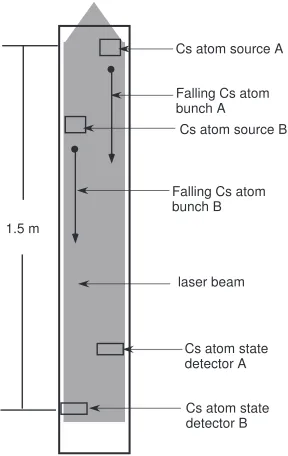
Our experiment uses two interferometers, as close to identical in construction as is prac-tical but separated in space. Fig. 3 shows a schematic. The system is designed to eliminate the effects of gravity and many sources of noise. For explanatory simplicity we take g to be constant in space and time. The interferometers A and B produce phase shifts ∆φA and
∆φB, which may be calculated as above, and give us a difference,
0
-H z
g
Earth surface Interferometers A B
FIG. 3. Schematic illustration of the two interferometer system
1.5 m
Cs atom source A
laser beam
Cs atom state detector A Cs atom source B
Cs atom state detector B Falling Cs atom bunch A
Falling Cs atom bunch B
FIG. 4. The two interferometer system enclosed in a single vacuum envelope and using a common
laser system
If A and B are identical and no other interaction is present then clearly ∆Φ = 0. The essence of our experiment is to null the phase shift difference ∆Φ due to gravity with very high precision, so that any other interaction becomes detectable.
B. Assumptions about dark energy inherent in this experiment
The experiment depends on two fundamental assumptions about the DCV:
1. The DCV has a non-uniform spatial distribution, contrary to the cosmological constant model of dark energy. This leads to a potential dependent on the path of the falling atoms.
2. There is a non-gravitational force on the atoms due to the DCV, leading to the po-tential being larger than expected from gravity, Sec. VI.B.
We know little about the DCV but it is cetainly not stationary in the laboratory frame: It is likely to exhibit temporal fluctuations as the Earth moves through the rest frame (if one exists) of DCV with a velocity comparable to typical galactic velocities of order several 100 km/s, in analogy to our velocity relative to the cosmic background radiation. Since an interferometer phase measurement requires about a second, ∆Φ will be an average of an irregular signal. This is a crucial aspect of the experiment and will be discussed further in Sec. VI.C.
III. OUR LIMITED KNOWLEDGE OF DARK ENERGY
Dark energy first entered physics, in the guise of the cosmological constant, when Einstein introduced the cosmological term in the field equations of general relativity in 1917 in order to balance gravitational attraction and construct a static cosmological model [19]. The field equations including the cosmological term are
Gµν + Λgµν = (8πG/c4)Tµν, (6)
where the cosmological constant is now almost universally denoted by Λ. The balance however was not stable, as soon noted by Eddington and others [20]. As is well-known, Einstein later abandoned the cosmological term as unnecessary, which became especially clear after Hubbles observation of the recession of galaxies and thus an expanding dynamic universe [21]. Others continued to discuss the cosmological term however and the idea was never forgotten [22].
constant is nonzero and positive according to the standard cosmological interpretation [22, 23]. This interpretation is based on the assumptions of homogeneity and isotropy in our region and throughout the universe. It is important to note that these assumptions and the relevant supernova physics are still being debated and tested, and the existence of the acceleration and of dark energy (or a cosmological constant) are still being questioned by some [24].
The cosmological term on the left side of the general relativity field equations, as originally used by Einstein, is consistent with and motivated by the mathematics of the Einstein tensor; if there were no energy-momentum source Tµν it would imply that spacetime on the
cosmological scale is de Sitter space [25]. But the cosmological term may be simply moved to the right side and interpreted as an energy momentum tensor source of gravity,
Tµν(vac) =−(Λc4/8πG)gµν. (7)
The cosmological term then corresponds to a fluid with the rather unusual equation of state p= −ρ , for which both pressure p and density ρ = Λc4/(8πG) are uniform in space and constant in time; this is the simplest conceptual version of dark energy [1, 26]. In particular, there is no pressure gradient so the fluid does not exert a pressure force in the usual Newtonian sense. The present standard model or concordance model of cosmology includes this view of dark energy, with the equation of state parameter w = p/ρ treated as an important observable quantity. The concordance model, including the value of w, is being vigorously tested using different types of astronomical observation [27].
Dark energy can also be viewed as the ground energy state of the vacuum. This is qualitatively consistent with the idea that quantum fields (such as the electromagnetic field) have nonzero ground state energy that is constant in spacetime. However, quantum field theory suggests a spectacularly erroneous size for the cosmological constant, about 10120 times larger than indicated by observation, and other current theories do not seriously improve on this failure [27]. Thus it is, in our opinion, fair to say that present theory gives us no fundamental understanding of the nature of dark energy or of the cosmological constant [28].
standard general relativity theory [29]. Note that the present era of accelerated expansion is qualitatively similar to the early inflation era (preceding the era of radiation), but the energy density is vastly smaller.
There are many speculations about the physical nature of dark energy beyond the simple cosmological constant view, far too many to consider here. One of the best known is a scalar quintessence field, ψ, which can cause acceleration much as the inflaton field in early universe inflation theory. Such a field can act much like a perfect fluid as a source of gravity with an effective equation of state parameter w given approximately by
w= ψ˙ 2/2
−V(φ) ˙
ψ2/2 +V(φ) (8)
where V is a self-interaction potential and the field is assumed to be uniform in space. Thus if the field is changing slowly it behaves like dark energy and is consistent with the concordance model [1, 30].
There are other interesting conjectures about the nature of dark energy, one of which is known as a tracker field. It is somewhat peculiar that the dark energy and dark matter energy densities have a ratio of about three at the present time, since that ratio changes from a very small value to a very large value as the universe expands and the dark matter becomes diluted. Thus some theorists speculate that there is a common source of the two and the ratio has a deeper explanation. We will not discuss such ideas here, but refer the reader to reference [31].
Dark matter has been considered on non-cosmological scales since it is supposed to clump readily in galaxies and galactic clusters, and it should presumably be observable as particles in the laboratory. But conventional dark energy has so far been associated only with the cosmological scale. On smaller scales the cosmological constant has quite small effects; roughly speaking it corresponds to a Newtonian quadratic potential [22]
ϕ =−(Λc2/6)r2 (9)
where r is the distance from an arbitrary “center”of the universe. There is thus a linear repulsive force between the objects in the universe. It becomes non-negligible compared to standard Newtonian attraction only on a scale larger than galaxies.
observation or theory. No observations or experiments have been made (or even seriously proposed!) due to the expected weakness of the associated gravitational forces involved. But in view of our ignorance of the fundamental nature of dark energy this expectation should be tested experimentally.
For example, on the cosmological scale it appears from both observation and theory that the dark energy in a spatial volume must be uniform and proportional to the volume, which is consistent with the concordance model. This clearly cannot be extrapolated to small scales, anymore than the large scale homogeneity and isotropy of the universe can be extrapolated to small scales, since that extrapolation would imply the nonexistence of galaxies and stars and physicists. We remain free to speculate on the small-scale nature of dark energy and to search for its properties, largely unconstrained by existing theory or observation. Thus there is no necessity to assume that its local density is uniform or time independent or comparable to its cosmological value, which is about 1 GeV/m3 [29]. Moreover, it is not necessary to assume that it interacts only gravitationally with ordinary matter, only that the interaction is sufficiently weak to have escaped detection so far. The only reasonable constraints are that, whatever its small scale nature, the average behavior of dark energy on the cosmological scale is similar to that of the cosmological constant.
To emphasize our ignorance of the small-scale nature of dark energy we point out an ob-vious analogy: on the cosmological scale both dark matter and baryonic matter are approxi-mated as zero temperature uniform fluids whose non-gravitational interactions are irrelevant to cosmology; however on smaller scales they behave entirely differently, clumping to form complex structures and interacting much more strongly, so any extrapolation downwards would be total nonsense.
be re-interpreted as a purely mathematical constant of integration with an arbitrary value, unrelated to a physical energy density. One peculiar property of the theory is that radiation also appears in a very analogous way! It is presently not clear if HGR has physical content beyond providing a different view of the cosmological constant as a constant of integration.
IV. PHILOSOPHY OF OUR EXPERIMENT
A. Philosophy
Although it is less than two decades since the astonishing discovery of the dark energy phenomenon, the experimenter or observer desirous of investigating dark energy already faces difficulties. Astronomical observations of the dark energy phenomenon are becoming increasingly precise. But, as discussed in the previous section these observations are on the cosmological scale and are unlikely to teach us anything of the essence of dark energy, is it an energy field, is it related to matter, is it just a term in the equations that describe general relativity, is it a fluid? Or is it some other phenomenon that we have never thought about? During the doctoral research of one of us (M.L.P.) his supervisor, the laureate Isadore Rabi, repeatedly reminded him that ”Physics is an experimental science”. This is the spirit behind this experiment.
We are looking for a new way to microscopically penetrate the mystery of dark energy and more generally to penetrate the puzzles associated with the vacuum. Atom interferometry provides such a way for the following reasons:
• This technology depends on the simple , well understood interaction of a single atom with a photon.
• This technology is becoming increasingly precise.
• The cost of the components is deceasing as industrial use of lasers and electro-optics increases.
• The terrestrial version of this experiment can be constructed and carried out by a few people thus providing the ability to rapidly improve the experiment.
• The terrestrial experiment can lead to the experiment being carried in earth orbit on a space platform.
B. Comparison of dark energy density with electric field density
Another view of our philosophy is made evident by our early comparison between dark energy and the electric field [2, 3].
Consider a weak electric field E = 1 V/m. Using
ρef =ǫ0E2/2, ρef = 4.4×10⁻¹² J/m3 (10)
Hence the energy density of this electric field is 100 times smaller than the dark energy density,ρDE = 6.3×10⁻¹⁰J/m3, yet this weak electric field is easily detected and measured.
This realization first started our thinking about the possibility of direct detection of dark energy. The point is that dark energy density is small but it is not zero. And to the experimenter anything that is not zero may be, and should be, a subject for detection and measurement.
Of course, it is easy to sense and measure tiny electromagnetic fields due to the relatively strong coupling; on the other hand there are obviously severe experimental problems in detecting dark energy or DCV density.
• Unlike an electric field in the laboratory, we cannot turn dark energy on and off.
• We do not expect there is a zero dark energy field that could be used as an experimental reference.
• Even if the dark energy density should have a gradient, we do not know what force it exerts on a material object as discussed in Sec. IV.
V. PARAMETERIZATION OF THE UNKNOWN CONTENTS OF THE
VACUUM
A. Basic physical concept
In accord with the comments in the previous section we will consider the possibility that the DCV are not uniform in space and may involve non-gravitational interactions. We will describe an ad hoc parametric model of the DCV on a small scale that is consistent with the properties of the dark energy on the cosmological scale. It allows us to calculate phase shifts for rather general interactions in terms of a few parameters. Of necessity the model is very speculative but our hope is that it captures in a phenomenological way some of the properties that the DCV may have.
In this experiment the interferometers are fixed to the earth. The earth is spinning and moving in the Galaxy and the Galaxy is moving in the CMB frame with a velocity about 300 km/s. In any case, we do not expect the DCV to be tied to the earth. Therefore the sought signal will average over many samplings of the DCV and will be an irregular signal.
Recall that the cosmological term of the general relativity field equations corresponds to an effective Newtonian repulsive quadratic potential energy function Eq. (9) or a potential energy.
U =mϕ=−mΛc2r2/6 (11)
This appears to represent quite well the effective behavior of the dark energy on the cosmo-logical scale; on a smaller scale we simply do not know anything about its behavior. Thus we will reasonably assume it behaves spatially in an irregular fashion. The rough magnitude of the variations in the potential energy we denote bt ˜UD (which may locally far exceed
B. Quantitative phase shift calculation
For a quantitative description, we assume U(X) depends on position X but is time-independent in some rest frame. While it is unknown what property of the test particle the nongravitational coupling of the DCV couples to (e.g. baryon number etc), it is to be expected that any such coupling is roughly proportional to the mass m of the particle; we thus take it to be mu′, where u′ describes the local value of the fluctuating potential. To model the stochastic fluctuations, we use a superposition of plane waves
U(X) = Re
Z ∞
0 mu
′(k)eikXdk, (12)
where U is the potential energy, mu′(k) is the spectral density of the potential generated by the DCV, and Re denotes the real part. In the following, we will drop the Re from the equations; taking the real part is implied. This model is consistent with cosmology, because the fluctuations average out over large distances for a suitable low-frequency cutoff of the
u′(k).
The Earth moves through the rest frame with velocity v, so thatX =x−vtand
U(x) =
Z ∞
0 mu
′(k)eikx−iωkt
dk, (13)
whereωk =kv. We will now restrict attention to one Fourier component u(k). If we assume
that the dimensions of the apparatus are much smaller than 1/k, we can approximate
U(x, t) =mu(k)e(ikx−iωkt)
where x0 is the lowest point of the interferometer. The constant term produces no effect in the output signal, so we ignore it from here on.
To calculate the phase shift φ between the arms of one interferometer, we use a per-turbative approach in which the phase shift is calculated by integrating the perturbing U potential over the unperturbed paths of the Mach-Zehnder configuration shown in Fig. 2:
Here, vL is the initial (launch) velocity of the atom and vr the recoil velocity i.e., the
velocity difference between atoms in the two interferometer arms. The phase between the interferometer arms is given by
The phase difference between the two interferometers separated byL is given by
∆Φ =−4
Here, t0 is the time at which the central interferometer pulse is applied. If we substitute
vr =n¯hkopt/m, wherenis the number of photon momenta transferred to the atom per beam splitter, and kopt the laser wavenumber,
∆Φ =−4
x0 of the test particle due to the DCV, hence
∆Φ =−4Lnkopta(k)
This has to be compared with the resolution of the instrument, which may be on the order of microradians to milliradians. For an estimate, we assume that the average atom flux through the interferometer is η. We also assume that the interferometer resolution is shot-noise limited. This leads to a phase shot-noise spectral density of√η. If the interferometer can be run for a long time, the resolution towards coherent signals will improve as the square-root of the integration time. By choosing the pulse separation time T, the sensitivity towards a given frequency ωk can be maximized; this maximum decreases as 1/ωk.
VI. COMPARISON WITH OTHER EXPERIMENTS
A. Comparison with gravitational wave detectors
the Laser Interferometer Gravitational Wave Observatory LIGO [33], is modeled here as a Michelson interferometer consisting of mirrors which are freely floating at the frequency scales of interest. These mirrors will then accelerate according to Newton’s second law, where the force is given by Eq. (14) as
F(x, t) = ∂U
∂x =ikmu(k)e
ikx−iωkt
. (22)
Note that we have not assumed that the arm length of the gravitational wave detector is short relative to the length scales of the DCV fluctuations; we do, however, assume v ≪c. We integrate Eq. (22) twice to obtain the position modulation of the mirrors,
δx =−iku(k)
ω2 e
ikx−iωkt
. (23)
The difference between the modulations of two end mirrors that are assumed to be separated by L is given by subtracting the above for x= 0 and x =L. We divide the result by L to obtain h, the strain signal:
h =−ia(k)
ω2
kL
e−iωkt
1−eikL. (24)
This can be compared to the published noise equivalent strain magnitudes of existing grav-itational wave detectors.
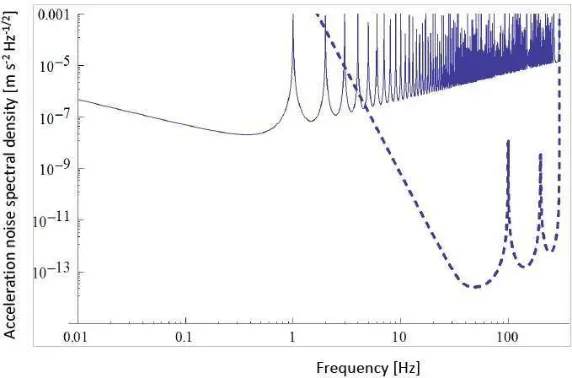
Fig. 5 shows a comparison of the equivalent acceleration noise spectral densities of the proposed atom interferometer DCV detector and LIGO as used as a DCV detector [34]. The graphs are plotted in terms of a per square root Hertz; any a that lies above the curves by a sufficient signal to noise margin can potentially be detected.
It is obvious that LIGO is much more sensitive for frequencies above 3 Hz; at the assumed velocity, this corresponds to DCV potential fluctuations having a wavelength of 100 km or less. The proposed atom interferometer, however, is better suited for the low frequency, long-wavelength fluctuations below 3 Hz or above 100 km.
B. Consideration of the expected gravitational force of dark energy
It is important to ask if a potential ˜UD consistent with a gravitational interaction would
FIG. 5. A comparison of the equivalent acceleration noise spectral densities of the proposed
atom interferometer DCV detector (solid line) and LIGO as used as a DCV detector (dashed
line). Equivalent acceleration noise spectral density in m/s2/√Hz attainable with a dual atom
interferometer assuming L= 10 m,kopt = 107/m, n= 10, v= 300 km/s, T = 1 s and atom flux of
η= 108/s.
where R is the blob size, MD is the mass of the blob and ρD is the energy density of the
blob. Thus from Eq. (17)
∆φ≈ UD˜R
¯
hv ≈
GmρDR3
¯
hvc2 . (26)
Using the dark energy density to illustrate, ρD ≥ ρDE ≈ 10−9 J/m 3, we obtain, with
m≈10−25 kg and R
≈1 m
∆φ≈10−32rad. (27)
A phase shift of such an extremely small magnitude is not observable with an atom in-terferometer, hence it is clear that we must assume a non-gravitational interaction in this experiment.
C. Other possibly relevant experiments
mass and gravitational mass to be 10−15 m/s2. This test is only relevant to the detection of dark energy density if one assumes dark energy acts differently on beryllium and titanium.
VII. SENSITIVITY OF THE EXPERIMENT
An example of present experimental sensitivities is given by the measurement ofg in an atomic fountain interferometer as described by Chu [36] and by Chung and his coworkers .[37] In a single interferometer, g has been measured with a precision of 10−9g =10−8 m/s2. The sensitivity is limited by noise caused by mechanical vibrations, laser frequency fluctuations or optical component drifts and the like [38–40]. If there were no noise, the maximum sensitivity would be set by the shot noise of the atomic beam.
We next calculate approximately this maximum sensitivity for our experiment. Consider dropping Cs atoms from a height ofH = 1 m. The total phase shift in the .45 s fall is given by
∆φ=kef fgT2= 6.51×10⁷rad. (28)
Here,kef f is the total momentum change in terms of wave number when the Cs atom absorbs
two photons of wave length 852 nm.
Definea=g/∆φin units ofm/s2. In this example a= 1.51
×10−7m/s2. The shot noise error in the measurement of g is given by the formula
σg =a/
q
(N(T /.45s)). (29)
Here N is the number of Cs atoms in a single drop and T is the time in seconds. This equation contains the ubiquitous square root of the total number of counts in a time T. We evaluate this last equation for various relevant values ofN and T.
For a moderately precise interferometer using N = 106.
σg(106, .45 s) = 1.5×10⁻¹⁰m/s2. (30)
The most precise interferometers reach up to N = 108 and for various times we find
σg(108,102s) = 1.0×10⁻¹²m/s2, (31)
σg(108,104s) = 1.0×10⁻¹³m/s2, (32)
Here the 107 s example is representative of the long data runs intended for this experiment. If we can increase N to 1010 the shot noise limit becomes
σg(1019,107s) = 3.2×10⁻¹⁶m/s2. (34)
Since we are looking for an irregular signal in this experiment, it is obvious that we must substantially reduce the noise sources. Noise is a major concern in the community of experimenters using atom interferometry [38–40]. Our approach is pay close attention to mechanical vibrations and optical noise. For example, we intend to operate the entire double spectrometer from a single laser and the first realization of the experiment uses the compact design of Fig. 4.
VIII. OTHER GENERAL FORMS OF THE EXPERIMENT
A. The atomic fountain interferometer
In the discussions in this paper we have emphasized the atomic drop interferometer for simplicity. The experiment can also be performed using the atomic fountain method [36, 37]. Indeed for the same height apparatus the atomic fountain method gives four times the sensitivity compared to the drop method.
B. Spread double interferometers
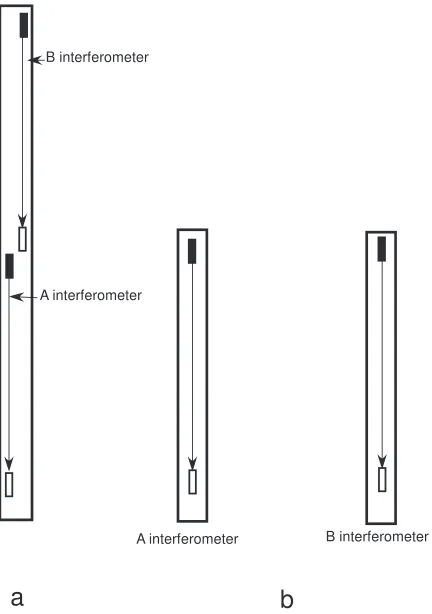
Figure 6 shows schematically two forms of the experiment in which the two interferom-eters are separated in distance either vertically or horizontally. These designs are more susceptible to uncancelled noise from mechanical vibrations and laser signal transport in-stabilities. While we know nothing about the possible nature of inhomogenities in the dark energy density, our intuition is that spread double interferometers provide a larger field of exploration.
C. Use of a single interferometer
B interferometer
A interferometer
A interferometer B interferometer
a b
FIG. 6. Schematic illustrations of spread double interferometers. (a) A vertically spread
interfer-ometer, the vertical distance would be of the order of several meters. (b) A horizontally spread
interferometer, the horizontal distance between interferometers would be of the order of several
meters.
of DCV by analyzing the signal as a function of time, say at half hour intervals? However we do not see how to solve the problem of canceling the noise from mechanical vibrations and laser instabilities.
IX. USING THE METHOD ON AN EARTH ORBIT PLATFORM
A great deal of design, experimental and theoretical work has been done on putting an atom interferometer into space using an earth orbit satellite although this has not yet been accomplished [41]. Operating an atom interferometer in space leads to substantially improved measurements, both fundamental and geophysical [41].
1. The problem of precise nulling of g is eased, although gravitational tidal effects still exist.
2. The measurement period for an atom bunch can be substantially extended.
On the other hand there are the well known problems and the substantial additional costs of space operation:
1. Long periods of uniform data acquisition are required compared to current, terrestrial atom interferometer experiments that run for short time periods.
2. Long periods of perfect apparatus performance are required compared to current, terrestrial atom interferometer experiments that may require frequent adjustment or maintenance.
3. The apparatus must be space qualified.
It will be a useful future task to make a quantitative study of carrying out our searches in space.
ACKNOWLEDGMENTS
We are grateful to President John Hennessy of Stanford University for providing Uni-versity funding and grateful to Director Persis Drell of the SLAC National Accelerator Laboratory for providing a laboratory for the experiment.
We thank Dennis Ugolini for illuminating help on the comparison with LIGO.
We thank Helen Butler, Adrienne Higashi, David Jackson, David MacFarlane and Frank O’Neill of the SLAC National Accelerator Laboratory for their continual support. We thank Ziba Mahdavi of the Kavli Institute for Particle Astrophysics and Cosmology for her con-tinual support
Ronald Adler is grateful to members of the Stanford University GPB theory group, James Bjorken, and John Mester.
on this experiment, a discussion that led to a major design change.
[1] W. I. Freedman and E. W. Kolb, Cosmology, chapter 1 of The New Physics for the
Twenty-First Century, edited by Gordon Fraser, (Cambridge University Press,
Cam-bridge UK, 2006) R. J. Adler, Gravity, chapter 2, ibid. For a comprehensive
discus-sion of the history see the online encyclopedia article by A. Riess (primary contributor):
www.brittanica.com/Ebchecked/topic/1055698/dark-energy. A somewhat different view is
given by E. Bianchi, C. Rovelli, and R. Kolb, Nature 466, 321, (2010).
[2] M. L. Perl and H. Mueller, arXiv 1001.4061v1 (2010).
[3] M. L. Perl,arXiv 1007.1622v1 (2010).
[4] There is a large literature on atom interferometry but no textbooks or monographs giving
a uniform introduction to the subject. For practical introductions to laser cooling and atom
interferometry. We recommend: C. Wieman, G. Flowers, and S. Gilbert, Am. J. Phys.63, 317
(1995); A. S. Melish and A C Wilson, Am. J. Phys. 70, 965 (2002); C. J. Foot, Cont. Phys.
36, 369 (1991; O. Carnal and J. Mlynek, Phys. Rev. Lett. 66, 2689 (1991); A. Peters et al.
, Phil. Trans. R. Soc. London a,355, 2223 (1997); M. de Angelis et al. , Meas. Sci. Technol.
20, 022001 (2009); A. D. Cronin et al., Rev. Mod. Phys. 81, 1051 (2009), A. Peters et al. ,
Metrologia 38, 25 (2001),R. M. Godun et al. , Contemp. Phys., 42, 77 (2009),Q. Bodart et
al. , App. Phys. Lett. 96, 134101 (2010).
[5] H. Mueller, A. Peters, and S. Chu, Nature 463, 926 (2010).
[6] A. Peters, K.-Y. Chung, and S. Chu, Nature400 849852 (1999); S. Merletet al. , Metrologia
47, L9 (2010).
[7] M. A. Hohensee et al., arXiv:1009.2485 (2010).
[8] Private communication from M. Kasevich.
[9] For a comprehensive discussion in the context of equivalence principle experiments see S.
Dimopoulos et al. , Phys. Rev. Lett. 98, 111102, (2007); S. Dimopoulos et al., Phys. Rev.
D78, 042003, (2008).
[10] H. Muelleret al., Phys. Rev. Lett. 100, 180405 (2008).
[11] Holger Muelleret al., Phys. Rev. Lett.102, 240403 (2009).
[13] W. Ertmer et al., Exp. Astron. 23, 611-649 (2009).
[14] J. M. Hogan et al., arXiv:1009.2702 (2010).
[15] Q. Bodart et al. , App. Phys. Lett.96, 134101 (2010).
[16] R. P. Feynman and A. R. Hibbs, Quantum Mechanics and Path Integrals (McGraw Hill, New
York, 1965) ch.2.
[17] Ch. J. Bord´e, European Phys. J. - Special Topics, 163, 315 (2008).
[18] Similar relations occur for a fountain atom interferometer; see Ref. [5].
[19] A. Einstein, Sitzber. Preuss. Akad. Wiss., 142, 1917. English translation is in The Principle
of Relativity (Methuen, 1923, reprinted by Dover Publications), p. 35.
[20] A. S. Eddington, Monthly Notices of Roy. Astr. Soc. 90, 668, (1930).
[21] E. P. Hubble, Astrophys. J. 84, p 270, (1936).
[22] R. J. Adler, M. Bazin, M. Schiffer, Introduction to General Relativity, 2nd. ed. (McGraw Hill,
NY, 1975), sec. 13.2 and 12.5.
[23] A. Riess, et al., Astronomical Journal 116, 1009 (1998); S. Perlmutter, et al., Astrophys. J.
517 ,565 (1999).
[24] M. Demiaski and E. Piedipalumbo, in The Tenth Marcel Grossmann Meeting, on Recent
De-velopments in Theoretical and Experimental General Relativity, Gravitation and Relativistic
Field Theories, (World Scientific, Singapore, 2010) p. 1782; For evidence favoring the standard
interpretation see P. Zhang and A. Stebbins, arXiv:1009.3967 (2010).
[25] W. de Sitter, Proc. Roy. Acad. Sci. (Amsterdam), 19 1217 (1917); 20, 229, (1917); 20, 1309
(1917); Mon. Not. Roy. Astron. Soc. 78, 3 (1917).
[26] Y.B.Zeldovich, JETP letters6, 316 (1967); Soviet Physics Uspekhi11, 381 (1968).
[27] A. Albrechtet al.,Report of The Dark Energy Task Force, arXiv:astro-ph/0609591v1(2006).
[28] For a contrary view concerning emergent gravity see G. E. Volovik,arXiv: 0604062v4 (2006).
[29] See overview notes by P. J. Steinhardt at www.physics.princeton.edu/-Steinh/steinhardt.pdf
(2003).
[30] H. M. Sadjadi, Eur.Phys.J.C66, 445 (2010).
[31] R. Rakhi and K. Indulekha, arXiv:0910.5406 (2009).
[32] R. Cook , arXiv:0810.4495v2 (2009).
[33] P. R. Saulson,Fundamentals of Interferometric Gravitational Wave Detectors(World Scientific
[34] We have used the LIGO noise information from D. Ugolini, Document no. LIGO-G100214
(2010).
[35] S. Schlammingeret al., Phys. Rev. Lett.100, 041101(2009).
[36] S. Chu, Rev. Mod. Phys. 70, 685 (1998).
[37] K-Y Chung et al., Phys. Rev. D80, 016002 (2009).
[38] J. LeGou¨et et al., Appl. Phys.B92, 133 (2008).
[39] J. LeGou¨et et al., Eur. Phys. J,D44, 419 (2007).
[40] S. Merlet, Gravity, Geoid and Earth Observations (Springer-Verlag, Berlin, 2010) ed. S. P.
Mertikas.
[41] O. Carrazet al., App. Phys.B97, 405, (2009), D. A. Binnset al., Advances Space Sci.43,1158