SECTION i Why hypertension is a major public health problem SECTION ii Hypertension: the basic facts. One of the most important risk factors for cardiovascular disease is hypertension – or high blood pressure. Prevention and control of hypertension is complex and requires collaboration between multiple stakeholders, including governments, civil society, academia and the food and beverage industry.
The world population is aging rapidly (Figure 5) and the prevalence of hypertension is increasing with age (6).
Early detection and treatment of hypertension and other risk factors, as well as public health policies that reduce exposure to behavioral risk factors, have contributed to the gradual decline in mortality from heart disease and stroke in countries with high income over the last three decades. Within five years, many positive changes have already been observed in the form of dietary changes, improved hypertension control and reduced smoking. Observed reductions in population risk factors (serum cholesterol, blood pressure, and smoking) have been shown to explain most of the decline in cardiovascular mortality.
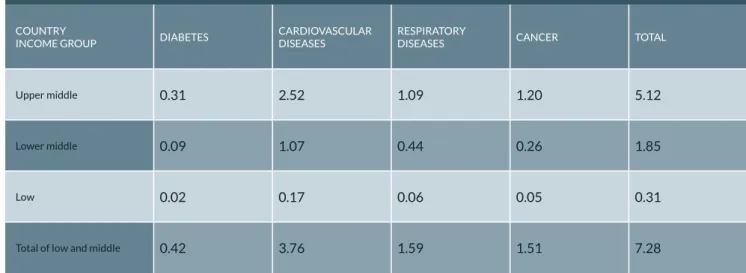
In low- and middle-income countries, many people do not seek treatment for hypertension because it is prohibitively expensive. Families face catastrophic health and health care expenditures that are often long-term in the case of complications from hypertension, plunging tens of millions of people into poverty (11). During this period, the cumulative lost output in low- and middle-income countries related to non-communicable diseases is estimated to be US$7.28 trillion (Table 1) (12).
The Political Declaration of the High-Level Meeting of the General Assembly on the Prevention and Control of Noncommunicable Diseases, adopted. If no action is taken to tackle hypertension and other non-communicable diseases, the economic losses are projected to exceed public spending on health (Fig. 8). Blood is transported from the heart to all parts of the body in blood vessels.
Blood is carried from the heart to all parts of the body in blood vessels. Each time the heart beats, it pumps blood into the vessels
Blood pressure is created by the force of blood pushing against the walls of blood vessels (arteries) as it is pumped by the heart
Hyper tension, also known as high or raised blood pressure, is a condition in which the blood vessels have persistently raised
CAuSES
Behavioural risk factors
Socioeconomic factors
Other factors
Ignoring high blood pressure is dangerous because it increases the chances of life-threatening complications. The higher the blood pressure, the greater the likelihood of harmful consequences for the heart and blood vessels in larger organs such as the brain and kidneys. This is known as cardiovascular risk, and can also be high in people with mild hypertension in combi-.
Low socioeconomic status and poor access to health services and medications also increase vulnerability to developing serious cardiovascular events due to uncontrolled hypertension. There is a common misconception that people with hypertension always experience symptoms, but the reality is that most people with hypertension have no symptoms at all. Sometimes hypertension causes symptoms such as headache, shortness of breath, dizziness, chest pain, palpitations and nosebleeds.
The condition can be a silent killer and it is important for everyone to know their blood pressure reading.
HyPER tEnSiOn
There are electronic, mercury, and aneroid devices used to measure blood pressure (14). The WHO recommends the use of affordable and reliable electronic devices that have the ability to select manual measurements (14, 15). Semi-automatic devices allow manual measurements to be taken when batteries are dead, a not uncommon problem in resource-constrained environments.
Since mercury is toxic, it is recommended that mercury devices be phased out in favor of electronic devices (14). Aneroid devices such as sphygmo manometers should only be used if they have been calibrated each time. Blood pressure measurements must be recorded for several days before a diagnosis of hypertension can be made.
The measurements taken on the first day are discarded and the average value of all remaining measurements is taken to confirm the diagnosis of hypertension.
Early detection, treatment and self-care of hyper tension has significant benefits
DiAGnOSinG hyper tension
GOvERnMEntS and policy-makers
For this to happen, patients with hypertension must undergo a cardiovascular risk assessment, including tests for diabetes and other risk factors. Hypertension and diabetes are closely related and one cannot be properly managed without attention to the other. The goal of the integrated program is to reduce overall cardiovascular risk to prevent heart attack, stroke, kidney failure and other complications of diabetes and hypertension.
It also prevents unnecessary drug treatment of people with borderline hypertension and low cardiovascular risk. Furthermore, there are inexpensive, highly effective medications available for the control of hypertension, which have a very good safety margin. WHO tools such as the WHO/International Society of Hypertension (ISH) risk prediction tables (Fig. 10) (18) are designed to facilitate risk assessment.
Evidence-based guidelines are also available for the management of patients with hypertension through integrated programs even in resource-limited settings (19-22). At least 30 low- and middle-income countries are now using these tools to treat hypertension in an affordable and sustainable way. Although cost-effective interventions for the treatment of hypertension exist, there are large gaps in application, particularly in resource-limited settings.
Treatment should be particularly targeted at people at medium or high risk of developing heart attack, stroke or kidney damage. Adopting this comprehensive approach ensures that drug treatment is provided to individuals at medium and high risk. Inappropriate drug therapy exposes people to unwarranted harmful effects and increases health care costs; both must be avoided.
WHO tools also provide evidence-based guidance on the appropriate use of medications so that unnecessary costs associated with drug therapy can be avoided to ensure sustainability of programs. It is essential to quickly identify ways to address these gaps, including through operational research; the enormous public health benefits of blood pressure control make a compelling case for action. 10-year risk of a fatal or non-fatal cardiovascular event by sex, age, smoking status, systolic blood pressure, blood cholesterol and presence or absence of diabetes.
A WHO costing tool to estimate the cost of establishing such a programme in any country (21) takes into account
The cost of implementing such a program is low, at less than US$1 per head in low-income countries, less than US$1.50 per head in lower-middle-income countries, and US$2.50 in upper-middle-income countries. Expressed as a proportion of current health spending, the cost of implementing such a package amounts to 4% in low-income countries, 2% in lower-middle-income countries and less than 1% in upper-middle-income countries ( 22) . The likelihood of cardiovascular disease increases continuously as the level of a risk factor such as blood pressure increases, without any natural threshold limit.
Most cardiovascular diseases in the population occur in people with an average level of risk because they make up the largest part of the population. Although a very high risk factor level increases the chances of developing cardiovascular disease in a person, the number of cases from this risk group is relatively low due to the relatively low proportion of people in this population segment. The population-based approach is thus based on the observation that an effective reduction in the number of cardiovascular diseases in the population usually requires changes in unhealthy behavior in the whole society or reduction of average risk factor levels.
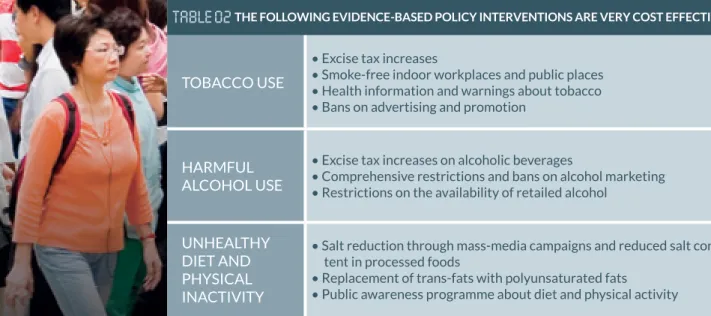
Therefore, in addition to strengthening health systems, a cost-effective program must include population-wide approaches to shift the blood pressure distribution of the entire population to a healthy pattern. Population-wide approaches to reducing high blood pressure are similar to those addressing other major noncommunicable diseases. They call for public policies to reduce the entire population's exposure to risk factors such as unhealthy diet, physical inactivity, harmful use of alcohol, and tobacco use (24-27), with a particular focus on children, adolescents, and young adults.
Dietary salt intake is a contributing factor for hyper tension
WHO considers workplace health programs to be one of the most cost-effective ways to prevent and control non-communicable diseases, including hypertension (31). The UN High Level Meeting on the Prevention and Control of Noncommunicable Diseases in 2011 called for the private sector to. Workplace wellness programs should focus on promoting worker health through the reduction of individual risk-related behaviors, e.g.
They have the potential to reach a significant proportion of employed adults for early detection of hypertension and other diseases.
HEAltH workers
Civil society
PRivAtE sector
FAMiliES
While some people develop hyper tension as they get older, this is not a sign of healthy ageing. All adults should know their blood
WORlD HEAltH ORGAnizAtiOn
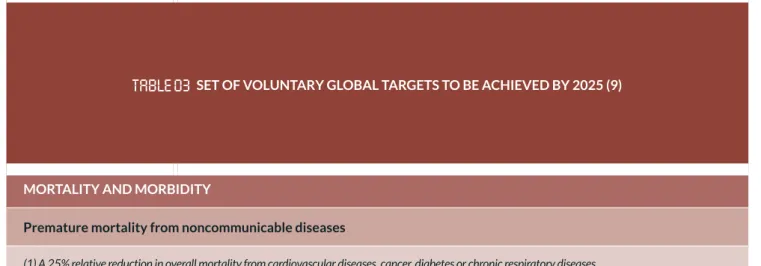
The importance of surveillance and monitoring was recognized in the Political Declaration of the High Level Meeting of the General Assembly on the Prevention and Control of Noncommunicable Diseases. WHO completed work on a comprehensive global monitoring framework, including indicators, and a set of voluntary global targets for the prevention and control of noncommunicable diseases in November 2012 in a formal consultation attended by representatives from 119 Member States and stakeholder organizations . The consultation resulted in a global monitoring framework that includes 24 indicators and nine global voluntary targets for the prevention and control of non-communicable diseases (table 3).
Strengthening population-wide approaches to reduce exposure to risk factors will reduce the prevalence of hypertension (goal 6). Tobacco use (5) A 30% relative reduction in the prevalence of current tobacco use among persons aged 15+ biological risk factors. Geneva, World Health Organization (http://www.who.int/healthinfo/global_burden_disease/cod_2008_sources_methods.pdf.).
Geneva, World Health Organization, 2008 (http://apps.who.int/gho/data/view.main) Accessed 11 February 2013. Global Strategy for the Prevention and Control of Noncommunicable Diseases. http://www.who.int/nmh/publications/wha_resolution53_14/en/). Political statement from the General Assembly's high-level meeting on the prevention and control of non-communicable diseases.
Geneva, World Health Organization and World Economic Forum, 2011 (http://www.who.int/nmh/publications/best_buys_summary). Prevention and control of noncommunicable diseases: Guidelines for primary health care in low resource settings.