
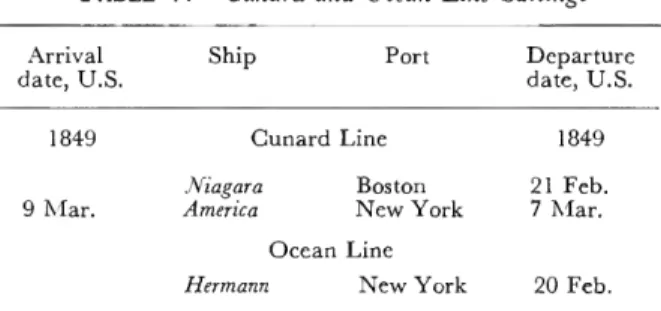
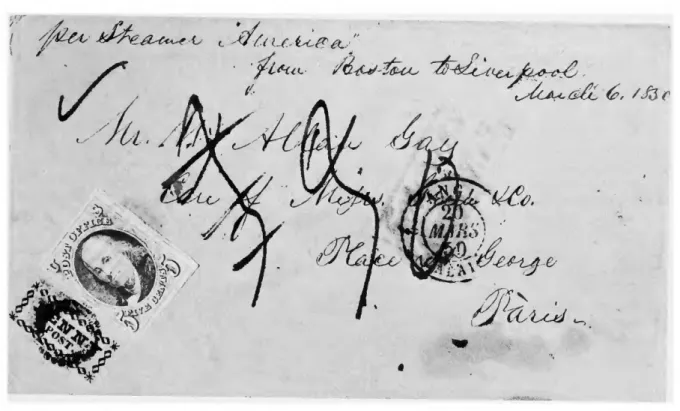
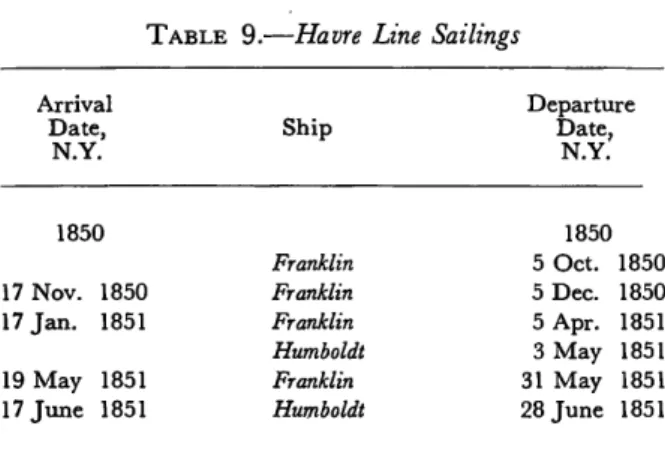
Some postage always had to be paid or picked up in the United States and some in Europe. At 34 3 US, Department of State, Treaties and Other International Acts of the United States of America, vol. Because the United States protested the British charge as a "most-favoured-nation" violation. At least several such cases have come to the attention of the United States Post Office Department. Bancroft's memorandum to Maberly pointed out to the British that the demand by the United States was for a reduction of the transit rate to France. As in the case of the Ocean line, the subsidy was divided by twelve and calculated per However, the evidence of covers shows that the benefit of the direct rate was not extended to mail carried to Southampton via the Bremen (Ocean) line. This letter was doubtless brought to Southampton by the Washington of the Ocean line, which sailed from New York on May 22, 1852. It was found that all the listed covers marked / in Figure 18 were transported to Southampton via the Bremen (Ocean) line. Of the five covers seen by the author which are addressed to France and marked / in Fig. 18, three are unstamped and two bear a stamp. The New York American packet is marked with the date January 26 (1856) and on that date the Hermann of the Ocean line sailed from New York. Vessels of the Havre Line sailed only once a month, with some irregularity in the winter. The New York mark bears the date December 13, and on December 13, 1851, the Humboldt of the Havre Line sailed from New York. So I was sent on the voyage by the next American package, which was the Arago of the Havre line. As shown by the mark of the New York packet, this ship sailed from New York on January 12, 1856. It must have been known that the Franklin of the Havre Line would sail from New York the next day, and that the speed on that route would be 200 per stage . It is certified to the Fulton of the Havre Line, which sailed from Havre on October 22, and arrived at New York on November 9, 1856, as it is. Covers from France addressed to the United States during this period are hard to find. But America's acceptance of the quarter-ounce scale resolved only one of the obstacles to agreement. The American and French post offices would exchange correspondence using the following:. By Packets and other Steam Vessels in Regular Service between the Ports of the United States and France. By United States Packet Mail plying between United States and Great Britain Ports. C. Articles I, V I I, and IX of the American-British Treaty were used to determine the rate of ocean postage. The Collins liner steamer Atlantic sailed from New York on that date and it is believed that she carried the first Prussian closed mail sent from the United States. At least as early as January 12, 1853, the New York office used a mark on letters prepaid in the United States, similar to A in Figure 51, in red. Prepaid letters received by the New York or Boston offices typically include a restatement of the international rate of 300, indicated in red ink. Posted in Baltimore, Maryland, on January 7, 1853, it was forwarded to the New York office where mark A of Figure 51 (with the date of JAN/12) was affixed in red. T h e letter was sent to the New York office which marked A of Figure 51 in red ink, with the date of J U L / 2 2. T h e New York office reconfirmed the 300 rate by striking it with ' a mark similar to / of Figure 51, but pointing. On the front of the cover is mark C and on the back mark A on figure 58 dated 3/2 (February 3). There are also blue manuscript marks on the front of the cover which are believed to be German. As explained in Chapter 2, it was the desire of the US Post Office that letters conveyed by US parcels be delivered to the British Post Office at Southampton to be forwarded from that office as letters originating in the United Kingdom. Had the British Post Office agreed to this American request, residents of the United Kingdom would not have paid any parcel postage. On the front of the cover is a script yk in black ink indicating the British debit to Belgium. On the front of the cover is a manuscript 240, which indicates that 240 reis were to be collected from the addressee. In all other respects, the United States-Hamburg Convention was a literal copy of the United States-Bremen Convention. The New York office applied a mark similar to A in Figure 71, but with a credit of 7, showing that the United States retained only 30 of the 100 domestic mail rates. The letter is addressed to the Germans of the Hamburg-American line who left New York on December 1, 1860. Hamburg Steamer", the New York office sent it on a North German Lloyd's steamer. The New York office rated Bremen 10 out of 100 and marked the letter PAID AT BREMEN. Postage as a Bremen line, coincides with a scheduled sailing of the Western Metropolis of the New York and Bremen Steamship Company. French mails were therefore not established for carriage by ships of the Galway line. During the Crimean War, many of the Cunard ships were taken over by the Allies as troop carriers. The following appears in the January 21, 1857 issue of the Shipping and Commercial list and New York Prices Current under a section titled Prussian closed mail by Atlantic of the Collins line which sailed from New York on December 20, 1856. T he only mail steamer that sailed from New York on 9 March 1861 was Edinburgh of the Inman Line, and it is believed that she carried this letter to Liverpool. T he Olympus of the Cunard Line arrived in New York on October 22, 1863, and sailed for Boston on October 25. The mails forwarded by the Portland Office to the Liverpool Office were to include the correspondence for all parts of the United Kingdom, except the city of London and its suburbs. Mail addressed to other parts of the United States passed through the Portland office and bore a Portland mark. On July 9, 1867, the Baltimore and Liverpool Steamship Company's Worcester arrived at Baltimore from Liverpool. It is not known what agreements have been made between the post offices of the United States and Prussia regarding the origin and destination of the mail exchanged between the offices of Portland, Detroit and Chicago and the office in Aachen. In his annual report for 1861, Postmaster General Montgomery Blair noted the Supplementary Articles to the American-French Convention and then said: 'Supplementary Articles to the Postal Convention with Prussia, of the same nature, have been agreed with the General Post Office in Berlin. The rate of 6.4d per ounce was arrived at by applying the formula of Article IX of the United States. Mail and Post Office Assistant announced the same progress for letters from the United States. On letters posted in the United States, the North German Union received credit for foreign postage. Whenever a direct line of steam communication shall be established between the ports of the United States and Belgium. However, it is not known whether Belgium sent mail to the United States on this line. The single postage rate was reduced to 100 in the United States and 55 centesimi in Italy. Underpaid letters were to be so marked in the United States and UTILSRAEKKELIG FRANKERET in Denmark. For letters sent from the United States of America to France, via England, the rate to the British frontier under the American-British convention was 4- After the abrogation of the United States-French convention, this was the only route practical for its shipment. Great Britain sent these letters to the United States pursuant to the United States-. Since there was no accounting between the post offices of the United States and France, all unpaid letters had to be sent via England. 180 SMITHSON STUDIES IN HISTORY AND TECHNOLOGY Article I I I of the Convention determines the amount of postage. This also applies to the tables of international postage published in various issues of US 1875; that the rate shall not be changed before the next Congress; and that France be permitted to charge transit rates based on the actual distance over which the shipment has been transported.38. Thus, the rates of the convention of April 28, 1874 were replaced on January 1, 1876 by the rates of the General Postal Union of 50 in the United States, or 40 centimes in France, per 15 grams. The date in this marker is December 2, 1874, a Wednesday, and according to the "Sailing of Mail Steamers" published in the Official Postal Guide of October 1874, Wednesday sailings from New York were operated by steamships of the Cunard line. According to the "Sailing of Mail Steamers", recorded in the Official Postal Directory of April 1875, the Tuesday sailings via England were operated by steamers of the Guion line. AUX HUiT BOULES D'OR MAGASIN DE CHEVE^UX Due to the discrepancy between the mint and market ratio of silver, these coins disappeared from circulation. It also warned that foreign correspondents were taking advantage of the situation by sending more of their letters to the United States without payment. Collamer of the Senate Committee on Posts and Post Roads reported to Congress a joint resolution authorizing the Post Office Department to collect postage due on unpaid foreign mail in coin. Trumbull recognized the seriousness of the loss, but objected to the measure on the grounds of the great inconvenience it would cause the public. The public was thus relieved of the absolute necessity of paying the postage due on unpaid letters from abroad in coin, if the equivalent (which included the premium on coin) was paid in American notes. As previously pointed out, the silver content of these coins was 93.1 percent of that of the silver dollar piece. Procedure Followed in Rating Letters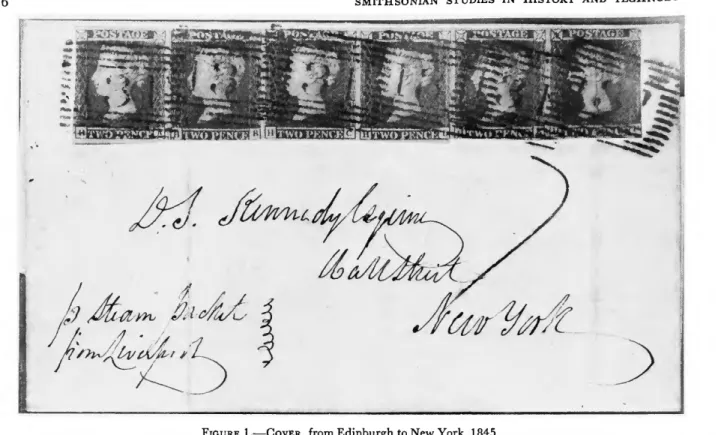
AMP- R ITA**^*

Covers
The Three-Months' Period 1 January 1857-1 April 1857

FRANCO

Covers by British Open Mail

French^Mail Covers t o Belgium

V *?-?&

The Additional Exchange Offices Under the United States-British

3&

The Phantom Rate

LEON PELLEUAY
PABIS
Between the United States and Europe, 1845—1875
Bebas
252
0
0
Teks penuh
Gambar


+7


Dokumen terkait
dokumen ini menjelaskan cara penggunaan transisi dalam bahasa inggris
